PLEnlist

14 October in military history: the Battles of Hastings, Hochkirch, Jena and Auerstedt

Military history · 14 October · Medieval, Seven Years' War and Napoleonic · Full calendar

Embroidered scene from the Bayeux Tapestry: English soldiers on foot hold a wall of shields while Norman horsemen charge them with spears, and dead men lie in the lower border.
Norman cavalry attacks the English shield wall at Hastings, scene 52 of the Bayeux Tapestry. Public domain. Bayeux Tapestry, 11th century, Bayeux Museum.
Quick answer

In 1066 William of Normandy defeated and killed King Harold II at Hastings. In 1758 an Austrian army under Daun surprised Frederick the Great at Hochkirch, and in 1806 Napoleon and Marshal Davout broke the Prussian army at Jena and Auerstedt on the same day. Each battle has its own full story below.

Hastings, 1066
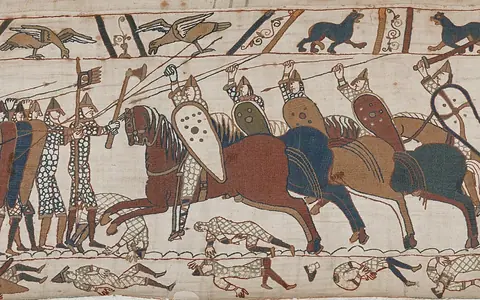
William, Duke of Normandy, attacked the army of King Harold II drawn up along the ridge where Battle Abbey now stands, and the English held their shield wall for most of the day. In the last attack Harold was killed, with his brothers Leofwine and Gyrth, and his army broke.1

Read the full story of Hastings, 1066 ›

Hochkirch, 1758

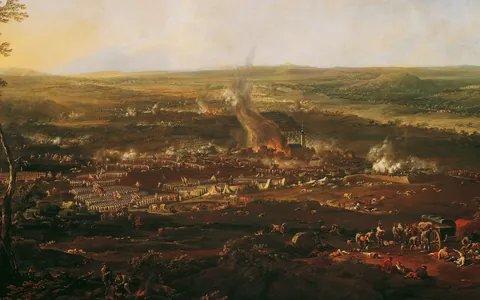
Field Marshal Daun's Austrians attacked Frederick the Great's camp at Hochkirch at dawn and caught the Prussians unprepared; Frederick lost about 100 guns. The Prussian losses are given as 9,500 dead by HistoryOfWar.org and 10,000 casualties by EBSCO, but Daun did not pursue and the Prussian army escaped.2

Read the full story of Hochkirch, 1758 ›

Jena and Auerstedt, 1806

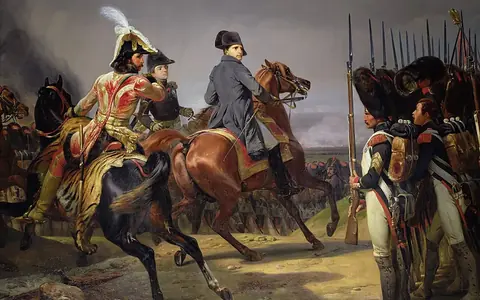
Napoleon routed Prince Hohenlohe's Prussian and Saxon army at Jena, while at Auerstedt Marshal Davout's III Corps, outnumbered more than two to one, beat the main Prussian army under the Duke of Brunswick. The two battles broke the Prussian army, and Napoleon entered Berlin on 27 October.3

Read the full story of Jena and Auerstedt, 1806 ›


Frequently asked questions

What happened at Hastings on 14 October 1066?

William of Normandy defeated the English army of King Harold II. Harold and his brothers Gyrth and Leofwine were killed, and William was crowned king of England on Christmas Day 1066.

Hastings, 1066 ›

Why does Hochkirch matter?

Frederick the Great was surprised and lost about 100 guns, but Daun did not follow up, so the Prussian army escaped and fought on.

Hochkirch, 1758 ›

What were the results of Jena and Auerstedt?

On the same day in 1806 Napoleon defeated the Prussian and Saxon army at Jena, and Davout, outnumbered more than two to one, defeated the main Prussian army at Auerstedt. Napoleon entered Berlin on 27 October.

Jena and Auerstedt, 1806 ›

Notes

A number in the text points to a note; each note names the works that paragraph draws on, listed in full under Sources.

  1. English Heritage, “History of Battle Abbey and Battlefield”; Encyclopaedia Romana, “The Battle of Hastings”. ↩
  2. EBSCO Research Starters, “Battle of Hochkirch”; HistoryOfWar.org, “Battle of Hochkirch, 14 October 1758”. ↩
  3. Napoleon-Empire.org, “Battle of Jena, October 14th, 1806”; Napoleon-Empire.org, “Battle of Auerstaedt”; HistoryOfWar.org, “Battle of Auerstädt, 14 October 1806”. ↩

Sources

Battle honours of your homeland

The turning points of history

Marathon, Gaugamela, Cannae, Constantinople, Waterloo, Stalingrad: the days the world changed course.

Based on your country, which we do not store · why? ·

Relive the great battles

Echoes of Battle brings the great battles of history to life, scene by scene on the real map. Enlist below and we will send word to your inbox the day it launches.

Or supply the campaign on Ko-fi ›