


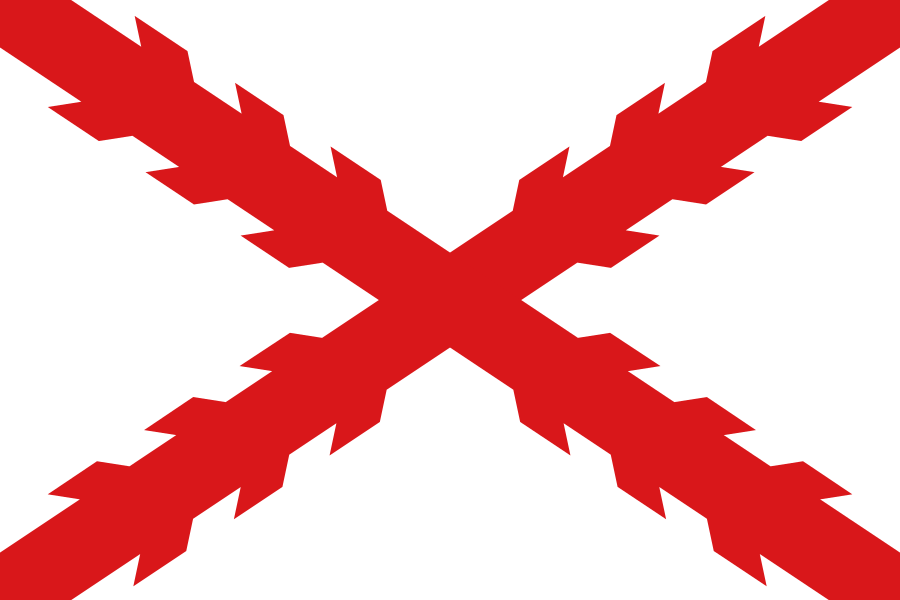
What happened at the Battle of Murten?
On 22 June 1476 an army of the Swiss Confederates and their allies attacked Charles the Bold, Duke of Burgundy, who was besieging the Bernese garrison of Murten (Morat). The Confederates came out of the woods, overran the palisade and guns of his fortified line and broke his army, much of which died in the pursuit or drowned in the Lake of Murten. Coming four months after Grandson, the defeat broke Burgundian power, and Charles was killed at Nancy in January 1477.6
Murten was the battle in which Charles the Bold lost his army. At Grandson in March 1476 he had lost his camp and his guns, but most of his men had escaped. At Murten, in June, the Swiss caught his army spread out around a besieged town with a lake at its back. Most of his foot soldiers died there, and most of the horsemen and one corps that slipped away were all that got clear. The war began at Héricourt in 1474, and Murten also has its place on our 22 June page.7
Revenge for Grandson
In 1475 Bern and Fribourg had overrun much of Vaud, a land of Savoy, Burgundy's ally, and early in 1476 Charles answered with a direct attack on the two cities. He took the castle of Grandson on Lake Neuchâtel and had its Bernese garrison hanged or drowned in the lake.8
On 2 March 1476 the Confederate relief army caught him outside Grandson. His infantry panicked and fled as the main body of the Swiss came into sight, and the victors plundered his camp and took his artillery. Few men were killed on either side, and Charles at once began to rebuild.9
He gathered the army again in a camp at Lausanne. There he issued a new ordinance that split it into eight self-contained battle groups of horse, foot and guns, and on 9 May he held a great review of his troops. Even so, the army Ruth Putnam describes numbered only about twenty thousand men. The Historical Dictionary of Switzerland gives more than 20,000, and Charles Oman something like 20,000. John Foster Kirk, who doubted the higher counts, thought it cannot have exceeded 40,000.10
The duke meant to avenge Grandson and to march on Bern. The road from Lausanne to Bern that he chose ran past Murten (in French, Morat), a small walled town on the lake of the same name. It had belonged to Savoy until Bern and Fribourg occupied it in the war, in October 1475 by the Historical Dictionary's date.11
The siege of Murten
Bern was determined that Murten would not go the way of Grandson, and it sent a picked force of 1,500 men to reinforce the troops already in the town, and Fribourg, by the Historical Dictionary's count, added 100 more. Command went to Adrian von Bubenberg, a Bernese nobleman who had opposed the war with Burgundy and had been expelled from the city's small council for it.12
Charles marched out from Lausanne and appeared before Murten on 9 June. He posted a Savoyard corps under Jacques of Savoy, Count of Romont, north of the town and Italian troops under Troilo south of it along the lake shore, while his main army camped south of the town.13
The garrison held. Burgundian bombards battered the walls and knocked down towers, and an assault was launched through the breach, on 17 June by the Historical Dictionary's date and at nightfall on 18 June by Kirk's. The defenders beat it off. Kirk puts the attackers' loss at about 60 killed and a hundred or more wounded, far fewer than the Swiss chroniclers claimed.14
Charles chose to wait for the relief army behind a fortified line rather than seek it out. On the plateau south of the town his men built a long palisade, which Kirk says was called the hedge, with gun emplacements along it, covering the camp.15
The relief army gathers
The remoter cantons, Oman notes, were slow to send help, but contingents of the Confederates and their allies streamed toward Bern, joined by the cities of the Lower Union, Austrian horsemen and René II, Duke of Lorraine, whose duchy Charles had seized the year before. By 21 June they were concentrated near Ulmitz, behind the wood of Murten, a few miles from the Burgundian line.16
Their numbers are disputed. The Historical Dictionary of Switzerland puts the army at about 24,000 with more than 1,400 horsemen. Oman writes of 25,000 Swiss pikes and several hundred lances, and Kirk, following the chroniclers, of 35,000 to 40,000. Kirk tells how the last to arrive, the Zurich contingent, marched out of Bern before midnight on 21 June and struggled into Gümmenen, on the Saane, at dawn after a night in pouring rain.17
A letter from the days before the battle, which Kirk attributes to the Zurich commander Hans Waldmann and Putnam to a leader of Bern, summed up the mood: “There are three times as many as at Grandson, but let no one be dismayed, with God's help we will kill them all.”18
The captains fixed the attack for Saturday, 22 June, the feast of the Ten Thousand Martyrs (or Knights). It was a date of good omen for the Bernese, recalling their victory at Laupen on 21 June 1339.19
Through the palisade
22 June, morning. Charles expected the attack. He drew up his army behind the palisade at dawn and kept it there for about six hours in the rain. When no enemy appeared, he sent most of the men back to the camp around noon and left a few thousand to hold the line. Kirk adds that he took off his armor.20
Midday. The Confederates attacked in three bodies, a vanguard, a main body and a rearguard, each of pikemen, halberdiers and handgunners. Their horse, more than 1,400 by the Historical Dictionary's count, rode with the vanguard. The Historical Dictionary of Switzerland places the attack around midday, after the heavy rain had stopped. Kirk and Putnam say it began at two o'clock.21
The vanguard came out of the wood of Murten and made straight for the palisade. The Burgundian guns tore into the Swiss column and the allied horse, but the attackers broke through the line. The Burgundian gun positions were overrun, and the defenders were driven down the slope into the troops hurrying up from the camp.22
The attack caught Charles by surprise, although, the Historical Dictionary notes, he had been warned days before. His army came up piecemeal, and the Swiss crushed each corps as it arrived. Burgundian horsemen charged the pikes and were thrown back, and the infantry broke and fled. Kirk, Putnam and Hervé de Weck all say the fight was decided within about an hour.23
Into the lake
The Swiss leaders had aimed their blow at the Burgundian right, and now it told. The van and the main body pursued the fleeing mass along the road toward Avenches, while the rearguard turned on the Italian infantry besieging the town from the south.24
That corps, about 6,000 men, was trapped between the town, the victors and the lake. Oman writes that they were trodden down or pushed into the water and that scarcely a man escaped. Kirk describes men wading out until the water reached their chins while the Confederates shot at them from the shore.25
The Swiss gave no quarter at Murten. Hervé de Weck sees the massacre as revenge for the garrison hanged at Grandson.26
Romont's Savoyards, north of the town, were the one Burgundian corps to get away. Learning that the battle was lost, they escaped by a risky march around the rear of the Confederate army.27
Charles himself escaped with the remnant of his guard. He rode through the night, reached Morges on Lake Geneva in the morning and arrived that evening at the castle of Gex.28
The toll and the spoils
No one knows how many died. The Historical Dictionary of Switzerland cites estimates of 8,000 to 20,000 Burgundian dead and gives the Confederate losses as a few hundred killed and wounded. Putnam gives the Burgundian dead as 10,000 to 22,000. Kirk records a count of 10,000 made by the Lucerne commander Kaspar von Hertenstein on 24 June and believed a later burial count of more than 22,000. The Historical Dictionary notes that the reports agree that most of the Burgundian infantry perished while most of the horsemen escaped, and Putnam also writes that almost all the infantry died.29
The victors took Charles's guns and his camp. The Historical Dictionary adds the armor and weapons of the dead and the goods of the merchants who followed the army, but Kirk notes that apart from arms the plunder was a disappointment.30
The camp also held women, more than 3,000 of them by the Historical Dictionary's count. The Bernese chronicles show them shared out as human booty, and Kirk records that some were killed and others assaulted. The Historical Dictionary adds that little is known of what became of them.31
After Murten
According to the Historical Dictionary, contemporaries saw at once that Burgundian power had been broken. Charles retreated into his County of Burgundy and turned against Lorraine, where René II had won back his capital.32
He besieged Nancy in the autumn of 1476. On 5 January 1477 René's relief army, with a strong body of Swiss in it, attacked him there, and Charles was killed in the rout.33
Murten itself became a bailiwick ruled jointly by Bern and Fribourg, and stayed so, the Historical Dictionary notes, until the end of the old Confederation.34
The Historical Dictionary of Switzerland notes that after Grandson and Murten the princes of Europe sought to hire the Confederates as mercenaries. Oman follows Swiss pikemen through the Italian Wars and dates the breakdown of their system to Marignano in 1515 and the trenches of Bicocca in 1522, where their columns recoiled.35
Murten in memory
The Burgundian dead were first buried in mass graves. About ten years after the battle, in 1486 by the Historical Dictionary's date, Bern and Fribourg moved the remains into an ossuary with a chapel on the lake shore near Meyriez.36
The bone house stood until 1798, when French troops occupying Switzerland pulled it down. In 1822 a marble obelisk was raised on the spot, by decision of the government of Fribourg according to the Historical Dictionary. Kirk adds that the scattered bones were buried again that year.37
The battle was told and retold at once, in songs and in the great illustrated chronicles of Bern and Lucerne. The picture at the top of this page comes from the Lucerne chronicle of Diebold Schilling the Younger, finished in 1513, and shows the Burgundian camp and the rout.38





