

What was the Polish-Soviet War and who won?
The Polish-Soviet War (1919 to 1921) was fought between newly independent Poland and Soviet Russia, with Soviet Ukraine, over the borderlands between them. After the Red Army reached Warsaw in August 1920, Polish counterattacks at Warsaw and on the Niemen won the war, and the Treaty of Riga ended it in March 1921.1
In Poland the war is remembered above all for the Battle of Warsaw of August 1920, often called the “Miracle on the Vistula”. The war itself was longer and wider. It began with clashes in the borderlands early in 1919, swung from a Polish and Ukrainian advance on Kyiv to a Soviet march on Warsaw, and ended with Polish victories at the Battle of Komarów and the Battle of the Niemen. On the way a battalion of volunteers was almost wiped out at the Battle of Zadwórze near Lwów (now Lviv, Ukraine).2
This guide sets out what each side wanted, how the fighting unfolded, who commanded, what happened to prisoners and civilians, and how the Treaty of Riga divided the borderlands. Poland's opponent was Soviet Russia, together with Soviet Ukraine and Soviet Belarus: the Soviet Union did not yet exist, and calling the enemy “the Soviet Union” is a common mistake.3
Causes of the Polish-Soviet War
Poland's independence was proclaimed in Warsaw on 11 November 1918, the day Germany signed the armistice, but German armies still held the western lands of the former Russian Empire. As they withdrew over the winter, the Red Army moved into the land they left. It took Minsk in December 1918 and Wilno (now Vilnius, Lithuania) in January 1919, and Soviet republics were proclaimed in Latvia, Belarus and Ukraine. Poland had no agreed eastern border, and the two advances met.4
The Bolsheviks saw the war in terms of world revolution. Lenin's strategy, in words Britannica quotes, was for the Red Army “to destroy the wall separating Soviet Russia from revolutionary Germany”, and in March 1919 Moscow founded the Comintern to carry the revolution abroad. Norman Davies describes Poland as the “Red Bridge” the Red Army had to cross on its way to Germany. Soviet propaganda, for its part, presented Poland as a state of landlords and as the aggressor.5
Józef Piłsudski, Poland's head of state and commander in chief, hoped for a federation of the peoples of the old Polish-Lithuanian Commonwealth as a barrier against Russia. Lithuanians and Belarusians would not join, and the only partner he found was Symon Petliura's Ukrainian People's Republic, with which Poland signed a political and military agreement on 21 April 1920. When the federation failed to take shape, Davies writes, Piłsudski concentrated on securing a solid block of territory, and in 1919 his forces occupied Wilno and Minsk.6
On 8 December 1919 the Allied Supreme Council fixed a provisional minimum eastern frontier for Poland, the line later named after the British foreign secretary Lord Curzon. Neither side treated it as final. In January 1920 the Soviet government offered an armistice on the existing front, but Polish radio intelligence, which had broken Soviet codes, showed a large build up: Britannica gives a rise from 7 Red Army divisions on the Polish front in January to 20 in March. Who was to blame for the war of 1920 is still argued. Soviet propaganda and many western observers called Poland the aggressor, while historians such as Davies point to the Soviet build up and Lenin's aims.7

Who fought in the Polish-Soviet War
On one side stood the Polish state reborn in 1918, later called the Second Polish Republic, with its Ukrainian allies. The army of the Ukrainian People's Republic joined the Kyiv offensive, and its 6th Division under Colonel Marko Bezruchko helped hold Zamość in August 1920. On the other side stood Soviet Russia with Soviet Ukraine and Soviet Belarus, the Soviet republics that signed the peace in 1921.8
The Polish army was less than two years old in 1920, built from veterans of the Polish Legions and of the Russian, German and Austrian armies. In July 1920 a Council of State Defence appealed for volunteers, and more than 100,000 joined the Volunteer Army within weeks, among them students of the Academic Legion and women of the Volunteer Legion of Women.9
Estimates of strength vary. Britannica gives Mikhail Tukhachevsky's Western Front about 220,000 combatants when it attacked in July 1920, against about 120,000 in the Polish army group facing it; the historian Jarosław Centek puts the two sides at roughly equal strength, 110,000 to 120,000 Polish and Ukrainian soldiers against 120,000 to 140,000 Soviet. In the south the 1st Cavalry Army of Semyon Budyonny was the Red Army's main striking force.10
The western powers gave little practical help. Britain pressed Poland to make peace, Czechoslovakia refused to let arms pass through its territory, and dockers in Britain and Danzig (Gdańsk) delayed shipments, while France and Hungary sent weapons and ammunition. An Inter-Allied mission, with the French general Maxime Weygand and the British ambassador Lord D'Abernon, reached Warsaw in July 1920.11

How the Polish-Soviet War unfolded
The first Polish and Soviet troops clashed around Wilno in January 1919, and fighting spread along the front in February; historians date the start of the war to either month. In April 1919 Polish forces took Wilno, and by the end of the year they stood on the Dvina and the Berezina. Piłsudski then held back. A victory of the anti-Bolshevik Whites, who would not accept a Polish border in the east, would have been worse for Poland, so the front stayed quiet while the Red Army defeated General Denikin.12
On 25 April 1920 Polish and Ukrainian forces opened an offensive in Ukraine, and on 7 May they entered Kyiv. They could not set up a working Ukrainian administration before the Red Army struck back. In mid-May the Soviets attacked in the north; in the south Budyonny's cavalry broke into the Polish rear in early June, and on 12 June the Poles left Kyiv. One veteran's summary, quoted by Davies: “We ran all the way to Kyiv, and ran all the way back.”13
Tukhachevsky's main offensive opened on 4 July 1920 on a front of about 500 km, with an order of the day declaring that “the road to world conflagration leads over Poland's corpse”. Britannica dates the fall of Minsk to 11 July, Wilno to 14 July and Grodno (now Hrodna, Belarus) to 19 July. By early August the Red Army had reached the Bug and taken the fortress of Brest.14
At the Spa conference in July the Polish prime minister Władysław Grabski accepted Allied terms built on the line of December 1919, and on 11 July Lord Curzon proposed that line to Moscow. The Soviets rejected it and pressed on. On 23 July they formed a Provisional Polish Revolutionary Committee of Polish communists, headed by Feliks Dzerzhinsky, which was to take power in Poland and set itself up in Białystok. In Warsaw, Grabski's cabinet gave way to a Government of National Defence under the peasant leader Wincenty Witos.15
Major battles of the Polish-Soviet War
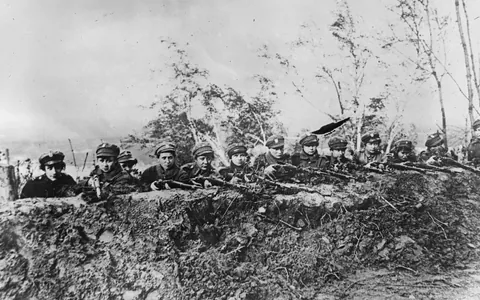
The Battle of Warsaw lasted from 12 to 25 August 1920 by Britannica's dating, with the decisive days around 13 to 16 August. It had three stages: the defense of the approaches to the capital, where the Red Army reached Radzymin and Izabelin, about 13 km from the city; General Władysław Sikorski's counterattack from the Wkra on 14 August; and the strike from the Wieprz River on 16 August, which hit the flank and rear of the Soviet armies. Piłsudski led the Wieprz group in person.16
The Soviet front collapsed. Three armies broke up, tens of thousands of Red Army soldiers crossed into East Prussia and were interned, and over 40,000 were taken prisoner in Poland. Britannica estimates the losses at possibly 15,000 to 25,000 Soviet dead, 65,000 captured and 35,000 interned, against up to 5,000 Polish dead, 22,000 wounded and 10,000 missing; the Sejm's account says only that Soviet losses were several times greater than Polish ones.17
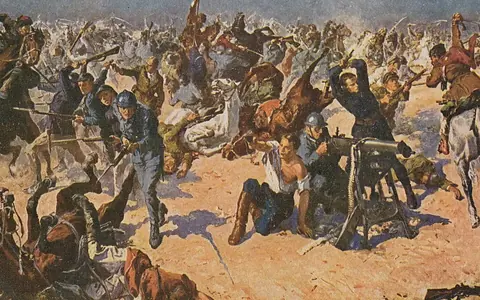
On 17 August, at Zadwórze about 30 km from Lwów, a battalion of some 330 mostly young volunteers under Captain Bolesław Zajączkowski fought Budyonny's cavalry for most of the day. Of the 330, 318 were killed, many of them after they had laid down their arms. It was a Polish defeat that interwar Poland honored as the “Polish Thermopylae”, and Polish accounts credit it with gaining time for the defense of Lwów, which Budyonny did not take.18
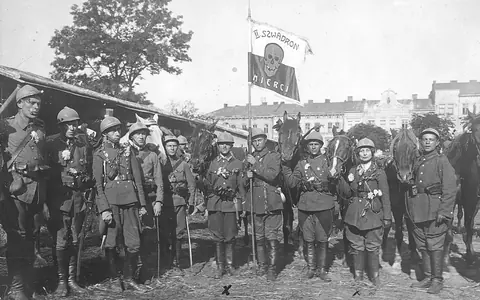
As the counteroffensive turned south, Budyonny's 1st Cavalry Army was caught between Polish forces around Zamość. From 29 to 31 August the town was held by the Ukrainian 6th Division and Polish soldiers of the 31st Rifle Regiment, and on 31 August the Polish 1st Cavalry Division under Colonel Juliusz Rómmel fought the Cavalry Army at Komarów. Davies calls it the biggest cavalry battle of the war, and it is often described as the last great cavalry battle in Europe, a traditional label rather than a measured claim. The Cavalry Army was beaten and driven off.19
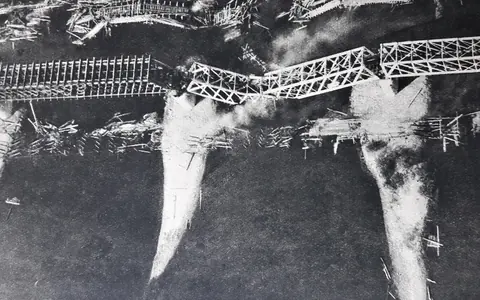
Tukhachevsky tried to make a stand along the Niemen. On 20 September the Polish 2nd and 4th Armies attacked toward Grodno and Wołkowysk, while a northern strike group marched through territory held by Lithuania, pushed aside Lithuanian units and crossed the Niemen behind the Soviet flank. Polish troops entered Grodno on the night of 25 to 26 September and Lida on 28 September. Polish historians call the Battle of the Niemen the last large operation of the war; after it the Soviet leaders gave up the conquest of Poland.20
Key commanders of the Polish-Soviet War
Józef Piłsudski, head of state and commander in chief, directed the Polish war effort and led the Wieprz strike in person. His chief of the general staff, General Tadeusz Rozwadowski, ran the staff work for the Warsaw operation. Among the army commanders were Władysław Sikorski, whose 5th Army fought on the Wkra, Edward Śmigły-Rydz, who took Kyiv and commanded the 2nd Army on the Niemen, and Józef Haller, who commanded the northern defenses of Warsaw.21
On the Soviet side Mikhail Tukhachevsky, 27 years old in 1920, commanded the Western Front, and Semyon Budyonny's 1st Cavalry Army was the striking force of the South-Western Front, where Joseph Stalin served as the political commissar. Lenin pushed for the march on Warsaw; the war commissar Leon Trotsky warned against it and was overruled.22
Who devised the Warsaw plan is an old Polish dispute. The IPN's account says the plan was worked out at headquarters under Rozwadowski and approved by Piłsudski; Davies names Piłsudski as its author, assisted by Rozwadowski; Centek thinks it most probably the work of one of the two. The French general Maxime Weygand, whom some contemporaries credited, served as an adviser to Rozwadowski after declining the post of chief of staff. Centek calls his authorship unlikely, and Davies writes that the theories crediting Weygand, or Providence, came later, from Piłsudski's political opponents.23

Prisoners, civilians and atrocities
Both sides held large numbers of prisoners. After the fighting ended in October 1920, Poland held about 80,000 Soviet prisoners of war. Overcrowded camps, a hard winter and epidemics of typhus, cholera and dysentery killed many of them: the historian Zbigniew Karpus puts the deaths in Polish captivity at about 14,000 to 16,000, most of them from disease, and the Polish State Archives database, begun after an agreement with the Russian archives agency, holds records of about 20,000 prisoners and internees who died in Poland between 1918 and 1924.24
About 44,000 Polish soldiers ended up in Soviet captivity, according to Waldemar Rezmer; about 35,500 came home, a few thousand chose to stay, and the fate of some 5,000 is unknown. Prisoners were also killed on capture. Rezmer documents killings by Budyonny's cavalry and by Gai's cavalry corps, which murdered 150 men of the Polish 49th Infantry Regiment near Mława on 22 August 1920; in reprisal, 200 Cossacks were executed on Sikorski's order. Both governments agreed on the exchange of prisoners in February 1921.25
Civilians suffered from every army that crossed the borderlands. The YIVO Encyclopedia notes that all the armies of the period, regular and irregular, carried out pogroms against Jewish communities, and names the Polish-Soviet War among their settings. The best-known case on the Polish side came at Pińsk on 5 April 1919, when Polish soldiers shot 35 Jews arrested at a meeting about American relief aid. The United States mission under Henry Morgenthau found the charge that they were Bolsheviks groundless and noted that nobody had been tried. Davies adds that Soviet appeals to Polish Jews fell largely on deaf ears, yet the slur of “Judeo-communism” took root and the Polish army interned many of its own Jewish soldiers.26

Who won the Polish-Soviet War? The Treaty of Riga
Poland won the war on the battlefield. An armistice was signed on 12 October 1920 and fighting stopped on 18 October. Peace talks, which had begun in Minsk in August, moved to Riga on 21 September, and the Treaty of Riga was signed there on 18 March 1921 by Poland, Soviet Russia, acting also for Soviet Belarus, and Soviet Ukraine.27
The new border ran close to the Russian border of the second partition of 1793, well east of the Curzon Line: Britannica puts the land Poland gained east of that line at almost 135,000 square km. The Polish delegation chose not to press for more, unwilling to take in large areas where Poles would be a minority, and Minsk stayed Soviet. The treaty divided the Ukrainians and Belarusians between Poland and the Soviet republics.28
Poland's Ukrainian allies lost most. The delegations of the Ukrainian People's Republic and of the Western Ukrainian People's Republic were not admitted to the talks, Poland undertook to stop supporting anti-Soviet formations, and Petliura's army was interned. Historians see the treaty as the end of Piłsudski's federal plans.29
Soviet Russia agreed to pay Poland 30 million gold rubles and to return art, archives and libraries taken from Polish lands since 1772. Of these terms, says the European Network Remembrance and Solidarity, only the return of Polish citizens from Soviet Russia was even partly carried out. The Riga border held until 17 September 1939, when the Red Army invaded eastern Poland (see the Soviet invasion of Poland).30
One dispute stayed open. In October 1920 Polish troops under General Lucjan Żeligowski took Wilno from Lithuania with Piłsudski's approval, and Poland annexed the region in 1922, an annexation Lithuania never recognized.31
The “Miracle on the Vistula” and the memory of 1920
In Poland the victory at Warsaw is known as the “Miracle on the Vistula”. The decisive days fell on the Feast of the Assumption, 15 August, when Poles prayed in their churches for the capital. The British historian Norman Davies, whose White Eagle, Red Star is a standard history of the war, is blunt: it was no miracle but a hard-fought battle, won by the skill and determination of the defenders, by the volunteers and by Piłsudski's counterattack. Contemporaries used the phrase too; Britannica quotes Charles de Gaulle, then a French officer in Poland: “Our Poles have grown wings.”32
How much the battle mattered beyond Poland is a matter of interpretation. Lord D'Abernon called it the eighteenth decisive battle of world history, and the IPN holds that the victory stopped the Soviet march into western Europe. Britannica is more careful: the victory ensured an independent Poland and “may have prevented” a Bolshevik invasion of Germany. Davies argues that it postponed the Bolsheviks' hopes of spreading revolution and turned them toward building “socialism in one country”.33
Zadwórze became a place of national memory. A mound was raised by the graves of the fallen, and the battlefield, now in Ukraine, is still the scene of Polish state ceremonies attended by Polish and Ukrainian officials.34
Under communist rule the war was played down; Davies recalls Polish textbooks describing it as a war fought in the interests of the great landowners. In Russia it is still widely remembered as unprovoked Polish aggression, and Davies notes that the deaths of Soviet prisoners in 1920 have been set against the Katyn massacre of 1940. Polish and Russian archivists nonetheless began work together on the prisoner records in 2013.35
The Curzon Line, rejected by both sides in 1920, returned in World War II. The Soviet Union occupied the land east of it in 1939, and in 1945 the Allies accepted it, with small changes, as the Soviet-Polish border.36
Battles of the Polish-Soviet War
Our articles on the battles of the war are listed below in date order.
- 1920The Battle of Zadwórze, 1920Poland vs Soviet Russia
Young Lwów volunteers stood in the path of Budyonny's cavalry.
- 1920Battle of Warsaw, 1920Poland vs Soviet Russia
How Poland shattered the advancing Red Army at the gates of Warsaw in 1920, the Miracle on the Vistula.
- 1920
- 1920Battle of the Niemen, 1920Second Polish Republic vs Soviet Russia
In September 1920 Piłsudski's armies broke Tukhachevsky's new front on the Niemen at Grodno and Lida, taking tens of thousands of prisoners and ending the war.
Timeline of the Polish-Soviet War
- 191811 November: Poland's independence is proclaimed in Warsaw as German armies begin to leave the east.37
- 1919January: Polish self-defense units and the Red Army fight for Wilno, which the Red Army takes.38
- 1919February: fighting spreads along the front; in April Polish forces take Wilno.39
- 192021 April: Poland and the Ukrainian People's Republic sign an alliance; on 25 April their armies attack in Ukraine.40
- 19207 May: Polish and Ukrainian forces enter Kyiv; they leave it on 12 June.41
- 19204 July: Tukhachevsky's offensive begins north of the Pripet Marshes.42
- 192023 July: the Bolsheviks form a Provisional Polish Revolutionary Committee.43
- 192012 to 25 August: Battle of Warsaw; the strike from the Wieprz begins on 16 August.44
- 192017 August: Battle of Zadwórze near Lwów.45
- 192031 August: Battle of Komarów near Zamość.46
- 192020 to 28 September: Battle of the Niemen; Grodno falls on the night of 25 to 26 September.47
- 192012 October: armistice; fighting ends on 18 October.48
- 192118 March: the Treaty of Riga is signed.49
- 193917 September: the Soviet invasion of Poland ends the Riga border.50
Where to read next
The war's battles also appear in the battles that won Polish independence, the greatest Polish battles, Polish victories against the odds and the greatest cavalry charges. For the wider story read the military history of Poland, our biography of Józef Piłsudski and the greatest Polish commanders, then test yourself with the Polish battles quiz.
Notes
A number in the text points to a note; each note names the works that paragraph draws on, listed in full under Sources.
- Kazimierz Maciej Smogorzewski and the Editors of Encyclopaedia Britannica, “Russo-Polish War”; Jarosław Centek, “Polish-Soviet War 1920-1921”; Norman Davies, “The Battle of Warsaw, one hundred years on”; European Network Remembrance and Solidarity, “Signing of the Treaty of Riga”. ↩
- Paweł Libera, “The Polish-Soviet War of 1920”; Norman Davies, “The Battle of Warsaw, one hundred years on”; Chancellery of the Sejm, “The Battle of Warsaw 1920, part I”; Dzieje.pl, “95. rocznica bitwy nad Niemnem”. ↩
- Norman Davies, “The Battle of Warsaw, one hundred years on”; European Network Remembrance and Solidarity, “Signing of the Treaty of Riga”; Bohdan Budurowicz and Andrzej Chojnowski, “Riga, Peace Treaty of”. ↩
- Kazimierz Maciej Smogorzewski and the Editors of Encyclopaedia Britannica, “Russo-Polish War”; Jarosław Centek, “Polish-Soviet War 1920-1921”; Paweł Libera, “The Polish-Soviet War of 1920”. ↩
- Kazimierz Maciej Smogorzewski and the Editors of Encyclopaedia Britannica, “Russo-Polish War”; Paweł Libera, “The Polish-Soviet War of 1920”; Norman Davies, “The Battle of Warsaw, one hundred years on”. ↩
- Kazimierz Maciej Smogorzewski and the Editors of Encyclopaedia Britannica, “Russo-Polish War”; Jarosław Centek, “Polish-Soviet War 1920-1921”; Paweł Libera, “The Polish-Soviet War of 1920”; Norman Davies, “The Battle of Warsaw, one hundred years on”. ↩
- Kazimierz Maciej Smogorzewski and the Editors of Encyclopaedia Britannica, “Russo-Polish War”; Paweł Libera, “The Polish-Soviet War of 1920”; Norman Davies, “The Battle of Warsaw, one hundred years on”; Encyclopaedia Britannica, “Curzon Line”. ↩
- Jarosław Centek, “Polish-Soviet War 1920-1921”; Paweł Libera, “The Polish-Soviet War of 1920”; Dzieje.pl, “Gen. Marko Bezruczko patronem skweru w Warszawie”; European Network Remembrance and Solidarity, “Signing of the Treaty of Riga”. ↩
- Norman Davies, “The Battle of Warsaw, one hundred years on”; Chancellery of the Sejm, “The Battle of Warsaw 1920, part I”. ↩
- Kazimierz Maciej Smogorzewski and the Editors of Encyclopaedia Britannica, “Russo-Polish War”; Jarosław Centek, “Polish-Soviet War 1920-1921”; John Swift and the Editors of Encyclopaedia Britannica, “Battle of Warsaw”. ↩
- Kazimierz Maciej Smogorzewski and the Editors of Encyclopaedia Britannica, “Russo-Polish War”; Paweł Libera, “The Polish-Soviet War of 1920”; Norman Davies, “The Battle of Warsaw, one hundred years on”. ↩
- Kazimierz Maciej Smogorzewski and the Editors of Encyclopaedia Britannica, “Russo-Polish War”; Jarosław Centek, “Polish-Soviet War 1920-1921”; Paweł Libera, “The Polish-Soviet War of 1920”; Norman Davies, “The Battle of Warsaw, one hundred years on”; Waldemar Rezmer, “Polish prisoners of war in Soviet captivity”. ↩
- Kazimierz Maciej Smogorzewski and the Editors of Encyclopaedia Britannica, “Russo-Polish War”; Jarosław Centek, “Polish-Soviet War 1920-1921”; Paweł Libera, “The Polish-Soviet War of 1920”; Norman Davies, “The Battle of Warsaw, one hundred years on”; Chancellery of the Sejm, “The Battle of Warsaw 1920, part I”. ↩
- Kazimierz Maciej Smogorzewski and the Editors of Encyclopaedia Britannica, “Russo-Polish War”; Jarosław Centek, “Polish-Soviet War 1920-1921”; Paweł Libera, “The Polish-Soviet War of 1920”. ↩
- Kazimierz Maciej Smogorzewski and the Editors of Encyclopaedia Britannica, “Russo-Polish War”; Paweł Libera, “The Polish-Soviet War of 1920”; Norman Davies, “The Battle of Warsaw, one hundred years on”; John Swift and the Editors of Encyclopaedia Britannica, “Battle of Warsaw”; Encyclopaedia Britannica, “Curzon Line”. ↩
- Paweł Libera, “The Polish-Soviet War of 1920”; Norman Davies, “The Battle of Warsaw, one hundred years on”; John Swift and the Editors of Encyclopaedia Britannica, “Battle of Warsaw”; Chancellery of the Sejm, “The Battle of Warsaw 1920, part I”. ↩
- John Swift and the Editors of Encyclopaedia Britannica, “Battle of Warsaw”; Chancellery of the Sejm, “The Battle of Warsaw 1920, part I”; Zbigniew Karpus, “Soviet prisoners of war 1919-1921”. ↩
- Chancellery of the Sejm, “The Battle of Warsaw 1920, part I”; Dzieje.pl, “Polskie Termopile. Rocznica bitwy pod Zadwórzem”; Institute of National Remembrance, “98th Anniversary of the Battle of Zadwórze”; Waldemar Rezmer, “Polish prisoners of war in Soviet captivity”. ↩
- Norman Davies, “The Battle of Warsaw, one hundred years on”; Dzieje.pl, “Lubelskie”; Dzieje.pl, “Gen. Marko Bezruczko patronem skweru w Warszawie”. ↩
- Kazimierz Maciej Smogorzewski and the Editors of Encyclopaedia Britannica, “Russo-Polish War”; Jarosław Centek, “Polish-Soviet War 1920-1921”; Dzieje.pl, “95. rocznica bitwy nad Niemnem”; Robert Sendek, Polska Zbrojna (Wojskowy Instytut Wydawniczy), on the Battle of the Niemen, 2020. ↩
- Kazimierz Maciej Smogorzewski and the Editors of Encyclopaedia Britannica, “Russo-Polish War”; Paweł Libera, “The Polish-Soviet War of 1920”; Norman Davies, “The Battle of Warsaw, one hundred years on”; Dzieje.pl, “95. rocznica bitwy nad Niemnem”. ↩
- Kazimierz Maciej Smogorzewski and the Editors of Encyclopaedia Britannica, “Russo-Polish War”; Jarosław Centek, “Polish-Soviet War 1920-1921”; Norman Davies, “The Battle of Warsaw, one hundred years on”. ↩
- Kazimierz Maciej Smogorzewski and the Editors of Encyclopaedia Britannica, “Russo-Polish War”; Jarosław Centek, “Polish-Soviet War 1920-1921”; Paweł Libera, “The Polish-Soviet War of 1920”; Norman Davies, “The Battle of Warsaw, one hundred years on”. ↩
- Zbigniew Karpus, “Soviet prisoners of war 1919-1921”; Polish State Archives, “Red Army Soldiers and Internees in Prisoner of War and Internment Camps in Poland (1918-1924): about the project”. ↩
- Zbigniew Karpus, “Soviet prisoners of war 1919-1921”; Polish State Archives, “Red Army Soldiers and Internees in Prisoner of War and Internment Camps in Poland (1918-1924): about the project”; Waldemar Rezmer, “Polish prisoners of war in Soviet captivity”. ↩
- Norman Davies, “The Battle of Warsaw, one hundred years on”; John D. Klier, “Pogroms”; Report of the Mission of the United States to Poland, 3 October 1919, Foreign Relations of the United States, 1919, vol. II, Office of the Historian. ↩
- Kazimierz Maciej Smogorzewski and the Editors of Encyclopaedia Britannica, “Russo-Polish War”; Paweł Libera, “The Polish-Soviet War of 1920”; European Network Remembrance and Solidarity, “Signing of the Treaty of Riga”; Bohdan Budurowicz and Andrzej Chojnowski, “Riga, Peace Treaty of”. ↩
- Kazimierz Maciej Smogorzewski and the Editors of Encyclopaedia Britannica, “Russo-Polish War”; Jarosław Centek, “Polish-Soviet War 1920-1921”; Encyclopaedia Britannica, “Curzon Line”; European Network Remembrance and Solidarity, “Signing of the Treaty of Riga”; Bohdan Budurowicz and Andrzej Chojnowski, “Riga, Peace Treaty of”. ↩
- Paweł Libera, “The Polish-Soviet War of 1920”; Bohdan Budurowicz and Andrzej Chojnowski, “Riga, Peace Treaty of”. ↩
- Paweł Libera, “The Polish-Soviet War of 1920”; European Network Remembrance and Solidarity, “Signing of the Treaty of Riga”; Bohdan Budurowicz and Andrzej Chojnowski, “Riga, Peace Treaty of”. ↩
- Kazimierz Maciej Smogorzewski and the Editors of Encyclopaedia Britannica, “Russo-Polish War”; Dzieje.pl, “95. rocznica bitwy nad Niemnem”. ↩
- Jarosław Centek, “Polish-Soviet War 1920-1921”; Norman Davies, “The Battle of Warsaw, one hundred years on”; John Swift and the Editors of Encyclopaedia Britannica, “Battle of Warsaw”. ↩
- Paweł Libera, “The Polish-Soviet War of 1920”; Norman Davies, “The Battle of Warsaw, one hundred years on”; John Swift and the Editors of Encyclopaedia Britannica, “Battle of Warsaw”; Chancellery of the Sejm, “The Battle of Warsaw 1920, part I”. ↩
- Dzieje.pl, “Polskie Termopile. Rocznica bitwy pod Zadwórzem”; Institute of National Remembrance, “98th Anniversary of the Battle of Zadwórze”. ↩
- Norman Davies, “The Battle of Warsaw, one hundred years on”; Zbigniew Karpus, “Soviet prisoners of war 1919-1921”; Polish State Archives, “Red Army Soldiers and Internees in Prisoner of War and Internment Camps in Poland (1918-1924): about the project”. ↩
- Encyclopaedia Britannica, “Curzon Line”; Bohdan Budurowicz and Andrzej Chojnowski, “Riga, Peace Treaty of”. ↩
- Kazimierz Maciej Smogorzewski and the Editors of Encyclopaedia Britannica, “Russo-Polish War”; Paweł Libera, “The Polish-Soviet War of 1920”. ↩
- Jarosław Centek, “Polish-Soviet War 1920-1921”; Paweł Libera, “The Polish-Soviet War of 1920”. ↩
- Kazimierz Maciej Smogorzewski and the Editors of Encyclopaedia Britannica, “Russo-Polish War”; Paweł Libera, “The Polish-Soviet War of 1920”. ↩
- Paweł Libera, “The Polish-Soviet War of 1920”; Chancellery of the Sejm, “The Battle of Warsaw 1920, part I”. ↩
- Kazimierz Maciej Smogorzewski and the Editors of Encyclopaedia Britannica, “Russo-Polish War”; Paweł Libera, “The Polish-Soviet War of 1920”. ↩
- Kazimierz Maciej Smogorzewski and the Editors of Encyclopaedia Britannica, “Russo-Polish War”; Norman Davies, “The Battle of Warsaw, one hundred years on”. ↩
- Paweł Libera, “The Polish-Soviet War of 1920”; Norman Davies, “The Battle of Warsaw, one hundred years on”. ↩
- Paweł Libera, “The Polish-Soviet War of 1920”; John Swift and the Editors of Encyclopaedia Britannica, “Battle of Warsaw”. ↩
- Dzieje.pl, “Polskie Termopile. Rocznica bitwy pod Zadwórzem”; Institute of National Remembrance, “98th Anniversary of the Battle of Zadwórze”. ↩
- Dzieje.pl, “Lubelskie”; Dzieje.pl, “Gen. Marko Bezruczko patronem skweru w Warszawie”. ↩
- Dzieje.pl, “95. rocznica bitwy nad Niemnem”; Robert Sendek, Polska Zbrojna (Wojskowy Instytut Wydawniczy), on the Battle of the Niemen, 2020. ↩
- Kazimierz Maciej Smogorzewski and the Editors of Encyclopaedia Britannica, “Russo-Polish War”; Paweł Libera, “The Polish-Soviet War of 1920”. ↩
- European Network Remembrance and Solidarity, “Signing of the Treaty of Riga”; Bohdan Budurowicz and Andrzej Chojnowski, “Riga, Peace Treaty of”. ↩
- Encyclopaedia Britannica, “Curzon Line”; Bohdan Budurowicz and Andrzej Chojnowski, “Riga, Peace Treaty of”. ↩
Sources
- Kazimierz Maciej Smogorzewski and the Editors of Encyclopaedia Britannica, “Russo-Polish War”.
- Jarosław Centek (Nicolaus Copernicus University), “Polish-Soviet War 1920-1921”, 1914-1918-online. International Encyclopedia of the First World War (Freie Universität Berlin), 2014.
- Norman Davies, “The Battle of Warsaw, one hundred years on”, Notes from Poland, 12 August 2020.
- European Network Remembrance and Solidarity, “Signing of the Treaty of Riga”.
- Paweł Libera, Institute of National Remembrance (IPN), “The Polish-Soviet War of 1920”, 2020.
- Chancellery of the Sejm (Polish Parliament), “The Battle of Warsaw 1920, part I”, Google Arts & Culture.
- Dzieje.pl (Muzeum Historii Polski and PAP), “95. rocznica bitwy nad Niemnem”.
- Bohdan Budurowicz and Andrzej Chojnowski, “Riga, Peace Treaty of”, Internet Encyclopedia of Ukraine (Canadian Institute of Ukrainian Studies).
- Encyclopaedia Britannica, “Curzon Line”.
- Dzieje.pl (Muzeum Historii Polski and PAP), “Gen. Marko Bezruczko patronem skweru w Warszawie”, 2020.
- John Swift and the Editors of Encyclopaedia Britannica, “Battle of Warsaw”.
- Waldemar Rezmer, “Polish prisoners of war in Soviet captivity”, Przystanek Historia (IPN), 2020.
- Zbigniew Karpus, “Soviet prisoners of war 1919-1921”, Institute of National Remembrance (IPN), 2020.
- Dzieje.pl (Muzeum Historii Polski and PAP), “Polskie Termopile. Rocznica bitwy pod Zadwórzem”.
- Institute of National Remembrance (IPN), “98th Anniversary of the Battle of Zadwórze”, 2018.
- Dzieje.pl (Muzeum Historii Polski and PAP), “Lubelskie: obchody 97. rocznicy Bitwy pod Komarowem”, 2017.
- Robert Sendek, Polska Zbrojna (Wojskowy Instytut Wydawniczy), on the Battle of the Niemen, 2020.
- Polish State Archives, “Red Army Soldiers and Internees in Prisoner of War and Internment Camps in Poland (1918-1924): about the project”.
- John D. Klier, “Pogroms”, The YIVO Encyclopedia of Jews in Eastern Europe.
- Report of the Mission of the United States to Poland (Henry Morgenthau), 3 October 1919, Foreign Relations of the United States, 1919, vol. II, Office of the Historian.






