

What was the Vietnam War?
The Vietnam War was fought from the mid-1950s to 1975 between communist North Vietnam and its southern allies, the National Liberation Front (Viet Cong), and anticommunist South Vietnam, backed by the United States and its allies. US combat troops fought from 1965 to 1973. The war ended on 30 April 1975, when North Vietnamese forces entered Saigon, and the country was reunified in 1976.1
In Vietnam it is called the American War. It began as a struggle between two Vietnamese states born of the end of French rule, drew in the United States and its allies against communism, and spilled across the borders of Laos and Cambodia. Fighting ran through jungle, rice fields and cities, from the Central Highlands to the streets of Saigon and Hue, and much of it was fought by Vietnamese against Vietnamese.2
Background: from French Indochina to the Geneva Accords
France took control of Vietnam in the nineteenth century and ruled it as part of French Indochina, with Laos and Cambodia. During World War II Japan occupied the colony, and in September 1945 the Viet Minh, the communist-led independence front of Ho Chi Minh, declared Vietnamese independence. Neither France nor the United States recognized it, talks with the French failed, and in 1946 a general war broke out in the north between the Viet Minh and French troops.3
The United States, alarmed by the communist victory in China in 1949 and by the war in Korea, supported the French war with military aid. In 1954 the Viet Minh under General Vo Nguyen Giap besieged the French base at Dien Bien Phu, near the border with Laos, and forced its surrender in May. At Geneva that summer the French and the Viet Minh agreed to a ceasefire and a temporary division of Vietnam at the 17th parallel, with elections promised for 1956. The United States did not sign that second agreement.4
Ho Chi Minh's Democratic Republic of Vietnam governed the north from Hanoi. In the south the United States backed Ngo Dinh Diem, whose government became the Republic of Vietnam in 1955. Diem refused to hold the 1956 elections, which the communists were expected to win, and Washington supported him. US leaders saw South Vietnam as a domino: if it fell to communism, President Eisenhower argued, the rest of Southeast Asia would follow.5
Who fought the Vietnam War
North Vietnam and the National Liberation Front. From 1959 Hanoi resolved to back a revolution in the south, and southern communists and returning Viet Minh cadres began a large insurgency against Diem's government. Its political front, the National Liberation Front, was called the Viet Cong by its opponents. HistoryNet notes that it was described publicly as a southern civil war but was guided, equipped and reinforced from Hanoi; the State Department's historians call the Provisional Revolutionary Government it formed later a Hanoi-controlled shadow government. Regular units of the People's Army of Vietnam came south along the Ho Chi Minh Trail through Laos, with base camps in Cambodia, and the Soviet Union and China supplied the North with weapons throughout the war.6
South Vietnam and the United States. The Republic of Vietnam fielded the largest anticommunist army: HistoryNet gives a troop strength of about 850,000, against a peak of 543,000 Americans in Vietnam in April 1969, the figure given by CNN. South Vietnam's government was unstable: Diem was overthrown and killed by his own generals in November 1963, and only General Nguyen Van Thieu, president from 1967 to 1975, gave it a measure of stability.7
The allies. South Korea sent more than 320,000 troops over the course of the war, the largest contingent of any US ally, according to NPR and Al Jazeera. Australia began with 30 advisers in 1962; over 60,000 Australians served and 523 died, according to the Australian War Memorial, and at its height the Australian task force numbered some 8,500. New Zealand and Thailand also sent forces; HistoryNet counts more than 80,000 troops from allies other than South Korea and the United States.8
The phases of the war
Advisers and insurgency, 1955 to 1964. US military advisers trained the South Vietnamese army from the 1950s, and under President Kennedy their number grew from about 900 in 1960 to 11,000 in 1962, according to CNN. The insurgency grew faster. In August 1964 US destroyers in the Gulf of Tonkin reported attacks by North Vietnamese patrol boats on the 2nd and again on the 4th; the first took place, but doubts later emerged as to whether the second had happened at all. Congress then passed the Gulf of Tonkin Resolution, which gave President Johnson broad authority to use force.9
Escalation and the American ground war, 1965 to 1967. In early 1965 Johnson ordered Rolling Thunder, a sustained bombing campaign against the North, and sent the first regular ground combat units; by the end of the year the US had committed some 200,000 troops. General William Westmoreland, the US commander, fought a war of attrition with search-and-destroy operations and measured success by body count, a figure that, HistoryNet notes, both sides inflated. In November 1965 US troops and North Vietnamese regulars met in a large battle in the Ia Drang Valley.10
Tet and the turning point, 1968. On 30 and 31 January 1968, during the lunar new year truce, North Vietnamese and Viet Cong forces attacked cities and bases across South Vietnam, including Saigon and Hue. US and South Vietnamese forces retook the lost ground and almost destroyed the Viet Cong's main units, but the offensive showed Americans that victory was not near. On 31 March Johnson limited the bombing of the North, offered talks and announced that he would not seek re-election.11
Vietnamization and the wider war, 1969 to 1972. Richard Nixon, president from January 1969, began withdrawing US troops while building up South Vietnam's forces, a policy called Vietnamization. He also widened the war: secret B-52 raids on North Vietnamese base camps in Cambodia from March 1969, a US and South Vietnamese incursion into Cambodia on 30 April 1970, which set off campus protests that ended with four students killed at Kent State, and a South Vietnamese drive into Laos, Lam Son 719, in February 1971. In March 1972 North Vietnam launched the Easter Offensive with tanks and some 14 divisions; South Vietnam's army, with heavy US air support, held, and Nixon answered with Operation Linebacker and the mining of the North's harbors.12
Peace accords and the fall of the South, 1973 to 1975. The Paris agreement of 27 January 1973 brought a ceasefire and the departure of the last US ground troops in March, but it left North Vietnamese forces inside South Vietnam, which is why Thieu had at first rejected it. Fighting resumed between the two Vietnamese states. On 10 March 1975 North Vietnamese forces took Ban Me Thuot in the Central Highlands; Thieu's order three days later to abandon the northern provinces turned retreat into collapse, and within nine weeks South Vietnam's army was disintegrating. On 30 April North Vietnamese tanks entered Saigon.13

Civilians, atrocities and the air war
Civilians suffered at the hands of every side. During the battle for Hue in 1968, communist forces arrested people on prepared lists of officials, teachers, religious leaders and foreigners, and executed them; the Vietnam Center at Texas Tech counts at least 3,000 found in mass graves, with 2,000 more missing, while HistoryNet gives about 5,000. On 16 March 1968 a US Army company killed hundreds of unarmed villagers at My Lai; estimates run from about 347 to 504 dead, and Lieutenant William Calley was the only soldier convicted. HistoryNet also notes that both the South Vietnamese army and the Viet Cong used torture.14
Allied troops were accused too. In February 1968 South Korean marines killed more than 70 villagers at Phong Nhi and Phong Nhut, a US military report found at the time; in 2023 a Seoul court ordered the South Korean government to compensate a survivor, while the defense minister denied that any massacres took place.15
The air war reached far beyond Vietnam. From 1964 to 1973 the United States dropped about two million tons of bombs on Laos, aimed largely at the Ho Chi Minh Trail, and 20 to 30 percent of them failed to explode, according to Defense Department estimates cited by PBS. In South Vietnam, Operation Ranch Hand sprayed more than 100 million pounds of herbicides, above all Agent Orange, between 1962 and 1971 to strip jungle cover and destroy crops; its effects on the health of Vietnamese civilians and of US veterans became a lasting controversy, and the US Department of Veterans Affairs still offers exposed veterans health care and compensation.16
Key figures
North Vietnam and the NLF. Ho Chi Minh led the Viet Minh against France and governed the North until his death in 1969; Saigon was later renamed Ho Chi Minh City in his honor. General Vo Nguyen Giap won at Dien Bien Phu, helped build the Ho Chi Minh Trail and led the army that took the South in 1975. Le Duc Tho of the Politburo negotiated the Paris settlement with Henry Kissinger.17
South Vietnam and the United States. Ngo Dinh Diem led the South from 1954 until his murder in 1963, and Nguyen Van Thieu from 1967 until he resigned in April 1975. Presidents Kennedy, Johnson and Nixon each deepened or reshaped the American commitment. General William Westmoreland commanded US forces during the build-up, and Lieutenant Colonel Harold Moore led the US battalion at Ia Drang.18

Outcome and the human cost
North Vietnam won. What remained of the South Vietnamese government surrendered on 30 April 1975 as US helicopters finished evacuating Americans and South Vietnamese from Saigon. On 2 July 1976 North and South were reunified as the Socialist Republic of Vietnam. The Khmer Rouge had taken Cambodia in April 1975, and the United States closed its embassy and broke off relations, which it restored only in 1995.19
The cost in lives can only be estimated, and the figures depend on who counts. US Defense Department records list 58,220 American military deaths, 47,434 of them hostile. In April 1995 the Vietnamese government said 1.1 million communist combatants had died between 1954 and 1975, HistoryNet reports, with civilian deaths estimated at 2 million; low estimates for South Vietnam's army are about 110,000 killed in combat, while PBS gives a quarter of a million South Vietnamese soldiers dead. CNN puts the total at about 1.3 million military and 1 million civilian dead. South Korea lost about 4,400 men, Australia 523, Thailand about 350.20

Legacy and memory
At home the war divided Americans. Anti-war opinion grew from the mid-1960s, with rallies and teach-ins on campuses, and it hardened after Tet and the Cambodian incursion. In Australia, the Australian War Memorial records, a war that was widely supported at first produced the largest anti-war protests the country had ever seen.21
In Vietnam victory brought hardship. Former South Vietnamese officers, officials and priests were sent to re-education camps without trial, and fear of persecution drove many, among them ethnic Chinese, Hmong and Cham, to flee by sea in small boats; EBSCO cites estimates that as many as half of those who set out did not survive. Relations with the United States thawed only in the 1990s. In Laos unexploded bombs still kill and maim, and clearing them is still under way decades later.22

Battles of the Vietnam War
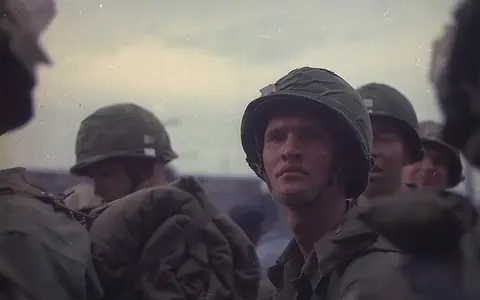
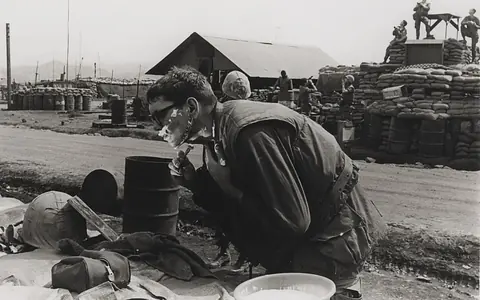
At Ia Drang in November 1965 the US 1st Battalion, 7th Cavalry, flown in by helicopter, held Landing Zone X-Ray against North Vietnamese regiments, and another battalion was ambushed at Albany; 234 Americans died in four days, and both sides claimed victory. At Khe Sanh, from 20 January 1968, some 6,000 Marines held their base for 77 days against about 20,000 North Vietnamese troops, supported by B-52 strikes; whether Hanoi meant to take the base or to draw US forces away before Tet is still debated, and the base was soon abandoned.23
Our articles on the battles and operations of the war are listed below in date order, with related fighting in Cambodia.
- 1965The Battle of Ia Drang, 1965United States vs North Vietnam (PAVN)
Helicopters, a surrounded landing zone, and the first big US-NVA battle of Vietnam.
- 1968The Battle of Khe Sanh, 1968United States (Marines) vs North Vietnam (PAVN)
Seventy-seven days under siege at Khe Sanh, and the ghost of Dien Bien Phu.
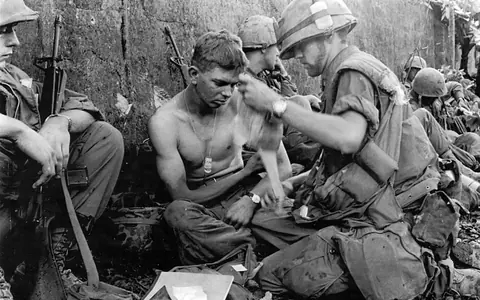
- 1968The Tet Offensive, 1968North Vietnam and the Viet Cong vs United States and South Vietnam
A military defeat for the attackers that still turned American opinion against the war.
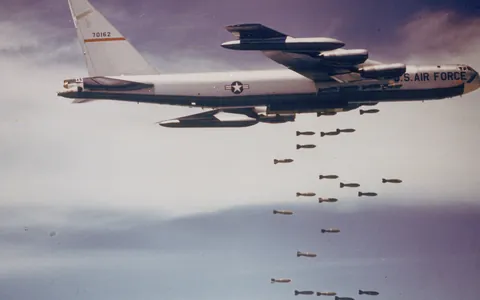
- 1969Operation Menu, 1969United States vs North Vietnam and the Viet Cong
From 18 March 1969 US B-52s secretly bombed North Vietnamese bases in neutral Cambodia under code names like Breakfast and Dessert. The campaign was hidden from Congress.
- 1971Operation Lam Son 719, 1971South Vietnam, with United States air support vs North Vietnam
On 8 February 1971 South Vietnam's army crossed into Laos to cut the Ho Chi Minh Trail. North Vietnam massed 60,000 troops, took the firebases one by one and drove the invaders out in March.
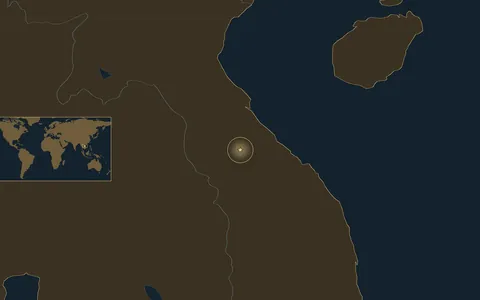
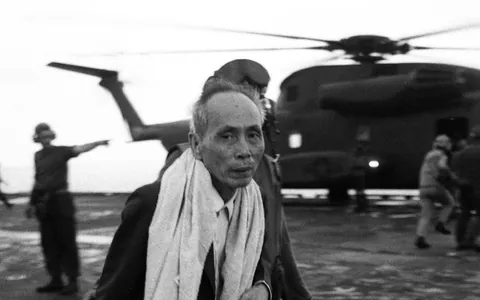
- 1975The fall of Saigon, 1975North Vietnam (People's Army of Vietnam) vs South Vietnam, with the U.S. evacuation
On 29 and 30 April 1975 helicopters lifted more than 7,000 people from Saigon to the Seventh Fleet. Hours after the last Marines left the embassy roof, South Vietnam surrendered.
Related wars
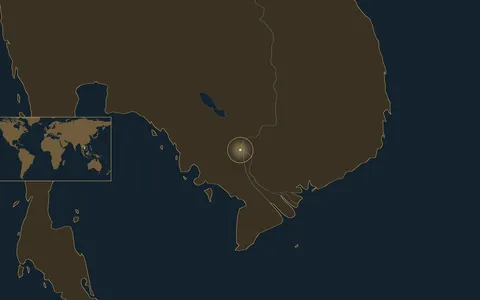
- 1975The fall of Phnom Penh, 1975Khmer Rouge (Communist Party of Kampuchea) vs Khmer Republic
On 17 April 1975 the Khmer Rouge marched into besieged Phnom Penh to cheering crowds. Within hours they ordered all two million inhabitants out of the city.
Timeline
- 1946War breaks out between the Viet Minh and France.24
- 1954The French garrison at Dien Bien Phu surrenders in May; the Geneva agreements divide Vietnam at the 17th parallel.25
- 1955Ngo Dinh Diem's state in the south becomes the Republic of Vietnam; the 1956 elections are never held.26
- 1959A large communist insurgency begins in the south.27
- 1963Diem is overthrown and killed in a coup by his generals in November.28
- 1964Gulf of Tonkin incidents in August; Congress passes the Gulf of Tonkin Resolution.29
- 1965Rolling Thunder begins; the first US ground combat units arrive; battle of Ia Drang in November.30
- 1968Siege of Khe Sanh from 20 January; Tet Offensive from 30 January; My Lai massacre on 16 March; Johnson limits the bombing on 31 March.31
- 1969Nixon takes office; secret bombing of Cambodia begins; US troop withdrawals start.32
- 1970US and South Vietnamese incursion into Cambodia on 30 April; four students killed at Kent State on 4 May.33
- 1971Lam Son 719: South Vietnamese forces cross into Laos on 8 February.34
- 1972North Vietnam's Easter Offensive; Operation Linebacker; Christmas bombing of the North.35
- 1973Paris agreement signed on 27 January; the last US ground troops leave in March.36
- 1975North Vietnam's final offensive from 10 March; Operation Frequent Wind on 29 and 30 April; Saigon falls on 30 April.37
- 1976Vietnam is reunified as the Socialist Republic of Vietnam on 2 July.38
Where to read next
Battles of this war appear in our ranking of the greatest battles in American history and among American victories against the odds. For the war next door, see the fall of Phnom Penh in 1975, and test yourself with the American battles quiz.
Notes
A number in the text points to a note; each note names the works that paragraph draws on, listed in full under Sources.
- HistoryNet, “The Vietnam War”; CNN Editorial Research, “Vietnam War Fast Facts”. ↩
- HistoryNet, “The Vietnam War”; CNN Editorial Research, “Vietnam War Fast Facts”; Australian War Memorial, “Vietnam War 1962 to 1975”. ↩
- HistoryNet, “The Vietnam War”; Office of the Historian, “Dien Bien Phu and the Fall of French Indochina, 1954”; CNN Editorial Research, “Vietnam War Fast Facts”. ↩
- Office of the Historian, “Dien Bien Phu and the Fall of French Indochina, 1954”; The Spokesman-Review, “Vo Nguyen Giap, Vietnam war general, dies at 102”; HistoryNet, “The Vietnam War”; CNN Editorial Research, “Vietnam War Fast Facts”. ↩
- Office of the Historian, “Dien Bien Phu and the Fall of French Indochina, 1954”; Office of the Historian, “A Guide to the United States' History of Recognition, Diplomatic, and Consular Relations”; Office of the Historian, “U.S. Involvement in the Vietnam War”; HistoryNet, “The Vietnam War”. ↩
- Office of the Historian, “U.S. Involvement in the Vietnam War”; HistoryNet, “The Vietnam War”; Office of the Historian, “Ending the Vietnam War, 1969 to 1973”; CNN Editorial Research, “Vietnam War Fast Facts”. ↩
- HistoryNet, “The Vietnam War”; CNN Editorial Research, “Vietnam War Fast Facts”; Office of the Historian, “U.S. Involvement in the Vietnam War”; EBSCO Research Starters, “Nguyen Van Thieu”. ↩
- NPR, “A Vietnam War massacre case from 1968 forces a new reckoning in South Korea”; Al Jazeera, “South Korean defence minister denies Vietnam War massacres”; Australian War Memorial, “Vietnam War 1962 to 1975”; HistoryNet, “The Vietnam War”. ↩
- CNN Editorial Research, “Vietnam War Fast Facts”; Office of the Historian, “U.S. Involvement in the Vietnam War”; HistoryNet, “The Vietnam War”. ↩
- Office of the Historian, “U.S. Involvement in the Vietnam War”; Australian War Memorial, “Vietnam War 1962 to 1975”; HistoryNet, “The Vietnam War”; EBSCO Research Starters, “Battle of Ia Drang Valley”. ↩
- Office of the Historian, “U.S. Involvement in the Vietnam War”; HistoryNet, “The Vietnam War”; Australian War Memorial, “Vietnam War 1962 to 1975”; Miller Center, “Lyndon B. Johnson, Remarks on Decision not to Seek Re-Election, March 31, 1968”. ↩
- Office of the Historian, “Ending the Vietnam War, 1969 to 1973”; Air and Space Forces Magazine, “The Shadow War in Cambodia”; HistoryNet, “The Vietnam War”; CNN Editorial Research, “Vietnam War Fast Facts”. ↩
- Office of the Historian, “Ending the Vietnam War, 1969 to 1973”; US Naval Institute, “Bravery and Chaos”; Naval History and Heritage Command, “By Sea, Air, and Land, chapter 5”; CNN Editorial Research, “Vietnam War Fast Facts”. ↩
- The Vietnam Center and Archive, “Hue”; HistoryNet, “The Vietnam War”; EBSCO Research Starters, “American Massacre of Vietnamese Civilians at My Lai Is Revealed”; New Georgia Encyclopedia, “William Calley Jr. and the My Lai Massacre”; CNN Editorial Research, “Vietnam War Fast Facts”. ↩
- NPR, “A Vietnam War massacre case from 1968 forces a new reckoning in South Korea”; Al Jazeera, “South Korean defence minister denies Vietnam War massacres”. ↩
- PBS NewsHour, “Decades on, millions of unexploded American bombs left behind still kill and maim in Laos”; The HALO Trust, “Laos”; EBSCO Research Starters, “Agent Orange Controversy of the 1960s”; US Department of Veterans Affairs, “Agent Orange”. ↩
- The Spokesman-Review, “Vo Nguyen Giap, Vietnam war general, dies at 102”; Alpha History, “Post-war Vietnam”; Office of the Historian, “Ending the Vietnam War, 1969 to 1973”; HistoryNet, “The Vietnam War”. ↩
- Office of the Historian, “U.S. Involvement in the Vietnam War”; EBSCO Research Starters, “Nguyen Van Thieu”; US National Archives, “Haste”; HistoryNet, “The Vietnam War”; EBSCO Research Starters, “Battle of Ia Drang Valley”. ↩
- CNN Editorial Research, “Vietnam War Fast Facts”; US Naval Institute, “Bravery and Chaos”; Alpha History, “Post-war Vietnam”; Australian War Memorial, “Vietnam War 1962 to 1975”; Office of the Historian, “A Guide to the United States' History of Recognition, Diplomatic, and Consular Relations”. ↩
- US National Archives, “Vietnam War U.S. Military Fatal Casualty Statistics”; CNN Editorial Research, “Vietnam War Fast Facts”; HistoryNet, “The Vietnam War”; PBS, “Timeline, 1969 to 1975”; Australian War Memorial, “Vietnam War 1962 to 1975”. ↩
- CNN Editorial Research, “Vietnam War Fast Facts”; Office of the Historian, “U.S. Involvement in the Vietnam War”; Australian War Memorial, “Vietnam War gallery”; Australian War Memorial, “Vietnam War 1962 to 1975”. ↩
- Alpha History, “Post-war Vietnam”; EBSCO Research Starters, “Indo-Chinese Boat People Begin Fleeing Vietnam”; PBS NewsHour, “Decades on, millions of unexploded American bombs left behind still kill and maim in Laos”; The HALO Trust, “Laos”. ↩
- EBSCO Research Starters, “Battle of Ia Drang Valley”; HistoryNet, “Ia Drang”; National Museum of the Marine Corps, “The Siege of Khe Sanh”; The Vietnam Center and Archive, “Legacy of Khe Sanh”. ↩
- Office of the Historian, “Dien Bien Phu and the Fall of French Indochina, 1954”; HistoryNet, “The Vietnam War”. ↩
- Office of the Historian, “Dien Bien Phu and the Fall of French Indochina, 1954”; The Spokesman-Review, “Vo Nguyen Giap, Vietnam war general, dies at 102”. ↩
- Office of the Historian, “A Guide to the United States' History of Recognition, Diplomatic, and Consular Relations”; Office of the Historian, “U.S. Involvement in the Vietnam War”. ↩
- Office of the Historian, “U.S. Involvement in the Vietnam War”; HistoryNet, “The Vietnam War”. ↩
- Office of the Historian, “U.S. Involvement in the Vietnam War”; HistoryNet, “The Vietnam War”. ↩
- Office of the Historian, “U.S. Involvement in the Vietnam War”; CNN Editorial Research, “Vietnam War Fast Facts”. ↩
- Office of the Historian, “U.S. Involvement in the Vietnam War”; Australian War Memorial, “Vietnam War 1962 to 1975”; EBSCO Research Starters, “Battle of Ia Drang Valley”. ↩
- National Museum of the Marine Corps, “The Siege of Khe Sanh”; Office of the Historian, “U.S. Involvement in the Vietnam War”; New Georgia Encyclopedia, “William Calley Jr. and the My Lai Massacre”; Miller Center, “Lyndon B. Johnson, Remarks on Decision not to Seek Re-Election, March 31, 1968”. ↩
- Office of the Historian, “Ending the Vietnam War, 1969 to 1973”; Air and Space Forces Magazine, “The Shadow War in Cambodia”. ↩
- Office of the Historian, “Ending the Vietnam War, 1969 to 1973”; CNN Editorial Research, “Vietnam War Fast Facts”. ↩
- HistoryNet, “Lam Son 719”; EBSCO Research Starters, “Nguyen Van Thieu”. ↩
- Office of the Historian, “Ending the Vietnam War, 1969 to 1973”; HistoryNet, “The Vietnam War”. ↩
- Office of the Historian, “Ending the Vietnam War, 1969 to 1973”; CNN Editorial Research, “Vietnam War Fast Facts”. ↩
- US Naval Institute, “Bravery and Chaos”; Naval History and Heritage Command, “By Sea, Air, and Land, chapter 5”; Office of the Historian, “Ending the Vietnam War, 1969 to 1973”. ↩
- Alpha History, “Post-war Vietnam”; HistoryNet, “The Vietnam War”. ↩
Sources
- HistoryNet, “The Vietnam War: Facts and Info About the Most Controversial US Conflict”.
- CNN Editorial Research, “Vietnam War Fast Facts”.
- Australian War Memorial, “Vietnam War 1962 to 1975”.
- Office of the Historian, US Department of State, “Dien Bien Phu and the Fall of French Indochina, 1954”.
- The Spokesman-Review (Associated Press), “Vo Nguyen Giap, Vietnam war general, dies at 102”.
- Office of the Historian, US Department of State, “A Guide to the United States' History of Recognition, Diplomatic, and Consular Relations: Vietnam”.
- Office of the Historian, US Department of State, “U.S. Involvement in the Vietnam War: the Gulf of Tonkin and Escalation, 1964”.
- Office of the Historian, US Department of State, “Ending the Vietnam War, 1969 to 1973”.
- EBSCO Research Starters, “Nguyen Van Thieu”.
- NPR, “A Vietnam War massacre case from 1968 forces a new reckoning in South Korea”.
- Al Jazeera, “South Korean defence minister denies Vietnam War massacres”.
- EBSCO Research Starters, “Battle of Ia Drang Valley”.
- Office of the Historian, US Department of State, “U.S. Involvement in the Vietnam War: The Tet Offensive, 1968”.
- Miller Center, University of Virginia, “Lyndon B. Johnson, Remarks on Decision not to Seek Re-Election, March 31, 1968”.
- Air and Space Forces Magazine, “The Shadow War in Cambodia”.
- US Naval Institute, Naval History, “Bravery and Chaos: Operation Frequent Wind, April 1975”.
- Naval History and Heritage Command, “By Sea, Air, and Land, chapter 5: The Final Curtain, 1973 to 1975”.
- The Vietnam Center and Archive, Texas Tech University, “Hue: The Massacre”.
- EBSCO Research Starters, “American Massacre of Vietnamese Civilians at My Lai Is Revealed”.
- New Georgia Encyclopedia, “William Calley Jr. and the My Lai Massacre”.
- PBS NewsHour, “Decades on, millions of unexploded American bombs left behind still kill and maim in Laos”.
- The HALO Trust, “Laos”.
- EBSCO Research Starters, “Agent Orange Controversy of the 1960s”.
- US Department of Veterans Affairs, “Agent Orange”.
- Alpha History, “Post-war Vietnam”.
- US National Archives, The Unwritten Record, “Haste: Operation Frequent Wind and the Fall of Saigon”.
- US National Archives, “Vietnam War U.S. Military Fatal Casualty Statistics”.
- PBS, Battlefield: Vietnam, “Timeline, 1969 to 1975”.
- Australian War Memorial, “Vietnam War gallery”.
- EBSCO Research Starters, “Indo-Chinese Boat People Begin Fleeing Vietnam”.
- HistoryNet, Joseph Galloway, “Ia Drang: The Battle That Convinced Ho Chi Minh He Could Win”.
- National Museum of the Marine Corps, “The Siege of Khe Sanh”.
- The Vietnam Center and Archive, Texas Tech University, “Legacy of Khe Sanh”.
- HistoryNet, James H. Willbanks, “Lam Son 719: South Vietnam Invades Laos, 1971”.






