

What was the American Revolutionary War?
The American Revolutionary War (1775 to 1783) was fought between thirteen of the Kingdom of Great Britain's North American colonies, which declared their independence as the United States in 1776, and Britain. It began at Lexington and Concord in April 1775 as a civil war inside the British Empire and became an international war when France joined the Americans in 1778 and Spain in 1779. The last major battle was the Franco-American siege of Yorktown in 1781, and in the Treaty of Paris of 1783 Britain recognized American independence.1
The war is also known as the American War of Independence, the War of Independence or simply the American Revolution. Engagements were fought in every one of the thirteen colonies, most of all in New York, New Jersey and South Carolina, and from 1778 the war spread to the Caribbean, European waters and India. This guide follows it from its causes to the peace and gives every party its due: Patriots and Loyalists, British and German soldiers, French and Spanish allies, and the Native nations caught between them.2
Causes: debt, taxes and representation, 1763 to 1775
The Seven Years' War, known in America as the French and Indian War, left Britain the master of eastern North America in 1763 but deeply in debt. Parliament expected the colonies, which the war had been fought to defend, to share the cost. From 1763 it began to exert more control over them and to raise revenue through new acts of taxation.3
The Sugar Act of 1764 and the Stamp Act of 1765 were followed by the Townshend Acts of 1767. Colonial protest forced the repeal of the Stamp Act, but the larger quarrel remained. The colonists accepted that Parliament could make laws for them, the American Battlefield Trust explains, but insisted that only their own elected representatives could tax them, while Parliament held that its authority over the colonies was supreme. Taxation was one grievance among several: colonists also resented trade restrictions and the Proclamation of 1763, which reserved the lands west of the Appalachians for Native Americans.4
After the Boston Tea Party of December 1773, Parliament passed the Intolerable (or Coercive) Acts to punish Massachusetts, and the colonies answered by meeting in a Continental Congress in 1774. On 19 April 1775 British regulars marching to seize militia munitions met armed colonists at Lexington and Concord. It is not known which side fired the first shot. Britannica counts 273 British and 95 Americans killed and wounded in the day's fighting; the American Battlefield Trust estimates about 300 British and 93 American casualties. Our article on Lexington and Concord follows the day.5
Even then, many colonists saw independence as a last resort. Support for a complete break grew as the fighting spread, and on 4 July 1776 the Continental Congress adopted the Declaration of Independence. From that summer the rebel side was the United States, not only thirteen colonies in revolt.6
Who fought: a civil war that became a world war
Until early 1778 the conflict was a civil war within the British Empire. The colonists were divided: Britannica estimates that about one third remained loyal to the Crown, and the American Battlefield Trust describes a population split between those who opposed the Crown, those who supported it and those who wanted to stay neutral, a choice neither side respected. In the Southern colonies the war became, in the Trust's words, a brutal civil war between Patriot and Loyalist neighbors.7

There is no single agreed figure for the armies, and the sources count different things. The American Battlefield Trust estimates that about 231,000 men served in the Continental Army over the whole war, never more than 48,000 at one time, and Britannica gives 231,771. For Britain the Trust counts a peak of upwards of 22,000 soldiers in North America and Britannica an army of about 42,000; the two figures do not measure the same thing.8
Britain also bought the services of about 30,000 German soldiers from their princes; the colonists called them Hessians. They kept their own uniforms, flags and officers but served under British command, and it was a German garrison that Washington surprised at Trenton.9
Native nations made their own choices. The Haudenosaunee (Iroquois) Confederacy could not reach the consensus its council required, and its nations divided: four of the six sided with Britain, partly because the Crown had tried to stop colonists from settling on their lands, while the Oneida and Tuscarora sided with the colonists. Loyalists and Native warriors raided frontier settlements in New York and Pennsylvania, as in the Battle of Wyoming in 1778.10
Black Americans fought on both sides, many of them in the hope of freedom, and the estimates differ. Britannica counts roughly 5,000 Black soldiers in the Continental Army, about 5 percent of it; the American Battlefield Trust estimates about 7,000 African Americans on the Continental side, a wider count, and about 20,000 with the British. When enlistments fell, several states offered freedom to enslaved men who fought, and British commanders made similar offers, though the Trust stresses that these were local decisions, never official government policy. After the war, Britannica notes, many enslaved men who had fought for the Americans were returned to slavery.11
European volunteers joined the Continental Army as well: the Marquis de Lafayette from France, Baron von Steuben and Johann de Kalb from the German states, and Casimir Pulaski and Tadeusz Kościuszko from Poland. Our article on the Polish heroes of the American Revolution tells the Polish part of the story.12
The war in the North, 1775 to 1778
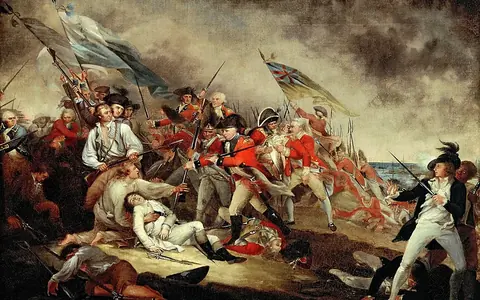
Early fighting centered on New England. Militia surrounded the British in Boston, and on 17 June 1775 British troops attacked the colonial works on Breed's Hill in Charlestown, in the battle known as Bunker Hill. The British took the hill but, by Britannica's count, lost more than 40 percent of their men, and the hard fight showed that the colonists could stand against British regulars. In July George Washington, appointed by the Second Continental Congress, took command of the new Continental Army, and in March 1776 the British evacuated Boston.13
The British struck back at New York with a large army and fleet under General William Howe. On 27 August 1776 Howe routed the Americans at Long Island, which the American Battlefield Trust counts as the largest battle of the war, with about 40,000 soldiers engaged. Washington won a smaller action at Harlem Heights, but the British pressed on, winning at White Plains on 28 October and capturing Fort Washington and Fort Lee in November, and then they drove his army across New Jersey into Pennsylvania.14
That winter Washington revived the cause. He crossed the Delaware on Christmas night, surprised the German garrison at Trenton on 26 December 1776, and on 3 January 1777 slipped away from Cornwallis by night to defeat the British troops left at Princeton. Britannica calls these engagements, spread over nine days, Washington's first notable successes; our article on the Ten Crucial Days follows them day by day.15
For 1777 the British planned to cut New England off from the other colonies. John Burgoyne was to advance south from Canada by Lake Champlain and the Hudson to Albany, while Barry St. Leger came east along the Mohawk Valley. Howe, instead of moving up the Hudson, chose to take the American capital, Philadelphia. He beat Washington at Brandywine on 11 September, entered the city later that month and threw back Washington's attack at Germantown on 4 October.16
Burgoyne took Fort Ticonderoga but was slowed by militia at Bennington and Oriskany, and St. Leger turned back. Near Saratoga he attacked the Americans under Horatio Gates at Freeman's Farm on 19 September and at Bemis Heights on 7 October, and both attacks failed to break through. Outnumbered and cut off, he surrendered his army on 17 October 1777. Britannica calls Saratoga a turning point of the war, because it persuaded France to enter it openly.17
After a hard winter at Valley Forge, where Baron von Steuben drilled the Continentals into a more disciplined force, Washington took the field again. Henry Clinton, who replaced Howe as British commander in chief in 1778, was ordered to give up Philadelphia and march for New York. Washington attacked him at Monmouth on 28 June 1778. Neither side won a clear victory, and the British withdrew in the night. After that the war in the North settled into a stalemate around British-held New York.18
The French alliance and a world war, 1778 to 1782
France had lost Canada to Britain in 1763 and saw in the rebellion a chance to weaken its rival. It sent secret aid from 1776, and Benjamin Franklin led the American mission in Paris. Foreign Minister Vergennes hesitated until news of Saratoga reached him in December 1777. On 6 February 1778 France and the United States signed a Treaty of Alliance and a Treaty of Amity and Commerce; under the alliance neither partner was to make peace with Britain until American independence was recognized.19
Spain declared war on Britain on 21 June 1779, and Britain went to war with the Dutch Republic soon after; the Dutch recognized American independence on 19 April 1782. The fighting spread to the Caribbean, Gibraltar, European waters and India, and Britain had to divert men and ships from America to defend the rest of its empire.20
The war in the South, 1778 to 1781
From late 1778 the British turned south, where they expected more Loyalist support. They took Savannah, Georgia, on 29 December 1778 and held it in 1779 against a Franco-American siege, in which Casimir Pulaski was mortally wounded. On 12 May 1780 Benjamin Lincoln surrendered Charleston, South Carolina, with about 5,000 men, virtually the whole Continental Army in the South. From then on the South was the main theater of the war.21
In the backcountry, Patriot and Loyalist militias fought a war of raids and reprisals. At Waxhaws in May 1780 Banastre Tarleton's men cut down Continentals who were trying to surrender, in what the American Battlefield Trust calls a massacre. In August Cornwallis routed a new Southern army under Horatio Gates at Camden, a crushing defeat that the Trust counts as the war's costliest battle for the Continental Army, with about 1,050 Continentals killed and wounded against 314 British casualties.22
The tide turned in the backcountry. On 7 October 1780 frontier militia, the Overmountain Men, surrounded Patrick Ferguson's Loyalist force at Kings Mountain and destroyed it; the Trust writes that they gave the Loyalists no quarter in retaliation for Waxhaws. In December Nathanael Greene took over the Southern army and sent Daniel Morgan against Tarleton, whom Morgan defeated at Cowpens on 17 January 1781. At Kings Mountain and Cowpens, the Trust notes, the British side lost about 90 percent of its force, most of them as prisoners.23
Greene then drew Cornwallis on a long chase through North Carolina. At Guilford Courthouse on 15 March 1781 Cornwallis held the field but lost about a quarter of his army, and he left the Carolinas for Virginia. Greene lost the field again at Hobkirk's Hill and Eutaw Springs, yet by late 1781 the British held little beyond Charleston and Savannah.24
Yorktown and the end of the fighting, 1781 to 1783
In Virginia, Cornwallis fortified Yorktown on Chesapeake Bay to keep in touch with the Royal Navy, while Lafayette's troops watched him. Washington, then outside New York with the French army of the Comte de Rochambeau, learned that Admiral de Grasse would bring a French fleet to the Chesapeake, and the allied armies marched south.25
On 5 September 1781 de Grasse's fleet fought a British fleet off the Virginia Capes in the Battle of the Chesapeake. France kept control of the bay, and Cornwallis was cut off from relief or escape by sea. On 28 September Washington led over 17,000 American and French soldiers to begin the siege of Yorktown, held by over 8,000 British troops. French heavy artillery pounded the British works, and the allies captured two redoubts that were critical to the British outer defenses.26

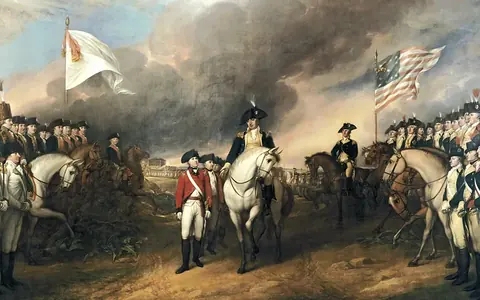
The articles of surrender were signed on 19 October 1781. Cornwallis did not attend the ceremony, citing illness, and sent his deputy Charles O'Hara in his place. The surrenders at Yorktown and Gloucester Point gave up about one third of all British forces in North America. Britannica puts the men surrendered at more than 7,000, the American Battlefield Trust at over 8,000. Yorktown was the work of the French navy and army as much as of the Continental Army; without French support, the Trust writes, it is unlikely that Washington could have trapped the British.27
When the news reached London, Lord North's government fell; North resigned on 20 March 1782, and Parliament voted against continuing the war in America. Yorktown was the last major battle, but fighting went on for more than a year, mostly on the western frontier, where 1782 became known as the Bloody Year. The last British troops left New York City on 25 November 1783.28
Key figures
The United States. George Washington commanded the Continental Army from 1775 until the end of the war. Horatio Gates took Burgoyne's surrender at Saratoga and was routed at Camden three years later. Nathanael Greene and Daniel Morgan fought the southern campaign of 1781, while partisan leaders such as Francis Marion, Thomas Sumter and Andrew Pickens kept up resistance in South Carolina after Charleston fell. Benedict Arnold, a successful general at Saratoga, changed sides and in 1780 tried to hand West Point to the British. Benjamin Franklin led American diplomacy in France.29
Great Britain. William Howe won at Long Island and Brandywine and took Philadelphia, but his decision to go there rather than up the Hudson left Burgoyne without support. Henry Clinton replaced him in 1778 and opened the southern campaign. John Burgoyne surrendered at Saratoga. Charles Cornwallis won at Camden and Guilford Courthouse, surrendered at Yorktown and later served as Governor-General of India.30

Native leaders. The Mohawk leader Joseph Brant (Thayendanegea), commissioned a captain by the British in 1775, led warriors of the Iroquois nations allied to Britain alongside British regulars and Loyalists. He fought at Oriskany in 1777 and raided frontier settlements in New York and Pennsylvania, among them Cherry Valley in 1778. After the war he settled with his followers on land granted by Britain on the Grand River, in what is now Ontario.31
Outcome: the peace of 1783
Peace talks opened in Paris in April 1782 between the British envoy Richard Oswald and the American commissioners Franklin, John Jay and John Adams; Henry Laurens joined them two days before the preliminary articles were signed on 30 November 1782. Congress had told its commissioners not to conclude a treaty without France, but they negotiated directly with Britain. Vergennes objected to the manner but accepted the result as part of a general peace.32

The definitive Treaty of Paris was signed on 3 September 1783, one of several treaties that also made peace between Britain and France, Spain and the Netherlands. Britain recognized the independence of the United States, with a western border on the Mississippi, but kept Canada. The treaty also settled American fishing rights off Newfoundland, the payment of prewar debts to British creditors and the restitution of Loyalist property, and some of its provisions long remained unenforced. The Confederation Congress, meeting at Annapolis, ratified it unanimously on 14 January 1784.33
The allies gained less. Spain recovered Florida, which it had lost in the Seven Years' War, but failed to take Gibraltar. France won only small concessions such as Tobago and some posts in West Africa, and the cost of the war deepened the financial crisis that led to the French Revolution of 1789. Britain lost thirteen colonies, yet its global power continued to grow, built in part on its conquests in India.34
The Native nations were not consulted when Britain ceded the lands south of the Great Lakes and as far west as the Mississippi. The Haudenosaunee who had fought beside the British found themselves inside the United States, and several thousand of them resettled in Canada. The prewar treaties between Native nations and the British were ignored, and years of conflict over the western lands followed.35
The human cost can only be estimated. For American battle deaths, the American Battlefield Trust gives about 6,800, while Howard Peckham's study of 1974, cited by the Journal of the American Revolution, found 7,174 killed and 8,241 wounded; Peckham put all American deaths in service at 25,674. The Trust adds that at least 17,000 Americans died of disease, including 8,000 to 12,000 who died as prisoners of war. It calls the imperial figures for British losses unreliable, and no comparable totals exist for French, Spanish, Loyalist or Native losses.36
Legacy and memory
Popular memory often tells the war as an unbroken American triumph, but the British won many of its largest battles, among them Long Island, Brandywine, Charleston and Camden, and the American Battlefield Trust notes that the British army in North America won most of the battles it fought. The outcome owed much to the spread of the conflict across the world, which drew British men and ships away from America, and to French sea power at the Chesapeake.37
Saratoga is remembered as the turning point of the war. On its monument, a 155-foot stone obelisk, statues of Philip Schuyler, Daniel Morgan and Horatio Gates fill three niches; the fourth stays empty, for Benedict Arnold, whose heroism in 1777 was overshadowed by his later treason. The Yorktown battlefield, with the Moore House where the surrender terms were settled, is preserved by the National Park Service in Colonial National Historical Park.38
Battles of the American Revolutionary War
Our articles on the battles of the war are listed below in date order, from Lexington and Concord to Yorktown.
- 1775Lexington and Concord, 1775Thirteen Colonies vs Great Britain
How 19 April 1775 turned a political crisis into the American Revolutionary War.
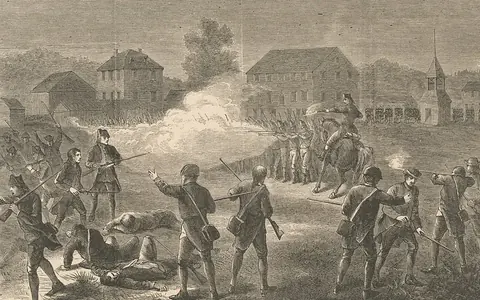
- 1775Battle of Bunker Hill, 1775Thirteen Colonies vs Great Britain
How American militia bloodied the British at Bunker Hill in 1775, a British victory that proved the colonists could fight.
- 1776The Battle of Long Island, 1776United States (Continental Army) vs Great Britain
The biggest battle of the Revolution, and the night retreat that saved the cause.
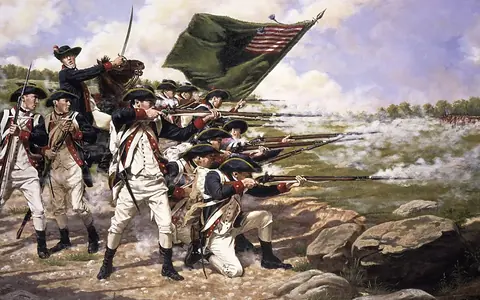
- 1776Battle of Pell's Point, 1776Continental Army vs Britain and Hesse
On 18 October 1776 John Glover's 750 Massachusetts men fought a British and Hessian landing from wall to wall at Pell's Point and bought Washington a day to escape Manhattan.
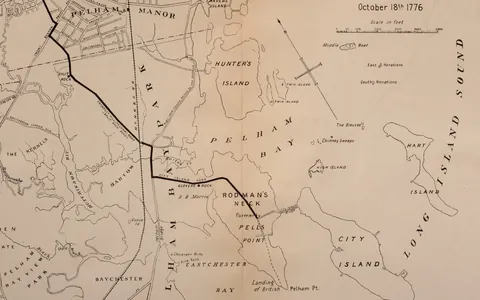
- 1776The Battle of White Plains, 28 October 1776American vs British
Chatterton's Hill, 28 October 1776: Howe takes the hill but Washington's army slips away.
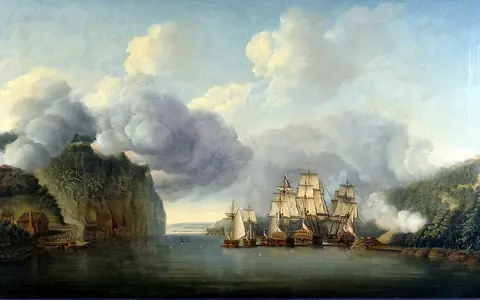
- 1776The Fall of Fort Washington, 16 November 1776British and Hessian vs American
16 November 1776: one of the worst American defeats of the war, and nearly 3,000 men lost.
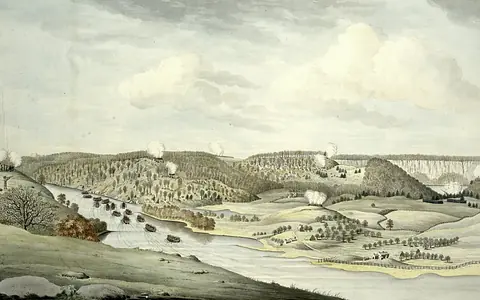
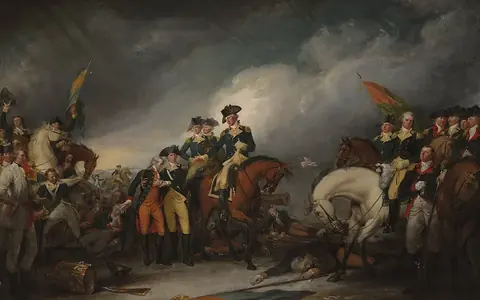
- 1776Battle of Trenton, 1776United States (Continental Army) vs Great Britain (Hessian garrison)
Washington's Christmas-night crossing of the Delaware and the surprise that revived the Revolution.
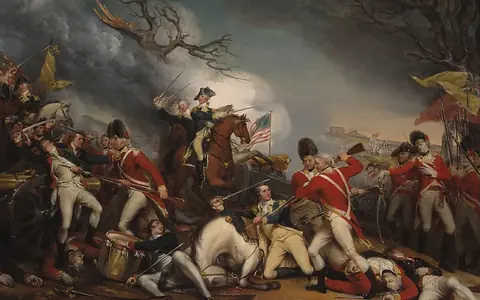
- 1777The Battle of Princeton, 1777United States vs Great Britain
A night march, a desperate rally and a victory that saved the Revolution.
- 1777Battle of Bound Brook, 1777Great Britain (British and Hessian troops) vs United States (Continental Army and militia)
On 13 April 1777 Cornwallis's three columns surprised Benjamin Lincoln's outpost at Bound Brook; most of the garrison escaped to the hills, but the guns were lost.
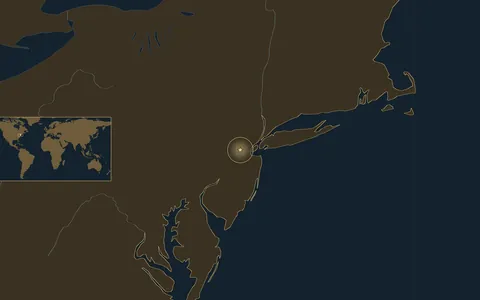
- 1777The Battle of Saratoga, 1777United States (Continental Army) vs Great Britain
Autumn 1777 on the Hudson: Burgoyne marches south, Gates digs in, and two battles decide the fate of the American Revolution.
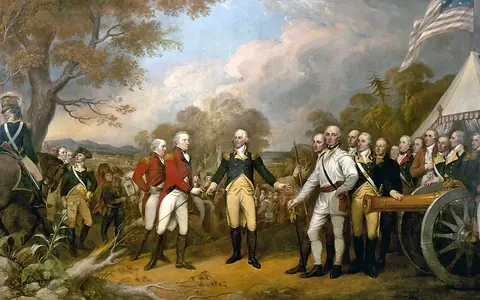
- 1777The Battle of Brandywine, 1777United States (Continental Army) vs Great Britain
Outflanked again at Brandywine, Washington lost the road to Philadelphia.
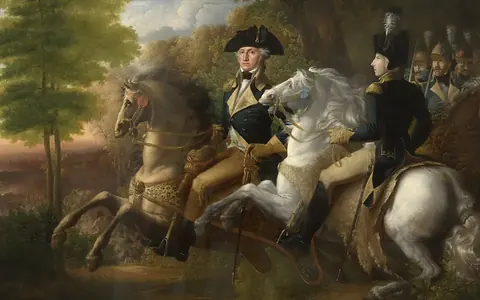
- 1777Battle of Germantown, 1777United States vs Great Britain
How Washington's bold four-column attack near Philadelphia unravelled in the fog, and still impressed France.
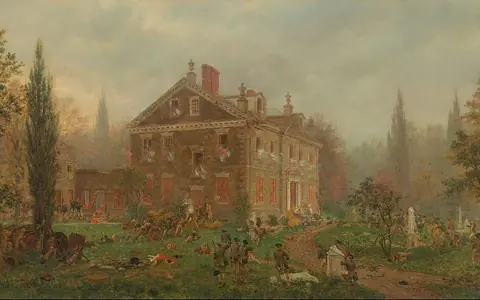
- 1778The Battle of Monmouth, 1778United States (Continental Army) vs Great Britain
In brutal heat at Monmouth, the Continental Army finally stood its ground.
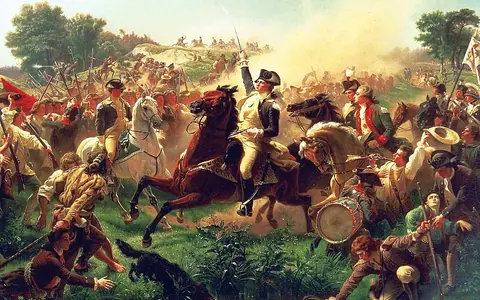
- 1778Battle of Wyoming, 1778Loyalists and Iroquois allies vs Patriot militia and Continentals
On 3 July 1778 John Butler's Loyalists and Iroquois lured the Wyoming Valley militia out of Forty Fort and destroyed it, in what became the Wyoming Massacre.
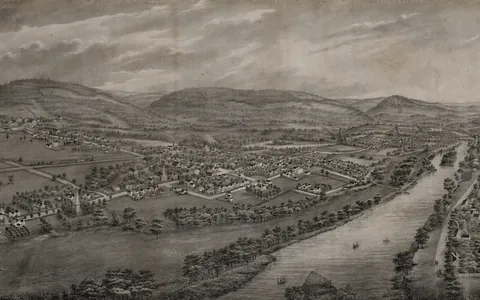
- 1779Siege of Savannah, 1779France and the United States vs Great Britain
In autumn 1779 French and American forces besieged British-held Savannah; their dawn assault on 9 October failed within an hour, and Casimir Pulaski was mortally wounded.
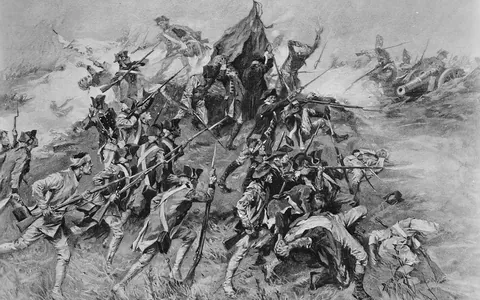
- 1780The Battle of Kings Mountain, 1780United States vs Great Britain
Frontier militia wiped out a Loyalist army in an hour and turned the war in the South.
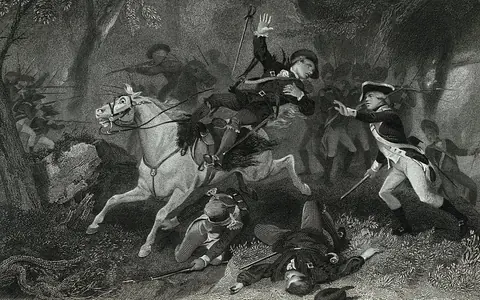
- 1781Battle of Cowpens, 1781United States (Continentals and militia) vs Great Britain
Daniel Morgan's double envelopment destroyed Tarleton's force in a tactical masterpiece.
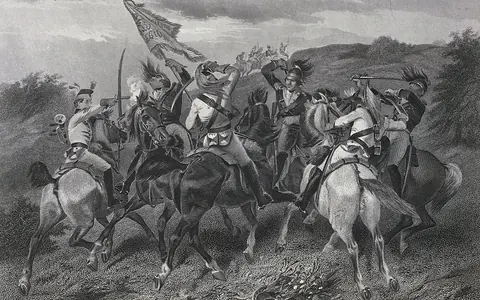
- 1781The Battle of Guilford Courthouse, 1781United States (Continentals and militia) vs Great Britain
Cornwallis won the field and lost a quarter of his army, on the road to Yorktown.
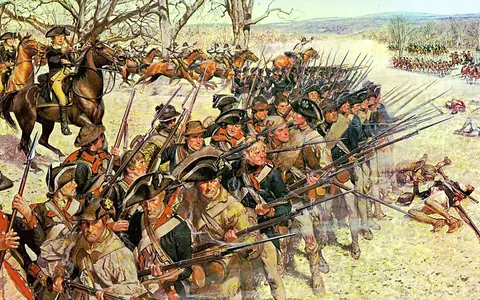
- 1781Siege of Yorktown, 1781United States and France vs Great Britain
Washington and the French trapped Cornwallis in Virginia, and the surrender that won American independence.
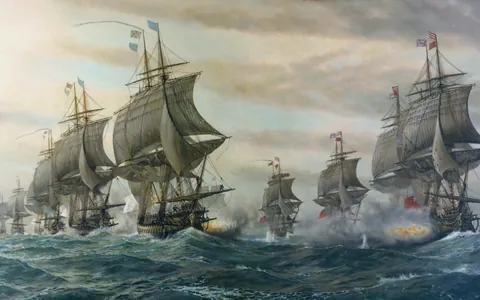
- 1781Battle of the Chesapeake, 1781France vs Great Britain
On 5 September 1781 de Grasse's French fleet fought Graves's British fleet off the Virginia capes. No ship was taken, but the French kept the bay and Cornwallis was trapped.
Timeline
- 1775Fighting begins at Lexington and Concord on 19 April; the British take Bunker Hill at heavy cost on 17 June.39
- 1776Congress adopts the Declaration of Independence on 4 July; Howe defeats Washington at Long Island on 27 August; Washington surprises Trenton on 26 December.40
- 1777
- 1778
- 1779
- 1780Charleston surrenders on 12 May; Gates is routed at Camden on 16 August; Patriot militia destroy Ferguson's force at Kings Mountain on 7 October.44
- 1781Morgan wins at Cowpens on 17 January; the French fleet wins the Battle of the Chesapeake on 5 September; Cornwallis surrenders at Yorktown on 19 October.45
- 1782Lord North resigns on 20 March; preliminary articles of peace are signed in Paris on 30 November.46
- 1783The Treaty of Paris is signed on 3 September; the British leave New York City on 25 November.47
- 1784The Confederation Congress ratifies the treaty at Annapolis on 14 January.48
Where to read next
Several battles of this war appear in our ranking of the greatest battles of the American Revolution and in the greatest battles in American history. For the wider period, see our page on the early modern era, and test yourself with the American battles quiz.
Notes
A number in the text points to a note; each note names the works that paragraph draws on, listed in full under Sources.
- Encyclopaedia Britannica, “Key Facts of the American Revolution”; Encyclopaedia Britannica, “American Revolution”. ↩
- Encyclopaedia Britannica, “American Revolution”; American Battlefield Trust, “American Revolution Facts”. ↩
- Encyclopaedia Britannica, “American Revolution Timeline”; American Battlefield Trust, “Overview of the American Revolutionary War”; American Battlefield Trust, “American Revolution Facts”. ↩
- Encyclopaedia Britannica, “Key Facts of the American Revolution”; Encyclopaedia Britannica, “American Revolution Timeline”; American Battlefield Trust, “American Revolution Facts”; American Battlefield Trust, “Myths and Realities of the Revolutionary War”. ↩
- Encyclopaedia Britannica, “Key Facts of the American Revolution”; Encyclopaedia Britannica, “American Revolution Timeline”; American Battlefield Trust, “Overview of the American Revolutionary War”; American Battlefield Trust, “American Revolution Facts”. ↩
- American Battlefield Trust, “Overview of the American Revolutionary War”; Britannica School, “American Revolution”; U.S. Department of State, “Diplomacy and the American Revolution, 1775 to 1783”; American Battlefield Trust, “American Revolution Timeline”. ↩
- Encyclopaedia Britannica, “American Revolution”; American Battlefield Trust, “Myths and Realities of the Revolutionary War”; American Battlefield Trust, “The Southern Theater of the American Revolution”. ↩
- American Battlefield Trust, “American Revolution Facts”; Encyclopaedia Britannica, “Key Facts of the American Revolution”. ↩
- Encyclopaedia Britannica, “Key Facts of the American Revolution”; American Battlefield Trust, “American Revolution Facts”; Britannica School, “American Revolution”. ↩
- Encyclopaedia Britannica, “Native American”; American Battlefield Trust, “American Revolution Facts”; Britannica School, “American Revolution”. ↩
- Encyclopaedia Britannica, “American Revolution”; American Battlefield Trust, “American Revolution Facts”; Britannica School, “American Revolution”. ↩
- Encyclopaedia Britannica, “Key Facts of the American Revolution”; Britannica School, “American Revolution”; American Battlefield Trust, “American Revolution Facts”. ↩
- Britannica School, “American Revolution”; American Battlefield Trust, “Overview of the American Revolutionary War”; Encyclopaedia Britannica, “Key Facts of the American Revolution”; Encyclopaedia Britannica, “American Revolution Timeline”; American Battlefield Trust, “American Revolution Timeline”. ↩
- Britannica School, “American Revolution”; American Battlefield Trust, “Overview of the American Revolutionary War”; American Battlefield Trust, “American Revolution Facts”; American Battlefield Trust, “American Revolution Timeline”. ↩
- Encyclopaedia Britannica, “Key Facts of the American Revolution”; Britannica School, “American Revolution”; American Battlefield Trust, “Overview of the American Revolutionary War”. ↩
- National Park Service, “Burgoyne’s Campaign”; Britannica School, “American Revolution”; National Park Service, “A Turning Point of the American Revolution”; American Battlefield Trust, “Overview of the American Revolutionary War”; American Battlefield Trust, “American Revolution Timeline”. ↩
- National Park Service, “Burgoyne’s Campaign”; Britannica School, “American Revolution”; Encyclopaedia Britannica, “Key Facts of the American Revolution”; American Battlefield Trust, “Overview of the American Revolutionary War”. ↩
- Britannica School, “American Revolution”; American Battlefield Trust, “Overview of the American Revolutionary War”; American Battlefield Trust, “American Revolution Timeline”; National Park Service, “Siege of Yorktown Trivia”. ↩
- U.S. Department of State, “French Alliance, French Assistance, and European Diplomacy during the American Revolution, 1778 to 1782”; U.S. National Archives, Prologue; American Battlefield Trust, “France in the American Revolution”. ↩
- U.S. Department of State, “French Alliance, French Assistance, and European Diplomacy during the American Revolution, 1778 to 1782”; American Battlefield Trust, “American Revolution Timeline”; American Battlefield Trust, “France in the American Revolution”; American Battlefield Trust, “American Revolution Facts”. ↩
- American Battlefield Trust, “The Southern Theater of the American Revolution”; Britannica School, “American Revolution”; American Battlefield Trust, “American Revolution Timeline”; American Battlefield Trust, “France in the American Revolution”. ↩
- American Battlefield Trust, “The Southern Theater of the American Revolution”; Britannica School, “American Revolution”; American Battlefield Trust, “American Revolution Facts”. ↩
- American Battlefield Trust, “The Southern Theater of the American Revolution”; Britannica School, “American Revolution”; American Battlefield Trust, “American Revolution Facts”. ↩
- Britannica School, “American Revolution”; American Battlefield Trust, “The Southern Theater of the American Revolution”. ↩
- Britannica School, “American Revolution”; National Park Service, “The End of Our Tether”; American Battlefield Trust, “Overview of the American Revolutionary War”. ↩
- National Park Service, “Charles Cornwallis”; U.S. National Archives, “Victory at Yorktown”; American Battlefield Trust, “France in the American Revolution”; American Battlefield Trust, “The Southern Theater of the American Revolution”. ↩
- National Park Service, “Charles Cornwallis”; Encyclopaedia Britannica, “American Revolution”; National Park Service, “Siege of Yorktown Trivia”; Encyclopaedia Britannica, “American Revolution Timeline”; American Battlefield Trust, “American Revolution Facts”; American Battlefield Trust, “France in the American Revolution”. ↩
- U.S. Department of State, “Treaty of Paris, 1783”; American Battlefield Trust, “American Revolution Timeline”; National Park Service, “Siege of Yorktown Trivia”; American Battlefield Trust, “Myths and Realities of the Revolutionary War”; Encyclopaedia Britannica, “Key Facts of the American Revolution”. ↩
- Encyclopaedia Britannica, “Key Facts of the American Revolution”; Britannica School, “American Revolution”; American Battlefield Trust, “The Southern Theater of the American Revolution”; National Park Service, “Saratoga Monument”; U.S. Department of State, “French Alliance, French Assistance, and European Diplomacy during the American Revolution, 1778 to 1782”. ↩
- Britannica School, “American Revolution”; National Park Service, “A Turning Point of the American Revolution”; National Park Service, “Siege of Yorktown Trivia”; National Park Service, “Charles Cornwallis”. ↩
- Encyclopaedia Britannica, “Joseph Brant”; American Battlefield Trust, “American Revolution Facts”. ↩
- Library of Congress, “Treaty of Paris”; U.S. Department of State, “Treaty of Paris, 1783”; Britannica School, “American Revolution”; U.S. Department of State, “Treaty of Paris, 1783”. ↩
- U.S. Department of State, “Treaty of Paris, 1783”; U.S. Department of State, “Treaty of Paris, 1783”; Encyclopaedia Britannica, “American Revolution Timeline”; Library of Congress, “Treaty of Paris”; U.S. House of Representatives, “The Confederation Congress’s Ratification of the “Treaty of Paris””. ↩
- U.S. Department of State, “Treaty of Paris, 1783”; American Battlefield Trust, “France in the American Revolution”; National Park Service, “Charles Cornwallis”. ↩
- Encyclopaedia Britannica, “Native American”; American Battlefield Trust, “American Revolution Facts”. ↩
- American Battlefield Trust, “American Revolution Facts”; Journal of the American Revolution. ↩
- American Battlefield Trust, “Myths and Realities of the Revolutionary War”; Britannica School, “American Revolution”; American Battlefield Trust, “France in the American Revolution”; American Battlefield Trust, “American Revolution Facts”. ↩
- National Park Service, “Saratoga Monument”; Encyclopaedia Britannica, “Key Facts of the American Revolution”; National Park Service, “Yorktown Battlefield, Colonial National Historical Park”; U.S. National Archives, “Victory at Yorktown”. ↩
- Encyclopaedia Britannica, “Key Facts of the American Revolution”; American Battlefield Trust, “American Revolution Timeline”. ↩
- U.S. Department of State, “Diplomacy and the American Revolution, 1775 to 1783”; American Battlefield Trust, “American Revolution Timeline”. ↩
- Britannica School, “American Revolution”; American Battlefield Trust, “American Revolution Timeline”; National Park Service, “Burgoyne’s Campaign”. ↩
- U.S. Department of State, “French Alliance, French Assistance, and European Diplomacy during the American Revolution, 1778 to 1782”; U.S. National Archives, Prologue; American Battlefield Trust, “American Revolution Timeline”. ↩
- U.S. Department of State, “French Alliance, French Assistance, and European Diplomacy during the American Revolution, 1778 to 1782”; American Battlefield Trust, “American Revolution Timeline”. ↩
- American Battlefield Trust, “The Southern Theater of the American Revolution”; American Battlefield Trust, “American Revolution Timeline”. ↩
- National Park Service, “Charles Cornwallis”; American Battlefield Trust, “American Revolution Timeline”. ↩
- American Battlefield Trust, “American Revolution Timeline”; Library of Congress, “Treaty of Paris”. ↩
- U.S. Department of State, “Treaty of Paris, 1783”; National Park Service, “Siege of Yorktown Trivia”. ↩
- Library of Congress, “Treaty of Paris”; U.S. House of Representatives, “The Confederation Congress’s Ratification of the “Treaty of Paris””. ↩
Sources
- Encyclopaedia Britannica, “Key Facts of the American Revolution”.
- Encyclopaedia Britannica, “American Revolution”.
- Encyclopaedia Britannica, “American Revolution: Quick Facts”.
- American Battlefield Trust, “American Revolution Facts”.
- Encyclopaedia Britannica, “American Revolution Timeline”.
- American Battlefield Trust, “Overview of the American Revolutionary War”.
- American Battlefield Trust, “Myths and Realities of the Revolutionary War”.
- Britannica School, “American Revolution”.
- U.S. Department of State, Office of the Historian (archive), “Diplomacy and the American Revolution, 1775 to 1783”.
- American Battlefield Trust, “American Revolution Timeline”.
- American Battlefield Trust, “The Southern Theater of the American Revolution”.
- Encyclopaedia Britannica, “Native American: The American Revolution, 1775 to 1783”.
- National Park Service, “Burgoyne’s Campaign: June to October 1777”.
- National Park Service, “A Turning Point of the American Revolution: Revisiting the Legacy of the Saratoga Campaign”.
- National Park Service, “Siege of Yorktown Trivia”.
- U.S. Department of State, Office of the Historian, “French Alliance, French Assistance, and European Diplomacy during the American Revolution, 1778 to 1782”.
- U.S. National Archives, Prologue, “The Treaty of Alliance with France”.
- American Battlefield Trust, “France in the American Revolution”.
- National Park Service, “The End of Our Tether: Northern Maryland and the 1781 March to Yorktown”.
- National Park Service, “Charles Cornwallis”.
- U.S. National Archives, The Unwritten Record, “Victory at Yorktown”.
- U.S. Department of State, Office of the Historian (archive), “Treaty of Paris, 1783”.
- National Park Service, “Saratoga Monument”.
- Encyclopaedia Britannica, “Joseph Brant”.
- Library of Congress, “Treaty of Paris: Primary Documents in American History”.
- U.S. Department of State, Office of the Historian, “Treaty of Paris, 1783”.
- U.S. House of Representatives, History, Art and Archives, “The Confederation Congress’s Ratification of the “Treaty of Paris””.
- Journal of the American Revolution, “The 25 Deadliest Battles of the Revolutionary War”.
- National Park Service, “Yorktown Battlefield, Colonial National Historical Park”.






