


What happened at the Battle of Byczyna?
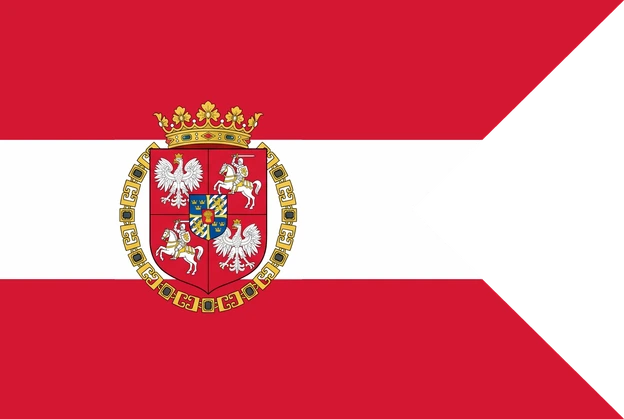
On 24 January 1588, outside the Silesian town of Byczyna, the army of Grand Hetman Jan Zamoyski defeated the forces of Archduke Maximilian of Habsburg, who claimed the Polish throne against the newly crowned Sigismund III Vasa. Zamoyski struck the archduke's army from the flank and broke it, Maximilian retreated into the town and surrendered, and he was taken prisoner to Krasnystaw. The victory decided the double royal election of 1587 in Sigismund's favor.6
Byczyna was a small battle with large stakes. Two armies of some six or seven thousand men each fought for the crown of the Polish-Lithuanian Commonwealth, and the loser was the brother of the Holy Roman Emperor. The historian Piotr Krzyżański calls it an interesting but today relatively little known episode, remarkable for the gap between the scale of the fighting and the consequences ascribed to it. The victor's life is told in our portrait of Jan Zamoyski.7
A throne with two kings
King Stephen Báthory died on 12 December 1586, and the Commonwealth had to elect a new king. The nobility split between the supporters of the chancellor Jan Zamoyski, Báthory's closest adviser, and the party of the Zborowski family, Zamoyski's bitter enemies, who wanted a Habsburg archduke on the throne.8
It was the Habsburgs' third attempt. As the historian Aleksandra Barwicka-Makula shows in her 2019 study of their policy, they had lost the election of 1573 to Henry of Valois and that of 1575 and 1576 to Anna Jagiellon and Stephen Báthory, and this time they were determined to take the Polish throne at any price, even by force.9
The election diet met near Warsaw in August 1587 and could not agree. On 19 August Zamoyski's camp proclaimed Sigismund Vasa, the Swedish prince whose mother Catherine was a sister of the last Jagiellonian king. Three days later, on 22 August, the opposing camp, led by Andrzej Zborowski and Stanisław Górka, the palatine of Poznań, elected Archduke Maximilian, a brother of Emperor Rudolf II.10
Both elected kings swore the pacta conventa, the conditions the nobility set for its monarch. Maximilian did so at Olomouc in Moravia.11
The march on Kraków
Maximilian moved first. On 29 September he left Olomouc with an army of volunteers from Austria, Moravia and Silesia, marched by way of Opava, Racibórz, Gliwice and Bytom and crossed into the Commonwealth to take Kraków, the coronation city.12
Zamoyski was faster. His troops held Kraków, and the archduke's army, swollen by the bands of his Polish supporters, besieged the city from mid-October to about the end of November 1587. An assault on the walls failed, and Maximilian drew back toward the Silesian border.13
Sigismund, who had landed from Sweden in the meantime, reached Kraków and was crowned there on 27 December 1587. The coronation diet then gave Zamoyski, as Grand Hetman of the Crown, a free hand against Maximilian and his supporters and released him from legal responsibility for what he did in the campaign. In practice it allowed him to pursue the archduke beyond the border.14
The pursuit into Silesia
Maximilian spent the winter on the border of the Crown, and his army melted away as supporters left him. In mid-January 1588 he moved to the town of Wieluń.15
Zamoyski rode out of Kraków on 13 or 14 January (the sources differ by a day) and marched quickly in several columns despite the winter weather. On 21 January he crossed the Liswarta and camped at Parzymiechy, and in the night that followed his outposts beat off a raid by Stanisław Stadnicki, one of the archduke's most active partisans.16
With the enemy close and no hope left of talks, Maximilian left Wieluń late on 22 January and crossed into Silesia, a land ruled by the Habsburgs. On 23 January he halted at Byczyna, a walled town just over the border, where reinforcements joined him, among them Hungarian horse and foot.17
Two armies outside Byczyna
The armies were small for a contest between two great dynasties. Marek Plewczyński, whose study of 1971 Krzyżański rates as the most valuable work on the battle, put Zamoyski's force at about 6,000 men and Maximilian's at about 7,000 with all his reinforcements. The Jagiellonian University lexicon of Polish battles gives Zamoyski about 6,000 (about 3,700 horse and 2,300 foot) against 6,500, and Tadeusz Korzon about 6,000 on each side.18
As Colonel Konstanty Górski noted in 1888, the Poles were stronger in cavalry and the archduke in infantry. Neither army was national, as Włodzimierz Kaczorowski stressed. Germans and Hungarians fought on both sides, Zamoyski also had Scots, and the archduke's Silesian companies included Silesian Poles. Korzon adds the Cossacks and Tatars who rode in Zamoyski's vanguard. Kaczorowski also argued that the man really commanding against Zamoyski was not Maximilian but Andrzej Zborowski.19
Maximilian drew up his army outside the town on both sides of the main road by which Zamoyski was expected. His position took in the high ground: Korzon places the archduke himself, with his German infantry, picked cavalry and guns, on the highest hill, and in the lexicon his heavy cavalry counterattacks downhill.20
The ground is hard to read today. Górski was the first to study it on the spot and drew a plan of the battle with the help of a Prussian staff map, but he later called his placing of the troops a hypothesis, and Korzon pointed out how much the land had changed since the marshes were drained.21
24 January: the battle
Zamoyski did not take the road. Having looked over the ground himself, he led his army by a side track over a causeway through the marshes and came up against the flank of the archduke's line, which forced Maximilian's troops into awkward maneuvers. Górski counted this reconnaissance, the firm command and the well-executed flanking move as the reasons for the victory.22
The fighting began on one wing, where Zamoyski's Cossacks were thrown back by the archduke's cavalry until the hetman sent them support. In the lexicon's account a charge of the Polish hussars then drove the archduke's horsemen back, and Maximilian answered by sending in his Hungarian hussars from the reserve.23
The decision came when the archduke's Hungarian horse gave way and the rest of his cavalry followed it in flight. The battle was over in about half an hour. Zygmunt Boras wrote that Zamoyski smashed an army equal to his own in that time.24
Among the wounded was the young Stanisław Żółkiewski, the future hetman, who seized one of the archduke's banners and was badly wounded in the leg.25
The losses are known only by estimates. Korzon gives about 3,000 bodies left on the field, and the lexicon of Polish battles arrives at the same total of about 3,000 dead. In Korzon's account the physician Abraham Schwalbe, who had joined the archduke's camp on 12 January, counted 3,077.26
The surrender of an archduke
Maximilian escaped from the field into Byczyna and tried to hold the town. It was hopeless. The victors closed in on the town, and after a short stand the archduke agreed to talks and gave himself up as Zamoyski's prisoner.27
Several of his leading Polish supporters were captured with him, among them Stanisław Górka and Andrzej Zborowski, the Crown court marshal.28
Zamoyski took the emperor's brother away to the castle of Krasnystaw and held him there, while Emperor Rudolf II worked to get him released.29
The price paid by Byczyna
The townspeople of Byczyna remembered the day differently from the Polish poets. The victorious troops plundered Byczyna and nearby Kluczbork, and both towns burned. The local pastor Bartholomäus Bentkius recorded that a terrible fire swept the town and the villages around it while the soldiers robbed the inhabitants.30
An anonymous Polish lament from Silesia, De Bicinensi Proelio, tells the story from the side of the townspeople, and a note under it says that the victors took young people back with them to Poland. Krzyżański suggests that the plunder may have had a plain cause: the royal treasury could not pay an army of some 7,000 men, and the soldiers had already mutinied over their pay.31
Why Byczyna mattered
The Habsburg bid for the Polish crown ended at the negotiating table. In the Treaty of Bytom and Będzin, concluded on 9 March 1589, the Habsburgs recognized Sigismund III as the lawful king of the Commonwealth, which Barwicka-Makula's study counts as a diplomatic defeat for the dynasty. By her account Maximilian himself refused to ratify the treaty.32
Relations with Vienna soon thawed. In 1592 Sigismund III married Archduchess Anna of Austria. In Barwicka-Makula's judgment the marriage became the foundation of lasting friendly ties, followed by a second Habsburg marriage in 1605 and a Polish-Austrian alliance in 1613. Maximilian did not join the reconciliation. The king really did hold secret talks with the Habsburgs about handing them the Polish crown, and by Barwicka-Makula's account it was Maximilian who made them public in 1592.33
Historians still weigh what the victory meant. Edward Opaliński of the Polish Academy of Sciences judges that without Byczyna and the capture of Maximilian, Sigismund III would most probably have lost the Polish throne. Kaczorowski, by contrast, saw the war as above all a Polish civil war that did not fundamentally change relations with the Empire, since Habsburg troops would later fight beside the Poles against Sweden.34
In its day the victory was greeted by a chorus of occasional poems, by Joachim Bielski, Stanisław Grochowski, Szymon Szymonowic and others. After them, as the literary historian Marian Kaczmarek put it, came a silence broken only rarely. It belongs among the greatest Polish battles and to the long story of the wars of the Polish-Lithuanian Commonwealth.35






