

What was the War of 1812?
The War of 1812 was a war between the United States and Great Britain, with its North American colonies and Indigenous allies, fought from June 1812 to February 1815. It began over British restrictions on American trade, the impressment of sailors and conflict on the western frontier. The Americans failed to conquer Canada, the British burned Washington but were repulsed at Baltimore and New Orleans, and the Treaty of Ghent restored the situation before the war.1
The War of 1812 was fought from 1812 to 1815 between the United States and Great Britain, which was joined by its North American colonies and by many Indigenous nations. It grew out of Britain's long war with Napoleonic France, was fought mainly along the border with the British colonies of Upper and Lower Canada, on the Great Lakes, in the Chesapeake and on the Gulf Coast, and ended with a peace that changed no borders but left each side with a story of its own.2
Causes: trade, impressment and the frontier
The roots of the war lay in Europe. From 1803 Britain was fighting Napoleon, and both powers tried to stop the other's trade. Napoleon's Continental System closed European ports to British ships, and British Orders in Council answered by stopping and inspecting neutral merchant ships bound for French-controlled ports and seizing cargoes that might help the enemy. American merchants, who wanted to trade with both sides, were caught in between.3
The second grievance was impressment. The Royal Navy, short of sailors, boarded American ships to search for deserters and took men off them to serve in its own crews; it held that British-born sailors could not become American citizens, and some native-born Americans were seized as well. The Chesapeake affair of 1807, when HMS Leopard fired on an American frigate and removed four men, outraged American opinion.4
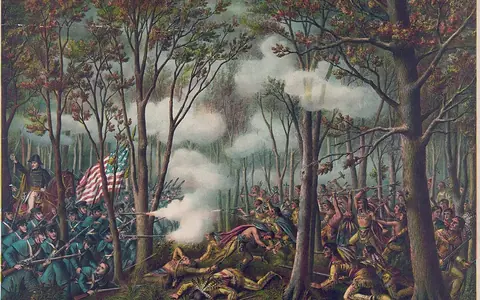
The third lay on the frontier. Since the 1790s Indigenous nations north of the Ohio River had resisted the loss of their lands, and in the years before the war the Shawnee brothers Tecumseh and Tenskwatawa built a confederacy of Shawnees, Potawatomis, Ottawas, Wyandots, Ojibwas and others to defend their homelands. Many Americans believed that Britain armed this resistance; the British did supply weapons to Indigenous allies they saw as a shield for Canada, while the confederacy fought for its own land and future. In November 1811 William Henry Harrison attacked and burned the confederacy's town of Prophetstown, the battle of Tippecanoe.5
In Congress a group of Republicans from the South and West, the War Hawks, pressed for war, and some saw Britain's struggle with Napoleon as a chance to seize its Canadian colonies; Thomas Jefferson called the conquest of Canada a mere matter of marching. Madison sent his list of grievances to Congress on 1 June 1812 and signed the declaration of war on 18 June. The vote split the country: merchants and Federalists in New England and New York opposed the war throughout.6

The sides
The war was fought between the United States and Great Britain, backed by its North American colonies and Indigenous allies. Canada was not yet a country: the British provinces of Upper Canada (today southern Ontario), Lower Canada (Quebec) and the Atlantic colonies were defended by British regulars, colonial militia, First Nations warriors and Métis fighters. In Upper Canada, the main American target, the garrison numbered only about 1,600 regulars at the start of the war.7
Most First Nations sided with Britain, which they saw as the power more likely to let them keep their lands; The Canadian Encyclopedia calls it the lesser of two colonial evils. The Canadian government puts the number of First Nations warriors who took part at more than 10,000. Not all Indigenous peoples took the same side: the war strained the Haudenosaunee (Iroquois) Confederacy, some of whose members fought for the United States, and about 200 allied warriors marched with the American army at the Thames.8
Neither side was ready. The American army was small, poorly trained and badly led, and its militia often refused to serve outside its own states. Britain was fighting Napoleon in Spain and Portugal, and most of its navy was blockading France, so it could spare few troops for North America until 1814.9
1812: invasions that failed
The Americans struck first at Upper Canada, which seemed the easiest target. On 17 July a British, Canadian and Indigenous force took the American post at Michilimackinac without bloodshed. General William Hull, who had crossed from Detroit into Canada, fell back, and on 16 August 1812 he surrendered Detroit to Major-General Isaac Brock and the Shawnee leader Tecumseh, handing the British control of the Michigan Territory.10
On 13 October American regulars and New York militia crossed the Niagara River at Queenston Heights. Much of the militia refused to cross into Canada, and the attackers were defeated, but Brock was killed in the battle. Mohawk and other Haudenosaunee warriors under John Norton and John Brant held the Americans back for hours until British reinforcements arrived. A thrust from Lake Champlain toward Montreal also came to nothing.11
At sea the picture was different. The Royal Navy soon imposed a blockade on the American Atlantic coast, but American frigates won a series of single-ship duels that lifted morale at home, beginning on 19 August 1812, when USS Constitution defeated HMS Guerriere.12
1813: the lakes and the Northwest
Harrison's new army marched to retake Detroit, but on 22 January 1813 one wing was routed at Frenchtown on the River Raisin by British, Canadian and First Nations troops under Henry Procter. After the battle wounded American prisoners were killed: The Canadian Encyclopedia's timeline says more than 30, the American Battlefield Trust 40 to 60. "Remember the Raisin" became an American battle cry.13
In April American troops landed at York (today Toronto), the capital of Upper Canada, occupied it and burned its public buildings, and in May they took Fort George on the Niagara. British and Indigenous victories at Stoney Creek and Beaver Dams pushed them back, and when they left Fort George in December the American militia burned the town of Newark. The British replied by burning Buffalo, and the cycle of raids and reprisals went on until Washington itself was burned the following summer.14
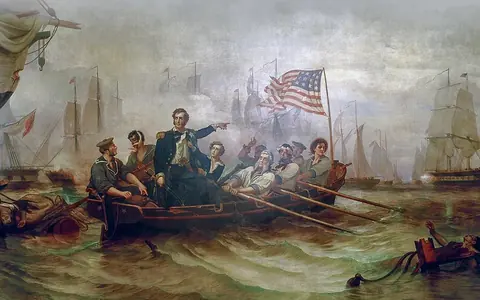
The decisive fight in the west was for Lake Erie. On 10 September 1813 Oliver Hazard Perry's squadron met Robert Barclay's six British warships off Put-in-Bay. Perry's flagship Lawrence was wrecked after two hours, so he was rowed through the fire to the Niagara, renewed the action and forced the whole British squadron to surrender within fifteen minutes, the first time the Royal Navy had lost an entire squadron. Read more in our article on the Battle of Lake Erie.15
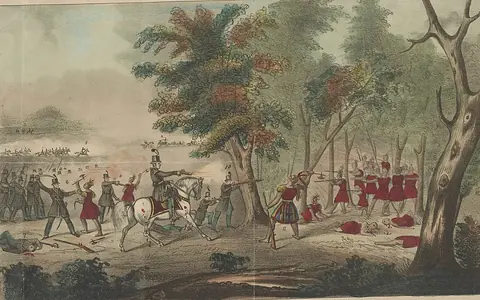
With its supply line cut, Procter's army abandoned Detroit and Amherstburg and retreated up the Thames, over the protests of Tecumseh. Harrison caught it near Moraviantown on 5 October. The Ontario Heritage Trust gives 3,000 Americans against 950 British, Canadians and Indigenous warriors; mounted Kentuckians broke the thin British lines, the warriors fought on in the swamp and Tecumseh was killed. EBSCO counts 12 British killed, 22 wounded and 601 captured. Tecumseh's confederacy then began to fall apart, and Procter was later court-martialled. See our article on the Battle of the Thames.16

Further east, two American armies advancing on Montreal were turned back at Châteauguay on 26 October by French-Canadian Voltigeurs, militia and Mohawk warriors under Charles de Salaberry, and at Crysler's Farm on 11 November, the last American attempt on Montreal. At the end of the year the British took Fort Niagara.17
In the South a civil war among the Creeks merged with the wider conflict. The Red Stick faction fought American forces, and on 27 March 1814 Andrew Jackson's Tennessee militia and regulars, with Cherokee and allied Creek warriors, stormed their fortified camp at Horseshoe Bend; the National Park Service counts at least 800 of about 1,000 Red Sticks killed. The Treaty of Fort Jackson in August 1814 forced the Creek Nation to cede about 23 million acres.18
1814 to 1815: Britain strikes back
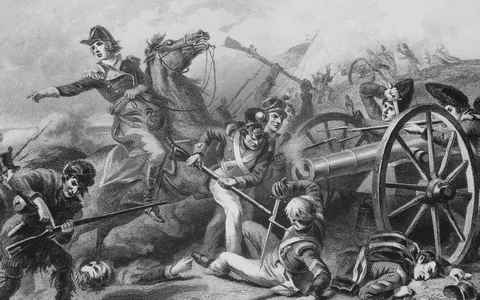
Napoleon's abdication in April 1814 freed British troops and ships for America, and the blockade tightened on the American economy. The Americans tried once more on the Niagara. On 5 July 1814, at Chippawa, Jacob Brown's army, led by Winfield Scott's brigade, which Scott had drilled hard that spring, defeated Phineas Riall's force of regulars, militia and Indigenous warriors; Parks Canada puts the dead of both sides at about 200 and the wounded at over 500. The Army Historical Foundation calls the result not decisive, because Riall's army escaped, but proof that American regulars could beat British ones. Our article: the Battle of Chippawa.19
Three weeks later, on 25 July, the armies fought at Lundy's Lane, the bloodiest battle of the war, in the dark and to a standstill; it halted the American advance, and in November the Americans gave up Fort Erie and left Upper Canada for good.20
In the Chesapeake, 4,500 British veterans under Major-General Robert Ross landed at Benedict, Maryland, on 19 August, routed the defenders at Bladensburg on 24 August and entered Washington. That night they burned the Capitol, the President's House and other public buildings; the British held the city for about a day. Britons largely saw it as just retaliation for the burning of York, Newark and Port Dover by American troops in Upper Canada.21

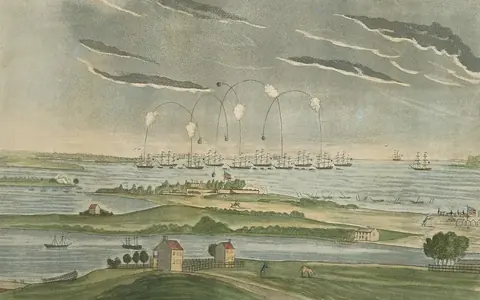
Baltimore held. On 12 September Maryland militia checked the British advance at North Point, where Ross was killed, and on 13 to 14 September Fort McHenry withstood a bombardment of about 25 hours. Francis Scott Key, who watched from a British ship, saw the great flag still flying over the fort and wrote the verses that became "The Star-Spangled Banner". Read more about the Battle of Baltimore and Fort McHenry.22
The largest British offensive came from Canada: Governor Sir George Prevost led about 11,000 veterans toward Plattsburgh on Lake Champlain, but after Thomas Macdonough's squadron destroyed the British flotilla on 11 September, Prevost withdrew. His retreat weakened the British negotiators at Ghent. On the Atlantic coast, meanwhile, British forces from Nova Scotia occupied much of the Maine coast.23
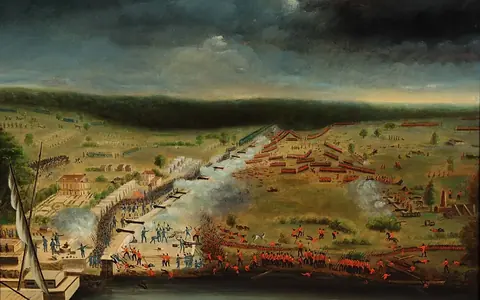
The last great battle came in the south. A British army landed below New Orleans in December 1814, and on 8 January 1815, under Sir Edward Pakenham, it attacked Andrew Jackson's earthworks on the Chalmette plantation head on. The American Battlefield Trust gives 5,700 Americans against 8,000 British and 71 American against 2,034 British casualties; the National Army Museum gives Jackson 4,000 men against a force twice that size and British losses of more than 2,000, Pakenham among them. Peace had already been signed at Ghent on 24 December, but the news had not yet arrived. Our article: the Battle of New Orleans.24

Key figures
United States. President James Madison led the country into war. William Henry Harrison commanded in the Northwest, won at the Thames and became president in 1841. Oliver Hazard Perry won Lake Erie. Winfield Scott trained the regulars who fought at Chippawa and later wrote the army's first general regulations. Andrew Jackson, a major general of the Tennessee militia, fought the Creek War and defended New Orleans, which made him a national hero and helped carry him to the presidency in 1828.25
Britain and its colonies. Major-General Sir Isaac Brock, administrator of Upper Canada, prepared its defense, took Detroit and died at Queenston Heights. Governor Sir George Prevost guarded Lower Canada and led the failed march on Plattsburgh. Charles de Salaberry, a Canadian-born British officer, won at Châteauguay. Robert Ross took Washington and was killed before Baltimore, and Sir Edward Pakenham was killed at New Orleans.26
Indigenous leaders. Tecumseh, the Shawnee war chief, allied with Britain not out of trust but because he saw a common interest; he rode beside Brock into Detroit and died at the Thames. His brother Tenskwatawa, the Prophet, led the religious revival behind the confederacy. The Mohawk leaders John Norton and John Brant fought at Queenston Heights. Who killed Tecumseh was never settled: the Kentucky colonel Richard Mentor Johnson took the credit and later became vice president, but there are many conflicting stories, and his body was never identified with certainty.27
Outcome: who won?
Talks began at Ghent in August 1814, and the treaty was signed there on 24 December. Its terms were the status quo before the war: all conquests were returned, disputes over the border went to joint commissions, and nothing was said about impressment or neutral trade. The war ended formally when the ratified treaty was exchanged on 17 February 1815.28
Each side found its own victory. Americans pointed to New Orleans and their naval duels and spoke of a second war of independence, though the War Hawks' aim of taking Canada had failed. Many Britons saw the war as a side show to their defeat of Napoleon, and the British could argue that they had kept every one of their North American colonies. In Canada the successful defense became a founding story; The Canadian Encyclopedia notes that the war, "or the myths created by the war", gave Canadians a first sense of community, and calls them the real winners. The Ontario Heritage Trust paper argues that Britain fought a successful defensive war rather than to a mere standstill.29
The clear losers were the Indigenous nations. Tecumseh's death broke his confederacy, the Creeks lost much of their land, and at Ghent the British gave up their early demand for a protected Indigenous territory when the American delegates refused it. Without a British ally the nations of the Old Northwest could not halt American settlement, and their lands and way of life were steadily eroded in the decades that followed.30
Legacy and memory
For the United States the war left a national anthem: Key's poem, printed in Baltimore within days of the battle, was set to a popular tune and became "The Star-Spangled Banner". It also made the reputations of Jackson, Harrison and Scott. Yet it is often called America's forgotten war, studied far less than the Revolution or the Civil War.31
For Britain and Canada the peace proved lasting. Britain sought peaceful relations with the United States for the rest of the century, the Rush-Bagot agreement of 1817 began to settle a border meant to be unfortified and lightly patrolled, and the battlefields are now commemorated together: Perry's Victory and International Peace Memorial on South Bass Island honors both the battle and the peace between the United States, Britain and Canada, and Chippawa has been a national historic site of Canada since 1921.32
For First Nations the war marked the end of an era of self-reliance; within a generation, The Canadian Encyclopedia notes, their contribution was all but forgotten by their allies. The Canadian government's own account now stresses that more than 10,000 First Nations warriors took part in nearly every major battle of the war.33
Battles of the War of 1812
Our articles on the battles of the war, and of Tecumseh's War that led into it, are listed below in date order.
- 1813The Battle of Lake Erie, 1813United States (US Navy) vs Great Britain (Royal Navy)
Perry lost his flagship, rowed to another, and captured the whole British squadron.
- 1813The Battle of the Thames, 1813United States vs Britain and Tecumseh's confederacy
How Harrison routed the British on the Thames and Tecumseh was killed, 1813.
- 1814Battle of Chippawa, 1814United States vs United Kingdom, Canadian militia and First Nations allies
On 5 July 1814 Winfield Scott's drilled brigade beat Riall's British regulars on the Niagara plain at Chippawa, the first such American victory of the war.
- 1814The Battle of Baltimore and Fort McHenry, 1814United States vs Great Britain
The bombardment that failed to take Fort McHenry, and gave America its anthem.
- 1815Battle of New Orleans, 1815United States vs Great Britain
Andrew Jackson's outnumbered defenders crushed a British assault in a lopsided American victory.
Related wars
- 1811The Battle of Tippecanoe, 1811United States vs Tecumseh's Confederacy
A dawn attack on the Wabash, and the battle that made "Tippecanoe" famous.
Timeline
- 1811William Henry Harrison attacks Prophetstown, the battle of Tippecanoe (7 November).34
- 1812Madison signs the declaration of war on 18 June; Hull surrenders Detroit to Brock and Tecumseh on 16 August; Brock is killed at Queenston Heights on 13 October.35
- 1812USS Constitution defeats HMS Guerriere on 19 August.36
- 1813American defeat at Frenchtown on the River Raisin (22 January); Americans burn York (27 April).37
- 1813Perry captures the British squadron on Lake Erie (10 September); Tecumseh is killed at the Thames (5 October).38
- 1813American advances on Montreal stopped at Châteauguay (26 October) and Crysler's Farm (11 November).39
- 1814Jackson defeats the Red Sticks at Horseshoe Bend (27 March); Napoleon abdicates (April).40
- 1814Chippawa (5 July) and Lundy's Lane (25 July) on the Niagara.41
- 1814British victory at Bladensburg and burning of Washington (24 August).42
- 1814British defeat at Plattsburgh (11 September); Baltimore holds at North Point and Fort McHenry (12 to 14 September).43
- 1814Treaty of Ghent signed (24 December).44
- 1815Battle of New Orleans (8 January); exchange of ratifications ends the war (17 February).45
Where to read next
For the wider period, see our page on the Napoleonic era, where Britain's war with Napoleon is told, and the greatest Napoleonic battles. Battles of this war also appear in the greatest battles in American history and among the greatest American commanders; for the British side, see our military history of Britain. Test yourself with the American battles quiz.
Notes
A number in the text points to a note; each note names the works that paragraph draws on, listed in full under Sources.
- The Canadian Encyclopedia, “War of 1812”; American Battlefield Trust, “Brief Overview of the War of 1812”. ↩
- The Canadian Encyclopedia, “War of 1812”; American Battlefield Trust, “10 Facts”; National Army Museum, “War of 1812”. ↩
- National Army Museum, “War of 1812”; The Canadian Encyclopedia, “War of 1812”; American Battlefield Trust, “Brief Overview of the War of 1812”. ↩
- The Canadian Encyclopedia, “War of 1812”; American Battlefield Trust, “10 Facts”; The Canadian Encyclopedia, “The War of 1812 (Plain-Language Summary)”. ↩
- Ontario Heritage Trust, “The Battle of Moraviantown”; The Canadian Encyclopedia, “First Nations and Métis Peoples in the War of 1812”; National Army Museum, “War of 1812”. ↩
- The Canadian Encyclopedia, “War of 1812”; American Battlefield Trust, “10 Facts”; American Battlefield Trust, “Brief Overview of the War of 1812”. ↩
- American Battlefield Trust, “10 Facts”; The Canadian Encyclopedia, “War of 1812”; Crown-Indigenous Relations and Northern Affairs Canada, “First Nations and Métis in the War of 1812”. ↩
- The Canadian Encyclopedia, “First Nations and Métis Peoples in the War of 1812”; Crown-Indigenous Relations and Northern Affairs Canada, “First Nations and Métis in the War of 1812”; Ontario Heritage Trust, “The Battle of Moraviantown”. ↩
- American Battlefield Trust, “10 Facts”; American Battlefield Trust, “Brief Overview of the War of 1812”; National Army Museum, “War of 1812”; The Canadian Encyclopedia, “War of 1812”. ↩
- The Canadian Encyclopedia, “War of 1812”; The Canadian Encyclopedia, “First Nations and Métis Peoples in the War of 1812”; American Battlefield Trust, “War of 1812 Timeline”. ↩
- National Army Museum, “War of 1812”; The Canadian Encyclopedia, “War of 1812”; The Canadian Encyclopedia, “Battles of the War of 1812”. ↩
- National Army Museum, “War of 1812”; USS Constitution Museum, “War of 1812”; Smithsonian National Museum of American History, “The War of 1812”. ↩
- The Canadian Encyclopedia, “War of 1812”; The Canadian Encyclopedia, “War of 1812 timeline”; American Battlefield Trust, “Brief Overview of the War of 1812”; American Battlefield Trust, “War of 1812 Timeline”. ↩
- The Canadian Encyclopedia, “War of 1812”; The Canadian Encyclopedia, “War of 1812 timeline”; American Battlefield Trust, “War of 1812 Timeline”. ↩
- U.S. National Park Service, “Perry's Victory and International Peace Memorial”; The Canadian Encyclopedia, “War of 1812”; Ontario Heritage Trust, “The Battle of Moraviantown”. ↩
- Ontario Heritage Trust, “The Battle of Moraviantown”; EBSCO Research Starters, “Battle of the Thames”; The Canadian Encyclopedia, “War of 1812”. ↩
- National Army Museum, “War of 1812”; The Canadian Encyclopedia, “War of 1812”; The Canadian Encyclopedia, “Battles of the War of 1812”. ↩
- U.S. National Park Service, “History and Culture”; American Battlefield Trust, “Brief Overview of the War of 1812”. ↩
- National Army Museum, “War of 1812”; Smithsonian National Museum of American History, “The War of 1812”; Parks Canada, “Battle of Chippawa National Historic Site of Canada”; Army Historical Foundation, “The Battle of Chippewa, 5 July 1814”. ↩
- The Canadian Encyclopedia, “War of 1812”; The Canadian Encyclopedia, “Battles of the War of 1812”; American Battlefield Trust, “Brief Overview of the War of 1812”. ↩
- American Battlefield Trust, “Brief Overview of the War of 1812”; American Battlefield Trust, “10 Facts”; Harrison W. Mark, “Burning of Washington”; The Canadian Encyclopedia, “The Burning of Washington”; Naval History and Heritage Command, “The Burning of Washington”. ↩
- American Battlefield Trust, “Brief Overview of the War of 1812”; American Battlefield Trust, “10 Facts”; U.S. National Park Service, “The Star-Spangled Banner”; National Army Museum, “War of 1812”. ↩
- The Canadian Encyclopedia, “War of 1812”; National Army Museum, “War of 1812”; The Canadian Encyclopedia, “Battles of the War of 1812”. ↩
- American Battlefield Trust, “New Orleans”; National Army Museum, “War of 1812”; U.S. National Park Service, “Chalmette Battlefield”. ↩
- American Battlefield Trust, “10 Facts”; U.S. National Park Service, “Perry's Victory and International Peace Memorial”; U.S. National Park Service, “History and Culture”. ↩
- The Canadian Encyclopedia, “War of 1812”; National Army Museum, “War of 1812”; American Battlefield Trust, “Brief Overview of the War of 1812”. ↩
- The Canadian Encyclopedia, “First Nations and Métis Peoples in the War of 1812”; Canada's History Society, “The Battle of the Thames”; Harrison W. Mark, “Battle of the Thames”; EBSCO Research Starters, “Battle of the Thames”. ↩
- The Canadian Encyclopedia, “War of 1812”; American Battlefield Trust, “10 Facts”; National Army Museum, “War of 1812”. ↩
- American Battlefield Trust, “10 Facts”; The Canadian Encyclopedia, “War of 1812”; Ontario Heritage Trust, “The Battle of Moraviantown”; National Army Museum, “War of 1812”. ↩
- The Canadian Encyclopedia, “War of 1812”; American Battlefield Trust, “Brief Overview of the War of 1812”; Ontario Heritage Trust, “The Battle of Moraviantown”; National Army Museum, “War of 1812”. ↩
- Smithsonian National Museum of American History, “The Lyrics”; U.S. National Park Service, “The Star-Spangled Banner”; American Battlefield Trust, “10 Facts”; Smithsonian National Museum of American History, “The War of 1812”. ↩
- U.S. National Park Service, “Ohio”; U.S. National Park Service, “Perry's Victory and International Peace Memorial”; Parks Canada, “Battle of Chippawa National Historic Site of Canada”; National Army Museum, “War of 1812”. ↩
- The Canadian Encyclopedia, “War of 1812”; Crown-Indigenous Relations and Northern Affairs Canada, “First Nations and Métis in the War of 1812”. ↩
- The Canadian Encyclopedia, “First Nations and Métis Peoples in the War of 1812”; Ontario Heritage Trust, “The Battle of Moraviantown”. ↩
- The Canadian Encyclopedia, “War of 1812”; American Battlefield Trust, “War of 1812 Timeline”. ↩
- USS Constitution Museum, “War of 1812”; American Battlefield Trust, “War of 1812 Timeline”. ↩
- The Canadian Encyclopedia, “War of 1812 timeline”; American Battlefield Trust, “War of 1812 Timeline”. ↩
- U.S. National Park Service, “Perry's Victory and International Peace Memorial”; Ontario Heritage Trust, “The Battle of Moraviantown”. ↩
- The Canadian Encyclopedia, “Battles of the War of 1812”; National Army Museum, “War of 1812”. ↩
- U.S. National Park Service, “History and Culture”; American Battlefield Trust, “War of 1812 Timeline”. ↩
- Parks Canada, “Battle of Chippawa National Historic Site of Canada”; The Canadian Encyclopedia, “Battles of the War of 1812”. ↩
- American Battlefield Trust, “War of 1812 Timeline”; National Army Museum, “War of 1812”. ↩
- The Canadian Encyclopedia, “Battles of the War of 1812”; American Battlefield Trust, “Brief Overview of the War of 1812”. ↩
- The Canadian Encyclopedia, “War of 1812”; American Battlefield Trust, “10 Facts”. ↩
- American Battlefield Trust, “New Orleans”; American Battlefield Trust, “10 Facts”; National Army Museum, “War of 1812”. ↩
Sources
- The Canadian Encyclopedia (Historica Canada), “War of 1812”.
- American Battlefield Trust, “Brief Overview of the War of 1812”.
- American Battlefield Trust, “10 Facts: The War of 1812”.
- National Army Museum (London), “War of 1812”.
- The Canadian Encyclopedia (Historica Canada), “The War of 1812 (Plain-Language Summary)”.
- Ontario Heritage Trust, “The Battle of Moraviantown” (background paper by Carl Benn).
- The Canadian Encyclopedia (Historica Canada), “First Nations and Métis Peoples in the War of 1812”.
- Crown-Indigenous Relations and Northern Affairs Canada, “First Nations and Métis in the War of 1812”.
- American Battlefield Trust, “War of 1812 Timeline”.
- The Canadian Encyclopedia (Historica Canada), “Battles of the War of 1812”.
- USS Constitution Museum, “War of 1812”.
- Smithsonian National Museum of American History, “The War of 1812”.
- The Canadian Encyclopedia (Historica Canada), “War of 1812 timeline”.
- U.S. National Park Service, “Perry's Victory and International Peace Memorial”.
- EBSCO Research Starters, “Battle of the Thames”.
- U.S. National Park Service, Horseshoe Bend National Military Park, “History and Culture”.
- Parks Canada, Directory of Federal Heritage Designations, “Battle of Chippawa National Historic Site of Canada”.
- Army Historical Foundation, “The Battle of Chippewa, 5 July 1814”.
- Harrison W. Mark, World History Encyclopedia, “Burning of Washington”.
- The Canadian Encyclopedia (Historica Canada), “The Burning of Washington”.
- Naval History and Heritage Command, “The Burning of Washington”.
- U.S. National Park Service, Fort McHenry National Monument and Historic Shrine, “The Star-Spangled Banner”.
- American Battlefield Trust, “New Orleans”.
- U.S. National Park Service, “Chalmette Battlefield”.
- Canada's History Society, “The Battle of the Thames”.
- Harrison W. Mark, World History Encyclopedia, “Battle of the Thames”.
- Smithsonian National Museum of American History, “The Lyrics”.
- U.S. National Park Service, “Ohio: Perry's Victory and International Peace Memorial”.






