

What is the military history of Britain?
It is the story of the wars fought by the Kingdom of England (with Wales after its conquest in 1283) and, from 1707, by the Kingdom of Great Britain and then the United Kingdom. It runs from the Norman Conquest of 1066 through wars with Scotland, Ireland and France, the wars of empire and against Napoleon, to two world wars and the Falklands in 1982. Defeats such as Bannockburn, Yorktown, Isandlwana and Singapore are as much a part of it as Agincourt, Trafalgar and Waterloo.1
For most of this history there was no Britain at war, but several kingdoms on two islands that often fought one another. England conquered Wales, failed to conquer Scotland, and ruled Ireland against repeated risings. Only in 1707 did England and Scotland become one state, and only in 1801 was Ireland joined to it. This page follows the story era by era, links the battles we cover, and tells the wars between the island kingdoms from both sides.2
What Britain means here
Before 1707 there was no British state. The Kingdom of England conquered Wales in the wars of 1277 and 1282 to 1283, and the Laws in Wales Acts of 1535 and 1542 (often dated 1536 and 1543) joined Wales to England in law. The Kingdom of Scotland stayed separate. In 1603 the Scottish king James VI also became James I of England, so the two crowns were joined in one person, but the two kingdoms kept their own parliaments, laws and armies.3
The Acts of Union of 1707 merged England and Scotland into the Kingdom of Great Britain, with one parliament at Westminster. Ireland, where Henry II had extended English rule in 1171 and where the English king took the title King of Ireland under the Crown of Ireland Act of 1542, was joined to it by the Act of Union of 1800, which created the United Kingdom of Great Britain and Ireland on 1 January 1801. After the Anglo-Irish Treaty of 1921, twenty-six counties left in 1922 as the Irish Free State, and the state took its present name, the United Kingdom of Great Britain and Northern Ireland.4
This hub therefore covers England before 1707 and Great Britain and the United Kingdom after it. Scotland and Ireland will get their own pages. Battles between the island kingdoms, such as Stirling Bridge, Bannockburn, Flodden, Kinsale and the Boyne, are told here from both sides.5

Before 1066 and the Norman Conquest
The first wars on the island known from written sources are those of the Roman conquest, begun in 43 CE. In 60 or 61 CE Boudica, queen of the Iceni in what is now East Anglia, led a rising that burned Colchester, London and St Albans before the Roman governor Suetonius Paulinus defeated it. She was a Briton fighting Rome, centuries before England existed.6
England itself grew out of the Anglo-Saxon kingdoms, first ruled as one by King Athelstan in the early tenth century. Anglo-Saxon England ended in a single autumn. In September 1066 King Harald Hardrada of Norway, allied with Harold II's exiled brother Tostig, invaded the north and took York. Harold marched north and destroyed the Norwegian army at Stamford Bridge on 25 September; Hardrada and Tostig were both killed.7
Within days William, duke of Normandy, landed at Pevensey in Sussex to press his own claim to the throne. On 14 October 1066 his knights, archers and foot soldiers met Harold's army near Hastings, and after a day of fighting Harold was killed. Hastings made William the Conqueror king, and the Norman Conquest replaced most of the English ruling class with a French-speaking one.8

Medieval England, 1066 to 1485
Civil war and crusade. In the Anarchy, the civil war between King Stephen and Henry I's daughter Matilda, Stephen was captured by Matilda's supporters at Lincoln in 1141. Half a century later Richard I led English forces in the Third Crusade, and on 7 September 1191 he beat Saladin's army at Arsuf, a victory that opened the road to Jaffa but did not regain Jerusalem.9
The barons' wars. Under Henry III the barons led by Simon de Montfort fought the crown over reform. On 4 August 1265 the king's son, the future Edward I, trapped de Montfort's army at Evesham and killed him, ending the baronial cause.10
Wales and Scotland. As king, Edward I conquered the Welsh principality in two wars, in 1277 and 1282 to 1283, and secured it with a chain of castles including Conwy, Caernarfon and Harlech, which UNESCO describes as works of colonization as well as defense. He then tried to rule Scotland. At Stirling Bridge on 11 September 1297 the Scots under William Wallace and Andrew Murray destroyed an English army as it crossed the River Forth. At Bannockburn on 23 and 24 June 1314, Robert I (Robert the Bruce) routed the larger army of Edward II. For Scotland these were victories of independence; for England, defeats that ended the plan of conquest.11
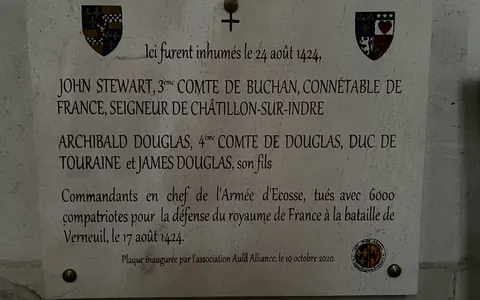
The Hundred Years' War. From 1337 the kings of England fought the kings of France over English lands in France and over the French crown itself. English armies, built around longbowmen fighting beside dismounted men-at-arms, won at Crécy in 1346, at Poitiers in 1356, where the French king John II was captured, and under Henry V at Agincourt in 1415. At Verneuil in 1424 the Duke of Bedford beat a French army with a large Scottish contingent. Yet the war ended in English defeat: after Joan of Arc relieved Orléans in 1429, the French recovered Normandy and Gascony, and by 1453 only Calais remained English. The full story is on our Hundred Years' War page.12

The Wars of the Roses. Defeat abroad was followed by civil war at home between the houses of Lancaster and York, from 1455. Edward IV of York won the throne and held it with victories such as Tewkesbury in 1471. On 22 August 1485 Henry Tudor defeated and killed Richard III at Bosworth, the last English king to die in battle, and founded the Tudor dynasty.13
Tudors and Stuarts, 1485 to 1707
Flodden. When Henry VIII invaded France in 1513, James IV of Scotland honored the old alliance with France and invaded England. On 9 September 1513 an English army under the earl of Surrey met him near Branxton in Northumberland. Flodden was the largest battle ever fought between the two kingdoms, and a disaster for Scotland: James IV and most of his leading nobles were killed.14
The war with Spain. Under Elizabeth I, England's support for the Dutch rebels and the raids of Francis Drake led to open war with Spain from 1585. Drake's Caribbean expedition of 1585 to 1586 captured Spanish towns including Santo Domingo and Cartagena. In 1588 Philip II sent the Armada to carry an invasion army from Flanders. English fireships scattered it off Calais, the fleets fought off Gravelines, and storms wrecked many Spanish ships off Scotland and Ireland.15
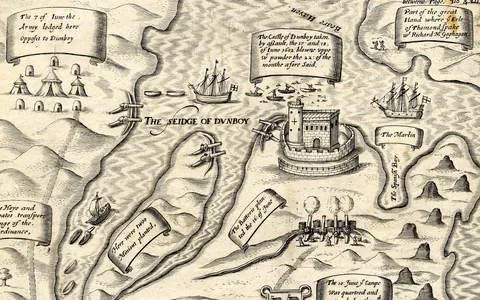
Ireland. In the Nine Years' War, Hugh O'Neill, earl of Tyrone, led the Gaelic lords of Ulster against English rule. A Spanish force landed at Kinsale in September 1601; Lord Mountjoy besieged it, and when O'Neill and Red Hugh O'Donnell attacked the besiegers in December, their army was routed. After Kinsale Irish military power was broken. In June 1602 Sir George Carew took the castle of Dunboy and executed the surviving defenders, and O'Neill submitted at Mellifont in 1603.16
The Wars of the Three Kingdoms. The civil wars began in Scotland and Ireland before they reached England, where the first major battle was Edgehill in October 1642. Parliament's New Model Army beat the king at Naseby in 1645, put down the Royalist rising in Wales at St Fagans in 1648, and Charles I was tried and beheaded in January 1649. Oliver Cromwell's conquest of Ireland destroyed the Catholic landowning class, and deaths in Ireland probably numbered well over 250,000. Cromwell's victory over Charles II and his Scottish army at Worcester in 1651 ended the wars.17
The Anglo-Dutch Wars. Trade rivalry with the Dutch Republic produced three naval wars between 1652 and 1674. The English fleet under James, Duke of York, won a hard battle off Lowestoft in June 1665, but in 1667 the Dutch raided the Medway and destroyed English ships at their moorings, and the peace of Breda followed.18
The Glorious Revolution and the Boyne. In 1688 William of Orange landed in England, James II fled, and in 1689 William and Mary were crowned joint rulers. James fought on in Ireland with French help. On 1 July 1690 (Old Style) William's army of about 37,000 forced the crossing of the Boyne against James's 23,000, in the largest battle ever fought in Ireland. It was not decisive, but James fled to France, and the war ended with the Treaty of Limerick in 1691.19

Great Britain, 1707 to 1815
Marlborough and the wars with France. Between 1689 and 1815 England, and then Great Britain, went to war with France again and again, usually as part of a coalition. John Churchill, Duke of Marlborough, led the armies of the Grand Alliance in the War of the Spanish Succession, and on 13 August 1704 he and Prince Eugene of Savoy defeated a Franco-Bavarian army at Blenheim on the Danube, saving Vienna and knocking Bavaria out of the war.20
The Jacobite risings. The exiled Stuarts kept a following, above all in the Scottish Highlands. In 1745 Charles Edward Stuart raised the clans, beat a government army at Prestonpans, occupied Edinburgh and marched into England. On 16 April 1746, at Culloden near Inverness, the Duke of Cumberland's army destroyed his exhausted force in less than an hour. Culloden was a battle in a British civil war, with more Scots in arms against the prince than for him, and it was followed by harsh measures in the Highlands, where Cumberland's troops burned homes and drove off cattle.21
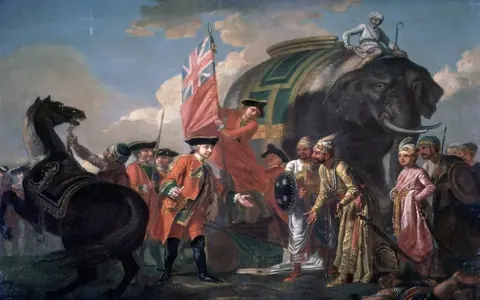
The Seven Years' War and India. The war of 1756 to 1763, sometimes called the first world war, set Britain and Prussia against France, Austria and Russia on three continents and at sea. Wolfe's capture of Quebec in 1759 led to the British conquest of Canada, which Britain kept at the Treaty of Paris in 1763. In India, the East India Company army under Robert Clive defeated the nawab of Bengal at Plassey on 23 June 1757, helped by the defection of Mir Jafar, whom Clive then made nawab. For Bengal it was the beginning of rule by a trading company; for the Company it was the start of its rise to power over the subcontinent.22
The American Revolution. Victory in 1763 was followed by the loss of the American colonies. When the thirteen colonies rebelled in 1775, British armies fought at Long Island, Brandywine and many other battles but could not end the rising. On 17 October 1777 General John Burgoyne surrendered his army at Saratoga, which brought France into the war. At Yorktown, on 19 October 1781, a French and American army, with a French fleet blocking escape by sea, forced Lord Cornwallis to surrender about 8,000 men. The war was effectively over.23
The wars against revolutionary and Napoleonic France. For more than twenty years, from 1793 to 1815, Britain was at war with France, with only short pauses. At sea, Horatio Nelson defeated the combined French and Spanish fleet off Cape Trafalgar on 21 October 1805 and was killed in the battle; the victory ended the threat of invasion and left the Royal Navy dominant at sea for a century. On land, Arthur Wellesley, later the Duke of Wellington, fought the Peninsular War of 1808 to 1814 with Portuguese and Spanish allies, while Spanish guerrillas tied down French garrisons. At Waterloo on 18 June 1815 Wellington's mixed British, Dutch, Belgian and German army and Blücher's Prussians ended Napoleon's last campaign.24

In the same years Britain fought the United States in the War of 1812. The war ended with the Treaty of Ghent in December 1814, but news traveled slowly, and on 8 January 1815 a British army was driven off with heavy losses at New Orleans.25
The 19th century and empire
The Crimean War. From 1854 to 1856 Britain fought Russia beside France, the Ottoman Empire and later Sardinia. The war is remembered for the Alma, the charge of the Light Brigade at Balaclava, the year-long siege of Sevastopol and the many soldiers who died of disease, whose care Florence Nightingale, Mary Seacole and others set out to improve.26
Wars of conquest. Much of the century's fighting was imperial conquest, which for the conquered meant the loss of their states, land and often lives. The East India Company fought two wars with the Sikh Empire, at Mudki, Chillianwala and elsewhere, and annexed the Punjab in 1849. In 1857 Indian soldiers of the Company's army rose at Meerut, and the rising spread to Delhi, Kanpur and Lucknow. Both sides committed massacres, and Britannica judges that the British reprisals far outweighed the rebels' excesses. Whether 1857 was a mutiny, a rebellion or a war of independence is still debated; afterward the Company was abolished and India was ruled by the British crown.27
Africa. In January 1879 Britain invaded the Zulu Kingdom after an ultimatum King Cetshwayo could not accept. On 22 January a Zulu army of more than 20,000 destroyed a British column of fewer than 2,000 men at Isandlwana; the British went on to win at Ulundi in July and divided the kingdom into thirteen chiefdoms. At Omdurman in 1898, Kitchener's Anglo-Egyptian army, with artillery and machine guns, killed about 10,000 Mahdist soldiers for about 500 casualties of its own. In the Boer War of 1899 to 1902 Britain defeated the two Boer republics after setbacks such as Spion Kop and a scorched-earth campaign with internment camps: between about 26,000 and 28,000 Boer civilians, mostly women and children, died in them, and between about 13,000 and 20,000 Black Africans in separate camps.28

World War I
Britain entered World War I in August 1914, and the small regular British Expeditionary Force sent to France had almost been wiped out by the end of the year. Britain had to build a mass army, and the British Empire as a whole fought on the Western Front, in the Middle East and at sea. The war cost the lives of more than ten million soldiers worldwide.29
The Gallipoli landings of April 1915 against the Ottoman Empire failed, and the Allies withdrew in January 1916 after heavy losses, many of them to disease. On the Western Front, the first day of the Somme, 1 July 1916, cost the British Army about 57,000 casualties, the bloodiest day in its history. Passchendaele in 1917 cost the British armies about 275,000 casualties for ground given up the following year. In the Hundred Days Offensive of 1918 an Allied breakthrough finally defeated the German army.30

World War II
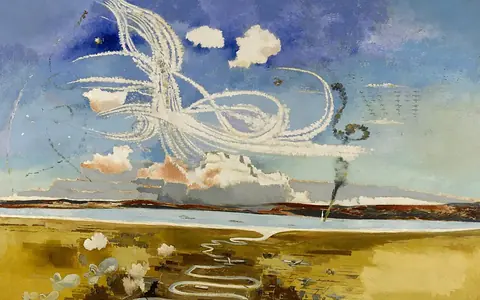
In May 1940 the German offensive cut off the British army in France, and over 338,000 British and French troops were evacuated from Dunkirk between 26 May and 4 June. Germany then needed control of the air to invade. In the Battle of Britain, in the summer and autumn of 1940, the RAF's Fighter Command under Hugh Dowding defeated the Luftwaffe, and Hitler set his invasion plans aside.31
Defeat came in Asia. Japan invaded Malaya in December 1941, and on 15 February 1942 General Arthur Percival surrendered Singapore with about 85,000 men to about 35,000 Japanese troops, the largest surrender in British history. In North Africa, the Eighth Army under Bernard Montgomery defeated Rommel's German and Italian army at El Alamein from 23 October 1942.32
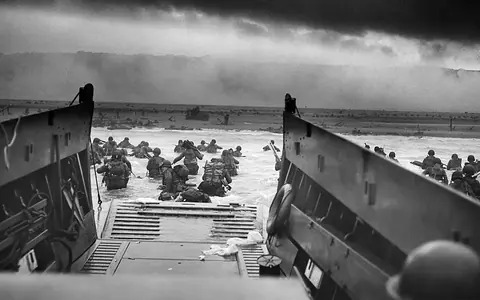
On 6 June 1944 British and Canadian forces landed beside American ones on the beaches of Normandy, the largest amphibious operation in history. In the same months British and Indian troops held Imphal and Kohima against a Japanese offensive into India; the Japanese Fifteenth Army lost about 53,000 dead and missing, and the battles opened the way for the reconquest of Burma.33
After 1945
After 1945 the empire was dismantled. In Korea, British and Commonwealth brigades fought under the United Nations from 1950 to 1953; at the Imjin River in April 1951 the British 29th Brigade, with the Gloucestershire Regiment, held a Chinese offensive at heavy cost. In 1956 Britain and France invaded Egypt in collaboration with Israel after Nasser nationalized the Suez Canal, but pressure from the United States forced a humiliating withdrawal, and the Suez Crisis dealt Britain's standing in the world a severe blow.34
In 1982 Argentina invaded the Falkland Islands, which it had claimed since the early nineteenth century. A British task force retook them, and the Argentine forces surrendered on 14 June. The war, fought from 2 April to 14 June, cost 649 Argentine, 255 British and three Falkland Islander lives.35
Wars
The main wars of England and, from 1707, of Great Britain and the United Kingdom, each linked to a war page or one of its battles.36
- Norman Conquest of England, 1066.37
- Wars of Scottish Independence, from 1296.38
- Hundred Years' War, 1337 to 1453.39
- Wars of the Roses, 1455 to 1485.40
- Anglo-Spanish War, from 1585.41
- Nine Years' War in Ireland, ending in 1603.42
- Wars of the Three Kingdoms (British Civil Wars), 1639 to 1651.43
- Anglo-Dutch Wars, 1652 to 1674.44
- Williamite War in Ireland, 1689 to 1691.45
- War of the Spanish Succession, 1702 to 1713.46
- Jacobite rising of 1745, 1745 to 1746.47
- Seven Years' War, 1756 to 1763.48
- American Revolutionary War, 1775 to 1783.49
- French Revolutionary and Napoleonic Wars, 1793 to 1815.50
- War of 1812, 1812 to 1815.51
- Crimean War, 1854 to 1856.52
- Anglo-Zulu War, 1879.53
- Second Boer War, 1899 to 1902.54
- World War I, 1914 to 1918.55
- World War II, 1939 to 1945.56
- Suez Crisis, 1956.57
Commanders
Our biographies of commanders: Boudica, who led the Iceni against Rome long before England existed; William the Conqueror; Richard the Lionheart; Henry V; Francis Drake; Richard Howe; Horatio Nelson; the Duke of Wellington; Florence Nightingale, who reformed military nursing in the Crimea; and Bernard Montgomery.58
Battles of England and Britain on this site
Every battle we cover in which England, Great Britain or the United Kingdom fought, in date order, victories and defeats alike.
The Middle Ages 476 to 1500 · 14
- 1066Battle of Stamford Bridge, 1066England vs Norway
How Harold Godwinson destroyed the last great Viking invasion, days before Hastings.
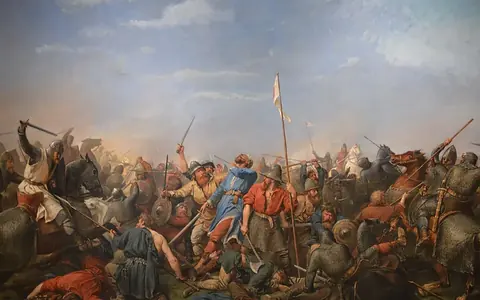
- 1066Battle of Hastings, 1066Normandy vs Anglo-Saxon England
A shield wall on Senlac Hill, a feigned Norman flight, and the arrow that ended Anglo-Saxon England in a single afternoon.
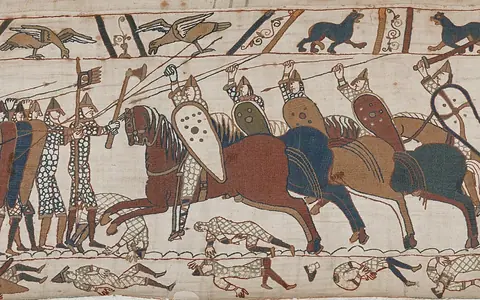
- 1141Battle of Lincoln, 1141King Stephen vs Supporters of the Empress Matilda
On 2 February 1141 King Stephen, besieging Lincoln Castle, was attacked by Matilda's earls. His cavalry fled, and he fought on foot with sword and axe until he was taken prisoner.
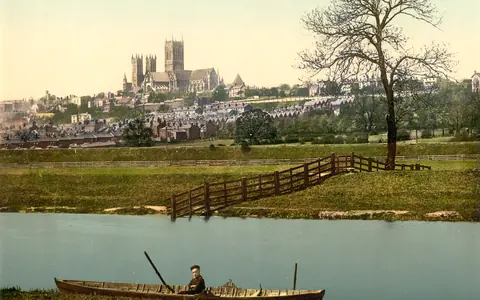
- 1191Battle of Arsuf, 1191Third Crusade: England, France and Jerusalem vs Ayyubid Sultanate
How Richard the Lionheart held his march together and beat Saladin in the open field.
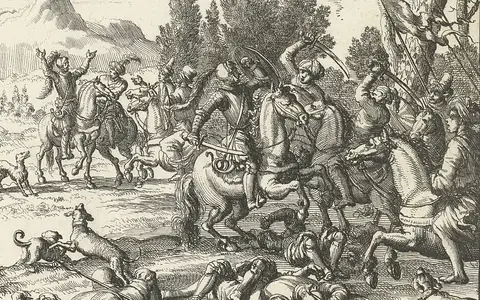
- 1265Battle of Evesham, 1265Royal army of Henry III vs Baronial party
On 4 August 1265 Prince Edward trapped Simon de Montfort in a loop of the Avon at Evesham, killed him on Greenhill and broke the baronial revolt.
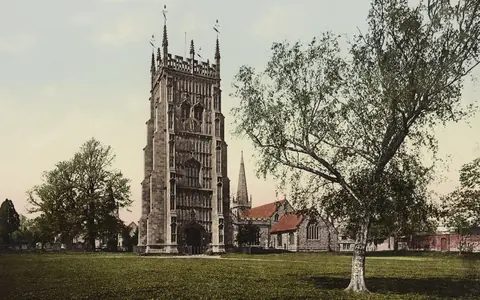
- 1297Battle of Stirling Bridge, 1297Kingdom of Scotland vs Kingdom of England
How William Wallace destroyed an English army at Stirling Bridge in 1297.
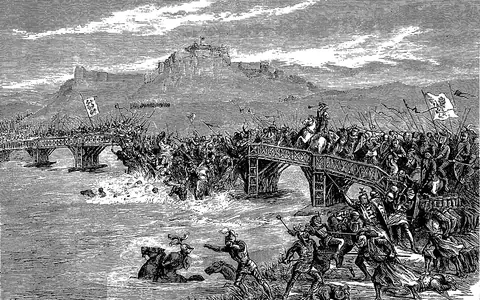
- 1314Battle of Bannockburn, 1314Kingdom of Scotland vs Kingdom of England
How Robert the Bruce's Scots routed a much larger English army at Bannockburn in 1314.
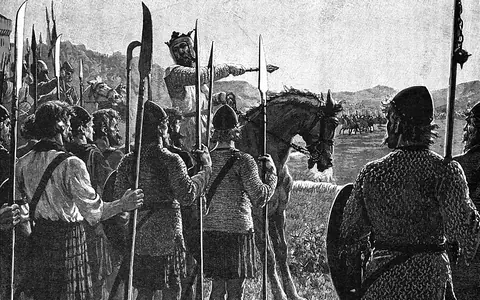
- 1346The Battle of Crécy, 1346Kingdom of England vs Kingdom of France
English longbows shatter the French chivalry.
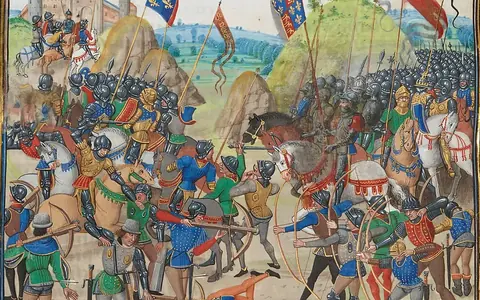
- 1356Battle of Poitiers, 1356England vs France
How the Black Prince's longbowmen beat a far larger French army and captured King John II.
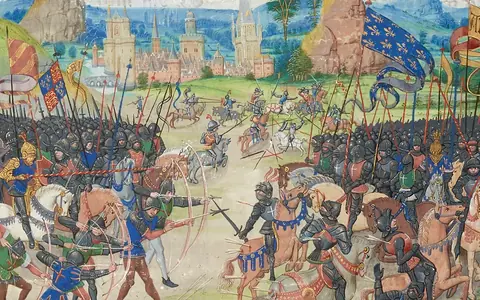
- 1415The Battle of Agincourt, 1415Kingdom of England vs Kingdom of France
A sick, outnumbered English army, an arrow storm, and a sea of mud that swallowed the flower of French chivalry.
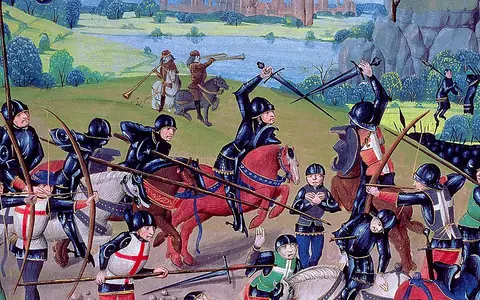
- 1424Battle of Verneuil, 1424Kingdom of England vs Dauphin's France and the Army of Scotland
On 17 August 1424 Bedford's English army crushed the Dauphin's French, Scots and Lombards outside Verneuil, killing the earls of Douglas and Buchan.
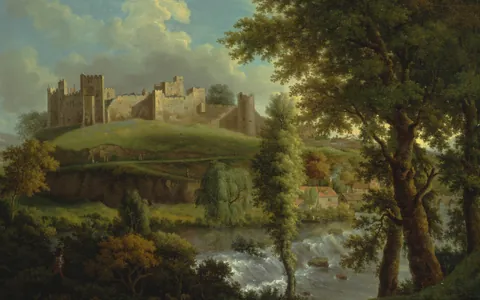
- 1459Rout of Ludford Bridge, 1459Yorkists vs Lancastrians (royal army)
On the night of 12 October 1459 the Calais veterans went over to Henry VI at Ludford Bridge below Ludlow. The Yorkist lords fled in the dark and their army melted away by morning.
- 1471Battle of Tewkesbury, 1471House of York vs House of Lancaster
On 4 May 1471 Edward IV caught Queen Margaret's army at the Severn. Somerset's flank attack failed, and the Lancastrian Prince of Wales died in the rout.
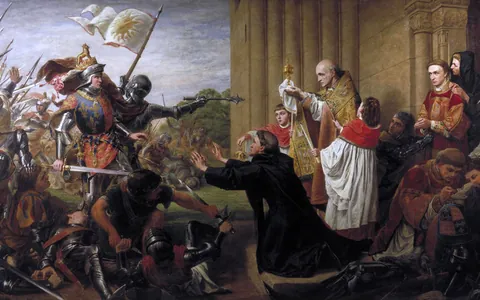
- 1485Battle of Bosworth Field, 1485Lancaster (Tudor) vs York (crown)
How Richard III fell in a last cavalry charge and Henry Tudor founded the Tudor dynasty.
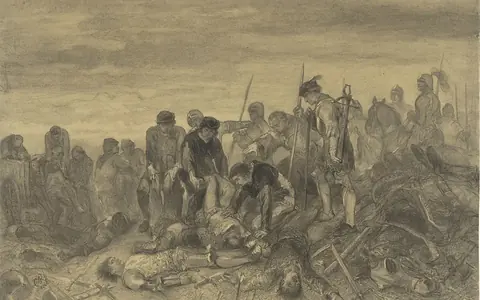
The early modern era 1492 to 1789 · 47
- 1513Battle of Flodden, 1513Kingdom of Scotland vs Kingdom of England
- 1586Drake takes Santo Domingo, 1586Kingdom of England vs Spain
On New Year's Day 1586 Francis Drake's soldiers landed by night, took Santo Domingo by midday and spent a month burning it for ransom.
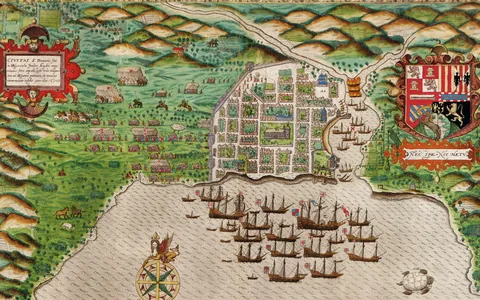
- 1601Battle of Kinsale, 1601Gaelic Irish and Spanish vs English Crown
How the English victory at Kinsale in 1601 broke the Gaelic cause and ended the old Irish order.
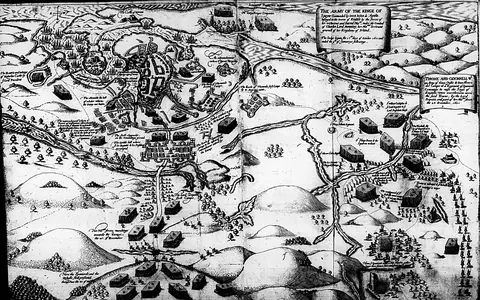
- 1602Siege of Dunboy, 1602Kingdom of England vs Donal Cam O'Sullivan Beare
In June 1602 Sir George Carew besieged O'Sullivan Beare's castle of Dunboy. Its 143 defenders refused to yield until the walls fell, and none survived.
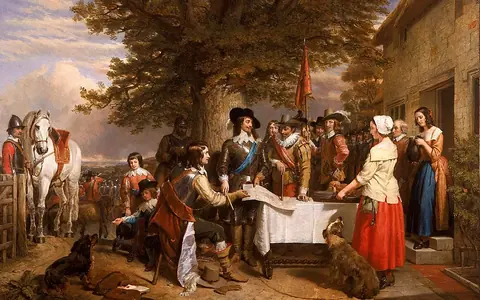
- 1642Battle of Edgehill, 1642Royalists vs Parliamentarians
How the first pitched battle of the English Civil War ended in a bloody draw.
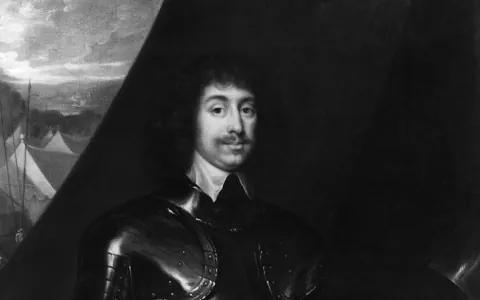
- 1643Battle of Hopton Heath, 1643Royalists vs Parliamentarians
On 19 March 1643 the Royalist horse charged the Parliamentarians on Hopton Heath outside Stafford and took their guns, but the Earl of Northampton rode too far and was killed.
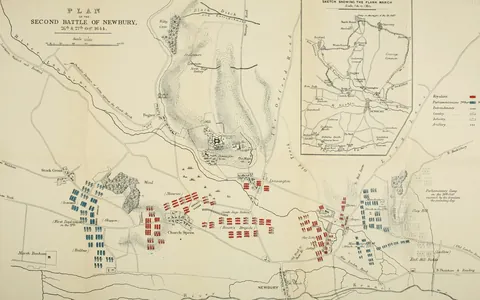
- 1644Second Battle of Newbury, 1644Royalists vs Parliament
On 27 October 1644 Parliament's armies attacked Charles I at Speen and Shaw House by Newbury but let him escape. How the battle was fought and why it led to the New Model Army.
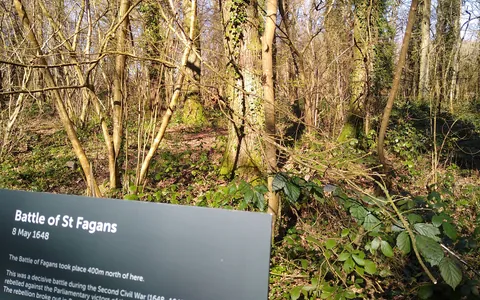
- 1648Battle of St Fagans, 1648Parliament vs Royalist rebels of south Wales
On 8 May 1648 Horton's 3,000 Parliamentarians routed Laugharne's 8,000 Welsh rebels at St Fagans in two hours, taking about 3,000 prisoners and ending the rising in south Wales.
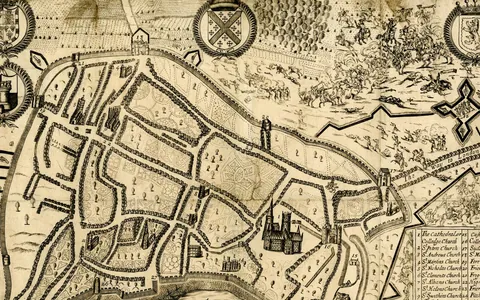
- 1651Battle of Worcester, 1651English Parliament (New Model Army and militia) vs Charles II, Scots Covenanters and English Royalists
On 3 September 1651 Cromwell bridged the Severn and the Teme with boats and destroyed Charles II's army at Worcester; the king fled to France.
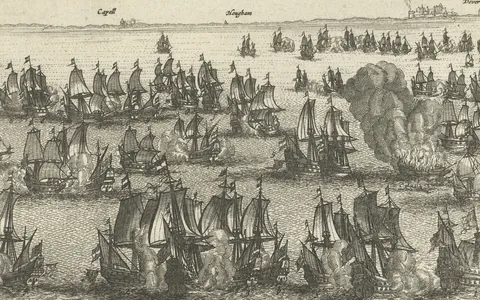
- 1652Battle of Dungeness, 1652Dutch Republic vs Commonwealth of England
On 30 November 1652 Maarten Tromp caught Robert Blake's outnumbered English fleet off Dungeness, took two of its ships and won the Dutch control of the Channel.
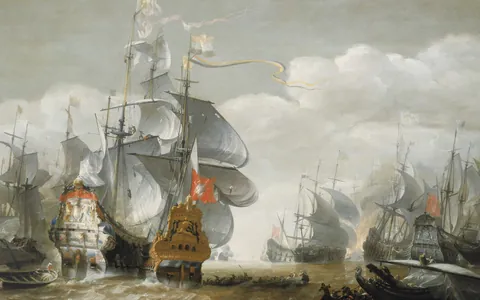
- 1665Battle of Lowestoft, 1665Kingdom of England vs Dutch Republic
On 13 June 1665 the Duke of York's fleet beat the Dutch off Lowestoft. Admiral Obdam's flagship Eendracht blew up, and the leaderless Dutch fleet broke and fled.
- 1690Battle of Beachy Head, 1690Kingdom of France vs England and the Dutch Republic
On 10 July 1690 Tourville's French fleet beat the Anglo-Dutch fleet off Sussex; the Dutch van was surrounded while the English held back.
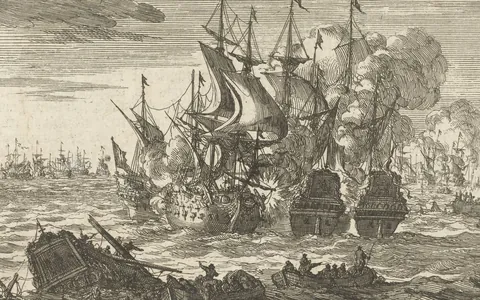
- 1690Battle of the Boyne, 1690Williamites (England, Dutch Republic and allies) vs Jacobites (Ireland, with France)
- 1704Battle of the Schellenberg, 1704Grand Alliance (England, the Dutch Republic, the Empire) vs France and the Electorate of Bavaria
On 2 July 1704 Marlborough and Louis of Baden stormed the Schellenberg above Donauwörth; an evening breakthrough near the town gave them the Danube crossing.
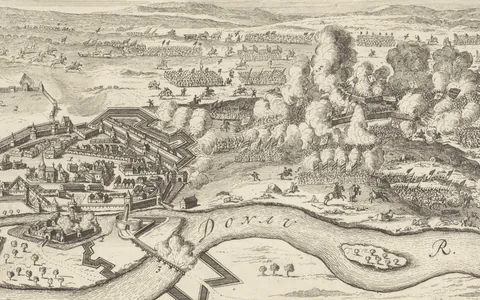
- 1704Battle of Blenheim, 1704Grand Alliance: England, the Dutch Republic, the Holy Roman Empire and German states vs France and the Electorate of Bavaria
On 13 August 1704 Marlborough and Prince Eugene destroyed a Franco-Bavarian army on the Danube, captured Marshal Tallard and saved Vienna.
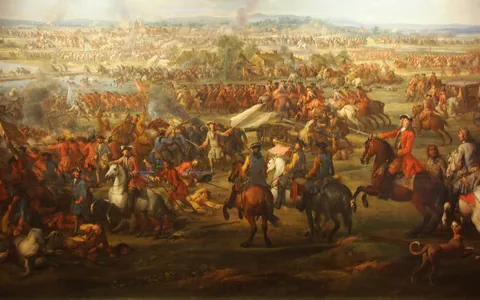
- 1704Battle of Málaga, 1704England and the Dutch Republic vs France and Spain
On 24 August 1704, weeks after Gibraltar fell, the Anglo-Dutch and French fleets fought a day-long line battle off Vélez-Málaga. No ship was lost, both sides drew apart, and Gibraltar stayed allied.
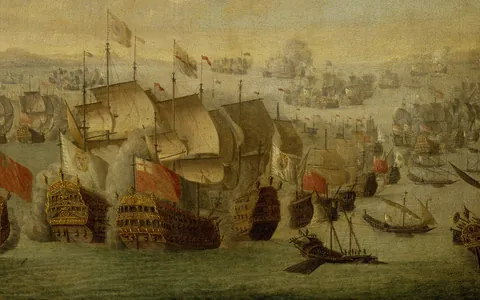
- 1707Battle of Almansa, 1707Bourbon Spain and France vs Grand Alliance (England, Portugal, the Dutch Republic)
On 25 April 1707 an English-born duke led the armies of France and Spain against a French-born earl leading the English. Almansa kept a Bourbon on the Spanish throne.
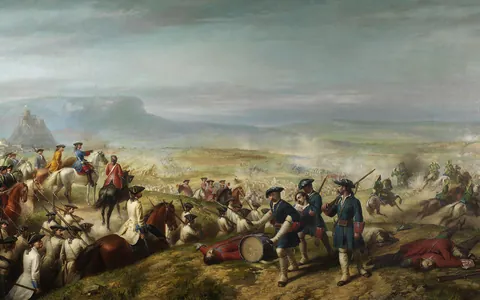
- 1743Battle of Dettingen, 1743Pragmatic Army (Britain, Hanover, Austria) vs Kingdom of France
On 27 June 1743 George II's Pragmatic Army, cut off on the river Main, beat off the French at Dettingen: the last battle led by a reigning British king.
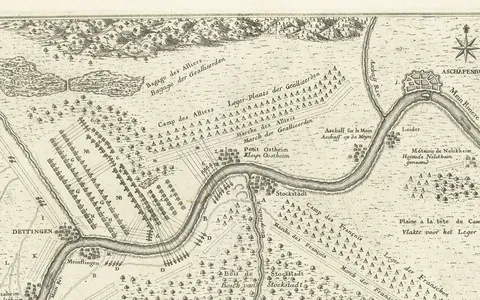
- 1745Battle of Prestonpans, 1745Jacobites vs Great Britain
How a dawn Highland charge shattered a government army in about fifteen minutes, the high point of the 1745 rising.
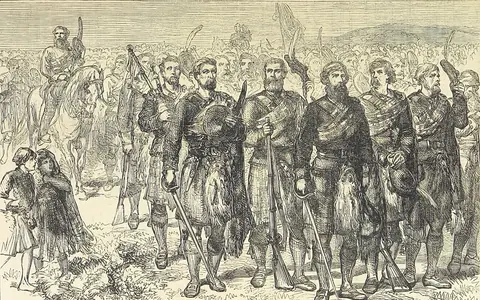
- 1746Battle of Culloden, 1746Great Britain vs Jacobites
How the Jacobite cause died in under an hour on a bleak Highland moor, the last pitched battle on British soil.
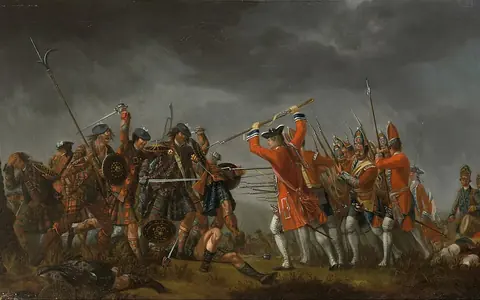
- 1746Battle of Rocoux, 1746France vs Pragmatic Army (Austria, Dutch Republic, Britain, Hanover, Hesse)
On 11 October 1746 Marshal Saxe stormed the villages outside Liège held by the Pragmatic Army; British dragoons covered the retreat as the allies crossed the Meuse at night.
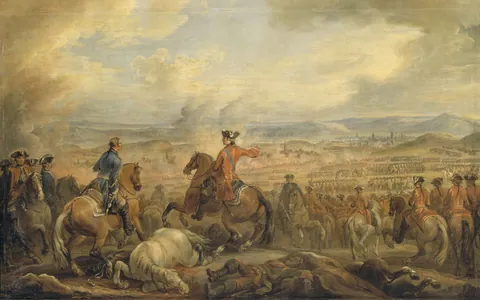
- 1747First Battle of Cape Finisterre, 1747Great Britain (Royal Navy) vs Kingdom of France (French Navy and Compagnie des Indes)
On 14 May 1747 Anson traded his line of battle for a general chase off Cape Finisterre and took every French warship that stood to fight, among them the 74 L'Invincible.
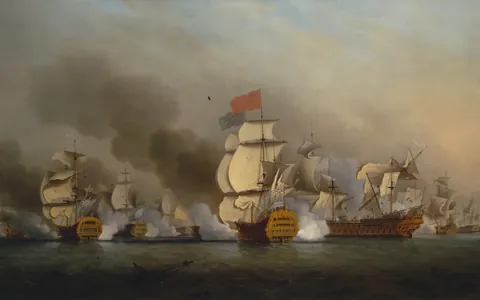
- 1747Second Battle of Cape Finisterre, 1747Kingdom of Great Britain vs Kingdom of France
On 25 October 1747 (14 October, Old Style) Edward Hawke's fleet took six of eight French warships guarding a convoy off Cape Finisterre. What happened and who won.
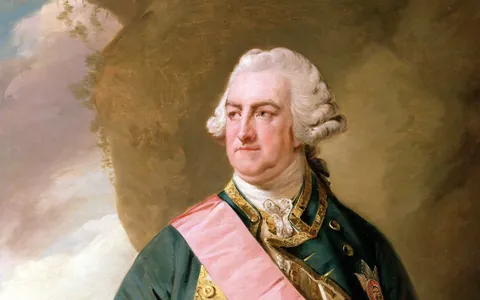
- 1756Battle of Minorca, 1756Kingdom of France vs Great Britain
On 20 May 1756 Admiral Byng fought an inconclusive action off Minorca and sailed away. The island fell, and a court-martial sent him before a firing squad.
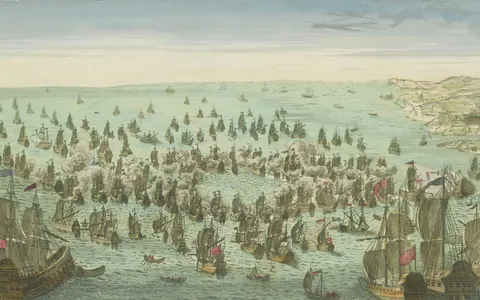
- 1757The Battle of Plassey, 1757British East India Company vs Nawab of Bengal (with French gunners)
A few thousand Company troops won Bengal, and an empire, by rain and treachery.
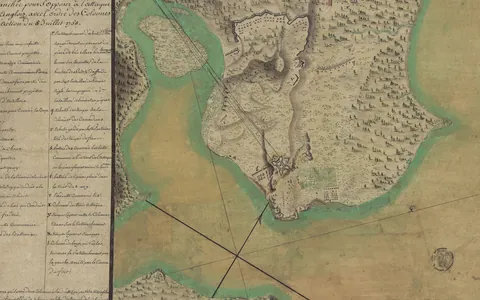
- 1758Battle of Carillon, 1758Kingdom of France vs Great Britain and the American colonies
On 8 July 1758 Montcalm's 3,600 French behind a log wall at Ticonderoga threw back Abercromby's British and colonial army, in the war's bloodiest battle.
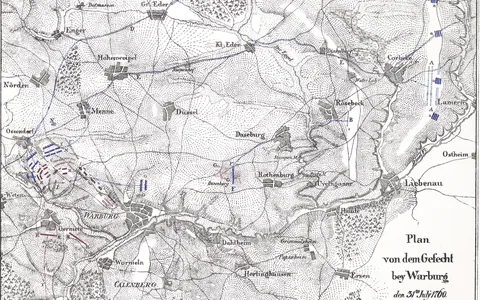
- 1760Battle of Warburg, 1760Allied army: Hanover, Hesse-Kassel, Brunswick and Britain vs Kingdom of France
On 31 July 1760 a flank march in the fog and Lord Granby's British cavalry drove the Chevalier de Muy's French corps from Warburg over the Diemel.
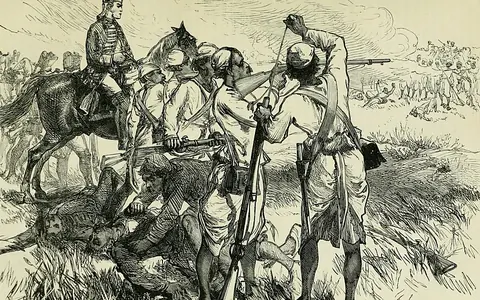
- 1764The Battle of Buxar, 1764British East India Company vs Mughal Empire, Awadh and Bengal
After Buxar, a trading company became the ruler of Bengal.
- 1775Lexington and Concord, 1775Thirteen Colonies vs Great Britain
How 19 April 1775 turned a political crisis into the American Revolutionary War.
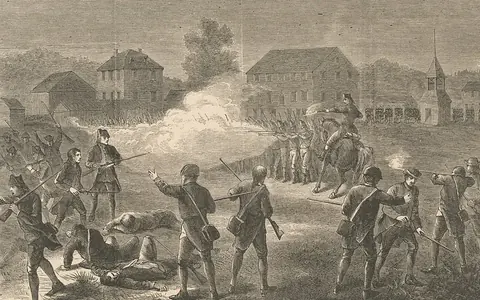
- 1775Battle of Bunker Hill, 1775Thirteen Colonies vs Great Britain
How American militia bloodied the British at Bunker Hill in 1775, a British victory that proved the colonists could fight.
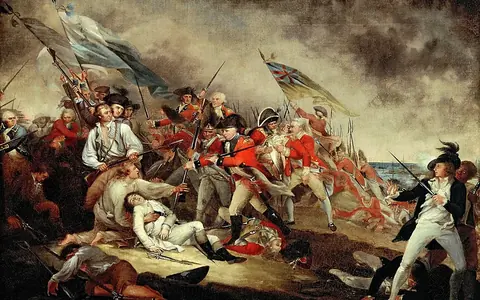
- 1776The Battle of Long Island, 1776United States (Continental Army) vs Great Britain
The biggest battle of the Revolution, and the night retreat that saved the cause.
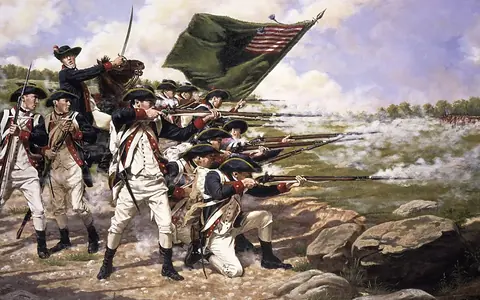
- 1776Battle of Pell's Point, 1776Continental Army vs Britain and Hesse
On 18 October 1776 John Glover's 750 Massachusetts men fought a British and Hessian landing from wall to wall at Pell's Point and bought Washington a day to escape Manhattan.
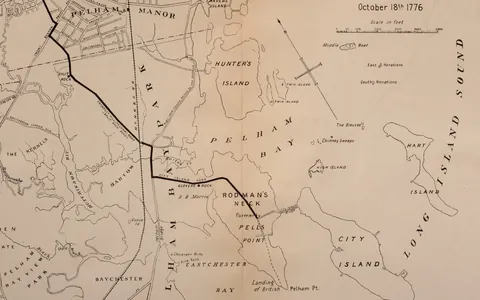
- 1776The Battle of White Plains, 28 October 1776American vs British
Chatterton's Hill, 28 October 1776: Howe takes the hill but Washington's army slips away.
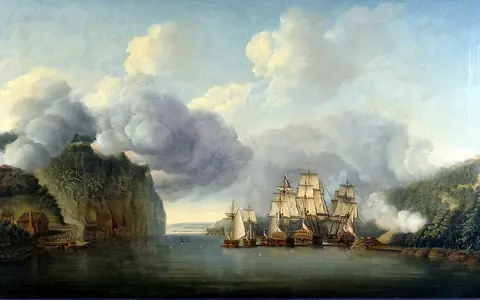
- 1776The Fall of Fort Washington, 16 November 1776British and Hessian vs American
16 November 1776: one of the worst American defeats of the war, and nearly 3,000 men lost.
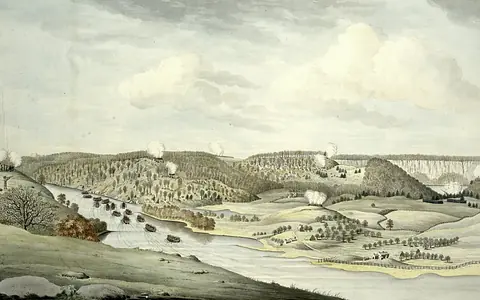
- 1776Battle of Trenton, 1776United States (Continental Army) vs Great Britain (Hessian garrison)
Washington's Christmas-night crossing of the Delaware and the surprise that revived the Revolution.
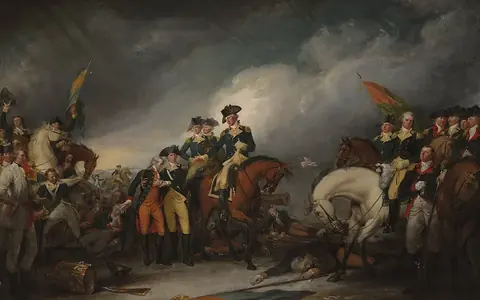
- 1777The Battle of Princeton, 1777United States vs Great Britain
A night march, a desperate rally and a victory that saved the Revolution.
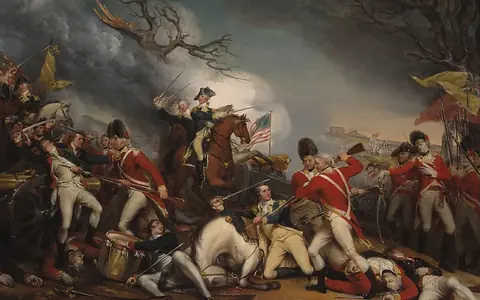
- 1777Battle of Bound Brook, 1777Great Britain (British and Hessian troops) vs United States (Continental Army and militia)
On 13 April 1777 Cornwallis's three columns surprised Benjamin Lincoln's outpost at Bound Brook; most of the garrison escaped to the hills, but the guns were lost.
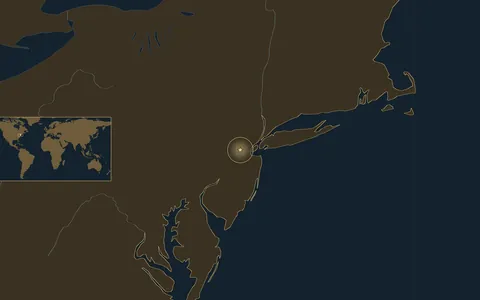
- 1777The Battle of Saratoga, 1777United States (Continental Army) vs Great Britain
Autumn 1777 on the Hudson: Burgoyne marches south, Gates digs in, and two battles decide the fate of the American Revolution.
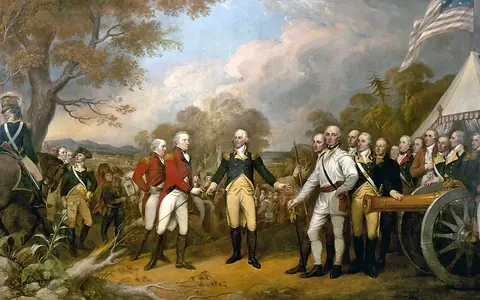
- 1777The Battle of Brandywine, 1777United States (Continental Army) vs Great Britain
Outflanked again at Brandywine, Washington lost the road to Philadelphia.
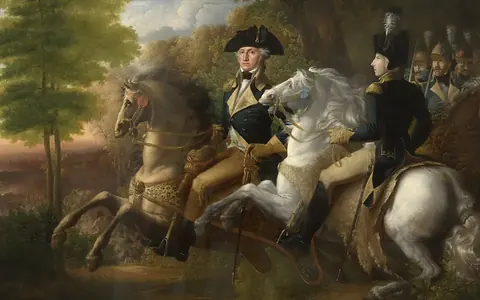
- 1777Battle of Germantown, 1777United States vs Great Britain
How Washington's bold four-column attack near Philadelphia unravelled in the fog, and still impressed France.
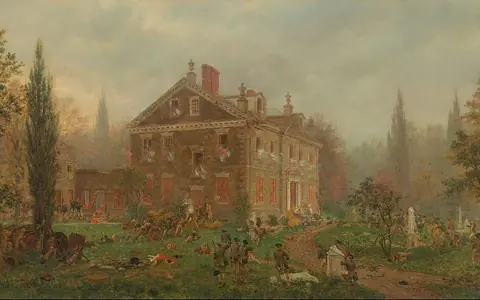
- 1778The Battle of Monmouth, 1778United States (Continental Army) vs Great Britain
In brutal heat at Monmouth, the Continental Army finally stood its ground.
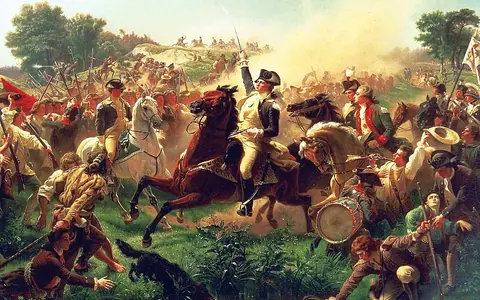
- 1779Siege of Savannah, 1779France and the United States vs Great Britain
In autumn 1779 French and American forces besieged British-held Savannah; their dawn assault on 9 October failed within an hour, and Casimir Pulaski was mortally wounded.
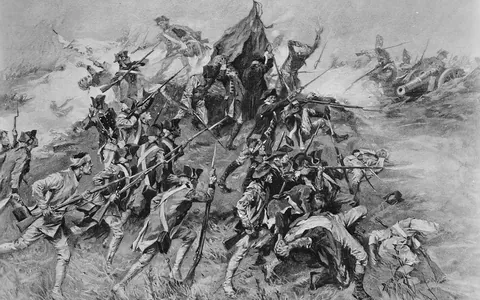
- 1780The Battle of Kings Mountain, 1780United States vs Great Britain
Frontier militia wiped out a Loyalist army in an hour and turned the war in the South.
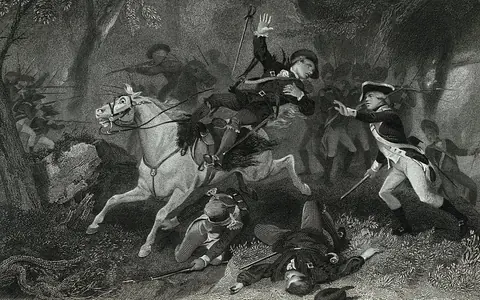
- 1781Battle of Cowpens, 1781United States (Continentals and militia) vs Great Britain
Daniel Morgan's double envelopment destroyed Tarleton's force in a tactical masterpiece.
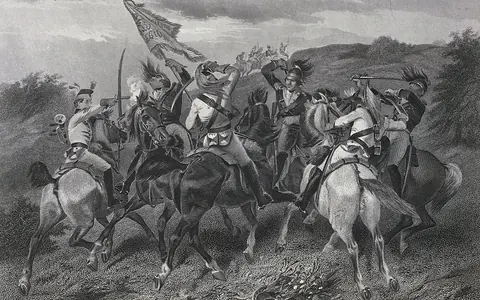
- 1781The Battle of Guilford Courthouse, 1781United States (Continentals and militia) vs Great Britain
Cornwallis won the field and lost a quarter of his army, on the road to Yorktown.
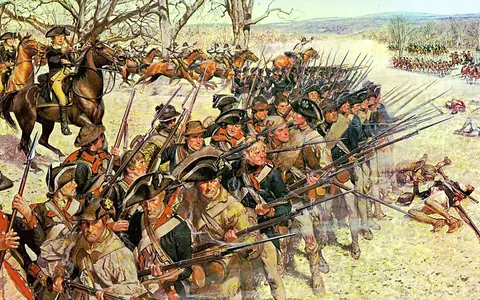
- 1781Siege of Yorktown, 1781United States and France vs Great Britain
Washington and the French trapped Cornwallis in Virginia, and the surrender that won American independence.
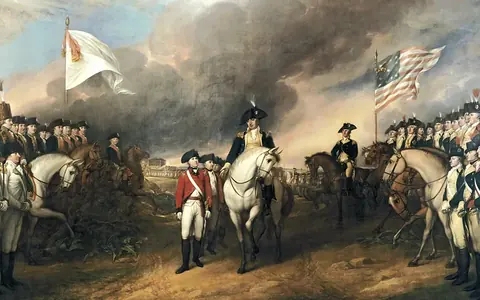
- 1781Battle of the Chesapeake, 1781France vs Great Britain
On 5 September 1781 de Grasse's French fleet fought Graves's British fleet off the Virginia capes. No ship was taken, but the French kept the bay and Cornwallis was trapped.
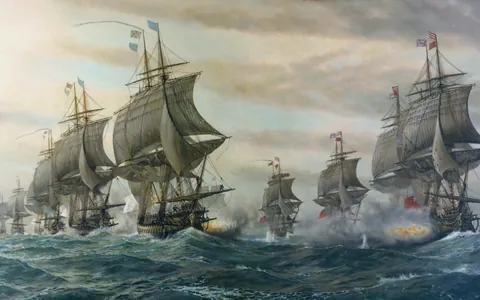
The Napoleonic era 1789 to 1815 · 16
- 1794The Glorious First of June, 1794Great Britain vs French Republic
On 1 June 1794 Lord Howe took six French ships of the line far out in the Atlantic. The French admiral lost the battle but saved the grain convoy France was waiting for.
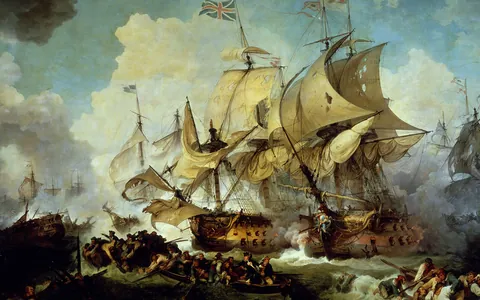
- 1797Battle of Cape St. Vincent, 1797Great Britain vs Spain
On 14 February 1797 Jervis cut a Spanish fleet twice his size in two. Nelson left the line without orders to stop its escape and boarded two Spanish ships, one from the deck of the other.
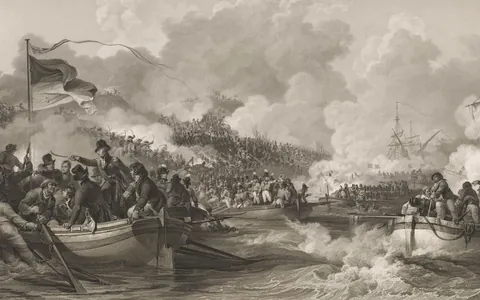
- 1801Battle of Abukir, 1801United Kingdom vs French Republic (Army of the Orient)
On 8 March 1801 Abercromby's army rowed almost a mile under fire into Aboukir Bay. Moore's men took the great sand hill in twenty minutes, and the campaign that drove the French from Egypt had begun.
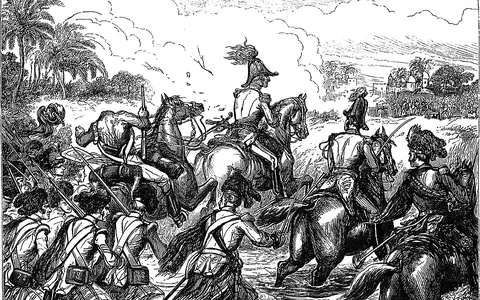
- 1803The Battle of Assaye, 1803East India Company and British troops vs Maratha Confederacy (Scindia and Berar)
Years before Waterloo, the future Wellington won the battle he valued most.
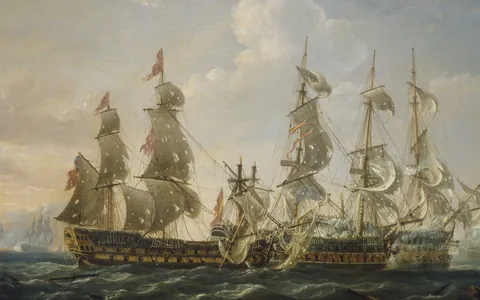
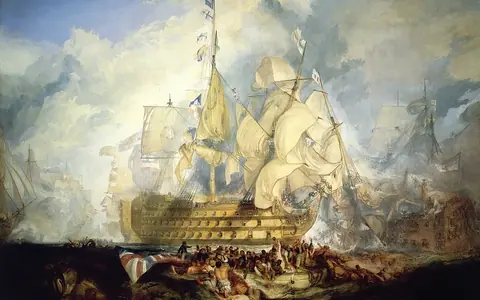
- 1805The Battle of Trafalgar, 1805Great Britain (Royal Navy) vs France and Spain (combined fleet)
Nelson broke the enemy line in two, won the greatest naval victory of the age, and did not live to see it.
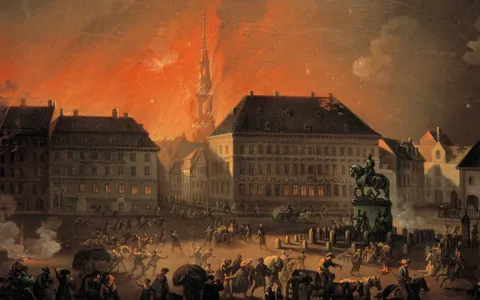
- 1807Bombardment of Copenhagen, 1807United Kingdom vs Denmark-Norway
In August 1807 a British army landed on Zealand, bombarded Copenhagen for three nights and seized the Danish fleet to keep it from Napoleon.
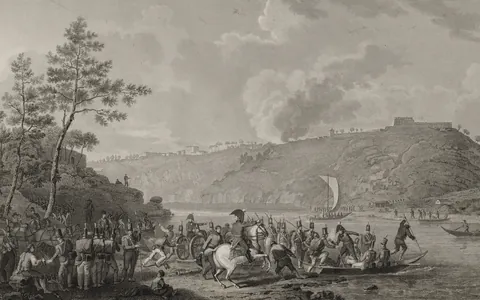
- 1809Second Battle of Porto, 1809Britain and Portugal vs French Empire
On 12 May 1809 a barber's tip and four wine barges carried Wellesley's infantry across the Douro in daylight. By noon Soult was losing Porto, and within a week Portugal.
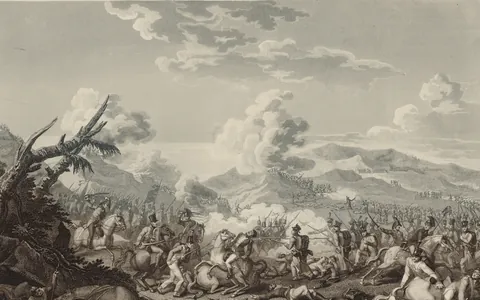
- 1810Battle of Bussaco, 1810Britain and Portugal vs France (Army of Portugal)
On 27 September 1810 Wellington's British and Portuguese held the steep ridge of Bussaco against Masséna; the French reached the crest twice and were thrown back both times.
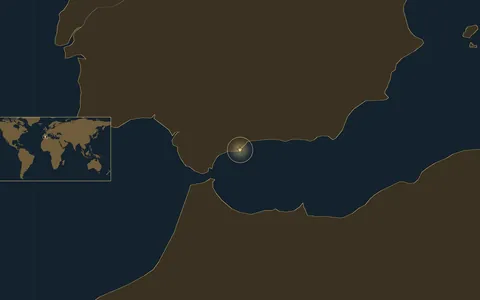
- 1810Battle of Fuengirola, 1810Duchy of Warsaw and France vs Britain and Spain
In October 1810 a Polish garrison in Sohail Castle beat off an Anglo-Spanish landing on the Spanish coast and captured its commander, Lord Blayney.
- 1813The Battle of Lake Erie, 1813United States (US Navy) vs Great Britain (Royal Navy)
Perry lost his flagship, rowed to another, and captured the whole British squadron.
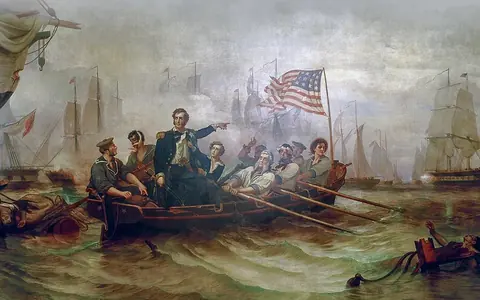
- 1813The Battle of the Thames, 1813United States vs Britain and Tecumseh's confederacy
How Harrison routed the British on the Thames and Tecumseh was killed, 1813.
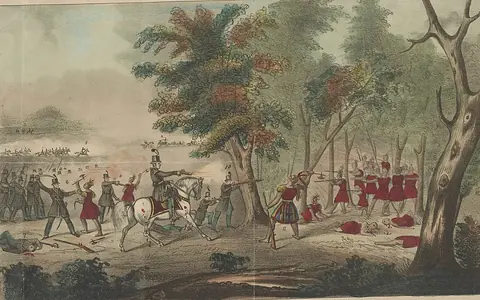
- 1814Battle of Chippawa, 1814United States vs United Kingdom, Canadian militia and First Nations allies
On 5 July 1814 Winfield Scott's drilled brigade beat Riall's British regulars on the Niagara plain at Chippawa, the first such American victory of the war.
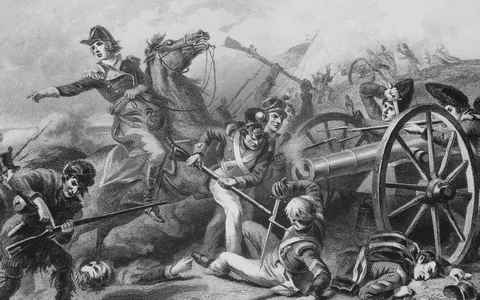
- 1814The Battle of Baltimore and Fort McHenry, 1814United States vs Great Britain
The bombardment that failed to take Fort McHenry, and gave America its anthem.
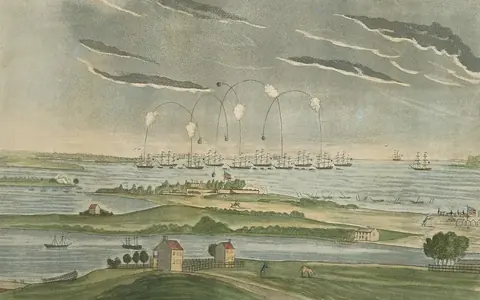
- 1815Battle of New Orleans, 1815United States vs Great Britain
Andrew Jackson's outnumbered defenders crushed a British assault in a lopsided American victory.
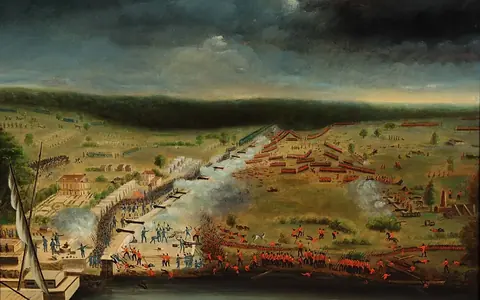
- 1815Battle of Quatre Bras, 1815French Empire vs Britain, Netherlands, Brunswick, Nassau and Hanover
On 16 June 1815 Marshal Ney attacked Wellington's army at the crossroads of Quatre Bras. The Allies held, and the fight kept a French corps away from Ligny.
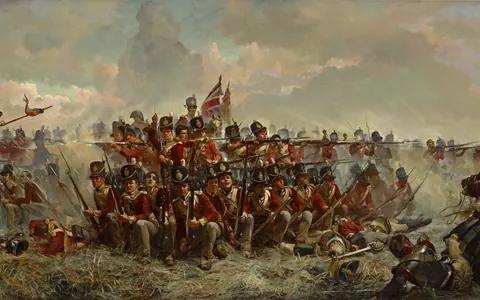
- 1815The Battle of Waterloo, 1815Coalition (Britain, Prussia) vs French Empire
Napoleon's last gamble, undone by a defiant ridge, unbroken infantry squares, and the Prussians arriving out of the woods just in time.

The industrial age 1815 to 1914 · 15
- 1845Battle of Vuelta de Obligado, 1845Argentine Confederation vs United Kingdom and France
On 20 November 1845 Argentina chained the Paraná River against an Anglo-French squadron. The squadron broke through, but the peace that followed recognized Argentine sovereignty.
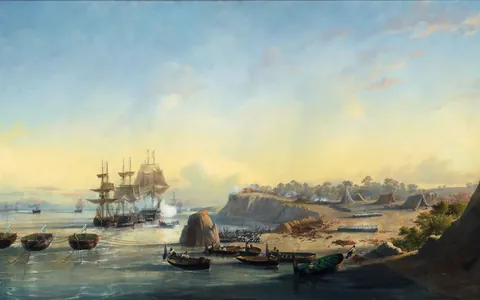
- 1845Battle of Mudki, 1845East India Company and British Army vs Sikh Empire (the Khalsa)
On 18 December 1845 Gough's tired army attacked Lal Singh's Sikhs at sunset. The fight ended in darkness, with two British generals dead and the Khalsa falling back.
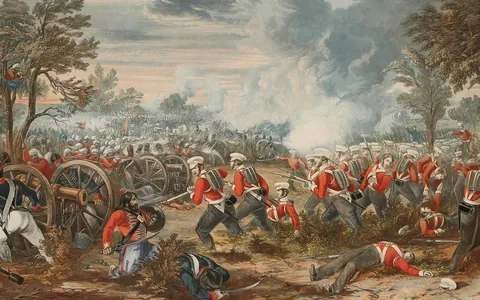
- 1849Battle of Chillianwala, 1849East India Company vs Sikh Empire
On 13 January 1849 at Chillianwala in the Punjab, Gough's East India Company army attacked the Sikh Khalsa through dense scrub. Both sides claimed victory.
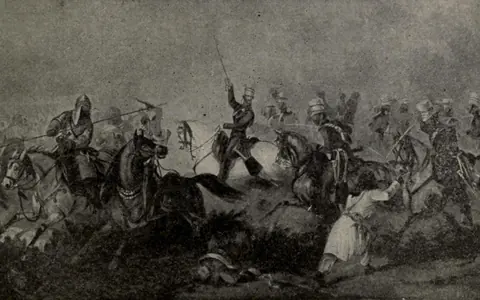
- 1849Battle of Gujrat, 1849East India Company and British Army vs Sikh Empire (Khalsa army) and Afghan allies
On 21 February 1849 Gough let his guns fight first. Two and a half hours of artillery fire broke the Sikh batteries at Gujrat, the infantry broke the line, and within weeks the Punjab was annexed.
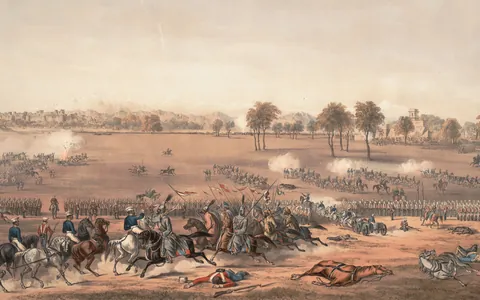
- 1854Siege of Sevastopol, 1854Britain, France and the Ottoman Empire vs Russian Empire
On 17 October 1854 the Allies opened their first bombardment of Sevastopol. Two magazines exploded, Admiral Kornilov was killed, and the Crimean War became an eleven-month siege.
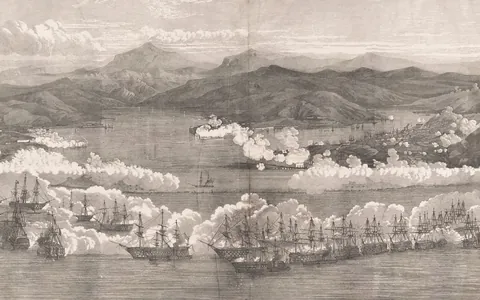
- 1854Battle of the Alma, 1854Britain and France (with Ottoman allies) vs Russian Empire
How the British and French stormed the Russian heights above the Alma in the first great battle of the Crimean War.
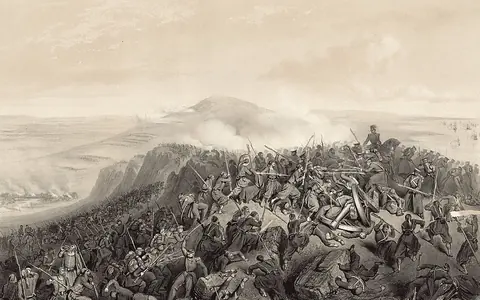
- 1854The Battle of Balaclava, 1854Britain, France and the Ottomans vs Russian Empire
The Crimean War clash of 25 October 1854 that gave history the Thin Red Line and the tragic Charge of the Light Brigade, immortalized by Tennyson.
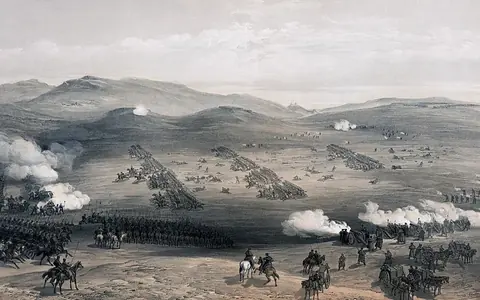
- 1855Battle of Eupatoria, 1855Ottoman Empire, with a French detachment and British, French and Ottoman warships vs Russian Empire
At daybreak on 17 February 1855 a Russian army with eighty guns struck the Ottoman garrison of Eupatoria. Behind half-finished earthworks, with warships firing from the bay, Omer Pasha's troops beat off three assaults.
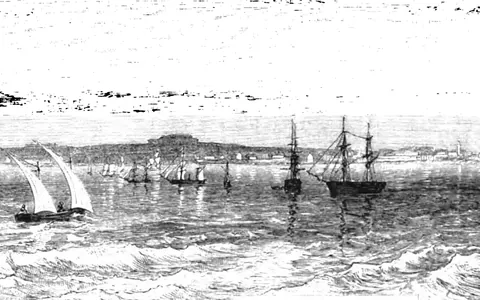
- 1855Battle of Kinburn, 1855France and Britain vs Russian Empire
On 17 October 1855 three French armored floating batteries shot the Russian fort at Kinburn to pieces and barely took a scratch: the first battle of the ironclad age.
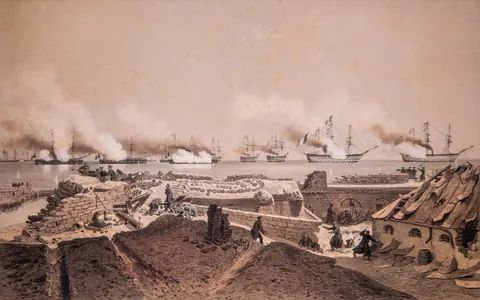
- 1879Battle of Isandlwana, 1879Zulu Kingdom vs British Empire
How a Zulu army overwhelmed a British camp at Isandlwana in 1879, one of the worst defeats in British military history.
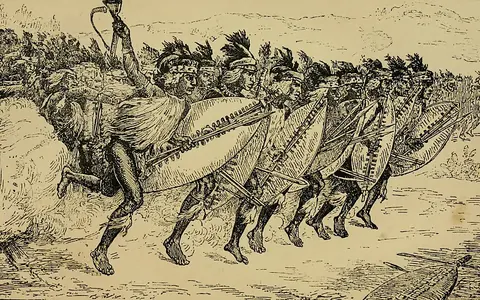
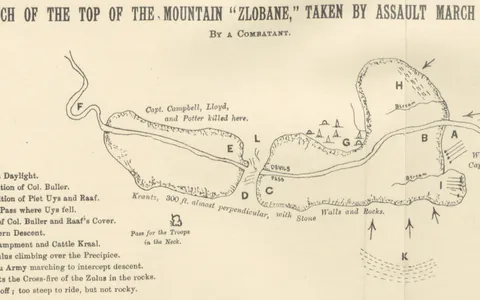
- 1879Battle of Hlobane, 1879British Empire vs Zulu Kingdom
On 28 March 1879 Wood's horsemen raided the abaQulusi stronghold on Hlobane, then saw the main Zulu army below. The retreat down Devil's Pass cost about 200 lives.
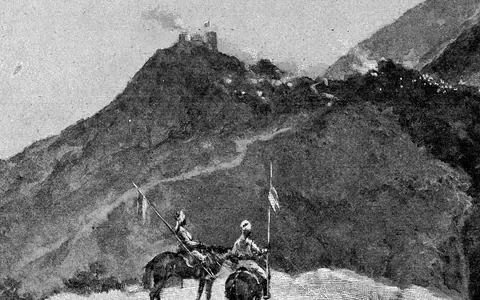
- 1897Battle of Saragarhi, 1897British India vs Afridi and Orakzai tribesmen
How twenty-one Sikhs of the 36th held Saragarhi to the last man against thousands in 1897.
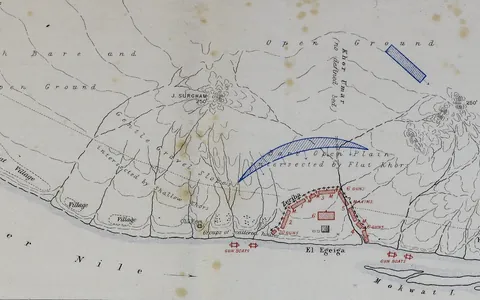
- 1898Battle of Omdurman, 1898Britain and Egypt vs Mahdist state
On 2 September 1898 Kitchener's Anglo-Egyptian army destroyed the Khalifa's army outside Omdurman, ending the Mahdist state in the Sudan.
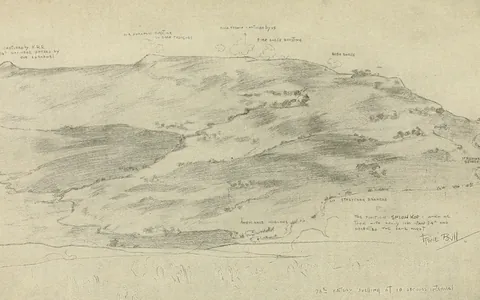
- 1900Battle of Spion Kop, 1900British Empire vs Transvaal and Orange Free State
On 24 January 1900 British troops held a shallow trench on Spion Kop under Boer fire from three sides. That night they withdrew, not knowing the Boers had also left the hill.
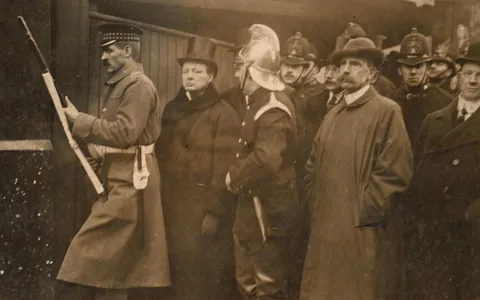
- 1911Siege of Sidney Street, 1911Metropolitan and City of London Police, Scots Guards vs Latvian revolutionaries
On 3 January 1911 two Latvian revolutionaries outgunned London police from a house in Stepney. Scots Guards were called in, Churchill came to watch, and the house burned with the men inside.
The First World War 1914 to 1919 · 15
- 1914The First Marne, 1914France and Britain vs German Empire
The counterattack that saved Paris and turned the war into trenches.
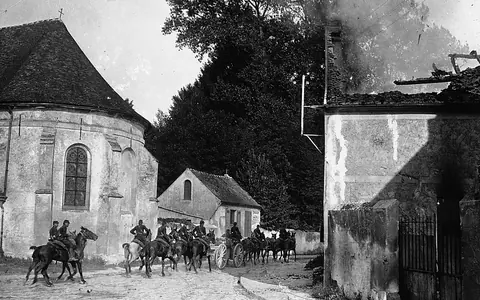
- 1914Siege of Antwerp, 1914Belgium and Britain vs Germany
In autumn 1914 German siege guns smashed the forts of Antwerp; the city burned and surrendered on 10 October, but King Albert's army escaped to fight on at the Yser.
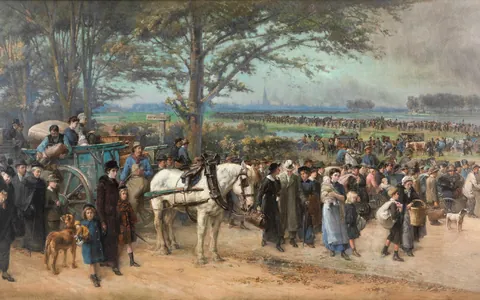
- 1914Battle of Coronel, 1914German Empire vs British Empire
On 1 November 1914 von Spee's cruisers caught Cradock's squadron off Chile at sunset and sank the Good Hope and the Monmouth with every man aboard.
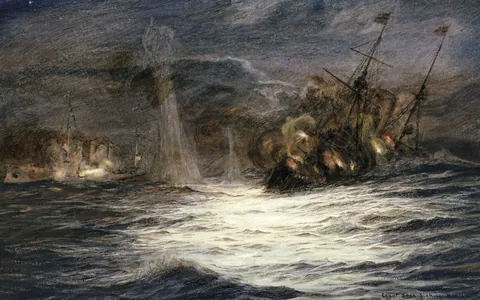
- 1914Battle of the Falkland Islands, 1914United Kingdom (Royal Navy) vs German Empire (East Asia Squadron)
On 8 December 1914 von Spee's squadron came to raid Port Stanley and found two British battlecruisers in harbor. By nightfall four of his five cruisers were sunk.
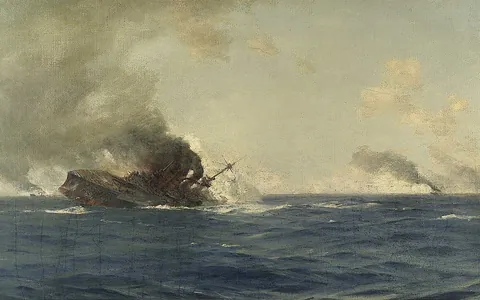
- 1915The Gallipoli Campaign, 1915Allies (British Empire, ANZAC, France) vs Ottoman Empire
How the Allied attempt to force the Dardanelles in 1915 turned into a grinding stalemate and gave birth to the ANZAC legend.
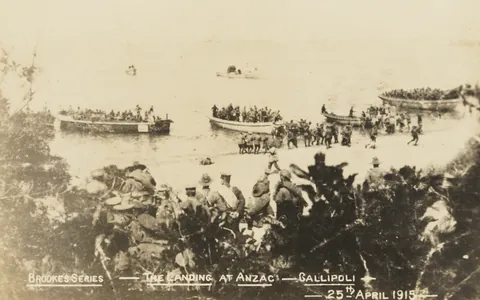
- 1915Battle of Dogger Bank, 1915United Kingdom vs German Empire
On 24 January 1915 codebreakers sent Beatty's battlecruisers after Hipper near the Dogger Bank. Blücher was sunk, but a crippled flagship and a misread signal let the rest escape.
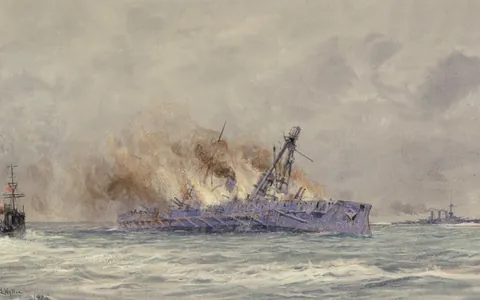
- 1915Second Battle of Artois, 1915France (Tenth Army), with the British First Army vs German Empire (Sixth Army)
On 9 May 1915 Pétain's corps and the Moroccan Division broke through north of Arras and reached the crest of Vimy Ridge within hours. By nightfall they had lost it.
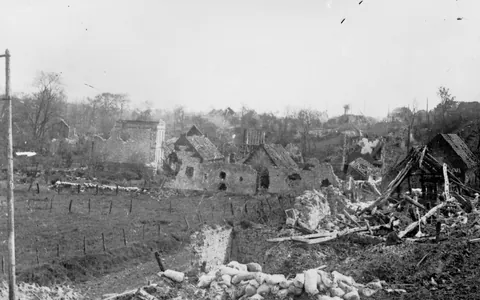
- 1916The Somme, 1916Britain and France vs German Empire
A million casualties and the symbol of industrial war.
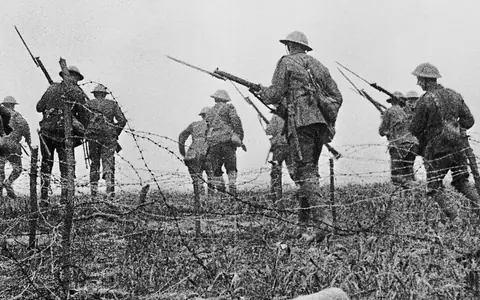
- 1917Battle of Arras, 1917British Empire vs German Empire
On Easter Monday 1917 British and Empire troops came out of the tunnels under Arras and broke the German line. Then Monchy-le-Preux and Bullecourt turned the offensive into a costly stalemate.
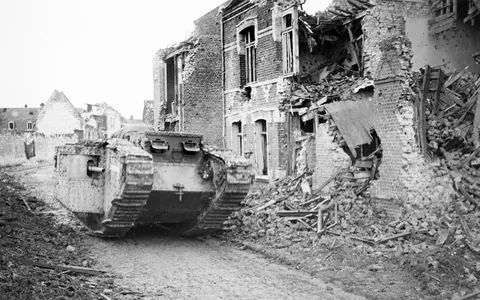
- 1917Battle of Vimy Ridge, 1917Canada (British Empire) vs German Empire (Sixth Army, Group Vimy)
- 1917The Battle of Passchendaele, 1917British Empire and allies vs German Empire
Flanders, 1917. A bold plan to break out toward the Belgian coast collapsed into mud, drowning, and attrition. This is the Third Battle of Ypres, remembered as Passchendaele.
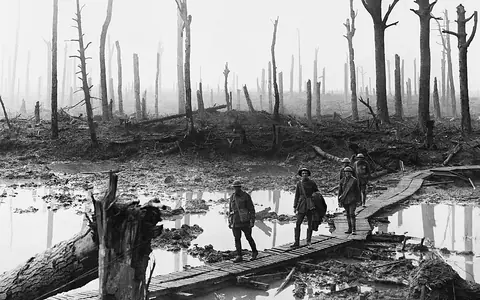
- 1917Second Battle of Heligoland Bight, 1917United Kingdom (Grand Fleet) vs German Empire (High Seas Fleet)
On 17 November 1917 British cruisers raced into the Heligoland Bight after German minesweepers, lost them in smoke and minefields, and met German battleships.
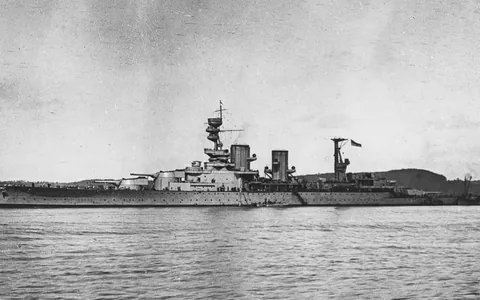
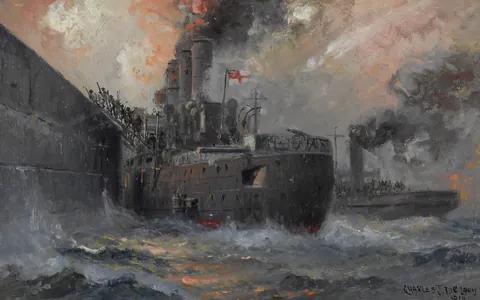
- 1918The Zeebrugge Raid, 1918United Kingdom (Royal Navy, Royal Marines) vs German Empire (Imperial German Navy)
On St George's Day 1918 the Royal Navy stormed the Zeebrugge Mole and sank concrete-filled cruisers in the Bruges canal to shut in the U-boats. Within days they were out again.
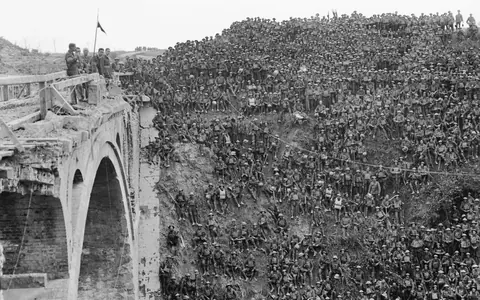
- 1918The Hundred Days Offensive, 1918Allied Powers (Britain and the Empire, France, United States, Belgium) vs German Empire
From Amiens on 8 August to the armistice of 11 November 1918, British Empire, French, American and Belgian armies broke the German army in the west.
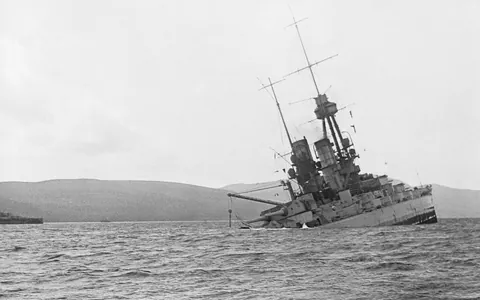
- 1919Scuttling at Scapa Flow, 1919German interned fleet vs Royal Navy at Scapa Flow
On 21 June 1919 the interned German High Seas Fleet sank itself at Scapa Flow in Orkney on Admiral von Reuter's signal, rather than be handed to the Allies.
The Second World War 1939 to 1945 · 20
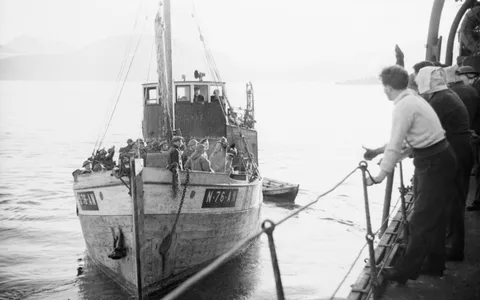
- 1940The Battle of Narvik, 1940Norway, Britain, France and Poland vs Germany
Polish mountain troops among the fjords of northern Norway.
- 1940The Battle of Britain, 1940Britain (RAF) vs Germany (Luftwaffe)
The RAF holds the sky over England and stops a German invasion.
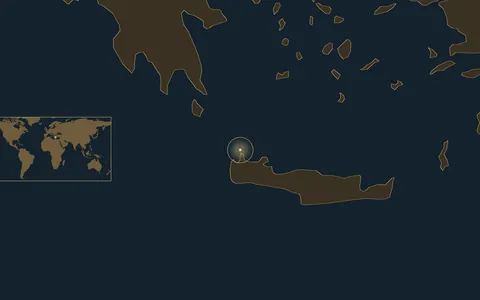
- 1940Battle of Cape Spada, 1940Australia and the United Kingdom vs Kingdom of Italy
On 19 July 1940 HMAS Sydney surprised two Italian cruisers off Crete; her gunfire stopped the Bartolomeo Colleoni and British destroyers sank her.
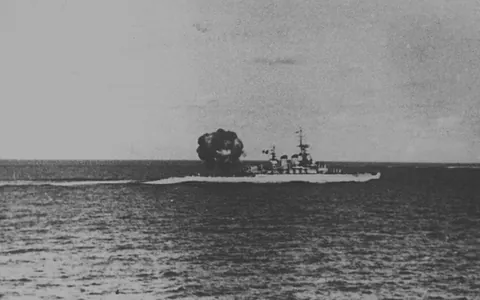
- 1940Battle of Cape Spartivento, 1940Britain vs Italy
On 27 November 1940 the Italian fleet met Somerville's Force H off Sardinia. An hour of long-range fire followed, both sides turned away, and both claimed the day.
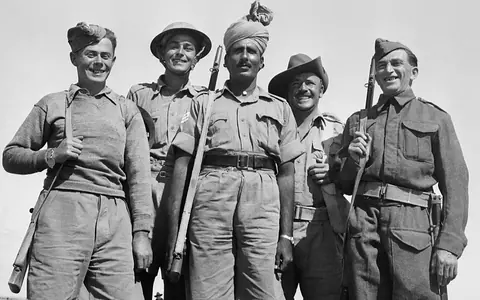
- 1941The Siege of Tobruk, 1941Allies (Australia, Britain, Poland, Czechoslovakia and others) vs Germany and Italy
The Carpathian Brigade holds the hardest sectors of the desert fortress.
- 1941Battle of Cape Bon, 1941Britain and the Netherlands vs Italy
On 13 December 1941 four British and Dutch destroyers ambushed two Italian cruisers carrying fuel to Libya off Cape Bon and sank both in a few minutes.
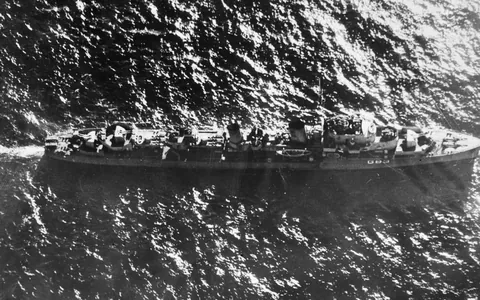
- 1941Battle of Hong Kong, 1941British Empire (British, Canadian, Indian and local Hong Kong forces) vs Empire of Japan
From 8 to 25 December 1941 British, Canadian, Indian and local troops held Hong Kong against Japan's 23rd Army, until the colony surrendered on Christmas Day.
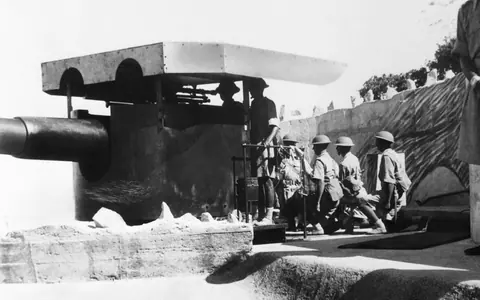
- 1942The Channel Dash, 1942Germany vs United Kingdom
On 12 February 1942 Scharnhorst, Gneisenau and Prinz Eugen ran up the English Channel in daylight. Six Swordfish attacked and none came back; only mines touched the German ships.
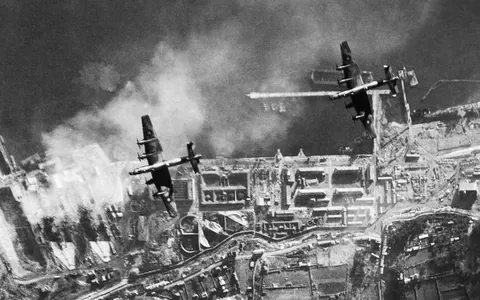
- 1942Second Battle of the Java Sea, 1942Empire of Japan vs United Kingdom and United States
On 1 March 1942 the crippled cruiser Exeter and two destroyers tried to escape from Java. Four Japanese heavy cruisers caught them north of the island, and by afternoon all three ships were gone.
- 1942Battle of Mersa Matruh, 1942Axis (German and Italian forces) vs British Commonwealth (Eighth Army)
In late June 1942 Rommel's spent army outflanked the British at Mersa Matruh; X Corps was cut off and broke out at night, and the Eighth Army fell back to El Alamein.
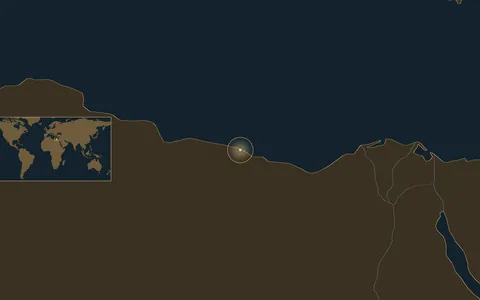
- 1942El Alamein, 1942British Empire and Commonwealth vs Germany and Italy (Panzerarmee Afrika)
Montgomery breaks Rommel and turns the tide in North Africa.
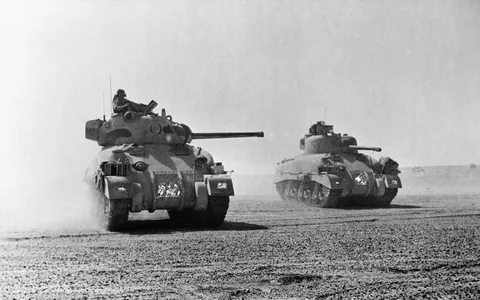
- 1942Operation Torch, 1942United States and United Kingdom (Allies) vs Vichy France
On 8 November 1942 American and British troops landed in Vichy French Morocco and Algeria. How Operation Torch was fought, who won and why it mattered.
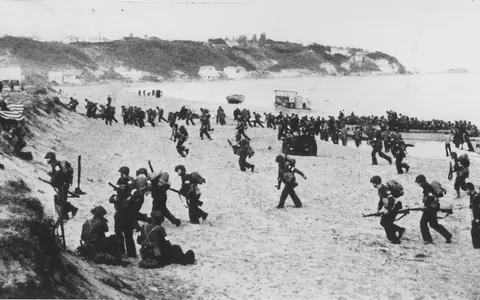
- 1942Battle of the Barents Sea, 1942United Kingdom vs Germany
On 31 December 1942 four British destroyers bluffed a heavy cruiser and a pocket battleship away from an Arctic convoy. Not one merchant ship was lost, and Hitler turned on his navy.
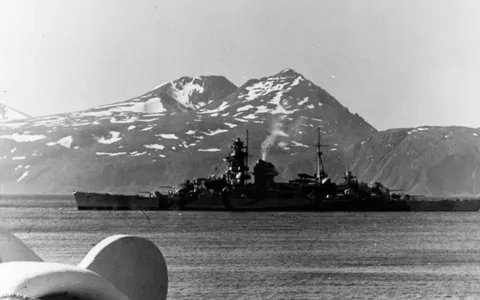
- 1943Operation Ochsenkopf, 1943Germany and Italy (5th Panzer Army) vs United Kingdom and France (British First Army)
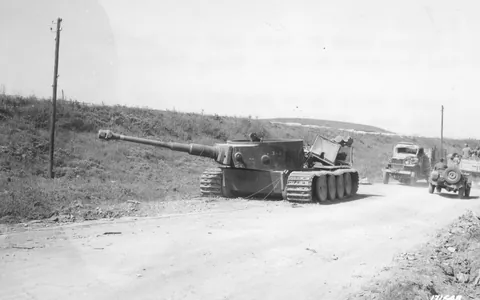
On 26 February 1943 von Arnim threw Tiger tanks at the British front in northern Tunisia. A battalion and a battery at Sidi Nsir held them for a day, and at Hunt's Gap the panzers were shot to pieces.
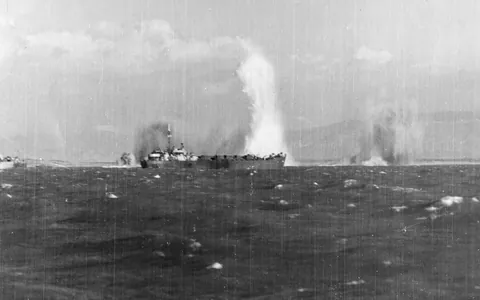
- 1944Battle of Anzio, 1944Allies (United States, Britain) vs Germany
On 22 January 1944 the Allies landed at Anzio behind the Gustav Line and caught the Germans by surprise. A week of caution let Kesselring seal the beachhead, and the siege lasted four months.
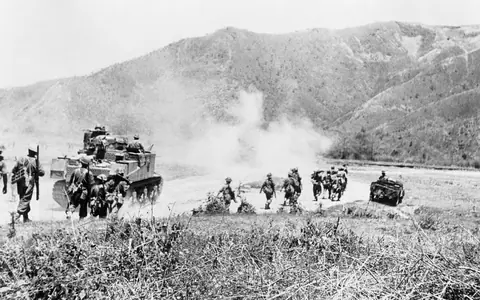
- 1944Battle of Imphal, 1944British Empire (British Indian Army) vs Empire of Japan (with the Indian National Army)
From March to July 1944 mostly Indian troops of IV Corps held the Imphal plain against Japan's U-Go offensive, until hunger and monsoon broke the attackers.
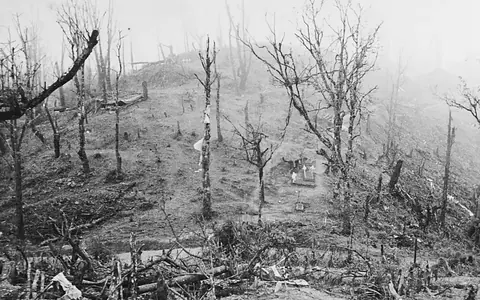
- 1944The Battle of Kohima, 1944British Empire (British and Indian forces) vs Empire of Japan
At Kohima the front line ran across a tennis court.
- 1944D-Day, 1944Allies (USA, Britain, Canada) vs Nazi Germany
Five beaches, thousands of ships, and one morning that breached the Atlantic Wall and opened the Western Front.
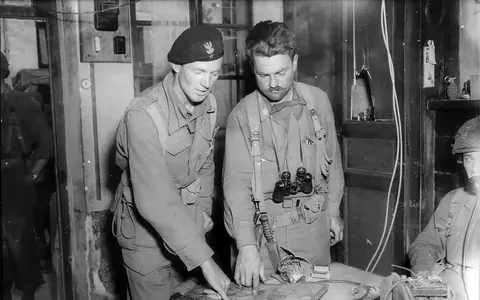
- 1944The Battle of Falaise, 1944Allies (USA, Britain, Canada, Poland, Free France) vs Germany
The Polish armored division corked the Falaise Pocket.
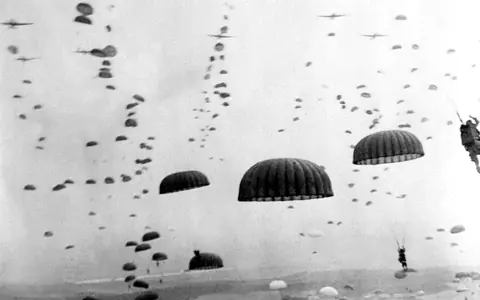
- 1944Operation Market GardenAllies (Britain, US, Poland) vs Germany
The Allied airborne gamble of September 1944, a chain of Dutch bridges, and the bridge too far at Arnhem where the plan came apart.
Since 1945 1
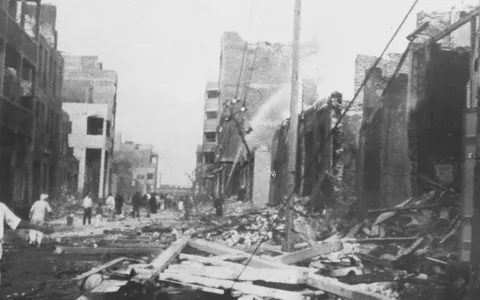
- 1956The Suez Crisis, 1956Israel, United Kingdom and France vs Egypt
On 29 October 1956 Israel invaded Sinai under a secret plan with Britain and France, who then attacked Egypt over the Suez Canal. US and UN pressure forced all three to withdraw.
Timeline
- 1066Harold II defeats the Norwegians at Stamford Bridge, then is killed by William of Normandy's army at Hastings.59
- 1265
- 1314Robert the Bruce defeats Edward II at Bannockburn.61
- 1415
- 1485
- 1513
- 1588The Spanish Armada is defeated in the Channel and wrecked by storms.65
- 1601
- 1603James VI of Scotland becomes James I of England: the union of the crowns.67
- 1690
- 1707The Acts of Union create the Kingdom of Great Britain.69
- 1781
- 1801The United Kingdom of Great Britain and Ireland comes into being.71
- 1815
- 1916
- 1922The Irish Free State leaves the United Kingdom.74
- 1940The RAF wins the Battle of Britain.75
- 1942Singapore surrenders to Japan; the Eighth Army wins at El Alamein.76
- 1982Britain retakes the Falkland Islands after the Argentine invasion.77
Legacy and further reading
England's and Britain's wars shaped the state itself: the conquest of Wales, the failed conquest of Scotland, the unions of 1707 and 1801 and the departure of most of Ireland in 1922 were all made or unmade by war. They also shaped much of the world through an empire whose wars are remembered very differently in Britain and in India, South Africa, Ireland or the United States. Two world wars, won at enormous cost, ended Britain's place as a great imperial power.78
For more, see our rankings of the greatest battles in British history and the greatest British commanders, test yourself with the British battles quiz, read the Hundred Years' War and the military history of France, or browse the eras: the Middle Ages, the early modern era, the Napoleonic era, the industrial age, World War I and World War II.
Notes
A number in the text points to a note; each note names the works that paragraph draws on, listed in full under Sources.
- Encyclopaedia Britannica, “United Kingdom”; UK Parliament, “Act of Union 1707”. ↩
- Encyclopaedia Britannica, “United Kingdom”; Encyclopaedia Britannica, “Act of Union (1707)”; Encyclopaedia Britannica, “Act of Union (1801)”. ↩
- Encyclopaedia Britannica, “United Kingdom”; legislation.gov.uk, “Laws in Wales Act 1535”; legislation.gov.uk, “Laws in Wales Act 1542”; Encyclopaedia Britannica, “James I, king of England and Scotland”; Encyclopaedia Britannica, “Edward I, king of England”. ↩
- UK Parliament, “Act of Union 1707”; Encyclopaedia Britannica, “Act of Union (1707)”; Encyclopaedia Britannica, “Act of Union (1801)”; UK Parliament, “Parliamentary union”; Encyclopaedia Britannica, “Anglo-Irish Treaty”; Encyclopaedia Britannica, “Henry II, king of England”; legislation.gov.uk, “Crown of Ireland Act 1542”. ↩
- Encyclopaedia Britannica, “United Kingdom”; UK Parliament, “Act of Union 1707”; Encyclopaedia Britannica, “Anglo-Irish Treaty”. ↩
- Encyclopaedia Britannica, “Boudicca”; English Heritage, “Introduction to Roman Britain”. ↩
- Encyclopaedia Britannica, “United Kingdom”; Encyclopaedia Britannica, “Battle of Stamford Bridge”; Historic England, “Battle of Stamford Bridge 1066 (list entry 1000035)”. ↩
- Encyclopaedia Britannica, “Battle of Hastings”; English Heritage, “Battle Abbey and 1066 Battlefield”; Encyclopaedia Britannica, “Norman Conquest”. ↩
- Charles Oman, A History of the Art of War; Encyclopaedia Britannica, “Stephen, king of England”; Encyclopaedia Britannica, “Battle of Arsuf”; Encyclopaedia Britannica, “Third Crusade”. ↩
- Charles Oman, A History of the Art of War; Historic England, “Battle of Evesham 1265 (list entry 1000010)”; Encyclopaedia Britannica, “Edward I, king of England”. ↩
- Encyclopaedia Britannica, “Edward I, king of England”; UNESCO World Heritage Centre, “Castles and Town Walls of King Edward in Gwynedd”; Encyclopaedia Britannica, “Battle of Stirling Bridge”; Encyclopaedia Britannica, “Battle of Bannockburn”; Charles Oman, A History of the Art of War. ↩
- Encyclopaedia Britannica, “Hundred Years' War”; Encyclopédie Larousse, “guerre de Cent Ans, 1337-1453”; Encyclopédie Larousse, “bataille d'Azincourt, 25 octobre 1415”; Charles Oman, A History of the Art of War; Encyclopaedia Britannica, “Archibald Douglas, 4th earl of Douglas”. ↩
- Encyclopaedia Britannica, “Wars of the Roses”; Encyclopaedia Britannica, “Battle of Bosworth Field”; Historic England, “Battle of Bosworth (Field) 1485 (list entry 1000004)”; Historic England, “Battle of Tewkesbury 1471 (list entry 1000039)”. ↩
- Encyclopaedia Britannica, “Battle of Flodden”; Historic England, “Battle of Flodden 1513 (list entry 1000011)”. ↩
- Encyclopaedia Britannica, “Spanish Armada”; Royal Museums Greenwich, “Elizabeth I and the Spanish Armada”; Encyclopaedia Britannica, “Sir Francis Drake”; Library of Congress, “Drake's West Indian Voyage”. ↩
- Encyclopaedia Britannica, “Hugh O'Neill, 2nd earl of Tyrone”; Dictionary of Irish Biography, “O'Neill, Hugh”; Dictionary of Irish Biography, “O'Sullivan Beare, Domhnall”; History Ireland, “The Battle of Kinsale, 1601”. ↩
- Encyclopaedia Britannica, “English Civil Wars”; National Army Museum, “British Civil Wars”; National Army Museum, “Battle of Naseby”; UK Parliament, “Pride's Purge and the trial of Charles I”. ↩
- Encyclopaedia Britannica, “Anglo-Dutch Wars”; Encyclopaedia Britannica, “Battle of Lowestoft”; Royal Museums Greenwich, “Flagmen of Lowestoft”. ↩
- Encyclopaedia Britannica, “Glorious Revolution”; Encyclopaedia Britannica, “Battle of the Boyne”; National Army Museum, “Battle of the Boyne”. ↩
- Encyclopaedia Britannica, “Battle of Blenheim”; National Army Museum, “Battle of Blenheim”; Encyclopaedia Britannica, “John Churchill, 1st duke of Marlborough”. ↩
- Encyclopaedia Britannica, “Battle of Culloden”; National Army Museum, “Battle of Culloden”. ↩
- Encyclopaedia Britannica, “Seven Years' War”; National Army Museum, “Seven Years War”; Encyclopaedia Britannica, “Battle of Plassey”; National Army Museum, “Battle of Plassey”. ↩
- Encyclopaedia Britannica, “Battles of Saratoga”; Encyclopaedia Britannica, “Siege of Yorktown”; U.S. National Park Service, “Campaign Timeline”; U.S. National Park Service, “Timeline of the Revolution”. ↩
- Encyclopaedia Britannica, “Battle of Trafalgar”; Royal Museums Greenwich, “Battle of Trafalgar Timeline”; Encyclopaedia Britannica, “Peninsular War”; National Army Museum, “Peninsular War”; Encyclopaedia Britannica, “Battle of Waterloo”; National Army Museum, “Battle of Waterloo”. ↩
- Encyclopaedia Britannica, “War of 1812”; U.S. National Park Service, “Chalmette Battlefield”. ↩
- Encyclopaedia Britannica, “Crimean War”; National Army Museum, “Crimean War”. ↩
- Encyclopaedia Britannica, “Indian Rebellion of 1857”; National Army Museum, “The Indian 'Mutiny'?”; Encyclopaedia Britannica, “Sikh Wars”; National Army Museum, “First Sikh War”. ↩
- Encyclopaedia Britannica, “Anglo-Zulu War”; Encyclopaedia Britannica, “Battles of Isandlwana and Rorke's Drift”; National Army Museum, “Zulu War”; Encyclopaedia Britannica, “Battle of Omdurman”; Encyclopaedia Britannica, “South African War”; National Army Museum, “Boer War”. ↩
- Encyclopaedia Britannica, “World War I”; National Army Museum, “First World War”. ↩
- Encyclopaedia Britannica, “Gallipoli Campaign”; Imperial War Museums, “What You Need To Know About The Gallipoli Campaign”; National Army Museum, “Gallipoli campaign”; Encyclopaedia Britannica, “First Battle of the Somme”; National Army Museum, “Battle of the Somme”; Encyclopaedia Britannica, “Battle of Passchendaele”; National Army Museum, “First World War”. ↩
- Encyclopaedia Britannica, “Dunkirk evacuation”; Encyclopaedia Britannica, “Battle of Britain”; Imperial War Museums, “8 Facts You Need To Know About The Battle of Britain”. ↩
- Imperial War Museums, “Why did Singapore fall?”; National Army Museum, “The Far East campaign”; Encyclopaedia Britannica, “Battles of El Alamein”; National Army Museum, “The struggle for North Africa, 1940-43”. ↩
- Encyclopaedia Britannica, “Normandy Invasion”; National Army Museum, “D-Day”; Encyclopaedia Britannica, “Battle of Imphal-Kohima”; National Army Museum, “Battles of Imphal and Kohima”. ↩
- National Army Museum, “Korean War”; Imperial War Museums, “Voices of the Korean War”; Encyclopaedia Britannica, “Suez Crisis”; National Army Museum, “Suez Crisis”. ↩
- Encyclopaedia Britannica, “Falkland Islands War”; Imperial War Museums, “Falklands conflict”. ↩
- Encyclopaedia Britannica, “United Kingdom”; UK Parliament, “Act of Union 1707”. ↩
- Encyclopaedia Britannica, “Battle of Hastings”; Encyclopaedia Britannica, “Norman Conquest”. ↩
- Encyclopaedia Britannica, “Battle of Stirling Bridge”; Encyclopaedia Britannica, “Battle of Bannockburn”. ↩
- Encyclopaedia Britannica, “Hundred Years' War”; Encyclopédie Larousse, “guerre de Cent Ans, 1337-1453”. ↩
- Encyclopaedia Britannica, “Wars of the Roses”; Historic England, “Battle of Bosworth (Field) 1485 (list entry 1000004)”. ↩
- Encyclopaedia Britannica, “Spanish Armada”; Royal Museums Greenwich, “Elizabeth I and the Spanish Armada”. ↩
- Encyclopaedia Britannica, “Hugh O'Neill, 2nd earl of Tyrone”; Dictionary of Irish Biography, “O'Neill, Hugh”. ↩
- Encyclopaedia Britannica, “English Civil Wars”; National Army Museum, “British Civil Wars”. ↩
- Encyclopaedia Britannica, “Anglo-Dutch Wars”; Royal Museums Greenwich, “Flagmen of Lowestoft”. ↩
- Encyclopaedia Britannica, “Battle of the Boyne”; National Army Museum, “Battle of the Boyne”. ↩
- Encyclopaedia Britannica, “Battle of Blenheim”; National Army Museum, “Battle of Blenheim”. ↩
- Encyclopaedia Britannica, “Battle of Culloden”; National Army Museum, “Battle of Culloden”. ↩
- Encyclopaedia Britannica, “Seven Years' War”; National Army Museum, “Seven Years War”. ↩
- Encyclopaedia Britannica, “Battles of Saratoga”; U.S. National Park Service, “Timeline of the Revolution”. ↩
- Encyclopaedia Britannica, “Battle of Trafalgar”; National Army Museum, “Battle of Waterloo”. ↩
- Encyclopaedia Britannica, “War of 1812”; U.S. National Park Service, “Chalmette Battlefield”. ↩
- Encyclopaedia Britannica, “Crimean War”; National Army Museum, “Crimean War”. ↩
- Encyclopaedia Britannica, “Anglo-Zulu War”; National Army Museum, “Zulu War”. ↩
- Encyclopaedia Britannica, “South African War”; National Army Museum, “Boer War”. ↩
- Encyclopaedia Britannica, “World War I”; National Army Museum, “First World War”. ↩
- Encyclopaedia Britannica, “Battle of Britain”; Imperial War Museums, “8 Facts You Need To Know About The Battle of Britain”. ↩
- Encyclopaedia Britannica, “Suez Crisis”; National Army Museum, “Suez Crisis”. ↩
- Encyclopaedia Britannica, “Boudicca”; Encyclopaedia Britannica, “Sir Francis Drake”; Encyclopaedia Britannica, “Battle of Trafalgar”; Encyclopaedia Britannica, “Crimean War”; Encyclopaedia Britannica, “Battles of El Alamein”. ↩
- Encyclopaedia Britannica, “Battle of Hastings”; Encyclopaedia Britannica, “Battle of Stamford Bridge”; English Heritage, “Battle Abbey and 1066 Battlefield”. ↩
- Historic England, “Battle of Evesham 1265 (list entry 1000010)”; Encyclopaedia Britannica, “Edward I, king of England”. ↩
- Encyclopaedia Britannica, “Battle of Bannockburn”; Charles Oman, A History of the Art of War. ↩
- Encyclopaedia Britannica, “Hundred Years' War”; Encyclopédie Larousse, “bataille d'Azincourt, 25 octobre 1415”. ↩
- Encyclopaedia Britannica, “Battle of Bosworth Field”; Historic England, “Battle of Bosworth (Field) 1485 (list entry 1000004)”. ↩
- Encyclopaedia Britannica, “Battle of Flodden”; Historic England, “Battle of Flodden 1513 (list entry 1000011)”. ↩
- Encyclopaedia Britannica, “Spanish Armada”; Royal Museums Greenwich, “Elizabeth I and the Spanish Armada”. ↩
- Encyclopaedia Britannica, “Hugh O'Neill, 2nd earl of Tyrone”; Dictionary of Irish Biography, “O'Neill, Hugh”. ↩
- Encyclopaedia Britannica, “United Kingdom”; Encyclopaedia Britannica, “James I, king of England and Scotland”. ↩
- Encyclopaedia Britannica, “Battle of the Boyne”; National Army Museum, “Battle of the Boyne”. ↩
- UK Parliament, “Act of Union 1707”; Encyclopaedia Britannica, “Act of Union (1707)”. ↩
- Encyclopaedia Britannica, “Siege of Yorktown”; U.S. National Park Service, “Timeline of the Revolution”. ↩
- Encyclopaedia Britannica, “Act of Union (1801)”; UK Parliament, “Parliamentary union”. ↩
- Encyclopaedia Britannica, “Battle of Waterloo”; National Army Museum, “Battle of Waterloo”. ↩
- Encyclopaedia Britannica, “First Battle of the Somme”; National Army Museum, “Battle of the Somme”. ↩
- Encyclopaedia Britannica, “United Kingdom”; Encyclopaedia Britannica, “Anglo-Irish Treaty”. ↩
- Encyclopaedia Britannica, “Battle of Britain”; Imperial War Museums, “8 Facts You Need To Know About The Battle of Britain”. ↩
- Imperial War Museums, “Why did Singapore fall?”; Encyclopaedia Britannica, “Battles of El Alamein”; National Army Museum, “The struggle for North Africa, 1940-43”. ↩
- Encyclopaedia Britannica, “Falkland Islands War”; Imperial War Museums, “Falklands conflict”. ↩
- Encyclopaedia Britannica, “United Kingdom”; Encyclopaedia Britannica, “Anglo-Irish Treaty”; National Army Museum, “First World War”; National Army Museum, “Suez Crisis”. ↩
Sources
- Encyclopaedia Britannica, “United Kingdom”.
- UK Parliament, Living Heritage, “Act of Union 1707: Overview”.
- Encyclopaedia Britannica, “Act of Union (1707)”.
- Encyclopaedia Britannica, “Act of Union (1801)”.
- legislation.gov.uk (The National Archives), “Laws in Wales Act 1535”.
- legislation.gov.uk (The National Archives), “Laws in Wales Act 1542”.
- Encyclopaedia Britannica, “James I, king of England and Scotland”.
- Encyclopaedia Britannica, “Edward I, king of England”.
- UK Parliament, Living Heritage, “Parliamentary union”.
- Encyclopaedia Britannica, “Anglo-Irish Treaty”.
- Encyclopaedia Britannica, “Henry II, king of England”.
- legislation.gov.uk (The National Archives), “Crown of Ireland Act 1542”.
- Encyclopaedia Britannica, “Boudicca”.
- English Heritage, “Introduction to Roman Britain”.
- Encyclopaedia Britannica, “Battle of Stamford Bridge”.
- Historic England, National Heritage List for England, “Battle of Stamford Bridge 1066 (list entry 1000035)”.
- Encyclopaedia Britannica, “Battle of Hastings”.
- English Heritage, “Battle Abbey and 1066 Battlefield: History and Stories”.
- Encyclopaedia Britannica, “Norman Conquest”.
- Charles Oman, A History of the Art of War: The Middle Ages from the Fourth to the Fourteenth Century (Methuen, London, 1898), via Internet Archive, “A history of the art of war”.
- Encyclopaedia Britannica, “Stephen, king of England”.
- Encyclopaedia Britannica, “Battle of Arsuf”.
- Encyclopaedia Britannica, “Third Crusade”.
- Historic England, National Heritage List for England, “Battle of Evesham 1265 (list entry 1000010)”.
- UNESCO World Heritage Centre, “Castles and Town Walls of King Edward in Gwynedd”.
- Encyclopaedia Britannica, “Battle of Stirling Bridge”.
- Encyclopaedia Britannica, “Battle of Bannockburn”.
- Encyclopaedia Britannica, “Hundred Years' War”.
- Encyclopédie Larousse, “guerre de Cent Ans, 1337-1453”.
- Encyclopédie Larousse, “bataille d'Azincourt, 25 octobre 1415”.
- Encyclopaedia Britannica, “Archibald Douglas, 4th earl of Douglas”.
- Encyclopaedia Britannica, “Wars of the Roses”.
- Encyclopaedia Britannica, “Battle of Bosworth Field”.
- Historic England, National Heritage List for England, “Battle of Bosworth (Field) 1485 (list entry 1000004)”.
- Historic England, National Heritage List for England, “Battle of Tewkesbury 1471 (list entry 1000039)”.
- Encyclopaedia Britannica, “Battle of Flodden”.
- Historic England, National Heritage List for England, “Battle of Flodden 1513 (list entry 1000011)”.
- Encyclopaedia Britannica, “Spanish Armada”.
- Royal Museums Greenwich, “Elizabeth I and the Spanish Armada”.
- Encyclopaedia Britannica, “Sir Francis Drake”.
- Library of Congress, Teaching with the Library blog, “Drake's West Indian Voyage: Primary Source Highlight”.
- Encyclopaedia Britannica, “Hugh O'Neill, 2nd earl of Tyrone”.
- Dictionary of Irish Biography (Royal Irish Academy), “O'Neill, Hugh”.
- Dictionary of Irish Biography (Royal Irish Academy), “O'Sullivan Beare, Domhnall”.
- History Ireland, “The Battle of Kinsale, 1601”.
- Encyclopaedia Britannica, “English Civil Wars”.
- National Army Museum, “British Civil Wars”.
- National Army Museum, “Battle of Naseby”.
- UK Parliament, Living Heritage, “Pride's Purge and the trial of Charles I”.
- Encyclopaedia Britannica, “Anglo-Dutch Wars”.
- Encyclopaedia Britannica, “Battle of Lowestoft”.
- Royal Museums Greenwich, “Flagmen of Lowestoft: George Monck, 1st Duke of Albemarle”.
- Encyclopaedia Britannica, “Glorious Revolution”.
- Encyclopaedia Britannica, “Battle of the Boyne”.
- National Army Museum, “Battle of the Boyne”.
- Encyclopaedia Britannica, “Battle of Blenheim”.
- National Army Museum, “Battle of Blenheim”.
- Encyclopaedia Britannica, “John Churchill, 1st duke of Marlborough”.
- Encyclopaedia Britannica, “Battle of Culloden”.
- National Army Museum, “Battle of Culloden”.
- Encyclopaedia Britannica, “Seven Years' War”.
- National Army Museum, “Seven Years War”.
- Encyclopaedia Britannica, “Battle of Plassey”.
- National Army Museum, “Battle of Plassey”.
- Encyclopaedia Britannica, “Battles of Saratoga”.
- Encyclopaedia Britannica, “Siege of Yorktown”.
- U.S. National Park Service, Saratoga National Historical Park, “Campaign Timeline”.
- U.S. National Park Service, “Timeline of the Revolution”.
- Encyclopaedia Britannica, “Battle of Trafalgar”.
- Royal Museums Greenwich, “Battle of Trafalgar Timeline”.
- Encyclopaedia Britannica, “Peninsular War”.
- National Army Museum, “Peninsular War”.
- Encyclopaedia Britannica, “Battle of Waterloo”.
- National Army Museum, “Battle of Waterloo”.
- Encyclopaedia Britannica, “War of 1812”.
- U.S. National Park Service, “Chalmette Battlefield”.
- Encyclopaedia Britannica, “Crimean War”.
- National Army Museum, “Crimean War”.
- Encyclopaedia Britannica, “Indian Rebellion of 1857”.
- National Army Museum, “The Indian 'Mutiny'?”.
- Encyclopaedia Britannica, “Sikh Wars”.
- National Army Museum, “First Sikh War”.
- Encyclopaedia Britannica, “Anglo-Zulu War”.
- Encyclopaedia Britannica, “Battles of Isandlwana and Rorke's Drift”.
- National Army Museum, “Zulu War”.
- Encyclopaedia Britannica, “Battle of Omdurman”.
- Encyclopaedia Britannica, “South African War”.
- National Army Museum, “Boer War”.
- Encyclopaedia Britannica, “World War I”.
- National Army Museum, “First World War”.
- Encyclopaedia Britannica, “Gallipoli Campaign”.
- Imperial War Museums, “What You Need To Know About The Gallipoli Campaign”.
- National Army Museum, “Gallipoli campaign”.
- Encyclopaedia Britannica, “First Battle of the Somme”.
- National Army Museum, “Battle of the Somme”.
- Encyclopaedia Britannica, “Battle of Passchendaele”.
- Encyclopaedia Britannica, “Dunkirk evacuation”.
- Encyclopaedia Britannica, “Battle of Britain”.
- Imperial War Museums, “8 Facts You Need To Know About The Battle of Britain”.
- Imperial War Museums, “Why did Singapore fall?”.
- National Army Museum, “The Far East campaign”.
- Encyclopaedia Britannica, “Battles of El Alamein”.
- National Army Museum, “The struggle for North Africa, 1940-43”.
- Encyclopaedia Britannica, “Normandy Invasion”.
- National Army Museum, “D-Day”.
- Encyclopaedia Britannica, “Battle of Imphal-Kohima”.
- National Army Museum, “Battles of Imphal and Kohima”.
- National Army Museum, “Korean War”.
- Imperial War Museums, “Voices of the Korean War”.
- Encyclopaedia Britannica, “Suez Crisis”.
- National Army Museum, “Suez Crisis”.
- Encyclopaedia Britannica, “Falkland Islands War”.
- Imperial War Museums, “Falklands conflict”.





