

What was the Hundred Years' War?
The Hundred Years' War was a series of wars between the Kingdom of England and the Kingdom of France from 1337 to 1453, broken by long truces. It began over the English-held duchy of Gascony and Edward III's claim to the French crown. England won at Crécy, Poitiers and Agincourt, but France recovered under Charles V and Charles VII, and by 1453 the English kings had lost every French possession except Calais.1
For more than a century the kings of England and France fought over land, a crown and the loyalty of the French nobility. The war drew in Flanders, Scotland, Burgundy, Castile and Portugal, was fought almost entirely on French soil and came in two great waves, in Larousse's account, from 1337 to 1388 and from 1411 to 1453, each an English surge followed by a French recovery.2
Causes: a duchy, a crown, wool and Scotland
The roots of the war lay in feudal law. The kings of England held lands in France as vassals of the French king, and by the Treaty of Paris of 1259 Henry III kept the duchy of Guyenne, the remnant of Aquitaine with Gascony, in return for homage. The French crown heard appeals against the duke and confiscated the duchy in 1294 and 1324. On 24 May 1337 Philip VI confiscated it again, the date usually taken as the start of the war.3
A dynastic quarrel made the dispute far larger. When Charles IV died in 1328 without a son, the direct Capetian line ended. Edward III of England was his nephew through his mother, Isabella, but an assembly of French magnates chose Philip of Valois, a cousin in the male line. Edward did homage to Philip VI in 1329, but in October 1337 he declared the French crown his by right, and in 1340 he took the title King of France.4
The cloth towns of Flanders depended on English wool, and in 1340 Edward allied with their leader, Jacob van Artevelde of Ghent, against their pro-French count. France, for its part, had long backed the Kingdom of Scotland against English domination, and Philip sent help to the Scots in 1336. This Franco-Scottish alliance, the Auld Alliance, ran through the whole war: a Scottish invasion of England ended at Neville's Cross in 1346 with King David II captured, and in the fifteenth century many Scots fought in French armies. Scotland's military history will get its own page.5

The Edwardian phase, 1337 to 1360
The first decisive action came at sea. On 24 June 1340 Edward's fleet destroyed the French fleet, reinforced by Castilian and Genoese ships, off Sluys on the Flemish coast, which gave the English control of the Channel crossings for years. From 1341 the fighting moved to Brittany, where the two kings backed rival claimants.6
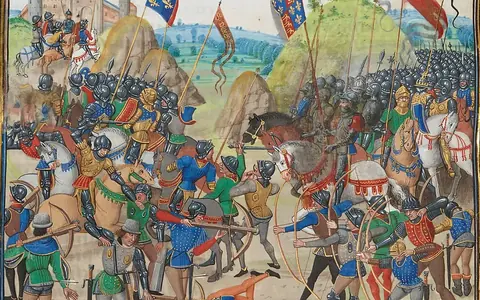
In July 1346 Edward landed in Normandy with, by Britannica's estimate, about 4,000 men-at-arms and 10,000 archers, took Caen and raided toward Paris. Philip VI caught him at Crécy on 26 August with some 12,000 mounted men-at-arms and many other troops. The English fought on foot on a defensive slope, and their archers shot down first the Genoese crossbowmen and then the repeated French cavalry charges. Our article on the Battle of Crécy tells the day in detail.7

Edward then besieged Calais, which hunger forced to surrender in August 1347; it stayed English until 1558. The Black Death, which from 1347 killed perhaps a third of Europe's people, halted large campaigns, and truces were renewed until 1355.8
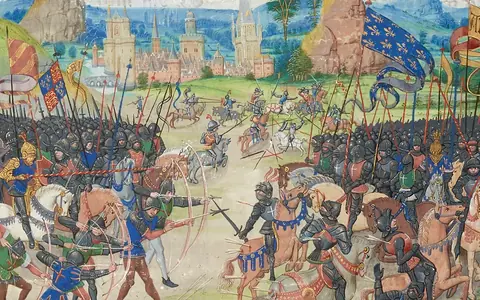
When fighting resumed, Edward's eldest son, later known as the Black Prince, led a destructive mounted raid, a chevauchée, from Bordeaux to Narbonne in 1355. In 1356 he marched north again, and on 19 September near Poitiers his outnumbered army of English and Gascon troops, posted among thickets and marshes, beat off a series of French attacks and captured King John II. More in our article on the Battle of Poitiers.9
France fell into crisis, and in 1358 the peasants north of the Seine rose in the Jacquerie. After Edward failed to take Reims in 1359, the two sides agreed terms at Brétigny on 8 May 1360, ratified at Calais in October. Edward was to drop his claim to the French crown in return for the whole of old Aquitaine and for Calais and Ponthieu in full sovereignty, and John's ransom was set at three million gold écus.10

The Caroline phase, 1369 to 1389
The renunciations promised at Brétigny were never carried out, and the Black Prince, ruling Aquitaine from 1362, alienated its nobles. When Gascon lords appealed against him to Charles V, king since 1364, Charles accepted their appeal in June 1368, and in 1369 the war began again.11
Charles V, known as the Wise, fought differently. Advised by Bertrand du Guesclin, whom he made constable of France in 1370, the French avoided pitched battles with the main English armies, let the long English raids exhaust themselves in a land stripped bare, and retook towns one by one, by siege, bribery and negotiation. By 1375 most of the settlement of 1360 had been undone, and by 1380 the English held little more than Calais and the coast around Bordeaux and Bayonne.12
In Castile, Peter I and his half-brother Henry of Trastámara fought for the throne; the Black Prince restored Peter after Nájera in 1367, while Du Guesclin led French mercenary companies for Henry. Henry's victory at Montiel in 1369 brought the Castilian navy to France's side, and in 1372 Castilian ships defeated an English fleet off La Rochelle. England answered through Portugal: a Portuguese army with a small force of English archers defeated Castile at Aljubarrota on 14 August 1385 and secured Portugal's independence.13
Both thrones then passed to boys, and a truce signed at Leulinghen on 18 June 1389 opened a long pause. The war revived only after Henry IV deposed Richard in 1399 and France, under the intermittently insane Charles VI, slid into civil war between the Burgundian and Armagnac factions after 1407.14
The Lancastrian phase, 1415 to 1429
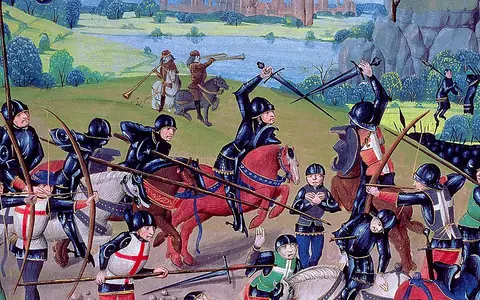
Henry V, king from 1413, revived the claim and exploited the French civil war. He landed at the mouth of the Seine in August 1415, took Harfleur in September and set out for Calais. A French army blocked his way at Agincourt, and on 25 October his archers, behind sharpened stakes on a narrow, muddy field between woods, and his men-at-arms defeated it. Britannica gives about 6,000 English against 20,000 to 30,000 French, while Anne Curry puts them at about 8,500 and 12,000. Read more in our article on the Battle of Agincourt.15
Henry returned in 1417 and conquered Normandy town by town, taking Rouen in January 1419. The murder of John the Fearless, duke of Burgundy, by the dauphin's men at Montereau in September 1419 drove his son, Philip the Good, into alliance with England. By the Treaty of Troyes of 21 May 1420 the dauphin Charles was disinherited, and Henry, who married Charles VI's daughter Catherine, became regent and heir of France: two kingdoms were to share one king.16
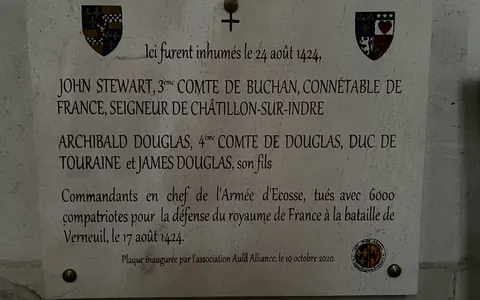
In practice France split three ways, with the dauphin ruling from Bourges. Henry died on 31 August 1422 and Charles VI in October, leaving the infant Henry VI king of both realms, with his uncle John, duke of Bedford, as regent in France. Bedford's armies defeated French and Scottish forces at Cravant in 1423 and at Verneuil on 17 August 1424, one of the bloodiest battles of the war, and in October 1428 they laid siege to Orléans, the key to the Loire.17
The end of the war, 1429 to 1453
The turn came at Orléans. Joan of Arc, a peasant girl from Domrémy who said she was sent by God, joined a relief army; the English abandoned the siege on 8 May 1429, and on 18 June the French routed an English army at Patay, where John Talbot was captured. Joan then urged Charles to go to Reims, through country held by his enemies, and there he was crowned on 17 July. Once anointed, he was the lawful king in most of his subjects' eyes.18

Joan was captured by the Burgundians at Compiègne in May 1430 and handed to the English. She was tried for heresy by a church court at Rouen and burned there on 30 May 1431. Our biography of Joan of Arc follows her life.19
By the Treaty of Arras of September 1435 Philip the Good made peace with Charles VII; Bedford died the same month, and Paris opened its gates to the king in April 1436. A truce agreed at Tours in 1444 gave Charles time to build a permanent army of paid companies, the compagnies d'ordonnance, with free archers and an artillery train reorganized by the brothers Jean and Gaspard Bureau.20
When the truce broke down in 1449, the French overran Normandy. On 15 April 1450 at Formigny they defeated a relief force of some 3,500 men under Sir Thomas Kyriell, and Cherbourg, the last English stronghold in Normandy, fell in August. Guyenne, tied to England by the Bordeaux wine trade, came next. Bordeaux surrendered in 1451 but welcomed back an English army under Talbot in October 1452. On 17 July 1453 Talbot attacked the fortified French camp at Castillon, defended by a strong artillery train, and was killed; Bordeaux capitulated for good on 19 October.21

Key figures
England. Edward III, king from 1327 to 1377, began the war. His son Edward, the Black Prince, won at Poitiers and died in 1376; the nickname is first recorded only in the sixteenth century. Henry V, king from 1413 to 1422, won Agincourt. His brother John, duke of Bedford, was regent in France until 1435.22
France. Philip VI, the first Valois king, lost at Sluys and Crécy. His son John II was captured at Poitiers and died in captivity in England in 1364. Charles V, king from 1364 to 1380, created a new navy and won back most of what had been lost. Charles VII, king from 1422 to 1461, disinherited at Troyes, ended the war with a reformed army.23
Captains and allies. Bertrand du Guesclin, a Breton, directed the recovery of the 1370s until his death in 1380. Joan of Arc helped to lift the siege of Orléans. Philip the Good, duke of Burgundy from 1419, held the balance: his alliance gave Henry V the Treaty of Troyes, and his change of sides at Arras doomed the English cause. John Talbot, earl of Shrewsbury, the leading English captain of the last decades, was captured at Patay and killed at Castillon.24
Outcome
The Kingdom of France won the war. By the end of 1453 the English crown had lost Normandy, Maine and Guyenne and kept only Calais. No peace treaty was ever signed; the war ended in practice with the truce of Picquigny in 1475, under which Edward IV withdrew from France for a payment, and English monarchs went on styling themselves kings of France until 1801.25
The cost fell mostly on France, where the fighting took place. Larousse notes that the population of both kingdoms roughly halved between 1300 and 1430, through war and plague together. The French crown emerged with a standing army and the power to tax without the estates.26
Legacy
The war helped to make two nations. Britannica concludes that national feeling, born in the long struggle, grew so strong that any union of the two crowns became impossible; Larousse stresses the mutual hostility of the two peoples, the end of French as the language of the English court and a French national sentiment whose main symbol is Joan of Arc. Both memories still draw on it, from Shakespeare's Henry V to the cult of Joan. Our hubs on the military history of Britain and of France place it in the longer story.27
The war's most famous weapon needs care. The longbow, probably Welsh in origin, shot far faster than the crossbow, perhaps 10 to 12 arrows a minute against two or three, and English archers did decide Crécy and Poitiers. But they won on the defensive, behind stakes, hedges or ditches and beside dismounted men-at-arms; at Agincourt the mud and the narrow field mattered as much as the arrows. Anne Curry finds no contemporary record of the two-finger gesture said to date from Agincourt. Our comparison of the longbow and the crossbow goes further.28
Nor did gunpowder simply end the age of the bow. The English probably had guns at Crécy, but for most of the war cannon were siege weapons. At Formigny the English line held off the French, guns included, for about three hours and broke only when reinforcements arrived; at Castillon Talbot lost by attacking a fortified camp head-on. The longbow stayed in English service into the sixteenth century: 172 were recovered from the wreck of the Tudor warship Mary Rose.29
Defeat also shook England. The loss of Normandy brought down the duke of Suffolk in 1450, fed Jack Cade's revolt and sharpened the quarrels that grew into the Wars of the Roses of 1455 to 1485, which ended at Bosworth. Calais remained the last English foothold on the Continent until the duke of Guise took it in early 1558.30
Battles of the Hundred Years' War
Our articles on the battles of the war, and of its side wars in Castile and Portugal, are listed below in date order.
- 1346The Battle of Crécy, 1346Kingdom of England vs Kingdom of France
English longbows shatter the French chivalry.
- 1356Battle of Poitiers, 1356England vs France
How the Black Prince's longbowmen beat a far larger French army and captured King John II.
- 1415The Battle of Agincourt, 1415Kingdom of England vs Kingdom of France
A sick, outnumbered English army, an arrow storm, and a sea of mud that swallowed the flower of French chivalry.
- 1424Battle of Verneuil, 1424Kingdom of England vs Dauphin's France and the Army of Scotland
On 17 August 1424 Bedford's English army crushed the Dauphin's French, Scots and Lombards outside Verneuil, killing the earls of Douglas and Buchan.
Related wars
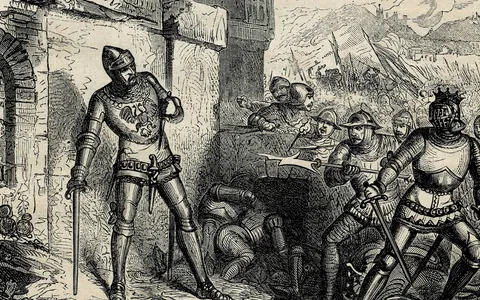
- 1369Battle of Montiel, 1369Henry of Trastámara, with French and Breton companies vs Peter I of Castile, with troops from Granada
On 14 March 1369 Henry of Trastámara and Du Guesclin caught King Peter of Castile on the march near Montiel. Nine days later Peter came out of the castle to a meeting in a tent, and Henry killed him with a dagger.
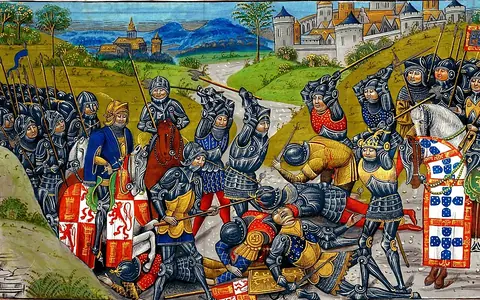
- 1385Battle of Aljubarrota, 1385Kingdom of Portugal vs Crown of Castile
How a small Portuguese army beat a larger Castilian invasion at Aljubarrota in 1385 and secured independence.
Timeline
- 1328Charles IV dies without a son, and Philip VI of Valois is chosen over Edward III.31
- 1337Philip VI confiscates Guyenne on 24 May, and Edward III claims the French crown.32
- 1340The English fleet destroys the French fleet off Sluys on 24 June.33
- 1346Edward III defeats Philip VI at the Battle of Crécy on 26 August.34
- 1356The Black Prince captures John II at the Battle of Poitiers on 19 September.35
- 1360The Treaty of Brétigny gives Edward III Aquitaine, Calais and Ponthieu.36
- 1369
- 1372A Castilian fleet allied to France defeats an English fleet off La Rochelle.38
- 1385Portugal, with English archers, defeats Castile at Aljubarrota on 14 August.39
- 1415Henry V defeats the French at the Battle of Agincourt on 25 October.40
- 1420The Treaty of Troyes makes Henry V regent and heir of France.41
- 1424Bedford defeats a French and Scottish army at the Battle of Verneuil on 17 August.42
- 1429The siege of Orléans is lifted on 8 May, and Charles VII is crowned at Reims on 17 July.43
- 1435The Treaty of Arras reconciles Burgundy with Charles VII.44
- 1450The French win at Formigny on 15 April and complete the reconquest of Normandy.45
- 1453Talbot is killed at Castillon on 17 July, and Bordeaux surrenders on 19 October.46
Where to read next
Battles of this war appear in our ranking of the greatest battles of the Middle Ages, in the greatest battles in British history and in the greatest battles of France. For the wider period, see our page on the Middle Ages, and test yourself with the medieval battles quiz.
Notes
A number in the text points to a note; each note names the works that paragraph draws on, listed in full under Sources.
- Encyclopaedia Britannica, “Hundred Years’ War”; Encyclopédie Larousse, “guerre de Cent Ans”. ↩
- Encyclopédie Larousse, “guerre de Cent Ans”; Encyclopaedia Britannica, “Hundred Years’ War”. ↩
- Encyclopaedia Britannica, “Hundred Years’ War”; Encyclopédie Larousse, “guerre de Cent Ans”; The National Archives, “French lands of the English kings”. ↩
- Encyclopaedia Britannica, “Hundred Years’ War”; Encyclopédie Larousse, “guerre de Cent Ans”; Royal Armouries, “The Hundred Years War, 1337 to 1453”; Encyclopaedia Britannica, “Philip VI, king of France”. ↩
- Encyclopaedia Britannica, “Hundred Years’ War”; Encyclopédie Larousse, “guerre de Cent Ans”; Royal Armouries, “The Hundred Years War, 1337 to 1453”; Anne Curry, The Hundred Years War. ↩
- Encyclopaedia Britannica, “Hundred Years’ War”; Encyclopédie Larousse, “guerre de Cent Ans”; Royal Armouries, “The Hundred Years War, 1337 to 1453”. ↩
- Encyclopaedia Britannica, “Battle of Crécy”; Royal Armouries, “The Hundred Years War, 1337 to 1453”; Charles Oman, A History of the Art of War in the Middle Ages, vol. 2. ↩
- Encyclopaedia Britannica, “Hundred Years’ War”; Encyclopédie Larousse, “guerre de Cent Ans”; The National Archives, “French lands of the English kings”; Royal Armouries, “The Hundred Years War, 1337 to 1453”. ↩
- Encyclopaedia Britannica, “Hundred Years’ War”; Encyclopaedia Britannica, “Edward, the Black Prince”; Encyclopédie Larousse, “guerre de Cent Ans”; Charles Oman, A History of the Art of War in the Middle Ages, vol. 2. ↩
- Encyclopaedia Britannica, “Hundred Years’ War”; Encyclopédie Larousse, “guerre de Cent Ans”; Royal Armouries, “The Hundred Years War, 1337 to 1453”; Encyclopaedia Britannica, “John II, king of France”. ↩
- Encyclopaedia Britannica, “Hundred Years’ War”; Encyclopaedia Britannica, “Edward, the Black Prince”; Encyclopédie Larousse, “guerre de Cent Ans”. ↩
- Encyclopaedia Britannica, “Bertrand du Guesclin”; Encyclopaedia Britannica, “Charles V, king of France”; Encyclopaedia Britannica, “Hundred Years’ War”; Encyclopédie Larousse, “guerre de Cent Ans”; Édouard Perroy, The Hundred Years War. ↩
- Encyclopédie Larousse, “guerre de Cent Ans”; Encyclopaedia Britannica, “Edward, the Black Prince”; Encyclopaedia Britannica, “Bertrand du Guesclin”; Encyclopaedia Britannica, “Hundred Years’ War”; Encyclopaedia Britannica, “Battle of Aljubarrota”. ↩
- Encyclopaedia Britannica, “Hundred Years’ War”; Encyclopédie Larousse, “guerre de Cent Ans”; Royal Armouries, “The Hundred Years War, 1337 to 1453”. ↩
- Encyclopaedia Britannica, “Battle of Agincourt”; University of Southampton, “The truth about Agincourt”; Encyclopaedia Britannica, “Hundred Years’ War”. ↩
- Encyclopaedia Britannica, “Hundred Years’ War”; Encyclopédie Larousse, “guerre de Cent Ans”. ↩
- Encyclopaedia Britannica, “Hundred Years’ War”; Encyclopédie Larousse, “guerre de Cent Ans”; Royal Armouries, “The Hundred Years War, 1337 to 1453”. ↩
- Royal Armouries, “The Hundred Years War, 1337 to 1453”; Encyclopédie Larousse, “guerre de Cent Ans”; Encyclopaedia Britannica, “Hundred Years’ War”; Encyclopaedia Britannica, “John Talbot, 1st earl of Shrewsbury”. ↩
- Encyclopaedia Britannica, “Hundred Years’ War”; Encyclopédie Larousse, “guerre de Cent Ans”; Encyclopaedia Britannica, “Saint Joan of Arc”. ↩
- Encyclopaedia Britannica, “Hundred Years’ War”; Encyclopédie Larousse, “guerre de Cent Ans”; Encyclopaedia Britannica, “Battle of Formigny”. ↩
- Encyclopaedia Britannica, “Battle of Formigny”; Royal Armouries, “The Hundred Years War, 1337 to 1453”; Encyclopaedia Britannica, “Battle of Castillon”; Encyclopédie Larousse, “guerre de Cent Ans”; Encyclopaedia Britannica, “Hundred Years’ War”. ↩
- Encyclopaedia Britannica, “Edward III, king of England”; Encyclopaedia Britannica, “Edward, the Black Prince”; Encyclopaedia Britannica, “Hundred Years’ War”; Encyclopédie Larousse, “guerre de Cent Ans”. ↩
- Encyclopaedia Britannica, “Philip VI, king of France”; Encyclopaedia Britannica, “John II, king of France”; Encyclopaedia Britannica, “Charles V, king of France”; Encyclopaedia Britannica, “Charles VII, king of France”; Encyclopédie Larousse, “guerre de Cent Ans”. ↩
- Encyclopaedia Britannica, “Bertrand du Guesclin”; Encyclopaedia Britannica, “Saint Joan of Arc”; Encyclopaedia Britannica, “Hundred Years’ War”; Encyclopédie Larousse, “guerre de Cent Ans”; Encyclopaedia Britannica, “John Talbot, 1st earl of Shrewsbury”. ↩
- Encyclopaedia Britannica, “Hundred Years’ War”; Encyclopédie Larousse, “guerre de Cent Ans”; The National Archives, “French lands of the English kings”. ↩
- Encyclopédie Larousse, “guerre de Cent Ans”; Encyclopaedia Britannica, “Hundred Years’ War”; C. T. Allmand, The Hundred Years War. ↩
- Encyclopaedia Britannica, “Hundred Years’ War”; Encyclopédie Larousse, “guerre de Cent Ans”; University of Southampton, “The truth about Agincourt”. ↩
- Royal Armouries, “The Hundred Years War, 1337 to 1453”; Encyclopaedia Britannica, “English longbow”; Encyclopaedia Britannica, “Battle of Agincourt”; University of Southampton, “The truth about Agincourt”. ↩
- Royal Armouries, “The Hundred Years War, 1337 to 1453”; Encyclopaedia Britannica, “Battle of Formigny”; Encyclopaedia Britannica, “Battle of Castillon”; Encyclopaedia Britannica, “English longbow”; Mary Rose Trust, “Longbows and arrows”. ↩
- Encyclopaedia Britannica, “Hundred Years’ War”; Encyclopédie Larousse, “guerre de Cent Ans”; Encyclopaedia Britannica, “Calais”; The National Archives, “French lands of the English kings”. ↩
- Encyclopaedia Britannica, “Hundred Years’ War”; Encyclopédie Larousse, “guerre de Cent Ans”. ↩
- Encyclopaedia Britannica, “Hundred Years’ War”; Encyclopédie Larousse, “guerre de Cent Ans”. ↩
- Encyclopaedia Britannica, “Hundred Years’ War”; Royal Armouries, “The Hundred Years War, 1337 to 1453”. ↩
- Encyclopaedia Britannica, “Battle of Crécy”; Royal Armouries, “The Hundred Years War, 1337 to 1453”. ↩
- Encyclopaedia Britannica, “Edward, the Black Prince”; Royal Armouries, “The Hundred Years War, 1337 to 1453”. ↩
- Encyclopaedia Britannica, “Hundred Years’ War”; Royal Armouries, “The Hundred Years War, 1337 to 1453”. ↩
- Encyclopaedia Britannica, “Hundred Years’ War”; Encyclopédie Larousse, “guerre de Cent Ans”. ↩
- Encyclopaedia Britannica, “Hundred Years’ War”; Édouard Perroy, The Hundred Years War. ↩
- Encyclopaedia Britannica, “Battle of Aljubarrota”. ↩
- Encyclopaedia Britannica, “Battle of Agincourt”; Royal Armouries, “The Hundred Years War, 1337 to 1453”. ↩
- Encyclopaedia Britannica, “Hundred Years’ War”; Encyclopédie Larousse, “guerre de Cent Ans”. ↩
- Royal Armouries, “The Hundred Years War, 1337 to 1453”; Encyclopédie Larousse, “guerre de Cent Ans”. ↩
- Royal Armouries, “The Hundred Years War, 1337 to 1453”; Encyclopédie Larousse, “guerre de Cent Ans”. ↩
- Encyclopaedia Britannica, “Hundred Years’ War”; Encyclopédie Larousse, “guerre de Cent Ans”. ↩
- Encyclopaedia Britannica, “Battle of Formigny”; Royal Armouries, “The Hundred Years War, 1337 to 1453”. ↩
- Encyclopaedia Britannica, “Battle of Castillon”; Encyclopédie Larousse, “guerre de Cent Ans”. ↩
Sources
- Encyclopaedia Britannica, “Hundred Years’ War”.
- Encyclopédie Larousse, “guerre de Cent Ans”.
- The National Archives (UK), “French lands of the English kings”.
- Royal Armouries, “The Hundred Years War, 1337 to 1453”.
- Encyclopaedia Britannica, “Philip VI, king of France”.
- Anne Curry, The Hundred Years War (St. Martin's Press, 1993), via Internet Archive, “The Hundred Years War”.
- Encyclopaedia Britannica, “Battle of Crécy”.
- Charles Oman, A History of the Art of War in the Middle Ages, vol. 2 (Methuen, 1924), via Internet Archive, “A History of the Art of War in the Middle Ages”.
- Encyclopaedia Britannica, “Edward, the Black Prince”.
- Encyclopaedia Britannica, “John II, king of France”.
- Encyclopaedia Britannica, “Hundred Years’ War: from the Treaty of Brétigny to the end of the war”.
- Encyclopaedia Britannica, “Bertrand du Guesclin”.
- Encyclopaedia Britannica, “Charles V, king of France”.
- Édouard Perroy, The Hundred Years War (Eyre & Spottiswoode, 1951), via Internet Archive, “The Hundred Years War”.
- Encyclopaedia Britannica, “Battle of Aljubarrota”.
- Encyclopaedia Britannica, “Battle of Agincourt”.
- University of Southampton, “The truth about Agincourt” (2016).
- Encyclopaedia Britannica, “John Talbot, 1st earl of Shrewsbury”.
- Encyclopaedia Britannica, “Saint Joan of Arc”.
- Encyclopaedia Britannica, “Battle of Formigny”.
- Encyclopaedia Britannica, “Battle of Castillon”.
- Encyclopaedia Britannica, “Edward III, king of England”.
- Encyclopaedia Britannica, “Charles VII, king of France”.
- Encyclopaedia Britannica, “Hundred Years’ War: significance of the Hundred Years’ War”.
- C. T. Allmand, The Hundred Years War: England and France at War, c. 1300 to c. 1450 (Cambridge University Press, 1988), via Internet Archive, “The Hundred Years War”.
- Encyclopaedia Britannica, “English longbow”.
- Mary Rose Trust, “Longbows and arrows”.
- Encyclopaedia Britannica, “Calais”.






