

What was the American Civil War?
The American Civil War (1861 to 1865) was fought between the United States, known as the Union, and the Confederate States of America, formed by 11 slaveholding Southern states that seceded after Abraham Lincoln's election in 1860. It began with the Confederate capture of Fort Sumter in April 1861 and effectively ended with Robert E. Lee's surrender at Appomattox Court House on 9 April 1865. The Union won: the United States stayed one country, and the Thirteenth Amendment abolished slavery in 1865.1
For four years Americans fought one another over whether a state could leave the Union and whether slavery would survive. The fighting ran from the Mississippi valley to Virginia, Maryland and Pennsylvania, and the war killed more Americans than any other in the country's history. James McPherson sums it up for the American Battlefield Trust: the Revolution created the United States, and the Civil War determined what kind of nation it would be. This guide follows the war from secession to the last surrenders and lists every battle article we have published on it.2
Causes: slavery, secession and Fort Sumter
Slavery had divided the country since its founding, and by the late 1850s the quarrel centered on whether it could spread into the western territories. McPherson traces the war to uncompromising differences between free and slave states over the national government's power to keep slavery out of the territories. In 1860 Abraham Lincoln was elected the first Republican president on a platform pledging to do exactly that.3
The Deep South answered with secession. A South Carolina convention voted 169 to 0 to leave the Union on 20 December 1860, and by 1 February 1861 Mississippi, Florida, Alabama, Georgia, Louisiana and Texas had followed. In February their delegates formed the Confederate States of America, with Jefferson Davis, a former United States senator and secretary of war, as provisional president.4

The seceding states said why they left. Mississippi declared its position "thoroughly identified with the institution of slavery", and the National Park Service concludes that the secession of the seven Deep South states was caused mostly by concerns over the future of slavery. The American Yawp, a university textbook, finds that in every case the rationale for secession could be tied to slavery, and the historian James Oliver Horton notes that the South Carolina convention did not complain about tariff rates.5
After the war the "Lost Cause" tradition played slavery down and pointed to taxation or states' rights instead. The American Battlefield Trust notes that the disagreement persists: in a 2011 Pew poll, 48 percent of Americans said the war was mainly about states' rights. Historians who work from the Confederates' own words reject the Lost Cause reading. Slavery was not the only cause for which the South fought, Horton writes, but the testimony of Confederate leaders makes clear that it was central to secession and war.6
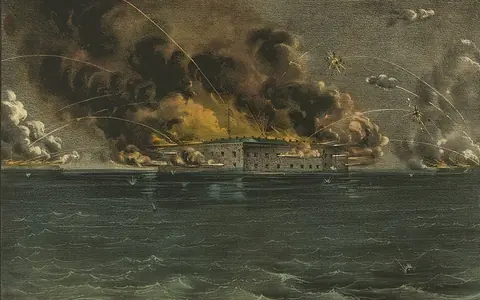
Lincoln and most Northerners refused to accept secession, which they feared would discredit democracy and break the country into small rival states. Federal forts in the South became the flashpoint. When Lincoln decided to send supplies to the garrison of Fort Sumter in Charleston harbor, Confederate batteries opened fire on 12 April 1861, and after a bombardment of 34 hours the garrison surrendered. Our article on the Battle of Fort Sumter tells the story.7
The two sides
Lincoln called for 75,000 volunteers to put down the rebellion, and Virginia, Arkansas, Tennessee and North Carolina then joined the Confederacy, which grew to 11 states. Four slave states, Maryland, Delaware, Kentucky and Missouri, stayed in the Union as border states. The western counties of Virginia refused to follow the rest of the state and later joined the Union as West Virginia, a split helped by early Union victories in the mountains there, such as Rich Mountain.8
On paper the Union was much stronger. The American Battlefield Trust counts 22 million people in the North against 9 million in the South, nearly 4 million of them enslaved; the National Park Service, which counts the border states separately, gives 18.5 million for the Union states and 9 million for the Confederacy, 3.5 million of them enslaved. It also had far more factories, money and railroads. But the Confederates fought mostly on the defensive, on ground they knew, across a territory so large that Union armies had to conquer and hold it piece by piece.9
Neither army was only white. Almost 200,000 Black men served the Union as soldiers and sailors, most of them formerly enslaved, fighting, as the National Park Service puts it, for the Union and for their own liberty. Enslaved people had acted to free themselves from the first days of the war: from May 1861 Union commanders accepted those who reached their lines as "contraband of war". Native Americans fought on both sides. The Union army counted 3,530 Native American troops, while the Cherokee Nation was divided: John Ross and his allies backed the Union, and the planter Stand Watie became a Confederate general. See also our article on the Second Battle of Fort Wagner.10

Abroad, the Confederacy hoped that Britain's need for Southern cotton would bring recognition and help. Britain and France granted it the status of a belligerent in 1861, but every foreign government stayed officially neutral and none recognized it as a sovereign state. The State Department's Office of the Historian puts this down above all to the Confederacy's failure to win enough battles to convince Europe it could survive.11
1861 to 1862: the war widens
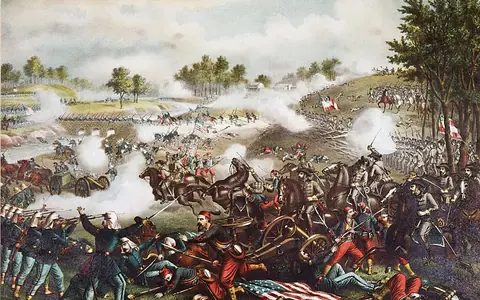
Both sides raised armies quickly. The first major battle came on 21 July 1861 near Manassas Junction in Virginia, where Irvin McDowell's army of green recruits attacked P.G.T. Beauregard's Confederates, reinforced in time by Joseph E. Johnston's troops arriving by railroad. The Union army was driven back to Washington, and the defeat shocked the North. See our article on the First Battle of Bull Run.12
Union strategy took shape around the "Anaconda Plan" of General-in-Chief Winfield Scott: a blockade of Southern ports combined with an advance down the Mississippi River, to strangle an economy built on the cotton trade. The blockade, declared in April 1861, was meant to cover roughly 3,000 miles of coast, far more than a prewar navy of about 90 ships could watch.13
The war at sea changed too. On 9 March 1862 the ironclads USS Monitor and CSS Virginia, rebuilt from the Merrimack, fought for hours at Hampton Roads, Virginia, the first battle between ironclad warships; neither could pierce the other's armor.14
By the end of 1861 two main fronts had formed. In the East, Virginia, Maryland and Pennsylvania saw most of the fighting; in the West, the war began along the Mississippi and spread across the slave states west of the Appalachian Mountains.15

In the West, Union armies and river fleets won a long series of victories. In February 1862 Ulysses S. Grant took Fort Henry and Fort Donelson in Tennessee, in April he won the Battle of Shiloh, and the Union navy took New Orleans. Our articles cover Fort Donelson, Shiloh, the siege of Corinth and Perryville.16
In the East, George B. McClellan's Army of the Potomac, more than 100,000 strong, landed on the Virginia peninsula in the spring of 1862 and by mid-May stood outside Richmond. When Joseph E. Johnston was wounded on 31 May, Robert E. Lee took command of the army he named the Army of Northern Virginia. From 26 June his attacks in the Seven Days Battles drove McClellan back to the James River; Lee then won at Second Manassas in August and invaded Maryland. Our article on the Seven Days Battles has the detail.17
Lee's first invasion of the North ended at Antietam Creek in Maryland on 17 September 1862, the bloodiest single day of the war: the American Battlefield Trust counts 22,717 casualties and the National Park Service 22,720 to 22,726, noting that exact numbers were virtually impossible to compile. The Union victory, narrow as it was, gave Lincoln his moment. On 22 September he issued the Preliminary Emancipation Proclamation: enslaved people in areas still in rebellion on 1 January 1863 would be free. In December Lee won again, at Fredericksburg. See our article on the Battle of Antietam.18
At first ending slavery was not a Union war aim; Lincoln's chief goal was to keep the United States together. The Emancipation Proclamation of 1 January 1863 declared enslaved people in the rebelling states free, but it left slavery untouched in the loyal border states and exempted Confederate areas already under Union control, so its promise depended on Union victory. It also opened the army and navy to Black men, and many joined.19
1863: the turning point
In the spring of 1863 Joseph Hooker led the Army of the Potomac, around 132,000 men and the largest army of the war in Britannica's account, against Lee's roughly 62,000. At Chancellorsville in early May Lee split his army and on 2 May sent Thomas J. "Stonewall" Jackson around the exposed Union right; Hooker withdrew across the Rappahannock. Casualties are given as 29,609 by the National Park Service and 30,764 by the American Battlefield Trust. See our articles on Chancellorsville and the Second Battle of Fredericksburg.20
Lee then invaded the North a second time. Hooker resigned and was replaced on 28 June by George G. Meade, and the two armies met by chance at the crossroads town of Gettysburg, Pennsylvania. After three days of fighting, from 1 to 3 July, Lee was defeated and retreated into Virginia. Britannica gives 23,049 Union and 28,063 Confederate casualties; the National Park Service counts 51,116 in all, the highest of any battle of the war. Our article on the Battle of Gettysburg follows it day by day.21
In the West, Grant had besieged Vicksburg, the Confederate fortress on the Mississippi. It surrendered on 4 July 1863, the day after Gettysburg ended, and the Union then controlled the whole river. Many historians treat these twin victories as the turning point of the war. See our article on the siege of Vicksburg.22

The Confederacy could still win in the West. At Chickamauga in Georgia, from 18 to 20 September 1863, Braxton Bragg's Army of Tennessee defeated William Rosecrans's Army of the Cumberland at a cost of 34,624 casualties on both sides, the third-highest total of the war in NPS figures. George H. Thomas held Horseshoe Ridge and Snodgrass Hill against repeated attacks until dark, earning the name "the Rock of Chickamauga". Two months later Grant and William Tecumseh Sherman drove Bragg's army from the heights around Chattanooga, the scene of this page's main image. See our article on the Battle of Chickamauga.23
On 19 November 1863 Lincoln spoke at the dedication of the soldiers' cemetery at Gettysburg. His short address called for a "new birth of freedom". It became one of the most famous speeches in American history. Our article on the Gettysburg Address gives its text and context.24
1864 to 1865: Grant, Sherman and the end
In March 1864 Lincoln made Grant a lieutenant general and gave him command of all the Union armies. Grant came east, and from May 1864 he and Lee fought a relentless campaign that ran until the surrender eleven months later: bloody battles at the Wilderness, Spotsylvania Court House and Cold Harbor, then the long siege of Petersburg.25
While Grant fought in Virginia, Sherman advanced on Atlanta, which he took in September 1864. He then marched to the sea at Savannah, which fell in December, and on into the Carolinas, destroying railroads and supplies on the way. McPherson describes the Union's approach by 1864 as a strategy of "total war" to destroy the Old South and its basic institution of slavery. Our article on Sherman's March to the Sea looks at the campaign and its cost to the people in its path.26
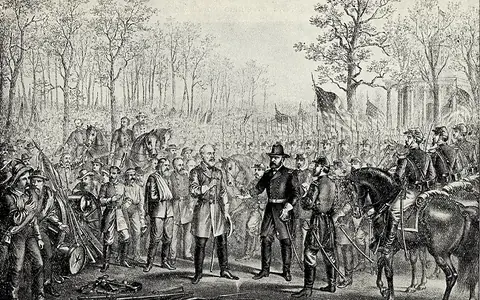
By March 1865 Lee's army was short of men and supplies. Grant took Richmond, the Confederate capital, on 3 April, and on 9 April, trapped near Appomattox Court House, Lee surrendered the Army of Northern Virginia to Grant in the house of Wilmer and Virginia McLean. The terms were lenient: Confederates were paroled after giving up their weapons, about 28,000 were sent home. See our article on Appomattox Court House.27
The other Confederate forces gave up over the following weeks. Joseph E. Johnston surrendered to Sherman near Durham, North Carolina, on 26 April; Union cavalry captured Jefferson Davis in Georgia on 10 May; and Stand Watie, the last Confederate commander in the field, surrendered his Cherokee troops on 23 June. Sources therefore date the end of the war anywhere from late May to June 1865.28
Lincoln did not live to see the peace. On the evening of 14 April 1865 the actor and Confederate sympathizer John Wilkes Booth shot him at Ford's Theatre in Washington, and he died the next morning.29
Key figures
The Union. Abraham Lincoln held that the Union was permanent and that preserving it was his first duty as president. Ulysses S. Grant won the early Union successes in the West, took Vicksburg and from 1864 commanded all the Union armies. William Tecumseh Sherman took Atlanta and marched through Georgia and the Carolinas. The Army of the Potomac passed through several commanders, among them McDowell, McClellan, Hooker and George G. Meade, who won at Gettysburg; McPherson calls the generals before Grant "a series of ineffective generals".30
The Confederacy. Jefferson Davis, president for the whole life of the Confederacy, was no less determined than Lincoln: in July 1864 he told a Northern journalist that the South was fighting for independence. Robert E. Lee, a Virginian who declined command of the Union army in 1861, led the Army of Northern Virginia from June 1862 until Appomattox. His corps commander Stonewall Jackson outflanked Hooker at Chancellorsville and died of his wound soon after.31
Our guide to the commanders of the American Civil War profiles Grant, Sherman, Lee and Jackson, and Grant vs Lee sets the two best-known generals side by side.
The human cost
For more than a century the accepted death toll was about 620,000 soldiers, a figure built from the records and from estimates made in the late nineteenth century by William Fox and Thomas Livermore. Confederate records were incomplete or destroyed, and in 2011 the demographic historian J. David Hacker used census data to estimate about 750,000 deaths, within a range of 650,000 to 850,000. The National Park Service now notes that at least 750,000 may have died; the American Battlefield Trust keeps the figure of about 620,000 and does not accept estimates as high as 850,000.32
Disease killed more soldiers than battle. The historian Drew Gilpin Faust, writing for the National Park Service, says twice as many; the American Battlefield Trust gives five deaths from disease for every three in combat. Casualties, which also count the wounded, captured and missing, are put at more than a million by the National Park Service and about 1.5 million by the American Battlefield Trust.33
Civilians died too, from violence, disease and hunger, and no one counted them systematically. James McPherson's estimate of about 50,000 civilian deaths is broadly supported by Hacker's census work, and tens of thousands of people who had escaped slavery died in crowded "contraband" camps, where disease and malnutrition were rampant.34
Faust notes that the traditional toll alone roughly equals American military deaths in the Revolution, the War of 1812, the Mexican War, the Spanish American War, World War I, World War II and the Korean War combined; the American Battlefield Trust adds that the combined toll of other American wars did not match it until Vietnam. At least half of the dead were never identified. From 1862 Congress authorized national cemeteries, and a federal reburial program that ran until 1868 gathered the Union dead into them.35
Outcome and legacy
The United States won, and it stayed one nation: since 1865, McPherson writes, no state has seriously threatened to secede. The Thirteenth Amendment, ratified in 1865, abolished slavery throughout the country, and the Fourteenth (1868) and Fifteenth (1870) wrote equal protection of the laws and the vote for Black men into the Constitution.36
Juneteenth marks the end of slavery. On 19 June 1865 Union General Gordon Granger, whose troops had landed at Galveston the day before, issued General Order No. 3, informing the people of Texas that all enslaved people were free. It is the oldest known celebration of the end of slavery in the United States.37
Victory left much undone. The war bankrupted much of the South and left its roads, farms and factories in ruins; the National Park Service adds that it left the region impoverished for three generations and the freed people in a limbo of second-class citizenship, and that for generations the nation failed to live up to the promises of the new amendments.38
Battlefields from Manassas to Appomattox are preserved as national parks, and the American Battlefield Trust and its partners have saved tens of thousands of acres of battlefield land.39
Battles of the American Civil War
Our articles on the battles of the war, from Fort Sumter to Appomattox, are listed below in date order.
- 1861Battle of Fort Sumter, 1861Confederate States vs United States (federal garrison)
The bombardment of Fort Sumter in April 1861 was almost bloodless, yet it began the bloodiest war in American history. The story of the opening shots.
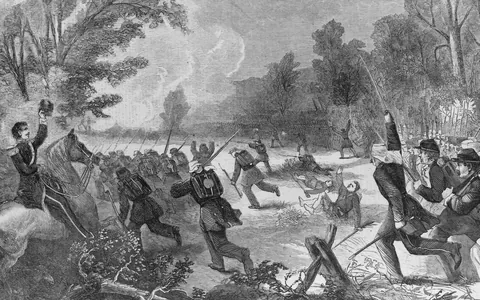
- 1861Battle of Rich Mountain, 1861United States vs Confederate States
On 11 July 1861 Rosecrans's flank march over Rich Mountain broke a Confederate pass in western Virginia and sent George McClellan on his way to command.
- 1861The First Battle of Bull Run, 1861United States (Union) vs Confederate States
The first big battle of the Civil War ended in a Union rout, and a long war ahead.
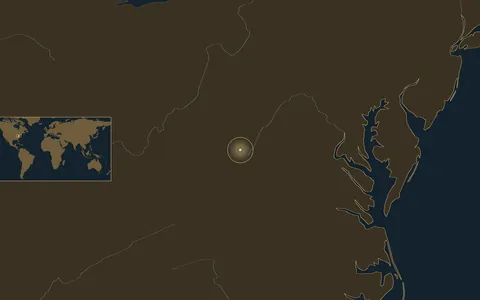
- 1861Battle of Greenbrier River, 1861United States vs Confederate States
On 3 October 1861 Reynolds's Federals marched through the night from Cheat Mountain and shelled Camp Bartow on the Greenbrier River for hours before pulling back.
- 1861Battle of Belmont, 1861United States (Union) vs Confederate States
On 7 November 1861 Ulysses S. Grant, in his first battle, overran a Confederate camp at Belmont on the Mississippi and then had to fight his way back to the boats.
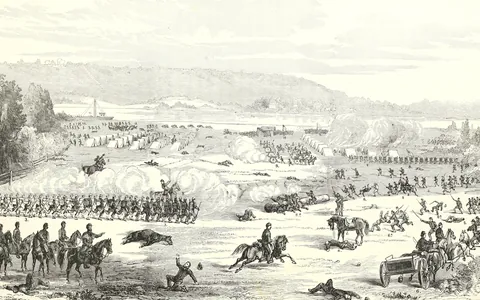
- 1862The Battle of Fort Donelson, 1862United States (Union) vs Confederate States
The first major Union victory of the Civil War.
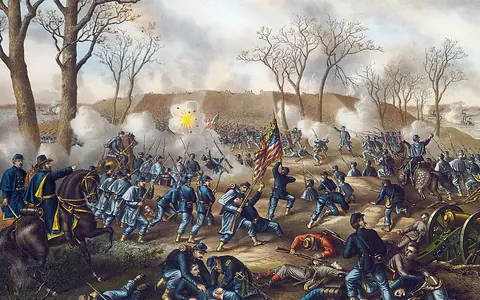
- 1862First Battle of Kernstown, 1862United States (Union) vs Confederate States
On 23 March 1862 Stonewall Jackson attacked at Kernstown on a false report and was beaten on Sandy Ridge. His only defeat still pulled Union troops back to the Shenandoah Valley.
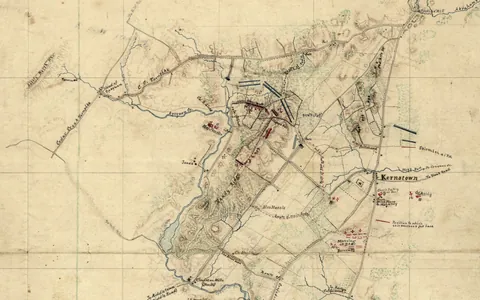
- 1862The Battle of Shiloh, 1862United States (Union) vs Confederate States
A surprise attack nearly broke Grant, until he counterattacked and showed how long the war would be.
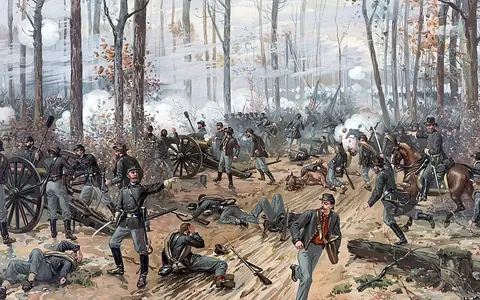
- 1862Siege of Corinth, 1862Union vs Confederacy
After Shiloh, Halleck took a month to cover 22 miles to Corinth, entrenching every night. When he arrived, Beauregard had gone by train.
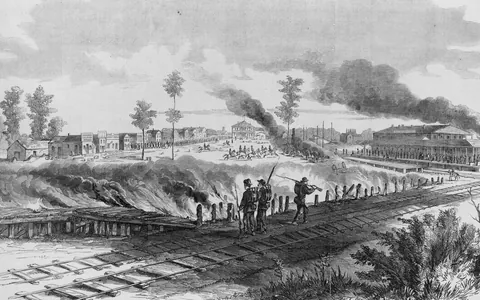
- 1862Seven Days Battles, 1862Confederate States: Army of Northern Virginia vs United States: Army of the Potomac
From 25 June to 1 July 1862 Robert E. Lee drove McClellan's army from the gates of Richmond to the James River in a week that cost more than 34,000 casualties.
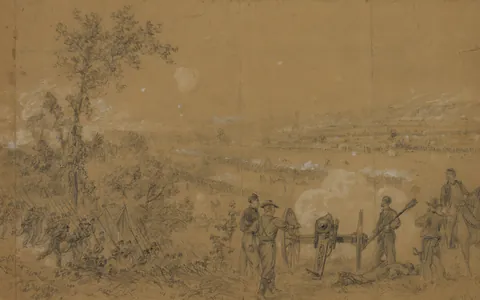
- 1862The Battle of Antietam, 1862United States (Union) vs Confederate States
Around 22,000 to 23,000 men were killed or wounded in one day near Sharpsburg. How Antietam checked Lee's first invasion of the North and gave Lincoln the moment to act on emancipation.
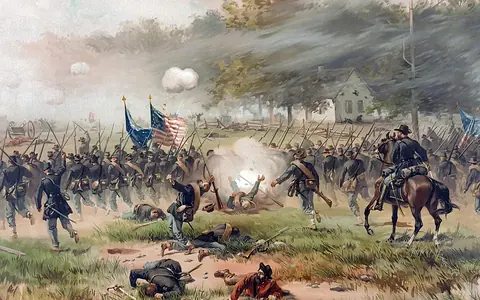
- 1862The Battle of Perryville, 1862United States (Union) vs Confederate States
Kentucky's largest battle: a tactical draw that ended the Confederate invasion.
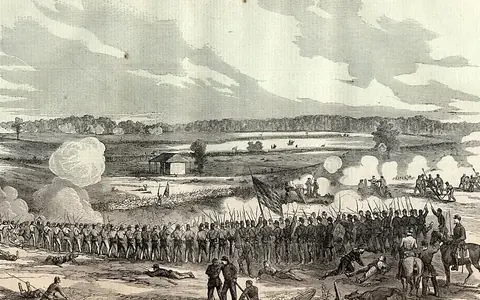
- 1862The Battle of Fredericksburg, 1862United States (Union) vs Confederate States
Wave after wave of Union troops fell before the stone wall at Marye's Heights.
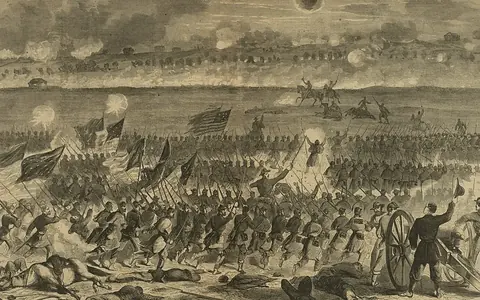
- 1863The Battle of Chancellorsville, 1863Confederate States vs United States (Union)
Lee's masterpiece, won by Jackson's flank march, and the wound that cost him Jackson.
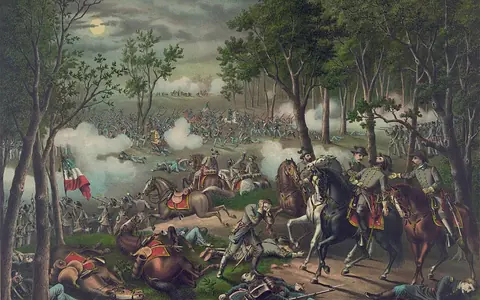
- 1863Second Battle of Fredericksburg, 1863United States (Army of the Potomac) vs Confederate States (Army of Northern Virginia)
On 3 May 1863 Sedgwick's Sixth Corps took the stone wall on Marye's Heights that had broken Burnside, then ran into a Confederate line at Salem Church.
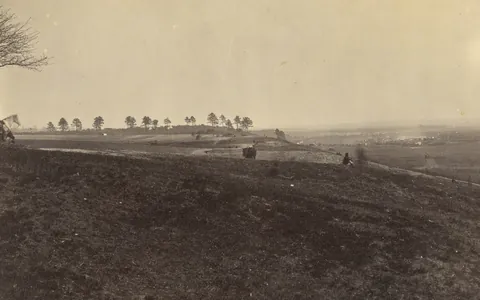
- 1863The Siege of Vicksburg, 1863United States (Union) vs Confederate States
Grant took Vicksburg on the Fourth of July, won the Mississippi, and cut the South in half.
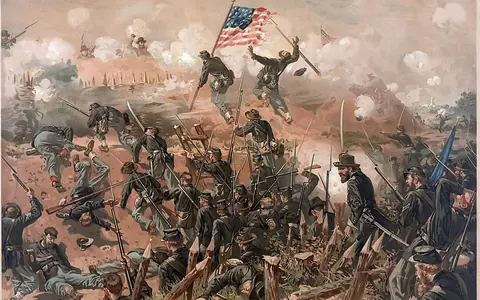
- 1863The Battle of Gettysburg, 1863United States (Union) vs Confederate States
Three days in Pennsylvania, Pickett's doomed charge, and the high-water mark where the Confederacy's war crested and broke.
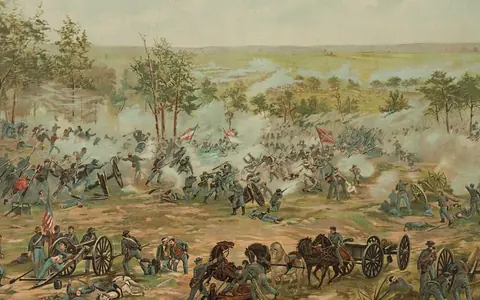
- 1863The Second Battle of Fort Wagner, 1863United States (Union) vs Confederate States
The charge that proved Black soldiers' courage to the nation.
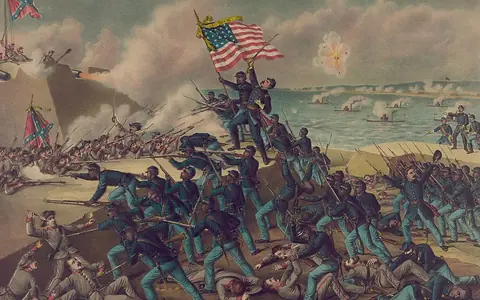
- 1863The Battle of Chickamauga, 1863United States (Union) vs Confederate States
How a mistaken order broke the Union line, and George Thomas's stand saved the army in the Western Theater's bloodiest battle.
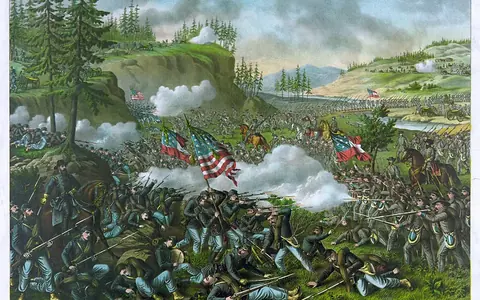
- 1863Battle of Droop Mountain, 1863Union vs Confederacy
On 6 November 1863 Averell's Federals stormed Droop Mountain and broke Echols's Confederates after six hours of fighting, ending organized Southern resistance in West Virginia.
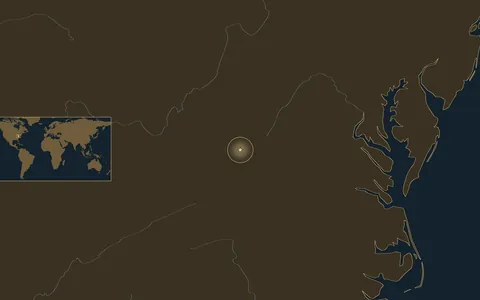
- 1863The Gettysburg Address, 1863The speaker vs The occasion
On 19 November 1863 Abraham Lincoln spoke 272 words at the dedication of the soldiers' cemetery at Gettysburg. How the speech came about and why it lasted.
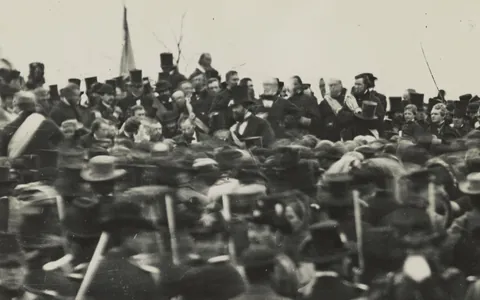
- 1864Battle of Spring Hill, 1864United States (Union) vs Confederate States
On 29 November 1864 Hood's Confederates reached Spring Hill, Tennessee, astride the Union line of retreat. That night 27,000 Union soldiers marched past them in the dark.
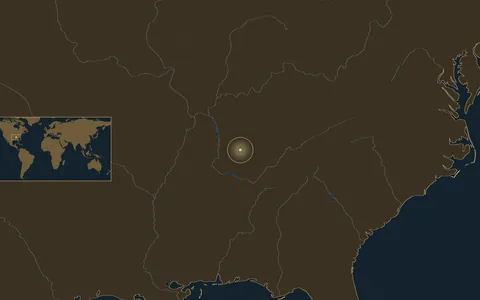
- 1864Sherman's March to the SeaUnion vs Confederate
From the fall of Atlanta to the capture of Savannah, and what the march really destroyed.
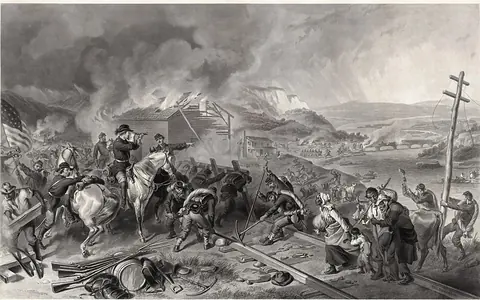
- 1864The Siege of Petersburg, 1864 to 1865Union vs Confederate
292 days of trenches, the Battle of the Crater and the breakthrough that ended the war.
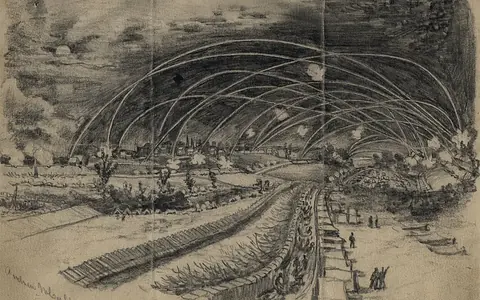
- 1864The Battle of the Wilderness, 1864United States (Union) vs Confederate States
In a burning forest, Grant and Lee met for the first time, and Grant did not turn back.
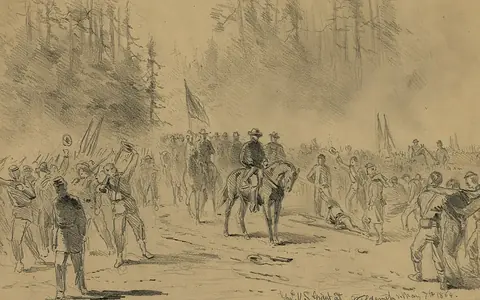
- 1864The Battle of Spotsylvania Court House, 1864United States (Union) vs Confederate States
Grant pressed on toward Richmond, and the Bloody Angle became a byword for carnage.
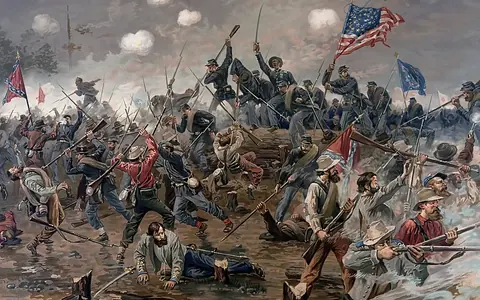
- 1864The Battle of Cold Harbor, 1864Union vs Confederate
The dawn assault of 3 June 1864 and the casualties behind the legends.
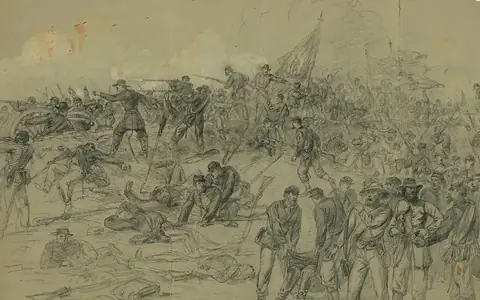
- 1864The Battle of Mobile Bay, 1864United States (Union) vs Confederate States
Farragut ran his fleet through a minefield and won the bay.
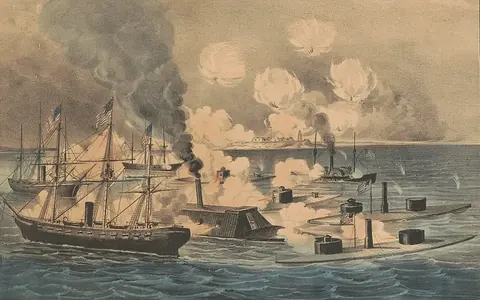
- 1865The Battle of Appomattox Court House, 1865Union vs Confederate
The last battle of Lee's army, the McLean House and the terms that ended the war in Virginia.
Timeline
- 1860Abraham Lincoln is elected president in November; South Carolina secedes on 20 December.40
- 1861Seven seceded states form the Confederate States of America in February, with Jefferson Davis as provisional president.41
- 1861Confederate batteries fire on Fort Sumter on 12 April; the garrison surrenders the next day.42
- 1861Confederate victory at the First Battle of Bull Run on 21 July.43
- 1862
- 1862The ironclads Monitor and Virginia fight at Hampton Roads on 9 March.45
- 1862
- 1863The Emancipation Proclamation takes effect on 1 January.47
- 1863
- 1863Lincoln gives the Gettysburg Address on 19 November.49
- 1864Grant takes command of all Union armies in March; Sherman captures Atlanta in September and Savannah in December.50
- 1865Grant takes Richmond on 3 April; Lee surrenders at Appomattox Court House on 9 April.51
- 1865Lincoln is shot on 14 April and dies the next morning; Johnston surrenders to Sherman on 26 April.52
- 1865General Order No. 3 is read at Galveston on 19 June; Stand Watie surrenders on 23 June. The Thirteenth Amendment abolishes slavery.53
Where to read next
Fifteen battles of this war are ranked in our list of the greatest battles of the Civil War, and many appear among the greatest battles in American history. For the wider period, see our page on the industrial age, and test yourself with the American battles quiz or the industrial age battles quiz.
Notes
A number in the text points to a note; each note names the works that paragraph draws on, listed in full under Sources.
- American Battlefield Trust, “10 Facts, What Everyone Should Know About the Civil War”; Britannica Kids, “American Civil War”; National Park Service, “The Civil War”. ↩
- American Battlefield Trust, “A Brief Overview of the American Civil War”; Britannica Kids, “American Civil War”; National Park Service, “Death and Dying”; American Battlefield Trust, “10 Facts, What Everyone Should Know About the Civil War”. ↩
- Encyclopaedia Britannica, “What caused the American Civil War?”; American Battlefield Trust, “A Brief Overview of the American Civil War”. ↩
- Library of Congress, “The Civil War in America”; The American Yawp, “14. The Civil War”; American Battlefield Trust, “10 Facts, What Everyone Should Know About the Civil War”. ↩
- National Park Service, “Slavery as a Cause of the Civil War”; The American Yawp, “14. The Civil War”; National Park Service, “Confronting Slavery and Revealing the "Lost Cause"”. ↩
- American Battlefield Trust, “The Reasons for Secession”; National Park Service, “Confronting Slavery and Revealing the "Lost Cause"”. ↩
- American Battlefield Trust, “A Brief Overview of the American Civil War”; American Battlefield Trust, “10 Facts, What Everyone Should Know About the Civil War”; National Park Service, “Slavery as a Cause of the Civil War”. ↩
- National Park Service, “Slavery as a Cause of the Civil War”; NOAA, “Division of a Nation”; Britannica Kids, “American Civil War”; American Battlefield Trust, “A Brief Overview of the American Civil War”. ↩
- American Battlefield Trust, “10 Facts, What Everyone Should Know About the Civil War”; National Park Service, “Civil War Facts”; Britannica Kids, “American Civil War”. ↩
- U.S. National Archives, “The Emancipation Proclamation”; National Park Service, “The Civil War”; The American Yawp, “14. The Civil War”; National Park Service, “Civil War Facts”; American Battlefield Trust, “Stand Watie”. ↩
- U.S. Department of State, “Preventing Diplomatic Recognition of the Confederacy, 1861 to 1865”; Prologue, “Words As Powerful As Bullets”. ↩
- National Park Service, “First Manassas”; Britannica Kids, “American Civil War”. ↩
- American Battlefield Trust, “10 Facts, Civil War Navies”; U.S. Department of State, “Preventing Diplomatic Recognition of the Confederacy, 1861 to 1865”. ↩
- American Battlefield Trust, “10 Facts, Civil War Navies”; Britannica Kids, “American Civil War”. ↩
- Britannica Kids, “American Civil War”; American Battlefield Trust, “A Brief Overview of the American Civil War”. ↩
- Britannica Kids, “American Civil War”; American Battlefield Trust, “A Brief Overview of the American Civil War”. ↩
- National Park Service, “1862 Seven Days' Battles”; National Park Service, “Civil War Facts”; American Battlefield Trust, “10 Facts, What Everyone Should Know About the Civil War”; Britannica Kids, “American Civil War”. ↩
- American Battlefield Trust, “A Brief Overview of the American Civil War”; National Park Service, “Civil War Facts”; National Park Service, “Casualties”; DocsTeach, “The Emancipation Proclamation”; Britannica Kids, “American Civil War”. ↩
- U.S. National Archives, “The Emancipation Proclamation”; DocsTeach, “The Emancipation Proclamation”; Britannica Kids, “American Civil War”; National Park Service, “Confronting Slavery and Revealing the "Lost Cause"”. ↩
- Encyclopaedia Britannica, “The war in the east (American Civil War)”; National Park Service, “Civil War Facts”; American Battlefield Trust, “A Brief Overview of the American Civil War”. ↩
- Encyclopaedia Britannica, “The war in the east (American Civil War)”; American Battlefield Trust, “10 Facts, What Everyone Should Know About the Civil War”; National Park Service, “Civil War Facts”. ↩
- American Battlefield Trust, “10 Facts, What Everyone Should Know About the Civil War”; Britannica Kids, “American Civil War”. ↩
- American Battlefield Trust, “Chickamauga”; National Park Service, “Civil War Facts”; Britannica Kids, “American Civil War”. ↩
- National Park Service, “The Civil War”; American Battlefield Trust, “A Brief Overview of the American Civil War”; American Battlefield Trust, “10 Facts, What Everyone Should Know About the Civil War”. ↩
- American Battlefield Trust, “10 Facts, What Everyone Should Know About the Civil War”; Britannica Kids, “American Civil War”; American Battlefield Trust, “A Brief Overview of the American Civil War”. ↩
- Britannica Kids, “American Civil War”; American Battlefield Trust, “A Brief Overview of the American Civil War”. ↩
- Britannica Kids, “American Civil War”; National Park Service, “The Surrender”; National Park Service, “Surrender Documents”; American Battlefield Trust, “Appomattox Court House”. ↩
- National Park Service, “The Surrender”; American Battlefield Trust, “A Brief Overview of the American Civil War”; American Battlefield Trust, “Stand Watie”; Britannica Kids, “American Civil War”. ↩
- American Battlefield Trust, “10 Facts, What Everyone Should Know About the Civil War”; National Park Service, “Ford's Theatre”. ↩
- Library of Congress, “The Civil War in America”; Britannica Kids, “American Civil War”; American Battlefield Trust, “10 Facts, What Everyone Should Know About the Civil War”; Encyclopaedia Britannica, “The war in the east (American Civil War)”; American Battlefield Trust, “A Brief Overview of the American Civil War”. ↩
- National Park Service, “The Civil War”; American Battlefield Trust, “10 Facts, What Everyone Should Know About the Civil War”; Encyclopaedia Britannica, “The war in the east (American Civil War)”. ↩
- Essential Civil War Curriculum, “Civil War Statistics”; NPR, “Civil War Death Toll May Be Really Off (interview with J. David Hacker)”; National Park Service, “Civil War Facts”; National Park Service, “The Civil War”; American Battlefield Trust, “Civil War Casualties”. ↩
- National Park Service, “Death and Dying”; American Battlefield Trust, “Civil War Casualties”; National Park Service, “The Civil War”. ↩
- National Park Service, “Death and Dying”; Essential Civil War Curriculum, “Civil War Statistics”; The American Yawp, “14. The Civil War”. ↩
- National Park Service, “Death and Dying”; American Battlefield Trust, “Civil War Casualties”; Essential Civil War Curriculum, “Civil War Statistics”. ↩
- National Park Service, “The Civil War”; American Battlefield Trust, “10 Facts, What Everyone Should Know About the Civil War”; American Battlefield Trust, “A Brief Overview of the American Civil War”. ↩
- National Park Service, “Juneteenth”; National Archives Foundation, “Emancipation Proclamation & General Order No. 3”. ↩
- American Battlefield Trust, “10 Facts, What Everyone Should Know About the Civil War”; National Park Service, “The Civil War”. ↩
- National Park Service, “First Manassas”; National Park Service, “The Surrender”; American Battlefield Trust, “10 Facts, What Everyone Should Know About the Civil War”. ↩
- American Battlefield Trust, “A Brief Overview of the American Civil War”; Library of Congress, “The Civil War in America”; The American Yawp, “14. The Civil War”. ↩
- Library of Congress, “The Civil War in America”; American Battlefield Trust, “10 Facts, What Everyone Should Know About the Civil War”. ↩
- American Battlefield Trust, “A Brief Overview of the American Civil War”; Britannica Kids, “American Civil War”; American Battlefield Trust, “10 Facts, What Everyone Should Know About the Civil War”. ↩
- National Park Service, “First Manassas”; Britannica Kids, “American Civil War”. ↩
- Britannica Kids, “American Civil War”; American Battlefield Trust, “A Brief Overview of the American Civil War”. ↩
- American Battlefield Trust, “10 Facts, Civil War Navies”; Britannica Kids, “American Civil War”. ↩
- National Park Service, “Civil War Facts”; American Battlefield Trust, “A Brief Overview of the American Civil War”; DocsTeach, “The Emancipation Proclamation”. ↩
- U.S. National Archives, “The Emancipation Proclamation”; American Battlefield Trust, “10 Facts, What Everyone Should Know About the Civil War”. ↩
- Encyclopaedia Britannica, “The war in the east (American Civil War)”; American Battlefield Trust, “10 Facts, What Everyone Should Know About the Civil War”; Britannica Kids, “American Civil War”. ↩
- National Park Service, “The Civil War”; American Battlefield Trust, “10 Facts, What Everyone Should Know About the Civil War”. ↩
- Britannica Kids, “American Civil War”; American Battlefield Trust, “10 Facts, What Everyone Should Know About the Civil War”. ↩
- Britannica Kids, “American Civil War”; National Park Service, “The Surrender”. ↩
- American Battlefield Trust, “10 Facts, What Everyone Should Know About the Civil War”; National Park Service, “Ford's Theatre”; National Park Service, “The Surrender”. ↩
- National Park Service, “Juneteenth”; National Archives Foundation, “Emancipation Proclamation & General Order No. 3”; National Park Service, “The Surrender”; American Battlefield Trust, “Stand Watie”; National Park Service, “The Civil War”. ↩
Sources
- American Battlefield Trust, “10 Facts, What Everyone Should Know About the Civil War”.
- Britannica Kids, “American Civil War”.
- National Park Service (James McPherson), “The Civil War: Overview”.
- American Battlefield Trust (James McPherson), “A Brief Overview of the American Civil War”.
- National Park Service (Drew Gilpin Faust), “Death and Dying”.
- Encyclopaedia Britannica, “What caused the American Civil War?”.
- Library of Congress, “The Civil War in America: Prologue”.
- The American Yawp (Stanford University Press), “14. The Civil War”.
- National Park Service, Lincoln Home National Historic Site, “Slavery as a Cause of the Civil War”.
- National Park Service (James Oliver Horton), “Confronting Slavery and Revealing the "Lost Cause"”.
- American Battlefield Trust, “The Reasons for Secession: A Documentary Study”.
- NOAA, Monitor National Marine Sanctuary, “Division of a Nation”.
- National Park Service, “Civil War Facts: 1861 to 1865”.
- U.S. National Archives, “The Emancipation Proclamation”.
- American Battlefield Trust, “Stand Watie”.
- U.S. Department of State, Office of the Historian, “Preventing Diplomatic Recognition of the Confederacy, 1861 to 1865”.
- Prologue (U.S. National Archives blog), “Words As Powerful As Bullets: Diplomats during the U.S. Civil War”.
- National Park Service, Manassas National Battlefield Park, “First Manassas”.
- American Battlefield Trust, “10 Facts, Civil War Navies”.
- National Park Service, Richmond National Battlefield Park, “1862 Seven Days' Battles”.
- National Park Service, Antietam National Battlefield, “Casualties”.
- DocsTeach (U.S. National Archives), “The Emancipation Proclamation”.
- Encyclopaedia Britannica (Warren W. Hassler), “The war in the east (American Civil War)”.
- American Battlefield Trust, “Chickamauga”.
- National Park Service, Appomattox Court House National Historical Park, “The Surrender”.
- National Park Service, Appomattox Court House National Historical Park, “Surrender Documents”.
- American Battlefield Trust, “Appomattox Court House”.
- National Park Service, “Ford's Theatre”.
- Essential Civil War Curriculum, Virginia Tech (Thomas R. Flagel), “Civil War Statistics”.
- NPR, All Things Considered, “Civil War Death Toll May Be Really Off (interview with J. David Hacker)”.
- American Battlefield Trust, “Civil War Casualties”.
- National Park Service, African Burial Ground National Monument, “Juneteenth”.
- National Archives Foundation, “Emancipation Proclamation & General Order No. 3”.





