

What was the Great Turkish War and who won?
The Great Turkish War (1683 to 1699) was fought between the Ottoman Empire and the Holy League of the Habsburg emperor, the Polish-Lithuanian Commonwealth, Venice and later Muscovy. It began with the failed Ottoman siege of Vienna and ended with the Treaty of Karlowitz, which gave Hungary to the Habsburgs: a clear victory for the League.1
On 12 September 1683 a relief army under King John III Sobieski of Poland routed the Ottoman army besieging Vienna. The war that followed, known as the Great Turkish War or the War of the Holy League, lasted sixteen years. It was fought in Hungary and the Balkans, in Podolia and Moldavia, on the Dalmatian coast and in Greece, and on the steppe around Azov, and it ended with a peace that cost the Ottoman Empire Hungary.2
This guide follows the war from both sides: the sultans and grand viziers in Istanbul who tried to hold Hungary, and the coalition that took it from them. It covers the Battle of Vienna, the recapture of Buda, the second battle at Mohács, the Battle of Slankamen, the Polish stand at the Battle of Hodów, the Battle of Zenta and the peace signed at Karlowitz. For the Polish king's career, see our biography of Jan III Sobieski.3
Causes of the Great Turkish War
The war grew out of Habsburg Hungary. Imre Thököly, a Hungarian Protestant noble, led a revolt against Emperor Leopold I's centralizing and Counter-Reformation policies, accepted Ottoman overlordship and was recognized by the Ottomans as king of Hungary. For Istanbul the revolt was an opening; Polish school histories still describe it as the pretext for the Ottoman intervention.4
Grand Vizier Merzifonlu Kara Mustafa Pasha, in office since 1676, turned that opening into a campaign. He would not renew the Habsburg-Ottoman peace concluded in 1664, and the Ottomans prepared for war in 1682. The Ottoman-side TDV Encyclopedia of Islam says his aim was to extend Ottoman power into central Europe and to break the Habsburg state, and it rejects the old story, going back to Dimitrie Cantemir, that he wanted a crown for himself.5
Kołodziejczyk adds that Kara Mustafa reportedly did not believe Sobieski would come to Vienna's aid, and that from the Ottoman point of view the Polish king was a treaty-breaker.6
For the Habsburgs the war began as a fight for survival and became a war of conquest. The historian Douglas Clark Baxter points out that after 1683 Leopold chose to pursue the Ottomans down the Danube rather than turn against Louis XIV of France, and accepted French gains in Germany in a truce so that he could do so.7
The Polish-Lithuanian Commonwealth had its own grievance. Under the treaty of Buczacz of 1672 it had lost Podolia, with the fortress of Kamieniec, to the Ottomans, and King John III Sobieski hoped to win them back. In spring 1683 he signed an alliance with Leopold I in which each side promised to fight the Ottomans and to help the other if its capital was threatened; the Wilanów Palace Museum dates the treaty to 1 April 1683, backdated to 31 March.8
Pope Innocent XI backed the alliance with money and diplomacy. He subsidized Sobieski's army, and after the victory at Vienna he sponsored a wider league against the Ottomans.9
Who fought in the Great Turkish War
In March 1684 Innocent XI founded the Holy League of the Holy Roman Emperor, the King of Poland and the Republic of Venice. Muscovy joined in 1686, after making a separate peace with the Commonwealth. In the words of the Polish education ministry's history course, the League's aim was to break Ottoman power.10
Each member fought its own war. The Habsburg army, with Bavarian, Saxon and other German contingents, carried the main campaign in Hungary. The Commonwealth fought in Podolia and Moldavia, Venice in Dalmatia and Greece, and Muscovy, from 1695, around Azov.11
On the other side stood the Ottoman Empire under four sultans in turn: Mehmed IV until 1687, Süleyman II, Ahmed II and, from 1695, Mustafa II. The Crimean Tatars fought beside the Ottoman army at Vienna, and the Nogai Tatars of the Budjak raided the Commonwealth throughout the war. Thököly's Hungarian supporters stayed on the Ottoman side to the end: the peace of 1699 allowed them to leave Hungary.12

The siege and Battle of Vienna, 1683
Sultan Mehmed IV reviewed the army at Belgrade in May 1683, and Kara Mustafa led it on across Hungary. The imperial court left Vienna on 7 July, and on 14 July the Ottomans surrounded the city. Count Ernst Rüdiger von Starhemberg commanded the defense.13
No reliable figure exists for the Ottoman army. The City of Vienna's history wiki puts the besiegers at about 120,000 and the Wilanów Palace Museum at about 100,000 when they reached the city; a Polish History Museum article gives up to 300,000, and the TDV Encyclopedia calls such high totals exaggerated.14
The besiegers had few heavy siege guns, which were hard to bring across the Balkans, and relied on mines dug under the walls. By early September mines had breached the defenses in several places and the garrison was badly worn down.15
The relief army, about 65,000 to 70,000 men, gathered on the Tulln plain: imperial troops under Charles V, Duke of Lorraine, Bavarians, Saxons and other German contingents, and about 21,000 Poles. A council of war at Stetteldorf in early September gave Sobieski overall command.16
The Polish army had covered the road from Kraków to the Danube in about three weeks. Most of it was cavalry, and it brought the heavy hussar companies that would decide the battle.17
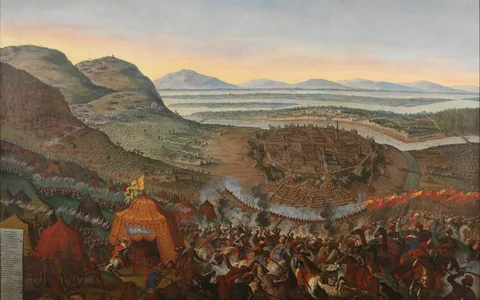
On 12 September the allies came down from the Kahlenberg and the heights of the Vienna Woods, with the imperial troops on the left, the German contingents in the center and the Poles on the right. The fighting began in the morning on the allied left. Late in the day the Polish cavalry, about 20,000 horsemen with the hussars in the lead, charged into the Ottoman camp. The Ottoman army broke and Kara Mustafa fled, leaving his camp and most of his artillery.18

Historians on both sides agree that the vizier contributed to his own defeat. EBSCO's article notes that he had not secured the approaches through the Vienna Woods; the TDV Encyclopedia adds that the Crimean khan stayed passive, the artillery was inadequate, supplies ran short and his commanders were divided. Prof. Dariusz Kołodziejczyk of the University of Warsaw argues that Kara Mustafa's real mistake was political: he drove the Habsburgs, Venice and the Commonwealth into one camp.19
Sobieski announced the victory to Pope Innocent XI with a paraphrase of Caesar: “Venimus, vidimus, Deus vicit” (we came, we saw, God conquered). The allies then followed the retreating army. On 7 October the Ottomans surprised the Polish vanguard at Párkány (today Štúrovo), and on 9 October the allies destroyed the Ottoman force there. Kołodziejczyk considers Párkány militarily even more important than Vienna. Kara Mustafa was executed at Belgrade on 25 December 1683 on the sultan's orders.20
The art historian Hanna Osiecka-Samsonowicz of the Wilanów Palace Museum reads the letter as a mix of modesty and political calculation: it gave the victory to God but presented Sobieski as the commander of the allied armies.21
How the Great Turkish War unfolded, 1684 to 1696
Buda, 1686. The decisive blow in Hungary fell on Buda, the seat of Ottoman rule there. In 1686 the imperial army under Charles of Lorraine, with Bavarian and other allied troops, took the city after a siege of about two and a half months, ending some 145 years of Ottoman rule.22

Mohács, 1687. In August 1687 a Habsburg army defeated Grand Vizier Sarı Süleyman Pasha near Mohács, close to the field where the Ottomans had destroyed the Hungarian army in 1526 (see our article on the Battle of Mohács of 1526). Hungarians call it the second Mohács. The victory opened the way to Slavonia and Transylvania. Ferenc Tóth, working from Charles of Lorraine's newly discovered diary of 1687, credits the duke and Elector Maximilian II Emanuel of Bavaria with the command.23
Crisis in Istanbul. The defeats shook the Ottoman state. In November 1687 the army, the ulema and state officials forced Mehmed IV from the throne and raised Süleyman II in his place. Köprülü Fazıl Mustafa Pasha, a son of the grand vizier Köprülü Mehmed Pasha, played a leading part.24
Belgrade and the French war. In September 1688 Max Emanuel of Bavaria took Belgrade. That autumn, however, Louis XIV invaded the Rhineland, and from then on the emperor fought France as well as the Ottomans, moving his best troops and commanders west.25
The Ottoman recovery. Istanbul used the respite. Köprülü Fazıl Mustafa, now grand vizier, retook Niš and Belgrade in 1690. In August 1691 he met an imperial army under Margrave Louis William of Baden at Slankamen on the Danube and was killed in the battle; the TDV Encyclopedia dates it to 19 August, EBSCO to 20 August. His army broke, but Belgrade stayed in Ottoman hands.26
The Polish front. The Commonwealth's war went less well. Sobieski's campaigns into Moldavia in 1686 and 1691 aimed to put his son Jakub on the Moldavian throne and to cut off Kamieniec, and neither reached its goals. In 1686 about 36,000 men entered Iași, but the Ottomans and Tatars avoided battle and harried the army until it withdrew. The Wilanów Palace Museum argues that the campaign still tied down Ottoman forces and helped the Habsburgs take Buda.27
Tatar raids went on. On 11 June 1694 Polish cavalry under Konstanty Zahorowski, outnumbered by Nogai Tatars of the Budjak, fell back into the village of Hodów and held it for several hours until the raiders withdrew. Popular accounts speak of 400 Poles against 40,000 Tatars. Histmag's author puts the Polish companies at 400 to 600 riders and cites Marek Wagner's estimate of about 4,000 Tatars, while Zbigniew Hundert notes a contemporary estimate of 30,000 and treats the popular figures as uncritical. More in our article on the Battle of Hodów.28
Venice and Muscovy. Venice made its gains in the Morea (the Peloponnese) and in Dalmatia, and its advances there were among the pressures that later pushed Istanbul toward peace. Muscovy entered the fighting in earnest under Peter I: his army moved against Azov in 1695 and took it in August 1696.29
The Battle of Zenta and the end of the fighting
From 1695 the new sultan, Mustafa II, led his armies in person, as the great sultans of the past had done. In July 1697 Prince Eugene of Savoy took command of the imperial army in Hungary, which he found poorly disciplined and short of pay.30
On 11 September 1697 Eugene caught the Ottoman army at Zenta on the Tisza while it was crossing the river on a bridge of boats, with part of it already on the far bank. Imperial troops broke into the entrenched camp on the near bank, and in the crush at the bridge many fleeing soldiers drowned.31
Grand Vizier Elmas Mehmed Pasha and several other senior commanders were killed, and the sultan withdrew to Temesvár. Austrian accounts put the Ottoman dead at about 30,000; the TDV Encyclopedia notes that Ottoman sources give 7,000 to 8,000 and that the army lost about an eighth of its men. Imperial losses came to about 2,000 killed and wounded. Read the full story in our article on the Battle of Zenta.32
Zenta ended Ottoman hopes of winning back Hungary. The TDV Encyclopedia adds that the treasury was exhausted, taxes were heavy and there was unrest from Anatolia to Iraq, and the new grand vizier, Amcazade Hüseyin Pasha, persuaded Mustafa II to seek peace.33
Key commanders of the Great Turkish War
John III Sobieski (Jan III), King of Poland from 1674 to 1696, held overall command of the allied army at Vienna and led the Commonwealth's campaigns in Moldavia. Merzifonlu Kara Mustafa Pasha, grand vizier from 1676, planned and led the Vienna campaign and paid for its failure with his life.34
Charles V, Duke of Lorraine, commanded the imperial army at Vienna and at Buda. Ernst Rüdiger von Starhemberg held Vienna through the siege. Louis William, Margrave of Baden, known as the “Türkenlouis”, fought at Vienna and Buda and won at Slankamen. Maximilian II Emanuel, Elector of Bavaria, took Belgrade in 1688.35
On the Ottoman side, Köprülü Fazıl Mustafa Pasha led the recovery of 1690 and fell at Slankamen. Sultan Mustafa II took the field himself from 1695 and was beaten at Zenta, where Prince Eugene of Savoy won the victory that made his name.36
Who won the Great Turkish War: the Treaty of Karlowitz
Peace talks opened at Karlowitz (today Sremski Karlovci in Serbia) on 13 November 1698, with English and Dutch diplomats as mediators. On 26 January 1699 the Ottoman delegates signed separate treaties with the emperor, Poland and Venice.37
The way to the table had opened in January 1698, when the Ottoman government accepted the good offices of the English ambassador, Lord Paget, in seeking a general peace. Formal talks began only in November and lasted into the new year.38
The Habsburgs received all of Hungary and Transylvania except the Banat of Temesvár, and Slavonia. The Commonwealth recovered Podolia with Kamieniec. Venice kept the Morea and most of Dalmatia. Muscovy first agreed a truce and made its own peace in 1700, which left Azov in Russian hands. The treaty between the emperor and the sultan was set to last twenty-five years.39
The Ottomans had to evacuate Kamieniec, and the Russian delegates, who were not ready to make peace, first obtained only a two-year truce.40

The Holy League won. The Ottoman Empire lost Hungary and Transylvania, its conquests in Podolia and the Morea, and Habsburg Austria became the leading power on the middle Danube. EBSCO's article calls Karlowitz perhaps the most disastrous treaty in Ottoman history. The TDV Encyclopedia also treats it as a turning point, but notes that by keeping Temesvár the Ottomans kept a base from which to try to win land back.41
Consequences and memory of the Great Turkish War
For the Habsburgs the war was the start of a great-power career. Kołodziejczyk notes that Vienna became a European cultural capital only after 1683, and the City of Vienna's history wiki records a wave of Baroque building in its suburbs after the siege.42
For the Commonwealth the gains were modest. It recovered Podolia, but Sobieski's Moldavian plans failed and he died in 1696. A Polish History Museum article calls Vienna the last great military success of the Polish-Lithuanian Commonwealth, and Baxter writes that Sobieski never founded the dynasty he hoped for.43
For the Ottomans, Karlowitz ended their expansion in Europe. The Columbia Encyclopedia sees in it the beginning of the empire's disintegration, but Kołodziejczyk warns against the old label of the “sick man of Europe” for a state that lasted some six hundred years.44
Memory still differs from country to country. Kołodziejczyk says the relief of Vienna is valued in Poland more than anywhere else, while in Turkey the battle is well known and Sobieski's name is still recognized; he calls the claim that Poland saved Europe an overstatement. Hodów, too, has a history of its own: Hundert shows that the royal court used the fight as propaganda before the Sejm of 1695, and that its popularity grew only in modern times.45
Major battles of the Great Turkish War
Below, in date order, are our articles on the battles of this war.
- 1683The Siege of Vienna, 1683Poland, Holy Roman Empire and German states vs Ottoman Empire
A starving city, then the winged hussars came down the mountain. The day the Ottoman advance into Europe turned.
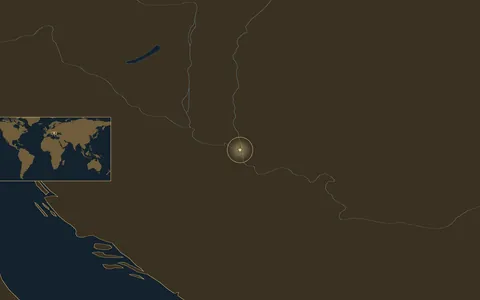
- 1691Battle of Slankamen, 1691Holy Roman Empire (Habsburg army) vs Ottoman Empire
On 19 August 1691 Louis of Baden broke an Ottoman army twice his size at Slankamen on the Danube; Grand Vizier Fazıl Mustafa Pasha fell in the battle.
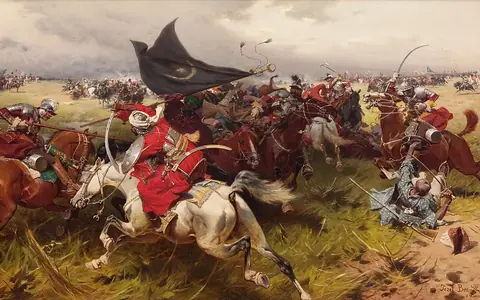
- 1694The Battle of Hodów, 1694Polish-Lithuanian Commonwealth vs Budjak Horde (Tatars)
About 400 Polish cavalrymen hold a village against a vast Tatar army.
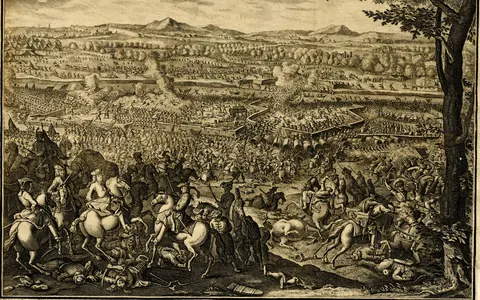
- 1697Battle of Zenta, 1697Holy Roman Empire (Habsburg army) vs Ottoman Empire
On 11 September 1697 Prince Eugene caught the Ottoman army astride the Tisza at Zenta and destroyed the half still on his bank; the grand vizier died there.
Timeline of the Great Turkish War
- 168314 July: the Ottomans surround Vienna; 12 September: Battle of Vienna.46
- 16837 and 9 October: fighting at Párkány; 25 December: Kara Mustafa is executed at Belgrade.47
- 1684March: Pope Innocent XI founds the Holy League of the emperor, Poland and Venice.48
- 1686Muscovy joins the League; the imperial army takes Buda after a siege of about two and a half months.49
- 1687August: Habsburg victory near Mohács; November: Mehmed IV is deposed and Süleyman II takes the throne.50
- 1688September: Max Emanuel of Bavaria takes Belgrade; that autumn France invades the Rhineland.51
- 1690Grand Vizier Köprülü Fazıl Mustafa Pasha retakes Niš and Belgrade.52
- 169119 or 20 August: Battle of Slankamen; the grand vizier is killed.53
- 169411 June: Battle of Hodów in Podolia.54
- 1696Peter I's army takes Azov.55
- 169711 September: Battle of Zenta.56
- 169926 January: the Treaty of Karlowitz.57
- 1700Russia's separate peace with the Ottoman Empire leaves Azov in Russian hands.58
Where to read next
The war is one chapter of our guides to the wars of the Polish-Lithuanian Commonwealth and the military history of Poland. For the Ottoman side, see our rankings of the greatest battles of the Ottoman Empire and the greatest Ottoman commanders. The Polish cavalry's part is told in the winged hussars' greatest battles, and you can test yourself with our Ottoman battles quiz.59
Notes
A number in the text points to a note; each note names the works that paragraph draws on, listed in full under Sources.
- Douglas Clark Baxter, “Defeat of the Ottomans at Vienna”; EBSCO Research Starters, “Holy League, 1684-1699”; EBSCO Research Starters, “Treaty of Karlowitz”; The Columbia Encyclopedia. ↩
- Douglas Clark Baxter, “Defeat of the Ottomans at Vienna”; Piotr Bejrowski, “The Battle of Vienna 1683”; Abdülkadir Özcan, TDV İslâm Ansiklopedisi; Zintegrowana Platforma Edukacyjna, “Odsiecz wiedeńska”; EBSCO Research Starters, “Treaty of Karlowitz”. ↩
- EBSCO Research Starters, “Battle of Zenta”; EBSCO Research Starters, “Treaty of Karlowitz”. ↩
- Douglas Clark Baxter, “Defeat of the Ottomans at Vienna”; Abdülkadir Özcan, TDV İslâm Ansiklopedisi; Zintegrowana Platforma Edukacyjna, “Odsiecz wiedeńska”. ↩
- Abdülkadir Özcan, TDV İslâm Ansiklopedisi; Wien Geschichte Wiki, “Zweite Türkenbelagerung (1683)”; Douglas Clark Baxter, “Defeat of the Ottomans at Vienna”. ↩
- Dzieje.pl, interview with Prof. Dariusz Kołodziejczyk on the significance of the relief of Vienna. ↩
- Douglas Clark Baxter, “Defeat of the Ottomans at Vienna”. ↩
- Zintegrowana Platforma Edukacyjna, “Odsiecz wiedeńska”; Wojciech Kalwat, “Battle of Vienna”; Museum of King Jan III's Palace at Wilanów, “Jan the III's Moldavian campaign of 1686”; Szymon Aleksander Grzegrzółka, “Bitwa pod Hodowem w 1694 r.”. ↩
- EBSCO Research Starters, “Holy League, 1684-1699”; Hanna Osiecka-Samsonowicz, “Banner of the grand vizier and the Roman celebrations of John III Sobieski and the Vienna victory”; Zintegrowana Platforma Edukacyjna, “Odsiecz wiedeńska”. ↩
- EBSCO Research Starters, “Holy League, 1684-1699”; Zintegrowana Platforma Edukacyjna, “Odsiecz wiedeńska”. ↩
- Wien Geschichte Wiki, “Zweite Türkenbelagerung (1683)”; EBSCO Research Starters, “Holy League, 1684-1699”; Museum of King Jan III's Palace at Wilanów, “Jan the III's Moldavian campaign of 1686”; The Columbia Encyclopedia; Abdülkadir Özcan, TDV İslâm Ansiklopedisi. ↩
- Abdülkadir Özcan, TDV İslâm Ansiklopedisi; Abdülkadir Özcan, TDV İslâm Ansiklopedisi; Wojciech Kalwat, “Battle of Vienna”; Abdülkadir Özcan, TDV İslâm Ansiklopedisi; Zbigniew Hundert, “Przekaz informacji na temat starcia pod Hodowem 11 czerwca 1694 r. Propaganda dworska Jana III?”; Abdülkadir Özcan, TDV İslâm Ansiklopedisi. ↩
- Douglas Clark Baxter, “Defeat of the Ottomans at Vienna”; Wien Geschichte Wiki, “Zweite Türkenbelagerung (1683)”; Abdülkadir Özcan, TDV İslâm Ansiklopedisi. ↩
- Wien Geschichte Wiki, “Zweite Türkenbelagerung (1683)”; Wojciech Kalwat, “Battle of Vienna”; Piotr Bejrowski, “The Battle of Vienna 1683”; Abdülkadir Özcan, TDV İslâm Ansiklopedisi. ↩
- Douglas Clark Baxter, “Defeat of the Ottomans at Vienna”; Abdülkadir Özcan, TDV İslâm Ansiklopedisi; Wien Geschichte Wiki, “Zweite Türkenbelagerung (1683)”. ↩
- Wien Geschichte Wiki, “Zweite Türkenbelagerung (1683)”; Douglas Clark Baxter, “Defeat of the Ottomans at Vienna”; Wojciech Kalwat, “Battle of Vienna”; Piotr Bejrowski, “The Battle of Vienna 1683”. ↩
- Piotr Bejrowski, “The Battle of Vienna 1683”; Wojciech Kalwat, “Battle of Vienna”. ↩
- Douglas Clark Baxter, “Defeat of the Ottomans at Vienna”; Wien Geschichte Wiki, “Zweite Türkenbelagerung (1683)”; Piotr Bejrowski, “The Battle of Vienna 1683”; Wojciech Kalwat, “Battle of Vienna”. ↩
- Douglas Clark Baxter, “Defeat of the Ottomans at Vienna”; Abdülkadir Özcan, TDV İslâm Ansiklopedisi; Dzieje.pl, interview with Prof. Dariusz Kołodziejczyk on the significance of the relief of Vienna. ↩
- Piotr Bejrowski, “The Battle of Vienna 1683”; Hanna Osiecka-Samsonowicz, “Banner of the grand vizier and the Roman celebrations of John III Sobieski and the Vienna victory”; EBSCO Research Starters, “Holy League, 1684-1699”; Zintegrowana Platforma Edukacyjna, “Odsiecz wiedeńska”; Dzieje.pl, interview with Prof. Dariusz Kołodziejczyk on the significance of the relief of Vienna; Abdülkadir Özcan, TDV İslâm Ansiklopedisi. ↩
- Hanna Osiecka-Samsonowicz, “Banner of the grand vizier and the Roman celebrations of John III Sobieski and the Vienna victory”. ↩
- Károly Magyar, “Buda in the Turkish era”; EBSCO Research Starters, “Holy League, 1684-1699”. ↩
- Ferenc Tóth, “A General at War”; EBSCO Research Starters, “Holy League, 1684-1699”; EBSCO Research Starters, “Treaty of Karlowitz”. ↩
- Abdülkadir Özcan, TDV İslâm Ansiklopedisi; Abdülkadir Özcan, TDV İslâm Ansiklopedisi; EBSCO Research Starters, “Holy League, 1684-1699”. ↩
- Abdülkadir Özcan, TDV İslâm Ansiklopedisi; EBSCO Research Starters, “Holy League, 1684-1699”; Divna Đurić-Zamolo, TDV İslâm Ansiklopedisi; National Army Museum, “Nine Years War”. ↩
- Abdülkadir Özcan, TDV İslâm Ansiklopedisi; EBSCO Research Starters, “Holy League, 1684-1699”; Divna Đurić-Zamolo, TDV İslâm Ansiklopedisi; Neue Deutsche Biographie. ↩
- Museum of King Jan III's Palace at Wilanów, “Jan the III's Moldavian campaign of 1686”; Marcin Markowicz, “The last attempt to conquer Moldavia by Jan III Sobieski (1691)”; Zintegrowana Platforma Edukacyjna, “Odsiecz wiedeńska”. ↩
- Zbigniew Hundert, “Przekaz informacji na temat starcia pod Hodowem 11 czerwca 1694 r. Propaganda dworska Jana III?”; Szymon Aleksander Grzegrzółka, “Bitwa pod Hodowem w 1694 r.”. ↩
- Abdülkadir Özcan, TDV İslâm Ansiklopedisi; The Columbia Encyclopedia; Abdülkadir Özcan, TDV İslâm Ansiklopedisi; EBSCO Research Starters, “Treaty of Karlowitz”. ↩
- Abdülkadir Özcan, TDV İslâm Ansiklopedisi; TDV İslâm Ansiklopedisi; EBSCO Research Starters, “Battle of Zenta”. ↩
- EBSCO Research Starters, “Battle of Zenta”; TDV İslâm Ansiklopedisi. ↩
- Abdülkadir Özcan, TDV İslâm Ansiklopedisi; TDV İslâm Ansiklopedisi; EBSCO Research Starters, “Holy League, 1684-1699”; EBSCO Research Starters, “Battle of Zenta”. ↩
- TDV İslâm Ansiklopedisi; EBSCO Research Starters, “Battle of Zenta”; Abdülkadir Özcan, TDV İslâm Ansiklopedisi; Abdülkadir Özcan, TDV İslâm Ansiklopedisi. ↩
- Douglas Clark Baxter, “Defeat of the Ottomans at Vienna”; Zintegrowana Platforma Edukacyjna, “Odsiecz wiedeńska”; Abdülkadir Özcan, TDV İslâm Ansiklopedisi. ↩
- Wien Geschichte Wiki, “Zweite Türkenbelagerung (1683)”; Károly Magyar, “Buda in the Turkish era”; EBSCO Research Starters, “Holy League, 1684-1699”; Douglas Clark Baxter, “Defeat of the Ottomans at Vienna”; Neue Deutsche Biographie; Abdülkadir Özcan, TDV İslâm Ansiklopedisi. ↩
- Abdülkadir Özcan, TDV İslâm Ansiklopedisi; EBSCO Research Starters, “Holy League, 1684-1699”; Abdülkadir Özcan, TDV İslâm Ansiklopedisi; EBSCO Research Starters, “Battle of Zenta”; TDV İslâm Ansiklopedisi. ↩
- EBSCO Research Starters, “Treaty of Karlowitz”; Abdülkadir Özcan, TDV İslâm Ansiklopedisi; The Columbia Encyclopedia. ↩
- EBSCO Research Starters, “Holy League, 1684-1699”; Abdülkadir Özcan, TDV İslâm Ansiklopedisi; EBSCO Research Starters, “Treaty of Karlowitz”. ↩
- EBSCO Research Starters, “Treaty of Karlowitz”; The Columbia Encyclopedia; Abdülkadir Özcan, TDV İslâm Ansiklopedisi; Zintegrowana Platforma Edukacyjna, “Odsiecz wiedeńska”. ↩
- Abdülkadir Özcan, TDV İslâm Ansiklopedisi; EBSCO Research Starters, “Treaty of Karlowitz”. ↩
- EBSCO Research Starters, “Treaty of Karlowitz”; The Columbia Encyclopedia; Abdülkadir Özcan, TDV İslâm Ansiklopedisi; EBSCO Research Starters, “Holy League, 1684-1699”. ↩
- Dzieje.pl, interview with Prof. Dariusz Kołodziejczyk on the significance of the relief of Vienna; Wien Geschichte Wiki, “Zweite Türkenbelagerung (1683)”. ↩
- Zintegrowana Platforma Edukacyjna, “Odsiecz wiedeńska”; Museum of King Jan III's Palace at Wilanów, “Jan the III's Moldavian campaign of 1686”; Piotr Bejrowski, “The Battle of Vienna 1683”; Douglas Clark Baxter, “Defeat of the Ottomans at Vienna”. ↩
- The Columbia Encyclopedia; Dzieje.pl, interview with Prof. Dariusz Kołodziejczyk on the significance of the relief of Vienna. ↩
- Dzieje.pl, interview with Prof. Dariusz Kołodziejczyk on the significance of the relief of Vienna; Zbigniew Hundert, “Przekaz informacji na temat starcia pod Hodowem 11 czerwca 1694 r. Propaganda dworska Jana III?”. ↩
- Douglas Clark Baxter, “Defeat of the Ottomans at Vienna”; Wien Geschichte Wiki, “Zweite Türkenbelagerung (1683)”. ↩
- Piotr Bejrowski, “The Battle of Vienna 1683”; Zintegrowana Platforma Edukacyjna, “Odsiecz wiedeńska”; Abdülkadir Özcan, TDV İslâm Ansiklopedisi. ↩
- EBSCO Research Starters, “Holy League, 1684-1699”; Zintegrowana Platforma Edukacyjna, “Odsiecz wiedeńska”. ↩
- EBSCO Research Starters, “Holy League, 1684-1699”; Zintegrowana Platforma Edukacyjna, “Odsiecz wiedeńska”; Károly Magyar, “Buda in the Turkish era”. ↩
- Ferenc Tóth, “A General at War”; Abdülkadir Özcan, TDV İslâm Ansiklopedisi. ↩
- Abdülkadir Özcan, TDV İslâm Ansiklopedisi; EBSCO Research Starters, “Holy League, 1684-1699”; National Army Museum, “Nine Years War”. ↩
- Abdülkadir Özcan, TDV İslâm Ansiklopedisi; Divna Đurić-Zamolo, TDV İslâm Ansiklopedisi. ↩
- Abdülkadir Özcan, TDV İslâm Ansiklopedisi; EBSCO Research Starters, “Holy League, 1684-1699”. ↩
- Zbigniew Hundert, “Przekaz informacji na temat starcia pod Hodowem 11 czerwca 1694 r. Propaganda dworska Jana III?”; Szymon Aleksander Grzegrzółka, “Bitwa pod Hodowem w 1694 r.”. ↩
- The Columbia Encyclopedia; Abdülkadir Özcan, TDV İslâm Ansiklopedisi. ↩
- EBSCO Research Starters, “Battle of Zenta”; TDV İslâm Ansiklopedisi. ↩
- EBSCO Research Starters, “Treaty of Karlowitz”; Abdülkadir Özcan, TDV İslâm Ansiklopedisi. ↩
- EBSCO Research Starters, “Treaty of Karlowitz”; Abdülkadir Özcan, TDV İslâm Ansiklopedisi. ↩
- EBSCO Research Starters, “Holy League, 1684-1699”; Zintegrowana Platforma Edukacyjna, “Odsiecz wiedeńska”. ↩
Sources
- Douglas Clark Baxter, EBSCO Research Starters, “Defeat of the Ottomans at Vienna”.
- EBSCO Research Starters, “Holy League, 1684-1699”.
- EBSCO Research Starters, “Treaty of Karlowitz”.
- The Columbia Encyclopedia, 6th ed., via Encyclopedia.com, “Karlowitz, Treaty of”.
- Piotr Bejrowski, PolishHistory.pl (Polish History Museum), “The Battle of Vienna 1683: the clash that saved Europe”.
- Abdülkadir Özcan, TDV İslâm Ansiklopedisi, “Karlofça” (in Turkish).
- Zintegrowana Platforma Edukacyjna (Polish Ministry of Education), “Odsiecz wiedeńska” (the relief of Vienna, in Polish).
- EBSCO Research Starters, “Battle of Zenta”.
- Abdülkadir Özcan, TDV İslâm Ansiklopedisi, “Merzifonlu Kara Mustafa Paşa” (in Turkish).
- Wien Geschichte Wiki (City of Vienna), “Zweite Türkenbelagerung (1683)” (in German).
- Dzieje.pl (Polish Press Agency and Polish History Museum), interview with Prof. Dariusz Kołodziejczyk on the significance of the relief of Vienna, 12 September 2018 (in Polish).
- Wojciech Kalwat, Museum of King Jan III's Palace at Wilanów, “Battle of Vienna”.
- Museum of King Jan III's Palace at Wilanów, “Jan the III's Moldavian campaign of 1686”.
- Szymon Aleksander Grzegrzółka, Histmag.org, “Bitwa pod Hodowem w 1694 r.” (in Polish).
- Hanna Osiecka-Samsonowicz, Museum of King Jan III's Palace at Wilanów, “Banner of the grand vizier and the Roman celebrations of John III Sobieski and the Vienna victory”.
- Abdülkadir Özcan, TDV İslâm Ansiklopedisi, “Süleyman II” (in Turkish).
- Abdülkadir Özcan, TDV İslâm Ansiklopedisi, “Mustafa II” (in Turkish).
- Zbigniew Hundert, “Przekaz informacji na temat starcia pod Hodowem 11 czerwca 1694 r. Propaganda dworska Jana III?”, Res Historica 52 (2021), in Polish.
- Károly Magyar, Buda Castle history site (Budapest History Museum and Research Centre for the Humanities), “Buda in the Turkish era: the recapture”.
- Ferenc Tóth, “A General at War: Decision-Making in the Recently Discovered Autograph Diary of Charles V, Duke of Lorraine, from 1687”, in Végvárak, döntések és döntéshozók, Studia Agriensia 41 (Eger, 2025).
- Abdülkadir Özcan, TDV İslâm Ansiklopedisi, “Köprülüzâde Fâzıl Mustafa Paşa” (in Turkish).
- Divna Đurić-Zamolo, TDV İslâm Ansiklopedisi, “Belgrad” (in Turkish).
- National Army Museum, “Nine Years War”.
- Neue Deutsche Biographie, Deutsche Biographie, “Ludwig Wilhelm, Markgraf von Baden-Baden” (in German).
- Marcin Markowicz, Museum of King Jan III's Palace at Wilanów, “The last attempt to conquer Moldavia by Jan III Sobieski (1691)”.
- TDV İslâm Ansiklopedisi, “Zenta” (in Turkish).






