

What was the Polish-Swedish War of 1600 to 1629 and who won?
It was a series of campaigns, broken by truces, between Sweden and the Polish-Lithuanian Commonwealth over Livonia and Sigismund III's claim to the Swedish crown. The Commonwealth won famous battles such as Kircholm, but the Truce of Altmark of 1629 left Sweden holding most of Livonia and a share of Prussian customs.1
For almost thirty years, with long truces in between, the Polish-Lithuanian Commonwealth and the Kingdom of Sweden fought for the eastern shore of the Baltic. The war began in 1600, when Duke Charles of Södermanland, the future King Charles IX, invaded Livonia, and it ended with the Truce of Altmark in September 1629. Behind it lay two quarrels: who would hold Livonia and its great port of Riga, and whether Sigismund III Vasa, king of Poland and grand duke of Lithuania, was still the lawful king of Sweden.2
This guide sets out both sides' aims, the phases of the war in Livonia and in Prussia, and its best known battles: the Battle of Kircholm in 1605, the naval Battle of Oliwa in 1627 and the Battle of Trzciana in 1629. It introduces the commanders, among them Jan Karol Chodkiewicz and Stanisław Koniecpolski, and explains why a war rich in Commonwealth victories ended on terms that favored Sweden. The rivalry did not end in 1629: the two states fought again in the Swedish Deluge of 1655 to 1660, and only the Peace of Oliva in 1660 settled the Vasa quarrel for good.3
Causes of the Polish-Swedish War
The dynastic quarrel came first. Sigismund Vasa, son of King John III of Sweden, was elected king of Poland in 1587. When his father died in 1592 he inherited the Swedish crown as well, so for a few years one man ruled both kingdoms. He had been raised in Lutheran Sweden but grew up a devout Catholic, and in Sweden his uncle, Duke Charles, became the leader of those who opposed him.4
Sigismund tried to settle the matter by force and was defeated in Sweden in 1598. In 1599 the Swedish Riksdag deposed him and made Charles regent; Charles took the crown in 1604 as Charles IX. Sigismund returned to the Commonwealth but never gave up his claim, and for the rest of his life he pressed it against Charles and then against Charles's son.5
The second quarrel was about land. Livonia, the former lands of the Livonian Order on the eastern Baltic, covering parts of present-day Latvia and Estonia, was a prize both states wanted. It was a rich province, and its port of Riga, at the mouth of the Daugava, was the key to its trade.6
Each side saw itself in the right. Sigismund's claim rested on his inheritance of the Swedish crown; Charles's rested on the decision of the Riksdag that deposed Sigismund and made Charles regent and then king. The Lund historian Magnus Olofsson calls Charles's invasion of 1600 an act of supreme hubris and finds his motives unclear: Livonia's wealth, the dynastic rivalry with his nephew, or both. Under Gustavus Adolphus the Swedish aim widened. EBSCO's account sees a drive to control the eastern Baltic coast, and the Polish National Maritime Museum describes Swedish policy as an attempt to turn the Baltic into Sweden's inland sea, with its shipping lanes, coasts and ports.7

Who fought in the Polish-Swedish War
On one side stood the Kingdom of Sweden, led by Charles IX until his death in 1611 and then by his son Gustavus II Adolphus, who reigned until he was killed in 1632. On the other stood the Polish-Lithuanian Commonwealth, the union of the Crown of Poland and the Grand Duchy of Lithuania, under Sigismund III. Much of the fighting in Livonia fell to Lithuanian forces: Jan Karol Chodkiewicz, the victor of Kircholm, was a Lithuanian hetman.8
The Commonwealth rarely faced Sweden alone. From 1609 its attention turned to its war with Muscovy, and in 1621, as Gustavus Adolphus landed in Livonia, the bulk of its army was in the south facing the Ottoman Empire at Khotyn (Chocim). Sweden could choose its moments; the Commonwealth, fighting on several fronts and short of money, usually could not.9
At sea Sweden had the advantage. The Swedish fleet was regarded as a naval power on the Baltic, while the Commonwealth relied on a small royal squadron based at Gdańsk (Danzig), the Commonwealth's greatest port. Gdańsk refused to surrender to Gustavus in 1626 and became the hinge of the Prussian war.10
In the last year of the war Emperor Ferdinand II sent about 5,000 Imperial troops under Hans Georg von Arnim to join the Commonwealth's army in Prussia. The historian John Rickard argues that Vienna meant to keep Gustavus tied down in Prussia and out of Germany, and that the aid had exactly the opposite effect.11

How the Polish-Swedish War unfolded, 1600 to 1629
The fighting came in bursts separated by truces, and historians group it differently. Rickard counts four phases, from 1600 to 1611, in 1617, in 1621 to 1622 and from 1625 to 1629. Polish school histories speak of a war for Livonia followed by a war for the mouth of the Vistula.12
Livonia, 1600 to 1611. In 1600 Charles invaded Livonia and overran most of it, but Riga held out. From 1601 the Commonwealth struck back: its armies beat the Swedes at Kokenhausen in 1601 and, under Chodkiewicz, won further victories in Estonia, among them Weissenstein. In 1605 Charles, now king, came back with an army of about 14,000 men and laid siege to Riga. On 27 September Chodkiewicz caught it at Kircholm and destroyed it.13
Kircholm did not win the war. The Commonwealth's soldiers had not been paid, and soon after the battle the victorious army broke up. In 1606 a noble rebellion against Sigismund, the rokosz of Mikołaj Zebrzydowski, turned the Commonwealth's energy inward and gave Sweden time to recover. Sporadic fighting went on until a truce was agreed after Charles IX died in 1611.14
Gustavus Adolphus in Livonia, 1617 to 1625. Gustavus Adolphus, king since 1611, attacked Livonia in 1617 and took several of its ports before another armistice. In August 1621, while the main Commonwealth army was at Khotyn, he landed with about 18,000 men and besieged Riga, which surrendered in September. A further truce followed in 1622, and when the war resumed in 1625 Gustavus overran the rest of Livonia.15

The war for the Vistula, 1626 to 1629. In July 1626 Gustavus carried the war to Prussia. He landed at Pillau (Piława) and took Elbląg, Malbork and other towns, aiming to control the mouth of the Vistula. Gdańsk held out, and Swedish ships blockaded it from the sea.16
In Prussia the fighting went mostly Sweden's way. Sigismund's army failed to dislodge the Swedes at Gniew in 1626, and at Tczew in 1627 Gustavus had the better of Koniecpolski until he was badly wounded. After those battles the Commonwealth avoided pitched battles and fought a war of delaying actions, raids and fortified camps. Its small fleet broke the blockade off Oliwa in November 1627, and in June 1629 Koniecpolski and Arnim mauled the Swedish cavalry at Trzciana.17
By then neither side could win outright. Gustavus was eager to intervene in Germany, Sigismund could no longer afford to fight, and the war was unpopular in the Commonwealth. The two sides signed the Truce of Altmark in September 1629.18
Major battles of the Polish-Swedish War
Kircholm, 27 September 1605. On the Daugava near Riga, Charles IX commanded in person an army of about 10,000 to 11,000 men. Chodkiewicz had roughly 3,400 to 4,000, most of them cavalry. He drew the Swedes off their ridge with a feigned retreat, then sent the hussars against their wings. The Swedish army was broken: estimates of its dead run from about 8,000 to 9,000, against Commonwealth losses of one or two hundred killed. Charles escaped on a borrowed horse. Olofsson calls Kircholm the worst defeat a Swedish army ever suffered on the battlefield.19
Gniew (Mewe), September to October 1626. Sigismund III's army besieged the Swedish garrison of Gniew on the lower Vistula, and Gustavus marched to relieve it. In several days of fighting the hussars drove off the Swedish horse but could not break Swedish infantry firing from behind field fortifications, and when the Swedes seized the high ground the Commonwealth army withdrew. The Polish education ministry's history text calls Gniew the first time the hussars, unbeaten until then, had to yield to enemy infantry.20
Tczew (Dirschau), 17 to 18 August 1627. Gustavus, with roughly 10,000 to 12,500 men, faced Koniecpolski by the Vistula. On the first day Swedish cavalry, backed by musketeers, caught the Commonwealth horse as it withdrew. On the second day a Polish marksman wounded the king badly, and the Swedish attack was called off. Rickard counts Tczew a minor Swedish victory; the historian Jakub Pokojski, in a study reviewed by Dzieje.pl, sees no decisive result.21
Oliwa, 28 November 1627. The Commonwealth's fleet of ten ships, under Arend Dickmann, sailed out of Gdańsk against six Swedish ships blockading the roadstead. It captured the Swedish flagship Tigern, and the Swedish galleon Solen blew up. Both commanders were killed: Dickmann and the Swedish admiral Nils Stiernsköld. The Swedes lifted the blockade for a time, though the battle did not change the course of the war. Guns from the wreck of Solen are on display in Gdańsk.22
Trzciana (Honigfelde), June 1629. Polish sources date it to 25 June, Rickard to 27 June. After Koniecpolski joined Arnim's Imperial troops, the allies caught the Swedish rearguard cavalry on the march. Hussars striking from cover broke the Swedish horse, and in the pursuit Gustavus, leading fresh troops, was nearly captured. The Swedish cavalry was routed, but the infantry got away intact. Losses are disputed: Gustavus admitted about 200 dead, Dzieje.pl gives about 1,200 Swedish dead, and the Poles claimed to have counted nearly 1,500 bodies. It was the greatest Commonwealth victory since Kircholm, but it did not drive the Swedes from their Prussian fortresses.23

Key commanders of the Polish-Swedish War
Sigismund III Vasa, king of Poland from 1587 and of Sweden from 1592 until his deposition in 1599, directed the Commonwealth's war throughout. His army fought at Gniew in 1626, and he never renounced his claim to the Swedish crown.24
Charles IX, regent from 1599 and king from 1604 until his death in 1611, began the war and commanded at Kircholm, where he barely escaped.25
Gustavus II Adolphus (king 1611 to 1632) spent most of the 1620s at war with the Commonwealth. He took Riga, conquered Livonia and carried the war into Prussia, where he was wounded at Tczew and nearly captured at Trzciana. He reformed the Swedish army in these years, and Rickard argues that he borrowed from the hussars' shock tactics when he reformed his cavalry. He was killed at Lützen in 1632, fighting in Germany.26
Jan Karol Chodkiewicz (died 1621), the Lithuanian hetman, won Kircholm and the earlier victories in Livonia, and is remembered as one of the Commonwealth's great commanders.27
Stanisław Koniecpolski, field hetman of the Crown, commanded against Gustavus in Prussia from 1626 to 1629. With smaller forces he fought delaying actions, held the Swedes at Tczew and won at Trzciana.28
Hans Georg von Arnim led the Imperial contingent of about 5,000 men that joined Koniecpolski in June 1629 and fought at Trzciana.29
Who won the Polish-Swedish War? The Truce of Altmark
The war ended with a truce, not a peace. It was signed at Altmark (Stary Targ) in Royal Prussia in September 1629, on 26 September according to the Polish History Museum (Rickard gives 12 September), and it was to last six years.30
Sweden kept Livonia north of the Daugava (Dvina), including Riga. It kept most of the Prussian ports it held, among them Elbląg and Pillau, and won a share of the customs on Gdańsk's trade. Gdańsk itself was never taken.31
In territory the result favored Sweden. The Commonwealth had won the war's most famous battles, but Altmark confirmed the loss of most of Livonia and gave Sweden income from Prussian trade. The Polish History Museum calls the truce unfavorable to the Commonwealth, and the Polish education ministry's text says the Poles, worn out by the fighting, were forced to accept it. EBSCO's account stresses the other side of the coin: Sweden emerged from the war as a major power of northern Europe and the balance on the Baltic had shifted.32
Altmark was not the last word on Prussia. In 1635 the Truce of Stuhmsdorf (Sztumska Wieś) replaced it on terms much better for the Commonwealth, and the Swedes left the Prussian ports.33
Consequences: the Thirty Years' War and the road to the Deluge
Altmark freed Gustavus Adolphus for Germany. In 1630 his army landed in northern Germany and entered the Thirty Years' War; two years later he was killed at Lützen. Rickard sees an irony here: the Imperial troops sent to Trzciana to keep the Swedes busy in Prussia helped end the war that had kept them there.34
Both armies learned from the war, but not equally. In the Polish History Museum's account of Kircholm, Piotr Abryszeński concludes that it was the Swedes who drew the right lessons from their defeat, and the Swedish army was reformed under Gustavus Adolphus. The Commonwealth kept winning battles that it could not turn into political results, because its armies went unpaid and melted away after their victories.35
The Vasa quarrel outlived Sigismund, who died in 1632. In 1655 Sweden invaded the Commonwealth again, the war Poles call the Swedish Deluge. Only at the Peace of Oliva in 1660 did the Commonwealth give up its claim to Livonia and King John II Casimir abandon his family's claim to the Swedish throne.36
Battles of the Polish-Swedish War
Below, in date order, are our articles on the battles of this war.
- 1605Battle of Kircholm, 1605Polish-Lithuanian Commonwealth vs Sweden
How ~3,600 Polish-Lithuanian troops and their winged hussars annihilated a Swedish army three times their size at Kircholm in 1605.
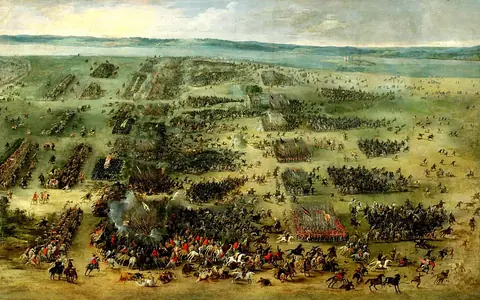
- 1627The Battle of Oliwa, 1627Polish-Lithuanian Commonwealth vs Sweden
The Commonwealth's small navy breaks the Swedish blockade of Gdańsk.
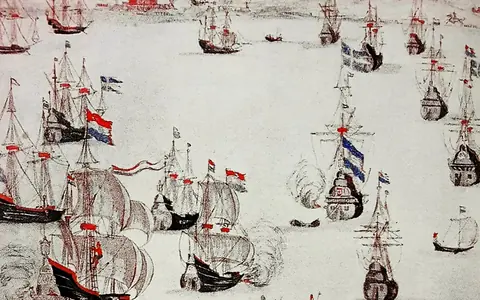
- 1629The Battle of Trzciana, 1629Polish-Lithuanian Commonwealth and the Holy Roman Empire vs Sweden
The day the hussars almost captured the Swedish king.
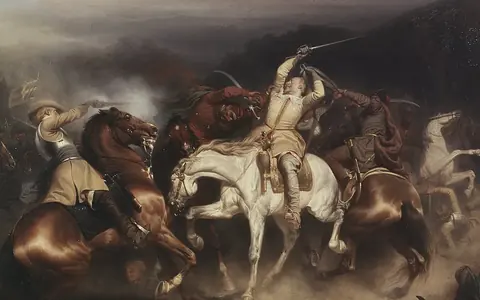
Timeline of the Polish-Swedish War
- 1587Sigismund Vasa is elected king of Poland.37
- 1592Sigismund inherits the Swedish crown.38
- 1599The Riksdag deposes Sigismund and makes Duke Charles regent.39
- 1600Charles invades Livonia; Riga holds out.40
- 1601Commonwealth victory at Kokenhausen.41
- 160527 September: Chodkiewicz destroys Charles IX's army at Kircholm.42
- 1611Charles IX dies; Gustavus Adolphus becomes king; a truce follows.43
- 1617Gustavus attacks Livonia and takes several ports.44
- 1621September: Riga surrenders to the Swedes.45
- 1625Gustavus overruns the rest of Livonia.46
- 1626July: Swedish landing at Pillau; September to October: battle of Gniew.47
- 162717 to 18 August: Tczew, Gustavus wounded; 28 November: naval victory off Oliwa.48
- 1629June: Trzciana; 26 September: Truce of Altmark.49
- 1630Gustavus lands in northern Germany and enters the Thirty Years' War.50
- 1635Truce of Stuhmsdorf (Sztumska Wieś) replaces Altmark.51
Where to read next
This war is one chapter of our guides to the wars of the Polish-Lithuanian Commonwealth and the military history of Poland. For the hussars who won Kircholm and Trzciana see the winged hussars and their greatest battles; for the next round between the two states, the Swedish Deluge. Test yourself with our Polish battles quiz.
Notes
A number in the text points to a note; each note names the works that paragraph draws on, listed in full under Sources.
- HistoryOfWar.org, “Polish-Swedish War, 1600 to 1629”; EBSCO Research Starters, “Polish-Swedish Wars for Livonia”; Muzeum Historii Polski, “Rozejm w Altmarku”. ↩
- HistoryOfWar.org, “Polish-Swedish War, 1600 to 1629”; EBSCO Research Starters, “Polish-Swedish Wars for Livonia”; The Past, “The Battle of Kircholm, 1605”; Muzeum Historii Polski, “Rozejm w Altmarku”. ↩
- The Past, “The Battle of Kircholm, 1605”; HistoryOfWar.org, “Northern War of 1655 to 1660”. ↩
- HistoryOfWar.org, “Polish-Swedish War, 1600 to 1629”; The Past, “The Battle of Kircholm, 1605”; Zintegrowana Platforma Edukacyjna, “Zygmunt III Waza na tronie polskim. Spór króla ze szlachtą”. ↩
- HistoryOfWar.org, “Polish-Swedish War, 1600 to 1629”; EBSCO Research Starters, “Polish-Swedish Wars for Livonia”; The Past, “The Battle of Kircholm, 1605”; Polish History Museum, “The great victory of the winged hussars. The Battle of Kirchholm (1605)”. ↩
- EBSCO Research Starters, “Polish-Swedish Wars for Livonia”; The Past, “The Battle of Kircholm, 1605”; Polish History Museum, “The great victory of the winged hussars. The Battle of Kirchholm (1605)”. ↩
- The Past, “The Battle of Kircholm, 1605”; Polish History Museum, “The great victory of the winged hussars. The Battle of Kirchholm (1605)”; EBSCO Research Starters, “Polish-Swedish Wars for Livonia”; Narodowe Muzeum Morskie w Gdańsku, “Walka o dominację na Bałtyku w XVII wieku”. ↩
- HistoryOfWar.org, “Polish-Swedish War, 1600 to 1629”; EBSCO Research Starters, “Polish-Swedish Wars for Livonia”; The Past, “The Battle of Kircholm, 1605”; Polish History Museum, “The great victory of the winged hussars. The Battle of Kirchholm (1605)”; Zintegrowana Platforma Edukacyjna, “Działania wojenne 1624 do 1632”. ↩
- HistoryOfWar.org, “Polish-Swedish War, 1600 to 1629”; EBSCO Research Starters, “Polish-Swedish Wars for Livonia”; Zintegrowana Platforma Edukacyjna, “Wojna ze Szwecją w Inflantach i Prusach”. ↩
- Muzeum Historii Polski, “Bitwa morska pod Oliwą”; Narodowe Muzeum Morskie w Gdańsku, “Walka o dominację na Bałtyku w XVII wieku”; EBSCO Research Starters, “Polish-Swedish Wars for Livonia”; Zintegrowana Platforma Edukacyjna, “Wojna ze Szwecją w Inflantach i Prusach”. ↩
- HistoryOfWar.org, “Battle of Honigfelde or Trzciana, 27 June 1629”; Dzieje.pl, “Bitwa pod Trzcianą”. ↩
- HistoryOfWar.org, “Polish-Swedish War, 1600 to 1629”; Zintegrowana Platforma Edukacyjna, “Wojna ze Szwecją w Inflantach i Prusach”. ↩
- HistoryOfWar.org, “Polish-Swedish War, 1600 to 1629”; EBSCO Research Starters, “Polish-Swedish Wars for Livonia”; The Past, “The Battle of Kircholm, 1605”; Polish History Museum, “The great victory of the winged hussars. The Battle of Kirchholm (1605)”. ↩
- The Past, “The Battle of Kircholm, 1605”; Polish History Museum, “The great victory of the winged hussars. The Battle of Kirchholm (1605)”; Zintegrowana Platforma Edukacyjna, “Wojna ze Szwecją w Inflantach i Prusach”; HistoryOfWar.org, “Polish-Swedish War, 1600 to 1629”; EBSCO Research Starters, “Polish-Swedish Wars for Livonia”. ↩
- HistoryOfWar.org, “Polish-Swedish War, 1600 to 1629”; EBSCO Research Starters, “Polish-Swedish Wars for Livonia”; Zintegrowana Platforma Edukacyjna, “Wojna ze Szwecją w Inflantach i Prusach”. ↩
- Zintegrowana Platforma Edukacyjna, “Wojna ze Szwecją w Inflantach i Prusach”; Dzieje.pl, “Bitwa pod Trzcianą”; Muzeum Historii Polski, “Bitwa morska pod Oliwą”; Narodowe Muzeum Morskie w Gdańsku, “Walka o dominację na Bałtyku w XVII wieku”. ↩
- HistoryOfWar.org, “Battle of Mewe, 22 September and 29 September to 1 October 1626”; HistoryOfWar.org, “Battle of Dirschau, 17 to 18 August 1627”; Dzieje.pl, “Tczew 1627”; HistoryOfWar.org, “Polish-Swedish War, 1600 to 1629”; EBSCO Research Starters, “Polish-Swedish Wars for Livonia”; Dzieje.pl, “Bitwa pod Trzcianą”. ↩
- HistoryOfWar.org, “Battle of Honigfelde or Trzciana, 27 June 1629”; HistoryOfWar.org, “Truce of Altmark, 12 September 1629”; EBSCO Research Starters, “Polish-Swedish Wars for Livonia”; Muzeum Historii Polski, “Rozejm w Altmarku”. ↩
- The Past, “The Battle of Kircholm, 1605”; Polish History Museum, “The great victory of the winged hussars. The Battle of Kirchholm (1605)”; Zintegrowana Platforma Edukacyjna, “Wojna ze Szwecją w Inflantach i Prusach”; EBSCO Research Starters, “Polish-Swedish Wars for Livonia”. ↩
- HistoryOfWar.org, “Battle of Mewe, 22 September and 29 September to 1 October 1626”; Dzieje.pl, “Bitwa pod Trzcianą”; Zintegrowana Platforma Edukacyjna, “Wojna ze Szwecją w Inflantach i Prusach”. ↩
- HistoryOfWar.org, “Battle of Dirschau, 17 to 18 August 1627”; Dzieje.pl, “Tczew 1627”. ↩
- Muzeum Historii Polski, “Bitwa morska pod Oliwą”; Vasa Museum, “Vasa, the machine of war”; Threedecks, “Battle of Oliwa, 28 November 1627”; Narodowe Muzeum Morskie w Gdańsku, “Walka o dominację na Bałtyku w XVII wieku”. ↩
- HistoryOfWar.org, “Battle of Honigfelde or Trzciana, 27 June 1629”; Dzieje.pl, “Bitwa pod Trzcianą”; Muzeum Historii Polski, “Bitwa pod Trzcianą”; EBSCO Research Starters, “Polish-Swedish Wars for Livonia”. ↩
- HistoryOfWar.org, “Polish-Swedish War, 1600 to 1629”; Zintegrowana Platforma Edukacyjna, “Zygmunt III Waza na tronie polskim. Spór króla ze szlachtą”; HistoryOfWar.org, “Battle of Mewe, 22 September and 29 September to 1 October 1626”; EBSCO Research Starters, “Polish-Swedish Wars for Livonia”. ↩
- The Past, “The Battle of Kircholm, 1605”; Polish History Museum, “The great victory of the winged hussars. The Battle of Kirchholm (1605)”; HistoryOfWar.org, “Polish-Swedish War, 1600 to 1629”. ↩
- HistoryOfWar.org, “Polish-Swedish War, 1600 to 1629”; EBSCO Research Starters, “Polish-Swedish Wars for Livonia”; Zintegrowana Platforma Edukacyjna, “Wojna ze Szwecją w Inflantach i Prusach”; HistoryOfWar.org, “Battle of Dirschau, 17 to 18 August 1627”; Zintegrowana Platforma Edukacyjna, “Działania wojenne 1624 do 1632”; HistoryOfWar.org, “Truce of Altmark, 12 September 1629”. ↩
- EBSCO Research Starters, “Polish-Swedish Wars for Livonia”; The Past, “The Battle of Kircholm, 1605”; Polish History Museum, “The great victory of the winged hussars. The Battle of Kirchholm (1605)”. ↩
- EBSCO Research Starters, “Polish-Swedish Wars for Livonia”; Dzieje.pl, “Tczew 1627”; Dzieje.pl, “Bitwa pod Trzcianą”; Muzeum Historii Polski, “Bitwa pod Trzcianą”. ↩
- HistoryOfWar.org, “Battle of Honigfelde or Trzciana, 27 June 1629”; Dzieje.pl, “Bitwa pod Trzcianą”. ↩
- Muzeum Historii Polski, “Rozejm w Altmarku”; HistoryOfWar.org, “Truce of Altmark, 12 September 1629”; Zintegrowana Platforma Edukacyjna, “Wojna ze Szwecją w Inflantach i Prusach”; EBSCO Research Starters, “Polish-Swedish Wars for Livonia”. ↩
- Muzeum Historii Polski, “Rozejm w Altmarku”; HistoryOfWar.org, “Truce of Altmark, 12 September 1629”; Zintegrowana Platforma Edukacyjna, “Wojna ze Szwecją w Inflantach i Prusach”; EBSCO Research Starters, “Polish-Swedish Wars for Livonia”. ↩
- Muzeum Historii Polski, “Bitwa pod Trzcianą”; Zintegrowana Platforma Edukacyjna, “Wojna ze Szwecją w Inflantach i Prusach”; EBSCO Research Starters, “Polish-Swedish Wars for Livonia”; Muzeum Historii Polski, “Rozejm w Altmarku”. ↩
- Muzeum Historii Polski, “Rozejm w Altmarku”; HistoryOfWar.org, “Truce of Altmark, 12 September 1629”; Zintegrowana Platforma Edukacyjna, “Wojna ze Szwecją w Inflantach i Prusach”. ↩
- Zintegrowana Platforma Edukacyjna, “Działania wojenne 1624 do 1632”; HistoryOfWar.org, “Battle of Honigfelde or Trzciana, 27 June 1629”; HistoryOfWar.org, “Truce of Altmark, 12 September 1629”. ↩
- Polish History Museum, “The great victory of the winged hussars. The Battle of Kirchholm (1605)”; Zintegrowana Platforma Edukacyjna, “Wojna ze Szwecją w Inflantach i Prusach”; The Past, “The Battle of Kircholm, 1605”. ↩
- The Past, “The Battle of Kircholm, 1605”; HistoryOfWar.org, “Northern War of 1655 to 1660”. ↩
- HistoryOfWar.org, “Polish-Swedish War, 1600 to 1629”; Zintegrowana Platforma Edukacyjna, “Zygmunt III Waza na tronie polskim. Spór króla ze szlachtą”. ↩
- The Past, “The Battle of Kircholm, 1605”; Polish History Museum, “The great victory of the winged hussars. The Battle of Kirchholm (1605)”. ↩
- The Past, “The Battle of Kircholm, 1605”; Polish History Museum, “The great victory of the winged hussars. The Battle of Kirchholm (1605)”. ↩
- HistoryOfWar.org, “Polish-Swedish War, 1600 to 1629”; EBSCO Research Starters, “Polish-Swedish Wars for Livonia”. ↩
- HistoryOfWar.org, “Polish-Swedish War, 1600 to 1629”; The Past, “The Battle of Kircholm, 1605”. ↩
- The Past, “The Battle of Kircholm, 1605”; Polish History Museum, “The great victory of the winged hussars. The Battle of Kirchholm (1605)”. ↩
- HistoryOfWar.org, “Polish-Swedish War, 1600 to 1629”; EBSCO Research Starters, “Polish-Swedish Wars for Livonia”. ↩
- HistoryOfWar.org, “Polish-Swedish War, 1600 to 1629”; EBSCO Research Starters, “Polish-Swedish Wars for Livonia”. ↩
- HistoryOfWar.org, “Polish-Swedish War, 1600 to 1629”; EBSCO Research Starters, “Polish-Swedish Wars for Livonia”. ↩
- HistoryOfWar.org, “Polish-Swedish War, 1600 to 1629”; EBSCO Research Starters, “Polish-Swedish Wars for Livonia”. ↩
- Zintegrowana Platforma Edukacyjna, “Wojna ze Szwecją w Inflantach i Prusach”; HistoryOfWar.org, “Battle of Mewe, 22 September and 29 September to 1 October 1626”. ↩
- HistoryOfWar.org, “Battle of Dirschau, 17 to 18 August 1627”; Dzieje.pl, “Tczew 1627”; Threedecks, “Battle of Oliwa, 28 November 1627”; Narodowe Muzeum Morskie w Gdańsku, “Walka o dominację na Bałtyku w XVII wieku”. ↩
- HistoryOfWar.org, “Battle of Honigfelde or Trzciana, 27 June 1629”; Muzeum Historii Polski, “Bitwa pod Trzcianą”; Muzeum Historii Polski, “Rozejm w Altmarku”. ↩
- Zintegrowana Platforma Edukacyjna, “Działania wojenne 1624 do 1632”; HistoryOfWar.org, “Battle of Honigfelde or Trzciana, 27 June 1629”. ↩
- Muzeum Historii Polski, “Rozejm w Altmarku”; HistoryOfWar.org, “Truce of Altmark, 12 September 1629”. ↩
Sources
- HistoryOfWar.org (J. Rickard), “Polish-Swedish War, 1600 to 1629”.
- EBSCO Research Starters (Kenneth P. Czech), “Polish-Swedish Wars for Livonia”.
- Muzeum Historii Polski (Polish History Museum), “Rozejm w Altmarku” (the Truce of Altmark, in Polish).
- The Past, Military History Matters (Magnus Olofsson, Lund University), “The Battle of Kircholm, 1605: Sweden's greatest defeat”.
- HistoryOfWar.org (J. Rickard), “Northern War of 1655 to 1660”.
- Zintegrowana Platforma Edukacyjna (Polish Ministry of Education), “Zygmunt III Waza na tronie polskim. Spór króla ze szlachtą” (Sigismund III Vasa on the Polish throne, in Polish).
- Polish History Museum, polishhistory.pl (Piotr Abryszeński), “The great victory of the winged hussars. The Battle of Kirchholm (1605)”.
- Narodowe Muzeum Morskie w Gdańsku (Polish National Maritime Museum), “Walka o dominację na Bałtyku w XVII wieku” (the struggle for dominance on the Baltic in the 17th century, in Polish).
- Zintegrowana Platforma Edukacyjna (Polish Ministry of Education), “Działania wojenne 1624 do 1632” (military operations of the Thirty Years' War, in Polish).
- Zintegrowana Platforma Edukacyjna (Polish Ministry of Education), “Wojna ze Szwecją w Inflantach i Prusach” (the war with Sweden in Livonia and Prussia, in Polish).
- Muzeum Historii Polski (Polish History Museum), “Bitwa morska pod Oliwą” (the naval Battle of Oliwa, in Polish).
- HistoryOfWar.org (J. Rickard), “Battle of Honigfelde or Trzciana, 27 June 1629”.
- Dzieje.pl (Polish History Museum and PAP), “Bitwa pod Trzcianą: 385. rocznica zwycięstwa polskiej husarii” (the Battle of Trzciana, in Polish).
- HistoryOfWar.org (J. Rickard), “Battle of Mewe, 22 September and 29 September to 1 October 1626”.
- HistoryOfWar.org (J. Rickard), “Battle of Dirschau, 17 to 18 August 1627”.
- Dzieje.pl (Polish History Museum and PAP), review by Andrzej Kałwa, “Tczew 1627” (of Jakub Pokojski's book, in Polish).
- HistoryOfWar.org (J. Rickard), “Truce of Altmark, 12 September 1629”.
- Vasa Museum, Stockholm, “Vasa, the machine of war”.
- Threedecks (naval history database), “Battle of Oliwa, 28 November 1627”.
- Muzeum Historii Polski (Polish History Museum), “Bitwa pod Trzcianą” (the Battle of Trzciana, in Polish).






