

What was the Thirty Years' War and who won?
The Thirty Years' War (1618 to 1648) was a chain of wars fought mainly in the Holy Roman Empire. It began as a Protestant revolt in Bohemia against the Habsburgs and drew in Denmark, Sweden, France and Spain. No side won outright: the Peace of Westphalia rewarded France and Sweden with land and left the emperor weaker.1
It was Europe's most destructive conflict before the world wars: the historian Peter H. Wilson estimates that at least 5 million people died in the Empire, about a fifth of its population. It was never a simple war of Catholics against Protestants: Catholic France fought the Catholic Habsburgs, and most Lutheran princes stayed neutral or backed the emperor. Its best-known battles include the Battle of White Mountain in 1620, Gustavus Adolphus's Battle of Breitenfeld and Battle of Lützen, and the Battle of Rocroi in 1643. Our guide to the military history of Germany tells the longer story.2
Causes of the Thirty Years' War
The religious settlement of the Empire went back to the Peace of Augsburg of 1555. It let every secular ruler decide whether his subjects would be Lutheran or Catholic, the only permitted creeds. Calvinism had no legal place in it, yet several princes, among them the Elector Palatine, adopted it after 1555.3
Religion fed a political problem: the constitution of the Empire, a patchwork of some 1,000 semiautonomous units that Wilson describes as a mixed monarchy, where the emperor shared power with the princes. The sharpest dispute was over the church lands, about a seventh of the Empire, reserved for Catholics in deliberately vague terms. Protestant princes wanted them for their families and feared that Catholic bishops would otherwise always outvote them.4
Rival alliances followed: Elector Frederick IV of the Palatinate formed the Protestant Union on 14 May 1608, and Duke Maximilian of Bavaria answered with the Catholic League on 10 July 1609. Their importance should not be overstated: by 1618 the Union had dropped its militant stance, and Wilson stresses that war was not inevitable.5
The crisis broke out in Bohemia, where the estates voted taxes and had a say in choosing the king. Short of money and divided by a family quarrel, the Habsburgs had granted the Protestant nobles wide concessions, above all the Letter of Majesty of 1609, which guaranteed freedom of worship. Archduke Ferdinand, accepted as king of Bohemia in 1617, set out to restore Habsburg power by making Catholicism the test of political loyalty.6
On 23 May 1618 Protestant nobles threw two Catholic regents of the king and a secretary out of a window at Prague Castle; all three survived. Wilson reads this Defenestration of Prague as a coup by a militant minority, meant to push the moderate majority into open revolt.7
So was it a religious war? Britannica describes wars fought for religious, dynastic, territorial and commercial reasons. Wilson argues that faith mattered deeply to some contemporaries but the sides never split neatly by confession, and the historian Ronald Asch, as summarized by EBSCO, sees religion and a constitutional crisis over sovereignty in the Empire as the core.8
Who fought in the Thirty Years' War
On one side stood the Habsburg emperors, Ferdinand II (emperor from 1619 to 1637) and his son Ferdinand III, the Catholic League under Maximilian of Bavaria, and Spain, ruled by the other Habsburg branch.9
The emperor's opponents changed from phase to phase: first the Bohemian estates and Frederick V of the Palatinate, then Christian IV of Denmark from 1625, Sweden from 1630, and France, which fought openly from 1635. The Dutch Republic funded anyone who would keep the Austrian Habsburgs busy. In 1635 Lutheran Saxony and Brandenburg made peace with the emperor.10
Poland-Lithuania, a Baltic power Sweden coveted, was drawn in at the edges; Sweden's war against it, the setting of our article on the Battle of Trzciana, ended with the Truce of Altmark in 1629, freeing Gustavus Adolphus for Germany.11
Many armies were unpaid mercenaries who lived off the countryside; troops of both sides plundered as they marched, and Catholic and Protestant villagers suffered alike.12
The Bohemian and Palatine phase (1618 to 1623)
The rebels deposed Ferdinand in 1619 and chose the Calvinist Frederick V, Elector Palatine, who was crowned in Prague in November. The fighting had already begun: on 10 June 1619 the imperial general Buquoy caught the estates' army of Ernst von Mansfeld near Záblatí in South Bohemia, a defeat told in our article on the Battle of Sablat.13
In 1620 two Catholic armies, the emperor's and the Catholic League's, marched on Prague, with Count Tilly commanding the League's troops. On 8 November 1620 they routed the estates' army on the White Mountain outside the city in less than two hours. Frederick fled the same evening and went down in history as the Winter King.14
On 21 June 1621, 27 leaders of the revolt were executed on Prague's Old Town Square. The rebels' estates were confiscated on a large scale, and the Renewed Land Ordinance of 1627 made the Bohemian crown hereditary in the Habsburg family and Catholicism the only permitted faith. Tens of thousands of Protestants went into exile.15
Spanish and Bavarian troops conquered Frederick's Palatinate, and in 1623 his electoral title passed to Maximilian of Bavaria. Protestant commanders fought on in 1622; our articles on the Battle of Wimpfen and the Battle of Fleurus cover that year.16

The Danish phase and Wallenstein (1625 to 1629)
Catholic victories revived fears of Habsburg power, and in 1625 Christian IV of Denmark, backed by an anti-Habsburg alliance and holding interests in northern Germany and its church lands, opened hostilities.17
Against him the emperor fielded a new army raised by Albrecht von Wallenstein, a military entrepreneur who raised and financed troops on a scale the cash-strapped emperor could not, and supplied them through ruthless plundering.18
Tilly beat Christian IV in August 1626 at the Battle of Lutter. By the Peace of Lübeck of 22 May 1629 Christian got his lands back in return for staying out of German affairs.19
In March 1629 Ferdinand II issued the Edict of Restitution, ordering Protestant rulers to return more than 500 church properties secularized since 1552. The edict and Wallenstein's power alarmed Catholic princes too, and in August 1630, pressed by Maximilian and the League, the emperor dismissed his general.20
Gustavus Adolphus and the Swedish phase (1630 to 1635)
In June 1630 a Swedish army landed at Peenemünde on the Pomeranian coast. Gustavus Adolphus feared a Habsburg presence on the Baltic and posed as protector of German Protestants. Dutch and French subsidies paid much of the cost.21
Before he could help it, Magdeburg fell. On 20 May 1631 Tilly's troops stormed the Protestant city and sacked it; around 20,000 of its inhabitants died, and the sack became the war's most notorious massacre.22
On 17 September 1631, at the Battle of Breitenfeld, the Swedes, with a Saxon army beside them, destroyed Tilly's previously unbeaten army. It was the first great Protestant victory of the war. Tilly was mortally wounded the next April trying to stop the Swedes crossing the Lech near Rain.23
The emperor recalled Wallenstein, and on 16 November 1632 (6 November in the Old Style calendar then used in Sweden) the two armies met at the Battle of Lützen. Gustavus Adolphus was killed in the fog leading his men, and Bernhard of Saxe-Weimar took over. The Swedes held the field, so Lützen was, in one historian's words, arguably a narrow Swedish victory, but it cost them their king.24

Wallenstein's independence worried Vienna. He was removed from command and murdered by his own officers on 25 February 1634, which Vienna's Museum of Military History presents as the emperor taking back control of his army.25
On 6 September 1634 an imperial and Spanish army under the emperor's son Ferdinand and the Cardinal-Infante Ferdinand routed the Swedish and German army at Nördlingen. Sweden's German allies deserted it, and by the Peace of Prague of 30 May 1635 Saxony and other Protestant states made peace with the emperor, who set the Edict of Restitution aside.26
France enters the war (1635 to 1648)
The collapse after Nördlingen pushed Cardinal Richelieu, chief minister of Louis XIII, into open war: France attacked Spain in May 1635 to stop a total Habsburg victory, fighting the Catholic Habsburgs alongside Protestant Sweden and the Dutch.27
On 4 October 1636 the Swedish general Johan Banér, with about 18,000 men, defeated an imperial and Saxon army of about 25,000 at the Battle of Wittstock. Bernhard of Saxe-Weimar fought on the upper Rhine alongside the French (our articles on Rheinfelden and Freiburg cover that front), and from 1638 Swedish and French armies campaigned together.28
On 19 May 1643 the 21-year-old Duc d'Enghien, later the Great Condé, defeated a Spanish army under Francisco de Melo at the Battle of Rocroi in the Ardennes. It is traditionally read as the end of the invincible Spanish tercios, though a recent study by Alberto Raúl Esteban Ribas asks whether it was above all a propaganda success.29
The last decade was a war of exhaustion. Famine and disease spread through the ravaged countryside, Lennart Torstensson led the Swedes to a string of victories from 1641, and France and Sweden forced many German princes into neutrality.30
Key commanders of the Thirty Years' War
- Ferdinand II, emperor from 1619 to 1637 and the leading champion of the Counter-Reformation.31
- Maximilian I of Bavaria, head of the Catholic League, who won the Palatine electoral title.32
- Johann Tserclaes, Count of Tilly, the League's general, victor of White Mountain and Lutter, beaten at Breitenfeld, killed in 1632.33
- Albrecht von Wallenstein, the military entrepreneur who raised the emperor's armies and was assassinated in 1634.34
- Gustavus Adolphus, king of Sweden from 1611 to 1632, who won at Breitenfeld and fell at Lützen.35
- Cardinal Richelieu, chief minister of France from 1624 to 1642, who took France into the war in 1635.36
- The Duc d'Enghien, later the Great Condé, the young French commander who won at Rocroi in 1643.37
Who won the Thirty Years' War? The Peace of Westphalia
Peace talks began in 1644 at Münster and Osnabrück in Westphalia as the fighting went on. Spain and the Dutch Republic signed their own treaty on 30 January 1648. On 24 October 1648 the emperor signed peace with Sweden at Osnabrück and with France at Münster: the Peace of Westphalia.38

The religious settlement extended the Peace of Augsburg to the Calvinists, giving Catholics, Lutherans and Calvinists equal legal standing. Church lands stayed with whichever faith had held them on 1 January 1624, and a ruler who changed religion could no longer impose it on his subjects. This toleration did not apply to the Habsburgs' hereditary lands.39
Sweden received western Pomerania, Wismar and the bishoprics of Bremen and Verden. France was confirmed in Metz, Toul and Verdun and gained Alsace, though sources describe that gain differently, from a number of cities to almost the whole province. Bavaria kept the Upper Palatinate and its electoral title, the Rhenish Palatinate went back to Frederick V's son, and the independence of the Dutch Republic and the Swiss Confederation was confirmed.40
There was no single winner. France emerged as the leading power in western Europe, Sweden gained a Baltic empire, and Spain lost the Netherlands, while its war with France went on until 1659. The emperor failed to dominate the Empire, but Wilson points out that the Austrian Habsburgs kept their grip on their own lands and came out stronger there.41
The peace is often credited with founding the modern system of sovereign states. Britannica presents that as the view of some international relations scholars, and World History Encyclopedia notes that scholars disagree. The treaties let the princes make alliances, provided these did not harm the emperor or the Empire. Wilson argues that they did not make the princes independent sovereigns, and the political scientist Andreas Osiander calls the usual picture of 1648 largely imaginary, a product of the nineteenth and twentieth centuries' fixation on sovereignty.42
How many people died in the Thirty Years' War?
No exact count exists. Britannica summarizes most historians as estimating a population fall of 15 to 20 percent in the Empire, from about 20 million to 16 or 17 million, through war and epidemics, and notes that modern research has scaled down older claims of even larger losses. Wilson gives at least 5 million dead, about a fifth of the population, adding that some estimates are much higher; World History Encyclopedia and EBSCO cite up to about 8 million.43
In the worst-hit lands, such as Württemberg, ravaged by imperial troops after Nördlingen, more than half the people died or disappeared. Refugees crowded into towns where plague spread.44

Legacy of the Thirty Years' War
In Germany the war became a lasting national trauma; Britannica writes that only World War II rivals it in German memory as a time of disaster.45
In Czech memory White Mountain, a battle every pupil learns, stands for the end of the old kingdom of the estates. Historians treat it with more nuance than the schoolbook picture of a national catastrophe.46
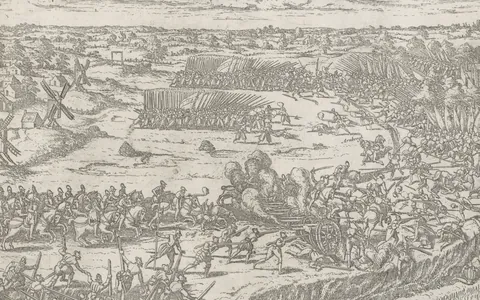
Print series made during the war showed soldiers and marauders preying on ordinary people, the reality of what Britannica calls its wolf strategy: unpaid armies living off the land.47
Major battles of the Thirty Years' War
Our articles on the battles of the war, from Bohemia and the Rhineland to the plains of Saxony and the French border, are listed below in date order.
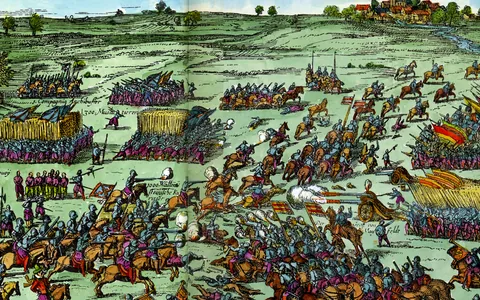
- 1619Battle of Sablat, 1619Habsburg (imperial) army vs Bohemian Estates
On 10 June 1619 Count Buquoy lured Mansfeld's Bohemian army into a trap at Záblatí. The defeat ended the siege of České Budějovice.
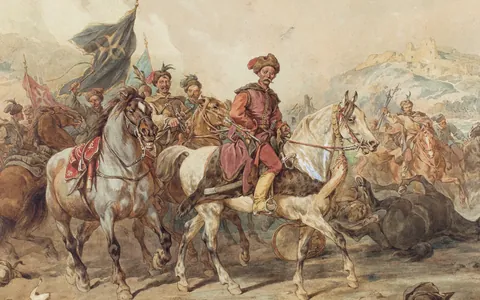
- 1619Battle of Humenné, 1619Lisowczycy (Polish light horse in Habsburg service) vs Transylvania
In November 1619 Polish Lisowczyk horsemen routed Rákóczi's Transylvanians near Humenné, and Bethlen lifted his siege of Vienna: the first relief of Vienna.
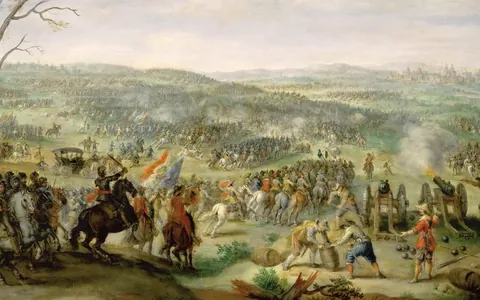
- 1620Battle of White Mountain, 1620Holy Roman Emperor and the Catholic League vs Bohemian estates
On 8 November 1620 the Emperor's and the Catholic League's armies broke the Bohemian estates outside Prague in two hours, ending the revolt that began the Thirty Years' War.
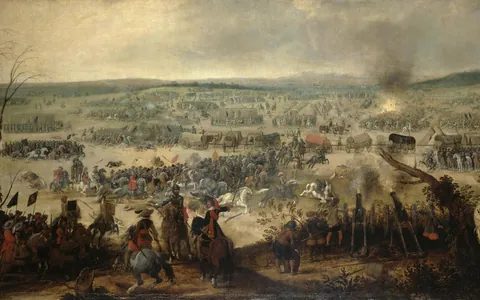
- 1622Battle of Wimpfen, 1622Catholic League and Spain vs Baden-Durlach (Protestant side)
On 6 May 1622 Tilly and Córdoba beat the margrave of Baden-Durlach near Wimpfen on the Neckar after a lucky shot blew up the Protestant powder wagons.
- 1622Battle of Fleurus, 1622Protestant mercenary army vs Spain (Army of Flanders)
On 29 August 1622 Mansfeld and Christian of Brunswick cut through a Spanish army at Fleurus to reach the Dutch; Christian lost his arm but saved Bergen op Zoom.
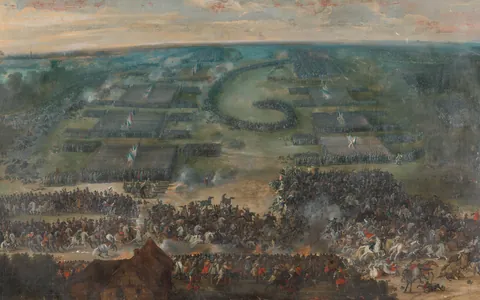
- 1626Battle of Lutter, 1626Catholic League (with imperial reinforcements) vs Denmark-Norway and the Lower Saxon Circle
On 27 August 1626 Tilly's Catholic League army routed Christian IV of Denmark at Lutter am Barenberge, ending the king's hopes in northern Germany.
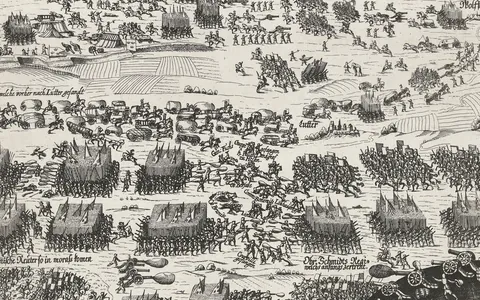
- 1631Battle of Breitenfeld, 1631Sweden and Electoral Saxony vs Holy Roman Emperor and Catholic League
On 17 September 1631 Gustavus Adolphus and the Saxons met Tilly north of Leipzig; the Saxons fled, but the Swedish brigades turned and destroyed the imperial army.
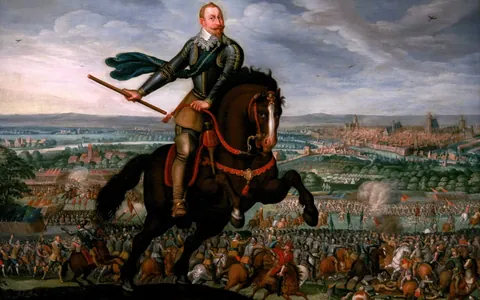
- 1632Battle of Lützen, 1632Sweden and its Protestant German allies vs Holy Roman Empire (Imperial army)
On 16 November 1632 Gustavus Adolphus attacked Wallenstein in the fog at Lützen. His army won the field; the king died in a cavalry melee.
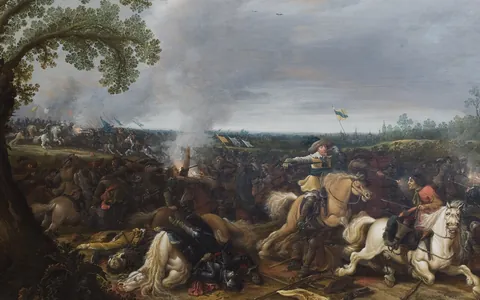
- 1636Battle of Wittstock, 1636Sweden and its allies vs Holy Roman Emperor and Saxony
On 4 October 1636 Banér's Swedes and Leslie's Scots and Germans beat the larger Imperial and Saxon army at Wittstock, sending their cavalry round through swamp and forest into its rear.
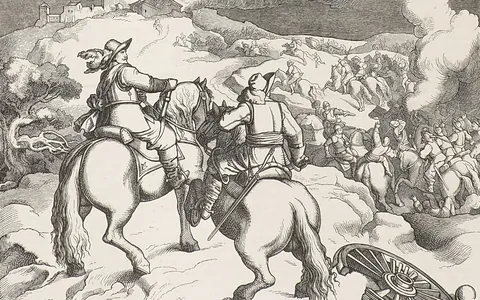
- 1638Battle of Rheinfelden, 1638Army of Bernhard of Saxe-Weimar (in French service) vs Holy Roman Empire and Bavaria
On 28 February 1638 Werth and Savelli drove Bernhard of Saxe-Weimar from the siege of Rheinfelden. They celebrated; three days later he came back, routed their army and took both of them prisoner.
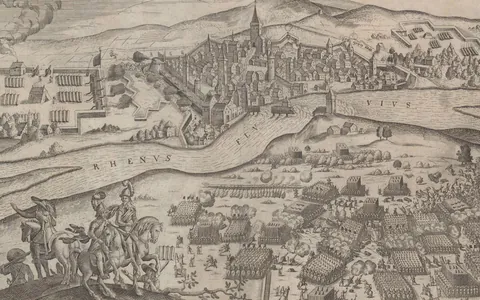
- 1643Battle of Rocroi, 1643Kingdom of France vs Habsburg Spain
A young prince, a doomed square of veteran infantry, and the day France announced itself as the great power of Europe.
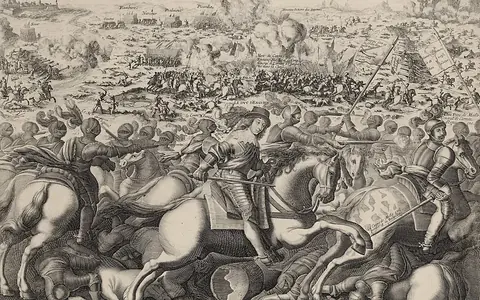
- 1644Battle of Freiburg, 1644Kingdom of France vs Electorate of Bavaria and the Empire
In August 1644 Enghien and Turenne stormed Mercy's Bavarian lines in the hills above Freiburg; they took the first line and broke against the second.
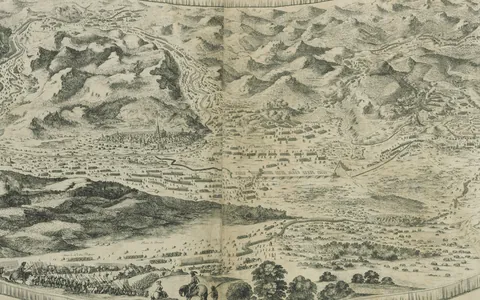
Related wars
- 1568Battle of Heiligerlee, 1568Dutch rebels vs Spanish crown
On 23 May 1568 Louis of Nassau lured a royal army into the bogs by the monastery of Heiligerlee. Its commander and Louis's brother Adolf both died in the first rebel victory of the Dutch Revolt.
Timeline of the Thirty Years' War
- 1618The Defenestration of Prague on 23 May opens the Bohemian revolt.48
- 1619
- 1620Catholic victory at White Mountain on 8 November.50
- 1625Christian IV of Denmark enters the war.51
- 1626
- 1629Edict of Restitution in March; Peace of Lübeck on 22 May.53
- 1630Gustavus Adolphus lands in Pomerania; Wallenstein is dismissed.54
- 1631Sack of Magdeburg on 20 May; Swedish victory at Breitenfeld on 17 September.55
- 1632
- 1634Wallenstein is murdered (25 February); imperial victory at Nördlingen (6 September).57
- 1635Peace of Prague on 30 May; France goes to war with Spain.58
- 1636
- 1643
- 1648Spanish and Dutch peace (30 January); Peace of Westphalia (24 October).61
- 1659France and Spain finally make peace.62
Where to read next
Several battles of this war appear in our ranking of the greatest battles of the early modern era, and our hubs on the military history of Germany and of France place it in the longer story. Our hub on the English Civil War covers a war fought in the same decades. Read our biography of Turenne, see where Gustavus Adolphus stands among the greatest military commanders in history and test yourself with the early modern battles quiz.
Notes
A number in the text points to a note; each note names the works that paragraph draws on, listed in full under Sources.
- Encyclopaedia Britannica, “Thirty Years’ War”; World History Encyclopedia, “Thirty Years’ War”; EBSCO Research Starters, “Thirty Years’ War”. ↩
- Peter H. Wilson, “The 30 Years’ War (1618-48) and the Second Defenestration of Prague”; Encyclopaedia Britannica, “Thirty Years’ War”; EBSCO Research Starters, “Thirty Years’ War”. ↩
- Encyclopaedia Britannica, “History of Europe”; EBSCO Research Starters, “Thirty Years’ War”; World History Encyclopedia, “Thirty Years’ War”. ↩
- Encyclopaedia Britannica, “History of Europe”; Peter H. Wilson, “The 30 Years’ War (1618-48) and the Second Defenestration of Prague”. ↩
- Encyclopaedia Britannica, “History of Europe”; World History Encyclopedia, “Peace of Westphalia”; Peter H. Wilson, “The 30 Years’ War (1618-48) and the Second Defenestration of Prague”. ↩
- Peter H. Wilson, “The 30 Years’ War (1618-48) and the Second Defenestration of Prague”; Radio Prague International, “The Battle of White Mountain”; Prague Monitor, “The Battle of White Mountain and its consequences”. ↩
- Staatliche Museen zu Berlin, “Impressions of the Thirty Years’ War”; Prague Monitor, “The Battle of White Mountain and its consequences”; World History Encyclopedia, “Thirty Years’ War”; Peter H. Wilson, “The 30 Years’ War (1618-48) and the Second Defenestration of Prague”. ↩
- Encyclopaedia Britannica, “Thirty Years’ War”; Peter H. Wilson, “The 30 Years’ War (1618-48) and the Second Defenestration of Prague”; EBSCO Research Starters, “Thirty Years’ War”. ↩
- Encyclopaedia Britannica, “Thirty Years’ War”; World History Encyclopedia, “Thirty Years’ War”. ↩
- Encyclopaedia Britannica, “Germany”; World History Encyclopedia, “Thirty Years’ War”; Peter H. Wilson, “The 30 Years’ War (1618-48) and the Second Defenestration of Prague”; EBSCO Research Starters, “Thirty Years’ War”. ↩
- Encyclopaedia Britannica, “Thirty Years’ War”; Encyclopaedia Britannica, “Gustav II Adolf”; World History Encyclopedia, “Gustavus Adolphus”; Peter H. Wilson, “The 30 Years’ War (1618-48) and the Second Defenestration of Prague”. ↩
- Encyclopaedia Britannica, “Thirty Years’ War”; World History Encyclopedia, “Thirty Years’ War”. ↩
- Prague Monitor, “The Battle of White Mountain and its consequences”; HistoryWorld, “History of the Thirty Years’ War”; Národní památkový ústav, “Třicetiletá válka v jižních Čechách”; World History Encyclopedia, “Thirty Years’ War”. ↩
- Encyclopaedia Britannica, “Germany”; The World of the Habsburgs, “The Battle of White Mountain, 1620”; Radio Prague International, “The Battle of White Mountain”; HistoryWorld, “History of the Thirty Years’ War”. ↩
- Prague Monitor, “The Battle of White Mountain and its consequences”; The World of the Habsburgs, “The Battle of White Mountain, 1620”; Peter H. Wilson, “The 30 Years’ War (1618-48) and the Second Defenestration of Prague”; Radio Prague International, “The Battle of White Mountain”. ↩
- Encyclopaedia Britannica, “Germany”; World History Encyclopedia, “Thirty Years’ War”; EBSCO Research Starters, “Thirty Years’ War”; Deutsche Biographie, “Georg Friedrich, Markgraf von Baden-Durlach”. ↩
- Encyclopaedia Britannica, “Germany”; Peter H. Wilson, “The 30 Years’ War (1618-48) and the Second Defenestration of Prague”; World History Encyclopedia, “Thirty Years’ War”. ↩
- Encyclopaedia Britannica, “Germany”; HistoryWorld, “History of the Thirty Years’ War”; Heeresgeschichtliches Museum Vienna, “The Thirty Years’ War”. ↩
- Encyclopaedia Britannica, “Johann Tserclaes, count von Tilly”; EBSCO Research Starters, “Thirty Years’ War”; HistoryWorld, “History of the Thirty Years’ War”. ↩
- Encyclopaedia Britannica, “Germany”; EBSCO Research Starters, “Thirty Years’ War”; HistoryWorld, “History of the Thirty Years’ War”. ↩
- Encyclopaedia Britannica, “Gustav II Adolf”; World History Encyclopedia, “Gustavus Adolphus”; Peter H. Wilson, “The 30 Years’ War (1618-48) and the Second Defenestration of Prague”; Encyclopaedia Britannica, “Germany”. ↩
- German Historical Institute, “The Imperial Troops under Tilly Storm Magdeburg (1631)”; World History Encyclopedia, “Gustavus Adolphus”; Encyclopaedia Britannica, “Johann Tserclaes, count von Tilly”. ↩
- EBSCO Research Starters, “Thirty Years’ War”; World History Encyclopedia, “Gustavus Adolphus”; Encyclopaedia Britannica, “Johann Tserclaes, count von Tilly”; The Past, “The Battle of Lützen”. ↩
- EBSCO Research Starters, “Thirty Years’ War”; Encyclopaedia Britannica, “Gustav II Adolf”; World History Encyclopedia, “Thirty Years’ War”; The Past, “The Battle of Lützen”. ↩
- EBSCO Research Starters, “Thirty Years’ War”; World History Encyclopedia, “Thirty Years’ War”; Heeresgeschichtliches Museum Vienna, “The Thirty Years’ War”. ↩
- EBSCO Research Starters, “Thirty Years’ War”; World History Encyclopedia, “Thirty Years’ War”; Encyclopaedia Britannica, “Germany”; HistoryWorld, “History of the Thirty Years’ War”. ↩
- EBSCO Research Starters, “Thirty Years’ War”; Peter H. Wilson, “The 30 Years’ War (1618-48) and the Second Defenestration of Prague”; HistoryWorld, “History of the Thirty Years’ War”; World History Encyclopedia, “Thirty Years’ War”. ↩
- Encyclopaedia Britannica, “Battle of Wittstock”; World History Encyclopedia, “Thirty Years’ War”; Encyclopaedia Britannica, “Germany”; Encyclopaedia Britannica, “Henri de La Tour d’Auvergne, vicomte de Turenne”. ↩
- Encyclopaedia Britannica, “Battle of Rocroi”; Encyclopaedia Britannica, “Louis II de Bourbon, 4e prince de Condé”; Helion & Company, “The Battle of Rocroi 1643”. ↩
- World History Encyclopedia, “Thirty Years’ War”; Peter H. Wilson, “The 30 Years’ War (1618-48) and the Second Defenestration of Prague”; EBSCO Research Starters, “Thirty Years’ War”. ↩
- Encyclopaedia Britannica, “Thirty Years’ War”; EBSCO Research Starters, “Thirty Years’ War”. ↩
- World History Encyclopedia, “Thirty Years’ War”; Encyclopaedia Britannica, “Germany”. ↩
- Encyclopaedia Britannica, “Johann Tserclaes, count von Tilly”; World History Encyclopedia, “Thirty Years’ War”; The Past, “The Battle of Lützen”. ↩
- Encyclopaedia Britannica, “Germany”; HistoryWorld, “History of the Thirty Years’ War”; Heeresgeschichtliches Museum Vienna, “The Thirty Years’ War”. ↩
- Encyclopaedia Britannica, “Gustav II Adolf”; EBSCO Research Starters, “Thirty Years’ War”; World History Encyclopedia, “Gustavus Adolphus”. ↩
- EBSCO Research Starters, “Thirty Years’ War”; World History Encyclopedia, “Thirty Years’ War”. ↩
- Encyclopaedia Britannica, “Battle of Rocroi”; Helion & Company, “The Battle of Rocroi 1643”. ↩
- Encyclopaedia Britannica, “Peace of Westphalia”; World History Encyclopedia, “Peace of Westphalia”; EBSCO Research Starters, “Peace of Westphalia”. ↩
- Encyclopaedia Britannica, “Peace of Westphalia”; Encyclopaedia Britannica, “Germany”; EBSCO Research Starters, “Peace of Westphalia”; Peter H. Wilson, “The 30 Years’ War (1618-48) and the Second Defenestration of Prague”. ↩
- Encyclopaedia Britannica, “Peace of Westphalia”; EBSCO Research Starters, “Peace of Westphalia”; World History Encyclopedia, “Peace of Westphalia”; Peter H. Wilson, “The 30 Years’ War (1618-48) and the Second Defenestration of Prague”; EBSCO Research Starters, “Thirty Years’ War”. ↩
- Encyclopaedia Britannica, “Thirty Years’ War”; EBSCO Research Starters, “Thirty Years’ War”; Peter H. Wilson, “The 30 Years’ War (1618-48) and the Second Defenestration of Prague”; World History Encyclopedia, “Thirty Years’ War”. ↩
- Encyclopaedia Britannica, “Peace of Westphalia”; World History Encyclopedia, “Peace of Westphalia”; Peter H. Wilson, “The 30 Years’ War (1618-48) and the Second Defenestration of Prague”; Andreas Osiander, International Organization. ↩
- Encyclopaedia Britannica, “Germany”; Peter H. Wilson, “The 30 Years’ War (1618-48) and the Second Defenestration of Prague”; World History Encyclopedia, “Thirty Years’ War”; EBSCO Research Starters, “Thirty Years’ War”. ↩
- Encyclopaedia Britannica, “Germany”; Encyclopedia.com (Gale, Europe, 1450 to 1789; World History Encyclopedia, “Thirty Years’ War”. ↩
- Encyclopaedia Britannica, “Germany”; Peter H. Wilson, “The 30 Years’ War (1618-48) and the Second Defenestration of Prague”. ↩
- Radio Prague International, “The Battle of White Mountain”; Prague Monitor, “The Battle of White Mountain and its consequences”. ↩
- Staatliche Museen zu Berlin, “Impressions of the Thirty Years’ War”; Encyclopaedia Britannica, “Thirty Years’ War”; World History Encyclopedia, “Thirty Years’ War”. ↩
- Staatliche Museen zu Berlin, “Impressions of the Thirty Years’ War”; Prague Monitor, “The Battle of White Mountain and its consequences”. ↩
- Národní památkový ústav, “Třicetiletá válka v jižních Čechách”; HistoryWorld, “History of the Thirty Years’ War”; Prague Monitor, “The Battle of White Mountain and its consequences”. ↩
- Radio Prague International, “The Battle of White Mountain”; HistoryWorld, “History of the Thirty Years’ War”. ↩
- Encyclopaedia Britannica, “Thirty Years’ War”; EBSCO Research Starters, “Thirty Years’ War”. ↩
- EBSCO Research Starters, “Thirty Years’ War”; Encyclopaedia Britannica, “Johann Tserclaes, count von Tilly”. ↩
- Encyclopaedia Britannica, “Germany”; EBSCO Research Starters, “Thirty Years’ War”; HistoryWorld, “History of the Thirty Years’ War”. ↩
- Encyclopaedia Britannica, “Gustav II Adolf”; World History Encyclopedia, “Gustavus Adolphus”; HistoryWorld, “History of the Thirty Years’ War”. ↩
- German Historical Institute, “The Imperial Troops under Tilly Storm Magdeburg (1631)”; EBSCO Research Starters, “Thirty Years’ War”; Encyclopaedia Britannica, “Johann Tserclaes, count von Tilly”. ↩
- EBSCO Research Starters, “Thirty Years’ War”; The Past, “The Battle of Lützen”. ↩
- EBSCO Research Starters, “Thirty Years’ War”; World History Encyclopedia, “Thirty Years’ War”. ↩
- EBSCO Research Starters, “Thirty Years’ War”; HistoryWorld, “History of the Thirty Years’ War”; Peter H. Wilson, “The 30 Years’ War (1618-48) and the Second Defenestration of Prague”. ↩
- Encyclopaedia Britannica, “Battle of Wittstock”; World History Encyclopedia, “Thirty Years’ War”. ↩
- Encyclopaedia Britannica, “Battle of Rocroi”; Helion & Company, “The Battle of Rocroi 1643”. ↩
- World History Encyclopedia, “Peace of Westphalia”; Encyclopaedia Britannica, “Peace of Westphalia”; EBSCO Research Starters, “Peace of Westphalia”. ↩
- Encyclopaedia Britannica, “Germany”; Peter H. Wilson, “The 30 Years’ War (1618-48) and the Second Defenestration of Prague”. ↩
Sources
- Encyclopaedia Britannica, “Thirty Years’ War”.
- World History Encyclopedia, “Thirty Years’ War”.
- EBSCO Research Starters, “Thirty Years’ War”.
- Peter H. Wilson, Gresham College, “The 30 Years’ War (1618-48) and the Second Defenestration of Prague” (lecture transcript, 2018).
- Encyclopaedia Britannica, “History of Europe: The Thirty Years’ War”.
- World History Encyclopedia, “Peace of Westphalia”.
- Radio Prague International, “The Battle of White Mountain”.
- Prague Monitor, “The Battle of White Mountain and its consequences”.
- Staatliche Museen zu Berlin, “Impressions of the Thirty Years’ War”.
- Encyclopaedia Britannica, “Germany: The Thirty Years’ War and the Peace of Westphalia”.
- Encyclopaedia Britannica, “Gustav II Adolf”.
- World History Encyclopedia, “Gustavus Adolphus”.
- HistoryWorld, “History of the Thirty Years’ War”.
- Národní památkový ústav (Czech National Heritage Institute), “Třicetiletá válka v jižních Čechách” (exhibition panels, 2019, PDF).
- The World of the Habsburgs, “The Battle of White Mountain, 1620”.
- Deutsche Biographie (NDB), “Georg Friedrich, Markgraf von Baden-Durlach”.
- Heeresgeschichtliches Museum Vienna, via meer.com, “The Thirty Years’ War”.
- Encyclopaedia Britannica, “Johann Tserclaes, count von Tilly”.
- German Historical Institute, German History in Documents and Images, “The Imperial Troops under Tilly Storm Magdeburg (1631)”.
- The Past (Military History Matters), “The Battle of Lützen: 16 November 1632”.
- Encyclopaedia Britannica, “Battle of Wittstock”.
- Encyclopaedia Britannica, “Henri de La Tour d’Auvergne, vicomte de Turenne”.
- Encyclopaedia Britannica, “Battle of Rocroi”.
- Encyclopaedia Britannica, “Louis II de Bourbon, 4e prince de Condé”.
- Helion & Company, “The Battle of Rocroi 1643: Clash of Seventeenth-Century Superpowers” (book description).
- Encyclopaedia Britannica, “Peace of Westphalia”.
- EBSCO Research Starters, “Peace of Westphalia”.
- Andreas Osiander, International Organization 55, no. 2 (2001), Cambridge University Press, “Sovereignty, International Relations, and the Westphalian Myth”.
- Encyclopedia.com (Gale, Europe, 1450 to 1789), “Württemberg, Duchy of”.





