

What is the military history of Germany?
It is the story of the wars of the German lands: Germanic tribes against Rome, the German states of the Holy Roman Empire, Prussia, the German Empire of 1871, the Weimar Republic, Nazi Germany and the two German states after 1945, from the Teutoburg Forest in AD 9 to defeat in World War II and reunification.1
Germany as one state is young. For most of its history the German lands were divided among dozens, then hundreds, of principalities, church lands and free cities inside the Holy Roman Empire, and their armies often fought each other or served foreign kings. The first German nation-state was proclaimed only in 1871. This page follows the story era by era, names the state that fought in each period, links the battles we cover and gives defeats and crimes the same plain treatment as victories. The best known include the Battle of the Teutoburg Forest (AD 9), the Battle of Leipzig (1813), Verdun (1916) and Stalingrad (1942 to 1943).2
What counts as Germany in military history
Britannica dates Germany as a political entity to the division of the Carolingian empire in the 9th century, when the eastern part, the land east of the Rhine, went to Louis the German. From the 10th century its kings also wore the imperial crown of the Holy Roman Empire, a realm that included parts of today's Italy, the Netherlands and the Czech Republic as well as the German lands. The Holy Roman Empire was never a German nation-state, and this site does not count it as one: battles fought by the emperor's own armies belong to the empire's history, while those of German princes such as the electors of Saxony, Bavaria and Brandenburg are counted here.3
The Peace of Westphalia of 1648 left the empire split into hundreds of autonomous territories, most of them small, and the empire itself ended in 1806. Prussia then led the unification of the German states, and the German Empire proclaimed in January 1871 was the first German nation-state. After defeat in 1918 it became a republic; from 1933 it was a Nazi dictatorship; after 1945 it was occupied, divided into two states in 1949 and reunited on 3 October 1990.4

Germanic tribes and Rome
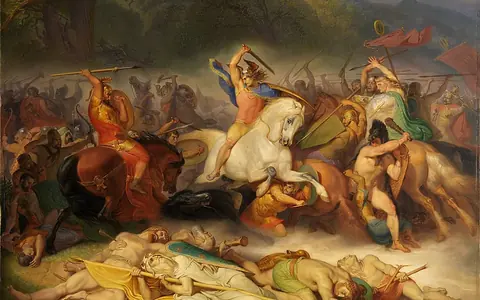
The peoples Rome called Germani were separate tribes, not a nation, and the Romans never conquered the lands beyond the Rhine. In the autumn of AD 9 the governor Publius Quinctilius Varus led the XVII, XVIII and XIX legions through the Teutoburg Forest, where warriors under Arminius, a chieftain of the Cherusci who had trained in the Roman army, ambushed the column over several days. The legions were destroyed and Varus and many of his officers took their own lives.5
The defeat marked the beginning of the end of Roman expansion in Germania; from then on Roman policy beyond the Rhine was to divide, not conquer. The exact site is still debated, though finds at Kalkriese near Osnabrück point there. Much later, the German national movement of the 19th century turned Arminius, renamed Hermann, into a national hero and the battle into a founding myth, and the Hermann Monument rose in the Teutoburg Forest in 1875.6
The medieval empire
East Francia was a loose realm in which the kings depended on the consent of powerful tribal dukes. Repeated raids by Hungarian horsemen helped Otto I of the Saxon dynasty unite them, and in August 955 his army defeated the Hungarians at the Lechfeld near Augsburg; they never invaded again. The pope crowned Otto emperor in 962, the moment usually taken as the start of the Holy Roman Empire.7
The Thirty Years' War, 1618 to 1648
The Thirty Years' War began as a revolt of the Protestant estates of Bohemia and spread into a European war fought mainly on German soil. Catholic armies of the emperor and the Catholic League routed Frederick V of the Palatinate, the king the Bohemians had chosen, at the White Mountain in November 1620. Denmark intervened and was beaten, and in 1630 Sweden entered the war, subsidized by France and the Dutch and allied with Saxony.8
Gustavus Adolphus of Sweden defeated Tilly at Breitenfeld in 1631 and won again at Lützen in November 1632, where he himself was killed. A Swedish defeat at Nördlingen in 1634 followed, then a Swedish victory at Wittstock in 1636. The war was marked by unprecedented brutality: when the Catholic army stormed Magdeburg in 1631, about two-thirds of the inhabitants were killed.9

How many people died is disputed. Britannica gives an overall fall in population of 15 to 20 percent, from about 20 million to 16 or 17 million, while an economic history paper notes that the most conservative estimate is 20 percent and most estimates run from 30 to 40 percent. In the worst-hit territories, such as Württemberg, more than half the people died or disappeared. The Peace of Westphalia of 1648 then sealed the fragmentation of the empire.10
How Prussia became a great power: Frederick II
The 18th century saw the rise of Prussia, ruled by the Hohenzollern electors of Brandenburg, as a great power. In December 1740 Frederick II invaded the wealthy Habsburg province of Silesia, starting the War of the Austrian Succession. His army beat the Austrians at Mollwitz in April 1741, and in December 1745 the Prussians won again at Kesselsdorf, after which Austria made peace at Dresden.11
The Seven Years' War, from 1756 to 1763, was in Europe a continuation of the struggle for Silesia, with Austria, France and Russia against Prussia. Frederick won a costly victory at Prague in May 1757 but was checked at Kolín in June; he then beat a French-led army almost twice his size at Rossbach and the Austrians at Leuthen. Defeats followed at Hochkirch in 1758 and Kunersdorf in 1759, where an Austro-Russian army destroyed nearly half his force. The Treaty of Hubertusburg in 1763 restored the prewar status, and Prussia kept Silesia.12
Napoleon and the wars of 1806 to 1815
In July 1806 sixteen German states left the empire to form the Confederation of the Rhine under Napoleon's protection, bound to supply troops to France, and on 6 August 1806 Francis II laid down the imperial crown, ending the Holy Roman Empire. Prussia went to war that autumn, and on 14 October 1806 its armies were routed in the twin battles of Jena and Auerstedt, which knocked Prussia out of the war.13
Defeat drove reform. Civil servants such as Stein and Hardenberg and the soldiers Gerhard von Scharnhorst and August von Gneisenau rebuilt the Prussian state and army, and French domination helped give birth to German nationalism. In 1813 Prussia joined Russia against Napoleon in what Germans call the Wars of Liberation. The decisive battle at Leipzig in October 1813 was a coalition victory of Austrian, Prussian, Russian and Swedish armies, and German soldiers fought on both sides, since Saxony and other Confederation states were still with France.14

In June 1815 Napoleon beat the Prussian army under Gebhard Leberecht von Blücher at Ligny, but two days later the arrival of several Prussian corps helped Wellington's Anglo-allied army win at Waterloo, where some 45,000 Prussians took part.15
How Germany was unified, 1864 to 1871
King William I appointed Otto von Bismarck minister-president of Prussia in 1862, and Bismarck led Prussia through three short wars that united the German states under Prussian leadership. The first, against Denmark in 1864 over Schleswig and Holstein, included the naval action off Jasmund. In 1866 Prussia fought Austria, and at Königgrätz on 3 July the chief of the general staff, Helmuth von Moltke, brought three armies together by railroad and won the decisive battle. Prussia now dominated the German states.16
In the Franco-Prussian War of 1870 to 1871 the German armies forced a French surrender at Sedan, shut a French army inside Metz until it surrendered on 27 October 1870 and laid siege to Paris. On 18 January 1871 William I was proclaimed German Emperor in the Hall of Mirrors at Versailles, and the Treaty of Frankfurt of 10 May 1871 took Alsace and part of Lorraine from France.17
How Germany fought World War I
In 1914 the German Empire fought beside Austria-Hungary against France, Russia and Britain. The Schlieffen Plan sent the main German armies through neutral Luxembourg and Belgium to defeat France quickly, but in September 1914 the French and British stopped them at the Marne and they fell back to the Aisne, which condemned Germany to a war on two fronts. In the east, the Eighth Army under Paul von Hindenburg and Erich Ludendorff encircled much of the Russian Second Army at Tannenberg in August 1914 and inflicted a catastrophic defeat on it.18
In 1916 Erich von Falkenhayn attacked Verdun to break the French army. He failed: the Imperial War Museums count 377,000 French and 330,000 German losses, Britannica about 400,000 and 350,000, and the Germans suffered even more on the Somme the same year.19
The German Spring Offensive of 1918 won ground, but the Allied Hundred Days Offensive pushed the German army back and wore it down. By 29 September Ludendorff had decided that Germany must seek an end to the fighting; the navy mutinied at Kiel on 28 October, Kaiser William II abdicated on 9 November, and on 11 November 1918 Germany signed the armistice.20
The Weimar Republic
The republic proclaimed in November 1918, the first parliamentary democracy in Germany, signed the Treaty of Versailles on 28 June 1919. Germany lost Alsace-Lorraine to France and Poznań, West Prussia and Upper Silesia to Poland; sources measure the loss differently, from about 10 percent of territory and population (Britannica) to 13 percent of territory (the US Holocaust Memorial Museum). Article 231 made Germany accept responsibility for the war, and its army was limited to 100,000 men without conscription.21
Many Germans refused to accept that their army had lost. Right-wing groups claimed that the government had stabbed an undefeated army in the back, a belief historians call entirely inaccurate, and promises to rearm, reclaim territory and remilitarize the Rhineland helped the Nazi Party win mainstream voters.22
Nazi Germany and World War II
In 1933 the Nazi Party under Adolf Hitler set up a dictatorship with a racist ideology. In 1935 Hitler announced a rearmament program that broke the Versailles terms, in March 1936 he sent troops into the Rhineland, and in 1938 and 1939 Germany took over Austria and the Czech lands without war. A non-aggression pact with the Soviet Union in August 1939 secretly provided for the division of Poland.23
The war was begun on a lie. On 31 August 1939 SS men dressed as Poles staged an attack on the German radio station at Gleiwitz, and Nazi propaganda falsely claimed that Poland was persecuting ethnic Germans (the Gleiwitz incident). Germany invaded Poland on 1 September, starting World War II in Europe, and struck at the Polish post of Westerplatte; on 29 September divided Poland with the Soviet Union, annexing the west and ruling the rest as the General Government under Hans Frank.24
In 1940 Germany conquered Denmark and Norway, the Low Countries and France, but lost the air war in the Battle of Britain, fought from July to October, and gave up its plan to invade. On 22 June 1941 it invaded the Soviet Union in breach of the pact. A Soviet counteroffensive from 6 December drove the Germans from Moscow; at Stalingrad the encircled Sixth Army surrendered in early 1943, and the last great German offensive in the east failed at Kursk in July 1943. In North Africa, Erwin Rommel was defeated at El Alamein in late 1942.25
The war in the east was also a war of annihilation. Nazi Germany and its allies and collaborators murdered six million Jews in the Holocaust. The Einsatzgruppen killing units, about 3,000 men, shot Jews and others in the occupied Soviet Union, aided by the Wehrmacht, the Order Police and local collaborators, and at least 1.5 million Holocaust victims died in mass shootings or gas vans there. About 3.3 million Soviet prisoners of war, some 57 percent of those captured, were dead by the end of the war. The claim of a "clean Wehrmacht" that took no part in these crimes is a postwar myth; the German military was complicit in the Holocaust and in the murder of civilians and prisoners.26
After the landings in Normandy on 6 June 1944 and the failure of the last German offensive in the west, the Battle of the Bulge in December, Allied armies entered Germany from both sides. Soviet troops encircled Berlin, Hitler killed himself on 30 April 1945, and the German armed forces surrendered unconditionally at Reims on 7 May, with the surrender taking effect in the east on 9 May.27

Division, two armies and reunification
The victors divided Germany into four zones of occupation, and twelve million Germans were expelled from the lost eastern territories. The Allied Control Council formally abolished Prussia on 25 February 1947. The Federal Republic was founded from the three western zones in 1949 and the German Democratic Republic from the Soviet zone on 7 October 1949.28

West Germany joined NATO on 6 May 1955 and regained its sovereignty within the alliance, and the Bundeswehr was founded when its first 101 volunteers were appointed on 12 November 1955, the 200th birthday of the Prussian reformer Scharnhorst. East Germany joined the Warsaw Pact and founded its National People's Army in 1956. Reunification on 3 October 1990 disbanded that army; some of its soldiers were taken into the Bundeswehr, the first 250 recruits swearing its oath on 19 October 1990. Full sovereignty came only with the Two Plus Four Agreement.29
German commanders
Arminius, the Cherusci leader at the Teutoburg Forest, became a 19th-century national hero. Frederick II of Prussia won Silesia and kept it through the Seven Years' War, at the price of heavy defeats as well as victories. Scharnhorst and Gneisenau rebuilt the Prussian army after 1806, and Blücher led it at Leipzig, Ligny and Waterloo. Helmuth von Moltke the Elder commanded the Prussian armies at Königgrätz and was a principal commander of the wars of unification; Hindenburg and Ludendorff won at Tannenberg, and in September 1918 Ludendorff concluded that Germany had to seek an end to the fighting. In World War II Friedrich Paulus surrendered at Stalingrad, and Erwin Rommel, the commander in North Africa, was forced to take poison in October 1944 when suspected of involvement in the plot to kill Hitler.30
Germany's battles, era by era: all 120
Every battle we have written up in which the German states, Prussia, the German Empire, Nazi Germany or the Germanic tribes before them took part, grouped by era and in date order:
Antiquity to AD 476 · 1
- 9Battle of the Teutoburg Forest, AD 9Germanic tribes vs Roman Empire
How Arminius lured three Roman legions into the German forests and destroyed them, halting Rome at the Rhine for good.
The early modern era 1492 to 1789 · 32
- 1620Battle of White Mountain, 1620Holy Roman Emperor and the Catholic League vs Bohemian estates
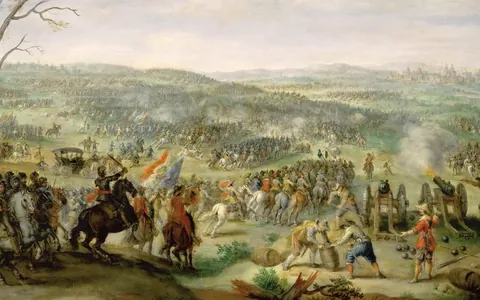
On 8 November 1620 the Emperor's and the Catholic League's armies broke the Bohemian estates outside Prague in two hours, ending the revolt that began the Thirty Years' War.
- 1622Battle of Wimpfen, 1622Catholic League and Spain vs Baden-Durlach (Protestant side)
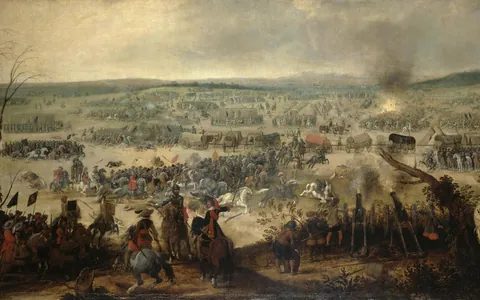
On 6 May 1622 Tilly and Córdoba beat the margrave of Baden-Durlach near Wimpfen on the Neckar after a lucky shot blew up the Protestant powder wagons.
- 1626Battle of Lutter, 1626Catholic League (with imperial reinforcements) vs Denmark-Norway and the Lower Saxon Circle
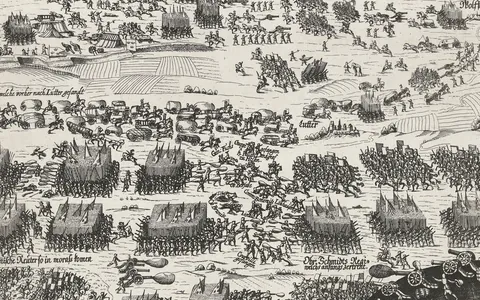
On 27 August 1626 Tilly's Catholic League army routed Christian IV of Denmark at Lutter am Barenberge, ending the king's hopes in northern Germany.
- 1631Battle of Breitenfeld, 1631Sweden and Electoral Saxony vs Holy Roman Emperor and Catholic League
On 17 September 1631 Gustavus Adolphus and the Saxons met Tilly north of Leipzig; the Saxons fled, but the Swedish brigades turned and destroyed the imperial army.
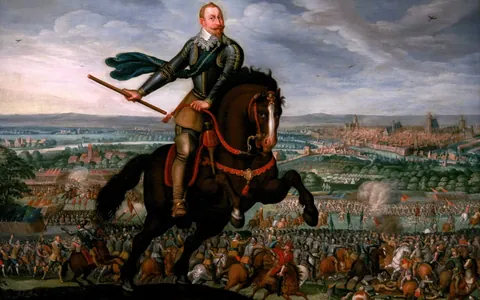
- 1632Battle of Lützen, 1632Sweden and its Protestant German allies vs Holy Roman Empire (Imperial army)
On 16 November 1632 Gustavus Adolphus attacked Wallenstein in the fog at Lützen. His army won the field; the king died in a cavalry melee.
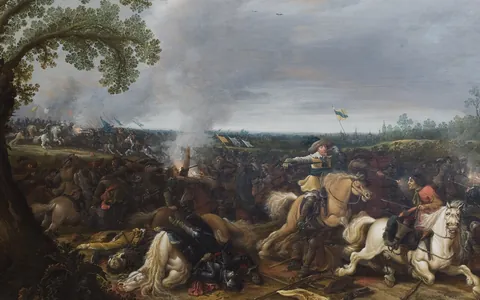
- 1636Battle of Wittstock, 1636Sweden and its allies vs Holy Roman Emperor and Saxony
On 4 October 1636 Banér's Swedes and Leslie's Scots and Germans beat the larger Imperial and Saxon army at Wittstock, sending their cavalry round through swamp and forest into its rear.
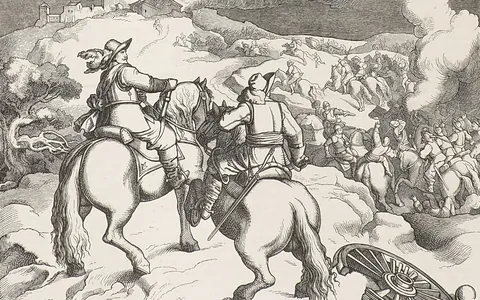
- 1638Battle of Rheinfelden, 1638Army of Bernhard of Saxe-Weimar (in French service) vs Holy Roman Empire and Bavaria
On 28 February 1638 Werth and Savelli drove Bernhard of Saxe-Weimar from the siege of Rheinfelden. They celebrated; three days later he came back, routed their army and took both of them prisoner.
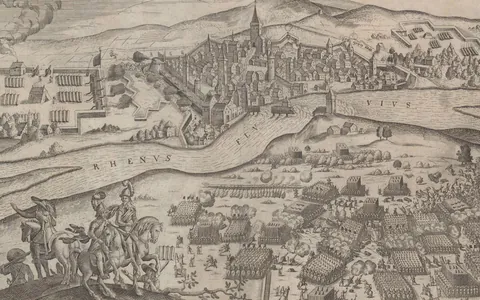
- 1644Battle of Freiburg, 1644Kingdom of France vs Electorate of Bavaria and the Empire
In August 1644 Enghien and Turenne stormed Mercy's Bavarian lines in the hills above Freiburg; they took the first line and broke against the second.
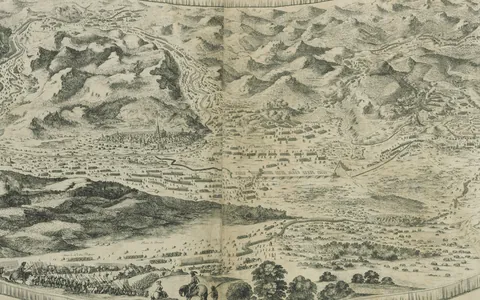
- 1656Battle of Filipów, 1656Grand Duchy of Lithuania vs Sweden and Brandenburg
On 22 October 1656 a Swedish and Brandenburg army caught Hetman Gosiewski's Lithuanian division at Filipów, two weeks after his victory at Prostki.
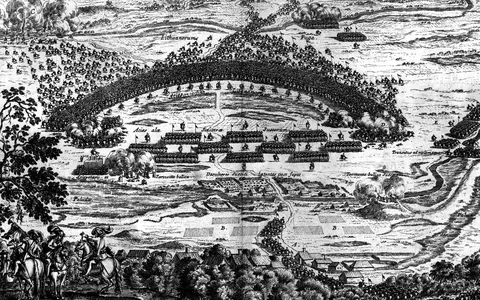
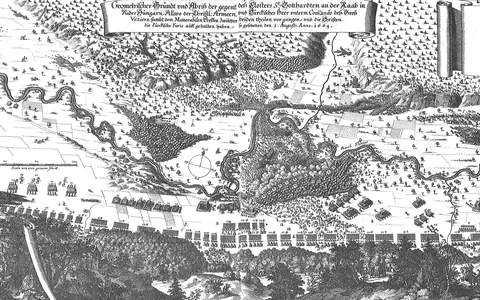
- 1664Battle of Saint Gotthard, 1664Habsburg Monarchy, Imperial Army of the Reich, League of the Rhine and France vs Ottoman Empire
On 1 August 1664 Montecuccoli's Imperial, German and French troops rallied from a rout and drove an Ottoman bridgehead back into the flooded Rába.
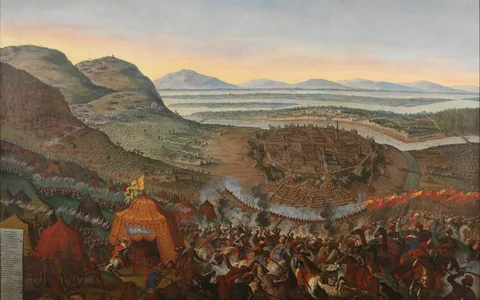
- 1683The Siege of Vienna, 1683Poland, Holy Roman Empire and German states vs Ottoman Empire
A starving city, then the winged hussars came down the mountain. The day the Ottoman advance into Europe turned.
- 1704Battle of the Schellenberg, 1704Grand Alliance (England, the Dutch Republic, the Empire) vs France and the Electorate of Bavaria
On 2 July 1704 Marlborough and Louis of Baden stormed the Schellenberg above Donauwörth; an evening breakthrough near the town gave them the Danube crossing.
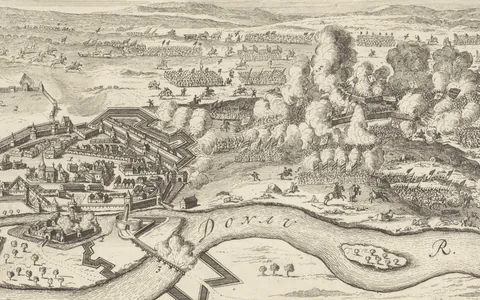
- 1704Battle of Blenheim, 1704Grand Alliance: England, the Dutch Republic, the Holy Roman Empire and German states vs France and the Electorate of Bavaria
On 13 August 1704 Marlborough and Prince Eugene destroyed a Franco-Bavarian army on the Danube, captured Marshal Tallard and saved Vienna.
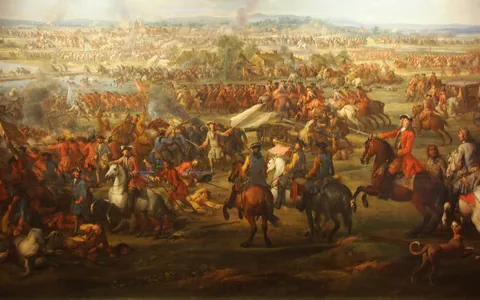
- 1741Battle of Mollwitz, 1741Kingdom of Prussia vs Habsburg Monarchy
On 10 April 1741 the Austrian cavalry routed the Prussian right at Mollwitz and Frederick II rode away. His infantry stayed, held and won him his first battle.
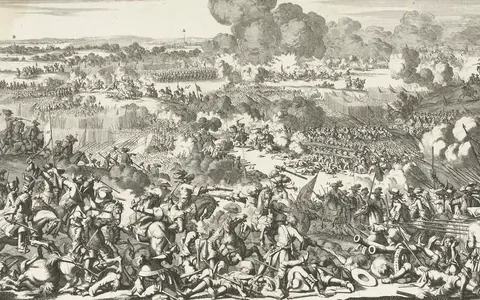
- 1743Battle of Dettingen, 1743Pragmatic Army (Britain, Hanover, Austria) vs Kingdom of France
On 27 June 1743 George II's Pragmatic Army, cut off on the river Main, beat off the French at Dettingen: the last battle led by a reigning British king.
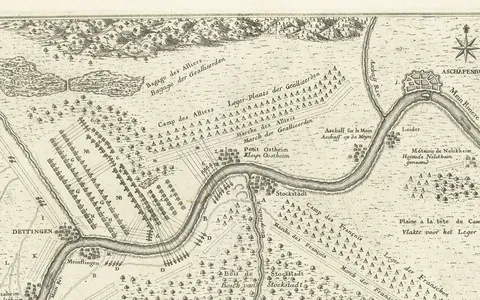
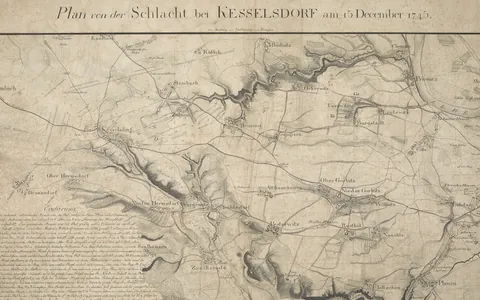
- 1745Battle of Kesselsdorf, 1745Kingdom of Prussia vs Electorate of Saxony and Austria
On 15 December 1745 the 69-year-old Prince Leopold of Anhalt-Dessau stormed the Saxon guns at Kesselsdorf near Dresden and ended the Second Silesian War.
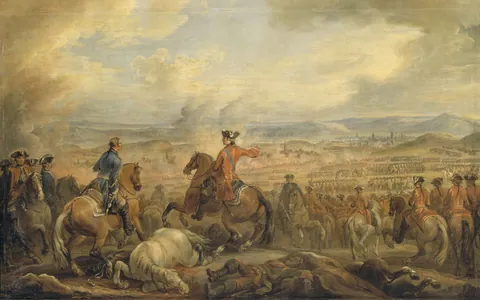
- 1746Battle of Rocoux, 1746France vs Pragmatic Army (Austria, Dutch Republic, Britain, Hanover, Hesse)
On 11 October 1746 Marshal Saxe stormed the villages outside Liège held by the Pragmatic Army; British dragoons covered the retreat as the allies crossed the Meuse at night.
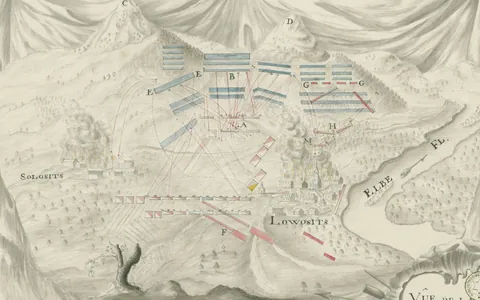
- 1756Battle of Lobositz, 1756Kingdom of Prussia vs Habsburg Monarchy
On 1 October 1756 Frederick the Great attacked Browne's Austrians at Lobositz in fog; his cavalry was wrecked, his infantry took the burning town, and Browne withdrew intact.
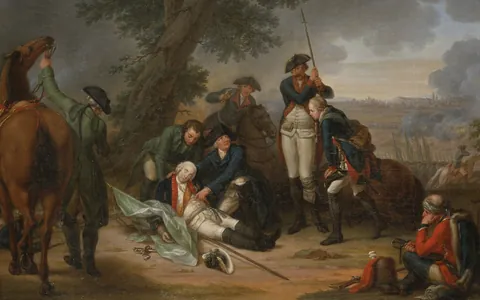
- 1757Battle of Prague, 1757Kingdom of Prussia vs Habsburg Monarchy
On 6 May 1757 Frederick the Great stormed the Austrian lines east of Prague. Schwerin fell with the colors in his hands, and 27,000 men were lost in a single day.
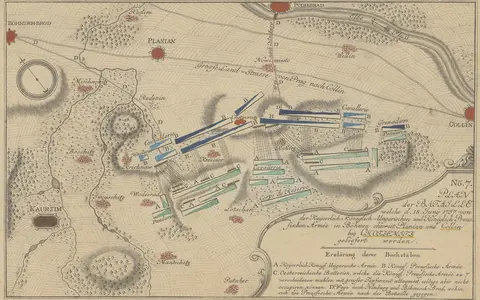
- 1757Battle of Kolín, 1757Habsburg Monarchy (Austria) and Saxon cavalry vs Kingdom of Prussia
On 18 June 1757 Daun's Austrians beat Frederick the Great at Kolín in Bohemia, ending his siege of Prague and his run of victories.
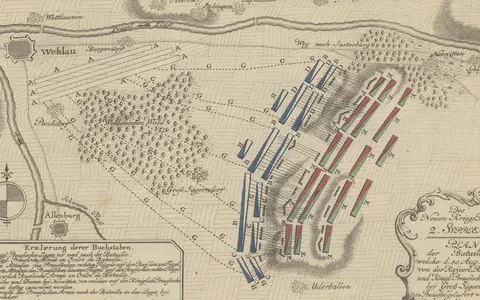
- 1757Battle of Gross-Jägersdorf, 1757Russian Empire vs Kingdom of Prussia
On 30 August 1757 Apraksin's Russians beat Lehwaldt's Prussians at Gross-Jägersdorf in East Prussia, then marched away without using their victory.
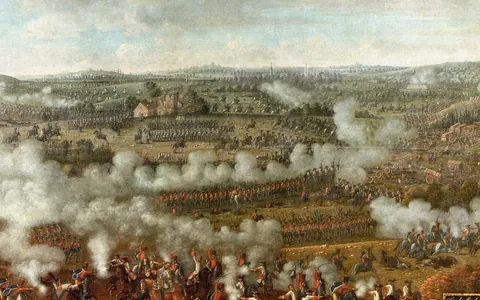
- 1757Battle of Rossbach, 1757Kingdom of Prussia vs France and the Holy Roman Empire
On 5 November 1757 Frederick the Great's 22,000 Prussians caught a French and Imperial army twice their size on the march and routed it in about an hour and a half.
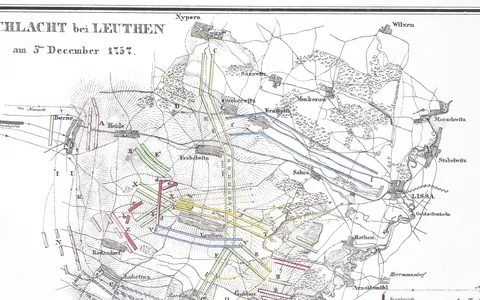
- 1757Battle of Leuthen, 1757Kingdom of Prussia vs Habsburg Monarchy
On 5 December 1757 Frederick the Great feinted, marched hidden behind low hills and broke an Austrian army twice his size near Leuthen in Silesia.
- 1758Battle of Domstadtl, 1758Habsburg Monarchy (Austria) vs Kingdom of Prussia
On 30 June 1758 Loudon's Austrians ambushed Frederick the Great's 4,000-wagon supply convoy at Domstadtl and forced him to lift the siege of Olomouc.
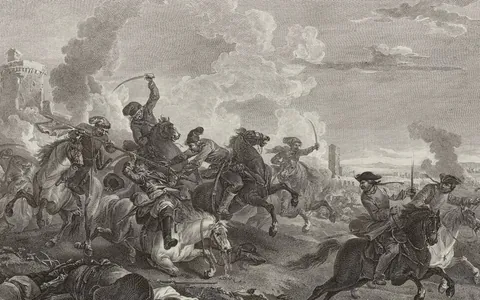
- 1758Battle of Hochkirch, 1758Habsburg Monarchy vs Kingdom of Prussia
On 14 October 1758 Daun's Austrians crept up on Frederick the Great's camp at Hochkirch in the dark and struck at 5 a.m. The night march, the churchyard fight, Keith's death and the numbers.
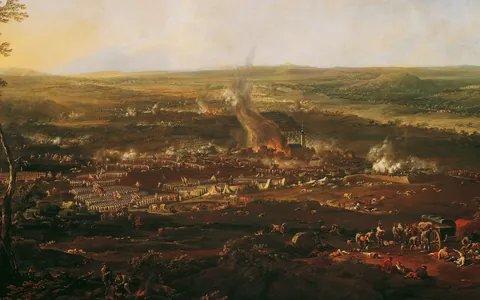
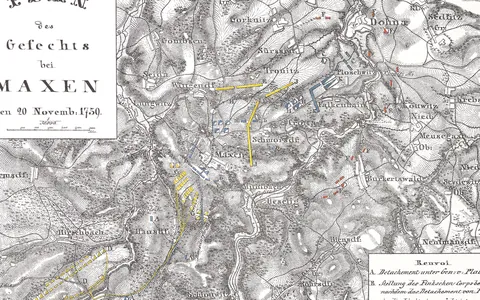
- 1759Battle of Maxen, 1759Habsburg Monarchy and the Reichsarmee vs Kingdom of Prussia
In November 1759 Frederick the Great sent General Finck's corps behind the Austrian army. At Maxen Daun surrounded it, and on 21 November the whole corps surrendered.
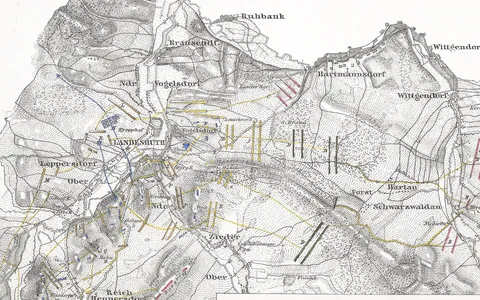
- 1760Battle of Landeshut, 1760Habsburg Monarchy (Austria) vs Kingdom of Prussia
On 23 June 1760 Loudon's Austrians stormed the Prussian hill forts at Landeshut, today Kamienna Góra, and captured General Fouqué with most of his corps.
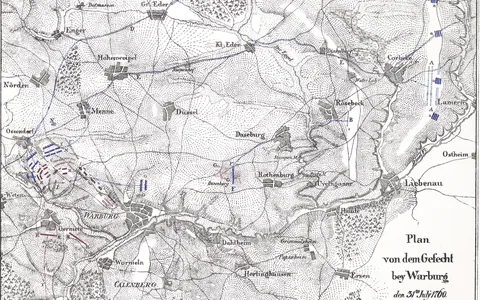
- 1760Battle of Warburg, 1760Allied army: Hanover, Hesse-Kassel, Brunswick and Britain vs Kingdom of France
On 31 July 1760 a flank march in the fog and Lord Granby's British cavalry drove the Chevalier de Muy's French corps from Warburg over the Diemel.
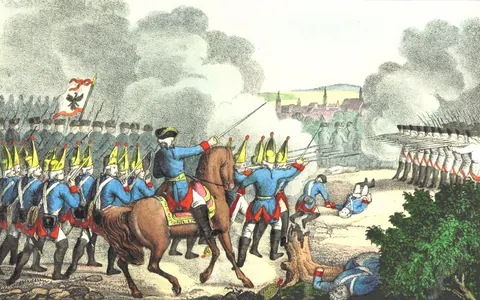
- 1762Battle of Freiberg, 1762Kingdom of Prussia vs Holy Roman Empire and Austria
On 29 October 1762 Prince Henry of Prussia beat the Austro-Imperial army near Freiberg in Saxony, in what is called the last battle of the Seven Years' War.
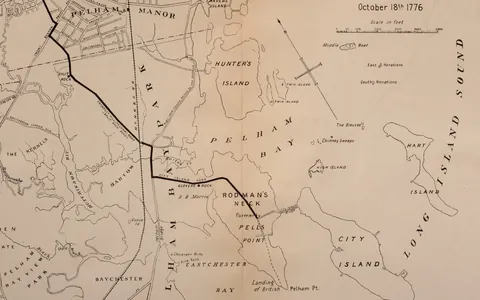
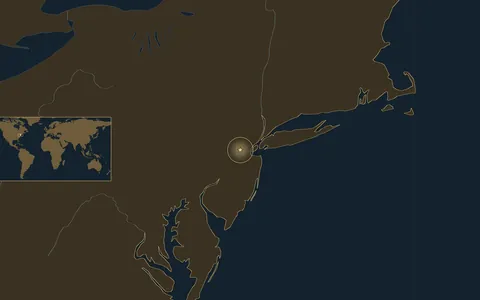
- 1776Battle of Pell's Point, 1776Continental Army vs Britain and Hesse
On 18 October 1776 John Glover's 750 Massachusetts men fought a British and Hessian landing from wall to wall at Pell's Point and bought Washington a day to escape Manhattan.
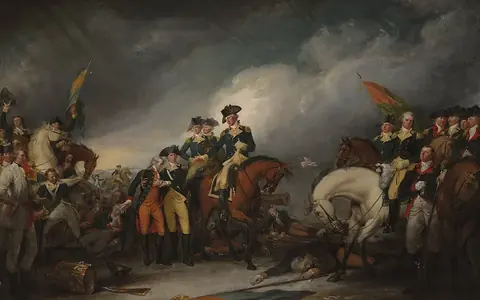
- 1776Battle of Trenton, 1776United States (Continental Army) vs Great Britain (Hessian garrison)
Washington's Christmas-night crossing of the Delaware and the surprise that revived the Revolution.
- 1777Battle of Bound Brook, 1777Great Britain (British and Hessian troops) vs United States (Continental Army and militia)
On 13 April 1777 Cornwallis's three columns surprised Benjamin Lincoln's outpost at Bound Brook; most of the garrison escaped to the hills, but the guns were lost.
The Napoleonic era 1789 to 1815 · 8
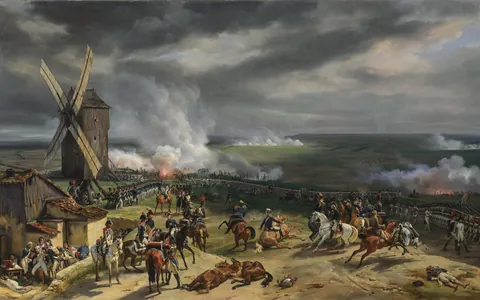
- 1792Battle of Valmy, 1792France vs Prussia (First Coalition)
On 20 September 1792 the French held the hills around Valmy under a Prussian cannonade; Brunswick turned back, and the French Republic was proclaimed the next day.
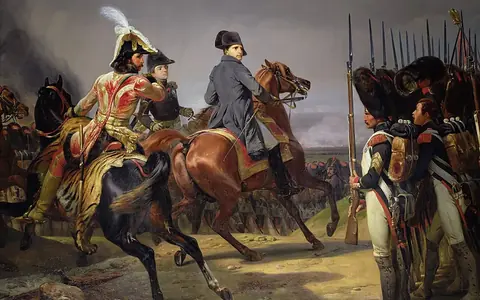
- 1806Jena-Auerstedt, 1806French Empire vs Kingdom of Prussia
Napoleon destroys the Prussian army in twin battles in a day.
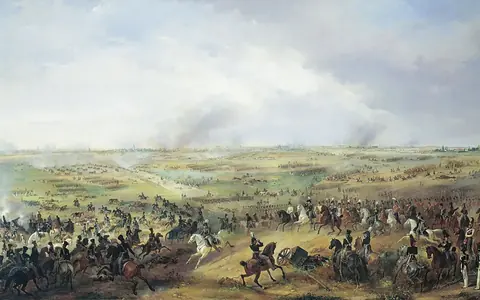
- 1813The Battle of Leipzig, 1813Coalition (Russia, Prussia, Austria, Sweden) vs French Empire
Six hundred thousand men and the largest battle in Europe before 1914.
- 1813Battle of Hanau, 1813French Empire vs Austria and Bavaria
On 30 and 31 October 1813, retreating from Leipzig, Napoleon found Wrede's Austro-Bavarian army across his road at Hanau and blasted it aside with fifty guns.
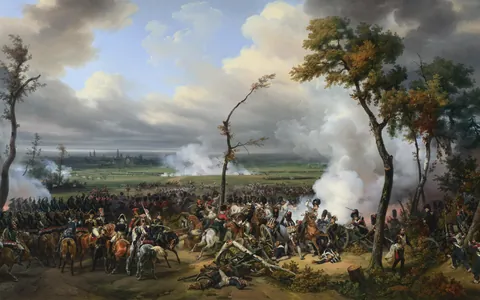
- 1814Battle of Montmirail, 1814French Empire vs Russia and Prussia (Army of Silesia)
On 11 February 1814 Napoleon beat Sacken's Russians around Marchais and threw back Yorck's Prussians. The Allies escaped across the Marne because the bridge at Château-Thierry was never taken.
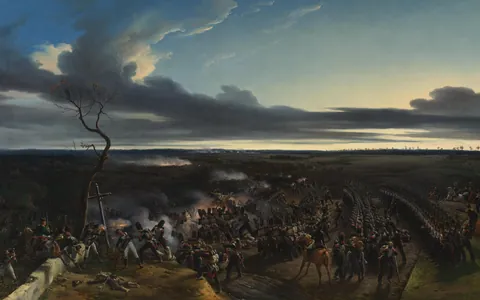
- 1815Battle of Ligny, 1815French Empire vs Prussia
On 16 June 1815, two days before Waterloo, Napoleon beat Blücher's Prussians at Ligny, but their army escaped north to fight again.
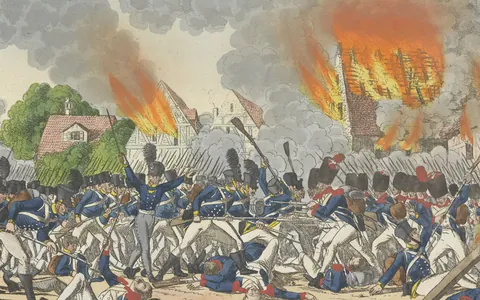
- 1815Battle of Quatre Bras, 1815French Empire vs Britain, Netherlands, Brunswick, Nassau and Hanover
On 16 June 1815 Marshal Ney attacked Wellington's army at the crossroads of Quatre Bras. The Allies held, and the fight kept a French corps away from Ligny.
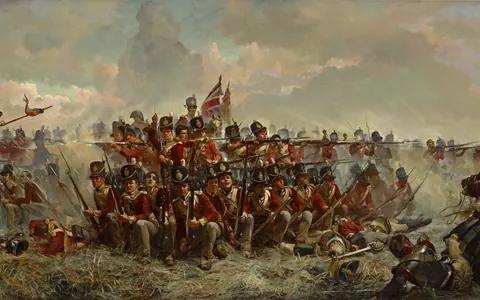
- 1815The Battle of Waterloo, 1815Coalition (Britain, Prussia) vs French Empire
Napoleon's last gamble, undone by a defiant ridge, unbroken infantry squares, and the Prussians arriving out of the woods just in time.

The industrial age 1815 to 1914 · 5
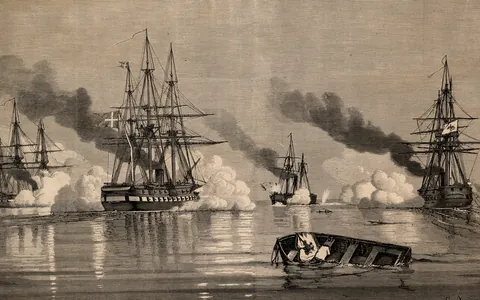
- 1864Battle of Jasmund, 1864Denmark vs Prussia
On 17 March 1864 Prussian corvettes sailed out of Swinemünde to test the Danish blockade. Off Rügen they traded broadsides with the frigate Sjælland and fled. It was the Prussian Navy's first battle.
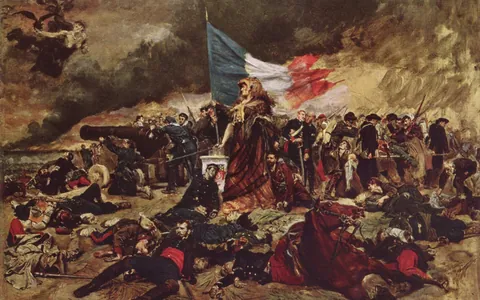
- 1870Siege of Paris, 1870-1871France (Government of National Defense) vs Prussia and the German states
From September 1870 to January 1871 German armies besieged Paris; the city sent its letters out by balloon, ate its zoo animals and finally capitulated on 28 January.
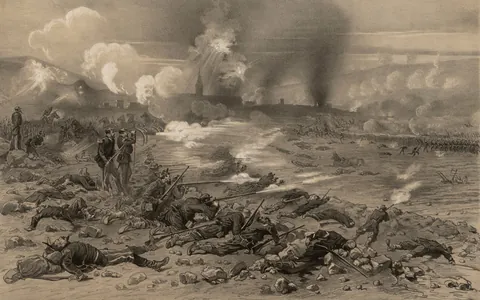
- 1870Battle of Spicheren, 1870Kingdom of Prussia and North German Confederation vs French Empire
On 6 August 1870 Prussian divisions marching to the sound of the guns stormed the Spicheren heights above Saarbrücken and drove Frossard's corps back towards Metz.
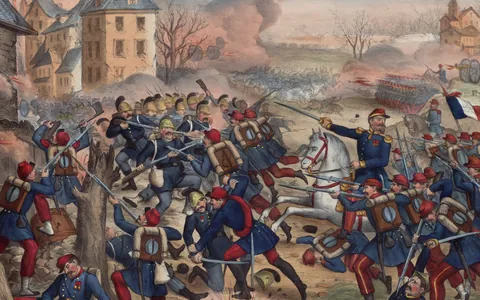
- 1870Battle of Coulmiers, 1870French Republic vs Bavaria and Prussia
On 9 November 1870 France's newly raised Army of the Loire beat the Bavarians at Coulmiers and won back Orléans, one of the few French victories of the war.
- 1870Battle of Beaune-la-Rolande, 1870Kingdom of Prussia and allies (Second Army) vs French Republic (Army of the Loire)
On 28 November 1870 two French corps marching to relieve Paris struck the Prussian X Corps at Beaune-la-Rolande. Outnumbered, it held on until help came at dusk.
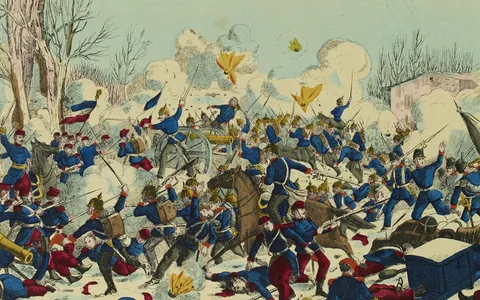
World War I 1914 to 1919 · 25
- 1914First Battle of Champagne, 1914 to 1915France vs German Empire
On 20 December 1914 Joffre's Fourth Army attacked the German trenches in Champagne. Three months and tens of thousands of casualties later, it had gained three kilometers.
- 1914Battle of Lorraine, 1914French Republic vs German Empire
On 14 August 1914 two French armies invaded German Lorraine under Plan XVII; within a week they were thrown back at Sarrebourg and Morhange.
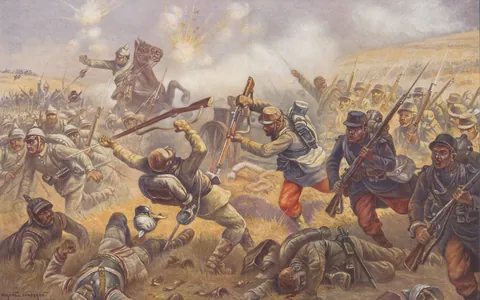
- 1914Battle of Tannenberg, 1914German Empire vs Russian Empire
How Germany encircled and destroyed a whole Russian army at Tannenberg in 1914, taking some 90,000 prisoners.
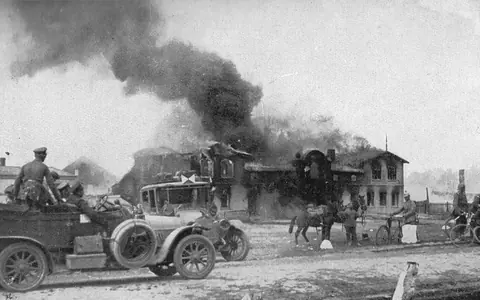
- 1914The First Marne, 1914France and Britain vs German Empire
The counterattack that saved Paris and turned the war into trenches.
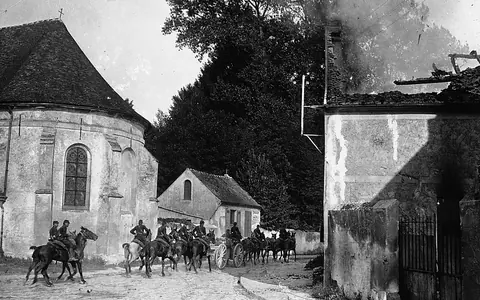
- 1914Siege of Antwerp, 1914Belgium and Britain vs Germany
In autumn 1914 German siege guns smashed the forts of Antwerp; the city burned and surrendered on 10 October, but King Albert's army escaped to fight on at the Yser.
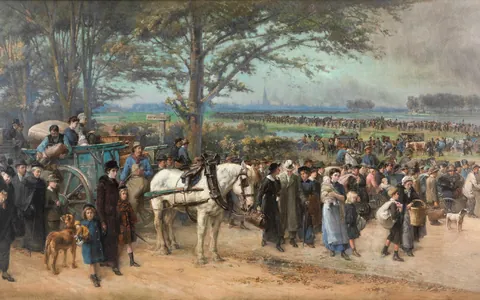
- 1914
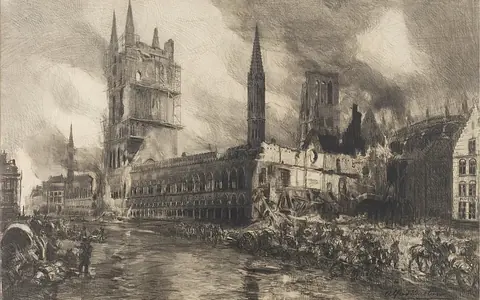
- 1914Battle of Penang, 1914German Empire vs Russian Empire and France
At dawn on 28 October 1914 the German cruiser Emden, disguised with a false funnel, sank the Russian cruiser Zhemchug and the French destroyer Mousquet at Penang.
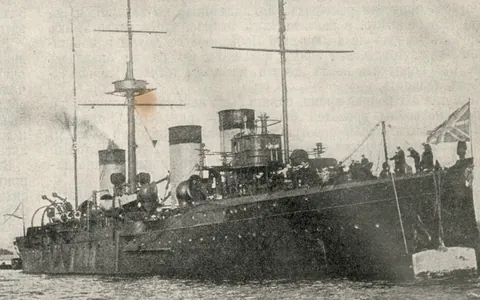
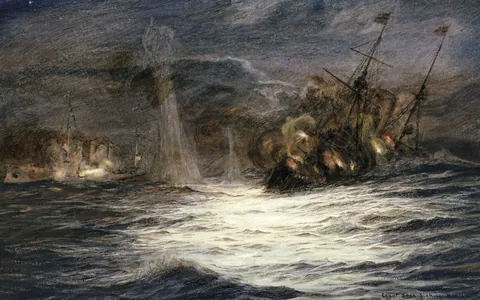
- 1914Battle of Coronel, 1914German Empire vs British Empire
On 1 November 1914 von Spee's cruisers caught Cradock's squadron off Chile at sunset and sank the Good Hope and the Monmouth with every man aboard.
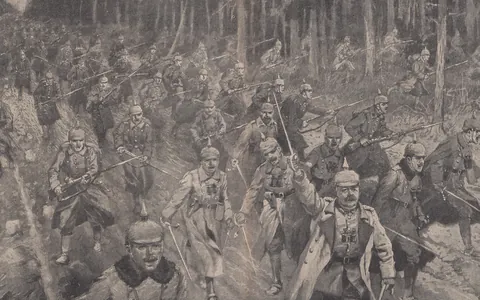
- 1914Battle of Łódź, 1914German Empire and Austria-Hungary vs Russian Empire
From 11 November to 6 December 1914 German and Russian armies fought a vast battle of maneuver around Łódź that cost some 200,000 lives and was then almost forgotten.
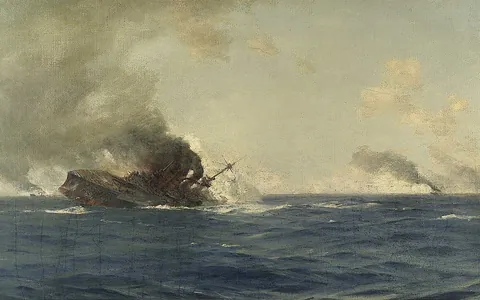
- 1914Battle of the Falkland Islands, 1914United Kingdom (Royal Navy) vs German Empire (East Asia Squadron)
On 8 December 1914 von Spee's squadron came to raid Port Stanley and found two British battlecruisers in harbor. By nightfall four of his five cruisers were sunk.
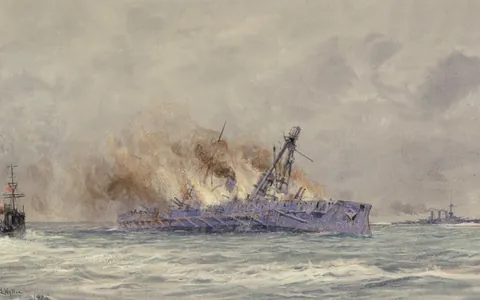
- 1915Battle of Dogger Bank, 1915United Kingdom vs German Empire
On 24 January 1915 codebreakers sent Beatty's battlecruisers after Hipper near the Dogger Bank. Blücher was sunk, but a crippled flagship and a misread signal let the rest escape.
- 1915Second Battle of Artois, 1915France (Tenth Army), with the British First Army vs German Empire (Sixth Army)
On 9 May 1915 Pétain's corps and the Moroccan Division broke through north of Arras and reached the crest of Vimy Ridge within hours. By nightfall they had lost it.
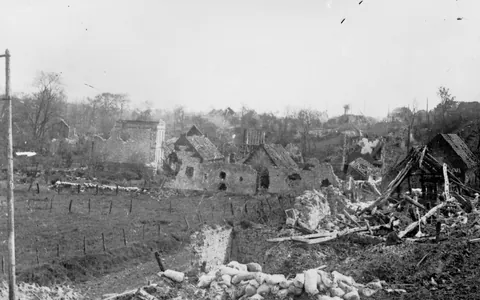
- 1916The Battle of Verdun, 1916France vs German Empire
Ten months of grinding slaughter around a French fortress, the longest battle of World War I.
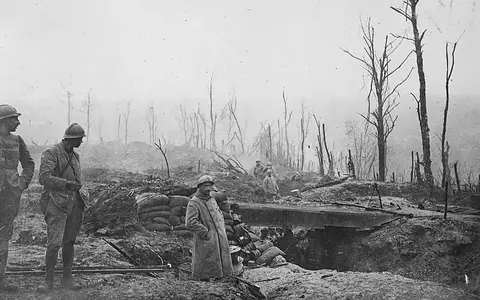
- 1916The Brusilov Offensive, 1916Russian Empire vs Austria-Hungary and Germany
From 4 June 1916 General Brusilov's armies broke the Austro-Hungarian front in Volhynia and Galicia. It was Russia's greatest success of the war, and one of its costliest.
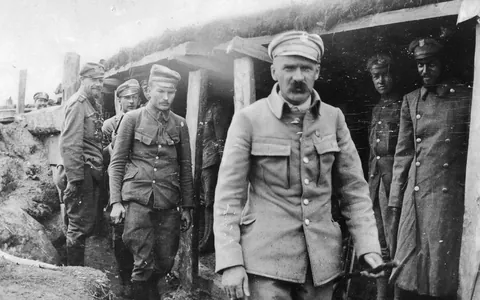
- 1916The Somme, 1916Britain and France vs German Empire
A million casualties and the symbol of industrial war.
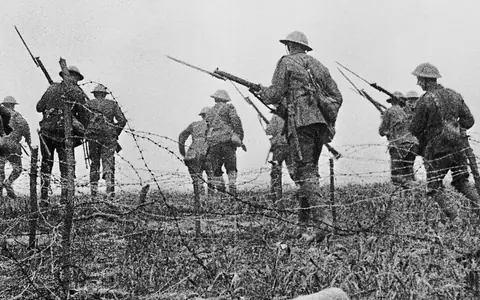
- 1917Battle of Arras, 1917British Empire vs German Empire
On Easter Monday 1917 British and Empire troops came out of the tunnels under Arras and broke the German line. Then Monchy-le-Preux and Bullecourt turned the offensive into a costly stalemate.
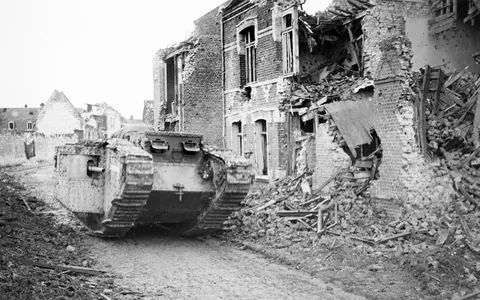
- 1917Battle of Vimy Ridge, 1917Canada (British Empire) vs German Empire (Sixth Army, Group Vimy)
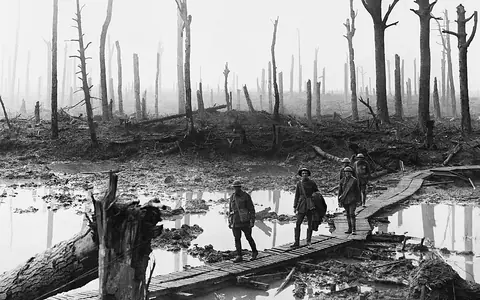
- 1917The Battle of Passchendaele, 1917British Empire and allies vs German Empire
Flanders, 1917. A bold plan to break out toward the Belgian coast collapsed into mud, drowning, and attrition. This is the Third Battle of Ypres, remembered as Passchendaele.
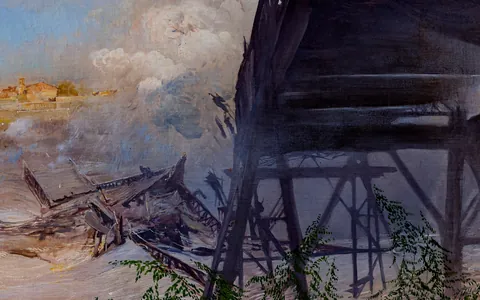
- 1917Battle of Caporetto, 1917Austria-Hungary and Germany vs Kingdom of Italy
On 24 October 1917 German and Austro-Hungarian troops broke the Italian front at Caporetto and drove Italy's army back to the Piave. What happened and what it cost.
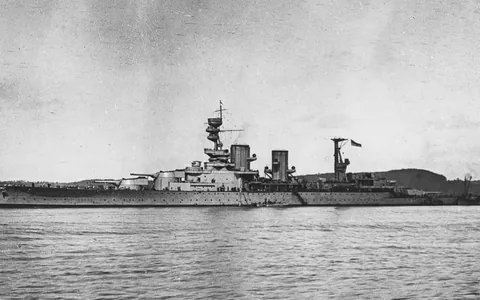
- 1917Second Battle of Heligoland Bight, 1917United Kingdom (Grand Fleet) vs German Empire (High Seas Fleet)
On 17 November 1917 British cruisers raced into the Heligoland Bight after German minesweepers, lost them in smoke and minefields, and met German battleships.
- 1918The Zeebrugge Raid, 1918United Kingdom (Royal Navy, Royal Marines) vs German Empire (Imperial German Navy)
On St George's Day 1918 the Royal Navy stormed the Zeebrugge Mole and sank concrete-filled cruisers in the Bruges canal to shut in the U-boats. Within days they were out again.
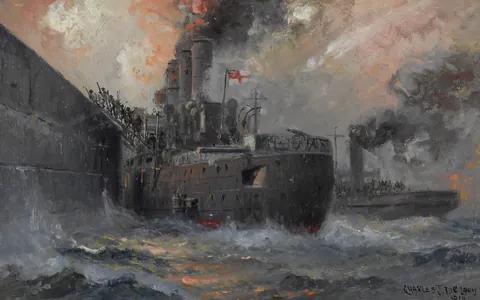
- 1918Battle of Belleau Wood, 1918United States (with French support) vs German Empire
The US Marines' brutal three-week fight that helped stop the German drive on Paris.
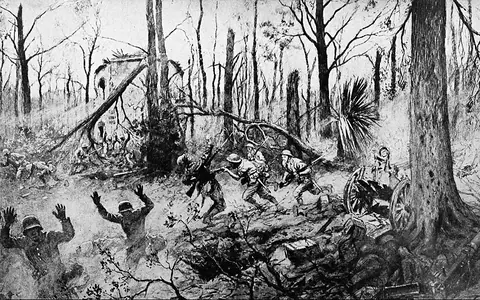
- 1918The Hundred Days Offensive, 1918Allied Powers (Britain and the Empire, France, United States, Belgium) vs German Empire
From Amiens on 8 August to the armistice of 11 November 1918, British Empire, French, American and Belgian armies broke the German army in the west.
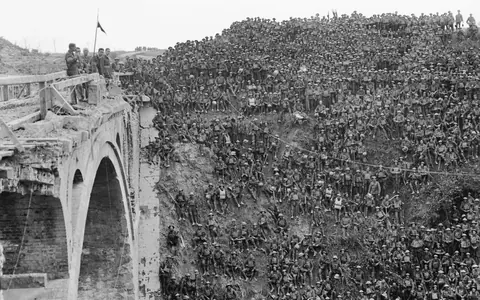
- 1918The Meuse-Argonne Offensive, 1918United States (with France) vs German Empire
More than a million Americans, 47 days, and the end of the war.
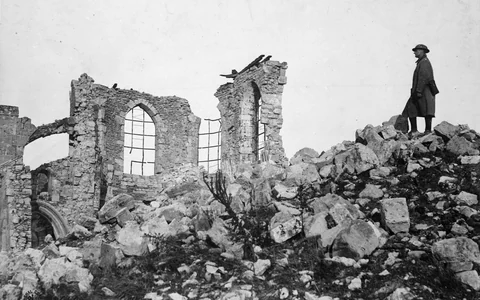
- 1919Scuttling at Scapa Flow, 1919German interned fleet vs Royal Navy at Scapa Flow
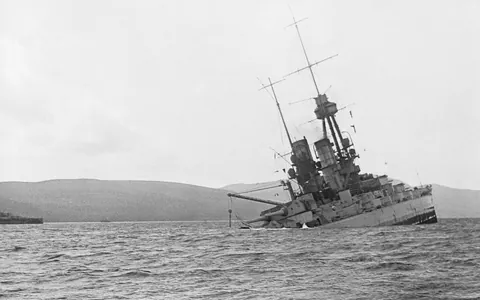
On 21 June 1919 the interned German High Seas Fleet sank itself at Scapa Flow in Orkney on Admiral von Reuter's signal, rather than be handed to the Allies.
World War II 1939 to 1945 · 47
- 1939Battle of Wizna, 1939Poland vs Nazi Germany
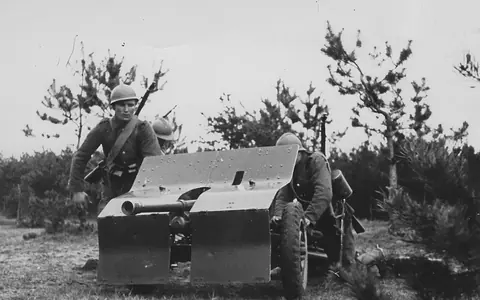
How a few hundred Poles held Wizna for three days against a German corps in 1939, the Polish Thermopylae.
- 1939The Gleiwitz incident, 1939Nazi Germany (SD and Gestapo) vs Victim
On 31 August 1939 SS men posing as Polish insurgents raided the Gleiwitz radio station and murdered Franz Honiok, staging a pretext for the invasion of Poland.
- 1939The Defence of Hel, 1939Poland vs Germany
Cut off on a Baltic sandbar, the garrison held for 32 days.
- 1939The Battle of Mokra, 1939Poland vs Germany
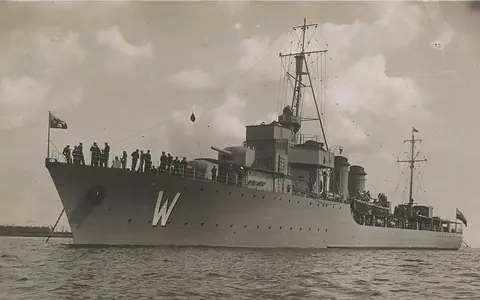
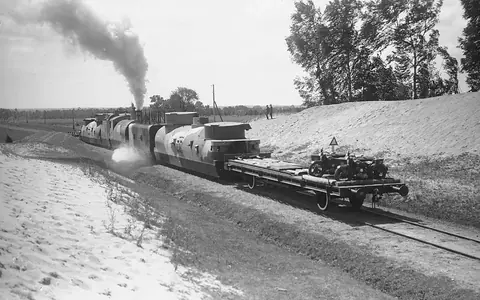
On the first day of the war, a cavalry brigade held off a panzer division.
- 1939
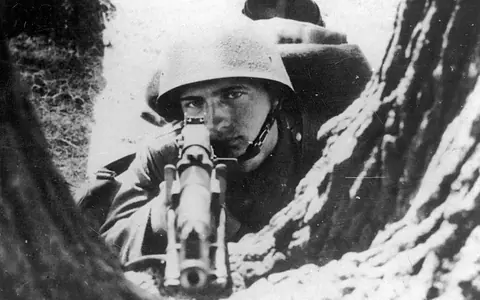
- 1939The Battle of Westerplatte, 1939Poland vs Nazi Germany
Told to hold for twelve hours, Westerplatte held for seven days.
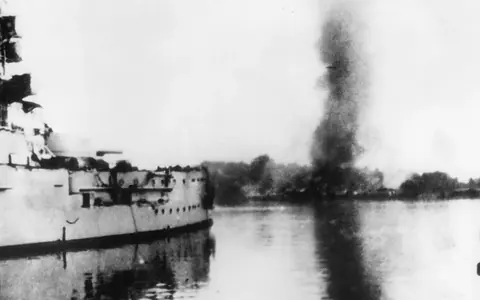
- 1939Battle of Kałuszyn, 1939Poland vs Nazi Germany
How the Iron Division retook Kałuszyn east of Warsaw in a night attack, and the famous, contested uhlan charge of 1939.
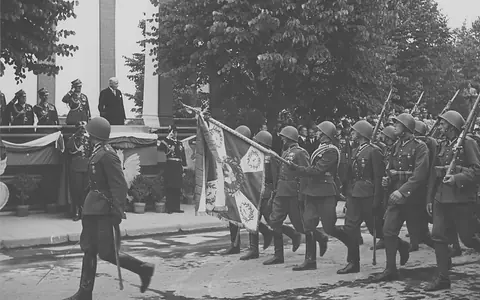
- 1939The Battle of the Bzura, 1939Poland vs Nazi Germany
The largest battle of September 1939, and Poland's great counterstroke.
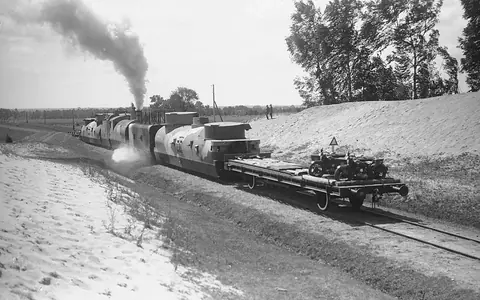
- 1939The Battle of Kock, 1939Poland vs Germany
Undefeated in the field, General Kleeberg ran out of ammunition.
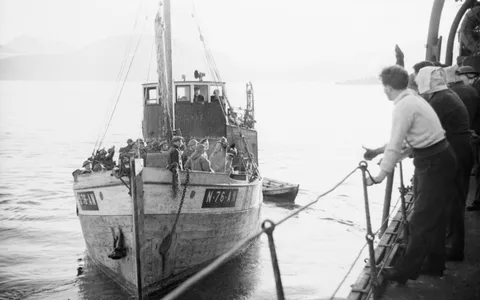
- 1940The Battle of Narvik, 1940Norway, Britain, France and Poland vs Germany
Polish mountain troops among the fjords of northern Norway.
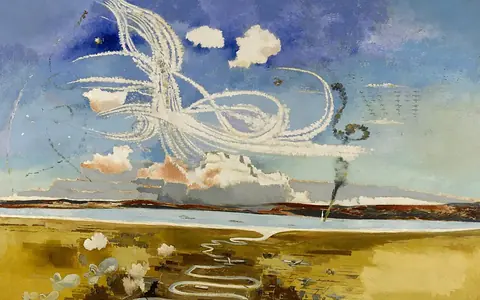
- 1940The Battle of Britain, 1940Britain (RAF) vs Germany (Luftwaffe)
The RAF holds the sky over England and stops a German invasion.
- 1941The Siege of Leningrad, 1941 to 1944Soviet Union vs Germany and Finland
872 days, the 125-gram ration, the Road of Life and Tanya Savicheva's diary.
- 1941
- 1941Bombing of Belgrade, 1941Germany vs Kingdom of Yugoslavia
On Palm Sunday, 6 April 1941, German bombers struck Belgrade without a declaration of war. The city center burned with the National Library, and the death toll is disputed to this day.
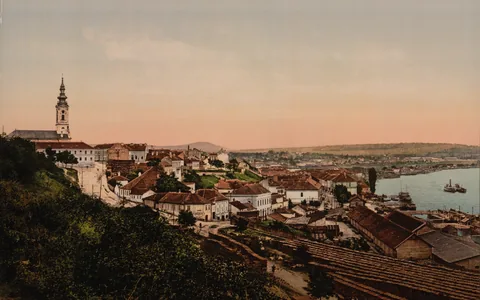
- 1941The Siege of Tobruk, 1941Allies (Australia, Britain, Poland, Czechoslovakia and others) vs Germany and Italy
The Carpathian Brigade holds the hardest sectors of the desert fortress.
- 1941Siege of Odessa, 1941Romania (4th Army), with German support vs Soviet Union (Coastal Army, Black Sea Fleet)
From August to October 1941 Soviet troops held Odessa, cut off by land and supplied by sea, against Romania's 4th Army, then slipped away by ship.
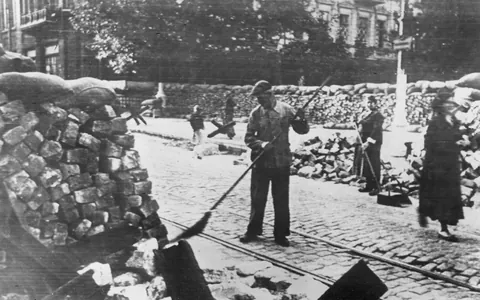
- 1941HMAS Sydney and the Kormoran, 1941Australia (Royal Australian Navy) vs Germany (Kriegsmarine)
On 19 November 1941 the cruiser HMAS Sydney closed on a Dutch freighter off Western Australia. It was the raider Kormoran. Both sank; all 645 Australians died.
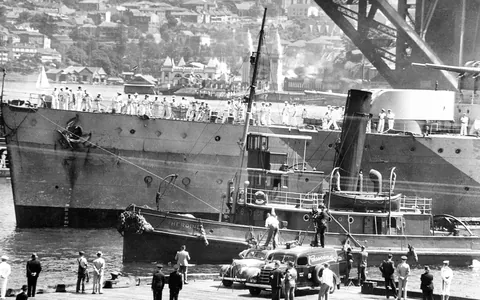
- 1942Barvenkovo-Lozovaya offensive, 1942Soviet Union vs Germany
In January 1942 the Red Army broke through on the Donets near Izyum and drove toward the Dnieper, but the Germans held the shoulders and the gain became the Izyum bulge.
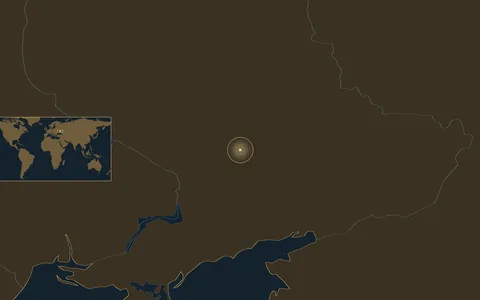
- 1942The Battle of Stalingrad, 1942-1943USSR vs Germany and allies
Five months of street fighting on the Volga, a surprise encirclement, and the surrender that turned the whole war in the East.

- 1942The Channel Dash, 1942Germany vs United Kingdom
On 12 February 1942 Scharnhorst, Gneisenau and Prinz Eugen ran up the English Channel in daylight. Six Swordfish attacked and none came back; only mines touched the German ships.
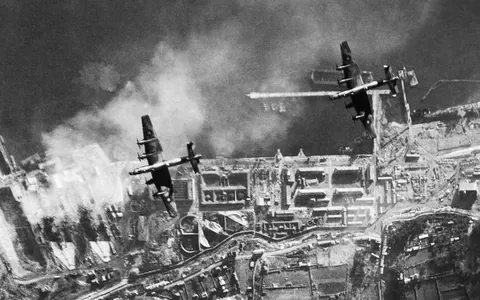
- 1942Battle of Mersa Matruh, 1942Axis (German and Italian forces) vs British Commonwealth (Eighth Army)
In late June 1942 Rommel's spent army outflanked the British at Mersa Matruh; X Corps was cut off and broke out at night, and the Eighth Army fell back to El Alamein.
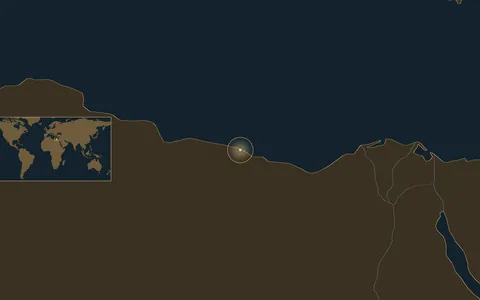
- 1942El Alamein, 1942British Empire and Commonwealth vs Germany and Italy (Panzerarmee Afrika)
Montgomery breaks Rommel and turns the tide in North Africa.
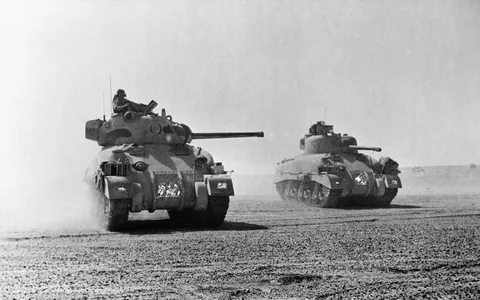
- 1942Operation Uranus, 1942Soviet Union vs Germany and Romania
On 19 November 1942 the Red Army struck the Romanian armies on both flanks of Stalingrad. Four days later the German Sixth Army was encircled.
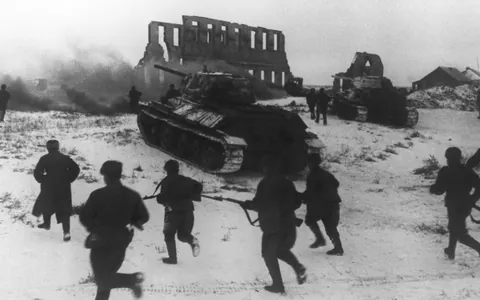
- 1942Battle of the Barents Sea, 1942United Kingdom vs Germany
On 31 December 1942 four British destroyers bluffed a heavy cruiser and a pocket battleship away from an Arctic convoy. Not one merchant ship was lost, and Hitler turned on his navy.
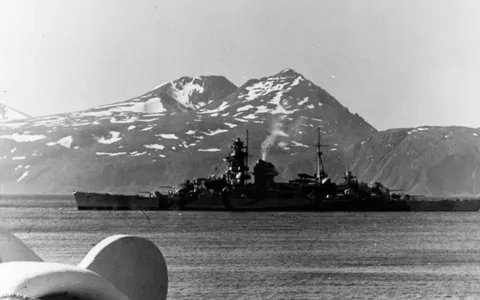
- 1943Operation Ochsenkopf, 1943Germany and Italy (5th Panzer Army) vs United Kingdom and France (British First Army)
On 26 February 1943 von Arnim threw Tiger tanks at the British front in northern Tunisia. A battalion and a battery at Sidi Nsir held them for a day, and at Hunt's Gap the panzers were shot to pieces.
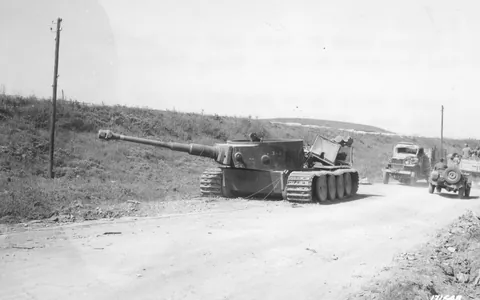
- 1943Battle of the Sutjeska, 1943Yugoslav Partisans (NOVJ Main Operational Group) vs Germany, Italy, Croatia (NDH) and Bulgaria
From 15 May 1943 over 100,000 Axis troops closed on Tito's partisans in the Bosnian mountains. A third of them died, but the breakout at the Sutjeska saved the movement.
- 1943The Battle of Kursk, 1943USSR vs Germany (Operation Citadel)
Hitler's doomed 1943 gamble and the greatest tank battle of the war, told scene by scene.
- 1943Battle of Prokhorovka, 1943Soviet Union vs Germany
On 12 July 1943 the Soviet 5th Guards Tank Army attacked the II SS Panzer Corps at Prokhorovka. What really happened and why the legend grew.
- 1943Operation Kutuzov, 1943Soviet Union vs Germany
On 12 July 1943, at the height of Kursk, the Red Army attacked the German bulge around Orel. Five weeks later it had taken Orel and pushed the Germans back.
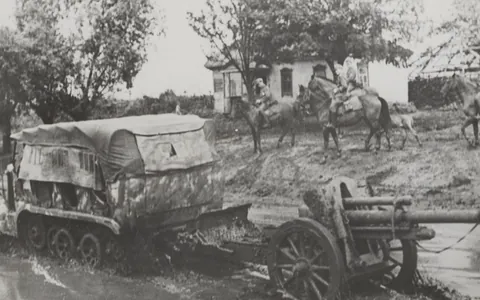
- 1943Donbas offensive, July 1943Soviet Union vs Germany
In July 1943 the Red Army attacked on the Mius and at Izyum. It gained little and was thrown back, but the attack pulled German panzers south from Kursk.
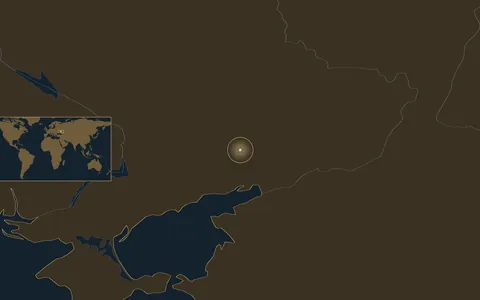
- 1943Smolensk operation, 1943Soviet Union vs Germany
From August to October 1943 two Soviet fronts ground through the forest defenses of Army Group Center and retook Smolensk on 25 September.
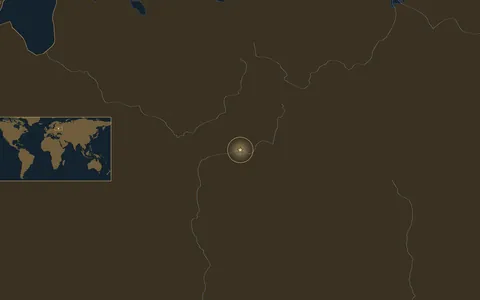
- 1944Leningrad-Novgorod offensive, 1944Soviet Union vs Germany
On 14 January 1944 two Soviet fronts struck from Oranienbaum, Leningrad and Novgorod. Within two weeks the German ring was broken and the 872-day siege was over.
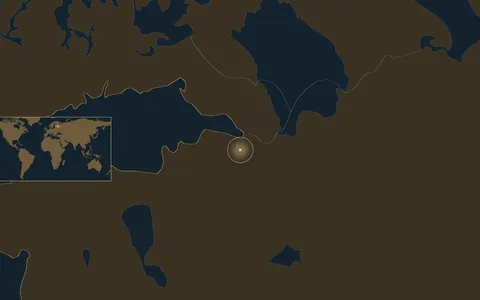
- 1944Battle of Monte Cassino, 1944Allies (incl. Polish II Corps) vs Nazi Germany
How four battles, the last won by the Polish II Corps, took Monte Cassino in 1944 and opened the road to Rome.
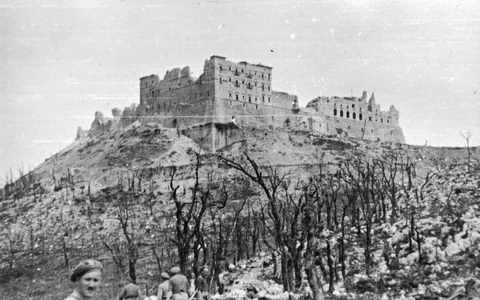
- 1944Battle of Anzio, 1944Allies (United States, Britain) vs Germany
On 22 January 1944 the Allies landed at Anzio behind the Gustav Line and caught the Germans by surprise. A week of caution let Kesselring seal the beachhead, and the siege lasted four months.
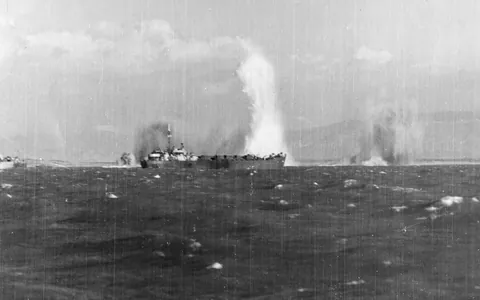
- 1944The Battle of the BulgeUnited States and allies vs Germany
December 1944: fog, snow and a desperate German gamble in the Ardennes forest. The siege of Bastogne, McAuliffe's Nuts, and Patton's race north.
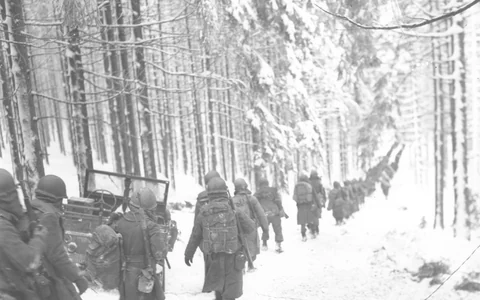
- 1944Crimean offensive, 1944Soviet Union vs Germany and Romania
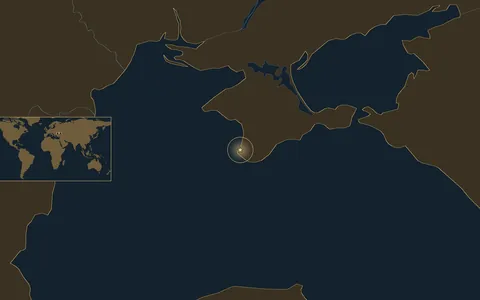
In April and May 1944 the Red Army broke into the Crimea, drove the German 17th Army into Sevastopol and took the city in three days of assault.
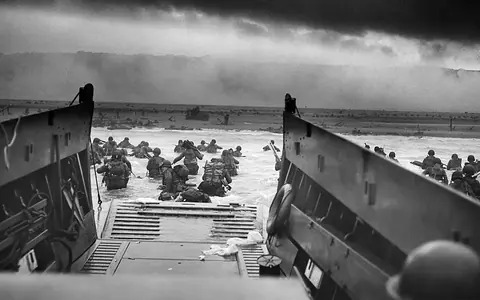
- 1944D-Day, 1944Allies (USA, Britain, Canada) vs Nazi Germany
Five beaches, thousands of ships, and one morning that breached the Atlantic Wall and opened the Western Front.
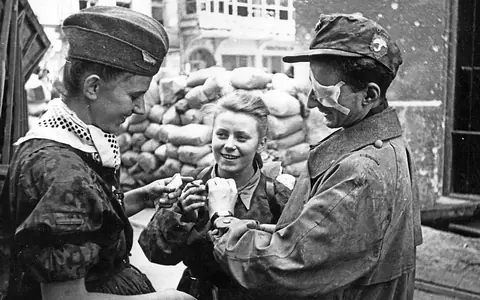
- 1944The Warsaw Uprising, 1944Poland vs Germany
Warsaw rose against the German occupation and fought alone for 63 days.
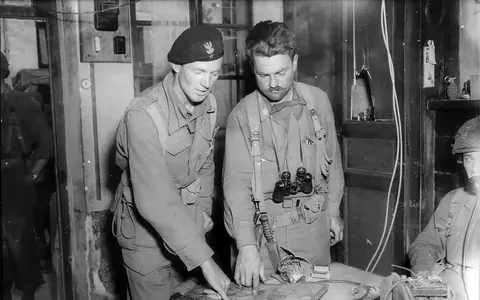
- 1944The Battle of Falaise, 1944Allies (USA, Britain, Canada, Poland, Free France) vs Germany
The Polish armored division corked the Falaise Pocket.
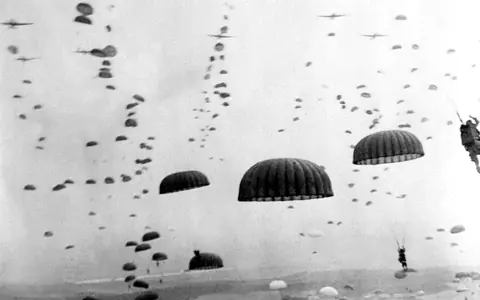
- 1944Operation Market GardenAllies (Britain, US, Poland) vs Germany
The Allied airborne gamble of September 1944, a chain of Dutch bridges, and the bridge too far at Arnhem where the plan came apart.
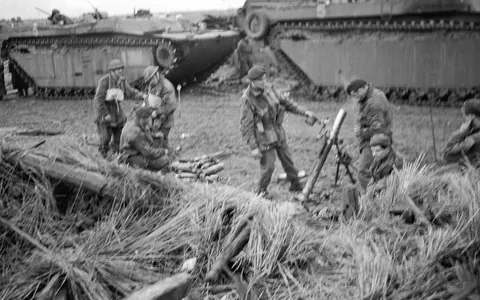
- 1944Battle of the Scheldt, 1944Allies (First Canadian Army) vs Germany (Fifteenth Army)
In October and November 1944 Canadian, British and Polish troops fought across flooded polders and Walcheren island to open the Scheldt and the port of Antwerp.
- 1945Operation Konrad III, 1945Germany and Hungary vs Soviet Union
On 18 January 1945 German panzers struck from Lake Balaton to relieve encircled Budapest. They reached the Danube in 27 hours and retook Székesfehérvár, but stalled about 25 km short of the city.
- 1945The Ruhr Pocket, 1945United States (12th Army Group) vs Germany (Army Group B)
On Easter Sunday 1945 two U.S. armies met at Lippstadt and trapped Model's Army Group B in the Ruhr. Seventeen days later some 317,000 Germans had surrendered.
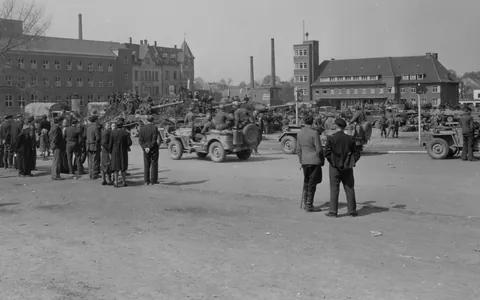
- 1945The Battle of Berlin, 1945USSR vs Nazi Germany
The ferocious final battle for Hitler's capital in 1945, told scene by scene.
- 1945Battle of the Seelow Heights, 1945Soviet Union and Poland vs Germany
On 16 April 1945 Zhukov's armies attacked the Seelow Heights, the last ridge before Berlin. Searchlights blinded the wrong side, and the breakthrough took four bloody days.
- 1945Battle of Halbe, 1945Soviet Union vs Germany
In late April 1945 the encircled German Ninth Army and thousands of refugees tried to break out through Halbe, south of Berlin. About 40,000 died; 25,000 soldiers reached the Elbe.
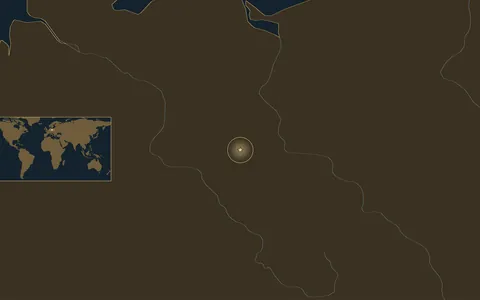
- 1945The Battle for Castle Itter, 1945U.S. Army, anti-Nazi Wehrmacht soldiers, Austrian resistance and French prisoners vs Waffen-SS
On 5 May 1945 American tankers, anti-Nazi German soldiers and French VIP prisoners held Schloss Itter in the Tyrol against the Waffen-SS until relief arrived.
Other 2
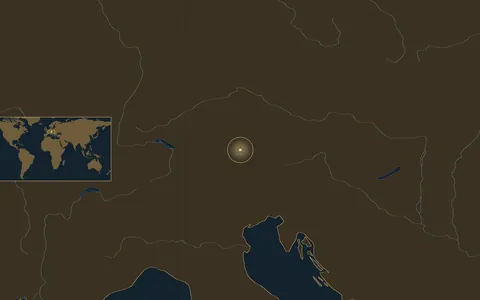
- 1919Battle of Ławica, 1919Greater Poland insurgents vs German Empire
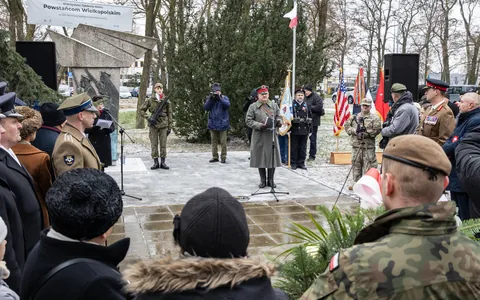
On 6 January 1919 Greater Poland insurgents cut the power, fired four shells and took the German air station at Poznań in about twenty minutes. The prize was the start of Poland's air force.
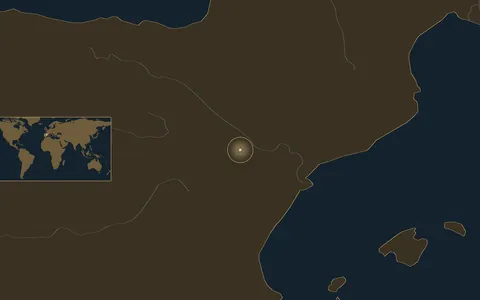
- 1938The Aragon Offensive, 1938Nationalists, with the Italian CTV and the German Condor Legion vs Spanish Republic (Popular Army)
On 7 March 1938 Franco's armies struck the exhausted Republican front in Aragon. Six weeks later Navarrese troops waded into the Mediterranean at Vinaròs, and Republican Spain was cut in two.
Timeline
- AD 9Arminius destroys three Roman legions under Varus (Teutoburg Forest).31
- 955Otto I defeats the Hungarians at the Lechfeld near Augsburg.32
- 1620Catholic armies rout Frederick V (White Mountain).33
- 1631Sack of Magdeburg; Gustavus Adolphus wins at Breitenfeld.34
- 1648The Peace of Westphalia ends the Thirty Years' War.35
- 1757
- 1806End of the Holy Roman Empire; Prussia routed at Jena and Auerstedt.37
- 1813
- 1866Prussia defeats Austria at Königgrätz.39
- 1871William I proclaimed German Emperor at Versailles, 18 January.40
- 1914
- 1918Kaiser William II abdicates; armistice of 11 November.42
- 1919Treaty of Versailles signed, 28 June.43
- 1939After the staged Gleiwitz incident, Germany invades Poland on 1 September.44
- 1941Germany invades the Soviet Union, 22 June.45
- 1943The Sixth Army surrenders at Stalingrad.46
- 1945Unconditional surrender at Reims, 7 May.47
- 1949The Federal Republic and the German Democratic Republic are founded.48
- 1955West Germany joins NATO; the Bundeswehr is founded.49
- 1990Germany is reunited, 3 October.50
Memory and further reading
Germany's wars have been remembered in very different ways. The 19th-century national movement built a myth around the Teutoburg Forest; after 1918 the stab-in-the-back legend poisoned the Weimar Republic; and after 1945 the long reckoning with Nazi crimes included the slow dismantling of the clean Wehrmacht myth, publicly challenged by the exhibition on the crimes of the Wehrmacht that opened in Hamburg in 1995. In December 1970 Chancellor Willy Brandt knelt before the memorial to the Warsaw Ghetto Uprising, asking forgiveness for the crimes of the Third Reich.51
For the neighbors' side of many of these wars, see our hubs on Poland, France and Britain, and the rankings of the greatest battles of World War II and of the greatest World War I battles.
Notes
A number in the text points to a note; each note names the works that paragraph draws on, listed in full under Sources.
- Encyclopaedia Britannica, “Germany summary”; Deutschlandmuseum Berlin, “The German Empire”. ↩
- Encyclopaedia Britannica, “Germany from 1493 to c. 1760”; Deutschlandmuseum Berlin, “The German Empire”; Deutschlandmuseum Berlin, “The Battle of the Teutoburg Forest and the founding myth of the German nation”; World History Encyclopedia, “Battle of Leipzig”; Imperial War Museums, “Battle of Verdun”; United States Holocaust Memorial Museum, “World War II”. ↩
- Encyclopaedia Britannica, “Germany summary”; Encyclopaedia Britannica, “Treaty of Verdun”; Deutschlandmuseum Berlin, “Germany in the Early Middle Ages and Medieval Europe”; World History Encyclopedia, “Thirty Years' War”. ↩
- Encyclopaedia Britannica, “Germany from 1493 to c. 1760”; Encyclopaedia Britannica, “Germany from c. 1760 to 1815”; Deutschlandmuseum Berlin, “The German Empire”; Office of the Historian, “East Germany (German Democratic Republic)”; Deutschlandmuseum Berlin, “The Reunification of Germany and Fall of the Berlin Wall”. ↩
- Encyclopaedia Britannica, “Germany summary”; EBSCO Research Starters, “Battle of Teutoburg Forest”; Deutschlandmuseum Berlin, “The Battle of the Teutoburg Forest and the founding myth of the German nation”. ↩
- EBSCO Research Starters, “Battle of Teutoburg Forest”; Deutschlandmuseum Berlin, “The Battle of the Teutoburg Forest and the founding myth of the German nation”; Encyclopaedia Britannica, “Arminius”. ↩
- Deutschlandmuseum Berlin, “Germany in the Early Middle Ages and Medieval Europe”; Encyclopaedia Britannica, “Otto I”; Encyclopaedia Britannica, “Germany summary”. ↩
- Encyclopaedia Britannica, “Germany”; World History Encyclopedia, “Thirty Years' War”. ↩
- Encyclopaedia Britannica, “Germany”; World History Encyclopedia, “Thirty Years' War”; Encyclopaedia Britannica, “Thirty Years' War”; Deutschlandmuseum Berlin, “The Magdeburg Wedding”. ↩
- Encyclopaedia Britannica, “Germany”; Economic History Society, “The Thirty Years' War and the economy of the German lands”; Encyclopaedia Britannica, “Germany from 1493 to c. 1760”. ↩
- Deutschlandmuseum Berlin, “The Age of Enlightenment in Germany”; Encyclopaedia Britannica, “Frederick II”; EBSCO Research Starters, “War of the Austrian Succession”. ↩
- World History Encyclopedia, “Frederick the Great”; World History Encyclopedia, “Seven Years' War”; EBSCO Research Starters, “Seven Years' War”. ↩
- Fondation Napoléon, “Creation of the Confederation of the Rhine, 12 July 1806”; Encyclopaedia Britannica, “Germany from c. 1760 to 1815”; World History Encyclopedia, “Battle of Jena-Auerstedt”; Encyclopaedia Britannica, “Battle of Jena”. ↩
- Encyclopaedia Britannica, “Germany from c. 1760 to 1815”; World History Encyclopedia, “War of the Sixth Coalition”; World History Encyclopedia, “Battle of Leipzig”; Encyclopaedia Britannica, “Battle of Leipzig”. ↩
- World History Encyclopedia, “Battle of Waterloo”; Encyclopaedia Britannica, “Battle of Waterloo”. ↩
- EBSCO Research Starters, “Unification of Germany, 1871”; OER Commons, “Unification of Germany”; Encyclopaedia Britannica, “Battle of Königgrätz”; EBSCO Research Starters, “German Wars of Unification”. ↩
- EBSCO Research Starters, “German Wars of Unification”; OER Commons, “Unification of Germany”; EBSCO Research Starters, “Unification of Germany, 1871”. ↩
- Deutschlandmuseum Berlin, “The German Empire”; World History Encyclopedia, “Schlieffen Plan”; EBSCO Research Starters, “Battle of the Marne”; National Army Museum, “First Battle of the Marne”; HISTORY, “Battle of Tannenberg begins”; EBSCO Research Starters, “Battle of Tannenberg (1914)”. ↩
- Imperial War Museums, “Battle of Verdun”; Encyclopaedia Britannica, “Battle of Verdun”. ↩
- World History Encyclopedia, “The 1918 Armistice with Germany”; Imperial War Museums, “Armistice”; Pritzker Military Museum and Library, “The Armistice”. ↩
- Deutschlandmuseum Berlin, “The Weimar Republic and the Roaring Twenties”; Encyclopaedia Britannica, “Treaty of Versailles”; United States Holocaust Memorial Museum, “Treaty of Versailles”; The Holocaust Explained, “The Treaty of Versailles”; United States Holocaust Memorial Museum, “World War I”. ↩
- Pritzker Military Museum and Library, “The Armistice”; World History Encyclopedia, “The 1918 Armistice with Germany”; Deutschlandmuseum Berlin, “The Weimar Republic and the Roaring Twenties”; United States Holocaust Memorial Museum, “Treaty of Versailles”. ↩
- Deutschlandmuseum Berlin, “Nazi Germany and the So-Called Third Reich”; Imperial War Museums, “How Britain hoped to avoid war with Germany in the 1930s”; United States Holocaust Memorial Museum, “World War II”; The Holocaust Explained, “Invasion of Poland”. ↩
- Deutschlandmuseum Berlin, “Germany invades Poland”; The National WWII Museum, “The Invasion of Poland”; United States Holocaust Memorial Museum, “Invasion of Poland, Fall 1939”; The Holocaust Explained, “Invasion of Poland”. ↩
- United States Holocaust Memorial Museum, “World War II”; Imperial War Museums, “Dowding system and Britain's air defence during the Battle of Britain”; Encyclopaedia Britannica, “Battle of Britain”; United States Holocaust Memorial Museum, “World War II”; The Holocaust Explained, “Invasion of Poland”; EBSCO Research Starters, “Second Battle of El Alamein”; Imperial War Museums, “How the Second Battle of El Alamein was won”; World History Encyclopedia, “Erwin Rommel”. ↩
- United States Holocaust Memorial Museum, “How Many People did the Nazis Murder?”; The Holocaust Explained, “What was the Holocaust?”; United States Holocaust Memorial Museum, “Einsatzgruppen”; The Holocaust Explained, “Invasion of Poland”; United States Holocaust Memorial Museum, “Nazi Persecution of Soviet Prisoners of War”; United States Holocaust Memorial Museum, “The German Military and the Holocaust”; Deutschlandmuseum Berlin, “Nazi Germany and the So-Called Third Reich”. ↩
- United States Holocaust Memorial Museum, “World War II”; The Holocaust Explained, “Invasion of Poland”. ↩
- Deutschlandmuseum Berlin, “The Occupation Zones and Division of Germany”; Office of the Historian, “East Germany (German Democratic Republic)”; Office of the Historian, “The Acting Political Adviser for Germany (Muccio) to the Secretary of State, 26 February 1947”; Mauermuseum, “The GDR discovers Prussia”. ↩
- NATO, “Germany and NATO”; deutschland.de, “Germany in NATO”; Bundeswehr, “The establishment of the Bundeswehr”; The Local Germany, “German army celebrates 60 years of service”; DDR Museum Berlin, “Barracked People's Police and NVA”; Bundeswehr, “The Bundeswehr becomes an army of unity”; German History in Documents and Images, “The First Group of Soldiers from the East German National People's Army is Sworn into the Bundeswehr (October 19, 1990)”. ↩
- Encyclopaedia Britannica, “Arminius”; Encyclopaedia Britannica, “Frederick II”; World History Encyclopedia, “Frederick the Great”; Encyclopaedia Britannica, “Germany from c. 1760 to 1815”; Encyclopaedia Britannica, “Battle of Leipzig”; World History Encyclopedia, “Battle of Waterloo”; Encyclopaedia Britannica, “Battle of Königgrätz”; EBSCO Research Starters, “German Wars of Unification”; HISTORY, “Battle of Tannenberg begins”; Imperial War Museums, “Armistice”; United States Holocaust Memorial Museum, “World War II”; World History Encyclopedia, “Erwin Rommel”; EBSCO Research Starters, “Erwin Rommel”. ↩
- EBSCO Research Starters, “Battle of Teutoburg Forest”; Deutschlandmuseum Berlin, “The Battle of the Teutoburg Forest and the founding myth of the German nation”. ↩
- Deutschlandmuseum Berlin, “Germany in the Early Middle Ages and Medieval Europe”; Encyclopaedia Britannica, “Otto I”. ↩
- Encyclopaedia Britannica, “Germany”; World History Encyclopedia, “Thirty Years' War”. ↩
- Encyclopaedia Britannica, “Germany”; World History Encyclopedia, “Thirty Years' War”. ↩
- Encyclopaedia Britannica, “Germany from 1493 to c. 1760”; World History Encyclopedia, “Thirty Years' War”. ↩
- World History Encyclopedia, “Seven Years' War”; EBSCO Research Starters, “Seven Years' War”. ↩
- Encyclopaedia Britannica, “Germany from c. 1760 to 1815”; Fondation Napoléon, “Creation of the Confederation of the Rhine, 12 July 1806”. ↩
- World History Encyclopedia, “Battle of Leipzig”; Encyclopaedia Britannica, “Battle of Leipzig”. ↩
- Encyclopaedia Britannica, “Battle of Königgrätz”; EBSCO Research Starters, “German Wars of Unification”. ↩
- EBSCO Research Starters, “Unification of Germany, 1871”; OER Commons, “Unification of Germany”. ↩
- EBSCO Research Starters, “Battle of the Marne”; National Army Museum, “First Battle of the Marne”. ↩
- Imperial War Museums, “Armistice”; Pritzker Military Museum and Library, “The Armistice”. ↩
- Encyclopaedia Britannica, “Treaty of Versailles”; United States Holocaust Memorial Museum, “Treaty of Versailles”. ↩
- United States Holocaust Memorial Museum, “Invasion of Poland, Fall 1939”; The Holocaust Explained, “Invasion of Poland”. ↩
- United States Holocaust Memorial Museum, “World War II”; The Holocaust Explained, “Invasion of Poland”. ↩
- United States Holocaust Memorial Museum, “World War II”; The Holocaust Explained, “Invasion of Poland”. ↩
- United States Holocaust Memorial Museum, “World War II”; The Holocaust Explained, “Invasion of Poland”. ↩
- Office of the Historian, “East Germany (German Democratic Republic)”; Deutschlandmuseum Berlin, “The Occupation Zones and Division of Germany”. ↩
- deutschland.de, “Germany in NATO”; Bundeswehr, “The establishment of the Bundeswehr”. ↩
- Encyclopaedia Britannica, “The reunification of Germany”; Deutschlandmuseum Berlin, “The Reunification of Germany and Fall of the Berlin Wall”. ↩
- Deutschlandmuseum Berlin, “The Battle of the Teutoburg Forest and the founding myth of the German nation”; Deutschlandmuseum Berlin, “The Weimar Republic and the Roaring Twenties”; United States Holocaust Memorial Museum, “The German Military and the Holocaust”; Deutschlandmuseum Berlin, “A Nation Divided”. ↩
Sources
- Encyclopaedia Britannica, “Germany summary”.
- Deutschlandmuseum Berlin, “The German Empire: Foundation, the Kaiser and WW1”.
- Encyclopaedia Britannica, “Germany from 1493 to c. 1760”.
- Deutschlandmuseum Berlin, “The Battle of the Teutoburg Forest and the founding myth of the German nation”.
- World History Encyclopedia, “Battle of Leipzig”.
- Imperial War Museums, “Battle of Verdun”.
- United States Holocaust Memorial Museum, “World War II: In Depth”.
- Encyclopaedia Britannica, “Treaty of Verdun”.
- Deutschlandmuseum Berlin, “Germany in the Early Middle Ages and Medieval Europe”.
- World History Encyclopedia, “Thirty Years' War”.
- Encyclopaedia Britannica, “Germany from c. 1760 to 1815”.
- Office of the Historian, US Department of State, “East Germany (German Democratic Republic)”.
- Deutschlandmuseum Berlin, “The Reunification of Germany and Fall of the Berlin Wall”.
- EBSCO Research Starters, “Battle of Teutoburg Forest”.
- Encyclopaedia Britannica, “Arminius”.
- Encyclopaedia Britannica, “Otto I”.
- Encyclopaedia Britannica, “Germany: The Thirty Years' War and the Peace of Westphalia”.
- Encyclopaedia Britannica, “Thirty Years' War”.
- Deutschlandmuseum Berlin, “The Magdeburg Wedding”.
- Economic History Society (working paper by Victoria Gierok), “The Thirty Years' War and the economy of the German lands”.
- Deutschlandmuseum Berlin, “The Age of Enlightenment in Germany: A Summary”.
- Encyclopaedia Britannica, “Frederick II”.
- EBSCO Research Starters, “War of the Austrian Succession”.
- World History Encyclopedia, “Frederick the Great: Forging the Prussian State”.
- World History Encyclopedia, “Seven Years' War: The 18th-Century World War”.
- EBSCO Research Starters, “Seven Years' War”.
- Fondation Napoléon, “Creation of the Confederation of the Rhine, 12 July 1806”.
- World History Encyclopedia, “Battle of Jena-Auerstedt”.
- Encyclopaedia Britannica, “Battle of Jena”.
- World History Encyclopedia, “War of the Sixth Coalition”.
- Encyclopaedia Britannica, “Battle of Leipzig”.
- World History Encyclopedia, “Battle of Waterloo”.
- Encyclopaedia Britannica, “Battle of Waterloo”.
- EBSCO Research Starters, “Unification of Germany, 1871”.
- OER Commons (Statewide Dual Credit World History), “Unification of Germany”.
- Encyclopaedia Britannica, “Battle of Königgrätz”.
- EBSCO Research Starters, “German Wars of Unification”.
- World History Encyclopedia, “Schlieffen Plan: Germany's WWI Plan to Invade France”.
- EBSCO Research Starters, “Battle of the Marne”.
- National Army Museum, “First Battle of the Marne”.
- HISTORY (A&E Television Networks), “Battle of Tannenberg begins”.
- EBSCO Research Starters, “Battle of Tannenberg (1914)”.
- Encyclopaedia Britannica, “Battle of Verdun”.
- World History Encyclopedia, “The 1918 Armistice with Germany: Allied Victory on WWI's Western Front”.
- Imperial War Museums, “Armistice”.
- Pritzker Military Museum and Library, “The Armistice”.
- Deutschlandmuseum Berlin, “The Weimar Republic and the Roaring Twenties”.
- Encyclopaedia Britannica, “Treaty of Versailles”.
- United States Holocaust Memorial Museum, “Treaty of Versailles”.
- The Holocaust Explained (Wiener Holocaust Library), “The Treaty of Versailles”.
- United States Holocaust Memorial Museum, “World War I: Treaties and Reparations”.
- Deutschlandmuseum Berlin, “Nazi Germany and the So-Called Third Reich: A Summary”.
- Imperial War Museums, “How Britain hoped to avoid war with Germany in the 1930s”.
- The Holocaust Explained (Wiener Holocaust Library), “Invasion of Poland”.
- Deutschlandmuseum Berlin, “Germany invades Poland”.
- The National WWII Museum, “The Invasion of Poland”.
- United States Holocaust Memorial Museum, “Invasion of Poland, Fall 1939”.
- United States Holocaust Memorial Museum, “World War II: Key Dates”.
- Imperial War Museums, “Dowding system and Britain's air defence during the Battle of Britain”.
- Encyclopaedia Britannica, “Battle of Britain”.
- EBSCO Research Starters, “Second Battle of El Alamein”.
- Imperial War Museums, “How the Second Battle of El Alamein was won”.
- World History Encyclopedia, “Erwin Rommel”.
- United States Holocaust Memorial Museum, “How Many People did the Nazis Murder?”.
- The Holocaust Explained (Wiener Holocaust Library), “What was the Holocaust?”.
- United States Holocaust Memorial Museum, “Einsatzgruppen: An Overview”.
- United States Holocaust Memorial Museum, “Nazi Persecution of Soviet Prisoners of War”.
- United States Holocaust Memorial Museum, “The German Military and the Holocaust”.
- Deutschlandmuseum Berlin, “The Occupation Zones and Division of Germany”.
- Office of the Historian, US Department of State (Foreign Relations of the United States, 1947, vol. II), “The Acting Political Adviser for Germany (Muccio) to the Secretary of State, 26 February 1947”.
- Mauermuseum, Haus am Checkpoint Charlie (The Wall Museum), “The GDR discovers Prussia”.
- NATO, “Germany and NATO”.
- deutschland.de (Federal Foreign Office portal), “Germany in NATO”.
- Bundeswehr, “The establishment of the Bundeswehr”.
- The Local Germany, “German army celebrates 60 years of service”.
- DDR Museum Berlin, “Barracked People's Police and NVA”.
- Bundeswehr, “The Bundeswehr becomes an army of unity”.
- German History in Documents and Images (German Historical Institute Washington), “The First Group of Soldiers from the East German National People's Army is Sworn into the Bundeswehr (October 19, 1990)”.
- EBSCO Research Starters, “Erwin Rommel”.
- Encyclopaedia Britannica, “The reunification of Germany”.
- Deutschlandmuseum Berlin, “A Nation Divided: East and West Germany in the Cold War”.




