

What was the Eastern Front of World War II and who won?
The Eastern Front was the war between Nazi Germany and its allies and the Soviet Union, from 22 June 1941 to May 1945. Germany failed at the Battle of Moscow, lost the Battle of Stalingrad and the Battle of Kursk, and the Soviet Union won when the Red Army took Berlin in the Battle of Berlin.1
It was the largest and most brutal theater of World War II, and it decided the war in Europe: for most of the war 75 to 80 percent of the German army was deployed in the East. It was also a war of annihilation against civilians and prisoners. For a ranking of its battles see our greatest battles of the Eastern Front, and for the whole war the greatest battles of World War II.2
Causes of the war on the Eastern Front
On 23 August 1939 Germany and the Soviet Union signed a nonaggression pact, often called the Molotov-Ribbentrop Pact, with a secret protocol dividing eastern Europe into German and Soviet spheres of influence. Germany invaded Poland on 1 September, and the Soviet Union invaded it from the east on 17 September; the two powers then partitioned the country (see our article on the Soviet invasion of Poland). The pact also let the Soviet Union attack Finland and, in 1940, occupy the Baltic states and take Bessarabia from Romania.3
Hitler regarded the pact as temporary. In July 1940 he decided to attack the Soviet Union, and on 18 December 1940 he signed the directive for Operation Barbarossa. Destroying the Communist Soviet state and conquering "living space" (Lebensraum) for German settlement in the East were longtime Nazi goals.4
From the start the campaign was planned as a war of annihilation, not an ordinary military operation. The army agreed to the deployment of SS mobile killing units, the Einsatzgruppen, behind the front, and the "criminal orders" told troops to shoot captured Red Army commissars and shielded soldiers who committed crimes against civilians. German planners also expected tens of millions of Soviet citizens to starve as a result of their occupation policies.5
Hitler and his generals expected a quick victory over an army they underrated. Stalin, for his part, ignored repeated warnings of the German buildup, so the invasion achieved almost complete surprise.6
Who fought on the Eastern Front
Germany committed almost 150 divisions, about 3 million men, some 3,000 tanks and 2,500 aircraft to the invasion. Romania and Finland joined it from the start, adding roughly 650,000 to 700,000 troops, and Italy, Hungary, Slovakia and Croatia later sent forces as well. Finland fought as a "co-belligerent" to regain the land it had lost in the Winter War and never signed the Axis pact.7
On the Soviet side, German intelligence badly underestimated the reserves Stalin could bring up: by mid-August 1941 more than 200 fresh divisions had appeared, and more than 14 million men and women would soon be called up.8
The United States and Britain never fought on the Eastern Front, but they sent large amounts of aid. Under Lend-Lease the United States alone delivered about $11 billion worth of goods, including more than 400,000 jeeps and trucks, 14,000 aircraft and 13,000 tanks. The trucks let the Red Army motorize much of its infantry for the offensives of 1944 and 1945. Its weight is debated: Soviet accounts played it down, while the National WWII Museum stresses that it came when the Soviet Union was at a tipping point.9

The Axis coalition broke apart in 1944: Romania changed sides on 23 August, Bulgaria followed in September, and Finland signed an armistice on 19 September. Hungary fought on, and Budapest held out until 13 February 1945 despite German relief attacks such as Operation Konrad III.10
1941: Operation Barbarossa and the Battle of Moscow
The invasion began on 22 June 1941 along a front from the Baltic to the Black Sea, with three army groups: Wilhelm von Leeb's toward Leningrad, Fedor von Bock's, the strongest, toward Moscow, and Gerd von Rundstedt's toward Ukraine. Huge encirclements followed: about 200,000 prisoners near Smolensk in July, half a million to 700,000 east of Kyiv in September and some 600,000 at Vyazma in October.11
In the north, German forces from the south and Finnish forces from the north closed around Leningrad, and on 8 September 1941 the fall of Shlisselburg on Lake Ladoga cut the city's last land link: the siege of Leningrad had begun. About 2.5 million people were trapped inside.12
The battle for Moscow began at the end of September. Atrocious weather slowed the advance, and in early December the exhausted Germans, not equipped for winter, stopped in the forests outside the capital. On 6 December the Red Army, with fresh armies massed by Georgy Zhukov, counterattacked and drove them back. The Battle of Moscow ended Hitler's hope of a quick victory, and the Soviet winter counteroffensive continued for more than three months, including the Barvenkovo-Lozovaya offensive in Ukraine in January 1942.13
1942 and 1943: Stalingrad and Kursk, the turning points
In 1942 Germany attacked in the south. The offensive began on 28 June, and the armies then split, part toward the Caucasus oil fields and part toward the Volga at Stalingrad. By September the Germans had reached the outskirts of Stalingrad and approached Grozny in the Caucasus, the farthest extent of German power in Europe.14
The Battle of Stalingrad turned into months of house-to-house fighting. On 19 November 1942 the Red Army launched Operation Uranus, striking the flanks held largely by Romanian, Hungarian and Italian troops, and by 23 November it had encircled the German Sixth Army under Friedrich Paulus. Paulus surrendered on 31 January 1943 and the last resistance ended on 2 February, a catastrophic German defeat that became the turning point in the East.15
Germany's last great offensive in the East came at Kursk. Operation Citadel opened on 5 July 1943 with pincer attacks from the north and south on the Soviet salient. Britannica puts the German assault force at about 900,000 troops; the historian David Glantz, cited by the National WWII Museum, gives over 780,000 against more than 1.9 million Soviet troops. Both describe Kursk as a whole as the largest tank battle in history. The German attack stalled against deep defenses; the clash at Prokhorovka on 12 July is covered in its own article.16
The Soviet counteroffensives that followed, beginning with Operation Kutuzov against the Orel salient, retook Orel on 5 August and Kharkiv on 23 August, and the Battle of Kursk ended German offensive capability in the East. The Red Army pushed on (see the Donbas offensive of July 1943 and the Smolensk operation), reached the Dnieper in September and retook Kyiv on 6 November 1943.17
1944 and 1945: Operation Bagration and the drive to Berlin
In January 1944 a Soviet offensive ended the siege of Leningrad, which had lasted almost 900 days, on 27 January (see the Leningrad-Novgorod offensive). In the Crimean offensive of April and May the Red Army retook the Crimea; the Germans abandoned Sevastopol on 9 May 1944.18
The decisive blow fell in Belorussia. Operation Bagration opened on 23 June 1944, two and a half weeks after the Allied landings in Normandy, with about 2.4 million Soviet troops. Minsk fell on 3 July, and by the end of August the Red Army had reached the Vistula and the border of East Prussia. German Army Group Center was shattered; the Imperial War Museums calls it arguably the greatest military defeat of all time.19

On 1 August 1944, as Soviet spearheads approached, the Polish Home Army rose in Warsaw. The Red Army stayed on the far bank of the Vistula while German forces crushed the Warsaw Uprising, which ended with the Home Army's surrender on 2 October. Why it halted is debated. Britannica calls the halt intentional, while noting that the Soviet advance had stalled almost everywhere; the National WWII Museum says historians generally agree the Red Army could not storm the city, but it could have given air support, and Stalin refused to let Allied supply planes use Soviet-held airfields.20
In January 1945 the Red Army broke out over the Vistula, took Warsaw and carried the front into Germany. The final offensive began on 16 April with the assault across the Oder at the Seelow Heights. Zhukov's and Ivan Konev's fronts, more than 1.5 million soldiers, encircled Berlin and fought their way into the city (see also our article on the battle of Halbe). Hitler killed himself on 30 April, the Battle of Berlin ended on 2 May, and Germany surrendered unconditionally on 8 May 1945.21

War crimes and atrocities on the Eastern Front
The Holocaust by bullets. From the first days the Einsatzgruppen, helped by SS and police units, the army, Romanian forces and local collaborators, shot Jews, Communist officials and Roma behind the front. At Babyn Yar, a ravine outside Kyiv, an SS detachment and police battalions shot 33,771 Jews on 29 and 30 September 1941, one of the largest massacres of the Holocaust. The USHMM estimates that at least 1.5 million and possibly more than 2 million Holocaust victims died in mass shootings or gas vans on Soviet territory.22
The Hunger Plan. Herbert Backe of the Reich Food Ministry planned to feed the German army and home front with Soviet grain that normally fed the northern cities; officials expected some 30 million Soviet civilians to starve. The siege of Leningrad, where an estimated 800,000 to one million people died, mostly of hunger and cold, is its best-known example.23
Soviet prisoners of war. Of about 5.7 million Red Army soldiers captured, the USHMM counts 3.3 million, about 57 percent, dead by the end of the war; the German Bundestag gives about three million. Some 2 million died within months, of deliberate starvation, cold and disease in open-air camps; others were shot on capture or murdered as Jews or commissars. After the Jews, Soviet prisoners of war were the largest group of victims of Nazi racial policy.24

Reprisals against civilians. German orders called for collective punishment of communities near partisan attacks; anti-partisan sweeps devastated villages across the occupied territory, and the retreating army left "scorched earth" behind it in 1943 and 1944. In Belarus, occupying forces killed all the inhabitants of 629 villages and burned 5,454 more; at Khatyn, on 22 March 1943, 149 villagers were murdered.25
Soviet crimes. As the Red Army retreated in June 1941, the NKVD killed between 10,000 and 40,000 political prisoners in the jails of western Ukraine, and German propaganda then used the killings to incite violence against Jews. Besieged Leningrad was held under ruthless control by the Soviet security forces. Stalin deported entire peoples he accused of disloyalty: 366,000 Volga Germans in September 1941, about half a million Chechens and Ingush in February 1944 and 183,000 Crimean Tatars in May 1944, in conditions that killed many of them.26
As the Red Army entered Germany in 1945, its soldiers committed rape on a vast scale; historians estimate that about two million German women were raped, the great majority by Soviet soldiers. Soviet prisoners who survived German camps faced a second ordeal: after forced repatriation many were screened in filtration camps, convicted of collaboration and sent to Soviet forced labor camps. According to the Bundestag, more than three million German soldiers became Soviet prisoners, held mostly in inhumane conditions.27
How many people died on the Eastern Front?
No other theater of World War II killed so many people, and every total is an estimate. The Soviet figure most often cited, 26.6 million dead, was given by Mikhail Gorbachev in 1990 from an official demographic study; the National WWII Museum gives 23 to 27 million. Soviet deaths were heavily concentrated in what are now Ukraine and Belarus.28
Military losses are disputed too. A team of military historians led by Colonel General Grigory Krivosheev put Soviet military dead at about 8.6 million, out of some 11.4 million in the records, after subtracting returned prisoners and men counted twice; the National WWII Museum gives 8.8 to 10.7 million, and Britannica calls 11 million killed and missing a conservative total. Critics note that the study has no independent baseline to check it against.29
On the German side, the Bundestag counts more than 5.3 million German military dead in the whole war, over 2.7 million of them on the Eastern Front, while the German Historical Museum puts the Eastern Front dead at more than 3.8 million, over two thirds of the total.30
Key commanders of the Eastern Front
Germany. From late 1942 Hitler decided every feature of German strategy himself, and he insisted on the Kursk offensive despite doubts voiced by generals such as Heinz Guderian. The invasion was led by the army group commanders Leeb, Bock and Rundstedt; Friedrich Paulus surrendered the Sixth Army at Stalingrad; and in 1944 Ernst Busch and then Walter Model commanded Army Group Center during its destruction.31
Soviet Union. Joseph Stalin directed the Soviet war effort. Georgy Zhukov led the counterstrike before Moscow, oversaw Operation Bagration with Aleksandr Vasilevsky and, with Ivan Konev, took Berlin, both marshals accepting enormous casualties in the race for the city. Konstantin Rokossovsky's armies broke through north of the Pripet Marshes in 1944 and reached the Vistula opposite Warsaw.32
Who won the Eastern Front, and why did Germany lose?
The Soviet Union won. The Red Army, which inflicted by far the most damage on the armies of Germany and its allies, drove them back from the Volga to Berlin and destroyed Nazi Germany. Germany underrated Soviet reserves, sent an army unequipped for winter along a front some 1,000 miles long and never secured the Caucasus oil; Lend-Lease trucks helped motorize the Soviet offensives; and from June 1944 Germany also fought in Normandy, though it still kept over 235 divisions in the East against about 85 in the West.33
The victory freed the occupied Soviet territories and eastern Europe from German rule, but it did not bring freedom to the countries the Red Army took. Stalin sought Communist-backed governments in eastern Europe, and in Poland there was little effective resistance to the establishment of Soviet political domination. See our hubs on the military history of Germany and the military history of Poland.34
Major battles of the Eastern Front
Our articles on the battles and operations of the Eastern Front, from the siege of Odessa in 1941 to Halbe in 1945, are listed below in date order.
- 1941The Siege of Leningrad, 1941 to 1944Soviet Union vs Germany and Finland
872 days, the 125-gram ration, the Road of Life and Tanya Savicheva's diary.
- 1941
- 1941Siege of Odessa, 1941Romania (4th Army), with German support vs Soviet Union (Coastal Army, Black Sea Fleet)
From August to October 1941 Soviet troops held Odessa, cut off by land and supplied by sea, against Romania's 4th Army, then slipped away by ship.
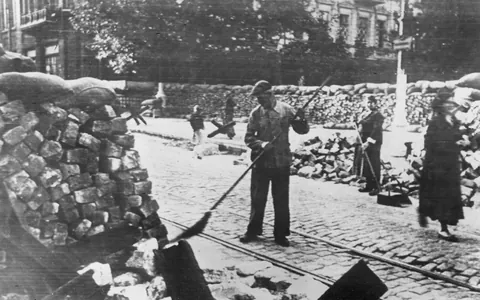
- 1942Barvenkovo-Lozovaya offensive, 1942Soviet Union vs Germany
In January 1942 the Red Army broke through on the Donets near Izyum and drove toward the Dnieper, but the Germans held the shoulders and the gain became the Izyum bulge.
- 1942The Battle of Stalingrad, 1942-1943USSR vs Germany and allies
Five months of street fighting on the Volga, a surprise encirclement, and the surrender that turned the whole war in the East.

- 1942Operation Uranus, 1942Soviet Union vs Germany and Romania
On 19 November 1942 the Red Army struck the Romanian armies on both flanks of Stalingrad. Four days later the German Sixth Army was encircled.
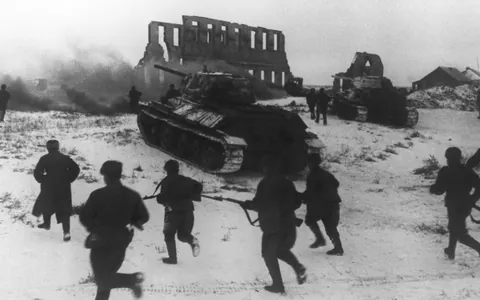
- 1943The Battle of Kursk, 1943USSR vs Germany (Operation Citadel)
Hitler's doomed 1943 gamble and the greatest tank battle of the war, told scene by scene.
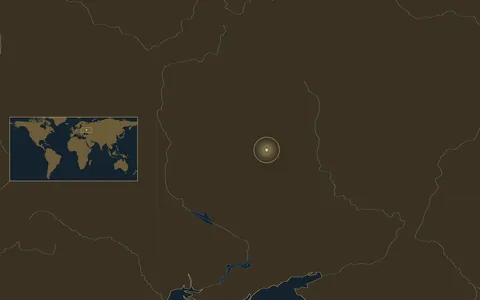
- 1943Battle of Prokhorovka, 1943Soviet Union vs Germany
On 12 July 1943 the Soviet 5th Guards Tank Army attacked the II SS Panzer Corps at Prokhorovka. What really happened and why the legend grew.
- 1943Operation Kutuzov, 1943Soviet Union vs Germany
On 12 July 1943, at the height of Kursk, the Red Army attacked the German bulge around Orel. Five weeks later it had taken Orel and pushed the Germans back.
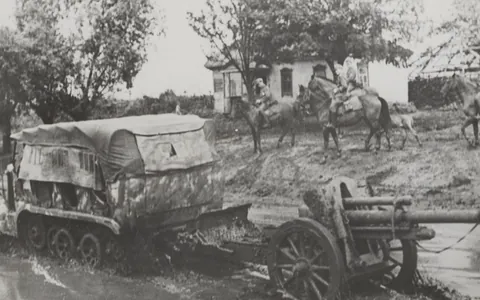
- 1943Donbas offensive, July 1943Soviet Union vs Germany
In July 1943 the Red Army attacked on the Mius and at Izyum. It gained little and was thrown back, but the attack pulled German panzers south from Kursk.
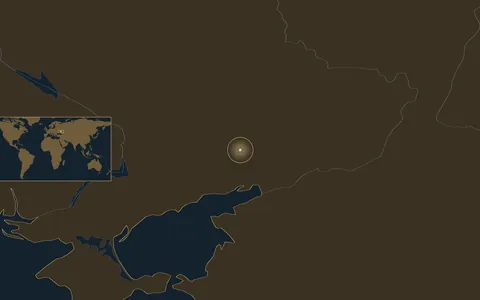
- 1943Smolensk operation, 1943Soviet Union vs Germany
From August to October 1943 two Soviet fronts ground through the forest defenses of Army Group Center and retook Smolensk on 25 September.
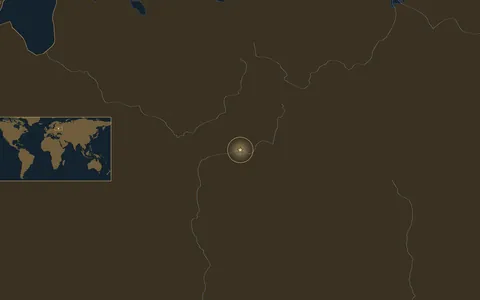
- 1944Leningrad-Novgorod offensive, 1944Soviet Union vs Germany
On 14 January 1944 two Soviet fronts struck from Oranienbaum, Leningrad and Novgorod. Within two weeks the German ring was broken and the 872-day siege was over.
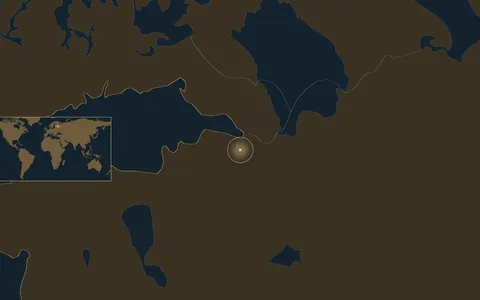
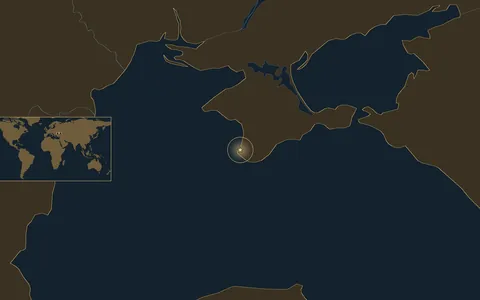
- 1944Crimean offensive, 1944Soviet Union vs Germany and Romania
In April and May 1944 the Red Army broke into the Crimea, drove the German 17th Army into Sevastopol and took the city in three days of assault.
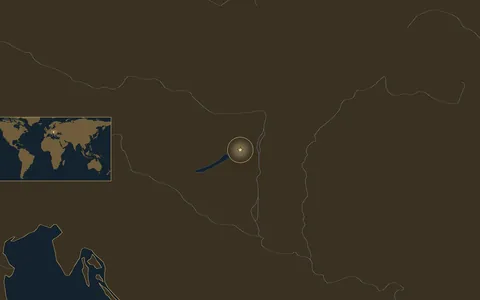
- 1945Operation Konrad III, 1945Germany and Hungary vs Soviet Union
On 18 January 1945 German panzers struck from Lake Balaton to relieve encircled Budapest. They reached the Danube in 27 hours and retook Székesfehérvár, but stalled about 25 km short of the city.
- 1945The Battle of Berlin, 1945USSR vs Nazi Germany
The ferocious final battle for Hitler's capital in 1945, told scene by scene.
- 1945Battle of the Seelow Heights, 1945Soviet Union and Poland vs Germany
On 16 April 1945 Zhukov's armies attacked the Seelow Heights, the last ridge before Berlin. Searchlights blinded the wrong side, and the breakthrough took four bloody days.
- 1945Battle of Halbe, 1945Soviet Union vs Germany
In late April 1945 the encircled German Ninth Army and thousands of refugees tried to break out through Halbe, south of Berlin. About 40,000 died; 25,000 soldiers reached the Elbe.
Timeline of the Eastern Front
- 22 June 1941Germany invades the Soviet Union (Operation Barbarossa).35
- 8 September 1941The siege of Leningrad begins.36
- 29 and 30 September 1941The massacre of Jews at Babyn Yar, outside Kyiv.37
- 6 December 1941
- 2 February 1943The Battle of Stalingrad ends with the German surrender.39
- 5 July 1943Germany attacks the Kursk salient (Operation Citadel); the Battle of Kursk ends with the fall of Kharkiv on 23 August.40
- 23 June 1944Operation Bagration opens in Belorussia.41
- 1 August to 2 October 1944The Warsaw Uprising; the Red Army halts on the Vistula.42
- 16 April 1945The final Soviet offensive begins at the Seelow Heights.43
- 2 May 1945Berlin falls to the Red Army; Germany surrenders on 8 May.44
Where to read next
The Eastern Front was one theater of World War II: see also our hub on the Pacific War, the greatest battles of World War II and the greatest battles of the Eastern Front. Our articles on the siege of Odessa in 1941 and the end of the war in Austria cover its southern flank. Read the biographies of Georgy Zhukov and Władysław Anders and test yourself with the World War II battles quiz.
Notes
A number in the text points to a note; each note names the works that paragraph draws on, listed in full under Sources.
- Imperial War Museums, “Eastern Front”; United States Holocaust Memorial Museum, “Invasion of the Soviet Union, June 1941”; Encyclopaedia Britannica, “Eastern Front”; Encyclopaedia Britannica, “Battle of Berlin”. ↩
- Imperial War Museums, “Eastern Front”; The National WWII Museum, “Operation Barbarossa”; United States Holocaust Memorial Museum, “Invasion of the Soviet Union, June 1941”. ↩
- United States Holocaust Memorial Museum, “German-Soviet Pact”; Encyclopaedia Britannica, “German-Soviet Nonaggression Pact”. ↩
- United States Holocaust Memorial Museum, “Invasion of the Soviet Union, June 1941”; United States Holocaust Memorial Museum, “Axis Powers in WWII”; Encyclopaedia Britannica, “Eastern Front”. ↩
- United States Holocaust Memorial Museum, “Invasion of the Soviet Union, June 1941”; The National WWII Museum, “Immeasurable Brutality, the Nazi-Soviet War 1941 to 1945”; United States Holocaust Memorial Museum, “Nazi Persecution of Soviet Prisoners of War”. ↩
- United States Holocaust Memorial Museum, “Forced Labor”; United States Holocaust Memorial Museum, “Invasion of the Soviet Union, June 1941”; HISTORY, “Operation Barbarossa”. ↩
- Encyclopaedia Britannica, “Eastern Front”; United States Holocaust Memorial Museum, “Invasion of the Soviet Union, June 1941”; United States Holocaust Memorial Museum, “Nazi Persecution of Soviet Prisoners of War”; United States Holocaust Memorial Museum, “Axis Powers in WWII”; The National WWII Museum, “Operation Barbarossa”. ↩
- Encyclopaedia Britannica, “Operation Barbarossa”; The National WWII Museum, “Operation Barbarossa”. ↩
- The American Heritage Museum, “Eastern Front”; The National WWII Museum, “Lend-Lease to the Eastern Front”; Radio Free Europe/Radio Liberty, “‘We Would Have Lost’: Did U.S. Lend-Lease Aid Tip The Balance In Soviet Fight Against Nazi Germany?”; Encyclopaedia Britannica, “Eastern Front”. ↩
- United States Holocaust Memorial Museum, “Axis Powers in WWII”; Encyclopaedia Britannica, “Eastern Front”. ↩
- Encyclopaedia Britannica, “Eastern Front”; United States Holocaust Memorial Museum, “Invasion of the Soviet Union, June 1941”; The National WWII Museum, “Operation Barbarossa”. ↩
- EHNE, “The siege of Leningrad (1941-1944)”; Encyclopedia.com, “Leningrad, Siege of”; Encyclopaedia Britannica, “Siege of Leningrad”. ↩
- Encyclopaedia Britannica, “Battle of Moscow”; United States Holocaust Memorial Museum, “Invasion of the Soviet Union, June 1941”; The National WWII Museum, “Operation Barbarossa”; Encyclopaedia Britannica, “Eastern Front”; Deutsches Historisches Museum, “Die Ostfront”. ↩
- Encyclopaedia Britannica, “Eastern Front”; Encyclopaedia Britannica, “Battle of Stalingrad”; United States Holocaust Memorial Museum, “Invasion of the Soviet Union, June 1941”. ↩
- Encyclopaedia Britannica, “Eastern Front”; Encyclopaedia Britannica, “Battle of Stalingrad”; Imperial War Museums, “Eastern Front”; The National WWII Museum, “History Through the Viewfinder (the Battle of Kursk)”. ↩
- Encyclopaedia Britannica, “Battle of Kursk”; The National WWII Museum, “History Through the Viewfinder (the Battle of Kursk)”. ↩
- Encyclopaedia Britannica, “Battle of Kursk”; The National WWII Museum, “History Through the Viewfinder (the Battle of Kursk)”; Encyclopaedia Britannica, “Eastern Front”; United States Holocaust Memorial Museum, “Mass Shootings at Babyn Yar (Babi Yar)”. ↩
- Encyclopaedia Britannica, “Siege of Leningrad”; EHNE, “The siege of Leningrad (1941-1944)”; Encyclopaedia Britannica, “Eastern Front”; Encyclopaedia Britannica, “World War II”; Radio Free Europe/Radio Liberty, “The Siege Of Sevastopol”. ↩
- Encyclopaedia Britannica, “Eastern Front”; Encyclopedia.com, “Bagration Operation”; Imperial War Museums, “Eastern Front”. ↩
- Encyclopaedia Britannica, “Eastern Front”; The National WWII Museum, “The Allied Responses to the Warsaw Uprising of 1944”. ↩
- Encyclopaedia Britannica, “Eastern Front”; The National WWII Museum, “The Allied Responses to the Warsaw Uprising of 1944”; Deutsches Historisches Museum, “Die Ostfront”; Imperial War Museums, “Eastern Front”; Encyclopaedia Britannica, “Battle of Berlin”; Encyclopaedia Britannica, “Eastern Front”. ↩
- United States Holocaust Memorial Museum, “Einsatzgruppen”; United States Holocaust Memorial Museum, “Mass Shootings at Babyn Yar (Babi Yar)”; Encyclopaedia Britannica, “Einsatzgruppen”; Internet Encyclopedia of Ukraine, “Holocaust”. ↩
- The National WWII Museum, “Immeasurable Brutality, the Nazi-Soviet War 1941 to 1945”; Berliner Geschichtswerkstatt, “The Hunger Plan”; United States Holocaust Memorial Museum, “Invasion of the Soviet Union, June 1941”; EHNE, “The siege of Leningrad (1941-1944)”; Encyclopedia.com, “Leningrad, Siege of”; Internet Encyclopedia of Ukraine, “Holocaust”. ↩
- United States Holocaust Memorial Museum, “Nazi Persecution of Soviet Prisoners of War”; NS-Dokumentationszentrum München, “Soviet prisoners of war”; Deutscher Bundestag, “Bundestag erinnert an Überfall auf die Sowjetunion”; HISTORY, “Operation Barbarossa”; The National WWII Museum, “Immeasurable Brutality, the Nazi-Soviet War 1941 to 1945”. ↩
- The National WWII Museum, “Immeasurable Brutality, the Nazi-Soviet War 1941 to 1945”; Smithsonian Magazine, “How the 1943 Khatyn Massacre Became a Symbol of Nazi Atrocities on the Eastern Front”. ↩
- The National WWII Museum, “The 1941 NKVD Prison Massacres in Western Ukraine”; Internet Encyclopedia of Ukraine, “Holocaust”; EHNE, “The siege of Leningrad (1941-1944)”; Encyclopedia.com, “Leningrad, Siege of”; UNHCR, “Punished peoples”; Novaya Gazeta Europe, “Exile and the empire”. ↩
- Encyclopaedia Britannica, “Battle of Berlin”; NPR, “Silence Broken On Red Army Rapes In Germany”; United States Holocaust Memorial Museum, “Forced Labor”; NS-Dokumentationszentrum München, “Repatriation”; Deutscher Bundestag, “Bundestag erinnert an Überfall auf die Sowjetunion”. ↩
- Meduza, “27 million lives lost”; Deutscher Bundestag, “Bundestag erinnert an Überfall auf die Sowjetunion”; The National WWII Museum, “Research Starters”; The National WWII Museum, “History Through the Viewfinder (the Battle of Kursk)”; Encyclopaedia Britannica, “Eastern Front”. ↩
- Meduza, “27 million lives lost”; HistoryNet, “Book Review”; The National WWII Museum, “Research Starters”; Encyclopaedia Britannica, “Eastern Front”. ↩
- Deutscher Bundestag, “Bundestag erinnert an Überfall auf die Sowjetunion”; Deutsches Historisches Museum, “Die Ostfront”; Encyclopaedia Britannica, “Eastern Front”; The National WWII Museum, “Lend-Lease to the Eastern Front”; The National WWII Museum, “Operation Barbarossa”. ↩
- Encyclopaedia Britannica, “World War II”; The National WWII Museum, “History Through the Viewfinder (the Battle of Kursk)”; Encyclopaedia Britannica, “Eastern Front”; Encyclopedia.com, “Bagration Operation”. ↩
- The National WWII Museum, “Operation Barbarossa”; Encyclopedia.com, “Bagration Operation”; Encyclopaedia Britannica, “Battle of Berlin”; Encyclopaedia Britannica, “Eastern Front”; The National WWII Museum, “The Allied Responses to the Warsaw Uprising of 1944”. ↩
- The American Heritage Museum, “Eastern Front”; Imperial War Museums, “Eastern Front”; Encyclopaedia Britannica, “Operation Barbarossa”; United States Holocaust Memorial Museum, “Invasion of the Soviet Union, June 1941”; Encyclopaedia Britannica, “Eastern Front”; Encyclopaedia Britannica, “Eastern Front”; Encyclopedia.com, “Bagration Operation”. ↩
- The National WWII Museum, “The Allied Responses to the Warsaw Uprising of 1944”; Encyclopaedia Britannica, “Eastern Front”. ↩
- Encyclopaedia Britannica, “Eastern Front”; Imperial War Museums, “Eastern Front”. ↩
- Encyclopaedia Britannica, “Siege of Leningrad”; EHNE, “The siege of Leningrad (1941-1944)”. ↩
- United States Holocaust Memorial Museum, “Mass Shootings at Babyn Yar (Babi Yar)”; Encyclopaedia Britannica, “Einsatzgruppen”. ↩
- United States Holocaust Memorial Museum, “Invasion of the Soviet Union, June 1941”; The National WWII Museum, “Operation Barbarossa”. ↩
- Encyclopaedia Britannica, “Battle of Stalingrad”; The National WWII Museum, “History Through the Viewfinder (the Battle of Kursk)”. ↩
- Encyclopaedia Britannica, “Battle of Kursk”; The National WWII Museum, “History Through the Viewfinder (the Battle of Kursk)”. ↩
- Encyclopaedia Britannica, “Eastern Front”; Encyclopedia.com, “Bagration Operation”. ↩
- The National WWII Museum, “The Allied Responses to the Warsaw Uprising of 1944”; Encyclopaedia Britannica, “Eastern Front”. ↩
- Imperial War Museums, “Eastern Front”; Encyclopaedia Britannica, “Eastern Front”. ↩
- Encyclopaedia Britannica, “Battle of Berlin”; Encyclopaedia Britannica, “Eastern Front”. ↩
Sources
- Imperial War Museums, “Eastern Front”.
- United States Holocaust Memorial Museum, “Invasion of the Soviet Union, June 1941”.
- Encyclopaedia Britannica, “Eastern Front”.
- Encyclopaedia Britannica, “Battle of Berlin”.
- The National WWII Museum, “Operation Barbarossa: The Biggest of All Time”.
- United States Holocaust Memorial Museum, “German-Soviet Pact”.
- Encyclopaedia Britannica, “German-Soviet Nonaggression Pact”.
- United States Holocaust Memorial Museum, “Axis Powers in WWII”.
- The National WWII Museum, “Immeasurable Brutality, the Nazi-Soviet War 1941 to 1945: An Interview with Jeff Rutherford, PhD”.
- United States Holocaust Memorial Museum, “Nazi Persecution of Soviet Prisoners of War”.
- United States Holocaust Memorial Museum, “Forced Labor: Soviet POWs January 1942 through May 1945”.
- HISTORY (A&E Television Networks), “Operation Barbarossa: Date & Significance”.
- Encyclopaedia Britannica, “Operation Barbarossa”.
- The American Heritage Museum, “Eastern Front”.
- The National WWII Museum, “Lend-Lease to the Eastern Front”.
- Radio Free Europe/Radio Liberty, “‘We Would Have Lost’: Did U.S. Lend-Lease Aid Tip The Balance In Soviet Fight Against Nazi Germany?”.
- Encyclopaedia Britannica, “Eastern Front: Russian advance to the Vistula (summer 1944)”.
- EHNE, Encyclopédie d'histoire numérique de l'Europe (Sorbonne Université), François-Xavier Nérard, “The siege of Leningrad (1941-1944)”.
- Encyclopedia.com (Gale, Encyclopedia of Russian History), “Leningrad, Siege of”.
- Encyclopaedia Britannica, “Siege of Leningrad”.
- Encyclopaedia Britannica, “Battle of Moscow”.
- Deutsches Historisches Museum, LeMO, “Die Ostfront”.
- Encyclopaedia Britannica, “Battle of Stalingrad”.
- Encyclopaedia Britannica, “Eastern Front: Stalingrad, the turning point in the East”.
- The National WWII Museum, “History Through the Viewfinder (the Battle of Kursk)”.
- Encyclopaedia Britannica, “Battle of Kursk”.
- United States Holocaust Memorial Museum, “Mass Shootings at Babyn Yar (Babi Yar)”.
- Encyclopaedia Britannica, “World War II: German Strategy, 1943”.
- Radio Free Europe/Radio Liberty, “The Siege Of Sevastopol: Why The Crimean Campaign Means So Much To Moscow”.
- Encyclopedia.com (Gale, Encyclopedia of Russian History), “Bagration Operation”.
- The National WWII Museum, “The Allied Responses to the Warsaw Uprising of 1944”.
- United States Holocaust Memorial Museum, “Einsatzgruppen: An Overview”.
- Encyclopaedia Britannica, “Einsatzgruppen”.
- Internet Encyclopedia of Ukraine (Canadian Institute of Ukrainian Studies), “Holocaust”.
- Berliner Geschichtswerkstatt, Forced Labor in Berlin, “The Hunger Plan”.
- NS-Dokumentationszentrum München, Departure Neuaubing, “Soviet prisoners of war”.
- Deutscher Bundestag, “Bundestag erinnert an Überfall auf die Sowjetunion”.
- Smithsonian Magazine, “How the 1943 Khatyn Massacre Became a Symbol of Nazi Atrocities on the Eastern Front”.
- The National WWII Museum, “The 1941 NKVD Prison Massacres in Western Ukraine”.
- UNHCR, “Punished peoples: the mass deportations of the 1940s”.
- Novaya Gazeta Europe, “Exile and the empire”.
- NPR, “Silence Broken On Red Army Rapes In Germany”.
- NS-Dokumentationszentrum München, Departure Neuaubing, “Repatriation”.
- Meduza, “27 million lives lost”.
- The National WWII Museum, “Research Starters: Worldwide Deaths in World War II”.
- HistoryNet, “Book Review: Soviet Casualties and Combat Losses in the Twentieth Century”.





