

What was the invasion of Poland and who won?
The invasion of Poland was the opening campaign of World War II. Germany attacked on 1 September 1939 and the Soviet Union on 17 September, under the secret protocol of their August pact. Warsaw surrendered on 28 September and the last large Polish force laid down its arms at Kock on 6 October. Poland was defeated and partitioned.1
The invasion of Poland, which Poles call the September Campaign or the defensive war of 1939, opened World War II in Europe. For five weeks the Polish Army fought Nazi Germany and, from 17 September, the Soviet Red Army as well. Its best-known actions include the defense of Westerplatte, the Battle of Mokra, the Battle of the Bzura, the Battle of Wizna and the Battle of Kock. This guide covers the causes, the forces, the course of the fighting, the crimes against civilians and the outcome, with a list of our battle articles below.2
Causes of the invasion of Poland
After World War I the Treaty of Versailles gave the reborn Polish state the former German provinces of West Prussia, Poznań and part of Upper Silesia. This gave Poland access to the sea through the so-called Polish Corridor. Danzig (Gdańsk) became a Free City under the League of Nations. Many Germans never accepted these borders.3
Poland and Germany signed a non-aggression pact in 1934. From October 1938, however, Berlin pressed for the return of Danzig, and Warsaw refused. When German forces occupied what remained of the Czech lands in March 1939, Britain and France gave guarantees to defend Polish independence.4
On 23 August 1939 in Moscow the foreign ministers of Germany and the Soviet Union, Joachim von Ribbentrop and Vyacheslav Molotov, signed a non-aggression pact. Its secret protocol divided eastern Europe into spheres of influence, and in Poland the line between them was to run roughly along the Narew, Vistula and San rivers. The pact freed Hitler from the risk of war with the Soviet Union. In response, Britain and Poland concluded a formal alliance on 25 August.5
On 22 August Hitler told his commanders he would supply a propaganda reason for the war, whether it was believable or not. On the evening of 31 August SS men staged a fake Polish attack on the German radio station at Gleiwitz (now Gliwice) and left behind the body of Franciszek Honiok, a Silesian known to sympathize with Poland, whom the Gestapo had drugged and shot. Hitler cited the incident the next morning. Read more in our article on the Gleiwitz incident.6
Who fought in the invasion of Poland: the forces
Germany attacked from three directions: from Pomerania, from East Prussia, and from Silesia and Slovakia. Army Group North under General Fedor von Bock had Georg von Küchler's Third Army in East Prussia and Günther von Kluge's Fourth Army, which attacked across the Corridor. The stronger Army Group South under General Gerd von Rundstedt comprised Johannes Blaskowitz's Eighth Army, Walter von Reichenau's Tenth Army and Wilhelm List's Fourteenth Army. Slovak units also attacked from the south.7
Sources count the German forces differently. The USHMM gives 60 divisions and nearly 1.5 million men; Britannica gives 1,250,000 troops and more than 1,300 aircraft; the National WWII Museum gives 1.5 million men, 2,750 tanks and 2,315 aircraft; and a PAP summary on the Polish history portal dzieje.pl gives 1.85 million men, 2,800 tanks and 2,000 aircraft.8
The Polish army was clearly weaker. Britannica puts it at 800,000 troops, the National WWII Museum at about a million in theory, many of whom could not be mobilized in time, and dzieje.pl at 950,000. It lacked modern equipment and had few armored and motorized units. The USHMM writes that Poland could deploy little more than 300 aircraft, most of them destroyed by the Luftwaffe in the first days.9
The Polish command placed large forces close to the border instead of defending behind the Narew, Vistula and San. According to dzieje.pl the reasons were political: Poland did not want to give up Pomerania and Silesia without a fight. Britannica judges that this deployment helped Germany's strategy of envelopment, and the USHMM also points to late mobilization.10
On 17 September the Soviet Union entered the war. According to Poland's Institute of National Remembrance (IPN), it used more than 600,000 troops, 4,700 tanks and 3,300 aircraft; the National WWII Museum gives more than 450,000 troops, and dzieje.pl about 1.5 million in three echelons in all. Poland's eastern border, over 1,400 km long, was held mainly by thinned-out units of the Border Protection Corps (KOP).11
Britain and France stood by their guarantee and declared war on Germany on 3 September. They took no effective military action in the west, however, so Poland in practice fought alone.12

How the invasion of Poland unfolded, 1 September to 6 October
The invasion began at dawn on 1 September 1939, without a declaration of war: at 4:45 a.m. according to the Imperial War Museums. At about that time the old battleship Schleswig-Holstein, then a training ship, opened fire on the Polish depot at Westerplatte. The same morning German bombers destroyed the undefended town of Wieluń.13
The Luftwaffe quickly won control of the air, and the panzer divisions broke through the Polish lines into the rear. Britannica notes that the speed of the advance made the word blitzkrieg famous. On 6 September the commander-in-chief, Marshal Edward Rydz-Śmigły, and the government left Warsaw, and on 8 September the first German units reached the capital.14
On 9 September the Poznań and Pomorze armies under General Tadeusz Kutrzeba struck the flank of the German forces advancing on Warsaw. The Battle of the Bzura was the largest battle of the campaign. The Poles threw the Germans back about 20 km but were encircled by about 19 September; the National WWII Museum says 20,000 Polish soldiers were killed. The battle ended in defeat but delayed the fall of the capital. Read more about the Battle of the Bzura.15

On 17 September, breaking the Polish-Soviet non-aggression pact, the Red Army crossed Poland's eastern border. Moscow claimed that the Polish state had ceased to exist and that it was taking the Ukrainian and Belarusian population under its protection. Rydz-Śmigły ordered a retreat to Romania and Hungary and told his troops not to fight the Soviets unless attacked or threatened with disarmament. Fighting broke out anyway, at Wilno (now Vilnius) and Grodno (now Hrodna), Kodziowce and Szack among other places. Our article on the Soviet invasion of Poland covers it in detail.16
On the night of 17 to 18 September President Ignacy Mościcki, the government and the commander-in-chief crossed into Romania, where they were interned. The state survived through a transfer of office: on 30 September Władysław Raczkiewicz was sworn in as president in Paris and the same day appointed General Władysław Sikorski prime minister and commander-in-chief.17
Warsaw was besieged from 8 September. The worst day was 25 September, "Black Monday": according to dzieje.pl nearly 400 bombers dropped almost 630 tons of bombs on the city, and according to the National WWII Museum 560 tons of high explosive and 72 tons of incendiaries. At 1:15 p.m. on 28 September General Tadeusz Kutrzeba and General Johannes Blaskowitz signed the surrender of the capital. The National WWII Museum estimates that more than 20,000 civilians died in the siege; dzieje.pl says about 10,000 residents were killed on 25 September alone.18
The Modlin fortress surrendered on 29 September, and on 2 October the Hel Fortified Area, the last Polish foothold on the coast, capitulated. The last battle was fought at Kock from 2 to 5 October by General Franciszek Kleeberg's Independent Operational Group Polesie; out of ammunition, its soldiers laid down their arms on 6 October. Britannica ends the campaign on 5 October, the USHMM on 6 October.19

Westerplatte, Mokra, Mława, Wizna and Kock: the best-known battles
Westerplatte. The peninsula lay in the Free City of Danzig, but from 1924 the Polish Army kept a Military Transit Depot there, commanded in 1939 by Major Henryk Sucharski. The garrison held out for a week and surrendered on 7 September, when its water, food and medical supplies ran out. According to memorialmuseums.org about 15 defenders were killed. Westerplatte was not the first target attacked, but it became the symbol of the start of the war. See the defense of Westerplatte.20
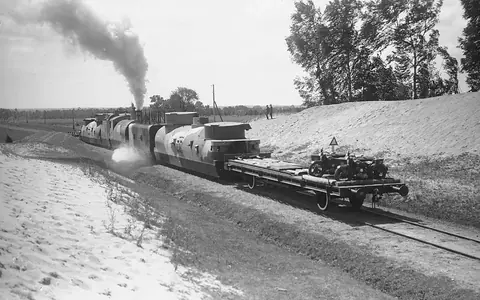
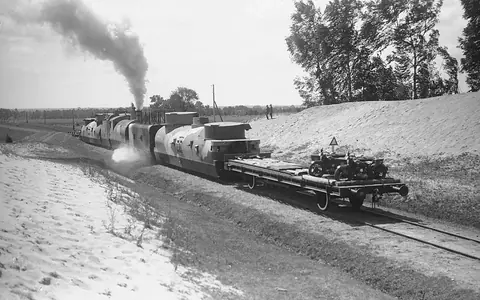
Mokra. On 1 September, northwest of Częstochowa, Colonel Julian Filipowicz's Wołyń Cavalry Brigade held off the 4th Panzer Division all day. The Polish cavalry did not charge tanks with sabers: it fought with antitank guns and rifles, backed by an armored train. The National WWII Museum writes that it destroyed more than 50 German tanks and inflicted 800 casualties. Read more about the Battle of Mokra.21
Mława. From 1 to 3 September the 20th Infantry Division of the Modlin Army held the line at Mława against Georg von Küchler's German Third Army, which was advancing from East Prussia toward Warsaw. More in our article on the Battle of Mława.22
Wizna. Captain Władysław Raginis and a company of the Border Protection Corps were to hold a 9 km sector on the Narew with almost no antitank weapons. The main fighting came on 9 and 10 September. According to dzieje.pl most of the 720 defenders were killed, and the wounded Raginis took his own life in his bunker on Góra Strękowa. The stand is often called the "Polish Thermopylae". More in our article on the Battle of Wizna.23
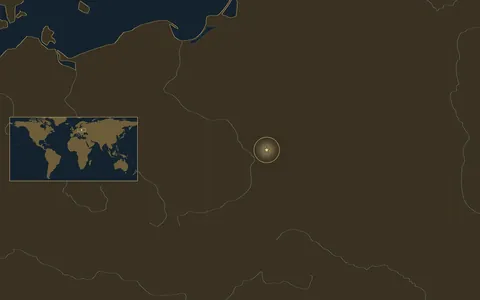
Kock. Group Polesie was formed on 9 September to defend Polesie. After 17 September it fought both invaders and set out to relieve Warsaw. Kleeberg refused to be evacuated to Romania, saying he would not leave his soldiers. At Kock his units even won a tactical success, but lack of ammunition forced the surrender. See the Battle of Kock and the defense of Hel.24
Key commanders of the invasion of Poland
The Polish commander-in-chief was Marshal Edward Rydz-Śmigły. General Tadeusz Kutrzeba commanded the Poznań Army and, on the Bzura, the combined Poznań and Pomorze armies, and drew up the plan of that attack. General Juliusz Rómmel led the Łódź Army and later the Warsaw Army. The defense of the capital was directed by General Walerian Czuma and the city's mayor, Stefan Starzyński, as civilian commissioner. Rear Admiral Józef Unrug commanded the defense of the coast.25

On the German side Generals Fedor von Bock and Gerd von Rundstedt led the two army groups, and Walter von Reichenau's Tenth Army spearheaded the drive on Warsaw. General Heinz Guderian's XIX Panzer Corps went through Wizna and on to Brest (Brześć), whose fortress, under General Konstanty Plisowski, held out until 16 September.26
Crimes against civilians and prisoners in 1939
Wieluń. On the morning of 1 September the Luftwaffe bombed a town with no troops and no anti-aircraft defenses. The first bombs hit a hospital marked with red crosses. IPN historian Janusz Wróbel says between several hundred and 1,200 people were killed and 75 percent of the town was destroyed. The National WWII Museum notes that the Germans bombed 150 towns and villages in the first days of the war alone.27
Bydgoszcz. On 3 and 4 September retreating Polish troops were fired on in the city from hiding. A team of historians brought together by the IPN concluded that this was German sabotage, and that its suppression led to lynchings in which many innocent Germans also died. German historiography described those days as a pogrom of the German minority, and Nazi propaganda called them "Bloody Sunday". After entering the city on 5 September the Germans began mass executions of Poles, including public ones in the Old Market Square on 9 and 10 September. Historians still disagree about the events.28
Terror in the occupied lands. German SS and police task forces (Einsatzgruppen) followed the front. According to the USHMM, after the attack on Poland they and other units shot thousands of Jews and tens of thousands of members of the Polish elites. In Pomerania, as the IPN reports, the Selbstschutz militia and the Einsatzgruppen murdered at least 16,000 people, and historians estimate 20,000 to 40,000 victims; the largest killing site was Piaśnica.29
Soviet crimes. From the first days the Red Army and the NKVD killed Polish soldiers, police officers and officials. After Grodno fell about 300 of its defenders were shot, in Polesie about 150 sailors of the Pinsk Flotilla were killed, and on 22 September General Józef Olszyna-Wilczyński was murdered. The occupation brought arrests, deportations and the Katyn massacre: by a decision of the Soviet Politburo of 5 March 1940, thousands of captured Polish officers were shot.30
Who won the invasion of Poland? Losses and partition
Nazi Germany and the Soviet Union won the campaign. On 28 September in Moscow they signed the Boundary and Friendship Treaty, which confirmed the partition of Poland and adjusted the line agreed in August. The National WWII Museum stresses, however, that Poland never formally surrendered, and its authorities carried on in exile.31
In October Germany annexed most of western Poland to the Reich, including the Corridor and Danzig. On 26 October it turned the rest of its zone into the General Government, with its seat in Kraków, under Hans Frank. The Soviet Union handed Wilno (Vilnius) to Lithuania and formally annexed the rest of its zone on 1 and 2 November 1939 as "Western Belarus" and "Western Ukraine".32
Losses differ by source. Britannica gives 66,000 Polish dead, 130,000 wounded and 400,000 captured, and 14,000 Germans dead or missing and 30,000 wounded. Memorialmuseums.org gives more than 66,000 Polish soldiers killed, about 133,000 wounded and 400,000 taken prisoner by the Germans. The PAP summary on dzieje.pl gives 70,000 Polish soldiers killed and about 45,000 German killed and wounded.33
Defeat did not end the fight. Before Warsaw surrendered, the underground Service for Poland's Victory was founded; the Home Army later grew out of it. According to dzieje.pl more than 100,000 soldiers and civilians escaped through Romania and Hungary, and many reached France and Britain, where the Polish Armed Forces fought alongside the Allies on every front. The capital's later fate is told in our article on the Warsaw Uprising.34
Why Poland lost in 1939, and how the campaign is remembered
Poland lost because of Germany's superiority in men, tanks and aircraft, a long border that could be attacked from three sides after Germany took Moravia and moved into Slovakia, and the Soviet attack of 17 September. Even so, the USHMM writes that the Polish army fought tenaciously and inflicted serious casualties on the Germans, and historians quoted by dzieje.pl agree that the Polish soldier fought well.35
Westerplatte became the symbol of resistance, and Wieluń the symbol of crimes against civilians. For more Polish victories and defeats across the centuries, see our guide to the military history of Poland.36
Major battles of the invasion of Poland
Our articles on the battles and events of the 1939 campaign are listed below in date order.
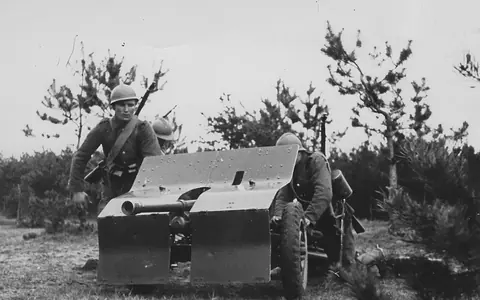
- 1939Battle of Wizna, 1939Poland vs Nazi Germany
How a few hundred Poles held Wizna for three days against a German corps in 1939, the Polish Thermopylae.
- 1939The Gleiwitz incident, 1939Nazi Germany (SD and Gestapo) vs Victim
On 31 August 1939 SS men posing as Polish insurgents raided the Gleiwitz radio station and murdered Franz Honiok, staging a pretext for the invasion of Poland.
- 1939The Defence of Hel, 1939Poland vs Germany
Cut off on a Baltic sandbar, the garrison held for 32 days.
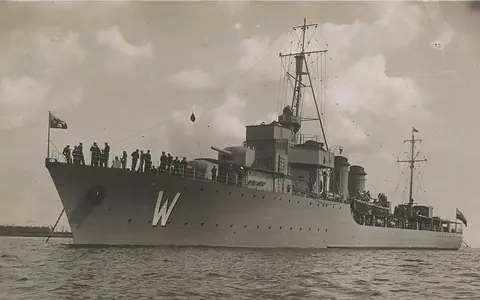
- 1939The Battle of Mokra, 1939Poland vs Germany
On the first day of the war, a cavalry brigade held off a panzer division.
- 1939
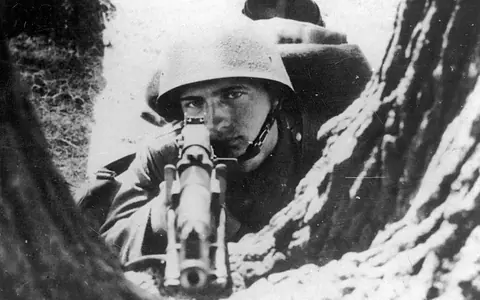
- 1939The Battle of Westerplatte, 1939Poland vs Nazi Germany
Told to hold for twelve hours, Westerplatte held for seven days.
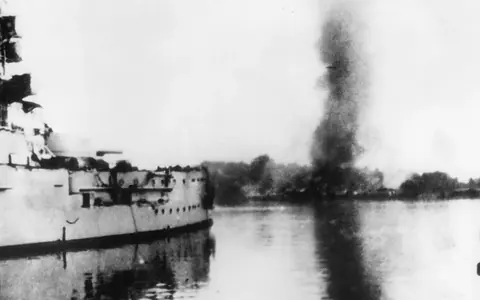
- 1939Battle of Kałuszyn, 1939Poland vs Nazi Germany
How the Iron Division retook Kałuszyn east of Warsaw in a night attack, and the famous, contested uhlan charge of 1939.
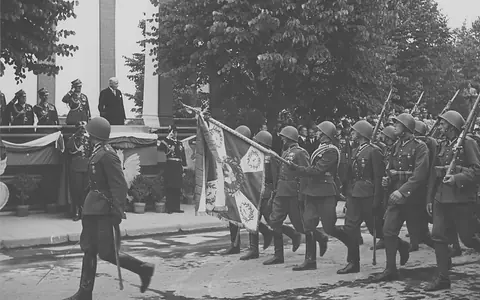
- 1939Soviet invasion of Poland, 1939Soviet Union vs Poland
On 17 September 1939, with Poland still fighting Germany, the Red Army crossed the eastern border under the secret Nazi-Soviet protocol. The invasion, the resistance and the cost.
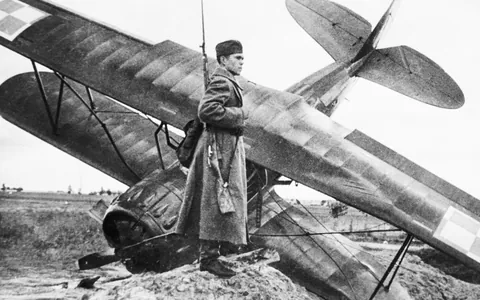
- 1939The Battle of the Bzura, 1939Poland vs Nazi Germany
The largest battle of September 1939, and Poland's great counterstroke.
- 1939The Battle of Kock, 1939Poland vs Germany
Undefeated in the field, General Kleeberg ran out of ammunition.
Timeline of the invasion of Poland
- 23 August 1939The Nazi-Soviet pact and its secret protocol divide eastern Europe.37
- 25 August 1939Formal Anglo-Polish alliance.38
- 31 August 1939The staged attack on the Gleiwitz radio station.39
- 1 September 1939Germany invades Poland; Westerplatte shelled and Wieluń bombed.40
- 3 September 1939Britain and France declare war on Germany.41
- 7 September 1939Westerplatte surrenders.42
- 9 to 19 September 1939The Battle of the Bzura, the largest of the campaign.43
- 10 September 1939The defense of Wizna collapses.44
- 17 September 1939The Soviet invasion; that night the Polish leadership crosses into Romania.45
- 22 September 1939Grodno falls and its defenders are murdered.46
- 28 September 1939Warsaw surrenders; the German-Soviet Boundary and Friendship Treaty.47
- 30 September 1939General Władysław Sikorski's government in exile.48
- 2 October 1939Hel capitulates.49
- 6 October 1939Group Polesie lays down its arms after the Battle of Kock.50
- 26 October 1939Germany sets up the General Government.51
Where to read next
For the wider story, see our guides to the military history of Poland, the greatest Polish battles, Polish victories against the odds and the greatest battles of World War II; the era page for World War II; and the World War II battles quiz.
Notes
A number in the text points to a note; each note names the works that paragraph draws on, listed in full under Sources.
- United States Holocaust Memorial Museum, “Invasion of Poland, Fall 1939”; dzieje.pl, “70. rocznica wybuchu II wojny światowej”; The National WWII Museum, “The Invasion of Poland”. ↩
- United States Holocaust Memorial Museum, “Invasion of Poland, Fall 1939”; dzieje.pl, “70. rocznica wybuchu II wojny światowej”; Zintegrowana Platforma Edukacyjna, “Kampania polska czyli wrześniowa”. ↩
- United States Holocaust Memorial Museum, “Invasion of Poland, Fall 1939”; Imperial War Museums, “How Europe Went to War in 1939”; Portal to European Sites of Remembrance, “Westerplatte Memorial”. ↩
- Imperial War Museums, “How Europe Went to War in 1939”; Portal to European Sites of Remembrance, “Westerplatte Memorial”. ↩
- Imperial War Museums, “How Europe Went to War in 1939”; Andrzej Włusek, “Soviet invasion of Poland”; dzieje.pl, “78. rocznica sowieckiej napaści na Polskę”. ↩
- The National WWII Museum, “The Invasion of Poland”; dzieje.pl, “70. rocznica wybuchu II wojny światowej”; Zintegrowana Platforma Edukacyjna, “Kampania polska czyli wrześniowa”. ↩
- The National WWII Museum, “The Invasion of Poland”; Adrian Gilbert and the Editors of Encyclopaedia Britannica, “Invasion of Poland”; dzieje.pl, “70. rocznica wybuchu II wojny światowej”. ↩
- United States Holocaust Memorial Museum, “Invasion of Poland, Fall 1939”; Adrian Gilbert and the Editors of Encyclopaedia Britannica, “Invasion of Poland”; The National WWII Museum, “The Invasion of Poland”; dzieje.pl, “70. rocznica wybuchu II wojny światowej”. ↩
- Adrian Gilbert and the Editors of Encyclopaedia Britannica, “Invasion of Poland”; The National WWII Museum, “The Invasion of Poland”; dzieje.pl, “70. rocznica wybuchu II wojny światowej”; United States Holocaust Memorial Museum, “Invasion of Poland, Fall 1939”. ↩
- dzieje.pl, “70. rocznica wybuchu II wojny światowej”; Adrian Gilbert and the Editors of Encyclopaedia Britannica, “Invasion of Poland”; United States Holocaust Memorial Museum, “Invasion of Poland, Fall 1939”. ↩
- Magdalena Dzienis-Todorczuk, “Sowiecka agresja na Polskę 17 września 1939 r.”; The National WWII Museum, “The Invasion of Poland”; dzieje.pl, “78. rocznica sowieckiej napaści na Polskę”. ↩
- United States Holocaust Memorial Museum, “Invasion of Poland, Fall 1939”; Imperial War Museums, “How Europe Went to War in 1939”; dzieje.pl, “70. rocznica wybuchu II wojny światowej”; Adrian Gilbert and the Editors of Encyclopaedia Britannica, “Invasion of Poland”. ↩
- Imperial War Museums, “How Europe Went to War in 1939”; Portal to European Sites of Remembrance, “Westerplatte Memorial”; The National WWII Museum, “The Invasion of Poland”; dzieje.pl, “Historyk IPN”. ↩
- Adrian Gilbert and the Editors of Encyclopaedia Britannica, “Invasion of Poland”; United States Holocaust Memorial Museum, “Invasion of Poland, Fall 1939”; dzieje.pl, “70. rocznica wybuchu II wojny światowej”; The National WWII Museum, “The Invasion of Poland”. ↩
- dzieje.pl, “70. rocznica wybuchu II wojny światowej”; The National WWII Museum, “The Invasion of Poland”; Adrian Gilbert and the Editors of Encyclopaedia Britannica, “Invasion of Poland”; Zintegrowana Platforma Edukacyjna, “Kampania polska czyli wrześniowa”. ↩
- dzieje.pl, “78. rocznica sowieckiej napaści na Polskę”; Magdalena Dzienis-Todorczuk, “Sowiecka agresja na Polskę 17 września 1939 r.”; Andrzej Włusek, “Soviet invasion of Poland”. ↩
- dzieje.pl, “70. rocznica wybuchu II wojny światowej”; United States Holocaust Memorial Museum, “Invasion of Poland, Fall 1939”; Zintegrowana Platforma Edukacyjna, “Rząd polski na uchodźstwie”. ↩
- dzieje.pl, “Czarny poniedziałek 1939 roku”; dzieje.pl, “Warszawa skapitulowała 86 lat temu, rozpoczęły się lata niemieckiej okupacji”; The National WWII Museum, “The Invasion of Poland”; United States Holocaust Memorial Museum, “German Administration of Poland”. ↩
- dzieje.pl, “Kampania polska 1939”; Institute of National Remembrance, “82. rocznica II wojny światowej. Pamiętamy o dzielnych obrońcach Helu”; Institute of National Remembrance, “Generał Franciszek Kleeberg”; United States Holocaust Memorial Museum, “Invasion of Poland, Fall 1939”; Adrian Gilbert and the Editors of Encyclopaedia Britannica, “Invasion of Poland”. ↩
- Portal to European Sites of Remembrance, “Westerplatte Memorial”; Zintegrowana Platforma Edukacyjna, “Kampania polska czyli wrześniowa”; The National WWII Museum, “The Invasion of Poland”. ↩
- dzieje.pl, “Bój pod Mokrą z 1939 r.: polscy ułani zatrzymali niemieckie czołgi”; The National WWII Museum, “The Invasion of Poland”. ↩
- dzieje.pl, “W miejscu bitwy pod Mławą ma powstać mauzoleum żołnierzy polskich”; The National WWII Museum, “The Invasion of Poland”. ↩
- dzieje.pl, “Władysław Raginis (1908 to 1939)”; Institute of National Remembrance, “Kapitan Władysław Raginis”; Zintegrowana Platforma Edukacyjna, “Kampania polska czyli wrześniowa”. ↩
- dzieje.pl, “Bitwa pod Kockiem”; Institute of National Remembrance, “Generał Franciszek Kleeberg”; dzieje.pl, “Kampania polska 1939”. ↩
- dzieje.pl, “70. rocznica wybuchu II wojny światowej”; Zintegrowana Platforma Edukacyjna, “Kampania polska czyli wrześniowa”; dzieje.pl, “Warszawa skapitulowała 86 lat temu, rozpoczęły się lata niemieckiej okupacji”. ↩
- The National WWII Museum, “The Invasion of Poland”; dzieje.pl, “Bitwa pod Kockiem”; Zintegrowana Platforma Edukacyjna, “Kampania polska czyli wrześniowa”. ↩
- dzieje.pl, “Historyk IPN”; The National WWII Museum, “The Invasion of Poland”; Zintegrowana Platforma Edukacyjna, “Kampania polska czyli wrześniowa”. ↩
- dzieje.pl, “75 lat temu doszło do niemieckiej dywersji w Bydgoszczy”; Przemysław Olstowski, “Jeszcze w sprawie tragicznych wydarzeń 3 do 4 września 1939 roku w Bydgoszczy”. ↩
- United States Holocaust Memorial Museum, “Einsatzgruppen”; dzieje.pl, “Otwarto wystawę „Zbrodnia Pomorska 1939 r.” w dniu pamięci ofiar”; Portal to European Sites of Remembrance, “Westerplatte Memorial”. ↩
- Magdalena Dzienis-Todorczuk, “Sowiecka agresja na Polskę 17 września 1939 r.”; Sławomir Kalbarczyk, “Spisane czyny. Pamięć o sowieckich zbrodniach”; dzieje.pl, “70. rocznica wybuchu II wojny światowej”; dzieje.pl, “78. rocznica sowieckiej napaści na Polskę”. ↩
- Magdalena Dzienis-Todorczuk, “Sowiecka agresja na Polskę 17 września 1939 r.”; Andrzej Włusek, “Soviet invasion of Poland”; The National WWII Museum, “The Invasion of Poland”; Zintegrowana Platforma Edukacyjna, “Rząd polski na uchodźstwie”. ↩
- United States Holocaust Memorial Museum, “German Administration of Poland”; Magdalena Dzienis-Todorczuk, “Sowiecka agresja na Polskę 17 września 1939 r.”. ↩
- Adrian Gilbert and the Editors of Encyclopaedia Britannica, “Invasion of Poland”; Portal to European Sites of Remembrance, “Westerplatte Memorial”; dzieje.pl, “70. rocznica wybuchu II wojny światowej”. ↩
- dzieje.pl, “Kampania polska 1939”; Adrian Gilbert and the Editors of Encyclopaedia Britannica, “Invasion of Poland”; Portal to European Sites of Remembrance, “Westerplatte Memorial”. ↩
- United States Holocaust Memorial Museum, “Invasion of Poland, Fall 1939”; dzieje.pl, “70. rocznica wybuchu II wojny światowej”; Adrian Gilbert and the Editors of Encyclopaedia Britannica, “Invasion of Poland”. ↩
- dzieje.pl, “Historyk IPN”; Portal to European Sites of Remembrance, “Westerplatte Memorial”. ↩
- Imperial War Museums, “How Europe Went to War in 1939”; Andrzej Włusek, “Soviet invasion of Poland”. ↩
- Imperial War Museums, “How Europe Went to War in 1939”; dzieje.pl, “70. rocznica wybuchu II wojny światowej”. ↩
- The National WWII Museum, “The Invasion of Poland”; Zintegrowana Platforma Edukacyjna, “Kampania polska czyli wrześniowa”. ↩
- Imperial War Museums, “How Europe Went to War in 1939”; Portal to European Sites of Remembrance, “Westerplatte Memorial”; dzieje.pl, “Historyk IPN”. ↩
- United States Holocaust Memorial Museum, “Invasion of Poland, Fall 1939”; Imperial War Museums, “How Europe Went to War in 1939”. ↩
- Portal to European Sites of Remembrance, “Westerplatte Memorial”; Zintegrowana Platforma Edukacyjna, “Kampania polska czyli wrześniowa”. ↩
- dzieje.pl, “70. rocznica wybuchu II wojny światowej”; The National WWII Museum, “The Invasion of Poland”. ↩
- dzieje.pl, “Władysław Raginis (1908 to 1939)”; Institute of National Remembrance, “Kapitan Władysław Raginis”. ↩
- dzieje.pl, “78. rocznica sowieckiej napaści na Polskę”; United States Holocaust Memorial Museum, “Invasion of Poland, Fall 1939”. ↩
- Magdalena Dzienis-Todorczuk, “Sowiecka agresja na Polskę 17 września 1939 r.”; dzieje.pl, “70. rocznica wybuchu II wojny światowej”. ↩
- dzieje.pl, “Warszawa skapitulowała 86 lat temu, rozpoczęły się lata niemieckiej okupacji”; United States Holocaust Memorial Museum, “German Administration of Poland”; Magdalena Dzienis-Todorczuk, “Sowiecka agresja na Polskę 17 września 1939 r.”. ↩
- Zintegrowana Platforma Edukacyjna, “Rząd polski na uchodźstwie”; dzieje.pl, “70. rocznica wybuchu II wojny światowej”. ↩
- Institute of National Remembrance, “82. rocznica II wojny światowej. Pamiętamy o dzielnych obrońcach Helu”; dzieje.pl, “Kampania polska 1939”. ↩
- Institute of National Remembrance, “Generał Franciszek Kleeberg”; United States Holocaust Memorial Museum, “Invasion of Poland, Fall 1939”. ↩
- United States Holocaust Memorial Museum, “German Administration of Poland”; Magdalena Dzienis-Todorczuk, “Sowiecka agresja na Polskę 17 września 1939 r.”. ↩
Sources
- United States Holocaust Memorial Museum, Holocaust Encyclopedia, “Invasion of Poland, Fall 1939”.
- dzieje.pl (Muzeum Historii Polski, PAP), “70. rocznica wybuchu II wojny światowej” (in Polish), 2009.
- The National WWII Museum, New Orleans, “The Invasion of Poland”.
- Zintegrowana Platforma Edukacyjna (Polish Ministry of Education), “Kampania polska czyli wrześniowa” (in Polish).
- Imperial War Museums, “How Europe Went to War in 1939”.
- Portal to European Sites of Remembrance (memorialmuseums.org), “Westerplatte Memorial”.
- Andrzej Włusek, European Network Remembrance and Solidarity, “Soviet invasion of Poland”.
- dzieje.pl (PAP), “78. rocznica sowieckiej napaści na Polskę” (in Polish), 2017.
- Adrian Gilbert and the Editors of Encyclopaedia Britannica, “Invasion of Poland”, Encyclopaedia Britannica.
- Magdalena Dzienis-Todorczuk, “Sowiecka agresja na Polskę 17 września 1939 r.”, Przystanek Historia (Institute of National Remembrance, IPN), 2022 (in Polish).
- dzieje.pl (PAP), “Historyk IPN: Wieluń jest symbolem zbrodni niemieckich na ludności cywilnej” (in Polish).
- Zintegrowana Platforma Edukacyjna (Polish Ministry of Education), “Rząd polski na uchodźstwie” (in Polish).
- dzieje.pl (PAP), “Czarny poniedziałek 1939 roku: na Warszawę spadło niemal 630 ton bomb” (in Polish).
- dzieje.pl (PAP), “Warszawa skapitulowała 86 lat temu, rozpoczęły się lata niemieckiej okupacji” (in Polish), 2025.
- United States Holocaust Memorial Museum, Holocaust Encyclopedia, “German Administration of Poland”.
- dzieje.pl, “Kampania polska 1939: koniec i początek” (in Polish).
- Institute of National Remembrance (IPN), Gdańsk branch, “82. rocznica II wojny światowej. Pamiętamy o dzielnych obrońcach Helu” (in Polish), 2021.
- Institute of National Remembrance (IPN), “Generał Franciszek Kleeberg” (in Polish).
- dzieje.pl (PAP), “Bój pod Mokrą z 1939 r.: polscy ułani zatrzymali niemieckie czołgi” (in Polish).
- dzieje.pl (PAP), “W miejscu bitwy pod Mławą ma powstać mauzoleum żołnierzy polskich” (in Polish).
- dzieje.pl, “Władysław Raginis (1908 to 1939)” (in Polish).
- Institute of National Remembrance (IPN), “Kapitan Władysław Raginis” (in Polish).
- dzieje.pl, “Bitwa pod Kockiem: ostatni bój kampanii 1939 roku” (in Polish).
- dzieje.pl (PAP), “75 lat temu doszło do niemieckiej dywersji w Bydgoszczy” (in Polish), 2014.
- Przemysław Olstowski, “Jeszcze w sprawie tragicznych wydarzeń 3 do 4 września 1939 roku w Bydgoszczy”, Zapiski Historyczne 88, no. 1 (2023), pp. 127 to 153.
- United States Holocaust Memorial Museum, Holocaust Encyclopedia, “Einsatzgruppen”.
- dzieje.pl (PAP), “Otwarto wystawę „Zbrodnia Pomorska 1939 r.” w dniu pamięci ofiar” (in Polish), 2023.
- Sławomir Kalbarczyk, “Spisane czyny. Pamięć o sowieckich zbrodniach”, Institute of National Remembrance (IPN), 2022 (in Polish).






