

What was the Franco-Prussian War and who won?
The Franco-Prussian War (1870 to 1871) pitted France against Prussia and its German allies. The German armies won at Gravelotte and Sedan, captured Napoleon III and besieged Paris until it surrendered. Victory created the German Empire, and France lost Alsace and part of Lorraine. Our guides cover the Battle of Spicheren and the siege of Paris.1
French institutions often call it the Franco-German War, because the armies that invaded France in August 1870 came from all the German states, not from Prussia alone. In less than a year the Second French Empire collapsed, a republic took its place and fought on, and the German states united under the Prussian king. The winter battles in the provinces, among them the Battle of Coulmiers and the Battle of Beaune-la-Rolande, were fought after the emperor had fallen.2
Causes of the Franco-Prussian War
The roots lay in 1866. Prussia's victory over Austria created the North German Confederation under Prussian control, a powerful new state in central Europe, and France watched it with alarm and feared for its own leading position on the continent. The Prussian chancellor Otto von Bismarck wanted the southern German states (Bavaria, Württemberg, Baden and Hesse) to join the north, and he believed that a common war against France would overcome their reluctance.3
The occasion came from Spain, whose throne was vacant. In 1870 Prince Leopold of Hohenzollern-Sigmaringen, a relative of the Prussian king, accepted an offer of the Spanish crown, and France, alarmed, protested that it would be surrounded by Hohenzollern rulers on two sides. On 12 July the candidacy was withdrawn.4
The French government wanted more. On 13 July its ambassador, Benedetti, asked King William I at the spa of Ems for a promise that the candidacy would never be renewed. The king politely refused and reported the meeting by telegram. Bismarck shortened the text for publication so that it read as a snub. This edited "Ems dispatch" was taken in France as an insult to national honor and set off war fever, as Bismarck had intended.5
France declared war on Prussia on 19 July 1870. Napoleon III believed his army would win and hoped a victory would restore his sagging prestige, and his generals were confident of victory. Bismarck is generally held to have engineered the crisis, but the French leaders, sure of their army, also chose war.6
Who fought in the Franco-Prussian War: armies, railways and rifles
France fought alone. Against it stood Prussia and the North German Confederation together with Bavaria, Württemberg, Baden and Hesse, which had signed secret defensive alliances with Prussia after 1866 and now placed their armies under Prussian command. Britain, Austria and Italy stayed neutral. After 4 September 1870 the French war was carried on by the Government of National Defense of the new republic.7

Every source gives the Germans a large lead at the start. Planet Wissen and the Deutsches Historisches Museum put the German armies at more than half a million men against about 300,000 to 336,000 French. Prussia mobilized about 470,000 men in eight days, while France needed 21 days for 300,000. As the war went on, both armies grew past one million men.8
Railways made the difference in that race. The German states moved their armies to the frontier quickly by rail, while French generals had not mastered the new railways and French mobilization was marked by confusion and delay. The French recruitment system was poor, letting men who could pay for a substitute escape service. The Prussian army of short-term conscripts was run by a general staff under Helmuth von Moltke that planned the rapid movement of large forces.9
The French infantry carried the Chassepot rifle of 1866, a better weapon than the Prussian Dreyse needle gun. The German side had the better artillery, steel guns from the Krupp works that outclassed the French bronze guns. The French Ministry of the Armed Forces sums up 1870 as an excellent rifle with weak artillery.10
The war of the Empire: frontier battles, Metz and Sedan
The German offensive began in early August with the capture of Wissembourg in northern Alsace. On 6 August came two defeats on the same day: at Froeschwiller-Wörth (Reichshoffen to many French), where Marshal MacMahon's army was routed, opening Alsace and the road to the Vosges; and at the Battle of Spicheren, where Prussian troops stormed the Spicheren heights and forced General Frossard's corps to fall back.11
Marshal Bazaine's Army of the Rhine then fell back on the fortress of Metz. On 16 August the Prussian Second Army under Prince Frederick Charles caught it near Vionville and Mars-la-Tour, blocking the French retreat toward Verdun. Two days later, on 18 August, came the bloody battle of Gravelotte-St Privat. The French were beaten and withdrew inside Metz, where they were besieged.12

A second French army, the Army of Châlons under MacMahon, with Napoleon III himself present, marched to relieve Metz. Moltke trapped it against the Belgian border at Sedan. On 1 September about 200,000 German soldiers and their artillery encircled roughly 120,000 to 130,000 French around the old fortress. The French command fell into confusion, and desperate cavalry charges failed to break the ring. That evening the emperor ordered the white flag raised.13
On 2 September the French army capitulated, and Napoleon III became a prisoner of war. The Fondation Napoléon and Britannica count about 104,000 soldiers captured with him, the Deutsches Historisches Museum about 100,000. The emperor was held at Wilhelmshöhe near Kassel, then went into exile in England. In Germany Sedan was celebrated every year as Sedan Day.14

When the news reached Paris, crowds demanded a republic. On 4 September 1870 the Empire was overthrown, the republic was proclaimed at the Paris town hall, and a Government of National Defense was formed under General Louis Trochu, with Jules Favre and Léon Gambetta among its leaders. It decided to continue the war.15
Bazaine's army was still shut up in Metz. On 27 October 1870 it surrendered with almost all its men and equipment. The number of prisoners is given as 140,000 by Britannica and Sowerwine, about 170,000 by the Deutsches Historisches Museum and 173,000 by the French Ministry of the Armed Forces. Bombarded Strasbourg had fallen at the end of September.16
The war of national defense: the siege of Paris and the armies of the provinces
With the new republic determined to fight on, Moltke made the capital his main objective, hoping to win the war by taking it. German armies closed the ring on 19 September 1870 (the Musée de l'Armée gives 20 September), beginning the siege of Paris, and blockaded the fortified city.17
The besiegers relied on hunger rather than street fighting. Food prices soared, and in a winter of cold and famine the poor ate what they could find, rats included. The garrison's sorties at Le Bourget, Champigny and Buzenval failed. In January 1871 German guns bombarded Paris.18

Balloons carried people and letters over the German lines: a count published in Nature in 1872 and a later study give 64 to 66 balloons, some 160 passengers and 2.5 to 3 million letters. One of the first carried Léon Gambetta, who reached Tours and organized new armies in the provinces.19
The Army of the Loire under General d'Aurelle de Paladines won at the Battle of Coulmiers on 9 November and briefly retook Orléans, but it was stopped at the Battle of Beaune-la-Rolande on 28 November, and Orléans was lost again in early December. In the east, on 1 February 1871, the remnants of General Bourbaki's army crossed into neutral Switzerland and were disarmed. Belfort, under Colonel Denfert-Rochereau, held out.20
By late January Paris was starving. On 28 January 1871 the city capitulated and an armistice was signed, which allowed France to elect a National Assembly. Adolphe Thiers became head of its government, and preliminaries of peace were signed on 26 February. On 1 March German troops held a victory march through a silent, shuttered Paris.21
Key commanders of the Franco-Prussian War
On the German side, King William I of Prussia accompanied his armies, while Helmuth von Moltke, chief of the Prussian general staff, directed them; Fondation Napoléon and the Deutsches Historisches Museum both credit him with the encirclement at Sedan. Bismarck, chancellor of the North German Confederation, shaped the outbreak of the war, negotiated with the southern states during it and negotiated the peace with Thiers. The crown princes of Prussia and Saxony led the armies that closed the trap at Sedan.22
On the French side, Napoleon III took personal command of the army. Marshal MacMahon lost at Froeschwiller-Wörth and led the Army of Châlons to Sedan; Marshal Bazaine was shut up in Metz and surrendered his army there. Under the republic, Léon Gambetta raised the provincial armies, and Generals d'Aurelle de Paladines, Chanzy and Bourbaki commanded them.23
Who won the Franco-Prussian War? The German Empire and the Treaty of Frankfurt
Prussia and its German allies won decisively. During the war Bismarck negotiated with the southern states, which agreed to join the North German Confederation. On 18 January 1871, while German guns were bombarding Paris, William I was proclaimed German Emperor in the Hall of Mirrors at Versailles, the palace of Louis XIV. For most Germans the proclamation was the true founding act of the empire; for the French, the choice of Versailles was a deep humiliation.24

The Treaty of Frankfurt of 10 May 1871 formally ended the war. France ceded Alsace and part of Lorraine, including Strasbourg and the fortress of Metz, but kept Belfort and its territory. It had to pay an indemnity of five billion gold francs, and German troops occupied part of France until the sum was paid; the last of them left Verdun in September 1873.25
How many people died in the Franco-Prussian War?
No exact total exists. The French Ministry of the Armed Forces counts about 138,000 French dead and the German war graves commission (Volksbund) about 140,000. Far more French soldiers went into captivity: about 100,000 to 104,000 at Sedan and 140,000 to 173,000 at Metz.26
The Paris Commune of 1871
Peace with the German Empire did not bring peace to Paris. Many Parisians saw the armistice as a betrayal, and the new government ended the pay of the National Guard and the moratorium on rents. On 18 March 1871 an uprising broke out, the government withdrew to Versailles, and the Paris Commune took power in the city for about two months. This was a French civil war, separate from the war with Germany.27

The French army retook Paris during the "Bloody Week" of 21 to 28 May 1871, neighborhood by neighborhood. How many died is disputed. A figure of about 20,000 dead was long accepted, and the City of Paris still cites it; the historian Robert Tombs, working from cemetery and hospital records, has revised it down to about 6,000 to 7,500, and commentators on his work suggest keeping a wide range between the two. Tens of thousands were arrested and thousands deported to New Caledonia; amnesty came in 1879 and 1880.28
Legacy: Alsace-Lorraine, revanche and the road to 1914
The war changed the balance of Europe. It ended French dominance on the continent and made the German Empire the leading power, while France would from then on remain a republic. For the history of the empire it created, see our hub on the military history of Germany, and for the French side, the military history of France.29
Recovering the lost provinces became a central aim of French foreign policy until World War I, and a spirit of revanche (revenge) grew around memorials, veterans' societies and schools. The annexation lasted from 1871 to 1918. Britannica and the historian Éric Anceau both see the Franco-German rivalry it left as a driving force toward World War I.30
Germans celebrated Sedan Day every year, while France built ossuaries and monuments to its dead. Works such as Alphonse de Neuville's The Last Cartridges (1873) and the Lion of Belfort honor the French resistance. Today a museum and a Franco-German military cemetery at Gravelotte present the war and the annexation.31
Major battles of the Franco-Prussian War
Our articles on the battles and sieges of the war are listed below in date order.
- 1870Siege of Paris, 1870-1871France (Government of National Defense) vs Prussia and the German states
From September 1870 to January 1871 German armies besieged Paris; the city sent its letters out by balloon, ate its zoo animals and finally capitulated on 28 January.
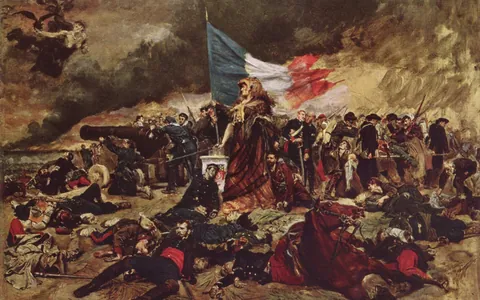
- 1870Battle of Spicheren, 1870Kingdom of Prussia and North German Confederation vs French Empire
On 6 August 1870 Prussian divisions marching to the sound of the guns stormed the Spicheren heights above Saarbrücken and drove Frossard's corps back towards Metz.
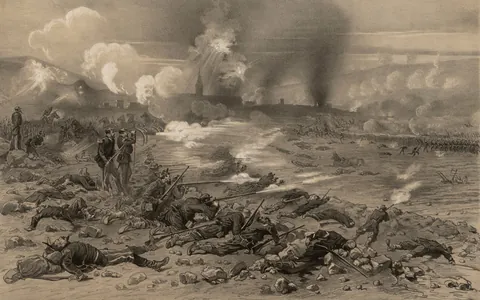
- 1870Battle of Coulmiers, 1870French Republic vs Bavaria and Prussia
On 9 November 1870 France's newly raised Army of the Loire beat the Bavarians at Coulmiers and won back Orléans, one of the few French victories of the war.
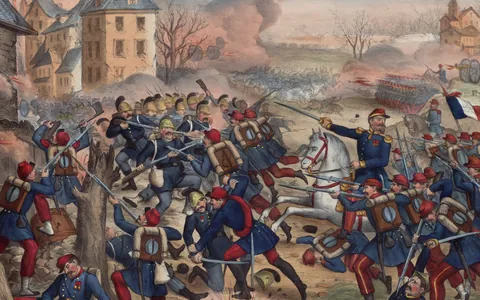
- 1870Battle of Beaune-la-Rolande, 1870Kingdom of Prussia and allies (Second Army) vs French Republic (Army of the Loire)
On 28 November 1870 two French corps marching to relieve Paris struck the Prussian X Corps at Beaune-la-Rolande. Outnumbered, it held on until help came at dusk.
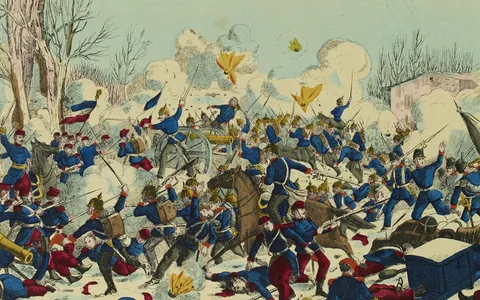
Timeline of the Franco-Prussian War
- 187013 July: Benedetti meets William I at Ems; Bismarck publishes the shortened Ems dispatch.32
- 187019 July: France declares war on Prussia.33
- 1870
- 187016 and 18 August: Mars-la-Tour and Gravelotte-St Privat; Bazaine's army is shut up in Metz.35
- 18701 and 2 September: Battle of Sedan; Napoleon III surrenders with his army.36
- 18704 September: the Empire falls and the republic is proclaimed in Paris.37
- 187019 September: the siege of Paris begins.38
- 187027 October: Bazaine surrenders Metz.39
- 1870
- 187118 January: William I is proclaimed German Emperor at Versailles.41
- 187128 January: Paris capitulates and an armistice is signed.42
- 187118 March to 28 May: the Paris Commune, crushed in the Bloody Week of 21 to 28 May.43
- 187110 May: the Treaty of Frankfurt; France cedes Alsace and part of Lorraine and must pay five billion francs.44
Where to read next
Sedan appears in our rankings of the greatest battles of the industrial age and the greatest battles of France, and the siege of Paris in the greatest sieges in history. For the age of Napoleon I that shaped both armies, see our hub on the Napoleonic Wars; for the wider period, the industrial age. Then test yourself with the industrial age battles quiz or the French battles quiz.
Notes
A number in the text points to a note; each note names the works that paragraph draws on, listed in full under Sources.
- Deutsches Historisches Museum, “Deutsch-Französischer Krieg 1870/71”; Planet Wissen, “Deutsch-Französischer Krieg 1870/1871”; French Ministry of the Armed Forces, “La guerre franco-prussienne de 1870”. ↩
- Fondation Napoléon, “La guerre franco-« allemande » de 1870-1871”; Musée de l'Armée, “France Germany 1870-1871”; Deutsches Historisches Museum, “Deutsch-Französischer Krieg 1870/71”; Encyclopaedia Britannica, “Franco-German War”. ↩
- Encyclopaedia Britannica, “Germany”; Deutsches Historisches Museum, “Deutsch-Französischer Krieg 1870/71”; American University, “Road to the Franco-Prussian War”; Charles Sowerwine, France since 1870. ↩
- Encyclopaedia Britannica, “Germany”; Encyclopaedia Britannica, “Franco-German War”; Deutsches Historisches Museum, “Deutsch-Französischer Krieg 1870/71”; Planet Wissen, “Deutsch-Französischer Krieg 1870/1871”; French Ministry of the Armed Forces, “La guerre franco-prussienne de 1870”. ↩
- Encyclopaedia Britannica, “Germany”; Planet Wissen, “Deutsch-Französischer Krieg 1870/1871”; Charles Sowerwine, France since 1870; French Ministry of the Armed Forces, “La guerre franco-prussienne de 1870”. ↩
- Encyclopaedia Britannica, “Franco-German War”; Charles Sowerwine, France since 1870; American University, “Road to the Franco-Prussian War”; Deutsches Historisches Museum, “Deutsch-Französischer Krieg 1870/71”; Military History Journal, “Military ballooning in the Franco-Prussian War of 1870-71”. ↩
- Deutsches Historisches Museum, “Deutsch-Französischer Krieg 1870/71”; Planet Wissen, “Deutsch-Französischer Krieg 1870/1871”; Charles Sowerwine, France since 1870; French Ministry of the Armed Forces, “La guerre franco-prussienne de 1870”. ↩
- Planet Wissen, “Deutsch-Französischer Krieg 1870/1871”; Deutsches Historisches Museum, “Deutsch-Französischer Krieg 1870/71”; Charles Sowerwine, France since 1870; American University, “Road to the Franco-Prussian War”. ↩
- Deutsches Historisches Museum, “Deutsch-Französischer Krieg 1870/71”; Planet Wissen, “Deutsch-Französischer Krieg 1870/1871”; Charles Sowerwine, France since 1870; American University, “Road to the Franco-Prussian War”; Encyclopaedia Britannica, “Franco-German War”; French Ministry of the Armed Forces, “La guerre franco-prussienne de 1870”. ↩
- American Rifleman, “This Old Gun”; Encyclopaedia Britannica, “Franco-German War”; French Ministry of the Armed Forces, “La guerre franco-prussienne de 1870”; Planet Wissen, “Deutsch-Französischer Krieg 1870/1871”. ↩
- Deutsches Historisches Museum, “Deutsch-Französischer Krieg 1870/71”; Helmuth von Moltke, The Franco-German War of 1870-71; Musée de la Bataille du 6 août 1870, “Musée de la Bataille du 6 août 1870”; Fondation Napoléon, “La guerre franco-« allemande » de 1870-1871”; Encyclopaedia Britannica, “Franco-German War”. ↩
- Deutsches Historisches Museum, “Deutsch-Französischer Krieg 1870/71”; Helmuth von Moltke, The Franco-German War of 1870-71; Fondation Napoléon, “La guerre franco-« allemande » de 1870-1871”; Encyclopaedia Britannica, “Franco-German War”. ↩
- Fondation Napoléon, “The Battle of Sedan”; Deutsches Historisches Museum, “Die Schlacht bei Sedan 1870”; Encyclopaedia Britannica, “Franco-German War”; Fondation Napoléon, “La guerre franco-« allemande » de 1870-1871”. ↩
- Fondation Napoléon, “La guerre franco-« allemande » de 1870-1871”; Encyclopaedia Britannica, “Franco-German War”; Deutsches Historisches Museum, “Die Schlacht bei Sedan 1870”; Fondation Napoléon, “The Battle of Sedan”; Planet Wissen, “Deutsch-Französischer Krieg 1870/1871”; French Ministry of the Armed Forces, “Impact direct et conséquences profondes de la guerre de 1870”. ↩
- Charles Sowerwine, France since 1870; Musée de l'Armée, “France Germany 1870-1871”; Fondation Napoléon, “La guerre franco-« allemande » de 1870-1871”; Deutsches Historisches Museum, “Deutsch-Französischer Krieg 1870/71”. ↩
- Encyclopaedia Britannica, “Franco-German War”; Charles Sowerwine, France since 1870; Deutsches Historisches Museum, “Deutsch-Französischer Krieg 1870/71”; French Ministry of the Armed Forces, “La guerre franco-prussienne de 1870”; Fondation Napoléon, “La guerre franco-« allemande » de 1870-1871”. ↩
- Musée de l'Armée, “France Germany 1870-1871”; Fondation Napoléon, “La guerre franco-« allemande » de 1870-1871”; French Ministry of the Armed Forces, “La guerre franco-prussienne de 1870”; Military History Journal, “Military ballooning in the Franco-Prussian War of 1870-71”; Encyclopaedia Britannica, “Franco-German War”. ↩
- Musée de l'Armée, “France Germany 1870-1871”; Charles Sowerwine, France since 1870; French Ministry of the Armed Forces, “La guerre franco-prussienne de 1870”; Encyclopaedia Britannica, “Germany”. ↩
- Nature; Military History Journal, “Military ballooning in the Franco-Prussian War of 1870-71”; Charles Sowerwine, France since 1870; Encyclopaedia Britannica, “Franco-German War”. ↩
- Mairie de Coulmiers, “9 novembre 1870”; French Ministry of the Armed Forces, “La guerre franco-prussienne de 1870”; Fondation Napoléon, “La guerre franco-« allemande » de 1870-1871”; Deutsches Historisches Museum, “Deutsch-Französischer Krieg 1870/71”; Planet Wissen, “Deutsch-Französischer Krieg 1870/1871”; Musée de l'Armée, “France Germany 1870-1871”; French Ministry of the Armed Forces, “Impact direct et conséquences profondes de la guerre de 1870”. ↩
- Deutsches Historisches Museum, “Deutsch-Französischer Krieg 1870/71”; Charles Sowerwine, France since 1870; French Ministry of the Armed Forces, “La guerre franco-prussienne de 1870”; Encyclopaedia Britannica, “Germany”. ↩
- Deutsches Historisches Museum, “Deutsch-Französischer Krieg 1870/71”; Fondation Napoléon, “The Battle of Sedan”; Deutsches Historisches Museum, “Die Schlacht bei Sedan 1870”; Encyclopaedia Britannica, “Germany”; Encyclopaedia Britannica, “Franco-German War”. ↩
- Charles Sowerwine, France since 1870; French Ministry of the Armed Forces, “Impact direct et conséquences profondes de la guerre de 1870”; Encyclopaedia Britannica, “Franco-German War”; Deutsches Historisches Museum, “Deutsch-Französischer Krieg 1870/71”; French Ministry of the Armed Forces, “La guerre franco-prussienne de 1870”; Fondation Napoléon, “La guerre franco-« allemande » de 1870-1871”; Mairie de Coulmiers, “9 novembre 1870”. ↩
- Deutsches Historisches Museum, “Reichsgründung 1871”; Encyclopaedia Britannica, “Germany”; Planet Wissen, “Deutsch-Französischer Krieg 1870/1871”; French Ministry of the Armed Forces, “Impact direct et conséquences profondes de la guerre de 1870”; Encyclopaedia Britannica, “Franco-German War”. ↩
- French Ministry of the Armed Forces, “La guerre franco-prussienne de 1870”; Fondation Napoléon, “La guerre franco-« allemande » de 1870-1871”; French Ministry of the Armed Forces, “Impact direct et conséquences profondes de la guerre de 1870”; Encyclopaedia Britannica, “Germany”; Deutsches Historisches Museum, “Deutsch-Französischer Krieg 1870/71”. ↩
- French Ministry of the Armed Forces, “La guerre franco-prussienne de 1870”; Volksbund Deutsche Kriegsgräberfürsorge, “France”; Encyclopaedia Britannica, “Franco-German War”; Deutsches Historisches Museum, “Die Schlacht bei Sedan 1870”; Fondation Napoléon, “La guerre franco-« allemande » de 1870-1871”; Deutsches Historisches Museum, “Deutsch-Französischer Krieg 1870/71”. ↩
- Musée de l'Armée, “France Germany 1870-1871”; Charles Sowerwine, France since 1870; Fondation Napoléon, “La guerre franco-« allemande » de 1870-1871”; Encyclopaedia Britannica, “Franco-German War”. ↩
- Ville de Paris, “Les 150 ans de la Commune”; Karine Varley, H-France Salon; Robert Tombs, The Historical Journal; Quentin Deluermoz, H-France Salon; Charles Sowerwine, France since 1870; Musée de l'Armée, “France Germany 1870-1871”. ↩
- French Ministry of the Armed Forces, “Impact direct et conséquences profondes de la guerre de 1870”; Encyclopaedia Britannica, “Franco-German War”; Fondation Napoléon, “The Battle of Sedan”. ↩
- Deutsches Historisches Museum, “Deutsch-Französischer Krieg 1870/71”; Encyclopaedia Britannica, “Franco-German War”; French Ministry of the Armed Forces, “La guerre franco-prussienne de 1870”; French Ministry of the Armed Forces, “Impact direct et conséquences profondes de la guerre de 1870”; Fondation Napoléon, “Musée de la Guerre de 1870 et de l'Annexion”; Musée de la Bataille du 6 août 1870, “Musée de la Bataille du 6 août 1870”. ↩
- Deutsches Historisches Museum, “Die Schlacht bei Sedan 1870”; French Ministry of the Armed Forces, “Impact direct et conséquences profondes de la guerre de 1870”; Fondation Napoléon, “La guerre franco-« allemande » de 1870-1871”; Musée de l'Armée, “France Germany 1870-1871”; Fondation Napoléon, “Musée de la Guerre de 1870 et de l'Annexion”; Volksbund Deutsche Kriegsgräberfürsorge, “France”. ↩
- Encyclopaedia Britannica, “Germany”; Planet Wissen, “Deutsch-Französischer Krieg 1870/1871”. ↩
- Deutsches Historisches Museum, “Deutsch-Französischer Krieg 1870/71”; Charles Sowerwine, France since 1870. ↩
- Musée de la Bataille du 6 août 1870, “Musée de la Bataille du 6 août 1870”; Deutsches Historisches Museum, “Deutsch-Französischer Krieg 1870/71”. ↩
- Deutsches Historisches Museum, “Deutsch-Französischer Krieg 1870/71”; Helmuth von Moltke, The Franco-German War of 1870-71. ↩
- Fondation Napoléon, “The Battle of Sedan”; Deutsches Historisches Museum, “Die Schlacht bei Sedan 1870”. ↩
- Musée de l'Armée, “France Germany 1870-1871”; Charles Sowerwine, France since 1870. ↩
- Fondation Napoléon, “La guerre franco-« allemande » de 1870-1871”; French Ministry of the Armed Forces, “La guerre franco-prussienne de 1870”. ↩
- Deutsches Historisches Museum, “Deutsch-Französischer Krieg 1870/71”; French Ministry of the Armed Forces, “La guerre franco-prussienne de 1870”. ↩
- Mairie de Coulmiers, “9 novembre 1870”; French Ministry of the Armed Forces, “La guerre franco-prussienne de 1870”. ↩
- Deutsches Historisches Museum, “Reichsgründung 1871”; Planet Wissen, “Deutsch-Französischer Krieg 1870/1871”. ↩
- Deutsches Historisches Museum, “Deutsch-Französischer Krieg 1870/71”; Charles Sowerwine, France since 1870. ↩
- Musée de l'Armée, “France Germany 1870-1871”; Ville de Paris, “Les 150 ans de la Commune”. ↩
- French Ministry of the Armed Forces, “La guerre franco-prussienne de 1870”; Fondation Napoléon, “La guerre franco-« allemande » de 1870-1871”. ↩
Sources
- Deutsches Historisches Museum, LeMO, “Deutsch-Französischer Krieg 1870/71”.
- Planet Wissen (WDR), “Deutsch-Französischer Krieg 1870/1871”.
- French Ministry of the Armed Forces, Chemins de mémoire, “La guerre franco-prussienne de 1870”.
- Fondation Napoléon (Marie de Bruchard and Irène Delage), “La guerre franco-« allemande » de 1870-1871”.
- Musée de l'Armée, “France Germany 1870-1871: War, Commune, Memories”.
- Encyclopaedia Britannica, “Franco-German War”.
- Encyclopaedia Britannica (Theodore S. Hamerow), “Germany: Franco-German conflict and the new German Reich”.
- American University, “Road to the Franco-Prussian War”.
- Charles Sowerwine, France since 1870, chapter 2, course reading via San José State University, “The Franco-Prussian War and the Paris Commune, 1870-1”.
- Military History Journal (South African Military History Society), “Military ballooning in the Franco-Prussian War of 1870-71”.
- American Rifleman, “This Old Gun: Model 1866 Chassepot”.
- Helmuth von Moltke, The Franco-German War of 1870-71 (Osgood, McIlvaine, 1893), via Project Gutenberg, “The Franco-German War of 1870-71”.
- Musée de la Bataille du 6 août 1870, Woerth, “Musée de la Bataille du 6 août 1870”.
- Fondation Napoléon (Eymeric Job), “The Battle of Sedan”.
- Deutsches Historisches Museum, LeMO, “Die Schlacht bei Sedan 1870”.
- French Ministry of the Armed Forces, Chemins de mémoire (Éric Anceau), “Impact direct et conséquences profondes de la guerre de 1870”.
- Nature (1872), “The Paris Siege Balloons”.
- Mairie de Coulmiers, “9 novembre 1870”.
- Deutsches Historisches Museum, LeMO, “Reichsgründung 1871”.
- Volksbund Deutsche Kriegsgräberfürsorge, “France: country information”.
- Ville de Paris, “Les 150 ans de la Commune: la fin sanglante et les conséquences (5/5)”.
- Karine Varley, H-France Salon 3, no. 3 (2011), “Commentary on Robert Tombs, How Bloody was la Semaine sanglante? A revision”.
- Robert Tombs, The Historical Journal (Cambridge University Press), “How bloody was la Semaine sanglante of 1871? A revision”.
- Quentin Deluermoz, H-France Salon 3, no. 2 (2011), “Commentary on Robert Tombs, How Bloody was la Semaine sanglante? A revision”.
- Fondation Napoléon, “Musée de la Guerre de 1870 et de l'Annexion”.






