

What were the Napoleonic Wars?
The Napoleonic Wars were a series of wars between Napoleon's France and shifting coalitions of other European powers, usually dated from 1803, when Britain and France went back to war, to 1815. They continued the wars of the French Revolution and for a few years gave France control of most of the continent. After the disaster in Russia in 1812 the coalition armies beat Napoleon at Leipzig in 1813 and entered Paris in 1814; he returned from exile in 1815 and was defeated for good at Waterloo.1
For twelve years the French Empire of Napoleon Bonaparte fought one coalition of European powers after another, from Portugal to the Russian Empire. Great Britain stayed at war with France from 1803 to the end and paid much of the cost of its allies' armies, while Austria, Prussia, Russia, Sweden and Spain made peace, changed sides or came back into the war as its fortunes turned. Counted together with the French Revolutionary Wars that came before, Britannica describes 23 years of almost unbroken conflict.2
This page follows the war itself, phase by phase, and lists every battle article we have written about it. For the wider period from 1789 to 1815, including the Revolutionary Wars and the War of 1812, see our page on the Napoleonic era, which maps every battle of those years.
Causes: from the Peace of Amiens to a new war
Napoleon took power in France in November 1799, when the coup of 18 Brumaire overthrew the revolutionary government of the Directory. As First Consul he made peace with Austria at Lunéville in 1801, and in 1802 the Peace of Amiens ended ten years of war between France and Great Britain. The Office of the Historian of the U.S. State Department describes what followed as a struggle between Britain and France for supremacy in Europe, in which both treated weaker powers heavy-handedly.3
The peace lasted barely a year. Britannica points to Napoleon's uncompromising treatment of the dependent states around France, which the Office of the Historian describes as heavy-handed. Under the treaty Britain was to give Malta back to the Order of St. John, but London kept the island, which supplied the formal cause of war. Britain declared war in May 1803.4
Napoleon gathered an army of more than 100,000 men around Boulogne for an invasion of England, but he never found a way to get it across the Channel past the Royal Navy, and the plan was dropped in 1805.5
In May 1804 France was proclaimed an empire, and on 2 December 1804 Napoleon crowned himself emperor in Notre-Dame. The British prime minister William Pitt built a new coalition against him: Sweden joined Britain in December 1804, Russia in April 1805 and Austria in August 1805, angered by Napoleon's moves in Italy, where he had made himself king.6
The Third and Fourth Coalitions, 1805 to 1807
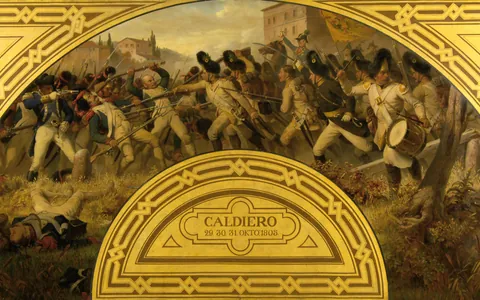
The Austrians struck before the Russians could join them, and Napoleon turned the army camped at Boulogne, now named the Grande Armée, against them. It crossed the Rhine in late September, swung around the Austrian army of Karl Mack at Ulm and forced it to capitulate on 20 October 1805; French troops entered Vienna in mid-November. In northern Italy Archduke Charles fought Masséna at Caldiero before he was recalled to defend Austria.7
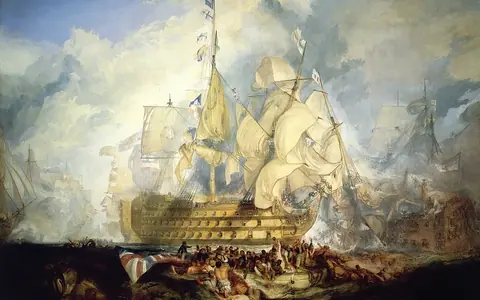
At sea the result was the opposite. On 21 October 1805, off Cape Trafalgar, Horatio Nelson's fleet met the combined French and Spanish fleet of 33 ships of the line under Vice-Admiral Pierre Villeneuve and destroyed it; Nelson was killed in the battle. Royal Museums Greenwich notes that the invasion plan had already failed before the battle, and Britannica that after it there could be no return to it. Our article on the Battle of Trafalgar tells the day.8
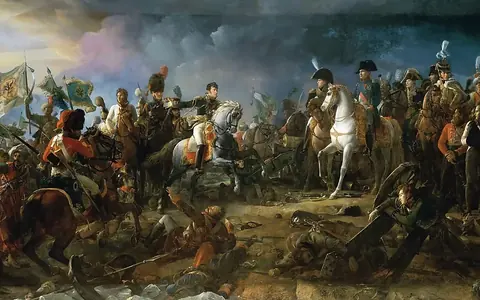
On 2 December 1805, a year after his coronation, Napoleon defeated the Russian and Austrian armies at Austerlitz. Austria made peace at Pressburg on 26 December. In July 1806 Napoleon grouped the states of western Germany into the Confederation of the Rhine under his protection, and in August Francis II gave up the title of Holy Roman Emperor; the empire had ended.9
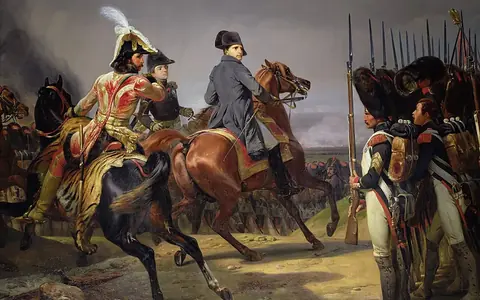
Prussia, which had stayed out of the 1805 war, now went to war with France with Russian backing. On 14 October 1806 the French routed the Prussian armies in the twin battles of Jena and Auerstedt, where Louis-Nicolas Davout's single corps beat the main Prussian army. In a month of pursuit, Britannica writes, the Prussian war machine was destroyed.10
The war then moved east into the Polish lands that Prussia and Russia had taken in the partitions. Napoleon encouraged Polish hopes of a restored state but did not plan to revive it in full. After a winter of hard fighting along the Narew, including Czarnowo and Pułtusk in December 1806, the two armies met at Eylau on 8 February 1807 in a bloodbath that the Fondation Napoléon calls inconclusive: the Russians withdrew, but the French were too battered to pursue.11

On 14 June 1807 Napoleon crushed Bennigsen's Russians at Friedland. At Tilsit Alexander I signed peace and a secret alliance with him on 7 July, and Prussia signed two days later. Prussia lost about half its population, and most of the land it had taken from Poland became the Duchy of Warsaw, ruled by the king of Saxony with a French garrison.12
Britain answered the new Franco-Russian alliance at sea. Fearing that the Baltic fleets would fall under French control, it attacked neutral Denmark in August 1807, bombarded Copenhagen and carried off the Danish fleet. Estimates of the civilians killed have ranged from about 2,000 in older accounts to about 195 in recent research, according to Brendan Simms and Thomas Peak; see our article on the bombardment of Copenhagen.13
The blockade and the war in Spain and Portugal, 1806 to 1814
Unable to reach Britain by sea, Napoleon tried to ruin its trade. His Berlin decree of 21 November 1806 declared the British Isles under blockade and closed the ports of France and its allies to British ships; this was the Continental System. Portugal went on trading with Britain, so in November 1807 a French army marched through Spain and occupied Lisbon.14
Spain was France's ally, but in 1808 Napoleon sent troops into the country, made King Charles IV and his son Ferdinand VII give up the throne at Bayonne and gave it to his brother Joseph. When French troops prepared to take the remaining royal children to France, Madrid rose on 2 May 1808. French cavalry put the rising down, and the next day the French shot people taken with weapons. Risings followed across Spain. The British call what followed the Peninsular War; in Spanish it is the Guerra de la Independencia, the War of Independence.15

French armies won most of the early battles against the Spanish regular forces, at Medina de Rioseco in July 1808 and Zornoza in October. Napoleon came to Spain himself that autumn, forced the pass of Somosierra on 30 November and retook Madrid in December. Troops of the Duchy of Warsaw served in Spain on the French side, at Somosierra, Almonacid and Ocaña in 1809 and in the defense of Fuengirola in 1810.16
In August 1808 a British army of 14,000 under Lieutenant-General Sir Arthur Wellesley, later Duke of Wellington, landed in Portugal. With Portuguese troops retrained under William Beresford, he drove Marshal Soult out of Porto in May 1809, checked Masséna's invasion at Bussaco in September 1810 and then held the fortified Lines of Torres Vedras before Lisbon, which the French could not break.17
The war in Iberia steadily wore down French strength. Spanish armies, though often beaten, kept reappearing, besieged towns held out, and guerrillas attacked convoys and garrisons. By 1812, the National Army Museum writes, France had over 350,000 soldiers in Iberia, 200,000 of them guarding supply lines; Napoleon called the war his "Spanish ulcer".18
It was brutal on every side. Besides the shootings in Madrid, both French and British besieging armies committed atrocities, and when British and Portuguese troops stormed Badajoz on 6 April 1812 they plundered the town and killed and raped Spanish civilians for about three days. The National Army Museum speaks of hundreds of civilians massacred; the Lieber Institute at West Point cites a recent estimate of around 125 victims.19
Wellington defeated King Joseph's army at Vitoria on 21 June 1813, which ended French rule in Spain. His army crossed the Pyrenees and reached Toulouse in April 1814.20
Austria's war of 1809
With much of the French army in Spain, Austria went to war again in April 1809. Napoleon won at Eckmühl and entered Vienna in May, but when he tried to cross the Danube, Archduke Charles's army threw him back at Aspern-Essling on 21 and 22 May, a reverse that, Britannica notes, lessened his standing in Europe. Six weeks later he crossed in strength and won at Wagram on 5 and 6 July.21
Austria also invaded the Duchy of Warsaw. Prince Józef Poniatowski's small army fought Archduke Ferdinand's corps at Raszyn on 19 April, then gave up Warsaw and carried the war into Austrian Galicia. By the Peace of Schönbrunn, signed in Vienna on 14 October 1809, Austria lost its Adriatic lands to France, and part of Galicia went to the Duchy.22
The invasion of Russia, 1812
The alliance of Tilsit did not last. Russia suffered from the blockade and opened its ports to neutral shipping, Napoleon annexed the German duchy of Oldenburg, and Alexander I would not accept the Duchy of Warsaw on his border. Both sides prepared for war through 1811.23

On 24 June 1812 the Grande Armée began to cross the Niemen. Its size is given differently because sources count different things: Britannica gives about 453,000 men at the crossing and about 612,000 who entered Russia during the whole campaign, little more than 200,000 of them French; the Fondation Napoléon gives 480,000 with 120,000 more in reserve, and the National Army Museum nearly 500,000. Austria and Prussia sent contingents, and Poniatowski led a Polish corps.24
The Russian armies fell back, burning crops and villages, and the French supply system could not feed so large an army. In August Mikhail Kutuzov replaced Barclay de Tolly in command and decided to fight before Moscow. At Borodino on 7 September neither side won a decisive victory. The National Army Museum calls it the costliest single day of the wars, with over 70,000 casualties; Britannica gives about 45,000 Russian and 30,000 French. A week later Napoleon entered Moscow, which burned that night.25
No offer of peace came. Napoleon left Moscow on 19 October (the 18th in the Fondation Napoléon's timeline), the day after the fighting at Tarutino, tried to take a southern road and was turned back at Maloyaroslavets on 24 October onto the direct road he had come by. Snow, hunger and constant attacks broke the army; it crossed the Berezina on 28 and 29 November, and in early December Napoleon left it for Paris.26
How many came back is again an estimate. Britannica says that of about 612,000 who entered Russia only 112,000 returned to the frontier; the National Army Museum and the Fondation Napoléon put the remnant that got out at around 20,000 fighting men.27

The Sixth Coalition and the fall of the Empire, 1813 to 1814
The first break came from a Prussian general. Johann von Yorck, whose corps had marched with the Grande Armée, signed his own convention with the Russians at Tauroggen at the end of December 1812 (on the 30th in Britannica, the 31st in World History Encyclopedia). Prussia allied with Russia at Kalisz on 28 February 1813 and declared war on 16 March. Britain, at war with France since 1803, again paid the allies, and Sweden, led by its crown prince, the former French marshal Bernadotte, joined them. In Germany these campaigns are remembered as the Wars of Liberation.28
Napoleon raised a new army and won at Lützen on 2 May and Bautzen on 20 May, but in the summer Austria joined the coalition. From 16 to 19 October 1813 the armies of Russia, Prussia, Austria and Sweden fought him at Leipzig, the Battle of the Nations. The Fondation Napoléon counts nearly 200,000 men on the French side and more than 300,000 on the coalition side; World History Encyclopedia gives 190,000 and 380,000. Saxon and Württemberg troops changed sides during the fighting, and Poniatowski, who had just been made a marshal of France, drowned crossing the Elster in the retreat.29
Habsburger.net calls Leipzig the battle in which Napoleon was decisively defeated. The French army fell back to the Rhine, and at the end of October it forced its way past a Bavarian army, Napoleon's former ally, at Hanau.30
In January 1814 three allied armies invaded France while Wellington advanced from the south. With far smaller forces Napoleon beat Blücher's scattered corps at Champaubert on 10 February and Montmirail on 11 February, but he could not stop the allies, who entered Paris on 31 March. At Fontainebleau Napoleon abdicated in April (the Fondation Napoléon dates his unconditional abdication to 6 April; World History Encyclopedia gives 11 April), the Bourbon Louis XVIII took the throne, and Napoleon was sent to the island of Elba.31
The Hundred Days and Waterloo, 1815
On 1 March 1815 Napoleon landed in southern France, and on 20 March he was back in the Tuileries. The powers meeting at Vienna declared him an outlaw and raised new armies. Napoleon struck first, in what is now Belgium, hoping to beat the Prussian army under Gebhard Leberecht von Blücher and Wellington's Anglo-allied army before they could join.32
On 16 June he defeated the Prussians at Ligny, while Wellington held the crossroads at Quatre Bras and then fell back. Marshal Grouchy, with 33,000 men, was sent after the Prussians but failed to keep them away from the main battle.33
At Waterloo on 18 June about 72,000 French faced Wellington's 68,000, a mixed army of British, German and Dutch-Belgian troops. Wellington's line held through the day, the Prussians arrived on the French right from the afternoon, and in the evening the attack of the Imperial Guard was thrown back. The National Army Museum puts French losses at nearly 40,000 killed, wounded or captured and allied losses at 22,000; Britannica gives 25,000 French killed and wounded and 9,000 captured, against about 15,000 for Wellington and 8,000 for Blücher.34
Napoleon abdicated for the second time on 22 June, surrendered to the British and was exiled to Saint Helena in the South Atlantic, where he arrived in October 1815 and died on 5 May 1821.35
Key figures
France and its allies. Napoleon led the main army himself in the decisive campaigns, from Austerlitz to the invasion of Russia and Waterloo. Of his marshals, Davout won at Auerstedt, and Michel Ney was left in command of the last of the army in Russia and led the French attacks at Waterloo. Józef Poniatowski, commander in chief of the Duchy of Warsaw from 1807, led its army in 1809 and its corps in 1812 and died at Leipzig.36
The coalitions. Horatio Nelson commanded at Trafalgar. Archduke Charles led the Austrian army in 1805 and 1809. Barclay de Tolly and then Kutuzov led the Russian armies in 1812. Wellington commanded in Portugal and Spain from 1808 to 1814 and at Waterloo, and Blücher led the Prussians from 1813 to Waterloo.37
Statesmen. William Pitt built the Third Coalition, and Viscount Castlereagh, the British foreign secretary, held the last coalition together. The settlement of 1815 was shaped above all by Klemens von Metternich of Austria, Tsar Alexander I of Russia and Castlereagh, with Karl von Hardenberg for Prussia and Talleyrand for France.38
Outcome
The coalitions won. The Congress of Vienna, which met from September 1814, signed its Final Act on 9 June 1815, nine days before Waterloo. It worked to restore a conservative order and a balance of power among the great powers. In place of the Holy Roman Empire it created a German Confederation of some 39 states under Austrian presidency. Most of the Duchy of Warsaw became a kingdom of Poland under the Russian emperor, while Prussia and Austria took back their shares and Kraków became a free city; Prussia also gained part of Saxony and lands in the Rhineland and Westphalia.39

Britain came out as the leading naval and colonial power. Britannica counts 20 colonies gained between 1793 and 1815, among them Malta, Mauritius, Tobago, St. Lucia and the Cape, and a Royal Museums Greenwich note judges that Britain emerged as the only power capable of sustained global hegemony based on sea power. Beyond Europe, the war helped bring about the Louisiana Purchase of 1803 and, through British restrictions on neutral trade and the impressment of American sailors, the War of 1812 between Britain and the United States.40
Legacy
The wars are remembered differently in each country. Britannica notes that although Waterloo was won by the allied armies, Britain took most of the credit, and a lecture at the Royal United Services Institute observes that only Britain built the victory into its national identity. Spain remembers the War of Independence, Germany the Wars of Liberation. For Poles the Duchy of Warsaw seemed, in the Fondation Napoléon's words, a sign of a future restoration of their nation, a hope that ended at Vienna.41
Historians have judged the settlement in different ways. Britannica writes that the statesmen of Vienna worked out a balance of power and that their borders lasted, with one or two changes, for more than 40 years, but that they ignored nationality and bartered territories with little regard for the people who lived there; it also credits the congress with setting the stage for the later unification of Germany and Italy. EBSCO describes nearly a century of general peace on the continent that followed.42
Battles of the Napoleonic Wars
Our articles on the battles of the war, from 1805 to 1815, are listed below in date order.
- 1805The Battle of Trafalgar, 1805Great Britain (Royal Navy) vs France and Spain (combined fleet)
Nelson broke the enemy line in two, won the greatest naval victory of the age, and did not live to see it.
- 1805Battle of Caldiero, 1805French Empire vs Austrian Empire
From 29 to 31 October 1805 Masséna's Army of Italy fought Archduke Charles at Caldiero, east of Verona. Who won is still argued, but Charles then retreated from Italy.
- 1805The Battle of Austerlitz, 1805French Empire vs Austria and Russia
Napoleon feigned weakness, gave up the heights, and sprang the trap. The battle of three emperors, often called his masterpiece.
- 1806Jena-Auerstedt, 1806French Empire vs Kingdom of Prussia
Napoleon destroys the Prussian army in twin battles in a day.
- 1806Battle of Czarnowo, 1806French Empire vs Russian Empire
On the night of 23 to 24 December 1806 Davout's voltigeurs crossed the Wkra in boats under Napoleon's eye and fought nine hours for the village of Czarnowo.
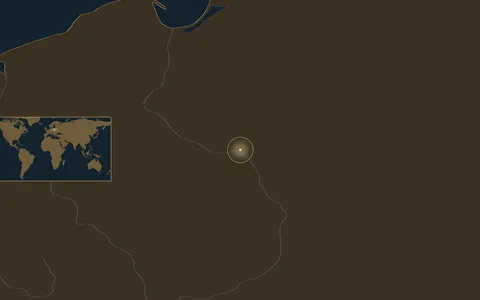
- 1806Battle of Pułtusk, 1806French Empire vs Russian Empire
On 26 December 1806 Lannes attacked a Russian army almost twice his size in mud and snow at Pułtusk. A division that marched to the guns saved him, and both sides claimed the day.
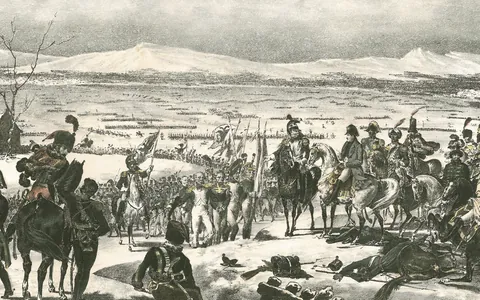
- 1807Battle of Friedland, 1807French Empire vs Russian Empire
On 14 June 1807 Napoleon trapped Bennigsen's Russians against the river Alle at Friedland. The defeat drove Tsar Alexander to the raft at Tilsit.
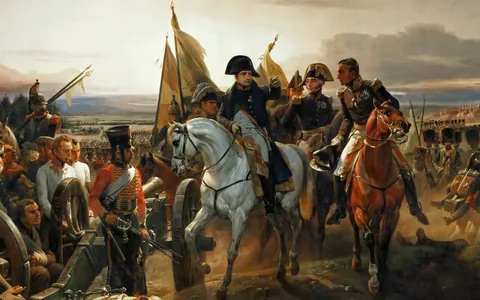
- 1807Bombardment of Copenhagen, 1807United Kingdom vs Denmark-Norway
In August 1807 a British army landed on Zealand, bombarded Copenhagen for three nights and seized the Danish fleet to keep it from Napoleon.
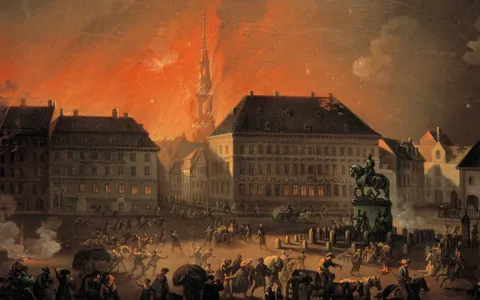
- 1808Battle of Medina de Rioseco, 1808French Empire vs Spanish patriot armies of Castile and Galicia
On 14 July 1808 Marshal Bessières routed the larger Spanish armies of Cuesta and Blake at Medina de Rioseco and opened the road to Madrid for King Joseph.
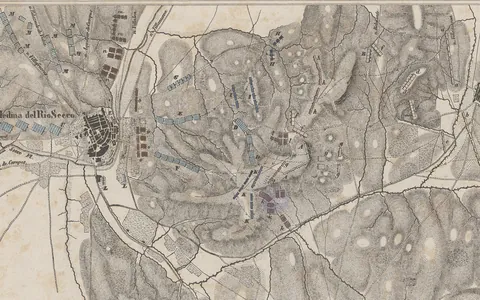
- 1808Battle of Zornoza, 1808French Empire vs Spain
On 31 October 1808 Marshal Lefebvre attacked Blake's Spanish army at Zornoza in the fog, against orders, and won the field but spoiled Napoleon's trap.
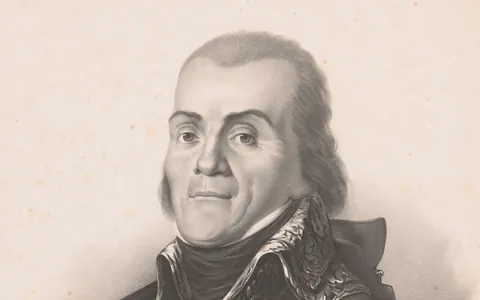
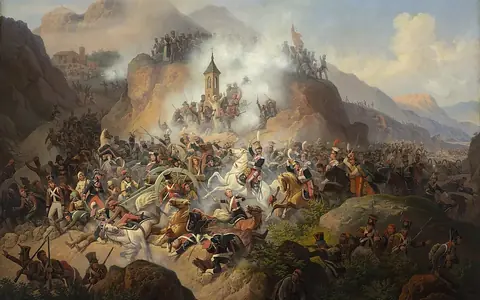
- 1808Battle of Somosierra, 1808French Empire (Polish light horse) vs Kingdom of Spain
How Napoleon's Polish light horse charged the guns at Somosierra in 1808 and opened the road to Madrid.
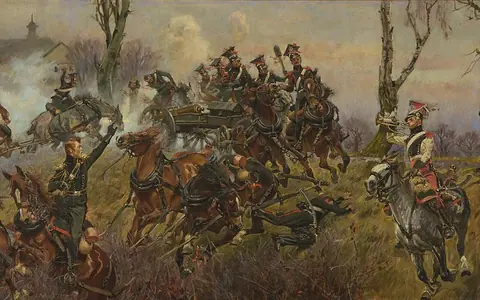
- 1809The Battle of Raszyn, 1809Duchy of Warsaw (with Saxon troops) vs Austrian Empire
The Duchy of Warsaw's army stood its ground against a far larger enemy.
- 1809Second Battle of Porto, 1809Britain and Portugal vs French Empire
On 12 May 1809 a barber's tip and four wine barges carried Wellesley's infantry across the Douro in daylight. By noon Soult was losing Porto, and within a week Portugal.
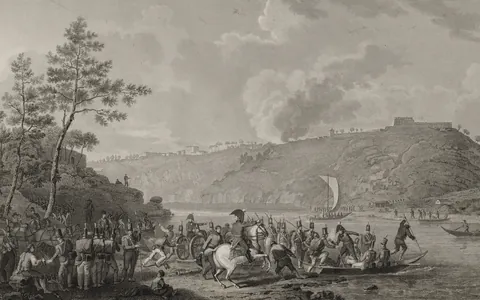
- 1809Battle of Almonacid, 1809French Empire and the Duchy of Warsaw vs Kingdom of Spain (Army of La Mancha)
On 11 August 1809 Sébastiani's corps, with the Polish Division taking the key hill, broke Venegas's Spanish Army of La Mancha at Almonacid south of Toledo.
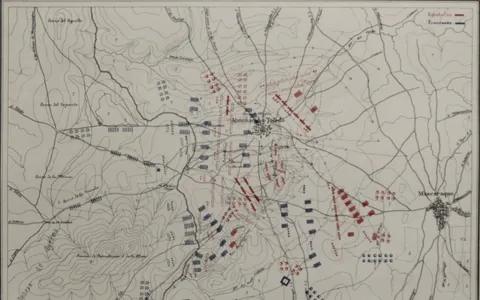
- 1809Battle of Ocaña, 1809French Empire and allies vs Spain
On 19 November 1809 a French army with a Polish division in its front line routed Areizaga's Spanish army, over 50,000 strong, on the plain of Ocaña south of Madrid.
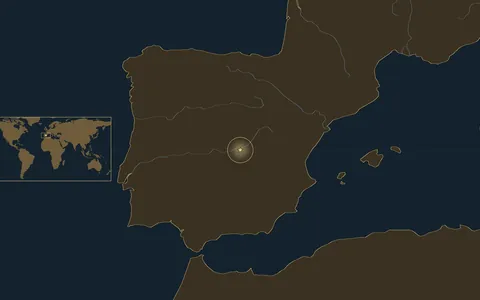
- 1810Battle of Bussaco, 1810Britain and Portugal vs France (Army of Portugal)
On 27 September 1810 Wellington's British and Portuguese held the steep ridge of Bussaco against Masséna; the French reached the crest twice and were thrown back both times.
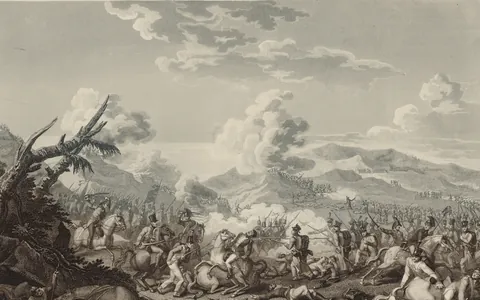
- 1810Battle of Fuengirola, 1810Duchy of Warsaw and France vs Britain and Spain
In October 1810 a Polish garrison in Sohail Castle beat off an Anglo-Spanish landing on the Spanish coast and captured its commander, Lord Blayney.
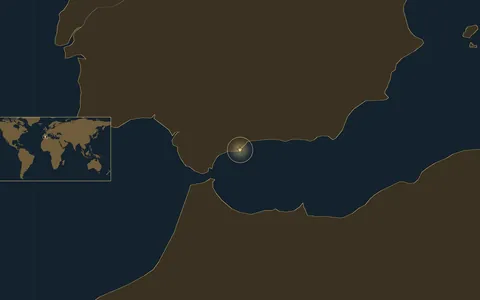
- 1812The Battle of Borodino, 1812French Empire vs Russian Empire
The bloodiest single day of the Napoleonic Wars, before a ruinous Moscow.
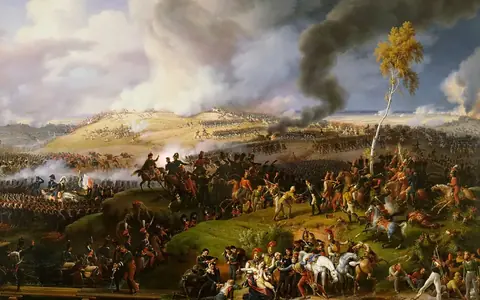
- 1812Battle of Tarutino, 1812Russian Empire vs France and the Duchy of Warsaw
On 18 October 1812 Kutuzov's army surprised Murat's vanguard at Tarutino, south of Moscow. Murat escaped, but the next day Napoleon began his retreat from the city.
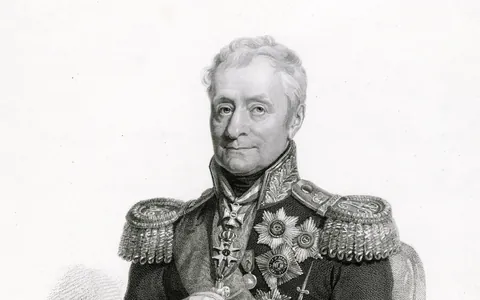
- 1812Battle of Maloyaroslavets, 1812French Empire and Kingdom of Italy vs Russian Empire
On 24 October 1812 Eugène's corps fought the Russians for Maloyaroslavets. The French held the town, but Napoleon turned back onto the ravaged road to Smolensk.
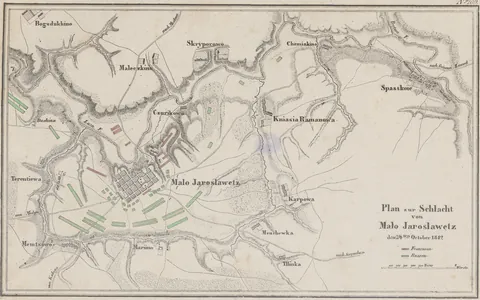
- 1813The Battle of Leipzig, 1813Coalition (Russia, Prussia, Austria, Sweden) vs French Empire
Six hundred thousand men and the largest battle in Europe before 1914.
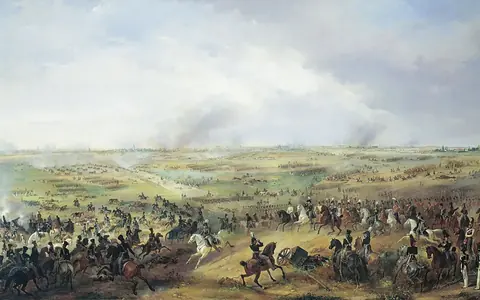
- 1813Battle of Hanau, 1813French Empire vs Austria and Bavaria
On 30 and 31 October 1813, retreating from Leipzig, Napoleon found Wrede's Austro-Bavarian army across his road at Hanau and blasted it aside with fifty guns.
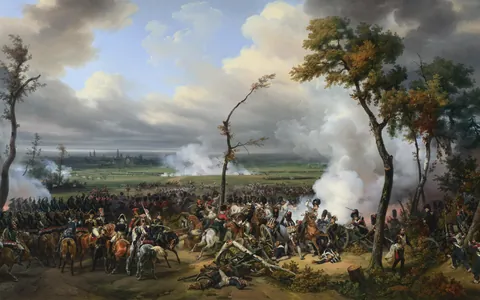
- 1814Battle of Champaubert, 1814French Empire vs Russian Empire
On 10 February 1814 Napoleon caught Olsufiev's Russian corps alone at Champaubert, without cavalry, and destroyed it. It was the first of four victories in five days over Blücher's scattered army.
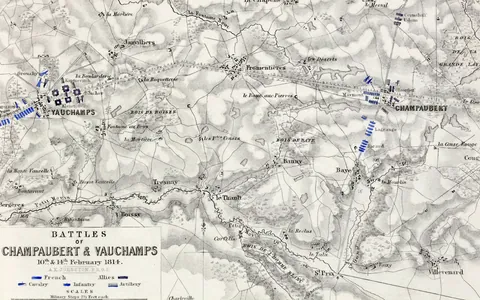
- 1814Battle of Montmirail, 1814French Empire vs Russia and Prussia (Army of Silesia)
On 11 February 1814 Napoleon beat Sacken's Russians around Marchais and threw back Yorck's Prussians. The Allies escaped across the Marne because the bridge at Château-Thierry was never taken.
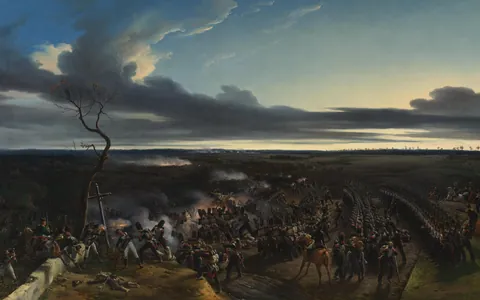
- 1815Battle of Ligny, 1815French Empire vs Prussia
On 16 June 1815, two days before Waterloo, Napoleon beat Blücher's Prussians at Ligny, but their army escaped north to fight again.
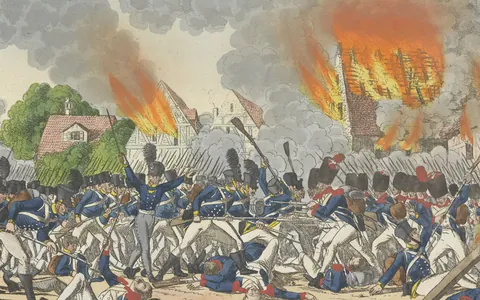
- 1815Battle of Quatre Bras, 1815French Empire vs Britain, Netherlands, Brunswick, Nassau and Hanover
On 16 June 1815 Marshal Ney attacked Wellington's army at the crossroads of Quatre Bras. The Allies held, and the fight kept a French corps away from Ligny.
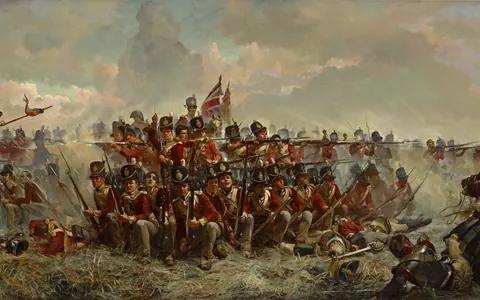
- 1815The Battle of Waterloo, 1815Coalition (Britain, Prussia) vs French Empire
Napoleon's last gamble, undone by a defiant ridge, unbroken infantry squares, and the Prussians arriving out of the woods just in time.

Timeline
- 1802The Peace of Amiens ends the war between France and Great Britain.43
- 1803Britain declares war on France in May; Napoleon sells Louisiana to the United States.44
- 1804France is proclaimed an empire; Napoleon is crowned on 2 December.45
- 1805Mack capitulates at Ulm (20 October); Nelson wins at Trafalgar (21 October); Napoleon wins at Austerlitz (2 December).46
- 1806Prussia is defeated at Jena and Auerstedt (14 October); the Berlin decree (21 November) begins the Continental System.47
- 1807
- 1808Joseph Bonaparte is made king of Spain; Madrid rises on 2 May; a British army lands in Portugal in August.49
- 1809
- 1812
- 1813
- 1814The allies enter Paris (31 March); Napoleon abdicates and is sent to Elba; the Congress of Vienna opens in September.53
- 1815
Where to read next
The battles of this war are ranked in our greatest Napoleonic battles and appear among the greatest battles of France. For the wider period from 1789 to 1815, see our page on the Napoleonic era, and test yourself with the Napoleonic battles quiz.
Notes
A number in the text points to a note; each note names the works that paragraph draws on, listed in full under Sources.
- Encyclopaedia Britannica, “Napoleonic Wars”; U.S. Department of State, “Napoleonic Wars and the United States, 1803 to 1815”; Fondation Napoléon, “Timeline”. ↩
- Encyclopaedia Britannica, “Napoleonic Wars”; Harrison W. Mark, “War of the Sixth Coalition”; U.S. Department of State, “Napoleonic Wars and the United States, 1803 to 1815”. ↩
- U.S. Department of State, “Napoleonic Wars and the United States, 1803 to 1815”; Fondation Napoléon, “Timeline”. ↩
- Encyclopaedia Britannica, “Napoleonic Wars”; U.S. Department of State, “Napoleonic Wars and the United States, 1803 to 1815”; Fondation Napoléon, “Peace of Amiens”; Encyclopaedia Britannica, “United Kingdom”. ↩
- Encyclopaedia Britannica, “Napoleonic Wars”; Royal Museums Greenwich, “The background to Trafalgar”. ↩
- Encyclopaedia Britannica, “Napoleonic Wars”; Fondation Napoléon, “Timeline”. ↩
- Encyclopaedia Britannica, “Napoleonic Wars”; Fondation Napoléon, “Timeline”. ↩
- Encyclopaedia Britannica, “Napoleonic Wars”; Royal Museums Greenwich, “The background to Trafalgar”. ↩
- Encyclopaedia Britannica, “Napoleonic Wars”; Fondation Napoléon, “Timeline”; Encyclopaedia Britannica, “Napoleonic Wars”; EBSCO Research Starters, “Congress of Vienna”. ↩
- Encyclopaedia Britannica, “Napoleonic Wars”; Fondation Napoléon, “Timeline”. ↩
- Encyclopaedia Britannica, “Napoleonic Wars”; Fondation Napoléon, “The Duchy of Warsaw”; Fondation Napoléon, “A close-up on”. ↩
- Encyclopaedia Britannica, “Napoleonic Wars”; Fondation Napoléon, “A close-up on”; Fondation Napoléon, “The Duchy of Warsaw”. ↩
- Encyclopaedia Britannica, “Battle of Copenhagen (1807)”; Brendan Simms and Thomas Peak, Studia Historica Gedanensia. ↩
- Encyclopaedia Britannica, “Napoleonic Wars”; Fondation Napoléon, “Timeline”; National Army Museum, “Peninsular War”. ↩
- Encyclopaedia Britannica, “Napoleonic Wars”; Adrian Gilbert, “Dos de Mayo Uprising”; Encyclopaedia Britannica, “Peninsular War”; Fondation Napoléon, “Timeline”. ↩
- National Army Museum, “Peninsular War”; Fondation Napoléon, “Timeline”; Encyclopaedia Britannica, “Peninsular War”; Fondation Napoléon, “The Duchy of Warsaw”. ↩
- National Army Museum, “Peninsular War”; Encyclopaedia Britannica, “Peninsular War”; Encyclopaedia Britannica, “United Kingdom”. ↩
- National Army Museum, “Peninsular War”; Encyclopaedia Britannica, “Peninsular War”. ↩
- Lieber Institute for Law and Warfare, “The Sack of Cities”; National Army Museum, “Peninsular War”. ↩
- Encyclopaedia Britannica, “United Kingdom”; Fondation Napoléon, “Timeline”; Encyclopaedia Britannica, “Peninsular War”. ↩
- Encyclopaedia Britannica, “Napoleonic Wars”; Fondation Napoléon, “Timeline”. ↩
- Encyclopaedia Britannica, “Napoleonic Wars”; Fondation Napoléon, “The Duchy of Warsaw”; Fondation Napoléon, “Timeline”. ↩
- Encyclopaedia Britannica, “Napoleonic Wars”; Fondation Napoléon, “Timeline”. ↩
- Encyclopaedia Britannica, “Napoleonic Wars”; Fondation Napoléon, “Timeline”; National Army Museum, “Emperors and samovars”; Harrison W. Mark, “War of the Sixth Coalition”; Encyclopaedia Britannica, “Józef Antoni Poniatowski”; Fondation Napoléon, “The Duchy of Warsaw”. ↩
- National Army Museum, “Emperors and samovars”; Encyclopaedia Britannica, “Napoleonic Wars”; Encyclopaedia Britannica, “Battle of Borodino”; Fondation Napoléon, “Timeline”. ↩
- Encyclopaedia Britannica, “Napoleonic Wars”; Fondation Napoléon, “Timeline”; National Army Museum, “Emperors and samovars”. ↩
- Encyclopaedia Britannica, “Napoleonic Wars”; National Army Museum, “Emperors and samovars”; Fondation Napoléon, “Timeline”. ↩
- Encyclopaedia Britannica, “Napoleonic Wars”; Harrison W. Mark, “War of the Sixth Coalition”. ↩
- Fondation Napoléon, “Timeline”; Harrison W. Mark, “War of the Sixth Coalition”; Encyclopaedia Britannica, “United Kingdom”; Encyclopaedia Britannica, “Józef Antoni Poniatowski”; Fondation Napoléon, “The Duchy of Warsaw”. ↩
- Schloss Schönbrunn Kultur- und Betriebsges., “The new ordering of Europe, 1814/15”; Encyclopaedia Britannica, “Napoleonic Wars”. ↩
- Encyclopaedia Britannica, “Napoleonic Wars”; Fondation Napoléon, “Timeline”; Harrison W. Mark, “War of the Sixth Coalition”. ↩
- Fondation Napoléon, “Timeline”; Encyclopaedia Britannica, “Napoleonic Wars”; National Army Museum, “Battle of Waterloo”. ↩
- National Army Museum, “Battle of Waterloo”; Encyclopaedia Britannica, “Napoleonic Wars”. ↩
- National Army Museum, “Battle of Waterloo”; Encyclopaedia Britannica, “Napoleonic Wars”. ↩
- Fondation Napoléon, “Timeline”; Encyclopaedia Britannica, “Napoleonic Wars”; Encyclopaedia Britannica, “Napoleonic Wars”. ↩
- National Army Museum, “Emperors and samovars”; Encyclopaedia Britannica, “Napoleonic Wars”; Encyclopaedia Britannica, “Napoleonic Wars”; Fondation Napoléon, “Timeline”; National Army Museum, “Battle of Waterloo”; Encyclopaedia Britannica, “Józef Antoni Poniatowski”; Fondation Napoléon, “The Duchy of Warsaw”. ↩
- Encyclopaedia Britannica, “Napoleonic Wars”; Royal Museums Greenwich, “The background to Trafalgar”; Encyclopaedia Britannica, “Napoleonic Wars”; Encyclopaedia Britannica, “Napoleonic Wars”; Encyclopaedia Britannica, “Napoleonic Wars”; National Army Museum, “Peninsular War”; National Army Museum, “Waterloo”; Encyclopaedia Britannica, “Napoleonic Wars”. ↩
- Encyclopaedia Britannica, “Napoleonic Wars”; Encyclopaedia Britannica, “United Kingdom”; Encyclopaedia Britannica, “Napoleonic Wars”; Encyclopaedia Britannica, “Congress of Vienna”; EBSCO Research Starters, “Congress of Vienna”. ↩
- Encyclopaedia Britannica, “Congress of Vienna”; EBSCO Research Starters, “Congress of Vienna”; Encyclopaedia Britannica, “Congress of Vienna”; Fondation Napoléon, “The Duchy of Warsaw”. ↩
- Encyclopaedia Britannica, “United Kingdom”; Royal Museums Greenwich, “A history of the Royal Navy”; U.S. Department of State, “Napoleonic Wars and the United States, 1803 to 1815”; OpenStax, U.S. History. ↩
- Encyclopaedia Britannica, “United Kingdom”; Royal United Services Institute, “Siborne Lecture”; Encyclopaedia Britannica, “Peninsular War”; Harrison W. Mark, “War of the Sixth Coalition”; Fondation Napoléon, “The Duchy of Warsaw”. ↩
- Encyclopaedia Britannica, “Congress of Vienna”; Encyclopaedia Britannica, “Napoleonic Wars”; EBSCO Research Starters, “Congress of Vienna”. ↩
- U.S. Department of State, “Napoleonic Wars and the United States, 1803 to 1815”; Fondation Napoléon, “Timeline”. ↩
- Encyclopaedia Britannica, “Napoleonic Wars”; U.S. Department of State, “Napoleonic Wars and the United States, 1803 to 1815”. ↩
- Encyclopaedia Britannica, “Napoleonic Wars”; Fondation Napoléon, “Timeline”. ↩
- Encyclopaedia Britannica, “Napoleonic Wars”; Encyclopaedia Britannica, “Napoleonic Wars”; Fondation Napoléon, “Timeline”. ↩
- Encyclopaedia Britannica, “Napoleonic Wars”; Encyclopaedia Britannica, “Napoleonic Wars”; Fondation Napoléon, “Timeline”. ↩
- Encyclopaedia Britannica, “Napoleonic Wars”; Fondation Napoléon, “A close-up on”; Fondation Napoléon, “The Duchy of Warsaw”. ↩
- Encyclopaedia Britannica, “Napoleonic Wars”; National Army Museum, “Peninsular War”; Fondation Napoléon, “Timeline”. ↩
- Encyclopaedia Britannica, “Napoleonic Wars”; Fondation Napoléon, “Timeline”; Fondation Napoléon, “The Duchy of Warsaw”. ↩
- Encyclopaedia Britannica, “Napoleonic Wars”; Encyclopaedia Britannica, “Napoleonic Wars”; National Army Museum, “Emperors and samovars”. ↩
- Encyclopaedia Britannica, “Napoleonic Wars”; Encyclopaedia Britannica, “United Kingdom”; Fondation Napoléon, “Timeline”. ↩
- Fondation Napoléon, “Timeline”; Harrison W. Mark, “War of the Sixth Coalition”; Encyclopaedia Britannica, “Congress of Vienna”. ↩
- Fondation Napoléon, “Timeline”; Encyclopaedia Britannica, “Congress of Vienna”; Encyclopaedia Britannica, “Napoleonic Wars”. ↩
Sources
- Encyclopaedia Britannica, “Napoleonic Wars”.
- U.S. Department of State, Office of the Historian, “Napoleonic Wars and the United States, 1803 to 1815”.
- Fondation Napoléon, “Timeline: Consulate and First French Empire”.
- Harrison W. Mark, World History Encyclopedia, “War of the Sixth Coalition”.
- Encyclopaedia Britannica, “Napoleonic Wars: the Third and Fourth Coalitions, 1803 to 1807”.
- Fondation Napoléon, “Peace of Amiens” (text of the treaty).
- Encyclopaedia Britannica, “United Kingdom: the Napoleonic Wars”.
- Royal Museums Greenwich, “The background to Trafalgar”.
- Encyclopaedia Britannica, “Napoleonic Wars: Trafalgar, Italy and the campaign of Jena and Auerstedt”.
- EBSCO Research Starters, “Congress of Vienna”.
- Encyclopaedia Britannica, “Napoleonic Wars: the winter campaign of 1806 to 1807, Friedland and Tilsit”.
- Fondation Napoléon, “The Duchy of Warsaw”.
- Fondation Napoléon, “A close-up on: the Polish campaign, Eylau (8 February 1807)”.
- Fondation Napoléon, “A close-up on: Tilsit (July 1807)”.
- Encyclopaedia Britannica, “Battle of Copenhagen (1807)”.
- Brendan Simms and Thomas Peak, “From Commerce to Violence: The Second Bombardment of Copenhagen (1807)”, Studia Historica Gedanensia 13 (2022), “full text (PDF)”.
- Encyclopaedia Britannica, “Napoleonic Wars: the Continental System and the blockade, 1807 to 1811”.
- National Army Museum, “Peninsular War”.
- Encyclopaedia Britannica, “Napoleonic Wars: the Peninsular War and the Congress of Erfurt, 1808”.
- Adrian Gilbert, Encyclopaedia Britannica, “Dos de Mayo Uprising”.
- Encyclopaedia Britannica, “Peninsular War”.
- Lieber Institute for Law and Warfare, West Point, “The Sack of Cities: Laws of War and Evolving Attitudes in Historical Perspective”.
- Encyclopaedia Britannica, “Napoleonic Wars: Austria's war of 1809”.
- Encyclopaedia Britannica, “Napoleonic Wars: France and northern Europe, 1809 to 1812, and the invasion of Russia”.
- National Army Museum, “Emperors and samovars”.
- Encyclopaedia Britannica, “Józef Antoni Poniatowski”.
- Encyclopaedia Britannica, “Battle of Borodino”.
- Encyclopaedia Britannica, “Napoleonic Wars: the retreat from Moscow and the campaign of 1813”.
- Schloss Schönbrunn Kultur- und Betriebsges., Habsburger.net, “The new ordering of Europe, 1814/15”.
- Encyclopaedia Britannica, “Napoleonic Wars: the autumn campaign of 1813 and Leipzig”.
- Encyclopaedia Britannica, “Napoleonic Wars: the campaign of France, 1814”.
- Encyclopaedia Britannica, “Napoleonic Wars: the Congress of Vienna and the Hundred Days”.
- National Army Museum, “Battle of Waterloo”.
- National Army Museum, “Waterloo”.
- Encyclopaedia Britannica, “Congress of Vienna”.
- Encyclopaedia Britannica, “Congress of Vienna: decisions of the congress”.
- Royal Museums Greenwich, “A history of the Royal Navy: the Napoleonic Wars (catalogue note)”.
- OpenStax, Rice University, U.S. History, “The United States Goes Back to War”.
- Royal United Services Institute, “Siborne Lecture: the legacy of Waterloo”.





