

What was the Swedish Deluge and who won?
The Deluge was Sweden's invasion of the Polish-Lithuanian Commonwealth from 1655 to 1660, part of the Second Northern War. The Swedes took Warsaw and Kraków within months, but resistance, foreign allies and a Danish war forced them out. The Peace of Oliva of 3 May 1660 largely restored the prewar situation.1
In the summer of 1655 the Polish-Lithuanian Commonwealth was already at war with the Cossacks and with Muscovy when the armies of King Charles X Gustav of Sweden marched in from the west and north. Within months the nobility of Greater Poland had capitulated at Ujście, Lithuanian magnates had come to terms with the Swedes and King John II Casimir had taken refuge in Silesia. Poles call this invasion, and the five years of war that followed, the Swedish Deluge (potop szwedzki).2
This guide covers the whole war: both sides' reasons, the collapse of 1655, the recovery, the siege of Jasna Góra, the Battle of Filipów, George II Rákóczi's invasion that ended at Czarny Ostrów, the role of Stefan Czarniecki and the Peace of Oliva. It also separates the history from the legend fixed by Henryk Sienkiewicz's novel The Deluge. For the wider context, see our guide to the wars of the Polish-Lithuanian Commonwealth.3
Causes of the Swedish Deluge
By 1655 the Commonwealth was exhausted. Bohdan Khmelnytsky's Cossack uprising had been running since 1648, and in January 1654 at Pereyaslav the Cossacks accepted the overlordship of Tsar Alexis. Muscovite armies then took Smolensk and, in August 1655, Vilnius (Wilno). Polish Ministry of Education materials stress that a state worn down by wars with the Cossacks, the Tatars and Muscovy could not defend itself against another invasion.4
The stated cause was dynastic. Sigismund III Vasa, elected king of Poland in 1587, was deposed in Sweden in 1599, and his sons, John II Casimir among them, still regarded themselves as rightful kings of Sweden. Charles X Gustav, king of Sweden from 1654, wanted to force John Casimir to give up that title.5
Behind the quarrel over the title lay the Baltic. Control of the Baltic ports brought huge revenues from trade, and Muscovy's advance into Lithuania and Livonia threatened Sweden's own Baltic provinces. Seen from Stockholm, the war was meant to forestall Muscovy and secure Sweden's interests on the Baltic.6
Historians call the war of 1655 to 1660 the Second Northern War; to Poles it is the Deluge. It was another round in a long struggle over Livonia and the Baltic that had already produced battles such as Kircholm in 1605.7
Who fought in the Deluge
The war began as a Swedish attack on the Commonwealth, backed by Frederick William, Elector of Brandenburg, who as Duke of Prussia tied himself to Sweden at Königsberg in January 1656. It quickly became a coalition war. In May 1656 Tsar Alexis declared war on Sweden, and in November the Commonwealth and Muscovy agreed a truce at Niemież near Vilnius.8
The tsar was not fighting for the Commonwealth, though. Muscovy and Sweden were rivals for the southern Baltic coast: in August 1656 the tsar's troops took Dyneburg (Daugavpils) on the Daugava and moved into Livonia, but the Swedes threw back their attempts to enter Ingria, Livonia, Estonia and Karelia, and in 1658 the two sides agreed a truce. For Tsar Alexis, keeping Ukraine and the Commonwealth lands he had occupied in 1655 mattered more than the war with Sweden.9
Prince George II Rákóczi of Transylvania and the Cossacks also joined Sweden. The Treaty of Radnot of 6 December 1656 divided the Commonwealth's lands among Sweden, Brandenburg, Rákóczi, the Cossacks and Prince Bogusław Radziwiłł, and promised Rákóczi the Polish crown. It was never carried out.10
The Commonwealth found allies. The emperor signed treaties with John Casimir in December 1656 and May 1657, and imperial troops besieged Swedish-held Kraków. In June 1657 Denmark declared war on Sweden, and Crimean Tatars fought alongside the Crown army. In September and November 1657, by the treaties of Wehlau (Welawa) and Bromberg (Bydgoszcz), Frederick William changed sides in return for the release of Ducal Prussia from Polish overlordship.11

How the Deluge unfolded
Collapse, summer and fall 1655. On 19 July 1655 Swedish troops crossed the border. The main army, at first under Field Marshal Arvid Wittenberg, marched from Swedish Pomerania while a second struck from Livonia. On 25 July the Greater Poland levy capitulated at Ujście, and the palatinates of Poznań and Kalisz accepted Charles X Gustav's protection. That opened the way into the heart of the country.12
The Swedes took Warsaw on 8 September. John Casimir was beaten at Żarnów on 16 September and left for Silesia, and in October, after Stefan Czarniecki's honorable capitulation, Swedish troops entered Kraków. On 20 October at Kiejdany (Kėdainiai), Prince Janusz Radziwiłł, Grand Hetman of Lithuania, signed with Bogusław Radziwiłł an agreement that placed the Grand Duchy under Charles X Gustav. Much of Lithuania was then occupied by Muscovy.13

Recovery, 1655 to 1656. The occupation soon turned the population against the Swedes. They plundered the lands they held, Church property included, and guerrilla bands formed in Greater Poland and in the countryside. In November and December 1655 the siege of Jasna Góra stirred public outrage, and on 29 December at Tyszowce nobles gathered in military units formed a confederation against Sweden.14
John Casimir returned early in 1656. On 1 April 1656 in Lwów (now Lviv) cathedral he took vows placing the state under the protection of the Virgin Mary, whom he proclaimed Queen of the Polish Crown, and promised to improve the lot of the peasants. The fighting stayed uneven: in February Czarniecki lost at Gołąb, and in early April Charles X Gustav escaped a trap at the fork of the Vistula and San, losing his artillery. On 7 April Czarniecki beat the Swedes at Warka.15
Royal troops retook Warsaw at the turn of June and July 1656. From 28 to 30 July a three-day battle was fought outside the city, in which the Swedes and Brandenburgers defeated John Casimir's army but could not destroy it; the Polish army withdrew across the Vistula. In the fall, Lithuanian Field Hetman Wincenty Gosiewski's division fought in the east: it won at Prostki on 8 October and fought at Filipów on 22 October.16
Rákóczi's invasion and a wider war, 1657. In January 1657 the Transylvanian army crossed into the Commonwealth. Rákóczi joined forces with the Swedes and, with Charles X Gustav's help, took Warsaw on 17 June. Meanwhile, on 16 June, Denmark declared war on Sweden, and the Swedish king left for the new front, leaving his ally alone.17

Czarniecki, Jerzy Lubomirski and Stanisław Rewera Potocki pursued the retreating army. On 11 July Czarniecki destroyed its rearguard at Magierów, and in the second half of July, after defeat at Czarny Ostrów, the surrounded Rákóczi capitulated near Międzybóż. Tatars who did not know, or did not accept, the terms then fell on the retreating Transylvanians and took about 11,000 soldiers captive.18
The road to peace, 1658 to 1660. From the end of 1657 the Swedes gradually withdrew from the Commonwealth while Charles X Gustav fought mainly against Denmark. Polish troops went to help the Danes: on 14 December 1658 Czarniecki's cavalry retook the island of Als from the Swedes. Charles X Gustav died in February 1660, which opened the way to a settlement.19
Major battles of the Deluge
Warka, 7 April 1656. At Warka Stefan Czarniecki defeated the Swedes. It was the fruit of the hit-and-run war he waged throughout the Deluge: sudden strikes on smaller enemy detachments when they least expected them, because the less well armed Polish army could not face the whole Swedish army. More in our biography of Stefan Czarniecki.20
Warsaw, 28 to 30 July 1656. The three-day battle on the fields of Praga ended in a Swedish and Brandenburg victory. Its most famous episode, the hussar charge on the second day, is disputed: recent research has shown that only the Lithuanian hussars charged, under Field Clerk Aleksander Hilary Połubiński, and in far smaller numbers than once thought. The hussar said to have attacked Charles Gustav himself appears in the sources under several names; in literature he lives on as Sienkiewicz's Roch Kowalski. The charge also features in our ranking of the winged hussars' greatest battles.21
Prostki and Filipów, October 1656. At Prostki on 8 October Gosiewski's Lithuanian and Tatar troops routed General Georg Friedrich of Waldeck's Brandenburg and Swedish corps and captured Bogusław Radziwiłł. Two weeks later, on 22 October, during Field Marshal Otto Gustav Stenbock's campaign in Ducal Prussia, came the Battle of Filipów; our article on the Battle of Filipów tells how it went.22
Czarny Ostrów, July 1657. Rákóczi's defeat and capitulation ended the most dangerous moment of the war, when the Radnot partition plan looked real. The victories of Czarniecki and Lubomirski wrecked that plan, and the Transylvanian army paid the price, most of it ending in Tatar captivity. Details in our article on the Battle of Czarny Ostrów.23
The siege of Jasna Góra: history and legend
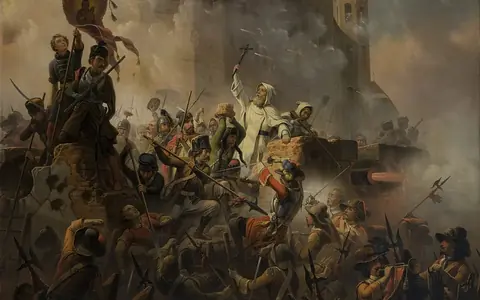
The Swedes besieged the Pauline monastery of Jasna Góra in Częstochowa for about forty days, from 18 November to the night of 26 to 27 December 1655, and failed to take it. Prior Augustyn Kordecki led the defense. The monastery was a well fortified, well supplied and well armed fortress, and the Swedish force under General Burchard Müller had too little artillery to take it.24
Kordecki himself was more pragmatic than tradition allows. The prior corresponded with Charles X Gustav; historian Idzi Panic reads his letter as a stalling tactic, and Janusz Tazbir stressed that Kordecki, like many Catholic nobles, had accepted the Swedish king's authority and kept the Swedes outside the walls above all to protect the shrine and its treasures.25
The argument is about what the siege meant. Contemporaries put the Swedish failure down to supernatural forces, which lifted morale and stirred anger against the invaders. Research by Olgierd Górka and Adam Kersten, cited by Tazbir, suggests however that the defense was not a military turning point of the war, and Polish Ministry of Education materials say plainly that it did not change the course of the fighting.26
The legend was largely a product of the 19th century. Kordecki described the siege in his Nova Gigantomachia, full of miracles and exaggeration, and Henryk Sienkiewicz drew on that account for The Deluge. The novel brought the prior into the national pantheon and distorted the fighting, adding among other things the fictional Kmicic. The facts are still remarkable: a small garrison held the fortress for six weeks. More in our article on the siege of Jasna Góra.27
Key commanders of the Deluge
Charles X Gustav (king of Sweden 1654 to 1660) led the invasion in person and was Sweden's principal commander; he died in February 1660. John II Casimir Vasa led the Commonwealth's defense; he returned from exile in Silesia early in 1656, and in July his army lost the three-day Battle of Warsaw.28

Stefan Czarniecki stayed loyal to the king, harried the Swedes with surprise attacks, won at Warka, pursued Rákóczi and in 1658 led an expedition to Denmark. Jerzy Lubomirski and Stanisław Rewera Potocki forced Rákóczi to capitulate.29
Wincenty Korwin Gosiewski, Field Hetman of Lithuania, won at Prostki. Janusz Radziwiłł and Bogusław Radziwiłł bound themselves to Sweden at Kiejdany; Bogusław was captured at Prostki. On the Swedish side also fought Arvid Wittenberg and Otto Gustav Stenbock, and among the Commonwealth's opponents were Elector Frederick William and Prince George II Rákóczi.30
Who won the Deluge: the Peace of Oliva
The war ended with a peace signed on 3 May 1660 at the Cistercian abbey of Oliva (Oliwa) near Danzig (Gdańsk) by Sweden, King John Casimir, Emperor Leopold I and Elector Frederick William; the French envoy Antoine de Lumbres also signed it. The document carries two dates: 23 April in the Julian calendar and 3 May in the Gregorian.31

The peace largely restored the prewar borders. John Casimir renounced his claim to the Swedish throne but kept the title of King of the Swedes, Goths and Vandals for life. The Commonwealth gave up most of Livonia, keeping only the small part known as Polish Livonia, and confirmed the sovereignty of Ducal Prussia. The Swedes promised to return looted archives and libraries, but did so only in small part.32
So no one won outright. The Commonwealth survived and recovered the lands it had lost, but gained nothing; Sweden lost its conquests of 1655 but kept everything it had held before the war. The main beneficiary was Frederick William, whose sovereignty in Ducal Prussia, won in 1657, was confirmed.33
The Commonwealth's war with Muscovy went on. In June 1660 the troops of Paweł Jan Sapieha and Stefan Czarniecki defeated the Muscovites at Polonka, and the fighting ended only with the Truce of Andrusovo in January 1667, which left Muscovy the Left Bank of Ukraine, Smolensk and Kyiv.34
Consequences and memory of the Deluge
The losses were enormous, though estimates need care. According to Polish Ministry of Education materials, the Commonwealth's population fell from about 3.85 million in the mid-17th century to 2.85 million in 1660; according to the Gdańsk History Museum, as reported by Dzieje.pl, Greater Poland, Lesser Poland and Mazovia lost almost a million inhabitants and Royal Prussia more than 60 percent of its people. Both estimates point to a loss of about a million people. Towns, villages and mills were ruined, and the Swedes carried off works of art, libraries and archives.35
Not every historian sees the balance so darkly. Tadeusz Cegielski points out that the Great Northern War of 1700 to 1721 was just as destructive for the Commonwealth, and that the most lasting result of the Deluge was its cultural losses. The war weakened the middle nobility and strengthened the magnates, on whom more and more nobles came to depend.36
In popular memory the Deluge is above all Sienkiewicz's novel, written to lift Polish hearts and shaped by the question of why the state had fallen. Hence the treacherous magnates and the loyal nobles, hence Kmicic and Roch Kowalski. John Casimir's Lwów vows survive in memory as a religious and political act; in 2016 the Polish Senate marked their 360th anniversary.37
Battles of the Deluge
Below, in date order, are our articles on the battles of this war.
- 1655The Siege of Jasna Góra, 1655Polish-Lithuanian Commonwealth (garrison of Jasna Góra) vs Sweden
A small garrison of monks and soldiers turned back the Swedes.
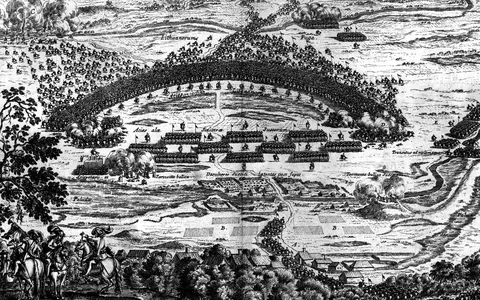
- 1656Battle of Filipów, 1656Grand Duchy of Lithuania vs Sweden and Brandenburg
On 22 October 1656 a Swedish and Brandenburg army caught Hetman Gosiewski's Lithuanian division at Filipów, two weeks after his victory at Prostki.
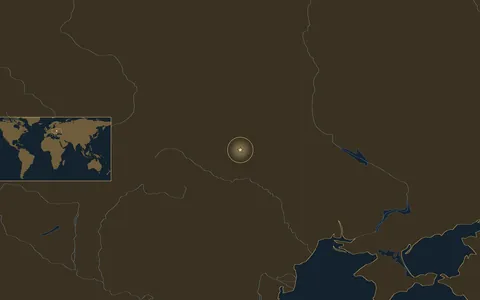
- 1657Battle of Czarny Ostrów, 1657Polish-Lithuanian Commonwealth vs Principality of Transylvania and allies
On 20 July 1657 Polish armies caught George II Rákóczi of Transylvania at Czarny Ostrów in Podolia and forced him to capitulate and leave Poland.
Timeline of the Deluge
- 165519 July: Swedish armies enter the Commonwealth; 25 July: capitulation at Ujście.38
- 16558 September: the Swedes take Warsaw, Kraków follows in October; 20 October: agreement of Kiejdany.39
- 165518 November to 27 December: siege of Jasna Góra; 29 December: Tyszowce Confederation.40
- 16561 April: Lwów vows; 7 April: victory at Warka.41
- 165628 to 30 July: Swedish and Brandenburg victory in the three-day Battle of Warsaw.42
- 16568 October: victory at Prostki; 22 October: Battle of Filipów; 6 December: Treaty of Radnot.43
- 1657January: Rákóczi invades; 16 June: Denmark declares war on Sweden.44
- 1657July: Czarny Ostrów and Rákóczi's capitulation; September and November: treaties of Wehlau and Bromberg.45
- 165814 December: Czarniecki's cavalry retakes the island of Als in Denmark.46
- 1660February: death of Charles X Gustav; 3 May: Peace of Oliva.47
Where to read next
The Deluge is one chapter of our guides to the wars of the Polish-Lithuanian Commonwealth and the military history of Poland. For other battles of the period see our rankings of the greatest Polish battles, the winged hussars' greatest battles and the greatest early modern battles, and test yourself with our Polish battles quiz.48
Notes
A number in the text points to a note; each note names the works that paragraph draws on, listed in full under Sources.
- Dzieje.pl, “Kalendarz dat”; HistoryOfWar.org, “Northern War of 1655 to 1660”; Archiwum Główne Akt Dawnych, “Pokój oliwski”; HistoryOfWar.org, “Peace of Oliva, 3 May 1660”. ↩
- Dzieje.pl, “Kalendarz dat”; HistoryOfWar.org, “Northern War of 1655 to 1660”; Zintegrowana Platforma Edukacyjna, “Potop szwedzki”; Dzieje.pl, “Wystawa dla uczczenia 350. rocznicy podpisania pokoju w Oliwie”. ↩
- HistoryOfWar.org, “Northern War of 1655 to 1660”; Zintegrowana Platforma Edukacyjna, “Potop szwedzki”; Tomasz Stańczyk, “Augustyn Kordecki i obrona Częstochowy”. ↩
- EBSCO Research Starters, “Polish-Russian Wars for the Ukraine”; Dzieje.pl, “Kalendarz dat”; Zintegrowana Platforma Edukacyjna, “Potop szwedzki”. ↩
- Zintegrowana Platforma Edukacyjna, “Potop szwedzki”; HistoryOfWar.org, “Northern War of 1655 to 1660”; HistoryOfWar.org, “Peace of Oliva, 3 May 1660”. ↩
- Zintegrowana Platforma Edukacyjna, “Potop szwedzki”; HistoryOfWar.org, “Northern War of 1655 to 1660”; Mirosław Nagielski, “The Polish-Russian rivalry and the Swedish issue during the Deluge (1656 to 1661)”. ↩
- Dzieje.pl, “Wystawa dla uczczenia 350. rocznicy podpisania pokoju w Oliwie”; Archiwum Główne Akt Dawnych, “Pokój oliwski”; Zintegrowana Platforma Edukacyjna, “Potop szwedzki”. ↩
- HistoryOfWar.org, “Northern War of 1655 to 1660”; EBSCO Research Starters, “Northern War”; Dzieje.pl, “Kalendarz dat”. ↩
- Mirosław Nagielski, “The Polish-Russian rivalry and the Swedish issue during the Deluge (1656 to 1661)”; EBSCO Research Starters, “Northern War”. ↩
- Muzeum Historii Polski, “Kapitulacja Jerzego II Rakoczego”; Zintegrowana Platforma Edukacyjna, “Kres potopu szwedzkiego. Bilans strat”; HistoryOfWar.org, “Northern War of 1655 to 1660”; Dzieje.pl, “Kalendarz dat”. ↩
- HistoryOfWar.org, “Northern War of 1655 to 1660”; Muzeum Historii Polski, “Kapitulacja Jerzego II Rakoczego”; Dzieje.pl, “Kalendarz dat”; Zintegrowana Platforma Edukacyjna, “Kres potopu szwedzkiego. Bilans strat”; EBSCO Research Starters, “Polish-Russian Wars for the Ukraine”. ↩
- Dzieje.pl, “Kalendarz dat”; HistoryOfWar.org, “Northern War of 1655 to 1660”; HistoryOfWar.org, “Surrender of Ujście, 25 July 1655”; Region Wielkopolska, “The Swedish Deluge in Wielkopolska”. ↩
- Dzieje.pl, “Kalendarz dat”; HistoryOfWar.org, “Northern War of 1655 to 1660”; EBSCO Research Starters, “Northern War”; TwojaHistoria.pl, “Bitwa pod Prostkami (8 października 1656)”. ↩
- HistoryOfWar.org, “Northern War of 1655 to 1660”; Region Wielkopolska, “The Swedish Deluge in Wielkopolska”; Zintegrowana Platforma Edukacyjna, “Potop szwedzki”; Dzieje.pl, “Kalendarz dat”; Adam Kersten, “Z badań nad konfederacją tyszowiecką”. ↩
- Magdalena Gronek, “370. rocznica ślubów lwowskich Jana Kazimierza”; Senate of the Republic of Poland, resolution of 7 April 2016 on the 360th anniversary of the Lwów Vows; Dzieje.pl, “Kalendarz dat”; TwojaHistoria.pl, “Bitwa pod Prostkami (8 października 1656)”; HistoryOfWar.org, “Northern War of 1655 to 1660”; EBSCO Research Starters, “Northern War”. ↩
- HistoryOfWar.org, “Northern War of 1655 to 1660”; EBSCO Research Starters, “Northern War”; Dzieje.pl, “Kalendarz dat”; Zbigniew Hundert and Andrzej A. Majewski, “O dwóch Rochach Kowalskich”; TwojaHistoria.pl, “Bitwa pod Prostkami (8 października 1656)”; Sławomir Augusiewicz, “Swedish sources for the campaign of Field Marshal Otto Gustav Stenbock in Ducal Prussia and for the Battle of Filipów (22 October 1656)”. ↩
- Szymon Nowak, review of Marcin Markowicz, “Najazd Rakoczego na Polskę 1657”; HistoryOfWar.org, “Northern War of 1655 to 1660”; Muzeum Historii Polski, “Kapitulacja Jerzego II Rakoczego”. ↩
- Szymon Nowak, review of Marcin Markowicz, “Najazd Rakoczego na Polskę 1657”; TwojaHistoria.pl, “Bitwa pod Prostkami (8 października 1656)”; Dzieje.pl, “Kalendarz dat”; Muzeum Historii Polski, “Kapitulacja Jerzego II Rakoczego”. ↩
- Zintegrowana Platforma Edukacyjna, “Kres potopu szwedzkiego. Bilans strat”; HistoryOfWar.org, “Northern War of 1655 to 1660”; EBSCO Research Starters, “Northern War”; Dzieje.pl, “Kalendarz dat”; Casimir Pulaski Museum in Warka, “Stefan Czarniecki”. ↩
- Dzieje.pl, “Kalendarz dat”; Casimir Pulaski Museum in Warka, “Stefan Czarniecki”; Zintegrowana Platforma Edukacyjna, “Potop szwedzki”. ↩
- Zbigniew Hundert and Andrzej A. Majewski, “O dwóch Rochach Kowalskich”; Dzieje.pl, “Kalendarz dat”; HistoryOfWar.org, “Northern War of 1655 to 1660”. ↩
- TwojaHistoria.pl, “Bitwa pod Prostkami (8 października 1656)”; Dzieje.pl, “Kalendarz dat”; Sławomir Augusiewicz, “Swedish sources for the campaign of Field Marshal Otto Gustav Stenbock in Ducal Prussia and for the Battle of Filipów (22 October 1656)”. ↩
- Zintegrowana Platforma Edukacyjna, “Kres potopu szwedzkiego. Bilans strat”; Muzeum Historii Polski, “Kapitulacja Jerzego II Rakoczego”; Szymon Nowak, review of Marcin Markowicz, “Najazd Rakoczego na Polskę 1657”. ↩
- Dzieje.pl, “Ojciec Augustyn Kordecki, obrońca Jasnej Góry”; Dzieje.pl, “Kalendarz dat”; Tomasz Stańczyk, “Augustyn Kordecki i obrona Częstochowy”; Adam Węgłowski, “Obrona Jasnej Góry. Trud, nie cud”. ↩
- Dzieje.pl, “Ojciec Augustyn Kordecki, obrońca Jasnej Góry”; Adam Węgłowski, “Obrona Jasnej Góry. Trud, nie cud”; Tomasz Stańczyk, “Augustyn Kordecki i obrona Częstochowy”. ↩
- Dzieje.pl, “Wystawa dla uczczenia 350. rocznicy podpisania pokoju w Oliwie”; Tomasz Stańczyk, “Augustyn Kordecki i obrona Częstochowy”; Zintegrowana Platforma Edukacyjna, “Potop szwedzki”. ↩
- Dzieje.pl, “Ojciec Augustyn Kordecki, obrońca Jasnej Góry”; Adam Węgłowski, “Obrona Jasnej Góry. Trud, nie cud”; Tomasz Stańczyk, “Augustyn Kordecki i obrona Częstochowy”; Zintegrowana Platforma Edukacyjna, “Potop szwedzki”. ↩
- EBSCO Research Starters, “Northern War”; HistoryOfWar.org, “Northern War of 1655 to 1660”; Dzieje.pl, “Kalendarz dat”. ↩
- Casimir Pulaski Museum in Warka, “Stefan Czarniecki”; Zintegrowana Platforma Edukacyjna, “Potop szwedzki”; Dzieje.pl, “Kalendarz dat”; Dzieje.pl, “Kalendarz dat”. ↩
- TwojaHistoria.pl, “Bitwa pod Prostkami (8 października 1656)”; Dzieje.pl, “Kalendarz dat”; HistoryOfWar.org, “Northern War of 1655 to 1660”; Sławomir Augusiewicz, “Swedish sources for the campaign of Field Marshal Otto Gustav Stenbock in Ducal Prussia and for the Battle of Filipów (22 October 1656)”; Szymon Nowak, review of Marcin Markowicz, “Najazd Rakoczego na Polskę 1657”. ↩
- Archiwum Główne Akt Dawnych, “Pokój oliwski”; HistoryOfWar.org, “Peace of Oliva, 3 May 1660”; Dzieje.pl, “Wystawa dla uczczenia 350. rocznicy podpisania pokoju w Oliwie”; Zintegrowana Platforma Edukacyjna, “Kres potopu szwedzkiego. Bilans strat”. ↩
- Archiwum Główne Akt Dawnych, “Pokój oliwski”; Zintegrowana Platforma Edukacyjna, “Kres potopu szwedzkiego. Bilans strat”; HistoryOfWar.org, “Peace of Oliva, 3 May 1660”; The Columbia Encyclopedia, “Oliva, Peace of”. ↩
- HistoryOfWar.org, “Peace of Oliva, 3 May 1660”; The Columbia Encyclopedia, “Oliva, Peace of”; Archiwum Główne Akt Dawnych, “Pokój oliwski”; Zintegrowana Platforma Edukacyjna, “Kres potopu szwedzkiego. Bilans strat”. ↩
- Dzieje.pl, “Kalendarz dat”; EBSCO Research Starters, “Polish-Russian Wars for the Ukraine”; Mirosław Nagielski, “The Polish-Russian rivalry and the Swedish issue during the Deluge (1656 to 1661)”. ↩
- Zintegrowana Platforma Edukacyjna, “Kres potopu szwedzkiego. Bilans strat”; Dzieje.pl, “Wystawa dla uczczenia 350. rocznicy podpisania pokoju w Oliwie”; Zintegrowana Platforma Edukacyjna, “Potop szwedzki”. ↩
- Dzieje.pl, “Prof. Cegielski”; Zintegrowana Platforma Edukacyjna, “Kres potopu szwedzkiego. Bilans strat”. ↩
- Dzieje.pl, “Prof. Cegielski”; Tomasz Stańczyk, “Augustyn Kordecki i obrona Częstochowy”; Zbigniew Hundert and Andrzej A. Majewski, “O dwóch Rochach Kowalskich”; Magdalena Gronek, “370. rocznica ślubów lwowskich Jana Kazimierza”; Senate of the Republic of Poland, resolution of 7 April 2016 on the 360th anniversary of the Lwów Vows. ↩
- Dzieje.pl, “Kalendarz dat”; HistoryOfWar.org, “Surrender of Ujście, 25 July 1655”. ↩
- Dzieje.pl, “Kalendarz dat”; HistoryOfWar.org, “Northern War of 1655 to 1660”. ↩
- Dzieje.pl, “Ojciec Augustyn Kordecki, obrońca Jasnej Góry”; Adam Kersten, “Z badań nad konfederacją tyszowiecką”. ↩
- Magdalena Gronek, “370. rocznica ślubów lwowskich Jana Kazimierza”; Casimir Pulaski Museum in Warka, “Stefan Czarniecki”. ↩
- Dzieje.pl, “Kalendarz dat”; HistoryOfWar.org, “Northern War of 1655 to 1660”. ↩
- TwojaHistoria.pl, “Bitwa pod Prostkami (8 października 1656)”; Sławomir Augusiewicz, “Swedish sources for the campaign of Field Marshal Otto Gustav Stenbock in Ducal Prussia and for the Battle of Filipów (22 October 1656)”; Muzeum Historii Polski, “Kapitulacja Jerzego II Rakoczego”. ↩
- Szymon Nowak, review of Marcin Markowicz, “Najazd Rakoczego na Polskę 1657”; Muzeum Historii Polski, “Kapitulacja Jerzego II Rakoczego”. ↩
- Dzieje.pl, “Kalendarz dat”; Szymon Nowak, review of Marcin Markowicz, “Najazd Rakoczego na Polskę 1657”; HistoryOfWar.org, “Northern War of 1655 to 1660”. ↩
- Dzieje.pl, “Kalendarz dat”; TwojaHistoria.pl, “Bitwa pod Prostkami (8 października 1656)”. ↩
- EBSCO Research Starters, “Northern War”; Archiwum Główne Akt Dawnych, “Pokój oliwski”. ↩
- Zintegrowana Platforma Edukacyjna, “Potop szwedzki”; HistoryOfWar.org, “Northern War of 1655 to 1660”. ↩
Sources
- Dzieje.pl (Polish History Museum and PAP), “Kalendarz dat: 1655” (calendar of dates, in Polish).
- HistoryOfWar.org (J. Rickard), “Northern War of 1655 to 1660”.
- Archiwum Główne Akt Dawnych (Central Archives of Historical Records, Warsaw), “Pokój oliwski” (the Treaty of Oliva, document description, in Polish).
- HistoryOfWar.org (J. Rickard), “Peace of Oliva, 3 May 1660”.
- Zintegrowana Platforma Edukacyjna (Polish Ministry of Education), “Potop szwedzki” (The Swedish Deluge, in Polish).
- Dzieje.pl (PAP), “Wystawa dla uczczenia 350. rocznicy podpisania pokoju w Oliwie” (exhibition for the 350th anniversary of the Peace of Oliva, in Polish).
- Tomasz Stańczyk, “Augustyn Kordecki i obrona Częstochowy” (interview with Prof. Janusz Tazbir), Rzeczpospolita, 20 March 2013 (in Polish).
- EBSCO Research Starters, “Polish-Russian Wars for the Ukraine”.
- Mirosław Nagielski, “The Polish-Russian rivalry and the Swedish issue during the Deluge (1656 to 1661)”, Studia Slavica et Balcanica Petropolitana 2014, no. 1.
- EBSCO Research Starters, “Northern War”.
- Dzieje.pl (Polish History Museum and PAP), “Kalendarz dat: 1656” (in Polish).
- Muzeum Historii Polski (Polish History Museum), “Kapitulacja Jerzego II Rakoczego” (The capitulation of George II Rákóczi, in Polish).
- Zintegrowana Platforma Edukacyjna (Polish Ministry of Education), “Kres potopu szwedzkiego. Bilans strat” (The end of the Swedish Deluge: the balance of losses, in Polish).
- Dzieje.pl (Polish History Museum and PAP), “Kalendarz dat: 1657” (in Polish).
- HistoryOfWar.org (J. Rickard), “Surrender of Ujście, 25 July 1655”.
- Region Wielkopolska, “The Swedish Deluge in Wielkopolska”.
- TwojaHistoria.pl (from the lexicon Bitwy polskie, Znak, 1999), “Bitwa pod Prostkami (8 października 1656)” (in Polish).
- Adam Kersten, “Z badań nad konfederacją tyszowiecką” (Research on the Tyszowce Confederation), Rocznik Lubelski 1 (1958), pp. 99 to 116 (in Polish).
- Magdalena Gronek (PAP), “370. rocznica ślubów lwowskich Jana Kazimierza” (370th anniversary of John Casimir's Lwów vows, in Polish), Dzieje.pl.
- Senate of the Republic of Poland, resolution of 7 April 2016 on the 360th anniversary of the Lwów Vows, Monitor Polski 2016, item 386 (in Polish).
- Zbigniew Hundert and Andrzej A. Majewski, “O dwóch Rochach Kowalskich” (On the two Roch Kowalskis: the most famous episode of the Battle of Warsaw of 1656 in the light of a new source), Przegląd Historyczny 105 (2014), no. 2, pp. 283 to 286 (in Polish).
- Sławomir Augusiewicz, “Swedish sources for the campaign of Field Marshal Otto Gustav Stenbock in Ducal Prussia and for the Battle of Filipów (22 October 1656)”, Komunikaty Mazursko-Warmińskie 301 (2018), no. 3, pp. 557 to 573.
- Szymon Nowak, review of Marcin Markowicz, “Najazd Rakoczego na Polskę 1657”, Historia.org.pl, 18 February 2012 (in Polish).
- Dzieje.pl (Polish History Museum and PAP), “Kalendarz dat: 1658” (in Polish).
- Casimir Pulaski Museum in Warka, “Stefan Czarniecki”.
- Dzieje.pl (PAP), “Ojciec Augustyn Kordecki, obrońca Jasnej Góry” (Father Augustyn Kordecki, defender of Jasna Góra, with comments by Prof. Idzi Panic, in Polish).
- Adam Węgłowski, “Obrona Jasnej Góry. Trud, nie cud” (The defense of Jasna Góra: effort, not a miracle), OKO.press, 13 July 2024 (in Polish).
- The Columbia Encyclopedia (Encyclopedia.com), “Oliva, Peace of”.
- Dzieje.pl (Polish History Museum and PAP), “Kalendarz dat: 1660” (in Polish).
- Dzieje.pl (PAP), “Prof. Cegielski: bilans potopu szwedzkiego nie jest aż tak tragiczny, jak zwykło się sądzić” (Prof. Tadeusz Cegielski on the balance of the Deluge, in Polish).






