

What was the Nine Years' War and who won?
The Nine Years' War (1688 to 1697) pitted Louis XIV's France against the Grand Alliance of England, the Dutch Republic, the Emperor, Spain and Savoy. France won most land battles; the allies won at sea and, at the Battle of the Boyne, in Ireland. The Treaty of Ryswick ended it in stalemate.1
The Nine Years' War was fought between Louis XIV's Kingdom of France and a coalition of European states that set out to stop his expansion. It is also called the War of the Grand Alliance and the War of the League of Augsburg. In North America the same conflict is known as King William's War, and its campaigns in Ireland, from 1689 to 1691, are usually called the Williamite War. The fighting ran from the French invasion of the Rhineland in September 1688 to the Treaty of Ryswick in 1697, although some reference works start it in 1689.2
Not to be confused with Ireland's Nine Years' War. That earlier war was the rising of the Ulster lords under Hugh O'Neill, Earl of Tyrone, against the government of Elizabeth I in the 1590s. It broke down after the Battle of Kinsale in December 1601 and ended with O'Neill's submission at Mellifont in March 1603. Our guide to the military history of Ireland covers both wars.3
This guide follows the war of 1688 to 1697 in every theater: the Rhineland and the Spanish Netherlands, Ireland and Scotland, the English Channel, Piedmont and Catalonia. Our battle articles cover the Battle of Beachy Head, the Boyne and the Battle of Staffarda. For the civil wars that came before it in Britain and Ireland see the Wars of the Three Kingdoms; for the war that followed, the War of the Spanish Succession.
Causes of the Nine Years' War
Behind the war lay the rivalry between the Bourbon kings of France and the Habsburgs of Austria and Spain. Charles II of Spain had no children, and both dynasties had a claim to his vast inheritance, so much of what Louis XIV did in the 1680s was positioning for the day the Spanish Habsburg line died out. Louis also wanted more influence among the German princes of the Holy Roman Empire while Emperor Leopold I was tied down in a war with the Ottoman Turks.4
French pressure on the Empire's western border worried its rulers. In 1686 the emperor and several German princes formed the League of Augsburg to defend the existing peace settlements. Louis's revocation of the Edict of Nantes in 1685, which outlawed Protestant worship in France and drove many Huguenots abroad, was also read across Protestant Europe as an aggressive act.5
When the emperor's armies beat the Turks at Mohács in 1687, Louis decided to strike before Austria could turn west. In late September 1688, after an ultimatum went unanswered, French troops crossed the Rhine and besieged Philippsburg. Louis expected a short campaign. Instead his armies spent the winter of 1688 and 1689 devastating the Palatinate, and the German princes rallied against him.6
The second trigger came from England. William of Orange, stadtholder of the Dutch Republic and Louis's most determined opponent, landed at Brixham on 5 November 1688 and drove out his father-in-law, the Catholic King James II, who fled to France. William and his wife Mary took the English throne. Louis had counted on William being tied up in England; instead the Glorious Revolution put English money and ships behind the coalition against France.7
In May 1689 the emperor allied with the Dutch Republic, and England declared war on France the same month. Within eighteen months Brandenburg, Saxony, Bavaria and Spain had joined, and Savoy came in too. This coalition, the Grand Alliance, turned Louis's short war into a nine year struggle for which France was not prepared.8
Who fought in the Nine Years' War
On one side stood the Kingdom of France, with the Jacobites, the supporters of James II, in Ireland and Scotland. On the other stood the Grand Alliance: the Kingdom of England (with Scotland and, once it was won, Ireland), the Dutch Republic, the Holy Roman Emperor and many German states, among them Bavaria, Brandenburg and Saxony, together with Spain and the Duchy of Savoy. Some accounts also count Sweden among France's opponents.9
William III held the coalition together. He commanded the allied armies in most of the campaigns in the Spanish Netherlands, and reference works name his strategy of building and keeping a grand alliance as one of the defining features of the war. Many historians see the whole conflict as a contest between Louis XIV and William.10
The main fighting took place around France's borders: in the Spanish Netherlands (roughly modern Belgium and Luxembourg), the Rhineland, Savoy and Piedmont, and Catalonia. The war also reached the colonies. England and France fought in North America and the Caribbean, and the Dutch and Brandenburgers fought the French on the Guinea coast of West Africa, which is why some historians call it one of the first global wars of the European powers.11
The Williamite War in Ireland and Scotland: Derry, the Boyne and Aughrim
Ireland was the only one of James's three kingdoms with a Catholic majority, about three quarters of the population, while Protestant settlers brought in by the plantations of the previous century made up the rest. Under James, his viceroy Richard Talbot, Earl of Tyrconnell, had turned the Irish army into a Catholic force, and Irish Catholics saw in the king a chance to recover land and rights they had lost. Most Irish Protestants welcomed his fall. The war that followed was at once part of a European war, a British dynastic dispute and an Irish civil war.12
James landed at Kinsale in March 1689 with French support and soon held most of the country. Only the Protestant towns of Derry and Enniskillen resisted. Derry held out through a siege of about three months until a relief force arrived in the summer of 1689, and the defenders of Enniskillen beat off the Jacobite troops sent against them.13
In Scotland, James's commander John Graham of Claverhouse, Viscount Dundee, raised the Highland clans. On 27 July 1689 they routed General Hugh Mackay's government army at Killiecrankie, but the victory did not restore James, and the rising faded.14
In August 1689 William sent about 20,000 men to Ireland under the veteran Duke of Schomberg. They got no further than a camp at Dundalk, where many died of disease. In March 1690 some 6,000 French troops reached the Jacobites, and in June William himself landed at Carrickfergus with veteran reinforcements and marched on Dublin.15
On 1 July 1690 the two kings met at the Battle of the Boyne, north of Dublin. William had some 37,000 men, a multinational army of Dutch, Danish, Huguenot, German, English, Scottish and Irish troops; James had about 23,000, most of them Irish Catholics, many poorly armed, with a French contingent. William's Dutch guards forced the main crossing at Oldbridge and Schomberg was killed in the fighting, but the Jacobite cavalry covered a retreat and James's army escaped largely intact. James himself sailed back to France and never returned. The battle was a clear Williamite victory but not a decisive one.16

The Jacobites fought on for another year from behind the River Shannon. On 12 July 1691 William's Dutch general Godard van Reede, Baron Ginkel, routed their main army at Aughrim in County Galway, one of the bloodiest battles ever fought in Ireland; more than 7,000 men are thought to have died, many of them from the leading Catholic families. Aughrim effectively ended organized Jacobite resistance.17
Limerick held out until the autumn. The Treaty of Limerick, negotiated for the Jacobites by Patrick Sarsfield and signed in October 1691, had two parts. Its military articles let Jacobite soldiers go home, join William's army or sail to France; more than 10,000 chose France, with their families, in what became known as the Flight of the Wild Geese. Its civil articles promised Jacobite landowners their property and Irish Catholics some protection for their religion.18

The civil articles were not kept in practice. The Irish parliament, now almost wholly Anglican, passed a series of penal laws against Catholics in the 1690s and early 1700s that shut them out of public life and made it hard for them to own or lease land. For Irish Protestants the war secured a century of political ascendancy; for Irish Catholics, and especially the old Catholic landowning class, it was a lasting defeat. That is why the war is still remembered so differently on the island today.19
The war at sea: Beachy Head, Barfleur and La Hogue
France entered the war with a powerful navy, and its fleet carried James's French troops and supplies to Ireland. The first naval clash came at Bantry Bay, off the Irish coast, in May 1689.20
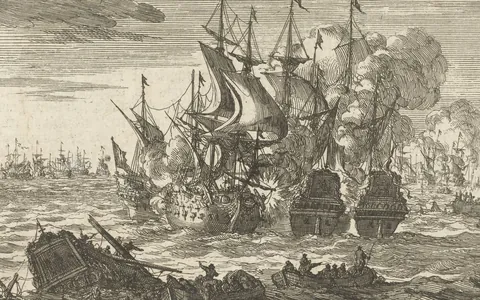
On 10 July 1690, ten days after the Boyne by the English calendar of the time, the Comte de Tourville's French fleet met the Anglo-Dutch fleet of Arthur Herbert, Earl of Torrington, off Beachy Head in Sussex. Sources give the French between 70 and 77 ships of the line against 56 or 57 for the allies. The Dutch squadron in the van was surrounded and battered while the English ships failed to reach it, and Torrington retreated to the Thames. France briefly controlled the Channel, but Tourville did not exploit the victory. Torrington was court-martialed and acquitted.21
Two years later James II stood at Cherbourg with an army ready to invade England. In late May 1692 Admiral Edward Russell's Anglo-Dutch fleet, roughly twice the size of Tourville's, attacked the French off Cape Barfleur. Tourville fought hard and most of his ships escaped, but in the following days allied boats and fireships burned his flagship, the Soleil Royal, and two other ships near Cherbourg and twelve more in the Bay of La Hogue. The invasion was abandoned.22
From Fleurus to Namur: the land campaigns
In the Spanish Netherlands, the main theater, the war became a contest of slow sieges, and pitched battles were rare. When they came, the French usually won them: at Fleurus in 1690, Steenkerque in 1692 and Neerwinden, also called Landen, on 29 July 1693, all under the Duke of Luxembourg. None of these victories was decisive enough to force a peace.23

The fortress city of Namur, where the Sambre meets the Meuse, changed hands twice. The French took it in 1692. In the summer of 1695 William besieged it with the allied army and, after two months, forced the surrender of the citadel in September, his greatest success of the war.24

In northern Italy the French general Nicolas Catinat defeated Duke Victor Amadeus II of Savoy at Staffarda in 1690 and again at Marsaglia in 1693, and his march on Turin in 1696 pushed the duke to make a separate peace. The French also campaigned successfully in Catalonia.25
Key commanders of the Nine Years' War
Rulers. Louis XIV directed the French war effort. Against him William III led the Dutch and English and held the Grand Alliance together, while Emperor Leopold I headed the Austrian Habsburgs. James II, whose cause gave Louis his foothold in Ireland, commanded in person at the Boyne.26
France. The Duke of Luxembourg won the great battles of Fleurus, Steenkerque and Neerwinden and was regarded as undefeated when he died in January 1695. Nicolas Catinat, later a marshal of France, beat Savoy in Italy, and the Comte de Tourville commanded the main fleet at Beachy Head and Barfleur.27
The allies and Ireland. Edward Russell commanded the Anglo-Dutch fleet in 1692. In Ireland, Tyrconnell built the Jacobite army and Patrick Sarsfield led its defense of Limerick; on the Williamite side the Duke of Schomberg, killed at the Boyne, and Ginkel, the victor of Aughrim, did most of the fighting.28
Who won the Nine Years' War? The Treaty of Ryswick
By the mid 1690s the war had become a costly stalemate. France had the better of the land battles but lacked the money of the English and the Dutch, and both sides were financially exhausted. When Savoy left the alliance in 1696, all parties were ready to talk, and the peace was signed at Ryswick (Rijswijk), near The Hague, in September and October 1697.29
Louis kept Alsace with Strasbourg, but he returned Lorraine to its duke and gave up most of the land he had taken east of the Rhine. He recognized William III as king of England, a defeat for James II's cause, though he let James keep his court in France. French troops left Catalonia, and the Dutch won the right to garrison a line of fortresses in the Spanish Netherlands as a barrier against France.30

Historians weigh the result differently. Oxford Reference calls the war a severe defeat for France despite a good military performance, because its finances could not match those of England and the Dutch Republic. Britannica stresses a stalemate that was costly to everyone and marked the rise of England and Austria as counterweights to France, and EBSCO describes a peace signed out of exhaustion. None of the treaties settled the Spanish succession, and within four years the same rivals were at war again in the War of the Spanish Succession.31
Legacy of the Nine Years' War
Paying for William's war changed English public finance. The Bank of England was founded in 1694 as the government's banker, and its loans to the state began the national debt.32
In Britain the war confirmed the settlement of 1688, and in the Dutch Republic it secured the border that William had fought for since the 1670s. In Ireland its memory is still contested. The Boyne became a symbol for many Protestants, and the Orange Order's parades, which reach their climax on 12 July, commemorate William's victory; many nationalists see the marches as triumphalist and provocative.33
Our guides to the military history of Britain and of France place the war in the longer rivalry between the two powers.
Major battles of the Nine Years' War
Our articles on the battles of the war, at sea, in Ireland and in Piedmont, are listed below in date order.
- 1690Battle of Beachy Head, 1690Kingdom of France vs England and the Dutch Republic
On 10 July 1690 Tourville's French fleet beat the Anglo-Dutch fleet off Sussex; the Dutch van was surrounded while the English held back.
- 1690Battle of the Boyne, 1690Williamites (England, Dutch Republic and allies) vs Jacobites (Ireland, with France)
- 1690Battle of Staffarda, 1690Kingdom of France vs Savoy-Piedmont and the Empire
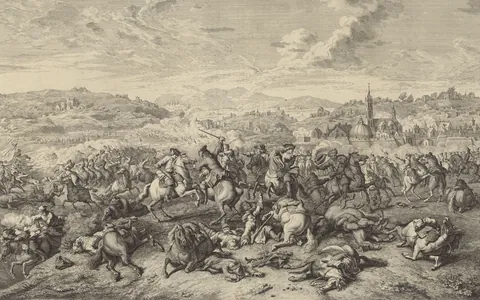
On 18 August 1690 Catinat's French army beat Victor Amadeus II of Savoy at Staffarda in Piedmont; young Prince Eugene covered the retreat.
Timeline of the Nine Years' War
- 1688In late September French troops cross the Rhine and besiege Philippsburg. On 5 November William of Orange lands at Brixham; James II flees to France.34
- 1689James II lands in Ireland in March. In May England declares war on France. Derry endures a three month siege. On 27 July the Jacobites win at Killiecrankie in Scotland.35
- 1690French victory at Fleurus. On 1 July William III defeats James II at the Boyne; on 10 July the French fleet wins off Beachy Head. Catinat beats Savoy at Staffarda.36
- 1691On 12 July Ginkel routs the Jacobites at Aughrim. In October the Treaty of Limerick ends the war in Ireland.37
- 1692In late May the Anglo-Dutch fleet defeats the French at Barfleur and burns their ships at La Hogue. The French take Namur and win at Steenkerque.38
- 1693Luxembourg defeats William at Neerwinden (Landen) on 29 July; Catinat wins at Marsaglia.39
- 1694The Bank of England is founded to lend to the government.40
- 1695William retakes Namur after a two month siege.41
- 1696Savoy makes a separate peace with France in the Treaty of Turin.42
- 1697The Treaty of Ryswick, signed in September and October, ends the war.43
Where to read next
The Boyne and Beachy Head appear in our ranking of the greatest battles in British history, and the period is covered by our list of the greatest battles of the early modern era and the early modern era page. Test yourself with the early modern battles quiz.
Notes
A number in the text points to a note; each note names the works that paragraph draws on, listed in full under Sources.
- Encyclopaedia Britannica, “War of the Grand Alliance”; National Army Museum, “Nine Years War”; Oxford Reference, A Dictionary of World History; EBSCO Research Starters, “War of the Grand Alliance”. ↩
- Encyclopaedia Britannica, “War of the Grand Alliance”; National Army Museum, “Nine Years War”; EBSCO Research Starters, “Wars of the League of Augsburg”; Gabriele Esposito, “Background to the War of the Grand Alliance and the Glorious Revolution”; EBSCO Research Starters, “Battle of Beachy Head”; History Ireland. ↩
- Encyclopaedia Britannica, “Hugh O’Neill, 2nd earl of Tyrone”; Hiram Morgan, Dictionary of Irish Biography. ↩
- Encyclopaedia Britannica, “War of the Grand Alliance”; National Army Museum, “Nine Years War”. ↩
- Encyclopaedia Britannica, “War of the Grand Alliance”; EBSCO Research Starters, “Wars of the League of Augsburg”; Gabriele Esposito, “Background to the War of the Grand Alliance and the Glorious Revolution”. ↩
- Encyclopaedia Britannica, “War of the Grand Alliance”; Gabriele Esposito, “Background to the War of the Grand Alliance and the Glorious Revolution”; EBSCO Research Starters, “Wars of the League of Augsburg”. ↩
- History Ireland; Encyclopaedia Britannica, “Battle of the Boyne”; Encyclopaedia Britannica, “War of the Grand Alliance”; EBSCO Research Starters, “Wars of the League of Augsburg”. ↩
- Encyclopaedia Britannica, “War of the Grand Alliance”; EBSCO Research Starters, “War of the Grand Alliance”; History Ireland; National Army Museum, “Nine Years War”. ↩
- National Army Museum, “Nine Years War”; Encyclopaedia Britannica, “War of the Grand Alliance”; EBSCO Research Starters, “War of the Grand Alliance”. ↩
- Encyclopaedia Britannica, “War of the Grand Alliance”; Oxford Reference, A Dictionary of World History; EBSCO Research Starters, “Treaty of Ryswick”. ↩
- National Army Museum, “Nine Years War”; Encyclopaedia Britannica, “War of the Grand Alliance”; EBSCO Research Starters, “War of the Grand Alliance”; EBSCO Research Starters, “Wars of the League of Augsburg”. ↩
- History Ireland; National Army Museum, “Battle of the Boyne”. ↩
- National Army Museum, “Nine Years War”; National Army Museum, “Battle of the Boyne”; Encyclopaedia Britannica, “Battle of the Boyne”. ↩
- National Army Museum, “Nine Years War”; National Trust for Scotland, “Killiecrankie”; EBSCO Research Starters, “War of the Grand Alliance”. ↩
- National Army Museum, “Battle of the Boyne”; Encyclopaedia Britannica, “Battle of the Boyne”; History Ireland. ↩
- National Army Museum, “Battle of the Boyne”; Encyclopaedia Britannica, “Battle of the Boyne”. ↩
- National Army Museum, “Nine Years War”; History Ireland. ↩
- History Ireland; EBSCO Research Starters, “Wars of the League of Augsburg”; RTÉ News, “Campaign to repatriate Patrick Sarsfield’s remains”; National Army Museum, “Nine Years War”. ↩
- History Ireland; EBSCO Research Starters, “Wars of the League of Augsburg”; History Ireland; National Army Museum, “Battle of the Boyne”. ↩
- EBSCO Research Starters, “Wars of the League of Augsburg”; Jacob F. Field, “Battle of Beachy Head”; History Ireland. ↩
- Jacob F. Field, “Battle of Beachy Head”; EBSCO Research Starters, “Battle of Beachy Head”; Oxford Reference, A Dictionary of World History. ↩
- Royal Museums Greenwich, “The Battle of Barfleur, 19 May 1692”; Royal Museums Greenwich, “The battle of La Hogue, 23 May 1692”; Encyclopaedia Britannica, “War of the Grand Alliance”; EBSCO Research Starters, “War of the Grand Alliance”. ↩
- Encyclopaedia Britannica, “War of the Grand Alliance”; National Army Museum, “Nine Years War”; EBSCO Research Starters, “Wars of the League of Augsburg”. ↩
- National Army Museum, “Nine Years War”; Encyclopaedia Britannica, “sieges of Namur”; EBSCO Research Starters, “Wars of the League of Augsburg”; Oxford Reference, A Dictionary of World History. ↩
- The Columbia Encyclopedia; Istituto della Enciclopedia Italiana, “Catinat, Nicolas de”; Oxford Reference, A Dictionary of World History; National Army Museum, “Nine Years War”. ↩
- EBSCO Research Starters, “War of the Grand Alliance”; Encyclopaedia Britannica, “War of the Grand Alliance”; Oxford Reference, A Dictionary of World History; Encyclopaedia Britannica, “Battle of the Boyne”. ↩
- National Army Museum, “Nine Years War”; Encyclopaedia Britannica, “War of the Grand Alliance”; The Columbia Encyclopedia; Jacob F. Field, “Battle of Beachy Head”. ↩
- Royal Museums Greenwich, “The battle of La Hogue, 23 May 1692”; National Army Museum, “Battle of the Boyne”; History Ireland; RTÉ News, “Campaign to repatriate Patrick Sarsfield’s remains”. ↩
- National Army Museum, “Nine Years War”; Encyclopaedia Britannica, “War of the Grand Alliance”; EBSCO Research Starters, “Treaty of Ryswick”. ↩
- National Army Museum, “Nine Years War”; EBSCO Research Starters, “Treaty of Ryswick”; EBSCO Research Starters, “War of the Grand Alliance”. ↩
- Oxford Reference, A Dictionary of World History; Encyclopaedia Britannica, “War of the Grand Alliance”; EBSCO Research Starters, “Treaty of Ryswick”; National Army Museum, “Nine Years War”. ↩
- National Army Museum, “Nine Years War”; Bank of England, “Our history”. ↩
- National Army Museum, “Battle of the Boyne”; The Irish Times; EBSCO Research Starters, “Wars of the League of Augsburg”. ↩
- Gabriele Esposito, “Background to the War of the Grand Alliance and the Glorious Revolution”; EBSCO Research Starters, “Wars of the League of Augsburg”; History Ireland; Encyclopaedia Britannica, “Battle of the Boyne”. ↩
- National Army Museum, “Battle of the Boyne”; EBSCO Research Starters, “War of the Grand Alliance”; National Army Museum, “Nine Years War”; National Trust for Scotland, “Killiecrankie”. ↩
- EBSCO Research Starters, “Wars of the League of Augsburg”; Encyclopaedia Britannica, “Battle of the Boyne”; Jacob F. Field, “Battle of Beachy Head”; The Columbia Encyclopedia. ↩
- National Army Museum, “Nine Years War”; History Ireland. ↩
- Royal Museums Greenwich, “The Battle of Barfleur, 19 May 1692”; Encyclopaedia Britannica, “War of the Grand Alliance”; National Army Museum, “Nine Years War”. ↩
- National Army Museum, “Nine Years War”; EBSCO Research Starters, “Wars of the League of Augsburg”; Istituto della Enciclopedia Italiana, “Catinat, Nicolas de”. ↩
- Bank of England, “Our history”; National Army Museum, “Nine Years War”. ↩
- National Army Museum, “Nine Years War”; EBSCO Research Starters, “Wars of the League of Augsburg”. ↩
- Encyclopaedia Britannica, “War of the Grand Alliance”; EBSCO Research Starters, “Treaty of Ryswick”. ↩
- Encyclopaedia Britannica, “War of the Grand Alliance”; EBSCO Research Starters, “Treaty of Ryswick”. ↩
Sources
- Encyclopaedia Britannica, “War of the Grand Alliance”.
- National Army Museum, “Nine Years War”.
- Oxford Reference, A Dictionary of World History, “Nine Years War”.
- EBSCO Research Starters, “War of the Grand Alliance”.
- EBSCO Research Starters, “Wars of the League of Augsburg”.
- Gabriele Esposito, “Background to the War of the Grand Alliance and the Glorious Revolution”, Osprey Publishing, 2021.
- EBSCO Research Starters, “Battle of Beachy Head”.
- History Ireland, “The Williamite War 1689-91”, issue 1 (Spring 1993).
- Encyclopaedia Britannica, “Hugh O’Neill, 2nd earl of Tyrone”.
- Hiram Morgan, Dictionary of Irish Biography, “O’Neill, Hugh”, Royal Irish Academy.
- Encyclopaedia Britannica, “Battle of the Boyne”.
- EBSCO Research Starters, “Treaty of Ryswick”.
- National Army Museum, “Battle of the Boyne”.
- National Trust for Scotland, “Killiecrankie”.
- History Ireland, “Sources in the Public Records Office of Northern Ireland: the penal laws”.
- RTÉ News, “Campaign to repatriate Patrick Sarsfield’s remains”, 1 December 2020.
- Jacob F. Field, Encyclopaedia Britannica, “Battle of Beachy Head”.
- Royal Museums Greenwich, “The Battle of Barfleur, 19 May 1692” (BHC0331).
- Royal Museums Greenwich, “The battle of La Hogue, 23 May 1692”.
- Encyclopaedia Britannica, “sieges of Namur”.
- The Columbia Encyclopedia, 6th ed., via Encyclopedia.com, “Catinat, Nicolas”.
- Istituto della Enciclopedia Italiana (Treccani), “Catinat, Nicolas de”.
- Bank of England, “Our history”.
- The Irish Times, “Why do Orangemen march? The Twelfth of July explained”, 2019.





