

What was the War of the Spanish Succession and who won?
The War of the Spanish Succession (1701 to 1714) was fought over who would inherit Spain after Charles II died childless. Louis XIV's grandson Philip V kept the Spanish throne, but the Grand Alliance, victorious at the Battle of Blenheim and Ramillies, split up Spain's European lands, and Britain gained Gibraltar.1
The war set Bourbon France and Spain against a Grand Alliance of the Habsburg emperor, England and the Dutch Republic, and it was fought in the Low Countries, on the Rhine and the Danube, in northern Italy, in Spain and at sea. Its best known battles are the victories of the Duke of Marlborough and Prince Eugene of Savoy, from the Schellenberg and Blenheim on the Danube in 1704 to Malplaquet in 1709, but the Bourbons won the war inside Spain, above all at the Battle of Almansa in 1707, and fleets fought for the Mediterranean off Málaga.2
It followed a decade after the Nine Years' War of 1688 to 1697 against the same Louis XIV, and it shaped the military history of both Britain and France. This guide covers its causes, the two coalitions, the campaigns year by year, the commanders and the peace that ended it.
Causes of the War of the Spanish Succession
Charles II of Spain, the last of the Spanish Habsburgs, died childless on 1 November 1700. He ruled not only Spain but also the Spanish Netherlands (roughly modern Belgium and Luxembourg), Milan, Naples, Sicily and Sardinia in Italy, and a vast empire in the Americas. Both Louis XIV of France and the Habsburg emperor Leopold I had claims to this inheritance through their mothers and wives, Spanish princesses. By his last will Charles II left the whole undivided monarchy to Philip, duke of Anjou, Louis XIV's younger grandson, and Louis accepted it: Philip was proclaimed king as Philip V.3
The emperor did not give up. He claimed the inheritance for his younger son, Archduke Charles, and many rulers feared what a Bourbon king in Madrid would mean: a virtual union of France and Spain, the two strongest states in western Europe, that would upset the balance of power. England and the Dutch Republic, the two Maritime Powers, would accept neither Spain united with France nor Spain united with Austria.4
Louis XIV then gave them reasons to fight. He kept his grandson in the line of succession to the French throne, in March 1701 French troops occupied fortresses in the Spanish Netherlands, and when the exiled James II died in September 1701 Louis recognized James's son as the rightful king of England. French policy also threatened the lucrative English and Dutch trade with Spain and its colonies, and French merchants were promised rights in the slave trade to Spanish America.5

Who fought in the War of the Spanish Succession
In September 1701 England, the Dutch Republic and the emperor concluded the Grand Alliance at The Hague. The Kingdom of Prussia and many smaller German states joined them, and in May 1702 England and the Dutch Republic formally declared war. The allies backed Archduke Charles, whom they styled Charles III of Spain, as the rival claimant.6
France and Bourbon Spain had the support of the Wittelsbach brothers, Maximilian II Emanuel, elector of Bavaria, and Joseph Clement, elector of Cologne; Bavaria openly joined France in September 1702. Two allies changed sides in 1703: Portugal left its alliance with France in May and joined the Maritime Powers, and in October Duke Victor Amadeus II of Savoy went over to the emperor.7
The Dutch were as important as the English to the allied war effort. They supplied the largest number of troops in Marlborough's army and much of its supply, but their government kept a veto on using its troops beyond the Republic's borders and often refused to risk them in battle, which repeatedly frustrated Marlborough's plans.8
1701 to 1704: Italy, the Danube and the Battle of Blenheim
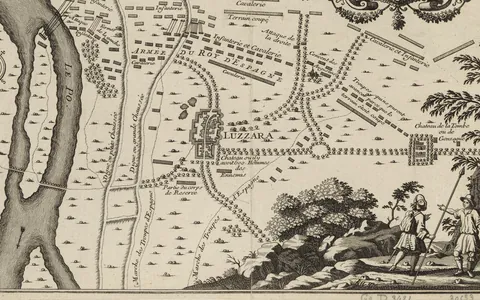
The first fighting was in northern Italy, between Louis XIV and the emperor. In 1701 Prince Eugene led an imperial army out of the Tyrol, outmaneuvered Marshal Catinat and on 1 September defeated his successor, Marshal Villeroi, at Chiari. In the winter of 1701 to 1702 Eugene raided Cremona and captured Villeroi himself. His replacement, the duke of Vendôme, fought Eugene at Luzzara on 15 August 1702, a bloody battle that neither side clearly won.9
In 1702 the allied effort at sea began badly with a failed attack on Cádiz, but on the way home in October Admiral Sir George Rooke destroyed the Spanish treasure fleet sheltering in Vigo Bay. On land Marlborough, captain general of the English and Dutch forces from 1702, took a string of fortresses on the Meuse and the lower Rhine in 1702 and 1703, while the Dutch held him back from a pitched battle.10
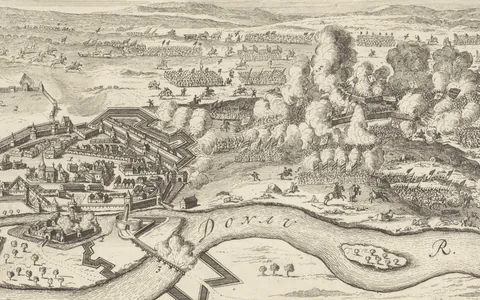
By 1704 the Franco-Bavarian army on the Danube threatened Vienna itself. Marlborough marched his army from the Low Countries to the Danube, hiding his aim from the French and even from the Dutch, joined Prince Louis of Baden and on 2 July stormed the Schellenberg hill above Donauwörth, which opened the crossing of the Danube.11
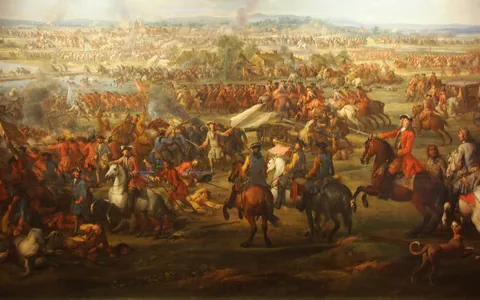
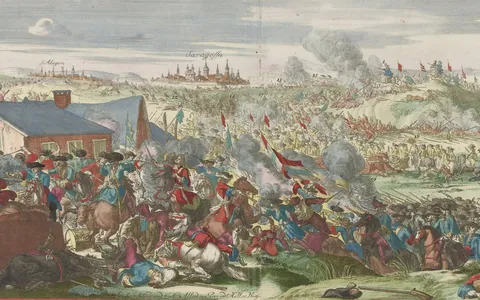
On 13 August 1704 Marlborough and Eugene attacked Marshal Tallard's Franco-Bavarian army at Blenheim. They broke its center with a mass of cavalry, captured Tallard and inflicted losses of more than 30,000 men, over half the French and Bavarian army, killed, wounded or taken prisoner. Vienna was no longer in danger, the French fell back west of the Rhine and Bavaria was knocked out of the war, its elector a fugitive in France.12
1705 to 1709: Ramillies, Turin, Oudenaarde and Malplaquet
After a year of stalemate in 1705, 1706 was the allies' best year. On 23 May Marlborough defeated Villeroi at Ramillies, in today's Belgium, and pursued so hard that within weeks Antwerp, Ghent, Bruges and most of the Spanish Netherlands were in allied hands. In Italy Eugene marched west along the Po, joined the duke of Savoy and on 7 September broke the French siege of Turin; by the Convention of Milan in March 1707 the French gave up northern Italy.13
An allied invasion of Provence failed before Toulon in the summer of 1707, although the French scuttled their fleet in the harbor, leaving the allies masters of the Mediterranean. On 11 July 1708 Marlborough met Vendôme at Oudenaarde, where Dutch cavalry enveloped the French right, and the French retreated; the allies then besieged Lille, the capital of French Flanders, which held out until December.14
Louis XIV now asked for peace, ready by 1709 to give up the whole Spanish inheritance. The allies demanded that he also use his own army to drive his grandson out of Spain if Philip refused to leave, and Louis would not. The war went on.15
On 11 September 1709 Marlborough and Eugene, with about 100,000 men, attacked Marshal Villars and Marshal Boufflers, entrenched between two woods at Malplaquet south of Mons. The allies drove the French from the field and later took Mons, but they lost about 20,000 to 22,000 men killed and wounded against about 12,000 French, and the French withdrew in good order.16

The war in Spain and at sea: Gibraltar, Almansa and Saragossa
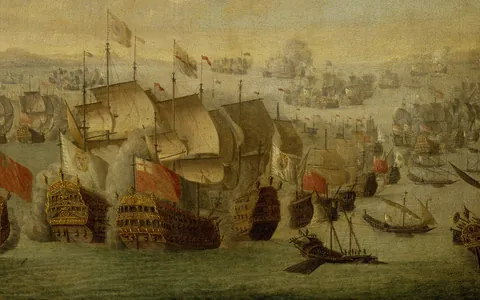
In 1704 an Anglo-Dutch fleet under Rooke, with English and Dutch marines led by Prince George of Hesse-Darmstadt, captured Gibraltar after a short bombardment and landing; the Spanish governor surrendered on 4 August 1704 (24 July by the Old Style calendar still used in England). On 24 August (13 August Old Style) Rooke fought the French fleet of the comte de Toulouse off Málaga, the largest naval battle of the war. It was indecisive and no ship was lost on either side, but the threat to Gibraltar was lifted for the moment.17

Spain itself was divided. Allied troops took Barcelona in October 1705, and Catalonia became the base of Archduke Charles's cause, while much of the rest of Spain stood by Philip V. An allied army even entered Madrid in June 1706, but it could not hold the capital.18
On 25 April 1707 the Bourbon army of the Duke of Berwick, an illegitimate son of the deposed James II of England, decisively defeated the Anglo-Portuguese army of the Earl of Galway at Almansa. The victory gave Philip V control of almost all of Spain except Catalonia.19
The allies tried once more in 1710. After victories at Almenara on 27 July and Saragossa on 20 August, won by the imperial general Guido von Starhemberg with British troops under James Stanhope, they occupied Madrid again, but they had to retreat for lack of support. In December Vendôme, now commanding Philip V's army, caught Stanhope's rearguard at Brihuega and captured him, and by the end of 1710 the allied forces were again confined to Catalonia.20
Key commanders of the War of the Spanish Succession
The Grand Alliance. John Churchill, Duke of Marlborough, commanded the combined English and Dutch armies from 1702 until his dismissal at the end of 1711 and won Blenheim, Ramillies, Oudenaarde and Malplaquet. The National Army Museum stresses that he was ready to maneuver for a decisive battle, unusually for a general of his time, and that he worked well with his allies. Prince Eugene of Savoy, the emperor's general, won in Italy at Chiari and Turin and fought beside Marlborough at Blenheim, Oudenaarde and Malplaquet.21

France and Bourbon Spain. The duke of Vendôme held Eugene in Italy and won at Cassano in 1705, lost at Oudenaarde in 1708 and secured Spain for Philip V in 1710. Marshal Villars won at Friedlingen in 1702 and commanded at Malplaquet, Marshal Tallard was captured at Blenheim, and the Duke of Berwick won at Almansa.22
At sea. Admiral Sir George Rooke led the Anglo-Dutch fleet at Vigo Bay, Gibraltar and Málaga. His opponent at Málaga was the comte de Toulouse, an illegitimate son of Louis XIV.23
Who won the War of the Spanish Succession? The Peace of Utrecht
Politics in London and Vienna, not the battlefield, decided the end. In 1710 a Tory government replaced the Whigs and began secret talks with France; Malplaquet had looked to many like a defeat, and the war's cost was unpopular. Then Emperor Joseph I died in April 1711 and was succeeded by his brother, Archduke Charles. Britain would not fight on to give one Habsburg both the empire and Spain, and Marlborough was dismissed at the end of 1711.24
A peace conference opened at Utrecht on 29 January 1712, and in May 1712 the British government stopped its army from taking part in further battles. Philip V renounced his claim to the French throne, so that the crowns of France and Spain could never be joined. The peace was not one treaty but a series of treaties between pairs of states, the main Anglo-French one signed on 11 April 1713.25

Britain gained most. France recognized the Protestant succession in Britain, ended its support for the Jacobite claimant and ceded Newfoundland, Acadia and the Hudson Bay region in North America. In a separate treaty of 13 July 1713 Spain ceded Gibraltar and Minorca to Britain and granted British traders the asiento, the contract to supply enslaved Africans to Spanish America, set at 4,800 people a year for thirty years.26
Philip V kept Spain and its empire in the Americas. The emperor, now Charles VI, received the Spanish Netherlands, Milan, Naples and Sardinia, but he refused the Utrecht terms and fought on until France and the emperor made peace at Rastatt and Baden in 1714. In Spain the war ended only when Bourbon troops took Barcelona on 11 September 1714. No side got everything it had fought for, but Britannica sums up the outcome as the decline of French and Spanish power in favor of an ascendant Britain.27
Legacy of the War of the Spanish Succession
For the National Army Museum, Marlborough's campaigns stopped France from dominating Europe and gave the British Army a lasting reputation for courage and discipline; EBSCO's account of the peace calls Britain the power that benefited most, emerging as the world's leading colonial and commercial power. Both readings come from the winning side. The war's last great battle in the Low Countries also left a darker memory: Malplaquet's losses were among the heaviest of eighteenth-century warfare, and the museum calls it a strategic victory for France, because the allies could no longer march on Paris.28
The historian Andrew C. Thompson points out that Britain has largely forgotten the Peace of Utrecht, which ended nearly a quarter of a century of almost continuous war and brought it Gibraltar, Minorca and gains in North America, along with the slave trading privileges that it also secured. Gibraltar has remained British ever since the treaty that ceded it in 1713.29
Major battles of the War of the Spanish Succession
Our articles on the battles of the war, in Italy, on the Danube, at sea and in Spain, are listed below in date order.
- 1702Battle of Luzzara, 1702Habsburg Monarchy (imperial army in Italy) vs France and Spain
On 15 August 1702 Prince Eugene attacked Vendôme's larger Franco-Spanish army at Luzzara on the Po; after a bloody evening, both sides claimed victory.
- 1704Battle of the Schellenberg, 1704Grand Alliance (England, the Dutch Republic, the Empire) vs France and the Electorate of Bavaria
On 2 July 1704 Marlborough and Louis of Baden stormed the Schellenberg above Donauwörth; an evening breakthrough near the town gave them the Danube crossing.
- 1704Battle of Blenheim, 1704Grand Alliance: England, the Dutch Republic, the Holy Roman Empire and German states vs France and the Electorate of Bavaria
On 13 August 1704 Marlborough and Prince Eugene destroyed a Franco-Bavarian army on the Danube, captured Marshal Tallard and saved Vienna.
- 1704Battle of Málaga, 1704England and the Dutch Republic vs France and Spain
On 24 August 1704, weeks after Gibraltar fell, the Anglo-Dutch and French fleets fought a day-long line battle off Vélez-Málaga. No ship was lost, both sides drew apart, and Gibraltar stayed allied.
- 1707Battle of Almansa, 1707Bourbon Spain and France vs Grand Alliance (England, Portugal, the Dutch Republic)
On 25 April 1707 an English-born duke led the armies of France and Spain against a French-born earl leading the English. Almansa kept a Bourbon on the Spanish throne.
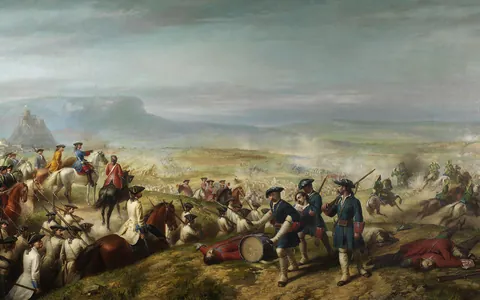
- 1710Battle of Saragossa, 1710Allies of Archduke Charles (Charles III) vs Bourbon Spain and France (Philip V)
On 20 August 1710 the allies of Archduke Charles broke Philip V's army on the hills of Torrero outside Zaragoza. Charles entered the city the next day, but held Aragon only until December.
Timeline of the War of the Spanish Succession
- 1700Charles II of Spain dies childless on 1 November; his will leaves the Spanish monarchy to Philip of Anjou, who becomes Philip V.30
- 1701French troops occupy fortresses in the Spanish Netherlands in March; Eugene beats Villeroi at Chiari on 1 September; the Grand Alliance is concluded at The Hague in September.31
- 1702England and the Dutch Republic declare war in May; Luzzara (15 August) ends in a draw; Rooke destroys the Spanish treasure fleet at Vigo in October.32
- 1703Portugal joins the allies in May; Savoy changes sides in October.33
- 1704The Schellenberg (2 July) and Blenheim (13 August); Gibraltar captured (4 August); battle off Málaga (24 August).34
- 1705Allied troops take Barcelona in October.35
- 1706Ramillies (23 May) and Eugene's relief of Turin (7 September).36
- 1707Berwick wins at Almansa (25 April); the allied siege of Toulon fails.37
- 1708Oudenaarde (11 July); the allies take Lille and Minorca.38
- 1709Louis XIV rejects the allied peace terms; Malplaquet (11 September).39
- 1710Allied victories at Almenara and Saragossa, then defeat at Brihuega in December.40
- 1711Emperor Joseph I dies in April; Marlborough is dismissed at the end of the year.41
- 1712The peace conference opens at Utrecht on 29 January.42
- 1713The Anglo-French Treaty of Utrecht is signed on 11 April; Spain cedes Gibraltar and Minorca on 13 July.43
- 1714France and the emperor make peace at Rastatt and Baden; Barcelona falls on 11 September.44
Where to read next
The story of Louis XIV's wars begins in our guide to the Nine Years' War and continues with the next great dynastic conflict, the War of the Austrian Succession. Several of the battles appear in our ranking of the greatest early modern battles and the greatest battles in British history, and Marlborough among the greatest British commanders; see also the early modern era page and the early modern battles quiz.
Notes
A number in the text points to a note; each note names the works that paragraph draws on, listed in full under Sources.
- Encyclopaedia Britannica, “War of the Spanish Succession”; National Army Museum, “War of the Spanish Succession”; Edward P. Keleher and Mark C. Herman, “Treaty of Utrecht”. ↩
- Encyclopaedia Britannica, “War of the Spanish Succession”; National Army Museum, “War of the Spanish Succession”; John Rickard, “War of the Spanish Succession, 1701-1714”. ↩
- Encyclopaedia Britannica, “War of the Spanish Succession”; John Rickard, “War of the Spanish Succession, 1701-1714”; National Army Museum, “War of the Spanish Succession”. ↩
- National Army Museum, “War of the Spanish Succession”; Edward P. Keleher and Mark C. Herman, “Treaty of Utrecht”; John Rickard, “War of the Spanish Succession, 1701-1714”. ↩
- Encyclopaedia Britannica, “War of the Spanish Succession”; National Army Museum, “War of the Spanish Succession”; Edward P. Keleher and Mark C. Herman, “Treaty of Utrecht”; John Rickard, “War of the Spanish Succession, 1701-1714”. ↩
- Encyclopaedia Britannica, “War of the Spanish Succession”; National Army Museum, “War of the Spanish Succession”; John Rickard, “War of the Spanish Succession, 1701-1714”; Edward P. Keleher and Mark C. Herman, “Treaty of Utrecht”. ↩
- Encyclopaedia Britannica, “War of the Spanish Succession”; John Rickard, “War of the Spanish Succession, 1701-1714”; National Army Museum, “War of the Spanish Succession”. ↩
- National Army Museum, “The Duke of Marlborough”; National Army Museum, “War of the Spanish Succession”; Encyclopaedia Britannica, “War of the Spanish Succession”; John Rickard, “War of the Spanish Succession, 1701-1714”. ↩
- Encyclopaedia Britannica, “War of the Spanish Succession”; John Rickard, “War of the Spanish Succession, 1701-1714”; Encyclopaedia Britannica, “Louis Joseph, duke of Vendôme”. ↩
- Encyclopaedia Britannica, “War of the Spanish Succession”; John Rickard, “War of the Spanish Succession, 1701-1714”; Arnold Blumberg, “Grabbing and Holding 'the Rock'”; National Army Museum, “War of the Spanish Succession”. ↩
- Encyclopaedia Britannica, “War of the Spanish Succession”; National Army Museum, “War of the Spanish Succession”; John Rickard, “War of the Spanish Succession, 1701-1714”; John Rickard, “Battle of the Schellenberg, 2 July 1704”. ↩
- National Army Museum, “War of the Spanish Succession”; National Army Museum, “The Duke of Marlborough”; Encyclopaedia Britannica, “War of the Spanish Succession”; John Rickard, “War of the Spanish Succession, 1701-1714”. ↩
- Encyclopaedia Britannica, “War of the Spanish Succession”; National Army Museum, “War of the Spanish Succession”; John Rickard, “War of the Spanish Succession, 1701-1714”. ↩
- Encyclopaedia Britannica, “War of the Spanish Succession”; John Rickard, “War of the Spanish Succession, 1701-1714”; National Army Museum, “War of the Spanish Succession”; Encyclopaedia Britannica, “Louis Joseph, duke of Vendôme”. ↩
- Encyclopaedia Britannica, “War of the Spanish Succession”; National Army Museum, “War of the Spanish Succession”; Edward P. Keleher and Mark C. Herman, “Treaty of Utrecht”. ↩
- Encyclopaedia Britannica, “Battle of Malplaquet”; National Army Museum, “War of the Spanish Succession”; John Rickard, “War of the Spanish Succession, 1701-1714”. ↩
- Encyclopaedia Britannica, “War of the Spanish Succession”; Arnold Blumberg, “Grabbing and Holding 'the Rock'”; Royal Museums Greenwich, “The Battle of Malaga, 13 August 1704”; John Rickard, “War of the Spanish Succession, 1701-1714”. ↩
- Encyclopaedia Britannica, “War of the Spanish Succession”; John Rickard, “War of the Spanish Succession, 1701-1714”; National Army Museum, “War of the Spanish Succession”. ↩
- National Army Museum, “War of the Spanish Succession”; Encyclopaedia Britannica, “War of the Spanish Succession”; John Rickard, “War of the Spanish Succession, 1701-1714”. ↩
- National Army Museum, “War of the Spanish Succession”; Encyclopaedia Britannica, “War of the Spanish Succession”; Encyclopaedia Britannica, “Louis Joseph, duke of Vendôme”; John Rickard, “War of the Spanish Succession, 1701-1714”. ↩
- National Army Museum, “The Duke of Marlborough”; Encyclopaedia Britannica, “War of the Spanish Succession”; National Army Museum, “War of the Spanish Succession”. ↩
- Encyclopaedia Britannica, “Louis Joseph, duke of Vendôme”; Encyclopaedia Britannica, “War of the Spanish Succession”; John Rickard, “War of the Spanish Succession, 1701-1714”; National Army Museum, “War of the Spanish Succession”. ↩
- Royal Museums Greenwich, “The Battle of Malaga, 13 August 1704”; Arnold Blumberg, “Grabbing and Holding 'the Rock'”; Encyclopaedia Britannica, “War of the Spanish Succession”. ↩
- Encyclopaedia Britannica, “War of the Spanish Succession”; Edward P. Keleher and Mark C. Herman, “Treaty of Utrecht”; National Army Museum, “War of the Spanish Succession”; National Army Museum, “The Duke of Marlborough”. ↩
- Encyclopaedia Britannica, “War of the Spanish Succession”; Edward P. Keleher and Mark C. Herman, “Treaty of Utrecht”; Brooklyn College, “Treaties of Utrecht (1713)”; Stuart R. J. Sutherland, “Treaty of Utrecht”. ↩
- Stuart R. J. Sutherland, “Treaty of Utrecht”; Edward P. Keleher and Mark C. Herman, “Treaty of Utrecht”; Andrew C. Thompson, “The Peace of Utrecht”; Brooklyn College, “Treaties of Utrecht (1713)”. ↩
- Edward P. Keleher and Mark C. Herman, “Treaty of Utrecht”; John Rickard, “War of the Spanish Succession, 1701-1714”; National Army Museum, “War of the Spanish Succession”; Encyclopaedia Britannica, “War of the Spanish Succession”. ↩
- National Army Museum, “War of the Spanish Succession”; Edward P. Keleher and Mark C. Herman, “Treaty of Utrecht”; Encyclopaedia Britannica, “War of the Spanish Succession”. ↩
- Andrew C. Thompson, “The Peace of Utrecht”; Edward P. Keleher and Mark C. Herman, “Treaty of Utrecht”; Brooklyn College, “Treaties of Utrecht (1713)”. ↩
- Encyclopaedia Britannica, “War of the Spanish Succession”; John Rickard, “War of the Spanish Succession, 1701-1714”. ↩
- Encyclopaedia Britannica, “War of the Spanish Succession”; John Rickard, “War of the Spanish Succession, 1701-1714”. ↩
- John Rickard, “War of the Spanish Succession, 1701-1714”; Encyclopaedia Britannica, “War of the Spanish Succession”. ↩
- Encyclopaedia Britannica, “War of the Spanish Succession”; John Rickard, “War of the Spanish Succession, 1701-1714”. ↩
- Encyclopaedia Britannica, “War of the Spanish Succession”; John Rickard, “War of the Spanish Succession, 1701-1714”; National Army Museum, “War of the Spanish Succession”. ↩
- Encyclopaedia Britannica, “War of the Spanish Succession”; John Rickard, “War of the Spanish Succession, 1701-1714”. ↩
- Encyclopaedia Britannica, “War of the Spanish Succession”; John Rickard, “War of the Spanish Succession, 1701-1714”. ↩
- National Army Museum, “War of the Spanish Succession”; Encyclopaedia Britannica, “War of the Spanish Succession”. ↩
- Encyclopaedia Britannica, “War of the Spanish Succession”; National Army Museum, “War of the Spanish Succession”. ↩
- Encyclopaedia Britannica, “War of the Spanish Succession”; Encyclopaedia Britannica, “Battle of Malplaquet”. ↩
- National Army Museum, “War of the Spanish Succession”; Encyclopaedia Britannica, “War of the Spanish Succession”. ↩
- Encyclopaedia Britannica, “War of the Spanish Succession”; Edward P. Keleher and Mark C. Herman, “Treaty of Utrecht”. ↩
- Encyclopaedia Britannica, “War of the Spanish Succession”; Edward P. Keleher and Mark C. Herman, “Treaty of Utrecht”. ↩
- Edward P. Keleher and Mark C. Herman, “Treaty of Utrecht”; Stuart R. J. Sutherland, “Treaty of Utrecht”. ↩
- Edward P. Keleher and Mark C. Herman, “Treaty of Utrecht”; National Army Museum, “War of the Spanish Succession”. ↩
Sources
- Encyclopaedia Britannica, “War of the Spanish Succession”.
- National Army Museum, “War of the Spanish Succession”.
- Edward P. Keleher and Mark C. Herman, EBSCO Research Starters, “Treaty of Utrecht”.
- John Rickard, HistoryofWar.org, “War of the Spanish Succession, 1701-1714”.
- National Army Museum, “The Duke of Marlborough”.
- Encyclopaedia Britannica, “Louis Joseph, duke of Vendôme”.
- Arnold Blumberg, Naval History (U.S. Naval Institute), November 2012, “Grabbing and Holding 'the Rock'”.
- John Rickard, HistoryofWar.org, “Battle of the Schellenberg, 2 July 1704”.
- Encyclopaedia Britannica, “Battle of Malplaquet”.
- Royal Museums Greenwich, “The Battle of Malaga, 13 August 1704”.
- Brooklyn College, City University of New York, “Treaties of Utrecht (1713)”.
- Stuart R. J. Sutherland, The Canadian Encyclopedia, “Treaty of Utrecht”.
- Andrew C. Thompson, History & Policy, “The Peace of Utrecht: why Britain is forgetting to remember”.






