

What were the Wars of the Three Kingdoms?
The Wars of the Three Kingdoms were linked wars fought from 1639 to 1653 in England (with Wales), Scotland and Ireland, three kingdoms under one king, Charles I. The English Parliament and its New Model Army won: the king was executed in 1649, and Ireland and Scotland were conquered by 1653.1
Historians increasingly prefer the names "British Civil Wars" or "Wars of the Three Kingdoms" to "English Civil War", because the fighting began in Scotland and Ireland and spread across all of Charles I's realms. This page follows the three kingdoms together, with Scotland and Ireland in their own right; the English war of 1642 to 1646 has its own guide, the First English Civil War. Our battle articles include the Battle of Edgehill (1642), the Battle of St Fagans (1648) and the Battle of Worcester (1651). See also the military histories of Scotland, Ireland and Britain.2
Causes of the Wars of the Three Kingdoms
England, Scotland and Ireland were separate kingdoms with their own laws, parliaments and churches, held by the Stuart king. Charles I ruled England without a parliament from 1629 to 1640, and he set out to bring the churches of his kingdoms closer to the Church of England.3

The crisis began in Scotland. In July 1637 the first reading of a new prayer book in St Giles' in Edinburgh set off a riot, and on 28 February 1638 nobles, lairds, ministers and burgesses began signing a National Covenant at Greyfriars Kirk, pledging to defend the Kirk against untried "innovations". Those who signed became known as the Covenanters.4

Charles twice tried to force the Scots to obey, in the Bishops' Wars of 1639 and 1640. His untrained army achieved nothing in 1639 and he agreed the Pacification of Berwick; in August 1640 the Covenanters invaded England, routed the English at Newburn and took Newcastle. To pay for the war and for the Scots' expenses Charles had to summon the English Parliament, and the Long Parliament that met in November 1640 turned on his ministers instead.5
In October 1641 Catholic conspirators in Ulster rose to seize strongholds; the plot against Dublin Castle was betrayed, but the rising spread across Ireland. In London king and Parliament could not agree which of them should command the army needed to put it down. That quarrel led Charles to raise his standard at Nottingham in August 1642.6
Ireland: the 1641 rising and Confederate Ireland
The rising of 1641 began as an attempt at a quick coup, but resentment against the settlers of the plantations turned it into a war on Protestant colonists, who were robbed, driven out and in many places killed. Near Portadown in November 1641 about 100 Protestants were drowned in the River Bann. Settlers and government forces retaliated against Catholics, and each side blamed the other for the killing.7
How many died became a weapon in itself. The Irish government of the day suggested that 154,000 Protestants had been butchered, and in England the wildest rumors were believed; Britannica's estimate is perhaps 4,000 settlers killed, and the historian Eamon Darcy gives 4,000 to 12,000 dead on all sides in the first violence.8
From 1642 the Catholic clergy and the Old English and Gaelic Irish lords governed much of Ireland as the Confederate Catholics, with their assembly at Kilkenny. They declared loyalty to the king, and in September 1643 his lord lieutenant, the Earl of Ormond, agreed a ceasefire with them, while a Scottish Covenanter army under Robert Monro fought on in Ulster. On 5 June 1646 Owen Roe O'Neill's Confederate army destroyed Monro's army at Benburb in County Tyrone, killing perhaps 3,000 men for the loss of about 300.9
The Confederates split over whether to make peace with the king or hold out for full freedom for their church, and Ormond in the end surrendered Dublin to the English Parliament rather than let it fall to the Confederates. After the king's execution Ormond united Royalists and Confederates, but on 2 August 1649 the Parliamentarian governor of Dublin, Michael Jones, routed his army at Rathmines and left the way open for Cromwell.10
Scotland: the Covenanters and Montrose
In 1643 the king was winning in England, and Parliament turned to the Scots. Under the Solemn League and Covenant, agreed on 25 September 1643, the Covenanters promised an army of 21,000 men in return for a reform of the English church along Presbyterian lines. The Army of the Covenant crossed into England early in 1644 and fought beside Parliament's armies at Marston Moor on 2 July, where Royalist power in the north was broken. Britannica doubts whether Parliament could have won the first war without the Scots.11

Scotland had its own civil war. James Graham, Marquess of Montrose, once a Covenanter, raised the king's standard in the Highlands with Alasdair MacColla's Irish brigade and the clans, and won at Tippermuir, Aberdeen, Inverlochy, Auldearn, Alford and Kilsyth in 1644 and 1645, briefly holding Scotland. On 13 September 1645 David Leslie's larger Covenanter army routed his depleted force at Philiphaugh. Prisoners who had surrendered on promise of quarter were shot and the women and servants with the baggage were killed.12
On 5 May 1646 Charles gave himself up to the Scottish army at Newark rather than to Parliament. In January 1647 they handed him over to Parliament on the promise of a payment of £400,000 for their army.13
The English civil wars and the execution of Charles I
The English war of 1642 to 1646 in depth is on our guide to the First English Civil War. In outline: the first great battle, at Edgehill on 23 October 1642, settled nothing; 1643 brought a string of smaller fights such as Hopton Heath near Stafford; and the Second Battle of Newbury on 27 October 1644 ended without a clear winner. In 1645 Parliament formed the New Model Army, which beat the king at Naseby on 14 June 1645.14
The second war, in 1648, joined English and Welsh risings to a Scottish invasion. In south Wales former Parliamentarian officers, among them Major-General Rowland Laugharne, declared for the king; on 8 May 1648 Colonel Thomas Horton's smaller veteran force broke Laugharne's army of about 8,000 at St Fagans near Cardiff. Meanwhile Charles had signed the Engagement with a party of Covenanters on 26 December 1647, promising Presbyterianism in England for three years in return for their help, and the Duke of Hamilton's Engager army invaded in July 1648. Cromwell routed it at Preston on 17 August.15
The army now resolved to put the king on trial. On 6 December 1648 Colonel Thomas Pride's soldiers arrested or excluded members of the Commons likely to oppose it, leaving a "Rump" of barely 200. Charles refused to recognize the court in Westminster Hall, and he was beheaded outside the Banqueting House on Whitehall on 30 January 1649. The execution of the king of all three kingdoms only rallied Scots and Irish to his son, Charles II.16
Cromwell in Ireland: Drogheda, Wexford and the conquest
Cromwell landed at Dublin on 15 August 1649 with about 10,000 to 12,000 troops. On 11 September, after the governor, Sir Arthur Aston, had refused a summons, his men stormed Drogheda. Cromwell ordered that no quarter be given to men in arms. Aston and the defenders of Mill Mount were killed; men who had taken refuge in the steeple of St Peter's Church died when it was set alight; Catholic priests and friars were killed on sight; and of the soldiers who surrendered later, the officers and every tenth man were killed and the rest shipped to Barbados.17

Cromwell reported to the Speaker of the Commons, William Lenthall, that his men had put to the sword "about two thousand" that night, and called it "a righteous judgement of God upon these barbarous wretches" who, he believed, had shed innocent blood in 1641; he added that it would prevent bloodshed in future.18
At Wexford in October, the governor, David Synnot, and the town were still negotiating terms on 11 October when the officer holding the castle surrendered it and Cromwell's troops broke into the town. They were not restrained: the defenders were cut down in the market place and hundreds of townspeople were killed or drowned as they fled across the River Slaney. Cromwell's report expressed no remorse. Even Tom Reilly, the best-known defender of his conduct, accepts that the slaughter at Wexford "got out of control".19
The numbers are disputed. For Drogheda, Cromwell's own letter counts about 2,000 dead in the storm, and the BCW Project puts the dead at around 2,000 against some 150 Parliamentarian losses; Commandant James Burke cited 3,552 enemy dead and 64 of Cromwell's men, and the historian Eugene Coyle reckons nearly 3,500 dead, about 2,800 of them soldiers, which would leave some 500 to 700 civilians and clergy. At Wexford about 2,000 Royalist soldiers were killed or scattered for the loss of only twenty or thirty attackers.20
Historians still argue over the civilians. Micheál Ó Siochrú of Trinity College Dublin, in God's Executioner (2008), counts the killing of thousands of soldiers and civilians at Drogheda and Wexford among the greatest atrocities in Anglo-Irish history and lays responsibility on Cromwell as commander-in-chief; the reviewer Toby Barnard likewise found the slaughter of civilians as well as soldiers closer to Continental warfare than to the British civil wars. The Drogheda historian Tom Reilly argues in Cromwell: An Honourable Enemy (1999) and later books that only clergy and armed townsmen died with the garrison and that Cromwell had no deliberate policy of killing the innocent. Many historians reject his case, though critics agree that 19th-century writers embroidered the story.21
Cromwell spent only nine months in Ireland, but the war went on under his successors until the conquest was complete in April 1653. Contemporary reckonings were already very high: the surveyor William Petty's figures have been read as a loss of around 40 per cent of the population, or of a quarter to a third. Modern estimates are lower: Pádraig Lenihan puts the loss at closer to 20 per cent, the National Army Museum at well over 250,000 deaths, possibly 15 to 20 per cent, and Joan Redmond at around 25 per cent, much of it from causes other than direct violence. Charles Carlton's first estimate of 618,000 Irish dead was criticized as far too high, and he lowered it to 325,000, or 20.6 per cent.22
Dunbar, Worcester and the conquest of Scotland
Scotland took up the cause of Charles II, and Montrose's last attempt at a Royalist rising ended in defeat at Carbisdale on 27 April 1650; he was handed over and hanged in Edinburgh in May. Charles landed in Scotland on 24 June 1650 under the Treaty of Breda he had made with the Covenanter government, and in July Cromwell invaded with about 16,000 men.23
By September disease had worn down Cromwell's army, and David Leslie trapped it against the sea at Dunbar. On the morning of 3 September 1650 the English attacked the Scottish right and routed an army of some 22,000 or more. Cromwell reported 3,000 Scots killed and 10,000 taken; Scottish accounts speak of about 800 dead on the field.24

After the sick and wounded were released, the rest were marched more than 100 miles to Durham and locked in the empty cathedral and castle. Cromwell claimed 10,000 prisoners; modern calculations suggest about 6,000. Perhaps 1,000 died on the march and an estimated 1,700 in Durham, of hunger, cold and disease. Survivors were shipped across the Atlantic to New England and Virginia; those sent to Massachusetts served seven years as indentured servants, some of them at the Saugus iron works.25
Charles II was crowned King of Scots at Scone on 1 January 1651. After a Scottish defeat at Inverkeithing in July, Charles led an army of some 14,000, almost all Scots, into England, but few English Royalists joined it. On 3 September 1651, a year to the day after Dunbar, Cromwell's much larger army destroyed it at Worcester, and Charles escaped to France.26
George Monck completed the conquest of Scotland: Dundee was stormed and sacked in September 1651, and Dunnottar Castle, the last to hold out, surrendered in May 1652. Scotland was joined to the Commonwealth without being consulted, and the union was proclaimed in Edinburgh in April 1652.27
Who won, what it cost, and the legacy
No count is exact. Britannica cites an estimate of about 85,000 combat deaths and 127,000 non-combat deaths in England and Wales, and as many as 15,000 civilian deaths in Scotland. The National Army Museum gives about 250,000 war-related deaths in Britain, nearly 5 per cent of the population, a larger share than in World War I. Carlton's revised figures are about 230,000 dead in England, some 4.5 per cent, and about 93,000 in Scotland, over 9 per cent. Ireland suffered most of all.28
In Ireland, the Act for the Settlement of Ireland of August 1652 confiscated land from those held to have taken part in the rising or the war, to pay the investors who had funded the reconquest and the soldiers owed arrears. In July 1653 the Council of State reserved Connacht, west of the Shannon, for transplanted Catholic landowners. Thousands of Irish were shipped to the West Indies as indentured laborers. The National Army Museum describes the result as the destruction of the native Catholic landowning class; the saying "to Hell or to Connacht" dates only from the 1790s.29
The monarchy returned in 1660, when Charles II was restored in all three kingdoms. The wars left a lasting memory, bitterest in Ireland, where, as the historian Jim McElligot argued, revisionist historians never changed Cromwell's reputation. The New Model Army became the pattern for a standing army, and later kings had to rule with Parliament.30
Major battles of the Wars of the Three Kingdoms
Our battle articles from all three kingdoms, in date order.
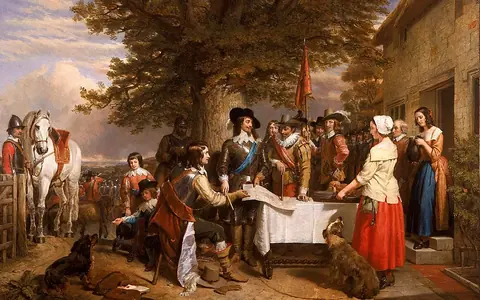
- 1642Battle of Edgehill, 1642Royalists vs Parliamentarians
How the first pitched battle of the English Civil War ended in a bloody draw.
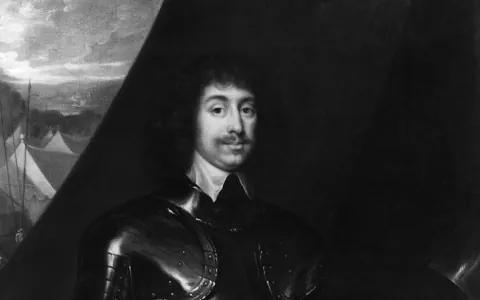
- 1643Battle of Hopton Heath, 1643Royalists vs Parliamentarians
On 19 March 1643 the Royalist horse charged the Parliamentarians on Hopton Heath outside Stafford and took their guns, but the Earl of Northampton rode too far and was killed.
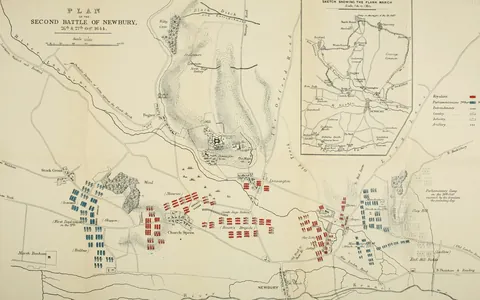
- 1644Second Battle of Newbury, 1644Royalists vs Parliament
On 27 October 1644 Parliament's armies attacked Charles I at Speen and Shaw House by Newbury but let him escape. How the battle was fought and why it led to the New Model Army.
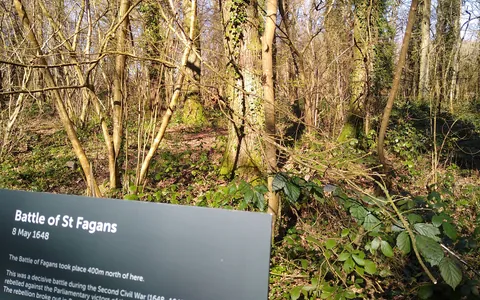
- 1648Battle of St Fagans, 1648Parliament vs Royalist rebels of south Wales
On 8 May 1648 Horton's 3,000 Parliamentarians routed Laugharne's 8,000 Welsh rebels at St Fagans in two hours, taking about 3,000 prisoners and ending the rising in south Wales.
- 1651Battle of Worcester, 1651English Parliament (New Model Army and militia) vs Charles II, Scots Covenanters and English Royalists
On 3 September 1651 Cromwell bridged the Severn and the Teme with boats and destroyed Charles II's army at Worcester; the king fled to France.
Timeline of the Wars of the Three Kingdoms
- 1637A riot in St Giles', Edinburgh, against the new prayer book.31
- 1638The National Covenant is signed in Edinburgh on 28 February.32
- 1639 to 1640The Bishops' Wars; the Scots occupy Newcastle.33
- 1641The Irish rising begins in Ulster in October.34
- 1642
- 1643The Solemn League and Covenant, 25 September.36
- 1644Marston Moor, 2 July; Montrose's campaign begins.37
- 1645Naseby, 14 June; Montrose beaten at Philiphaugh, 13 September.38
- 1646Benburb, 5 June; Charles surrenders to the Scots at Newark.39
- 1648
- 1649Charles I executed, 30 January; Drogheda and Wexford stormed.41
- 1650Dunbar, 3 September.42
- 1651
- 1652Dunnottar surrenders; Scotland joined to the Commonwealth.44
- 1653The conquest of Ireland is completed in April.45
Where to read next
For the English war of 1642 to 1646, read the First English Civil War. For each kingdom, see the military history of Scotland, the military history of Ireland and the military history of Britain. Battles of these wars appear in our rankings of the greatest early modern battles and the greatest battles in British history; for the period, see the early modern era, and test yourself with the early modern battles quiz or the British battles quiz.
Notes
A number in the text points to a note; each note names the works that paragraph draws on, listed in full under Sources.
- Encyclopaedia Britannica, “English Civil Wars”; National Army Museum, “British Civil Wars”. ↩
- Encyclopaedia Britannica, “English Civil Wars”; National Army Museum, “British Civil Wars”. ↩
- National Army Museum, “British Civil Wars”; Encyclopaedia Britannica, “English Civil Wars”. ↩
- Encyclopaedia Britannica, “English Civil Wars”; BCW Project, “The Scottish National Covenant”; Historic Environment Scotland Blog, “The General Assembly of 1638”. ↩
- Encyclopaedia Britannica, “English Civil Wars”; National Army Museum, “British Civil Wars”; BCW Project, “The Bishops' Wars”. ↩
- Encyclopaedia Britannica, “English Civil Wars”; BCW Project, “The Irish Uprising, 1641”; RTÉ Brainstorm, “What happened during the Irish rebellion of 1641?”; National Army Museum, “British Civil Wars”. ↩
- RTÉ Brainstorm, “What happened during the Irish rebellion of 1641?”; BCW Project, “The Irish Uprising, 1641”; Encyclopaedia Britannica, “English Civil Wars”. ↩
- RTÉ Brainstorm, “What happened during the Irish rebellion of 1641?”; Encyclopaedia Britannica, “English Civil Wars”. ↩
- Encyclopaedia Britannica, “English Civil Wars”; BCW Project, “Confederate Ireland”; BCW Project, “The Battle of Benburb, 1646”; History Ireland, “New on-line documentary on the Battle of Benburb”. ↩
- BCW Project, “Confederate Ireland”; RTÉ Brainstorm, “What happened during the Irish rebellion of 1641?”; BCW Project, “The Siege of Dublin and the Battle of Rathmines, 1649”; Dictionary of Welsh Biography, “Jones, Michael (died 1649), soldier”. ↩
- Encyclopaedia Britannica, “English Civil Wars”; BCW Project, “The Solemn League & Covenant”; National Army Museum, “British Civil Wars”. ↩
- Encyclopaedia Britannica, “English Civil Wars”; Encyclopaedia Britannica, “James Graham, 5th earl and 1st marquess of Montrose”; BCW Project, “Campaigns of Montrose”; Historic Environment Scotland, “Battle of Philiphaugh (BTL14)”; BCW Project, “The Battle of Philiphaugh, 1645”. ↩
- National Army Museum, “British Civil Wars”; BCW Project, “The Engagement, 1647-8”. ↩
- National Army Museum, “British Civil Wars”; Encyclopaedia Britannica, “English Civil Wars”; Historic England, “Battle of Hopton Heath 1643”; Britannica Kids, “English Civil War”; World History Encyclopedia, “Second Battle of Newbury”; British Battles, “Second Battle of Newbury”. ↩
- BCW Project, “The Second Civil War”; HistoryofWar.org, “Battle of St. Fagan's, 8 May 1648”; Encyclopaedia Britannica, “English Civil Wars”; BCW Project, “The Engagement, 1647-8”; BCW Project, “The Preston Campaign, 1648”; National Army Museum, “British Civil Wars”. ↩
- UK Parliament, “Pride's Purge”; National Army Museum, “British Civil Wars”; Encyclopaedia Britannica, “English Civil Wars”. ↩
- BCW Project, “The Siege of Drogheda, 1649”; History Ireland, “The curse of Cromwell”; The Cromwell Association, “Cromwell to Speaker Lenthall, 17 September 1649”. ↩
- The Cromwell Association, “Cromwell to Speaker Lenthall, 17 September 1649”; National Army Museum, “British Civil Wars”; RTÉ Brainstorm, “What happened during the Irish rebellion of 1641?”; History Ireland, “The curse of Cromwell”. ↩
- BCW Project, “The Siege of Wexford, 1649”; Literary Review, “Brewing Troubles”; History Ireland, “The curse of Cromwell”. ↩
- The Cromwell Association, “Cromwell to Speaker Lenthall, 17 September 1649”; BCW Project, “The Siege of Drogheda, 1649”; History Ireland, “The curse of Cromwell”; History Ireland, “Cromwell”; TheJournal.ie, “Was Cromwell framed?”; BCW Project, “The Siege of Wexford, 1649”. ↩
- Trinity College Dublin, “TCD Historian's New Book and Documentary Series on Oliver Cromwell in Ireland”; Literary Review, “Brewing Troubles”; History Ireland, “Cromwell and Ireland”; TheJournal.ie, “Was Cromwell framed?”; History Ireland, “Cromwell”; History Ireland, “The curse of Cromwell”. ↩
- History Ireland, “The curse of Cromwell”; The Irish Times, “Cromwell”; National Army Museum, “British Civil Wars”; UK Parliament, “Civil war”; History Ireland, “Ireland and the emerging English Atlantic empire in the seventeenth century”; The Irish Story, “From Catastrophe to Baby Boom”; London Review of Books, “Praising God”; TheJournal.ie, “Was Cromwell framed?”; Reviews in History, “This Seat of Mars”; The Spectator, “This seat of Mars”. ↩
- National Army Museum, “British Civil Wars”; Encyclopaedia Britannica, “James Graham, 5th earl and 1st marquess of Montrose”; BCW Project, “James Graham, 1st Marquis of Montrose, 1612-1650”; BCW Project, “The Battle of Dunbar, 1650”; Historic Environment Scotland, “Battle of Dunbar II (BTL7)”. ↩
- Historic Environment Scotland, “Battle of Dunbar II (BTL7)”; BCW Project, “The Battle of Dunbar, 1650”; Encyclopaedia Britannica, “English Civil Wars”; National Army Museum, “British Civil Wars”. ↩
- ScienceDaily, “Skeletons found in mass graves are those of 17th century Scottish soldiers”; Historic Environment Scotland, “Battle of Dunbar II (BTL7)”; U.S. National Park Service, “Scottish Prisoners at the Iron Works”. ↩
- Encyclopaedia Britannica, “English Civil Wars”; BCW Project, “Cromwell in Scotland, 1650-1”; Historic Environment Scotland, “Battle of Dunbar II (BTL7)”; BCW Project, “The Worcester Campaign, 1651”; National Army Museum, “British Civil Wars”. ↩
- BCW Project, “The Settlement of Scotland, 1651-60”; Encyclopaedia Britannica, “English Civil Wars”; National Army Museum, “British Civil Wars”. ↩
- Encyclopaedia Britannica, “English Civil Wars”; National Army Museum, “British Civil Wars”; Reviews in History, “This Seat of Mars”; The Spectator, “This seat of Mars”. ↩
- BCW Project, “The Settlement of Ireland, 1652-60”; The Irish Story, “Book Review”; National Army Museum, “British Civil Wars”. ↩
- National Army Museum, “British Civil Wars”; History Ireland, “The curse of Cromwell”; The Irish Times, “Cromwell”. ↩
- BCW Project, “The Scottish National Covenant”; Historic Environment Scotland Blog, “The General Assembly of 1638”. ↩
- Encyclopaedia Britannica, “English Civil Wars”; BCW Project, “The Scottish National Covenant”. ↩
- National Army Museum, “British Civil Wars”; Encyclopaedia Britannica, “English Civil Wars”. ↩
- RTÉ Brainstorm, “What happened during the Irish rebellion of 1641?”; Encyclopaedia Britannica, “English Civil Wars”. ↩
- National Army Museum, “British Civil Wars”; Encyclopaedia Britannica, “English Civil Wars”. ↩
- Encyclopaedia Britannica, “English Civil Wars”; BCW Project, “The Solemn League & Covenant”. ↩
- National Army Museum, “British Civil Wars”; Encyclopaedia Britannica, “English Civil Wars”. ↩
- National Army Museum, “British Civil Wars”; Encyclopaedia Britannica, “English Civil Wars”. ↩
- BCW Project, “The Battle of Benburb, 1646”; National Army Museum, “British Civil Wars”. ↩
- BCW Project, “The Second Civil War”; National Army Museum, “British Civil Wars”. ↩
- National Army Museum, “British Civil Wars”; UK Parliament, “Pride's Purge”. ↩
- National Army Museum, “British Civil Wars”; Encyclopaedia Britannica, “English Civil Wars”. ↩
- Encyclopaedia Britannica, “English Civil Wars”; BCW Project, “Cromwell in Scotland, 1650-1”. ↩
- Encyclopaedia Britannica, “English Civil Wars”; BCW Project, “The Settlement of Scotland, 1651-60”. ↩
- National Army Museum, “British Civil Wars”; UK Parliament, “Civil war”. ↩
Sources
- Encyclopaedia Britannica, “English Civil Wars”.
- National Army Museum, “British Civil Wars”.
- BCW Project, “The Scottish National Covenant”.
- Historic Environment Scotland Blog, “The General Assembly of 1638”.
- BCW Project, “The Bishops' Wars: military overview”.
- BCW Project, “The Irish Uprising, 1641”.
- RTÉ Brainstorm, Eamon Darcy, “What happened during the Irish rebellion of 1641?”.
- BCW Project, “Confederate Ireland: Political Overview”.
- BCW Project, “The Battle of Benburb, 1646”.
- History Ireland, “New on-line documentary on the Battle of Benburb”.
- BCW Project, “The Siege of Dublin and the Battle of Rathmines, 1649”.
- Dictionary of Welsh Biography (National Library of Wales), “Jones, Michael (died 1649), soldier”.
- BCW Project, “The Solemn League & Covenant”.
- Encyclopaedia Britannica, “James Graham, 5th earl and 1st marquess of Montrose”.
- BCW Project, “Campaigns of Montrose: overview”.
- Historic Environment Scotland, “Battle of Philiphaugh (BTL14)”.
- BCW Project, “The Battle of Philiphaugh, 1645”.
- BCW Project, “The Engagement, 1647-8”.
- Historic England, “Battle of Hopton Heath 1643”.
- Britannica Kids, “English Civil War”.
- World History Encyclopedia, “Second Battle of Newbury”.
- British Battles, “Second Battle of Newbury”.
- BCW Project, “The Second Civil War: Wales”.
- HistoryofWar.org, “Battle of St. Fagan's, 8 May 1648”.
- BCW Project, “The Preston Campaign, 1648”.
- UK Parliament, “Pride's Purge”.
- BCW Project, “The Siege of Drogheda, 1649”.
- History Ireland, “The curse of Cromwell”.
- The Cromwell Association, “Cromwell to Speaker Lenthall, 17 September 1649”.
- BCW Project, “The Siege of Wexford, 1649”.
- Literary Review, Toby Barnard, “Brewing Troubles”.
- History Ireland, Eugene Coyle, “Cromwell: An Honourable Enemy, Tom Reilly” (review).
- TheJournal.ie, Aoife Barry, “Was Cromwell framed?”.
- Trinity College Dublin, “TCD Historian's New Book and Documentary Series on Oliver Cromwell in Ireland”.
- History Ireland, Tom Reilly, “Cromwell and Ireland: new perspectives” (letter).
- The Irish Times, Martin Mansergh, “Cromwell: the Irish years”.
- UK Parliament, “Civil war” (Parliament and Ireland).
- History Ireland, Micheál Ó Siochrú, “Ireland and the emerging English Atlantic empire in the seventeenth century”.
- The Irish Story, “From Catastrophe to Baby Boom: Population Change in Early Modern Ireland 1641-1741”.
- London Review of Books, David Underdown, “Praising God”.
- Reviews in History (Institute of Historical Research), Ian Atherton, “This Seat of Mars: War and the British Isles 1485-1746” (review no. 1256).
- The Spectator, Austen Saunders, “This seat of Mars”.
- BCW Project, “James Graham, 1st Marquis of Montrose, 1612-1650”.
- BCW Project, “The Battle of Dunbar, 1650”.
- Historic Environment Scotland, “Battle of Dunbar II (BTL7)”.
- ScienceDaily (Durham University), “Skeletons found in mass graves are those of 17th century Scottish soldiers”.
- U.S. National Park Service, “Scottish Prisoners at the Iron Works”.
- BCW Project, “Cromwell in Scotland, 1650-1”.
- BCW Project, “The Worcester Campaign, 1651”.
- BCW Project, “The Settlement of Scotland, 1651-60”.
- BCW Project, “The Settlement of Ireland, 1652-60”.
- The Irish Story, John Dorney, “Book Review: Conquest and Land in Ireland”.






