

What is the military history of Ireland?
It is the story of the wars fought in and for Ireland: between Irish kingdoms and against the Vikings, as at Clontarf in 1014; against the Anglo-Norman and then the English crown's conquest, from 1169 to the Nine Years' War and the Boyne; the risings of 1798 and 1916; the War of Independence of 1919 to 1921 and the Civil War that followed it. It also includes the many Irish soldiers who served in the British Army and in other armies abroad.1
Ireland's wars do not fit the simple story of one nation against another. Irish kings fought each other and made alliances with the Norse and the Normans; Irish soldiers fought on both sides at Clontarf, at the Boyne and in 1922; and for most of the 19th century Irishmen made up a large part of the British Army. This page follows the island's wars from the Viking age to the Civil War of 1922 to 1923, then the century after it and how Ireland remembers its wars. The wars of England and, after 1707, of Great Britain are on our page on the military history of Britain.2
Kingdoms and states
Medieval Ireland was a land of many kingdoms, whose kings competed for the overkingship of the island. English rule began with the Anglo-Norman landings of 1169 and Henry II's expedition of 1171; in 1177 Henry made his son John "lord of Ireland", and for most of the Middle Ages the crown's real authority was often limited to the area around Dublin known as the Pale. The Crown of Ireland Act of 1542 made the King of England also King of Ireland.3
The Act of Union abolished the Irish Parliament and joined Ireland to Great Britain as the United Kingdom of Great Britain and Ireland from 1 January 1801. The Government of Ireland Act of 1920, in force from 3 May 1921, created a separate parliament for Northern Ireland, six of the nine counties of Ulster. Under the Anglo-Irish Treaty of 1921 the other twenty-six counties became the Irish Free State in 1922; a new constitution followed in 1937, and the Republic of Ireland Act came into operation on 18 April 1949.4

Vikings and Clontarf
The first recorded Viking raid on Ireland came in 795, on an island the annals call Rechru. By 841 the Norse had fortified naval bases at Annagassan and at Duiblinn, the site of the later Viking town of Dublin. Over the next two centuries the Norse towns became part of Irish politics, trading with Irish kingdoms and fighting for or against them.5
On Good Friday, 23 April 1014, at Clontarf near Dublin, the army of the high king Brian Boru fought a coalition of the Irish kingdom of Leinster under Máel Mórda, the Hiberno-Norse kingdom of Dublin and Vikings from overseas, among them Sigurd, Earl of Orkney. Brian's side won, but Brian himself was killed, as were Máel Mórda, Sigurd and Brian's son Murchad. Later medieval writers turned the battle into a war of the Irish against foreigners; historians now see it as part of a struggle for the overkingship between Irish rulers, with Irish and Norse fighting on both sides.6
The Anglo-Norman invasion
In 1166 Diarmait Mac Murchada, king of Leinster, was driven out by a coalition of his enemies and went overseas to seek help from Henry II. The Anglo-Norman lords he recruited began landing in 1169. In August 1170 Richard de Clare, known as Strongbow, landed near Waterford, took the town and married Diarmait's daughter Aífe, and in September he took Dublin. Henry II landed near Waterford on 17 October 1171 with an army of about 4,000, the first reigning king of England to come to Ireland. The Treaty of Windsor of 1175 recognized Ruaidrí Ua Conchobair as king over the Irish outside the Anglo-Norman areas, under Henry, but it soon broke down.7

The conquest stayed incomplete. In May 1315 Edward Bruce, brother of Robert I of Scotland, landed near Larne and fought in Ireland for three years until he was defeated and killed at Faughart, near Dundalk, on 14 October 1318. In 1366 the Statute of Kilkenny tried to keep the English colony apart from the Gaelic Irish, forbidding colonists to marry Irish people or speak Irish, a sign of how far the colony had adopted Irish ways.8
The Tudor conquest and the Nine Years' War
The Tudors set out to bring the whole island under the crown. The greatest resistance came in the Nine Years' War, from 1593 or 1594 to 1603, led by Hugh O'Neill, Earl of Tyrone, and Red Hugh O'Donnell. On 14 August 1598 O'Neill's army defeated Sir Henry Bagenal's English army at the Yellow Ford in County Armagh, the crown's heaviest loss in a single battle in these wars.9
On 21 September 1601 a Spanish force of about 3,300 under Don Juan del Águila occupied Kinsale, and Lord Mountjoy besieged it. O'Neill and O'Donnell marched south from Ulster to relieve it, but on 24 December 1601 by the calendar then used in Ireland (3 January 1602 in the modern one) their army was routed. After Kinsale the war turned decisively against O'Neill. In June 1602 Sir George Carew's army took Donal Cam O'Sullivan Beare's castle of Dunboy in Munster. O'Neill submitted at Mellifont in March 1603.10
On 14 September 1607 O'Neill and Rory O'Donnell, Earl of Tyrconnell, left Ulster for the Continent with about a hundred followers, the Flight of the Earls. The crown confiscated their lands, and from 1609 the Plantation of Ulster settled English and Scottish landowners and tenants across six counties.11
Confederates, Cromwell and the Williamite war
1641 and the Confederation. In October 1641 a rising began in Ulster. Between 4,000 and 12,000 people died on all sides in its first violence, many of them Protestant settlers, though propaganda soon claimed more than 150,000 Protestant dead. From 1642 the Confederate Catholics of Ireland governed much of the island from Kilkenny, and their war merged with the wars in England and Scotland. On 5 June 1646 Owen Roe O'Neill's Confederate army defeated Robert Monro's Scottish Covenanter army at Benburb in County Tyrone.12
Cromwell. Oliver Cromwell's campaign began in August 1649 with the storming of Drogheda in September and Wexford in October, where the garrisons were killed; how many civilians died with them is still disputed by historians. The conquest went on until 1653. War, famine and plague caused a demographic collapse: the contemporary surveyor William Petty put the loss at about 40 per cent of the population, a figure modern historians treat with caution. The Cromwellian land settlement confiscated Catholic-owned land to pay soldiers and investors, and Catholic landowners were moved west of the Shannon.13
The Williamite war. After James II lost the English throne in 1688, Ireland became the main battlefield of his war with William III. Jacobite forces besieged Derry from April until late July 1689. On 1 July 1690, by the calendar then in use, William's army forced the crossing of the Boyne in the largest battle ever fought in Ireland; William's losses were only about 800 killed and wounded, and the battle was not decisive, but James left for France. The decisive and bloodiest battle came at Aughrim on 12 July 1691, where an estimated 6,000 to 9,000 men were killed. The Treaty of Limerick ended the war in October 1691 and let Jacobite soldiers go to France, the first of the "Wild Geese" in Continental service.14

The civil articles of the treaty that protected Catholics were not fully kept. Penal laws excluded Catholics from public life and limited their right to own land, and the Catholic share of land fell from 22 per cent before the war to 14 per cent after it, and to about 5 per cent by 1780.15
1798
The Society of United Irishmen, founded in October 1791 by Theobald Wolfe Tone and others, at first sought reform and then turned to revolution with French help. In December 1796 a French fleet carrying about 14,000 troops, with Tone aboard, reached Bantry Bay but could not land in winter storms. The rising began on the night of 23 May 1798, and Wexford became its main center. On 21 June Crown forces under General Gerard Lake stormed the rebel camp at Vinegar Hill.16
Atrocities were committed on both sides: at Scullabogue more than 100 loyalists, most of them Protestant, were burned to death in a barn, and Crown forces and yeomanry carried out brutal reprisals against rebels and Catholic civilians. A small French force of about 1,100 under General Humbert landed in Mayo in August, won at Castlebar, and surrendered at Ballinamuck on 8 September 1798. Estimates of the dead range from about 10,000 to 70,000. In answer the government in London carried the Act of Union.17
Union and empire, 1801 to 1916
Further risings, by Robert Emmet in Dublin in 1803, by Young Ireland in 1848 and by the Fenians in 1867, were small and quickly put down. Far more Irishmen fought in the British Army than against it. In 1830 the Irish made up about 42 per cent of its soldiers, more than Ireland's share of the United Kingdom's population; the share fell to about 28 per cent by 1870 and to just over 10 per cent by 1900. More than 30,000 Irish soldiers served in the Crimean War.18
In World War I about 200,000 men from the island of Ireland served in the British forces. Three Irish divisions were raised in 1914: the 10th (Irish), which fought at Gallipoli; the 16th (Irish), with many recruits from the nationalist National Volunteers; and the 36th (Ulster), with many former members of the unionist Ulster Volunteer Force, which attacked on the first day of the Somme. How many Irishmen died is uncertain: historians mostly use between 27,000 and 35,000, while the 49,400 names of the Irish National War Memorial include men who were not Irish.19
On Easter Monday, 24 April 1916, republicans seized buildings in Dublin. The rising ended within a week, and the Glasnevin Trust counts about 485 people killed in or because of it, more than half of them civilians. Fourteen leaders were shot at Kilmainham Gaol between 3 and 12 May, Thomas Kent was executed in Cork and Roger Casement was hanged in London in August, sixteen executions in all.20
The War of Independence, 1919 to 1921
On 21 January 1919, the day the first Dáil met in Dublin and declared independence, Irish Volunteers at Soloheadbeg in County Tipperary shot dead two Royal Irish Constabulary constables, both Irish Catholics; the attack had not been authorized by the Dáil but is usually taken as the start of the war. It became a guerrilla war between the Irish Republican Army and the Crown forces: the police, the British Army and, from 1920, the temporary constables known as the Black and Tans and the Auxiliary Division. Irishmen served on both sides.21
Violence peaked from November 1920. On Bloody Sunday, 21 November 1920, the IRA shot dead 15 men in Dublin, most of them suspected British intelligence officers, and that afternoon Crown forces fired on the crowd at a Gaelic football match in Croke Park, killing 14 civilians. A week later at Kilmichael the IRA's West Cork flying column killed 17 Auxiliaries, and on the night of 11 to 12 December Auxiliaries and Black and Tans burned the center of Cork. A truce took effect on 11 July 1921. A detailed study counts 2,850 deaths from 1916 to 1921, 42 per cent of them civilians.22
The Anglo-Irish Treaty, signed in London in December 1921, gave the twenty-six counties dominion status as the Irish Free State, with an oath to the crown and British naval bases in the "Treaty ports". The Dáil approved it on 7 January 1922 by 64 votes to 57, and the split over it led to civil war.23
The Civil War, 1922 to 1923
The Civil War began on 28 June 1922, when the Provisional Government's National Army bombarded the anti-Treaty IRA garrison in the Four Courts in Dublin. The fighting in Dublin lasted about a week. Michael Collins, commander-in-chief of the National Army, was killed in an ambush at Béal na Bláth in County Cork on 22 August 1922. The anti-Treaty IRA's order to "dump arms" on 24 May 1923 ended the war.24

The war was fought between former comrades, and its bitterness lasted for generations. Recent research counts about 1,400 to 1,500 deaths: in the twenty-six counties, 637 National Army soldiers, 426 anti-Treaty IRA and 336 civilians. The Free State carried out 81 official executions, 77 of them for political offenses, and many more anti-Treaty prisoners were killed in custody.25
After 1922: neutrality, peacekeeping and Northern Ireland
Ireland stayed neutral in World War II, a period known in the state as "the Emergency". Many of its citizens served in the British forces all the same: at least 100,000 people from the whole island served, and estimates for citizens of the southern state run to tens of thousands. Around 5,000 to 6,000 men deserted from the Irish Defence Forces during the war, most of them to join the British forces.26
Since 1958 the Defence Forces have served on United Nations peacekeeping missions without a break, which the Irish government describes as the longest unbroken record of any country. In the Congo, nine men of an eleven-man patrol were killed in the Niemba ambush on 8 November 1960, and in September 1961 about 155 men of A Company, 35th Battalion, held out at Jadotville against a much larger Katangese force before surrendering. Irish troops have served with UNIFIL in Lebanon since 1978, where 47 Irish peacekeepers have died.27
In Northern Ireland, from the late 1960s until the Belfast/Good Friday Agreement of 10 April 1998, the conflict known as the Troubles involved republican and loyalist paramilitaries and the British security forces. About 3,500 to 3,600 people were killed, depending on how the deaths are counted, and just over half of them were civilians. The British Army's deployment there lasted from 1969 to 2007.28
Memory and commemoration
Ireland remembers its wars in more than one way. The Irish National War Memorial Gardens at Islandbridge in Dublin, designed by Sir Edwin Lutyens and built in the 1930s, are dedicated to the Irish dead of World War I. The Garden of Remembrance in Parnell Square was opened in 1966, fifty years after the Easter Rising, for those who died in the cause of Irish freedom. Between 2012 and 2023 the state's Decade of Centenaries marked the events of 1912 to 1923, ending with the centenary of the Civil War.29
For more, read the military history of Britain, the military history of Scotland and the military history of France, or browse the eras: the Middle Ages, the early modern era and World War I.
Battles of Ireland on this site
Every battle we cover in which Irish kingdoms, Irish forces or the Irish state fought, in date order, victories and defeats alike.
The Middle Ages 476 to 1500 · 1
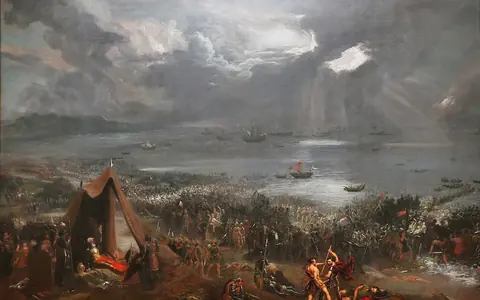
- 1014Battle of Clontarf, 1014Brian Boru's Irish alliance vs Norse-Gael and Leinster coalition
How Brian Boru broke Viking power in Ireland at Clontarf in 1014, and died in his moment of victory.
The early modern era 1492 to 1789 · 3
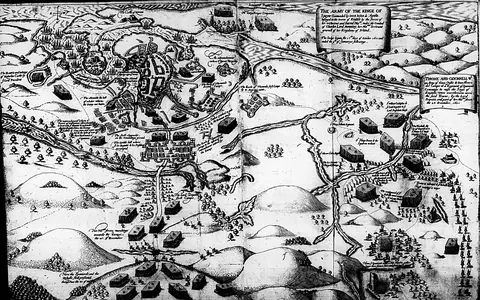
- 1601Battle of Kinsale, 1601Gaelic Irish and Spanish vs English Crown
How the English victory at Kinsale in 1601 broke the Gaelic cause and ended the old Irish order.
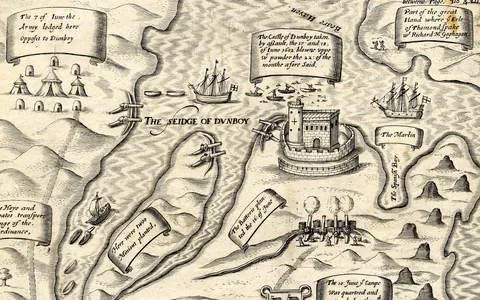
- 1602Siege of Dunboy, 1602Kingdom of England vs Donal Cam O'Sullivan Beare
In June 1602 Sir George Carew besieged O'Sullivan Beare's castle of Dunboy. Its 143 defenders refused to yield until the walls fell, and none survived.
- 1690Battle of the Boyne, 1690Williamites (England, Dutch Republic and allies) vs Jacobites (Ireland, with France)
Other 1
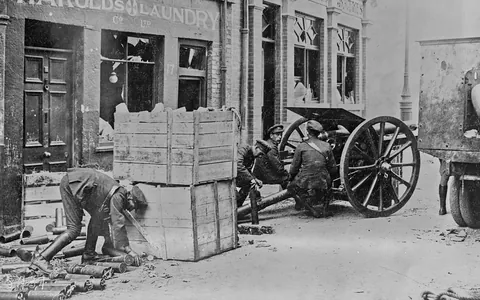
- 1922Battle of Dublin, 1922Provisional Government: National Army vs Anti-Treaty IRA
On 28 June 1922 Free State guns opened fire on the anti-Treaty IRA in the Four Courts. A week of fighting in Dublin began the Irish Civil War.
Timeline
- 795The first recorded Viking raid on Ireland.30
- 1014
- 1171Henry II lands near Waterford.32
- 1318Edward Bruce is killed at Faughart.33
- 1542The Crown of Ireland Act makes the English king King of Ireland.34
- 1601
- 1607The Flight of the Earls.36
- 1649Cromwell storms Drogheda and Wexford.37
- 1690
- 1798The United Irishmen's rising is defeated.39
- 1801Ireland becomes part of the United Kingdom.40
- 1916The Easter Rising in Dublin.41
- 1921Truce on 11 July; the Anglo-Irish Treaty in December.42
- 1922The Civil War begins with the fighting in Dublin.43
- 1998The Belfast/Good Friday Agreement.44
Notes
A number in the text points to a note; each note names the works that paragraph draws on, listed in full under Sources.
- History Ireland, “1169 and all that”; National Army Museum, “A timeline of Ireland and the British Army”; Houses of the Oireachtas, “History of Parliament in Ireland”. ↩
- History Ireland, “The Battle of Clontarf in Irish history and legend”; History Ireland, “The Royal Munster Fusiliers”; National Army Museum, “A timeline of Ireland and the British Army”. ↩
- History Ireland, “1169 and all that”; National Army Museum, “A timeline of Ireland and the British Army”; legislation.gov.uk, “Crown of Ireland Act 1542”. ↩
- Houses of the Oireachtas, “History of Parliament in Ireland”; National Army Museum, “A timeline of Ireland and the British Army”; House of Lords Library, “Government of Ireland Act 1920”. ↩
- Donnchadh Ó Corráin, “The Vikings in Ireland”; History Ireland, “The longphort phenomenon in Early Christian and Viking Ireland”. ↩
- RTÉ Archives, “Battle of Clontarf 1014”; Encyclopaedia Britannica, “Battle of Clontarf”; History Ireland, “The Battle of Clontarf in Irish history and legend”; Trinity College Dublin, “Brian Boru”; Donnchadh Ó Corráin, “The Vikings in Ireland”. ↩
- History Ireland, “1169 and all that”; RTÉ Brainstorm, “The royal visit”. ↩
- History Ireland, “Mapping and measuring the impact of the Bruce invasion”; Trinity College Dublin, “New edition and translation of the Statute of Kilkenny”; National Army Museum, “A timeline of Ireland and the British Army”. ↩
- History Ireland, “The dead, sick and wounded of the Nine Years War (1594-1603)”; History Ireland, “The Battle of Kinsale, 1601”; Encyclopaedia Britannica, “Hugh O'Neill, 2nd earl of Tyrone”. ↩
- History Ireland, “The Battle of Kinsale, 1601”; Encyclopaedia Britannica, “Hugh O'Neill, 2nd earl of Tyrone”; Dictionary of Irish Biography, “O'Sullivan Beare, Domhnall”. ↩
- History Ireland, “Cáit ar ghabhadar Gaoidhil? (Where will the Irish go?)”; History Ireland, “After the Flight”. ↩
- RTÉ Brainstorm, “What happened during the Irish rebellion of 1641?”; National Army Museum, “A timeline of Ireland and the British Army”; History Ireland, “New on-line documentary on the Battle of Benburb”; Encyclopaedia Britannica, “Owen Roe O'Neill”. ↩
- National Army Museum, “A timeline of Ireland and the British Army”; History Ireland, “The curse of Cromwell”; History Ireland, “Ireland and the emerging English Atlantic empire in the seventeenth century”; The Irish Times, “Cromwell”. ↩
- History Ireland, “The Williamite war 1689-91”; National Army Museum, “Battle of the Boyne”; The Irish Times, “The bloodiest battlefield in Irish history”; National Army Museum, “A timeline of Ireland and the British Army”. ↩
- History Ireland, “The Williamite war 1689-91”; National Army Museum, “A timeline of Ireland and the British Army”. ↩
- National Army Museum, “Irish Rebellion of 1798”; The Irish Times, “Could Napoleon have changed Irish history? James Quinn examines the 1798 rebellion”. ↩
- National Army Museum, “Irish Rebellion of 1798”; RTÉ Archives, “The Battle of Ballinamuck”; The Irish Times, “Could Napoleon have changed Irish history? James Quinn examines the 1798 rebellion”; Houses of the Oireachtas, “History of Parliament in Ireland”. ↩
- National Army Museum, “A timeline of Ireland and the British Army”; History Ireland, “The Royal Munster Fusiliers”; The Irish Times, “The Irish at war”; History Ireland, “Ireland and the Crimean War 1854-6”. ↩
- Imperial War Museums, “Ireland and the First World War”; The Irish Times, “Irish soldiers in the first World War”; National Army Museum, “A timeline of Ireland and the British Army”. ↩
- RTÉ Century Ireland, “The civilian dead”; The Irish Times, “Easter Rising”; History Ireland, “The executions after the Easter Rising”; Government of Ireland, “The executed leaders of the 1916 Rising”. ↩
- Houses of the Oireachtas, “History of Parliament in Ireland”; RTÉ History, “The Soloheadbeg ambush”; The Irish Times, “Soloheadbeg ambush”; The Irish Times, “Black and Tans tainted reputation of RIC and DMP police forces”. ↩
- University College Cork, “The war escalates”; RTÉ Century Ireland, “Bloody Sunday, 1920”; RTÉ History, “Terror in Cork”; The Irish Times, “Q&A”; RTÉ Brainstorm, “How 1920 was one of the bloodiest years in Irish history”; History Ireland, “The dead of the Irish revolution”. ↩
- The Irish Times, “Q&A”; Houses of the Oireachtas, “History of Parliament in Ireland”. ↩
- History Ireland, “How many died in the Irish Civil War?”; The Irish Times, “How many people died violent deaths in the Irish Civil War?”; The Irish Times, “The assassination of Michael Collins”; RTÉ News, “'It would be a great pity if Collins were killed'”. ↩
- RTÉ History, “The largest losses”; The Irish Times, “How many people died violent deaths in the Irish Civil War?”; History Ireland, “How many died in the Irish Civil War?”; The Irish Story, “Book review”; The Irish Times, “Free State government more severe on IRA in Civil War than British in War of Independence, says historian”. ↩
- History Ireland, “The forgotten volunteers of World War II”; The Irish Times, “Why Ireland's second World War veterans matter”. ↩
- Óglaigh na hÉireann, “About overseas deployments”; Government of Ireland, “2018”; Military Archives, “Niemba ambush anniversary”; History Ireland, “Film eye”; Government of Ireland, “Minister Coveney's speech to Jadotville event at Custume Barracks, Athlone”; RTÉ News, “The troubled history of Irish involvement in Lebanon”. ↩
- CAIN, “Summary of status of the person killed”; National Army Museum, “The Troubles”; RTÉ News, “At a glance”; GOV.UK, “The Belfast Agreement”. ↩
- Office of Public Works, “Irish National War Memorial Gardens”; RTÉ Archives, “Dedication of National War Memorial Gardens”; Office of Public Works, “Garden of Remembrance”; Government of Ireland, “Decade of Centenaries”; National Library of Ireland, “Decade of Centenaries publish 2023 programme”. ↩
- Donnchadh Ó Corráin, “The Vikings in Ireland”; History Ireland, “The longphort phenomenon in Early Christian and Viking Ireland”. ↩
- RTÉ Archives, “Battle of Clontarf 1014”; Encyclopaedia Britannica, “Battle of Clontarf”. ↩
- History Ireland, “1169 and all that”; RTÉ Brainstorm, “The royal visit”. ↩
- History Ireland, “Mapping and measuring the impact of the Bruce invasion”; National Army Museum, “A timeline of Ireland and the British Army”. ↩
- legislation.gov.uk, “Crown of Ireland Act 1542”; National Army Museum, “A timeline of Ireland and the British Army”. ↩
- History Ireland, “The Battle of Kinsale, 1601”; Encyclopaedia Britannica, “Hugh O'Neill, 2nd earl of Tyrone”. ↩
- History Ireland, “Cáit ar ghabhadar Gaoidhil? (Where will the Irish go?)”; History Ireland, “After the Flight”. ↩
- National Army Museum, “A timeline of Ireland and the British Army”; History Ireland, “The curse of Cromwell”. ↩
- National Army Museum, “Battle of the Boyne”; History Ireland, “The Williamite war 1689-91”. ↩
- National Army Museum, “Irish Rebellion of 1798”; The Irish Times, “Could Napoleon have changed Irish history? James Quinn examines the 1798 rebellion”. ↩
- Houses of the Oireachtas, “History of Parliament in Ireland”; National Army Museum, “A timeline of Ireland and the British Army”. ↩
- The Irish Times, “Easter Rising”; History Ireland, “The executions after the Easter Rising”. ↩
- The Irish Times, “Q&A”; Houses of the Oireachtas, “History of Parliament in Ireland”. ↩
- History Ireland, “How many died in the Irish Civil War?”; The Irish Times, “How many people died violent deaths in the Irish Civil War?”. ↩
- GOV.UK, “The Belfast Agreement”; RTÉ News, “At a glance”. ↩
Sources
- History Ireland, Seán Duffy, “1169 and all that”.
- National Army Museum, “A timeline of Ireland and the British Army”.
- Houses of the Oireachtas, “History of Parliament in Ireland”.
- History Ireland, “The Battle of Clontarf in Irish history and legend”.
- History Ireland, “The Royal Munster Fusiliers”.
- legislation.gov.uk (The National Archives), “Crown of Ireland Act 1542”.
- House of Lords Library, “Government of Ireland Act 1920: what system did it create?”.
- Donnchadh Ó Corráin, CELT, University College Cork, “The Vikings in Ireland”.
- History Ireland, “The longphort phenomenon in Early Christian and Viking Ireland”.
- RTÉ Archives, “Battle of Clontarf 1014”.
- Encyclopaedia Britannica, “Battle of Clontarf”.
- Trinity College Dublin, The Library of Trinity College Dublin, “Brian Boru: the battle”.
- RTÉ Brainstorm, John Marshall, “The royal visit: what did Henry II do in Ireland 850 years ago?”.
- History Ireland, “Mapping and measuring the impact of the Bruce invasion”.
- Trinity College Dublin, Trinity Long Room Hub, “New edition and translation of the Statute of Kilkenny”.
- History Ireland, “The dead, sick and wounded of the Nine Years War (1594-1603)”.
- History Ireland, John McGurk, “The Battle of Kinsale, 1601”.
- Encyclopaedia Britannica, “Hugh O'Neill, 2nd earl of Tyrone”.
- Dictionary of Irish Biography (Royal Irish Academy), “O'Sullivan Beare, Domhnall”.
- History Ireland, “Cáit ar ghabhadar Gaoidhil? (Where will the Irish go?)”.
- History Ireland, Raymond Gillespie, “After the Flight: the Plantation of Ulster”.
- RTÉ Brainstorm, Eamon Darcy, “What happened during the Irish rebellion of 1641?”.
- History Ireland, “New on-line documentary on the Battle of Benburb”.
- Encyclopaedia Britannica, “Owen Roe O'Neill”.
- History Ireland, “The curse of Cromwell”.
- History Ireland, “Ireland and the emerging English Atlantic empire in the seventeenth century”.
- The Irish Times, “Cromwell: the Irish years”.
- History Ireland, “The Williamite war 1689-91”.
- National Army Museum, “Battle of the Boyne”.
- The Irish Times, Ray Burke, “The bloodiest battlefield in Irish history: An Irishman's Diary on the Battle of Aughrim”.
- National Army Museum, “Irish Rebellion of 1798”.
- The Irish Times, Andrew Lynch, “Could Napoleon have changed Irish history? James Quinn examines the 1798 rebellion”.
- RTÉ Archives, “The Battle of Ballinamuck”.
- The Irish Times, “The Irish at war”.
- History Ireland, “Ireland and the Crimean War 1854-6”.
- Imperial War Museums, “Ireland and the First World War”.
- The Irish Times, Ronan McGreevy, “Irish soldiers in the first World War: who, where and how many?”.
- RTÉ Century Ireland, Hannah Smyth, “The civilian dead”.
- The Irish Times, Ronan McGreevy, “Easter Rising: Glasnevin researchers reach definitive death toll”.
- History Ireland, “The executions after the Easter Rising”.
- Government of Ireland, Department of the Taoiseach, “The executed leaders of the 1916 Rising”.
- RTÉ History, Donal Byrne, “The Soloheadbeg ambush: sudden, bloody and unexpected”.
- The Irish Times, Ronan McGreevy, “Soloheadbeg ambush: what really happened in January 1919?”.
- The Irish Times, “Black and Tans tainted reputation of RIC and DMP police forces”.
- University College Cork, The Irish Revolution, John Borgonovo, “The war escalates: Bloody Sunday, Kilmichael and November 1920”.
- RTÉ Century Ireland, “Bloody Sunday, 1920: killing and dying in the Irish revolution”.
- RTÉ History, Gerry White, “Terror in Cork: the burning of a city”.
- The Irish Times, Ronan McGreevy, “Q&A: What happened in 1921 in Ireland?”.
- RTÉ Brainstorm, Daithí Ó Corráin, “How 1920 was one of the bloodiest years in Irish history”.
- History Ireland, “The dead of the Irish revolution”.
- History Ireland, “How many died in the Irish Civil War?”.
- The Irish Times, “How many people died violent deaths in the Irish Civil War?”.
- The Irish Times, Ronan McGreevy, “The assassination of Michael Collins”.
- RTÉ News, “'It would be a great pity if Collins were killed'”.
- RTÉ History, Jack Kavanagh, “The largest losses: National Army casualties in the Civil War”.
- The Irish Story, John Dorney, “Book review: The Irish Civil War: law, execution and atrocity”.
- The Irish Times, “Free State government more severe on IRA in Civil War than British in War of Independence, says historian”.
- History Ireland, “The forgotten volunteers of World War II”.
- The Irish Times, Steven O'Connor, “Why Ireland's second World War veterans matter”.
- Óglaigh na hÉireann (Defence Forces Ireland), “About overseas deployments”.
- Government of Ireland, Department of Defence, “2018: the year Ireland celebrated 60 years of unbroken UN peacekeeping service”.
- Military Archives (Defence Forces Ireland), “Niemba ambush anniversary”.
- History Ireland, Lar Joye, “Film eye: The siege of Jadotville”.
- Government of Ireland, Department of Defence, “Minister Coveney's speech to Jadotville event at Custume Barracks, Athlone”.
- RTÉ News, Paul Cunningham, “The troubled history of Irish involvement in Lebanon”.
- CAIN (Ulster University), Sutton Index of Deaths, “Summary of status of the person killed”.
- National Army Museum, “The Troubles”.
- RTÉ News, “At a glance: The Good Friday Agreement”.
- GOV.UK, Northern Ireland Office, “The Belfast Agreement”.
- Office of Public Works, Heritage Ireland, “Irish National War Memorial Gardens”.
- RTÉ Archives, “Dedication of National War Memorial Gardens”.
- Office of Public Works, Heritage Ireland, “Garden of Remembrance”.
- Government of Ireland, Department of Culture, Communications and Sport, “Decade of Centenaries”.
- National Library of Ireland, “Decade of Centenaries publish 2023 programme”.






