


What happened at the Battle of Tudela in 1808?
On 23 November 1808 Marshal Jean Lannes attacked the Spanish armies of General Castaños and of Aragon, strung out on a line of about ten miles from Tudela on the Ebro to Tarazona. The Aragonese were still crossing the Ebro when the French arrived, and a gap of several miles was left open between them and the Andalusian divisions at Cascante. After a first check, the French broke through the gap, routed the troops around Tudela and drove them towards Saragossa, while the Andalusians at Cascante and Tarazona barely fought and retreated by night.5
Tudela was the last of the three battles with which Napoleon broke the Spanish armies on the Ebro in November 1808, after Gamonal and Espinosa. It opened the way for the charge at Somosierra a week later and for the second siege of Saragossa. The wider war is told in our guide to the Peninsular War, and the rest of the day in 23 November in military history.6
The victors of Bailén on the Ebro
In July 1808 General Francisco Javier Castaños had forced a whole French corps to surrender at Bailén, and the French had fallen back behind the Ebro. By the autumn the Spanish armies faced them along the river, but they did not answer to one commander. Napier, the British historian of the war, describes the disputes between Castaños and the Palafox brothers of Aragon over what the armies should do, and Toreno, the Spanish statesman who wrote the first great Spanish history of the war, records that the Central Junta had even decided to hand Castaños's army to the Marquis of La Romana.7

In November Napoleon crossed the Pyrenees with the veterans of the Grande Armée. Marbot, then a captain on the staff of Marshal Lannes, recalls the alarm of the Spaniards at the sight of the old grenadiers and the speed with which the Emperor launched his columns across the Ebro. The Spanish armies were beaten at Gamonal, near Burgos, and at Espinosa. That left Castaños with the Army of the Centre around Calahorra and the Army of Aragon under Joseph Palafox's lieutenant, Juan O'Neille, on the north bank of the Ebro at Caparroso.8
Lannes and the sheepskin
Napoleon planned a trap. One force would attack Castaños in front from the Ebro, while Marshal Ney's corps marched from Aranda de Duero by Soria to Agreda and Tarazona to cut off his retreat. To lead the frontal blow the Emperor passed over Marshal Moncey, whom he thought too slow, and chose Lannes. Marbot notes that it was the first time one marshal of the Empire had been put under the orders of another.9
Lannes had nearly not been there at all. Riding hard behind the Emperor, he was thrown with his horse on the Mont-Dragon, a steep mountain covered in frozen snow, and when he was carried into Vitoria he was covered in bruises, his belly swollen, his pulse weak. Dominique-Jean Larrey, the chief surgeon of the Guard, describes in his memoirs how he wrapped the marshal in the skin of a large sheep flayed alive for the purpose, rubbed him first with very hot camphorated chamomile oil, and how Lannes fell asleep within ten minutes and woke two hours later bathed in sweat and much relieved. Oman, the Oxford historian of the Peninsular War, says the fall kept Lannes at Vitoria for a fortnight, and Toreno also writes that a fall from his horse had held him there.10
By 20 November Lannes was fit again. With Lagrange's division of Ney's corps and the cavalry of Colbert and Digeon he joined Moncey's four divisions at the bridge of Lodosa, and on 21 November the French columns began to move up the south bank of the Ebro towards Calahorra.11
A council of madmen
On 21 November Castaños learned that a French corps was marching on Soria behind his flank. He fell back from Calahorra to a line between Tudela on the Ebro and Tarazona at the foot of the Moncayo, and asked O'Neille to cross the river and hold Tudela. The Gazeta de Madrid, which printed a summary of Castaños's own report a week later, says the army reached its new positions on the 22nd after a hard night march. O'Neille, Jourdan writes, refused to move without the permission of his own commander, Joseph Palafox.12
Palafox came to Tudela on the 22nd and a council of war followed. He wanted to defend Aragon, or even to strike at Pamplona behind the French, and Castaños wanted to keep the army together and fall back towards the south. Colonel Thomas Graham, a British officer attached to Castaños, wrote in his diary that night that he had heard talk of cutting off the French by a movement behind Pamplona that “ought only to have come from madmen”. The council broke up, Toreno writes, with nothing decided.13
In the end Palafox allowed O'Neille to come over, but too late. O'Neille's men camped for the night on the north bank and only began to cross the bridge at dawn. Toreno writes that no one has ever explained why he left the crossing so late. Napier says that he stayed across the river in defiance of orders, entreaties and reasoning, leaving the key of the position open.14
How many men
No two sources agree on the numbers. Oman, who built up the Spanish total division by division, gives Castaños some 46,000 men in line between Tarazona and Tudela, of whom about 3,600 were cavalry, against about 34,000 French. Napier writes of 45,000 Spaniards with 50 guns against 30,000 French infantry, 4,000 to 5,000 cavalry and 60 guns. Toreno, on the Spanish side, puts the two Spanish armies together at barely 41,000, among them 3,700 cavalry, and gives Lannes 30,000 infantry, 5,000 cavalry and 60 guns. Thiers, the French historian, estimates the Spaniards at about 40,000.15
The commanders' own figures went the other way. Castaños, in the report printed in the Gazeta, estimated the French in the actions of Tudela and Cascante at 36,000 to 40,000 infantry and 6,000 to 7,000 cavalry. Napoleon, writing to his brother Joseph four days after the battle, said that there had been 30,000 picked Spanish troops and 60 guns at Tudela, and that barely 6,000 of the French had been engaged.16
Cavalry at the gates
Castaños kept his cavalry with the infantry and sent no patrols far forward, Oman writes, and the first warning came when French horsemen rode right up to Tudela. Graham's diary puts it about nine in the morning. Castaños's report in the Gazeta says the outposts opened fire about eight and that by ten the musketry and cannon fire had become general.17
The Aragonese battalions were still crossing the bridge and filled the narrow streets of the town. Castaños himself wrote, in a manifesto that Gómez de Arteche, the Spanish general and historian of the war, quotes at length, that the troops blocked one another so badly that he could hardly get out on horseback, while the French skirmishers were already at the entrances of the town. Jourdan, then Joseph's chief of staff, writes in his memoirs that the French cavalry presented itself at the gates while O'Neille's men were still filing over the bridge.18
The first attack fails
The Spaniards recovered faster than the French expected. Roca's Valencian and Murcian division climbed the Cerro de Santa Bárbara above the town, Saint March's battalions took the hill of Santa Quiteria, and O'Neille's Aragonese seized the ridge of the Cabezo Malla. Oman judges that Lannes's first attack was made on the spur of the moment, because he saw the Spanish position half empty. Arteche argues the same from the Spanish accounts: the surprise, the Spanish rally and the French repulse all happened between eight and nine, before any plan could have been made.19
The sources do not agree on which French division went up which hill. Oman and Napier send Morlot's division against the heights above the town and Maurice-Mathieu's against the ridge to their left. Thiers and Arteche have Maurice-Mathieu climbing the heights by the Ebro and Morlot attacking the centre. All agree that the first attack was thrown back. Toreno and Castaños's report describe a battalion of the Spanish Guards charging the flank of the French who had come down from a height, and Arteche dates the recapture of the Cabezo Malla, with the Guards at the head, to a little after midday.20
Poles on the Ebro
Polish soldiers fought at Tudela on the French side. Thiers writes that Lannes rode ahead to reconnoitre with Lefebvre-Desnoettes and the Polish lancers, who had become the terror of the Spaniards, and that the attack on the heights by the Ebro was led by a regiment of the Vistula and the 14th of the Line, the old regiment of Eylau. Arteche names the same two units, the 14th of the Line and the 2nd of the Vistula, preceded by a battalion of skirmishers, and says they attacked a little after nine.21
These were men of the Vistula Legion, the Polish legion in French service. Oman's order of battle for the summer of 1808 shows the 1st and 2nd regiments of the Vistula and a regiment of Polish lancers about 717 strong in the column with which Lefebvre-Desnoettes had marched into Aragon in June, and Arteche reprints Napoleon's decree of the autumn that placed the three Vistula regiments and the regiment of Polish lancers in Ney's corps. After the battle, Thiers adds, Lannes sent the Polish lancers with the light cavalry in pursuit of the fugitives.22
Poland remembered the day. In 1827 the painter January Suchodolski showed Polish lancers holding up captured Spanish standards before Napoleon, a canvas that the National Museum in Warsaw catalogues both as The Battle of Tudela and as Wincenty Krasiński presenting the captured standards to the Emperor. Napoleon himself spent the day of the battle at Aranda, from where he dated his letters of 26 and 27 November.23

The gap
The flaw in the Spanish line could not be repaired. Between the Cabezo Malla and the Andalusian division of La Peña at Cascante lay several miles of flat ground, crossed only by the shallow Queiles, and no troops ever occupied it. Oman counts the gap at three miles. Castaños saw it, rode off towards Cascante to bring La Peña nearer, and was spotted by French cavalry on the way. Oman and Jourdan both tell how he and his staff were chased and had to hide in the olive groves, and how he then learned that the right wing had broken.24
La Peña had 8,000 or 9,000 infantry and 1,500 horse by Oman's count, but did not move, because two brigades of French dragoons faced him across the plain. Grimarest, Oman writes, received the order to march on Cascante at noon and reached it, four miles away, only at dusk. Toreno says that he could not tell what to blame for Grimarest's slowness. Oman is harsher: if La Peña and his colleagues had been tried for cowardice and shot like Admiral Byng, he wrote, they would not have received more than their deserts.25
The break
Lannes had used the first check to find the gap. When his last divisions came up he sent Morlot and Maurice-Mathieu forward a second time. Oman writes that Morlot got a battalion up an unwatched ravine onto the Cerro de Santa Bárbara, and that Roca's division broke and fled through Tudela onto the Saragossa road, while Maurice-Mathieu slipped a battalion and a cavalry regiment round the open flank of the Cabezo Malla.26
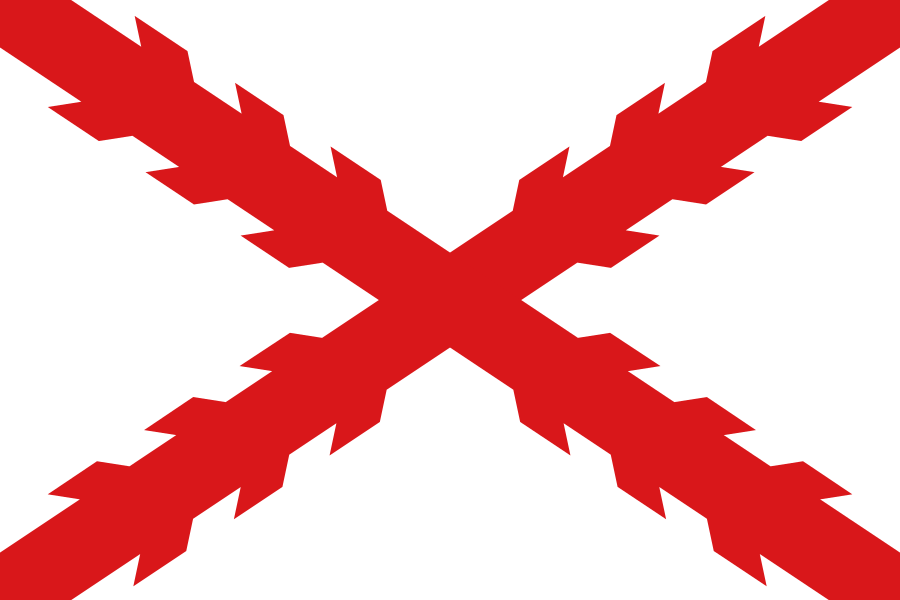
Then Lefebvre-Desnoettes charged with the cavalry through the centre, wheeled outwards and fell on the Aragonese from the flank and rear. Southey, the poet laureate who wrote an early British history of the war, says that the Aragonese wing believed itself victorious at that moment, having just withstood an attack, and Toreno likewise writes that the luck of the day had seemed to favour the Spaniards about three in the afternoon. Graham summed it up in his diary in four words: the retreat was a flight. A coloured print sold in Paris soon afterwards, now in the Musée Carnavalet and shown at the top of this page, told the French public the same story in its caption: Maurice-Mathieu's division broke the centre, and Lefebvre-Desnoettes at the head of his cavalry went through the gap at once and enveloped the enemy's right. The same caption put the Spanish army at 45,000 men.27
The Aragonese and Valencians scattered among the olive groves and irrigation ditches south of the town. Napier writes that O'Neille fled to Saragossa, sixty miles away, so fast that some fugitives arrived the same evening. Thiers puts the end of this part of the battle at three in the afternoon.28
Cascante and the night retreat
Only in the afternoon did Lagrange's division, the last French troops to arrive, come up against La Peña. Its leading brigade drove two Spanish battalions out of the hamlet of Urzante, and Lagrange himself, leading the attack on Cascante, was hit in the arm, as Thiers, Oman and Jourdan all record. Graham saw the two Spanish regiments sent down into the plain and wrote that they behaved uncommonly well. Castaños's report says that La Peña held Cascante until nightfall and then withdrew towards Tarazona and Borja.29
The night retreat nearly undid even the troops who had not fought. Southey and Toreno both tell how a store of powder in a chapel blew up as the columns set off. Southey writes that the troops took the explosion for an enemy battery, that a cry of treason went up, and that some corps dissolved. Arteche writes that not a few of the men put it down to treason. Napier adds that some of Ney's cavalry, coming from Soria, threw the column into disorder on the road to Borja.30
Counting the cost
The losses are as disputed as the strengths. Oman reckons that the Aragonese and their allies lost 26 guns, apparently all they had brought to the field, over 1,000 prisoners and at least 3,000 killed and wounded, while the Andalusians lost about 200 at most. Brigadier Planells, whose study Arteche quotes as the most trustworthy, counted the same 26 guns, over 500 bodies of both nations on the field and a little over 1,000 prisoners held in the yard of Santa Clara in Tudela.31
The French figures are higher. Thiers writes of about 40 guns, 3,000 prisoners, nearly all wounded because the cavalry stopped them only with the sabre, and 2,000 dead or dying left on the field. Jourdan gives 30 guns and seven colours, and Napier 30 guns and a loss of about 9,000 men. Southey reports that according to the French 4,000 Spaniards fell and 3,000 men and 300 officers were taken. Toreno gives 2,000 prisoners. Napoleon told Joseph of 3,000 or 4,000 prisoners. Arteche rejects Thiers's numbers as inflated.32
On the French side Oman gives Moncey's corps 44 killed and 518 wounded, and thinks the losses of Lagrange's division and the dragoons were probably under 100. Planells counted more than 500 wounded, 21 of them officers, in the two divisions engaged at Tudela itself. The French account in Southey put the French loss at under 500. Castaños, in his first report, would say only that the enemy's loss had been very considerable, and so had his own in stragglers and prisoners.33
Who was to blame
The trap had not closed. Ney's corps should have stood behind the Spaniards at Agreda or Tarazona on the day of the battle, but it was resting at Soria. Napoleon blamed Ney. If he had not let himself be imposed upon by the inhabitants, he wrote to Joseph from Aranda on 27 November, and had not stayed at Soria on the 22nd and 23rd imagining that the Spaniards had 80,000 men, he would have been at Agreda on the 23rd as ordered, and “pas un homme n'eût échappé”, not a man would have escaped.34
Jourdan disagreed. Counting the distance from Aranda to Tarazona by Soria, he wrote, Ney could not have arrived before the evening of the 24th even without resting his troops, so the reproach belonged to whoever had not sent him off two days earlier. Oman agrees and adds that Ney's men had marched seventy-eight miles in three days. Jourdan has Ney at Tarazona on the 25th, Oman early on the 26th. Southey accused Ney of delaying to plunder Soria, and Oman rejects the charge: Ney only requisitioned shoes and cloth for greatcoats.35
On the Spanish side the blame fell on the generals. Arteche lists the errors one by one: O'Neille's refusal to cross the Ebro on the afternoon of the 22nd, the council that decided nothing, a line far too long for one battle, and above all the discord between the generals and their troops, which the Central Junta did nothing to stop. Napier, writing from the British side, called the battle a proof of the utter incapacity of the Spanish generals.36
After Tudela
Lannes chose Marbot to carry the news of the victory to Napoleon, an honour that usually brought promotion. Marbot's ride across the mountains to Aranda, where the Emperor had his headquarters, nearly cost him his life. Napoleon wrote to his minister of war Clarke on 26 November that the battle of Tudela was the counterpart of Espinosa, and that the armies of Andalusia, Aragon, Valencia and New Castile were destroyed and scattered.37
Lannes himself fell ill again the next day, Thiers writes, and handed the pursuit to Moncey and Maurice-Mathieu. The Aragonese and most of the Valencians and Murcians took refuge in Saragossa, which the French would besiege for the second time that winter. Castaños led the Andalusians by Borja and Calatayud towards Madrid. At Calatayud, Toreno writes, he learned that Napoleon was advancing on Somosierra, and on 30 November the Polish light horse of the Guard charged up that pass.38
The defeat also changed British plans. Graham rode on to join Sir John Moore and found that, on hearing of Castaños's defeat, Moore had ordered Sir David Baird's corps to retreat, believing that the British army could no longer join the Spanish forces.39






