

What was the Peninsular War?
The Peninsular War (1808 to 1814) was the part of the Napoleonic Wars fought in Spain and Portugal. Spanish armies and guerrillas, Portugal and Britain fought Napoleon's France and the Spanish kingdom of his brother Joseph. The allies won: the French were driven out of Spain, Ferdinand VII was restored and Wellington's army invaded southern France.1
British and Irish readers know it as the Peninsular War. In Spain it is the War of Independence (Guerra de la Independencia), and in Portugal the Guerra Peninsular, remembered through three French invasions. It was one theater of the Napoleonic Wars. Spanish armies and irregulars, a rebuilt Portuguese army and a British army that recruited heavily in Ireland, victors at the second Battle of Porto and the Battle of Bussaco, fought a French army that included Poles, famous for their charge at the Battle of Somosierra.2
Causes of the Peninsular War
In July 1807, after making peace with Russia at Tilsit, Napoleon demanded that Portugal, Britain's ally, close its ports to British ships, to complete his economic war on Britain, the Continental System. Spain was then France's ally, and in October 1807 the two agreed in secret at Fontainebleau to invade and divide Portugal.3
General Jean-Andoche Junot marched through Spain and entered Lisbon on 30 November 1807. The Portuguese royal family and much of the governing elite had already sailed for Brazil under the protection of the Royal Navy.4
From February 1808 French troops also seized Spain's border fortresses. In March a revolt at Aranjuez toppled the minister Manuel Godoy and forced Charles IV to abdicate for his son, Ferdinand VII. At Bayonne in May Napoleon made both give up the crown and named his brother Joseph Bonaparte King of Spain.5
On 2 May 1808 the people of Madrid rose against the French garrison. Marshal Joachim Murat crushed the rising, and in the following days French firing squads executed hundreds of Spaniards. By the end of May most of Spain was in revolt, and Portugal soon followed.6

Who fought in the Peninsular War
France and Joseph's kingdom. After the winter of 1808 to 1809 Napoleon left the war to his marshals, who often quarreled and failed to coordinate. Joseph, kept in a subordinate position, offered to abdicate four times. French strength rose to more than 200,000 men after 1809 and, by the National Army Museum's count, over 350,000 by 1812.7
Joseph also had Spanish supporters, the afrancesados: officials, officers and liberals who believed the Bourbon monarchy would never reform itself. His kingdom stood for an attack on the privileges of the Church and the nobility, and for that reason the war was also a civil war among Spaniards.8
Patriot Spain. Resistance was led by provincial juntas, then a Supreme Central Junta allied to Britain from January 1809, later a Regency and the Cortes (parliament) at Cádiz. Spanish armies were often beaten but kept returning, and stubbornly defended cities tied down thousands of French troops.9
Portugal. In March 1809 the British general William Carr Beresford was made a marshal of Portugal and given the task of rebuilding its army. Retrained and reorganized, Portuguese troops fought alongside the British for the rest of the war; at Bussaco in 1810 about 25,500 of Wellington's men were Portuguese.10
Britain and Ireland. The United Kingdom of Great Britain and Ireland sent an army under Sir Arthur Wellesley, born in Dublin to an Anglo-Irish family and later Duke of Wellington. The Peninsula was the British Army's main contribution to the land war against Napoleon on the continent.11
Irishmen were a large part of that army. The historian Lar Joye estimates that 35 per cent of the Peninsular army was Irish, and James Deery finds that over 30 per cent of Wellington's officers were Irish. Both point out that most Irish soldiers served not in the Irish regiments, such as the Connaught Rangers, but in English and Scottish ones.12
Poles in French service. Polish soldiers fought for Napoleon against Spaniards resisting occupation. They served in the Polish light horse of the Imperial Guard, recruited in the Duchy of Warsaw that Napoleon created in 1807; in the Vistula Legion, formed in 1808 from earlier Polish legions, about 5,000 men in three infantry regiments; and in the Duchy's own army.13
1808 to 1809: Bailén, Somosierra and Corunna
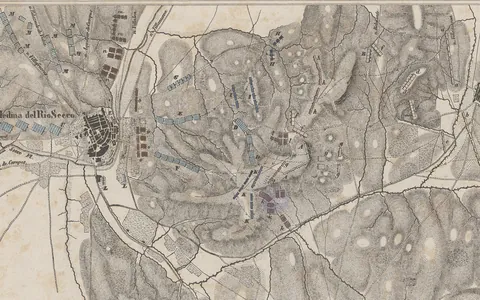
Napoleon sent columns to crush the main centers of resistance. On 14 July 1808 Marshal Jean-Baptiste Bessières, with about 13,000 to 14,000 men, beat the larger army of Generals Gregorio de la Cuesta and Joaquín Blake at Medina de Rioseco, and Joseph entered Madrid six days later.14
In the south, General Pierre Dupont's army was beaten at Bailén by General Francisco Javier Castaños and surrendered on 23 July: around 12,000 men by the National Army Museum's count, 18,000 by World History Encyclopedia's. It was the first major defeat of a French army in the Napoleonic Wars. Joseph left Madrid, and French attacks on Valencia, Saragossa and Girona were turned back.15
At Saragossa, the capital of Aragon, General José de Palafox held the city through a first siege in the summer of 1808. The Vistula Legion took part in the assaults, and its commander, Colonel Józef Chłopicki, was wounded leading a column into the city in August.16
In August 1808 about 14,000 British troops under Wellesley landed in Portugal and won at Roliça and Vimeiro, but his superiors then signed the Convention of Cintra, which shipped Junot's army home in British ships with its plunder. After an outcry in Britain the generals were recalled, and Sir John Moore took command.17
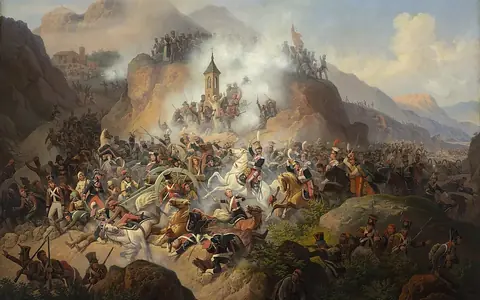
In November Napoleon came himself and broke the Spanish armies at Gamonal, Espinosa and Tudela. On 30 November 1808 his way to Madrid was blocked at the Somosierra pass, where Spanish guns were dug in along the mountain road. He ordered a squadron of the Polish light horse of his Guard to charge them. Accounts differ: one study describes a first charge that was stopped, then a second, with the Guard Chasseurs à Cheval in support, that took the position, while French infantry was attacking the slopes on either side. Madrid surrendered on 4 December.18
The numbers are disputed too: estimates of the riders range from about 125 or 150 to about 200, and of Polish losses from 57 killed and wounded to 18 killed and 39 wounded, while Napoleon's bulletin admitted 8 killed and 15 wounded and credited the charge to General Montbrun. How much of the victory belonged to the cavalry and how much to General François Ruffin's infantry is still argued.19

With Madrid lost and Napoleon closing in, Moore, who had advanced to help the Spanish, retreated through Galicia in winter. At Corunna on 16 January 1809 his army beat off a French attack and was taken off by the Royal Navy, but Moore was mortally wounded. Napoleon had already left Spain for good.20
The second siege of Saragossa, from 20 December 1808 to 20 February 1809, ended in weeks of fighting from house to house, with the Vistula Legion again in the assaults. The city's officials estimated that 54,000 people had died, 20,000 soldiers and 34,000 civilians, many of them from disease.21
1809 to 1811: Talavera, Ocaña, Bussaco and Torres Vedras
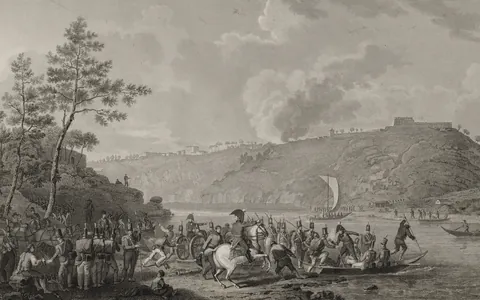
In March 1809 Marshal Nicolas Soult invaded Portugal and took Oporto. Wellesley, back in command and with Beresford's new Portuguese units, crossed the Douro and surprised him there on 12 May (the second battle of Porto), driving the French out of the country.22

Wellesley then advanced into Spain with Cuesta's army and won at Talavera on 27 and 28 July 1809, one of the bloodiest battles of the war with more than 14,000 casualties. Made Viscount Wellington, he fell back into Portugal when Soult threatened his communications.23
That autumn the Supreme Central Junta tried to retake Madrid on its own. General Juan Carlos de Areizaga's Army of La Mancha, about 51,000 strong, was routed at Ocaña on 19 November 1809 by King Joseph and Marshal Soult, whose front line included a Polish division. French strength is given as 33,500 or as 35,000 to 40,000; about 14,000 Spaniards were captured, and Andalusia lay open.24
In January 1810 Soult began the conquest of Andalusia. Seville fell, and the government withdrew to the island city of Cádiz, which the French besieged from February 1810 until 1812.25
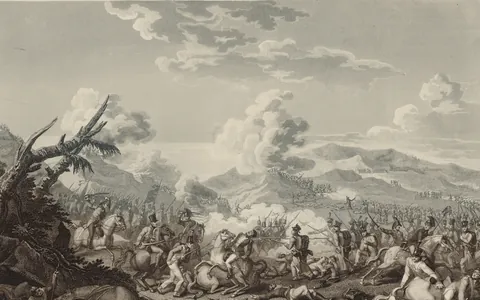
In 1810 Marshal André Masséna took the border fortresses of Ciudad Rodrigo and Almeida and invaded Portugal. At Bussaco on 27 September Wellington's Anglo-Portuguese army checked him, with French losses of about 4,500 killed and wounded against about 1,250. Wellington then fell back behind the Lines of Torres Vedras north of Lisbon, stripping the land in front of them of food; Masséna, who lost some 25,000 men to starvation, retreated into Spain in March 1811.26
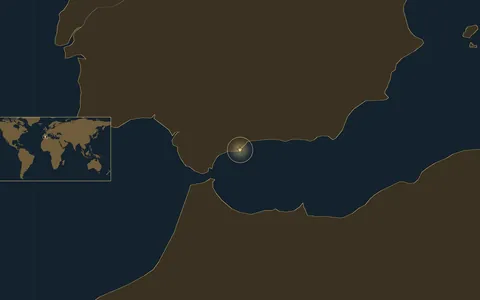
On the coast near Málaga, an Anglo-Spanish landing under Major General Lord Blayney tried in October 1810 to take Sohail Castle at Fuengirola. Its garrison of about 150 Polish soldiers under Captain Franciszek Młokosiewicz held out until a relief force arrived, and Blayney himself was captured.27
In 1811 an Anglo-Spanish force won at Barrosa near Cádiz, Wellington narrowly beat Masséna at Fuentes de Oñoro, and Beresford held off Soult at Albuera, losing about a quarter of his men.28
1812 to 1814: Salamanca, Vitoria and the invasion of France
Preparing to invade Russia, Napoleon stopped reinforcing Spain and withdrew some troops. Wellington struck at the frontier fortresses: Ciudad Rodrigo was stormed on 19 January 1812 and Badajoz on the night of 6 April, at a cost of more than 4,500 casualties to the attackers.29
British and Portuguese troops then sacked Badajoz for three days, killing and raping its inhabitants. Britannica puts civilians killed or injured at 200 to 300, calling estimates of up to 4,000 inflated; the National Army Museum says hundreds.30
On 22 July 1812 Wellington's British, Portuguese and Spanish army defeated Marshal Auguste de Marmont at Salamanca. By the National Army Museum's figures Wellington's 48,600 men suffered 5,200 casualties and inflicted around 14,000 on Marmont's 50,000. The French abandoned the siege of Cádiz and Andalusia, and Wellington entered Madrid on 12 August, but he failed to take Burgos and fell back to Portugal for the winter.31
In 1813 Wellington advanced again with about 120,000 British, Portuguese and Spanish troops. At Vitoria on 21 June he defeated the army of King Joseph and Marshal Jourdan. Britannica gives about 72,000 allies against 57,000 French, French losses of about 8,000 killed, wounded and captured and allied losses of about 5,000. The battle ended French control of Spain.32
The allies took San Sebastián in September 1813, and the town was then plundered and burned; Basque broadcaster EITB gives more than a thousand civilian dead. In October Wellington crossed into France, beat Soult at Orthez on 27 February 1814 and fought at Toulouse on 10 April, unaware that Napoleon had already abdicated.33
Guerrilla war and atrocities
In the guerrilla, the "little war", irregular bands and flying columns of regulars ambushed French convoys, messengers and small garrisons; World History Encyclopedia estimates the partisans at 35,000 to 50,000. By 1812, the National Army Museum says, 200,000 French soldiers were guarding supply lines rather than fighting at the front.34
How much the guerrillas mattered is still argued. British historians from William Napier onward put Wellington at the center of the story and played the guerrillas down, while Spanish historians have written about guerrilla leaders such as El Empecinado and Espoz y Mina. The Encyclopedia.com article goes further and calls the traditional view that the Peninsula decided Napoleon's fate "extremely problematic".35
Atrocities were committed on all sides. Guerrillas tortured and killed French prisoners; French troops were as cruel to suspected guerrillas, burned villages and took reprisals on towns; Polish officers' memoirs describe executions along the roads. Allied troops sacked Badajoz and San Sebastián.36
Francisco de Goya recorded this violence in the etchings known as The Disasters of War, made from about 1810 and published only in 1863, long after his death, by Madrid's Royal Academy of San Fernando. They condemn the invaders, but also Spanish tyranny and the clergy. In 1814 he painted The Third of May 1808, the execution of Madrid civilians by a French firing squad.37

Who won the Peninsular War, and at what cost
After Vitoria and Leipzig Napoleon released Ferdinand VII, held in France since 1808, who returned to Spain in March 1814 (World History Encyclopedia dates his restoration to 11 December 1813). In May 1814 Ferdinand had liberal leaders arrested and restored royal authority.38
Within the wider Napoleonic Wars, Napoleon called this war his "Spanish ulcer" because of its constant drain on his men and money. Britannica judges that it contributed considerably to his downfall, but that until 1813 it had only an indirect effect on the war in central and eastern Europe. The French defeat at Bailén encouraged Austria to go to war again in 1809, and Vitoria encouraged it to rejoin the coalition in 1813.39
This guide gives no single death toll, because the sources it uses do not agree on one. Single actions show the scale: about 54,000 dead at Saragossa by the city's estimate, more than 14,000 casualties at Talavera, some 25,000 French soldiers starved before Lisbon.40
Legacy of the Peninsular War
In Spain the war is remembered as a war of independence and a national rising. At Cádiz the Cortes proclaimed the Constitution of 1812, which placed sovereignty in the nation, limited the crown and abolished aristocratic privileges. Ferdinand later repudiated it, but liberalism remained a force in Spain, and the crisis helped set off the independence movements in Spanish America.41
In Britain the war made Wellington's reputation and that of his army, which he called "the most complete machine for its numbers now existing in Europe". British historians from the veteran William Napier to Sir Charles Oman made it central to Napoleon's defeat, a view since questioned.42
In Poland the charge at Somosierra became a legend, retold by veterans and painted by artists from Horace Vernet, whose picture was commissioned by the Krasiński family, to January Suchodolski and Piotr Michałowski. It is still commemorated: in 2010 the National Bank of Poland issued coins in honor of the Guard light horse.43
Major battles of the Peninsular War
Our articles on the war's battles, in date order, from Medina de Rioseco and Zornoza in 1808 to Almonacid, Ocaña and Fuengirola.
- 1808Battle of Medina de Rioseco, 1808French Empire vs Spanish patriot armies of Castile and Galicia
On 14 July 1808 Marshal Bessières routed the larger Spanish armies of Cuesta and Blake at Medina de Rioseco and opened the road to Madrid for King Joseph.
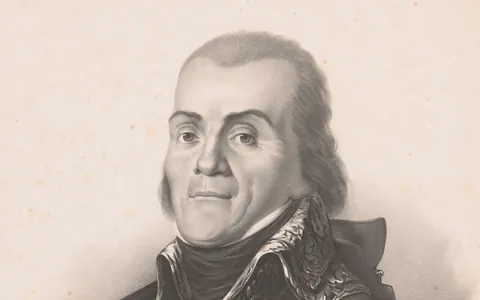
- 1808Battle of Zornoza, 1808French Empire vs Spain
On 31 October 1808 Marshal Lefebvre attacked Blake's Spanish army at Zornoza in the fog, against orders, and won the field but spoiled Napoleon's trap.
- 1808Battle of Somosierra, 1808French Empire (Polish light horse) vs Kingdom of Spain
How Napoleon's Polish light horse charged the guns at Somosierra in 1808 and opened the road to Madrid.
- 1809Second Battle of Porto, 1809Britain and Portugal vs French Empire
On 12 May 1809 a barber's tip and four wine barges carried Wellesley's infantry across the Douro in daylight. By noon Soult was losing Porto, and within a week Portugal.
- 1809Battle of Almonacid, 1809French Empire and the Duchy of Warsaw vs Kingdom of Spain (Army of La Mancha)
On 11 August 1809 Sébastiani's corps, with the Polish Division taking the key hill, broke Venegas's Spanish Army of La Mancha at Almonacid south of Toledo.
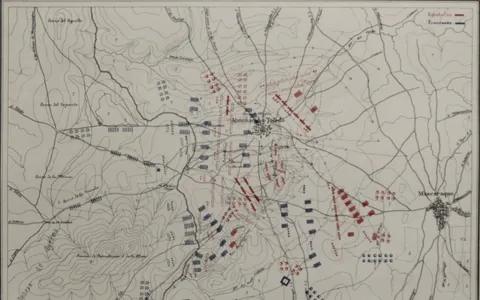
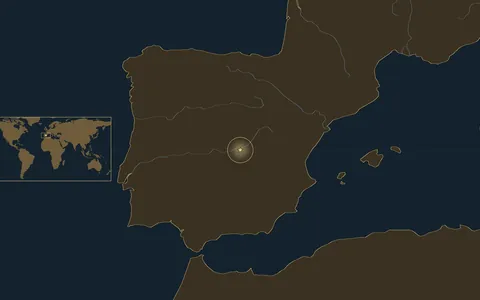
- 1809Battle of Ocaña, 1809French Empire and allies vs Spain
On 19 November 1809 a French army with a Polish division in its front line routed Areizaga's Spanish army, over 50,000 strong, on the plain of Ocaña south of Madrid.
- 1810Battle of Bussaco, 1810Britain and Portugal vs France (Army of Portugal)
On 27 September 1810 Wellington's British and Portuguese held the steep ridge of Bussaco against Masséna; the French reached the crest twice and were thrown back both times.
- 1810Battle of Fuengirola, 1810Duchy of Warsaw and France vs Britain and Spain
In October 1810 a Polish garrison in Sohail Castle beat off an Anglo-Spanish landing on the Spanish coast and captured its commander, Lord Blayney.
Timeline of the Peninsular War
- 14 Jul 1808Bessières defeats Cuesta and Blake at Medina de Rioseco.44
- Jul 1808Dupont's army surrenders after the battle of Bailén.45
- 30 Nov 1808The Polish light horse charge at Somosierra; Madrid surrenders on 4 December.46
- 12 May 1809
- 19 Nov 1809
- 27 Sep 1810
- Oct 1810The Polish garrison of Fuengirola repels Blayney's landing.50
- 22 Jul 1812Wellington defeats Marmont at Salamanca.51
- 21 Jun 1813Battle of Vitoria breaks French power in Spain.52
- 10 Apr 1814Battle of Toulouse; the war ends days later with news of Napoleon's abdication.53
Where to read next
The whole conflict is covered in our guide to the Napoleonic Wars, and its battles appear among the greatest Napoleonic battles. See also Napoleon vs Wellington, the military history of Britain, of France and of Ireland, the Napoleonic era, the greatest Polish battles and the Napoleonic battles quiz.
Notes
A number in the text points to a note; each note names the works that paragraph draws on, listed in full under Sources.
- Encyclopaedia Britannica, “Peninsular War”; National Army Museum, “Peninsular War”; World History Encyclopedia, “Peninsular War”. ↩
- Encyclopaedia Britannica, “Peninsular War”; EBSCO Research Starters, “Peninsular War in Spain”; World History Encyclopedia, “Guerra Peninsular”; Le Petit Journal Lisbonne, “Bicentenaire des lignes de Torres Vedras”; National Army Museum, “Peninsular War”; MilitaryHistoryOnline.com, “Madness in the Mountains”. ↩
- Encyclopaedia Britannica, “Peninsular War”; World History Encyclopedia, “Peninsular War”; Encyclopedia.com (, Europe 1789 to 1914. ↩
- Encyclopaedia Britannica, “Peninsular War”; World History Encyclopedia, “Peninsular War”; Encyclopedia.com (, Europe 1789 to 1914. ↩
- Encyclopaedia Britannica, “Peninsular War”; Encyclopaedia Britannica, “Napoleonic Wars”; World History Encyclopedia, “Peninsular War”; Encyclopedia.com (, Europe 1789 to 1914. ↩
- Encyclopaedia Britannica, “Peninsular War”; World History Encyclopedia, “Peninsular War”; Encyclopedia.com (, Europe 1789 to 1914. ↩
- World History Encyclopedia, “Peninsular War”; Encyclopaedia Britannica, “Joseph Bonaparte”; Encyclopaedia Britannica, “Peninsular War”; National Army Museum, “Peninsular War”. ↩
- EBSCO Research Starters, “Peninsular War in Spain”; Encyclopedia.com (, Europe 1789 to 1914. ↩
- EBSCO Research Starters, “Peninsular War in Spain”; National Army Museum, “Peninsular War”; Encyclopedia.com (, Europe 1789 to 1914. ↩
- Encyclopaedia Britannica, “William Carr Beresford, Viscount Beresford”; National Army Museum, “Peninsular War”; History of War, “Battle of Bussaco, 27 September 1810”. ↩
- Encyclopaedia Britannica, “Peninsular War”; National Army Museum, “Peninsular War”; National Army Museum, “Wellington”; History Ireland, “Irish soldiers in the Peninsular War, 1808-14”. ↩
- History Ireland, “Irish soldiers in the Peninsular War, 1808-14”; Journal of Military History and Defence Studies. ↩
- MilitaryHistoryOnline.com, “Madness in the Mountains”; dzieje.pl, “„Walka na noże”: Polacy pod Saragossą latem 1808 r.”; Encyclopaedia Britannica, “Józef Chłopicki”. ↩
- History of War, “Battle of Medina del Rio Seco, 14 July 1808”; Napoleon Guide, “Medina del Rio Seco”; Encyclopaedia Britannica, “Napoleonic Wars”. ↩
- National Army Museum, “Peninsular War”; World History Encyclopedia, “Peninsular War”; Encyclopaedia Britannica, “Peninsular War”; Encyclopedia.com (, Europe 1789 to 1914. ↩
- dzieje.pl, “„Walka na noże”: Polacy pod Saragossą latem 1808 r.”; FrenchEmpire.net, “General Józef Grzegorz Chłopicki de Nieczuja”; Encyclopedia.com (, Europe 1789 to 1914. ↩
- National Army Museum, “Peninsular War”; World History Encyclopedia, “Peninsular War”; Encyclopaedia Britannica, “Peninsular War”. ↩
- World History Encyclopedia, “Peninsular War”; FrenchEmpire.net, “Battle of Somosierra”; MilitaryHistoryOnline.com, “Madness in the Mountains”; Encyclopaedia Britannica, “Napoleonic Wars”. ↩
- MilitaryHistoryOnline.com, “Madness in the Mountains”; dzieje.pl, “Szwoleżerowie na monetach kolekcjonerskich”; dzieje.pl, “O wszechmocy Francuzów, jeśli Polacy są w pobliżu”. ↩
- National Army Museum, “Peninsular War”; National Army Museum, “John Moore”; Encyclopaedia Britannica, “Napoleonic Wars”. ↩
- History of War, “Second Siege of Saragossa, 20 December 1808 to 20 February 1809”; World History Encyclopedia, “Peninsular War”; Encyclopaedia Britannica, “Józef Chłopicki”. ↩
- National Army Museum, “Peninsular War”; World History Encyclopedia, “Peninsular War”; National Army Museum, “Wellington”. ↩
- National Army Museum, “Peninsular War”; World History Encyclopedia, “Peninsular War”; Encyclopaedia Britannica, “Peninsular War”. ↩
- History of War, “Battle of Ocaña, 19 November 1809”; Napoléon & Empire, “Battle of Ocaña”; FrenchEmpire.net, “Battle of Ocaña”. ↩
- Encyclopaedia Britannica, “Peninsular War”; World History Encyclopedia, “Peninsular War”; Encyclopedia.com (, Europe 1789 to 1914. ↩
- National Army Museum, “Peninsular War”; National Army Museum, “Wellington”; World History Encyclopedia, “Peninsular War”. ↩
- History of War, “Siege of Fuengirola, 13-15 October 1810”; Visit Andalucia, “Castillo Sohail and the Battle of Fuengirola 1810”. ↩
- National Army Museum, “Peninsular War”; Encyclopaedia Britannica, “William Carr Beresford, Viscount Beresford”; World History Encyclopedia, “Peninsular War”. ↩
- Encyclopaedia Britannica, “Peninsular War”; National Army Museum, “Peninsular War”; Encyclopedia.com (, Europe 1789 to 1914; Encyclopaedia Britannica, “Siege of Badajoz”. ↩
- Encyclopaedia Britannica, “Siege of Badajoz”; National Army Museum, “Peninsular War”. ↩
- National Army Museum, “Peninsular War”; World History Encyclopedia, “Peninsular War”; Encyclopedia.com (, Europe 1789 to 1914. ↩
- Encyclopaedia Britannica, “Battle of Vitoria”; National Army Museum, “Peninsular War”; World History Encyclopedia, “Peninsular War”. ↩
- National Army Museum, “Peninsular War”; EITB / Orain, “San Sebastian commemorates the events of 31 August 1813”; World History Encyclopedia, “Peninsular War”. ↩
- Encyclopedia.com (, Europe 1789 to 1914; World History Encyclopedia, “Peninsular War”; National Army Museum, “Peninsular War”. ↩
- The History Avenue, “The Peninsular War (1808-1814) vs. Spanish War of Independence”; Encyclopedia.com (, Europe 1789 to 1914. ↩
- World History Encyclopedia, “Peninsular War”; EBSCO Research Starters, “Peninsular War in Spain”; dzieje.pl, “„Walka na noże”: Polacy pod Saragossą latem 1808 r.”. ↩
- Encyclopaedia Britannica, “Francisco Goya”; Princeton University Art Museum, “Ni por esas (Neither Do These)”; Georgia Museum of Art, “Francisco de Goya’s Disasters of War”. ↩
- Encyclopaedia Britannica, “Peninsular War”; World History Encyclopedia, “Peninsular War”; EBSCO Research Starters, “Peninsular War in Spain”. ↩
- Encyclopaedia Britannica, “Peninsular War”; National Army Museum, “Peninsular War”; World History Encyclopedia, “Peninsular War”; Encyclopedia.com (, Europe 1789 to 1914. ↩
- History of War, “Second Siege of Saragossa, 20 December 1808 to 20 February 1809”; National Army Museum, “Peninsular War”; World History Encyclopedia, “Peninsular War”. ↩
- EBSCO Research Starters, “Peninsular War in Spain”; Encyclopedia.com (, Europe 1789 to 1914; World History Encyclopedia, “Peninsular War”. ↩
- National Army Museum, “Peninsular War”; Encyclopaedia Britannica, “Peninsular War”; The History Avenue, “The Peninsular War (1808-1814) vs. Spanish War of Independence”; Encyclopedia.com (, Europe 1789 to 1914. ↩
- MilitaryHistoryOnline.com, “Madness in the Mountains”; dzieje.pl, “Szwoleżerowie na monetach kolekcjonerskich”. ↩
- History of War, “Battle of Medina del Rio Seco, 14 July 1808”; Napoleon Guide, “Medina del Rio Seco”. ↩
- National Army Museum, “Peninsular War”; World History Encyclopedia, “Peninsular War”. ↩
- MilitaryHistoryOnline.com, “Madness in the Mountains”; World History Encyclopedia, “Peninsular War”. ↩
- National Army Museum, “Peninsular War”; World History Encyclopedia, “Peninsular War”. ↩
- History of War, “Battle of Ocaña, 19 November 1809”; Napoléon & Empire, “Battle of Ocaña”. ↩
- National Army Museum, “Peninsular War”; World History Encyclopedia, “Peninsular War”. ↩
- History of War, “Siege of Fuengirola, 13-15 October 1810”; Visit Andalucia, “Castillo Sohail and the Battle of Fuengirola 1810”. ↩
- National Army Museum, “Peninsular War”; World History Encyclopedia, “Peninsular War”. ↩
- Encyclopaedia Britannica, “Battle of Vitoria”; National Army Museum, “Peninsular War”. ↩
- National Army Museum, “Peninsular War”; World History Encyclopedia, “Peninsular War”. ↩
Sources
- Encyclopaedia Britannica, “Peninsular War”.
- National Army Museum, “Peninsular War”.
- World History Encyclopedia, Harrison W. Mark, “Peninsular War”.
- EBSCO Research Starters, Douglas W. Richmond, “Peninsular War in Spain”.
- World History Encyclopedia (Portuguese edition), “Guerra Peninsular”.
- Le Petit Journal Lisbonne, “Bicentenaire des lignes de Torres Vedras”.
- MilitaryHistoryOnline.com, “Madness in the Mountains: The Charge of the Polish Light Horse at the Battle of Somosierra”.
- Encyclopedia.com (Europe 1789 to 1914: Encyclopedia of the Age of Industry and Empire), “Peninsular War”.
- Encyclopaedia Britannica, “Napoleonic Wars: the Peninsular War and the Congress of Erfurt, 1808”.
- Encyclopaedia Britannica, “Joseph Bonaparte”.
- Encyclopaedia Britannica, “William Carr Beresford, Viscount Beresford”.
- History of War, John Rickard, “Battle of Bussaco, 27 September 1810”.
- National Army Museum, “Wellington: The Iron Duke”.
- History Ireland, Lar Joye, “Irish soldiers in the Peninsular War, 1808-14”.
- Journal of Military History and Defence Studies (Maynooth University), James Deery, “The contribution of the Irish soldier to the British Army during the Peninsula campaign 1808 to 1814”.
- dzieje.pl (Muzeum Historii Polski), “„Walka na noże”: Polacy pod Saragossą latem 1808 r.”.
- Encyclopaedia Britannica, “Józef Chłopicki”.
- History of War, John Rickard, “Battle of Medina del Rio Seco, 14 July 1808”.
- Napoleon Guide, “Medina del Rio Seco”.
- FrenchEmpire.net, Nathan D. Jensen, “General Józef Grzegorz Chłopicki de Nieczuja”.
- FrenchEmpire.net, “Battle of Somosierra”.
- dzieje.pl (Muzeum Historii Polski, PAP), “Szwoleżerowie na monetach kolekcjonerskich”.
- dzieje.pl (Muzeum Historii Polski, PAP), “O wszechmocy Francuzów, jeśli Polacy są w pobliżu”.
- National Army Museum, “John Moore: Alone with his glory”.
- History of War, John Rickard, “Second Siege of Saragossa, 20 December 1808 to 20 February 1809”.
- History of War, John Rickard, “Battle of Ocaña, 19 November 1809”.
- Napoléon & Empire, “Battle of Ocaña”.
- FrenchEmpire.net, “Battle of Ocaña”.
- History of War, John Rickard, “Siege of Fuengirola, 13-15 October 1810”.
- Visit Andalucia, Nick Nutter, “Castillo Sohail and the Battle of Fuengirola 1810”.
- Encyclopaedia Britannica, Adrian Gilbert, “Siege of Badajoz”.
- Encyclopaedia Britannica, “Battle of Vitoria”.
- EITB / Orain, “San Sebastian commemorates the events of 31 August 1813”.
- The History Avenue, “The Peninsular War (1808-1814) vs. Spanish War of Independence: A Historiographical Battleground”.
- Encyclopaedia Britannica, “Francisco Goya”.
- Princeton University Art Museum, “Ni por esas (Neither Do These)”.
- Georgia Museum of Art, “Francisco de Goya’s Disasters of War”.






