

What is the military history of Spain?
It is the history of the wars fought by the Spanish kingdoms and the Spanish state, from the Reconquista, which ended at Granada in 1492, through the Habsburg wars in Italy, at sea and in the Netherlands, the war against Napoleon and the loss of Cuba and the Philippines in 1898, to the Civil War of 1936 to 1939.1
Spain’s wars ran from the Middle Ages to the 20th century and across three continents: against the Almohads and Granada, against France for Italy, against the Ottomans at sea, against England and the Dutch, against Napoleon, against the United States in 1898 and, at last, against itself. This guide follows them era by era, names the state that fought each one and gives defeats the same weight as victories. Start with our battle guides to the Battle of Las Navas de Tolosa (1212), the Battle of Pavia (1525), the Battle of Lepanto (1571), the Battle of Trafalgar (1805) and the Battle of San Juan Hill (1898).
For most of this story there was no single Spanish state, so the page names the polity behind each war: the Christian kingdoms of the peninsula, the composite Habsburg and Bourbon monarchy, the Spanish Republic and the Nationalists who fought it. Al-Andalus, Portugal and the peoples of the Americas appear as neighbors, opponents and allies with their own view of these wars, not as parts of Spain.
Which states does the military history of Spain cover?
Modern Spain grew out of several Christian kingdoms. Ferdinand of Aragon and Isabella of Castile married in 1469, and their marriage treaty required Aragon and Castile to remain separate kingdoms under shared rulers. Even under their Habsburg grandson Charles I, who as Holy Roman emperor was Charles V, the assemblies (Cortes) of Castile, Aragon and Catalonia met separately and voted their own grants of money.2
The Habsburg line ended when the childless Charles II died on 1 November 1700, leaving his whole empire to Philip, duke of Anjou, a grandson of Louis XIV of France. Philip V founded the Bourbon line, but only the War of the Spanish Succession decided that he would keep the throne. In the 20th century the state split in two: the Spanish Republic, and the Nationalists who rose against it in July 1936 and won the Civil War under Francisco Franco, who then ruled Spain until his death in 1975.3

What was the Reconquista? From Las Navas de Tolosa to Granada
Reconquista (reconquest) is the name later given to the long series of campaigns in which the Christian states of the north took the peninsula from Muslim rulers, a process that ended with the fall of Granada in 1492, nearly eight centuries after the Muslim conquest. The name simplifies a mixed story: Britannica notes how closely the Christian and Muslim peoples of Spain became linked in culture and economy over those centuries.4
The turning point came on 16 July 1212 at Las Navas de Tolosa, north of Jaén. Alfonso VIII of Castile, beaten by the Almohads at Alarcos in 1195, had Pope Innocent III proclaim a crusade, and he was joined by Peter II of Aragon and Sancho VII of Navarre. Most of the crusaders from beyond the Pyrenees went home before the battle; the three kings broke the army of the Almohad ruler Muhammad al-Nasir, who fled. Disease and short supplies stopped an immediate advance, but the historian Joseph Byrne calls the battle the beginning of the end of Almohad power in Spain.5
By the end of the 13th century only the Nasrid kingdom of Granada remained under Muslim rule, paying tribute to Castile. Ferdinand and Isabella fought for it from 1481; its last ruler, Boabdil (Muhammad XII), agreed in late 1491 to surrender and handed over the Alhambra on 2 January 1492. Gonzalo Fernández de Córdoba, soon to be famous in Italy, was one of the two commissioners who negotiated the surrender.6
The Italian Wars: the Great Captain, Pavia and the tercios
Italy drew the Spanish crowns into a long rivalry with France. The Crown of Aragon had its own claim to Naples, and in the war that broke out there in 1502 Gonzalo Fernández de Córdoba, the Great Captain, beat the French at Cerignola and then, with a surprise attack across the Garigliano in bad weather in December 1503, won the Kingdom of Naples for Ferdinand. The Catalan encyclopedia calls his army Catalan-Aragonese, a reminder that this was Aragon’s war as much as Castile’s.7
Under Charles V the war moved to Lombardy. On 24 February 1525 his army, led by the Marquis of Pescara and the viceroy of Naples, Charles de Lannoy, attacked the French army besieging Pavia. Spanish infantry with hand firearms shot down the charging French cavalry, and King Francis I of France was taken prisoner and carried off to Spain. The victory gave Spain the upper hand in Italy, which the Peace of Cateau-Cambrésis confirmed in 1559.8
The backbone of these armies was the Spanish infantry. Britannica calls the tercios, the Spanish infantry regiments, the emperor’s best troops, and notes that Castile paid for much of his war. They kept that reputation for more than a century, until a French army broke them at Rocroi in 1643.9
Spain in the Americas: Tenochtitlan and its allies
In the same years Spanish adventurers carried war across the Atlantic. Hernán Cortés’s siege of the Aztec capital, Tenochtitlan, ended on 13 August 1521, when the last emperor, Cuauhtemoc, surrendered. The conquest was not the work of the Spaniards alone: tens of thousands of indigenous warriors, above all Tlaxcalans and other peoples the Aztecs had subjugated, fought beside them, and a smallpox epidemic had already killed the emperor Cuitlahuac. One account calls it a legitimate question whether Cortés could have won at all without the disease.10
Lepanto (1571) and the war with the Ottomans at sea
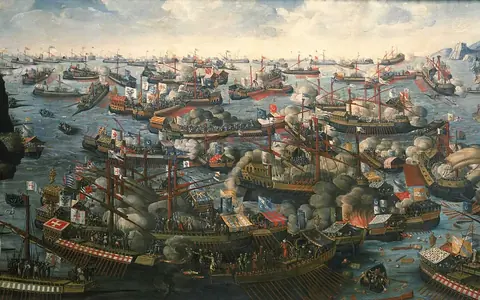
In the Mediterranean the Spanish monarchy faced the Ottoman Empire. When the Ottomans invaded Venetian Cyprus in 1570, Pope Pius V brought Spain and Venice into a Holy League with the Papacy, Genoa and smaller Italian states. Philip II’s half brother, Don John of Austria, commanded the allied fleet that met the Ottomans off Lepanto in western Greece on 7 October 1571. After hours of boarding fights the Ottoman fleet was largely sunk or captured. It was the last great battle between galley fleets, and among the wounded was a Spanish soldier, Miguel de Cervantes.11
The victory did not save Cyprus, and Britannica judges its strategic effects negligible but its effect on morale immense: it confirmed Spaniards in their chosen role as champions of Christendom, and it was celebrated across Europe.12

Why did the Spanish Armada fail?
From 1586 Philip II prepared an invasion of England, which was backing the Dutch rebels against Spanish rule. The fleet was not meant to conquer England on its own: it was to clear the Channel so that the veteran army of the Duke of Parma could cross from the Spanish Netherlands. The admiral who had first proposed it, the Marquis of Santa Cruz, died early in 1588, and command passed to the Duke of Medina Sidonia, an able administrator with little experience at sea.13
The Armada of about 130 ships left Lisbon at the end of May 1588. Running fights in the Channel did little damage to either side, and on 6 August the fleet anchored off Calais, but Parma, blockaded by a Dutch fleet, could not come out. On the night of 7 August English fireships forced the Spanish ships to cut their cables, and the next day the English attacked off Gravelines with their longer-range guns. The wind then carried the Armada into the North Sea, and it sailed home around Scotland and Ireland, where storms wrecked many ships. Only about half of the fleet came back to Spain.14
Britannica notes that the Spanish had counted on boarding the English ships and letting their infantry decide the battle, while the English kept their distance and fought with guns. Seen from Madrid, it concludes, the defeat was probably inevitable but not dishonorable: Medina Sidonia had been asked to escort an army across the sea against a better-armed fleet without control of a single deep-water port.15

Why did Spanish power decline? Rocroi and the War of the Spanish Succession
Spain fought on through the Dutch revolt and the Thirty Years’ War. On 19 May 1643, at Rocroi in the Ardennes, a French army under the young Duke of Enghien destroyed the Spanish army of Flanders under Francisco de Melo. In Britannica’s account its infantry fought on for hours after the cavalry had fled, and it sees the battle as the end of Spain’s military ascendancy in Europe.16
The death of Charles II in 1700 brought the War of the Spanish Succession. Britain, the Dutch Republic and Austria backed the rival claim of Archduke Charles of Austria, and the war came to Spain itself: in 1705 an English force landed at Barcelona for the archduke. The decisive battle on Spanish soil was Almansa in 1707, where a Franco-Spanish army under the Duke of Berwick crushed the allied army.17
The peace of Utrecht left Philip V on the throne of Spain, with the Spanish empire in America, but the Spanish Netherlands, Milan, Naples and Sardinia went to Austria and Gibraltar and Minorca to Britain. Britannica notes that the fate of Spain was decided mainly by campaigns in the Low Countries and on the Danube, with little regard to what was happening in Spain.18
Trafalgar and the Peninsular War (1808 to 1814)
Spain was then France’s ally. On 19 October 1805 a combined French and Spanish fleet of 33 ships under the French admiral Pierre de Villeneuve left Cádiz, and on 21 October Nelson’s 27 ships caught it off Cape Trafalgar and destroyed it. Britannica dates British naval supremacy for the next century from that day.19
In 1808 Napoleon turned on his ally. French troops entered Spain in February, and in May he forced the Spanish royal family to give up the crown and made his brother Joseph king. Uprisings spread across the country. In July 1808 the French corps of General Pierre Dupont, about 12,000 men, surrendered to a Spanish army at Bailén, and Joseph had to leave Madrid.20
Spain’s regular armies were often beaten but kept coming back, guerrillas harried French supply lines, and Spanish forces fought beside the British and Portuguese armies under Wellington. Wellington’s victory at Vitoria in June 1813 ended French rule in Spain. For the whole war, see our guide to the Peninsular War.21

The war of 1898: San Juan Hill and Manila Bay
By the 1890s the remains of the Spanish empire were Cuba and Puerto Rico in the Caribbean and the Philippines and Guam in the Pacific. Cuban revolutionaries rose for independence in February 1895. After the US battleship Maine exploded and sank in Havana harbor on 15 February 1898, the United States went to war with Spain in April.22
The first blow fell in the Pacific. On 1 May 1898 Commodore George Dewey’s Asiatic Squadron destroyed Rear Admiral Patricio Montojo’s squadron in Manila Bay. Montojo’s own report explains that he had found the defenses of Subic Bay unfinished and anchored off Cavite rather than off the city, so as not to draw a bombardment on Manila.23
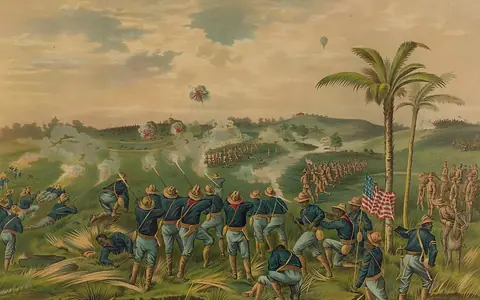
In Cuba, US troops landed near Santiago in June. On 1 July they and Cuban insurgents took El Caney and the San Juan heights against stubborn Spanish resistance. On 3 July the Spanish squadron of Admiral Pascual Cervera was destroyed trying to escape the blockade of Santiago, and the city surrendered in the middle of July.24
Under the Treaty of Paris of 10 December 1898 Spain gave up Cuba, ceded Puerto Rico and Guam to the United States and sold it the Philippines for 20 million dollars. Spain’s empire in the Americas and Asia was gone.25

The Rif War and the disaster of Annual (1921)
Spain looked for a new colonial role in northern Morocco, where it held a protectorate. In July 1921 Rif fighters led by Abd el-Krim overran the advanced posts of General Manuel Fernández Silvestre; the retreat from Annual turned into a rout back to Melilla, Silvestre died, and many thousands of Spanish soldiers were killed. Spain recovered only by joining forces with France: in September 1925 Spanish troops landed at Alhucemas Bay, and in 1926 Abd el-Krim surrendered to the French.26
The Spanish Civil War (1936 to 1939): who fought and who won?
In February 1936 a Popular Front coalition of the left won the general election. On 17 July 1936 army garrisons in Spanish Morocco, the Canary Islands and on the mainland rose against the government of the Republic. The coup failed in much of the country, including Madrid, and turned into a civil war between the Republicans and the rebels, who called themselves Nationalists.27
Both sides looked abroad. Fascist Italy and Nazi Germany sent troops, aircraft and weapons to the Nationalists; the Soviet Union sent equipment and advisers to the Republic, which was also joined by foreign volunteers of the International Brigades, while Britain and France stayed out. On 26 April 1937 aircraft of the German Condor Legion and the Italian air force bombed the Basque town of Guernica, killing hundreds of civilians.28
Led from October 1936 by General Franco, the Nationalists slowly gained ground. On 15 April 1938 they reached the Mediterranean at Vinaròs and cut the Republic in two (see the Aragon offensive), and in the winter of 1938 to 1939 they took Catalonia. Their troops then entered Madrid, and the war ended in Nationalist victory on 1 April 1939.29
Both zones saw mass killing behind the lines. Britannica notes that most Republican violence came early, before the rule of law was restored, while Nationalist violence was a conscious policy of terror; Stanley Payne counts about 56,000 executions by the Republicans and a somewhat higher number by the Nationalists. The total toll is uncertain: Payne puts deaths caused by the war at about 344,000, while Britannica gives recent estimates of 500,000 or fewer. Britannica credits Franco’s victory to the better quality of his army and to steady German and Italian help.30
Famous Spanish military commanders
Alfonso VIII of Castile led the three kings who won at Las Navas de Tolosa. Gonzalo Fernández de Córdoba, the Great Captain, won Naples for the Crown of Aragon at Cerignola and the Garigliano. The Marquis of Pescara commanded the army that took Francis I prisoner at Pavia. Don John of Austria led the Holy League at Lepanto, where Álvaro de Bazán, Marquis of Santa Cruz, held the reserve; the Duke of Medina Sidonia took over the Armada after Santa Cruz’s death. In the 20th century Francisco Franco led the Nationalists from 1936 to victory in 1939.31
Major battles in Spanish history, era by era
Every battle we have written up in which the Crown of Castile, the Crown of Aragon, Navarre, Habsburg or Bourbon Spain, the Spanish Republic or the Nationalists took part, grouped by era and in date order:
The Middle Ages 476 to 1500 · 3
- 1212Battle of Las Navas de Tolosa, 1212Christian coalition: Castile, Aragon, Navarre and crusaders vs Almohad Caliphate
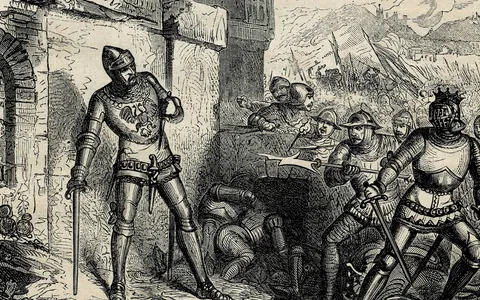
- 1369Battle of Montiel, 1369Henry of Trastámara, with French and Breton companies vs Peter I of Castile, with troops from Granada
On 14 March 1369 Henry of Trastámara and Du Guesclin caught King Peter of Castile on the march near Montiel. Nine days later Peter came out of the castle to a meeting in a tent, and Henry killed him with a dagger.
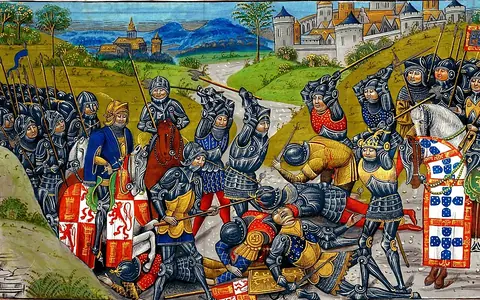
- 1385Battle of Aljubarrota, 1385Kingdom of Portugal vs Crown of Castile
How a small Portuguese army beat a larger Castilian invasion at Aljubarrota in 1385 and secured independence.
The early modern era 1492 to 1789 · 17
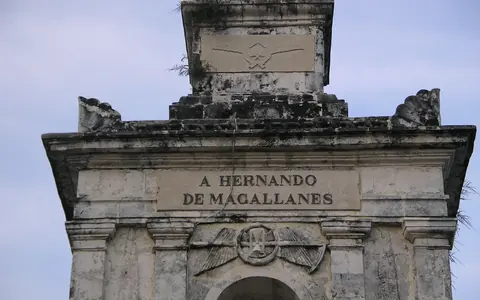
- 1521Battle of Mactan, 1521Spain (Magellan's expedition) vs Mactan (Lapulapu)
On 27 April 1521 warriors of Lapulapu, chief of Mactan, beat a Spanish landing party and killed Ferdinand Magellan. What the thin record really tells us.
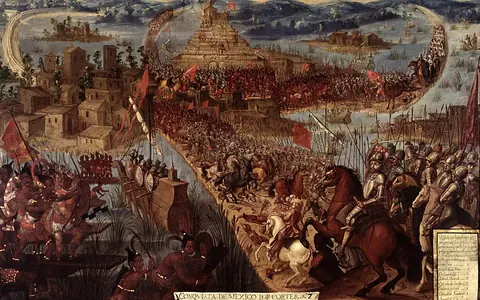
- 1521Siege of Tenochtitlan (1521)Spain and the Tlaxcalans vs Aztec Empire
In 1521 the island city of Tenochtitlan fell after a months-long siege led by Cortés and tens of thousands of Indigenous allies. The story of the Aztec capital's last stand.
- 1522Battle of Bicocca, 1522Kingdom of France, Swiss mercenaries and Venice vs Holy Roman Empire, Spain and the Papal States
On 27 April 1522 unpaid Swiss pikemen forced the French to attack Colonna's sunken road at Bicocca. Four volleys of Spanish arquebus fire ended their legend in half an hour.
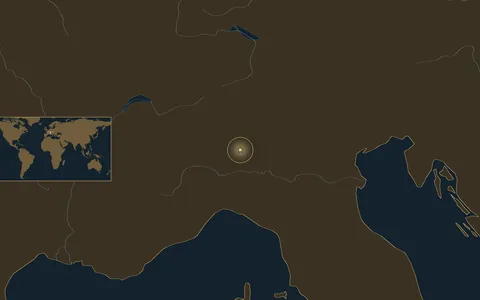
- 1525Battle of Pavia, 1525Kingdom of France vs Charles V: Spain and the Holy Roman Empire
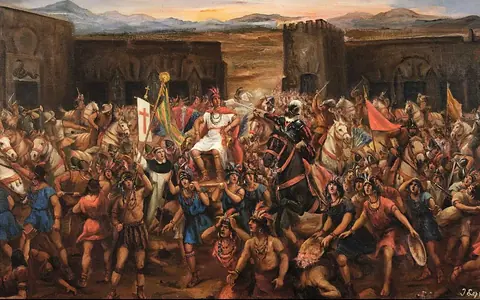
- 1532Battle of Cajamarca, 1532Spain (conquistadors) vs Inca Empire
How 168 Spaniards captured the Inca emperor Atahualpa at Cajamarca in 1532 and doomed an empire.
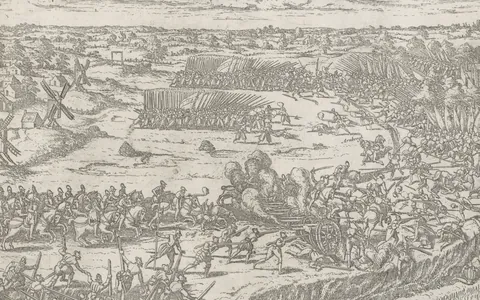
- 1568Battle of Heiligerlee, 1568Dutch rebels vs Spanish crown
On 23 May 1568 Louis of Nassau lured a royal army into the bogs by the monastery of Heiligerlee. Its commander and Louis's brother Adolf both died in the first rebel victory of the Dutch Revolt.
- 1571The Battle of Lepanto, 1571Holy League (Spain, Venice, the Papacy) vs Ottoman Empire
The largest galley battle in history, and the end of Ottoman naval dominance.
- 1586Drake takes Santo Domingo, 1586Kingdom of England vs Spain
On New Year's Day 1586 Francis Drake's soldiers landed by night, took Santo Domingo by midday and spent a month burning it for ransom.
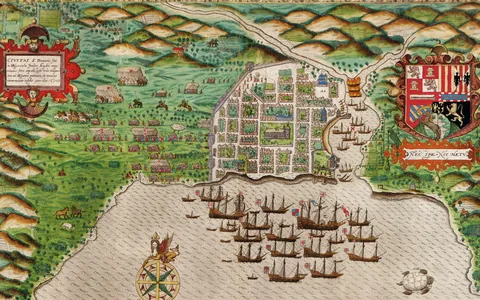
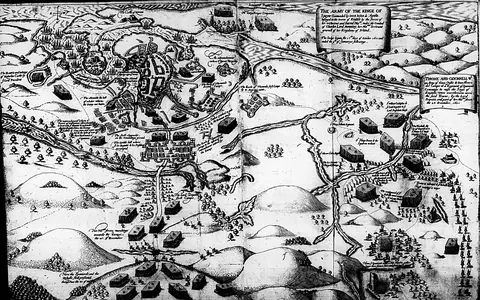
- 1601Battle of Kinsale, 1601Gaelic Irish and Spanish vs English Crown
How the English victory at Kinsale in 1601 broke the Gaelic cause and ended the old Irish order.
- 1622Battle of Wimpfen, 1622Catholic League and Spain vs Baden-Durlach (Protestant side)
On 6 May 1622 Tilly and Córdoba beat the margrave of Baden-Durlach near Wimpfen on the Neckar after a lucky shot blew up the Protestant powder wagons.
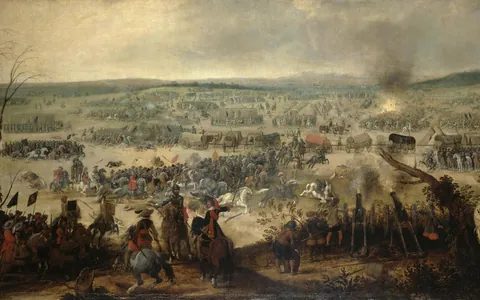
- 1622Battle of Fleurus, 1622Protestant mercenary army vs Spain (Army of Flanders)
On 29 August 1622 Mansfeld and Christian of Brunswick cut through a Spanish army at Fleurus to reach the Dutch; Christian lost his arm but saved Bergen op Zoom.
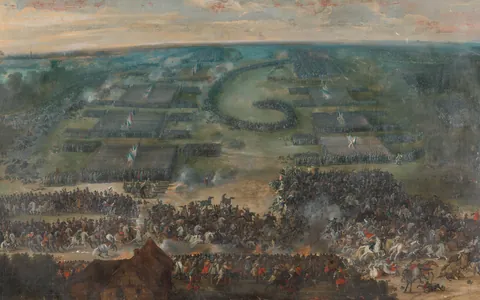
- 1643Battle of Rocroi, 1643Kingdom of France vs Habsburg Spain
A young prince, a doomed square of veteran infantry, and the day France announced itself as the great power of Europe.
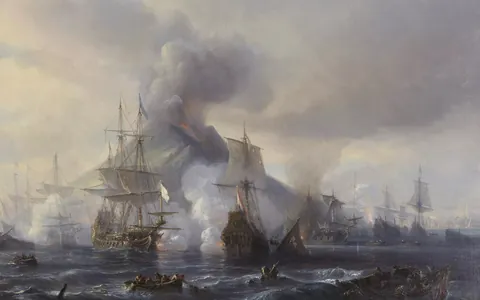
- 1676Battle of Stromboli, 1676Dutch Republic and Spain vs Kingdom of France
On 8 January 1676 Michiel de Ruyter's small Dutch fleet met Duquesne's stronger French squadron off Stromboli. The French had the wind and the fire ships, but not the victory.
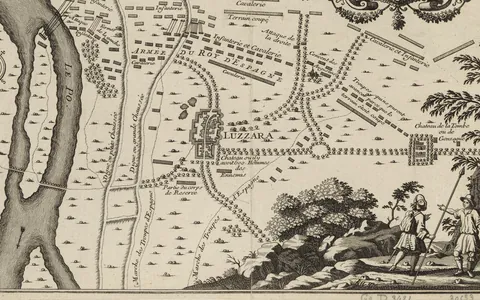
- 1702Battle of Luzzara, 1702Habsburg Monarchy (imperial army in Italy) vs France and Spain
On 15 August 1702 Prince Eugene attacked Vendôme's larger Franco-Spanish army at Luzzara on the Po; after a bloody evening, both sides claimed victory.
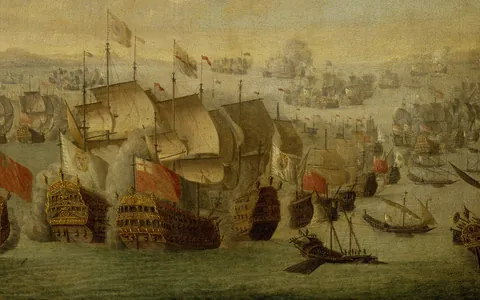
- 1704Battle of Málaga, 1704England and the Dutch Republic vs France and Spain
On 24 August 1704, weeks after Gibraltar fell, the Anglo-Dutch and French fleets fought a day-long line battle off Vélez-Málaga. No ship was lost, both sides drew apart, and Gibraltar stayed allied.
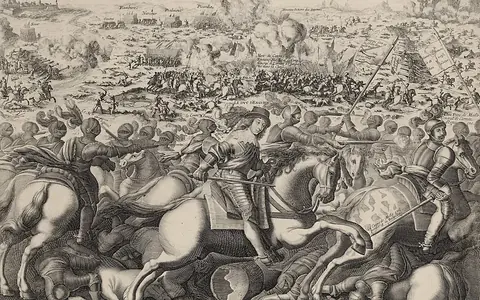
- 1707Battle of Almansa, 1707Bourbon Spain and France vs Grand Alliance (England, Portugal, the Dutch Republic)
On 25 April 1707 an English-born duke led the armies of France and Spain against a French-born earl leading the English. Almansa kept a Bourbon on the Spanish throne.
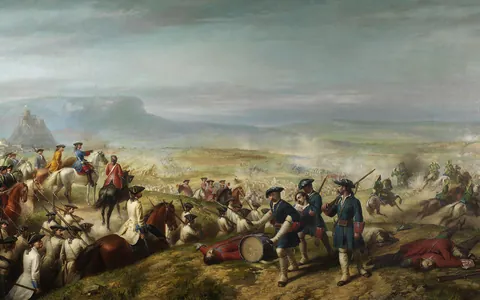
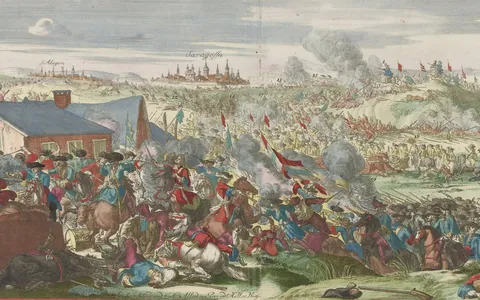
- 1710Battle of Saragossa, 1710Allies of Archduke Charles (Charles III) vs Bourbon Spain and France (Philip V)
On 20 August 1710 the allies of Archduke Charles broke Philip V's army on the hills of Torrero outside Zaragoza. Charles entered the city the next day, but held Aragon only until December.
The Napoleonic era 1789 to 1815 · 8
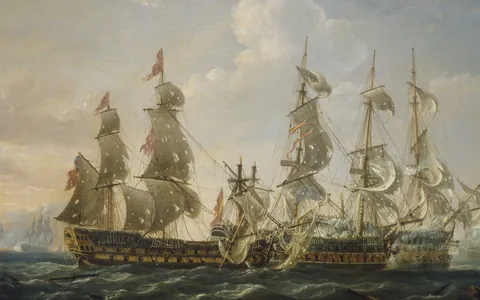
- 1797Battle of Cape St. Vincent, 1797Great Britain vs Spain
On 14 February 1797 Jervis cut a Spanish fleet twice his size in two. Nelson left the line without orders to stop its escape and boarded two Spanish ships, one from the deck of the other.
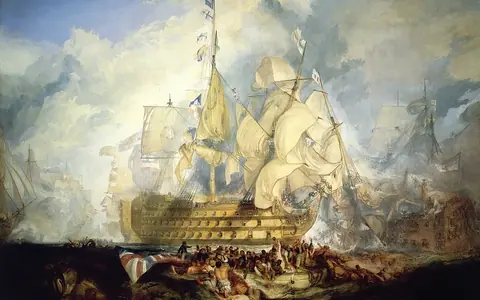
- 1805The Battle of Trafalgar, 1805Great Britain (Royal Navy) vs France and Spain (combined fleet)
Nelson broke the enemy line in two, won the greatest naval victory of the age, and did not live to see it.
- 1808Battle of Medina de Rioseco, 1808French Empire vs Spanish patriot armies of Castile and Galicia
On 14 July 1808 Marshal Bessières routed the larger Spanish armies of Cuesta and Blake at Medina de Rioseco and opened the road to Madrid for King Joseph.
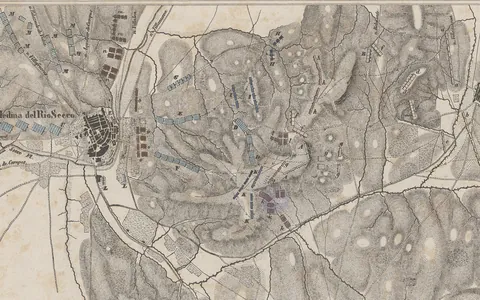
- 1808Battle of Zornoza, 1808French Empire vs Spain
On 31 October 1808 Marshal Lefebvre attacked Blake's Spanish army at Zornoza in the fog, against orders, and won the field but spoiled Napoleon's trap.
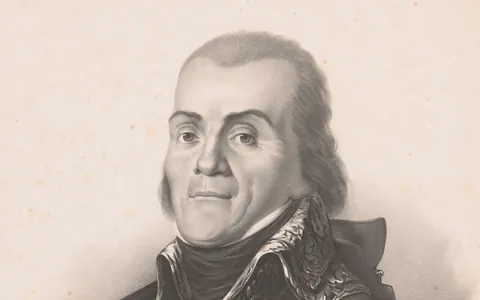
- 1808Battle of Somosierra, 1808French Empire (Polish light horse) vs Kingdom of Spain
How Napoleon's Polish light horse charged the guns at Somosierra in 1808 and opened the road to Madrid.
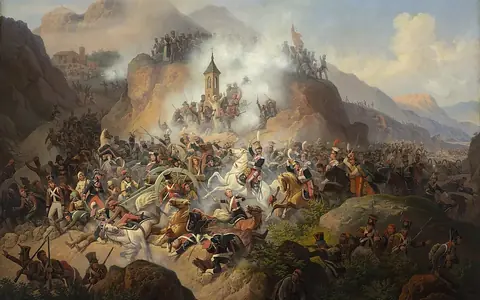
- 1809Battle of Almonacid, 1809French Empire and the Duchy of Warsaw vs Kingdom of Spain (Army of La Mancha)
On 11 August 1809 Sébastiani's corps, with the Polish Division taking the key hill, broke Venegas's Spanish Army of La Mancha at Almonacid south of Toledo.
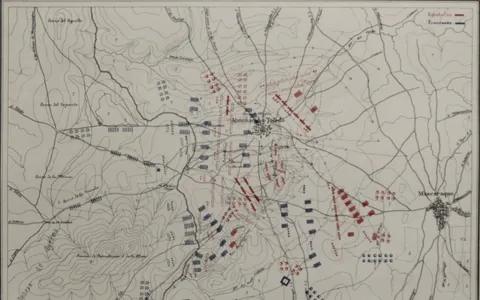
- 1809Battle of Ocaña, 1809French Empire and allies vs Spain
On 19 November 1809 a French army with a Polish division in its front line routed Areizaga's Spanish army, over 50,000 strong, on the plain of Ocaña south of Madrid.
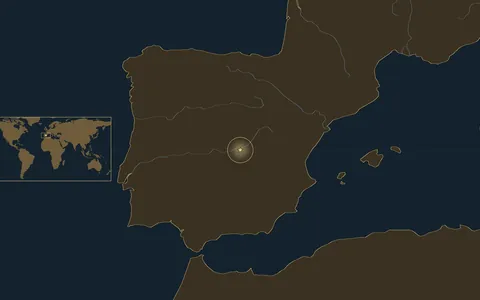
- 1810Battle of Fuengirola, 1810Duchy of Warsaw and France vs Britain and Spain
In October 1810 a Polish garrison in Sohail Castle beat off an Anglo-Spanish landing on the Spanish coast and captured its commander, Lord Blayney.
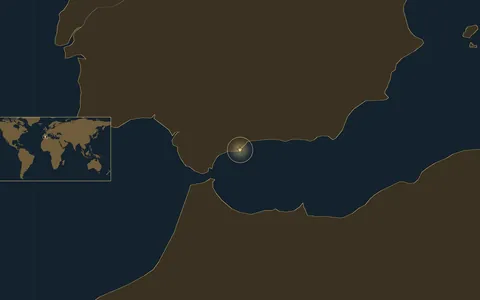
The industrial age 1815 to 1914 · 3
- 1818Battle of Maipú, 1818United Army (Argentina and Chile) vs Spanish royalists
On 5 April 1818, two weeks after a night rout at Cancha Rayada, San Martín's army beat Osorio's royalists south of Santiago. The last Spanish battalions surrendered at Lo Espejo.
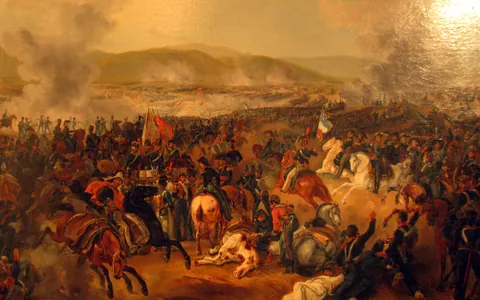
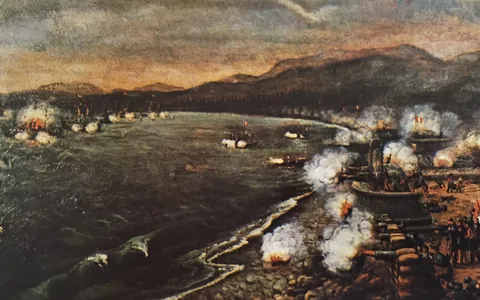
- 1866Battle of Callao, 1866Spain vs Peru
On 2 May 1866 Spain's Pacific squadron fought Peru's shore batteries at Callao for five hours. The admiral was wounded, and both sides still claim the day.
- 1898The Battle of San Juan Hill, 1898United States vs Kingdom of Spain
The charge up the San Juan Heights that made Theodore Roosevelt a national hero.
Other 3
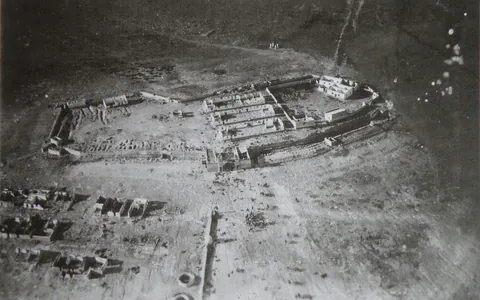
- 1921Battle of Annual, 1921Rif tribes vs Kingdom of Spain (Comandancia General de Melilla)
In July 1921 Abd el-Krim's Riffian fighters routed General Silvestre's Spanish army at Annual in Morocco and massacred it on the retreat to Melilla.
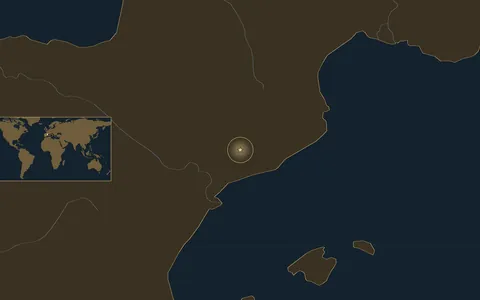
- 1938Catalonia Offensive, 1938 to 1939Nationalists vs Spanish Republic
On 23 December 1938 Franco's armies attacked the Republic's last northern front. Barcelona fell on 26 January, and 400,000 people fled over the Pyrenees.
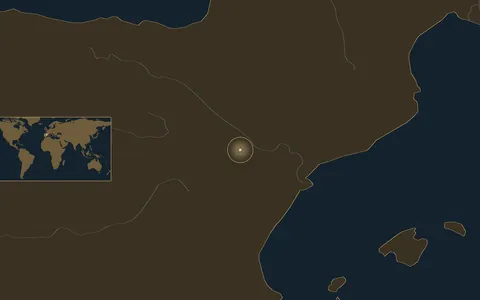
- 1938The Aragon Offensive, 1938Nationalists, with the Italian CTV and the German Condor Legion vs Spanish Republic (Popular Army)
On 7 March 1938 Franco's armies struck the exhausted Republican front in Aragon. Six weeks later Navarrese troops waded into the Mediterranean at Vinaròs, and Republican Spain was cut in two.
Timeline of Spanish military history
- 1212Castile, Aragon and Navarre defeat the Almohads at Las Navas de Tolosa.32
- 1469Ferdinand of Aragon marries Isabella of Castile.33
- 1492Granada surrenders to Ferdinand and Isabella.34
- 1503The Great Captain wins Naples at Cerignola and the Garigliano.35
- 1521Cortés and his indigenous allies take Tenochtitlan.36
- 1525
- 1571
- 1588The Armada fails to join Parma’s army and returns around Scotland and Ireland.39
- 1643
- 1700Charles II dies; Philip V, the first Bourbon king, succeeds.41
- 1707
- 1805
- 1808Napoleon makes Joseph Bonaparte king; a French corps surrenders at Bailén.44
- 1813Wellington’s victory at Vitoria ends French rule in Spain.45
- 1898Defeats at Manila Bay and Santiago de Cuba; the Treaty of Paris.46
- 1921
- 1936Military rising of 17 July begins the Civil War.48
- 1937Bombing of Guernica.49
- 1939Nationalist victory on 1 April.50
Memory and further reading
Some of these wars live on in famous works of art. Miguel de Cervantes, wounded at Lepanto, went on to become a writer. Picasso painted Guernica for the Spanish Pavilion at the Paris International Exposition of 1937; the painting stayed at the Museum of Modern Art in New York until it came to Spain in 1981, and it hangs today in the Reina Sofía museum in Madrid.51
For the other sides of these wars, see our hubs on France, Britain, the United States, Austria and the Ottoman Empire, our guides to the Peninsular War, the War of the Spanish Succession and the Thirty Years’ War, and the rankings of the greatest naval battles and the greatest medieval battles.
Notes
A number in the text points to a note; each note names the works that paragraph draws on, listed in full under Sources.
- Encyclopaedia Britannica, “Reconquista”; EBSCO Research Starters, “Fall of Granada”; Encyclopaedia Britannica, “Spain”; National Army Museum, “Peninsular War”; US Department of State, “The Spanish-American War, 1898”; Encyclopaedia Britannica, “Spanish Civil War”. ↩
- EBSCO Research Starters, “Marriage of Ferdinand and Isabella”; Encyclopaedia Britannica, “Spain”; R. G. Grant, “Battle of Pavia”. ↩
- Mark C. Herman, “Charles II of Spain”; Encyclopaedia Britannica, “War of the Spanish Succession”; EBSCO Research Starters, “War of the Spanish Succession”; Encyclopaedia Britannica, “Spanish Civil War”; Virginia B. Spivey, “Pablo Picasso’s Guernica and Modern War”. ↩
- Encyclopaedia Britannica, “Reconquista”; EBSCO Research Starters, “Fall of Granada”. ↩
- Encyclopaedia Britannica, “Battle of Las Navas de Tolosa”; Joseph P. Byrne, “Battle of Las Navas de Tolosa”. ↩
- Encyclopaedia Britannica, “Reconquista”; EBSCO Research Starters, “Fall of Granada”; EBSCO Research Starters, “Marriage of Ferdinand and Isabella”; Encyclopaedia Britannica, “Gonzalo Fernández de Córdoba”. ↩
- Encyclopaedia Britannica, “Gonzalo Fernández de Córdoba”; Gran Enciclopèdia Catalana, “batalla de Garigliano”; Encyclopaedia Britannica, “Spain”. ↩
- R. G. Grant, “Battle of Pavia”; EBSCO Research Starters, “Battle of Pavia”; Encyclopaedia Britannica, “Spain”. ↩
- Encyclopaedia Britannica, “Spain”; Encyclopaedia Britannica, “Battle of Rocroi”. ↩
- Encyclopaedia Britannica, “Battle of Tenochtitlán”; EBSCO Research Starters, “Smallpox Kills Thousands of Indigenous Americans”. ↩
- Encyclopaedia Britannica, “Battle of Lepanto”; Ernest Tucker, Europe, 1450 to 1789. ↩
- Encyclopaedia Britannica, “Spain”; Encyclopaedia Britannica, “Battle of Lepanto”; Ernest Tucker, Europe, 1450 to 1789. ↩
- Encyclopaedia Britannica, “Spanish Armada”; Royal Museums Greenwich, “Research guide P3”; Encyclopaedia Britannica, “Spain”. ↩
- Royal Museums Greenwich, “Research guide P3”; Encyclopaedia Britannica, “Spanish Armada”. ↩
- Encyclopaedia Britannica, “Spanish Armada”; Encyclopaedia Britannica, “Spain”; Royal Museums Greenwich, “Research guide P3”. ↩
- Encyclopaedia Britannica, “Battle of Rocroi”; Royal Collection Trust, “View of the battle of Rocroi, 1643”. ↩
- Encyclopaedia Britannica, “War of the Spanish Succession”; EBSCO Research Starters, “War of the Spanish Succession”. ↩
- Encyclopaedia Britannica, “War of the Spanish Succession”; EBSCO Research Starters, “War of the Spanish Succession”. ↩
- Encyclopaedia Britannica, “Battle of Trafalgar”; Royal Museums Greenwich, “Battle of Trafalgar background”; Encyclopaedia Britannica, “Peninsular War”; National Army Museum, “Peninsular War”. ↩
- Encyclopaedia Britannica, “Peninsular War”; National Army Museum, “Peninsular War”. ↩
- Encyclopaedia Britannica, “Peninsular War”; National Army Museum, “Peninsular War”. ↩
- US Department of State, “The Spanish-American War, 1898”; Library of Congress, The World of 1898; Library of Congress, The World of 1898. ↩
- US Department of State, “The Spanish-American War, 1898”; Library of Congress, The World of 1898; Patricio Montojo, Annual Reports of the Navy Department for the Year 1898. ↩
- US Department of State, “The Spanish-American War, 1898”; Library of Congress, The World of 1898; Library of Congress, The World of 1898; Encyclopaedia Britannica, “Battle of San Juan Hill”. ↩
- US Department of State, “The Spanish-American War, 1898”; Library of Congress, The World of 1898. ↩
- Encyclopaedia Britannica, “Rif War”; EBSCO Research Starters, “Abd el-Krim”. ↩
- Encyclopaedia Britannica, “Spanish Civil War”; EBSCO Research Starters, “Spanish Civil War Begins”; Anne Frank House, “The German Luftwaffe bombs Guernica”. ↩
- Encyclopaedia Britannica, “Spanish Civil War”; EBSCO Research Starters, “Spanish Civil War Begins”; Anne Frank House, “The German Luftwaffe bombs Guernica”; Virginia B. Spivey, “Pablo Picasso’s Guernica and Modern War”. ↩
- Encyclopaedia Britannica, “Spanish Civil War”; The Virtual Spanish Civil War, “Francoist Soldiers Reach the Mediterranean”; EBSCO Research Starters, “Spanish Civil War Begins”; Anne Frank House, “The German Luftwaffe bombs Guernica”. ↩
- Encyclopaedia Britannica, “Spanish Civil War”; Stanley G. Payne, The Spanish Civil War. ↩
- Encyclopaedia Britannica, “Battle of Las Navas de Tolosa”; Joseph P. Byrne, “Battle of Las Navas de Tolosa”; Encyclopaedia Britannica, “Gonzalo Fernández de Córdoba”; Gran Enciclopèdia Catalana, “batalla de Garigliano”; R. G. Grant, “Battle of Pavia”; EBSCO Research Starters, “Battle of Pavia”; Encyclopaedia Britannica, “Battle of Lepanto”; Ernest Tucker, Europe, 1450 to 1789; Encyclopaedia Britannica, “Spanish Armada”; Royal Museums Greenwich, “Research guide P3”; Encyclopaedia Britannica, “Spanish Civil War”; EBSCO Research Starters, “Spanish Civil War Begins”. ↩
- Encyclopaedia Britannica, “Battle of Las Navas de Tolosa”; Joseph P. Byrne, “Battle of Las Navas de Tolosa”. ↩
- EBSCO Research Starters, “Marriage of Ferdinand and Isabella”; Encyclopaedia Britannica, “Reconquista”. ↩
- Encyclopaedia Britannica, “Reconquista”; EBSCO Research Starters, “Fall of Granada”. ↩
- Encyclopaedia Britannica, “Gonzalo Fernández de Córdoba”; Gran Enciclopèdia Catalana, “batalla de Garigliano”. ↩
- Encyclopaedia Britannica, “Battle of Tenochtitlán”; EBSCO Research Starters, “Smallpox Kills Thousands of Indigenous Americans”. ↩
- R. G. Grant, “Battle of Pavia”; EBSCO Research Starters, “Battle of Pavia”. ↩
- Encyclopaedia Britannica, “Battle of Lepanto”; Ernest Tucker, Europe, 1450 to 1789. ↩
- Encyclopaedia Britannica, “Spanish Armada”; Royal Museums Greenwich, “Research guide P3”. ↩
- Encyclopaedia Britannica, “Battle of Rocroi”; Royal Collection Trust, “View of the battle of Rocroi, 1643”. ↩
- Mark C. Herman, “Charles II of Spain”; Encyclopaedia Britannica, “War of the Spanish Succession”. ↩
- Encyclopaedia Britannica, “War of the Spanish Succession”; EBSCO Research Starters, “War of the Spanish Succession”. ↩
- Encyclopaedia Britannica, “Battle of Trafalgar”; Royal Museums Greenwich, “Battle of Trafalgar background”. ↩
- Encyclopaedia Britannica, “Peninsular War”; National Army Museum, “Peninsular War”. ↩
- Encyclopaedia Britannica, “Peninsular War”; National Army Museum, “Peninsular War”. ↩
- US Department of State, “The Spanish-American War, 1898”; Library of Congress, The World of 1898. ↩
- Encyclopaedia Britannica, “Rif War”; EBSCO Research Starters, “Abd el-Krim”. ↩
- Encyclopaedia Britannica, “Spanish Civil War”; Anne Frank House, “The German Luftwaffe bombs Guernica”. ↩
- Anne Frank House, “The German Luftwaffe bombs Guernica”; Virginia B. Spivey, “Pablo Picasso’s Guernica and Modern War”. ↩
- Encyclopaedia Britannica, “Spanish Civil War”; Anne Frank House, “The German Luftwaffe bombs Guernica”. ↩
- Ernest Tucker, Europe, 1450 to 1789; Encyclopaedia Britannica, “Battle of Lepanto”; Museo Nacional Centro de Arte Reina Sofía, “Guernica”; Virginia B. Spivey, “Pablo Picasso’s Guernica and Modern War”. ↩
Sources
- Encyclopaedia Britannica, “Reconquista”.
- EBSCO Research Starters, “Fall of Granada”.
- Encyclopaedia Britannica, “Spain: Spain under the Habsburgs”.
- National Army Museum, “Peninsular War”.
- US Department of State, Office of the Historian, “The Spanish-American War, 1898”.
- Encyclopaedia Britannica, “Spanish Civil War”.
- EBSCO Research Starters, “Marriage of Ferdinand and Isabella”.
- R. G. Grant, Encyclopaedia Britannica, “Battle of Pavia”.
- Mark C. Herman, EBSCO Research Starters, “Charles II of Spain”.
- Encyclopaedia Britannica, “War of the Spanish Succession”.
- EBSCO Research Starters, “War of the Spanish Succession”.
- Virginia B. Spivey, Digital Public Library of America, 2018, “Pablo Picasso’s Guernica and Modern War”.
- Encyclopaedia Britannica, “Battle of Las Navas de Tolosa”.
- Joseph P. Byrne, EBSCO Research Starters, “Battle of Las Navas de Tolosa”.
- Encyclopaedia Britannica, “Gonzalo Fernández de Córdoba”.
- Gran Enciclopèdia Catalana, “batalla de Garigliano” (in Catalan).
- EBSCO Research Starters, “Battle of Pavia”.
- Encyclopaedia Britannica, “Battle of Rocroi”.
- Encyclopaedia Britannica, “Battle of Tenochtitlán”.
- EBSCO Research Starters, “Smallpox Kills Thousands of Indigenous Americans”.
- Encyclopaedia Britannica, “Battle of Lepanto”.
- Ernest Tucker, “Lepanto, Battle of”, Europe, 1450 to 1789: Encyclopedia of the Early Modern World, and J. B. Heffernan, New Catholic Encyclopedia (Gale), on Encyclopedia.com.
- Encyclopaedia Britannica, “Spanish Armada”.
- Royal Museums Greenwich, “Research guide P3: The charts of the Spanish Armada by Robert Adams”.
- Royal Collection Trust, military maps, “View of the battle of Rocroi, 1643”.
- Encyclopaedia Britannica, “Battle of Trafalgar”.
- Royal Museums Greenwich, “Battle of Trafalgar background”.
- Encyclopaedia Britannica, “Peninsular War”.
- Library of Congress, The World of 1898, “Chronology of Cuba in the Spanish-Cuban-American War”.
- Library of Congress, The World of 1898: The Spanish-American War, “Introduction”.
- Patricio Montojo, official Spanish report on the battle of Cavite, in Annual Reports of the Navy Department for the Year 1898, Naval History and Heritage Command, “Official Spanish Report on Battle of Manila Bay”.
- Encyclopaedia Britannica, “Battle of San Juan Hill”.
- Encyclopaedia Britannica, “Rif War”.
- EBSCO Research Starters, “Abd el-Krim”.
- EBSCO Research Starters, “Spanish Civil War Begins”.
- Anne Frank House, “The German Luftwaffe bombs Guernica”.
- The Virtual Spanish Civil War (York University), “Francoist Soldiers Reach the Mediterranean”.
- Stanley G. Payne, The Spanish Civil War (Cambridge University Press, 2012), “Conclusion: Costs and Consequences”.
- Museo Nacional Centro de Arte Reina Sofía, “Guernica”.






