

What is the military history of the Ottoman Empire?
It is the history of the wars of a multiethnic dynastic empire founded by Osman I in Anatolia around 1300. Its armies took Constantinople in 1453, won at Mohács in 1526 and besieged Vienna twice, then lost ground to the Habsburgs and Russia. Defeated in World War I, the empire ended in 1922.1
For more than six centuries the Ottoman Empire was one of the great military powers of Europe and the Middle East. This guide follows its wars era by era, from a small frontier principality to an empire on three continents, and gives its defeats the same weight as its victories. It treats the empire as an actor with its own aims, not as a backdrop to the history of its neighbors. Start with our battle guides to the fall of Constantinople (1453), the Battle of Mohács (1526), the Battle of Lepanto (1571), the Battle of Vienna (1683) and the Gallipoli campaign (1915).
The empire's wars run through the history of Hungary, the Balkans, Russia, Iran, the Arab world and Poland. Polish readers will find Varna, Chocim and Vienna here; our hubs on the Great Turkish War, the Crusades and the military history of Poland tell those stories from the other side.
What was the Ottoman Empire?
The Ottoman Empire takes its name from Osman I, a Turkmen chief whose principality in northwestern Anatolia grew into the dynasty's state around 1300. It was a dynastic empire rather than a nation state: at its height it ruled most of southeastern Europe, much of the Middle East and North Africa as far west as Algeria. It came to an end in 1922, when the Turkish Republic and other successor states replaced it.2
Its subjects were Muslims, Christians and Jews of many languages. On the eve of World War I more than 20 million people lived in the empire, among them Turks, Arabs, Kurds, Greeks and Armenians, and for centuries its armies had drawn soldiers from Balkan Christians as well as from Muslims. This page therefore speaks of the Ottoman Empire, not of Turkey, until 1923.3

How was the Ottoman army organized? Janissaries and timariots
Late in the 14th century the sultans built a standing force bound to them personally, the kapıkulu, or "slaves of the Porte". Its infantry, the Janissaries, was a permanent, salaried corps that served in war and garrisoned the frontier and the capital in peace, and it became the most important element of the army.4
From the 15th century the corps was filled through the devşirme, a levy of Christian boys from the Balkan provinces who were converted to Islam, trained and taken into the sultan's lifelong service. The ablest rose to the highest offices of state. By the 16th century most Janissaries carried firearms, and their musketry decided battles.5
Beside them stood the provincial cavalry. A timar was a grant of land revenues; in return its holder, a sipahi, rode to war with armed retainers in proportion to his income. These timariot horsemen formed the core of the provincial army.6

How did the Ottoman Empire rise? From Bursa to Kosovo
Orhan, Osman's son, took Bursa from the Byzantines in the 1320s and made the principality a real state. In 1354 Ottoman forces established a permanent base at Gallipoli, on the European shore of the Dardanelles, and Murad I then took Adrianople (Edirne) and made it his capital, the base for conquests across Thrace.7
On 28 June 1389, at Kosovo Polje, Murad defeated the army of the Serbian prince Lazar, at the cost of his own life. His son Bayezid I subdued Bulgaria in 1393 and in 1396 destroyed a crusading army of Hungarian, French and other knights at Nicopolis on the Danube.8
Ankara, Varna and the fall of Constantinople
Expansion nearly ended in disaster. In 1402 the Central Asian conqueror Timur crushed Bayezid's army near Ankara and took the sultan prisoner. Bayezid died in captivity the following year, and his sons fought a decade-long civil war over what was left, before the empire was reunited and resumed its expansion.9
A new crusade tried to drive the Ottomans out of Europe. On 10 November 1444, at Varna on the Black Sea, the army of Sultan Murad II defeated a largely Hungarian force led by Władysław III, king of both Poland and Hungary. The young king was killed in a rash charge at the Ottoman center, and his army collapsed in panic.10
Murad's son Mehmed II then laid siege to Constantinople in April 1453. On 29 May his troops broke into the city, ending the Byzantine Empire. As Istanbul, the city remained the imperial capital until the end of the empire. Read more in our guides to the siege of Constantinople and Mehmed II the Conqueror.11
The Ottoman Empire at its height: Selim I and Süleyman
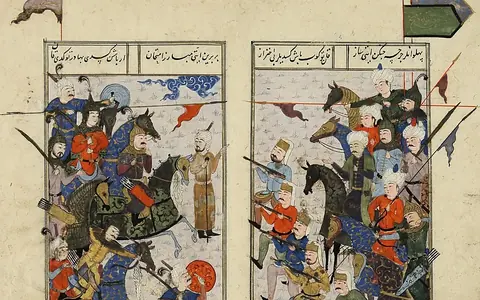
Selim I (1512 to 1520) turned east. On 23 August 1514 his army, with field artillery and musket-armed Janissaries, routed the Safavid cavalry of Shah Ismail I at Chaldiran and briefly occupied Tabriz. In 1516 and 1517 Selim defeated the Mamluk sultanate at Marj Dabiq near Aleppo and Raydaniyya near Cairo, bringing Syria, Egypt and the holy cities of Mecca and Medina under Ottoman rule.12
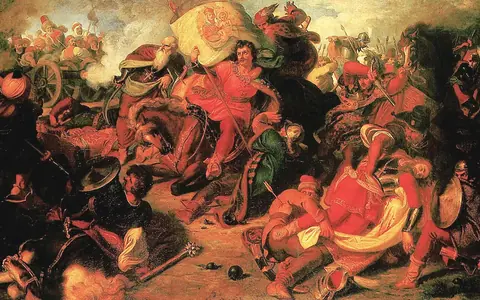
His son Süleyman I, known in Europe as "the Magnificent", ruled from 1520 to 1566. He took Belgrade in 1521 and forced the Knights of Saint John out of Rhodes in 1522. In 1526 his army destroyed the Hungarian army at Mohács and went on to take Buda. In 1529 Süleyman besieged Vienna, but the city held, and the Ottomans had to withdraw.13
In the east his armies took Mesopotamia from the Safavids in 1534, and in North Africa governors named by the sultan ruled Algiers, Tunis and Tripoli. When Süleyman died in 1566, the empire was a world power. Read more in our guide to Süleyman the Magnificent.14
The Ottoman navy: Preveza and Lepanto
Under Süleyman the Ottomans became a major naval power. Hayreddin Barbarossa, a corsair who had taken Algiers, became the sultan's grand admiral, and on 28 September 1538 his fleet defeated an allied Christian fleet under Andrea Doria at Preveza, off western Greece. For about three decades the eastern Mediterranean was an Ottoman sea.15
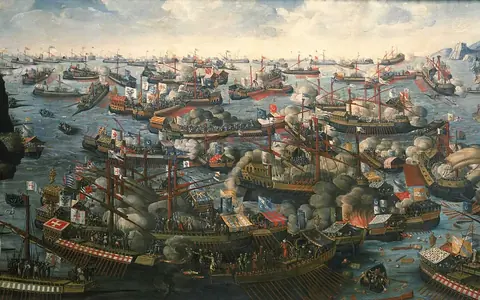
That supremacy ended at Lepanto on 7 October 1571, when the Holy League of Spain, Venice and the Papacy destroyed most of the Ottoman galley fleet. The empire rebuilt almost the entire fleet within a year and later took Crete from Venice, in 1669.16
The Ottoman wars with Poland: Cecora and Chocim
Rivalry over Moldavia brought the empire into war with the Polish-Lithuanian Commonwealth. In 1620 a Polish army under Hetman Stanisław Żółkiewski was destroyed at Cecora, and Żółkiewski was killed. In 1621 Sultan Osman II besieged the fortified camp of the Commonwealth army and its Cossack allies under Petro Sahaidachny at Chocim (Khotyn) on the Dniester. After weeks of failed assaults he agreed to peace.17
Osman II blamed the Janissaries for the failure and tried to curb them by cutting their pay; in 1622 they deposed and killed him. Their power over the sultans became a lasting problem for the state.18
Fifty years later the empire struck again. In 1672 it took the fortress of Kamieniec Podolski, and the Treaty of Buczacz made the Commonwealth pay tribute. On 11 November 1673 Hetman Jan Sobieski stormed the Ottoman camp at Chocim and routed its army; the victory helped make him king in 1674. Our guides cover Chocim 1621 and Chocim 1673.19
Vienna 1683 and the Great Turkish War
In the second half of the 17th century the Köprülü family gave the empire its grand viziers for more than forty years, starting with Köprülü Mehmed Pasha in 1656 and his son Fazıl Ahmed Pasha. They restored the state's finances and army, ended the long war with Venice by taking Crete in 1669 and won lands in Ukraine from Poland. Emboldened, Grand Vizier Kara Mustafa Pasha marched on the Habsburg capital and besieged Vienna from July 1683. On 12 September a relief army of Polish, imperial and German troops led by King Jan III Sobieski and Charles of Lorraine broke the siege. It was the high-water mark of Ottoman expansion in Europe. See our guide to the Battle of Vienna.20
A Holy League of Austria, Poland and Venice, later joined by Russia, fought the empire for sixteen years. After Prince Eugene of Savoy won a decisive victory over the sultan's army at Zenta in 1697, the Treaty of Karlowitz (26 January 1699) gave Hungary and Transylvania to Austria, the Peloponnese to Venice and Podolia back to Poland. It was the first treaty in which the Ottomans acknowledged defeat. Our hub on the Great Turkish War tells the whole war.21
Why did the Ottomans lose to Russia? The 18th century wars
In the 18th century the main threat came from Russia, often in alliance with Austria. Peter the Great set out to drive the Ottomans from the northern shore of the Black Sea, and for the next two centuries Russia and the empire fought war after war over the Black Sea coast, the Danube lands and the Caucasus.22
The war of 1768 to 1774 was decisive. Russian armies overran Moldavia and defeated the Ottomans in Bulgaria, and the humiliating Treaty of Küçük Kaynarca made the Crimean khanate independent of the sultan and gave Russia a vague right to protect his Orthodox subjects.23
The sultans answered with reform. Selim III (1789 to 1807) built a new European-style army, the nizam-ı cedid ("new order"), but a revolt in 1807 overthrew him. In June 1826 Mahmud II announced a new army; when the Janissaries mutinied, he had their barracks shelled and destroyed the corps.24
Navarino, Egypt and the Crimean War
During the Greek War of Independence, Egypt, still nominally under the sultan, sent its fleet and army to help put down the revolt. Britain, France and Russia intervened, and on 20 October 1827 their squadrons destroyed the Ottoman and Egyptian fleets at Navarino, the scene of our cover picture. The empire recognized Greek independence in 1832. Then Muhammad Ali, the governor of Egypt, turned on the sultan: in 1831 his army invaded Syria, and at Konya it routed the Ottomans and drove deep into Anatolia.25
In the Crimean War (1853 to 1856) the Ottoman Empire fought Russia with Britain and France as allies, and in 1853 Tsar Nicholas I called it "the sick man of Europe", a name that stuck. A new war with Russia began in 1877. The long Ottoman defense of Plevna (Pleven) from July to December 1877 could not prevent defeat. The Treaty of San Stefano (March 1878) cut Ottoman Europe down to eastern Thrace and created a large Bulgaria, but the other powers revised it at the Congress of Berlin: Serbia, Montenegro and Romania became independent, a smaller Bulgaria became autonomous, and Cyprus passed under British rule.26
The Balkan Wars and World War I
In July 1908 army officers of the Committee of Union and Progress, the Young Turks, forced the sultan to restore the constitution. Defeat followed defeat: Austria-Hungary at once annexed Bosnia and Herzegovina, Italy seized Libya in 1911, and in October 1912 Montenegro, Bulgaria, Serbia and Greece attacked. In January 1913 Enver Bey led a coup that brought the Unionists back to power. By the end of 1913 the empire had lost all of its European lands except eastern Thrace, although it recovered Edirne in the second Balkan war.27

On 2 August 1914 the government signed a secret alliance with Germany, and the bombardment of Russian Black Sea ports at the end of October brought the empire into World War I. The Ottoman army mobilized about 2.8 million men and fought in the Caucasus, at the Dardanelles, in Mesopotamia and in Sinai and Palestine. In the winter of 1914 to 1915 Enver Pasha's offensive against the Russians at Sarıkamış ended in staggering losses.28
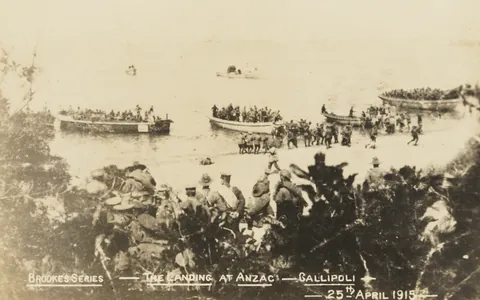
At Gallipoli the empire won its greatest victory of the war. On 18 March 1915 mines and coastal guns sank three Allied battleships trying to force the Dardanelles, and from 25 April Ottoman troops held the Allied landings, with Lieutenant Colonel Mustafa Kemal leading the counterattacks. The Allies, about half a million men in all, evacuated the peninsula by 9 January 1916; losses were heavy on both sides and are still disputed.29

In Mesopotamia a British and Indian force under Charles Townshend, besieged at Kut, surrendered in April 1916. But the Arab Revolt of Sharif Husayn of Mecca began in June 1916, and British forces advancing from Egypt took Jerusalem in December 1917. On 30 October 1918 the empire signed the Armistice of Mudros. Hundreds of thousands of its soldiers had died.30
The Armenian genocide
From the spring of 1915 the government controlled by the Committee of Union and Progress deported and massacred the empire's Armenian population of about 1.5 million. Armenians were killed in local massacres or died of starvation and exposure on deportation marches into the Syrian desert. Estimates of the dead range from about 600,000 to 1.5 million. These events are widely described as a genocide; the Republic of Turkey has rejected that term.31
How did the Ottoman Empire end?
After Mudros the Allies occupied Istanbul. The sultan's government signed the Treaty of Sèvres in August 1920, but the nationalist movement led by Mustafa Kemal, with its own government in Ankara, rejected the treaty and fought on. In November 1922 the nationalist assembly abolished the sultanate, and Mehmed VI, the last sultan, left the country.32
The Treaty of Lausanne (24 July 1923) recognized the borders of the new Turkish state, and on 29 October 1923 the Republic of Turkey was proclaimed. It succeeded the empire but was not the same state; Syria, Iraq, the Balkan states and others are Ottoman successors too.33
Ottoman commanders
Many of the empire's great commanders were the sultans themselves: Murad I, killed at Kosovo; Mehmed II, the conqueror of Constantinople; Selim I, the victor of Chaldiran; and Süleyman I, who led his armies to Mohács and Vienna. At sea Hayreddin Barbarossa won Preveza. Grand viziers led the later campaigns, among them Kara Mustafa Pasha at Vienna in 1683. In World War I Enver Pasha, the minister of war, led the Sarıkamış offensive, the German general Otto Liman von Sanders commanded the Fifth Army at Gallipoli, and Mustafa Kemal, later Atatürk, made his name there. Our ranking of the greatest commanders of the Ottoman Empire compares them.34
Major battles of the Ottoman Empire, era by era
Every battle we have written up in which the Ottoman Empire fought, its victories and its defeats, grouped by era and in date order. For a ranked shortlist, see the greatest battles of the Ottoman Empire and test yourself with the Ottoman battles quiz.
The Middle Ages 476 to 1500 · 6
- 1371Battle of the Maritsa, 1371Ottoman Empire vs Serbian lords of Macedonia
On 26 September 1371 an Ottoman night attack destroyed the army of King Vukašin and Despot Uglješa at Chernomen on the Maritsa; both brothers died.
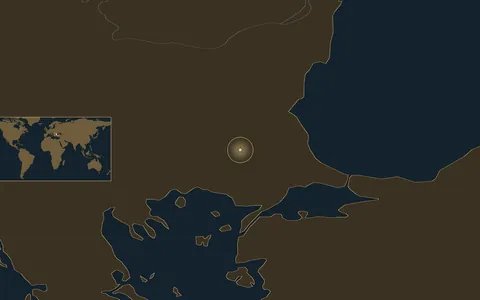
- 1395Battle of Rovine, 1395Wallachia vs Ottoman Empire
Mircea the Elder of Wallachia fought Sultan Bayezid I at Rovine in 1394 or 1395. Two Serbian lords died for the sultan, and historians still argue over who won.
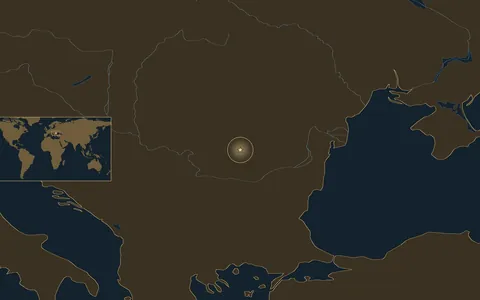
- 1396The Battle of Nicopolis, 1396Crusader coalition (Hungary, France, Burgundy) vs Ottoman Empire
How Sultan Bayezid I destroyed a Franco-Hungarian crusade on the Danube and confirmed Ottoman power in the Balkans.
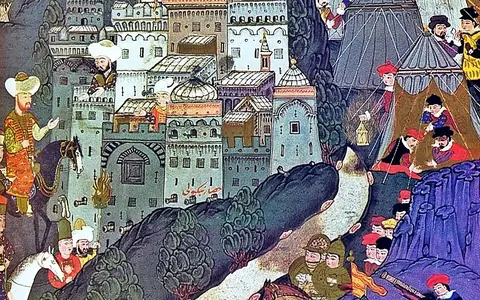
- 1453The Fall of Constantinople, 1453Ottoman Empire vs Byzantine Empire
How Mehmed II's giant cannon broke the thousand-year walls and ended the Byzantine Empire.

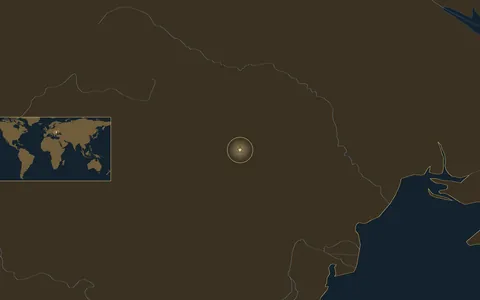
- 1476Battle of Valea Albă, 1476Principality of Moldavia vs Ottoman Empire, with Wallachian troops
On 26 July 1476 Mehmed II stormed Stephen the Great's fortified camp at Valea Albă in Moldavia, but the fortresses held and the sultan withdrew.
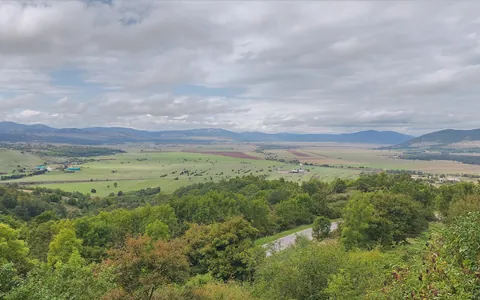
- 1493Battle of Krbava Field, 1493Kingdom of Croatia (in union with Hungary) vs Ottoman Empire
On 9 September 1493 Ban Emerik Derenčin led a Croatian army into the open on Krbava Field and was destroyed by Hadum Jakub Pasha's Ottomans. Course, losses and memory.
The early modern era 1492 to 1789 · 12
- 1514Battle of Chaldiran, 1514Ottoman Empire vs Safavid Persia
How Ottoman firepower beat the Safavid cavalry at Chaldiran in 1514 and drew a lasting frontier across the Middle East.
- 1526Battle of Mohács, 1526Ottoman Empire vs Kingdom of Hungary
How Suleiman the Magnificent destroyed the kingdom of Hungary at Mohács in 1526 in under two hours.
- 1571The Battle of Lepanto, 1571Holy League (Spain, Venice, the Papacy) vs Ottoman Empire
The largest galley battle in history, and the end of Ottoman naval dominance.
- 1595Battle of Cecora, 1595Polish-Lithuanian Commonwealth vs Crimean Khanate and Ottoman troops
In October 1595 Jan Zamoyski's army held a fortified camp on the Prut against the Crimean khan, and the khan agreed to recognize Poland's candidate as ruler of Moldavia.
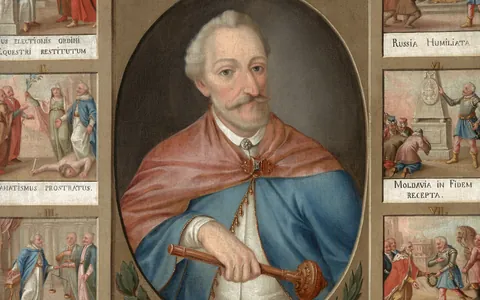
- 1621Battle of Khotyn, 1621Polish-Lithuanian Commonwealth and Cossacks vs Ottoman Empire
How a Polish-Lithuanian and Cossack army held Khotyn in 1621 against Sultan Osman II, and how the failure cost him his throne.
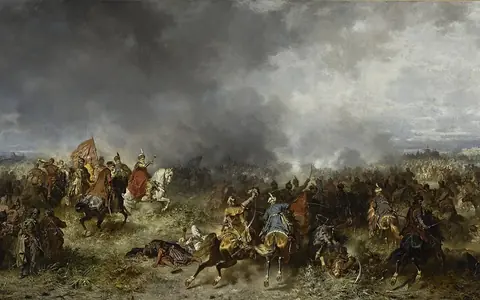
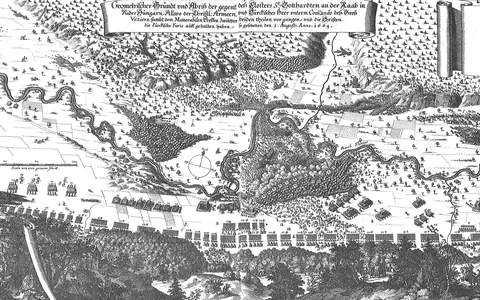
- 1664Battle of Saint Gotthard, 1664Habsburg Monarchy, Imperial Army of the Reich, League of the Rhine and France vs Ottoman Empire
On 1 August 1664 Montecuccoli's Imperial, German and French troops rallied from a rout and drove an Ottoman bridgehead back into the flooded Rába.
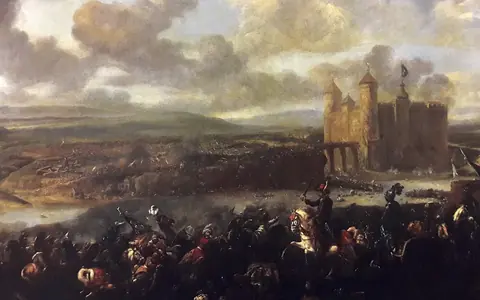
- 1673The Battle of Khotyn, 1673Polish-Lithuanian Commonwealth vs Ottoman Empire
After a freezing night, the hussars rode through the breach.
- 1683The Siege of Vienna, 1683Poland, Holy Roman Empire and German states vs Ottoman Empire
A starving city, then the winged hussars came down the mountain. The day the Ottoman advance into Europe turned.
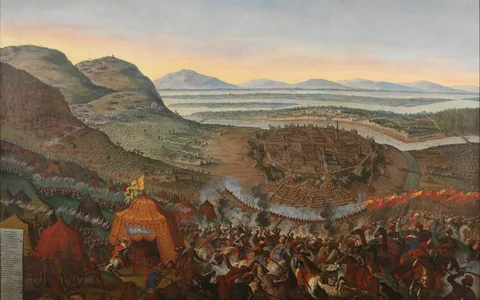
- 1691Battle of Slankamen, 1691Holy Roman Empire (Habsburg army) vs Ottoman Empire
On 19 August 1691 Louis of Baden broke an Ottoman army twice his size at Slankamen on the Danube; Grand Vizier Fazıl Mustafa Pasha fell in the battle.
- 1697Battle of Zenta, 1697Holy Roman Empire (Habsburg army) vs Ottoman Empire
On 11 September 1697 Prince Eugene caught the Ottoman army astride the Tisza at Zenta and destroyed the half still on his bank; the grand vizier died there.
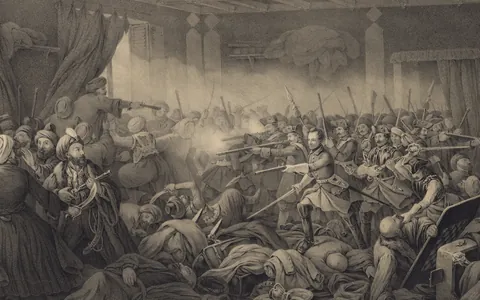
- 1713The Skirmish at Bender, 1713Ottoman Empire vs Charles XII of Sweden
On 1 February 1713, after years as the Sultan's guest, Charles XII of Sweden and a few dozen men fought off Ottoman troops in his house near Bender until it was set on fire.
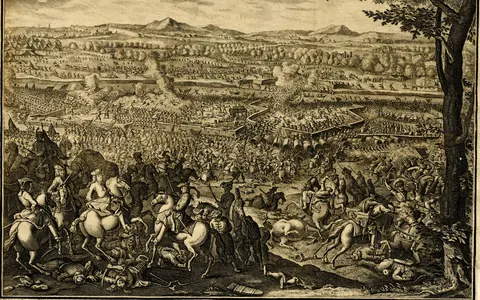
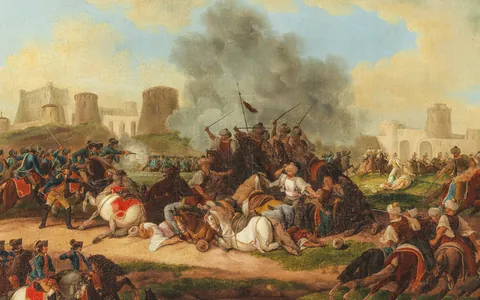
- 1716Battle of Petrovaradin, 1716Habsburg Monarchy vs Ottoman Empire
On 5 August 1716 Prince Eugene routed the Ottoman army camped before Petrovaradin in five hours; Grand Vizier Ali Pasha was shot while leading a charge.
The Napoleonic era 1789 to 1815 · 1
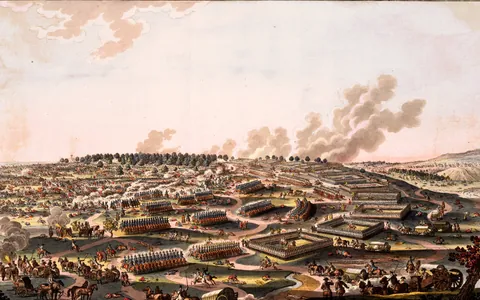
- 1789Battle of Rymnik, 1789Russia and Austria vs Ottoman Empire
On 22 September 1789 Suvorov's Russians and Coburg's Austrians made a night march and stormed the camps of a far larger Ottoman army on the Rymnik river in Wallachia.
The industrial age 1815 to 1914 · 6
- 1825Third siege of Missolonghi, 1825 to 1826Greek revolutionaries vs Ottoman Empire and Egypt
From April 1825 Ottoman and Egyptian armies besieged Missolonghi for a year. On the night before Palm Sunday 1826 its starving people tried to break out, and the massacre shocked Europe.
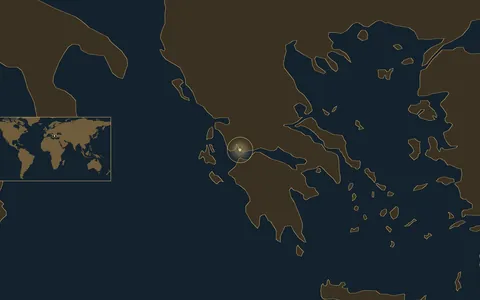
- 1832Battle of Konya, 1832Egypt (army of Muhammad Ali) vs Ottoman Empire
On 21 December 1832 Ibrahim Pasha's Egyptian army routed the larger Ottoman army at Konya and captured the grand vizier; the road to Istanbul lay open.
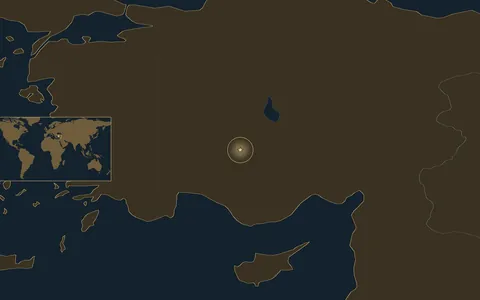
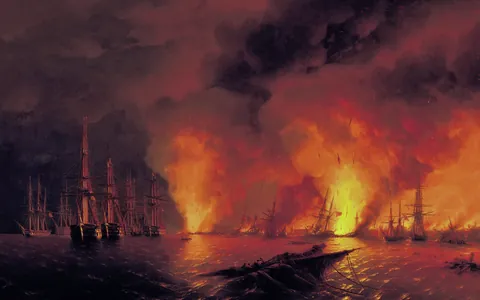
- 1853Battle of Sinop, 1853Russian Empire (Black Sea Fleet) vs Ottoman Empire
On 30 November 1853 Nakhimov's Russian squadron came out of the fog at Sinop and burned the Ottoman squadron at anchor; the outcry helped bring Britain into the war.
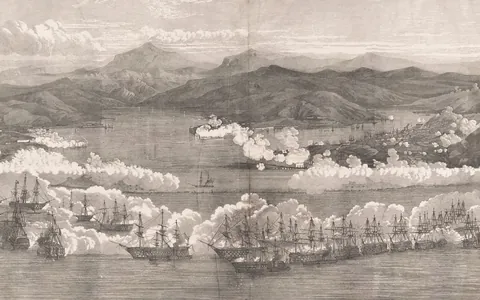
- 1854Siege of Sevastopol, 1854Britain, France and the Ottoman Empire vs Russian Empire
On 17 October 1854 the Allies opened their first bombardment of Sevastopol. Two magazines exploded, Admiral Kornilov was killed, and the Crimean War became an eleven-month siege.
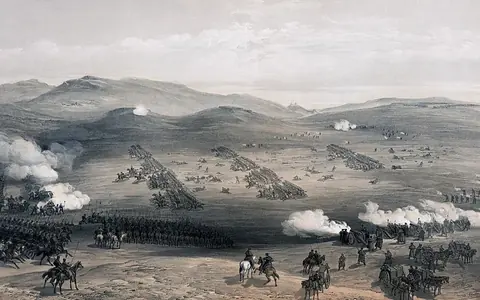
- 1854The Battle of Balaclava, 1854Britain, France and the Ottomans vs Russian Empire
The Crimean War clash of 25 October 1854 that gave history the Thin Red Line and the tragic Charge of the Light Brigade, immortalized by Tennyson.
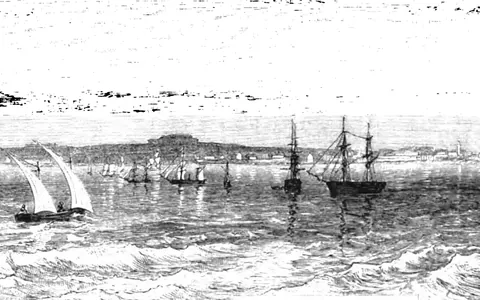
- 1855Battle of Eupatoria, 1855Ottoman Empire, with a French detachment and British, French and Ottoman warships vs Russian Empire
At daybreak on 17 February 1855 a Russian army with eighty guns struck the Ottoman garrison of Eupatoria. Behind half-finished earthworks, with warships firing from the bay, Omer Pasha's troops beat off three assaults.
World War I 1914 to 1919 · 1
- 1915The Gallipoli Campaign, 1915Allies (British Empire, ANZAC, France) vs Ottoman Empire
How the Allied attempt to force the Dardanelles in 1915 turned into a grinding stalemate and gave birth to the ANZAC legend.
Ottoman Empire timeline
- 1354Ottoman forces make Gallipoli a permanent base in Europe.35
- 1389Murad I defeats the Serbs at Kosovo and is killed.36
- 1402Timur defeats and captures Bayezid I at Ankara.37
- 1444Murad II defeats Władysław III at Varna.38
- 1453Mehmed II takes Constantinople.39
- 1514
- 1516 to 1517Conquest of Mamluk Syria and Egypt.41
- 1526
- 1529First Ottoman siege of Vienna.43
- 1538Barbarossa wins at Preveza.44
- 1571
- 1621
- 1683Kara Mustafa's siege of Vienna is broken.47
- 1699Treaty of Karlowitz.48
- 1774Treaty of Küçük Kaynarca with Russia.49
- 1826Mahmud II destroys the Janissaries.50
- 1827Allied fleets destroy the Ottoman and Egyptian fleets at Navarino.51
- 1853 to 1856The Crimean War.52
- 1912 to 1913The Balkan Wars.53
- 1915
- 1918Armistice of Mudros.55
- 1922The sultanate is abolished.56
How is the Ottoman Empire remembered?
European writers called the empire "the sick man of Europe" in the 19th century, and older histories describe a long decline after Süleyman. The record is more mixed: in the 17th century the empire could still take Crete and Podolia, rebuild its fleet after Lepanto and march on Vienna. In the Turkish Republic, historian Yücel Yanıkdağ notes, the memory of the War of Independence long overshadowed the Ottoman World War I, and Gallipoli came to be treated as its prototype.57
For the empire's wars seen from the other side, see our hubs on Russia, Poland, the Eastern Front of World War I and the wars of the Polish-Lithuanian Commonwealth, and the story of the long frontier war in Croatia.
Notes
A number in the text points to a note; each note names the works that paragraph draws on, listed in full under Sources.
- Encyclopaedia Britannica, “Ottoman Empire”; Library of Congress, Turkey; Encyclopaedia Britannica, “Battle of Mohács”; Encyclopaedia Britannica, “Ottoman Empire”. ↩
- Encyclopaedia Britannica, “Ottoman Empire”; Library of Congress, Turkey. ↩
- Encyclopaedia Britannica, “Ottoman Empire”; Yücel Yanıkdağ, 1914-1918-online. International Encyclopedia of the First World War; United States Holocaust Memorial Museum, Holocaust Encyclopedia; Encyclopaedia Britannica, “Ottoman Empire”; Abdülkadir Özcan, “Devşirme”. ↩
- Encyclopaedia Britannica, “Ottoman Empire”; Encyclopaedia Britannica, “Janissary”; Kemal Beydilli, “Yeniçeri”. ↩
- Encyclopaedia Britannica, “Janissary”; Encyclopaedia Britannica, “Ottoman Empire”; Encyclopaedia Britannica, “Ottoman Empire”; Abdülkadir Özcan, “Devşirme”; Kemal Beydilli, “Yeniçeri”. ↩
- Encyclopaedia Britannica, “Ottoman Empire”; Halil İnalcık, “Timar”. ↩
- Encyclopaedia Britannica, “Ottoman Empire”; Library of Congress, Turkey. ↩
- Encyclopaedia Britannica, “Battle of Kosovo”; Library of Congress, Turkey; Encyclopaedia Britannica, “Battle of Nicopolis”. ↩
- Encyclopaedia Britannica, “Battle of Ankara”; Library of Congress, Turkey; Encyclopaedia Britannica, “Ottoman Empire”. ↩
- Encyclopaedia Britannica, “Battle of Varna”; Karol Olejnik, Balcanica Posnaniensia. ↩
- Encyclopaedia Britannica, “Ottoman Empire”; Library of Congress, Turkey; Encyclopaedia Britannica, “Fall of Constantinople”; Yücel Yanıkdağ, 1914-1918-online. International Encyclopedia of the First World War. ↩
- Encyclopaedia Britannica, “Battle of Chāldirān”; Mustafa Çetin Varlık, “Çaldıran Savaşı”; Encyclopaedia Britannica, “Selim I”; Feridun Emecen, “Selim I”; Library of Congress, Turkey. ↩
- Encyclopaedia Britannica, “Ottoman Empire”; Library of Congress, Turkey; Encyclopaedia Britannica, “Battle of Mohács”; Encyclopaedia Britannica, “Siege of Vienna (1529)”. ↩
- Encyclopaedia Britannica, “Ottoman Empire”; Library of Congress, Turkey. ↩
- Encyclopaedia Britannica, “Ottoman Empire”; İdris Bostan, “Preveze Deniz Muharebesi”. ↩
- Encyclopaedia Britannica, “Battle of Lepanto”; Ernest Tucker, Europe, 1450 to 1789; Encyclopaedia Britannica, “Ottoman Empire”; Library of Congress, Turkey; Library of Congress, Turkey. ↩
- Encyclopaedia Britannica, “Polish-Turkish War (1620 to 1621)”; Muzeum Historii Polski, “Bitwa pod Chocimiem”; Canadian Institute of Ukrainian Studies, Internet Encyclopedia of Ukraine. ↩
- Encyclopaedia Britannica, “Janissary”; Muzeum Historii Polski, “Bitwa pod Chocimiem”. ↩
- Muzeum Historii Polski, “Chocim 1673”; Museum of King Jan III's Palace at Wilanów, “Battle of Chocim, 11 November 1673”. ↩
- Encyclopaedia Britannica, “Ottoman Empire”; Library of Congress, Turkey; Encyclopaedia Britannica, “Treaty of Carlowitz”; Encyclopaedia Britannica, “Siege of Vienna (1683)”; City of Vienna, Wien Geschichte Wiki. ↩
- Encyclopaedia Britannica, “Treaty of Carlowitz”; Library of Congress, Turkey; German Historical Institute Washington, German History in Documents and Images. ↩
- Library of Congress, Turkey; Encyclopaedia Britannica, “Russo-Turkish wars”; Library of Congress, Turkey. ↩
- Encyclopaedia Britannica, “Russo-Turkish wars”; Library of Congress, Turkey. ↩
- Encyclopaedia Britannica, “Ottoman Empire”; Kemal Beydilli, “Nizâm-ı Cedîd”; Encyclopaedia Britannica, “Janissary”; Kemal Beydilli, “Yeniçeri”. ↩
- Encyclopaedia Britannica, “Ottoman Empire”; Encyclopaedia Britannica, “Battle of Navarino”; Library of Congress, Turkey. ↩
- Library of Congress, Turkey; Encyclopaedia Britannica, “Ottoman Empire summary”; Encyclopaedia Britannica, “Russo-Turkish wars”; Encyclopaedia Britannica, “Ottoman Empire”; Machiel Kiel, “Plevne”. ↩
- Library of Congress, Turkey; Yücel Yanıkdağ, 1914-1918-online. International Encyclopedia of the First World War; Encyclopaedia Britannica, “Balkan Wars”; Encyclopaedia Britannica, “Ottoman Empire”. ↩
- Library of Congress, Turkey; Yücel Yanıkdağ, 1914-1918-online. International Encyclopedia of the First World War; Encyclopaedia Britannica, “Ottoman Empire”. ↩
- Yücel Yanıkdağ, 1914-1918-online. International Encyclopedia of the First World War; Encyclopaedia Britannica, “Gallipoli Campaign”; National Army Museum, “Gallipoli”. ↩
- Yücel Yanıkdağ, 1914-1918-online. International Encyclopedia of the First World War; Library of Congress, Turkey; Encyclopaedia Britannica, “Sir Charles Townshend”; Encyclopaedia Britannica, “Ottoman Empire”. ↩
- United States Holocaust Memorial Museum, Holocaust Encyclopedia; Encyclopaedia Britannica, “Ottoman Empire”; Yücel Yanıkdağ, 1914-1918-online. International Encyclopedia of the First World War; Encyclopaedia Britannica, “Armenian Genocide”; United States Holocaust Memorial Museum, “Armenian Genocide”. ↩
- Yücel Yanıkdağ, 1914-1918-online. International Encyclopedia of the First World War; Encyclopaedia Britannica, “Mehmed VI”. ↩
- Encyclopaedia Britannica, “Treaty of Lausanne”; Yücel Yanıkdağ, 1914-1918-online. International Encyclopedia of the First World War; Encyclopaedia Britannica, “Ottoman Empire”. ↩
- Encyclopaedia Britannica, “Battle of Kosovo”; Library of Congress, Turkey; Encyclopaedia Britannica, “Ottoman Empire”; Encyclopaedia Britannica, “Selim I”; Encyclopaedia Britannica, “Ottoman Empire”; İdris Bostan, “Preveze Deniz Muharebesi”; Encyclopaedia Britannica, “Siege of Vienna (1683)”; Library of Congress, Turkey; Yücel Yanıkdağ, 1914-1918-online. International Encyclopedia of the First World War; National Army Museum, “Gallipoli”. ↩
- Encyclopaedia Britannica, “Ottoman Empire”; Library of Congress, Turkey. ↩
- Encyclopaedia Britannica, “Battle of Kosovo”; Library of Congress, Turkey. ↩
- Encyclopaedia Britannica, “Battle of Ankara”; Library of Congress, Turkey. ↩
- Encyclopaedia Britannica, “Battle of Varna”; Karol Olejnik, Balcanica Posnaniensia. ↩
- Encyclopaedia Britannica, “Ottoman Empire”; Library of Congress, Turkey. ↩
- Encyclopaedia Britannica, “Battle of Chāldirān”; Mustafa Çetin Varlık, “Çaldıran Savaşı”. ↩
- Encyclopaedia Britannica, “Selim I”; Feridun Emecen, “Selim I”. ↩
- Encyclopaedia Britannica, “Battle of Mohács”; Library of Congress, Turkey. ↩
- Encyclopaedia Britannica, “Siege of Vienna (1529)”; Library of Congress, Turkey. ↩
- Encyclopaedia Britannica, “Ottoman Empire”; İdris Bostan, “Preveze Deniz Muharebesi”. ↩
- Encyclopaedia Britannica, “Battle of Lepanto”; Ernest Tucker, Europe, 1450 to 1789. ↩
- Muzeum Historii Polski, “Bitwa pod Chocimiem”; Canadian Institute of Ukrainian Studies, Internet Encyclopedia of Ukraine. ↩
- Encyclopaedia Britannica, “Siege of Vienna (1683)”; Library of Congress, Turkey. ↩
- Encyclopaedia Britannica, “Treaty of Carlowitz”; Library of Congress, Turkey. ↩
- Encyclopaedia Britannica, “Russo-Turkish wars”; Library of Congress, Turkey. ↩
- Encyclopaedia Britannica, “Janissary”; Kemal Beydilli, “Yeniçeri”. ↩
- Encyclopaedia Britannica, “Battle of Navarino”; Library of Congress, Turkey. ↩
- Library of Congress, Turkey; Encyclopaedia Britannica, “Russo-Turkish wars”. ↩
- Library of Congress, Turkey; Encyclopaedia Britannica, “Balkan Wars”. ↩
- National Army Museum, “Gallipoli”; United States Holocaust Memorial Museum, Holocaust Encyclopedia. ↩
- Yücel Yanıkdağ, 1914-1918-online. International Encyclopedia of the First World War; Library of Congress, Turkey. ↩
- Yücel Yanıkdağ, 1914-1918-online. International Encyclopedia of the First World War; Encyclopaedia Britannica, “Mehmed VI”. ↩
- Library of Congress, Turkey; Encyclopaedia Britannica, “Ottoman Empire”; Ernest Tucker, Europe, 1450 to 1789; Yücel Yanıkdağ, 1914-1918-online. International Encyclopedia of the First World War. ↩
Sources
- Encyclopaedia Britannica, “Ottoman Empire”.
- Library of Congress, Federal Research Division, Turkey: A Country Study, “The Ottoman Empire”.
- Encyclopaedia Britannica, “Battle of Mohács”.
- Encyclopaedia Britannica, “Ottoman Empire: Dissolution of the empire”.
- Yücel Yanıkdağ, 1914-1918-online. International Encyclopedia of the First World War (Freie Universität Berlin), “Ottoman Empire/Middle East”.
- United States Holocaust Memorial Museum, Holocaust Encyclopedia, “The Armenian Genocide (1915 to 16): Overview”.
- Encyclopaedia Britannica, “Ottoman Empire: Military organization”.
- Abdülkadir Özcan, TDV İslâm Ansiklopedisi, “Devşirme”.
- Encyclopaedia Britannica, “Janissary”.
- Kemal Beydilli, TDV İslâm Ansiklopedisi, “Yeniçeri”.
- Encyclopaedia Britannica, “Ottoman Empire: Restoration of the Ottoman Empire, 1402 to 81”.
- Halil İnalcık, TDV İslâm Ansiklopedisi, “Timar”.
- Encyclopaedia Britannica, “Battle of Kosovo”.
- Encyclopaedia Britannica, “Battle of Nicopolis”.
- Encyclopaedia Britannica, “Battle of Ankara”.
- Encyclopaedia Britannica, “Battle of Varna”.
- Karol Olejnik, Balcanica Posnaniensia 8 (1997), “The Battle of Varna”.
- Encyclopaedia Britannica, “Ottoman Empire: Mehmed II”.
- Encyclopaedia Britannica, “Fall of Constantinople”.
- Encyclopaedia Britannica, “Battle of Chāldirān”.
- Mustafa Çetin Varlık, TDV İslâm Ansiklopedisi, “Çaldıran Savaşı”.
- Encyclopaedia Britannica, “Selim I”.
- Feridun Emecen, TDV İslâm Ansiklopedisi, “Selim I”.
- Library of Congress, Federal Research Division, Turkey: A Country Study, “Selim I and Süleyman the Magnificent”.
- Encyclopaedia Britannica, “Ottoman Empire: Süleyman I”.
- Encyclopaedia Britannica, “Siege of Vienna (1529)”.
- İdris Bostan, TDV İslâm Ansiklopedisi, “Preveze Deniz Muharebesi”.
- Encyclopaedia Britannica, “Battle of Lepanto”.
- Ernest Tucker, Europe, 1450 to 1789: Encyclopedia of the Early Modern World (Gale), via Encyclopedia.com, “Lepanto, Battle of”.
- Encyclopaedia Britannica, “Ottoman Empire: External relations”.
- Library of Congress, Federal Research Division, Turkey: A Country Study, “Köprülü Era”.
- Encyclopaedia Britannica, “Polish-Turkish War (1620 to 1621)”.
- Muzeum Historii Polski, “Bitwa pod Chocimiem: klęska, zwycięstwo i królobójstwo”.
- Canadian Institute of Ukrainian Studies, Internet Encyclopedia of Ukraine, “Khotyn, Battle of”.
- Muzeum Historii Polski, “Chocim 1673”.
- Museum of King Jan III's Palace at Wilanów, “Battle of Chocim, 11 November 1673: for fame and crown”.
- Encyclopaedia Britannica, “Treaty of Carlowitz”.
- Encyclopaedia Britannica, “Siege of Vienna (1683)”.
- City of Vienna, Wien Geschichte Wiki, “Zweite Türkenbelagerung (1683)”.
- German Historical Institute Washington, German History in Documents and Images, “Prince Eugene of Savoy and his General Staff at the Battle of Zenta on September 11, 1697”.
- Encyclopaedia Britannica, “Russo-Turkish wars”.
- Library of Congress, Federal Research Division, Turkey: A Country Study, “External Threats and Internal Transformations”.
- Encyclopaedia Britannica, “Ottoman Empire: Resistance to change”.
- Kemal Beydilli, TDV İslâm Ansiklopedisi, “Nizâm-ı Cedîd”.
- Encyclopaedia Britannica, “Ottoman Empire: The empire from 1807 to 1920”.
- Encyclopaedia Britannica, “Battle of Navarino”.
- Encyclopaedia Britannica, “Ottoman Empire summary”.
- Encyclopaedia Britannica, “Ottoman Empire: The 1875 to 78 crisis”.
- Machiel Kiel, TDV İslâm Ansiklopedisi, “Plevne”.
- Library of Congress, Federal Research Division, Turkey: A Country Study, “The Young Turks”.
- Encyclopaedia Britannica, “Balkan Wars”.
- Library of Congress, Federal Research Division, Turkey: A Country Study, “World War I”.
- Encyclopaedia Britannica, “Gallipoli Campaign”.
- National Army Museum, “Gallipoli”.
- Encyclopaedia Britannica, “Sir Charles Townshend”.
- Encyclopaedia Britannica, “Armenian Genocide”.
- United States Holocaust Memorial Museum, “Armenian Genocide: Legacies of Denial”.
- Encyclopaedia Britannica, “Mehmed VI”.
- Encyclopaedia Britannica, “Treaty of Lausanne”.





