

What is the military history of Austria?
It is the history of the wars of the Habsburg Monarchy, the Austrian Empire from 1804, Austria-Hungary from 1867 and the Republic of Austria: the Ottoman wars and the relief of Vienna in 1683, the struggles with Prussia and Napoleon, defeat at Königgrätz in 1866, World War I and, since 1955, permanent neutrality.1
For more than six centuries the military history of Austria was the history of a dynasty. The Habsburgs ruled Austria from 1282 until 1918, and their armies fought for a realm that came to include Bohemia, Hungary, Galicia and, for a time, much of northern Italy. Those armies held Vienna against the Ottomans, fought Prussia for Silesia and for Germany, beat Napoleon at Aspern and lost to him at Austerlitz and Wagram, and dissolved with the monarchy in the last weeks of World War I.2
This page names the state that fought each war, from the Habsburg Monarchy to the Austrian Empire, Austria-Hungary and the Republic, and treats Austria as a power with its own aims rather than a backdrop for its neighbors. The best-known battles on our site include the Battle of Mohács (1526), the relief of Vienna (1683), the Battle of Zenta (1697), the Battle of Austerlitz (1805) and the Battle of Caporetto (1917); the full list, grouped by era, is below.
Which states does Austria's military history cover?
Rudolf I of Habsburg, elected German king in 1273, gave Austria and Styria to his sons in 1282, and from then on the Habsburgs and Austria were bound together. Their realm grew mostly by inheritance. When King Louis II of Hungary and Bohemia died after his defeat by the Ottomans at Mohács in 1526, his brother-in-law Ferdinand of Habsburg was elected to succeed him in both kingdoms.3
The composite state that resulted is usually called the Habsburg Monarchy. In 1804 Francis II, the last Holy Roman emperor, took the title of hereditary emperor of Austria as Francis I, and two years later the Holy Roman Empire was dissolved. After defeat by Prussia in 1866, Emperor Franz Joseph concluded the Compromise of 1867 with Hungary, which gave that kingdom equal status in the Dual Monarchy of Austria-Hungary.4

World War I broke the monarchy apart. Czechs, Slovaks, Poles, Romanians, Serbs, Croats, Slovenes and Italians each claimed a share of its lands, and in November 1918 the Republic of German Austria was proclaimed in the German-speaking provinces that remained. It lost its independence to Nazi Germany in 1938 and regained it in 1955.5
How did the Habsburgs fight the Ottoman Empire?
The long Habsburg-Ottoman struggle began at Mohács on 29 August 1526, where Sultan Süleyman's army destroyed the Hungarian royal army and King Louis II drowned while fleeing the field. Ferdinand's claim to Hungary was contested by a rival king, János Zápolya, whom the sultan recognized. Holding Hungary meant, in Britannica's phrase, that the Habsburgs had to bear the brunt of the Ottoman drive from the Balkans into central Europe.6
In 1529 Süleyman laid siege to Vienna itself, and the city held. His later campaigns of 1541 and 1543 left Hungary split into three: a Habsburg kingdom in the north and west, an Ottoman province around Buda and the vassal principality of Transylvania. That partition lasted more than 150 years.7
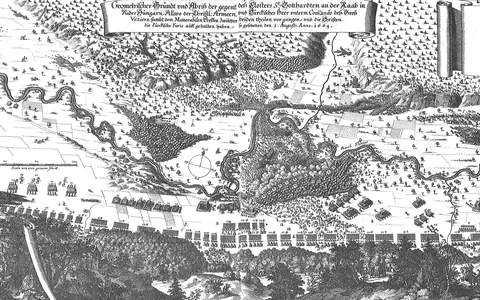
Open war returned in the 1660s. On 1 August 1664 an imperial army under Raimondo Montecuccoli defeated the Ottomans at Saint Gotthard on the Raab River in western Hungary, a victory that halted an Ottoman advance on Austria and made Montecuccoli the hero of the hour.8
The siege of Vienna in 1683 and the Great Turkish War
In July 1683 the grand vizier Kara Mustafa laid siege to Vienna with a very large army: Britannica and the German Historical Institute put it at about 150,000 men. Emperor Leopold I fled the city, and its garrison held the walls through the summer while the attackers captured the outer works and tunneled toward the inner defenses.9

A relief army gathered under King John III Sobieski of Poland, with the imperial troops of Duke Charles of Lorraine and the contingents of the electors of Saxony and Bavaria and many German princes, financed in part by Pope Innocent XI. On 12 September, under Sobieski's supreme command, it came down from the Kahlenberg and routed the Ottoman army; Kara Mustafa escaped. Our Battle of Vienna article tells the day from both camps.10
The victory opened a long Habsburg offensive. In 1697 Prince Eugene of Savoy took command in Hungary and destroyed the Ottoman army at Zenta. By the Peace of Karlowitz in 1699 the sultan gave up most of Hungary and Transylvania. A new war from 1716 brought Eugene's victories at Petrovaradin and Belgrade. Our hub on the Great Turkish War follows the war of 1683 to 1699 battle by battle.11
The Thirty Years' War and the War of the Spanish Succession
The revolt of the Protestant nobles of Bohemia against Habsburg rule in 1618 began the Thirty Years' War. In 1620 the forces of Emperor Ferdinand II and the Catholic League crushed the Bohemian army at the White Mountain near Prague in a battle that lasted about an hour or two. The rebel leaders were executed, and the Habsburgs went on to rule Bohemia without its old constitution.12
The war that followed drew in France. The Peace of Westphalia in 1648 curtailed the emperor's authority over the German princes and gave Alsace to France, while the Habsburgs strengthened their hold on their own hereditary lands. Our Thirty Years' War hub covers its battles.13
When Charles II, the last Spanish Habsburg, died in 1700 and left his crowns to Philip of Anjou, a grandson of Louis XIV, Austria and its allies refused to accept the will, and the War of the Spanish Succession lasted until 1714. In 1704, with a Franco-Bavarian army threatening Vienna, Prince Eugene joined the Duke of Marlborough to win the Battle of Blenheim on 13 August. Our War of the Spanish Succession hub follows the rest.14
Maria Theresa, Silesia and the Seven Years' War
In December 1740 Prussian troops invaded Silesia, opening the War of the Austrian Succession against Maria Theresa. She kept the rest of her father's hereditary lands, and the Peace of Aix-la-Chapelle in 1748 recognized her rule, but most of Silesia stayed Prussian. Our War of the Austrian Succession hub covers the fighting from Mollwitz onward.15
To win Silesia back, Maria Theresa made peace with France, Austria's oldest rival, and allied with Russia. Frederick II struck first, invading Saxony on 29 August 1756. At Kolín on 18 June 1757 Field Marshal Leopold von Daun beat Frederick and forced the Prussians to lift the siege of Prague and leave Bohemia. Yet the peace signed at Hubertusburg in 1763 restored the prewar position and confirmed Silesia as Prussian.16
Our Seven Years' War hub lists the Austrian battles of the war, among them Prague, Leuthen and Hochkirch.
Austria in the Napoleonic Wars
Austria fought revolutionary and Napoleonic France in one coalition after another, alongside Prussia, Russia, Britain and others. In 1805, allied with Russia, it was defeated at Austerlitz, and the Treaty of Pressburg that followed cost it major territories, among them Venice and Tirol. In 1806 the Holy Roman Empire was dissolved.17
Austria went to war again in April 1809. The French occupied Vienna in May, but on 21 and 22 May, at Aspern and Essling across the Danube, Archduke Charles defeated Napoleon, the first defeat he suffered on a field of battle according to both Britannica and the World of the Habsburgs. Charles did not exploit it. In July Napoleon beat him at Wagram, and by the Treaty of Schönbrunn in October the monarchy surrendered more territory but survived.18
Metternich then sought an accommodation with Napoleon, who married Emperor Francis's daughter Marie Louise. In 1813 Austria joined the coalition against him: Field Marshal Schwarzenberg commanded the allied armies, with Joseph Radetzky as his chief of staff drafting the plan for the campaign, and Napoleon was decisively defeated at Leipzig.19
From 1848 to 1866: revolution, Solferino and Königgrätz
The revolutions of 1848 shook the empire. In Italy the aged field marshal Radetzky defeated the Piedmontese at Custoza in July 1848 and at Novara in March 1849. In Hungary the revolution became a war of independence, and the young Emperor Franz Joseph called on Tsar Nicholas I for help: Russian troops helped crush it in 1849.20
Ten years later Austria fought Piedmont-Sardinia and France. Franz Joseph took personal command, and on 24 June 1859 his army lost at Solferino. Austria had to cede Lombardy, the first of its Italian losses. The suffering of the wounded moved Henry Dunant to write the book that led to the founding of the Red Cross.21
In 1866 Prussia, allied with Italy, went to war with Austria. In the south Austria won twice: Archduke Albrecht beat the Italians at Custoza on 24 June, and the Austrian fleet defeated the Italian fleet off Lissa on 20 July. But on 3 July, at Königgrätz (Sadowa) in Bohemia, Helmuth von Moltke's Prussians, armed with breech-loading rifles, decisively defeated Ludwig von Benedek's North Army. Austria lost 42,000 to 45,000 killed, wounded and captured, against about 9,000 Prussians.22

The peace forced Austria to cede Venetia and to give up its hopes of leading Germany, which Prussia united without it by 1871. “Königgrätz”, writes the World of the Habsburgs, became synonymous with the Habsburgs' defeat. A year later Franz Joseph concluded the Compromise with Hungary.23
Austria-Hungary in World War I
Austria-Hungary's annexation of Bosnia and Herzegovina in 1908 enraged Serbia and Russia. On 28 June 1914 the heir to the throne, Archduke Franz Ferdinand, and his wife were shot dead in Sarajevo by a Bosnian Serb. The chief of the general staff, Franz Conrad von Hötzendorf, long an advocate of preventive war against Serbia, pressed for an attack, and with German encouragement Austria-Hungary declared war on Serbia on 28 July. Russia came in to back Serbia.24
The war went badly from the start. The first invasions of Serbia failed, and by the end of 1914 Russian armies had overrun much of Galicia; our article on Kraśnik covers one of the opening battles. Recovery came with German help: in May 1915 a combined German and Austro-Hungarian army under August von Mackensen broke through the Russian front between Gorlice and Tarnów.25
In 1915 Italy entered the war, and on the Isonzo River its armies attacked again and again over the next two years, gaining little ground against the entrenched defenders. In June 1916 the Russian offensive under Aleksei Brusilov broke the Austro-Hungarian lines in Volhynia; our Brusilov Offensive article tells the story. Britannica judges it a defeat from which the empire never recovered.26

On 24 October 1917 German and Austro-Hungarian troops broke through at Caporetto, the twelfth battle of the Isonzo, and drove the Italians back to the Piave, where Italian and British troops held the line. A year later, from 24 October 1918, the Italian offensive of Vittorio Veneto broke the Austro-Hungarian front as the empire itself fell apart. An armistice was signed on 3 November 1918.27
By then national councils had taken power across the provinces and the monarchy had dissolved into national states. On 11 November 1918 Emperor Charles signed a declaration at Schönbrunn renouncing any part in the affairs of state, which formally ended Habsburg rule.28
Austria and Poland: Vienna, the partitions and the Legions
Austria's history is closely entangled with Poland's. In 1683 the combined army that relieved Vienna was led by the Polish king John III Sobieski; our profile of John III Sobieski follows his career. Less than a century later the Habsburgs took part in the partitions of the Polish-Lithuanian Commonwealth: the First Partition of 1772 gave them the lands they named the Kingdom of Galicia and Lodomeria, which Austria held until 1918.29
In Austrian Galicia Polish independence activists could organize openly, and Józef Piłsudski built his riflemen's units in Kraków with the consent of the Austrian military authorities. On 16 August 1914 Galician politicians in Kraków resolved to form Polish Legions to fight on the Austro-Hungarian side, and until 1916 the Legion's brigades fought the Russians under Austro-Hungarian command. In July 1917, when the Central Powers demanded an oath of loyalty in arms with the German and Austrian forces, most legionnaires refused and Piłsudski was arrested.30
The Anschluss, World War II and neutrality
In March 1938 Nazi Germany annexed Austria, the Nazi regime's first act of territorial expansion, and a large part of the population welcomed it. The persecution of Austria's Jews began at once. Austrians served in the German armed forces throughout World War II, and at Mauthausen near Linz the Nazis imprisoned about 197,000 people, at least 95,000 of whom died there.31
In the Moscow Declaration of 1943 the United States, Britain and the Soviet Union declared the annexation null and void and called Austria the first free country to fall victim to Hitlerite aggression, but in the same text reminded it of its responsibility for taking part in the war on Germany's side. Soviet troops took Vienna after a week of fighting that ended on 13 April 1945, as our article on the end of World War II in Austria describes, and the country was occupied by the four Allied powers.32
The State Treaty, signed in the Belvedere in Vienna on 15 May 1955, restored Austria as a sovereign state within its pre-1938 borders and banned any new union with Germany. The last occupation troops left in October, and on 26 October 1955 parliament passed the law of permanent neutrality.33
Famous Austrian commanders
Raimondo Montecuccoli won at Saint Gotthard in 1664. Prince Eugene of Savoy, a prince of the House of Savoy in the emperor's service, won at Zenta, Petrovaradin and Belgrade against the Ottomans and at Blenheim beside Marlborough. Leopold von Daun gave Maria Theresa her victory at Kolín. Archduke Charles, the victor of Aspern, was beaten at Wagram. Joseph Radetzky, born in Bohemia, planned the Leipzig campaign and won in Italy in 1848 and 1849; Archduke Albrecht won at Custoza in 1866, while Ludwig von Benedek lost at Königgrätz. Franz Conrad von Hötzendorf led the general staff into World War I.34
Major battles in Austrian history, era by era
Every battle we have written up in which the Habsburg Monarchy, the Austrian Empire or Austria-Hungary took part, grouped by era and in date order:
The early modern era 1492 to 1789 · 16
- 1664Battle of Saint Gotthard, 1664Habsburg Monarchy, Imperial Army of the Reich, League of the Rhine and France vs Ottoman Empire
On 1 August 1664 Montecuccoli's Imperial, German and French troops rallied from a rout and drove an Ottoman bridgehead back into the flooded Rába.
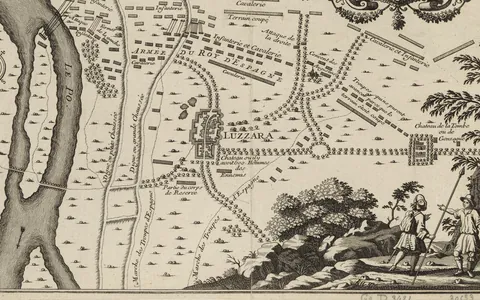
- 1702Battle of Luzzara, 1702Habsburg Monarchy (imperial army in Italy) vs France and Spain
On 15 August 1702 Prince Eugene attacked Vendôme's larger Franco-Spanish army at Luzzara on the Po; after a bloody evening, both sides claimed victory.
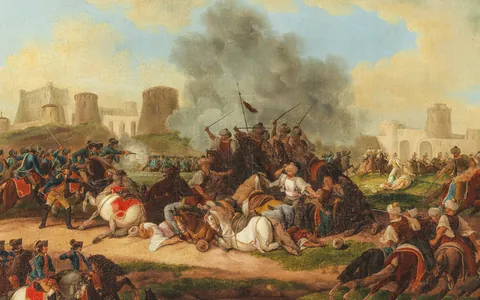
- 1716Battle of Petrovaradin, 1716Habsburg Monarchy vs Ottoman Empire
On 5 August 1716 Prince Eugene routed the Ottoman army camped before Petrovaradin in five hours; Grand Vizier Ali Pasha was shot while leading a charge.
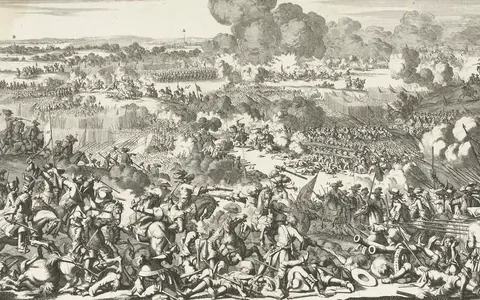
- 1741Battle of Mollwitz, 1741Kingdom of Prussia vs Habsburg Monarchy
On 10 April 1741 the Austrian cavalry routed the Prussian right at Mollwitz and Frederick II rode away. His infantry stayed, held and won him his first battle.
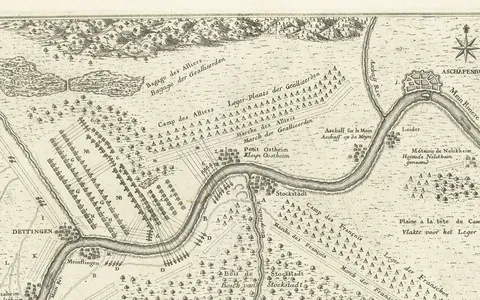
- 1743Battle of Dettingen, 1743Pragmatic Army (Britain, Hanover, Austria) vs Kingdom of France
On 27 June 1743 George II's Pragmatic Army, cut off on the river Main, beat off the French at Dettingen: the last battle led by a reigning British king.
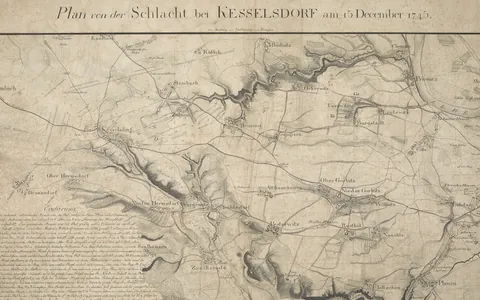
- 1745Battle of Kesselsdorf, 1745Kingdom of Prussia vs Electorate of Saxony and Austria
On 15 December 1745 the 69-year-old Prince Leopold of Anhalt-Dessau stormed the Saxon guns at Kesselsdorf near Dresden and ended the Second Silesian War.
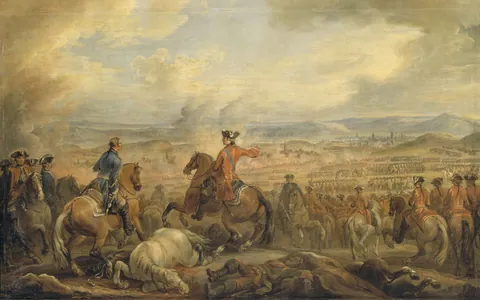
- 1746Battle of Rocoux, 1746France vs Pragmatic Army (Austria, Dutch Republic, Britain, Hanover, Hesse)
On 11 October 1746 Marshal Saxe stormed the villages outside Liège held by the Pragmatic Army; British dragoons covered the retreat as the allies crossed the Meuse at night.
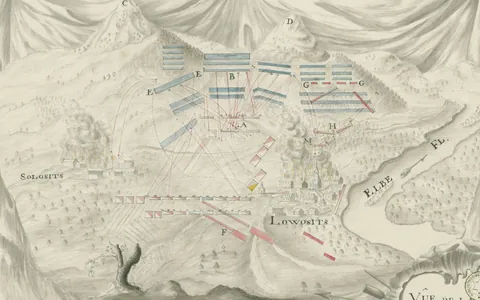
- 1756Battle of Lobositz, 1756Kingdom of Prussia vs Habsburg Monarchy
On 1 October 1756 Frederick the Great attacked Browne's Austrians at Lobositz in fog; his cavalry was wrecked, his infantry took the burning town, and Browne withdrew intact.
- 1757Battle of Prague, 1757Kingdom of Prussia vs Habsburg Monarchy
On 6 May 1757 Frederick the Great stormed the Austrian lines east of Prague. Schwerin fell with the colors in his hands, and 27,000 men were lost in a single day.
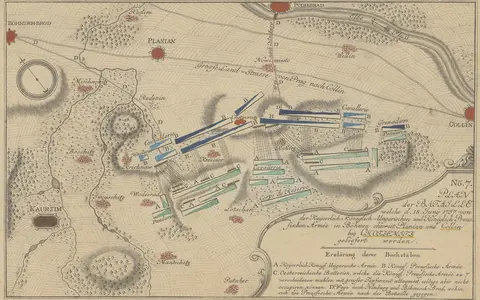
- 1757Battle of Kolín, 1757Habsburg Monarchy (Austria) and Saxon cavalry vs Kingdom of Prussia
On 18 June 1757 Daun's Austrians beat Frederick the Great at Kolín in Bohemia, ending his siege of Prague and his run of victories.
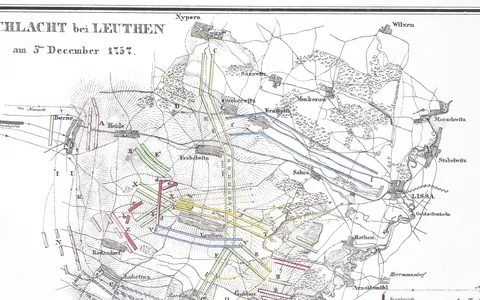
- 1757Battle of Leuthen, 1757Kingdom of Prussia vs Habsburg Monarchy
On 5 December 1757 Frederick the Great feinted, marched hidden behind low hills and broke an Austrian army twice his size near Leuthen in Silesia.
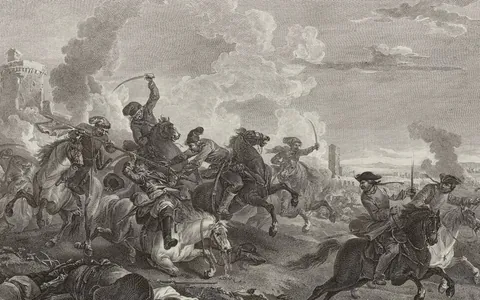
- 1758Battle of Domstadtl, 1758Habsburg Monarchy (Austria) vs Kingdom of Prussia
On 30 June 1758 Loudon's Austrians ambushed Frederick the Great's 4,000-wagon supply convoy at Domstadtl and forced him to lift the siege of Olomouc.
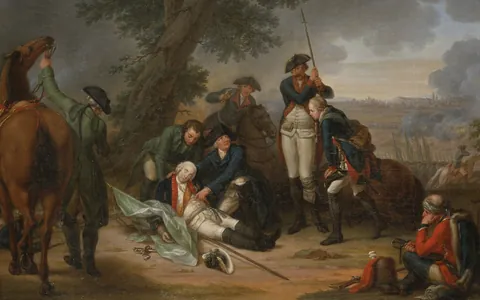
- 1758Battle of Hochkirch, 1758Habsburg Monarchy vs Kingdom of Prussia
On 14 October 1758 Daun's Austrians crept up on Frederick the Great's camp at Hochkirch in the dark and struck at 5 a.m. The night march, the churchyard fight, Keith's death and the numbers.
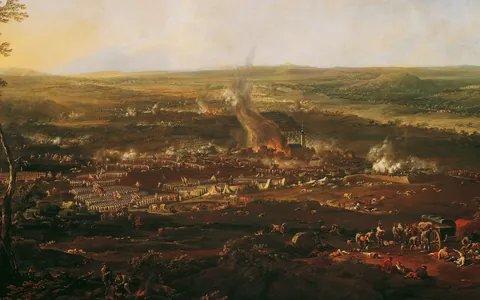
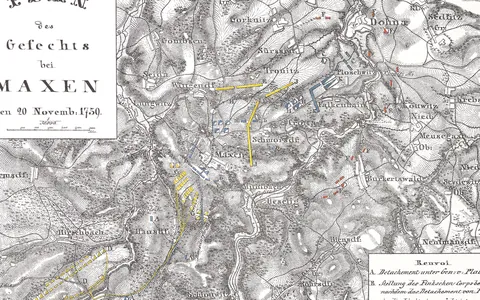
- 1759Battle of Maxen, 1759Habsburg Monarchy and the Reichsarmee vs Kingdom of Prussia
In November 1759 Frederick the Great sent General Finck's corps behind the Austrian army. At Maxen Daun surrounded it, and on 21 November the whole corps surrendered.
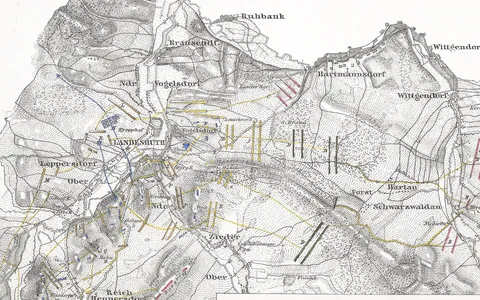
- 1760Battle of Landeshut, 1760Habsburg Monarchy (Austria) vs Kingdom of Prussia
On 23 June 1760 Loudon's Austrians stormed the Prussian hill forts at Landeshut, today Kamienna Góra, and captured General Fouqué with most of his corps.
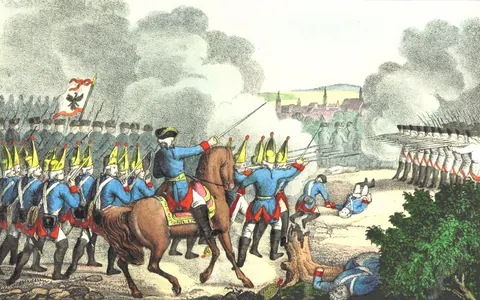
- 1762Battle of Freiberg, 1762Kingdom of Prussia vs Holy Roman Empire and Austria
On 29 October 1762 Prince Henry of Prussia beat the Austro-Imperial army near Freiberg in Saxony, in what is called the last battle of the Seven Years' War.
The Napoleonic era 1789 to 1815 · 10
- 1789Battle of Rymnik, 1789Russia and Austria vs Ottoman Empire
On 22 September 1789 Suvorov's Russians and Coburg's Austrians made a night march and stormed the camps of a far larger Ottoman army on the Rymnik river in Wallachia.
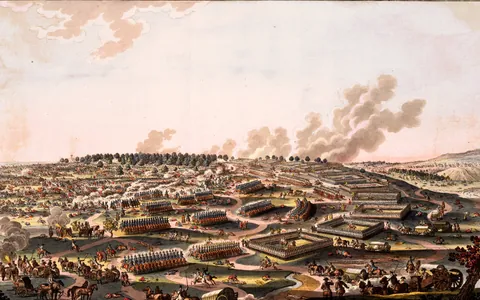
- 1793Battle of Wattignies, 1793French Republic vs Austria and the Coalition
In October 1793 Jourdan's raw Army of the North broke the Austrian line at Wattignies after two days of attacks and forced the Coalition to lift the siege of Maubeuge.
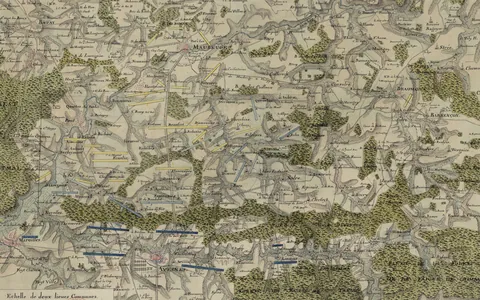
- 1796Battle of Montenotte, 1796French Republic (Army of Italy) vs Habsburg Monarchy
On 12 April 1796 Masséna turned the Austrian flank in the fog above Savona while Rampon's redoubt held. Montenotte was Napoleon's first victory as an army commander.
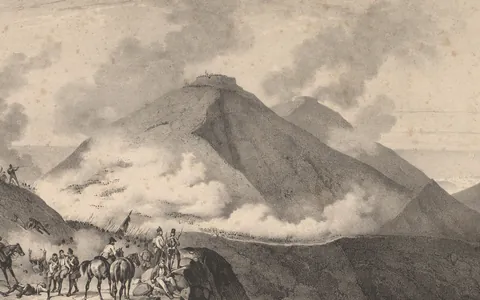
- 1799Battle of Cassano, 1799Russia and Austria vs France
On 27 April 1799 Suvorov's Russians and Austrians bridged the Adda in the night, broke Moreau's thinly stretched line and took Milan two days later.
- 1799Battle of the Trebbia, 1799Russian Empire and Habsburg Monarchy vs French Republic and the Polish Legion
From 17 to 19 June 1799 Suvorov's Russians and Austrians beat Macdonald's French on the Trebbia, and Dąbrowski's Polish Legion was nearly destroyed.
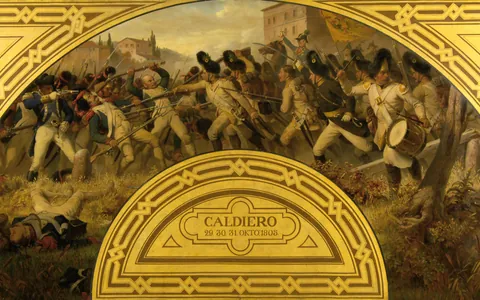
- 1805Battle of Caldiero, 1805French Empire vs Austrian Empire
From 29 to 31 October 1805 Masséna's Army of Italy fought Archduke Charles at Caldiero, east of Verona. Who won is still argued, but Charles then retreated from Italy.
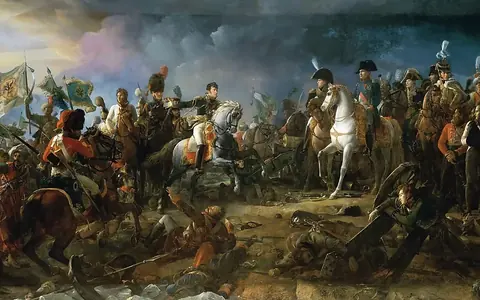
- 1805The Battle of Austerlitz, 1805French Empire vs Austria and Russia
Napoleon feigned weakness, gave up the heights, and sprang the trap. The battle of three emperors, often called his masterpiece.
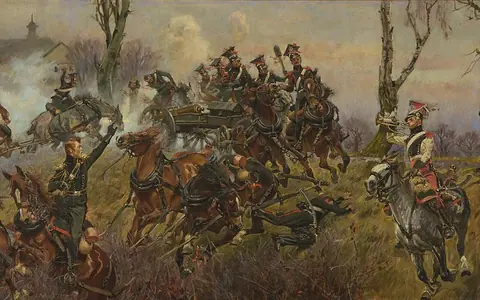
- 1809The Battle of Raszyn, 1809Duchy of Warsaw (with Saxon troops) vs Austrian Empire
The Duchy of Warsaw's army stood its ground against a far larger enemy.
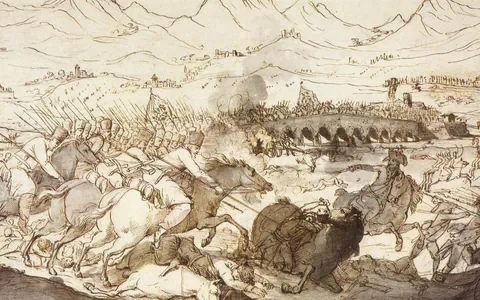
- 1813The Battle of Leipzig, 1813Coalition (Russia, Prussia, Austria, Sweden) vs French Empire
Six hundred thousand men and the largest battle in Europe before 1914.
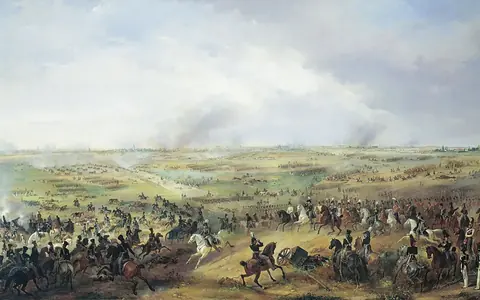
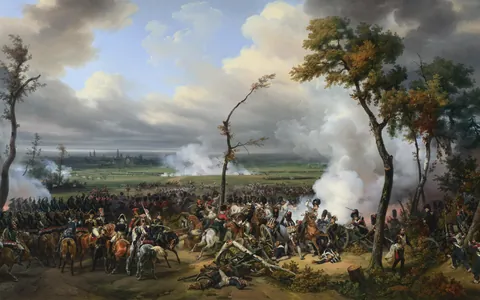
- 1813Battle of Hanau, 1813French Empire vs Austria and Bavaria
On 30 and 31 October 1813, retreating from Leipzig, Napoleon found Wrede's Austro-Bavarian army across his road at Hanau and blasted it aside with fifty guns.
The industrial age 1815 to 1914 · 1
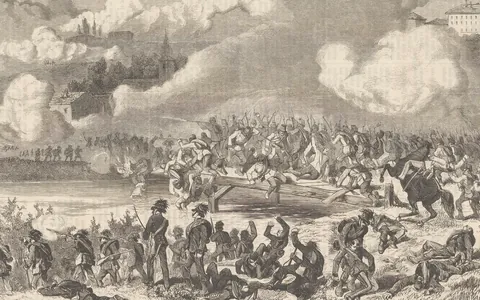
- 1866Battle of Custoza, 1866Austrian Empire: Army of the South vs Kingdom of Italy
On 24 June 1866 Archduke Albrecht's Austrians caught La Marmora's larger Italian army on the march in the hills of Custoza and drove it back over the Mincio.
World War I 1914 to 1919 · 4
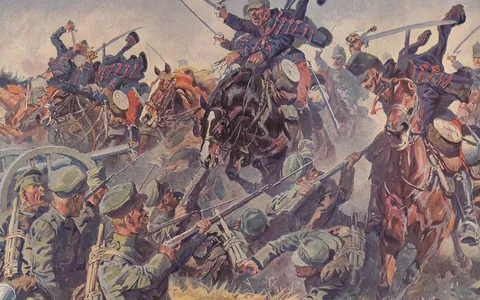
- 1914Battle of Kraśnik, 1914Austria-Hungary (First Army) vs Russian Empire (Fourth Army)
From 23 to 25 August 1914 Dankl's Austro-Hungarian First Army met the Russian Fourth Army south of Kraśnik and drove it back toward Lublin, Austria-Hungary's first victory.
- 1914Battle of Łódź, 1914German Empire and Austria-Hungary vs Russian Empire
From 11 November to 6 December 1914 German and Russian armies fought a vast battle of maneuver around Łódź that cost some 200,000 lives and was then almost forgotten.
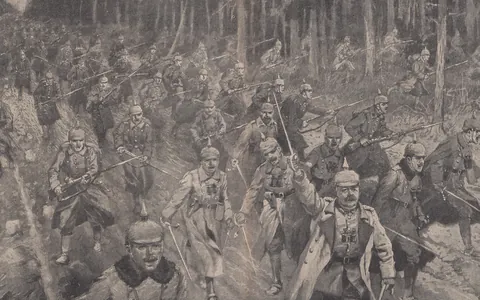
- 1916The Brusilov Offensive, 1916Russian Empire vs Austria-Hungary and Germany
From 4 June 1916 General Brusilov's armies broke the Austro-Hungarian front in Volhynia and Galicia. It was Russia's greatest success of the war, and one of its costliest.
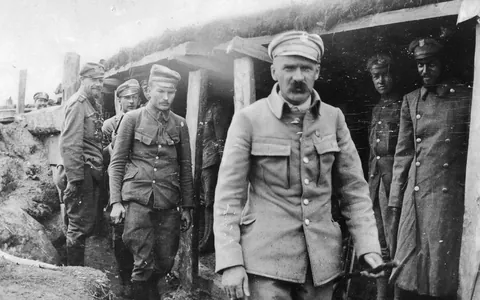
- 1917Battle of Caporetto, 1917Austria-Hungary and Germany vs Kingdom of Italy
On 24 October 1917 German and Austro-Hungarian troops broke the Italian front at Caporetto and drove Italy's army back to the Piave. What happened and what it cost.
Timeline of Austrian military history
- 1282Rudolf I of Habsburg gives Austria and Styria to his sons.35
- 1526
- 1529Süleyman's first siege of Vienna fails.37
- 1620Habsburg victory at the White Mountain.38
- 1664Montecuccoli defeats the Ottomans at Saint Gotthard.39
- 1683
- 1697
- 1704
- 1748Peace of Aix-la-Chapelle: Maria Theresa keeps her throne but loses most of Silesia.43
- 1757
- 1772First Partition of Poland: Austria takes Galicia.45
- 1805Defeat at Austerlitz; Treaty of Pressburg.46
- 1809Archduke Charles wins at Aspern; Napoleon wins at Wagram.47
- 1859Defeat at Solferino; Lombardy lost.48
- 1866
- 1867Compromise with Hungary creates Austria-Hungary.50
- 1914Assassination in Sarajevo; war on Serbia on 28 July.51
- 1915Breakthrough at Gorlice and Tarnów.52
- 1917
- 1918Vittorio Veneto, armistice of 3 November, end of Habsburg rule.54
- 1938Anschluss: Nazi Germany annexes Austria.55
- 1955State Treaty and permanent neutrality.56
Memory and further reading
Vienna's Heldenplatz, Heroes' Square, holds two equestrian statues by Anton Dominik Fernkorn: Archduke Charles, unveiled in 1860 after a delay caused by the defeat at Solferino, and Prince Eugene, unveiled in 1865. The memory of 1938 to 1945 has been harder: for decades Austrian politicians presented the country mainly as a victim of Nazi Germany, while it was in fact both a victim and a participant, as the Moscow Declaration had already said.57
For the other side of these wars, see our hubs on Poland, Germany, France, Britain and Russia, on the Napoleonic Wars and the Eastern Front of World War I, and the ranking of the greatest battles of the Ottoman Empire.
Notes
A number in the text points to a note; each note names the works that paragraph draws on, listed in full under Sources.
- Encyclopaedia Britannica, “Habsburg-Lorraine”; The World of the Habsburgs, “Emperor Franz II/I and Napoleon”; Encyclopaedia Britannica, “Siege of Vienna (1683)”; The World of the Habsburgs, “The final decisive battle against Prussia”; Encyclopaedia Britannica, “Restoration of sovereignty”. ↩
- Encyclopaedia Britannica, “House of Habsburg”; The World of the Habsburgs, “The Habsburgs take over Austria”; Encyclopaedia Britannica, “Habsburg-Lorraine”; The World of the Habsburgs, “The victor of Aspern”. ↩
- Encyclopaedia Britannica, “House of Habsburg”; The World of the Habsburgs, “The Habsburgs take over Austria”; The World of the Habsburgs, “A new great power in south-east Europe”. ↩
- Encyclopaedia Britannica, “Habsburg-Lorraine”; The World of the Habsburgs, “Emperor Franz II/I and Napoleon”; The World of the Habsburgs, “From neo-absolutism to Compromise”. ↩
- Encyclopaedia Britannica, “Habsburg-Lorraine”; The World of the Habsburgs, “The last days of the Monarchy”; United States Holocaust Memorial Museum, Holocaust Encyclopedia; Encyclopaedia Britannica, “Restoration of sovereignty”. ↩
- The World of the Habsburgs, “A new great power in south-east Europe”; Hungarian Ministry of Defence, “The Battle of Mohács, August 29, 1526”; Library of Congress, Hungary; Encyclopaedia Britannica, “Süleyman the Magnificent”; Encyclopaedia Britannica, “House of Habsburg”. ↩
- Encyclopaedia Britannica, “Süleyman the Magnificent”; The World of the Habsburgs, “The first Turkish siege of Vienna, 1529”; Library of Congress, Hungary. ↩
- Encyclopaedia Britannica, “Raimondo Montecuccoli”; EBSCO Research Starters, “Battle of Saint Gotthard”. ↩
- Encyclopaedia Britannica, “Siege of Vienna (1683)”; German Historical Institute Washington, German History in Documents and Images; The World of the Habsburgs, “Leopold I”. ↩
- Encyclopaedia Britannica, “Siege of Vienna (1683)”; The World of the Habsburgs, “Leopold I”; German Historical Institute Washington, German History in Documents and Images; The World of the Habsburgs, “‘The Turk’ at the gates of Vienna”. ↩
- The World of the Habsburgs, “Prince Eugene, the ‘noble knight’”; EBSCO Research Starters, “Battle of Zenta”; Library of Congress, Hungary; Encyclopaedia Britannica, “Eugene of Savoy”. ↩
- The World of the Habsburgs, “The Battle of the White Mountain, 1620”; Encyclopaedia Britannica, “Battle of White Mountain”. ↩
- Encyclopaedia Britannica, “Bloodlines and conflict”; The World of the Habsburgs, “Peace at last”. ↩
- Encyclopaedia Britannica, “Bloodlines and conflict”; The World of the Habsburgs, “Charles II and the issue of the succession”; National Army Museum, “Battle of Blenheim”; Encyclopaedia Britannica, “Eugene of Savoy”. ↩
- The World of the Habsburgs, “The War of Austrian Succession”; Encyclopaedia Britannica, “Habsburg-Lorraine”. ↩
- Encyclopaedia Britannica, “Habsburg-Lorraine”; The World of the Habsburgs, “The Seven Years’ (World) War”; Encyclopaedia Britannica, “Seven Years’ War”; Encyclopaedia Britannica, “Battle of Kolín”. ↩
- The World of the Habsburgs, “The Napoleonic Wars, 1792 to 1815”; Encyclopaedia Britannica, “Conflicts with Napoleonic France”; The World of the Habsburgs, “Emperor Franz II/I and Napoleon”; Encyclopaedia Britannica, “Habsburg-Lorraine”. ↩
- Encyclopaedia Britannica, “Conflicts with Napoleonic France”; The World of the Habsburgs, “The victor of Aspern”; The World of the Habsburgs, “Emperor Franz II/I and Napoleon”. ↩
- Encyclopaedia Britannica, “Conflicts with Napoleonic France”; The World of the Habsburgs, “Emperor Franz II/I and Napoleon”; Encyclopaedia Britannica, “Joseph, Graf Radetzky”; City of Vienna, Wien Geschichte Wiki. ↩
- Encyclopaedia Britannica, “Joseph, Graf Radetzky”; City of Vienna, Wien Geschichte Wiki; The World of the Habsburgs, “The Hungarian war of independence 1848/49”; Library of Congress, Hungary. ↩
- Encyclopaedia Britannica, “Battle of Solferino”; The World of the Habsburgs, “Franz Joseph as ruler, part one”; The World of the Habsburgs, “The Battle of Solferino, 1859”; International Committee of the Red Cross, “Founding and early years of the ICRC (1863 to 1914)”. ↩
- Encyclopaedia Britannica, “The acquisition of Venetia and Rome”; The World of the Habsburgs, “A warlike Habsburg”; Encyclopaedia Britannica, “Archduke Albert”; Italian Navy, “Birth of the Royal Navy”; Encyclopaedia Britannica, “Battle of Königgrätz”; EBSCO Research Starters, “Battle of Königgrätz”; The World of the Habsburgs, “The final decisive battle against Prussia”. ↩
- Encyclopaedia Britannica, “Habsburg-Lorraine”; EBSCO Research Starters, “Battle of Königgrätz”; The World of the Habsburgs, “The final decisive battle against Prussia”; The World of the Habsburgs, “From neo-absolutism to Compromise”. ↩
- Encyclopaedia Britannica, “Habsburg-Lorraine”; The World of the Habsburgs, “The 1908 annexation crisis”; Encyclopaedia Britannica, “World War I”; Imperial War Museums, “Outbreak of the First World War”; The World of the Habsburgs, “Franz Conrad von Hötzendorf”. ↩
- Encyclopaedia Britannica, “The war in the east, 1914”; The World of the Habsburgs, “Modern weaponry and the slaughter of the first months of the war”; The World of the Habsburgs, “The calamity of the Tsarist army”; Encyclopaedia Britannica, “August von Mackensen”. ↩
- Encyclopaedia Britannica, “Battles of the Isonzo”; The World of the Habsburgs, “On the Isonzo”; Encyclopaedia Britannica, “Brusilov Offensive”; Dzieje.pl, “Bitwa pod Kostiuchnówką, najkrwawszy bój Legionów”. ↩
- The World of the Habsburgs, “Pyrrhic victory and failure on the Isonzo”; Encyclopaedia Britannica, “Battles of the Isonzo”; The World of the Habsburgs, “The course of the war 1917 to 1918”; Encyclopaedia Britannica, “Battle of Vittorio Veneto”; National Army Museum, “Battle of Vittorio Veneto”; The World of the Habsburgs, “The last days of the Monarchy”. ↩
- Encyclopaedia Britannica, “End of the Habsburg empire”; The World of the Habsburgs, “The last days of the Monarchy”. ↩
- Encyclopaedia Britannica, “Siege of Vienna (1683)”; German Historical Institute Washington, German History in Documents and Images; Encyclopaedia Britannica, “Habsburg-Lorraine”; Polish Ministry of Education, “Gospodarka w Królestwie Polskim, zaborze pruskim i austriackim”. ↩
- Encyclopaedia Britannica, “Józef Piłsudski”; Dzieje.pl, Niepodległa. ↩
- United States Holocaust Memorial Museum, Holocaust Encyclopedia; Deutsches Historisches Museum, LeMO; United States Holocaust Memorial Museum, Holocaust Encyclopedia; The Wiener Holocaust Library, The Holocaust Explained. ↩
- Yale Law School, “The Moscow Conference, October 1943”; CVCE, “State Treaty for the Re-establishment of an Independent and Democratic Austria (Vienna, 15 May 1955)”; erinnern.at, “Kriegsende und Befreiung in Wien”; City of Vienna, Wien Geschichte Wiki; EBSCO Research Starters, “Austria regains its independence”; Encyclopaedia Britannica, “Restoration of sovereignty”. ↩
- Encyclopaedia Britannica, “Restoration of sovereignty”; Haus der Geschichte Österreich, “1955”; CVCE, “State Treaty for the Re-establishment of an Independent and Democratic Austria (Vienna, 15 May 1955)”; Embassy of Austria in the United States, “State Treaty”; EBSCO Research Starters, “Austria regains its independence”. ↩
- Encyclopaedia Britannica, “Raimondo Montecuccoli”; EBSCO Research Starters, “Battle of Saint Gotthard”; Encyclopaedia Britannica, “Eugene of Savoy”; The World of the Habsburgs, “Prince Eugene, the ‘noble knight’”; Encyclopaedia Britannica, “Battle of Kolín”; The World of the Habsburgs, “The Seven Years’ (World) War”; The World of the Habsburgs, “The victor of Aspern”; Encyclopaedia Britannica, “Conflicts with Napoleonic France”; Encyclopaedia Britannica, “Joseph, Graf Radetzky”; City of Vienna, Wien Geschichte Wiki; The World of the Habsburgs, “A warlike Habsburg”; Encyclopaedia Britannica, “Archduke Albert”; Encyclopaedia Britannica, “Battle of Königgrätz”; EBSCO Research Starters, “Battle of Königgrätz”; The World of the Habsburgs, “Franz Conrad von Hötzendorf”; Encyclopaedia Britannica, “World War I”. ↩
- Encyclopaedia Britannica, “House of Habsburg”; The World of the Habsburgs, “The Habsburgs take over Austria”. ↩
- The World of the Habsburgs, “A new great power in south-east Europe”; Encyclopaedia Britannica, “House of Habsburg”. ↩
- Encyclopaedia Britannica, “Süleyman the Magnificent”; The World of the Habsburgs, “The first Turkish siege of Vienna, 1529”. ↩
- The World of the Habsburgs, “The Battle of the White Mountain, 1620”; Encyclopaedia Britannica, “Battle of White Mountain”. ↩
- Encyclopaedia Britannica, “Raimondo Montecuccoli”; EBSCO Research Starters, “Battle of Saint Gotthard”. ↩
- Encyclopaedia Britannica, “Siege of Vienna (1683)”; The World of the Habsburgs, “Leopold I”. ↩
- EBSCO Research Starters, “Battle of Zenta”; Library of Congress, Hungary. ↩
- National Army Museum, “Battle of Blenheim”; Encyclopaedia Britannica, “Eugene of Savoy”. ↩
- The World of the Habsburgs, “The War of Austrian Succession”; Encyclopaedia Britannica, “Habsburg-Lorraine”. ↩
- Encyclopaedia Britannica, “Battle of Kolín”; The World of the Habsburgs, “The Seven Years’ (World) War”. ↩
- Encyclopaedia Britannica, “Habsburg-Lorraine”; Polish Ministry of Education, “Gospodarka w Królestwie Polskim, zaborze pruskim i austriackim”. ↩
- Encyclopaedia Britannica, “Conflicts with Napoleonic France”; The World of the Habsburgs, “Emperor Franz II/I and Napoleon”. ↩
- Encyclopaedia Britannica, “Conflicts with Napoleonic France”; The World of the Habsburgs, “The victor of Aspern”. ↩
- Encyclopaedia Britannica, “Battle of Solferino”; The World of the Habsburgs, “The Battle of Solferino, 1859”. ↩
- Encyclopaedia Britannica, “The acquisition of Venetia and Rome”; The World of the Habsburgs, “The final decisive battle against Prussia”. ↩
- Encyclopaedia Britannica, “Habsburg-Lorraine”; The World of the Habsburgs, “From neo-absolutism to Compromise”. ↩
- Encyclopaedia Britannica, “World War I”; Imperial War Museums, “Outbreak of the First World War”. ↩
- Encyclopaedia Britannica, “August von Mackensen”; The World of the Habsburgs, “The calamity of the Tsarist army”. ↩
- The World of the Habsburgs, “Pyrrhic victory and failure on the Isonzo”; Encyclopaedia Britannica, “Battles of the Isonzo”. ↩
- Encyclopaedia Britannica, “Battle of Vittorio Veneto”; The World of the Habsburgs, “The last days of the Monarchy”. ↩
- United States Holocaust Memorial Museum, Holocaust Encyclopedia; Yale Law School, “The Moscow Conference, October 1943”. ↩
- Encyclopaedia Britannica, “Restoration of sovereignty”; Embassy of Austria in the United States, “State Treaty”. ↩
- The World of the Habsburgs, “Two men on horseback preside over ‘Heroes’ Square’”; City of Vienna, Wien Geschichte Wiki; EBSCO Research Starters, “Austria regains its independence”; Yale Law School, “The Moscow Conference, October 1943”. ↩
Sources
- Encyclopaedia Britannica, “House of Habsburg”, “Habsburg-Lorraine”.
- The World of the Habsburgs, “Emperor Franz II/I and Napoleon”.
- Encyclopaedia Britannica, “Siege of Vienna (1683)”.
- The World of the Habsburgs, “The final decisive battle against Prussia”.
- Encyclopaedia Britannica, “Austria”, “Restoration of sovereignty”.
- Encyclopaedia Britannica, “House of Habsburg”.
- The World of the Habsburgs (Schloss Schönbrunn Kultur- und Betriebsges.), “The Habsburgs take over Austria”.
- The World of the Habsburgs, “The victor of Aspern”.
- The World of the Habsburgs, “A new great power in south-east Europe: the Ottoman Empire”.
- The World of the Habsburgs, “From neo-absolutism to Compromise”.
- The World of the Habsburgs, “The last days of the Monarchy”.
- United States Holocaust Memorial Museum, Holocaust Encyclopedia, “Nazi territorial aggression: the Anschluss”.
- Hungarian Ministry of Defence, honvedelem.hu, “The Battle of Mohács, August 29, 1526”.
- Library of Congress, Federal Research Division, Hungary: A Country Study, “Reign of Ulaszlo II and Louis II”.
- Encyclopaedia Britannica, “Süleyman the Magnificent”.
- The World of the Habsburgs, “The first Turkish siege of Vienna, 1529”.
- Library of Congress, Federal Research Division, Hungary: A Country Study, “Partition of Hungary”.
- Encyclopaedia Britannica, “Raimondo Montecuccoli”.
- EBSCO Research Starters, “Battle of Saint Gotthard”.
- German Historical Institute Washington, German History in Documents and Images, “The Battle of Kahlenberg: imperial troops defeat the Turks on September 12, 1683”.
- The World of the Habsburgs, “Leopold I: problems with Hungary and the Turks”.
- The World of the Habsburgs, “‘The Turk’ at the gates of Vienna: Episode 2”.
- The World of the Habsburgs, “Prince Eugene, the ‘noble knight’”.
- EBSCO Research Starters, “Battle of Zenta”.
- Library of Congress, Federal Research Division, Hungary: A Country Study, “End of the Partition”.
- Encyclopaedia Britannica, “Eugene of Savoy”.
- The World of the Habsburgs, “The Battle of the White Mountain, 1620”.
- Encyclopaedia Britannica, “Battle of White Mountain”.
- Encyclopaedia Britannica, “House of Habsburg”, “Bloodlines and conflict”.
- The World of the Habsburgs, “Peace at last”.
- The World of the Habsburgs, “Charles II and the issue of the succession”.
- National Army Museum, London, “Battle of Blenheim”.
- The World of the Habsburgs, “The War of Austrian Succession”.
- The World of the Habsburgs, “The Seven Years’ (World) War”.
- Encyclopaedia Britannica, “Seven Years’ War”.
- Encyclopaedia Britannica, “Battle of Kolín”.
- The World of the Habsburgs, “The Napoleonic Wars, 1792 to 1815”.
- Encyclopaedia Britannica, “Austria”, “Conflicts with Napoleonic France”.
- Encyclopaedia Britannica, “Joseph, Graf Radetzky”.
- City of Vienna, Wien Geschichte Wiki, “Johann Joseph Wenzel Radetzky von Radetz” (in German).
- The World of the Habsburgs, “The Hungarian war of independence 1848/49”.
- Library of Congress, Federal Research Division, Hungary: A Country Study, “The Habsburgs”.
- Encyclopaedia Britannica, “Battle of Solferino”.
- The World of the Habsburgs, “Franz Joseph as ruler, part one: 1848 to 1867”.
- The World of the Habsburgs, “The Battle of Solferino, 1859”.
- International Committee of the Red Cross, “Founding and early years of the ICRC (1863 to 1914)”.
- Encyclopaedia Britannica, “Italy”, “The acquisition of Venetia and Rome”.
- The World of the Habsburgs, “A warlike Habsburg: Archduke Albrecht”.
- Encyclopaedia Britannica, “Archduke Albert”.
- Italian Navy (Marina Militare), “Birth of the Royal Navy”.
- Encyclopaedia Britannica, “Battle of Königgrätz”.
- EBSCO Research Starters, “Battle of Königgrätz”.
- The World of the Habsburgs, “The 1908 annexation crisis”.
- Encyclopaedia Britannica, “World War I”.
- Imperial War Museums, “Outbreak of the First World War”.
- The World of the Habsburgs, “Franz Conrad von Hötzendorf”.
- Encyclopaedia Britannica, “World War I”, “The war in the east, 1914”.
- The World of the Habsburgs, “Modern weaponry and the slaughter of the first months of the war”.
- The World of the Habsburgs, “The calamity of the Tsarist army”.
- Encyclopaedia Britannica, “August von Mackensen”.
- Encyclopaedia Britannica, “Battles of the Isonzo”.
- The World of the Habsburgs, “On the Isonzo”.
- Encyclopaedia Britannica, “Brusilov Offensive”.
- Dzieje.pl (Polish History Museum and Polish Press Agency), “Bitwa pod Kostiuchnówką, najkrwawszy bój Legionów” (in Polish).
- The World of the Habsburgs, “Pyrrhic victory and failure on the Isonzo”.
- The World of the Habsburgs, “The course of the war 1917 to 1918: face to face with imminent downfall”.
- Encyclopaedia Britannica, “Battle of Vittorio Veneto”.
- National Army Museum, London, “Battle of Vittorio Veneto”.
- Encyclopaedia Britannica, “Austria”, “End of the Habsburg empire”.
- Polish Ministry of Education, Zintegrowana Platforma Edukacyjna, “Gospodarka w Królestwie Polskim, zaborze pruskim i austriackim” (in Polish; glossary entry “Galicja”).
- Encyclopaedia Britannica, “Józef Piłsudski”.
- Dzieje.pl, Niepodległa, “Legiony Polskie” (in Polish).
- Deutsches Historisches Museum, LeMO, “Österreich 1938 bis 1945” (in German).
- United States Holocaust Memorial Museum, Holocaust Encyclopedia, “Mauthausen”.
- The Wiener Holocaust Library, The Holocaust Explained, “Mauthausen”.
- Yale Law School, Lillian Goldman Law Library, The Avalon Project, “The Moscow Conference, October 1943: Declaration on Austria”.
- CVCE, University of Luxembourg, “State Treaty for the Re-establishment of an Independent and Democratic Austria (Vienna, 15 May 1955)”, preamble and articles 4 and 5.
- erinnern.at (Austrian Federal Ministry of Education programme), “Kriegsende und Befreiung in Wien” (in German).
- City of Vienna, Wien Geschichte Wiki, “Kriegsjahre 1944 bis 1945” (in German).
- EBSCO Research Starters, “Austria regains its independence”.
- Haus der Geschichte Österreich, “1955: The Austrian State Treaty”.
- Embassy of Austria in the United States, “State Treaty”.
- The World of the Habsburgs, “Two men on horseback preside over ‘Heroes’ Square’”.
- City of Vienna, Wien Geschichte Wiki, “Heldenplatz” (in German).






