

What were the French Revolutionary Wars and who won?
The French Revolutionary Wars (1792 to 1802) pitted Revolutionary France against two coalitions of European powers, among them Austria, Prussia, Britain, Russia and Spain. France won on land, forcing Austria to make peace at Campo Formio in 1797 and Lunéville in 1801, while Britain kept command of the sea. The Treaty of Amiens ended the fighting in 1802.1
On 20 April 1792 the French Legislative Assembly declared war on Austria. The conflict that followed lasted ten years and drew in almost every power in Europe. It began with a Prussian and Austrian march on Paris that was turned back at the Battle of Valmy, and it ended with a general of the Republic, Napoleon Bonaparte, ruling France after victories such as Rivoli and Marengo.2
The fighting is usually divided into the War of the First Coalition (1792 to 1797) and the War of the Second Coalition (1798 to 1802). It was fought in the Low Countries and on the Rhine, in Italy and Switzerland, in western France against the royalist rebels of the Vendée, in Egypt and Syria, and at sea. Our battle guides cover the Battle of Montenotte, where Bonaparte opened his Italian campaign, the Battle of the Pyramids in Egypt, the Glorious First of June and the Battle of the Trebbia, where Suvorov's Russians and Austrians beat the French in 1799. The wars that followed from 1803 have their own guide: the Napoleonic Wars.3
Causes of the French Revolutionary Wars
The Revolution of 1789 alarmed the monarchs of Europe, who feared that its ideas would spread, and French émigré nobles urged foreign courts to act. After Louis XVI's failed flight to Varennes in June 1791, Emperor Leopold II, brother of Queen Marie-Antoinette, and the king of Prussia issued the Declaration of Pillnitz in August 1791. It threatened armed intervention, but only if other powers joined in, and in Paris it hardened opinion instead of calming it.4
The decision for war was taken in Paris. The Girondins in the Legislative Assembly wanted a war, believing it would rally the nation behind the Revolution, and on 20 April 1792 the Assembly declared war on Austria. Prussia, allied with Austria since February 1792, joined it, and Sardinia followed. To the French it was a war to defend the Revolution against hostile kings; Austria and Prussia hoped to strengthen Louis XVI's position and to profit from French weakness.5
Other powers came in later and for their own reasons. Britain went to war in February 1793, after the execution of Louis XVI and after France, flushed by its victories, announced its expansion to its "natural frontiers" and overran the Austrian Netherlands. Meanwhile Austria, Prussia and Russia were busy carving up Poland in the Second and Third Partitions of 1793 and 1795. EBSCO's account of the early wars suggests that the allies could probably have beaten France in 1793 had they not been preoccupied with Poland.6
Who fought in the French Revolutionary Wars?
On one side stood France: the kingdom until August 1792, then a republic, governed later in the decade by the Directory and from November 1799 by Bonaparte as First Consul. As its armies advanced, France set up sister republics, the Batavian Republic in the Netherlands, the Cisalpine and Ligurian republics in Italy and the Helvetic Republic in Switzerland. They were independent on paper and French satellites in practice.7
Against France stood two coalitions. The First Coalition grew around Austria and Prussia to take in Sardinia, Britain, the Dutch Republic and Spain. It broke apart as France won: in 1795 the Dutch, now the Batavian Republic, Prussia and Spain made peace, and in 1796 Spain changed sides and allied itself with France. The Second Coalition, formed in 1798 and 1799, joined Britain, Austria, Russia, the Ottoman Empire, Naples and Portugal.8
Each member fought for its own ends. Prussia kept looking east: in 1794 it sent troops into Poland against Kościuszko's rising and soon left the war in the west. Britain fought mainly at sea and in the colonies and paid subsidies to its allies. Russia's Paul I, who had made himself protector of the Order of St John, wanted to free Malta from the French. The Ottoman Empire declared war in September 1798 because France had invaded Egypt, which was nominally Ottoman.9
France also fought a civil war. In March 1793 a call-up of men for the army set off a rising in the Vendée, in western France, where peasants already resented the Revolution's church reforms. The Catholic and Royal Army took Saumur and Angers but failed before Nantes. Republican armies broke it at Cholet in October 1793, at Le Mans in December and finally at Savenay on 23 December, after the fighting described in our article on La Tremblaye. Severe reprisals followed in 1794 under General Turreau, including massacres and mass executions, and the memory of them is still alive in the region.10
From Valmy to Fleurus, 1792 to 1795
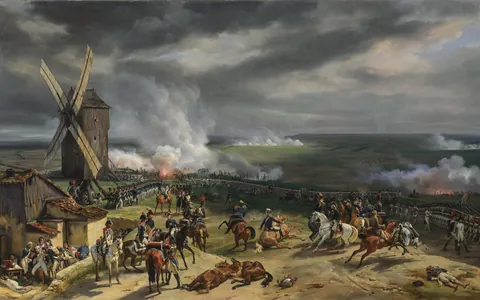
In the summer of 1792 the Duke of Brunswick led a Prussian and Austrian army into France, took Longwy and Verdun and marched toward Paris. Dumouriez and Kellermann joined forces to block him near Valmy, and on 20 September 1792 an artillery duel there ended with little infantry fighting. Brunswick, his army slowed by rain and weakened by dysentery, withdrew. It was a small action, but it saved Paris and the Revolution at a fragile moment.11

On 6 November Dumouriez beat the Austrians at Jemappes and took Brussels. The execution of Louis XVI in January 1793 then turned more of Europe against France, and the spring brought disaster: defeat at Neerwinden on 18 March, Dumouriez's defection to the Austrians, and royalist revolts in the Vendée, Lyon and Toulon. The Republic answered with the Committee of Public Safety and, in August 1793, the levée en masse, a call-up of all able-bodied men organized by Lazare Carnot. It gave France armies larger than any its enemies could field.12
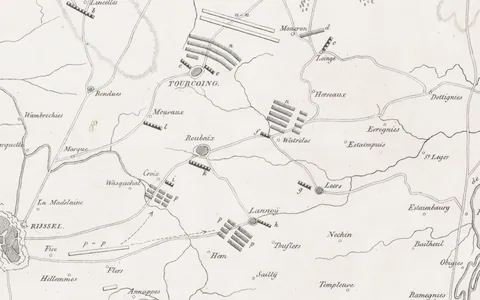
The new armies turned the war. Jourdan forced the Austrians to lift the siege of Maubeuge with a victory at Wattignies in October 1793, and in December the Republic retook Toulon from the royalists and their British and Spanish allies, a siege in which a young artillery officer, Napoleon Bonaparte, made his name. In May 1794 the French beat the allies at Tourcoing, and on 26 June 1794 Jourdan won at Fleurus, which Britannica calls the most significant battle of the First Coalition war. The allies then abandoned Belgium, which France annexed.13
Bonaparte in Italy: Montenotte, Rivoli and Campo Formio
In 1796 the Directory gave Bonaparte command of the Army of Italy. His plan was to split the Sardinian and Austrian armies and beat each in turn. After Montenotte and a string of engagements lasting less than three weeks, Sardinia left the war, giving up Savoy and Nice in the Armistice of Cherasco on 28 April 1796. Bonaparte then beat the Austrians at Lodi on 10 May.14
The campaign then turned on the fortress of Mantua, which Austria sent army after army to relieve. Bonaparte beat them by concentrating against each column in turn: at Castiglione in August, at Arcole in November, after costly fighting in the marshes of the Adige, and at Rivoli on 14 January 1797, where he routed Alvinczy's army. Mantua surrendered on 2 February. Britannica sees in the campaign the birth of a new system of war: divide the enemy, then mass superior strength at the chosen point.15

Bonaparte then marched on Vienna. At Leoben, on 18 April 1797, Austria signed peace preliminaries, and the Treaty of Campo Formio of 17 October 1797 ended the War of the First Coalition. Austria gave up Belgium and Lombardy, accepted the Cisalpine Republic and agreed that France could take the left bank of the Rhine. In return it received Venice and the Venetian lands east of the Adige, which ended the old republic of Venice.16

The war at sea
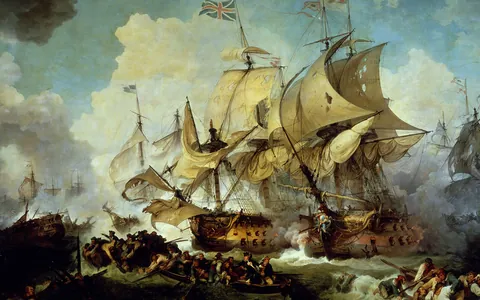
Britain fought its war mostly at sea and in the colonies. On the Glorious First of June 1794, far out in the Atlantic, Admiral Howe's Channel Fleet took six French ships of the line and sank another. Yet the grain convoy from America that the French fleet had come out to protect reached Brest safely, so both sides could claim success. In 1795 Britain seized Ceylon and the Cape from the Dutch, now France's allies.17
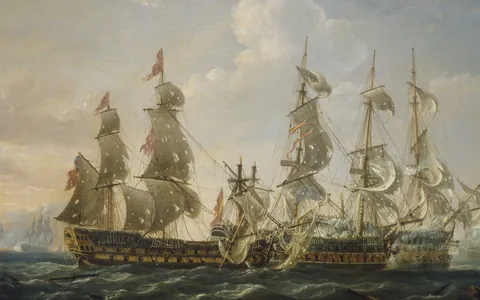
With Spain and the Netherlands on its side, France had enough ships to threaten British command of the sea in 1797, the year of the naval mutinies at Spithead and the Nore. Two victories eased the danger. Off Cape St Vincent on 14 February 1797, Sir John Jervis with 15 ships of the line beat a Spanish fleet of 27, and Commodore Horatio Nelson made his name by boarding two Spanish ships. On 11 October Admiral Duncan destroyed the Dutch fleet at Camperdown.18
Egypt: the Battle of the Pyramids and the Nile
An invasion of Britain looked too risky, so Bonaparte and the Directory turned to Egypt, from which France could strike at British trade in the Levant and perhaps at India. The expedition sailed from Toulon on 19 May 1798, took Malta in June and landed near Alexandria on 1 July. Egypt was nominally Ottoman but ruled by the Mamluks. On 21 July, at the Battle of the Pyramids, Bonaparte's divisional squares broke the charges of Murad Bey's Mamluk cavalry, and the French entered Cairo.19
Ten days later the campaign was doomed. On 1 August 1798 Nelson found the French fleet at anchor in Aboukir Bay and destroyed it in the Battle of the Nile; the flagship L'Orient blew up at about 10 p.m., killing the admiral and most of the crew. The army was cut off. The Ottoman Empire declared war in September, Bonaparte's march into Syria failed before Acre in 1799, where a British squadron under Sir Sidney Smith helped the defenders, and in August 1799 he handed command to Kléber and sailed for France.20

The army he left behind held out for two more years. In March 1801 a British army under Sir Ralph Abercromby landed in Egypt, an operation described in our guide to the landing at Aboukir, and beat the French outside Alexandria; with Ottoman forces it compelled the last French troops to surrender in the summer of 1801. The National Army Museum notes that the Anglo-Ottoman victory helped to safeguard Britain's possessions in India.21
The Second Coalition: Suvorov, Marengo and Hohenlinden
While Bonaparte was in Egypt, new French conquests provoked a second coalition. French troops proclaimed a Roman Republic in February 1798 and occupied Switzerland; Naples attacked the Romans and was overrun; Russia, Britain and the Ottoman Empire drew together. Austria went to war again in March 1799.22
In 1799 the coalition came close to victory. In Germany and Switzerland the Archduke Charles drove the French back, and in northern Italy an Austro-Russian army under Alexander Suvorov beat them at Cassano on the Adda in April, on the Trebbia in June and at Novi in August, and took Turin. Polish legions raised in Italy in 1797 by Jan Henryk Dąbrowski, a veteran of Kościuszko's rising, fought on the French side and suffered heavy losses at the Trebbia.23
The tide turned in the autumn. In late September Masséna crushed Korsakov's Russians at Zurich, Suvorov's army escaped over the Alps only after a hard retreat, and an Anglo-Russian landing in Holland ended in evacuation. In October Tsar Paul recalled his troops and left the coalition. On 9 and 10 November 1799 (18 and 19 Brumaire) Bonaparte, back from Egypt, overthrew the Directory and made himself First Consul.24
In 1800 Bonaparte led a reserve army over the Alps into Italy, behind the Austrians. At Marengo on 14 June he came close to defeat until Desaix's division arrived in the late afternoon; Desaix was killed leading the counterattack, and the Austrian commander Melas agreed the next day to withdraw from Lombardy. Don Barry, writing for the Fondation Napoléon, calls Marengo a costly and inconclusive win, but it raised Bonaparte's prestige and power in France to their height.25
The decisive blow came in Germany. On 3 December 1800 General Jean Victor Moreau destroyed the army of Archduke John at Hohenlinden, east of Munich, and advanced within reach of Vienna. Austria asked for an armistice, and on 9 February 1801 it signed the Treaty of Lunéville.26
Key commanders of the French Revolutionary Wars
On the French side the wars made the names of Dumouriez and Kellermann at Valmy, Jourdan at Fleurus, Lazare Carnot, the organizer of the armies, Masséna, Moreau, Desaix and Kléber, and above all Napoleon Bonaparte, who rose from the siege of Toulon to supreme power. The coalition's best generals were the Archduke Charles of Austria and the Russian Alexander Suvorov, whom EBSCO calls the most formidable of the commanders arrayed against the French. At sea the British admirals Howe, Jervis, Duncan and Horatio Nelson kept the French navy in check.27
Who won the French Revolutionary Wars?
On land, France won. At Lunéville, signed by Joseph Bonaparte for France and Count Ludwig von Cobenzl for Austria, Austria confirmed the terms of Campo Formio, ceded the left bank of the Rhine and recognized the Batavian, Helvetic, Cisalpine and Ligurian republics, French satellites in all but name. The German princes who lost land west of the Rhine were to be compensated elsewhere in the Holy Roman Empire.28
At sea and overseas, Britain held its own. Without allies, a war-weary Britain made peace at Amiens on 27 March 1802. It kept Trinidad, taken from Spain, and Ceylon, taken from the Dutch, and handed back its other conquests; it was to return Malta to the Knights of St John and Egypt to the Ottoman Empire, while France was to leave Naples and the Papal States. EBSCO's reference account calls the result a negotiated cease-fire with no victor, and Britannica sees the peace as the product of exhaustion: Bonaparte seemed invincible on land and Britain at sea, and neither could hurt the other.29
The peace did not last. Many of its terms were never carried out, Britain kept Malta, and in May 1803 Britain declared war again, the start of the Napoleonic Wars, which ran until 1815. What the Revolutionary Wars left behind was a France that had reached the Rhine and dominated the Low Countries, Switzerland and northern Italy, a general who had become its ruler, and a new kind of war, fought by mass armies raised from the whole nation.30
Major battles of the French Revolutionary Wars
Our guides to the battles of the French Revolutionary Wars are listed below in date order, from Valmy in 1792 to the British landing in Egypt in 1801, with the battles of the Vendée among them. For the most famous battles of the whole age, see the greatest Napoleonic battles.
- 1792Battle of Valmy, 1792France vs Prussia (First Coalition)
On 20 September 1792 the French held the hills around Valmy under a Prussian cannonade; Brunswick turned back, and the French Republic was proclaimed the next day.
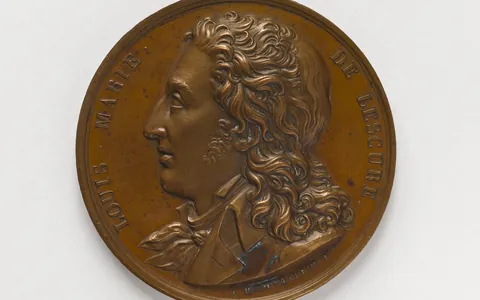
- 1793Battle of La Tremblaye, 1793French Republic vs Catholic and Royal Army
On 15 October 1793 the Vendéen rebels met the Republican army near Cholet. Their general Lescure was shot in the head, and two days later the revolt broke at Cholet.
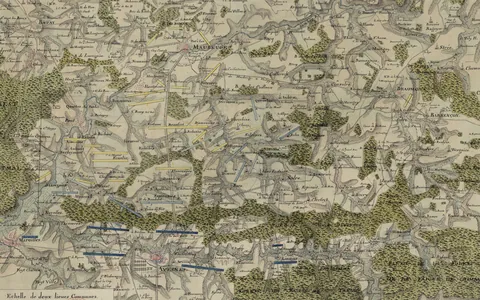
- 1793Battle of Wattignies, 1793French Republic vs Austria and the Coalition
In October 1793 Jourdan's raw Army of the North broke the Austrian line at Wattignies after two days of attacks and forced the Coalition to lift the siege of Maubeuge.
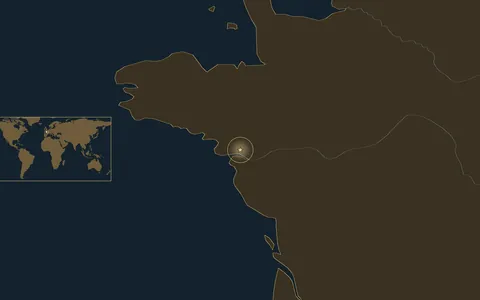
- 1793Battle of Savenay, 1793French Republic vs Vendéen insurgents
On 22 and 23 December 1793 Kléber and Marceau caught the last of the Vendéen army near the Loire estuary. Savenay ended the Virée de Galerne, and the repression began.
- 1794Battle of Tourcoing, 1794French Republic (Army of the North) vs First Coalition
On 17 and 18 May 1794 six Allied columns tried to trap the French army near Lille. They lost touch, and Souham broke the Duke of York's column at Tourcoing.
- 1794The Glorious First of June, 1794Great Britain vs French Republic
On 1 June 1794 Lord Howe took six French ships of the line far out in the Atlantic. The French admiral lost the battle but saved the grain convoy France was waiting for.
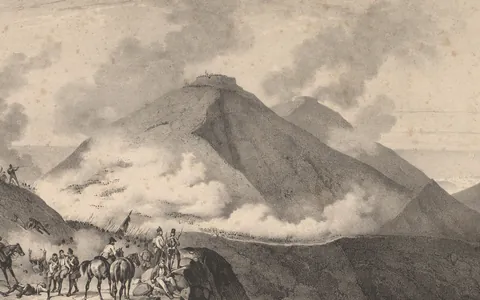
- 1796Battle of Montenotte, 1796French Republic (Army of Italy) vs Habsburg Monarchy
On 12 April 1796 Masséna turned the Austrian flank in the fog above Savona while Rampon's redoubt held. Montenotte was Napoleon's first victory as an army commander.
- 1797Battle of Cape St. Vincent, 1797Great Britain vs Spain
On 14 February 1797 Jervis cut a Spanish fleet twice his size in two. Nelson left the line without orders to stop its escape and boarded two Spanish ships, one from the deck of the other.
- 1797Battle of Fishguard, 1797Pembrokeshire militia and volunteers vs French expeditionary force
In February 1797 about 1,400 French troops under William Tate landed near Fishguard to start a revolution; two days later, drunk and bluffed, they surrendered to Lord Cawdor on Goodwick Sands.
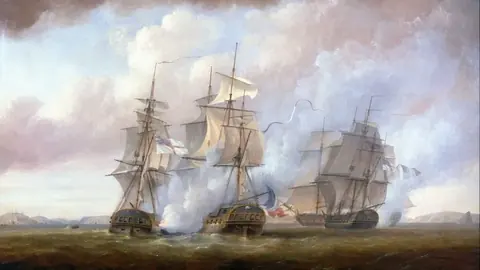
- 1798Battle of the Pyramids, 1798French Republic (Army of the Orient) vs Mamluk beys of Egypt
On 21 July 1798 Bonaparte's divisional squares broke Murad Bey's Mamluk cavalry at Embabeh, opposite Cairo, in sight of the pyramids of Giza.
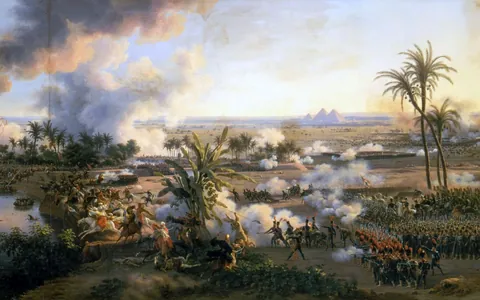
- 1799Battle of Cassano, 1799Russia and Austria vs France
On 27 April 1799 Suvorov's Russians and Austrians bridged the Adda in the night, broke Moreau's thinly stretched line and took Milan two days later.
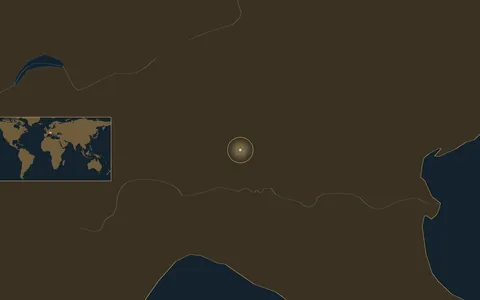
- 1799Battle of the Trebbia, 1799Russian Empire and Habsburg Monarchy vs French Republic and the Polish Legion
From 17 to 19 June 1799 Suvorov's Russians and Austrians beat Macdonald's French on the Trebbia, and Dąbrowski's Polish Legion was nearly destroyed.
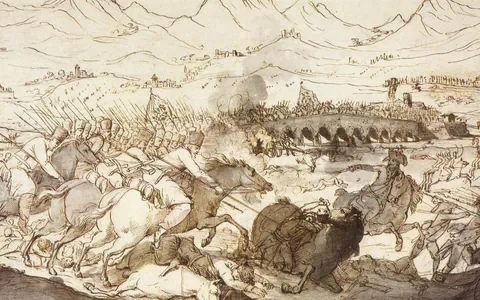
- 1801Battle of Abukir, 1801United Kingdom vs French Republic (Army of the Orient)
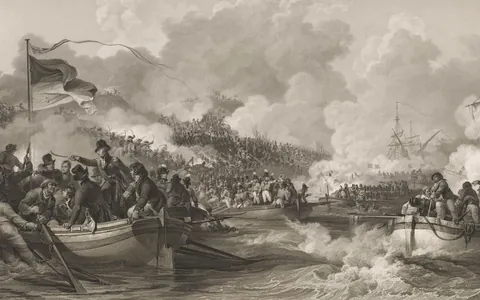
On 8 March 1801 Abercromby's army rowed almost a mile under fire into Aboukir Bay. Moore's men took the great sand hill in twenty minutes, and the campaign that drove the French from Egypt had begun.
Timeline of the French Revolutionary Wars
- 1791August: Austria and Prussia issue the Declaration of Pillnitz.31
- 179220 April: France declares war on Austria. 20 September: the cannonade of Valmy. 6 November: Dumouriez wins at Jemappes and takes Brussels.32
- 1793February: Britain and the Dutch Republic join the war. March: the Vendée rises. August: the levée en masse. December: Toulon retaken; the Vendéan army destroyed at Savenay.33
- 17941 June: the Glorious First of June. 26 June: Jourdan wins at Fleurus.34
- 1795The Dutch, Prussia and Spain make peace with France.35
- 1796April: Bonaparte's campaign in Italy opens at Montenotte; Sardinia leaves the war (Cherasco, 28 April). November: Arcole.36
- 179714 January: Rivoli. 14 February: Cape St Vincent. 11 October: Camperdown. 17 October: the Treaty of Campo Formio ends the First Coalition.37
- 179819 May: the expedition to Egypt sails. 21 July: the Pyramids. 1 August: the Battle of the Nile.38
- 1799March: Austria goes to war again. April to August: Suvorov's victories in Italy, including the Trebbia. September: Masséna wins at Zurich. 9 and 10 November: Bonaparte seizes power.39
- 180014 June: Marengo. 3 December: Hohenlinden.40
- 18019 February: the Treaty of Lunéville. March: a British army lands in Egypt; the French there surrender in the summer.41
- 180227 March: the Treaty of Amiens between Britain and France.42
Where to read next
The French Revolutionary Wars open the Napoleonic era. The story continues in our guide to the Napoleonic Wars of 1803 to 1815 and in Napoleon's invasion of Russia. For France across the centuries see the military history of France, and for Britain's war at sea the military history of Britain and our profile of Horatio Nelson.
Notes
A number in the text points to a note; each note names the works that paragraph draws on, listed in full under Sources.
- EBSCO Research Starters, “French Revolutionary Wars”; The Oxford Companion to British History; Encyclopædia Britannica, “First French Empire”. ↩
- EBSCO Research Starters, “Early Wars of the French Revolution”; EBSCO Research Starters, “French Revolutionary Wars”; Encyclopædia Britannica, “French Revolutionary wars”. ↩
- EBSCO Research Starters, “French Revolutionary Wars”; The Oxford Companion to British History; Encyclopædia Britannica, “French Revolutionary wars”. ↩
- Encyclopædia Britannica, “French Revolutionary wars”; EBSCO Research Starters, “Early Wars of the French Revolution”; EBSCO Research Starters, “French Revolutionary Wars”. ↩
- EBSCO Research Starters, “Early Wars of the French Revolution”; EBSCO Research Starters, “French Revolutionary Wars”; Encyclopædia Britannica, “French Revolutionary wars”. ↩
- EBSCO Research Starters, “French Revolutionary Wars”; The Oxford Companion to British History; Encyclopædia Britannica, “French Revolutionary wars”; EBSCO Research Starters, “Early Wars of the French Revolution”. ↩
- EBSCO Research Starters, “French Revolutionary Wars”; EBSCO Research Starters, “Early Wars of the French Revolution”; Encyclopædia Britannica, “French Revolutionary wars”; Encyclopædia Britannica, “First French Empire”. ↩
- EBSCO Research Starters, “French Revolutionary Wars”; EBSCO Research Starters, “Early Wars of the French Revolution”; The Oxford Companion to British History; Encyclopædia Britannica, “French Revolutionary wars”. ↩
- Encyclopædia Britannica, “French Revolutionary wars”; EBSCO Research Starters, “Early Wars of the French Revolution”; Encyclopædia Britannica, “French Revolutionary wars”; EBSCO Research Starters, “French Revolutionary Wars”; Encyclopædia Britannica, “French Revolutionary wars”; Fondation Napoléon, “The Egyptian Campaign”. ↩
- Encyclopædia Britannica, “Wars of the Vendée”; EBSCO Research Starters, “War in the Vendée”. ↩
- Encyclopædia Britannica, “French Revolutionary wars”; EBSCO Research Starters, “Early Wars of the French Revolution”; EBSCO Research Starters, “French Revolutionary Wars”; Gale Encyclopedia of World History. ↩
- EBSCO Research Starters, “Early Wars of the French Revolution”; EBSCO Research Starters, “French Revolutionary Wars”; Gale Encyclopedia of World History; Encyclopædia Britannica, “French Revolutionary wars”. ↩
- EBSCO Research Starters, “French Revolutionary Wars”; Gale Encyclopedia of World History; EBSCO Research Starters, “Early Wars of the French Revolution”; Encyclopædia Britannica, “Battle of Fleurus”. ↩
- Encyclopædia Britannica, “French Revolutionary wars”; EBSCO Research Starters, “French Revolutionary Wars”; Gale Encyclopedia of World History. ↩
- Encyclopædia Britannica, “French Revolutionary wars”; EBSCO Research Starters, “French Revolutionary Wars”; Gale Encyclopedia of World History. ↩
- Encyclopædia Britannica, “French Revolutionary wars”; EBSCO Research Starters, “French Revolutionary Wars”; Encyclopædia Britannica, “French Revolutionary wars”; Fondation Napoléon, “Le traité de Campoformio, 17 octobre 1797”. ↩
- The Oxford Companion to British History; Royal Museums Greenwich, “The Battle of the First of June, 1794”; Encyclopædia Britannica, “French Revolutionary wars”; The Oxford Companion to British History; EBSCO Research Starters, “French Revolutionary Wars”. ↩
- Encyclopædia Britannica, “French Revolutionary wars”; The Oxford Companion to British History; Royal Museums Greenwich, “The Battle of Cape St Vincent, 14 February 1797”; Gale Encyclopedia of World History. ↩
- Encyclopædia Britannica, “French Revolutionary wars”; Encyclopædia Britannica, “Battle of the Pyramids”; Fondation Napoléon, “The Egyptian Campaign”; Gale Encyclopedia of World History. ↩
- Encyclopædia Britannica, “Battle of the Nile”; Fondation Napoléon, “The destruction of l’Orient during the Battle of the Nile (Aboukir)”; Royal Museums Greenwich, “The Destruction of ‘L’Orient’ at the Battle of the Nile, 1 August 1798”; Encyclopædia Britannica, “French Revolutionary wars”; Fondation Napoléon, “The Egyptian Campaign”; EBSCO Research Starters, “French Revolutionary Wars”. ↩
- The Oxford Companion to British History; National Army Museum, “Wars of the French Revolution”; Encyclopædia Britannica, “First French Empire”. ↩
- Encyclopædia Britannica, “French Revolutionary wars”; EBSCO Research Starters, “French Revolutionary Wars”; The Oxford Companion to British History; Fondation Napoléon, “The Egyptian Campaign”. ↩
- Encyclopædia Britannica, “French Revolutionary wars”; EBSCO Research Starters, “French Revolutionary Wars”; Encyclopædia Britannica, “Jan Henryk Dąbrowski”; Zintegrowana Platforma Edukacyjna, “Legiony Polskie we Włoszech”. ↩
- Encyclopædia Britannica, “French Revolutionary wars”; EBSCO Research Starters, “French Revolutionary Wars”; The Oxford Companion to British History; Fondation Napoléon, “18 Brumaire”. ↩
- Encyclopædia Britannica, “Battle of Marengo”; EBSCO Research Starters, “French Revolutionary Wars”; Fondation Napoléon, “The Second Italian Campaign”; Don Barry, “Monumental Meaning at Marengo 1800”. ↩
- Encyclopædia Britannica, “French Revolutionary wars”; EBSCO Research Starters, “French Revolutionary Wars”; Fondation Napoléon, “The Second Italian Campaign”; Fondation Napoléon, “Le traité de Lunéville”. ↩
- EBSCO Research Starters, “French Revolutionary Wars”; Gale Encyclopedia of World History; EBSCO Research Starters, “Early Wars of the French Revolution”; Encyclopædia Britannica, “French Revolutionary wars”. ↩
- Encyclopædia Britannica, “First French Empire”; Fondation Napoléon, “Le traité de Lunéville”; EBSCO Research Starters, “French Revolutionary Wars”; Encyclopædia Britannica, “Treaty of Lunéville”. ↩
- Encyclopædia Britannica, “Treaty of Amiens”; Fondation Napoléon, “Peace of Amiens”; EBSCO Research Starters, “French Revolutionary Wars”; Encyclopædia Britannica, “First French Empire”; Encyclopædia Britannica, “Treaty of Lunéville”. ↩
- EBSCO Research Starters, “French Revolutionary Wars”; The Oxford Companion to British History; Encyclopædia Britannica, “Treaty of Amiens”; Encyclopædia Britannica, “Treaty of Lunéville”; Gale Encyclopedia of World History; Encyclopædia Britannica, “French Revolutionary wars”. ↩
- Encyclopædia Britannica, “French Revolutionary wars”; EBSCO Research Starters, “Early Wars of the French Revolution”. ↩
- EBSCO Research Starters, “Early Wars of the French Revolution”; Encyclopædia Britannica, “French Revolutionary wars”; EBSCO Research Starters, “French Revolutionary Wars”. ↩
- EBSCO Research Starters, “French Revolutionary Wars”; EBSCO Research Starters, “Early Wars of the French Revolution”; Encyclopædia Britannica, “Wars of the Vendée”. ↩
- The Oxford Companion to British History; Royal Museums Greenwich, “The Battle of the First of June, 1794”; Encyclopædia Britannica, “Battle of Fleurus”; EBSCO Research Starters, “French Revolutionary Wars”. ↩
- EBSCO Research Starters, “French Revolutionary Wars”; The Oxford Companion to British History. ↩
- Encyclopædia Britannica, “French Revolutionary wars”; EBSCO Research Starters, “French Revolutionary Wars”. ↩
- Encyclopædia Britannica, “French Revolutionary wars”; Encyclopædia Britannica, “French Revolutionary wars”; EBSCO Research Starters, “French Revolutionary Wars”; Fondation Napoléon, “Le traité de Campoformio, 17 octobre 1797”. ↩
- Encyclopædia Britannica, “French Revolutionary wars”; Fondation Napoléon, “The Egyptian Campaign”. ↩
- Encyclopædia Britannica, “French Revolutionary wars”; EBSCO Research Starters, “French Revolutionary Wars”; Fondation Napoléon, “18 Brumaire”. ↩
- Encyclopædia Britannica, “Battle of Marengo”; Encyclopædia Britannica, “French Revolutionary wars”; EBSCO Research Starters, “French Revolutionary Wars”. ↩
- Encyclopædia Britannica, “First French Empire”; Fondation Napoléon, “Le traité de Lunéville”; The Oxford Companion to British History; National Army Museum, “Wars of the French Revolution”. ↩
- Encyclopædia Britannica, “Treaty of Amiens”; EBSCO Research Starters, “French Revolutionary Wars”. ↩
Sources
- EBSCO Research Starters, “French Revolutionary Wars”.
- The Oxford Companion to British History, “Revolutionary and Napoleonic wars”, via Encyclopedia.com.
- Encyclopædia Britannica, “First French Empire”.
- EBSCO Research Starters, “Early Wars of the French Revolution”.
- Encyclopædia Britannica, “French Revolutionary wars: Formation of the Second Coalition”.
- Encyclopædia Britannica, “French Revolutionary wars: Europe during the Revolutionary years”.
- Encyclopædia Britannica, “French Revolutionary wars”.
- Encyclopædia Britannica, “French Revolutionary wars: The coup of 18 Fructidor and the Treaty of Campo Formio”.
- Encyclopædia Britannica, “French Revolutionary wars: Campaigns of 1794”.
- Fondation Napoléon, “The Egyptian Campaign”.
- Encyclopædia Britannica, “Wars of the Vendée”.
- EBSCO Research Starters, “War in the Vendée”.
- Encyclopædia Britannica, “French Revolutionary wars: Campaign of 1792”.
- Gale Encyclopedia of World History: War, “French Revolution and Napoleonic Wars (1789 to 1815)”, via Encyclopedia.com.
- Encyclopædia Britannica, “Battle of Fleurus”.
- Encyclopædia Britannica, “French Revolutionary wars: Campaign in Italy”.
- Fondation Napoléon, “Le traité de Campoformio, 17 octobre 1797”.
- The Oxford Companion to British History, “Glorious First of June”, via Encyclopedia.com.
- Royal Museums Greenwich, “The Battle of the First of June, 1794” (Philippe-Jacques de Loutherbourg).
- Royal Museums Greenwich, “The Battle of Cape St Vincent, 14 February 1797” (William Allan).
- Encyclopædia Britannica, “Battle of the Pyramids”.
- Encyclopædia Britannica, “Battle of the Nile”.
- Fondation Napoléon, “The destruction of l’Orient during the Battle of the Nile (Aboukir)”.
- Royal Museums Greenwich, “The Destruction of ‘L’Orient’ at the Battle of the Nile, 1 August 1798” (George Arnald).
- National Army Museum, “Wars of the French Revolution”.
- Encyclopædia Britannica, “Jan Henryk Dąbrowski”.
- Zintegrowana Platforma Edukacyjna (Polish Ministry of Education), “Legiony Polskie we Włoszech”.
- Fondation Napoléon, “18 Brumaire: the context and course of a coup d’État”.
- Encyclopædia Britannica, “Battle of Marengo”.
- Fondation Napoléon, “The Second Italian Campaign”.
- Don Barry, Fondation Napoléon, “Monumental Meaning at Marengo 1800”.
- Fondation Napoléon, “Le traité de Lunéville”.
- Encyclopædia Britannica, “Treaty of Lunéville”.
- Encyclopædia Britannica, “Treaty of Amiens”.
- Fondation Napoléon, “Peace of Amiens”.






