

What was Napoleon's invasion of Russia and who won?
It was Napoleon's 1812 campaign against the Russian Empire. A multinational Grande Armée of about 450,000 crossed the Neman in June, fought the bloody Battle of Borodino and took Moscow, but Alexander I refused to make peace. Russia won: the retreat destroyed the army, and only about 100,000 to 112,000 men came back.1
In June 1812 Napoleon led an army of about 450,000 men across the Neman River into the Russian Empire. Six months later the last survivors of that Grande Armée recrossed the same river, and the campaign that was meant to force Tsar Alexander I back into line had instead started the fall of the French Empire. Russians call it the Patriotic War of 1812; Napoleon's own proclamation to his troops called it the Second Polish War.2
This guide belongs to our hub on the Napoleonic Wars. It covers the aims of both emperors, Poland's part under Prince Józef Poniatowski, the march to Moscow, the Battle of Borodino, the Battle of Tarutino, the Battle of Maloyaroslavets, the crossing of the Berezina and the count of the dead. Where the sources disagree on numbers, we give the range and say who gives which figure.3
Causes of Napoleon's invasion of Russia
In July 1807 Napoleon and Alexander I made peace at Tilsit and became allies. Under the treaties Russia joined the Continental System, Napoleon's blockade of trade with Britain, and the Duchy of Warsaw was created as a French client state out of Polish lands held by Prussia.4
The blockade hurt the Russian economy. On 31 December 1810 Alexander issued a decree that put heavy duties on imported French goods and opened Russian ports to neutral shipping, which in practice took Russia out of the system. Napoleon had already annexed the Duchy of Oldenburg, and from then on both empires prepared for war.5
Poland was the second quarrel. Russia saw French influence in the Duchy of Warsaw as an intrusion into its own sphere and feared a restored Polish kingdom on its border. Alexander wanted a guarantee that Poland would not be revived, and Napoleon would not give one.6
Napoleon did not mean to conquer Russia. He meant to destroy the Russian armies in a quick campaign and force Alexander to return to the blockade, and he believed the tsar would give way once Moscow fell. He expected a short war: Britannica says he thought it would be over within 30 days, PBS twenty days and the World History Encyclopedia three weeks.7
Russia, for its part, made its flanks safe first. It came to terms with Sweden in April 1812 and made peace with the Ottoman Empire in May, freeing its flanks. Facing a far larger invader, the Russian command chose to retreat rather than risk its armies in a battle on the frontier.8
Who fought in 1812: the Grande Armée and the Russian armies
About 450,000 men made the first crossing of the Neman (Britannica gives 453,000, the World History Encyclopedia 449,000 in the first line), and 612,000 to 615,000 entered Russia in the course of the campaign. Only a third to a half of them were French: Britannica counts little more than 200,000 French, the World History Encyclopedia 302,000. The rest were Germans, Poles, Lithuanians, Italians, Austrians, Swiss, Dutch and others.9
Two great powers marched as unwilling allies. Austria sent a corps of about 30,000 to 34,000 under Prince Karl Philipp zu Schwarzenberg to the southern flank, and Prussia, by a treaty of 24 February 1812, let the Grande Armée cross its territory and supplied a contingent of 20,000 that served on the northern flank under Marshal Jacques Macdonald.10
Against them stood the western armies of the Russian Empire, roughly 210,000 to 250,000 men in all. The figures differ by source: Mikhail Barclay de Tolly's First Western Army had 118,000 to 129,000, Prince Pyotr Bagration's Second Army 35,000 regulars plus Cossacks by Britannica's count but 49,000 to 58,000 by others, and Alexander Tormasov's Third Army 40,000 to 44,000 in the south.11
The Russian way of war in 1812 was retreat and attrition. The armies fell back east, burning crops and villages as they went, while Cossack cavalry harried the invaders' flanks and rear. Kutuzov later organized partisan detachments to strike at the invaders as well.12
Poland in 1812: the Duchy of Warsaw and the "Second Polish War"
For Poles the war was a chance to undo the partitions. The Duchy of Warsaw, ruled by the King of Saxony and enlarged with Galician lands in 1809, had an army commanded by Prince Józef Poniatowski. By the end of May 1812 Polish forces, counting the Duchy's own units and Polish regiments in French service, numbered about 100,000 by Helena Mancewicz's count; the World History Encyclopedia puts the Poles and Lithuanians in the Grande Armée at 90,000.13
Napoleon played on those hopes. In his proclamation to the army at Wilkowiszki (Vilkaviškis) on 22 June 1812 he announced that the second Polish war had begun. On 28 June the extraordinary Sejm in Warsaw formed the General Confederation of the Kingdom of Poland, which proclaimed the kingdom restored, and on 1 July Napoleon set up a provisional government for Lithuania in Vilnius.14
The restored kingdom stayed on paper. The historian Dominika Rychel-Mantur finds that Napoleon treated the Confederation as a call to arms rather than a government: its members had no real powers, and their work soon came down to publishing propaganda pamphlets.15
The Polish troops of the Duchy formed the Grande Armée's V Corps under Poniatowski, about 36,000 men on the right wing under Jérôme Bonaparte. V Corps fought at Smolensk, held the right flank at Borodino, supported Murat at Tarutino and fought on at Maloyaroslavets and the Berezina. Its losses were huge, and Poniatowski, injured on the retreat, had to hand over his command before the remnants reached Warsaw in mid-December.16
From the Neman to Moscow: how the invasion unfolded

The main army began crossing the Neman on 24 June 1812 and reached Vilnius on 28 June, but Barclay had already slipped away. Napoleon tried to keep the two Russian armies apart and destroy them one at a time; instead Bagration escaped Marshal Louis-Nicolas Davout's attempt to cut him off, and the two armies joined at Smolensk in early August.17
The march itself did the damage that battle had not. Heat, hunger, sickness and desertion ran through the columns, the supply trains could not keep up, and the horses died for lack of forage. The Grande Armée lost some 100,000 to 150,000 men before its first major battle, by the estimates of the World History Encyclopedia and PBS.18
At Smolensk, from 16 to 18 August, the French stormed the suburbs but early on 18 August the Russians withdrew, burning the town and the bridges behind them. Napoleon had taken a ruined city and still had no decisive victory. In August Alexander gave the command to the veteran Mikhail Kutuzov; sources date the appointment between 17 and 29 August.19

After Borodino on 7 September, Kutuzov gave up Moscow without a fight, telling his council of war at Fili that the loss of Moscow was not the loss of Russia. Napoleon entered the largely deserted city on 14 September, and fires broke out almost at once. Britannica and PBS both say the Russians themselves set the city on fire, at least in part.20
Napoleon waited in Moscow for a peace that never came. His offers to the tsar went unanswered, and Alexander did not sue for peace.21

The retreat from Moscow
On 19 October Napoleon left Moscow with about 95,000 to 110,000 men and ordered the Kremlin blown up, which damaged much of it. He meant to go home through Kaluga and the unravaged south, but Kutuzov blocked that road at Maloyaroslavets on 24 October, and Napoleon turned back onto the route he had come by, through country already stripped bare.22
Kutuzov shadowed the columns rather than seeking a second great battle. His advance guard fought them at Vyazma on 3 November and again around Krasnoi from 15 to 17 November, where Marshal Michel Ney's rear guard was cut off and escaped only across the ice of the Dnieper. The depots at Smolensk were looted when the army arrived on 9 November.23

After the Berezina the cold became extreme, with frosts of minus 20 to minus 30 degrees in early December. On 5 December, near Smorgon, Napoleon handed command to Murat and left for Paris ahead of the news. Typhus and chaos took more lives in Vilnius, and the last survivors recrossed the Neman at Kovno on 13 and 14 December.24
Major battles of Napoleon's Russian campaign
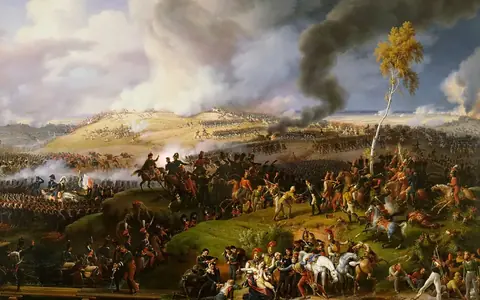
Borodino, 7 September 1812 (26 August in the Russian calendar of the time). About 110 kilometers west of Moscow, some 130,000 men of the Grande Armée attacked Kutuzov's 120,000 to 128,000 in fortified positions. Napoleon chose frontal assaults over a wide turning move, and the fighting lasted from dawn until afternoon. It cost more than 70,000 casualties in one day: about 45,000 to 50,000 Russian and 30,000 to 35,000 French and allied. Read more in our article on the Battle of Borodino.25
Who won Borodino is still argued. The Russians withdrew the next day and Napoleon claimed victory and took Moscow; Kutuzov also declared victory to his army, which survived to fight again. Britannica calls the battle inconclusive and judges that by refusing to commit his Imperial Guard Napoleon gave up the chance of a decisive rather than a narrow win.26
Tarutino (Vinkovo), 18 October 1812. From a fortified camp at Tarutino on the Kaluga road, Kutuzov threatened any French retreat to the south. On 18 October his troops attacked Murat's advance guard, supported by Poniatowski's V Corps. The Fondation Napoléon says the attack forced Murat to abandon his position; HistoryOfWar.org calls it a failure because Murat broke out. Either way, Napoleon began leaving Moscow the next day. See the Battle of Tarutino.27
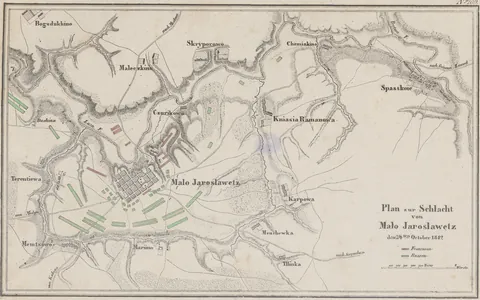
Maloyaroslavets, 24 October 1812. Prince Eugène de Beauharnais's corps fought the Russians for this small town on the road to Kaluga. The French held the town, but Kutuzov's army stood across the road beyond it, and Napoleon chose to retreat by the northern route. The World History Encyclopedia calls it a French tactical victory; for EBSCO it was the check that turned Napoleon back. See the Battle of Maloyaroslavets.28
The Berezina, 26 to 29 November 1812. Admiral Pavel Chichagov's army had taken the bridge at Borisov and burned it, while Peter Wittgenstein closed in from the north. General Jean-Baptiste Éblé's pontoniers, working in the icy river, built two bridges upstream at Studianka, and most of the army crossed on 26 to 28 November. On the morning of 29 November the bridges were burned, leaving stragglers, men, women and children on the eastern bank: nearly 10,000 by the Fondation Napoléon's count, 10,000 to 30,000 by that of Napoléon & Empire.29
The Fondation Napoléon calls the crossing a tactical victory and Napoléon & Empire a Pyrrhic one: it saved Napoleon and what was left of his army, but at a terrible price. The Fondation Napoléon's timeline puts the cost at 25,000 to 40,000 men, and Napoléon & Empire counts almost 25,000 combatants lost plus many thousands of stragglers.30
Key commanders of the 1812 campaign
Napoleon led the main army himself, with Marshals Davout, Ney and Murat commanding its corps and cavalry. Prince Eugène de Beauharnais led a second army of about 80,000 on the right, and Jérôme Bonaparte the right wing that included Poniatowski's Poles.31
Mikhail Barclay de Tolly commanded the First Western Army and conducted the long retreat to Smolensk, where Pyotr Bagration joined him with the Second Army. On the flanks, Wittgenstein held the north and Chichagov came up from the south to the Berezina.32

Mikhail Kutuzov, a veteran, took over in August. He fought at Borodino, gave up Moscow and then won the campaign largely by maneuver, from the Tarutino camp to the pursuit. EBSCO's account stresses that he valued keeping his army intact above winning battles; HistoryOfWar.org notes that historians still disagree whether he was a master of the campaign or merely let the winter and the Cossacks finish the work.33
Who won the 1812 campaign, and how many died?
The Russian Empire won. Napoleon reached Moscow but could not turn it into a peace, and the Grande Armée did not survive the road home. Of the 612,000 to 615,000 men who entered Russia, about 100,000 to 112,000 returned, by the estimates of Britannica and the World History Encyclopedia.34
The dead are counted differently. Britannica estimates 100,000 killed in action and 200,000 dead from other causes, with 100,000 taken prisoner; the World History Encyclopedia gives about 380,000 dead and 120,000 prisoners; HistoryOfWar.org about 370,000 dead and 200,000 captured. Russian military losses were also heavy: Britannica cites an estimate of 200,000 killed, the World History Encyclopedia about 150,000 soldiers dead.35
The material loss was as serious as the human one. Napoleon could rebuild the numbers of his army, but not the trained cavalry, the horses and the experienced cadres destroyed in Russia, and that weakness followed him into the campaigns of 1813.36
Did the Russian winter defeat Napoleon?
Only in part. Napoleon's 29th Bulletin broke the news of the disaster to the French public in mid-December, and the image of "General Winter" as the victor has lasted ever since. Yet the first heavy snow did not fall until early November, and Britannica concludes that the large majority of the losses happened before it.37
Disease, hunger, exhaustion and Russian attacks had already worn the army down on the march out and the long road back. The cold of late November and December, which reached minus 30 degrees at Kovno, killed many of the weakened survivors. EBSCO's account of Kutuzov argues that the winter could do its work only because the Tarutino maneuver had cut the French off from the supplies of the south.38
Consequences and memory of 1812
The disaster broke Napoleon's alliances. On 30 December 1812 the Prussian general Ludwig Yorck signed the Convention of Tauroggen with the Russians, taking his corps out of the war, and in February 1813 Prussia joined Russia against France. Austria followed later in 1813, and the Sixth Coalition went on to defeat Napoleon at the Battle of Leipzig and drive him into exile on Elba.39
For Poland the end was bitter. Russian troops occupied the Duchy of Warsaw in 1813, Poniatowski died on 19 October 1813 at Leipzig, the battle in which he had been made a Marshal of France, and in 1815 the Congress of Vienna made most of the Duchy a Kingdom of Poland joined to Russia, with Alexander I as its king.40
In Russia the war became the Patriotic War of 1812, the foundation of a national legend. Tchaikovsky's 1812 Overture celebrates Russia's defeat of the invasion. In France the engineer Charles Joseph Minard published in 1869 a flow map of the dwindling Grande Armée.41
Battles of Napoleon's invasion of Russia
Below, in date order, are our articles on the battles of the 1812 campaign.
- 1812The Battle of Borodino, 1812French Empire vs Russian Empire
The bloodiest single day of the Napoleonic Wars, before a ruinous Moscow.
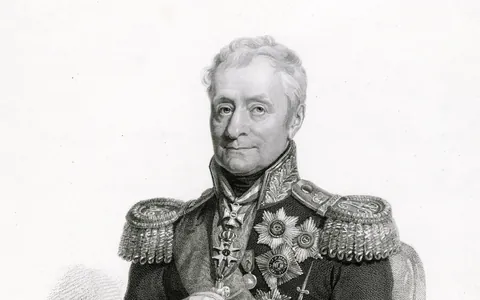
- 1812Battle of Tarutino, 1812Russian Empire vs France and the Duchy of Warsaw
On 18 October 1812 Kutuzov's army surprised Murat's vanguard at Tarutino, south of Moscow. Murat escaped, but the next day Napoleon began his retreat from the city.
- 1812Battle of Maloyaroslavets, 1812French Empire and Kingdom of Italy vs Russian Empire
On 24 October 1812 Eugène's corps fought the Russians for Maloyaroslavets. The French held the town, but Napoleon turned back onto the ravaged road to Smolensk.
Timeline of Napoleon's invasion of Russia
- 181031 December: Alexander I's decree on trade takes Russia out of the Continental System in practice.42
- 181222 June: Napoleon's proclamation at Wilkowiszki announces the "second Polish war".43
- 181224 June: the Grande Armée begins crossing the Neman; 28 June: it enters Vilnius, and the Sejm in Warsaw forms the General Confederation of the Kingdom of Poland.44
- 181216 to 18 August: Battle of Smolensk; the Russians withdraw from the burning city.45
- 18127 September: Battle of Borodino; 14 September: Napoleon enters Moscow, which begins to burn.46
- 181218 October: Battle of Tarutino; 19 October: the Grande Armée leaves Moscow.47
- 181224 October: Battle of Maloyaroslavets; Napoleon turns back onto the Smolensk road.48
- 18123 November: Vyazma; 15 to 17 November: fighting around Krasnoi.49
- 181226 to 29 November: crossing of the Berezina.50
- 18125 December: Napoleon leaves the army; 13 and 14 December: the last survivors recross the Neman.51
- 181230 December: Convention of Tauroggen; the Prussian corps leaves the war.52
Where to read next
The 1812 campaign was one chapter of the Napoleonic Wars, and its battles appear in our ranking of the greatest Napoleonic battles. For the two emperors, read Napoleon vs Alexander I; for Poland's part, the life of Józef Poniatowski and the military history of Poland. Test yourself with the Napoleonic battles quiz.
Notes
A number in the text points to a note; each note names the works that paragraph draws on, listed in full under Sources.
- Encyclopaedia Britannica, “French invasion of Russia”; Harrison W. Mark, “Napoleon's Invasion of Russia”; Encyclopaedia Britannica, “Battle of Borodino”; Daria Olivier, “Alexander I”. ↩
- Encyclopaedia Britannica, “French invasion of Russia”; Harrison W. Mark, “Napoleon's Invasion of Russia”; Daria Olivier, “Alexander I”; Napoleon, Readings in Modern European History; Fondation Napoléon, “Napoleon's Russian Campaign”. ↩
- Encyclopaedia Britannica, “French invasion of Russia”; Harrison W. Mark, “Napoleon's Invasion of Russia”. ↩
- Harrison W. Mark, “Napoleon's Invasion of Russia”; J. Rickard, “Napoleon's Russian Campaign of 1812”; Encyclopaedia Britannica, “Józef Antoni Poniatowski”. ↩
- PBS, Napoleon; Encyclopaedia Britannica, “Napoleonic Wars”; J. Rickard, “Napoleon's Russian Campaign of 1812”; Harrison W. Mark, “Napoleon's Invasion of Russia”. ↩
- J. Rickard, “Napoleon's Russian Campaign of 1812”; Harrison W. Mark, “Napoleon's Invasion of Russia”. ↩
- Harrison W. Mark, “Napoleon's Invasion of Russia”; Daria Olivier, “Alexander I”; Encyclopaedia Britannica, “French invasion of Russia”; PBS, Napoleon. ↩
- Encyclopaedia Britannica, “Napoleonic Wars”; J. Rickard, “Napoleon's Russian Campaign of 1812”; Encyclopaedia Britannica, “French invasion of Russia”. ↩
- Encyclopaedia Britannica, “French invasion of Russia”; Harrison W. Mark, “Napoleon's Invasion of Russia”. ↩
- Encyclopaedia Britannica, “French invasion of Russia”; Encyclopaedia Britannica, “Napoleonic Wars”; J. Rickard, “Napoleon's Russian Campaign of 1812”; Dominika Rychel-Mantur, “Tadeusz Matuszewicz”. ↩
- Encyclopaedia Britannica, “French invasion of Russia”; Harrison W. Mark, “Napoleon's Invasion of Russia”; J. Rickard, “Napoleon's Russian Campaign of 1812”. ↩
- National Army Museum, “The Emperor's samovars”; PBS, Napoleon; Waterloo Association, Age of Revolution; EBSCO Research Starters, “Mikhail Illarionovich Kutuzov”; Daria Olivier, “Alexander I”. ↩
- J. Rickard, “Napoleon's Russian Campaign of 1812”; Harrison W. Mark, “Napoleon's Invasion of Russia”; Encyclopaedia Britannica, “Józef Antoni Poniatowski”; dzieje.pl, “Kalendarz dat”; Helena Mancewicz, “Zmiany ustrojowe w Księstwie Warszawskim w 1812/1813 r.”. ↩
- Napoleon, Readings in Modern European History; dzieje.pl, “Kalendarz dat”; J. Rickard, “Napoleon's Russian Campaign of 1812”; Dominika Rychel-Mantur, “Tadeusz Matuszewicz”; Napoléon & Empire, “Napoleonic timeline of 1812”. ↩
- Dominika Rychel-Mantur, “Tadeusz Matuszewicz”; Helena Mancewicz, “Zmiany ustrojowe w Księstwie Warszawskim w 1812/1813 r.”. ↩
- dzieje.pl, “Kalendarz dat”; dzieje.pl, “200 lat temu w krypcie św. Leonarda na Wawelu pochowany został książę Józef Poniatowski”; J. Rickard, “Napoleon's Russian Campaign of 1812”; Napoléon & Empire, “Józef Antoni Poniatowski, Prince”; Fondation Napoléon, “Poniatowski, Józef”; FrenchEmpire.net, “Józef Antoni Poniatowski (1763 to 1813)”; J. Rickard, “Battle of Vinkovo or Tarutino, 18 October 1812”; J. Rickard, “Prince Josef Anton Poniatowski (1763 to 1813)”. ↩
- Encyclopaedia Britannica, “French invasion of Russia”; Harrison W. Mark, “Napoleon's Invasion of Russia”; Napoléon & Empire, “Napoleonic timeline of 1812”; J. Rickard, “Napoleon's Russian Campaign of 1812”. ↩
- Encyclopaedia Britannica, “French invasion of Russia”; PBS, Napoleon; Harrison W. Mark, “Napoleon's Invasion of Russia”. ↩
- Encyclopaedia Britannica, “French invasion of Russia”; Harrison W. Mark, “Napoleon's Invasion of Russia”; Napoléon & Empire, “Napoleonic timeline of 1812”; J. Rickard, “Napoleon's Russian Campaign of 1812”; EBSCO Research Starters, “Mikhail Illarionovich Kutuzov”. ↩
- EBSCO Research Starters, “Mikhail Illarionovich Kutuzov”; Daria Olivier, “Alexander I”; PBS, Napoleon; Encyclopaedia Britannica, “French invasion of Russia”; Napoléon & Empire, “Napoleonic timeline of 1812”. ↩
- Encyclopaedia Britannica, “French invasion of Russia”; J. Rickard, “Napoleon's Russian Campaign of 1812”; Napoléon & Empire, “Napoleonic timeline of 1812”; Daria Olivier, “Alexander I”. ↩
- Encyclopaedia Britannica, “French invasion of Russia”; J. Rickard, “Napoleon's Russian Campaign of 1812”; J. Rickard, “Battle of Vinkovo or Tarutino, 18 October 1812”; Napoléon & Empire, “Napoleonic timeline of 1812”; Fondation Napoléon, “Napoleon's Russian Campaign”; EBSCO Research Starters, “Mikhail Illarionovich Kutuzov”. ↩
- EBSCO Research Starters, “Mikhail Illarionovich Kutuzov”; Encyclopaedia Britannica, “French invasion of Russia”; Fondation Napoléon, “Napoleon's Russian Campaign”; Napoléon & Empire, “Napoleonic timeline of 1812”; J. Rickard, “Napoleon's Russian Campaign of 1812”. ↩
- J. Rickard, “Napoleon's Russian Campaign of 1812”; Fondation Napoléon, “Napoleon's Russian Campaign”; Encyclopaedia Britannica, “French invasion of Russia”; Harrison W. Mark, “Napoleon's Invasion of Russia”; Napoléon & Empire, “Napoleonic timeline of 1812”. ↩
- Encyclopaedia Britannica, “Battle of Borodino”; EBSCO Research Starters, “Mikhail Illarionovich Kutuzov”; PBS, Napoleon; National Army Museum, “The Emperor's samovars”; Harrison W. Mark, “Napoleon's Invasion of Russia”; J. Rickard, “Napoleon's Russian Campaign of 1812”. ↩
- PBS, Napoleon; National Army Museum, “The Emperor's samovars”; EBSCO Research Starters, “Mikhail Illarionovich Kutuzov”; Encyclopaedia Britannica, “Battle of Borodino”. ↩
- Fondation Napoléon, “Napoleon's Russian Campaign”; J. Rickard, “Battle of Vinkovo or Tarutino, 18 October 1812”; EBSCO Research Starters, “Mikhail Illarionovich Kutuzov”. ↩
- Encyclopaedia Britannica, “French invasion of Russia”; Harrison W. Mark, “Napoleon's Invasion of Russia”; EBSCO Research Starters, “Mikhail Illarionovich Kutuzov”; Fondation Napoléon, “Napoleon's Russian Campaign”. ↩
- Encyclopaedia Britannica, “French invasion of Russia”; Napoléon & Empire, “Battle of Berezina”; Fondation Napoléon, “The French army crossing the Berezina on 28 November 1812”; J. Rickard, “Napoleon's Russian Campaign of 1812”. ↩
- Fondation Napoléon, “Napoleon's Russian Campaign”; Napoléon & Empire, “Battle of Berezina”; Fondation Napoléon, “The French army crossing the Berezina on 28 November 1812”. ↩
- Encyclopaedia Britannica, “French invasion of Russia”; Harrison W. Mark, “Napoleon's Invasion of Russia”; J. Rickard, “Napoleon's Russian Campaign of 1812”. ↩
- Encyclopaedia Britannica, “French invasion of Russia”; Harrison W. Mark, “Napoleon's Invasion of Russia”; J. Rickard, “Napoleon's Russian Campaign of 1812”; Napoléon & Empire, “Battle of Berezina”. ↩
- EBSCO Research Starters, “Mikhail Illarionovich Kutuzov”; J. Rickard, “Napoleon's Russian Campaign of 1812”; Daria Olivier, “Alexander I”. ↩
- Encyclopaedia Britannica, “French invasion of Russia”; Harrison W. Mark, “Napoleon's Invasion of Russia”; National Army Museum, “The Emperor's samovars”. ↩
- Encyclopaedia Britannica, “French invasion of Russia”; Harrison W. Mark, “Napoleon's Invasion of Russia”; J. Rickard, “Napoleon's Russian Campaign of 1812”. ↩
- Encyclopaedia Britannica, “French invasion of Russia”; Harrison W. Mark, “Napoleon's Invasion of Russia”; J. Rickard, “Napoleon's Russian Campaign of 1812”. ↩
- Fondation Napoléon, “Napoleon's Russian Campaign”; Napoléon & Empire, “Napoleonic timeline of 1812”; EBSCO Research Starters, “Mikhail Illarionovich Kutuzov”; Encyclopaedia Britannica, “French invasion of Russia”. ↩
- Waterloo Association, Age of Revolution; Encyclopaedia Britannica, “French invasion of Russia”; PBS, Napoleon; Fondation Napoléon, “Napoleon's Russian Campaign”; EBSCO Research Starters, “Mikhail Illarionovich Kutuzov”. ↩
- Encyclopaedia Britannica, “French invasion of Russia”; J. Rickard, “Napoleon's Russian Campaign of 1812”; National Army Museum, “The Emperor's samovars”; Waterloo Association, Age of Revolution; Daria Olivier, “Alexander I”. ↩
- dzieje.pl, “Kalendarz dat”; Helena Mancewicz, “Zmiany ustrojowe w Księstwie Warszawskim w 1812/1813 r.”; Encyclopaedia Britannica, “Józef Antoni Poniatowski”; dzieje.pl, “Kalendarz dat”; Daria Olivier, “Alexander I”. ↩
- Daria Olivier, “Alexander I”; Harrison W. Mark, “Napoleon's Invasion of Russia”; Waterloo Association, Age of Revolution; The World, “It's ironic we play the 1812 Overture at Fourth of July celebrations”; Waterloo Association, Age of Revolution; Encyclopaedia Britannica, “French invasion of Russia”. ↩
- Encyclopaedia Britannica, “Napoleonic Wars”; Harrison W. Mark, “Napoleon's Invasion of Russia”. ↩
- Napoleon, Readings in Modern European History; dzieje.pl, “Kalendarz dat”. ↩
- Encyclopaedia Britannica, “French invasion of Russia”; Harrison W. Mark, “Napoleon's Invasion of Russia”; Dominika Rychel-Mantur, “Tadeusz Matuszewicz”. ↩
- Encyclopaedia Britannica, “French invasion of Russia”; Harrison W. Mark, “Napoleon's Invasion of Russia”. ↩
- Encyclopaedia Britannica, “Battle of Borodino”; National Army Museum, “The Emperor's samovars”; PBS, Napoleon. ↩
- Fondation Napoléon, “Napoleon's Russian Campaign”; J. Rickard, “Battle of Vinkovo or Tarutino, 18 October 1812”; Encyclopaedia Britannica, “French invasion of Russia”. ↩
- Encyclopaedia Britannica, “French invasion of Russia”; EBSCO Research Starters, “Mikhail Illarionovich Kutuzov”. ↩
- Fondation Napoléon, “Napoleon's Russian Campaign”; Encyclopaedia Britannica, “French invasion of Russia”; Napoléon & Empire, “Napoleonic timeline of 1812”. ↩
- Napoléon & Empire, “Battle of Berezina”; Encyclopaedia Britannica, “French invasion of Russia”. ↩
- Harrison W. Mark, “Napoleon's Invasion of Russia”; Fondation Napoléon, “Napoleon's Russian Campaign”; J. Rickard, “Napoleon's Russian Campaign of 1812”. ↩
- Encyclopaedia Britannica, “French invasion of Russia”; J. Rickard, “Napoleon's Russian Campaign of 1812”. ↩
Sources
- Encyclopaedia Britannica, “French invasion of Russia”.
- Harrison W. Mark, World History Encyclopedia, “Napoleon's Invasion of Russia”.
- Encyclopaedia Britannica, “Battle of Borodino”.
- Daria Olivier, Encyclopaedia Britannica, “Alexander I: The defeat of Napoleon”.
- Napoleon, proclamation to the Grande Armée, Wilkowiszki, 22 June 1812, in James Harvey Robinson and Charles Beard (eds.), Readings in Modern European History, vol. 2 (Boston, 1906), p. 514, online text (Northern Virginia Community College).
- Fondation Napoléon, napoleon.org, “Napoleon's Russian Campaign: The Retreat”.
- J. Rickard, HistoryOfWar.org, “Napoleon's Russian Campaign of 1812”.
- Encyclopaedia Britannica, “Józef Antoni Poniatowski”.
- PBS, Napoleon, “Napoleon at War: the Russian campaign”.
- Encyclopaedia Britannica, “Napoleonic Wars: France and northern Europe, 1809 to 1812”.
- Dominika Rychel-Mantur, “Tadeusz Matuszewicz: twórca czy grabarz Konfederacji Generalnej Królestwa Polskiego?”, UR Journal of Humanities and Social Sciences 2 (19), 2021, pp. 22 to 35.
- National Army Museum, “The Emperor's samovars”.
- Waterloo Association, Age of Revolution, “Flow Map of Napoleon's Invasion of Russia”.
- EBSCO Research Starters, “Mikhail Illarionovich Kutuzov”.
- dzieje.pl (Muzeum Historii Polski), “Kalendarz dat: 1813”.
- Helena Mancewicz, “Zmiany ustrojowe w Księstwie Warszawskim w 1812/1813 r.”, Roczniki Humanistyczne 36, no. 2, 1988.
- dzieje.pl (Muzeum Historii Polski), “Kalendarz dat: 1812”.
- Napoléon & Empire, “Napoleonic timeline of 1812”.
- dzieje.pl (Muzeum Historii Polski), “200 lat temu w krypcie św. Leonarda na Wawelu pochowany został książę Józef Poniatowski”, 23 July 2017.
- Napoléon & Empire, “Józef Antoni Poniatowski, Prince”.
- Fondation Napoléon, napoleon.org, “Poniatowski, Józef”.
- FrenchEmpire.net, “Józef Antoni Poniatowski (1763 to 1813)”.
- J. Rickard, HistoryOfWar.org, “Battle of Vinkovo or Tarutino, 18 October 1812”.
- J. Rickard, HistoryOfWar.org, “Prince Josef Anton Poniatowski (1763 to 1813)”.
- Napoléon & Empire, “Battle of Berezina”.
- Fondation Napoléon, napoleon.org, “The French army crossing the Berezina on 28 November 1812”.
- dzieje.pl (Muzeum Historii Polski), “Kalendarz dat: 1815”.
- Waterloo Association, Age of Revolution, “1812 Overture, Pyotr Ilyich Tchaikovsky”.
- The World (PRX), “It's ironic we play the 1812 Overture at Fourth of July celebrations”, 4 July 2018.






