

What are the most important battles in Indian history?
Among the most important are the Hydaspes (326 BC), Second Tarain (1192), the three battles of Panipat (1526, 1556, 1761), Talikota (1565), Haldighati (1576), Plassey (1757), Buxar (1764), Assaye (1803), Saragarhi (1897), Imphal and Kohima (1944) and Longewala (1971). Each changed who ruled, or how India remembers itself.
India's history has been decided again and again on a handful of battlefields. Some opened the subcontinent to new rulers, others ended an empire in an afternoon, and a few are remembered less for who won than for how people fought. This guide puts sixteen of them in order, from Porus facing Alexander on the Hydaspes to a desert post at Longewala in 1971, with a short account of each era and a link to the full story.
We tell every battle from both sides. Where the numbers are uncertain, and in Indian history they often are, the full articles give the range and say who claims what. For a shorter ranking, see our list of the greatest battles in Indian history; for the animals that fought in many of them, see war elephants in history.
Ancient and early medieval India
The plains of the Punjab and Haryana were the gateway into the subcontinent, and the first great battles on record were fought there. At the Hydaspes in 326 BC King Porus met Alexander the Great with war elephants; at Tarain in 1192 Muhammad of Ghor defeated Prithviraj Chauhan, a year after losing to him on the same field, and opened the way to the Delhi Sultanate.
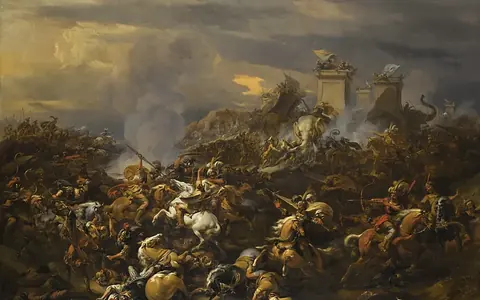
Alexander crosses a flooded river at night in a storm and breaks Porus's war elephants, then restores the wounded king.
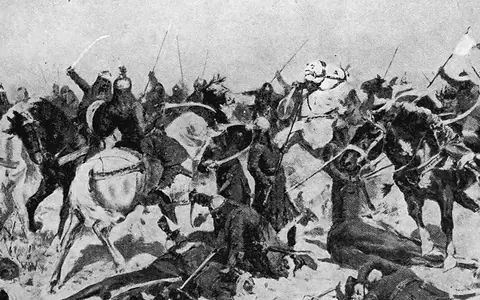
Muhammad of Ghor's mounted archers and feigned retreats wear down Prithviraj Chauhan; Ghurid power spreads across the north.
Sultans, Mughals and the Deccan, 1526 to 1576
In 1526 Babur's guns ended the Delhi Sultanate at Panipat, but the Mughal hold on India was not yet secure. Thirty years later Hemu seized Delhi from the Mughals and lost it again on the same plain. In the Deccan the sultanates that had long fought Vijayanagara joined forces against it at Talikota in 1565, and in Rajasthan Mewar resisted Akbar at Haldighati in 1576.
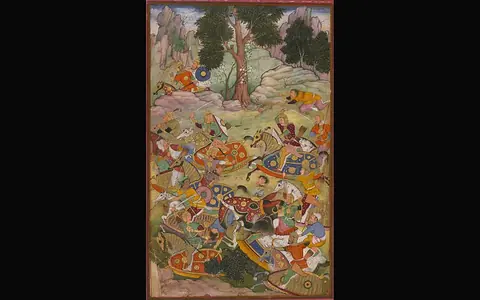
Babur's field guns, matchlocks and wagon-fort shatter Ibrahim Lodi's far larger army and found the Mughal Empire.
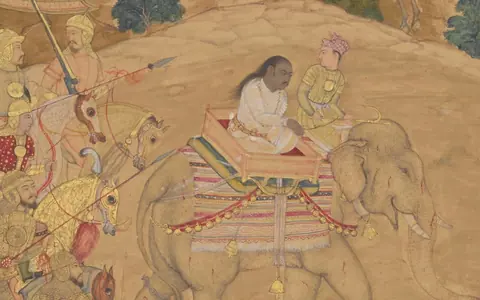
Hemu, master of Delhi for a month, is struck in the eye by an arrow; his army breaks and the young Akbar's rule is secured.
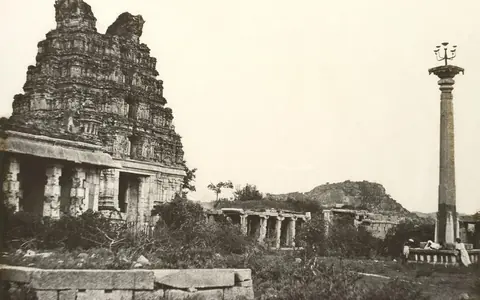
Four Deccan sultans defeat and behead the regent Rama Raya, and their armies plunder the Vijayanagara capital, today's Hampi.
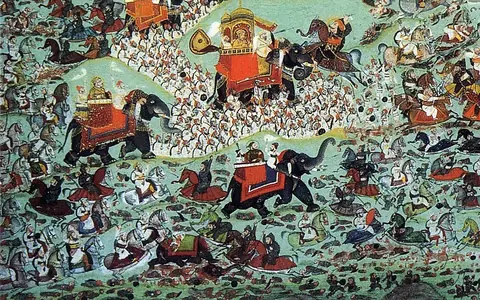
The Mughals hold the field in a mountain pass, but Maharana Pratap cuts his way out and fights on for years.
Marathas, Mughals and the East India Company, 1670 to 1849
In the seventeenth century Shivaji's Maratha kingdom took on the Mughal Empire fort by fort, as at Sinhagad in 1670. A century later the Marathas were the leading power in India, until the Durrani coalition broke their army at Panipat in 1761. Meanwhile the East India Company turned trade into rule at Plassey and Buxar, fought the Marathas at Assaye and met the Sikh Empire's Khalsa army at Chillianwala in 1849.
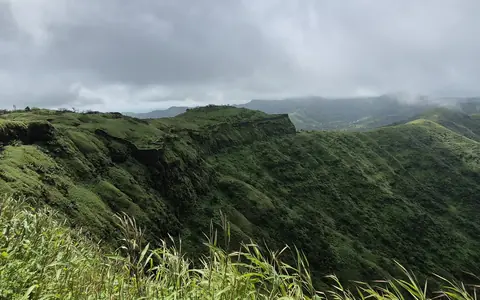
Tanaji Malusare leads a night assault on the Mughal-held hill fort of Kondhana; he dies, but his men take the fort.
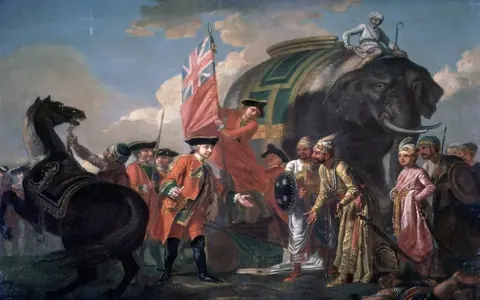
Robert Clive defeats Siraj ud-Daulah when Mir Jafar holds most of the Nawab's army back; the Company gains Bengal.
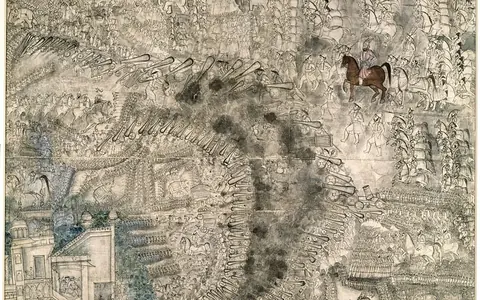
Ahmad Shah Durrani's coalition crushes the Maratha army in one of the largest and bloodiest battles of the century.
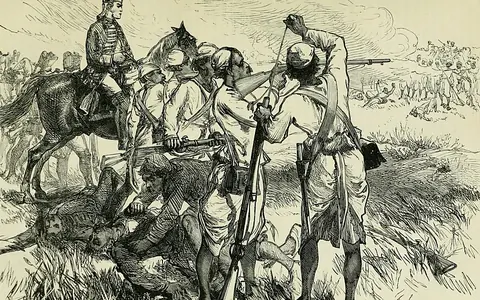
Hector Munro defeats Shah Alam II and two nawabs; the Treaty of Allahabad gives the Company the revenues of Bengal, Bihar and Orissa.
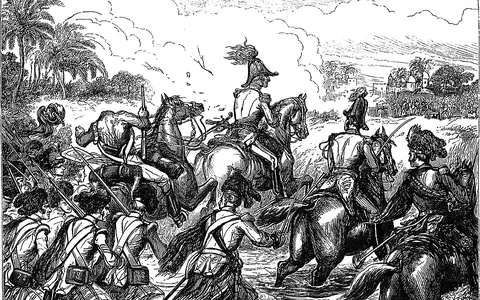
Arthur Wellesley crosses the Kaitna at an unguarded ford and takes the Maratha guns at heavy cost to his own army.
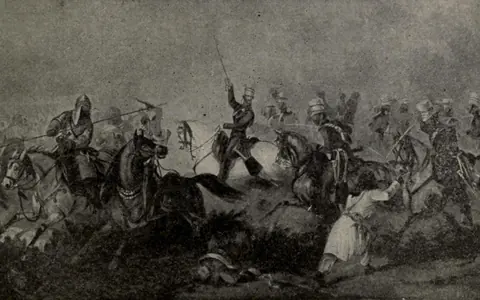
Gough attacks the Sikh army through dense scrub near the Jhelum; both sides claim victory after one of the Company's costliest days.
The frontier and the Second World War, 1897 to 1944
Under British rule the Indian Army fought on the North-West Frontier, where twenty-one soldiers of the 36th Sikhs died defending Saragarhi in 1897. In 1944 Japan invaded north-east India. At Imphal and Kohima a mostly Indian army held on, while Indians of the Indian National Army fought on the Japanese side, a division that India still debates.
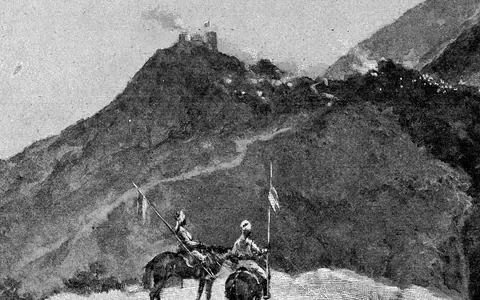
Twenty-one Sikh soldiers hold a signaling post on the North-West Frontier and refuse to surrender.
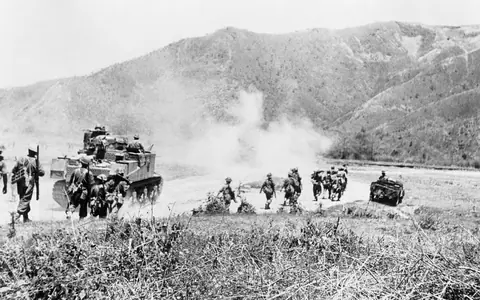
IV Corps, mostly Indian troops, holds the Imphal plain on air supply while Mutaguchi's army is worn down by battle, hunger and the monsoon.
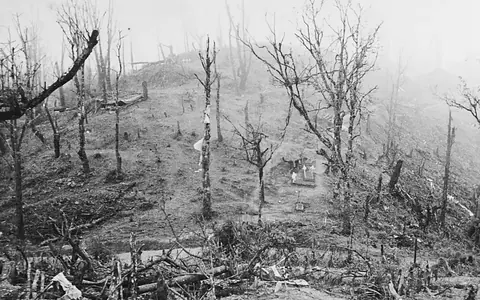
A small garrison holds Kohima ridge against the Japanese 31st Division until relieved; with Imphal it ends Japan's offensive.
Independent India
After independence and partition in 1947, India and Pakistan went to war several times. In the war of December 1971 a Pakistani armored column crossed into the Thar desert toward Longewala. The two countries still tell that night differently, and a famous film has added a third version.
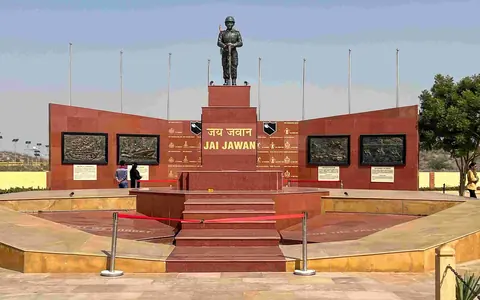
About 120 men of 23 Punjab hold a desert post against a Pakistani armored column, and Indian Hunter jets then destroy many of its tanks.
Why was Panipat the scene of three great battles?
Panipat lies on the old road from the north-west to Delhi, on open plain where large armies could deploy. Invaders from Central Asia and Afghanistan had to pass it, and defenders of Delhi met them there. That geography produced the battles of 1526, 1556 and 1761, each of which decided who would rule northern India.
Victories and defeats alike
This is not a list of one side's triumphs. Talikota broke the power of the greatest southern empire of its age; Plassey and Buxar began the rule of a trading company; Chillianwala was a day both armies claimed. India remembers many of these battles in temples, memorials, ballads and films, and in more than one case those memories differ from the record. The articles say where.






