

What was the New York and New Jersey campaign and who won?
The New York and New Jersey campaign (July 1776 to January 1777) was the British drive under General William Howe and Admiral Lord Howe to take New York City and crush Washington's Continental Army. Britain won Long Island, the city and Fort Washington, but Washington escaped and struck back at Trenton and Princeton.1
In the summer of 1776, as Congress declared independence, a great British army and fleet gathered off New York. Over the next five months it drove George Washington's Continental Army from Long Island, Manhattan and Westchester, captured Fort Washington and chased what was left of it across New Jersey. Then, in a few days around the turn of the year, Washington won at Trenton and Princeton and kept the Revolution alive.2
This guide covers the whole campaign, a chapter of the American Revolutionary War, from the British landing on Staten Island in July 1776 to Washington's march into winter quarters at Morristown in January 1777. It also follows the fighting in New Jersey into the spring, when a British surprise attack hit the American outpost at Bound Brook on 13 April 1777.3
Causes of the New York and New Jersey campaign
Britain's plan was strategic. After its army left Boston in March 1776, British commanders chose New York as their new base. From there they would hold the line of the Hudson River while a second army came south from Canada, cutting New England off from the other colonies, where London believed the rebellion was weaker.4
The city offered a deep harbor at the center of the Atlantic seaboard and the mouth of a river navigable far inland. It also promised friends: Staten Island, where the British first camped, was a Loyalist stronghold whose people welcomed them.5
For the Americans, New York was easier to value than to defend. Washington sent Major General Charles Lee to plan its defenses early in 1776, and Lee concluded that a city surrounded by water could not be held against the power of the Royal Navy; he hoped only to make its capture costly. Washington, believing that Congress wanted the city held, decided to defend it anyway.6
Washington reached New York on 13 April 1776 and spent the spring fortifying Manhattan, Brooklyn Heights and the Hudson. He built Fort Washington on northern Manhattan and Fort Lee opposite it on the New Jersey shore, to bar the river to British ships.7
Who fought in the New York campaign?
The Kingdom of Great Britain sent a great army and fleet. General William Howe, the British commander in chief in North America, led the army. His brother, Vice Admiral Richard, Lord Howe, commanded the fleet, and the brothers also carried authority to negotiate with the rebels.8
Howe landed on Staten Island in early July and was reinforced through the summer: Henry Clinton brought back the force that had failed at Charleston, and convoys from Europe brought the first German auxiliaries, usually called Hessians. Estimates of his strength by mid-August run from about 24,000 to more than 31,000 soldiers, with some 10,000 sailors and hundreds of warships and transports.9
The Hessians, German troops hired by the British crown, fought throughout the campaign. They landed on Long Island in August, and at White Plains it was a Hessian attack that finally broke the American right on Chatterton Hill.10
Not every colonist stood with Washington. Loyalists guided the British army, and it was local Loyalists who told Howe that the Jamaica Pass on Long Island was unguarded, the information that opened the way to victory in the first battle.11
Washington's Continental Army numbered about 19,000 to 20,000 men fit for duty. Many were militia and new recruits who had never served in a professional army, and it had few cannon, no cavalry and no warships to dispute the harbor.12
The Americans had their own aims. Independence had been declared on 4 July, so there was nothing left to bargain over: when Lord Howe met Benjamin Franklin, John Adams and Edward Rutledge on Staten Island on 11 September, the conference ended almost at once, because Howe could not accept independence and the Americans would accept nothing less. On the battlefield, Washington sought to inflict heavy losses before giving ground and, above all, to keep his army in being.13
The Battle of Long Island and the escape to Manhattan
On 22 August the British crossed from Staten Island to Long Island with about 15,000 men, rising to some 20,000 British and Hessian troops by 25 August. About 9,000 Americans held the wooded ridge in front of Brooklyn and the forts on Brooklyn Heights behind it.14
Washington's line had a fatal gap. Of the passes through the ridge, the Jamaica Pass on the American left was left almost unguarded. During the night of 26 to 27 August a British column marched around through it while other British and Hessian troops held the Americans in front, and on the morning of 27 August the defenders found the enemy behind them and broke for the Brooklyn lines. Our article on the Battle of Long Island tells the day in full.15
Several regiments fought desperate rearguard actions. The best remembered is the stand of about 400 Maryland soldiers of the First Maryland Regiment under William Alexander, Lord Stirling, near Gowanus Creek, which held the British long enough for hundreds of others to escape. The Marylanders lost heavily.16
Estimates of the losses differ. Britannica counts about 300 Americans dead, 650 to 800 wounded and 1,100 captured, against 64 British and German dead and 314 wounded, missing or captured; the American Battlefield Trust puts American losses near 2,000 and British losses at 388. By the number of men engaged it was the largest battle of the war.17

Howe did not storm the Brooklyn works. He began siege approaches instead, and on the night of 29 August Washington ferried his whole army across the East River to Manhattan, with the Massachusetts seamen of John Glover's Marblehead regiment at the oars. The escape saved the army, but Long Island was lost.18
Kip's Bay, Harlem Heights and the fall of New York City
After the peace talks failed, Howe struck at Manhattan. On 15 September British warships bombarded the shore at Kip's Bay on the East River, and about 4,000 British and Hessian troops crossed from Long Island. The Connecticut militia holding the line fled despite Washington's efforts to rally them, and New York City fell to the British that day.19
Howe again paused to gather his forces, and several thousand Americans still in the lower city escaped north to the heights of Harlem. On 16 September a clash in front of the American lines, the Battle of Harlem Heights, ended with the British light infantry falling back: a small fight, but one in which many Americans saw British regulars give way for the first time.20

On 20 and 21 September a fire of uncertain origin destroyed a large part of New York. The city became the British headquarters for the rest of the war.21
Pell's Point, White Plains and the fall of Fort Washington
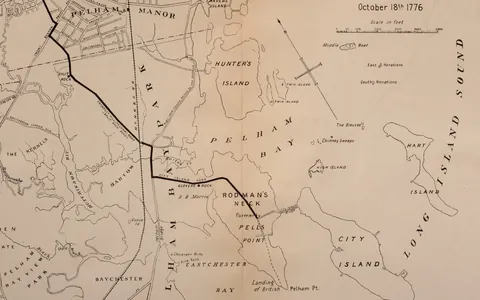
Unable to attack Harlem Heights head on, Howe tried to get behind it. On 12 October he landed at Throgs Neck, in today's Bronx, where about 25 American riflemen at a creek crossing held up his advance. On 18 October he landed again at Pell's Point, a few miles to the north.22
There Colonel John Glover's brigade of about 750 Massachusetts men fought the Battle of Pell’s Point, firing from behind the stone walls along the road and falling back from wall to wall. The British held the field, but the delay gave Washington time to march his army off Manhattan to White Plains.23
On 28 October Howe attacked Washington's position at White Plains. The fighting centered on Chatterton Hill on the American right, where Hessian and British troops at last drove off the defenders. Washington pulled back into the hills to the north, and Howe did not press on.24

Instead Howe turned south against Fort Washington, now isolated behind his lines on northern Manhattan, where Washington had left a large garrison. On 16 November the fort fell, and with it roughly 2,800 to 3,000 prisoners and a large store of guns and supplies; Britannica calls it the heaviest blow to the Americans in the war in the north.25
Among the defenders was Margaret Corbin, who had followed her husband John, an artilleryman, to war. When he was killed at his gun she took his place and kept serving it until she was badly wounded. On 6 July 1779 Congress granted her a pension, and her remains now lie at West Point.26
Four days after Fort Washington, on 20 November, Lord Charles Cornwallis crossed the Hudson above Fort Lee and Nathanael Greene abandoned the fort and its supplies. With his army shrinking as enlistments ran out, Washington retreated across New Jersey, and by December his men were camped on the Pennsylvania bank of the Delaware River.27
Trenton and Princeton: the Ten Crucial Days
The American cause looked close to collapse. Howe sent his army into winter quarters, leaving the Hessian colonel Johann Rall at Trenton with about 1,400 to 1,500 men. On 19 December Thomas Paine published The American Crisis, which opens: “These are the times that try men’s souls.”28
Washington chose to strike before his men's enlistments ran out at the end of the year. On the night of 25 December about 2,400 Continentals crossed the ice-choked Delaware nine or ten miles above Trenton, in boats handled by Glover's Marblehead men; two supporting crossings failed in the storm. The scene became the subject of Emanuel Leutze's 1851 painting Washington Crossing the Delaware. Around eight the next morning the Americans fell on Trenton from two sides.29
The garrison was taken by surprise. Rall was mortally wounded, and most of his men surrendered: Britannica counts 900 prisoners, more than 20 Hessians killed and some 80 wounded, against five Americans wounded. Washington took his prisoners back across the river. Our article on the Battle of Trenton follows the fight street by street.30
Washington crossed again on 30 December. On 2 January 1777 Cornwallis came down from Princeton and attacked the American line behind Assunpink Creek at Trenton, without breaking it. That night Washington left campfires burning, slipped around the British flank and marched on Princeton.31
On the morning of 3 January the Americans ran into a British brigade under Lieutenant Colonel Charles Mawhood near Princeton. A bayonet charge broke Hugh Mercer's brigade and mortally wounded Mercer, and the militia sent to support him began to give way, until Washington rode forward and led the counterattack that broke Mawhood's line. British troops who took refuge in Nassau Hall, at the College of New Jersey, surrendered.32

Washington then marched to Morristown, where he went into winter quarters on 6 January, and Cornwallis pulled back to New Brunswick. These days, remembered as the Ten Crucial Days, brought the first open-field successes of Washington's army and revived American morale.33
Winter in New Jersey and the raid on Bound Brook
Through the winter and spring the two armies faced each other across New Jersey: Washington around Morristown in the hills of the north, the British at New Brunswick. The New Jersey militia had already shown what it could do; before Trenton its near-constant raids had left the Hessian garrison exhausted.34
On 13 April 1777 Cornwallis led a surprise attack on the American outpost at Bound Brook, held by a few hundred men under Major General Benjamin Lincoln. The garrison was overrun and Lincoln narrowly escaped capture. Accounts of the numbers differ: the American Battlefield Trust gives about 5,000 attackers against 400 defenders, the Crossroads of the American Revolution heritage area about 4,000 Crown troops against some 500.35
Key commanders of the New York campaign
On the British side, General Sir William Howe commanded the army throughout, with his brother Admiral Lord Howe at sea. Henry Clinton and Lord Charles Cornwallis directed landings such as the one at Pell's Point; Cornwallis took Fort Lee, chased Washington across New Jersey and led the attack on Bound Brook. Among the Hessian officers, Johann Rall commanded the garrison at Trenton and was mortally wounded there.36
On the American side, George Washington lost most of the battles around New York but kept his army alive by retreating in time. Nathanael Greene built the Brooklyn defenses before illness took him out of the Long Island battle; John Glover and his Marblehead seamen carried the army over the East River and the Delaware; and Hugh Mercer died of the wounds he took at Princeton.37
Who won the New York and New Jersey campaign?
Britain won the New York campaign. Howe took New York City, Long Island and the lower Hudson, captured thousands of prisoners and great stores of supplies, and held the city as the main British base until 1783.38
But Howe failed in the larger aim of destroying Washington's army, and after Trenton and Princeton the British pulled back from most of New Jersey. Historians have long argued over his caution: he was criticized, as Britannica puts it, rightly or wrongly, for not following up his victories, while the Gale encyclopedia notes that he hoped to end the rebellion with as few casualties as possible.39
For the Americans the campaign was the low point of the war and, within the same months, the start of a recovery. The losses of Fort Washington and Fort Lee were followed by new signs of hope, and the Gale encyclopedia notes that some contemporaries saw the campaign, Fort Washington apart, as a victory in disguise because the core of the army escaped to fight on.40
Legacy and memory
The best-known image of the campaign is Leutze's Washington Crossing the Delaware, painted in 1851, three generations after the event. The Maryland 400 are honored for their stand on Long Island, and the Princeton battlefield is a state park and a National Historic Landmark.41
For Britain the campaign is remembered as the season when the war might have been won quickly. Both Britannica and the Gale encyclopedia point to Howe's pauses after Long Island and Kip's Bay as chances that let Washington's army escape.42
Major battles of the New York and New Jersey campaign
Our guides to the battles of the campaign are listed below in date order, from the Long Island battle to the raid on Bound Brook.
- 1776The Battle of Long Island, 1776United States (Continental Army) vs Great Britain
The biggest battle of the Revolution, and the night retreat that saved the cause.
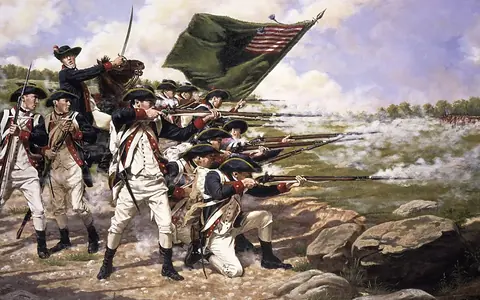
- 1776Battle of Pell's Point, 1776Continental Army vs Britain and Hesse
On 18 October 1776 John Glover's 750 Massachusetts men fought a British and Hessian landing from wall to wall at Pell's Point and bought Washington a day to escape Manhattan.
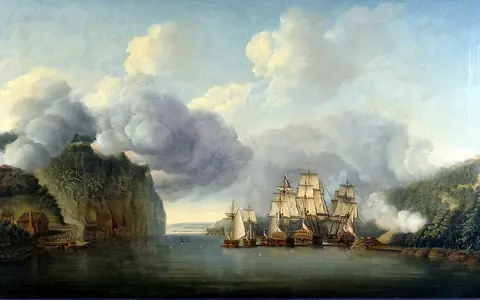
- 1776The Battle of White Plains, 28 October 1776American vs British
Chatterton's Hill, 28 October 1776: Howe takes the hill but Washington's army slips away.
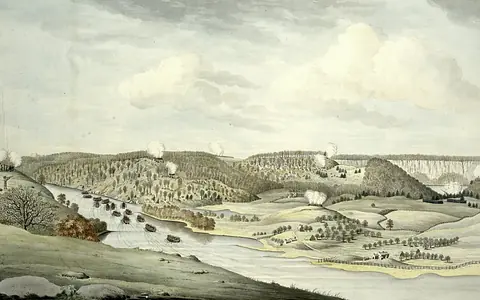
- 1776The Fall of Fort Washington, 16 November 1776British and Hessian vs American
16 November 1776: one of the worst American defeats of the war, and nearly 3,000 men lost.
- 1776Battle of Trenton, 1776United States (Continental Army) vs Great Britain (Hessian garrison)
Washington's Christmas-night crossing of the Delaware and the surprise that revived the Revolution.
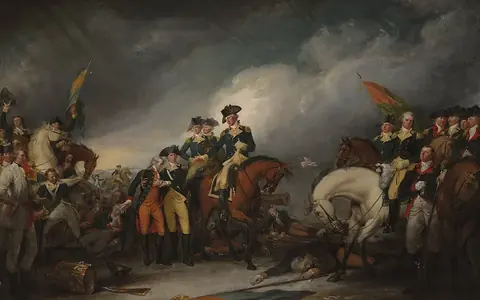
- 1777The Battle of Princeton, 1777United States vs Great Britain
A night march, a desperate rally and a victory that saved the Revolution.
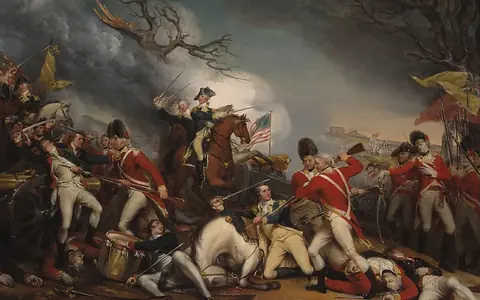
- 1777Battle of Bound Brook, 1777Great Britain (British and Hessian troops) vs United States (Continental Army and militia)
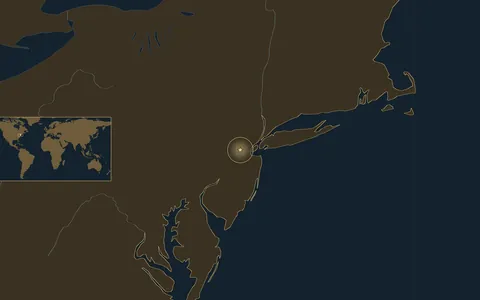
On 13 April 1777 Cornwallis's three columns surprised Benjamin Lincoln's outpost at Bound Brook; most of the garrison escaped to the hills, but the guns were lost.
Timeline of the New York and New Jersey campaign
- 17 Mar 1776The British army leaves Boston, bound for Halifax.43
- 13 Apr 1776Washington arrives in New York City.44
- 2 Jul 1776Howe's troops land unopposed on Staten Island.45
- 4 Jul 1776Congress adopts the Declaration of Independence.46
- 22 Aug 1776The British cross to Long Island.47
- 27 Aug 1776Battle of Long Island: British victory.48
- 29 Aug 1776Washington evacuates his army to Manhattan by night.49
- 11 Sep 1776Peace conference on Staten Island fails.50
- 15 Sep 1776British landing at Kip's Bay; New York City falls.51
- 16 Sep 1776Battle of Harlem Heights.52
- 12 Oct 1776British landing at Throgs Neck.53
- 18 Oct 1776Battle of Pell's Point.54
- 28 Oct 1776Battle of White Plains: British victory at Chatterton Hill.55
- 16 Nov 1776Fort Washington surrenders.56
- 20 Nov 1776Cornwallis crosses the Hudson; Fort Lee is abandoned.57
- 19 Dec 1776Thomas Paine publishes The American Crisis.58
- 26 Dec 1776Battle of Trenton: the Hessian garrison is captured.59
- 2 Jan 1777Cornwallis's attack at Assunpink Creek is held off.60
- 3 Jan 1777Battle of Princeton: American victory.61
- 6 Jan 1777Washington goes into winter quarters at Morristown.62
- 13 Apr 1777British surprise attack on Bound Brook.63
Where to read next
The campaign is one chapter of the American Revolutionary War, which went on to Saratoga and Yorktown. For the wider period see our page on the early modern era, the greatest battles of the American Revolution and the military histories of the United States and Britain, and test yourself with the American battles quiz.
Notes
A number in the text points to a note; each note names the works that paragraph draws on, listed in full under Sources.
- Encyclopedia of the American Revolution: Library of Military History, “New York Campaign”; The Colonial Williamsburg Foundation, “The New York Campaign (July to November 1776)”; Encyclopaedia Britannica, “Battles of Trenton and Princeton”. ↩
- Encyclopedia of the American Revolution: Library of Military History, “New York Campaign”; The Colonial Williamsburg Foundation, “The New York Campaign (July to November 1776)”; Encyclopaedia Britannica, “Battles of Trenton and Princeton”. ↩
- American Battlefield Trust, “New York/New Jersey Campaign”; Encyclopaedia Britannica, “Battles of Trenton and Princeton”; Crossroads of the American Revolution National Heritage Area, “Old Stone Bridge, Central Arch, Bound Brook, NJ”. ↩
- Encyclopaedia Britannica, “Battles of Trenton and Princeton”; Encyclopedia of the American Revolution: Library of Military History, “New York Campaign”; The Colonial Williamsburg Foundation, “The New York Campaign (July to November 1776)”. ↩
- Encyclopedia of the American Revolution: Library of Military History, “New York Campaign”; The Colonial Williamsburg Foundation, “The New York Campaign (July to November 1776)”; Fraunces Tavern Museum, “Summer of 1776”. ↩
- Encyclopedia of the American Revolution: Library of Military History, “New York Campaign”; The Colonial Williamsburg Foundation, “The New York Campaign (July to November 1776)”. ↩
- Encyclopedia of the American Revolution: Library of Military History, “New York Campaign”; Fraunces Tavern Museum, “Summer of 1776”; The Colonial Williamsburg Foundation, “The New York Campaign (July to November 1776)”. ↩
- Encyclopedia of the American Revolution: Library of Military History, “New York Campaign”; The Colonial Williamsburg Foundation, “The New York Campaign (July to November 1776)”. ↩
- Encyclopedia of the American Revolution: Library of Military History, “New York Campaign”; The Colonial Williamsburg Foundation, “The New York Campaign (July to November 1776)”. ↩
- Raymond K. Bluhm Jr., “Battle of Long Island (1776)”; Encyclopedia of the American Revolution: Library of Military History, “New York Campaign”; American Battlefield Trust, “White Plains Battle Facts and Summary”; The Colonial Williamsburg Foundation, “The New York Campaign (July to November 1776)”. ↩
- Encyclopedia of the American Revolution: Library of Military History, “New York Campaign”; American Battlefield Trust, “Brooklyn Battle Facts and Summary”. ↩
- Encyclopedia of the American Revolution: Library of Military History, “New York Campaign”; The Colonial Williamsburg Foundation, “The New York Campaign (July to November 1776)”; American Battlefield Trust, “Brooklyn Battle Facts and Summary”. ↩
- Encyclopedia of the American Revolution: Library of Military History, “New York Campaign”; The Colonial Williamsburg Foundation, “The New York Campaign (July to November 1776)”; American Battlefield Trust, “Brooklyn Battle Facts and Summary”; National Park Service, “The Battle of Pell’s Point”. ↩
- Encyclopaedia Britannica, “Battles of Trenton and Princeton”; Encyclopedia of the American Revolution: Library of Military History, “New York Campaign”; Raymond K. Bluhm Jr., “Battle of Long Island (1776)”. ↩
- Encyclopedia of the American Revolution: Library of Military History, “New York Campaign”; American Battlefield Trust, “Brooklyn Battle Facts and Summary”; Raymond K. Bluhm Jr., “Battle of Long Island (1776)”. ↩
- Raymond K. Bluhm Jr., “Battle of Long Island (1776)”; American Battlefield Trust, “Brooklyn Battle Facts and Summary”; Encyclopedia of the American Revolution: Library of Military History, “New York Campaign”. ↩
- Raymond K. Bluhm Jr., “Battle of Long Island (1776)”; American Battlefield Trust, “Brooklyn Battle Facts and Summary”; Encyclopedia of the American Revolution: Library of Military History, “New York Campaign”. ↩
- Raymond K. Bluhm Jr., “Battle of Long Island (1776)”; Encyclopedia of the American Revolution: Library of Military History, “New York Campaign”; The Colonial Williamsburg Foundation, “The New York Campaign (July to November 1776)”; American Battlefield Trust, “Pell’s Point Battle Facts and Summary”. ↩
- The Colonial Williamsburg Foundation, “The New York Campaign (July to November 1776)”; Encyclopedia of the American Revolution: Library of Military History, “New York Campaign”; Encyclopaedia Britannica, “Battles of Trenton and Princeton”. ↩
- Encyclopaedia Britannica, “Battles of Trenton and Princeton”; Encyclopedia of the American Revolution: Library of Military History, “New York Campaign”; The Colonial Williamsburg Foundation, “The New York Campaign (July to November 1776)”. ↩
- Encyclopedia of the American Revolution: Library of Military History, “New York Campaign”; The Colonial Williamsburg Foundation, “The New York Campaign (July to November 1776)”; Raymond K. Bluhm Jr., “Battle of Long Island (1776)”. ↩
- American Battlefield Trust, “Pell’s Point Battle Facts and Summary”; National Park Service, “The Battle of Pell’s Point”; Encyclopedia of the American Revolution: Library of Military History, “New York Campaign”. ↩
- American Battlefield Trust, “Pell’s Point Battle Facts and Summary”; National Park Service, “The Battle of Pell’s Point”. ↩
- American Battlefield Trust, “White Plains Battle Facts and Summary”; The Colonial Williamsburg Foundation, “The New York Campaign (July to November 1776)”; Encyclopaedia Britannica, “Battles of Trenton and Princeton”. ↩
- Encyclopedia of the American Revolution: Library of Military History, “New York Campaign”; Encyclopaedia Britannica, “Battles of Trenton and Princeton”; The Colonial Williamsburg Foundation, “The New York Campaign (July to November 1776)”. ↩
- National Museum of the United States Army, “Margaret Corbin”; National Women’s History Museum, “Margaret Cochran Corbin”. ↩
- American Battlefield Trust, “Fort Lee Battle Facts and Summary”; The Colonial Williamsburg Foundation, “The New York Campaign (July to November 1776)”; Encyclopaedia Britannica, “Battles of Trenton and Princeton”; American Battlefield Trust, “Trenton Battle Facts and Summary”. ↩
- Encyclopaedia Britannica, “Battles of Trenton and Princeton”; American Battlefield Trust, “Trenton Battle Facts and Summary”; Princeton Battlefield Society, “The Battle of Princeton”. ↩
- Encyclopaedia Britannica, “Battles of Trenton and Princeton”; American Battlefield Trust, “Trenton Battle Facts and Summary”; Princeton Battlefield Society, “The Battle of Princeton”. ↩
- Encyclopaedia Britannica, “Battles of Trenton and Princeton”; American Battlefield Trust, “Trenton Battle Facts and Summary”. ↩
- Encyclopaedia Britannica, “Battles of Trenton and Princeton”; Princeton Battlefield Society, “The Battle of Princeton”. ↩
- Encyclopaedia Britannica, “Battles of Trenton and Princeton”; Princeton Battlefield Society, “The Battle of Princeton”; American Battlefield Trust, “Princeton Battle Facts and Summary”. ↩
- Encyclopaedia Britannica, “Battles of Trenton and Princeton”; Princeton Battlefield Society, “The Battle of Princeton”; American Battlefield Trust, “Trenton Battle Facts and Summary”. ↩
- Encyclopaedia Britannica, “Battles of Trenton and Princeton”; American Battlefield Trust, “Trenton Battle Facts and Summary”; Princeton Battlefield Society, “The Battle of Princeton”. ↩
- American Battlefield Trust, “Benjamin Lincoln”; Crossroads of the American Revolution National Heritage Area, “Old Stone Bridge, Central Arch, Bound Brook, NJ”. ↩
- National Park Service, “The Battle of Pell’s Point”; American Battlefield Trust, “Fort Lee Battle Facts and Summary”; Encyclopaedia Britannica, “Battles of Trenton and Princeton”; Crossroads of the American Revolution National Heritage Area, “Old Stone Bridge, Central Arch, Bound Brook, NJ”; American Battlefield Trust, “Trenton Battle Facts and Summary”. ↩
- National Park Service, “The Battle of Pell’s Point”; Encyclopedia of the American Revolution: Library of Military History, “New York Campaign”; Raymond K. Bluhm Jr., “Battle of Long Island (1776)”; American Battlefield Trust, “Pell’s Point Battle Facts and Summary”; Encyclopaedia Britannica, “Battles of Trenton and Princeton”; American Battlefield Trust, “Princeton Battle Facts and Summary”. ↩
- The Colonial Williamsburg Foundation, “The New York Campaign (July to November 1776)”; Encyclopedia of the American Revolution: Library of Military History, “New York Campaign”; Raymond K. Bluhm Jr., “Battle of Long Island (1776)”. ↩
- The Colonial Williamsburg Foundation, “The New York Campaign (July to November 1776)”; Encyclopaedia Britannica, “Battles of Trenton and Princeton”; Encyclopedia of the American Revolution: Library of Military History, “New York Campaign”; Princeton Battlefield Society, “The Battle of Princeton”. ↩
- American Battlefield Trust, “Fort Lee Battle Facts and Summary”; Encyclopedia of the American Revolution: Library of Military History, “New York Campaign”; National Park Service, “The Battle of Pell’s Point”. ↩
- Encyclopaedia Britannica, “Battles of Trenton and Princeton”; American Battlefield Trust, “Trenton Battle Facts and Summary”; American Battlefield Trust, “Brooklyn Battle Facts and Summary”; Raymond K. Bluhm Jr., “Battle of Long Island (1776)”; Princeton Battlefield Society, “The Battle of Princeton”; American Battlefield Trust, “Princeton Battle Facts and Summary”. ↩
- Encyclopaedia Britannica, “Battles of Trenton and Princeton”; Encyclopedia of the American Revolution: Library of Military History, “New York Campaign”. ↩
- Encyclopedia of the American Revolution: Library of Military History, “New York Campaign”; Fraunces Tavern Museum, “Summer of 1776”. ↩
- Encyclopedia of the American Revolution: Library of Military History, “New York Campaign”; Fraunces Tavern Museum, “Summer of 1776”. ↩
- Encyclopedia of the American Revolution: Library of Military History, “New York Campaign”; The Colonial Williamsburg Foundation, “The New York Campaign (July to November 1776)”. ↩
- Encyclopaedia Britannica, “Battles of Trenton and Princeton”; Fraunces Tavern Museum, “Summer of 1776”. ↩
- Encyclopaedia Britannica, “Battles of Trenton and Princeton”; Encyclopedia of the American Revolution: Library of Military History, “New York Campaign”. ↩
- Raymond K. Bluhm Jr., “Battle of Long Island (1776)”; American Battlefield Trust, “Brooklyn Battle Facts and Summary”. ↩
- Raymond K. Bluhm Jr., “Battle of Long Island (1776)”; The Colonial Williamsburg Foundation, “The New York Campaign (July to November 1776)”. ↩
- Encyclopedia of the American Revolution: Library of Military History, “New York Campaign”; The Colonial Williamsburg Foundation, “The New York Campaign (July to November 1776)”. ↩
- Encyclopedia of the American Revolution: Library of Military History, “New York Campaign”; The Colonial Williamsburg Foundation, “The New York Campaign (July to November 1776)”. ↩
- Encyclopaedia Britannica, “Battles of Trenton and Princeton”; Encyclopedia of the American Revolution: Library of Military History, “New York Campaign”. ↩
- American Battlefield Trust, “Pell’s Point Battle Facts and Summary”; National Park Service, “The Battle of Pell’s Point”. ↩
- American Battlefield Trust, “Pell’s Point Battle Facts and Summary”; National Park Service, “The Battle of Pell’s Point”. ↩
- American Battlefield Trust, “White Plains Battle Facts and Summary”; The Colonial Williamsburg Foundation, “The New York Campaign (July to November 1776)”. ↩
- Encyclopaedia Britannica, “Battles of Trenton and Princeton”; The Colonial Williamsburg Foundation, “The New York Campaign (July to November 1776)”. ↩
- American Battlefield Trust, “Fort Lee Battle Facts and Summary”; The Colonial Williamsburg Foundation, “The New York Campaign (July to November 1776)”. ↩
- Encyclopaedia Britannica, “Battles of Trenton and Princeton”; Princeton Battlefield Society, “The Battle of Princeton”. ↩
- Encyclopaedia Britannica, “Battles of Trenton and Princeton”; American Battlefield Trust, “Trenton Battle Facts and Summary”. ↩
- Encyclopaedia Britannica, “Battles of Trenton and Princeton”; Princeton Battlefield Society, “The Battle of Princeton”. ↩
- Encyclopaedia Britannica, “Battles of Trenton and Princeton”; Princeton Battlefield Society, “The Battle of Princeton”. ↩
- Encyclopaedia Britannica, “Battles of Trenton and Princeton”; Princeton Battlefield Society, “The Battle of Princeton”. ↩
- American Battlefield Trust, “Benjamin Lincoln”; Crossroads of the American Revolution National Heritage Area, “Old Stone Bridge, Central Arch, Bound Brook, NJ”. ↩
Sources
- Encyclopedia of the American Revolution: Library of Military History (Gale), via Encyclopedia.com, “New York Campaign”.
- The Colonial Williamsburg Foundation, Our American Revolution, “The New York Campaign (July to November 1776)”.
- Encyclopaedia Britannica, “Battles of Trenton and Princeton”.
- American Battlefield Trust, “New York/New Jersey Campaign”.
- Crossroads of the American Revolution National Heritage Area, “Old Stone Bridge, Central Arch, Bound Brook, NJ”.
- Fraunces Tavern Museum, “Summer of 1776”.
- Raymond K. Bluhm Jr., Encyclopaedia Britannica, “Battle of Long Island (1776)”.
- American Battlefield Trust, “White Plains Battle Facts and Summary”.
- American Battlefield Trust, “Brooklyn Battle Facts and Summary”.
- National Park Service, Saint Paul’s Church National Historic Site, “The Battle of Pell’s Point”.
- American Battlefield Trust, “Pell’s Point Battle Facts and Summary”.
- National Museum of the United States Army, “Margaret Corbin”.
- National Women’s History Museum, “Margaret Cochran Corbin”.
- American Battlefield Trust, “Fort Lee Battle Facts and Summary”.
- American Battlefield Trust, “Trenton Battle Facts and Summary”.
- Princeton Battlefield Society, “The Battle of Princeton”.
- American Battlefield Trust, “Princeton Battle Facts and Summary”.
- American Battlefield Trust, “Benjamin Lincoln”.






