

What was the Western Theater of the Civil War and who won?
The Western Theater was the Civil War fighting between the Appalachian Mountains and the Mississippi River. The Union won it: Grant took the river forts, Vicksburg and the Mississippi, the Union took Chattanooga and Atlanta, Sherman marched to the sea, and Thomas broke Hood's army at Nashville in December 1864.1
The great set pieces of Virginia filled the newspapers, but much of the Civil War was decided far to the west. Union armies moved up the rivers into Kentucky and Tennessee, took Vicksburg and with it the whole Mississippi in July 1863, broke through Chattanooga into Georgia and ended by marching to the sea. This guide follows that war from Grant's first battle at Belmont through the Battle of Shiloh, the siege of Vicksburg, the Battle of Chickamauga and Sherman's March to the Sea, and lists every article we have published on it.2
It is one part of a larger story. For the causes, the politics and the war as a whole, start with our American Civil War guide; for the campaigns in Virginia, Maryland and Pennsylvania, see the companion guide to the Eastern Theater.
What was the Western Theater of the Civil War?
Historians divide the land war into theaters. The historian Steven E. Woodworth defines the Western Theater as the territory between the Appalachians and the Mississippi, roughly 400 miles from east to west and 600 miles from the Ohio River south to the Gulf Coast. The line is a convention, not a border: in 1864 the fighting followed Sherman's armies deep into Georgia.3

Rivers shaped the war there. The Tennessee and the Cumberland ran from the Ohio deep into the Confederacy, and the Mississippi split it in two. The fall of Fort Donelson in February 1862 opened the Tennessee and Cumberland to a Northern advance, and the fall of Vicksburg and Port Hudson in July 1863 gave Union ships the Mississippi from its headwaters to New Orleans.4
Woodworth goes further and argues that the Western Theater, not Virginia, was the decisive theater of the war: Eastern battles grabbed the headlines, he writes, but Western campaigns decided the outcome, and every Union advance there cost the South land and the horses and mules its armies badly needed. It is an interpretation, not a settled verdict.5
Causes of the Civil War in the West: slavery, Kentucky and the Mississippi
The war in the West had the same cause as the war as a whole. The secession of the seven Deep South states, the National Park Service concludes, was caused mostly by concerns over the future of slavery. Mississippi, the state that held Vicksburg, declared its position "thoroughly identified with the institution of slavery", and the declarations of Texas, South Carolina and Georgia also put slavery at the center of their case for leaving the Union.6
In the West the first prize was Kentucky. In the autumn of 1861 Confederate General Leonidas Polk moved into the state and occupied Columbus, on the Mississippi, and in November Grant struck at the Confederate camp at Belmont, across the river from it.7
For the Union the great prize was the Mississippi. Lincoln called Vicksburg "the key" and said the war could never be brought to a close until that key was in the Union's pocket; once it fell, the Confederacy would be cut in two. The Confederacy had to hold the river and the rail junctions that tied its western states to the east, such as Corinth, Mississippi, where the Memphis and Charleston Railroad crossed the Mobile and Ohio.8
Who fought in the Western Theater: Union and Confederate armies
The two sides were the United States, known as the Union, and the Confederate States of America. The Union fought the Western war with several field armies. For the advance on Corinth in 1862 Henry W. Halleck combined three of them, the Army of the Tennessee, the Army of the Ohio and the Army of the Mississippi, into a force of more than 100,000 men; American History Central puts it at about 120,000. Later the Army of the Cumberland under William S. Rosecrans fought at Stones River and Chickamauga.9
The main Confederate field army in the West was the Army of Tennessee. Braxton Bragg led it at Stones River and Chickamauga; Joseph E. Johnston commanded it in the retreat toward Atlanta until Jefferson Davis replaced him with John Bell Hood on 17 July 1864. Separate Confederate garrisons held the Mississippi strongholds of Vicksburg and Port Hudson.10
1861 to 1862: Belmont, Fort Donelson, Shiloh and Corinth
Ulysses S. Grant's first battle as a commander came at Belmont, Missouri, across the river from Columbus, on 7 November 1861. His men overran the Confederate camp, then broke ranks to celebrate in it while Polk sent reinforcements across the river, and Grant's force barely escaped to its boats. The battle ended inconclusively and both sides claimed victory. Losses were similar: about 640 Confederate and, depending on the count, about 485 to 607 Union. Our article on the Battle of Belmont tells the story.11
Three months later Grant struck the river forts that guarded Tennessee. Fort Henry on the Tennessee River fell on 6 February 1862, and Grant marched overland to Fort Donelson on the Cumberland. After a failed Confederate attempt to break out, the garrison surrendered unconditionally on 16 February: about 12,000 men by the Park Service's count, more than 12,000 recorded as captured by the American Battlefield Trust. Grant's reply to the request for terms, "No terms except unconditional and immediate surrender can be accepted", earned him the nickname "Unconditional Surrender" Grant and a promotion to major general. See our Battle of Fort Donelson article.12
The loss of the two forts was a disaster for the Confederacy. It ensured that Kentucky stayed in the Union and opened Middle and West Tennessee to a Union advance along the rivers.13
Albert Sidney Johnston gathered the Confederate forces at Corinth and on 6 April 1862 struck Grant's camps at Pittsburg Landing on the Tennessee River by surprise. The Confederates had the better of the first day, but Johnston was shot in the leg while directing an attack and bled to death, and P. G. T. Beauregard took command. Reinforced overnight by Don Carlos Buell's army, the Union counterattacked on 7 April and drove the Confederates back toward Corinth. The Battle of Shiloh cost the two sides 23,746 men killed, wounded or missing.14
Henry W. Halleck then led the combined Union armies against Corinth. They moved so cautiously that they covered about five miles in three weeks, and by 25 May they were in position to besiege the town. On the night of 29 to 30 May Beauregard slipped away south to Tupelo, hiding the evacuation with tricks such as troops cheering the arrival of trains as if reinforcements had come. Halleck had won the rail junction with about 1,000 Union casualties, but the Confederate army escaped. Our article on the siege of Corinth weighs the result.15
1862 to 1863: Perryville, Stones River and the fight for Vicksburg
In the late summer of 1862 the Confederates struck back. Braxton Bragg invaded Kentucky, and on 8 October 1862 Buell's Army of the Ohio met him at Perryville. Bragg's attacks drove back the Union left, but he withdrew that night toward East Tennessee, ending the invasion; Kentucky stayed under Union control for the rest of the war. The battle cost about 7,600 casualties on both sides together. Read more in our Battle of Perryville article.16
Bragg's army regrouped at Murfreesboro, Tennessee, and Rosecrans marched out from Nashville to meet it. Bragg attacked the Union right at dawn on 31 December 1862 and drove it back, but the line held; after a failed Confederate attack across the river in the new year, Bragg withdrew. Stones River cost between 23,000 and about 24,600 men, a heavy price for a Union victory that lifted Northern morale at the start of 1863.17
Vicksburg was the hardest problem in the West. In the spring of 1863 Grant drove John C. Pemberton's Confederate army into the city's defenses, and when his assaults failed he settled into a siege that lasted 47 days.18

Pemberton surrendered on 4 July 1863. Some 29,000 to 30,000 Confederate soldiers became prisoners, while the Union lost about 4,800 to 4,900 men in the campaign. Five days later, on 9 July, the garrison of Port Hudson, Louisiana, surrendered too, and the entire Mississippi was under Union control. The Confederacy had been cut in two. Our article on the siege of Vicksburg covers the campaign in detail.19
Lincoln greeted the news in a public letter of 26 August 1863: "The Father of Waters again goes unvexed to the sea." Grant's reputation rose with the victory, which in time led to his appointment as general in chief of the Union armies.20
1863: Chickamauga and the battles for Chattanooga
In early September 1863 Rosecrans maneuvered Bragg out of Chattanooga. Bragg turned and attacked him along Chickamauga Creek in north Georgia on 18 to 20 September, reinforced by James Longstreet's divisions. On the decisive day, 20 September, a Union division was moved to fill a gap that did not exist, opening a real one; Longstreet's men drove through it and swept a large part of the Union army, Rosecrans included, from the field. George H. Thomas rallied the rest on Horseshoe Ridge and Snodgrass Hill and held until dark, and the Union army fell back into Chattanooga.21
Chickamauga was a Confederate victory, but a costly one: estimated casualties came to 34,624, of whom 16,170 were Union and 18,454 Confederate. Bragg occupied the heights around Chattanooga, among them Lookout Mountain and Missionary Ridge, and tried to starve the Union army into submission, but he did not destroy it or retake the city.22

Grant took command in October, brought in reinforcements and opened a supply line into the city. On 23 to 25 November 1863 his armies took Orchard Knob and Lookout Mountain and then, on 25 November, stormed the Confederate line on Missionary Ridge, and Bragg's army broke and fled into Georgia. Union losses were about 5,800; Confederate losses are given as about 6,700 by the Park Service's battle summary and 8,000 by the American Battlefield Trust. The American Battlefield Trust judges that the victory opened the Deep South to a Union invasion.23
1864: Atlanta, the March to the Sea, Franklin and Nashville
In 1864 William T. Sherman led the Union armies of the West against Atlanta. Joseph E. Johnston fell back toward the city until Davis replaced him with Hood, who attacked at once and at heavy cost to his army. Atlanta fell to Union forces on 2 September 1864, two months before the presidential election, and both the American Battlefield Trust and the Georgia Historical Society credit its capture with helping to secure Lincoln's re-election.24

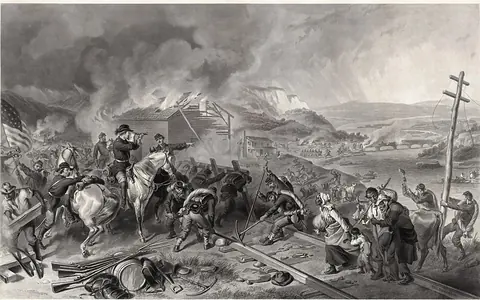
Sherman then left George H. Thomas to defend Tennessee and set out from Atlanta on 15 November 1864 with about 62,000 men, marching across Georgia to the coast. The campaign was meant to cripple the Confederacy's ability to make war and to break its people's will to resist. His troops took Fort McAllister on 13 December, opening a supply route to the sea, and Savannah surrendered on 21 December; Sherman telegraphed Lincoln that he presented him the city "as a Christmas gift".25
The march freed thousands of enslaved people, who left the plantations and followed the Union columns. It also produced one of the war's grimmest episodes. At Ebenezer Creek, a tributary of the Savannah River, Union troops destroyed the bridge behind them after crossing, leaving the formerly enslaved people who followed the army stranded; many drowned or were killed or captured by Confederate forces, and the event has been called the Ebenezer Creek Massacre. How destructive the march was overall is still argued over; our article on Sherman's March to the Sea weighs the evidence.26
Hood tried to draw Sherman back by invading Tennessee. At Spring Hill on 29 November 1864 he had John M. Schofield's Union army nearly cut off, but conflicting orders and poor communication in the Confederate command let Schofield move his men past the Confederate camps in the night. The next day Hood threw his army in frontal assaults against Schofield's entrenchments at Franklin. They failed, at a cost of more than 6,200 Confederate casualties, including 1,750 killed and fourteen generals, six of them killed; Union losses were about 2,300.27
Schofield fell back to join Thomas at Nashville. On 15 and 16 December 1864 Thomas attacked Hood's weakened army and routed it. Union losses were about 3,100 and Confederate losses 6,000 to 6,500. The Battle of Nashville shattered the Army of Tennessee as a fighting force.28
Black soldiers and emancipation in the West
Emancipation changed the war in the West. The Emancipation Proclamation of 1 January 1863 declared free the people held as slaves in the states in rebellion and announced that Black men could serve in the Union army and navy; it opened the way to recruitment on a large scale. By the end of the war about 178,000 to 179,000 Black men had served as soldiers in the Union army.29
Two battles of 1863 in Louisiana were among their first real tests. At Port Hudson on 27 May the 1st and 3rd Louisiana Native Guards attacked strongly held Confederate works; the charge failed with heavy losses, but it proved what the regiments could do and, in the National Park Service's words, helped open the eyes of white critics to the value and valor of Black soldiers. On 7 June, at Milliken's Bend, newly recruited Black regiments of former slaves with little training held off an attack by about 1,500 Confederates.30
Black soldiers also faced a danger white soldiers did not. At Fort Pillow, Tennessee, on 12 April 1864, Confederate troops under Nathan Bedford Forrest overran the Union garrison and killed Black soldiers who had tried to surrender. The American Battlefield Trust calls it a massacre and notes that historians still debate the details. Black infantry of the United States Colored Troops was in action again at Nashville in December 1864.31
Lincoln answered the critics of Black enlistment in the same public letter of August 1863 that hailed the reopening of the Mississippi. When peace came, he wrote, there would be some Black men who could remember that "with silent tongue, and clenched teeth, and steady eye" they had helped mankind on to it.32
Key commanders of the Western Theater
Ulysses S. Grant made his name in the West, from Belmont and Fort Donelson to Shiloh, Vicksburg and Chattanooga, and those victories led to his appointment as general in chief. William T. Sherman took Atlanta and led the March to the Sea. George H. Thomas held the field at Chickamauga, sent his men up Missionary Ridge and broke Hood's army at Nashville. Henry W. Halleck took Corinth, and William S. Rosecrans won at Stones River before his defeat at Chickamauga.33
On the Confederate side Albert Sidney Johnston, killed at Shiloh, was succeeded by P. G. T. Beauregard, who got his army away from Corinth intact. Braxton Bragg commanded at Perryville, Stones River, Chickamauga and Chattanooga. Joseph E. Johnston conducted the retreat toward Atlanta, and John Bell Hood, who replaced him, lost the city and then most of his army at Franklin and Nashville. Leonidas Polk commanded at Columbus and Belmont, and Nathan Bedford Forrest's cavalry led Hood's advance into Tennessee.34
For side-by-side profiles of the war's generals, see our guide to the commanders of the American Civil War.
Who won the Western Theater, and why it mattered
The Union won the war in the West. In just over three years its armies held Kentucky, won Tennessee and the whole Mississippi, took Atlanta and Savannah and destroyed the Army of Tennessee at Nashville. Even Chickamauga did not reverse the trend: Bragg failed to destroy Rosecrans's army, and two months later the Union drove the Confederates off the heights around Chattanooga for good.35
Part of the explanation lies in the rivers: after Fort Donelson the Tennessee and the Cumberland, and the railroads beside them, became Union supply lines, and after Vicksburg and Port Hudson Union ships controlled the Mississippi. Part lies in command. Grant's run of victories made him general in chief, while the Confederate command in the West faltered at key moments: at Spring Hill conflicting orders and poor communication let a trapped Union army escape, and afterward Hood held an angry meeting with his subordinates to distribute blame and reprimands.36
The cost was immense: Shiloh, Stones River and Chickamauga each cost more than 20,000 men killed, wounded or missing. Today many of its battlefields are preserved by the National Park Service, among them Shiloh, Fort Donelson, Stones River, Vicksburg and Chickamauga and Chattanooga.37
Major battles of the Western Theater
Our articles on the battles of the Western Theater, from Belmont to the March to the Sea, are listed below in date order.
- 1861Battle of Belmont, 1861United States (Union) vs Confederate States
On 7 November 1861 Ulysses S. Grant, in his first battle, overran a Confederate camp at Belmont on the Mississippi and then had to fight his way back to the boats.
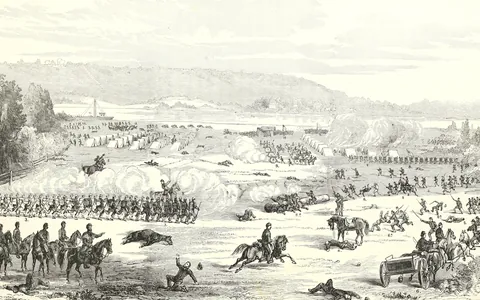
- 1862The Battle of Fort Donelson, 1862United States (Union) vs Confederate States
The first major Union victory of the Civil War.
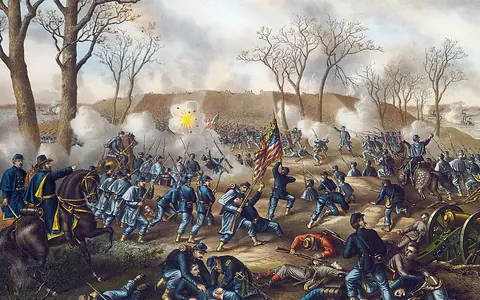
- 1862The Battle of Shiloh, 1862United States (Union) vs Confederate States
A surprise attack nearly broke Grant, until he counterattacked and showed how long the war would be.
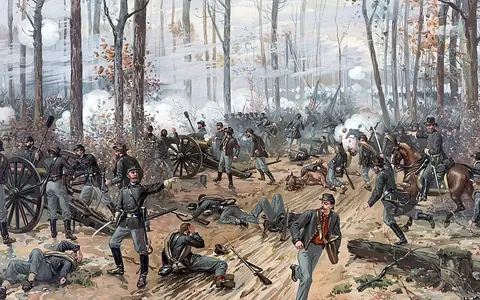
- 1862Siege of Corinth, 1862Union vs Confederacy
After Shiloh, Halleck took a month to cover 22 miles to Corinth, entrenching every night. When he arrived, Beauregard had gone by train.
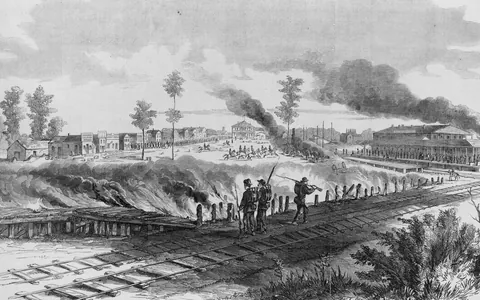
- 1862The Battle of Perryville, 1862United States (Union) vs Confederate States
Kentucky's largest battle: a tactical draw that ended the Confederate invasion.
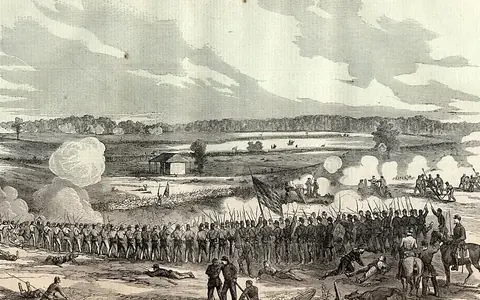
- 1863The Siege of Vicksburg, 1863United States (Union) vs Confederate States
Grant took Vicksburg on the Fourth of July, won the Mississippi, and cut the South in half.
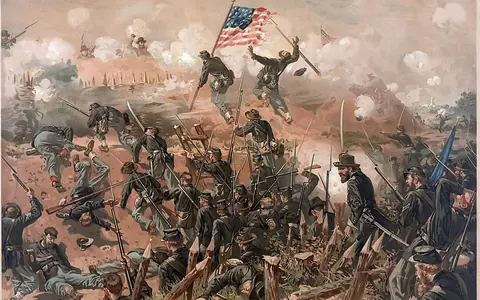
- 1863The Battle of Chickamauga, 1863United States (Union) vs Confederate States
How a mistaken order broke the Union line, and George Thomas's stand saved the army in the Western Theater's bloodiest battle.
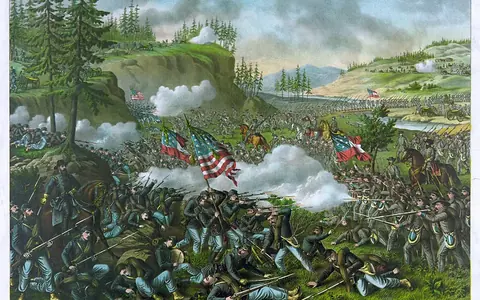
- 1864Battle of Spring Hill, 1864United States (Union) vs Confederate States
On 29 November 1864 Hood's Confederates reached Spring Hill, Tennessee, astride the Union line of retreat. That night 27,000 Union soldiers marched past them in the dark.
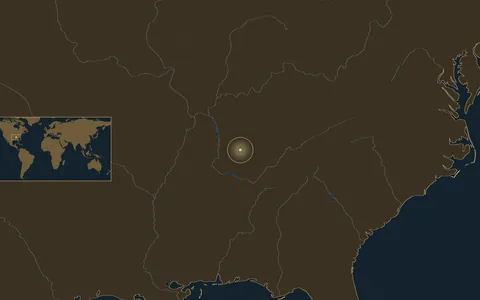
- 1864Sherman's March to the SeaUnion vs Confederate
From the fall of Atlanta to the capture of Savannah, and what the march really destroyed.
Timeline of the Western Theater
- 1861
- 1862Fort Henry falls on 6 February and Fort Donelson surrenders on 16 February.39
- 1862Battle of Shiloh, 6 and 7 April: Johnston is killed and the Confederates fall back to Corinth.40
- 1862
- 1862Battle of Perryville, 8 October, ends Bragg's invasion of Kentucky.42
- 1862 to 1863Battle of Stones River, 31 December to 2 January.43
- 1863Port Hudson's Native Guards attack on 27 May; Black regiments hold Milliken's Bend on 7 June.44
- 1863
- 1863Battle of Chickamauga, 18 to 20 September:.46
- 1863Battles for Chattanooga, 23 to 25 November: Lookout Mountain and Missionary Ridge.47
- 1864Fort Pillow, 12 April; Davis replaces Johnston with Hood on 17 July; Atlanta falls on 2 September.48
- 1864The March to the Sea leaves Atlanta on 15 November and ends at Savannah on 21 December.49
- 1864Spring Hill (29 November), Franklin (30 November) and Nashville (15 and 16 December) break Hood's army.50
Where to read next
Several of these battles appear in our list of the greatest battles of the Civil War. For the wider story, see the American Civil War guide, the Eastern Theater and our page on the industrial age, and test yourself with the American battles quiz.
Notes
A number in the text points to a note; each note names the works that paragraph draws on, listed in full under Sources.
- HistoryNet, “East Versus West”; American Battlefield Trust, “Vicksburg”; National Park Service, “Battle Summary”; American Battlefield Trust, “Chattanooga”; Georgia Historical Society, “The Battles for Atlanta (historical marker)”; American Battlefield Trust, “Nashville”; National Park Service, “Battle Summary”. ↩
- HistoryNet, “East Versus West”; American Battlefield Trust, “Vicksburg”; National Park Service, “Battle Summary”; American Battlefield Trust, “Chattanooga”; Georgia Historical Society, “March to the Sea”. ↩
- HistoryNet, “East Versus West”; American Battlefield Trust, “Atlanta”; Georgia Historical Society, “March to the Sea”. ↩
- National Park Service, “Battle Summary”; American Battlefield Trust, “Fort Donelson”; National Park Service, “Battle Summary”; American Battlefield Trust, “Port Hudson”. ↩
- HistoryNet, “East Versus West”. ↩
- National Park Service, “Slavery as a Cause of the Civil War”; American Battlefield Trust, “The Reasons for Secession”. ↩
- The Army Historical Foundation, “General Grant's First Battle (Belmont, 7 November 1861)”; National Park Service, “Battle of Belmont”; American Battlefield Trust, “Belmont”. ↩
- American Battlefield Trust, “Vicksburg”; American History Central, “Siege of Vicksburg”; American Battlefield Trust, “Siege of Corinth”; American History Central, “Siege of Corinth”. ↩
- American Battlefield Trust, “Siege of Corinth”; American History Central, “Siege of Corinth”; American Battlefield Trust, “Stones River”; American Battlefield Trust, “Chickamauga”. ↩
- American Battlefield Trust, “Stones River”; American Battlefield Trust, “Chickamauga”; American History Central, “Sherman's March to the Sea”; Library of Congress, “Tracing General Sherman's "March to the Sea"”; American Battlefield Trust, “Vicksburg”; American Battlefield Trust, “Port Hudson”. ↩
- American Battlefield Trust, “Belmont”; National Park Service, “Battle of Belmont”; The Army Historical Foundation, “General Grant's First Battle (Belmont, 7 November 1861)”. ↩
- National Park Service, “Battle Summary”; American Battlefield Trust, “Fort Donelson”. ↩
- National Park Service, “Battle Summary”; American Battlefield Trust, “Fort Donelson”. ↩
- American Battlefield Trust, “Shiloh”; National Park Service, “Battle of Shiloh”; National Park Service, “Battle Summary”. ↩
- American Battlefield Trust, “Siege of Corinth”; American History Central, “Siege of Corinth”; National Park Service, “Battle Summary”. ↩
- American Battlefield Trust, “Perryville”; National Park Service, “Battle Summary”. ↩
- American Battlefield Trust, “Stones River”; National Park Service, “Battle Summary”. ↩
- American Battlefield Trust, “Vicksburg”; National Park Service, “Battle Summary”; National Park Service, “History and Culture”. ↩
- American Battlefield Trust, “Vicksburg”; American History Central, “Siege of Vicksburg”; National Park Service, “Battle Summary”; American Battlefield Trust, “Port Hudson”; National Park Service, “Battle Summary”. ↩
- The American Presidency Project, “Abraham Lincoln, Letter to James C. Conkling, 26 August 1863”; Abraham Lincoln Presidential Library and Museum, “Abraham Lincoln to James C. Conkling”; American Battlefield Trust, “Vicksburg”; National Park Service, “Battle Summary”. ↩
- American Battlefield Trust, “Chickamauga”; National Park Service, “Battle Summary”; National Park Service, “The Battle of Chickamauga”. ↩
- American Battlefield Trust, “Chickamauga”; National Park Service, “Battle Summary”; National Park Service, “The Battle of Chickamauga”. ↩
- National Park Service, “The Battle of Chickamauga”; National Park Service, “Battle Summary”; American Battlefield Trust, “Chattanooga”. ↩
- American Battlefield Trust, “Kennesaw Mountain”; National Park Service, “Battle Summary”; Library of Congress, “Tracing General Sherman's "March to the Sea"”; American Battlefield Trust, “Atlanta”; Georgia Historical Society, “The Battles for Atlanta (historical marker)”; World History Encyclopedia, “Sherman's March to the Sea”. ↩
- American History Central, “Sherman's March to the Sea”; World History Encyclopedia, “Sherman's March to the Sea”; Georgia Historical Society, “March to the Sea”; Library of Congress, “Tracing General Sherman's "March to the Sea"”. ↩
- Georgia Historical Society, “March to the Sea”; World History Encyclopedia, “Sherman's March to the Sea”; Library of Congress, “Tracing General Sherman's "March to the Sea"”. ↩
- American Battlefield Trust, “Spring Hill”; American History Central, “Battle of Spring Hill”; American Battlefield Trust, “Franklin”; American History Central, “Battle of Franklin”. ↩
- American History Central, “Battle of Franklin”; American Battlefield Trust, “Nashville”; National Park Service, “Battle Summary”; American Battlefield Trust, “Franklin”. ↩
- U.S. National Archives, “The Emancipation Proclamation”; National Park Service, “African Americans and the campaign for Vicksburg”; U.S. National Archives, “Black Soldiers in the U.S. Military During the Civil War”. ↩
- National Park Service, “Exceeding Expectations”; American Battlefield Trust, “Port Hudson”; American Battlefield Trust, “Milliken's Bend”; National Park Service, “African Americans and the campaign for Vicksburg”. ↩
- American Battlefield Trust, “"The Most Terrible Ordeal of My Life": The Battle of Fort Pillow”; U.S. National Archives, “Black Soldiers in the U.S. Military During the Civil War”; American Battlefield Trust, “Nashville”. ↩
- The American Presidency Project, “Abraham Lincoln, Letter to James C. Conkling, 26 August 1863”; Abraham Lincoln Presidential Library and Museum, “Abraham Lincoln to James C. Conkling”. ↩
- American Battlefield Trust, “Vicksburg”; National Park Service, “Battle Summary”; Georgia Historical Society, “The Battles for Atlanta (historical marker)”; American Battlefield Trust, “Chickamauga”; American Battlefield Trust, “Chattanooga”; American Battlefield Trust, “Nashville”; American Battlefield Trust, “Siege of Corinth”; American Battlefield Trust, “Stones River”. ↩
- American Battlefield Trust, “Shiloh”; National Park Service, “Battle of Shiloh”; American Battlefield Trust, “Siege of Corinth”; American Battlefield Trust, “Perryville”; National Park Service, “Battle Summary”; American Battlefield Trust, “Chattanooga”; American Battlefield Trust, “Kennesaw Mountain”; American Battlefield Trust, “Nashville”; The Army Historical Foundation, “General Grant's First Battle (Belmont, 7 November 1861)”; American Battlefield Trust, “Spring Hill”; American History Central, “Battle of Spring Hill”. ↩
- American Battlefield Trust, “Fort Donelson”; National Park Service, “Battle Summary”; American Battlefield Trust, “Vicksburg”; National Park Service, “Battle Summary”; American Battlefield Trust, “Chickamauga”; American Battlefield Trust, “Chattanooga”; Library of Congress, “Tracing General Sherman's "March to the Sea"”; American Battlefield Trust, “Nashville”; National Park Service, “Battle Summary”. ↩
- American Battlefield Trust, “Fort Donelson”; National Park Service, “Battle Summary”; American Battlefield Trust, “Vicksburg”; National Park Service, “Battle Summary”; American History Central, “Battle of Spring Hill”; American Battlefield Trust, “Spring Hill”. ↩
- American Battlefield Trust, “Shiloh”; National Park Service, “Battle Summary”; American Battlefield Trust, “Chickamauga”; National Park Service, “History and Culture”; National Park Service, “History and Culture”; National Park Service, “The Battle of Chickamauga”. ↩
- The Army Historical Foundation, “General Grant's First Battle (Belmont, 7 November 1861)”; American Battlefield Trust, “Belmont”. ↩
- National Park Service, “Battle Summary”; American Battlefield Trust, “Fort Donelson”. ↩
- American Battlefield Trust, “Shiloh”; National Park Service, “Battle of Shiloh”. ↩
- American Battlefield Trust, “Siege of Corinth”; National Park Service, “Battle Summary”. ↩
- American Battlefield Trust, “Perryville”; National Park Service, “Battle Summary”. ↩
- American Battlefield Trust, “Stones River”; National Park Service, “Battle Summary”. ↩
- National Park Service, “Exceeding Expectations”; American Battlefield Trust, “Milliken's Bend”; National Park Service, “African Americans and the campaign for Vicksburg”. ↩
- American Battlefield Trust, “Vicksburg”; American Battlefield Trust, “Port Hudson”; National Park Service, “Battle Summary”. ↩
- American Battlefield Trust, “Chickamauga”; National Park Service, “The Battle of Chickamauga”. ↩
- American Battlefield Trust, “Chattanooga”; National Park Service, “Battle Summary”. ↩
- American Battlefield Trust, “"The Most Terrible Ordeal of My Life": The Battle of Fort Pillow”; U.S. National Archives, “Black Soldiers in the U.S. Military During the Civil War”; American History Central, “Sherman's March to the Sea”; Library of Congress, “Tracing General Sherman's "March to the Sea"”; Georgia Historical Society, “The Battles for Atlanta (historical marker)”. ↩
- American History Central, “Sherman's March to the Sea”; World History Encyclopedia, “Sherman's March to the Sea”. ↩
- American Battlefield Trust, “Spring Hill”; American Battlefield Trust, “Franklin”; American Battlefield Trust, “Nashville”; National Park Service, “Battle Summary”. ↩
Sources
- HistoryNet (Steven E. Woodworth), “East Versus West”.
- American Battlefield Trust, “Vicksburg”.
- National Park Service, Civil War Sites Advisory Commission, “Battle Summary: Port Hudson”.
- American Battlefield Trust, “Chattanooga”.
- Georgia Historical Society, “The Battles for Atlanta (historical marker)”.
- American Battlefield Trust, “Nashville”.
- National Park Service, Civil War Sites Advisory Commission, “Battle Summary: Nashville”.
- Georgia Historical Society, “March to the Sea: Savannah (historical marker)”.
- American Battlefield Trust, “Atlanta”.
- National Park Service, Civil War Sites Advisory Commission, “Battle Summary: Fort Donelson”.
- American Battlefield Trust, “Fort Donelson”.
- American Battlefield Trust, “Port Hudson”.
- National Park Service, Lincoln Home National Historic Site, “Slavery as a Cause of the Civil War”.
- American Battlefield Trust, “The Reasons for Secession: A Documentary Study”.
- The Army Historical Foundation (James Clifford), “General Grant's First Battle (Belmont, 7 November 1861)”.
- National Park Service, “Battle of Belmont”.
- American Battlefield Trust, “Belmont”.
- American History Central, “Siege of Vicksburg”.
- American Battlefield Trust, “Siege of Corinth”.
- American History Central, “Siege of Corinth”.
- American Battlefield Trust, “Stones River”.
- American Battlefield Trust, “Chickamauga”.
- American History Central, “Sherman's March to the Sea”.
- Library of Congress, Worlds Revealed blog, “Tracing General Sherman's "March to the Sea"”.
- American Battlefield Trust, “Shiloh”.
- National Park Service, Shiloh National Military Park, “Battle of Shiloh”.
- National Park Service, Civil War Sites Advisory Commission, “Battle Summary: Shiloh”.
- National Park Service, Civil War Sites Advisory Commission, “Battle Summary: Corinth”.
- American Battlefield Trust, “Perryville”.
- National Park Service, Civil War Sites Advisory Commission, “Battle Summary: Perryville”.
- National Park Service, Civil War Sites Advisory Commission, “Battle Summary: Stones River”.
- National Park Service, Civil War Sites Advisory Commission, “Battle Summary: Vicksburg”.
- National Park Service, Vicksburg National Military Park, “History and Culture”.
- The American Presidency Project, UC Santa Barbara, “Abraham Lincoln, Letter to James C. Conkling, 26 August 1863”.
- Abraham Lincoln Presidential Library and Museum, “Abraham Lincoln to James C. Conkling”.
- National Park Service, Civil War Sites Advisory Commission, “Battle Summary: Chickamauga”.
- National Park Service, Chickamauga and Chattanooga National Military Park, “The Battle of Chickamauga”.
- National Park Service, Civil War Sites Advisory Commission, “Battle Summary: Chattanooga”.
- American Battlefield Trust, “Kennesaw Mountain”.
- National Park Service, Civil War Sites Advisory Commission, “Battle Summary: Atlanta”.
- World History Encyclopedia (Harrison W. Mark), “Sherman's March to the Sea: The Destruction of Georgia”.
- American Battlefield Trust, “Spring Hill”.
- American History Central, “Battle of Spring Hill”.
- American Battlefield Trust, “Franklin”.
- American History Central, “Battle of Franklin”.
- U.S. National Archives, “The Emancipation Proclamation”.
- National Park Service, Vicksburg National Military Park, “African Americans and the campaign for Vicksburg”.
- U.S. National Archives, “Black Soldiers in the U.S. Military During the Civil War”.
- National Park Service, “Exceeding Expectations”.
- American Battlefield Trust, “Milliken's Bend”.
- American Battlefield Trust, “"The Most Terrible Ordeal of My Life": The Battle of Fort Pillow”.
- National Park Service, Stones River National Battlefield, “History and Culture”.





