

What was the Eastern Theater of the Civil War and who won?
It was the war in Virginia, Maryland and Pennsylvania, fought mainly between the Union Army of the Potomac and Robert E. Lee's Confederate Army of Northern Virginia. It ran from First Bull Run in July 1861 to Lee's surrender at Appomattox Court House on 9 April 1865. The Union won.1
For four years the two largest armies of the American Civil War fought over the ground between Washington and Richmond, the Confederate capital. The Eastern Theater gave Americans the battles they know best: the First Battle of Bull Run, the Battle of Antietam, the bloodiest single day in the history of the United States, the Battle of Chancellorsville, the Battle of Gettysburg, the costliest battle of the war, and the surrender at Appomattox Court House.2
This guide is part of our American Civil War hub. It follows the campaigns in the East year by year, the commanders on both sides, the cost and the old argument over whether the East decided the war. For the fighting along the Mississippi and in Tennessee and Georgia, see the Western Theater of the Civil War.
What was the Eastern Theater of the Civil War?
The name covers the campaigns fought mainly in Virginia, together with Robert E. Lee's two invasions of the North, which ended at Antietam in Maryland in 1862 and at Gettysburg in Pennsylvania in 1863. The American Battlefield Trust defines it as the region where most of the major fighting between the Union Army of the Potomac and the Confederate Army of Northern Virginia took place.3
The two capitals explain the map. Richmond, the Confederate capital, lay in Virginia, and from 1861 political pressure in the North demanded an advance on it; "On to Richmond!" rang through Northern newspapers. The Union army in the East also had to cover Washington: when Stonewall Jackson's small army threatened the capital from the Shenandoah Valley in 1862, Lincoln kept troops there that George B. McClellan wanted for his own advance on Richmond.4

Smaller campaigns in the mountains of western Virginia also belong to the theater: our articles cover Rich Mountain, Greenbrier River and Droop Mountain.
Causes of the war in the East: slavery, secession and Richmond
The war in the East was fought over the same issue as the war as a whole. The seven Deep South states that seceded first did so mostly over the future of slavery, and their own declarations said so: Mississippi wrote that its position was "thoroughly identified with the institution of slavery." The historian James Oliver Horton, writing for the National Park Service, puts it plainly: the South was willing to destroy the Union to protect slavery.5
Each side came to Virginia with its own aims. The United States fought at first to restore the Union, and its generals were pushed toward Richmond. After Antietam, Lincoln's Emancipation Proclamation made freedom for the enslaved people of the rebelling states a Union war aim as well. The Confederacy fought for its independence, which in the East meant above all holding Richmond and Virginia.6
Lee did not wait to be attacked. In September 1862 he carried the war into Maryland, hoping to damage Northern morale and to win a victory on Northern soil. He invaded again in June 1863. The Gettysburg historian Scott Hartwig judges that defeating the Army of the Potomac on Northern soil was "perhaps Lee's main objective" that summer.7
1861 to 1862: Bull Run, the Peninsula and Antietam
The first major Union advance ended at Bull Run (First Manassas) on 21 July 1861. Irvin McDowell attacked P. G. T. Beauregard's Confederates, who were reinforced by Joseph E. Johnston's army, and was beaten back to the defenses of Washington. Casualties came to 4,878. On Henry Hill a Confederate general pointed to Thomas J. Jackson standing "like a stone wall," and the nickname Stonewall was born.8
A small Union victory at Rich Mountain in western Virginia, on 11 July 1861, had already made George B. McClellan famous, although much of the credit belonged to his subordinate William S. Rosecrans. After Bull Run Lincoln called McClellan to Washington to take over the beaten troops, and McClellan reorganized them into the Army of the Potomac.9
In the spring of 1862 McClellan avoided another march on Bull Run. He used Union sea power to ship his army to Fort Monroe, and from 4 April he advanced up the Virginia Peninsula toward Richmond from the southeast with 120,000 to 125,000 men. In the Shenandoah Valley, meanwhile, Jackson outmaneuvered the Union forces sent to trap him. His one defeat, at Kernstown on 23 March 1862, still worried Lincoln enough to hold troops in the Valley.10
When Joseph E. Johnston was wounded at Seven Pines, Jefferson Davis gave his army to Robert E. Lee on 1 June 1862. Reinforced by Jackson, Lee attacked at once. In the Seven Days Battles, traditionally dated 25 June to 1 July, he drove McClellan away from Richmond to the James River. Lee lost more men, over 20,000 against about 16,000, and his frontal assaults at Malvern Hill failed, but he saved the Confederate capital.11
Lee then turned north. At Second Bull Run, from 28 to 30 August 1862, he defeated John Pope's Union army, and early in September he crossed the Potomac into Maryland. On 13 September soldiers of the 27th Indiana found a lost copy of his orders, Special Orders No. 191, which told McClellan that Lee had divided his army while Jackson besieged Harpers Ferry. The Union garrison there surrendered on 15 September.12
The armies met along Antietam Creek near Sharpsburg on 17 September 1862. Antietam was the bloodiest single day in American history: the American Battlefield Trust counts 22,717 casualties, the National Park Service about 23,000. Tactically the battle was a draw, but Lee then retreated into Virginia, and his first invasion of the North was over.13
It was the victory Lincoln had been waiting for: he had held back his emancipation proclamation until the Union could announce it after a success. On 22 September 1862, five days after Antietam, he issued the preliminary proclamation, which declared free the enslaved people in areas still in rebellion on 1 January 1863. It did not cover loyal border states such as Maryland, where the battle had been fought. On 5 November Lincoln removed McClellan from command.14

1862 to 1863: Fredericksburg, Chancellorsville and Gettysburg
At Fredericksburg, from 11 to 15 December 1862, McClellan's successor, Ambrose E. Burnside, crossed the Rappahannock and threw his army against Lee's positions on the heights behind the town. The attacks failed. Union losses were about 12,500 against 5,300 to 6,000 Confederate, a striking defeat for the United States.15
Joseph Hooker took over in early 1863; Charles Fennell, writing for the National Park Service, credits him with an outstanding job of restoring the army's morale. At Chancellorsville, from 30 April to 6 May 1863, Hooker marched around Lee's left flank, then halted and let Lee take the initiative. On 2 May Stonewall Jackson's corps marched across the Union front and struck its exposed right flank, crushing the Eleventh Corps. The National Park Service's battle summary notes that many historians count Chancellorsville as Lee's greatest victory.16
Behind Lee, John Sedgwick's Sixth Corps stormed Marye's Heights on 3 May in the Second Battle of Fredericksburg, but Confederate troops stopped him at Salem Church, and on the night of 4 to 5 May he fell back across the Rappahannock. Hooker recrossed the river the next night. The victory cost Lee dearly: Stonewall Jackson was mortally wounded by his own men on the night of 2 May. Casualties are given as 29,609 by the National Park Service and 30,764 by the American Battlefield Trust.17
Lee invaded the North again in June 1863. On 28 June George G. Meade replaced Hooker, and three days later the armies collided at the crossroads town of Gettysburg, Pennsylvania. From 1 to 3 July the Union army held its ground. On the third day about 12,500 Confederates under James Longstreet's direction attacked the Union center on Cemetery Ridge in Pickett's Charge; a few reached the crest at the Angle, the "high water mark of the Confederacy," before they were driven back.18
Gettysburg was the costliest battle of the war, about 51,000 casualties: 23,049 Union and around 28,000 Confederate. Lee retreated into Virginia; Scott Hartwig writes that his army was never again an offensive force. Many historians treat Gettysburg, together with the fall of Vicksburg in the West, as the turning point of the war.19
1864 to 1865: Grant against Lee, from the Wilderness to Appomattox
In March 1864 Lincoln made Ulysses S. Grant general-in-chief of the armies of the United States. Grant traveled with Meade's Army of the Potomac and gave it a new target: Lee's army rather than any place on the map, to be fought in a series of battles. He began the Overland Campaign with about 120,000 men against Lee's 65,000.20
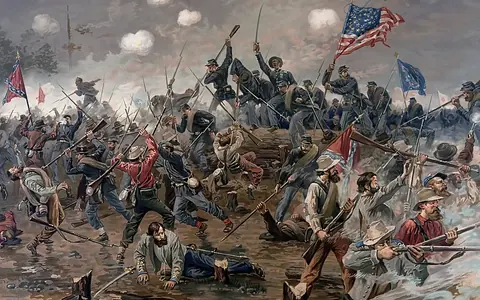
The two generals first met in the Battle of the Wilderness, from 5 to 7 May 1864. After two days the armies were roughly where they had started, with 28,800 to 29,800 casualties. As the American Battlefield Trust notes, earlier Union commanders had retreated after such a fight; Grant marched south instead, toward Spotsylvania Court House. There, on 12 May, Union troops stormed the Mule Shoe salient, and the close-quarter fighting at the Bloody Angle went on for most of a day and night. Spotsylvania cost 27,000 to 31,000 casualties and was again indecisive.21
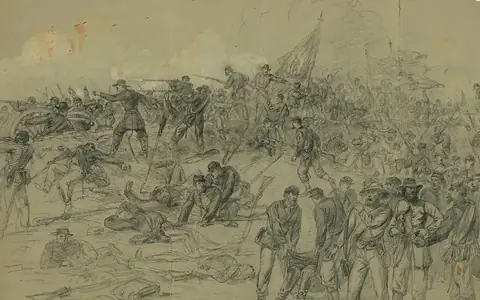
Grant kept moving around Lee's right flank. At Cold Harbor, from 31 May to 12 June, Lee's entrenched army threw him back. How many men fell in the dawn assault of 3 June is disputed: estimates of Union losses in the main charge run from about 3,500, by Gordon Rhea's unit-by-unit count, to about 7,000 in other accounts. The whole battle cost 17,000 to 18,000 casualties, nearly three quarters of them Union.22
In about seven weeks the Overland Campaign cost Grant some 55,000 men and Lee 31,000 to 35,000. Gordon Rhea points out, though, that in proportion to their armies Lee's losses were the heavier, more than half of his starting strength against about 45 percent of Grant's.23
On the night of 12 June Grant slipped away and crossed the James River to strike at Petersburg, the rail center south of Richmond that supplied the Confederate capital. Assaults from 15 to 18 June captured part of its defenses but failed to take the city, and Lee's army arrived to hold it. The siege of Petersburg that followed lasted more than nine months, from 15 June 1864 to the first days of April 1865.24
It became a war of trenches. On 30 July 1864 Union soldiers exploded a mine under the Confederate line, but the attack that followed at the Crater failed. Grant called it the saddest affair he had witnessed in the war. A division of United States Colored Troops fought there. By the end of the war nearly 180,000 Black men had served in the U.S. Army, about a tenth of it, and Black regiments fought at Petersburg.25

By early 1865 Lee had 45,000 to 50,000 men against at least 110,000. On 1 April Union troops defeated George Pickett at Five Forks, threatening Lee's last supply lines, and on 2 April a general Union assault broke through his defenses. Lee abandoned Petersburg and Richmond that night.26
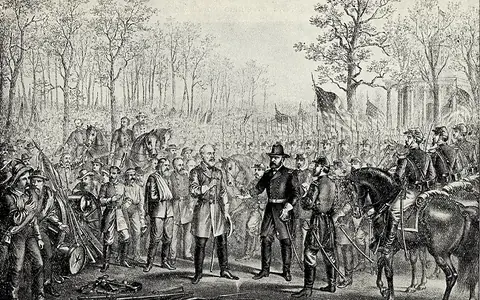
Lee's army retreated west, but Union forces caught it. On 9 April 1865 Lee surrendered the Army of Northern Virginia to Grant in Wilmer McLean's house at Appomattox Court House. Grant's terms let officers keep their side arms, horses and baggage and sent every man home on parole; about 28,000 men were paroled.27
Key commanders of the Eastern Theater
Robert E. Lee led the Army of Northern Virginia from 1 June 1862 to the surrender. His great victories came in the East, in the Seven Days, at Second Bull Run, Fredericksburg and Chancellorsville, and so did his most costly failures, at Malvern Hill, Antietam and Gettysburg. The Seven Days began his rise to fame, and the historian Gary W. Gallagher notes that by the spring of 1863 Lee and his army had become the main rallying point of the Confederacy. See our biography of Robert E. Lee.28
Stonewall Jackson won fame in the Shenandoah Valley in 1862 and led the flank attack at Chancellorsville, where he was mortally wounded by his own men. James Longstreet, Lee's other senior commander, directed the great assault on the third day at Gettysburg. See our biography of Stonewall Jackson.29
The Union army in the East changed commanders again and again: Irvin McDowell at Bull Run, then George B. McClellan, who built the Army of the Potomac, Ambrose E. Burnside, Joseph Hooker and, from 28 June 1863, George G. Meade, its last commander. McClellan lost the Seven Days and fought Antietam to a draw; Burnside lost at Fredericksburg; Hooker lost at Chancellorsville; Meade won at Gettysburg.30
From May 1864 Ulysses S. Grant directed the war against Lee while Meade handled the Army of the Potomac in battle. Grant's losses in the Overland Campaign were the larger in numbers, yet the historian Gordon Rhea points out that in proportion Lee lost more of his army. Our Grant vs Lee and Lee vs Meade pages compare the generals.31
Casualties: the bloodiest battles of the Eastern Theater
No reliable total exists for the theater as a whole, but four of the five costliest battles of the war in the National Park Service's list were fought in the East: Gettysburg, the Seven Days, Chancellorsville and Antietam. The figures below count killed, wounded, missing and captured, and they differ between sources, so we give the range.32
- Gettysburg, 1 to 3 July 1863: about 51,000 to 51,116.33
- Seven Days, 25 June to 1 July 1862: about 35,000 to 36,463.34
- Spotsylvania Court House, 8 to 21 May 1864: 27,000 to 31,086.35
- Chancellorsville, 30 April to 6 May 1863: 29,609 to 30,764.36
- The Wilderness, 5 to 7 May 1864: 28,800 to 29,800.37
- Antietam, 17 September 1862: 22,717 to about 23,000.38
- Second Bull Run, 28 to 30 August 1862: 21,849 to 22,179.39
- Fredericksburg, 11 to 15 December 1862: 17,900 to 18,500.40
- Cold Harbor, 31 May to 12 June 1864: 17,332 to 18,000.41
- The Petersburg Campaign, June 1864 to April 1865: about 70,000, an estimated 42,000 Union and 28,000 Confederate.42
The heaviest losses tended to fall on the side that attacked a prepared line. The Union paid at Fredericksburg and Cold Harbor; Lee paid when he attacked, in the Seven Days, where his army lost more men than McClellan's even in victory, and at Gettysburg.43
Who won the Eastern Theater, and did it decide the Civil War?
The Union won. Lee's surrender at Appomattox brought the war in Virginia to an end, and the remaining Confederate armies gave up over the following weeks and months. The National Park Service notes that the terms Lee and Grant agreed became the model for those surrenders, and Encyclopedia Virginia concludes that Appomattox hastened them.44

The East also changed what the war was for. Antietam gave Lincoln the victory he needed to issue the Emancipation Proclamation; the National Park Service notes that historians believe it helped keep Britain and France from intervening for the Confederacy. After it, the recruitment of Black soldiers into the Union army was pursued in earnest.45
Whether the East decided the war is still argued. Kristopher D. White of Emerging Civil War notes that historical writing has traditionally focused on the Eastern Theater, close to the capitals, the big cities and the newspapers, and argues that the East was largely a stalemate while the war was won in the West. Others see Gettysburg, the end of Lee's power to invade, as the turning point. Our Western Theater guide tells the other half of the story.46
Major battles of the Eastern Theater
Our articles on the battles of the Eastern Theater, from Bull Run to Appomattox, are listed below in date order.
- 1861Battle of Rich Mountain, 1861United States vs Confederate States
On 11 July 1861 Rosecrans's flank march over Rich Mountain broke a Confederate pass in western Virginia and sent George McClellan on his way to command.
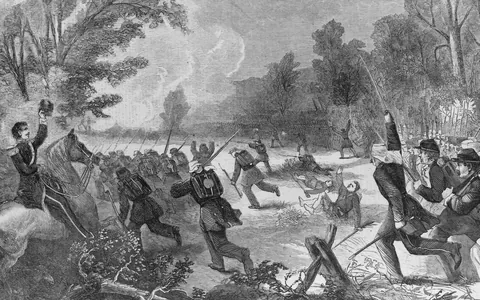
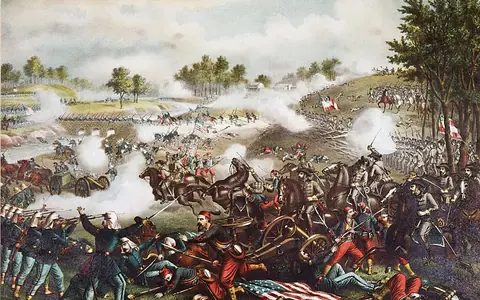
- 1861The First Battle of Bull Run, 1861United States (Union) vs Confederate States
The first big battle of the Civil War ended in a Union rout, and a long war ahead.
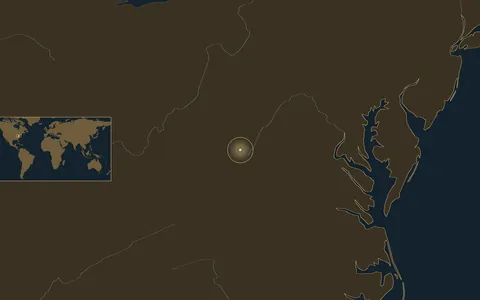
- 1861Battle of Greenbrier River, 1861United States vs Confederate States
On 3 October 1861 Reynolds's Federals marched through the night from Cheat Mountain and shelled Camp Bartow on the Greenbrier River for hours before pulling back.
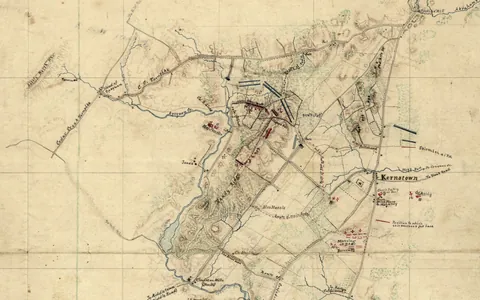
- 1862First Battle of Kernstown, 1862United States (Union) vs Confederate States
On 23 March 1862 Stonewall Jackson attacked at Kernstown on a false report and was beaten on Sandy Ridge. His only defeat still pulled Union troops back to the Shenandoah Valley.
- 1862Seven Days Battles, 1862Confederate States: Army of Northern Virginia vs United States: Army of the Potomac
From 25 June to 1 July 1862 Robert E. Lee drove McClellan's army from the gates of Richmond to the James River in a week that cost more than 34,000 casualties.
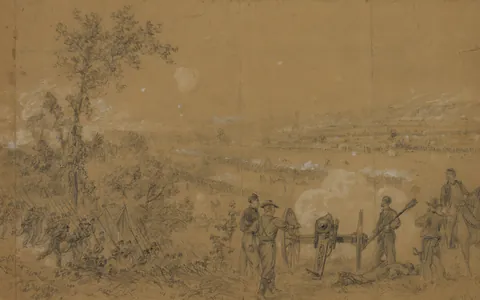
- 1862The Battle of Antietam, 1862United States (Union) vs Confederate States
Around 22,000 to 23,000 men were killed or wounded in one day near Sharpsburg. How Antietam checked Lee's first invasion of the North and gave Lincoln the moment to act on emancipation.
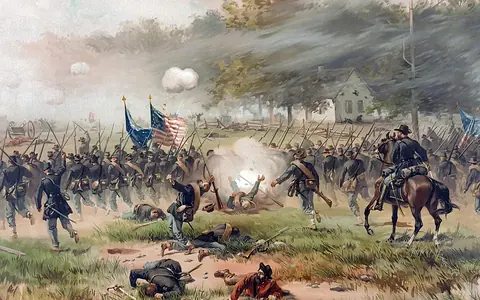
- 1862The Battle of Fredericksburg, 1862United States (Union) vs Confederate States
Wave after wave of Union troops fell before the stone wall at Marye's Heights.
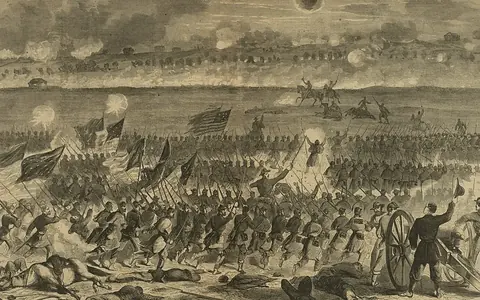
- 1863The Battle of Chancellorsville, 1863Confederate States vs United States (Union)
Lee's masterpiece, won by Jackson's flank march, and the wound that cost him Jackson.
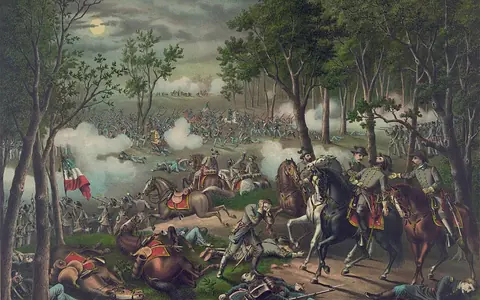
- 1863Second Battle of Fredericksburg, 1863United States (Army of the Potomac) vs Confederate States (Army of Northern Virginia)
On 3 May 1863 Sedgwick's Sixth Corps took the stone wall on Marye's Heights that had broken Burnside, then ran into a Confederate line at Salem Church.
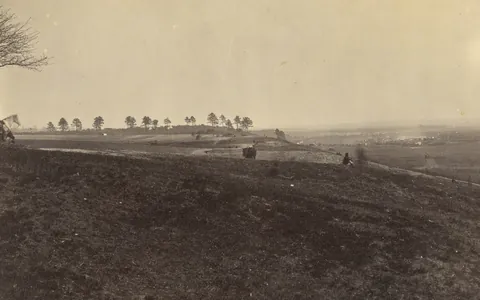
- 1863The Battle of Gettysburg, 1863United States (Union) vs Confederate States
Three days in Pennsylvania, Pickett's doomed charge, and the high-water mark where the Confederacy's war crested and broke.
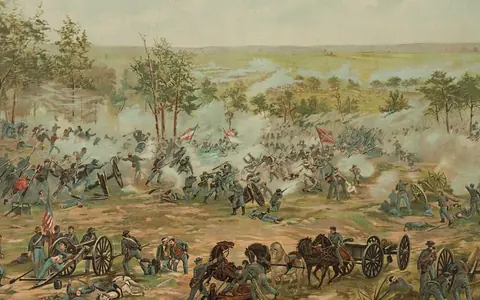
- 1863Battle of Droop Mountain, 1863Union vs Confederacy
On 6 November 1863 Averell's Federals stormed Droop Mountain and broke Echols's Confederates after six hours of fighting, ending organized Southern resistance in West Virginia.
- 1864The Siege of Petersburg, 1864 to 1865Union vs Confederate
292 days of trenches, the Battle of the Crater and the breakthrough that ended the war.
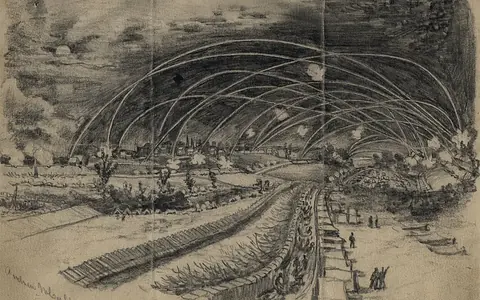
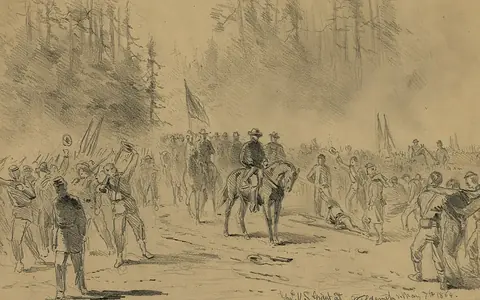
- 1864The Battle of the Wilderness, 1864United States (Union) vs Confederate States
In a burning forest, Grant and Lee met for the first time, and Grant did not turn back.
- 1864The Battle of Spotsylvania Court House, 1864United States (Union) vs Confederate States
Grant pressed on toward Richmond, and the Bloody Angle became a byword for carnage.
- 1864The Battle of Cold Harbor, 1864Union vs Confederate
The dawn assault of 3 June 1864 and the casualties behind the legends.
- 1865The Battle of Appomattox Court House, 1865Union vs Confederate
The last battle of Lee's army, the McLean House and the terms that ended the war in Virginia.
Timeline of the Eastern Theater
- 1861Union defeat at First Bull Run on 21 July; McClellan is called to Washington to command the army.47
- 1862
- 1862Lee takes command on 1 June and drives McClellan from Richmond in the Seven Days, 25 June to 1 July.49
- 1862Confederate victory at Second Bull Run, 28 to 30 August; Lee crosses into Maryland on 5 September.50
- 1862
- 1862Union defeat at Fredericksburg, 11 to 15 December.52
- 1863Lee defeats Hooker at Chancellorsville, 30 April to 6 May; Jackson is mortally wounded by his own men.53
- 1863Union victory at Gettysburg, 1 to 3 July; Lee retreats into Virginia.54
- 1864Grant is made general-in-chief in March; the Overland Campaign opens in the Wilderness on 5 May.55
- 1864
- 1864The Petersburg Campaign begins on 15 June; the Battle of the Crater, 30 July.57
- 1865Union victory at Five Forks, 1 April; Lee's lines break on 2 April and Petersburg and Richmond are evacuated.58
- 1865Lee surrenders at Appomattox Court House on 9 April.59
Where to read next
The whole war, from secession to the last surrenders, is on our American Civil War hub, and the war along the Mississippi and in the heartland on the Western Theater page. Many of these battles are ranked in our list of the greatest battles of the Civil War. Test yourself with the American battles quiz.
Notes
A number in the text points to a note; each note names the works that paragraph draws on, listed in full under Sources.
- American Battlefield Trust, “Blank Map”; American Battlefield Trust, “Bull Run”; American Battlefield Trust, “Appomattox Court House”; National Park Service, “The Surrender”. ↩
- National Park Service, “Heroes of Continual Defeat”; National Park Service, “A Short Overview of the Battle of Antietam”; American Battlefield Trust, “Antietam”; National Park Service, “Civil War Facts”; National Park Service, “Gettysburg”. ↩
- American Battlefield Trust, “Blank Map”; American Battlefield Trust, “Antietam”; American Battlefield Trust, “Gettysburg”; National Park Service, “Places”. ↩
- National Park Service, “Heroes of Continual Defeat”; American Battlefield Trust, “Animated Map Dramatizes Civil War's Pivotal Peninsula Campaign and Seven Days Battles”; American Battlefield Trust, “Kernstown”; Encyclopedia Virginia, “Battle of Kernstown”. ↩
- National Park Service, “Slavery as a Cause of the Civil War”; American Battlefield Trust, “The Reasons for Secession”; National Park Service, “Confronting Slavery and Revealing the ‘Lost Cause’”. ↩
- National Park Service, “Slavery as a Cause of the Civil War”; National Park Service, “Heroes of Continual Defeat”; American Battlefield Trust, “Animated Map Dramatizes Civil War's Pivotal Peninsula Campaign and Seven Days Battles”; National Park Service, “The Emancipation Proclamation”; American Battlefield Trust, “Antietam”; American Battlefield Trust, “Gettysburg”. ↩
- American History Central, “Maryland Campaign”; American Battlefield Trust, “The Maryland Campaign of 1862”; Encyclopedia Virginia, “Gettysburg Campaign”; American Battlefield Trust, “Gettysburg”. ↩
- American Battlefield Trust, “Bull Run”; National Park Service, “First Manassas”; National Park Service, “Manassas I”. ↩
- American Battlefield Trust, “Rich Mountain”; Encyclopedia Virginia, “George B. McClellan (1826 to 1885)”; American Battlefield Trust, “Bull Run”. ↩
- National Park Service, “Heroes of Continual Defeat”; American History Central, “Seven Days Battles”; American Battlefield Trust, “The Peninsula Campaign”; American Battlefield Trust, “Kernstown”; Encyclopedia Virginia, “Battle of Kernstown”. ↩
- American Battlefield Trust, “The Seven Days”; American History Central, “Seven Days Battles”; American Battlefield Trust, “The Peninsula Campaign”. ↩
- American Battlefield Trust, “Second Manassas”; National Park Service, “Manassas II”; American Battlefield Trust, “The Maryland Campaign of 1862”; American History Central, “Maryland Campaign”. ↩
- American Battlefield Trust, “Antietam”; National Park Service, “A Short Overview of the Battle of Antietam”; American History Central, “Maryland Campaign”; Encyclopedia Virginia, “George B. McClellan (1826 to 1885)”. ↩
- National Park Service, “The Emancipation Proclamation”; National Park Service, “A Short Overview of the Battle of Antietam”; American Battlefield Trust, “Antietam”; Encyclopedia Virginia, “George B. McClellan (1826 to 1885)”; American History Central, “Maryland Campaign”. ↩
- American Battlefield Trust, “Fredericksburg”; National Park Service, “Fredericksburg I”; National Park Service, “Places”; National Park Service, “Heroes of Continual Defeat”. ↩
- National Park Service, “Heroes of Continual Defeat”; American Battlefield Trust, “Chancellorsville”; National Park Service, “Chancellorsville”. ↩
- National Park Service, “Fredericksburg II”; Encyclopedia Virginia, “Second Battle of Fredericksburg”; National Park Service, “Chancellorsville”; American Battlefield Trust, “Chancellorsville”; National Park Service, “Civil War Facts”. ↩
- American Battlefield Trust, “Gettysburg”; American History Central, “Battle of Gettysburg”; National Park Service, “Heroes of Continual Defeat”; Encyclopedia Virginia, “Gettysburg Campaign”. ↩
- American Battlefield Trust, “Gettysburg”; National Park Service, “Gettysburg”; National Park Service, “Civil War Facts”; Encyclopedia Virginia, “Gettysburg Campaign”; American History Central, “Battle of Gettysburg”. ↩
- American History Central, “Overland Campaign”; American Battlefield Trust, “Wilderness”; American Battlefield Trust, “The Overland Campaign of 1864”. ↩
- American Battlefield Trust, “Wilderness”; National Park Service, “Wilderness”; National Park Service, “Places”; American Battlefield Trust, “Spotsylvania Court House”; National Park Service, “Spotsylvania Court House”; American Battlefield Trust, “The Overland Campaign of 1864”; American History Central, “Overland Campaign”. ↩
- American Battlefield Trust, “Cold Harbor”; National Park Service, “Cold Harbor”; American Battlefield Trust, “The Overland Campaign of 1864”; American History Central, “Overland Campaign”. ↩
- American Battlefield Trust, “The Overland Campaign of 1864”; American History Central, “Overland Campaign”. ↩
- American Battlefield Trust, “The Overland Campaign of 1864”; American History Central, “Overland Campaign”; American Battlefield Trust, “Petersburg”; Encyclopedia Virginia, “Petersburg Campaign”; American Battlefield Trust, “10 Facts”. ↩
- American Battlefield Trust, “10 Facts”; Encyclopedia Virginia, “Petersburg Campaign”; American Battlefield Trust, “Petersburg”; U.S. National Archives, “Black Soldiers in the U.S. Military During the Civil War”; National Park Service, “The Emancipation Proclamation”. ↩
- American Battlefield Trust, “Petersburg”; American Battlefield Trust, “10 Facts”; Encyclopedia Virginia, “Petersburg Campaign”. ↩
- American Battlefield Trust, “Appomattox Court House”; National Park Service, “Paroling the Army of Northern Virginia”; National Park Service, “The Surrender”; Encyclopedia Virginia, “Petersburg Campaign”. ↩
- American Battlefield Trust, “The Seven Days”; American Battlefield Trust, “Animated Map Dramatizes Civil War's Pivotal Peninsula Campaign and Seven Days Battles”; American History Central, “Seven Days Battles”; American Battlefield Trust, “Second Manassas”; National Park Service, “Manassas II”; American Battlefield Trust, “Fredericksburg”; American Battlefield Trust, “Chancellorsville”; National Park Service, “Chancellorsville”; American Battlefield Trust, “Gettysburg”. ↩
- American Battlefield Trust, “The Peninsula Campaign”; Encyclopedia Virginia, “Battle of Kernstown”; American Battlefield Trust, “Chancellorsville”; National Park Service, “Chancellorsville”; American Battlefield Trust, “Gettysburg”; American History Central, “Battle of Gettysburg”. ↩
- National Park Service, “Heroes of Continual Defeat”; American Battlefield Trust, “Bull Run”; National Park Service, “First Manassas”; Encyclopedia Virginia, “George B. McClellan (1826 to 1885)”; American Battlefield Trust, “Fredericksburg”; National Park Service, “Fredericksburg I”; American Battlefield Trust, “Chancellorsville”; National Park Service, “Chancellorsville”; American History Central, “Battle of Gettysburg”. ↩
- American Battlefield Trust, “Wilderness”; American Battlefield Trust, “Spotsylvania Court House”; American Battlefield Trust, “The Overland Campaign of 1864”; American History Central, “Overland Campaign”. ↩
- National Park Service, “Civil War Facts”; American Battlefield Trust, “Gettysburg”; American Battlefield Trust, “Antietam”. ↩
- American Battlefield Trust, “Gettysburg”; National Park Service, “Civil War Facts”; National Park Service, “Gettysburg”. ↩
- American Battlefield Trust, “The Peninsula Campaign”; National Park Service, “Civil War Facts”. ↩
- American Battlefield Trust, “Spotsylvania Court House”; National Park Service, “Spotsylvania Court House”. ↩
- National Park Service, “Civil War Facts”; American Battlefield Trust, “Chancellorsville”. ↩
- National Park Service, “Wilderness”; American Battlefield Trust, “Wilderness”. ↩
- American Battlefield Trust, “Antietam”; National Park Service, “A Short Overview of the Battle of Antietam”; National Park Service, “Civil War Facts”. ↩
- American Battlefield Trust, “Second Manassas”; National Park Service, “Manassas II”. ↩
- American Battlefield Trust, “Fredericksburg”; National Park Service, “Fredericksburg I”. ↩
- American Battlefield Trust, “Cold Harbor”; National Park Service, “Cold Harbor”. ↩
- Encyclopedia Virginia, “Petersburg Campaign”; American Battlefield Trust, “10 Facts”. ↩
- American Battlefield Trust, “Fredericksburg”; National Park Service, “Fredericksburg I”; American Battlefield Trust, “Cold Harbor”; National Park Service, “Cold Harbor”; American Battlefield Trust, “The Seven Days”; American History Central, “Seven Days Battles”; American Battlefield Trust, “Gettysburg”; National Park Service, “Gettysburg”. ↩
- American Battlefield Trust, “Appomattox Court House”; National Park Service, “The Surrender”; Encyclopedia Virginia, “Petersburg Campaign”. ↩
- National Park Service, “The Emancipation Proclamation”; U.S. National Archives, “Black Soldiers in the U.S. Military During the Civil War”; National Park Service, “A Short Overview of the Battle of Antietam”; American Battlefield Trust, “Antietam”. ↩
- Emerging Civil War, “Eastern Theater versus Western Theater”; Encyclopedia Virginia, “Gettysburg Campaign”; American Battlefield Trust, “Gettysburg”. ↩
- American Battlefield Trust, “Bull Run”; National Park Service, “First Manassas”; Encyclopedia Virginia, “George B. McClellan (1826 to 1885)”. ↩
- American Battlefield Trust, “Kernstown”; Encyclopedia Virginia, “Battle of Kernstown”; American History Central, “Seven Days Battles”. ↩
- American Battlefield Trust, “The Seven Days”; American History Central, “Seven Days Battles”. ↩
- American Battlefield Trust, “Second Manassas”; National Park Service, “Manassas II”. ↩
- American Battlefield Trust, “Antietam”; National Park Service, “The Emancipation Proclamation”. ↩
- American Battlefield Trust, “Fredericksburg”; National Park Service, “Fredericksburg I”. ↩
- American Battlefield Trust, “Chancellorsville”; National Park Service, “Chancellorsville”. ↩
- American Battlefield Trust, “Gettysburg”; American History Central, “Battle of Gettysburg”. ↩
- American History Central, “Overland Campaign”; American Battlefield Trust, “Wilderness”. ↩
- American Battlefield Trust, “Spotsylvania Court House”; American Battlefield Trust, “Cold Harbor”; National Park Service, “Cold Harbor”. ↩
- American Battlefield Trust, “10 Facts”; Encyclopedia Virginia, “Petersburg Campaign”. ↩
- American Battlefield Trust, “Petersburg”; Encyclopedia Virginia, “Petersburg Campaign”. ↩
- American Battlefield Trust, “Appomattox Court House”; National Park Service, “The Surrender”. ↩
Sources
- American Battlefield Trust, “Blank Map: Eastern Theater Operations”.
- American Battlefield Trust, “Bull Run”.
- American Battlefield Trust, “Appomattox Court House”.
- National Park Service, Appomattox Court House National Historical Park, “The Surrender”.
- National Park Service, Gettysburg Seminar Papers (Charles Fennell), “Heroes of Continual Defeat: The Army of the Potomac on the Eve of Gettysburg”.
- National Park Service, Antietam National Battlefield, “A Short Overview of the Battle of Antietam”.
- American Battlefield Trust, “Antietam”.
- National Park Service, “Civil War Facts: 1861 to 1865”.
- National Park Service, Civil War Sites Advisory Commission battle summaries, “Gettysburg”.
- American Battlefield Trust, “Gettysburg”.
- National Park Service, Fredericksburg and Spotsylvania National Military Park, “Places”.
- American Battlefield Trust, “Animated Map Dramatizes Civil War's Pivotal Peninsula Campaign and Seven Days Battles”.
- American Battlefield Trust, “Kernstown”.
- Encyclopedia Virginia, Virginia Humanities (Kati Singel), “Battle of Kernstown”.
- National Park Service, Lincoln Home National Historic Site, “Slavery as a Cause of the Civil War”.
- American Battlefield Trust (John Pierce), “The Reasons for Secession: A Documentary Study”.
- National Park Service (James Oliver Horton), “Confronting Slavery and Revealing the ‘Lost Cause’”.
- National Park Service, “The Emancipation Proclamation”.
- American History Central, “Maryland Campaign”.
- American Battlefield Trust (D. Scott Hartwig), “The Maryland Campaign of 1862”.
- Encyclopedia Virginia, Virginia Humanities (Scott Hartwig), “Gettysburg Campaign”.
- National Park Service, Manassas National Battlefield Park, “First Manassas”.
- National Park Service, Civil War Sites Advisory Commission battle summaries, “Manassas I”.
- American Battlefield Trust, “Rich Mountain”.
- Encyclopedia Virginia, Virginia Humanities, “George B. McClellan (1826 to 1885)”.
- American History Central, “Seven Days Battles”.
- American Battlefield Trust, “The Peninsula Campaign”.
- American Battlefield Trust (Gary W. Gallagher), “The Seven Days”.
- American Battlefield Trust, “Second Manassas”.
- National Park Service, Civil War Sites Advisory Commission battle summaries, “Manassas II”.
- American Battlefield Trust, “Fredericksburg”.
- National Park Service, Civil War Sites Advisory Commission battle summaries, “Fredericksburg I”.
- American Battlefield Trust, “Chancellorsville”.
- National Park Service, Civil War Sites Advisory Commission battle summaries, “Chancellorsville”.
- National Park Service, Civil War Sites Advisory Commission battle summaries, “Fredericksburg II”.
- Encyclopedia Virginia, Virginia Humanities (Amanda White Gibson), “Second Battle of Fredericksburg”.
- American History Central, “Battle of Gettysburg”.
- American History Central, “Overland Campaign”.
- American Battlefield Trust, “Wilderness”.
- American Battlefield Trust (Gordon Rhea), “The Overland Campaign of 1864”.
- National Park Service, Civil War Sites Advisory Commission battle summaries, “Wilderness”.
- American Battlefield Trust, “Spotsylvania Court House”.
- National Park Service, Civil War Sites Advisory Commission battle summaries, “Spotsylvania Court House”.
- American Battlefield Trust, “Cold Harbor”.
- National Park Service, Civil War Sites Advisory Commission battle summaries, “Cold Harbor”.
- American Battlefield Trust, “Petersburg”.
- Encyclopedia Virginia, Virginia Humanities (A. Wilson Greene), “Petersburg Campaign”.
- American Battlefield Trust, “10 Facts: The Petersburg Campaign”.
- U.S. National Archives, “Black Soldiers in the U.S. Military During the Civil War”.
- National Park Service, Appomattox Court House National Historical Park, “Paroling the Army of Northern Virginia”.
- Emerging Civil War (Kristopher D. White), “Eastern Theater versus Western Theater: Where the Civil War Was Won and Lost, Part One”.





