

Mehmed II or Vlad the Impaler: what does the evidence say?
Mehmed II (1432 to 1481) was the Ottoman sultan who took Constantinople in 1453. Vlad III of Wallachia (1431 to 1476 or early 1477), remembered as Vlad the Impaler, was a Christian prince on the lower Danube who had once ruled with Ottoman backing. In the summer of 1462 Mehmed led an army into Wallachia, Vlad struck his camp by night, and by the end of the year Vlad had lost his throne to his brother Radu and was a prisoner of the king of Hungary. Halil İnalcık stresses that Mehmed deposed Vlad and cut back Hungarian influence, while Ioan-Aurel Pop concludes that the expedition missed its aim of turning Wallachia into an Ottoman province. This page sets out the evidence for each man and leaves the verdict to you.
The two men knew each other's world long before they met as enemies. Vlad and his younger brother Radu spent years of their boyhood at the Ottoman court, and Mehmed later helped to put Vlad on the Wallachian throne. In the winter of 1461 to 1462 Vlad turned on his former patron and burned the Ottoman bank of the Danube, and Mehmed answered by leading his army across the river in person.1
This is not a ranking, so below are the two careers side by side, the campaign in which they met, and six questions on which a commander can be judged. The sources are unusually partisan, so we say who reports what. Ottoman chroniclers wrote to glorify the sultan, the Greek historians served him or lived under his rule, and the reports that reached Venice and Milan mixed rumour with fact. At the end the decision is yours.2
Side by side
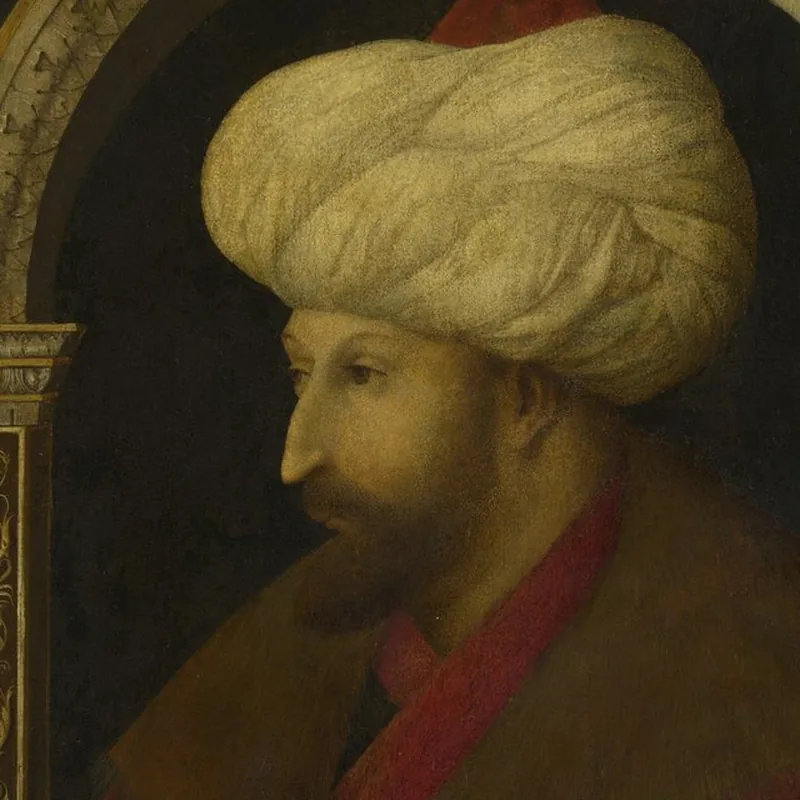
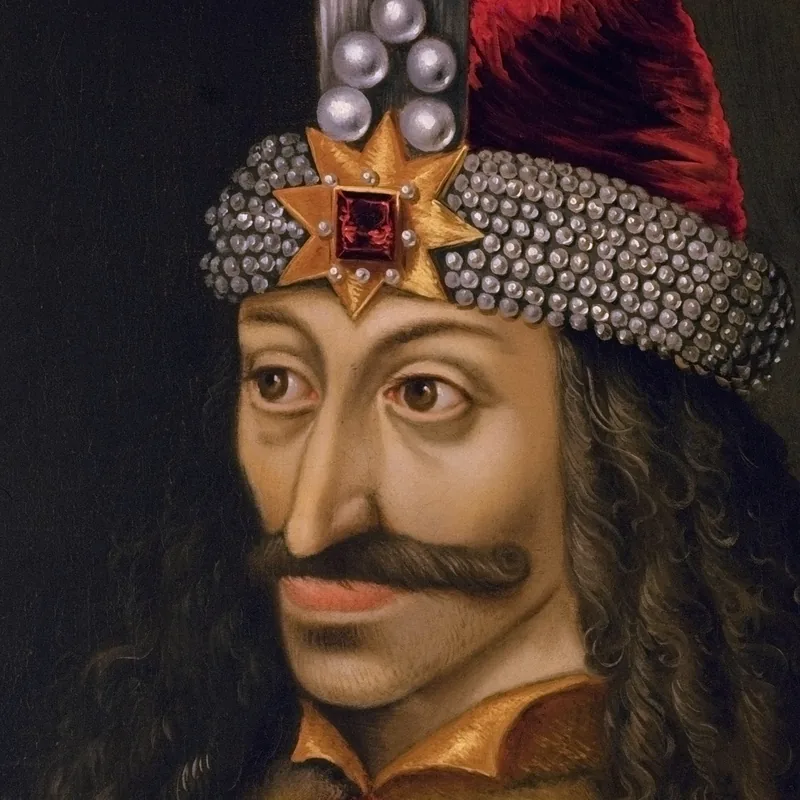 Vlad III of WallachiaVlad Țepeș, Vlad Drăculea
- Lived
- 1432 to 1481
- 1431 to 1476 (the Kunsthistorisches Museum gives 1477)
- Origin
- Born in Edirne, fourth son of Sultan Murad II
- Born in Sighișoara in Transylvania, second son of Vlad II Dracul
- Came to power
- Sultan 1444 to 1446 as a boy, again from 1451
- Voivode for about two months in 1448, then 1456 to 1462 and again in 1476
- Wars in command
- Constantinople 1453, Serbia, Belgrade 1456, the Morea, Trebizond 1461, Wallachia 1462, Bosnia 1463, Venice 1463 to 1479, Uzun Hasan 1473, Rhodes and Otranto 1480
- Rival claimants, the Danube raids of 1461 to 1462, the campaign of 1462, Hungarian service on the Bosnian and Serbian frontier in 1476
- Notable opponents
- The Byzantines, the Hungarians, Vlad III, Stephen of Moldavia, Uzun Hasan, Venice
- Mehmed II, Hamza Bey, Mahmud Pasha, his brother Radu, Stephen of Moldavia
- Battles named here
- Constantinople, Belgrade, the night attack of 1462, Valea Albă
- The Danube raids, the night attack of 1462
- Death
- Died on campaign at Hünkârçayırı near Constantinople, 3 May 1481
- Killed fighting his Ottoman and Wallachian enemies at the turn of 1476 and 1477
Dates, origins and reigns as given by Britannica, the TDV İslâm Ansiklopedisi, the Kunsthistorisches Museum and Alexandru Simon. We give no win and loss totals because no source counts their battles the same way.3
Where they met: the Wallachian campaign of 1462
Hostages and a client prince
Britannica dates the brothers' arrival at the court of Murad II to 1442, sent as pledges that their father would keep faith with the sultan. Vlad came home in 1448, after his father and elder brother had been killed by Wallachian boyars. The Greek historian Kritoboulos tells it differently: in his version the boys fled to Murad as refugees after John Hunyadi killed their father, and Mehmed later restored Vlad at great expense and bound him with oaths. Matei Cazacu notes that Vlad took the tribute to the Porte in person from 1456, then stopped paying it for three years.4
By 1461 Vlad had chosen Hungary, İnalcık writes. Early in 1462 the Venetian envoy at the court of King Matthias Corvinus reported that the king had given Vlad a close relative in marriage, while Radu, as Alexandru Simon points out, was Mehmed's favourite and married to a niece of Mara Branković, Murad II's widow.5
Hamza Bey and the winter raids
The spark was an attempt to seize Vlad. Laonikos Chalkokondyles, an Athenian who wrote under Ottoman rule, says Mehmed sent the court secretary Katabolinos to summon Vlad, while Hamza, the governor on the Danube, was to lie in ambush and take him by trickery. Vlad saw through it, captured both men and had the prisoners mutilated and impaled, Hamza on a higher stake than the rest. Doukas, another Greek contemporary, gives a different cause: Mehmed demanded 10,000 gold coins and 500 boys, and Vlad impaled the envoys who came for them. In Doukas Hamza crosses into Wallachia with 10,000 men and is taken and impaled with the survivors.6
Then Vlad crossed the river, and Ioan-Aurel Pop writes that he retook the fortress of Giurgiu in late January 1462 and had his captains lay waste the southern bank from Orșova to the Black Sea. On 11 February Vlad sent Matthias a war bulletin with a list of the dead by place, 23,884 men and women in all, counted from the heads and other proofs brought to his officials and not including those burned in their houses.7
The sultan crosses the Danube
The size of Mehmed's army is the most disputed number of the campaign. Chalkokondyles reckons about 250,000 men, a figure he says could be worked out from the 300,000 gold pieces the tax farmers paid for the Danube ferries. Doukas gives more than 150,000, while Kritoboulos, a writer openly loyal to the sultan, gives no number and says only that Mehmed gathered as large an army as he could. Of the modern historians, Pop prefers roughly 100,000. The fleet is about 25 warships and 150 other vessels in Chalkokondyles, 20 galleys and 150 transports in Yusuf Heper. Pop puts Vlad's whole army at about 22,000.8
Konstantin Mihailović, a Serbian janissary on the campaign, left the fullest account of the crossing. As Heper summarises it, the janissaries rowed over by night in some 80 boats, dug in under fire and lost about 250 men before the guns were ferried across and Vlad pulled back. Pop records an earlier Ottoman setback that spring, when Vlad caught a raiding force of 18,000 under Mahmud Pasha on its way home and destroyed it.9
Scorched earth
Vlad did not offer battle but sent the people and the herds into the mountains and forests and emptied the plain. Doukas writes that the sultan marched for more than seven days and found neither man nor beast nor food nor drink. Tursun Beg and the Ottoman chroniclers after him all remember the thirst and the heat in armour.10
The night attack
Heper dates the attack on the Ottoman camp to the night of 17 to 18 June 1462, while Adrian Gheorghe, who is editing the Ottoman sources, places the night attacks in July. Chalkokondyles says Vlad led no fewer than 10,000 horsemen, though others said no more than 7,000, and he does not believe the story that Vlad scouted the camp in disguise. The Wallachians came in with torches and horns, missed the sultan's quarters and fell on the tents of the viziers Mahmud and Isaac, killing camels, mules and other animals, while the Ottomans stayed in their tents as their custom required. By his account few were lost on either side. At first light Mehmed sent Ali, son of Mihal, in pursuit, and about a thousand prisoners were brought in and killed. One captive preferred death to telling the sultan where his lord was.11
Other writers tell a different story of that night, and Kritoboulos also says the attackers killed animals rather than men, then claims that Mehmed let them advance and had them cut down from all sides. The Ottoman chroniclers Aşıkpaşazade and Neşri, as Heper reports them, say half of the attackers were killed and Vlad barely escaped. Doukas, by contrast, writes that the Turks were killing one another in the dark until dawn and that the sultan went home in disgrace, a version Karl Müller, the editor of Kritoboulos, already noted stands far apart from the others.12
The forest of the impaled
Mehmed then marched on Vlad's capital, Târgoviște. Chalkokondyles says the town made no preparation for a siege, and the sultan rode past it. Beyond it his army entered a field of stakes about 17 stades long and 7 wide, on which, as it was said, some 20,000 men, women and children had been impaled. Doukas sets the scene earlier on the march and puts Hamza on a stake in the middle, still in his purple and red robes. Gheorghe calls these 20,000 victims alleged and traces the figure to source material that Greek and Ottoman writers shared.13

Radu takes the throne
Mehmed did not stay to hunt Vlad down. Chalkokondyles says he left Radu behind with Ottoman troops, and the boyars, told that friendship with the sultan would end their losses, went over to the brother one by one. Vlad, seeing his people desert, left for Hungary, and Kritoboulos says the Hungarians seized him and shut him in prison. Simon dates the arrest to the last days of November 1462 in Transylvania, on a charge of plotting to hand the king to the sultan, while Gheorghe puts it in October.15
The sultan's army reached Adrianople in poor order. An escaped slave quoted in a Venetian letter said most of the horses had died of hunger and thirst, and that some 50,000 Turks had fallen in the night attack, one of several rumours Pop collects from the Italian dispatches. The Venetian ambassador in Constantinople wrote that the sultan had left Wallachia with great loss and shame. Kritoboulos has Mehmed rest his army that summer and then order a fleet of 200 ships against Lesbos, which the TDV encyclopedia records as annexed in September 1462. Radu, Pop notes, ruled Wallachia with interruptions until 1475.16
Strategy: the plan for a whole war
The case for Mehmed
İnalcık places Wallachia inside a larger plan. Mehmed's main task in the Balkans, he writes, was to undermine Hungarian influence, and by deposing Vlad in favour of Radu he reduced the Hungarian threat on the Danube. He brought both tools he needed, a large army and a ready replacement raised at his court. In the TDV encyclopedia İnalcık sums up the result in one line: the sultan invaded, drove Vlad out and appointed Radu in his place.17
The weak point is that Mehmed never caught his enemy or forced a decision in the field, and it was Matthias, not Mehmed, who finally took Vlad off the board.18
The case for Vlad
Vlad struck first, in winter, when the crossings were his to choose and the sultan's army was far away. The letter of 11 February shows that he meant the raids to bind Hungary to the war. Faced with an army several times his own, he refused battle and left the invader only empty fields, and the Italian reports Pop has studied give hunger in the scorched land as a main reason the sultan turned back.19
His weak point was the ally he depended on. Matthias arrived at the Wallachian border late, Simon writes, and in November arrested Vlad instead of helping him. By then the boyars hostile to him had regrouped behind Radu.20
Battlefield tactics
The case for Mehmed
Mehmed forced the crossing of a great river against an enemy on the far bank, with janissaries in boats and guns ferried behind them. After the night attack, Heper writes, he fortified his camp every evening with a palisade and kept his soldiers on the alert day and night. The camp held under a surprise attack in the dark.21
Yet Vlad's horsemen got inside the camp at all. At Belgrade in 1456 Mehmed had already been forced to give up a siege and was wounded in the forehead trying to stop a rout, the TDV encyclopedia records.22
The case for Vlad
Vlad's methods were the ambush, the raid and the night attack. He turned the trap set for him by Hamza into a trap for Hamza, and in June he took several thousand riders into the sultan's camp and came out alive.
The cost was high and the target was missed. The attackers lost their way to the sultan's tent, and Kritoboulos and the Ottoman chroniclers describe heavy losses among them. Only Doukas presents the night as a disaster for the Turks.23
Logistics and speed
The case for Mehmed
Mehmed marched out of Adrianople in spring, Doukas says, waited at the Danube until the whole army had assembled, and crossed. Within the same year he was ready for a second major operation, against Lesbos.24
The case for Vlad
Vlad's force was small and fast, and his captains raided the whole river from Orșova to the sea within a few weeks of winter, and in summer his riders harassed the Ottoman column and vanished into the woods. But with about 22,000 men in all he could hurt the invader, not stop him reaching the capital, and in the middle of the campaign he had to ride east to face the Moldavians at Kilia.
Leading men
The case for Mehmed
Mehmed's army kept its discipline under a night attack. He could also be merciless, and Doukas, who saw the result with his own eyes, records that in 1452 the sultan had the crew of a Venetian ship beheaded and its captain, Rizzo, impaled.25
The case for Vlad
Vlad built an army that would follow him into a sultan's camp at night. Chalkokondyles says that when he took power he chose a guard of spearmen and rewarded his chosen soldiers with the wealth of those he had killed. That same rule rested on fear, for Chalkokondyles reports that Vlad was said to have killed some 20,000 men, women and children in a short time to secure his throne, and Heper notes that Saxon sources gave 30,000 for his killings in Transylvania, a figure he calls exaggerated. When Radu offered peace, the boyars left him.26
Politics and war
The case for Mehmed
Mehmed used politics where arms could not reach. Radu did the work of persuading the boyars, and the sultan's propaganda followed fast. Gheorghe has shown that Tursun Beg's chapter on Vlad grew out of the letters of victory he drafted in 1462, among them one sent to the ruler of Karaman, likely in early August, which cast Vlad as an ungrateful rebel and the sultan as the source of order. The settlement had limits, though, as Pop's judgement below shows.27
The case for Vlad
Vlad understood that his war needed Christian money and armies. His letter to Matthias was written to bring Hungary in, and the dispatches Pop has edited show that Venice was quietly paying the king 5,000 ducats a month for the war against the Turk.28
He lost the war of words afterwards. Gheorghe argues that the tales of Vlad's cruelty were first written up in Latin, most likely at the Hungarian court, to justify his arrest to the Catholic powers funding Hungary, and that they later became the German pamphlets printed at Nuremberg from 1488.29
What came after
The case for Mehmed
Wallachia was a short episode in Mehmed's reign. In 1463 he conquered Bosnia, in 1470 he took Negroponte from Venice, and on 11 August 1473 he defeated Uzun Hasan at Otlukbeli. In 1480 his troops took Otranto in Italy but failed before Rhodes.30
In his Britannica entry İnalcık ranks the victory over Uzun Hasan with the capture of Constantinople as a turning point of the reign. Mehmed died on 3 May 1481, soon after setting out on a new campaign in Anatolia, and Britannica notes that besides the gout that tormented him there are indications he was poisoned.31
The case for Vlad
Vlad spent years in Hungarian custody, Simon writes, and returned to fight the Ottomans as a royal captain at the siege of Šabac in early 1476. He regained his throne at the end of that year and was killed before the middle of January 1477. Britannica records that he remained a folk hero in the region for his resistance to Ottoman expansion.32
The name that made him famous came later. Bram Stoker's notes for Dracula (1897) mention the name, Britannica says, but the account he drew on does not describe Vlad's deeds. The reviewer Michael Knüppel judges the inspiration loose and notes that the novel tells almost nothing about the historical prince, although the Vienna museum's record of the Ambras portrait still introduces him as the model for the count.33
How historians have judged them
The Ottoman writers made Vlad a rebel and an infidel, and Gheorghe warns against reading their occasional praise of his courage as admiration. In their texts it serves to make the sultan's victory look greater. Kritoboulos, he adds, rearranged events so that Vlad acts as a fool and Mehmed seeks peace to the end. Knüppel, reviewing the new edition of the Ottoman sources, finds that even Franz Babinger's biography of Mehmed treated Vlad inadequately.34
Chalkokondyles reports that remark from the field of stakes and then adds the sultan's second thought, that a man who did such things deserved little regard. Among modern historians İnalcık describes the campaign as a deposition that reduced the Hungarian threat. Pop, reading the Italian dispatches, concludes that the expedition failed in its original military and political aims, since Wallachia kept its own rulers and was never annexed. Simon puts it another way: Matthias's money troubles, Mehmed's skill and the boyars' turn against Vlad transformed the summer campaign from a major failure into a triumph.35

Even the portraits take sides, since the legible part of the inscription on Bellini's painting calls Mehmed ruler of the world, the National Gallery notes. Vlad's best known likeness was painted in the second half of the sixteenth century, long after his death, and the Vienna museum records a second copy in Archduke Ferdinand II's collection of miniature portraits.36
Battles on the site
Every battle page on Echoes of Battle that involves one of the two men, with the guides that set them in context.
 Mehmed in command · 1453The Fall of Constantinople
 Mehmed in command · 1456Siege of Belgrade
 Mehmed in command · 1476Battle of Valea Albă
 Mehmed's army · 1475Battle of Vaslui
 Mehmed's first reign · 1444Battle of Varna
 CommanderMehmed II the Conqueror
 Guide · 1354 to 1913The Ottoman Wars in Europe
 Guide · 1300 to 1922The Military History of the Ottoman Empire
RankingThe Greatest Ottoman Commanders
RankingThe Greatest Battles of the Ottoman Empire
QuizHow Well Do You Know Ottoman Battles?
Your verdict
We do not pick a winner, so here are the two cases at their strongest, and the questions that decide which one you find more convincing.
For Mehmed
- He forced the Danube against an enemy on the far bank
- His camp held under a surprise attack at night
- He marched to Vlad's capital and left a friendly prince on the throne
- Vlad was gone by the end of 1462, and Radu ruled for years
- Wallachia was one campaign among many in a reign of conquest
For Vlad
- He struck first, along the whole Danube, in winter
- He beat Hamza's ambush and Mahmud Pasha's raiding army
- He faced an army several times his size and denied it food and water
- His night attack reached the heart of the sultan's camp
- Wallachia was never made an Ottoman province
Questions to weigh before you decide:
- Is a campaign won if the enemy ruler falls but his country is not conquered?
- Who deserves the credit for Vlad's fall: Mehmed, Radu, the boyars or Matthias Corvinus?
- How far can we trust numbers given by writers who served the sultan, or by envoys hoping for good news?
- Was the night attack a bold stroke that nearly worked, or a costly failure?
- Should terror against one's own people count against a commander, or only against a ruler?
- Can a prince with a small country and one ally be fairly compared with the ruler of an empire?
Cast your vote below and see how other readers have judged them.





