

What is the military history of Wales?
It is the story of the Welsh kingdoms and princes who resisted Norman and English expansion, of the Principality of Wales that Edward I conquered in 1282 to 1283, of risings such as Owain Glyndŵr's in 1400, and of Welsh soldiers who later fought in British armies and Welsh regiments.1
Seen from Wales, much of this history is not Britain at war but a country of several kingdoms facing a larger neighbor, winning battles such as Crug Mawr and Bryn Glas and losing its princes at Orewin Bridge. Welshmen also fought for the English crown throughout, in Edward I's own armies and on both sides of the Wars of the Roses. This page follows the Welsh kingdoms, the March, the princes and the conquest, the risings and the Tudors, and then the Welsh soldiers who served the British state. The wars of England and of Great Britain are on our page on the military history of Britain.2
Who ruled Wales before the Normans?
After the end of Roman rule around 400, native leaders founded a number of kingdoms in Wales: Gwynedd in the northwest, Powys in the northeast, Dyfed in the southwest, and in the southeast Glywysing and Gwent. Britannica notes that tradition traced the kings of Gwynedd to Cunedda, said to have come from northern Britain to drive out the Irish. These were separate realms, not a single state.3
By the 12th century three kingdoms dominated, Gwynedd, Powys and Deheubarth, ruled from Aberffraw, Mathrafal and Dinefwr. Their rulers were called kings and later princes or lords, and each held his land by homage to the king of England. Gerald of Wales, writing in 1188, found the men of the south best with the bow and those of the north with the long lance.4

The Norman March
After 1066 the Normans set up the earldoms of Chester, Shrewsbury and Hereford on the border and pushed into Wales from each. After Rhys ap Tewdwr, king of Deheubarth, was killed in 1093, they overran almost the whole of the south and founded the lordships of Cardigan, Pembroke, Brecon and Glamorgan. This was the March of Wales, where marcher lords held wide powers under the custom of the March, largely free of the king.5
The Welsh fought back. When Henry I died in 1135, revolt spread across the south. In the autumn of 1136 the sons of the king of Gwynedd and Gruffydd ap Rhys of Deheubarth routed the Normans and Flemings of the south outside Cardigan, at Crug Mawr; the Royal Commission writes that the victory re-established Welsh rule over much of southern and central west Wales. Lloyd notes that the Welsh could now put armored cavalry in the field beside their foot.6
The princes of Gwynedd
Gwynedd rose first. Under Gruffudd ap Cynan and his son Owain Gwynedd, who died in 1170, it reached from the Dyfi to the Dee and withstood the pressure of Henry II. The Dictionary of Welsh Biography credits Owain with setting the native rulers of Wales alongside the great feudal magnates of his time; he accepted Henry's overlordship and changed his style from king to prince.7
His grandson Llywelyn ab Iorwerth, who died in 1240, united Gwynedd again and won a dominant place among the Welsh princes. His grandson in turn, Llywelyn ap Gruffudd, took the title Prince of Wales in 1258, and in 1267 Henry III recognized it by the Treaty of Montgomery, with the right to the homage of the Welsh lords. Britannica describes the result as a Principality of Wales made of the old kingdoms and parts of the March; the Dictionary calls it the first experiment in Welsh statehood.8
How did Edward I conquer Wales?
Edward I invaded in 1277 with three coordinated advances and naval support, blockaded Llywelyn in Snowdonia and starved him into submission; the prince kept only Gwynedd west of the Conwy. Welshmen fought on both sides: Morris, working from the pay rolls, found some 15,000 infantry in Edward's pay at one time in 1277, 9,000 of them Welsh.9
War returned in 1282. On 11 December, near Builth, English troops of the March turned the Welsh position on the Irfon, and Llywelyn, away from his army, was killed by a man who did not know who he was: the battle of Orewin Bridge. The Royal Commission calls it a decisive engagement, after which the possibility of an independent Wales, at that date, was gone. His brother Dafydd held out until the summer of 1283.10
Edward secured the conquest with castles: Conwy, Caernarfon and Harlech, and later Beaumaris, each with a borough of English settlers. UNESCO, which lists the four as a World Heritage site, calls them the finest examples of late 13th and early 14th century military architecture in Europe, largely the work of James of St George. By the Statute of Wales of 1284 the principality was organized as shires on English lines. A further rising in 1294 to 1295 was crushed.11
Owain Glyndŵr's rising: did it succeed?
In September 1400 Owain Glyndŵr, a gentleman descended from the princes of Powys and Deheubarth, attacked Ruthin after a quarrel with its lord, Reginald Grey; a Welsh source has him proclaimed Prince of Wales that day. Britannica writes that the revolt quickly became a national struggle. Between 1400 and 1407, by Britannica's account of Welsh history, the royal government lost control of most of Wales.12

In June 1402 his men routed an English army at Bryn Glas, near Pilleth, and captured its commander, Sir Edmund Mortimer, who changed sides when the king refused his ransom. In 1404 Glyndŵr held Harlech and Aberystwyth, called a parliament at Machynlleth and made a treaty with France. Then the tide turned: his allies in England were crushed, Prince Henry took his strongholds by 1409, and after 1412 he disappears from the record, never betrayed.13
When did Wales become part of England?
In the Wars of the Roses Wales was a recruiting ground for both sides. In February 1461 Edward, Earl of March, defeated a Lancastrian army raised in Wales by Jasper Tudor at Mortimer's Cross on the border; Jasper's father, the Welsh squire Owen Tudor, was beheaded at Hereford. Harlech Castle still held out for Henry VI in 1468, when Jasper landed in vain to relieve it.14
Owen's grandson Henry Tudor was born at Pembroke Castle in 1457. In August 1485 he landed at Milford Haven and advanced into England to defeat Richard III at Bosworth. Under his son, the acts of 1536 and 1543 incorporated Wales into the realm of England: the marcher lordships became counties, English law replaced Welsh law in the courts, and Wales sent members to Parliament.15
The civil wars in Wales
In 1642 Wales leaned to the king. Britannica notes much sympathy for the royalist cause, with Parliament finding its support mainly in the border counties and in Pembrokeshire. In 1648 unpaid Parliamentarian soldiers in Pembrokeshire mutinied and declared for the king, and their rising became the Welsh front of the Second Civil War.16
On 8 May 1648 about 3,000 New Model veterans under Colonel Thomas Horton broke Rowland Laugharne's rebel army of about 8,000 at St Fagans, west of Cardiff, and took some 3,000 prisoners. The Royal Commission calls it the last set-piece defeat of the royalist forces; Pembroke held out against Cromwell until July.17
Fishguard, 1797
The last invasion of Britain landed in Wales. On 22 February 1797 about 1,400 French troops under the Irish-American William Tate came ashore at Carregwastad Point near Fishguard, to raise revolt. They found none; looting and drink broke their discipline, and two days later they surrendered on Goodwick Sands to Lord Cawdor's militia, yeomanry and volunteers, raised in Pembrokeshire and Cardiganshire. The Royal Commission calls it the last attempted invasion of Britain.18 › Battle of Fishguard, 1797

Welsh regiments: Welsh soldiers in British service
After the union Welshmen fought in English and then British armies, and from the late 17th century in regiments that came to carry the name of Wales. The National Army Museum traces the Royal Welch Fusiliers to a regiment raised at Ludlow in 1689 for the war in Ireland, and later recruited mainly in north Wales. These were soldiers of the British state, in its European wars and its wars of empire, and the regimental labels were not always as Welsh as they look.19
The 24th Foot, famous for Isandlwana and Rorke's Drift in 1879, was then the 2nd Warwickshire Regiment; its depot had moved to Brecon only in 1873, and it became the South Wales Borderers in the army reforms of 1881. The Welsh Guards were formed in February 1915 and mounted their first guard at Buckingham Palace on St David's Day.20
World War I brought the heaviest losses. From 7 to 12 July 1916 the 38th (Welsh) Division attacked Mametz Wood on the Somme; in five days of fighting, the National Army Museum and Amgueddfa Cymru both record, it lost about 4,000 men killed, wounded or missing. In 1982 the Welsh Guards lost 32 men when RFA Sir Galahad was bombed at Bluff Cove in the Falklands. In 2006 the Royal Welch Fusiliers and the Royal Regiment of Wales were merged into the Royal Welsh.21

Memory and commemoration
Wales remembers its princes more than its victories. Llywelyn is Llywelyn Ein Llyw Olaf, our last leader, and a granite monolith at Cilmeri, set up in 1956 in place of an obelisk of 1902, marks the traditional spot where he fell. The Royal Commission calls Owain Glyndŵr one of the best known national heroes of Wales, and Britannica notes that he became one with the revival of Welsh nationalism in the 19th and 20th centuries.22
Fishguard keeps its invasion alive in a memorial stone of 1897 at Carregwastad, in the legend of Jemima Nicholas, and in a tapestry made for the bicentenary. At Mametz a red dragon stands as a memorial to the Welsh Division, and Christopher Williams's great painting of the battle hangs in the National Museum in Cardiff.23
Battles of Wales on this site
Every battle we cover in which Welsh princes, Welsh risings or forces raised in Wales fought, in date order, victories and defeats alike.
The Middle Ages 476 to 1500 · 4
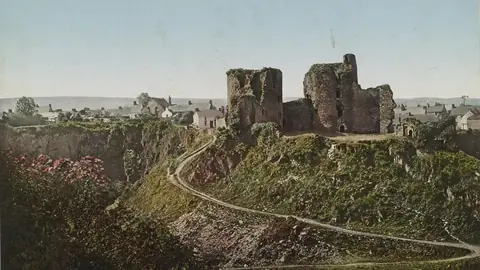
- 1136Battle of Crug Mawr, 1136Welsh forces vs Anglo-Norman lords of the March
In autumn 1136 the princes of Gwynedd and Deheubarth routed the Normans and Flemings outside Cardigan; the bridge over the Teifi broke under the fugitives and Ceredigion passed to the Welsh.
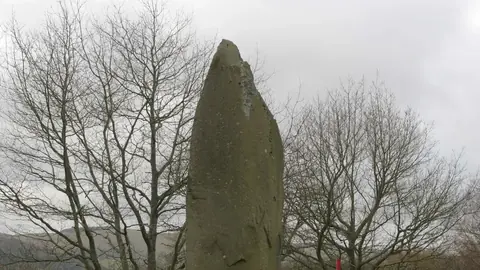
- 1282Battle of Orewin Bridge, 1282Principality of Wales vs Kingdom of England
On 11 December 1282 English troops turned the Welsh position on the Irfon near Builth, and Llywelyn ap Gruffudd, away from his army, was cut down by a man who did not know him.
- 1402Battle of Bryn Glas, 1402Glyndŵr's rebels vs Kingdom of England
On 22 June 1402 Glyndŵr's rebels routed an English army near Knighton; Mortimer's own Welsh archers changed sides, and the captured commander became Glyndŵr's son-in-law.

- 1461Battle of Mortimer's Cross, 1461House of York vs Lancastrian army from Wales
Under a triple sun, the 18-year-old Edward of March routed Jasper Tudor's Lancastrian army from Wales, and Owen Tudor, grandfather of Henry VII, was beheaded at Hereford.

The early modern era 1492 to 1789 · 1
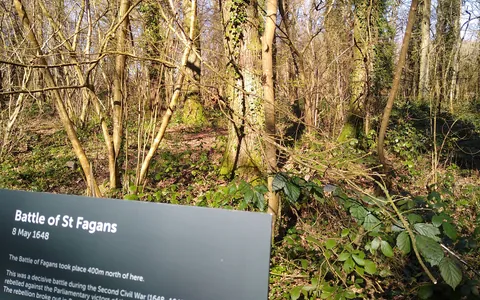
- 1648Battle of St Fagans, 1648Parliament vs Royalist rebels of south Wales
On 8 May 1648 Horton's 3,000 Parliamentarians routed Laugharne's 8,000 Welsh rebels at St Fagans in two hours, taking about 3,000 prisoners and ending the rising in south Wales.
The Napoleonic era 1789 to 1815 · 1
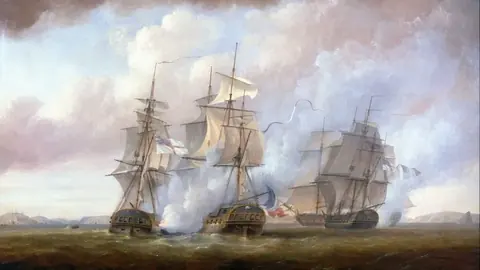
- 1797Battle of Fishguard, 1797Pembrokeshire militia and volunteers vs French expeditionary force
In February 1797 about 1,400 French troops under William Tate landed near Fishguard to start a revolution; two days later, drunk and bluffed, they surrendered to Lord Cawdor on Goodwick Sands.
Timeline
- 1093Rhys ap Tewdwr of Deheubarth is killed; the Normans overrun most of south Wales.24
- 1136
- 1267By the Treaty of Montgomery Henry III recognizes Llywelyn ap Gruffudd as Prince of Wales.26
- 1282Llywelyn is killed near Builth, at Orewin Bridge.27
- 1284The Statute of Wales organizes the conquered principality into shires.28
- 1400Owain Glyndŵr's rising begins with the attack on Ruthin.29
- 1402
- 1461Edward of March defeats Jasper Tudor's army at Mortimer's Cross.31
- 1485
- 1536The first act of union incorporates Wales into the realm of England.33
- 1648
- 1797
- 1916The 38th (Welsh) Division takes Mametz Wood at a cost of about 4,000 casualties.36
Notes
A number in the text points to a note; each note names the works that paragraph draws on, listed in full under Sources.
- Encyclopaedia Britannica, “Wales”; J. Beverley Smith, “Wales”; J. Beverley Smith, “Wales”. ↩
- Encyclopaedia Britannica, “Wales”; John E. Morris, The Welsh Wars of Edward I. ↩
- Pyrs Gruffudd and others, “Wales”; Encyclopaedia Britannica, “Wales”. ↩
- Encyclopaedia Britannica, “Wales”; Gerald of Wales, The Itinerary of Archbishop Baldwin through Wales. ↩
- Encyclopaedia Britannica, “Wales”; John Edward Lloyd, A History of Wales from the Earliest Times to the Edwardian Conquest. ↩
- Royal Commission on the Ancient and Historical Monuments of Wales, “Crug Mawr, site of Battle, near Cardigan (NPRN 402323)”; John Edward Lloyd, A History of Wales from the Earliest Times to the Edwardian Conquest. ↩
- Encyclopaedia Britannica, “Wales”; Thomas Jones Pierce, “Owain Gwynedd (c. 1100 to 1170), king of Gwynedd”. ↩
- J. Beverley Smith, “Wales”; Thomas Jones Pierce, “Llywelyn ap Gruffydd (Llywelyn the Last), Prince of Wales (died 1282)”. ↩
- Reginald Francis Treharne, “Edward I”; John E. Morris, The Welsh Wars of Edward I; Thomas Jones Pierce, “Llywelyn ap Gruffydd (Llywelyn the Last), Prince of Wales (died 1282)”. ↩
- Royal Commission on the Ancient and Historical Monuments of Wales, “Battle of Irfon Bridge (NPRN 403411)”; J. Beverley Smith, “Wales”; Thomas Jones Pierce, “Llywelyn ap Gruffydd (Llywelyn the Last), Prince of Wales (died 1282)”. ↩
- J. Beverley Smith, “Wales”; UNESCO World Heritage Centre, “Castles and Town Walls of King Edward in Gwynedd”; Reginald Francis Treharne, “Edward I”. ↩
- Thomas Jones Pierce, “Owain Glyndŵr (c. 1354 to 1416), Prince of Wales”; Ywain Tomos, “In the steps of Owain Glyndŵr”; Encyclopaedia Britannica, “Owain Glyn Dŵr”; J. Beverley Smith, “Wales”. ↩
- Royal Commission on the Ancient and Historical Monuments of Wales, “Pilleth; Battle at Bryn Glas; Battle of Pilleth (NPRN 306352)”; Ywain Tomos, “In the steps of Owain Glyndŵr”; Thomas Jones Pierce, “Owain Glyndŵr (c. 1354 to 1416), Prince of Wales”; Encyclopaedia Britannica, “Owain Glyn Dŵr”. ↩
- The Battlefields Trust, “Battle of Mortimer's Cross”; Thomas Jones Pierce, “Owain Tudur (c. 1400 to 1461)”; Encyclopaedia Britannica, “Jasper Tudor, duke of Bedford”. ↩
- Alexander Reginald Myers, “Henry VII”; Encyclopaedia Britannica, “Jasper Tudor, duke of Bedford”; J. Beverley Smith, “Wales”. ↩
- Harold Carter, “Wales”; David Plant, “The Second Civil War”. ↩
- Royal Commission on the Ancient and Historical Monuments of Wales, “Battle of St Fagans (NPRN 307776)”; David Plant, “The Second Civil War”. ↩
- Rita Singer, “The last invasion of Britain wasn't in 1066”; Edward Laws, The History of Little England beyond Wales; Royal Commission on the Ancient and Historical Monuments of Wales, “Carreg Goffa, Carregwastad Point (NPRN 309039)”. ↩
- National Army Museum, “The Royal Welch Fusiliers”; National Army Museum, “Wales”. ↩
- National Army Museum, “The South Wales Borderers”; National Army Museum, “The Welsh Guards”. ↩
- National Army Museum, “German observation post in Mametz Wood, 10 August 1916”; Amgueddfa Cymru, “'War's Hell!' the Battle of Mametz Wood in Art”; National Army Museum, “The Welsh Guards”; National Army Museum, “The Royal Welch Fusiliers”. ↩
- Royal Commission on the Ancient and Historical Monuments of Wales, “Memorial to Llywelyn ap Gruffudd, Cilmeri (NPRN 32562)”; Royal Commission on the Ancient and Historical Monuments of Wales, “Battle of Irfon Bridge (NPRN 403411)”; Ywain Tomos, “In the steps of Owain Glyndŵr”; Encyclopaedia Britannica, “Owain Glyn Dŵr”. ↩
- Royal Commission on the Ancient and Historical Monuments of Wales, “Carreg Goffa, Carregwastad Point (NPRN 309039)”; Rita Singer, “The last invasion of Britain wasn't in 1066”; Amgueddfa Cymru, “'War's Hell!' the Battle of Mametz Wood in Art”. ↩
- Encyclopaedia Britannica, “Wales”; John Edward Lloyd, A History of Wales from the Earliest Times to the Edwardian Conquest. ↩
- Royal Commission on the Ancient and Historical Monuments of Wales, “Crug Mawr, site of Battle, near Cardigan (NPRN 402323)”; John Edward Lloyd, A History of Wales from the Earliest Times to the Edwardian Conquest. ↩
- J. Beverley Smith, “Wales”; Thomas Jones Pierce, “Llywelyn ap Gruffydd (Llywelyn the Last), Prince of Wales (died 1282)”. ↩
- Royal Commission on the Ancient and Historical Monuments of Wales, “Battle of Irfon Bridge (NPRN 403411)”; Thomas Jones Pierce, “Llywelyn ap Gruffydd (Llywelyn the Last), Prince of Wales (died 1282)”. ↩
- J. Beverley Smith, “Wales”; Reginald Francis Treharne, “Edward I”. ↩
- Thomas Jones Pierce, “Owain Glyndŵr (c. 1354 to 1416), Prince of Wales”; Ywain Tomos, “In the steps of Owain Glyndŵr”. ↩
- Royal Commission on the Ancient and Historical Monuments of Wales, “Pilleth; Battle at Bryn Glas; Battle of Pilleth (NPRN 306352)”; Ywain Tomos, “In the steps of Owain Glyndŵr”. ↩
- The Battlefields Trust, “Battle of Mortimer's Cross”; Encyclopaedia Britannica, “Jasper Tudor, duke of Bedford”. ↩
- Alexander Reginald Myers, “Henry VII”; Encyclopaedia Britannica, “Jasper Tudor, duke of Bedford”. ↩
- J. Beverley Smith, “Wales”; Pyrs Gruffudd and others, “Wales”. ↩
- Royal Commission on the Ancient and Historical Monuments of Wales, “Battle of St Fagans (NPRN 307776)”; David Plant, “The Second Civil War”. ↩
- Rita Singer, “The last invasion of Britain wasn't in 1066”; Royal Commission on the Ancient and Historical Monuments of Wales, “Carreg Goffa, Carregwastad Point (NPRN 309039)”. ↩
- National Army Museum, “German observation post in Mametz Wood, 10 August 1916”; Amgueddfa Cymru, “'War's Hell!' the Battle of Mametz Wood in Art”. ↩
Sources
- Encyclopaedia Britannica, “Wales: Wales in the Middle Ages”.
- J. Beverley Smith, Encyclopaedia Britannica, “Wales: Llywelyn ap Iorwerth”, with “The Edwardian settlement” and “Rebellion and annexation”.
- J. Beverley Smith, Encyclopaedia Britannica, “Wales: Wales from the 16th to the 21st century”.
- John E. Morris, The Welsh Wars of Edward I (Oxford: Clarendon Press, 1901), Internet Archive, “The Welsh Wars of Edward I”.
- Pyrs Gruffudd and others, Encyclopaedia Britannica, “Wales: History of Wales”.
- Gerald of Wales, The Itinerary of Archbishop Baldwin through Wales, trans. Richard Colt Hoare (London: J. M. Dent, 1912), Project Gutenberg, “The Itinerary of Archbishop Baldwin through Wales”.
- John Edward Lloyd, A History of Wales from the Earliest Times to the Edwardian Conquest, vol. 2 (London: Longmans, Green, 1912), Internet Archive, “A History of Wales, vol. 2”.
- Royal Commission on the Ancient and Historical Monuments of Wales, Coflein, “Crug Mawr, site of Battle, near Cardigan (NPRN 402323)”.
- Thomas Jones Pierce, Dictionary of Welsh Biography (National Library of Wales), 1959, “Owain Gwynedd (c. 1100 to 1170), king of Gwynedd”.
- Thomas Jones Pierce, Dictionary of Welsh Biography (National Library of Wales), 1959, “Llywelyn ap Gruffydd (Llywelyn the Last), Prince of Wales (died 1282)”.
- Reginald Francis Treharne, Encyclopaedia Britannica, “Edward I: Wars of Edward I”.
- Royal Commission on the Ancient and Historical Monuments of Wales, Coflein, “Battle of Irfon Bridge (NPRN 403411)”.
- UNESCO World Heritage Centre, “Castles and Town Walls of King Edward in Gwynedd”.
- Thomas Jones Pierce, Dictionary of Welsh Biography (National Library of Wales), 1959, “Owain Glyndŵr (c. 1354 to 1416), Prince of Wales”.
- Ywain Tomos, Royal Commission on the Ancient and Historical Monuments of Wales, 2020, “In the steps of Owain Glyndŵr”.
- Encyclopaedia Britannica, “Owain Glyn Dŵr”.
- Royal Commission on the Ancient and Historical Monuments of Wales, Coflein, “Pilleth; Battle at Bryn Glas; Battle of Pilleth (NPRN 306352)”.
- The Battlefields Trust, Battlefields Hub, “Battle of Mortimer's Cross”.
- Thomas Jones Pierce, Dictionary of Welsh Biography (National Library of Wales), 1959, “Owain Tudur (c. 1400 to 1461)”.
- Encyclopaedia Britannica, “Jasper Tudor, duke of Bedford”.
- Alexander Reginald Myers, Encyclopaedia Britannica, “Henry VII”.
- Harold Carter, Encyclopaedia Britannica, “Wales: Politics and religion, 1640 to 1800”.
- David Plant, BCW Project (British Civil Wars, Commonwealth and Protectorate), “The Second Civil War: Wales”.
- Royal Commission on the Ancient and Historical Monuments of Wales, Coflein, “Battle of St Fagans (NPRN 307776)”.
- Rita Singer, Aberystwyth University (first published in The Conversation), 2023, “The last invasion of Britain wasn't in 1066”.
- Edward Laws, The History of Little England beyond Wales (London: George Bell, 1888), Internet Archive, “The History of Little England beyond Wales”.
- Royal Commission on the Ancient and Historical Monuments of Wales, Coflein, “Carreg Goffa, Carregwastad Point (NPRN 309039)”.
- National Army Museum, “The Royal Welch Fusiliers”.
- National Army Museum, “Wales” (regimental histories).
- National Army Museum, “The South Wales Borderers”.
- National Army Museum, “The Welsh Guards”.
- National Army Museum, Online Collection, “German observation post in Mametz Wood, 10 August 1916”.
- Amgueddfa Cymru (National Museum Wales), learning resource, “'War's Hell!' the Battle of Mametz Wood in Art: information for teachers” (People's Collection Wales).
- Royal Commission on the Ancient and Historical Monuments of Wales, Coflein, “Memorial to Llywelyn ap Gruffudd, Cilmeri (NPRN 32562)”.






