

What were the Wars of the Roses?
The Wars of the Roses were civil wars in England between the houses of Lancaster and York, both descended from Edward III, for the throne, usually dated 1455 to 1485 or 1487. The crown changed hands several times until Henry Tudor won: he killed Richard III at Bosworth, became Henry VII and married Elizabeth of York, uniting the claims.1
The wars were not a simple contest between two fixed parties. They involved most of the English nobility, many of whom changed sides; each battle lasted from a few hours to most of one day, and the fighting ranged across England and Wales, with Calais, Ireland, Scotland, France and Burgundy all drawn in. The most decisive battles were Towton, Barnet, the Battle of Tewkesbury and the Battle of Bosworth Field.2
Causes of the Wars of the Roses
Both royal houses descended from the sons of Edward III. The Lancastrians, descended from his third son John of Gaunt, had held the throne since Henry IV took it from Richard II in 1399. Richard, 3rd Duke of York, descended from Edward III's fourth son, Edmund of Langley, and through his mother from the second son, Lionel, which by feudal principles gave him a better hereditary claim than the Lancastrian line.3
Henry VI came to the throne as a baby in 1422 and ruled through a long, factious minority. By the 1440s the Hundred Years' War had turned against England; its cost, with no victories in sight, turned opinion against the king's government, and by 1453 Henry VI had lost almost all his French lands. In 1450 the king's chief minister, the Duke of Suffolk, was murdered, and Jack Cade's rebellion in Kent voiced anger at taxes and a court seen as corrupt.4
York, who felt shut out of the king's counsels, blamed Edmund Beaufort, Duke of Somerset. When Henry VI suffered a mental collapse in 1453, York was made Protector of the Realm in 1454 and again in 1455, but each time the king recovered the old court party returned to power. The birth of Henry's son Edward in October 1453 also meant that York was no longer next in line.5
Historians still debate the causes. Henry VI's inadequacy and York's rivalry are central, but local feuds between great families, which the crown failed to control, gave the quarrel national weight. Attempts to blame "bastard feudalism" (lords retaining men with fees and livery) are disputed, since the same system supported stable rule under strong kings, and many nobles wanted good government rather than war.6

Why is it called the Wars of the Roses?
No one at the time called them that. The name was given long afterward, from the supposed badges of the two sides: the white rose of York and the red rose of Lancaster. The white rose was one of the Yorkist emblems, but neither rose was the main livery badge at the time, and firm evidence that the Lancastrians used a red rose before 1485 is lacking.7
The rose symbolism owes much to the Tudors. After marrying Elizabeth of York, Henry VII combined the two flowers in the Tudor Rose, the badge of a new dynasty that claimed to have ended the strife, and Tudor-era writers simplified a tangle of many quarrels into a straight contest between York and Lancaster.8
Who fought in the Wars of the Roses
York's chief allies were the Nevilles: his brother-in-law Richard, Earl of Salisbury, and Salisbury's son Richard, Earl of Warwick, a great magnate in his own right. On the other side, Queen Margaret of Anjou became the driving force of the Lancastrian cause, defending the rights of her son against the Yorkist claim.9
Loyalties were never fixed. At Ludford Bridge in 1459 the veteran Calais soldiers under Andrew Trollope deserted York; in 1470 Warwick, once the Yorkists' leading man, restored Henry VI; and in 1483 to 1485 many of Edward IV's former followers turned against Richard III and joined Henry Tudor, whose victory at Bosworth depended on the Stanleys and other defectors.10
After Towton, Henry VI, Margaret and their son found refuge in Scotland, and in 1461 the Lancastrians handed over the border town of Berwick in return for money, shelter and troops. For three years Lancastrian forces, with Scottish and French help, held out in Northumberland.11
France and Burgundy weighed in on both sides. French help to the Lancastrians in the north was real but limited, and in 1470 Warwick, an exile in France, made common cause with Margaret; Edward IV, who had escaped to Burgundy, recovered his throne in 1471 with Burgundian backing; and Henry Tudor sailed in 1485 with French support and French mercenaries.12
Ireland mattered at both ends of the wars. York, who had served as royal lieutenant there, fled to Ireland after Ludford Bridge in 1459, and in 1487 Yorkist rebels backed by Irish lords set up the pretender Lambert Simnel and crossed from Ireland to England with Irish troops and German mercenaries.13
Phases of the Wars of the Roses, 1455 to 1487
Historians date and divide the wars differently. Britannica gives 1455 to 1485, from the first battle at St Albans to Bosworth, and notes that some historians prefer to end them with the defeat of the Yorkist rising at Stoke Field in 1487; World History Encyclopedia uses 1455 to 1487. The Battlefields Trust starts in 1450, with Suffolk's murder and Cade's rebellion, and divides the fighting into three phases: 1455 to 1461, 1461 to 1471 and 1485 to 1487.14
1455 to 1461. York's larger force won the first battle at St Albans on 22 May 1455, where Somerset was killed. Fighting resumed in 1459: the Yorkists won at Blore Heath but broke up at Ludford Bridge, and a parliament at Coventry condemned them as traitors. In July 1460 the Yorkists won at Northampton and captured the king, and an agreement in October made York heir to the throne, disinheriting Henry's son. Margaret's forces then killed York at Wakefield on 30 December 1460 and beat Warwick at the second battle of St Albans in February 1461, but York's son Edward won at Mortimer's Cross, was proclaimed King Edward IV in London on 4 March and won a complete victory at Towton on 29 March.15
1461 to 1471. Lancastrian resistance in the north ended with the defeat at Hexham in May 1464, and Henry VI was captured in 1465. Edward then quarreled with Warwick, first over his secret marriage to Elizabeth Woodville and then over foreign policy. Warwick and Edward's brother George, Duke of Clarence, rebelled, fled to France, made terms with Margaret and in 1470 restored Henry VI (the "Readeption"), while Edward fled abroad. He returned in March 1471, defeated Warwick, who was killed, at Barnet on 14 April and destroyed Margaret's army at Tewkesbury on 4 May. Henry VI died in the Tower of London shortly afterward; Britannica and World History Encyclopedia say he was murdered.16
1471 to 1485. Edward's throne was secure for the rest of his reign. When he died on 9 April 1483, his son Edward V was 12. Edward's brother Richard, Duke of Gloucester, took control as protector and, after his nephews were declared illegitimate, accepted a petition to take the throne; he was crowned Richard III on 6 July 1483. The two boys, the "Princes in the Tower", disappeared that summer. A rising led by the Duke of Buckingham failed in late 1483, but disaffected Yorkists turned to the exiled Henry Tudor.17
1485 to 1487. Henry landed at Milford Haven in Wales in August 1485, gathered support as he marched into England and defeated and killed Richard at Bosworth on 22 August. Two years later, on 16 June 1487, he crushed the Yorkist army raised for Lambert Simnel at Stoke Field near Newark, usually counted as the last pitched battle of the wars.18
Major battles of the Wars of the Roses
Ludford Bridge (12 October 1459). A Lancastrian victory without a real battle. The Yorkists were entrenched before Ludlow, but after dark Trollope and his Calais men went over to the king. The Yorkist camp broke up: York and his son Rutland escaped to Ireland, while Warwick, Salisbury and York's eldest son Edward reached Calais. The Lancastrians, though, failed to make the most of their success.19
Towton (29 March 1461). Fought in snow on Palm Sunday near Tadcaster in Yorkshire, Towton is usually called the largest and bloodiest battle ever fought in England. According to the chroniclers, the heralds after the battle put the dead at 28,000, and other contemporary estimates run as high as 36,000. Modern historians doubt them: the Open University calls the often-quoted 75,000 combatants and 28,000 casualties unlikely and judges the real numbers much smaller, while Historic England's battlefield report notes that, even if the figures are wrong, contemporaries plainly saw Towton as an exceptionally large and savage fight.20

Tewkesbury (4 May 1471). Margaret had landed at Weymouth and was marching to join Jasper Tudor in Wales when Edward caught her army south of Tewkesbury. A Lancastrian flank attack led by Somerset failed, the Yorkists broke the line and many fugitives were killed in the rout. Henry VI's only son, Prince Edward, died in the battle or the flight that followed; Margaret was captured. Estimates of the armies vary: Historic England's register entry gives about 6,000 Lancastrians against 5,500 Yorkists, its 1995 battlefield report 5,000 to 6,000 against about 4,000, and EBSCO 3,000 against 4,000 to 4,500. About 2,000 Lancastrians are thought to have died.21

Bosworth (22 August 1485). Henry Tudor's army, perhaps 5,000 strong, faced a larger royal army near Market Bosworth in Leicestershire; World History Encyclopedia estimates Richard's at 8,000 to 12,000, Historic UK at about 10,000. The Stanleys held back with their own forces until Richard, separated from his main body, charged toward Henry; then they intervened against the king. Accounts differ on whether it was Lord Thomas Stanley, Henry's stepfather, or Sir William Stanley who decided the day. Richard was killed, the last English king to die in battle.22
Key figures of the Wars of the Roses
- Henry VI (reigned 1422 to 1461 and 1470 to 1471), the Lancastrian king whose incapacity opened the way to war; deposed in 1461, restored in 1470, he died in the Tower in 1471.23
- Richard, 3rd Duke of York, Protector during the king's illness and recognized as heir in 1460; killed at Wakefield on 30 December 1460.24
- Margaret of Anjou, Henry VI's queen and the driving force of the Lancastrian cause; captured at Tewkesbury, she was ransomed by Louis XI in 1475 according to Britannica, while World History Encyclopedia dates her release and return to France to 1476.25
- Richard Neville, Earl of Warwick, "the Kingmaker", Edward IV's chief supporter in 1461 who turned against him and restored Henry VI in 1470; killed at Barnet in 1471.26
- Edward IV, York's son, king from 1461 to 1470 and from 1471 until his death in 1483.27
- Richard III, Edward's youngest brother: loyal in 1469 to 1471, he led the Yorkist vanguard at Tewkesbury and recaptured Berwick from the Scots in 1482 before taking the throne in 1483.28
- Henry Tudor (Henry VII), descended through his mother Margaret Beaufort from John of Gaunt; after 1471 the last Lancastrian claimant, he spent years in exile in Brittany before Bosworth.29
Who won the Wars of the Roses
Henry VII was crowned on 30 October 1485 and married Elizabeth of York, Edward IV's daughter, on 18 January 1486, joining the Lancastrian and Yorkist claims. His throne was not yet safe: Yorkist plots continued, Stoke Field was needed in 1487, and further pretenders troubled him for years. The Tudor dynasty he founded ruled England until 1603.30
The wars hit the nobility hardest. Captured lords were often executed rather than ransomed, as had been usual in the French wars, and the great noble families suffered heavy losses as one side and then the other struck down its opponents without mercy.31
Legacy and memory
The story most people know was shaped under the Tudors. Sixteenth-century writers such as Polydore Vergil, Thomas More and Edward Hall wrote under the dynasty that had overthrown Richard III, and the Richard III Society argues that their work was heavily influenced by anti-Ricardian propaganda. Britannica's biography of Richard notes that for almost 500 years he was depicted as the worst of kings, that some charges are now regarded as excessive, and that modern historians reject More's and Shakespeare's claim that he planned to seize the throne long before Edward IV died.32
Shakespeare fixed the wars in popular memory. His Richard III, written around 1593, portrays Richard as a misshapen, scheming murderer; Tewkesbury is popularly remembered through Henry VI Part 3, and Bosworth largely through Richard III.33

Richard's reputation is still argued over. The fate of the princes has never been proved. Britannica's biography judges that they were almost certainly killed in 1483 and that most sources blame Richard, though some implicate Buckingham; the Richard III Society, which exists to reassess Richard's reign, stresses that no proof has ever been found.34
In 2012 archaeologists from the University of Leicester, working with the Richard III Society and Leicester City Council, found Richard's lost grave at the site of the Grey Friars church in Leicester, by then under a car park. The university announced the identification of the remains in February 2013, and the king now lies in a new tomb in Leicester Cathedral.35
The battlefields themselves are part of that memory. Tewkesbury and Stoke Field are on Historic England's Register of Historic Battlefields, and at Bosworth a five-year survey relocated the fighting to low ground below Ambion Hill, where it recovered round shot and lead shot from the battle. At Towton, bodies excavated between 1996 and 2005 show Christian burial, and victors were expected to found chantries and chapels to pray for the souls of the dead.36
Battles of the Wars of the Roses
Our articles on the battles of the Wars of the Roses are listed below in date order.
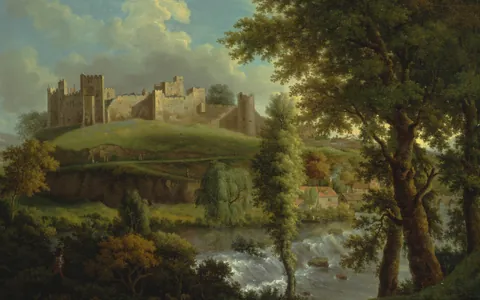
- 1459Rout of Ludford Bridge, 1459Yorkists vs Lancastrians (royal army)
On the night of 12 October 1459 the Calais veterans went over to Henry VI at Ludford Bridge below Ludlow. The Yorkist lords fled in the dark and their army melted away by morning.
- 1461Battle of Mortimer's Cross, 1461House of York vs Lancastrian army from Wales
Under a triple sun, the 18-year-old Edward of March routed Jasper Tudor's Lancastrian army from Wales, and Owen Tudor, grandfather of Henry VII, was beheaded at Hereford.

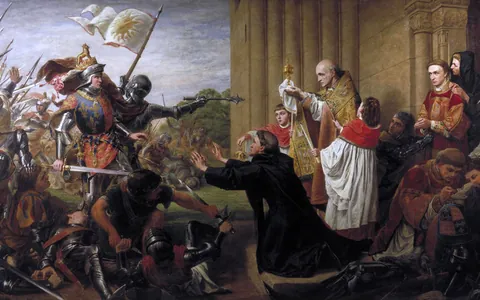
- 1471Battle of Tewkesbury, 1471House of York vs House of Lancaster
On 4 May 1471 Edward IV caught Queen Margaret's army at the Severn. Somerset's flank attack failed, and the Lancastrian Prince of Wales died in the rout.
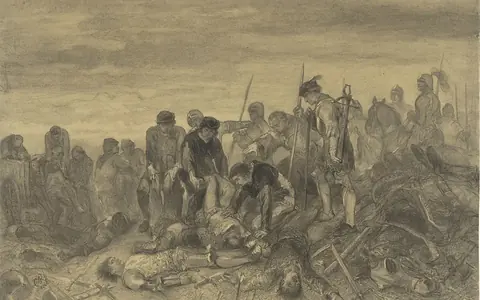
- 1485Battle of Bosworth Field, 1485Lancaster (Tudor) vs York (crown)
How Richard III fell in a last cavalry charge and Henry Tudor founded the Tudor dynasty.
Timeline of the Wars of the Roses
- 22 May 1455First battle of St Albans: York wins and Somerset is killed.37
- 12 October 1459The Yorkists break up without a fight at Ludford Bridge.38
- 10 July 1460Yorkist victory at Northampton; Henry VI is captured.39
- 30 December 1460York is killed at Wakefield.40
- 29 March 1461Edward IV wins at Towton; Henry VI is deposed.41
- May 1464Lancastrian defeat at Hexham.42
- 1470Warwick restores Henry VI (the Readeption); Edward IV flees abroad.43
- 14 April 1471Edward IV wins at Barnet; Warwick is killed.44
- 4 May 1471Yorkist victory at Tewkesbury; Prince Edward is killed.45
- May 1471Henry VI dies in the Tower of London.46
- 1483Edward IV dies (9 April); Richard III is crowned (6 July).47
- 22 August 1485
- 18 January 1486Henry VII marries Elizabeth of York.49
- 16 June 1487Henry VII defeats the Yorkist rising for Lambert Simnel at Stoke Field.50
Where to read next
Battles of these wars appear in our rankings of the greatest battles in British history and the greatest battles of the Middle Ages, and their commanders among the greatest British commanders. For what came before, read our guides to the Hundred Years' War and Henry V; for the neighbors drawn into the struggle, the military history of Scotland and of Ireland. For the wider period, see our page on the Middle Ages, and test yourself with the medieval battles quiz or the British battles quiz.
Notes
A number in the text points to a note; each note names the works that paragraph draws on, listed in full under Sources.
- Encyclopaedia Britannica, “Wars of the Roses”; The Battlefields Trust, “The Battlefields Hub”; The Open University, “England’s Historic Battlefields”; Encyclopaedia Britannica, “Henry VII”. ↩
- Richard III Society, “Wars of the Roses”; Richard III Society, “Battle Timeline”; Encyclopaedia Britannica, “United Kingdom”; World History Encyclopedia, “Wars of the Roses”; The Open University, “England’s Historic Battlefields”. ↩
- Encyclopaedia Britannica, “United Kingdom”; Richard III Society, “Wars of the Roses”; Encyclopaedia Britannica, “How did the Wars of the Roses get their name?”. ↩
- The Battlefields Trust, “The Battlefields Hub”; World History Encyclopedia, “Wars of the Roses”; Encyclopaedia Britannica, “Wars of the Roses”; Richard III Society, “Wars of the Roses”. ↩
- The Battlefields Trust, “The Battlefields Hub”; Encyclopaedia Britannica, “United Kingdom”; World History Encyclopedia, “Timeline”. ↩
- Encyclopaedia Britannica, “United Kingdom”; Richard III Society, “Wars of the Roses”; World History Encyclopedia, “Wars of the Roses”. ↩
- Encyclopaedia Britannica, “How did the Wars of the Roses get their name?”; The Battlefields Trust, “The Battlefields Hub”; Richard III Society, “White and Red Roses”; World History Encyclopedia, “Wars of the Roses”. ↩
- Richard III Society, “Wars of the Roses”; World History Encyclopedia, “Henry VII of England”; World History Encyclopedia, “Wars of the Roses”. ↩
- The Battlefields Trust, “The Battlefields Hub”; Encyclopaedia Britannica, “Wars of the Roses”; World History Encyclopedia, “Wars of the Roses”. ↩
- James H. Ramsay, Lancaster and York; Encyclopaedia Britannica, “Wars of the Roses”; The Battlefields Trust, “The Battlefields Hub”; World History Encyclopedia, “Battle of Bosworth”. ↩
- Encyclopaedia Britannica, “Wars of the Roses”; William Ernest Broad, Northumberland at War; Encyclopaedia Britannica, “Wars of the Roses”. ↩
- Encyclopaedia Britannica, “Wars of the Roses”; Encyclopaedia Britannica, “United Kingdom”; William Ernest Broad, Northumberland at War; World History Encyclopedia, “Edward IV of England”; World History Encyclopedia, “Battle of Bosworth”. ↩
- James H. Ramsay, Lancaster and York; Encyclopaedia Britannica, “United Kingdom”; The Battlefields Trust, “The Battlefields Hub”; Historic England, “Battle of Stoke (Field) 1487”; Nottinghamshire County Council, “The Battle of Stoke Field, 1487”; Encyclopaedia Britannica, “Henry VII”. ↩
- Encyclopaedia Britannica, “Wars of the Roses”; Encyclopaedia Britannica, “Wars of the Roses”; World History Encyclopedia, “Wars of the Roses”; The Battlefields Trust, “The Battlefields Hub”. ↩
- Encyclopaedia Britannica, “Wars of the Roses”; Encyclopaedia Britannica, “United Kingdom”; World History Encyclopedia, “Timeline”. ↩
- Encyclopaedia Britannica, “Wars of the Roses”; Encyclopaedia Britannica, “Wars of the Roses”; World History Encyclopedia, “Edward IV of England”; World History Encyclopedia, “Timeline”; Encyclopaedia Britannica, “United Kingdom”. ↩
- Encyclopaedia Britannica, “Richard III”; Encyclopaedia Britannica, “United Kingdom”; The Battlefields Trust, “The Battlefields Hub”; Richard III Society, “The Missing Princes”; World History Encyclopedia, “Timeline”; Encyclopaedia Britannica, “Henry VII”. ↩
- Encyclopaedia Britannica, “Henry VII”; World History Encyclopedia, “Battle of Bosworth”; Historic England, “Battle of Stoke (Field) 1487”; Nottinghamshire County Council, “The Battle of Stoke Field, 1487”. ↩
- James H. Ramsay, Lancaster and York; Encyclopaedia Britannica, “United Kingdom”; Richard III Society of New South Wales, “12 October 1459”. ↩
- Historic England, “English Heritage Battlefield Report”; The Open University, “England’s Historic Battlefields”; Encyclopaedia Britannica, “Wars of the Roses”. ↩
- Historic England, “Battle of Tewkesbury 1471”; Historic England, “English Heritage Battlefield Report”; EBSCO Research Starters, “Battle of Tewkesbury”; Encyclopaedia Britannica, “Wars of the Roses”. ↩
- World History Encyclopedia, “Battle of Bosworth”; Historic UK, “The Battle of Bosworth Field”; Encyclopaedia Britannica, “Henry VII”; World History Encyclopedia, “Wars of the Roses”. ↩
- Encyclopaedia Britannica, “Richard III”; World History Encyclopedia, “Timeline”. ↩
- Encyclopaedia Britannica, “Richard III”; World History Encyclopedia, “Timeline”. ↩
- Encyclopaedia Britannica, “Wars of the Roses”; World History Encyclopedia, “Timeline”. ↩
- Encyclopaedia Britannica, “United Kingdom”; The Open University, “England’s Historic Battlefields”; World History Encyclopedia, “Timeline”. ↩
- Encyclopaedia Britannica, “United Kingdom”; World History Encyclopedia, “Timeline”. ↩
- Encyclopaedia Britannica, “Richard III”; Historic England, “English Heritage Battlefield Report”; World History Encyclopedia, “Battle of Bosworth”. ↩
- Encyclopaedia Britannica, “Henry VII”; World History Encyclopedia, “Battle of Bosworth”. ↩
- Encyclopaedia Britannica, “Henry VII”; World History Encyclopedia, “Henry VII of England”; World History Encyclopedia, “Wars of the Roses”. ↩
- Richard III Society, “Battle Timeline”; Encyclopaedia Britannica, “Wars of the Roses”; World History Encyclopedia, “Wars of the Roses”. ↩
- Richard III Society, “Remembering Richard”; Encyclopaedia Britannica, “Richard III”. ↩
- Richard III Society, “Remembering Richard”; Historic England, “Battle of Tewkesbury 1471”; World History Encyclopedia, “Battle of Bosworth”. ↩
- Encyclopaedia Britannica, “Richard III”; Richard III Society, “The Missing Princes”; Richard III Society, “Remembering Richard”. ↩
- University of Leicester, “Richard III”; Historic UK, “The Battle of Bosworth Field”; World History Encyclopedia, “Battle of Bosworth”; Richard III Society, “Remembering Richard”. ↩
- Historic England, “Battle of Tewkesbury 1471”; Historic England, “Battle of Stoke (Field) 1487”; Nottinghamshire County Council, “The Battle of Stoke Field, 1487”; Bosworth Battlefield Heritage Centre, “Interactive Exhibition Galleries”; British Heritage, “Richard III’s place of death”; The Open University, “England’s Historic Battlefields”; Richard III Society, “Battle Timeline”. ↩
- Encyclopaedia Britannica, “Wars of the Roses”; World History Encyclopedia, “Timeline”. ↩
- James H. Ramsay, Lancaster and York; World History Encyclopedia, “Timeline”. ↩
- Encyclopaedia Britannica, “Wars of the Roses”; The Open University, “England’s Historic Battlefields”. ↩
- Encyclopaedia Britannica, “Richard III”; World History Encyclopedia, “Timeline”. ↩
- Encyclopaedia Britannica, “Wars of the Roses”; World History Encyclopedia, “Timeline”. ↩
- Encyclopaedia Britannica, “Wars of the Roses”; World History Encyclopedia, “Timeline”. ↩
- Encyclopaedia Britannica, “Wars of the Roses”; World History Encyclopedia, “Timeline”. ↩
- Encyclopaedia Britannica, “Wars of the Roses”; World History Encyclopedia, “Timeline”. ↩
- Historic England, “Battle of Tewkesbury 1471”; World History Encyclopedia, “Timeline”. ↩
- Encyclopaedia Britannica, “Wars of the Roses”; World History Encyclopedia, “Timeline”. ↩
- Encyclopaedia Britannica, “Richard III”; World History Encyclopedia, “Timeline”. ↩
- Encyclopaedia Britannica, “Wars of the Roses”; World History Encyclopedia, “Battle of Bosworth”. ↩
- Encyclopaedia Britannica, “Henry VII”; World History Encyclopedia, “Timeline”. ↩
- Encyclopaedia Britannica, “Wars of the Roses”; Historic England, “Battle of Stoke (Field) 1487”. ↩
Sources
- Encyclopaedia Britannica, “Wars of the Roses”.
- The Battlefields Trust, “The Battlefields Hub: Wars of the Roses”.
- The Open University (OpenLearn), David Grummitt, “England’s Historic Battlefields: the Wars of the Roses”.
- Encyclopaedia Britannica, John S. Morrill, “Henry VII”.
- Richard III Society (education site), “Wars of the Roses”.
- Richard III Society (education site), “Battle Timeline”.
- Encyclopaedia Britannica, “United Kingdom: The beginning of the Wars of the Roses”.
- World History Encyclopedia, Mark Cartwright, “Wars of the Roses”.
- Encyclopaedia Britannica, “How did the Wars of the Roses get their name?”.
- World History Encyclopedia, “Timeline: Wars of the Roses”.
- Richard III Society (education site), “White and Red Roses”.
- World History Encyclopedia, Mark Cartwright, “Henry VII of England”.
- James H. Ramsay, Lancaster and York, vol. 2 (Clarendon Press, 1892), pp. 215 to 216, via Internet Archive, “Lancaster and York, vol. 2”.
- Encyclopaedia Britannica, “Wars of the Roses: The ascendancy of Warwick”.
- World History Encyclopedia, Mark Cartwright, “Battle of Bosworth”.
- William Ernest Broad, Northumberland at War (MA dissertation, Durham University, 2015), via Durham E-Theses, “Northumberland at War”.
- World History Encyclopedia, Mark Cartwright, “Edward IV of England”.
- Historic England, “Battle of Stoke (Field) 1487”, Register of Historic Battlefields.
- Nottinghamshire County Council, “The Battle of Stoke Field, 1487”.
- Encyclopaedia Britannica, “Wars of the Roses: The triumph of Edward IV”.
- Encyclopaedia Britannica, Michael Hicks, “Richard III”.
- Richard III Society (education site), “The Missing Princes”.
- Richard III Society of New South Wales, “12 October 1459”.
- Historic England, “English Heritage Battlefield Report: Towton 1461” (1995).
- Historic England, “Battle of Tewkesbury 1471”, Register of Historic Battlefields.
- Historic England, “English Heritage Battlefield Report: Tewkesbury 1471” (1995).
- EBSCO Research Starters, “Battle of Tewkesbury”.
- Historic UK, Ellen Castelow, “The Battle of Bosworth Field”.
- Richard III Society (education site), “Remembering Richard”.
- University of Leicester, “Richard III: Discovery and identification”.
- Bosworth Battlefield Heritage Centre, “Interactive Exhibition Galleries”.
- British Heritage, Jim Hargan, “Richard III’s place of death: Bosworth battlefield, then and now”.






