

Zhukov or Manstein: what does the evidence say?
Georgy Zhukov (1896 to 1974) and Erich von Manstein (1887 to 1973) are often named the best commanders of their two armies on the Eastern Front, but they were less often face to face than legend suggests. At Stalingrad Zhukov helped plan the counteroffensive and then spent its decisive weeks on the Rzhev front, so the man who stopped Manstein's relief attack was Aleksandr Vasilevsky. At Kursk they stood at opposite ends of the salient. Their real duel came in the Ukraine between August 1943 and March 1944, when Zhukov coordinated and then commanded the fronts that drove Manstein's Army Group South back across the Ukraine to the foothills of the Carpathians. David Glantz calls Zhukov a superb strategist with frequent tactical blemishes, Benoît Lemay calls Manstein an operational genius and an accomplice of the Nazi war of annihilation, and a British military court convicted Manstein of war crimes in 1949. This page sets out the evidence for each and leaves the final verdict to you.
Both men helped to shape this old comparison. Lemay writes that many military historians and generals of both armies have rated Manstein the greatest operational talent of the Second World War, while Glantz describes Zhukov as a superb strategist and practitioner of operational art. Manstein published his memoir Lost Victories in 1955 and Zhukov his memoirs in 1969, and historians have questioned both books ever since.1
This page is not a ranking but sets the two careers side by side, shows where and when the two men were really opposite each other, and then weighs six questions on which a general can be judged, with each man's weak points inside his own case, before leaving the decision to you.
Side by side
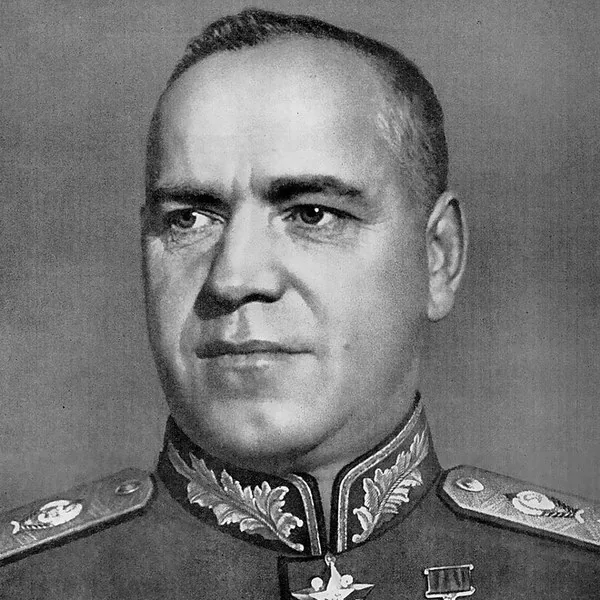
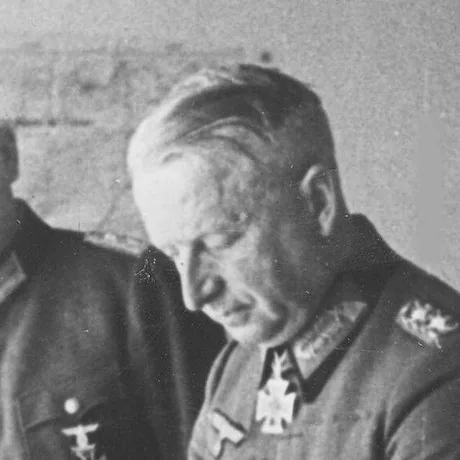 Erich von MansteinGerman Army (Wehrmacht)
- Lived
- 1 December 1896 to 18 June 1974
- 24 November 1887 to 11 June 1973
- Origin
- Strelkovka in Kaluga province, son of a poor peasant family
- Berlin, born a von Lewinski and adopted by his aunt and her husband Georg von Manstein
- Wars in command
- Khalkhin Gol 1939, the Second World War 1941 to 1945
- Poland 1939, France 1940, the Soviet Union 1941 to 1944
- First command
- Khalkhin Gol against the Japanese, August 1939
- Chief of staff of Army Group South in Poland, 1939, and the 11th Army from September 1941
- Notable opponents
- Model at Kursk, Manstein in the Ukraine, Hube's First Panzer Army
- Vasilevsky and Malinovsky at Stalingrad, Golikov and Vatutin at Kharkov, Zhukov in the Ukraine
- Highest rank
- Marshal of the Soviet Union, 1943
- Field marshal, July 1942
- Battles named here
- Moscow, Leningrad, Operation Uranus, Kursk, Berlin
- The Stalingrad relief attack, Kharkov, Kursk, Prokhorovka
- Death
- 1974, buried by the Kremlin wall in Moscow
- Irschenhausen in Upper Bavaria, 1973
Dates, origins and posts as given by the Presidential Library in Moscow, Glantz, the Neue Deutsche Biographie, Lemay and the Neuengamme memorial. We give no win and loss totals because no source counts their operations the same way.2
Where they met: from Stalingrad to the Carpathians
Stalingrad, autumn 1942: the planner and the rescuer
As Zhukov tells it, he, Vasilevsky and Stalin discussed on 12 September 1942 how to break the German hold on the Volga, and at the end of the month the two generals brought Stalin a plan on a map they had both signed. The US Army historians Earl Ziemke and Magna Bauer conclude that the idea was Zhukov's and Vasilevsky's, not Stalin's, and the Presidential Library in Moscow credits Zhukov with coordinating the fronts in Operation Uranus.3
Zhukov did not stay to watch, because after 16 November, Ziemke and Bauer write, he left Vasilevsky in charge at Stalingrad and went to the Kalinin and Western Fronts to run Operation Mars. Glantz calls Mars the failed companion piece of the Stalingrad counteroffensive, and his book on it is titled Zhukov's Greatest Defeat.4
Hitler gave the new Army Group Don to Manstein, whom the German leadership, Zhukov writes, considered the most capable of their generals. His relief attack, Operation Winter Storm, began from Kotelnikovo on 12 December. The German Historical Museum says the tanks came within 48 kilometres of Stalingrad and that the attempt was broken off after nine days.5
The Soviet answer was directed by Vasilevsky, who asked Stalin for the Second Guards Army and got it. The panzers reached the Myshkova river, which Ziemke and Bauer place thirty-five miles from the pocket, and under Rodion Malinovsky the Second Guards Army drove them back to the Aksay, while Operation Little Saturn broke into the line of the Italian Eighth Army from 16 December.6

Who was to blame for the failure is still argued. In Lost Victories Manstein writes that his army group ordered the Sixth Army to break out under the codeword Thunderbolt and that the chance was not taken. Ziemke and Bauer record that Hitler refused to approve the breakout and that Paulus was told to prepare but not to start until ordered.7
Paulus surrendered on 31 January 1943 and the northern pocket two days later. About 91,000 men went into Soviet captivity, the German Historical Museum notes, and perhaps 6,000 of them came home by 1956.8
Kharkov, February and March 1943: the backhand blow
After Stalingrad the Soviet fronts drove west and took Kharkov in mid-February, while Manstein waited for them to overreach. Robert Citino calls the plan a backhand blow, struck once the enemy had spent much of his strength, with Hoth's Fourth Panzer Army shifted from the far right of the line to the left. Citino dates the counterattack to 21 February and Bruce Menning places the first blows between 19 and 21 February, and by both accounts the SS Panzer Corps had cleared Kharkov by 14 March.9
The sources disagree sharply about the losses at Kharkov. Menning gives Soviet losses in the counterstroke of about 23,000 dead and 615 tanks, and 11,500 casualties for the SS corps in the street fighting, while Citino calls German casualties minimal. The Soviet statistical study edited by Grigory Krivosheev counts 86,469 casualties, 45,219 of them killed, missing or captured, among 345,900 men in the defensive operation of 4 to 25 March.10
This was the first time the two men touched. By Zhukov's account Stalin, told that the situation had seriously deteriorated by 16 March, sent him at once to the Voronezh Front. Three armies were sent to the Belgorod area at his request, and after the SS Panzer Corps took Belgorod on 18 March the Germans got no further north. Krivosheev's tables conclude that the German plan to regain the initiative failed.11
Kursk, July 1943: at opposite ends of the salient
The forces at Kursk are counted in different ways. The German Historical Museum gives about 800,000 German soldiers with more than 2,000 tanks against about 1.35 million Red Army men and just under 4,000 tanks and assault guns. Keith Huxen of the National WWII Museum, citing Glantz, gives more than 1.9 million Soviet troops with more than 5,000 tanks against more than 780,000 Germans with nearly 3,000 tanks.12
Before the battle the two men wanted opposite things, and Lemay writes that Manstein proposed, in vain, a different plan from the classic pincer, and Manstein's own chapter on Citadel weighs a backhand stroke against a forehand one. Zhukov, in a report to Stalin dated 8 April 1943 that he prints in his memoir, predicted attacks on the salient from north and south and wrote that it would be better to wear the enemy out in defensive action, destroy his tanks and then go over to an all-out offensive.13
When the attack came on 5 July they were not opposite each other. Zhukov writes that he spent the night of 4 July at Rokossovsky's Central Front in the north, facing Walter Model's Ninth Army, while Vasilevsky was with Vatutin's Voronezh Front facing Manstein. In the south Hoth's Fourth Panzer Army gained just over 30 kilometres, the German Historical Museum says, and Model in the north only ten.14

On 13 July Hitler ordered the attack stopped. Manstein writes that his army group was determined not to break off the battle, perhaps just before final success, and that by that day the Soviets had lost 24,000 prisoners and 1,800 tanks on the Citadel front. The German Historical Museum describes instead a battle of attrition that had used up the last reserves.15
The cost of Kursk is again disputed between the sources. Krivosheev counts 177,847 Soviet casualties in the defensive phase of 5 to 23 July, 73,892 of them in the Voronezh Front that faced Manstein. For the whole campaign through the recapture of Kharkov, Huxen cites more than 685,000 Soviet casualties from Glantz and about 185,000 German casualties from the German historian Karl-Heinz Frieser.16
The Ukraine, August 1943 to March 1944: the real duel
From here the two were directly opposed. In Operation Rumyantsev, from 3 to 23 August, Zhukov coordinated the Voronezh and Steppe Fronts against Manstein's Army Group South, Menning writes, and Kharkov was freed on 23 August. The Great Soviet Encyclopedia says the Germans were thrown back up to 140 kilometres, and Krivosheev counts 255,566 Soviet casualties in the operation.17
In the winter Zhukov coordinated the 1st and 2nd Ukrainian Fronts that trapped two German corps near Korsun. Ziemke counts 56,000 men in the pocket and about 30,000 who escaped in the breakout of 16 to 17 February, after the relief attack of the III Panzer Corps failed to get through. The Great Soviet Encyclopedia gives about 80,000 encircled and says that only a small group of tanks broke out, with some 55,000 killed or wounded and more than 18,000 captured.18
When Vatutin was mortally wounded at the end of February, Zhukov took over the 1st Ukrainian Front himself, and from 4 March his tank armies trapped Hube's First Panzer Army near Kamenets-Podolsky. Ziemke describes how Manstein insisted on 25 March that it must break out that day, how Hitler gave way, and how the army reached Buchach on 6 April. Zhukov admits in his memoir that he expected a breakout to the south and that he should have turned his 1st Tank Army east against the pocket.19
By then Manstein had already lost his command. Hitler relieved him at the end of March, on the 30th by Ziemke's account and the 31st in the Neue Deutsche Biographie, and he was placed in the reserve of officers and never commanded again.20
Strategy: the plan for a whole campaign
The case for Zhukov
Besides the plans for Uranus and Kursk described above, Glantz credits Zhukov with the defence of Leningrad in September 1941 and the defence and counteroffensive at Moscow in the winter of 1941 to 1942. His failures are on the same list, because Glantz names Mars and setbacks in the North Caucasus in April and May 1943 and near Kiev in October 1943.21
The case for Manstein
Manstein's plan for the 1940 campaign in France, the cut of the sickle, put the main armoured blow in the south of the front instead of repeating the Schlieffen plan of 1914, and the Neue Deutsche Biographie notes that Hitler took up its basic idea. Lemay argues that the Kharkov counterstroke saved the southern wing of the German army, about a million and a half men, from a gigantic Stalingrad.22
The weak point lies in what followed Kharkov. Dennis Showalter writes that Manstein exaggerated the effect of success in one sector on the Eastern Front as a whole, and Citino notes that the victory left him on a long line along the Donets that he could never hold, which led straight to the gamble at Kursk.23
Operations and battle
The case for Zhukov
At Khalkhin Gol in August 1939 Zhukov defeated the Japanese forces, and the Presidential Library notes that he used tank units on a large scale there to encircle them. Glantz praises his iron will and his tenacity in defence and attack, but also notes frequent tactical blemishes, and at Kamenets-Podolsky Zhukov himself admits that he let the First Panzer Army escape.24
The case for Manstein
His 11th Army had taken most of the Crimea by the end of October 1941, and when the fortress of Sevastopol fell in July 1942 he was made field marshal, the Neue Deutsche Biographie records. His two most famous later operations fell short, since Winter Storm stopped before Stalingrad and at Kursk his panzer army gained only about 30 kilometres.25
Logistics and tempo
The case for Zhukov
Before the offensive of March 1944 the 3rd Guards Tank Army had to move about 200 kilometres and the 4th Tank Army about 350 during the thaw, and Zhukov writes that German reconnaissance failed to detect the regrouping. The price of Soviet tempo shows in Krivosheev's tables, which give the fronts in the defensive phase at Kursk an average loss of 9,360 men a day.26
The case for Manstein
At Kharkov Manstein timed his blow to the moment the Soviet spearheads ran dry, and Citino notes that some Soviet units were running out of fuel when the counterattack struck. Supply he could not control was another matter, and one heading in his own chapter on Stalingrad asks whether enough supply by air had ever been possible, and blames Göring.27
Leading men
The case for Zhukov
Zhukov came up from the ranks of the old army as a cavalryman twice decorated with the Cross of St George, as the Presidential Library notes, and Glantz writes that he was unsparing of himself as well as of his subordinates and his men.28
The Kirkus review of Geoffrey Roberts's biography says Zhukov spared no number of soldiers on his way to victory and imposed draconian discipline, and Roberts himself conceded in 2012 that his conduct of battle was excessively brutal and disciplinarian. Roberts still called it a fantasy to suppose that Hitler's war machine could have been smashed without huge losses.29
The case for Manstein
Manstein never finished the War Academy, Lemay notes, because the First World War intervened, and learned his trade in the field. The other side of his record concerns the people his army ruled, since Lemay describes reports on the killings behind the front reaching his headquarters in the Crimea and quotes one of his officers, Captain Ulrich Gunzert, who spoke of a flight from responsibility and a moral failure.30
Politics, crimes and the regime
The case for Zhukov
Zhukov served a dictator who distrusted him. In 1946 he was accused of exaggerating his own part in the victory and of taking trophies, and was sent to command the Odessa and then the Ural military districts. After Stalin's death he returned, became defence minister in 1955 and was removed in October 1957.31
His memoir made him look braver toward Stalin than he was. Roberts, as summarised in a HistoryNet review, found no contemporary evidence for the memoir's claim that he stood up to Stalin in the summer of 1941 and concluded that he followed orders, and the Kirkus review notes that Stalin came to resent his Bonapartist self-promotion.32
The case for Manstein
Manstein refused to join the plot against Hitler. Lemay writes that he turned down Stauffenberg and Tresckow in the winter of 1943, holding that a soldier's duty was to keep to military questions, and the Neuengamme memorial notes that he stayed loyal to Hitler even after his dismissal. Lemay reads that loyalty as the choice of a careerist bound to the regime by ambition.33
The war crimes in his commands are documented. On 20 November 1941 he ordered his soldiers to show understanding for the harsh punishment of the Jews, and Lemay puts the number of Jews murdered by Einsatzgruppe D behind his 11th Army in the Crimea at about 33,000. A British military court in Hamburg tried him in 1949 on 17 charges, found him guilty on nine and sentenced him to 18 years, soon reduced to 12, and he was released on 7 May 1953.34
What came after
The case for Zhukov
Zhukov's 1st Belorussian Front took Warsaw and fought the Berlin operation, and on 8 May 1945 at Karlshorst he received the unconditional surrender of Germany from Field Marshal Keitel. When he died in 1974 he was buried by the Kremlin wall on Red Square.35

The case for Manstein
In the 1950s Manstein advised the West German government on building the Bundeswehr, and he was buried with military honours in 1973, with the inspector general of the Bundeswehr speaking at his grave. Showalter calls his memoir a classic of war literature.36
The same memoir is also the problem. The Neuengamme memorial writes that Lost Victories strengthened the legend of a clean Wehrmacht, and David Stahel in the Journal of Slavic Military Studies quotes Gerhard Weinberg's warning that the memoirs of generals such as Manstein proved almost invariably inaccurate and distorted when checked against contemporary evidence.37
How historians have judged them
Zhukov rated his opponent highly, writing that during the fighting near Belgorod in July 1943 it became obvious that more enterprising and experienced generals were directing the German troops, and that Manstein had taken over.38
Modern judgements of Manstein are sharply divided. Showalter calls him a great battle captain but not a master of war, both more and less than his legend, and Citino calls Kharkov an amazing achievement before turning a colder eye on what it led to. Lemay accepts the operational genius and rejects the legend of a soldier who kept clear of the regime's crimes, and Marcel Stein's study of 2002 is subtitled a critical look at the soldier and the man.39
Zhukov's judges are divided too, and Glantz calls him superb but tactically uneven. A HistoryNet review calls Roberts's biography a definitive account of an impressive if only intermittently sympathetic commander. Roberts argues that the Soviets won the war on the Eastern Front at a price that could not have been avoided, and he rejected the suggestion of Richard Evans that millions of Soviet soldiers died unnecessarily.40
Battles on the site
Every battle page on Echoes of Battle that involves one of the two men, with the guides that set them in context.
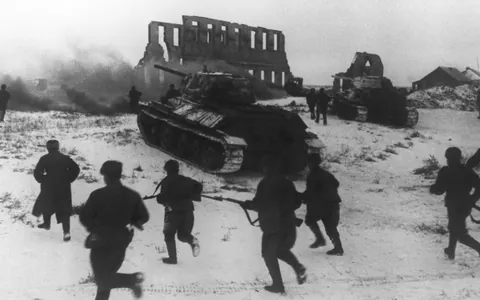 Zhukov plans · 1942Operation Uranus
 Manstein's relief attack · 1942Battle of Stalingrad
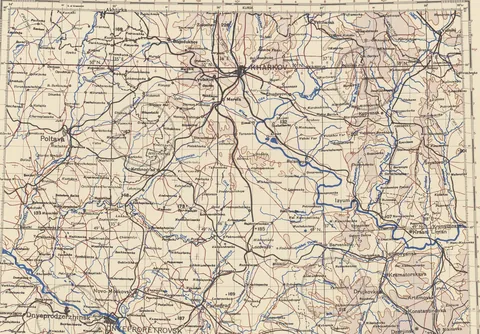 Both · 1943Battles of Kharkov
 Both · 1943Battle of Kursk
Manstein's sector · 1943Battle of Prokhorovka
 Zhukov · 1941Battle of Moscow
 Zhukov · 1941Siege of Leningrad
 Zhukov · 1945Seelow Heights
 Zhukov · 1945Battle of Berlin
 CommanderGeorgy Zhukov
 GuideThe Eastern Front
 QuizWorld War II Battles
Your verdict
We do not pick a winner, so here are the two cases at their strongest, and the questions that decide which one you find more convincing.
For Zhukov
- Leningrad and Moscow held in the crisis of 1941
- The concept of Uranus, worked out with Vasilevsky
- The choice to absorb the blow at Kursk before striking back
- Rumyantsev and the drive that pushed Manstein's army group back to the Carpathians
- Germany's surrender received at Karlshorst in May 1945
For Manstein
- The sickle cut plan behind the German victory of 1940
- Sevastopol taken and the Crimea conquered by July 1942
- The backhand blow that retook Kharkov in March 1943
- A relief attack that came within about 50 kilometres of Stalingrad
- The First Panzer Army brought out of encirclement in 1944
Some questions to weigh before you make up your mind:
- Should the two be judged mainly on the months from August 1943 to March 1944, when they truly faced each other?
- Does Zhukov's planning of Uranus count for more than Vasilevsky's handling of the battle that stopped Winter Storm?
- Is a brilliant counterstroke like Kharkov worth as much as a campaign that ends in a lost war?
- How much weight should the cost in soldiers' lives carry when judging a winning commander?
- Can Manstein's skill as a commander be separated from the crimes committed in the areas he commanded?
- How far can we trust two memoirs written by the men themselves, one in Soviet Moscow and one in West Germany?
Cast your vote below and see how other readers have judged them.





