

What were the Punic Wars and who won?
The Punic Wars were three wars between the Roman Republic and Carthage, fought from 264 to 146 BC for Sicily, Spain and the western Mediterranean. Hannibal destroyed Roman armies at Lake Trasimene and Cannae, but Rome won all three wars, beat him at Zama in 202 BC and razed Carthage in 146 BC.1
For more than a century, two republics fought for the western Mediterranean. Carthage, a city founded by Phoenician settlers on the Gulf of Tunis, ran a trading empire across North Africa, Spain and the islands; Rome had made itself the leader of Italy. Their three wars ranged from Sicily to Spain, Italy and Africa. Our guides follow the Second Punic War battle by battle, from the Battle of the Trebia and the Battle of Lake Trasimene to the Battle of Cannae, the Battle of the Metaurus and the Battle of Zama. Below: why the wars began, who fought them, how Rome won and what happened to Carthage.2
Causes of the Punic Wars
Carthage was the older power. Founded by Phoenicians in the ninth century BC, it built its wealth on trade and a strong navy, and by the third century BC it held a chain of posts across the western Mediterranean, including Sardinia and the west of Sicily. Rome, by about 275 BC, led a confederacy of allies covering the whole Italian peninsula. Sicily, a short crossing from both, lay between them.3
The spark came in 264 BC at Messana (modern Messina), on the strait between Sicily and Italy. A band of Campanian mercenaries, the Mamertines, held the town and were hard pressed by Hiero II of Syracuse. Some of them called in Carthage, others appealed to Rome. Carthaginian troops arrived first, but a Roman army crossed the strait, the Carthaginian garrison commander was pushed out of the citadel, and Rome found itself at war with both Carthage and Syracuse.4
Each side had its reasons. Polybius, our best ancient source, says the Romans knew that helping the Mamertines, themselves usurpers, was hard to justify, but feared that a Carthage holding all of Sicily would hem Italy in; he adds that ordinary Romans were also drawn by the hope of plunder. Britannica sees Carthage as long anxious to complete its hold on Sicily, the missing link in its chain of island posts.5

Who fought in the Punic Wars?
Rome fought with legions of citizen soldiers backed by the levies of its Italian allies, a reserve of manpower that let it lose army after army and raise new ones. EBSCO's account puts Rome's survival after its early disasters down largely to that manpower and to the loyalty of many central Italian allies. The Greek king Hiero II of Syracuse changed sides in 263 BC and stayed Rome's ally until his death in 215 BC.6
Carthage was a different kind of state. Its citizens manned an excellent navy, but its armies were made up largely of paid soldiers and subjects: Libyans, Numidian horsemen, Iberians from Spain, Celts and Balearic slingers. Generals who failed could pay with their lives; Polybius records that the Carthaginians crucified the commander who gave up the citadel of Messana. In the Second Punic War the Numidian prince Masinissa, at first a Carthaginian cavalry leader in Spain, went over to Rome.7
The First Punic War (264 to 241 BC)
The first war was decided at sea. In 260 BC the Romans built their first large battle fleet, and at Mylae, off the north coast of Sicily, the consul Gaius Duilius beat a more agile Carthaginian squadron by grappling and boarding, using a hinged boarding bridge that Polybius calls the raven (in Latin, corvus). In 256 BC a great Roman fleet won again off Cape Ecnomus and landed an army in Africa.8
The invasion ended badly. Carthage hired a Spartan officer, Xanthippus, who rebuilt its army around cavalry and elephants and in 255 BC destroyed the army of the consul Marcus Atilius Regulus near Tunis. The war returned to Sicily. In 249 BC the Romans lost 93 ships in a failed surprise attack on Drepana, their only naval defeat of the war, while storms wrecked whole fleets. Hamilcar Barca, Hannibal's father, then waged a long war of raids from Mount Eryx in western Sicily.9
Rome found the money for one more fleet, about 200 warships, paid for largely by private citizens, and in 241 BC it caught a Carthaginian relief fleet off the Aegates Islands and sank or captured most of it. Carthage made peace: it gave up Sicily and the islands between Sicily and Italy and agreed to pay 3,200 talents, a figure the Roman people raised from the 2,200 first agreed.10
Peace brought Carthage new trouble. Its unpaid mercenaries revolted, and while it fought them Rome seized Sardinia in 238 BC and, under threat of war, took Corsica and a further 1,200 talents. Polybius, no friend of Carthage, judged the seizure contrary to all justice, and Britannica calls it a gross breach of the treaty.11
What caused the Second Punic War?
Carthage looked to Spain to replace what it had lost. From 237 BC Hamilcar Barca built a Carthaginian dominion in the south of the peninsula, rich in silver and soldiers; after his death his son-in-law Hasdrubal carried on, and Rome agreed with Hasdrubal a treaty that kept Carthaginian arms south of the Ebro. When Hasdrubal was murdered in 221 BC, Hamilcar's eldest son, Hannibal, took command of the army.12
Rome had meanwhile taken up the cause of Saguntum, a town on the east coast south of the Ebro. In 219 BC Hannibal besieged and took it after eight months. Rome demanded that Carthage hand him over; the Carthaginian council stood by its general, and Rome declared war. Whether the attack broke any treaty was disputed in antiquity and still is: Britannica calls it a debatable point.13
Behind the legal quarrel lay old anger. Polybius and Livy both tell how Hamilcar, about to leave for Spain, made the nine-year-old Hannibal swear at an altar never to be a friend of Rome. Polybius says Hannibal told the story himself, years later, to King Antiochus; Livy calls it a story widely current. Both name the loss of Sicily and the seizure of Sardinia as grievances that drove the Barcids.14

Hannibal in Italy: the Alps, Trebia, Trasimene and Cannae
Rome commanded the sea, so Hannibal went by land. His plan, as Britannica puts it, was to cut Rome's strength off at the source by carrying the war into Italy and breaking up its league of allies. In 218 BC he marched from New Carthage through Spain and Gaul, crossed the Rhône and then the Alps, and came down into the plain of the Po in the autumn. Polybius, who took the figure from an inscription Hannibal set up at Cape Lacinium in southern Italy, says that 20,000 infantry and no more than 6,000 cavalry survived the march.15
Gauls of the Po valley joined him, and his cavalry outclassed the Roman horse. In December 218 BC, near the winter solstice, he drew the Roman army across the icy Trebia, struck it from behind with a force his brother Mago had hidden in ambush, and routed it. In 217 BC the consul Gaius Flaminius followed him into a trap on the shore of Lake Trasimene, where Hannibal's troops, hidden in the hills above the narrow lakeside road, fell on the marching column. Polybius and Livy put the Roman dead at about 15,000, among them Flaminius.16
Hannibal sent the captured Italian allies home without ransom, saying that he had come to fight Rome, not them. Rome answered with a new strategy. The dictator Quintus Fabius Maximus refused battle and shadowed the invader to deny him a base, which earned him the nickname Cunctator, the Delayer.17
In 216 BC Rome changed course and sent an exceptionally large army under the consuls Lucius Aemilius Paullus and Gaius Terentius Varro. On 2 August, near Cannae in Apulia, Hannibal let his center give ground before the Roman infantry while his African troops closed on its flanks and his cavalry, having won on the wings, fell on its rear. The Romans were surrounded and cut down; Paullus was among the dead, with about 80 men of senatorial rank.18
How many died is uncertain. Polybius gives a Roman army of about 80,000 infantry and 6,000 cavalry against Hannibal's 40,000 infantry and 10,000 cavalry, and puts the Roman dead at about 70,000; Livy's count is lower. Hannibal lost about 6,000 men. The historian Adrian Goldsworthy argues that Polybius's army size and death toll cannot both be right and treats the 70,000 as the likelier error, working instead with about 50,000 dead and some 18,000 to 19,000 prisoners.19
Why didn't Hannibal win after Cannae?
Livy has Maharbal, Hannibal's cavalry commander, urge an immediate march on Rome and tell him, when he refused, that he knew how to win a victory but not how to use it. Hannibal was counting on Rome's allies to leave it. Some did: Capua went over to him, and so did many peoples of the south.20
But the core held. The Latin colonies and most of central Italy stayed loyal, and Rome went back to Fabius's strategy, fighting Hannibal's allies and lieutenants rather than Hannibal himself. It besieged Capua and took it in 211 BC, even after Hannibal marched on Rome itself to draw the besiegers away, and it took Syracuse, which had broken with Rome after Hiero's death, in 212 and 211 BC despite the war machines of Archimedes.21
Hannibal's last hope in Italy was his brother. In 207 BC Hasdrubal Barca crossed the Alps with a second army, but the consul Gaius Claudius Nero slipped away from the army watching Hannibal, joined his colleague Marcus Livius Salinator, and together they destroyed Hasdrubal's army on the Metaurus. Hasdrubal died fighting. Livy says Nero had his head thrown before Hannibal's outposts. Britannica calls this campaign the one that decided the war in Italy.22
Spain, Africa and the Battle of Zama
The war was also won in Spain, Carthage's base for men and silver. The brothers Publius and Gnaeus Cornelius Scipio fought there from 218 BC until both were killed in 211 BC, when their Spanish allies deserted them. In 210 BC Publius's son, the young Publius Cornelius Scipio, took command. He seized New Carthage, the Carthaginian arsenal, in 209 BC and in 206 BC won a great victory at Ilipa, near modern Seville, that drove Carthage out of Spain.23
In 204 BC Scipio crossed to Africa. He beat the armies of Carthage and its Numidian ally Syphax, and in 203 BC Carthage called Hannibal home. In 202 BC the two generals met at Zama. Hannibal opened with a charge of elephants, which Scipio's infantry let pass through gaps left in its ranks. The Roman lines broke Hannibal's first two lines but not his veterans, and the battle was decided when the cavalry of Masinissa and Gaius Laelius returned and charged Hannibal's rear.24
Polybius gives about 20,000 Carthaginian and allied dead and nearly as many prisoners, against more than 1,500 Romans; Livy gives the same figures. Carthage accepted Scipio's terms: it kept its lands in Africa but gave up Spain and its other overseas possessions, all but ten warships and its elephants, paid 10,000 talents over 50 years, and promised to make no war in Africa without Rome's consent. Scipio took the name Africanus.25

The Third Punic War and the destruction of Carthage
Carthage recovered its trade within decades, and in Rome a group of senators came to see that as a threat. Plutarch reports that Cato the Elder ended every speech in the Senate, whatever the subject, with the words "Carthage must be destroyed". The pretext came in 150 BC, when Carthage, pressed by Masinissa's encroachments on its land, defended itself by force, a breach of the treaty of 201 BC.26
In 149 BC Rome sent an army to Africa. The Carthaginians surrendered unconditionally, sent 300 young men of leading families as hostages and handed over their weapons. Only then did the consul tell them to abandon the city and settle inland, away from the sea, because Carthage was to be razed. They refused and prepared for a siege. Polybius reports that Greek opinion was divided, some calling Rome's conduct closer to treachery than to the principles of a civilized state.27
The siege went badly for two years, until Scipio Aemilianus, the adopted grandson of Scipio Africanus, took command in 147 BC and tightened the siege. In the spring of 146 BC his troops broke in and fought street by street toward the citadel of Byrsa for six days. Appian and Britannica say about 50,000 men and women came out to surrender at the end; they were sold into slavery, and the city was razed.28
Polybius, who stood beside Scipio, says the victor wept as the city burned and quoted Homer on the fall of Troy, fearing that one day the same would happen to Rome; Appian tells the same story. The Senate decreed that no one should live on the site, and Carthage's territory became the Roman province of Africa.29

Key commanders of the Punic Wars
On the Carthaginian side the Barcid family dominated: Hannibal, his father Hamilcar Barca, and his brothers Hasdrubal and Mago, with the Spartan mercenary Xanthippus in the first war. Rome's commanders included Gaius Duilius at Mylae, Fabius Maximus, Marcus Claudius Marcellus, the victors of the Metaurus Nero and Livius Salinator, Scipio Africanus, and in the last war Scipio Aemilianus. Hannibal lived on in exile and died in Bithynia, in modern Turkey, around 183 BC. For a head-to-head comparison, read Hannibal vs Scipio.30
Who won the Punic Wars, and why did Carthage lose?
Rome won all three wars. The first gave it Sicily, its first province, and soon Sardinia and Corsica; the second added Spain and broke Carthage as a great power; the third ended with the city destroyed and its land a Roman province. From then on Rome was the dominant power of the western Mediterranean.31
Historians stress Rome's depth rather than any single battle. Britannica argues that Hannibal's failure was not due to strategic mistakes but to the will of the Romans and the cohesion of their Italian confederacy, which no defeat could break apart. EBSCO's account points to Rome's reserves of manpower and the loyalty of its central Italian allies, which carried it through Trebia, Trasimene and Cannae.32
How we know about the Punic Wars
Almost everything we know comes from the winners' side. The Greek historian Polybius, who knew Scipio Aemilianus, and the Roman historian Livy are the main sources for Hannibal's war, and their numbers often disagree. The historian Richard Miles notes that virtually nothing is known of the Carthaginians from their own primary sources, because Rome destroyed the city and most of its records.33
Carthage itself did not vanish. Rome later built a new Carthage on the ruins, which became the capital of the province of Africa. The site, on a hill over the Gulf of Tunis in modern Tunisia, has been a UNESCO World Heritage Site since 1979.34
Major battles of the Punic Wars
Our guides to the battles of the Punic Wars are listed below in date order. To see how they rank, read the greatest battles of Carthage and the greatest battles of ancient Rome.
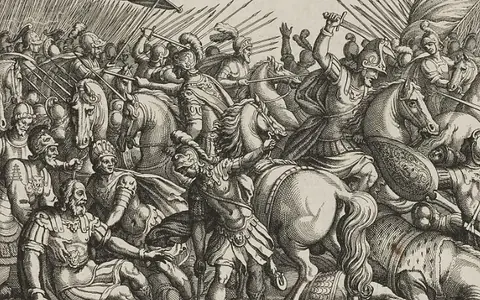
- 218 BCThe Battle of the Trebia, 218 BCCarthage vs Roman Republic
Hannibal's first great victory in Italy: a freezing river and a hidden ambush.
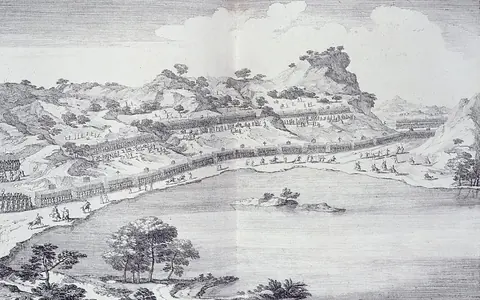
- 217 BCThe Battle of Lake Trasimene, 217 BCCarthage vs Roman Republic
The largest ambush of the ancient world: a Roman army destroyed in the mist.
- 216 BCThe Battle of Cannae, 216 BCCarthage vs Roman Republic
Outnumbered, Hannibal let his center bend inward, then closed both wings. The double envelopment that generals have studied for 2,200 years.

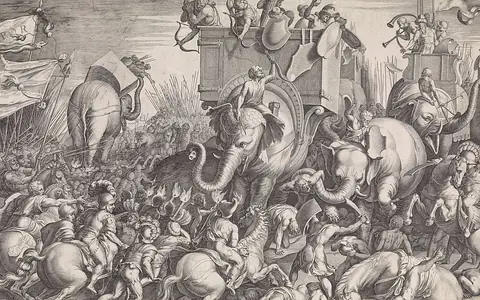
- 207 BCBattle of the Metaurus, 207 BCRoman Republic vs Carthage
How Rome destroyed Hasdrubal's army at the Metaurus in 207 BC and sealed Hannibal's fate in Italy.
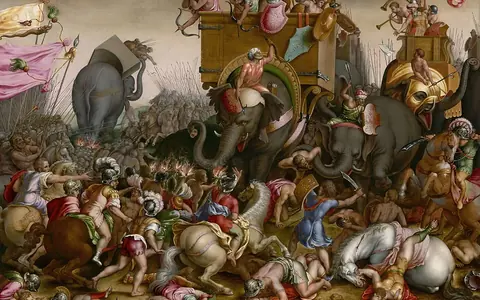
- 202 BCThe Battle of Zama, 202 BCRoman Republic and Numidia vs Carthage
Scipio beats Hannibal and ends the Second Punic War.
Timeline of the Punic Wars
- 264 BCRome and Carthage go to war over Messana in Sicily.35
- 260 BCGaius Duilius wins Rome's first naval victory, off Mylae.36
- 255 BCXanthippus destroys the Roman army of Regulus in Africa.37
- 241 BCRoman victory off the Aegates Islands; Carthage gives up Sicily.38
- 238 BCRome seizes Sardinia during Carthage's war with its mercenaries.39
- 237 BCHamilcar Barca begins building a Carthaginian dominion in Spain.40
- 219 BCHannibal takes Saguntum; Rome declares war.41
- 218 BCHannibal crosses the Alps and wins at the Trebia.42
- 217 BCHannibal destroys the army of Flaminius at Lake Trasimene.43
- 216 BCHannibal's victory at Cannae on 2 August.44
- 211 BCRome retakes Capua and Syracuse; the Scipio brothers die in Spain.45
- 207 BCHasdrubal Barca is defeated and killed on the Metaurus.46
- 206 BCScipio wins at Ilipa and drives Carthage out of Spain.47
- 202 BCScipio and Masinissa defeat Hannibal at Zama.48
- 201 BCPeace: Carthage gives up Spain, its fleet and its freedom to make war.49
- 149 BCThe Third Punic War begins; Carthage refuses to abandon the city.50
- 146 BCScipio Aemilianus takes and razes Carthage.51
Where to read next
The Punic Wars belong to antiquity. Before them came the Greco-Persian Wars and the wars of Alexander the Great, whose phalanx Rome's legions later met (see phalanx vs legion); after them came the Roman civil wars that ended the Republic. Read the lives of Hannibal and Scipio Africanus, the story of war elephants, how the Roman legion worked and Rome vs Carthage, and test yourself with the Roman battles quiz.
Notes
A number in the text points to a note; each note names the works that paragraph draws on, listed in full under Sources.
- Britannica Editors, “Punic Wars”; Jeremiah B. McCall, “Punic Wars”; Britannica Editors, “Punic Wars”. ↩
- UNESCO World Heritage Centre, “Archaeological Site of Carthage”; Britannica Editors, “Punic Wars”; Jeremiah B. McCall, “Punic Wars”. ↩
- UNESCO World Heritage Centre, “Archaeological Site of Carthage”; Britannica Editors, “Punic Wars”; Jeremiah B. McCall, “Punic Wars”; EBSCO Research Starters, “Second Punic War”. ↩
- Britannica Editors, “Punic Wars”; Polybius, Book 1; Jeremiah B. McCall, “Punic Wars”. ↩
- Polybius, Book 1; Britannica Editors, “Punic Wars”; Jeremiah B. McCall, “Punic Wars”. ↩
- Britannica Editors, “Punic Wars”; Jeremiah B. McCall, “Punic Wars”; Britannica Editors, “Punic Wars”; Britannica Editors, “Punic Wars”; Polybius, Book 1. ↩
- EBSCO Research Starters, “Second Punic War”; Polybius, Book 1; Britannica Editors, “Punic Wars”; Polybius, Book 15. ↩
- Britannica Editors, “Punic Wars”; Polybius, Book 1. ↩
- Britannica Editors, “Punic Wars”; Polybius, Book 1. ↩
- Britannica Editors, “Punic Wars”; Polybius, Book 1. ↩
- Britannica Editors, “Punic Wars”; Polybius, Book 3; Jeremiah B. McCall, “Punic Wars”. ↩
- Britannica Editors, “Punic Wars”; EBSCO Research Starters, “Second Punic War”; National Geographic, “Who was Hannibal?”; Polybius, Book 3. ↩
- Britannica Editors, “Punic Wars”; Britannica Editors, “Hannibal”; EBSCO Research Starters, “Second Punic War”; Polybius, Book 3. ↩
- Polybius, Book 3; Livy, 21.1; Britannica Editors, “Hannibal”. ↩
- Britannica Editors, “Punic Wars”; Polybius, Book 3; EBSCO Research Starters, “Second Punic War”. ↩
- Britannica Editors, “Punic Wars”; Polybius, Book 3; Livy, 21.55; Livy, 22.4; Livy, 22.7. ↩
- Polybius, Book 3; Livy, 22.7; Britannica Editors, “Punic Wars”. ↩
- Britannica Editors, “Punic Wars”; Patrick Hunt, “Battle of Cannae”; Polybius, Book 3; Livy, 22.49; Adrian Goldsworthy, “MHQ Reader Comments”. ↩
- Polybius, Book 3; Livy, 22.49; Patrick Hunt, “Battle of Cannae”; Adrian Goldsworthy, “MHQ Reader Comments”. ↩
- Livy, 22.51; Patrick Hunt, “Battle of Cannae”; Britannica Editors, “Punic Wars”. ↩
- Britannica Editors, “Punic Wars”; Jeremiah B. McCall, “Punic Wars”; Patrick Hunt, “Battle of Cannae”; Polybius, Book 9; Britannica Editors, “Punic Wars”; Polybius, Book 8. ↩
- Britannica Editors, “Punic Wars”; Livy, 27.43; Livy, 27.49; Livy, 27.51. ↩
- Britannica Editors, “Punic Wars”; EBSCO Research Starters, “Second Punic War”; Polybius, Book 11. ↩
- Britannica Editors, “Punic Wars”; EBSCO Research Starters, “Second Punic War”; Polybius, Book 15; Livy, 30.33; Livy, 30.35. ↩
- Polybius, Book 15; Livy, 30.35; Livy, 30.37; Britannica Editors, “Punic Wars”; National Geographic, “Who was Hannibal?”. ↩
- Plutarch, Cato the Elder; Britannica Editors, “Punic Wars”; Appian, 71 to 75; Polybius, Book 15. ↩
- Polybius, Book 36; Appian, 81 to 85; Britannica Editors, “Punic Wars”. ↩
- Britannica Editors, “Punic Wars”; Appian, 126 to 130; Appian, 131 to 135. ↩
- Polybius, Book 38; Appian, 131 to 135; Britannica Editors, “Punic Wars”. ↩
- Britannica Editors, “Punic Wars”; Britannica Editors, “Punic Wars”; Britannica Editors, “Punic Wars”; Britannica Editors, “Hannibal”; National Geographic, “Who was Hannibal?”. ↩
- Britannica Editors, “Punic Wars”; Jeremiah B. McCall, “Punic Wars”; Britannica Editors, “Punic Wars”. ↩
- Britannica Editors, “Punic Wars”; Jeremiah B. McCall, “Punic Wars”. ↩
- Britannica Editors, “Hannibal”; Polybius, Book 38; Appian, 131 to 135; Adrian Goldsworthy, “MHQ Reader Comments”; National Geographic, “Carthage was Rome’s greatest rival. Go see its side of the story.”. ↩
- UNESCO World Heritage Centre, “Archaeological Site of Carthage”; National Geographic, “Carthage was Rome’s greatest rival. Go see its side of the story.”. ↩
- Britannica Editors, “Punic Wars”; Polybius, Book 1. ↩
- Britannica Editors, “Punic Wars”; Polybius, Book 1. ↩
- Britannica Editors, “Punic Wars”; Polybius, Book 1. ↩
- Britannica Editors, “Punic Wars”; Polybius, Book 1. ↩
- Britannica Editors, “Punic Wars”; Polybius, Book 3. ↩
- Britannica Editors, “Punic Wars”; EBSCO Research Starters, “Second Punic War”. ↩
- Britannica Editors, “Punic Wars”; EBSCO Research Starters, “Second Punic War”. ↩
- Britannica Editors, “Punic Wars”; Polybius, Book 3. ↩
- Britannica Editors, “Punic Wars”; Livy, 22.7. ↩
- Britannica Editors, “Punic Wars”; Patrick Hunt, “Battle of Cannae”. ↩
- Britannica Editors, “Punic Wars”; Britannica Editors, “Punic Wars”. ↩
- Britannica Editors, “Punic Wars”; Livy, 27.49. ↩
- Britannica Editors, “Punic Wars”; Polybius, Book 11. ↩
- Britannica Editors, “Punic Wars”; Polybius, Book 15. ↩
- Britannica Editors, “Punic Wars”; Livy, 30.37. ↩
- Britannica Editors, “Punic Wars”; Appian, 81 to 85. ↩
- Britannica Editors, “Punic Wars”; Appian, 126 to 130. ↩
Sources
- Britannica Editors, Encyclopædia Britannica, “Punic Wars”.
- Jeremiah B. McCall, EBSCO Research Starters, “Punic Wars”.
- Britannica Editors, Encyclopædia Britannica, “Punic Wars: Campaigns in Sicily and Spain” (with the war in Africa and the Third Punic War).
- UNESCO World Heritage Centre, “Archaeological Site of Carthage”.
- EBSCO Research Starters, “Second Punic War”.
- Polybius, The Histories, Book 1, translated by W. R. Paton (Loeb Classical Library, 1922), LacusCurtius, Book 1.
- Britannica Editors, Encyclopædia Britannica, “Punic Wars: Second Punic War”.
- Polybius, The Histories, Book 15, translated by W. R. Paton (Loeb Classical Library, 1925), LacusCurtius, Book 15.
- Polybius, The Histories, Book 3, translated by W. R. Paton (Loeb Classical Library, 1922), LacusCurtius, Book 3.
- National Geographic, “Who was Hannibal?”.
- Britannica Editors, Encyclopædia Britannica, “Hannibal”.
- Livy, History of Rome 21.1, translated by Canon Roberts (Dutton, 1912), Perseus Digital Library, 21.1.
- Livy, History of Rome 21.55, translated by Canon Roberts (Dutton, 1912), Perseus Digital Library, 21.55.
- Livy, History of Rome 22.4, translated by Canon Roberts (Dutton, 1912), Perseus Digital Library, 22.4.
- Livy, History of Rome 22.7, translated by Canon Roberts (Dutton, 1912), Perseus Digital Library, 22.7.
- Patrick Hunt, Encyclopædia Britannica, “Battle of Cannae”.
- Livy, History of Rome 22.49, translated by Canon Roberts (Dutton, 1912), Perseus Digital Library, 22.49.
- Adrian Goldsworthy, reply in “MHQ Reader Comments: Casualty Figures from Ancient Historians”, MHQ: The Quarterly Journal of Military History, HistoryNet, 2009.
- Livy, History of Rome 22.51, translated by Canon Roberts (Dutton, 1912), Perseus Digital Library, 22.51.
- Polybius, The Histories, Book 9, translated by W. R. Paton (Loeb Classical Library, 1925), LacusCurtius, Book 9.
- Polybius, The Histories, Book 8, translated by W. R. Paton (Loeb Classical Library, 1923), LacusCurtius, Book 8.
- Livy, History of Rome 27.43, translated by Cyrus Edmonds (Bohn, 1850), Perseus Digital Library, 27.43.
- Livy, History of Rome 27.49, translated by Cyrus Edmonds (Bohn, 1850), Perseus Digital Library, 27.49.
- Livy, History of Rome 27.51, translated by Cyrus Edmonds (Bohn, 1850), Perseus Digital Library, 27.51.
- Polybius, The Histories, Book 11, translated by W. R. Paton (Loeb Classical Library, 1925), LacusCurtius, Book 11.
- Livy, History of Rome 30.33, translated by Frank Gardner Moore (Loeb Classical Library, 1949), Perseus Digital Library, 30.33.
- Livy, History of Rome 30.35, translated by Frank Gardner Moore (Loeb Classical Library, 1949), Perseus Digital Library, 30.35.
- Livy, History of Rome 30.37, translated by Frank Gardner Moore (Loeb Classical Library, 1949), Perseus Digital Library, 30.37.
- Plutarch, Life of Cato the Elder 27, translated by Bernadotte Perrin (Loeb Classical Library, 1914), LacusCurtius, Cato the Elder.
- Appian, The Punic Wars 71 to 75, translated by Horace White (Loeb Classical Library, 1912), Livius.org, 71 to 75.
- Polybius, The Histories, Book 36, translated by W. R. Paton (Loeb Classical Library, 1927), LacusCurtius, Book 36.
- Appian, The Punic Wars 81 to 85, translated by Horace White (Loeb Classical Library, 1912), Livius.org, 81 to 85.
- Appian, The Punic Wars 126 to 130, translated by Horace White (Loeb Classical Library, 1912), Livius.org, 126 to 130.
- Appian, The Punic Wars 131 to 135, translated by Horace White (Loeb Classical Library, 1912), Livius.org, 131 to 135.
- Polybius, The Histories, Book 38, translated by W. R. Paton (Loeb Classical Library, 1927), LacusCurtius, Book 38.
- National Geographic, “Carthage was Rome’s greatest rival. Go see its side of the story.” (with the historian Richard Miles).




