

What was the Great Northern War and who won?
The Great Northern War (1700 to 1721) was a struggle for the Baltic between Sweden under Charles XII and a coalition led by Russia with Denmark-Norway and Saxony-Poland. Sweden won early, at Narva in 1700, but lost the decisive Battle of Poltava in 1709. Russia won: the 1721 Treaty of Nystad gave it Sweden's eastern Baltic provinces.1
The Great Northern War was fought from 1700 to 1721 between the Swedish Empire of King Charles XII and a coalition of Russia, Denmark-Norway and Saxony-Poland, later joined by Prussia and Hanover. It began with a three-sided attack on Sweden in 1700 and ended with the Treaty of Nystad in 1721, which handed Sweden's eastern Baltic provinces to Russia and ended Sweden's age as a great power.2
Much of the war was fought on the soil of the Polish-Lithuanian Commonwealth, whose king, Augustus II, was also elector of Saxony. Our battle guides cover the Battle of Narva (1700), the Battle of Lesnaya (1708), the Battle of Poltava (1709), the kalabalik at Bender (1713) and the Battle of Napue (1714). For Poland the war was another round of a long Baltic struggle with Sweden that had already produced the Polish-Swedish War of 1600 to 1629 and the Deluge of 1655 to 1660.3
Causes of the Great Northern War
Around 1700 Sweden was the leading power of the Baltic. Its empire held Finland, the eastern Baltic provinces of Ingria, Estonia and Livonia, and lands in northern Germany such as Pomerania, and its neighbors had lost territory to it during the seventeenth century. Russia had lost Ingria, its outlet on the Gulf of Finland.4
In 1697 Charles XII came to the Swedish throne at the age of fifteen, and his neighbors saw their chance. In 1698 and 1699 Frederick IV of Denmark-Norway, Augustus II, elector of Saxony and king of Poland, and Tsar Peter I of Russia agreed on a secret alliance against Sweden. Johann Reinhold von Patkul, a Livonian noble who opposed Swedish rule in his province, helped to bring it together.5
Each ally wanted something different. Denmark-Norway hoped to recover its old standing in the Baltic and was at odds with Sweden's ally, the duchy of Holstein-Gottorp. Augustus II wanted Swedish Livonia, more land for his Wettin dynasty and stronger royal power in the Commonwealth. Peter wanted a coast on the Baltic Sea, which he saw as the key to trade with the West and to Russia's modernization.6
To Sweden the war was an unprovoked attack. Saxon troops invaded Livonia in February 1700, Danish troops moved against Holstein-Gottorp, and in the autumn Peter laid siege to Narva. Charles, Britannica notes, saw the cause of Sweden as that of the victim of a concerted attack.7
The war also ran alongside a bigger one. From 1701 the great powers of Western Europe were absorbed in the War of the Spanish Succession, and only after 1713, when that war was ending, did Britain and Hanover turn to the Baltic. The western conflict also limited Charles's freedom of action: his old partners Britain and the Dutch Republic drifted away when Sweden could not help them against France.8

Who fought in the Great Northern War
On one side stood the Swedish realm, which then included Finland, the Baltic provinces and territories in northern Germany. Against it stood a coalition whose members changed over time. Russia fought throughout. Denmark-Norway fought in 1700 and again from 1709 to 1720, which is why Danes often date the war 1709 to 1720. Saxony fought from 1700 to 1706 and again from 1709. Prussia and Hanover, whose elector George I was also king of Great Britain, declared war on Sweden in 1715.9
The Polish-Lithuanian Commonwealth was a special case. Augustus II went to war as elector of Saxony, and the Commonwealth itself formally stayed neutral until 1704, although Swedish armies entered it in 1701. From 1704 it was split between the supporters of Augustus and those of the Swedish-backed king Stanisław Leszczyński, and foreign armies crossed it at will.10
Two more actors entered the war in the east. Ivan Mazepa, hetman of the Ukrainian Cossacks, sided with Charles XII in 1708, although far fewer Cossacks followed him than Charles had hoped. The Ottoman Empire, which wanted to win back Azov from Russia, gave Charles asylum after Poltava, declared war on Russia in 1710 and beat Peter on the Pruth in 1711, regaining Azov.11

Narva and Charles XII's war in Poland, 1700 to 1706
Charles struck first at Denmark. With the support of British and Dutch warships he landed on Zealand near Copenhagen in August 1700, and Frederick IV had to leave the war by the Treaty of Travendal, which restored the prewar situation.12
He then shipped his army to Estonia. On 30 November 1700 it attacked the Russian army besieging Narva, which was more than four times its size, in a snowstorm that blew into the Russians' faces. The Russian army broke and its whole artillery train was lost. Our article on the Battle of Narva tells the story of the day.13
Charles did not follow up into Russia. In the summer of 1701 he crossed the Western Dvina near Riga and scattered Augustus's Saxon army, and he then resolved to fight Augustus until he lost the Polish crown. His aim, in Britannica's words, was to turn a divided Poland into an ally and a base for the final campaign against Russia.14
Swedish troops occupied Warsaw and Kraków, and in the summer of 1702 Charles beat Augustus's army at Kliszów. The Polish Crown troops who fought beside the Saxons, including the winged hussars, charged without success and withdrew, and the Saxons were then routed. For Polish historians the battle showed how outdated the old Polish cavalry tactics had become.15
In 1704, under Swedish protection, an assembly of nobles declared Augustus deposed and elected Stanisław Leszczyński as king. Much of the nobility rejected the election. Augustus's supporters formed the Confederation of Sandomierz and turned to Russia, and Peter backed Charles's Polish and Lithuanian opponents. The Commonwealth slid into civil war.16
The deadlock broke in 1706. The Swedish field marshal Carl Gustaf Rehnskiöld won a decisive victory over a combined Saxon and Russian army at Fraustadt (Wschowa), in western Poland. Charles then marched into Saxony, and in September 1706 Augustus signed the Treaty of Altranstädt: he gave up the Polish crown to Stanisław, left his alliance with Russia and handed over Patkul, whom the Swedes executed in 1707.17

Charles XII's invasion of Russia and the Battle of Poltava
While Charles fought in Poland, Peter rebuilt his army after Narva and moved onto the eastern Baltic coast. In 1703 he founded St. Petersburg near the mouth of the Neva, and by 1705 his troops held Dorpat and Narva.18
In August 1707 Charles left Saxony with a rebuilt army to invade Russia. His goal was Moscow, where he hoped to overthrow Peter. The Russians fell back, burning crops and villages in his path. Charles beat them at Holowczyn (Hołowczyn) in July 1708, but shortages stopped the march on Moscow, and in September he turned south into Ukraine.19
The turn left behind the supply column that General Adam Ludwig Lewenhaupt was bringing from Riga with about 12,500 men. On 28 September 1708 (Old Style) Peter caught it at Lesnaya. Lewenhaupt lost his wagons and much of his artillery and reached Charles with about half his men. Our article on the Battle of Lesnaya covers the fight.20
The winter of 1708 to 1709 was one of the harshest in memory, and some 3,000 Swedish soldiers froze to death. Mazepa's help also fell short, because Menshikov struck at the hetman's forces before he could raise the Cossacks.21
In May 1709 Charles besieged Poltava, a small town on the Vorskla. Peter brought up his army and built a fortified camp with a line of redoubts in front of it, which forced the Swedes to attack. Charles had been shot in the foot shortly before and could not lead in person, so command passed to Field Marshal Rehnskiöld.22
On 27 June 1709 (8 July, New Style) the Swedes went forward. About 2,600 infantrymen under General Carl Gustaf Roos were caught up in fighting for the redoubts and cut off, and the rest attacked a Russian army that heavily outnumbered them. The Swedish infantry was destroyed. Estimates cited by HistoryNet and Warfare History Network put the Swedish losses at about 6,900 men plus some 2,700 prisoners, Rehnskiöld among them, against 1,345 Russians killed and 3,290 wounded.23
Three days later most of the remaining army surrendered to Menshikov at Perevolochna on the Dnieper, where there were too few boats to cross. Charles escaped with a small escort into Ottoman territory. Our article on the Battle of Poltava describes the battle in detail.24

After Poltava: Bender, the Baltic and Norway, 1709 to 1718
Poltava revived the coalition. Augustus II returned to the Polish throne with Russian support in 1709, Stanisław left the country, and Denmark-Norway and Saxony declared war on Sweden again. In 1710 Russian forces occupied the Baltic provinces and southeastern Finland, and over the next years the allies took Sweden's possessions in northern Germany.25
Charles spent five years in the Ottoman Empire. The Ottomans went to war with Russia, but once they had beaten Peter on the Pruth and regained Azov they made peace. In February 1713 Ottoman and Tatar troops attacked his camp near Bender in the clash known as the kalabalik, told in our article on the kalabalik at Bender.26
Meanwhile the war went badly for Sweden. A Swedish army raised to defend the German provinces surrendered at Tönning in Holstein in 1713. Russia conquered Finland in 1713 and 1714, and in 1714 Peter's fleet defeated the Swedish fleet off the Hangö (Hanko) peninsula, which secured Russian control of Finland. Our article on the Battle of Napue covers the fighting on land in Finland.27
Charles rode across Europe incognito and reached Stralsund in November 1714. He reorganized Sweden for a new effort, but in 1715 Prussia and Hanover also declared war, and a surprise attack on Norway in 1716 failed. In 1718 he invaded Norway again and was shot dead at the siege of Fredriksten, near Fredrikshald (Halden), on 30 November 1718 by the calendar then used in Sweden, which was December by the Gregorian calendar. Rumors that the shot came from his own side began soon afterward, and the question is still debated.28

Key commanders of the Great Northern War
Charles XII, king from 1697 to 1718, led his army in person for most of the war. Historians rate him highly as a tactician and criticize his strategy. Britannica singles out his long war in Poland and his Russian campaign of 1707 to 1709, and Dennis McCarthy in History Today calls him a brilliant and daring field commander who nonetheless lost an empire.29
Peter I was beaten at Narva but used the following years to rebuild his army on Western lines, build a Baltic navy and take the eastern Baltic coast. The Encyclopedia of Russian History calls the war a major stimulus to his reforms.30
On the Swedish side, Field Marshal Carl Gustaf Rehnskiöld won at Fraustadt and commanded at Poltava, where he was captured, and Adam Ludwig Lewenhaupt led the corps beaten at Lesnaya. On the Russian side, Aleksandr Menshikov led Peter's cavalry and took the Swedish surrender after Poltava, and Field Marshal Boris Sheremetev commanded the main army and its infantry.31
Who won the Great Northern War?
Russia and its allies won. After Charles's death the Swedish throne passed to his sister Ulrika Eleonora and her husband, Frederick of Hesse-Kassel, who reigned as Frederick I and made peace with Sweden's enemies one by one.32
By the Treaties of Stockholm of 1719 and 1720, Hanover received Bremen and Verden and Prussia received Stettin (Szczecin) and part of Swedish Pomerania. By the Treaty of Frederiksborg in 1720, Denmark-Norway gave up its conquests but was left free to take over the Gottorp part of Schleswig.33
The Treaty of Nystad, signed in September 1721, ended the war between Sweden and Russia. Sweden ceded Livonia, Estonia, Ingria and part of Karelia with Vyborg to Russia, but kept most of Finland.34
The result reshaped northern Europe. Sweden lost its place as a great power, and its absolute monarchy collapsed: the Diet took power in 1719 and the half-century known as the Age of Liberty began. Russia became the leading Baltic power, with seaports, a navy and a new capital at St. Petersburg.35
Poland and Saxony in the Great Northern War
For the Polish-Lithuanian Commonwealth the war was a disaster it had entered only through its Saxon king. Swedish, Russian and Saxon armies and its own rival factions marched across the country for years, and the Encyclopedia of Russian History writes that the war revealed for the first time, decisively, the political and military weakness of Poland.36
Peace at home came slowly. Augustus II kept Saxon troops in the Commonwealth and sought permanent taxes to pay for them, and the nobility rose against him: in 1715 its confederations united at Tarnogród. The conflict between the king and the confederates was settled, with Russia as guarantor, by a one-day Sejm in Warsaw on 1 February 1717, known as the Silent Sejm.37
The Silent Sejm set a permanent tax for the army, whose size was capped, under Russian pressure, at 24,000 men. The Polish Ministry of Education's history lessons call the settlement the start of a Russian protectorate. Historians at a 2017 conference at the Royal Castle in Warsaw drew a more mixed picture: Michał Zwierzykowski called the Commonwealth weakened but still independent, and Wojciech Kriegseisen said the short session followed the agreed procedure rather than outside pressure.38
The war also ended the Commonwealth's long contest with Sweden for the Baltic coast, which had shaped the Polish-Swedish War of 1600 to 1629 and the Deluge. Our guides to the wars of the Polish-Lithuanian Commonwealth and the military history of Poland follow the story further.39
Consequences and memory of the Great Northern War
Poltava became the symbol of the war's outcome. Britannica writes that it ended Sweden's status as a major power and marked the beginning of Russian supremacy in eastern Europe, and Denmark's national encyclopedia calls it the turning point of the war.40
Russia gained seaports and a shorter route to Western Europe, and as the leading power of Eastern Europe it became much more involved in European affairs, including those of Poland.41
In Sweden Charles XII remains one of the most debated figures in the nation's history, admired for his courage and criticized for the wars that cost Sweden its empire. In the nineteenth and early twentieth centuries he served as a national symbol, the mood captured in Gustaf Cederström's painting of his funeral procession at the top of this page.42
Major battles of the Great Northern War
Below, in date order, are our articles on the battles of this war.
- 1700Battle of Narva, 1700Swedish Empire vs Tsardom of Russia
How Charles XII and a small Swedish army routed a much larger Russian force at Narva in 1700.
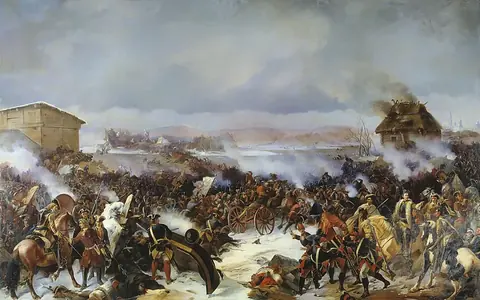
- 1708Battle of Lesnaya, 1708Tsardom of Russia vs Swedish Empire
On 9 October 1708 Peter the Great caught Lewenhaupt's Swedish corps and its supply train at Lesnaya. The march, the battle, the disputed numbers and why Peter called it the mother of Poltava.
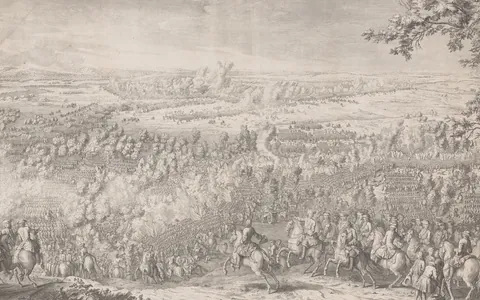
- 1709Battle of Poltava, 1709Tsardom of Russia (Peter I) vs Swedish Empire (Charles XII)
A summer dawn in Ukraine, a starving Swedish army, and the battle that broke Charles XII and made Peter the Great master of the north.
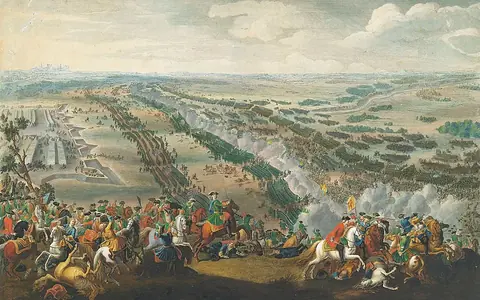
- 1713The Skirmish at Bender, 1713Ottoman Empire vs Charles XII of Sweden
On 1 February 1713, after years as the Sultan's guest, Charles XII of Sweden and a few dozen men fought off Ottoman troops in his house near Bender until it was set on fire.
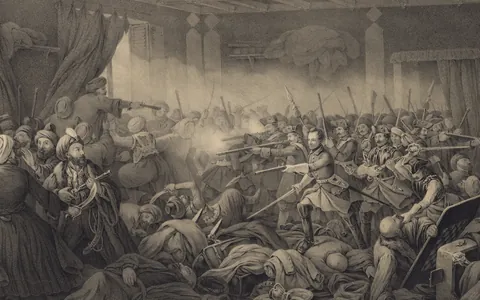
- 1714Battle of Napue, 1714Swedish Empire (mostly Finnish troops) vs Tsardom of Russia
In February 1714 Prince Golitsyn marched an army on skis and sledges across snowbound Finland and turned Armfelt's flank at Napue. In two hours the last Swedish army in Finland was gone, and the Great Wrath began.
Timeline of the Great Northern War
- 1698 to 1699Denmark-Norway, Saxony-Poland and Russia form a secret alliance against Sweden.43
- 1700February: Saxon troops invade Livonia; August: Charles XII lands on Zealand and Denmark-Norway makes peace at Travendal; 30 November: Battle of Narva.44
- 1701Summer: Charles crosses the Western Dvina near Riga and scatters the Saxon army.45
- 1702Summer: Swedish victory over Augustus II at Kliszów.46
- 1703Peter I founds St. Petersburg.47
- 1704Stanisław Leszczyński is elected king of Poland under Swedish protection; Augustus's supporters form the Confederation of Sandomierz.48
- 1706Swedish victory at Fraustadt (Wschowa); September: Treaty of Altranstädt, Augustus gives up the Polish crown.49
- 1707August: Charles XII leaves Saxony to invade Russia.50
- 1708July: Swedish victory at Holowczyn; September: Charles turns into Ukraine; 28 September (Old Style): Battle of Lesnaya.51
- 170927 June (8 July, New Style): Battle of Poltava; surrender at Perevolochna; Augustus II returns to the Polish throne and Denmark-Norway rejoins the war.52
- 1710 to 1711Russia occupies the Baltic provinces; the Ottoman Empire declares war on Russia and wins on the Pruth.53
- 1713February: kalabalik at Bender; May: a Swedish army surrenders at Tönning.54
- 1714
- 1715Prussia and Hanover declare war on Sweden.56
- 17171 February: the Silent Sejm in Warsaw.57
- 1718Charles XII is killed at the siege of Fredriksten in Norway.58
- 1719 to 1720Treaties of Stockholm with Hanover and Prussia; Treaty of Frederiksborg with Denmark-Norway.59
- 1721September: Treaty of Nystad between Sweden and Russia.60
Where to read next
The war is one chapter of our guides to the wars of the Polish-Lithuanian Commonwealth and the military history of Poland. For the earlier Baltic wars, see the Polish-Swedish War of 1600 to 1629 and the Deluge; for the Ottoman wars that came just before, the Great Turkish War. The Polish cavalry's story is told in the winged hussars' greatest battles.
Notes
A number in the text points to a note; each note names the works that paragraph draws on, listed in full under Sources.
- Encyclopaedia Britannica, “Second Northern War”; EBSCO Research Starters, “Great Northern War”; Encyclopedia of Russian History; Encyclopaedia Britannica, “Battle of Poltava”. ↩
- Encyclopaedia Britannica, “Second Northern War”; EBSCO Research Starters, “Great Northern War”; Den Store Danske. ↩
- Zintegrowana Platforma Edukacyjna, “III wojna północna”; dzieje.pl, “315. rocznica bitwy pod Kliszowem, ostatniej z udziałem husarii”; Encyclopedia of Russian History. ↩
- Encyclopaedia Britannica, “Second Northern War”; Encyclopedia of Russian History; Jonathan W. Jordan, “Tipping Point at Poltava”. ↩
- Encyclopaedia Britannica, “Charles XII”; EBSCO Research Starters, “Great Northern War”; Den Store Danske; Ola Teige, Store norske leksikon; Warfare History Network, “Battle of Poltava”. ↩
- EBSCO Research Starters, “Great Northern War”; Zintegrowana Platforma Edukacyjna, “III wojna północna”; Encyclopedia of Russian History; Jonathan W. Jordan, “Tipping Point at Poltava”; Den Store Danske. ↩
- Encyclopaedia Britannica, “Second Northern War”; Warfare History Network, “Battle of Poltava”; Jonathan W. Jordan, “Tipping Point at Poltava”; Encyclopaedia Britannica, “Charles XII”. ↩
- EBSCO Research Starters, “Great Northern War”; Encyclopaedia Britannica, “Charles XII”; Den Store Danske. ↩
- Encyclopaedia Britannica, “Second Northern War”; Den Store Danske; Øystein Lydik Idsø Viken, Store norske leksikon; Ola Teige, Store norske leksikon; Encyclopaedia Britannica, “Charles XII”. ↩
- dzieje.pl, “315. rocznica bitwy pod Kliszowem, ostatniej z udziałem husarii”; Zintegrowana Platforma Edukacyjna, “III wojna północna”; Encyclopaedia Britannica, “Stanisław I”. ↩
- Encyclopedia of Russian History; EBSCO Research Starters, “Great Northern War”; Zintegrowana Platforma Edukacyjna, “III wojna północna”; Encyclopaedia Britannica, “Charles XII”; Encyclopaedia Britannica, “Second Northern War”. ↩
- Encyclopaedia Britannica, “Second Northern War”; EBSCO Research Starters, “Great Northern War”; Den Store Danske; Jacob F. Field, “Battle of Narva”. ↩
- Jacob F. Field, “Battle of Narva”; Jonathan W. Jordan, “Tipping Point at Poltava”; Warfare History Network, “Battle of Poltava”; EBSCO Research Starters, “Great Northern War”. ↩
- Encyclopaedia Britannica, “Charles XII”; Ola Teige, Store norske leksikon; Jonathan W. Jordan, “Tipping Point at Poltava”; Jacob F. Field, “Battle of Narva”. ↩
- dzieje.pl, “315. rocznica bitwy pod Kliszowem, ostatniej z udziałem husarii”; Zintegrowana Platforma Edukacyjna, “III wojna północna”; Jonathan W. Jordan, “Tipping Point at Poltava”; Warfare History Network, “Battle of Poltava”. ↩
- Zintegrowana Platforma Edukacyjna, “III wojna północna”; Ola Teige, Store norske leksikon; Den Store Danske; Encyclopaedia Britannica, “Stanisław I”; EBSCO Research Starters, “Great Northern War”; dzieje.pl, “W trzechsetną rocznicę Sejmu Niemego 1717-2017 - konferencja na Zamku Królewskim w Warszawie”. ↩
- Ola Teige, Store norske leksikon; Zintegrowana Platforma Edukacyjna, “III wojna północna”; Encyclopaedia Britannica, “Second Northern War”; EBSCO Research Starters, “Great Northern War”. ↩
- Jacob F. Field, “Battle of Narva”; Encyclopedia of Russian History; Encyclopaedia Britannica, “Second Northern War summary”; EBSCO Research Starters, “Great Northern War”; Jonathan W. Jordan, “Tipping Point at Poltava”; Zintegrowana Platforma Edukacyjna, “III wojna północna”. ↩
- Jonathan W. Jordan, “Tipping Point at Poltava”; Warfare History Network, “Battle of Poltava”; Encyclopedia of Russian History; EBSCO Research Starters, “Great Northern War”; Encyclopaedia Britannica, “Charles XII”; Zintegrowana Platforma Edukacyjna, “III wojna północna”. ↩
- EBSCO Research Starters, “Great Northern War”; Jonathan W. Jordan, “Tipping Point at Poltava”; Warfare History Network, “The Battle of Lesnaya”; Warfare History Network, “Battle of Poltava”. ↩
- Jonathan W. Jordan, “Tipping Point at Poltava”; Warfare History Network, “Battle of Poltava”; EBSCO Research Starters, “Great Northern War”. ↩
- Encyclopaedia Britannica, “Battle of Poltava”; Jonathan W. Jordan, “Tipping Point at Poltava”; Warfare History Network, “Battle of Poltava”. ↩
- Encyclopaedia Britannica, “Battle of Poltava”; Jonathan W. Jordan, “Tipping Point at Poltava”; Warfare History Network, “Battle of Poltava”; Encyclopedia of Russian History. ↩
- Encyclopaedia Britannica, “Charles XII”; Encyclopedia of Russian History; Jonathan W. Jordan, “Tipping Point at Poltava”; Warfare History Network, “Battle of Poltava”. ↩
- Den Store Danske; Encyclopaedia Britannica, “Stanisław I”; Zintegrowana Platforma Edukacyjna, “III wojna północna”; Øystein Lydik Idsø Viken, Store norske leksikon; EBSCO Research Starters, “Great Northern War”; Encyclopedia of Russian History; Encyclopaedia Britannica, “Second Northern War”. ↩
- Encyclopaedia Britannica, “Charles XII”; EBSCO Research Starters, “Great Northern War”; Encyclopaedia Britannica, “Second Northern War”; Dennis J. McCarthy, History Today. ↩
- Encyclopaedia Britannica, “Second Northern War”; Den Store Danske; Encyclopedia of Russian History. ↩
- EBSCO Research Starters, “Great Northern War”; Encyclopaedia Britannica, “Charles XII”; Den Store Danske; Øystein Lydik Idsø Viken, Store norske leksikon; Encyclopaedia Britannica, “Charles XII”; Zintegrowana Platforma Edukacyjna, “III wojna północna”. ↩
- Encyclopaedia Britannica, “Charles XII”; Encyclopaedia Britannica, “Charles XII”; Dennis J. McCarthy, History Today. ↩
- Jacob F. Field, “Battle of Narva”; Encyclopedia of Russian History; EBSCO Research Starters, “Great Northern War”; Jonathan W. Jordan, “Tipping Point at Poltava”. ↩
- Ola Teige, Store norske leksikon; Jonathan W. Jordan, “Tipping Point at Poltava”; Warfare History Network, “Battle of Poltava”; Warfare History Network, “The Battle of Lesnaya”; Encyclopaedia Britannica, “Battle of Poltava”; EBSCO Research Starters, “Great Northern War”. ↩
- Encyclopaedia Britannica, “Second Northern War”; Den Store Danske. ↩
- Encyclopaedia Britannica, “Second Northern War”; EBSCO Research Starters, “Great Northern War”; Den Store Danske. ↩
- Encyclopaedia Britannica, “Second Northern War”; EBSCO Research Starters, “Great Northern War”; Encyclopedia of Russian History; Den Store Danske. ↩
- Encyclopaedia Britannica, “Second Northern War”; EBSCO Research Starters, “Great Northern War”; Encyclopedia of Russian History; Den Store Danske; Zintegrowana Platforma Edukacyjna, “III wojna północna”. ↩
- Encyclopaedia Britannica, “Stanisław I”; Zintegrowana Platforma Edukacyjna, “Polska w czasach saskich. Anarchia”; Encyclopedia of Russian History. ↩
- Zintegrowana Platforma Edukacyjna, “Polska w czasach saskich. Anarchia”; dzieje.pl, “W trzechsetną rocznicę Sejmu Niemego 1717-2017 - konferencja na Zamku Królewskim w Warszawie”. ↩
- dzieje.pl, “W trzechsetną rocznicę Sejmu Niemego 1717-2017 - konferencja na Zamku Królewskim w Warszawie”; Zintegrowana Platforma Edukacyjna, “Polska w czasach saskich. Anarchia”. ↩
- EBSCO Research Starters, “Great Northern War”; Zintegrowana Platforma Edukacyjna, “III wojna północna”. ↩
- Encyclopaedia Britannica, “Battle of Poltava”; Den Store Danske; Warfare History Network, “Battle of Poltava”. ↩
- Encyclopedia of Russian History; EBSCO Research Starters, “Great Northern War”; Zintegrowana Platforma Edukacyjna, “III wojna północna”. ↩
- Encyclopaedia Britannica, “Charles XII”; Dennis J. McCarthy, History Today. ↩
- Encyclopaedia Britannica, “Second Northern War summary”; EBSCO Research Starters, “Great Northern War”; Den Store Danske. ↩
- Encyclopaedia Britannica, “Second Northern War”; EBSCO Research Starters, “Great Northern War”; Jacob F. Field, “Battle of Narva”. ↩
- Encyclopaedia Britannica, “Charles XII”; Ola Teige, Store norske leksikon. ↩
- Jonathan W. Jordan, “Tipping Point at Poltava”; dzieje.pl, “315. rocznica bitwy pod Kliszowem, ostatniej z udziałem husarii”. ↩
- Encyclopaedia Britannica, “Second Northern War summary”; EBSCO Research Starters, “Great Northern War”. ↩
- Zintegrowana Platforma Edukacyjna, “III wojna północna”; Encyclopaedia Britannica, “Stanisław I”; Den Store Danske. ↩
- Ola Teige, Store norske leksikon; Zintegrowana Platforma Edukacyjna, “III wojna północna”; EBSCO Research Starters, “Great Northern War”. ↩
- Jonathan W. Jordan, “Tipping Point at Poltava”; Warfare History Network, “Battle of Poltava”. ↩
- Encyclopaedia Britannica, “Charles XII”; EBSCO Research Starters, “Great Northern War”; Jonathan W. Jordan, “Tipping Point at Poltava”. ↩
- Encyclopaedia Britannica, “Battle of Poltava”; Encyclopaedia Britannica, “Charles XII”; Den Store Danske; Øystein Lydik Idsø Viken, Store norske leksikon. ↩
- Encyclopedia of Russian History; EBSCO Research Starters, “Great Northern War”; Encyclopaedia Britannica, “Second Northern War”. ↩
- Encyclopaedia Britannica, “Charles XII”; Dennis J. McCarthy, History Today; Encyclopaedia Britannica, “Second Northern War”; Den Store Danske. ↩
- Den Store Danske; Encyclopedia of Russian History; Encyclopaedia Britannica, “Second Northern War”; EBSCO Research Starters, “Great Northern War”. ↩
- Den Store Danske; Encyclopaedia Britannica, “Charles XII”. ↩
- dzieje.pl, “W trzechsetną rocznicę Sejmu Niemego 1717-2017 - konferencja na Zamku Królewskim w Warszawie”; Zintegrowana Platforma Edukacyjna, “Polska w czasach saskich. Anarchia”. ↩
- Encyclopaedia Britannica, “Charles XII”; Den Store Danske; Øystein Lydik Idsø Viken, Store norske leksikon. ↩
- Encyclopaedia Britannica, “Second Northern War”; EBSCO Research Starters, “Great Northern War”; Den Store Danske. ↩
- Encyclopaedia Britannica, “Second Northern War”; EBSCO Research Starters, “Great Northern War”. ↩
Sources
- Encyclopaedia Britannica, “Second Northern War”.
- EBSCO Research Starters, “Great Northern War”.
- Encyclopedia of Russian History, via Encyclopedia.com, “Great Northern War”.
- Encyclopaedia Britannica, “Battle of Poltava”.
- Den Store Danske (lex.dk), “Store Nordiske Krig” (in Danish).
- Zintegrowana Platforma Edukacyjna (Polish Ministry of Education), “III wojna północna” (in Polish).
- dzieje.pl (Polish History Museum and PAP), “315. rocznica bitwy pod Kliszowem, ostatniej z udziałem husarii” (in Polish).
- Jonathan W. Jordan, HistoryNet, “Tipping Point at Poltava”.
- Encyclopaedia Britannica, “Charles XII”.
- Ola Teige, Store norske leksikon, “freden i Altranstädt” (in Norwegian).
- Warfare History Network, “Battle of Poltava: Blunting the Swedish Empire”.
- Encyclopaedia Britannica, “Charles XII: Years in Turkey (1709 to 1714)”.
- Øystein Lydik Idsø Viken, Store norske leksikon, “den store nordiske krigen” (in Norwegian).
- Encyclopaedia Britannica, “Stanisław I”.
- Jacob F. Field, Encyclopaedia Britannica, “Battle of Narva”.
- dzieje.pl (Polish History Museum and PAP), “W trzechsetną rocznicę Sejmu Niemego 1717-2017 - konferencja na Zamku Królewskim w Warszawie” (in Polish).
- Encyclopaedia Britannica, “Second Northern War summary”.
- Warfare History Network, “The Battle of Lesnaya: Sweden's Desperate Stand”.
- Dennis J. McCarthy, History Today, “The Kalabalik”.
- Zintegrowana Platforma Edukacyjna (Polish Ministry of Education), “Polska w czasach saskich. Anarchia” (in Polish).






