

What is the military history of India?
It is the history of the wars fought by the states of the Indian subcontinent and their armies: Porus against Alexander in 326 BCE, the Mauryan Empire, the Delhi Sultanate, the Mughals at Panipat, Vijayanagara, the Marathas and the Sikh Empire, the Company’s conquest after Plassey, Indian soldiers in both world wars, and the wars since 1947.1
No single state fought all of India’s wars. The subcontinent was ruled for most of its history by several powers at once, and each fought for its own reasons: the kingdom of Porus against Alexander, the Mauryas in Kalinga, Rajput kings against the Ghurids, the Mughals against the Afghans and the Rajputs, Vijayanagara against the Deccan sultanates, the Marathas against the Mughals and the Afghans, Mysore, the Marathas and the Sikhs against the East India Company. This guide follows them era by era, names the state behind each army and gives defeats the same weight as victories. Start with our battle guides to the Battle of the Hydaspes (326 BCE), the First Battle of Panipat (1526), the Battle of Plassey (1757), the Third Battle of Panipat (1761) and the Battle of Kohima (1944), and read the related hubs on the East India Company’s wars and the Anglo-Sikh Wars.
Which states does the military history of India cover?
For most of the period covered here, “India” was a region, not one state. The Mauryan Empire, founded around 320 BCE, united much of the subcontinent under one government and lasted until 185 BCE. Much later the Delhi Sultanate ruled northern India from 1206 to 1526 under five successive dynasties, and the Mughal Empire, founded in 1526, reached its greatest extent around 1700, when it held most of the subcontinent except the far south.2
As Mughal power broke up in the 18th century, the Marathas, the Sikhs and other regional states rose, and the East India Company, a British trading firm with its own armies, became the dominant power after its victories at Plassey in 1757 and Buxar in 1764. After the rebellion of 1857 the Company was abolished and British India passed under the direct rule of the British government. In 1947 British rule ended and the subcontinent was partitioned into India and Pakistan; Bangladesh separated from Pakistan in 1971.3
Alexander, Porus and the Battle of the Hydaspes (326 BCE)
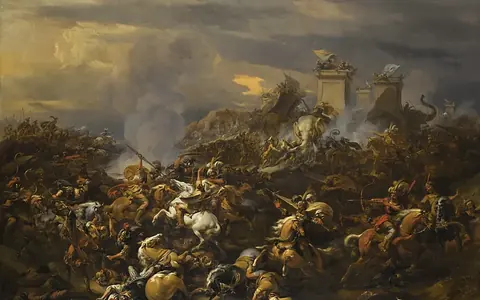
In 326 BCE Alexander the Great crossed the Indus into the Punjab, where the ruler of Taxila sided with him against his neighbor Porus, the king of the lands between the Hydaspes (Jhelum) and the Chenab. Porus refused to submit and waited on the far bank of the Hydaspes with infantry, chariots and war elephants. Alexander slipped across the river upstream on a stormy night and attacked Porus from two sides, and the Indian army was destroyed. Porus, wounded, surrendered.4
Alexander kept Porus as ruler of his own kingdom and gave him more land. A few months later, at the Beas River, Alexander’s exhausted army refused to march any further east, and the king turned back toward the sea. The battlefield lies in what is now Pakistan; see our hub on the wars of Alexander the Great.5
The Mauryan Empire, Ashoka and the Kalinga War
In the years after Alexander left, Chandragupta Maurya overthrew the Nanda dynasty that ruled the Ganges valley and founded the Mauryan Empire. By the end of the 4th century BCE his empire joined the Indus and Ganges valleys under one central administration, and Britannica describes it as the first empire to take in most of the Indian subcontinent. His son Bindusara and his grandson Ashoka enlarged it further.6
Ashoka conquered Kalinga, on the east coast in what is now Odisha, early in his reign. The war was so bloody that Ashoka, by his own account in the thirteenth of his major rock edicts, was filled with remorse. He turned to Buddhism, renounced conquest by force and set out to rule by dharma, the principles of right conduct, which he had carved on rocks and pillars across his empire.7
Tarain and the Delhi Sultanate
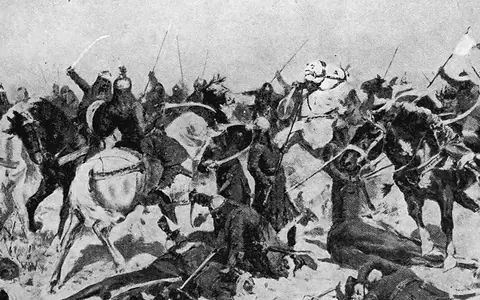
In 1192, at Tarain (Taraori), north of Delhi, the army of Muhammad of Ghur, a ruler from what is now Afghanistan, defeated the Rajput king Prithviraj III of the Chahamana (Chauhan) dynasty, and Delhi was taken. Read our guide to the Second Battle of Tarain (1192).8
After Muhammad’s death in 1206 his general Qutb ud-Din Aibak made himself sultan at Delhi. The Delhi Sultanate that followed was ruled by five dynasties of Turkish and Afghan origin, the Mamluks, Khaljis, Tughluqs, Sayyids and Lodis, and lasted for more than three centuries. Its power was shattered when the Turkic conqueror Timur invaded in 1398 and sacked Delhi.9
The Battles of Panipat (1526 and 1556) and the Mughal Empire
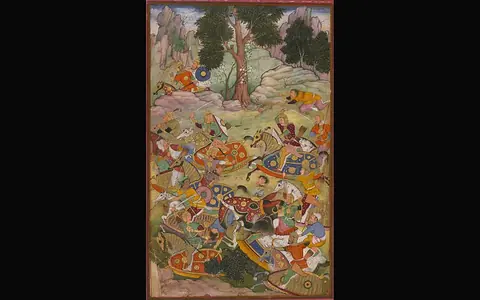
Babur, a ruler from Central Asia, invaded northern India and met Sultan Ibrahim Lodi at Panipat, north of Delhi, in April 1526. Following what he called the custom of Rum, the Ottoman practice, Babur chained his gun carriages together, with breastworks between them and matchlockmen behind. Ibrahim’s much larger army of cavalry and elephants broke against this line, Ibrahim was found dead on the field, and Babur founded the Mughal dynasty. See our guide to the First Battle of Panipat.10
The Mughal hold was not yet secure. Babur’s son Humayun had only just regained his throne when he died in January 1556, leaving it to the 13-year-old Akbar, and Hemu, a Hindu minister, claimed the throne and took Delhi. On 5 November 1556 Akbar’s guardian, the general Bairam Khan, defeated Hemu’s larger army at Panipat, and Mughal rule was restored. Read our guide to the Second Battle of Panipat.11
Akbar extended Mughal rule over most of the subcontinent outside the Deccan. With the Rajput kings he mixed alliance and force: in 1562 he married the daughter of Raja Bihari Mal of Amber, and Rajput princes came to serve as Mughal commanders, but when the ruler of Mewar refused to submit, Akbar took the fortress of Chitor in 1568 and massacred many of its people.12
Mewar fought on under Rana Pratap. In June 1576 a Mughal army led by the Rajput Man Singh of Amber met him at the Haldighati pass near Gogunda. The Mughals held the field and Pratap withdrew into the hills, from where he kept up his resistance. See our guide to the Battle of Haldighati.13
Vijayanagara and the Battle of Talikota (1565)
In the south the great power was the Vijayanagara Empire, whose capital on the Tungabhadra River, at today’s Hampi, was the seat of the last great Hindu kingdom of the south from the 14th to the 16th century. Its rivals were the sultanates of the Deccan. In 1565 the armies of Bijapur, Ahmadnagar, Golconda and Bidar joined forces and routed the Vijayanagara army led by its chief minister Rama Raya at Talikota, in what EBSCO’s research starter calls one of the bloodiest battles in Indian history. The victors sacked the capital, which was destroyed and abandoned. Read our guide to the Battle of Talikota.14
Shivaji and the rise of the Marathas
The Marathas were farmers and soldiers of the western Deccan who had served the sultans of Ahmadnagar and Bijapur. From the late 1640s or the 1650s the young Shivaji gathered followers and seized Bijapur’s weaker hill forts, using the mountains for a war of raids. In 1659 Bijapur sent its general Afzal Khan against him; Shivaji killed him at a meeting and the Maratha troops routed his army.15
Shivaji then turned on the Mughals. He sacked the port of Surat, was forced to submit when the emperor Aurangzeb sent the Rajput general Jai Singh against him, escaped from Aurangzeb’s court at Agra in 1666, and in 1674 was crowned chhatrapati, an independent king, which marked the formal beginning of the Maratha state. Our guide to the Battle of Sinhagad (1670) tells one of the fortress assaults of those years.16

After Shivaji’s death in 1680 Aurangzeb went south himself. He conquered Bijapur and Golconda in 1686 and 1687, but he could not end the war with the Marathas, which went on until his death. After Aurangzeb died in 1707 the Marathas recovered, and under the peshwas, their chief ministers, they built a confederacy that by the mid-18th century was one of the strongest powers in India.17
The Third Battle of Panipat (1761)
As the Mughal Empire broke up after 1719, the Marathas became the dominant power in India and pushed north toward Delhi and the Punjab, where they met the Afghan ruler Ahmad Shah Durrani. On 14 January 1761, at Panipat, Durrani destroyed the large Maratha army under Sadashiv Rao Bhau, and Maratha power began to decline.18

Read our guide to the Third Battle of Panipat for the campaign, the siege of the Maratha camp and the day of the battle.
Plassey, Buxar and the East India Company
The East India Company, founded in 1600 to trade, raised armies made up largely of Indian soldiers, the sepoys, to protect its trading settlements. In 1756 the Nawab of Bengal, Siraj ud-Daulah, captured the Company’s Fort William in Calcutta after it refused to stop fortifying against the French at the start of the Seven Years’ War.19
Robert Clive retook Calcutta and, with the Jagat Seth banking family, secretly offered the throne to Siraj’s commander Mir Jafar. At Plassey on 23 June 1757 Clive’s army of about 3,000, some 2,100 of them Indian sepoys, faced the Nawab’s army of around 50,000. Mir Jafar, who commanded the Nawab’s cavalry, did not fight, Siraj’s army broke, and Mir Jafar became Nawab and later had Siraj killed. See our guide to the Battle of Plassey.20
Plassey was not yet the end. On 22 October 1764 the Company army under Hector Munro, mostly sepoys, defeated the combined forces of Bengal, Awadh and the Mughal emperor at Buxar. In 1765 the emperor Shah Alam II granted the Company the diwani, the right to collect the revenues of Bengal, India’s richest province. Read our guide to the Battle of Buxar and our hub on the East India Company’s wars.21
Mysore, the Maratha Wars and the Sikh Empire
The Company’s hardest opponents were Indian states with modern armies. Mysore, under Hyder Ali and then his son Tipu Sultan, fought it in four wars between 1767 and 1799, and its iron-cased rockets were used against the British at the sieges of Seringapatam. In 1799 the Company stormed Seringapatam and Tipu was killed as its army swept into the city.22
The Maratha confederacy fought the Company three times, from 1775 to 1782, from 1803 to 1805 and in 1817 and 1818. In the second, Arthur Wellesley, the future Duke of Wellington, won his first great victory at Assaye on 23 September 1803; the third destroyed the confederacy. See our guide to the Battle of Assaye.23
In the Punjab, Ranjit Singh, who ruled from 1801 to 1839, made the Sikh state a formidable power with a large arsenal of artillery. After his death the Sikh army crossed the Sutlej in December 1845, and two wars followed. At Chillianwala in January 1849 the Company army came close to disaster, but on 21 February at Gujrat it won a decisive victory, and the Punjab was annexed in March 1849. Read our hub on the Anglo-Sikh Wars.24
The Indian Rebellion of 1857
The rising of 1857 is known in Britain as the Indian Mutiny and in India also as the First War of Independence. It began at Meerut on 10 May 1857, when sepoys of the Bengal Army freed comrades jailed for refusing new rifle cartridges, rumored to be greased with cow and pig fat; the next day they took Delhi and proclaimed the aged Mughal emperor Bahadur Shah II. Princes and landholders angry at the Company’s annexations joined in, and the main centers of the fighting were Delhi, Kanpur, Lucknow and, in central India, Jhansi, whose queen Lakshmi Bai became one of its leaders.25
After the British retook Delhi the fighting went on into 1859. The rising ended the East India Company: political control of India passed to the British Crown, a viceroy became head of the government, and the Crown took over the Company’s armies, which became the Indian Army.26
The Indian Army in World War I and World War II
In World War I the Indian Army fought overseas from the start. Indian divisions reached France in the autumn of 1914, and Indian troops went on to fight at Gallipoli, in East Africa, in Egypt and Palestine, and in Mesopotamia, fighting the Ottoman Empire until the end of the war. The National Army Museum counts nearly 1.4 million men from India who served, some as noncombatants, while the Imperial War Museums gives 1.5 million.27

In World War II the Indian Army grew to about 2.5 million men, and around 89,000 Indian servicemen died. In March 1944 Japan launched Operation U-Go against Imphal and Kohima in northeast India, with three Japanese divisions and a division of the Indian National Army, a force of Indians who had joined the Japanese side to end British rule.28
British and Indian divisions of General William Slim’s Fourteenth Army held Kohima and Imphal, and by July 1944 U-Go had failed. Slim called it the turning point of the Burma campaign. Read our guides to the Battle of Kohima and the Battle of Imphal, and our hub on the Pacific War.29

India’s wars since independence (1947 to 1999)
British rule ended at midnight on 15 August 1947, and the subcontinent was partitioned into India and Pakistan. The princely state of Jammu and Kashmir, with a Muslim majority and a Hindu ruler, was claimed by both. Its maharaja signed an Instrument of Accession to India, and the first India-Pakistan war followed; it ended with a UN ceasefire in January 1949 and a ceasefire line that divided the territory.30
From 20 October to 20 November 1962 India and China fought a short, limited war over their disputed Himalayan border, centered on the Aksai Chin region, in which thousands of soldiers died on both sides. In 1965 India and Pakistan fought their second war over Kashmir. Both accepted a UN ceasefire in September, and the Tashkent Declaration of January 1966, mediated by the Soviet Union, ended the war.31
The third war grew out of a crisis in East Pakistan. After the Pakistani army crushed the movement for autonomy there in March 1971, millions of refugees fled to India, and Indian-backed guerrillas, the Mukti Bahini, fought the army. Pakistan launched air attacks on India on 3 December, and on 16 December the Pakistani forces in the east surrendered, and Bangladesh became independent. See our guide to the Battle of Longewala (1971).32
In 1999 Pakistani troops crossed the Line of Control and occupied heights near Kargil in Kashmir. India fought from May to July to retake them, and Pakistan withdrew its forces under international pressure.33
Famous commanders in Indian military history
Porus faced Alexander at the Hydaspes, and Chandragupta Maurya built the first empire across most of the subcontinent. Babur won Panipat with his chained gun line, Akbar enlarged the Mughal Empire, and Rana Pratap of Mewar resisted him from the hills. Shivaji founded the Maratha state, Tipu Sultan of Mysore fought the Company to the end, and Ranjit Singh made the Sikh state a major power. In 1944 William Slim’s Fourteenth Army, with its Indian divisions, beat the Japanese at Imphal and Kohima.34
Major battles in Indian history, era by era
Every battle we have written up in which a state of the Indian subcontinent took part, from the kingdom of Porus to the Republic of India, grouped by era and in date order:
Antiquity to AD 476 · 1
- 326 BCThe Battle of the Hydaspes, 326 BCMacedon vs Kingdom of Porus
A storm crossing, war elephants, and a king who asked to be treated as a king.
The Middle Ages 476 to 1500 · 1
- 1192The Second Battle of Tarain, 1192Ghurid Empire vs Chahamana kingdom and allied Rajput rulers
Beaten on the same field a year earlier, Muhammad of Ghor came back and changed northern India.
The early modern era 1492 to 1789 · 9
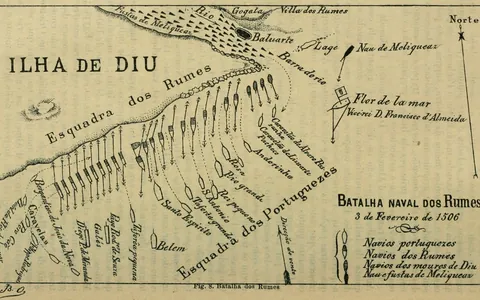
- 1509Battle of Diu, 1509Portugal vs Mamluk Egypt, Gujarat and Calicut
On 3 February 1509 Francisco de Almeida led the Portuguese into the harbor of Diu and destroyed the Mamluk and Gujarati fleet that had killed his son at Chaul.
- 1526The First Battle of Panipat, 1526Timurids of Kabul vs Delhi Sultanate
Babur's cannon and tactics destroyed a far larger army and founded the Mughal Empire.
- 1556Second Battle of Panipat, 1556Mughal Empire vs Sur Empire under Hemu
In 1556 at Panipat the army of the boy emperor Akbar met Hemu, who had just seized Delhi. One arrow decided the day and restored Mughal rule in India.
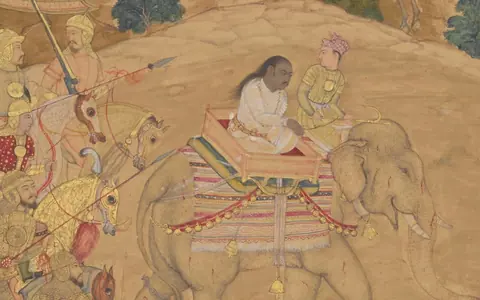
- 1565Battle of Talikota, 1565Vijayanagara Empire vs Deccan Sultanates
In January 1565 four Deccan sultanates joined forces near the Krishna river, beheaded the regent Rama Raya and sacked Vijayanagara, the city now called Hampi.
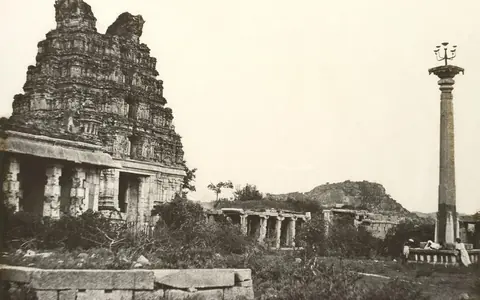
- 1576Battle of Haldighati, 1576Kingdom of Mewar vs Mughal Empire
How Maharana Pratap fought a larger Mughal army at Haldighati in 1576 and became a symbol of defiance.
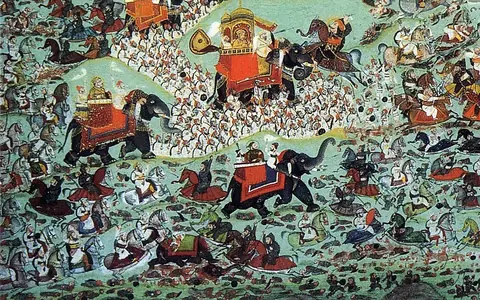
- 1670Battle of Sinhagad, 1670Maratha Kingdom vs Mughal Empire
In 1670 Tanaji Malusare led Shivaji's Mavles up the cliffs of Kondhana by night and took the Mughal fort near Pune. He and its commander both died.
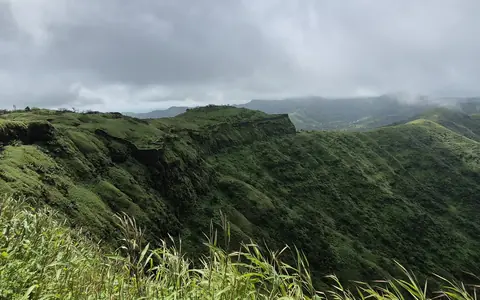
- 1757The Battle of Plassey, 1757British East India Company vs Nawab of Bengal (with French gunners)
A few thousand Company troops won Bengal, and an empire, by rain and treachery.
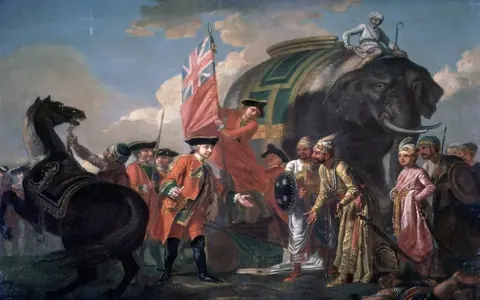
- 1761Third Battle of Panipat, 1761Durrani Empire vs Maratha Empire
How an Afghan-led coalition shattered the Maratha Empire at Panipat in 1761, in what The Tribune calls one of the largest and bloodiest conflicts in Indian history.
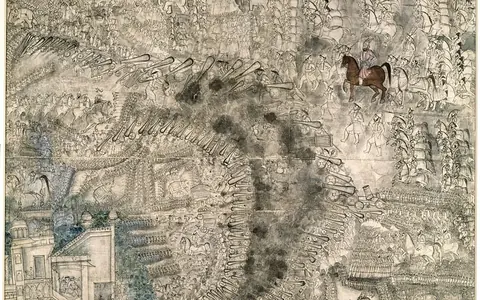
- 1764The Battle of Buxar, 1764British East India Company vs Mughal Empire, Awadh and Bengal
After Buxar, a trading company became the ruler of Bengal.
The Napoleonic era 1789 to 1815 · 1
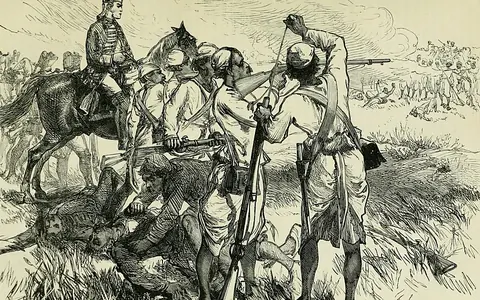
- 1803The Battle of Assaye, 1803East India Company and British troops vs Maratha Confederacy (Scindia and Berar)
Years before Waterloo, the future Wellington won the battle he valued most.
The industrial age 1815 to 1914 · 4
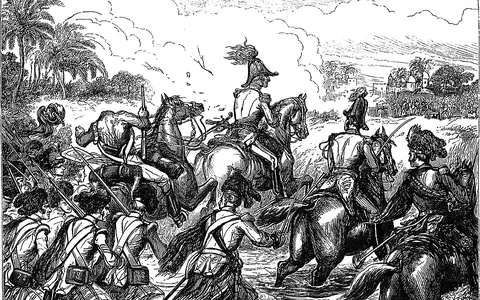
- 1845Battle of Mudki, 1845East India Company and British Army vs Sikh Empire (the Khalsa)
On 18 December 1845 Gough's tired army attacked Lal Singh's Sikhs at sunset. The fight ended in darkness, with two British generals dead and the Khalsa falling back.
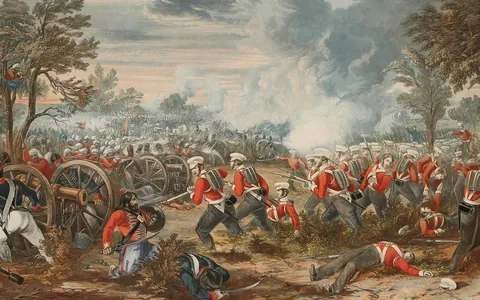
- 1849Battle of Chillianwala, 1849East India Company vs Sikh Empire
On 13 January 1849 at Chillianwala in the Punjab, Gough's East India Company army attacked the Sikh Khalsa through dense scrub. Both sides claimed victory.
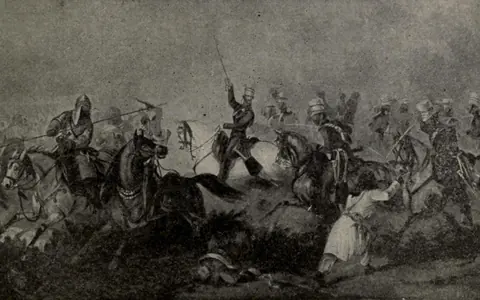
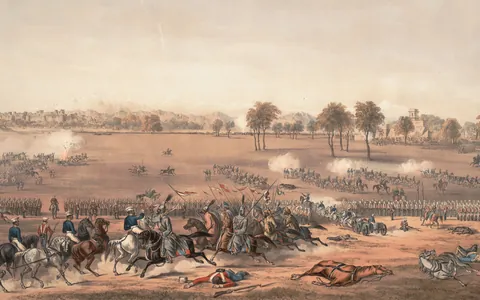
- 1849Battle of Gujrat, 1849East India Company and British Army vs Sikh Empire (Khalsa army) and Afghan allies
On 21 February 1849 Gough let his guns fight first. Two and a half hours of artillery fire broke the Sikh batteries at Gujrat, the infantry broke the line, and within weeks the Punjab was annexed.
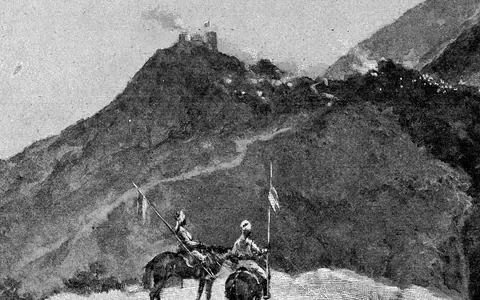
- 1897Battle of Saragarhi, 1897British India vs Afridi and Orakzai tribesmen
How twenty-one Sikhs of the 36th held Saragarhi to the last man against thousands in 1897.
World War II 1939 to 1945 · 3
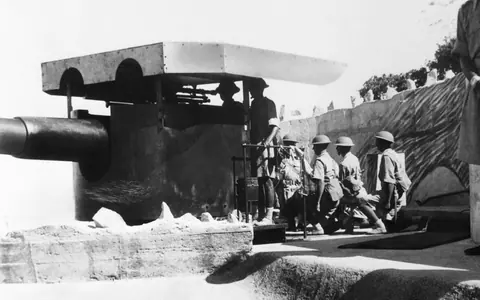
- 1941Battle of Hong Kong, 1941British Empire (British, Canadian, Indian and local Hong Kong forces) vs Empire of Japan
From 8 to 25 December 1941 British, Canadian, Indian and local troops held Hong Kong against Japan's 23rd Army, until the colony surrendered on Christmas Day.
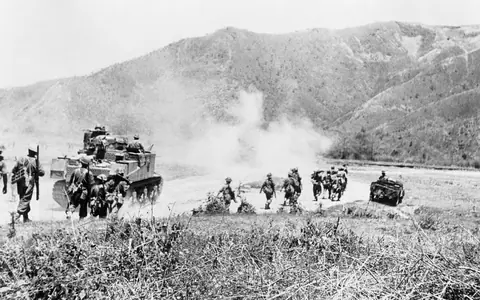
- 1944Battle of Imphal, 1944British Empire (British Indian Army) vs Empire of Japan (with the Indian National Army)
From March to July 1944 mostly Indian troops of IV Corps held the Imphal plain against Japan's U-Go offensive, until hunger and monsoon broke the attackers.
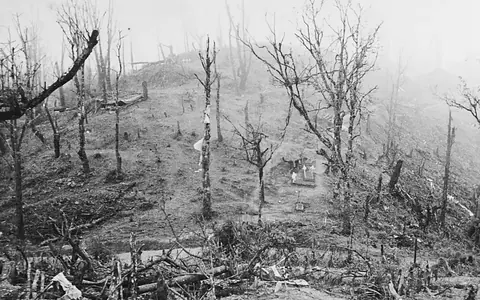
- 1944The Battle of Kohima, 1944British Empire (British and Indian forces) vs Empire of Japan
At Kohima the front line ran across a tennis court.
Since 1945 1
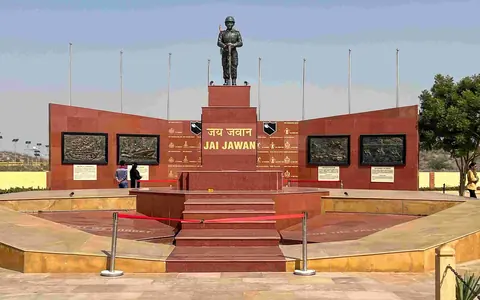
- 1971Battle of Longewala, 1971India vs Pakistan
In December 1971 a Pakistani armored thrust into the Thar desert stalled at the Indian post of Longewala: what happened, why it failed, who claims the credit.
Timeline of Indian military history
- 326 BCE
- Late 4th century BCEChandragupta Maurya founds the Mauryan Empire.36
- 1192
- 1206Qutb ud-Din Aibak founds the Delhi Sultanate.38
- 1398Timur sacks Delhi.39
- 1526
- 1556
- 1565
- 1576Mughal army meets Rana Pratap at Haldighati.43
- 1674Shivaji is crowned chhatrapati.44
- 1757
- 1761
- 1764
- 1799Fall of Seringapatam; Tipu Sultan is killed.48
- 1803
- 1849
- 1857The rebellion begins at Meerut on 10 May.51
- 1914Indian divisions reach the Western Front.52
- 1944
- 1947Independence and partition; first war over Kashmir.54
- 1962Sino-Indian War, 20 October to 20 November.55
- 1965Second India-Pakistan war.56
- 1971War of 3 to 16 December; Bangladesh becomes independent.57
- 1999Kargil War, May to July.58
Memory and further reading
India remembers its soldiers in the capital. India Gate in New Delhi, designed by Edwin Lutyens and completed in 1931, honors the Indian dead of World War I and the Third Anglo-Afghan War. An eternal flame for the dead of the 1971 war, the Amar Jawan Jyoti, was placed under its arch in 1972, and in 2019 the National War Memorial nearby was opened for those who have died since independence. The ruins of Vijayanagara at Hampi, sacked after Talikota, are a UNESCO World Heritage site.59
For the other sides of these wars, see our hubs on Britain, the East India Company’s wars, the Anglo-Sikh Wars and the wars of Alexander the Great, and our overview of the battles of India.
Notes
A number in the text points to a note; each note names the works that paragraph draws on, listed in full under Sources.
- Encyclopaedia Britannica, “Battle of the Hydaspes”; Jona Lendering, “Hydaspes (326 BCE)”; Encyclopaedia Britannica, “Mauryan empire”; PBS, “Timeline, Episode 5”; Encyclopaedia Britannica, “Battles of Panipat”; EBSCO Research Starters, “Marāthā Kingdom”; Encyclopaedia Britannica, “Sikh Wars”; National Army Museum, “Battle of Plassey”; Imperial War Museums, “India and the First World War”; Imperial War Museums, “India and the Second World War”; Office of the Historian, “The India-Pakistan War of 1965”. ↩
- Encyclopaedia Britannica, “Mauryan empire”; PBS, “Timeline, Episode 2”; PBS, “Timeline, Episode 5”; Encyclopaedia Britannica, “Delhi sultanate”; Encyclopaedia Britannica, “Mughal Dynasty Timeline”. ↩
- Encyclopaedia Britannica, “Mughal Dynasty Timeline”; EBSCO Research Starters, “Marāthā Kingdom”; National Army Museum, “Armies of the East India Company”; Encyclopaedia Britannica, “Indian Mutiny”; Office of the Historian, “The India-Pakistan War of 1965”; Encyclopaedia Britannica, “Kashmir”; Office of the Historian, “The South Asia Crisis and the Founding of Bangladesh, 1971”; Encyclopaedia Britannica, “Bangladesh Liberation War”. ↩
- Encyclopaedia Britannica, “Battle of the Hydaspes”; Jona Lendering, “Hydaspes (326 BCE)”; Jona Lendering, “Porus”. ↩
- Encyclopaedia Britannica, “Battle of the Hydaspes”; Jona Lendering, “Porus”; Jona Lendering, “Hydaspes (326 BCE)”; PBS, “Timeline, Episode 2”. ↩
- Encyclopaedia Britannica, “Chandragupta”; PBS, “Timeline, Episode 2”; Encyclopaedia Britannica, “Mauryan empire”; Encyclopaedia Britannica, “Ashoka”. ↩
- Encyclopaedia Britannica, “Ashoka”; PBS, “Edicts of Ashoka”. ↩
- Encyclopaedia Britannica, “Battles of Taraori”; PBS, “Timeline, Episode 5”; Encyclopaedia Britannica, “Delhi sultanate”. ↩
- PBS, “Timeline, Episode 5”; Encyclopaedia Britannica, “Delhi sultanate”. ↩
- Encyclopaedia Britannica, “Battles of Panipat”; Babur, Memoirs of Zehir-ed-Din Muhammed Baber; PBS, “Timeline, Episode 5”; Encyclopaedia Britannica, “Delhi sultanate”. ↩
- Encyclopaedia Britannica, “Akbar”; Nancy Fix Anderson, “Akbar”; Encyclopaedia Britannica, “Battles of Panipat”. ↩
- Encyclopaedia Britannica, “Akbar”; Nancy Fix Anderson, “Akbar”. ↩
- Encyclopaedia Britannica, “Battle of Gogunda”; Abu’l-Fazl, The Akbar Nama. ↩
- Encyclopaedia Britannica, “Vijayanagara”; EBSCO Research Starters, “‘Ādil Shah Dynasty”; UNESCO World Heritage Centre, “Group of Monuments at Hampi”. ↩
- Encyclopaedia Britannica, “Shivaji”; EBSCO Research Starters, “Marāthā Kingdom”; EBSCO Research Starters, “Marāṭhā-Mogul Wars”. ↩
- Encyclopaedia Britannica, “Shivaji”; EBSCO Research Starters, “Marāthā Kingdom”; EBSCO Research Starters, “Marāṭhā-Mogul Wars”. ↩
- Encyclopaedia Britannica, “Aurangzeb”; EBSCO Research Starters, “‘Ādil Shah Dynasty”; EBSCO Research Starters, “Marāṭhā-Mogul Wars”; EBSCO Research Starters, “Marāthā Kingdom”. ↩
- Encyclopaedia Britannica, “Mughal Dynasty Timeline”; EBSCO Research Starters, “Marāthā Kingdom”; The Tribune, “The Third Battle of Panipat”; Encyclopaedia Britannica, “Ahmad Shah Durrani”; Encyclopaedia Britannica, “Battles of Panipat”. ↩
- National Army Museum, “Armies of the East India Company”; National Army Museum, “Battle of Plassey”; Encyclopaedia Britannica, “Battle of Plassey”. ↩
- National Army Museum, “Battle of Plassey”; Encyclopaedia Britannica, “Battle of Plassey”. ↩
- Encyclopaedia Britannica, “Battle of Buxar”; National Army Museum, “Armies of the East India Company”; National Army Museum, “Battle of Plassey”. ↩
- Encyclopaedia Britannica, “Mysore Wars”; National Army Museum, “Armies of the East India Company”; Victoria and Albert Museum, “Tipu’s Tiger”; Smithsonian National Air and Space Museum, “Model, Rocket, War, Indian, Late 18th Century”; Encyclopaedia Britannica, “Indian Mutiny”; Encyclopaedia Britannica, “Tipu Sultan”. ↩
- Encyclopaedia Britannica, “Maratha Wars”; National Army Museum, “Armies of the East India Company”; Robert Jacobs, “Battle of Assaye”; National Army Museum, “Duke of Wellington”. ↩
- Encyclopaedia Britannica, “Sikh Wars”; The Wallace Collection, “The Lahore Durbar”; National Army Museum, “Second Sikh War”. ↩
- Encyclopaedia Britannica, “Indian Mutiny”; National Army Museum, “Why did the Indian Rebellion happen?”. ↩
- Encyclopaedia Britannica, “Indian Mutiny”; National Army Museum, “Armies of the East India Company”. ↩
- Imperial War Museums, “India and the First World War”; National Army Museum, “British Indian Army soldiers in the First World War”. ↩
- Imperial War Museums, “India and the Second World War”; Royal Armouries, “The Battles of Imphal and Kohima, 1944”; National Army Museum, “Battles of Imphal and Kohima”. ↩
- National Army Museum, “Battles of Imphal and Kohima”; Royal Armouries, “The Battles of Imphal and Kohima, 1944”. ↩
- Encyclopaedia Britannica, “Kashmir”; Office of the Historian, “The India-Pakistan War of 1965”. ↩
- Encyclopaedia Britannica, “Sino-Indian War”; U.S.-China Economic and Security Review Commission, “Conflict on the Sino-Indian Border”; Office of the Historian, “The India-Pakistan War of 1965”; Encyclopaedia Britannica, “Tashkent Declaration”. ↩
- Office of the Historian, “The South Asia Crisis and the Founding of Bangladesh, 1971”; Encyclopaedia Britannica, “Bangladesh Liberation War”. ↩
- Encyclopaedia Britannica, “Kargil War”; Bruce Riedel, “How the 1999 Kargil conflict redefined US-India ties”. ↩
- Encyclopaedia Britannica, “Battle of the Hydaspes”; Encyclopaedia Britannica, “Mauryan empire”; Encyclopaedia Britannica, “Battles of Panipat”; Babur, Memoirs of Zehir-ed-Din Muhammed Baber; Encyclopaedia Britannica, “Akbar”; Nancy Fix Anderson, “Akbar”; Encyclopaedia Britannica, “Battle of Gogunda”; Encyclopaedia Britannica, “Shivaji”; EBSCO Research Starters, “Marāthā Kingdom”; Victoria and Albert Museum, “Tipu’s Tiger”; Encyclopaedia Britannica, “Sikh Wars”; National Army Museum, “Battles of Imphal and Kohima”; Royal Armouries, “The Battles of Imphal and Kohima, 1944”. ↩
- Encyclopaedia Britannica, “Battle of the Hydaspes”; Jona Lendering, “Hydaspes (326 BCE)”. ↩
- Encyclopaedia Britannica, “Mauryan empire”; PBS, “Timeline, Episode 2”. ↩
- Encyclopaedia Britannica, “Battles of Taraori”; PBS, “Timeline, Episode 5”. ↩
- PBS, “Timeline, Episode 5”; Encyclopaedia Britannica, “Delhi sultanate”. ↩
- PBS, “Timeline, Episode 5”; Encyclopaedia Britannica, “Delhi sultanate”. ↩
- Encyclopaedia Britannica, “Battles of Panipat”; PBS, “Timeline, Episode 5”. ↩
- Encyclopaedia Britannica, “Akbar”; Nancy Fix Anderson, “Akbar”. ↩
- Encyclopaedia Britannica, “Vijayanagara”; EBSCO Research Starters, “‘Ādil Shah Dynasty”. ↩
- Encyclopaedia Britannica, “Battle of Gogunda”; Abu’l-Fazl, The Akbar Nama. ↩
- Encyclopaedia Britannica, “Shivaji”; EBSCO Research Starters, “Marāthā Kingdom”. ↩
- National Army Museum, “Battle of Plassey”; Encyclopaedia Britannica, “Battle of Plassey”. ↩
- Encyclopaedia Britannica, “Ahmad Shah Durrani”; The Tribune, “The Third Battle of Panipat”. ↩
- Encyclopaedia Britannica, “Battle of Buxar”; National Army Museum, “Armies of the East India Company”. ↩
- Victoria and Albert Museum, “Tipu’s Tiger”; Encyclopaedia Britannica, “Tipu Sultan”. ↩
- Robert Jacobs, “Battle of Assaye”; National Army Museum, “Duke of Wellington”. ↩
- Encyclopaedia Britannica, “Sikh Wars”; The Wallace Collection, “The Lahore Durbar”. ↩
- Encyclopaedia Britannica, “Indian Mutiny”; National Army Museum, “Why did the Indian Rebellion happen?”. ↩
- Imperial War Museums, “India and the First World War”; National Army Museum, “British Indian Army soldiers in the First World War”. ↩
- National Army Museum, “Battles of Imphal and Kohima”; Royal Armouries, “The Battles of Imphal and Kohima, 1944”. ↩
- Encyclopaedia Britannica, “Kashmir”; Office of the Historian, “The India-Pakistan War of 1965”. ↩
- Encyclopaedia Britannica, “Sino-Indian War”; U.S.-China Economic and Security Review Commission, “Conflict on the Sino-Indian Border”. ↩
- Office of the Historian, “The India-Pakistan War of 1965”; Encyclopaedia Britannica, “Tashkent Declaration”. ↩
- Office of the Historian, “The South Asia Crisis and the Founding of Bangladesh, 1971”; Encyclopaedia Britannica, “Bangladesh Liberation War”. ↩
- Encyclopaedia Britannica, “Kargil War”; Bruce Riedel, “How the 1999 Kargil conflict redefined US-India ties”. ↩
- Encyclopaedia Britannica, “India Gate”; Press Information Bureau, “Factsheet”; UNESCO World Heritage Centre, “Group of Monuments at Hampi”; Encyclopaedia Britannica, “Vijayanagara”. ↩
Sources
- Encyclopaedia Britannica, “Battle of the Hydaspes”.
- Jona Lendering, Livius.org, “Hydaspes (326 BCE)”.
- Encyclopaedia Britannica, “Mauryan empire”.
- PBS, The Story of India, “Timeline, Episode 5: The Meeting of Two Oceans”.
- Encyclopaedia Britannica, “Battles of Panipat”.
- EBSCO Research Starters, “Marāthā Kingdom”.
- Encyclopaedia Britannica, “Sikh Wars”.
- National Army Museum, “Battle of Plassey”.
- Imperial War Museums, “India and the First World War”.
- Imperial War Museums, “India and the Second World War”.
- Office of the Historian, US Department of State, “The India-Pakistan War of 1965”.
- PBS, The Story of India, “Timeline, Episode 2: The Power of Ideas”.
- Encyclopaedia Britannica, “Delhi sultanate”.
- Encyclopaedia Britannica, “Mughal Dynasty Timeline”.
- National Army Museum, “Armies of the East India Company”.
- Encyclopaedia Britannica, “Indian Mutiny”.
- Encyclopaedia Britannica, “Kashmir: The Kashmir problem”.
- Office of the Historian, US Department of State, “The South Asia Crisis and the Founding of Bangladesh, 1971”.
- Encyclopaedia Britannica, “Bangladesh Liberation War”.
- Jona Lendering, Livius.org, “Porus”.
- Encyclopaedia Britannica, “Chandragupta”.
- Encyclopaedia Britannica, “Ashoka”.
- PBS, The Story of India, “Edicts of Ashoka”.
- Encyclopaedia Britannica, “Battles of Taraori”.
- Babur, Memoirs of Zehir-ed-Din Muhammed Baber, trans. John Leyden and William Erskine, rev. Lucas King, vol. 2 (Oxford University Press, 1921), via Internet Archive.
- Encyclopaedia Britannica, “Akbar”.
- Nancy Fix Anderson, EBSCO Research Starters, “Akbar”.
- Encyclopaedia Britannica, “Battle of Gogunda”.
- Abu’l-Fazl, The Akbar Nama, trans. H. Beveridge, vol. III (Asiatic Society, Calcutta), via Internet Archive.
- Encyclopaedia Britannica, “Vijayanagara”.
- EBSCO Research Starters, “‘Ādil Shah Dynasty”.
- UNESCO World Heritage Centre, “Group of Monuments at Hampi”.
- Encyclopaedia Britannica, “Shivaji”.
- EBSCO Research Starters, “Marāṭhā-Mogul Wars”.
- Encyclopaedia Britannica, “Aurangzeb”.
- The Tribune (India), “The Third Battle of Panipat: a defining moment in Indian history”.
- Encyclopaedia Britannica, “Ahmad Shah Durrani”.
- Encyclopaedia Britannica, “Battle of Plassey”.
- Encyclopaedia Britannica, “Battle of Buxar”.
- Encyclopaedia Britannica, “Mysore Wars”.
- Victoria and Albert Museum, “Tipu’s Tiger”.
- Smithsonian National Air and Space Museum, “Model, Rocket, War, Indian, Late 18th Century”.
- Encyclopaedia Britannica, “Tipu Sultan”.
- Encyclopaedia Britannica, “Maratha Wars”.
- Robert Jacobs, EBSCO Research Starters, “Battle of Assaye”.
- National Army Museum, “Duke of Wellington”.
- The Wallace Collection, “The Lahore Durbar: Anglo-Sikh Wars”.
- National Army Museum, “Second Sikh War”.
- National Army Museum, “Why did the Indian Rebellion happen?”.
- National Army Museum, “British Indian Army soldiers in the First World War”.
- Royal Armouries, “The Battles of Imphal and Kohima, 1944”.
- National Army Museum, “Battles of Imphal and Kohima”.
- Encyclopaedia Britannica, “Sino-Indian War”.
- U.S.-China Economic and Security Review Commission, “Conflict on the Sino-Indian Border: Background for Congress” (2020, PDF).
- Encyclopaedia Britannica, “Tashkent Declaration”.
- Encyclopaedia Britannica, “Kargil War”.
- Bruce Riedel, Brookings Institution, “How the 1999 Kargil conflict redefined US-India ties”.
- Encyclopaedia Britannica, “India Gate”.
- Press Information Bureau, Government of India, “Factsheet: National War Memorial (Ministry of Defence)” (2022, PDF).





