

Patton or Rommel: what does the evidence say?
George S. Patton (1885 to 1945) and Erwin Rommel (1891 to 1944) never fought each other. Patton took over the US II Corps in Tunisia on 6 March 1943, the day of Rommel's last battle in Africa, and Rommel left Tunisia three days later for good. In Normandy Rommel was wounded two weeks before Patton's Third Army went into action. Few historians compare them directly. Liddell Hart found in Patton qualities similar to Rommel's in a more limited scope. Neitzel is critical of Rommel's operational judgement, while Lieb weighs the propaganda against victories won while outnumbered. This page sets out the evidence for each and leaves the final verdict to you.
They are the two most famous armoured commanders of the Western war, and the comparison is old. B. H. Liddell Hart, who edited Rommel's papers in 1953, found it hard to name a modern parallel to Rommel except Guderian, and added that later in the war Patton and Manteuffel showed similar qualities, though their more limited scope made a comparison difficult. The 1970 film Patton then invented the duel that history never staged.1
This is not a ranking. Below you will find the two careers side by side, the near misses that are as close as they came, and six questions on which a general can be judged. Under each we give the strongest evidence for Patton and the strongest for Rommel, from the US Army official histories, Rommel's papers and the German historians who have reassessed him. At the end the decision is yours.
Side by side
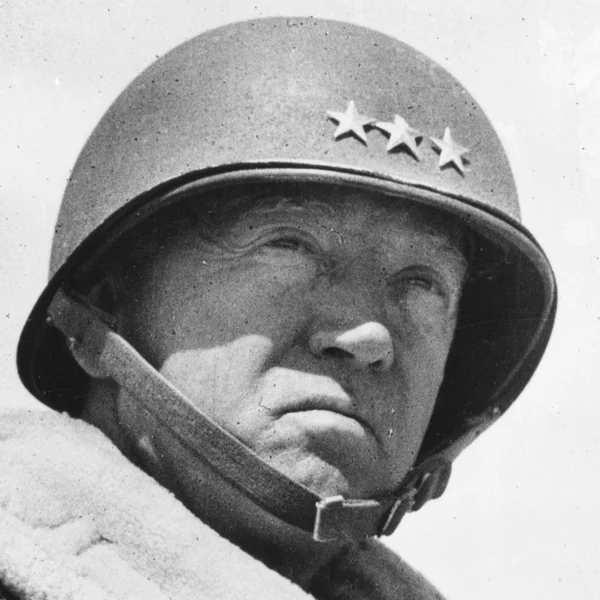
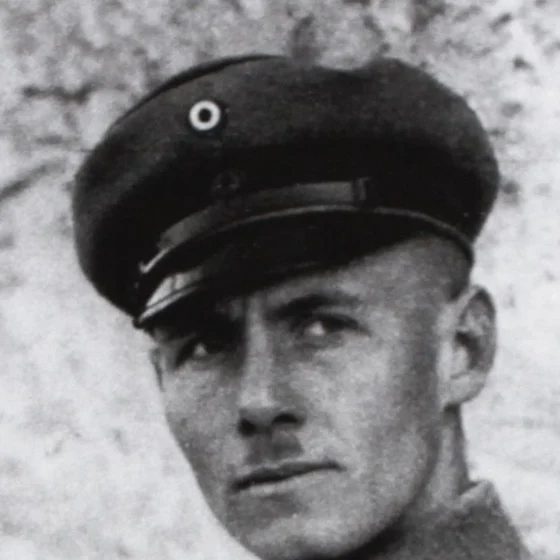
- Lived
- 1885 to 1945, born in San Gabriel, California
- 1891 to 1944, born in Heidenheim, Württemberg
- Arm of service
- Cavalry, then the first member of the American Tank Corps in 1917
- Infantry, a panzer division commander only from 1940
- World War I
- Organised the US tank school at Langres and led tanks in France
- Western Front, then Monte Matajur in 1917 and the Pour le Mérite
- Book
- No book before the war
- Infanterie greift an (Infantry Attacks), 1937
- Highest command
- Third Army, 1944 to 1945
- Army Group Africa in 1943, Army Group B in 1943 and 1944
- Battles named here
- Morocco, El Guettar, Sicily, Argentan, Bastogne, Oppenheim
- Tobruk, Kasserine, El Alamein, Medenine, Normandy
- Battles against each other
- None
- None
- Death
- 21 December 1945 in Heidelberg, after a car accident
- 14 October 1944 near Herrlingen, forced to take poison
Dates and commands as given by the Library of Congress, the Neue Deutsche Biographie, the Deutsches Historisches Museum and the US Army official history. They never fought each other, so there is no head to head record to count.2
They never met: the near misses
Every apparent meeting misses by days or weeks. These are the four that come closest, in order.
Kasserine, 19 to 22 February 1943: Rommel there, Patton not yet
In February 1943 the Axis struck the US II Corps in central Tunisia. The US Army's history of the campaign counts 2,546 American missing, 103 tanks and 280 vehicles lost in four days of defeats before Kasserine. Rommel then struck on 19 February, and by the next afternoon the Kasserine Pass was in Axis hands. The American corps was commanded by General Lloyd Fredendall.3

On the night of 19 to 20 February the Italian high command gave Rommel command of all the attacking forces as Group Rommel, the US official historian George Howe writes. He led them in person. Patton was still in Morocco.4
6 March 1943: one arrives, the other attacks elsewhere
After Kasserine, Eisenhower chose Patton to take over II Corps, and Howe records that he took command on 6 March. The same day Rommel fought his last battle in Africa, against Montgomery's Eighth Army at Medenine, far to the south. Howe calls it a costly failure. Sick leave took Rommel out of Tunisia on 9 March, and he was never to return.5
El Guettar, 23 March 1943: Patton's corps, Rommel gone
The German attack that met Patton's corps at El Guettar came from the 10th Panzer Division under General von Broich, released for the counterattack by Army Group Africa, then commanded by von Arnim. At 0300 on 23 March it struck the US 1st Infantry Division. American artillery and tank destroyers knocked out nearly thirty tanks, Howe writes, and a minefield stopped eight more. Rommel had left Africa two weeks earlier.6
The US Army's short history of the campaign gives the credit to General Terry Allen's 1st Division, which over three days from 21 March turned back two strong attacks in fighting that often came down to hand to hand combat.7
Normandy, July and August 1944
In 1944 Rommel commanded Army Group B against the Allied invasion. On 17 July his car was attacked from the air and he was badly wounded, as the British official historian L. F. Ellis records. Patton's Third Army became operational on 1 August, the US official historian Forrest Pogue writes, two weeks later.8
Armour and the attack
The case for Patton
Patton was a tank officer from the beginning of American armour. The Library of Congress register of his papers lists him as the first member of the American Tank Corps, the founder of its school at Langres and the commander of the 304th Tank Brigade, and from 1941 to 1942 the commander of the 2nd Armored Division.9
Jerry Morelock, an American military historian and editor, notes that Patton was an avid reader of military history whose annotated library went to West Point, and that the real Patton probably did read Rommel's book, though the word probably matters.10
The case for Rommel
Rommel was an infantryman who learned armour in war. In October 1917 he stormed Monte Matajur with a Württemberg mountain battalion and won the Pour le Mérite. In 1940 he led the 7th Panzer Division through France with great success, the Neue Deutsche Biographie notes.11
The German historian Peter Lieb adds that the division earned the nickname of the ghost division, and that Rommel often ignored his superiors' instructions and at times did not even report his own position.12
His book on infantry tactics, Infanterie greift an, appeared in 1937, and the Deutsches Historisches Museum records that 400,000 copies were sold before the end of the Nazi regime.13
Speed and pursuit
The case for Patton
Eisenhower wrote that Patton entered Palermo within twelve days of the landing in Sicily and that he was a shrewd student of warfare who always clearly appreciated the value of speed in the conduct of operations.14
The official historians of Sicily, Albert Garland and Howard Smyth, describe how the drive came about: after Alexander had confined his army to guarding the British flank, Patton flew to see him on 17 July, argued for an advance on Palermo, and Alexander reluctantly agreed.15
The Ardennes showed it again. Patton told the senior commanders meeting on 19 December 1944 that he could begin his counterattack within 48 hours, the American Battle Monuments Commission records, and by the 26th his lead elements had broken through to the 101st Airborne Division in Bastogne.16
He crossed rivers the same way. On the night of 22 March 1945 his 5th Division crossed the Rhine at Nierstein and Oppenheim in assault boats, without air bombardment or artillery preparation, and the leading regiment lost only twenty men, the US official historian Charles MacDonald writes.17
The case for Rommel
Rommel's pace was legendary. In 1941 he did not wait for his second division, the Neue Deutsche Biographie writes, but attacked and within weeks reached the Egyptian frontier.18
Lieb writes that the capture of Tobruk on 21 June 1942 crowned what one British history called probably the most spectacular series of victories ever gained over a British army, and that Hitler made him a field marshal the next day.19
Defeat and defence
The case for Patton
Patton's worst halt came from supply, not from defeat. In autumn 1944, the US Army historian Martin Blumenson records, the Third Army was immobilised by lack of gasoline for several days before it attacked towards the Moselle on 5 September. His defenders note that the decision to divert fuel north was Eisenhower's, as Pogue shows.20
The shortage did not last. On 2 September, Blumenson writes, Eisenhower allocated gasoline to the Third Army again and reinstituted what later came to be called the broad front strategy.21
When the Germans struck in the Ardennes, Patton turned his army north. His III Corps attacked at 0600 on 22 December, the US Army historian Hugh Cole writes, and on 26 December the German ring around Bastogne was broken by Patton's troops.22
The case for Rommel
Rommel's case is that he fought every campaign outnumbered. Lieb writes that he always fought with fewer men and a hopelessly inferior logistical base, and still inflicted painful defeats on his enemy. A historian quoted by Lieb called his retreat from El Alamein to Tunisia one of the most brilliant retreats in the history of warfare.23
His critics point to the same campaigns. The German historian Sönke Neitzel writes that the drive towards the Nile failed not least through Rommel's own serious operational error.24
Rommel himself wrote that at El Alamein victory was simply impossible under the terms on which his army entered the battle, against more than 1,000 British tanks.25
Leading men
The case for Patton
Kevin Hymel, writing for the National WWII Museum, calls Patton one of America's greatest battlefield commanders, a general who often led from the front and almost always delivered victory.26
His temper nearly ended his career. In August 1943 in Sicily he struck two soldiers in hospitals whom he suspected of malingering. Eisenhower wrote to him that such conduct will not be tolerated in this theater no matter who the offender may be, but concluded, the official historians Albert Garland and Howard Smyth write, that Patton was too valuable a man to lose.27
The case for Rommel
Liddell Hart records that Rommel became the hero of the British Eighth Army troops who fought against him, so much so that they called a good job on their own side doing a Rommel, an admiration fostered by his chivalrous treatment of the prisoners he met.28
His own generals were less admiring. Lieb quotes Franz Halder, chief of the army general staff, on Rommel's morbid ambition and flaws of character, and Rundstedt's remark that he had all the qualities of a good divisional commander, but no more.29
Conduct and the regime
The case for Patton
Patton served a democracy that disciplined him in public. Garland and Smyth record that after the slapping incidents Eisenhower ordered him to make amends to the men concerned and sent the theatre inspector general to Sicily to see what effect his conduct had had on the army.30
The case for Rommel
Rommel's career cannot be separated from the regime. Neitzel calls him Hitler's favourite general, writes that Goebbels' propaganda built up his fame as the Desert Fox, and notes his involvement in 1943 in German war crimes in Italy linked to the operation against the Italian army.31
Yet in 1944 Hitler forced him to his death. After the plot of 20 July his name came up in the Gestapo interrogations, Lieb writes, and on 14 October two generals came to his house at Herrlingen, where he took poison in their presence. A state funeral in Ulm hid how he had died.32
Myth and memory
The case for Patton
Patton's memory owes much to a film. Patton, released in 1970 with George C. Scott in the title role, won the Academy Award for best picture, and its screenplay by Francis Ford Coppola and Edmund North also won, the American Film Institute catalogue records. Its plot has Patton score a decisive victory over Rommel at El Guettar, which never happened.33

Morelock quotes the famous line from that scene, in which Scott's Patton watches the battle and shouts: Rommel, you magnificent bastard, I read your book. He also notes that D'Este, whom he calls Patton's best biographer, concluded that Patton suffered from post-traumatic stress.34
The case for Rommel
Rommel's myth was made during the war itself, and not only in Germany. Liddell Hart wrote that in centuries of warfare only Napoleon had made a comparable impression on the British.35
German historians have taken that myth apart. Lieb records that contemporaries such as Halder saw his successes in France and Africa as propaganda constructs, and that in Normandy, against overwhelming material superiority, the former Desert Fox was reduced to an extra.36
How historians have judged them
Few historians compare them directly, because they never met. Liddell Hart did, briefly, and found Patton showing qualities similar to Rommel's in a more limited scope. Eisenhower, who commanded Patton and fought Rommel's armies, praised Patton's grasp of speed.37
The judgement on Rommel has shifted most. Neitzel is critical of his operational judgement and his closeness to Hitler. Lieb weighs the propaganda against a record of victories won while outnumbered. The judgement on Patton is steadier, from Hymel's admiration to the official historians' account of his temper and his speed.38
Patton died on 21 December 1945 in Heidelberg, twelve days after his car hit an army truck in Mannheim, Hymel writes, and he lies at the head of the graves of his soldiers in the Luxembourg American Cemetery. Rommel was buried at Herrlingen after the state funeral that hid his forced suicide.39
Battles on the site
Every battle page on Echoes of Battle that involves one of the two men, with the guides that set them in context. Kasserine, El Guettar, the Battle of France and Operation Cobra have no page of their own yet.
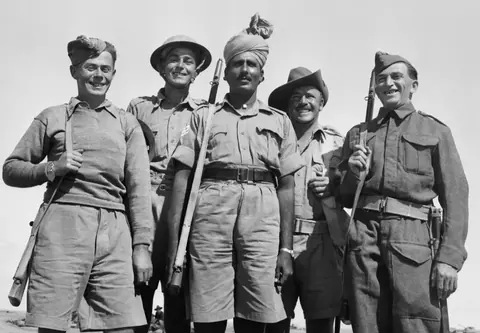 Nearest encounter · 1943The North African Campaign
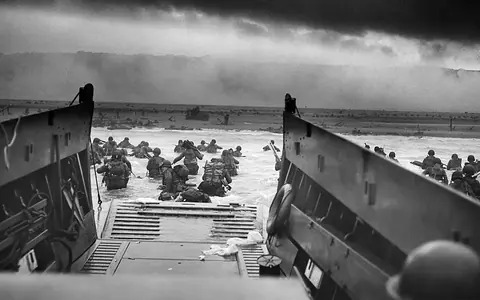 Nearest encounter · 1944D-Day and Normandy
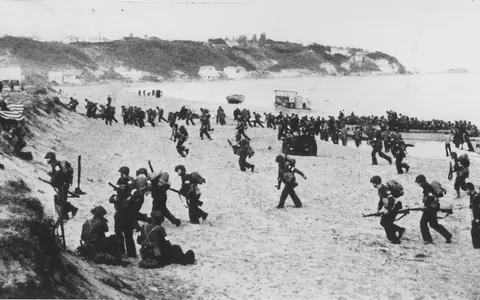 Patton · 1942Operation Torch
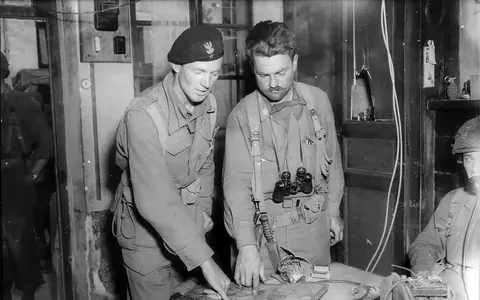 Patton · 1944The Battle of Falaise
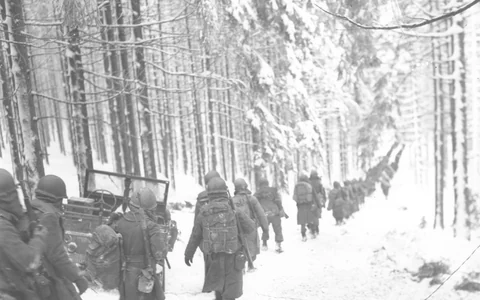 Patton · 1944The Battle of the Bulge
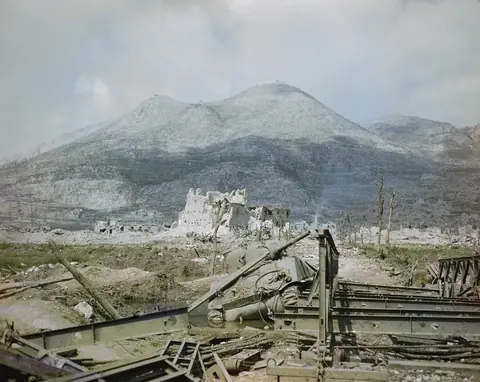 Both, apart · 1943The Mediterranean and Italy
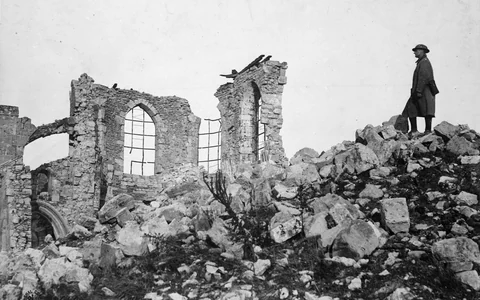 Patton wounded · 1918The Meuse-Argonne Offensive
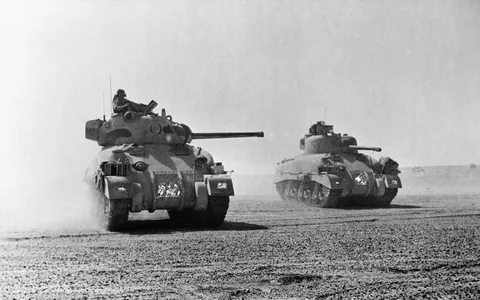 Rommel · 1942El Alamein
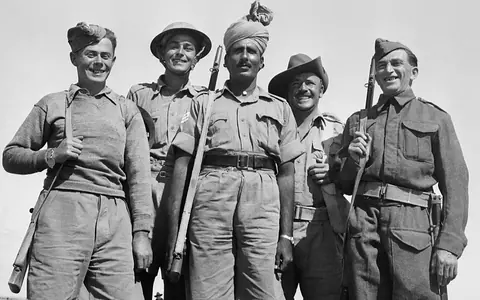 Rommel · 1941The Siege of Tobruk
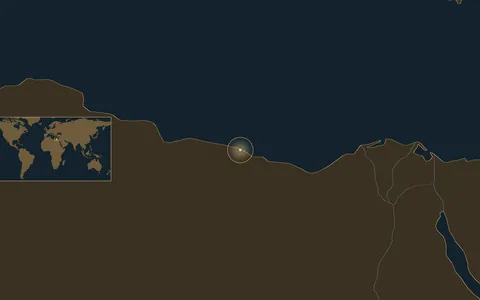
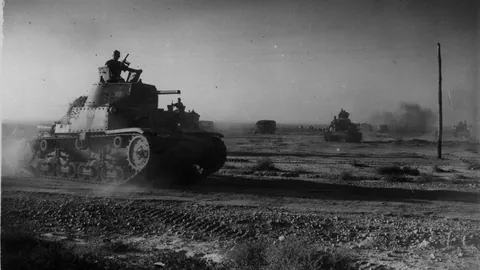 Rommel · 1942Battle of Gazala
 Rommel · 1942Mersa Matruh
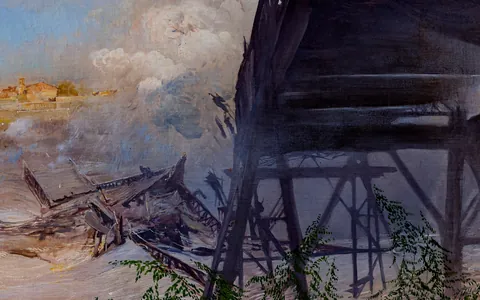 Rommel · 1917Caporetto: Monte Matajur
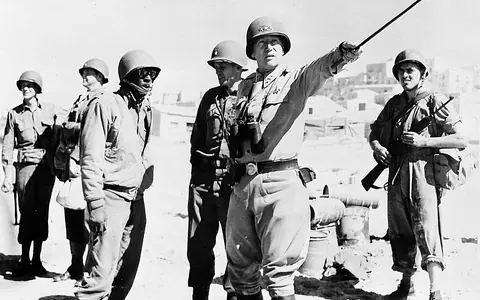 CommanderGeorge S. Patton
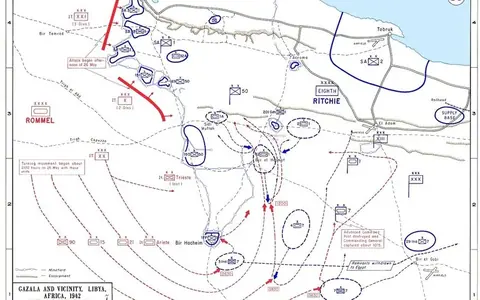 CommanderErwin Rommel
 GuideThe Military History of Germany
 RankingThe Greatest American Commanders
QuizHow Well Do You Know World War II Battles?
More head to head pages: Montgomery vs Rommel, Patton vs Montgomery and Eisenhower vs Montgomery. See also Omar Bradley, who took over II Corps from Patton, and the greatest battles of World War II.
Your verdict
We do not pick a winner, and here there was no duel to settle it. Here are the two cases at their strongest, and the questions that decide which one you find more convincing.
For Patton
- A tank officer from the first day of American armour
- Palermo in twelve days and the turn to Bastogne
- He led a whole army through a campaign that reached its goals
- He fought with the full weight of Allied supply behind him
- Eisenhower kept him because he judged him too valuable to lose
For Rommel
- Monte Matajur, the ghost division of 1940 and Tobruk
- He always fought outnumbered and short of supplies
- Even his enemies admired him
- His critics in Germany point to serious operational errors
- His fame was built in part by the regime he served
Questions to weigh before you decide:
- Can two commanders who never faced each other be ranked against each other at all?
- Patton had abundant supply and air power, Rommel fought at the end of a thin supply line. How much should resources count?
- Is the victory at El Guettar the corps commander's, or the division commander's?
- How far has the 1970 film shaped what you think you know about this pair?
- Should conduct, the slapping incidents or Rommel's record under the Nazi regime, weigh in a military comparison?
Cast your vote below and see how other readers have judged them.






