

What was the Mediterranean theater of World War II and who won?
It was the World War II struggle for the Mediterranean, from June 1940 to May 1945. The Axis won in Greece and Crete in 1941, but the Allies won the theater: they cleared North Africa, invaded Italy, fought through the Battle of Anzio and the Battle of Monte Cassino, and German forces in Italy surrendered on 2 May 1945.1
For five years the Mediterranean was a theater of World War II in its own right. Italy and Germany fought Britain and its Commonwealth, later joined by the United States and a long list of allies, at sea and over Malta, in Greece and Crete, in North Africa and finally up the length of Italy, where Salerno, Anzio and Monte Cassino became some of the hardest battles of the war. This guide covers the war at sea, the Balkans and the Italian campaign; the desert war has its own hub, the North African campaign, with the siege of Tobruk and Operation Torch.2
Causes of the war in the Mediterranean
Fascist Italy declared war on 10 June 1940, as France faced defeat, and its forces went on to fight in North Africa and against the British island of Malta.3
The stakes were oil and empire. The Axis aimed to deny the Allies the oil of the Middle East and to cut Britain off from the people and resources of its empire in Asia and Africa. Axis armies in Libya, for their part, lived on supplies shipped across the sea, which made Malta, between Sicily and Libya, a base for attacking their convoys.4
Italy also attacked Greece in October 1940. The Greek army threw the invasion back and counterattacked, and in April 1941 Germany struck in the Balkans, partly to rescue its stalling ally.5
The same thing happened in the desert. From 1941 German forces under Erwin Rommel fought alongside the Italians in North Africa, and from April to December 1941 they besieged the port of Tobruk, held by Australian, British and later Polish troops. The Mediterranean had become a joint Axis war.6
Who fought in the Mediterranean theater
On the Axis side, Italy's navy and air force fought for the central Mediterranean, and German air units arrived in January 1941 after the Italian navy had suffered several defeats. In April 1941 Hungarian and Bulgarian forces supported the German attack on Yugoslavia and Greece.7
The Allied side was a true coalition. For Italy alone the Imperial War Museums count units from Algeria, Australia, Belgium, Brazil, Britain, Canada, Czechoslovakia, France, Greece, India, Italy, Morocco, Nepal, New Zealand, Poland, South Africa and the United States, and the National WWII Museum's casualty list adds Jewish Brigade volunteers from Palestine and Italian service units.8
Poles fought in the theater from 1941: first a Polish brigade in the Tobruk garrison, then the Polish II Corps of General Władysław Anders, part of the British Eighth Army, in Italy from Monte Cassino to Ancona and Bologna.9
Italy changed sides in the middle of the war. Mussolini was removed from power on 25 July 1943; the new government's armistice with the Allies was announced on 8 September, and Italy declared war on Germany on 13 October. Germany occupied most of the country and set up a puppet state under Mussolini, so from then on Italians fought on both sides, and Italian combat groups joined the final Allied offensive of April 1945.10
The war at sea and the siege of Malta
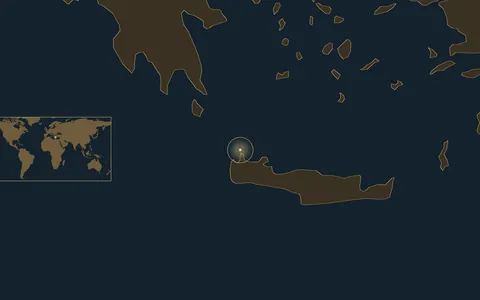
The naval war began at once. On 19 July 1940 off Cape Spada, Crete, the Australian cruiser HMAS Sydney engaged two Italian cruisers: Bartolomeo Colleoni was disabled and then sunk by the British destroyers Hyperion and Ilex, while Giovanni delle Bande Nere escaped badly damaged. Our article on the Battle of Cape Spada tells the story.11
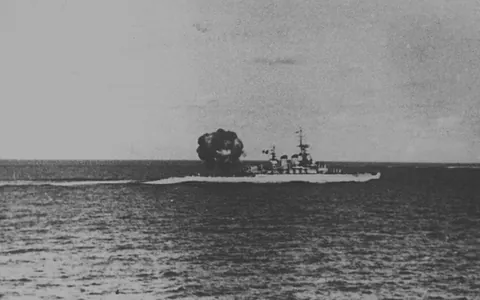
On 27 November 1940 Force H from Gibraltar and the Italian fleet met off Cape Spartivento in Sardinia (Capo Teulada to the Italians), while the British were running a convoy to Malta. The clash was inconclusive: see the Battle of Cape Spartivento.12
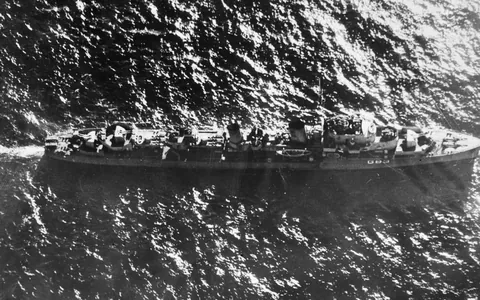
Supply was the heart of the sea war. In December 1941, with fuel running out in Libya, Italy used two light cruisers, Alberico da Barbiano and Alberto di Giussano, to carry supplies to Tripoli; on 13 December three British destroyers and the Dutch destroyer Isaac Sweers sank both off Cape Bon in Tunisia, in the Battle of Cape Bon.13
Malta, a British colony in the central Mediterranean, faced relentless German and Italian air attack from 1940 to 1942, because the aircraft and submarines based there struck the Axis supply lines to Libya. On 15 April 1942 King George VI awarded the people of Malta the George Cross for their endurance.14

By August 1942 the island was desperately short of fuel. The Pedestal convoy fought its way through with heavy losses, and its crippled tanker Ohio, the only ship carrying kerosene and diesel, was brought into Grand Harbour. The Imperial War Museums call Pedestal the usual turning point of the siege; further convoys in November and December 1942 broke it.15
Greece and Crete, 1941
On 6 April 1941 Germany, supported by Hungarian and Bulgarian forces, attacked Yugoslavia and Greece (the war in Yugoslavia has its own article). German and Italian troops overran Greece in less than three weeks, and the campaign ended with the fall of Athens on 27 April.16
Crete followed. From 20 May to 1 June 1941 German paratroopers under General Kurt Student took the island in a massive airborne assault, Operation Mercury. They seized the airfield at Maleme and flew in reinforcements, and defeated a garrison of British, Australian, New Zealand and Greek troops under the New Zealand general Bernard Freyberg. Cretan farmers, townspeople and police fought the invaders too.17
The Royal Navy evacuated part of the garrison from the south coast, and the island fell. Germany had won, but its losses among the paratroops were so heavy that it gave up large airborne operations for the rest of the war.18
North Africa, 1940 to 1943
The largest land campaign of the theater was fought in the deserts of Egypt and Libya and then in French North Africa, until the Axis surrender in Tunisia on 13 May 1943. It had three phases: the Western Desert campaign, the Anglo-American landings of Operation Torch in Morocco and Algeria in November 1942, and the Tunisia campaign. It has its own hub, the North African campaign, and our articles cover Mersa Matruh, El Alamein and Operation Ochsenkopf in Tunisia.19
Victory in Africa and control of the sea turned the region into a springboard: with Malta and the Mediterranean secured, the Allies launched their landings in North Africa in November 1942, on Sicily in July 1943 and on mainland Italy in September 1943.20
1943: Sicily, Salerno and the fall of Mussolini
At Casablanca in January 1943 the Allies chose Sicily as their next target. The British hoped to knock Italy out of the war through what they called the soft underbelly of Europe, while the Americans would have preferred an early invasion of northern France. Operation Husky began on the night of 9 to 10 July 1943, with Bernard Montgomery's British Eighth Army and George Patton's US Seventh Army.21
On 25 July, with the campaign going badly for the Axis, Mussolini was deposed. The Allies entered Messina on 17 August, but most of the German and Italian troops escaped across the Strait of Messina to the mainland; the Imperial War Museums put their number at 120,000.22
On 3 September the Eighth Army crossed to Reggio di Calabria, the same day the Italian government secretly signed an armistice. The armistice was announced on 8 September, and on 9 September Mark Clark's US Fifth Army, with a British corps, landed at Salerno. The Germans were ready: they disarmed the Italian army and counterattacked so hard that the Allies came within days of being pushed back into the sea.23

The beachhead held, the Allies entered Naples on 1 October, and by the end of 1943 they had come to a halt against the Gustav Line, which ran across Italy from the Garigliano River past Cassino to Ortona on the Adriatic.24
1944: Anzio, Monte Cassino and the Polish II Corps
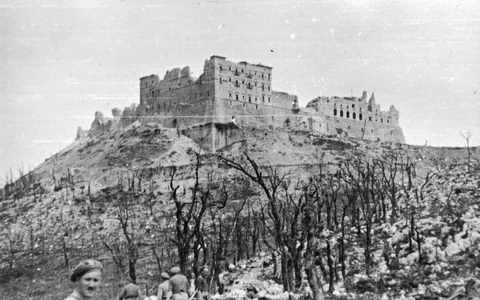
Cassino was the key. The town and the mountain above it, crowned by a Benedictine abbey, guarded the Liri valley and Highway 6, the road to Rome. American and French attacks in January 1944 failed, and to break the deadlock the US VI Corps landed behind the line at Anzio on 22 January.25
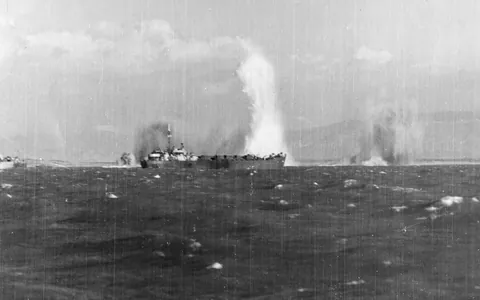
The landing took the Germans by surprise and put 36,000 men ashore on the first day, but the corps commander, John Lucas, dug in instead of driving inland, and German forces surrounded the beachhead within days. Anzio became a four-month siege fought from flooded trenches under artillery fire.26
On 15 February 1944 Allied bombers destroyed the abbey of Monte Cassino in the belief that the Germans were using it. They were not: the bombs killed Italian refugees sheltering inside, between 115 and 230 by different estimates, and German paratroopers then occupied the ruins, which made even better defenses. It remains one of the most controversial decisions of the campaign. A New Zealand attack on the town in March failed as well.27
The fourth battle, Operation Diadem, opened on 11 May 1944. French colonial troops broke through in the mountains south of the Liri and British divisions pushed into the valley, while the Polish II Corps of the Eighth Army, under Władysław Anders, was given the heights of Monte Cassino itself, where three earlier Allied assaults had failed.28

After a week of ferocious fighting, and with the British closing in below the mountain, the Germans pulled most of their men out, and on 18 May 1944 a patrol of the 12th Podolian Lancers raised the Polish flag over the ruins of the abbey. Polish sources count between 923 and more than 1,000 Polish dead and about 3,000 wounded. Read the full story in our Battle of Monte Cassino.29
It was a coalition victory. Americans, British, French, Indians and New Zealanders had all fought at Cassino before the Poles, as Anders himself reminded his men. Anders, who died in 1970, lies among his soldiers in the Polish war cemetery at Monte Cassino, where Poles gather every 18 May.30
1944 and 1945: Rome, the Gothic Line and the end in Italy
The Gustav Line broke, and on 23 May the Anzio forces broke out. Clark turned his main thrust toward Rome instead of cutting off the retreating German Tenth Army, and American troops entered the city on 5 June 1944, two days after Field Marshal Albert Kesselring declared it an open city. Many German units escaped to the north.31
Kesselring fell back to the Gothic Line, a defense across the Apennines from the Tyrrhenian coast between Pisa and La Spezia to the Adriatic between Pesaro and Rimini.32

On the Adriatic flank the Polish II Corps advanced up the coast and on 18 July 1944 took the port of Ancona, the only battle it fought in Italy as an independent operation; the port shortened the Allied supply lines.33
In the autumn the Allies broke into the Gothic Line but bogged down again in the mountains and mud short of Bologna. In December the Eighth Army, with the Poles on its left, pushed on to the Senio River, and there the front stayed for the winter.34
The final offensive came in April 1945. The US Fifth Army attacked on 14 April; on 21 April Polish and American troops, with Italian combat units and partisans, liberated Bologna, the Polish 9th Carpathian Rifle Battalion entering first; and by 24 April the Fifth Army had reached the Po and split the Axis forces.35
On 29 April at Caserta, representatives of General Heinrich von Vietinghoff, who had replaced Kesselring in March, signed the unconditional surrender of all German forces in Italy. It took effect on 2 May 1945, six days before the surrender of Germany.36
War crimes and civilians
The war fell hard on civilians. In occupied Italy German forces answered partisan attacks with reprisals. On 24 March 1944, after a partisan bomb killed German police in Rome, the SS shot 335 Italian men and boys at the Ardeatine Caves. From 29 September 1944 German troops, most of them from an SS reconnaissance battalion, massacred women, children and old people around Monte Sole near Marzabotto: the German research project NS-Täter in Italien counts about 770 victims, while older counts are higher.37
The National WWII Museum counts 120,060 Italian civilians killed between September 1943 and May 1945, and 54,700 Italian partisans killed, and the Imperial War Museums note that Italians suffered Allied bombing, German reprisals and mass rape. On Crete, civilians who resisted or sheltered Allied soldiers risked death, and German reprisals destroyed whole villages.38
How many people died in the Italian campaign?
There is no reliable total for the whole Mediterranean theater, but the Italian campaign alone was very costly. The National WWII Museum and the Imperial War Museums both give about 312,000 Allied casualties (killed, wounded and missing) and 434,000 German casualties; the Imperial War Museums put the Allied dead at about 65,000.39
Of the Allied dead, the National WWII Museum counts 19,475 Americans. At Anzio alone, according to the Imperial War Museums, the US VI Corps suffered 29,200 combat casualties, including 4,400 dead, and a further 37,000 men were lost to sickness and injury.40
Key commanders of the Mediterranean theater
On the Allied side, Dwight Eisenhower was the Allied commander in the Mediterranean until he left at the start of 1944 to prepare the invasion of France. General Sir Harold Alexander commanded the Allied armies in Italy; Bernard Montgomery led the British Eighth Army in Sicily and southern Italy, followed by Oliver Leese; George Patton led the US Seventh Army in Sicily; Mark Clark commanded the US Fifth Army from Salerno to the Po; Władysław Anders led the Polish II Corps; and Bernard Freyberg defended Crete.41
On the Axis side, Erwin Rommel led the German and Italian forces in the desert; Field Marshal Albert Kesselring commanded the German forces in Italy and fought the long withdrawal up the peninsula until March 1945, when Heinrich von Vietinghoff replaced him; and Kurt Student commanded the airborne invasion of Crete. Our Montgomery vs Rommel compares the two desert rivals.42
Who won in the Mediterranean, and was the Italian campaign worth it?
The Axis won the first rounds: Greece and Crete in 1941, and the siege of Malta came close to success in 1942. The Allies won the theater. They cleared North Africa by May 1943, knocked Italy out of the Axis in September 1943 and ended the war in Italy with the German surrender of 2 May 1945.43
Whether the Italian campaign was worth its cost is still debated. The British had sold it as an attack on the soft underbelly of Europe, but mountains, rivers and winters made Italy a defender's country, and the campaign became, in the National WWII Museum's words, a long and bloody undertaking. Its defenders answer that it tied down German forces that could have fought elsewhere: the Imperial War Museums note that from May 1944 to April 1945 the Germans kept about 350,000 troops in Italy at any one time.44
Major battles of the Mediterranean theater
Our articles on the battles of the Mediterranean theater, from Cape Spada in 1940 to Monte Cassino in 1944, are listed below in date order.
- 1940Battle of Cape Spada, 1940Australia and the United Kingdom vs Kingdom of Italy
On 19 July 1940 HMAS Sydney surprised two Italian cruisers off Crete; her gunfire stopped the Bartolomeo Colleoni and British destroyers sank her.
- 1940Battle of Cape Spartivento, 1940Britain vs Italy
On 27 November 1940 the Italian fleet met Somerville's Force H off Sardinia. An hour of long-range fire followed, both sides turned away, and both claimed the day.
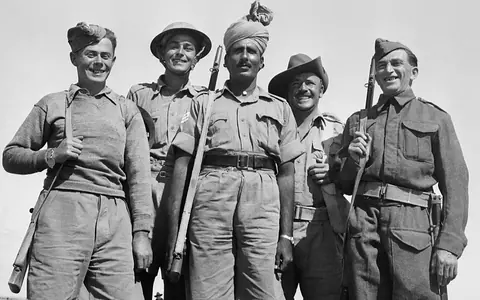
- 1941The Siege of Tobruk, 1941Allies (Australia, Britain, Poland, Czechoslovakia and others) vs Germany and Italy
The Carpathian Brigade holds the hardest sectors of the desert fortress.
- 1941Battle of Cape Bon, 1941Britain and the Netherlands vs Italy
On 13 December 1941 four British and Dutch destroyers ambushed two Italian cruisers carrying fuel to Libya off Cape Bon and sank both in a few minutes.
- 1942Battle of Mersa Matruh, 1942Axis (German and Italian forces) vs British Commonwealth (Eighth Army)
In late June 1942 Rommel's spent army outflanked the British at Mersa Matruh; X Corps was cut off and broke out at night, and the Eighth Army fell back to El Alamein.
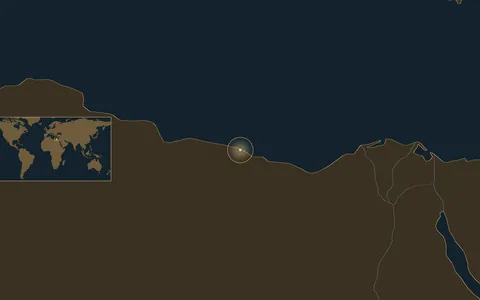
- 1942El Alamein, 1942British Empire and Commonwealth vs Germany and Italy (Panzerarmee Afrika)
Montgomery breaks Rommel and turns the tide in North Africa.
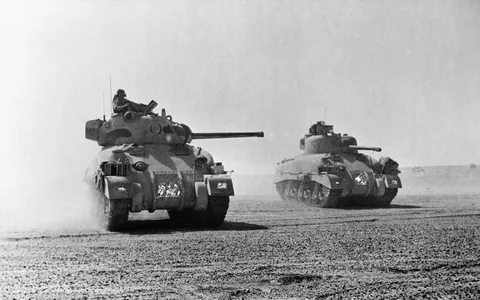
- 1942Operation Torch, 1942United States and United Kingdom (Allies) vs Vichy France
On 8 November 1942 American and British troops landed in Vichy French Morocco and Algeria. How Operation Torch was fought, who won and why it mattered.
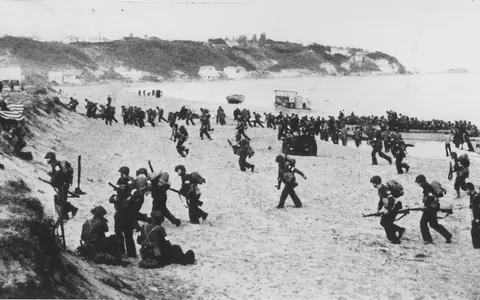
- 1943Operation Ochsenkopf, 1943Germany and Italy (5th Panzer Army) vs United Kingdom and France (British First Army)
On 26 February 1943 von Arnim threw Tiger tanks at the British front in northern Tunisia. A battalion and a battery at Sidi Nsir held them for a day, and at Hunt's Gap the panzers were shot to pieces.
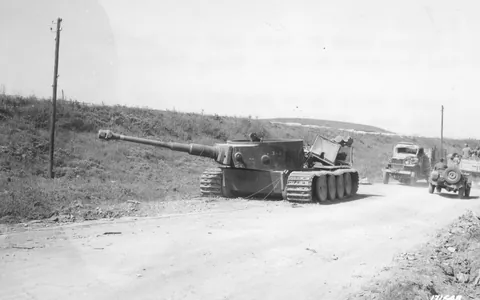
- 1944Battle of Monte Cassino, 1944Allies (incl. Polish II Corps) vs Nazi Germany
How four battles, the last won by the Polish II Corps, took Monte Cassino in 1944 and opened the road to Rome.
- 1944Battle of Anzio, 1944Allies (United States, Britain) vs Germany
On 22 January 1944 the Allies landed at Anzio behind the Gustav Line and caught the Germans by surprise. A week of caution let Kesselring seal the beachhead, and the siege lasted four months.
Timeline of the Mediterranean theater
- 10 June 1940Italy declares war on Britain and France.45
- 19 July 1940HMAS Sydney and British destroyers sink the Italian cruiser Bartolomeo Colleoni off Cape Spada.46
- October 1940Italy attacks Greece; the Greek army throws the invasion back.47
- 27 November 1940Inconclusive clash off Cape Spartivento.48
- 6 April 1941Germany attacks Yugoslavia and Greece; Athens falls on 27 April.49
- April to December 1941The siege of Tobruk.50
- 20 May to 1 June 1941The German airborne invasion and capture of Crete.51
- 13 December 1941
- 15 April 1942King George VI awards Malta the George Cross.53
- August 1942The Pedestal convoy and the tanker Ohio reach Malta.54
- 8 November 1942Operation Torch: Allied landings in Morocco and Algeria.55
- 13 May 1943The Axis forces in Tunisia surrender; the North African campaign ends.56
- 9 to 10 July 1943The Allied invasion of Sicily begins.57
- 25 July 1943Mussolini is deposed.58
- 8 and 9 September 1943Italy's armistice is announced; the US Fifth Army lands at Salerno.59
- 22 January 1944
- 15 February 1944Allied bombers destroy the abbey of Monte Cassino.61
- 18 May 1944The Polish II Corps takes Monte Cassino.62
- 5 June 1944American troops enter Rome.63
- 18 July 1944The Polish II Corps takes Ancona.64
- 21 April 1945Polish, American and Italian troops liberate Bologna.65
- 2 May 1945The surrender of the German forces in Italy, signed at Caserta on 29 April, takes effect.66
Where to read next
The Mediterranean was one theater of World War II: see also our hubs on the Western Front, the Eastern Front, the North African campaign and the Pacific War, and the greatest battles of World War II. For the Polish story read the biography of Władysław Anders and the military history of Poland, and test yourself with the World War II battles quiz.
Notes
A number in the text points to a note; each note names the works that paragraph draws on, listed in full under Sources.
- Imperial War Museums, “Italian Campaign”; National Army Museum, “War in the Balkans”; United States Holocaust Memorial Museum, “Allied Military Operations in North Africa”; The National WWII Museum, “The Allied Campaign in Italy, 1943 to 1945”. ↩
- Imperial War Museums, “Italian Campaign”; Imperial War Museums, “Malta in the Second World War”. ↩
- Imperial War Museums, “Italian Campaign”; Australian War Memorial, “Tobruk”; Anzac Memorial, “Commemorating the Battle of Cape Spada, 19 July 1940”. ↩
- United States Holocaust Memorial Museum, “Allied Military Operations in North Africa”; Imperial War Museums, “Malta in the Second World War”. ↩
- National Army Museum, “War in the Balkans”; Greek News Agenda, “The Battle of Crete”. ↩
- Australian War Memorial, “The great siege”; Rats of Tobruk Association, “The Siege”. ↩
- Imperial War Museums, “Malta in the Second World War”; National Army Museum, “War in the Balkans”. ↩
- Imperial War Museums, “Italian Campaign”; The National WWII Museum, “The Allied Campaign in Italy, 1943 to 1945”. ↩
- Australian War Memorial, “The great siege”; Polish History New Zealand, “Monte Cassino”; John Rickard, “Battle of Ancona, 17 to 18 July 1944”; Institute of National Remembrance, “Bologna”. ↩
- The National WWII Museum, “The Allied Campaign in Italy, 1943 to 1945”; Imperial War Museums, “Operation Avalanche”; The National WWII Museum, “The Allied Campaign in Italy, 1943 to 1945”. ↩
- Anzac Memorial, “Commemorating the Battle of Cape Spada, 19 July 1940”; Royal Australian Navy, “HMAS Sydney (II) and the Bartolomeo Colleoni”. ↩
- John Rickard, “Action off Cape Spartivento, 27 November 1940”; Marina Militare, “27 novembre 1940”. ↩
- uboat.net, “HrMs Isaac Sweers (G 83)”; Difesa Online, “13 dicembre 1941”. ↩
- Imperial War Museums, “Malta in the Second World War”; The Gazette, “This month in history”; RAF Benevolent Fund, “George Cross awarded to the island of Malta”. ↩
- Imperial War Museums, “Malta in the Second World War”; Royal Museums Greenwich, “The 'Ohio' in the Malta convoy, 10 to 15 August 1942 (Norman Wilkinson, BHC1593)”. ↩
- National Army Museum, “War in the Balkans”; Australian War Memorial, “Crete, 1941”; EBSCO Research Starters, “Germany Invades Crete”. ↩
- Greek News Agenda, “The Battle of Crete”; Australian War Memorial, “Crete, 1941”; EBSCO Research Starters, “Germany Invades Crete”; National Army Museum, “War in the Balkans”. ↩
- National Army Museum, “War in the Balkans”; Greek News Agenda, “The Battle of Crete”; Australian War Memorial, “Crete, 1941”. ↩
- United States Holocaust Memorial Museum, “Allied Military Operations in North Africa”; Imperial War Museums, “Malta in the Second World War”. ↩
- Imperial War Museums, “Malta in the Second World War”; The National WWII Museum, “The Allied Campaign in Italy, 1943 to 1945”. ↩
- Imperial War Museums, “Operation Husky”; The National WWII Museum, “The Allied Campaign in Italy, 1943 to 1945”. ↩
- The National WWII Museum, “The Allied Campaign in Italy, 1943 to 1945”; Imperial War Museums, “Operation Avalanche”; Imperial War Museums, “Operation Husky”. ↩
- The National WWII Museum, “The Allied Campaign in Italy, 1943 to 1945”; Imperial War Museums, “Operation Avalanche”; Imperial War Museums, “Italian Campaign”. ↩
- The National WWII Museum, “The Allied Campaign in Italy, 1943 to 1945”; Imperial War Museums, “How the Battle of Anzio Invasion Almost Failed”; Naval History and Heritage Command, “Operation Shingle”. ↩
- Imperial War Museums, “How the Battle of Anzio Invasion Almost Failed”; Imperial War Museums, “Monte Cassino”; Naval History and Heritage Command, “Operation Shingle”; The National WWII Museum, “The Allied Campaign in Italy, 1943 to 1945”. ↩
- Imperial War Museums, “How the Battle of Anzio Invasion Almost Failed”; The National WWII Museum, “The Allied Campaign in Italy, 1943 to 1945”. ↩
- Imperial War Museums, “Monte Cassino”; The National WWII Museum, “The Destruction of Monte Cassino”; Polish History New Zealand, “Monte Cassino”; The National WWII Museum, “The Allied Campaign in Italy, 1943 to 1945”. ↩
- The National WWII Museum, “The Allied Campaign in Italy, 1943 to 1945”; Imperial War Museums, “Monte Cassino”; Polish Museum of America, “The 80th Anniversary of the Battle of Monte Cassino”; Polish History New Zealand, “Monte Cassino”. ↩
- Polish Museum of America, “The 80th Anniversary of the Battle of Monte Cassino”; Polish History New Zealand, “Monte Cassino”; Instytut Polonika, “Polski Cmentarz Wojenny na Monte Cassino (in Polish)”; Imperial War Museums, “Monte Cassino”. ↩
- Polish History New Zealand, “Monte Cassino”; Polish Museum of America, “The 80th Anniversary of the Battle of Monte Cassino”; Instytut Polonika, “Polski Cmentarz Wojenny na Monte Cassino (in Polish)”; Institute of National Remembrance, “Celebrations of the 81st anniversary of the Battle of Monte Cassino in Italy”. ↩
- Imperial War Museums, “How the Battle of Anzio Invasion Almost Failed”; The National WWII Museum, “The Allied Campaign in Italy, 1943 to 1945”; Imperial War Museums, “Monte Cassino”. ↩
- The National WWII Museum, “The Allied Campaign in Italy, 1943 to 1945”; Imperial War Museums, “How the Battle of Anzio Invasion Almost Failed”. ↩
- John Rickard, “Battle of Ancona, 17 to 18 July 1944”; British Poles, “Veterans and government delegations celebrate the Polish victory in the battle of Ancona”. ↩
- Imperial War Museums, “Monte Cassino”; The National WWII Museum, “The Allied Campaign in Italy, 1943 to 1945”. ↩
- The National WWII Museum, “The Allied Campaign in Italy, 1943 to 1945”; Institute of National Remembrance, “Bologna”. ↩
- The National WWII Museum, “The Allied Campaign in Italy, 1943 to 1945”; Imperial War Museums, “Monte Cassino”. ↩
- United States Holocaust Memorial Museum, “Ardeatine Caves Massacre”; The National WWII Museum, “The Allied Campaign in Italy, 1943 to 1945”; NS-Täter in Italien, “Monte Sole”. ↩
- The National WWII Museum, “The Allied Campaign in Italy, 1943 to 1945”; Imperial War Museums, “Monte Cassino”; Greek News Agenda, “The Battle of Crete”; Australian War Memorial, “Crete, 1941”. ↩
- The National WWII Museum, “The Allied Campaign in Italy, 1943 to 1945”; Imperial War Museums, “Monte Cassino”. ↩
- The National WWII Museum, “The Allied Campaign in Italy, 1943 to 1945”; Imperial War Museums, “How the Battle of Anzio Invasion Almost Failed”. ↩
- Imperial War Museums, “Monte Cassino”; Imperial War Museums, “How the Battle of Anzio Invasion Almost Failed”; Imperial War Museums, “Operation Husky”; Polish History New Zealand, “Monte Cassino”; Australian War Memorial, “Crete, 1941”. ↩
- Rats of Tobruk Association, “The Siege”; Imperial War Museums, “How the Battle of Anzio Invasion Almost Failed”; The National WWII Museum, “The Allied Campaign in Italy, 1943 to 1945”; National Army Museum, “War in the Balkans”. ↩
- National Army Museum, “War in the Balkans”; Imperial War Museums, “Malta in the Second World War”; United States Holocaust Memorial Museum, “Allied Military Operations in North Africa”; The National WWII Museum, “The Allied Campaign in Italy, 1943 to 1945”; The National WWII Museum, “The Allied Campaign in Italy, 1943 to 1945”. ↩
- Imperial War Museums, “Operation Husky”; Imperial War Museums, “Italian Campaign”; The National WWII Museum, “The Allied Campaign in Italy, 1943 to 1945”; Imperial War Museums, “Monte Cassino”. ↩
- Australian War Memorial, “Tobruk”; Anzac Memorial, “Commemorating the Battle of Cape Spada, 19 July 1940”. ↩
- Anzac Memorial, “Commemorating the Battle of Cape Spada, 19 July 1940”; Royal Australian Navy, “HMAS Sydney (II) and the Bartolomeo Colleoni”. ↩
- National Army Museum, “War in the Balkans”; Greek News Agenda, “The Battle of Crete”. ↩
- John Rickard, “Action off Cape Spartivento, 27 November 1940”; Marina Militare, “27 novembre 1940”. ↩
- National Army Museum, “War in the Balkans”; EBSCO Research Starters, “Germany Invades Crete”. ↩
- Australian War Memorial, “The great siege”; Rats of Tobruk Association, “The Siege”. ↩
- Greek News Agenda, “The Battle of Crete”; EBSCO Research Starters, “Germany Invades Crete”. ↩
- uboat.net, “HrMs Isaac Sweers (G 83)”; Difesa Online, “13 dicembre 1941”. ↩
- The Gazette, “This month in history”; RAF Benevolent Fund, “George Cross awarded to the island of Malta”. ↩
- Imperial War Museums, “Malta in the Second World War”; Royal Museums Greenwich, “The 'Ohio' in the Malta convoy, 10 to 15 August 1942 (Norman Wilkinson, BHC1593)”. ↩
- United States Holocaust Memorial Museum, “Allied Military Operations in North Africa”; Imperial War Museums, “Malta in the Second World War”. ↩
- United States Holocaust Memorial Museum, “Allied Military Operations in North Africa”; Imperial War Museums, “Malta in the Second World War”. ↩
- The National WWII Museum, “The Allied Campaign in Italy, 1943 to 1945”; Imperial War Museums, “Operation Husky”. ↩
- The National WWII Museum, “The Allied Campaign in Italy, 1943 to 1945”; Imperial War Museums, “Operation Avalanche”. ↩
- The National WWII Museum, “The Allied Campaign in Italy, 1943 to 1945”; Imperial War Museums, “Operation Avalanche”. ↩
- The National WWII Museum, “The Allied Campaign in Italy, 1943 to 1945”; Imperial War Museums, “How the Battle of Anzio Invasion Almost Failed”. ↩
- The National WWII Museum, “The Allied Campaign in Italy, 1943 to 1945”; Imperial War Museums, “Monte Cassino”. ↩
- The National WWII Museum, “The Allied Campaign in Italy, 1943 to 1945”; Polish History New Zealand, “Monte Cassino”. ↩
- The National WWII Museum, “The Allied Campaign in Italy, 1943 to 1945”; Imperial War Museums, “How the Battle of Anzio Invasion Almost Failed”. ↩
- John Rickard, “Battle of Ancona, 17 to 18 July 1944”; British Poles, “Veterans and government delegations celebrate the Polish victory in the battle of Ancona”. ↩
- The National WWII Museum, “The Allied Campaign in Italy, 1943 to 1945”; Institute of National Remembrance, “Bologna”. ↩
- The National WWII Museum, “The Allied Campaign in Italy, 1943 to 1945”; Imperial War Museums, “Monte Cassino”. ↩
Sources
- Imperial War Museums, “Italian Campaign”.
- National Army Museum, “War in the Balkans”.
- United States Holocaust Memorial Museum, “Allied Military Operations in North Africa”.
- The National WWII Museum, “The Allied Campaign in Italy, 1943 to 1945: Timeline, Part Three”.
- Imperial War Museums, “Malta in the Second World War”.
- Australian War Memorial, “Tobruk”.
- Anzac Memorial, NSW Government, “Commemorating the Battle of Cape Spada, 19 July 1940”.
- Greek News Agenda (Secretariat General for Communication and Media, Greece), “The Battle of Crete”.
- Australian War Memorial, Wartime magazine, “The great siege”.
- Rats of Tobruk Association, “The Siege”.
- Polish History New Zealand, “Monte Cassino”.
- John Rickard, HistoryOfWar.org, “Battle of Ancona, 17 to 18 July 1944”.
- Institute of National Remembrance (IPN), Trails of Hope, “Bologna”.
- The National WWII Museum, “The Allied Campaign in Italy, 1943 to 1945: Timeline, Part One”.
- Imperial War Museums, “Operation Avalanche: Allied Landing at Salerno”.
- Royal Australian Navy, “HMAS Sydney (II) and the Bartolomeo Colleoni”.
- John Rickard, HistoryOfWar.org, “Action off Cape Spartivento, 27 November 1940”.
- Marina Militare (Italian Navy), “27 novembre 1940: la battaglia di Capo Teulada (in Italian)”.
- uboat.net, Allied Warships, “HrMs Isaac Sweers (G 83)”.
- Difesa Online, “13 dicembre 1941: Scontro di capo Bon (in Italian)”.
- The Gazette (official public record of the UK), “This month in history: Malta's George Cross”.
- RAF Benevolent Fund, “George Cross awarded to the island of Malta”.
- Royal Museums Greenwich, “The 'Ohio' in the Malta convoy, 10 to 15 August 1942 (Norman Wilkinson, BHC1593)”.
- Australian War Memorial, “Crete, 1941”.
- EBSCO Research Starters, “Germany Invades Crete”.
- Imperial War Museums, “Operation Husky: The Largest Amphibious Invasion of World War 2”.
- Imperial War Museums, “How the Battle of Anzio Invasion Almost Failed”.
- Naval History and Heritage Command, “Operation Shingle: Landing at Anzio, Italy”.
- Imperial War Museums, “Monte Cassino: The Bloodiest Battle of the Italian Campaign”.
- The National WWII Museum, “The Allied Campaign in Italy, 1943 to 1945: Timeline, Part Two”.
- The National WWII Museum, “The Destruction of Monte Cassino”.
- Polish Museum of America, “The 80th Anniversary of the Battle of Monte Cassino”.
- Instytut Polonika, “Polski Cmentarz Wojenny na Monte Cassino (in Polish)”.
- Institute of National Remembrance (IPN), “Celebrations of the 81st anniversary of the Battle of Monte Cassino in Italy”.
- British Poles, “Veterans and government delegations celebrate the Polish victory in the battle of Ancona”.
- United States Holocaust Memorial Museum, “Ardeatine Caves Massacre”.
- NS-Täter in Italien (German Historical Institute in Rome), “Monte Sole”.






