

What was the North African campaign and who won?
The North African campaign was the World War II struggle for Egypt, Libya and French North Africa, from June 1940 to May 1943. After the siege of Tobruk, the Allied victory at the Battle of El Alamein and the Operation Torch landings, the Allies won when the last German and Italian forces surrendered in Tunisia on 13 May 1943.1
For almost three years Italian, German, British Commonwealth and later American armies fought back and forth along the coast of North Africa, where whoever advanced furthest usually ran out of fuel first. It was one part of the wider Mediterranean theater of World War II, and it gave the Americans their first land battles against Germany. Our battle guides cover the siege of Tobruk in 1941, the British retreat through the Battle of Mersa Matruh, the Battle of El Alamein, Operation Torch and the German attack in northern Tunisia, Operation Ochsenkopf.2
Causes of the North African campaign
The desert mattered because of what lay beyond it. Egypt was formally independent, but British forces guarded the Suez Canal, the shortest sea route between Britain and its empire in Asia, and the oil of Iraq, Iran and the Persian Gulf. The Axis aimed to cut those links and take the oil; the Allies needed Egypt as their base in the Middle East.3
The war in Africa began with Italy. In June 1940, as France was collapsing, Benito Mussolini declared war on Britain and France, hoping to make Italy the leading power in the Middle East and to enlarge its African empire. On 13 September 1940 Italian forces invaded Egypt from the Italian colony of Libya, advanced about 100 kilometers and halted around Sidi Barrani. General Sir Archibald Wavell defended Egypt with only about 36,000 men.4
Wavell struck first. On 9 December 1940 his Western Desert Force, led in the field by Lieutenant General Richard O'Connor, opened Operation Compass against the Italian camps around Sidi Barrani. Australian troops took Bardia and Tobruk in January 1941, an armored force cut off the retreating Italians at Beda Fomm, and by 7 February the offensive had reached El Agheila, destroyed the Italian Tenth Army and taken more than 130,000 prisoners.5
Germany now stepped in to save its ally. Hitler sent the Afrika Korps under Erwin Rommel; its first troops reached Tripoli in February 1941. At the same moment Churchill ordered many of Wavell's troops to Greece, so the British in Libya were overstretched just as a far more dangerous enemy arrived.6
Supply decided much of what followed. Natural water supplies in the desert were almost nonexistent, and both sides found that the further they advanced the harder it was to keep their troops supplied. Rapid advances were often followed by equally rapid retreats, and the ports of Tobruk, Benghazi and Tripoli became prizes in their own right.7
Who fought in the North African campaign
The Allied side was a coalition. The British Eighth Army, formed in September 1941, drew units from across the British Empire, with infantry divisions from Australia, New Zealand, South Africa and India; by October 1942 it counted seven British and four Commonwealth divisions. Exiled armies fought with it: Free French troops at Bir Hakeim, a Polish brigade and a Czechoslovak battalion at Tobruk, and Greek troops in the later battles. From November 1942 the United States joined in strength.8
On the Axis side Italy started the campaign, and even after the Germans arrived Rommel led a German and Italian army rather than a purely German one. French North Africa was a third player: after France's defeat in 1940, Morocco, Algeria and Tunisia came under the control of the Vichy regime, whose forces resisted the Allied landings of November 1942 before agreeing to a ceasefire.9

The fighting took place on land ruled by others. Libya was an Italian colony, Egypt was independent but under heavy British influence, and Morocco and Tunisia were French protectorates while Algeria was governed as part of France. Their peoples did not choose this war, but it was fought across their towns, ports and farmland.10
1941: Rommel, the siege of Tobruk and Operation Crusader
Rommel attacked at the end of March 1941. By mid April the British were back on the Egyptian frontier. Behind the Axis lines the port of Tobruk held out: Australian, British and Indian troops beat off the first German assaults between 10 and 14 April and another major attack at the end of the month.11
Tobruk was the only deep water port in eastern Libya, and holding it forced the Axis to haul most of its supplies overland from Tripoli, about 1,500 kilometers away. The garrison under the Australian Major General Leslie Morshead was built around more than 14,000 Australians of the 9th Division and the 18th Brigade, with British artillery and Indian troops. Royal Navy and Royal Australian Navy ships, the "Tobruk ferry", kept it supplied under constant air attack.12
The defenders took their nickname from the enemy. The Nazi radio propagandist William Joyce, "Lord Haw Haw", sneered at them as rats caught in a trap; the Australians adopted "the Rats of Tobruk" as a badge of pride. Our article on the siege of Tobruk tells the story in full.13
Poland also fought at Tobruk. The Independent Carpathian Rifle Brigade had been formed in French Syria in 1940 under Colonel (later General) Stanisław Kopański, from Poles who had escaped after the defeat of 1939; when France fell, it refused Vichy orders to lay down its arms and moved to British Palestine. In the second half of August 1941 it was shipped into Tobruk by sea at night, together with a Czechoslovak battalion, as the Australians began to leave.14
The Poles took over a stretch of the western perimeter that included the hill of Ras el Medauar, where their posts were in places about 100 meters from the German lines, and held it from September to November 1941. In December they joined the pursuit and the attack on the Axis positions at Gazala, which fell on 17 December. Historians note that, next to the well studied Australian and British defense, this Polish chapter is still little known.15
Wavell's two attempts to relieve Tobruk failed, and General Sir Claude Auchinleck replaced him in July 1941. On 18 November the new Eighth Army launched Operation Crusader. After days of confused tank battles around Sidi Rezegh, Rommel raced for the Egyptian frontier, outran his fuel and had to fall back. The siege was lifted in early December after about eight months (242 days by the Australian count), and Rommel withdrew to El Agheila.16
1942: Gazala, Mersa Matruh and the battles of El Alamein
The pendulum swung back within weeks. Rommel attacked again in January 1942 and drove the British beyond Benghazi to a fortified line of minefields and strongpoints running south from Gazala to the old desert fort of Bir Hakeim (Bir Hacheim). Both sides then built up their strength until the end of May.17
At Bir Hakeim, the southern anchor of the line, Brigadier General Marie-Pierre Koenig's 1st Free French Brigade, about 4,000 men including Foreign Legionnaires and soldiers from France's African colonies, held out against German and Italian attacks for about two weeks. On the night of 10 to 11 June 1942 Koenig led a breakout through the encircling minefields, and most of the surviving garrison escaped.18
Elsewhere the Gazala battles were a British disaster. After two weeks of heavy fighting Rommel broke through, captured Tobruk and its largely British and South African garrison in June, and pursued the Eighth Army into Egypt. It turned at bay at Mersa Matruh, but was bundled out of its positions in a confused fight between 26 and 29 June and fell back to El Alamein; in Cairo officials burned secret files, and the Mediterranean Fleet left Alexandria. See the Battle of Mersa Matruh.19
El Alamein was different from every earlier position: it lay between the sea and the Qattara Depression, which mechanized forces could not cross, so it could not be outflanked. On 1 July 1942 the Axis attack there was held by South African and Indian troops, and New Zealand and Indian divisions counterattacked. This First Battle of El Alamein stopped Rommel's advance about 200 kilometers short of Alexandria.20
In August Auchinleck was replaced by General Sir Harold Alexander as Commander in Chief, Middle East, and the Eighth Army went to Lieutenant General Bernard Montgomery, who set about restoring its confidence and training. At Alam Halfa, at the end of August, Rommel made his last attempt to break through and was repulsed, short of fuel and supplies.21

The Second Battle of El Alamein opened on the night of 23 October 1942 with a four-hour artillery and air bombardment. British and Commonwealth infantry and engineers cut lanes through the deep Axis minefields; a week of attritional fighting followed, which Montgomery called "crumbling"; and a final attack, Operation Supercharge, broke through on 4 November. The German and Italian army was decisively defeated and retreated west through Libya; by March 1943 the Eighth Army had taken Tripoli and entered Tunisia. Read the full story in our Battle of El Alamein guide.22
Operation Torch: the Americans enter the war in Africa
Torch grew out of an argument between allies. American planners wanted to build up forces in Britain for an early landing in France; the British preferred North Africa, and their view prevailed. On 30 July 1942 President Roosevelt ruled that the invasion should go ahead, against the advice of his own generals and admirals, and supreme command went to an American, Dwight D. Eisenhower.23

On 8 November 1942 three task forces landed in French North Africa: an all American force under Major General George S. Patton near Casablanca on the Atlantic coast of Morocco, an American force under Major General Lloyd Fredendall at Oran, and a British and American force at Algiers. It was the first action of World War II by US ground forces against the European Axis, and the first step toward the defeat of Germany in Europe.24

The defenders were French, not German. Vichy forces fought the landings, but Admiral François Darlan, the Vichy commander who happened to be in Algiers, agreed a local ceasefire, and an armistice took effect on 11 November; French troops in North Africa then fought on the Allied side in Tunisia. Our Operation Torch article follows the landings beach by beach.25
Tunisia, 1943: Kasserine Pass, Operation Ochsenkopf and the Axis surrender
The Allies raced east from Algeria for Tunis and Bizerte, but the Germans reacted quickly, pouring troops into Tunisia across the narrow strait from Sicily and blocking the road short of Tunis. The fighting settled into a winter campaign in the Tunisian hills, with Rommel's army arriving from Libya to join von Arnim's Fifth Panzer Army.26
In February 1943 German and Italian forces struck the inexperienced Americans and routed US II Corps at the Kasserine Pass, a stinging American defeat, before Allied reinforcements stopped the advance. In the first week of March Eisenhower relieved Fredendall and gave II Corps to Patton, with Omar Bradley as his deputy; in mid March the corps took Gafsa and El Guettar.27

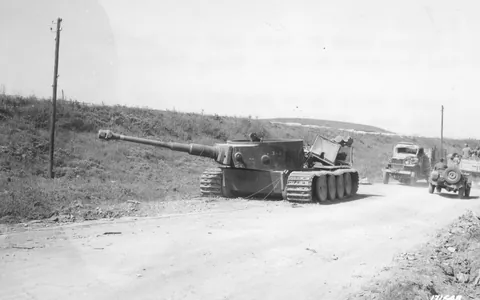
In the north, Operation Ochsenkopf (Ox Head) opened on 26 February 1943. Its main thrust, Kampfgruppe Lang with 77 tanks including Tigers of the 501st Heavy Panzer Battalion, aimed through Sidi Nsir at the British supply base at Béja. One British battalion, the 5th Royal Hampshires, and an artillery battery held Sidi Nsir until the evening before they were overrun, buying time for reinforcements, and the attack was stopped at Hunt's Gap. See Operation Ochsenkopf.28
Squeezed between the Eighth Army from the south and the Allied armies from the west, and losing the naval and air war over its supply routes, the Axis was pushed into a pocket in northeastern Tunisia. On 7 May 1943 British troops entered Tunis and US II Corps took Bizerte, and on 13 May the last German and Italian forces surrendered. Prisoner figures range from about 250,000 (National Army Museum) to 267,000 (United States Holocaust Memorial Museum).29
How many people died in the North African campaign?
No exact total exists, and the published figures count different things. The United States Holocaust Memorial Museum gives 620,000 German and Italian casualties (killed, wounded, missing and captured) for the whole campaign and 220,000 for the British Commonwealth, and the Commonwealth War Graves Commission gives the same 220,000 for British and Commonwealth forces. The Commission counts over 40,000 German and Italian dead and over 34,000 American and Free French soldiers killed, captured or missing; the Holocaust Museum puts American casualties in Tunisia alone at more than 18,500.30
The capture of whole armies explains the size of the Axis total. More than 130,000 Italians were taken prisoner in Operation Compass in 1940 and 1941, and around a quarter of a million German and Italian soldiers surrendered in Tunisia in May 1943, a loss that the Commission compares with Stalingrad.31
Key commanders of the North African campaign
Erwin Rommel commanded the Afrika Korps and then the German and Italian army. Australian and British historians alike describe a brave, inspiring commander who led from the front, took risks, often ignored orders and belittled his Italian allies; his fame as the "Desert Fox" was fostered by propagandists on both sides and by Rommel himself. See our Erwin Rommel biography and Montgomery vs Rommel.32
On the British side, Archibald Wavell and Richard O'Connor won the first great victory over Italy; Claude Auchinleck won Crusader and halted Rommel at the First Battle of El Alamein but was replaced; and Bernard Montgomery, whom the Imperial War Museums call a meticulous commander, popular with his men but abrasive and controversial, won at El Alamein. The Australian Leslie Morshead held Tobruk in 1941.33
Dwight D. Eisenhower commanded the Torch landings and the Allied forces in Tunisia, and George S. Patton led the Casablanca landing and then US II Corps. Among the exiled armies, Stanisław Kopański led the Polish brigade at Tobruk and Marie-Pierre Koenig the Free French at Bir Hakeim, both serving exiled causes: Free France, led by Charles de Gaulle, and the Polish government in exile in London.34
Who won the North African campaign, and why did the Axis lose?
The Allies won. The campaign ended with the surrender of all German and Italian forces in Africa on 13 May 1943, which removed the Axis threat to the Suez Canal, the Middle Eastern oilfields and Britain's supply lines to Asia and Africa, and opened the way to the invasion of Sicily and Italy that summer.35
The Axis lost above all on supply. Its armies depended on ships crossing a sea where the Allies were winning the naval and air war, and on long roads from Tripoli, and every advance stretched its fuel further. Once the Eighth Army had been rebuilt with more men, tanks, guns and aircraft, and the American landings opened a second front in the west, the German and Italian position in Africa became untenable.36
How the desert war is remembered
Each nation remembers its own part. In Australia the Rats of Tobruk became part of the national story, with more than 50 memorials and a national memorial in Canberra dedicated in 1983, although soldiers from other Allied nations served beside them. Many veterans of the Polish brigade later settled in Australia and joined the Rats of Tobruk Association.37
For Poland, Tobruk was the first battle of the force that became the 2nd Polish Corps: veterans of the Carpathian Brigade went on to fight in Italy, including at Monte Cassino in 1944, under General Władysław Anders. In Britain, El Alamein is remembered as the British Army's first clear-cut and irreversible victory over the Axis; when it was won, church bells were rung for the first time since May 1940.38
Major battles of the North African campaign
Our articles on the battles of the North African campaign, from the siege of Tobruk in 1941 to the fighting in Tunisia in 1943, are listed below in date order.
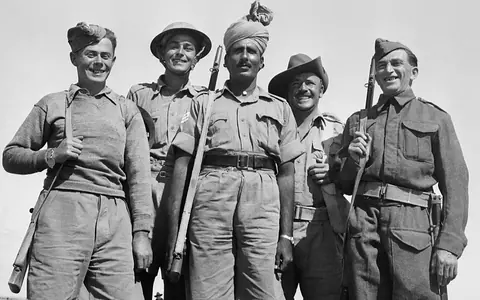
- 1941The Siege of Tobruk, 1941Allies (Australia, Britain, Poland, Czechoslovakia and others) vs Germany and Italy
The Carpathian Brigade holds the hardest sectors of the desert fortress.
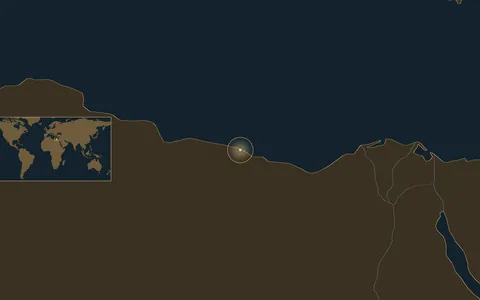
- 1942Battle of Mersa Matruh, 1942Axis (German and Italian forces) vs British Commonwealth (Eighth Army)
In late June 1942 Rommel's spent army outflanked the British at Mersa Matruh; X Corps was cut off and broke out at night, and the Eighth Army fell back to El Alamein.
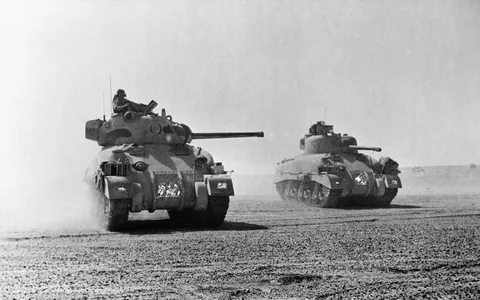
- 1942El Alamein, 1942British Empire and Commonwealth vs Germany and Italy (Panzerarmee Afrika)
Montgomery breaks Rommel and turns the tide in North Africa.
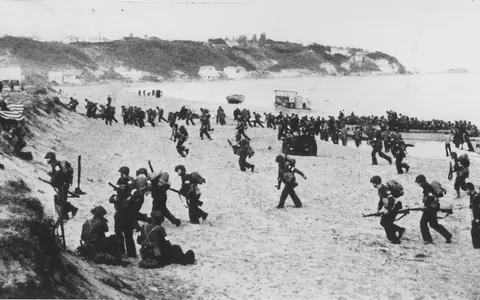
- 1942Operation Torch, 1942United States and United Kingdom (Allies) vs Vichy France
On 8 November 1942 American and British troops landed in Vichy French Morocco and Algeria. How Operation Torch was fought, who won and why it mattered.
- 1943Operation Ochsenkopf, 1943Germany and Italy (5th Panzer Army) vs United Kingdom and France (British First Army)
On 26 February 1943 von Arnim threw Tiger tanks at the British front in northern Tunisia. A battalion and a battery at Sidi Nsir held them for a day, and at Hunt's Gap the panzers were shot to pieces.
Timeline of the North African campaign
- June 1940Italy declares war on Britain and France.39
- 13 September 1940Italian forces invade Egypt from Libya.40
- 9 December 1940The British open Operation Compass; by 7 February 1941 the Italian Tenth Army is destroyed.41
- February 1941The first troops of Rommel's Afrika Korps arrive in Tripoli.42
- 10 April 1941The siege of Tobruk begins.43
- August 1941The Polish Carpathian Brigade is shipped into Tobruk.44
- 18 November 1941The Eighth Army launches Operation Crusader; Tobruk is relieved in early December.45
- 26 May to 11 June 1942Battle of Gazala and the Free French stand at Bir Hakeim.46
- June 1942Rommel takes Tobruk; the Eighth Army is pushed back through Mersa Matruh.47
- 1 July 1942The First Battle of El Alamein begins; the Axis advance is halted.48
- 23 October to 4 November 1942The Second Battle of El Alamein.49
- 8 November 1942Operation Torch: American and British landings in Morocco and Algeria.50
- February 1943Kasserine Pass; on 26 February Operation Ochsenkopf opens in the north.51
- 7 May 1943British troops enter Tunis and Americans take Bizerte.52
- 13 May 1943The last Axis forces in Africa surrender.53
Where to read next
The North African campaign was part of the Mediterranean theater of World War II, which continued in Sicily and Italy, and one front of World War II: see also our hubs on the Western Front, the Eastern Front and the Pacific War, and the greatest battles of World War II. Compare the commanders in Patton vs Rommel and test yourself with the World War II battles quiz.
Notes
A number in the text points to a note; each note names the works that paragraph draws on, listed in full under Sources.
- Imperial War Museums, “The North Africa Campaign”; National Army Museum, “The struggle for North Africa”; United States Holocaust Memorial Museum, “Tunisia Campaign”. ↩
- Imperial War Museums, “The North Africa Campaign”; National Army Museum, “The struggle for North Africa”; United States Holocaust Memorial Museum, “Allied Military Operations in North Africa”. ↩
- National Army Museum, “The struggle for North Africa”; Imperial War Museums, “The North Africa Campaign”; United States Holocaust Memorial Museum, “Allied Military Operations in North Africa”; Australian Government, “Tobruk 1941”. ↩
- Imperial War Museums, “The North Africa Campaign”; National Army Museum, “The struggle for North Africa”; Australian Government, “Tobruk 1941”; Imperial War Museums, “How the British Secured a Victory in the Desert”. ↩
- National Army Museum, “The struggle for North Africa”; Imperial War Museums, “The North Africa Campaign”; World History Encyclopedia, “North Africa Campaign”; Australian Government, “Tobruk 1941”; Australian War Memorial, “Tobruk”. ↩
- National Army Museum, “The struggle for North Africa”; Australian War Memorial, “The great siege”; Imperial War Museums, “How the British Secured a Victory in the Desert”. ↩
- National Army Museum, “The struggle for North Africa”; Imperial War Museums, “How the British Secured a Victory in the Desert”; Australian War Memorial, “Siege of Tobruk”. ↩
- Imperial War Museums, “A Brief History of the Eighth Army and the Desert War”; National Army Museum, “Second Battle of El Alamein”; The National WWII Museum, “Forgotten Fights”; Australian Government, “Tobruk 1941”; National Army Museum, “The struggle for North Africa”; Sons of Liberty Museum, “Tunisia Campaign 1942 to 1943”. ↩
- National Army Museum, “Second Battle of El Alamein”; Second World War Research Group, “Remembering ‘The Crucial Days’”; United States Holocaust Memorial Museum, “Allied Military Operations in North Africa”; National Army Museum, “The struggle for North Africa”. ↩
- United States Holocaust Memorial Museum, “Allied Military Operations in North Africa”; Australian Government, “Tobruk 1941”. ↩
- National Army Museum, “The struggle for North Africa”; Australian War Memorial, “The great siege”; Imperial War Museums, “What You Need to Know About the Siege of Tobruk”; Australian War Memorial, “Tobruk”. ↩
- Imperial War Museums, “What You Need to Know About the Siege of Tobruk”; Australian War Memorial, “Siege of Tobruk”; Australian War Memorial, “The great siege”; Australian Government, “Tobruk 1941”. ↩
- Imperial War Museums, “What You Need to Know About the Siege of Tobruk”; Australian War Memorial, “Siege of Tobruk”; Australian Government, “Tobruk 1941”. ↩
- Piłsudski Institute of America, “Polish Independent Carpathian Brigade”; Poland in Exile, “The Independent Carpathian Rifle Brigade”; British Commission for Military History, “Conference programme, 8 October 2022 (paper by Paul Latawski, “The Polish Independent Carpathian Rifle Brigade at Tobruk”)”; Australian Government, “Tobruk 1941”; Rats of Tobruk Association, “Polish Carpathian Brigade”; Polish Museum of America, “A Special Desert Christmas 80 Years Ago”. ↩
- Polish Museum of America, “A Special Desert Christmas 80 Years Ago”; Rats of Tobruk Association, “Polish Carpathian Brigade”; Poland in Exile, “The Independent Carpathian Rifle Brigade”; British Commission for Military History, “Conference programme, 8 October 2022 (paper by Paul Latawski, “The Polish Independent Carpathian Rifle Brigade at Tobruk”)”. ↩
- National Army Museum, “The struggle for North Africa”; Imperial War Museums, “How the British Secured a Victory in the Desert”; Australian Government, “Tobruk 1941”; Imperial War Museums, “What You Need to Know About the Siege of Tobruk”. ↩
- National Army Museum, “The struggle for North Africa”; Imperial War Museums, “How the British Secured a Victory in the Desert”; The National WWII Museum, “Forgotten Fights”. ↩
- The National WWII Museum, “Forgotten Fights”; Ordre de la Libération, “Pierre Koenig”; World History Encyclopedia, “Free French Troops, Bir Hakeim”. ↩
- National Army Museum, “The struggle for North Africa”; Imperial War Museums, “How the British Secured a Victory in the Desert”; Second World War Research Group, “Remembering ‘The Crucial Days’”; Australian War Memorial, “Tobruk”. ↩
- National Army Museum, “Second Battle of El Alamein”; Second World War Research Group, “Remembering ‘The Crucial Days’”; Imperial War Museums, “A Brief History of the Eighth Army and the Desert War”; Imperial War Museums, “How the British Secured a Victory in the Desert”. ↩
- National Army Museum, “The struggle for North Africa”; Imperial War Museums, “How the British Secured a Victory in the Desert”; Imperial War Museums, “A 5-Minute History of the Battle of El Alamein”. ↩
- Imperial War Museums, “A 5-Minute History of the Battle of El Alamein”; National Army Museum, “Second Battle of El Alamein”; National Army Museum, “The struggle for North Africa”; Imperial War Museums, “How the British Secured a Victory in the Desert”. ↩
- Encyclopaedia Britannica, “North Africa campaigns”; The National WWII Museum, “The US Invasion of North Africa”; National Army Museum, “The struggle for North Africa”. ↩
- US Army Medical Department, “Medical Service in the Mediterranean and Minor Theaters, chapter III”; Encyclopaedia Britannica, “North Africa campaigns”; National Army Museum, “The struggle for North Africa”; The National WWII Museum, “The US Invasion of North Africa”; Sons of Liberty Museum, “Tunisia Campaign 1942 to 1943”. ↩
- US Army Medical Department, “Medical Service in the Mediterranean and Minor Theaters, chapter III”; National Army Museum, “The struggle for North Africa”; Sons of Liberty Museum, “Tunisia Campaign 1942 to 1943”; Commonwealth War Graves Commission, “The Battle of Tunis”. ↩
- National Army Museum, “The struggle for North Africa”; Sons of Liberty Museum, “Tunisia Campaign 1942 to 1943”; historyofwar.org, “Operation Ochsenkopf, 26 February to 19 March 1943”. ↩
- United States Holocaust Memorial Museum, “Tunisia Campaign”; Sons of Liberty Museum, “Tunisia Campaign 1942 to 1943”; Commonwealth War Graves Commission, “The Battle of Tunis”; US Army Medical Department, “Medical Service in the Mediterranean and Minor Theaters, chapter III”. ↩
- US Army Center of Military History, “Northwest Africa, chapter XXVI”; historyofwar.org, “Operation Ochsenkopf, 26 February to 19 March 1943”; Lone Sentry, “Sidi Nsir and Hunt's Gap”. ↩
- United States Holocaust Memorial Museum, “Tunisia Campaign”; National Army Museum, “The struggle for North Africa”; Commonwealth War Graves Commission, “The Battle of Tunis”; US Army Center of Military History, “Northwest Africa”; National Army Museum, “Second Battle of El Alamein”. ↩
- United States Holocaust Memorial Museum, “Allied Military Operations in North Africa”; Commonwealth War Graves Commission, “The Battle of Tunis”; United States Holocaust Memorial Museum, “Tunisia Campaign”. ↩
- National Army Museum, “The struggle for North Africa”; Australian Government, “Tobruk 1941”; Commonwealth War Graves Commission, “The Battle of Tunis”; United States Holocaust Memorial Museum, “Tunisia Campaign”. ↩
- Australian War Memorial, “The great siege”; National Army Museum, “Second Battle of El Alamein”; Imperial War Museums, “The North Africa Campaign”. ↩
- National Army Museum, “The struggle for North Africa”; Imperial War Museums, “How the British Secured a Victory in the Desert”; Imperial War Museums, “A 5-Minute History of the Battle of El Alamein”; Imperial War Museums, “What You Need to Know About the Siege of Tobruk”. ↩
- National Army Museum, “The struggle for North Africa”; US Army Medical Department, “Medical Service in the Mediterranean and Minor Theaters, chapter III”; Piłsudski Institute of America, “Polish Independent Carpathian Brigade”; Ordre de la Libération, “Pierre Koenig”. ↩
- United States Holocaust Memorial Museum, “Tunisia Campaign”; Imperial War Museums, “The North Africa Campaign”; National Army Museum, “Second Battle of El Alamein”. ↩
- National Army Museum, “Second Battle of El Alamein”; National Army Museum, “The struggle for North Africa”; Australian War Memorial, “Siege of Tobruk”. ↩
- Australian Government, “Tobruk 1941”; Rats of Tobruk Association, “Polish Carpathian Brigade”; Australian War Memorial, “Siege of Tobruk”. ↩
- Poland in Exile, “The Independent Carpathian Rifle Brigade”; British Commission for Military History, “Conference programme, 8 October 2022 (paper by Paul Latawski, “The Polish Independent Carpathian Rifle Brigade at Tobruk”)”; Imperial War Museums, “A 5-Minute History of the Battle of El Alamein”; National Army Museum, “Second Battle of El Alamein”. ↩
- Imperial War Museums, “The North Africa Campaign”; National Army Museum, “The struggle for North Africa”. ↩
- National Army Museum, “The struggle for North Africa”; Australian War Memorial, “Tobruk”. ↩
- Imperial War Museums, “The North Africa Campaign”; World History Encyclopedia, “North Africa Campaign”. ↩
- National Army Museum, “The struggle for North Africa”; Australian War Memorial, “The great siege”. ↩
- Australian War Memorial, “The great siege”; Imperial War Museums, “What You Need to Know About the Siege of Tobruk”. ↩
- Australian Government, “Tobruk 1941”; Polish Museum of America, “A Special Desert Christmas 80 Years Ago”. ↩
- National Army Museum, “The struggle for North Africa”; Imperial War Museums, “How the British Secured a Victory in the Desert”. ↩
- The National WWII Museum, “Forgotten Fights”; Ordre de la Libération, “Pierre Koenig”. ↩
- National Army Museum, “The struggle for North Africa”; Second World War Research Group, “Remembering ‘The Crucial Days’”. ↩
- Second World War Research Group, “Remembering ‘The Crucial Days’”; Imperial War Museums, “How the British Secured a Victory in the Desert”. ↩
- Imperial War Museums, “A 5-Minute History of the Battle of El Alamein”; National Army Museum, “Second Battle of El Alamein”. ↩
- US Army Medical Department, “Medical Service in the Mediterranean and Minor Theaters, chapter III”; National Army Museum, “The struggle for North Africa”. ↩
- United States Holocaust Memorial Museum, “Tunisia Campaign”; historyofwar.org, “Operation Ochsenkopf, 26 February to 19 March 1943”. ↩
- United States Holocaust Memorial Museum, “Tunisia Campaign”; National Army Museum, “The struggle for North Africa”. ↩
- Imperial War Museums, “The North Africa Campaign”; US Army Center of Military History, “Northwest Africa”. ↩
Sources
- Imperial War Museums, “The North Africa Campaign”.
- National Army Museum, “The struggle for North Africa”.
- United States Holocaust Memorial Museum, “Tunisia Campaign”.
- United States Holocaust Memorial Museum, “Allied Military Operations in North Africa”.
- Australian Government, Department of Veterans' Affairs (Anzac Portal), “Tobruk 1941”.
- Imperial War Museums, “How the British Secured a Victory in the Desert”.
- World History Encyclopedia, “North Africa Campaign”.
- Australian War Memorial, “Tobruk: timeline”.
- Australian War Memorial, “The great siege”.
- Australian War Memorial, “Siege of Tobruk”.
- Imperial War Museums, “A Brief History of the Eighth Army and the Desert War”.
- National Army Museum, “Second Battle of El Alamein”.
- The National WWII Museum, “Forgotten Fights: The Free French at Bir Hacheim, May 1942”.
- Sons of Liberty Museum, “Tunisia Campaign 1942 to 1943”.
- Second World War Research Group, “Remembering ‘The Crucial Days’”.
- Imperial War Museums, “What You Need to Know About the Siege of Tobruk”.
- Piłsudski Institute of America, “Polish Independent Carpathian Brigade”.
- Poland in Exile, “The Independent Carpathian Rifle Brigade”.
- British Commission for Military History, “Conference programme, 8 October 2022 (paper by Paul Latawski, “The Polish Independent Carpathian Rifle Brigade at Tobruk”)”.
- Rats of Tobruk Association, “Polish Carpathian Brigade”.
- Polish Museum of America, “A Special Desert Christmas 80 Years Ago”.
- Ordre de la Libération, “Pierre Koenig”.
- World History Encyclopedia, “Free French Troops, Bir Hakeim”.
- Imperial War Museums, “A 5-Minute History of the Battle of El Alamein”.
- Encyclopaedia Britannica, “North Africa campaigns: Operation Torch”.
- The National WWII Museum, “The US Invasion of North Africa”.
- US Army Medical Department, Center of History and Heritage, “Medical Service in the Mediterranean and Minor Theaters, chapter III: Conquest of North Africa”.
- Commonwealth War Graves Commission, “The Battle of Tunis: the Allies' final victory of the North African campaign”.
- historyofwar.org (John Rickard), “Operation Ochsenkopf, 26 February to 19 March 1943”.
- US Army Center of Military History (George F. Howe, 1957; HyperWar transcription), “Northwest Africa, chapter XXVI”.
- Lone Sentry, “Sidi Nsir and Hunt's Gap”.
- US Army Center of Military History (George F. Howe, 1957; HyperWar transcription), “Northwest Africa: Seizing the Initiative in the West”.






