

Patton or Montgomery: what does the evidence say?
George S. Patton (1885 to 1945) and Bernard Montgomery (1887 to 1976) fought on the same side in World War II. Their armies advanced side by side in Sicily in 1943, met again in Normandy and the Ardennes in 1944, and crossed the Rhine a day apart in March 1945. Their rivalry was real, and so was the difference in method. Historians are split. Eisenhower praised both and ranked neither: Patton for his grasp of speed, Montgomery for the prepared attack. Hymel is among Patton's admirers, and the National Army Museum calls Montgomery one of the British Army's greatest ever commanders. This page sets out the evidence for each and leaves the final verdict to you.
Patton was a cavalryman who became one of the first American tank officers in 1917. Montgomery was a British infantry officer who had beaten Rommel at El Alamein. In Sicily they commanded the two armies of the Allied invasion, Patton the American Seventh Army and Montgomery the British Eighth, under the British general Alexander. In 1944 Montgomery commanded the 21st Army Group and, until 1 September, the whole land battle in Normandy, while Patton led the US Third Army.1
This is not a ranking, and the two did not always do the same job. Below you will find their careers side by side, the five episodes in which their paths crossed, and six questions on which a general can be judged. Under each we give the strongest evidence for Patton and the strongest for Montgomery, from the US Army official histories, Eisenhower's memoir, Churchill's speeches and the historians who have taken sides since. At the end the decision is yours.
Side by side
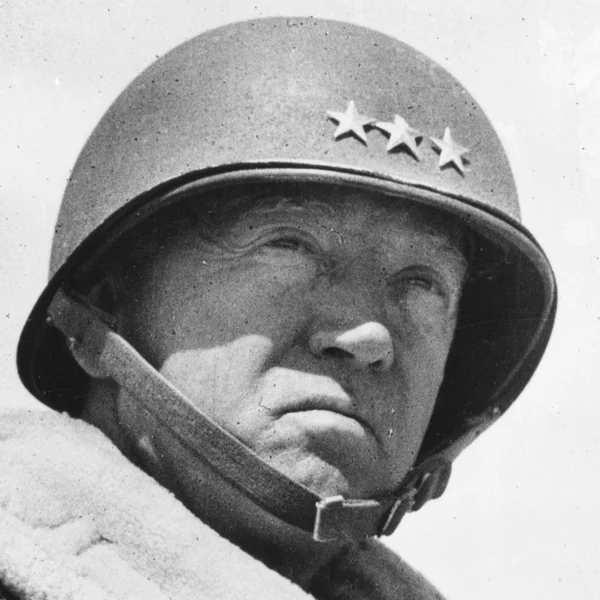
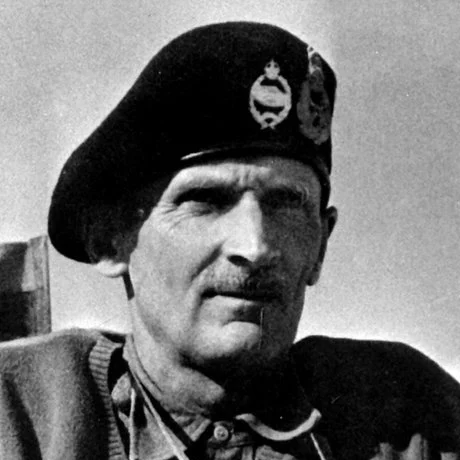
- Lived
- 1885 to 1945, born in San Gabriel, California
- 1887 to 1976, born in London
- Trained at
- West Point, class of 1909, then the cavalry
- Sandhurst, then the Royal Warwickshire Regiment
- World War I
- First member of the American Tank Corps, organised the US tank school at Langres
- Shot through the lung at Ypres in 1914, then a staff officer
- Commands 1942 to 1943
- Western Task Force in Morocco, II Corps in Tunisia from 6 March 1943, Seventh Army in Sicily
- Eighth Army, from El Alamein to Tunisia, Sicily and Italy
- Commands 1944 to 1945
- Third Army, from France to Czechoslovakia and Austria
- 21st Army Group, from Normandy to the Baltic
- Battles named here
- Sicily, Argentan and Falaise, Bastogne, Oppenheim
- Sicily, Falaise, Arnhem, the Ardennes, the Rhine
- Death
- 21 December 1945 in Heidelberg, after a car accident, buried in Luxembourg
- 24 March 1976 at Isington, Hampshire
Dates and commands as given by the Library of Congress, the American Battle Monuments Commission, the National Army Museum and the US Army official histories. An army and an army group are not the same command, so we give no tally of battles won.2
Where they met: Sicily, Normandy, the Ardennes and the Rhine
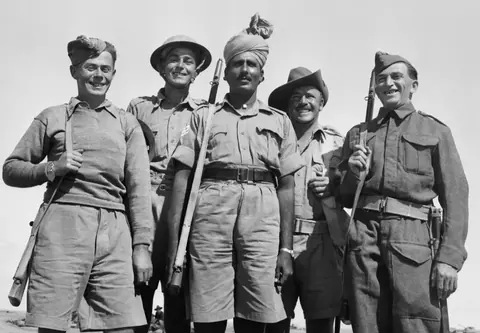
Tunisia, March 1943
Their paths first came close in Tunisia. After the American defeat at Kasserine, Eisenhower chose Patton to take over the US II Corps, which he did on 6 March 1943, the US official historian George Howe writes. The same day, far to the south, Montgomery's Eighth Army threw back Rommel's last attack at Medenine.3
Sicily, July and August 1943
Under Alexander the Eighth Army had the main role, the drive up the east coast towards Messina, with the Seventh Army on its left. On 13 July, the US official historians Albert Garland and Howard Smyth write, Montgomery sent a corps along Highway 124, a road in the American zone, without Alexander's approval. Alexander's directive that night made the road and the line to Enna all inclusive to Eighth Army. Bradley, whose corps had counted on it, said this would raise hell with his advance. Patton did not dispute the order. On 16 July Alexander went further and made the Seventh Army's only task the protection of the Eighth Army's rear.4
Patton found another way. On 17 July he flew to Alexander and argued for a drive on Palermo, and Alexander reluctantly agreed. Eisenhower wrote that Patton entered Palermo within twelve days of the landing, and that the speed of the move broke the morale of the huge Italian garrison. By 20 July, Garland and Smyth write, Messina was up for grabs.5

The Americans won the race. On the evening of 16 August a platoon of the 7th Infantry under Lieutenant Ralph Yates pushed into Messina, and Patton came in the next morning. A British column arrived to find the Americans there. The British, Garland and Smyth note, had been just as eager to get there first. The last German defenders had crossed to the mainland about two hours before the Americans entered in strength.6
The German escape counts against both armies. Garland and Smyth give the Germans 39,569 men evacuated, 4,444 of them wounded, and the Italians between 70,000 and 75,000. The campaign cost the Seventh Army 7,402 men and the Eighth Army 11,843.7
Normandy and the Falaise gap, August 1944
Patton's Third Army became operational on 1 August 1944, under Bradley's new army group, while Montgomery kept overall control of the land battle until 1 September, the official historian Forrest Pogue records.8
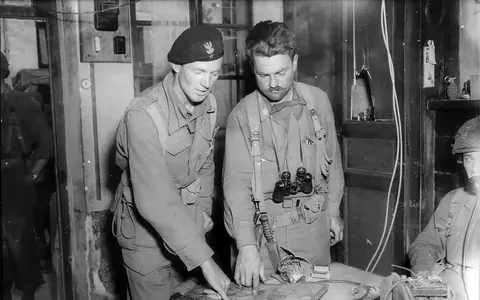
On 13 August Bradley halted Patton's corps south of Argentan. Patton raged at Montgomery, Bradley later wrote, but the US Army historian Martin Blumenson shows that Montgomery had not forbidden the Americans to go on, and that Bradley had not asked. Bradley preferred, in his own words, a solid shoulder at Argentan to a broken neck at Falaise.9
The Ardennes, December 1944
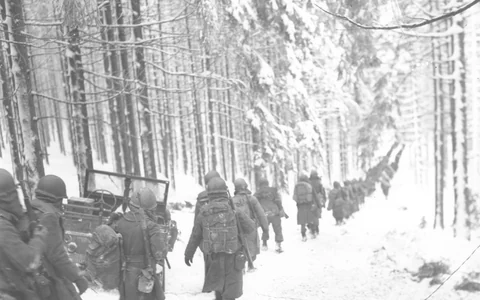
When the Germans broke through in the Ardennes, each man got part of the answer. Montgomery took command of the American armies north of the salient. Patton turned his Third Army north: his III Corps attacked at 0600 on 22 December, and the US Army historian Hugh Cole records that on 26 December the German ring around Bastogne was broken by Patton's troops.10
The Rhine, March 1945
Patton crossed first. On the night of 22 March the 11th Infantry of his 5th Division crossed in assault boats at Nierstein and Oppenheim, and the whole regiment lost only twenty men, the US official historian Charles MacDonald writes. Patton wanted the crossing, MacDonald adds, most of all in order to beat Field Marshal Montgomery across the river. Bradley then announced that the Third Army had crossed without even so much as an artillery preparation, timed to needle Montgomery, whose much larger crossing was starting that night.11
Montgomery's Operation Plunder, launched on the night of 23 March, brought more than a million and a quarter men to the assault, with 3,411 British and 2,070 American guns and 21,680 airborne troops, by MacDonald's count. Mark Calhoun of the National WWII Museum calls the plan massive, detailed and deliberate.12
Speed and exploitation
The case for Patton
Eisenhower, who knew both, wrote that Patton was a shrewd student of warfare who always clearly appreciated the value of speed in the conduct of operations. Speed, he went on, makes possible the full exploitation of every success. The run to Palermo was his example.13
The Ardennes showed the same gift on a larger scale. Patton told the senior commanders meeting on 19 December that he could begin his counterattack within 48 hours, the American Battle Monuments Commission records, and by the 26th his lead elements had made contact with the encircled 101st Airborne Division in Bastogne.14
The case for Montgomery
Montgomery's defenders point out that the two armies in Sicily did not face the same task. Eisenhower wrote that the Eighth Army's path north was as difficult as the American advance and that it had to overcome the preponderance of enemy strength. The chance of a quick stroke towards Messina, he wrote, passed, if it ever had existed.15
Preparation and lives
The case for Patton
Patton's Rhine crossing was cheap. MacDonald records twenty casualties for the whole 11th Infantry in the assault, without air bombardment or an artillery preparation.16
The case for Montgomery
Eisenhower wrote that Montgomery was always a master in the methodical preparation of forces for a formal, set-piece attack, and that before the Rhine he made the most meticulous preparations because the enemy's best remaining troops stood in front of him.17
MacDonald adds a doubt about the method. Whether such elaborate preparation was necessary at that stage of the war, he writes, would forever remain conjecture, since the Rhine might have been crossed earlier had Montgomery allowed the US Ninth Army to jump it by surprise in early March.18

Supply in autumn 1944
The case for Patton
In late August Eisenhower gave the American First Army to Montgomery's northern drive and with it the bulk of the American army group's gasoline. The official historian Forrest Pogue writes that this deprived the Third Army of the means of making a rapid drive to the east, and that Patton felt the British commander had outargued the Supreme Commander. Blumenson records that the Third Army was immobilised by lack of gasoline for several days before it attacked towards the Moselle on 5 September.19
The historian Carlo D'Este wrote that Patton was convinced the winning of the war was being squandered on the altar of Allied cooperation.20
The case for Montgomery
Montgomery argued that one powerful full-blooded thrust across the Rhine into the heart of Germany, backed by the whole resources of the Allied armies, would be likely to achieve decisive results. The army historian Roland Ruppenthal shows why neither commander could have everything: in early September deliveries ran at 3,300 tons a day to the First Army and 2,500 tons to the Third, about half of what each needed.21
Ruppenthal's conclusion is that by the autumn tactical operations had become the art of the logistically feasible, which cut both ways: against a single thrust, and against Patton's drive as well.22
Eisenhower did not take sides for long. On 2 September, Blumenson writes, he allocated gasoline to the Third Army again and reinstituted what later came to be called the broad front strategy.23
Working in the coalition
The case for Patton
Patton obeyed when it hurt, as the loss of Highway 124 in Sicily showed. His critics point to the Rhine. MacDonald writes that Patton wanted the crossing above all to beat Montgomery, and that Bradley's announcement of it was aimed at needling the field marshal.24
The case for Montgomery
The National Army Museum writes that Montgomery played a crucial role in Sicily and Italy in spite of disagreements with Patton and Bradley, who both viewed his previous successes jealously. Yet Garland and Smyth also record that he took Highway 124 without Alexander's approval.25
He also kept American strength under his command when it mattered. Calhoun writes that when Eisenhower returned the First Army to Bradley in January 1945, he left the US Ninth Army with Montgomery to weight the main effort in the north.26
In January 1945 Montgomery's press conference on the Ardennes, meant to praise the American soldier, was read by many Americans as a claim to have rescued them, Eisenhower wrote, and caused him more distress and worry than any similar incident of the war.27
Temper and image
The case for Patton
Hymel calls Patton one of America's greatest battlefield commanders, a general who often led from the front and almost always delivered victory, and whose swift conquest of Sicily, race across France and relief of Bastogne captured the imagination of the American public.28
He also nearly lost his career. In August 1943 he struck two soldiers in hospitals whom he suspected of malingering, the first on 3 August near Nicosia. Eisenhower wrote to him that such conduct will not be tolerated in this theater no matter who the offender may be, but concluded, Garland and Smyth write, that Patton was too valuable a man to lose.29
Before the war he had built an unusually varied career. The Library of Congress register of his papers lists fifth place in the modern pentathlon at the 1912 Olympics, service as Pershing's aide in Mexico in 1916, and in 1917 and 1918 the first place in the new American Tank Corps and the founding of its tank school at Langres.30
The case for Montgomery
Montgomery's flaws were of a different kind. Eisenhower's assessment of 1943, as the National Army Museum quotes it, was that he was a very able, dynamic type of army commander who loved the limelight, perhaps only for the effect on his soldiers, who were certainly devoted to him. The museum calls him arrogant, unlikeable, but ultimately successful.31
The Ardennes crisis
The case for Patton
Cole's account of the Third Army's turn is the core of Patton's case. Patton inspected the III Corps on 20 December, found its concentration going well, and gave the order to attack at 0600 on the 22nd. Four days later his troops broke the German ring around Bastogne.32

The case for Montgomery
Churchill told the House of Commons on 18 January 1945 that Montgomery, acting with extraordinary promptitude, had concentrated powerful British reserves at the decisive strategic point. The National Army Museum writes that he redeemed himself in the battle, bolstering the American defences with 30 Corps.33
Churchill was careful to give the battle to the Americans. They had engaged 30 or 40 men for every British soldier, he said, and it was undoubtedly the greatest American battle of the war.34
How historians have judged them
The US Army official histories give each man his due and his faults. Garland and Smyth show Montgomery taking a road that was not his and Patton complying, then talking his way to Palermo. Blumenson spreads the blame for Argentan across several commanders. MacDonald writes that Patton's chief motive at Oppenheim was beating Montgomery, and that the need for Montgomery's elaborate Rhine build-up remains conjecture.35
Hymel, writing for the National WWII Museum, is among Patton's admirers. The National Army Museum is among Montgomery's, calling him one of the British Army's greatest ever commanders. D'Este stands between them on supply, finding a strong case for Montgomery's single thrust only if the logistics had existed.36
D'Este's summary of the whole quarrel over strategy applies to these two as well: when Eisenhower said that public opinion wins wars and Montgomery answered that victories win wars, both were right.37
Eisenhower's own verdicts, written in 1948, praise both and rank neither: Patton for his grasp of speed, Montgomery for his mastery of the prepared attack.38
Patton did not live long after the victory. On 9 December 1945 his car collided with a truck near Mannheim, and he died in Heidelberg twelve days later, Hymel writes. He lies at the head of the graves of his soldiers in the Luxembourg American Cemetery, the American Battle Monuments Commission records.39
Battles on the site
Every battle page on Echoes of Battle where one of the two men commanded, with the guides that set them in context. Sicily, El Guettar, Cobra, Lorraine and the Rhine crossings have no page of their own yet.
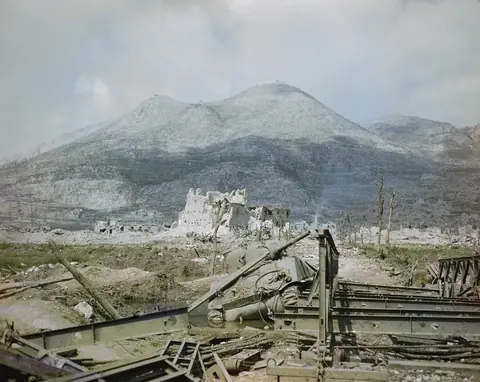 Together · Sicily 1943The Mediterranean and Italy
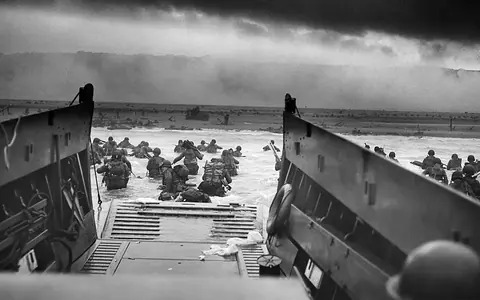 Together · 1944D-Day and Normandy
 Together · 1944The Battle of Falaise
 Together · 1944The Battle of the Bulge
 Both · 1943The North African Campaign
 Patton · 1942Operation Torch
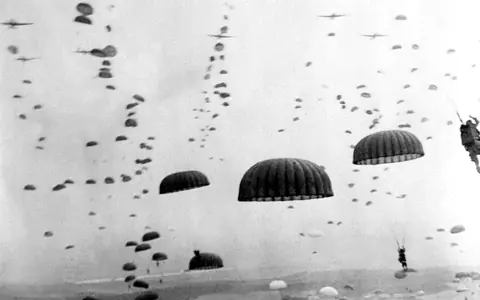 Montgomery · 1944Operation Market Garden
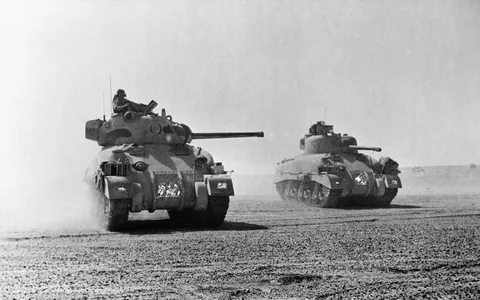 Montgomery · 1942El Alamein
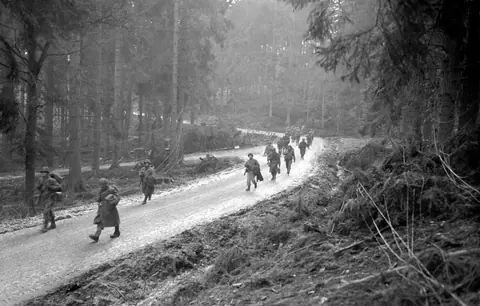 Context · 1944Hürtgen Forest
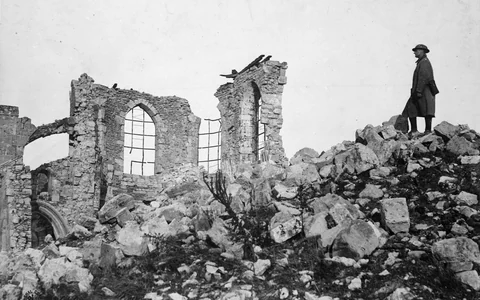 Patton wounded · 1918The Meuse-Argonne Offensive
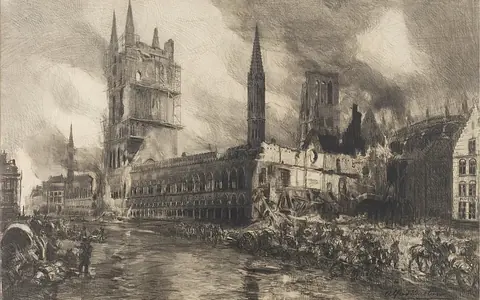 Montgomery wounded · 1914First Ypres
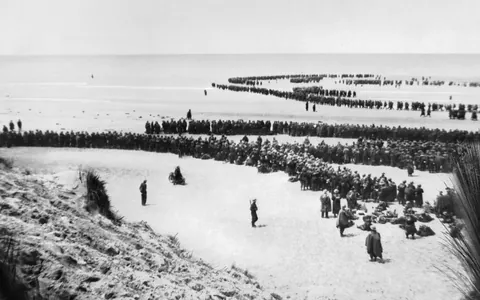 Montgomery · 1940The Dunkirk Evacuation
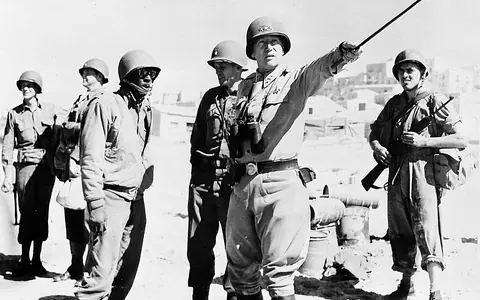 CommanderGeorge S. Patton
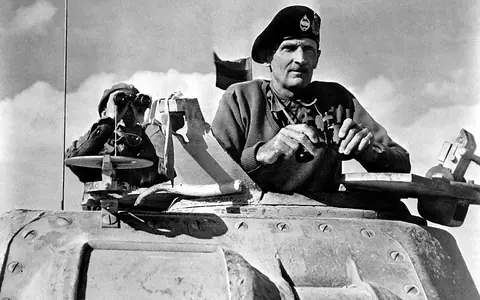 CommanderBernard Montgomery
 GuideThe Western Front of World War II
QuizHow Well Do You Know World War II Battles?
More head to head pages: Eisenhower vs Montgomery, Montgomery vs Rommel and Patton vs Rommel. See also Dwight D. Eisenhower, Omar Bradley, the greatest American commanders and the greatest British commanders.
Your verdict
We do not pick a winner. Here are the two cases at their strongest, and the questions that decide which one you find more convincing.
For Patton
- Palermo within twelve days of the landing, and Messina before the British
- The Third Army's turn north and the relief of Bastogne
- The first assault crossing of the Rhine, for twenty casualties
- A grasp of speed that Eisenhower singled out
- He obeyed an order that cost him the main road in Sicily
For Montgomery
- He commanded the whole land battle in Normandy until 1 September 1944
- The Eighth Army in Sicily faced most of the enemy and the harder ground
- His set-piece attacks, Plunder above all, were models of preparation
- He steadied the northern flank in the Ardennes with British reserves
- He commanded an army group while Patton commanded an army
Questions to weigh before you decide:
- Which matters more: speed that seizes ground, or preparation that makes success certain?
- Is the race to Messina a fair test, when the Eighth Army faced most of the German strength and the harder ground?
- Who should have closed the Falaise gap: Montgomery, who kept the boundary, Bradley, who stopped Patton, or Eisenhower, who did not intervene?
- In autumn 1944, should the fuel have gone to one thrust or two, with Antwerp not yet working?
- How much should behaviour, the slapping incidents or the press conference, weigh against results in the field?
- Does comparing an army commander with an army group commander favour either side?
Cast your vote below and see how other readers have judged them.






