

Scipio or Caesar: what does the evidence say?
Publius Cornelius Scipio Africanus (235 to 183 BC) and Julius Caesar (100 to 44 BC) are the two Roman generals most often named as Rome's greatest. They never met: Scipio beat Hannibal at Zama in 202 BC and saved the Republic, Caesar conquered Gaul and won the civil war that ended it. Historians have not settled it. Plutarch judged that Caesar surpassed the Scipios, and Mommsen set Scipio far below Caesar. Liddell Hart answered with a book, A Greater than Napoleon, and Scullard took a middle line. This page sets out the evidence for each and leaves the final verdict to you.
More than a century separates them, yet the two fought on the same ground. Both won a decisive war in Africa, Scipio against Hannibal in 202 BC and Caesar against the Pompeians in 46 BC. When Caesar landed there, his enemies were led by another Scipio and trusted an old saying that the Scipios were fated to win in Africa. Plutarch, writing under the emperors, set Caesar beside the Fabii, the Scipios and Pompey and judged that he surpassed them all.1
This is not a ranking. Below are the two careers side by side, the African campaigns that link them, and six questions on which a general can be judged, each with the strongest evidence for Scipio and for Caesar. At the end the decision is yours.
Side by side
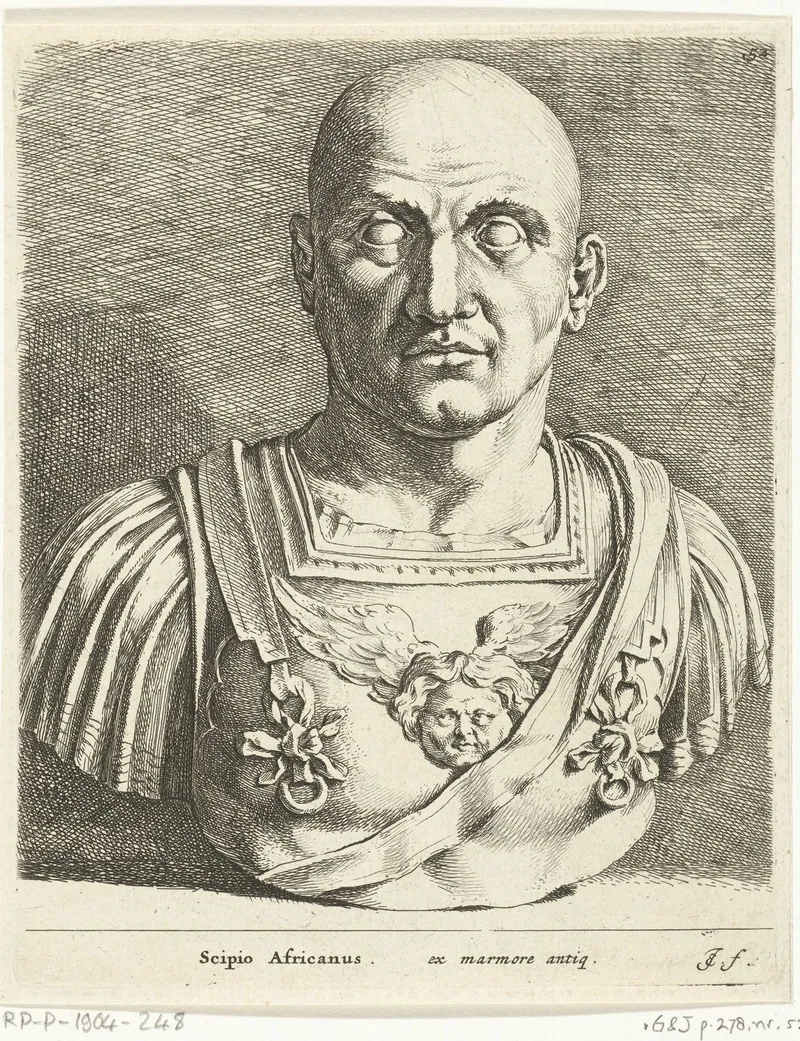
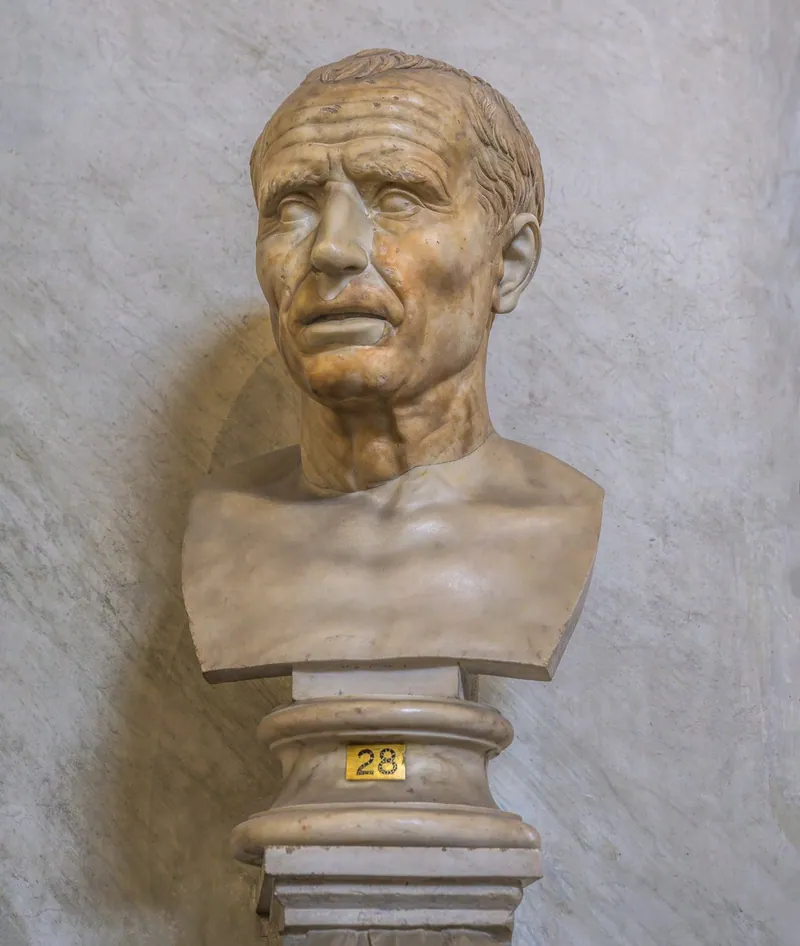
- Lived
- 235 to 183 BC (the year of his death was disputed already in antiquity)
- 100 to 44 BC (some date his birth to 102)
- Origin
- Rome, the patrician Cornelii, son of the consul of 218 BC
- Rome, the old noble family of the Julii
- First command
- 211 or 210 BC, Spain, before he had held the usual offices
- 61 BC, governor in Further Spain
- Wars in command
- Second Punic War in Spain 210 to 206 and Africa 204 to 202
- Spain 61 to 60, Gaul 58 to 50, the civil war 49 to 45
- Offices
- Consul 205 and 194, censor 199, leader of the Senate
- Consul from 59 BC, then dictator
- Notable opponents
- Hasdrubal and Mago Barca, Hasdrubal son of Gisco, Syphax, Hannibal
- The Helvetii, the Nervii, Vercingetorix, Pompey, Pharnaces II, Metellus Scipio and Juba, Pompey's sons
- Battles named here
- New Carthage, Baecula, Ilipa, Great Plains, Zama
- The Sambre, Gergovia, Alesia, Dyrrachium and Pharsalus, Thapsus, Munda
- Death
- At Liternum in Campania, in voluntary withdrawal from Rome
- Killed in Rome on 15 March 44 BC
Dates, offices and commands from the Treccani encyclopedia, Scullard and Suetonius. Both portraits are traditional identifications. We give no win and loss totals because no source counts their battles the same way.2
Did they ever meet? Two wars in Africa
They did not. Scipio died around 183 BC, and Caesar was born in 100 or 102 BC. The nearest thing to an encounter is the province both of them fought for, and the Scipio family that stood against Caesar there.3
Scipio in Africa, 204 to 202 BC
Scipio crossed from Sicily in 204 BC. Before his night attack on the enemy camps, Frontinus says, his officer Laelius visited King Syphax as an envoy with tribunes and centurions disguised as slaves, who spied out the ground. Scipio then fired the Numidian camp, and Florus marvels that he destroyed the camps of both enemy leaders in a single night. Carthage recalled Hannibal from Italy.4
At Zama in 202 BC Hannibal put eighty elephants in front. Scipio left open lanes between his companies so that they could pass, and Livy says the trumpets frightened many of them into turning back on Hannibal's own Numidians. The Roman and Numidian cavalry drove off Hannibal's horse and came back to strike his veterans from behind. Polybius gives 20,000 Carthaginians killed and more than 1,500 Romans.5
The peace followed Scipio's terms. Eutropius says Carthage was to keep no more than thirty warships, pay a heavy indemnity in silver and give back prisoners and deserters, and that Scipio returned to Rome, celebrated a triumph and was called Africanus from then on.6

Caesar and the luck of the Scipios, 47 to 46 BC
After Pharsalus the Pompeians regrouped in Africa under another Scipio, Quintus Metellus Scipio, with King Juba of Numidia. Plutarch says they were encouraged by an ancient oracle that the family of the Scipios always conquered in Africa. Caesar answered by keeping in his army a man of the family of the Africani, called Scipio Sallustio, whom he put in the forefront as if he were the commander. Suetonius tells the same story with the nickname Salvito, adds that Caesar fell as he landed and turned the omen by crying out, I hold thee fast, Africa.7
At Thapsus in 46 BC, Florus writes, the battle began with Juba's elephants, newly brought from the woods, which panicked at the trumpets and charged their own side, as Hannibal's had at Zama. Plutarch says Caesar took three camps in part of a day and killed fifty thousand of the enemy for fewer than fifty of his own men, though he adds that some writers say Caesar was taken ill and missed the battle. Metellus Scipio killed himself as he tried to escape by sea.8
Velleius sums up the African war: at first Caesar's armies had varying fortune, then his usual luck routed the enemy, and he showed the beaten no less clemency than in the earlier war.9
Strategy: the plan for a whole war
The case for Scipio
Scipio beat Hannibal without fighting him in Italy. He went first for New Carthage, where, Eutropius notes, the enemy kept their gold, silver, war material and their noblest hostages, then carried the war to Africa so that Carthage had to recall Hannibal. Polybius argues against writers who credit Scipio's success to the gods and chance, and insists it came from calculation.10
The plan was not popular at first. Plutarch says Fabius Maximus called the crossing to Africa the scheme of a foolhardy young man and won over the Senate, though the people suspected him of jealousy. Scipio raised money for the fleet on his own account. Liddell Hart, Scipio's great modern champion, praised the way he kept the enemy dancing to his tune.11
The case for Caesar
Caesar ran wars on a larger map. In Gaul he fought from the Rhine to Britain and, Suetonius says, left all of Gaul a province paying a fixed yearly tribute after nine years. In the civil war, Dodge writes, his use of central lines on a gigantic scale had no better example in history.12
Speed was part of the strategy. Suetonius says he covered a hundred miles a day in a hired carriage, and that after Zela he reported the whole war in three words, I came, I saw, I conquered. Dodge also lists his errors of haste at Dyrrachium, at Alexandria, in Pontus and in Africa.13
Battlefield tactics
The case for Scipio
At New Carthage in 209 BC, Frontinus writes, Scipio attacked just before the turn of the tide, guided, he said, by some god, and broke in across the shallow lagoon when the water fell. At Ilipa in 206 BC he led out his army day after day with his best men in the centre, then on the day of battle put them on the wings and struck the enemy's weakest points.14
At Zama, Frontinus writes, he met Hannibal's eighty elephants with three lines of legionaries and open gaps between the companies, filled with skirmishers who were told to fall back when the animals charged. This shrewd arrangement, Frontinus says, was undoubtedly the cause of his victory.15
Scullard traced the development from Baecula to the Great Plains, where Scipio held the whole enemy front with his first line while the rear lines marched out to the flanks, so that Hannibal's Cannae tactics could now be carried out by a Roman army. Liddell Hart wrote that Scipio was almost unique in being as consummate an artist in tactics as in strategy.16

The case for Caesar
His own battles were won in the moment. On the Sambre in 57 BC, when the Nervii caught his army building its camp, Caesar writes that he took a shield from a soldier in the rear rank, went to the front line and called the centurions by name.17
At Pharsalus in 48 BC Caesar gives Pompey about 45,000 men and 7,000 horse against his own 22,000 and 1,000 horse. He took six cohorts from his third line and hid them as a fourth line behind his cavalry, and when Pompey's horse charged, they drove it off and turned on Pompey's flank.18
Appian adds that the hidden cohorts aimed their spears at the faces of the riders, who could not bear the blows on their mouths and eyes and fled in disorder.19
At Alesia in 52 BC he shut Vercingetorix inside a ring of siege works eleven miles round and built a second ring fourteen miles round against a relief army he puts at 8,000 horse and about 250,000 foot. Treccani calls it a work of military genius. Dodge, on the other hand, calls Caesar's battle tactics simple, with no formation to set beside Hannibal's at Cannae.20

The enemies they faced
The case for Scipio
Scipio fought the Barcid brothers in Spain and Hannibal himself in Africa. Liddell Hart stressed that his opponents were generals trained in the Barcid school, that Hannibal's brothers Hasdrubal and Mago were no mean commanders, and that Zama is the only battle where one acknowledged great captain has, on his own, defeated another decisively. Polybius and Livy both say Hannibal's dispositions at Zama could not have been bettered.21
At Ilipa his opponent was Hasdrubal son of Gisco, whom Livy calls the greatest and most brilliant general of the war after the Barcids, with 50,000 foot and 4,500 horse, or 70,000 foot by other writers' count.22
The case for Caesar
Plutarch says Caesar surpassed every earlier Roman general in something: one in the difficulty of the country, another in the extent of his conquests, another in the number and strength of the enemies he overcame. Pliny counts as many as fifty pitched battles. Liddell Hart's reply is that his moves in Gaul were made against barbarians, not trained generals, while Dodge notes that Caesar fought both barbarians and Romans, and at the Aisne and Alesia faced overwhelming odds.23
Leading men
The case for Scipio
After Cannae the young tribune Scipio took command of the survivors at Canusium and, Livy says, held his drawn sword over the heads of young nobles who planned to abandon Italy until they swore to stand by the Republic. Mommsen called him a man who was himself enthusiastic and who inspired enthusiasm. Eutropius says the Romans came to believe there was something divine in him, so that he was thought to talk with the gods.24
When part of his army mutinied at Sucro in 206 BC while he was ill, Livy says the ringleaders were scourged and beheaded before the assembled army. After Baecula the Spaniards hailed him as king, and Livy has him answer that the name of king was insupportable to Roman ears.25
The case for Caesar
Suetonius says that when Caesar's army gave way he often rallied it single-handed, seizing fleeing men by the throat and turning them to face the enemy. When the civil war began every centurion offered to equip a horseman from his own savings, and throughout the long struggle not one man deserted.26
He could be hard. When the ninth legion mutinied at Placentia in 49 BC, Appian says he announced its decimation, then limited the punishment to 120 ringleaders, of whom twelve were chosen by lot to die.27
Rome and the Republic
The case for Scipio
Scipio won his war inside the Republic's rules. He held the consulship in 205 BC, the censorship in 199 and a second consulship in 194, and was named leader of the Senate. Polybius praises his refusal of the title of king from the Spaniards as greatness of mind, and Mommsen wrote of the wise abstinence of Scipio from an extravagant and insulting use of victory over Carthage.28
His conduct toward Hannibal was admired. Plutarch says that after defeating a Hannibal who had not been conquered before, Scipio neither drove him from Africa nor demanded his surrender. The other side of the record is New Carthage, where Polybius says he sent his troops into the town, as is the Roman custom, with orders to kill all they met.29
The case for Caesar
Caesar won his wars against the Republic's rules. He crossed the Rubicon in January 49 BC against the Senate's order, and after Pharsalus took the dictatorship. Velleius calls his pardon of all who had fought against him an act of generosity almost passing belief, and Suetonius says he even set up again the statues of Sulla and Pompey that the crowd had broken.30
His war in Gaul came at a cost even ancient writers flinched at. Pliny counts 1,192,000 killed in his battles outside the civil wars and refuses to call it glory, an outrage committed upon mankind. Plutarch reports that after the slaughter of the Usipetes and Tencteri, Cato proposed handing Caesar over to the barbarians.31
Setbacks and the end
The case for Scipio
No defeat of Scipio in a pitched battle is recorded, but his campaigns were not flawless. After Baecula in 208 BC, Treccani notes, he could not stop Hasdrubal Barca from marching to Italy, where Hasdrubal's army was destroyed at the Metaurus by other generals. In Africa, Treccani adds, he found himself in difficulty before Utica when Hasdrubal moved against him, and played for time in peace talks until he could strike.32
In 190 BC he went east as legate to his brother Lucius against Antiochus III, though Treccani notes he could not take part in the decisive battle of Magnesia.33
His end was bitter. His enemies brought him down after the war with Antiochus, and Scullard says he died at Liternum within a year, in virtual exile. Livy puts his death beside Hannibal's and Philopoemen's, three great men who died about the same time, none of them in a way worthy of his career.34
The case for Caesar
Caesar lost battles and won the wars. Suetonius names three reverses in Gaul, the worst a legion routed at Gergovia, where Caesar admits losing forty-six centurions and nearly seven hundred men. In the civil war he was put to flight at Dyrrachium and, by Suetonius' account, thought of suicide at Munda before he won.35
Florus writes that at Munda Caesar's usual good fortune was lacking and the fight long in doubt, and Velleius that the commander showed more courage than his men.36
How historians have judged them
Ancient opinion leaned to Caesar. Plutarch judged that he surpassed the Fabii, the Scipios and Pompey in his achievements. Eutropius, on the other hand, called Scipio almost the first of all Romans of his own and later times, and Florus counted him and Hannibal the two greatest generals before or since.37
Mommsen admired Scipio's enthusiasm but wrote that he gained battles and conquered countries under the instructions of the Senate, and that a wide interval separated such a man from an Alexander or a Caesar. Of Caesar he wrote that he was the sole creative genius produced by Rome.38
Liddell Hart answered Mommsen with a whole book, A Greater than Napoleon, arguing that historians had belittled Scipio to enhance the fame of Hannibal. Scullard took a middle line: not all would agree, he wrote, that Hannibal's conqueror should be placed so high, though the claim underlines his importance as a soldier.39
Dodge, who wrote a full history of Caesar, closed it by calling him the greatest, though not the most admirable, man who ever lived, and in the same breath warned that he could not be held without reproach. Suetonius reports that Asinius Pollio, who served under Caesar, thought his Commentaries were written somewhat carelessly and without strict regard for truth.40
Battles on the site
Every battle page on the site that involves one of the two men, with the guides around them.
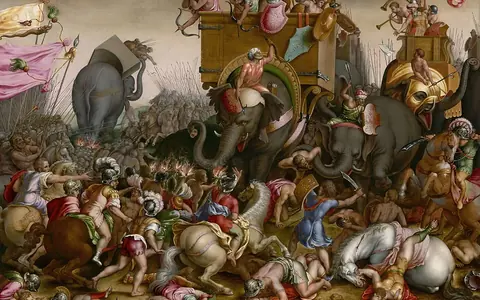 Scipio in command · 202 BCBattle of Zama
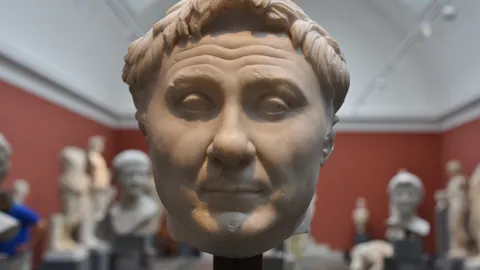 Caesar in command · 48 BCBattle of Dyrrachium
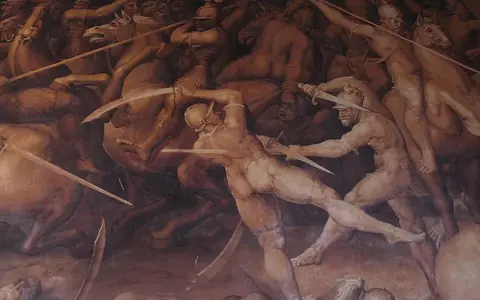 Caesar in command · 48 BCBattle of Pharsalus
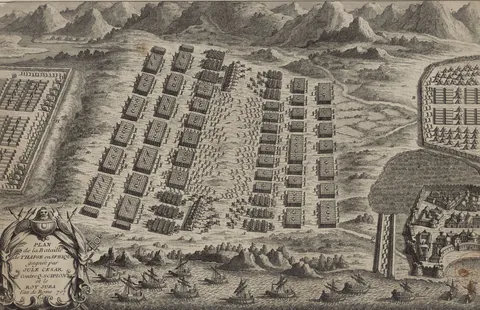 Caesar in command · 46 BCBattle of Thapsus
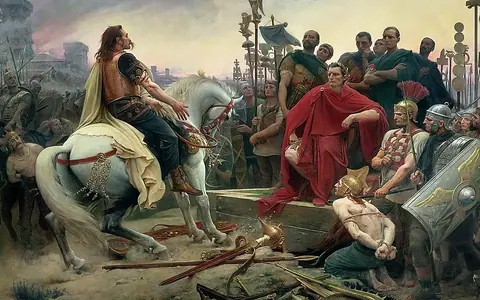 Caesar in command · 52 BCBattle of Alesia
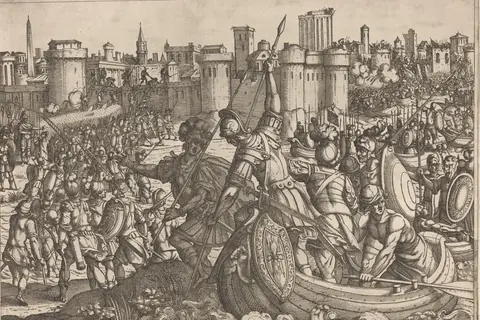 Scipio in command · 209 BCSiege of New Carthage
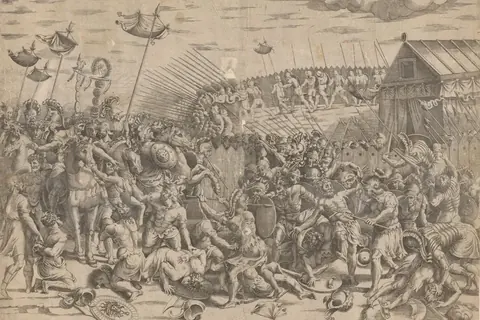 Scipio in command · 208 BCBattle of Baecula
 Scipio in command · 206 BCBattle of Ilipa
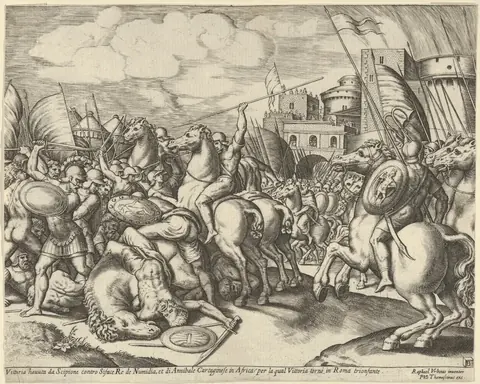 Scipio in command · 203 BCBattle of the Great Plains
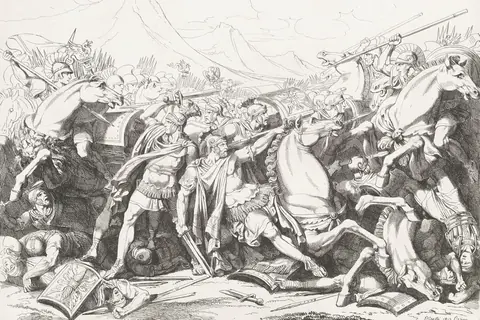 Scipio, aged 17, saves his father · 218 BCBattle of the Ticinus
 Scipio a military tribune · 216 BCBattle of Cannae
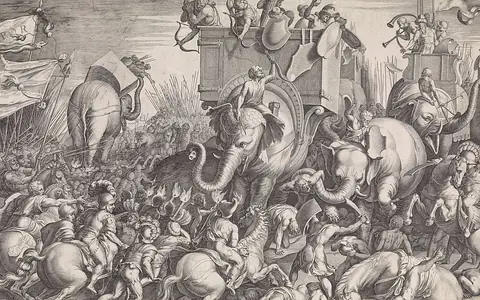 Hasdrubal's march · 207 BCBattle of the Metaurus
 Before the civil war · 53 BCBattle of Carrhae
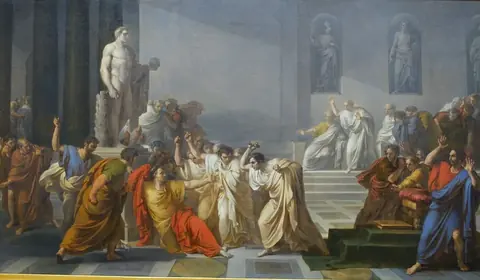 Guide · 88 BC to AD 324The Roman Civil Wars
CommanderScipio Africanus
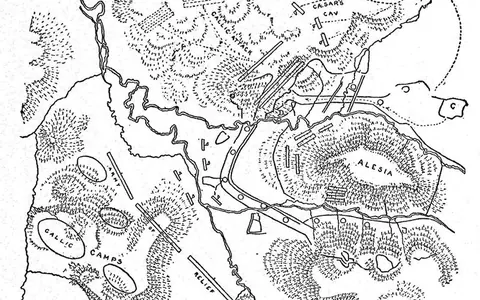 CommanderJulius Caesar
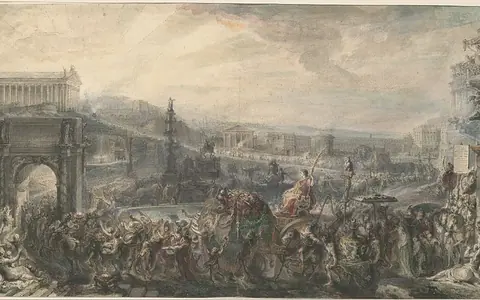 RankingThe Greatest Commanders of Ancient Rome
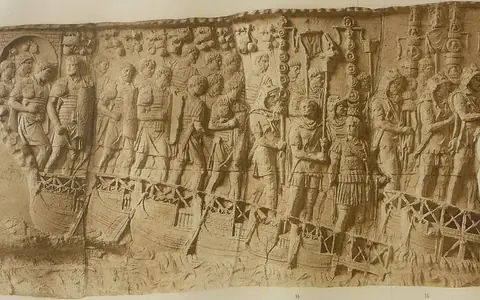 ExplainerHow the Roman Legion Worked
See also Hannibal vs Scipio, Caesar vs Hannibal, Pompey vs Caesar, Gaius Marius and the Punic Wars. Thapsus, Munda, Gergovia and Dyrrachium have no page of their own yet.
Your verdict
We do not pick a winner. Here are the two cases at their strongest, and the questions that decide which one you find more convincing.
For Scipio
- The general who beat Hannibal in a battle both commanded
- New Carthage and Ilipa, a siege and a battle won by surprise
- A strategy that ended the war in Africa instead of Italy
- Opponents trained in the Barcid school, not tribal armies
- Victory won and used within the Republic's rules
For Caesar
- Gaul conquered and made a province in nine years
- Alesia, two lines of siege works held against two armies
- Pharsalus won against twice his numbers
- Defeats at Gergovia and Dyrrachium repaired, wars won
- Speed and range no Roman before him matched
Questions to weigh before you decide:
- Scipio defended the Republic and Caesar ended it. Should the political outcome count in judging a general?
- Is beating Hannibal once worth more than beating many lesser opponents many times?
- Does a longer career, in more theatres, favour Caesar unfairly?
- How do you weigh Scipio's night attack during peace talks against Caesar's massacres in Gaul?
- Plutarch ranked Caesar above the Scipios, Liddell Hart ranked Scipio above Napoleon. Whose judgement carries more weight, and why?
Cast your vote below and see how other readers have judged them.




