

What were the Silesian Wars and who won?
The Silesian Wars were three wars that Prussia and Austria fought between 1740 and 1763 for Silesia, a rich Habsburg province on the Oder. Frederick II of Prussia seized it in 1740 and Maria Theresa of Austria twice tried to win it back. Prussia won, and every peace treaty of the wars left Silesia in Prussian hands.1
In December 1740, a few weeks after the death of Emperor Charles VI, the young king Frederick II of Prussia sent his army into Silesia, the Habsburg province on the upper and middle Oder that now lies mostly in southwestern Poland. Three wars followed, and when the last of them ended in 1763 Silesia was still Prussian and Prussia had become one of the great powers of Europe.2
This guide explains how the wars are counted, why Frederick wanted Silesia, how each war was fought and how it ended, who won and what followed. It links our articles on the battles, from the Battle of Mollwitz in 1741 to Leuthen in 1757 and Kunersdorf in 1759, and our profile of Frederick the Great.3
What were the Silesian Wars?
The Silesian Wars were the contests between Austria and Prussia for the possession of Silesia in the 18th century. Britannica and the Polish Ministry of Education’s school platform count three of them, the First Silesian War of 1740 to 1742, the Second of 1744 to 1745 and the Third of 1756 to 1763, and the German Historical Museum also speaks of the first two Silesian Wars of 1740 to 1742 and 1744 to 1745. In German they are the Schlesische Kriege, in Polish the wojny śląskie.4
The three wars were not fought on their own. The first two were part of the larger War of the Austrian Succession, and the third was part of the Seven Years’ War, in which Britain and France also fought each other overseas. That is why the same battles appear under two names in most histories, and why our guide to the Third Silesian War tells that war as the Central European part of the Seven Years’ War.5
The end date of the third war differs slightly between accounts. Britannica’s article on the Silesian Wars dates it 1756 to 1762, because the fighting between Austria and Prussia stopped with an armistice in November 1762, while the German Historical Museum and the Polish school platform run it to the Peace of Hubertusburg in February 1763.6
Causes of the Silesian Wars
Emperor Charles VI, the last male Habsburg, died on 20 October 1740. By the Pragmatic Sanction, an edict he had first issued in 1713, he had tried to make sure that his lands would pass undivided to his daughter Maria Theresa, and he had spent years winning promises from the other powers to respect it. Britannica calls those promises little more than acts of convenience, since nearly every major power wanted some part of the Habsburg lands.7

The moment favored an attack: Britannica describes Maria Theresa’s army as being in a poor state and her government’s finances as very difficult, and the historian Guy Rowlands notes that an unsuccessful war against the Ottoman Empire in the last years of Charles’s reign had exposed serious weaknesses in the Habsburg army. Frederick, king only since the death of his father on 31 May 1740, had inherited a fine army and ample funds.8
Silesia itself was the prize, and Britannica calls it a wealthy and strategically important province and writes that it was chiefly its wealth that tempted Frederick. The biography of Frederick in the Neue Deutsche Biographie (NDB) adds that it gave Prussia a broader economic base, a staging area for operations in Bohemia and a wedge between Saxony and Poland, which were then joined under one ruler, and the Polish school platform notes that its loss blocked any closer union of the two.9
Frederick justified the invasion by old dynastic claims of his house to parts of Silesia, which Britannica describes as an old Brandenburg testamentary claim and the Polish school platform traces to family agreements, among them one between the Piasts of Legnica and the Hohenzollerns. Historians judge the claims very differently: Britannica calls them weak, the NDB says that no legal claim to the whole of Silesia could be made, and the Silesian Museum in Görlitz calls them barely more than a pretext, while Rowlands writes that they had more justification than has sometimes been conceded.10
Frederick hoped that Maria Theresa would give up Silesia in return for Prussian support against her other enemies, and he offered to guarantee the rest of her lands and her succession. She refused and prepared to fight, and in December 1740 the Prussian army crossed into Silesia.11
The First Silesian War (1740 to 1742)
The conquest of Silesia went quickly, and the NDB records that the Protestant part of its population greeted Frederick as a liberator, while Britannica notes that the Silesian Germans and Protestants welcomed Prussian rule. In the spring of 1741 an Austrian army came to take the province back, and on 10 April Frederick fought his first battle at Mollwitz. It went badly for him at first, and on the advice of Field Marshal Kurt Christoph von Schwerin he left the field, but Schwerin won the battle in his absence. Britannica remarks that the victory owed nothing to the king’s leadership. Our article on the Battle of Mollwitz tells the story.12
Mollwitz made a great impression in Europe. Between May and September 1741 France, Spain, Bavaria and Saxony joined Prussia in a coalition that meant to divide the Habsburg lands, and on 9 October 1741 Maria Theresa accepted the Convention of Klein-Schnellendorf, which left Frederick in control of Lower Silesia. Britannica writes that the truce left him in virtual control of the whole province.13
Frederick soon took up arms again. Early in 1742 he invaded Moravia, and on 17 May 1742 he beat an Austrian army under Prince Charles of Lorraine at Chotusitz in Bohemia, a victory that Britannica calls rather incomplete. Maria Theresa now decided to make peace with Prussia so that she could turn her forces against France and Bavaria.14
By the preliminary Treaty of Breslau of 11 June 1742, confirmed by the Treaty of Berlin on 28 July, she ceded Silesia to Prussia except for the districts of Troppau, Teschen and Jägerndorf in the far south, which stayed Austrian, and with that the First Silesian War was over.15
The Second Silesian War (1744 to 1745)
Austria’s successes against France and Bavaria in 1743 and early 1744 alarmed Frederick again, and in August 1744 he invaded Bohemia and quickly overran it. By the end of the year threats to his lines of supply had forced him back into Silesia with a demoralized army, and Augustus III, elector of Saxony and king of Poland, now joined Maria Theresa against him.16
In January 1745 Emperor Charles VII, the Bavarian elector with whom Frederick had allied himself, died, and Bavaria quickly made peace with Austria, but Frederick was rescued by his army. On 4 June 1745 he took the Austrian and Saxon army by surprise at Hohenfriedberg, also called the Battle of Striegau, and the NDB writes that there he showed his talent as a commander in full for the first time. On 30 September he beat the Austrian and Saxon army again at Soor in Bohemia.17

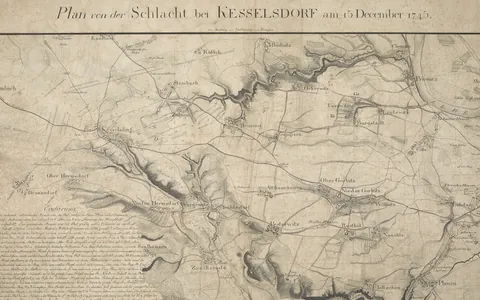
The Prussians then invaded Saxony, and on 15 December 1745 the veteran Prince Leopold of Anhalt-Dessau, the Old Dessauer, beat the Saxon and Austrian army at Kesselsdorf, as our article on the Battle of Kesselsdorf describes. Ten days later, on 25 December 1745, the Treaty of Dresden ended the war. Maria Theresa again ceded Silesia, on terms that Rowlands calls broadly similar to those of Breslau.18
The Third Silesian War (1756 to 1763)
Maria Theresa never accepted the loss of her richest province. The Peace of Aix-la-Chapelle of 1748, which ended the War of the Austrian Succession, left Silesia to Prussia, and Rowlands calls it more a truce than a definitive treaty. Her new chancellor, Wenzel Anton von Kaunitz, fired her determination to win Silesia back, and in the reversal of alliances of 1756 Austria joined its old enemy France, while Russia also turned against Prussia and Britain took Frederick’s side.19
Expecting to be attacked, Frederick struck first. On 29 August 1756 he invaded Saxony without a declaration of war, and the Saxon army, trapped at Pirna, had to surrender and was largely taken into the Prussian ranks. Saxony then stayed under Prussian occupation for most of the war.20
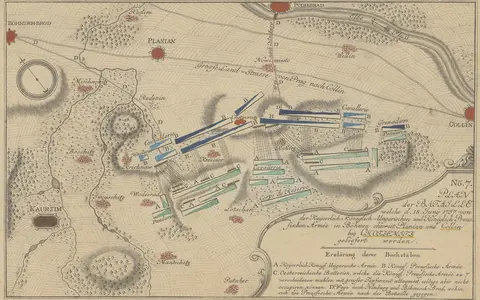
The campaign of 1757 swung from victory to near disaster and back. Frederick beat the Austrians at Prague on 6 May, but on 18 June Leopold Joseph von Daun defeated him at Kolín, and the Prussians had to leave Bohemia. With enemies advancing from every side, he turned west and routed a French and Imperial army at Rossbach on 5 November.21
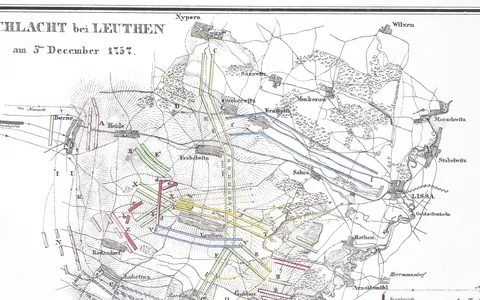
He then marched back to Silesia, most of which the Austrians had taken in the meantime, together with Schweidnitz and Breslau. On 5 December 1757 he beat a much larger Austrian army at Leuthen (Lutynia), the battle that Britannica calls the greatest of his victories, and won the province back. The German Historical Museum writes that Rossbach and Leuthen founded, far beyond Germany, the myth of Frederick as an almost invincible commander.22

From 1758 the war became a struggle of endurance. Frederick beat the Russians at Zorndorf (Sarbinowo) on 25 August 1758, in what Britannica calls the bloodiest battle of the war, but on 14 October Daun surprised his camp at Hochkirch. On 12 August 1759 a Russian and Austrian army crushed him at Kunersdorf (Kunowice), and the Silesian Museum writes that Prussia came close to collapse after that defeat. The victors did not follow it up, and the German Historical Museum and the NDB both put this down to disagreement between the Russian and Austrian commanders.23
In 1760 Frederick won at Liegnitz (Legnica) on 15 August and at Torgau on 3 November, but the NDB writes that these victories brought only short relief. Enemy troops briefly occupied Berlin in October 1760, and in 1761, for the first time, the Austrians and Russians spent the winter on Prussian soil, while Prussia’s strength was running out.24
Prussia was saved by the death of Empress Elizabeth of Russia on 5 January 1762. Her successor, Peter III, admired Frederick and made a separate peace with him on 5 May, the turn that German history remembers as the Miracle of the House of Brandenburg. Frederick’s brother Prince Henry beat the Austrians at Freiberg on 29 October 1762, a victory his NDB biography calls the last decisive one of the war, and in November Austria and Prussia agreed an armistice.25
The Peace of Hubertusburg, signed by Prussia, Austria and Saxony on 15 February 1763, restored the state of things before the war (Britannica’s article on the Silesian Wars gives the date as 16 February). Silesia stayed Prussian, and the Polish school platform adds that Saxony went back to its elector without any compensation for the years of occupation.26
Who won the Silesian Wars?
Prussia won the Silesian Wars, since each of the three settlements, at Breslau and Berlin in 1742, at Dresden in 1745 and at Hubertusburg in 1763, left Silesia in Prussian hands, and Britannica writes that Maria Theresa came near to success in the Seven Years’ War but never recovered her lost province.27
Several things decided the outcome, beginning with the fact that Frederick started the first war with a strong army and a full treasury against a Habsburg monarchy whose army and finances were in a poor state. In the third war he held out for almost seven years against Austria, Russia, France and Sweden, and after Rossbach he received British subsidies, while an allied army under Ferdinand of Brunswick fought the French in northwestern Germany.28
His enemies also failed to make the most of their chances. The Polish school platform notes that the allies did not exploit their best opportunities, and the German Historical Museum credits Frederick’s survival to strategic calculation and military skill but also to a great deal of luck and chance. The greatest stroke of luck was the death of Empress Elizabeth in 1762, which took Russia out of the war.29

For Austria the result was the failure of the war aim that mattered most. Britannica’s biography of Maria Theresa writes that the end of the Seven Years’ War sealed the loss of Silesia and left her monarchy with a mountain of debts, after which she became a champion of peace, and the Polish school platform concludes that the peace of 1763 left Silesia to Prussia for good.30
Consequences of the Silesian Wars
The wars made Prussia a great power. Britannica writes that its victories by 1745 had made it at least a semigreat power, and the Peace of Hubertusburg, in Britannica’s words, confirmed its stature as a major European power. The German Historical Museum sees Frederick’s aim in the Seven Years’ War as establishing Prussia as the fifth great power of Europe beside Britain, Austria, France and Russia, and the Polish school platform describes its rise into the group of five European powers.31
They also began a lasting enmity between Prussia and Austria. The NDB writes that by invading Silesia Frederick earned the mortal enmity of the Habsburg monarchy, and the two states went to war once more in the War of the Bavarian Succession of 1778 to 1779.32
For Silesia, the wars began two centuries of Prussian and German rule. Britannica writes that Prussian rule brought the province a more efficient administration and close attention to its economy, and the Silesian Museum describes the modernization of its state and administration under enlightened absolutism. In Britannica’s account, mining and industry later made Silesia the second most important industrial area of Germany.33
That history ended with World War II. In 1945 nearly all of Silesia was placed under Polish administration, and its German population was expelled. Some of the Poles who settled there in their place had themselves been driven from their homes, and Britannica notes that Poland received the region in compensation for its eastern lands taken by the Soviet Union. Most of historical Silesia now lies in Poland, and our article on the Silesian Uprisings follows the struggle for Upper Silesia after World War I.34
Major battles of the Silesian Wars
Below, in date order, are our articles on the battles of the three wars. The first two wars are also told in our guide to the War of the Austrian Succession, and the third has a guide of its own, the Third Silesian War.
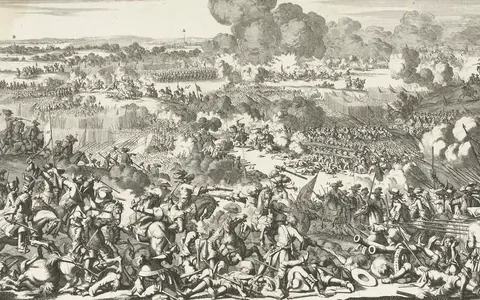
- 1741Battle of Mollwitz, 1741Kingdom of Prussia vs Habsburg Monarchy
On 10 April 1741 the Austrian cavalry routed the Prussian right at Mollwitz and Frederick II rode away. His infantry stayed, held and won him his first battle.
- 1745Battle of Kesselsdorf, 1745Kingdom of Prussia vs Electorate of Saxony and Austria
On 15 December 1745 the 69-year-old Prince Leopold of Anhalt-Dessau stormed the Saxon guns at Kesselsdorf near Dresden and ended the Second Silesian War.
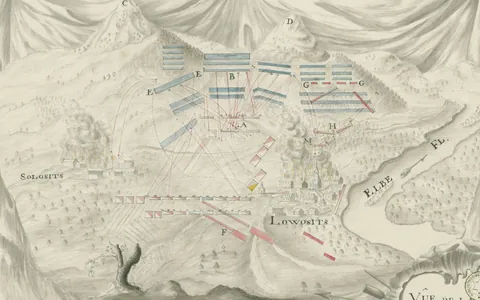
- 1756Battle of Lobositz, 1756Kingdom of Prussia vs Habsburg Monarchy
On 1 October 1756 Frederick the Great attacked Browne's Austrians at Lobositz in fog. His cavalry was wrecked, his infantry took the burning town, and Browne withdrew intact.
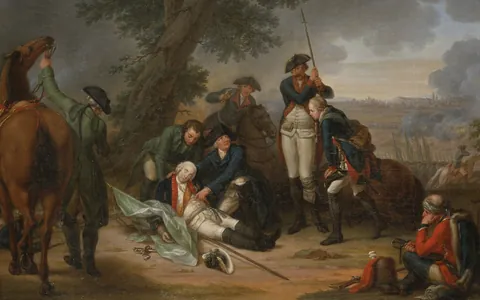
- 1757Battle of Prague, 1757Kingdom of Prussia vs Habsburg Monarchy
On 6 May 1757 Frederick the Great stormed the Austrian lines east of Prague. Schwerin fell with the colors in his hands, and 27,000 men were lost in a single day.
- 1757Battle of Kolín, 1757Habsburg Monarchy (Austria) and Saxon cavalry vs Kingdom of Prussia
On 18 June 1757 Daun's Austrians beat Frederick the Great at Kolín in Bohemia, ending his siege of Prague and his run of victories.
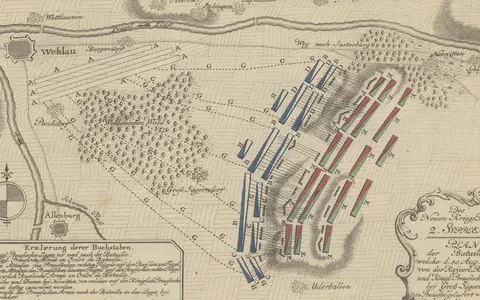
- 1757Battle of Gross-Jägersdorf, 1757Russian Empire vs Kingdom of Prussia
On 30 August 1757 Apraksin's Russians beat Lehwaldt's Prussians at Gross-Jägersdorf in East Prussia, then marched away without using their victory.
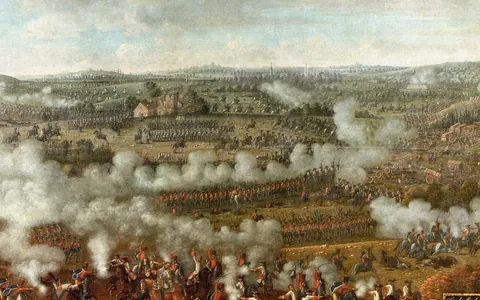
- 1757Battle of Rossbach, 1757Kingdom of Prussia vs France and the Holy Roman Empire
On 5 November 1757 Frederick the Great's 22,000 Prussians caught a French and Imperial army twice their size on the march and routed it in about an hour and a half.
- 1757Battle of Leuthen, 1757Kingdom of Prussia vs Habsburg Monarchy
On 5 December 1757 Frederick the Great feinted, marched hidden behind low hills and broke an Austrian army twice his size near Leuthen in Silesia.
- 1758Battle of Domstadtl, 1758Habsburg Monarchy (Austria) vs Kingdom of Prussia
On 30 June 1758 Loudon's Austrians ambushed Frederick the Great's 4,000-wagon supply convoy at Domstadtl and forced him to lift the siege of Olomouc.
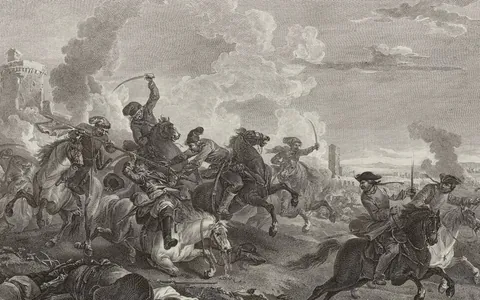
- 1758Battle of Zorndorf, 1758Kingdom of Prussia vs Russian Empire
On 25 August 1758 Frederick the Great attacked Fermor's Russian army near Küstrin. After a day of slaughter both armies held their ground, and both claimed the victory.
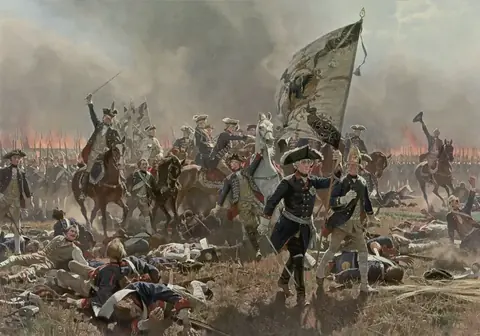
- 1758Battle of Hochkirch, 1758Habsburg Monarchy vs Kingdom of Prussia
On 14 October 1758 Daun's Austrians crept up on Frederick the Great's camp at Hochkirch in the dark and struck at 5 a.m. The night march, the churchyard fight, Keith's death and the numbers.
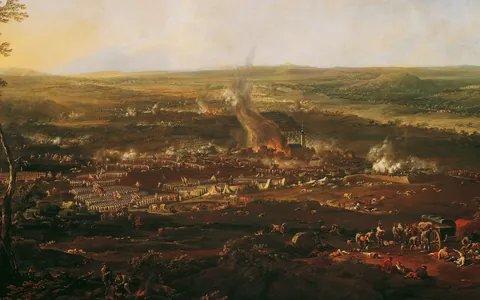
- 1759Battle of Kunersdorf, 1759Russian Empire and Habsburg Monarchy vs Kingdom of Prussia
Who won at Kunersdorf in 1759? Saltykov's Russians and Laudon's Austrians shattered Frederick the Great's army. Armies, losses, and why Berlin was spared.
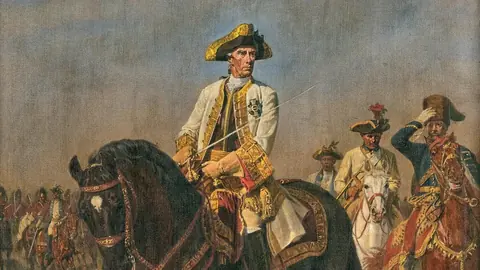
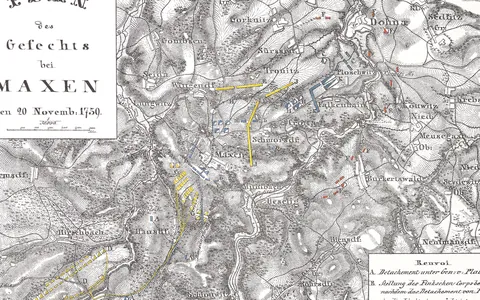
- 1759Battle of Maxen, 1759Habsburg Monarchy and the Reichsarmee vs Kingdom of Prussia
In November 1759 Frederick the Great sent General Finck's corps behind the Austrian army. At Maxen Daun surrounded it, and on 21 November the whole corps surrendered.
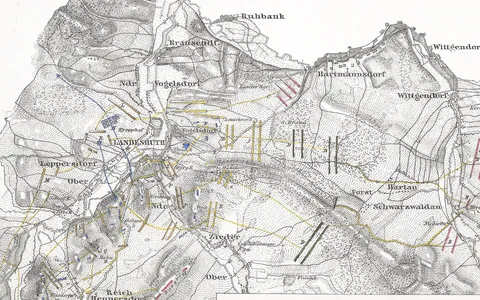
- 1760Battle of Landeshut, 1760Habsburg Monarchy (Austria) vs Kingdom of Prussia
On 23 June 1760 Loudon's Austrians stormed the Prussian hill forts at Landeshut, today Kamienna Góra, and captured General Fouqué with most of his corps.
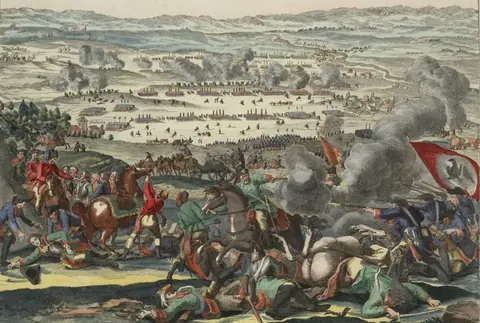
- 1760Battle of Liegnitz, 1760Kingdom of Prussia vs Habsburg Monarchy
Trapped in Silesia by three Austrian armies, Frederick the Great slipped out of his camp by night. At dawn on 15 August Laudon's corps ran straight into his army and was beaten in two hours.
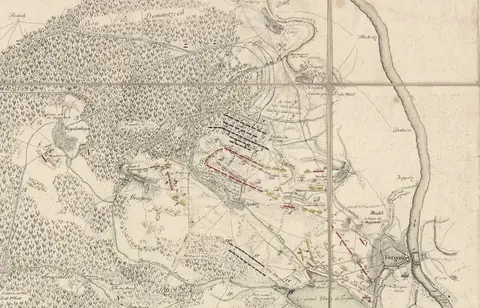
- 1760Battle of Torgau, 1760Kingdom of Prussia vs Habsburg Monarchy
On 3 November 1760 Frederick the Great stormed Daun's camp west of Torgau. His grenadiers died under the Austrian guns, and only Zieten's night attack on the Süptitz heights won the day.
- 1762Battle of Freiberg, 1762Kingdom of Prussia vs Holy Roman Empire and Austria
On 29 October 1762 Prince Henry of Prussia beat the Austro-Imperial army near Freiberg in Saxony, in what is called the last battle of the Seven Years' War.
Timeline of the Silesian Wars
- 1740Charles VI dies on 20 October. Frederick II invades Silesia in December.35
- 1741
- 1742Chotusitz on 17 May. The Treaty of Breslau (11 June), confirmed at Berlin (28 July), ends the First Silesian War.37
- 1744Frederick invades Bohemia in August, opening the Second Silesian War.38
- 1745Hohenfriedberg (4 June), Soor (30 September), Kesselsdorf (15 December). The Treaty of Dresden on 25 December.39
- 1748The Peace of Aix-la-Chapelle leaves Silesia to Prussia.40
- 1756The reversal of alliances. Frederick invades Saxony on 29 August, opening the Third Silesian War.41
- 1757
- 1758
- 1759
- 1760
- 1762
- 1763The Peace of Hubertusburg, 15 February: Silesia stays Prussian.47
Where to read next
For the man at the center of all three wars, read our profile of Frederick the Great. The wider wars are told in our guides to the War of the Austrian Succession and the Seven Years’ War, the German and Austrian sides in our military histories of Germany and Austria, and the battles of the age in our ranking of the greatest early modern battles.
Notes
A number in the text points to a note. Each note names the works that paragraph draws on, listed in full under Sources.
- Encyclopaedia Britannica, “Silesian Wars”. Zintegrowana Platforma Edukacyjna, “Nowe mocarstwo”. Arnulf Scriba, “1763”. ↩
- Encyclopaedia Britannica, “Silesian Wars”. Encyclopaedia Britannica, “Silesia”. Zintegrowana Platforma Edukacyjna, “Nowe mocarstwo”. Arnulf Scriba, “1763”. ↩
- Otto Graf zu Stolberg-Wernigerode, Neue Deutsche Biographie. Guy Rowlands, Europe, 1450 to 1789. Encyclopaedia Britannica, “Seven Years’ War”. Encyclopaedia Britannica, “Seven Years’ War”. ↩
- Encyclopaedia Britannica, “Silesian Wars”. Arnulf Scriba, “1763”. Zintegrowana Platforma Edukacyjna, “Nowe mocarstwo”. ↩
- Encyclopaedia Britannica, “Silesian Wars”. Zintegrowana Platforma Edukacyjna, “Pierwszy konflikt globalny”. Arnulf Scriba, “1763”. ↩
- Encyclopaedia Britannica, “Silesian Wars”. Encyclopaedia Britannica, “Seven Years’ War”. Zintegrowana Platforma Edukacyjna, “Nowe mocarstwo”. Arnulf Scriba, “1763”. ↩
- Guy Rowlands, Europe, 1450 to 1789. Encyclopaedia Britannica, “Maria Theresa”. Otto Graf zu Stolberg-Wernigerode, Neue Deutsche Biographie. ↩
- Encyclopaedia Britannica, “Frederick II, king of Prussia”. Guy Rowlands, Europe, 1450 to 1789. Otto Graf zu Stolberg-Wernigerode, Neue Deutsche Biographie. ↩
- Encyclopaedia Britannica, “Frederick II, king of Prussia”. Encyclopaedia Britannica, “Silesia”. Otto Graf zu Stolberg-Wernigerode, Neue Deutsche Biographie. Zintegrowana Platforma Edukacyjna, “Nowe mocarstwo”. ↩
- Encyclopaedia Britannica, “Silesian Wars”. Zintegrowana Platforma Edukacyjna, “Nowe mocarstwo”. Encyclopaedia Britannica, “Frederick II, king of Prussia”. Otto Graf zu Stolberg-Wernigerode, Neue Deutsche Biographie. Schlesisches Museum zu Görlitz, “Silesia turns into a Prussian Province”. Guy Rowlands, Europe, 1450 to 1789. ↩
- Encyclopaedia Britannica, “Frederick II, king of Prussia”. Otto Graf zu Stolberg-Wernigerode, Neue Deutsche Biographie. James D. Hardy, Europe, 1450 to 1789. Encyclopaedia Britannica, “Silesian Wars”. Guy Rowlands, Europe, 1450 to 1789. ↩
- Otto Graf zu Stolberg-Wernigerode, Neue Deutsche Biographie. Encyclopaedia Britannica, “Silesia”. Encyclopaedia Britannica, “Frederick II, king of Prussia”. Guy Rowlands, Europe, 1450 to 1789. ↩
- Guy Rowlands, Europe, 1450 to 1789. Otto Graf zu Stolberg-Wernigerode, Neue Deutsche Biographie. Encyclopaedia Britannica, “Frederick II, king of Prussia”. Encyclopaedia Britannica, “Silesian Wars”. ↩
- Encyclopaedia Britannica, “Frederick II, king of Prussia”. Otto Graf zu Stolberg-Wernigerode, Neue Deutsche Biographie. Royal Collection Trust, “Map of the Battle of Czaslau, 1742”. Encyclopaedia Britannica, “Silesian Wars”. ↩
- Encyclopaedia Britannica, “Silesian Wars”. Guy Rowlands, Europe, 1450 to 1789. Otto Graf zu Stolberg-Wernigerode, Neue Deutsche Biographie. Encyclopaedia Britannica, “Frederick II, king of Prussia”. Encyclopaedia Britannica, “Silesia”. ↩
- Encyclopaedia Britannica, “Frederick II, king of Prussia”. Otto Graf zu Stolberg-Wernigerode, Neue Deutsche Biographie. ↩
- Guy Rowlands, Europe, 1450 to 1789. Otto Graf zu Stolberg-Wernigerode, Neue Deutsche Biographie. Encyclopaedia Britannica, “Frederick II, king of Prussia”. Royal Collection Trust, “Map of the Battle of Striegau, 1745”. Royal Collection Trust, “Map of the Battle of Soor, 1745”. ↩
- Otto Graf zu Stolberg-Wernigerode, Neue Deutsche Biographie. Royal Collection Trust, “Map of the Battle of Kesselsdorf, 1745”. Encyclopaedia Britannica, “Silesian Wars”. Encyclopaedia Britannica, “Frederick II, king of Prussia”. Guy Rowlands, Europe, 1450 to 1789. ↩
- Guy Rowlands, Europe, 1450 to 1789. Encyclopaedia Britannica, “Maria Theresa”. Zintegrowana Platforma Edukacyjna, “Pierwszy konflikt globalny”. James D. Hardy, Europe, 1450 to 1789. ↩
- Arnulf Scriba, “1763”. Encyclopaedia Britannica, “Seven Years’ War”. Zintegrowana Platforma Edukacyjna, “Pierwszy konflikt globalny”. ↩
- Otto Graf zu Stolberg-Wernigerode, Neue Deutsche Biographie. Encyclopaedia Britannica, “Seven Years’ War”. Zintegrowana Platforma Edukacyjna, “Pierwszy konflikt globalny”. Arnulf Scriba, “1763”. ↩
- Otto Graf zu Stolberg-Wernigerode, Neue Deutsche Biographie. Encyclopaedia Britannica, “Seven Years’ War”. Arnulf Scriba, “1763”. Zintegrowana Platforma Edukacyjna, “Pierwszy konflikt globalny”. ↩
- Otto Graf zu Stolberg-Wernigerode, Neue Deutsche Biographie. Encyclopaedia Britannica, “Seven Years’ War”. Schlesisches Museum zu Görlitz, “Silesia turns into a Prussian Province”. Arnulf Scriba, “1763”. Zintegrowana Platforma Edukacyjna, “Pierwszy konflikt globalny”. ↩
- Otto Graf zu Stolberg-Wernigerode, Neue Deutsche Biographie. Encyclopaedia Britannica, “Seven Years’ War”. Zintegrowana Platforma Edukacyjna, “Pierwszy konflikt globalny”. ↩
- Arnulf Scriba, “1763”. Encyclopaedia Britannica, “Seven Years’ War”. Otto Graf zu Stolberg-Wernigerode, Neue Deutsche Biographie. Zintegrowana Platforma Edukacyjna, “Pierwszy konflikt globalny”. Chester Verne Easum, Neue Deutsche Biographie. ↩
- Arnulf Scriba, “1763”. Otto Graf zu Stolberg-Wernigerode, Neue Deutsche Biographie. Encyclopaedia Britannica, “Peace of Hubertusburg”. Encyclopaedia Britannica, “Silesian Wars”. Zintegrowana Platforma Edukacyjna, “Pierwszy konflikt globalny”. ↩
- Encyclopaedia Britannica, “Silesian Wars”. Encyclopaedia Britannica, “Frederick II, king of Prussia”. Zintegrowana Platforma Edukacyjna, “Pierwszy konflikt globalny”. Encyclopaedia Britannica, “Peace of Hubertusburg”. ↩
- Encyclopaedia Britannica, “Frederick II, king of Prussia”. Guy Rowlands, Europe, 1450 to 1789. Arnulf Scriba, “1763”. Otto Graf zu Stolberg-Wernigerode, Neue Deutsche Biographie. Encyclopaedia Britannica, “Seven Years’ War”. Encyclopaedia Britannica, “Seven Years’ War”. ↩
- Zintegrowana Platforma Edukacyjna, “Pierwszy konflikt globalny”. Arnulf Scriba, “1763”. Otto Graf zu Stolberg-Wernigerode, Neue Deutsche Biographie. Encyclopaedia Britannica, “Seven Years’ War”. ↩
- Encyclopaedia Britannica, “Maria Theresa”. Zintegrowana Platforma Edukacyjna, “Pierwszy konflikt globalny”. ↩
- Encyclopaedia Britannica, “Frederick II, king of Prussia”. Encyclopaedia Britannica, “Peace of Hubertusburg”. Arnulf Scriba, “1763”. Zintegrowana Platforma Edukacyjna, “Nowe mocarstwo”. James D. Hardy, Europe, 1450 to 1789. ↩
- Otto Graf zu Stolberg-Wernigerode, Neue Deutsche Biographie. Encyclopaedia Britannica, “Maria Theresa”. Chester Verne Easum, Neue Deutsche Biographie. ↩
- Encyclopaedia Britannica, “Silesia”. Schlesisches Museum zu Görlitz, “Silesia turns into a Prussian Province”. ↩
- Encyclopaedia Britannica, “Silesia”. Schlesisches Museum zu Görlitz, “Doom and new Beginning”. ↩
- Guy Rowlands, Europe, 1450 to 1789. Encyclopaedia Britannica, “Silesian Wars”. ↩
- Otto Graf zu Stolberg-Wernigerode, Neue Deutsche Biographie. Encyclopaedia Britannica, “Silesian Wars”. ↩
- Royal Collection Trust, “Map of the Battle of Czaslau, 1742”. Encyclopaedia Britannica, “Silesian Wars”. Otto Graf zu Stolberg-Wernigerode, Neue Deutsche Biographie. ↩
- Encyclopaedia Britannica, “Frederick II, king of Prussia”. Otto Graf zu Stolberg-Wernigerode, Neue Deutsche Biographie. ↩
- Royal Collection Trust, “Map of the Battle of Striegau, 1745”. Royal Collection Trust, “Map of the Battle of Soor, 1745”. Royal Collection Trust, “Map of the Battle of Kesselsdorf, 1745”. Encyclopaedia Britannica, “Silesian Wars”. Otto Graf zu Stolberg-Wernigerode, Neue Deutsche Biographie. ↩
- Guy Rowlands, Europe, 1450 to 1789. Zintegrowana Platforma Edukacyjna, “Pierwszy konflikt globalny”. ↩
- Encyclopaedia Britannica, “Maria Theresa”. Arnulf Scriba, “1763”. Encyclopaedia Britannica, “Seven Years’ War”. ↩
- Otto Graf zu Stolberg-Wernigerode, Neue Deutsche Biographie. Encyclopaedia Britannica, “Seven Years’ War”. ↩
- Otto Graf zu Stolberg-Wernigerode, Neue Deutsche Biographie. Encyclopaedia Britannica, “Seven Years’ War”. ↩
- Otto Graf zu Stolberg-Wernigerode, Neue Deutsche Biographie. Encyclopaedia Britannica, “Seven Years’ War”. ↩
- Otto Graf zu Stolberg-Wernigerode, Neue Deutsche Biographie. Encyclopaedia Britannica, “Seven Years’ War”. ↩
- Arnulf Scriba, “1763”. Encyclopaedia Britannica, “Seven Years’ War”. Chester Verne Easum, Neue Deutsche Biographie. ↩
- Arnulf Scriba, “1763”. Otto Graf zu Stolberg-Wernigerode, Neue Deutsche Biographie. ↩
Sources
- Encyclopaedia Britannica, “Silesian Wars”.
- Zintegrowana Platforma Edukacyjna (Polish Ministry of Education), “Nowe mocarstwo: Prusy”.
- Arnulf Scriba, LeMO, Deutsches Historisches Museum, “1763: Das Ende des Siebenjährigen Krieges”.
- Encyclopaedia Britannica, “Silesia”.
- Otto Graf zu Stolberg-Wernigerode, Neue Deutsche Biographie 5 (1961), Deutsche Biographie, “Friedrich II. der Große”.
- Guy Rowlands, Europe, 1450 to 1789: Encyclopedia of the Early Modern World (Gale), via Encyclopedia.com, “Austrian Succession, War of the (1740 to 1748)”.
- Encyclopaedia Britannica, “Seven Years’ War: The course of the Seven Years’ War (1756 and 1757)”.
- Encyclopaedia Britannica, “Seven Years’ War: 1758 and 1759”.
- Zintegrowana Platforma Edukacyjna, “Pierwszy konflikt globalny”.
- Encyclopaedia Britannica, “Seven Years’ War: 1760 to 1762”.
- Encyclopaedia Britannica, “Maria Theresa”.
- Encyclopaedia Britannica, “Frederick II, king of Prussia”.
- Schlesisches Museum zu Görlitz, permanent exhibition, “Silesia turns into a Prussian Province”.
- James D. Hardy, Europe, 1450 to 1789: Encyclopedia of the Early Modern World (Gale), via Encyclopedia.com, “Frederick II (Prussia)”.
- Royal Collection Trust, Military Maps, “Map of the Battle of Czaslau, 1742”.
- Royal Collection Trust, Military Maps, “Map of the Battle of Striegau, 1745”.
- Royal Collection Trust, Military Maps, “Map of the Battle of Soor, 1745”.
- Royal Collection Trust, Military Maps, “Map of the Battle of Kesselsdorf, 1745”.
- Chester Verne Easum, Neue Deutsche Biographie 8 (1969), Deutsche Biographie, “Heinrich, Prinz von Preußen”.
- Encyclopaedia Britannica, “Peace of Hubertusburg”.
- Schlesisches Museum zu Görlitz, permanent exhibition, “Doom and new Beginning”.






