

What was the Third Silesian War and who won?
The Third Silesian War (1756 to 1763) was the European theater of the Seven Years' War: Frederick the Great's Prussia, backed by British money, against Austria, Russia, France, Sweden and the Holy Roman Empire. Austria fought to win back Silesia. Prussia survived, helped by Russia's exit in 1762, and kept Silesia at the Peace of Hubertusburg in 1763.1
The Third Silesian War was fought from 1756 to 1763 between Frederick II (the Great) of Prussia and a coalition of the Habsburg Monarchy, Russia, France, Sweden and the Holy Roman Empire, with Saxony as its first victim. It was the war in Central Europe inside the wider Seven Years' War, which also set Britain against France in North America, India and at sea. For Britain the continental war meant subsidies for Frederick and an Anglo-Hanoverian army that held the French back in western Germany.2
The war decided who would hold Silesia, the rich province that Frederick had seized from Maria Theresa in 1740 and kept through the War of the Austrian Succession. Prussia kept it: the Peace of Hubertusburg of 15 February 1763 restored the borders of 1748. Our guides tell the story of the war's most famous battles, Leuthen, Rossbach, Kolín and Hochkirch, and the war is a chapter in our military histories of Austria, Germany, Russia, Sweden, France and Britain. This guide sets it out as a whole, from the side of each state that fought it.3
Causes of the Third Silesian War
Silesia was a wealthy Habsburg province, and in December 1740, weeks after Maria Theresa inherited the Habsburg lands, Frederick II invaded it. In two rounds of fighting, from 1740 to 1742 and from 1744 to 1745, Prussia took and kept almost all of the province, and the Treaty of Aix-la-Chapelle of 1748, which ended the War of the Austrian Succession, left it in Prussian hands. Britannica's biography of Frederick calls Silesia more developed economically than any other major part of the Hohenzollern lands.4
Vienna never accepted the loss. Britannica writes that the 1748 peace virtually guaranteed a new Austro-Prussian war by confirming Frederick's conquest, and the historian Guy Rowlands calls it a settlement that had merely suspended the conflict. Maria Theresa used the years of peace to reform her administration and army, and Wenzel Anton von Kaunitz, head of the Austrian State Chancery from 1753, fired her determination to recover Silesia.5
Russia had grievances of its own. Under Empress Elizabeth and her chancellor Aleksey Bestuzhev-Ryumin it followed a firmly pro-Austrian and anti-Prussian policy, both of them disliked Frederick intensely, and in 1746 Russia and Austria concluded a defensive alliance.6
The spark came from the Anglo-French war that had begun in North America. In September 1755 Britain signed a subsidy agreement with Russia to protect Hanover, the German electorate of King George II. Alarmed, Frederick reached an agreement with Britain in January 1756 to keep foreign armies out of Germany. France, Prussia's nominal ally, saw this as desertion, and on 1 May 1756 it signed a defensive treaty with Austria at Versailles, ending a rivalry of centuries. Russia drew closer to Austria. This reversal of alliances is known as the Diplomatic Revolution; Britannica calls it Kaunitz's greatest diplomatic coup.7
By the summer of 1756 Austria and Russia were massing troops near Prussia's borders, and Frederick's requests to Maria Theresa for assurances went unanswered. On 29 August 1756 he invaded Saxony on his way to Bohemia. Historians still debate whether he launched a preventive war against an attack he believed imminent or seized the chance for new conquests. Britannica's biography concludes that he was indeed seriously threatened and that Elizabeth above all meant to destroy Prussia's new standing; according to EBSCO's Research Starters, Maria Theresa had planned to attack in the spring of 1757.8
Who fought in the Third Silesian War
Prussia and Britain. Prussia had one great-power ally. Britain wanted Hanover safe while it fought France overseas. After Frederick's victory at Rossbach in November 1757 the British repudiated the Convention of Klosterzeven, under which the Anglo-Hanoverian army had agreed to disband, placed that army under Duke Ferdinand of Brunswick and, from April 1758, paid Prussia a yearly subsidy. Ferdinand's army covered Frederick's western flank, leaving him free to face Austria and Russia. Britain's own story is told in our military history of Britain.9
The Habsburg Monarchy and the Empire. For Maria Theresa the war was about Silesia. In the offensive Second Treaty of Versailles of 1 May 1757 France committed itself to the goal: Austria would recover Silesia, and France would keep an army in Germany and pay Vienna subsidies. Within the Holy Roman Empire, Austria won a vote for a war of the Empire against Prussia, and an Imperial army, the Reichsarmee, took the field beside the French. See our military history of Austria for the Habsburg side over the centuries.10

Russia. Elizabeth's Russia was the most determined of Frederick's enemies. Rowlands describes its aim as the humbling of Prussia, and an Austro-Russian offensive alliance of February 1757 bound Russia to put 80,000 men in the field. Russian armies reached Prussia across Polish territory, and from 1758 the main weight of the offensive against Frederick passed to them; East Prussia, taken that January, stayed under Russian occupation for the rest of the war. More in our military history of Russia.11
France. France had signed the Austrian alliance expecting to fight Britain, and Frederick's invasion of Saxony committed it to defend Austria in Germany. It sent armies into Hanover and, with the Reichsarmee, toward Saxony. Under the duc de Choiseul, foreign minister from December 1758, the Third Treaty of Versailles of 1759 reduced its role to that of an Austrian auxiliary, and its subsidies to Vienna were cut so that it could concentrate on the struggle with Britain. Ferdinand's victory over the French at Minden on 1 August 1759 kept them out of Hanover. See the military history of France.12
Sweden. Sweden joined the coalition in March 1757, hoping to regain the parts of Pomerania it had lost to Prussia in 1720, and invaded Prussian Pomerania that year. Its war with Prussia, known in Sweden as the Pomeranian War, lasted until 1762; our military history of Sweden places it in the longer Swedish story.13
Saxony. Saxony was the war's first victim. Its elector, Frederick Augustus II, was also king of Poland as Augustus III, and his electorate lay between Prussia and Austrian Bohemia. Frederick took Dresden in September 1756, trapped the Saxon army and forced it to surrender, then took its soldiers into his own army. Augustus spent the war in Poland. Saxony stayed under Prussian military occupation for most of the war, and Frederick drew heavily on its money and supplies.14

From Saxony to Leuthen, 1756 to 1757
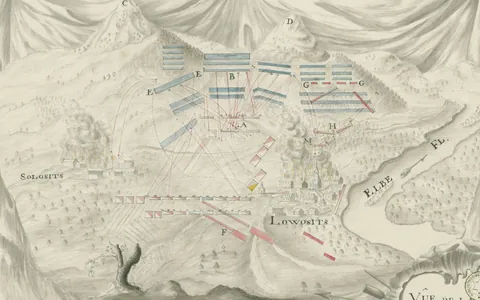
To stop an Austrian army under Maximilian Ulysses Browne from relieving the Saxons, Frederick marched into Bohemia and fought it at Lobositz (Lovosice) on 1 October 1756, the first battle of the war. The Austrians withdrew, and the trapped Saxon army surrendered soon afterward.15
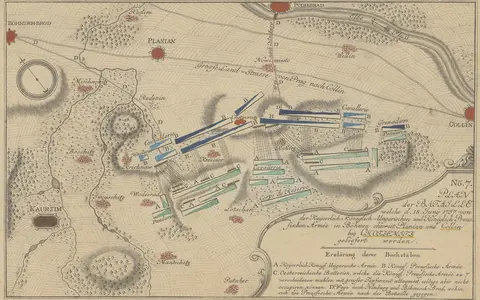
In the spring of 1757 Frederick invaded Bohemia again. On 6 May he routed the Austrians under Browne and Prince Charles of Lorraine at Prague and besieged the city. Leopold Joseph von Daun marched to its relief with more than 50,000 men, and on 18 June he defeated Frederick at Kolín. The Prussians lifted the siege and left Bohemia. Maria Theresa marked the victory by founding the Military Order of Maria Theresa, dated to the day of the battle.16
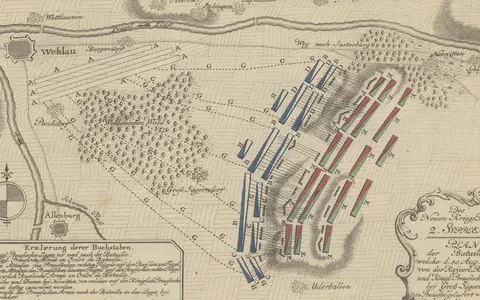
Frederick's enemies now closed in from all sides. A French army of more than 100,000 men overran Hanover and in September forced the Anglo-Hanoverian army to accept the Convention of Klosterzeven, while a second French army under the prince de Soubise joined the Reichsarmee to drive the Prussians out of Saxony. The Swedes invaded Pomerania, Austrian troops briefly occupied Berlin in October, and a Russian army invaded East Prussia and defeated the Prussians at Gross-Jägersdorf on 30 August.17
Frederick turned west first. At Rossbach in Saxony, on 5 November 1757, he routed the French and Imperial army under Soubise and Joseph Frederick of Saxe-Hildburghausen, above all through the cavalry of Friedrich Wilhelm von Seydlitz. The allies had about twice his numbers: Britannica gives at least 41,000 against 21,000, EBSCO's Research Starters about 45,000 against 22,000. Prussian losses were tiny, about 550 men in the accounts of Britannica and the Gale Encyclopedia of World History.18
In Silesia the Austrians had meanwhile taken Schweidnitz (Świdnica) and the capital, Breslau (Wrocław). Frederick marched east and on 5 December 1757 attacked Prince Charles's army at Leuthen (Lutynia). He feinted against one Austrian wing and struck the other with his main force, the classic example of his “oblique order”. The Austrians had roughly twice his numbers (Britannica gives 72,000 against 43,000, EBSCO 65,000 against 33,000) but lost about 22,000 men, some 12,000 of them prisoners, and Breslau soon fell back into Prussian hands.19
Rossbach and Leuthen turned the year around. Britannica credits Frederick's generalship, together with the Russian withdrawal after Gross-Jägersdorf, with saving Prussia from a situation that had looked desperate after Kolín. The German Historical Museum notes that the two victories founded, far beyond Germany, the image of Frederick as an almost invincible commander.20
The war of attrition, 1758 to 1761
From 1758 Austria set out to wear Prussia down. In the spring Frederick invaded Moravia and besieged Olmütz (Olomouc), but on 30 June Ernst Gideon von Laudon destroyed a large Prussian supply convoy at Domstadtl, and Frederick had to lift the siege. He then turned against the Russians, who had taken Königsberg in January and were advancing toward Brandenburg. At Zorndorf (Sarbinowo) on 25 August 1758 he fought them in what Britannica calls the bloodiest battle of the war, and the Russian advance was stopped.21
Daun struck next. On the night of 13 to 14 October 1758 his army surprised Frederick's camp at Hochkirch in Lusatia and attacked at dawn. The Prussians lost about 9,500 to 10,000 men (the figures of Britannica and EBSCO respectively) but fought their way out, and Daun could not stop Frederick's march into Silesia. Britannica calls it an expensive victory for Daun; EBSCO's account stresses that Frederick saved the bulk of his army.22
In 1759 Russia and Austria joined forces. A Russian army under Pyotr Saltykov advanced across Poland into Brandenburg, and Laudon's Austrian corps joined it near Frankfurt an der Oder. On 12 August Frederick attacked them at Kunersdorf (Kunowice) and suffered what Rowlands calls his worst defeat ever; for EBSCO's Research Starters it was the low point of the war for Frederick. The victors did not follow it up. Laudon, his NDB biography records, could not win his allies over to a pursuit that might have decided the war.23
In November 1759, at Maxen south of Dresden, Daun surrounded a Prussian corps under Friedrich August von Finck and forced it to surrender, a success his NDB biography calls the “Finkenfang”, the finch trap.24

In 1760 the allies made Silesia their main theater of operations. Laudon destroyed General Heinrich August de la Motte Fouqué's corps at Landeshut (Kamienna Góra) in June, but on 15 August Frederick beat him at Liegnitz (Legnica). In October Russian and Austrian troops occupied Berlin for several days. On 3 November Frederick attacked Daun's army on the heights at Torgau and drove it from the field, but at a heavy price: Rowlands notes that it cost him more men than the beaten side lost. The figures differ widely, from Britannica's 13,000 Prussian losses to EBSCO's 24,000.25
By 1761 Prussia was close to exhaustion, with underage and poor recruits filling the ranks. Laudon joined a Russian army in Silesia, and Frederick shut himself into a fortified camp at Bunzelwitz, which they did not dare to attack; on 1 October Laudon took the fortress of Schweidnitz by surprise. In Britain the new king George III and the Earl of Bute were moving toward peace, and British subsidies to Prussia stopped in 1762. Britannica's biography of Frederick calls his position by 1761 desperate.26
Key commanders of the Third Silesian War
Prussia. Frederick II led his main army in person and often exposed himself to danger. His younger brother, Prince Henry, held independent commands, mostly in Saxony, where his careful defensive campaigns against superior forces complemented the king's daring. Henry won the last major battle of the war, at Freiberg, on 29 October 1762.27
Austria. Prince Charles of Lorraine, Maria Theresa's brother-in-law, led the main army at Prague and Leuthen. After Leuthen, Daun held the supreme command to the end of the war. Criticized even in his own time for excessive caution, he was the victor of Kolín, Hochkirch and Maxen and from 1762 president of the Imperial War Council. Laudon, born in Livonia, was in the words of his NDB biography a master of small war who grew into a strategist with an unshakable offensive spirit, the winner of Domstadtl, Landeshut and, with Saltykov, Kunersdorf.28
Russia and the west. Russia's best-known commander was Pyotr Saltykov, the victor of Kunersdorf. In the west, Duke Ferdinand of Brunswick led the British, Hanoverian and allied German army that beat the French at Minden.29
The rulers. Behind the generals stood Maria Theresa, with Kaunitz directing her foreign policy; Elizabeth of Russia, whose failing health from 1757 weakened Russian direction of the war; Louis XV of France and, from 1758, his minister Choiseul; and on the other side George II of Britain and, from 1760, George III.30

The Miracle of the House of Brandenburg and the Peace of Hubertusburg
Prussia was saved by a death in St. Petersburg. Empress Elizabeth died on 5 January 1762, and her successor, Peter III, was a fervent admirer of Frederick. He made peace with Prussia on 5 May 1762 and handed back Russia's conquests, and he even ordered Russian troops to help Frederick against the Austrians. In Prussia this sudden turn became known as the “Miracle of the House of Brandenburg”. Sweden, too, made peace in 1762.31
Peter's reign lasted barely six months. In July 1762 his wife seized the throne as Catherine II. She did not renew the war against Prussia, but she withdrew the help he had promised Frederick.32
Without Russia, Austria could not win. Prince Henry beat the Austrians at Freiberg in October, Britain was making its own peace with France, concluded at Paris on 10 February 1763, and at the end of December 1762 negotiations opened at Hubertusburg, a Saxon hunting lodge between Dresden and Leipzig. The treaty, signed by Austria, Prussia and Saxony on 15 February 1763, restored the borders of 1748. Silesia stayed Prussian, Saxony went back to its elector, and Prussia's only concession was to promise its support for Maria Theresa's son Joseph in the imperial election.33
Who won the Third Silesian War?
Prussia won in the sense that mattered most: it kept Silesia and came out of the war as an accepted great power, although it gained nothing else and had to give up Saxony. Austria failed in its war aim. Britannica writes that its prestige was diminished; EBSCO's biography of Maria Theresa argues that Austria nonetheless regained much of its lost international standing.34
Historians stress how much the outcome owed to others. Britannica notes that Frederick's debt to fortune and to the British subsidy was soon forgotten while his military genius was celebrated, and judges that without British subsidies Prussia could not have fought on. Rowlands points to the slow planning, cautious generals and diverging aims of Austria and Russia, which let Frederick deal with his enemies in turn; EBSCO's Research Starters add the advantage of interior lines.35
For Russia the war brought no territory but more weight in Europe: Britannica sees an invisible gain in the end of French influence in Poland, and Rowlands calls Russia the arbiter of eastern Europe after 1763. France, beaten overseas by Britain, lost much of its influence on the Continent.36

Consequences and memory of the Third Silesian War
The human cost was enormous. Britannica's biography of Frederick and the German Historical Museum both put the Prussian army's losses at about 180,000 men, and both record that parts of Prussia were laid waste.37
The rivalry between Prussia and Austria that began in 1740 became a lasting feature of German politics, and the two fought again in the War of the Bavarian Succession of 1778 to 1779. In 1772 Prussia, Russia and Austria together carried out the First Partition of Poland.38
Maria Theresa, Britannica writes, became a champion of peace after the war that sealed the loss of Silesia, and EBSCO's biography records her resolve never again to go to war except in self-defense.39
In Prussia, and later in Germany, Rossbach and Leuthen became the core of a heroic legend of Frederick the Great, while the help of fortune and of Britain faded from memory. The engraving of Frederick at Kunersdorf at the top of this page, made in 1804, belongs to that memory as much as to the battle.40
Major battles of the Third Silesian War
Below, in date order, are our articles on the battles of this war.
- 1756Battle of Lobositz, 1756Kingdom of Prussia vs Habsburg Monarchy
On 1 October 1756 Frederick the Great attacked Browne's Austrians at Lobositz in fog; his cavalry was wrecked, his infantry took the burning town, and Browne withdrew intact.
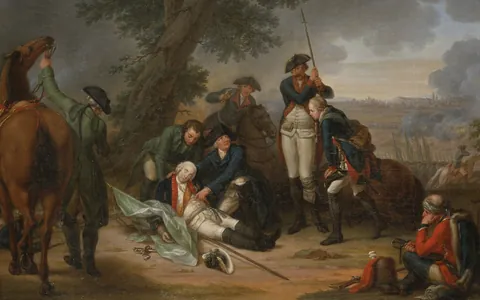
- 1757Battle of Prague, 1757Kingdom of Prussia vs Habsburg Monarchy
On 6 May 1757 Frederick the Great stormed the Austrian lines east of Prague. Schwerin fell with the colors in his hands, and 27,000 men were lost in a single day.
- 1757Battle of Kolín, 1757Habsburg Monarchy (Austria) and Saxon cavalry vs Kingdom of Prussia
On 18 June 1757 Daun's Austrians beat Frederick the Great at Kolín in Bohemia, ending his siege of Prague and his run of victories.
- 1757Battle of Gross-Jägersdorf, 1757Russian Empire vs Kingdom of Prussia
On 30 August 1757 Apraksin's Russians beat Lehwaldt's Prussians at Gross-Jägersdorf in East Prussia, then marched away without using their victory.
- 1757Battle of Rossbach, 1757Kingdom of Prussia vs France and the Holy Roman Empire
On 5 November 1757 Frederick the Great's 22,000 Prussians caught a French and Imperial army twice their size on the march and routed it in about an hour and a half.
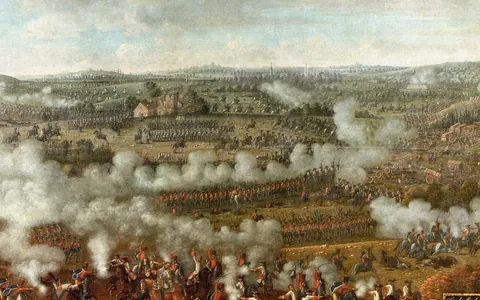
- 1757Battle of Leuthen, 1757Kingdom of Prussia vs Habsburg Monarchy
On 5 December 1757 Frederick the Great feinted, marched hidden behind low hills and broke an Austrian army twice his size near Leuthen in Silesia.
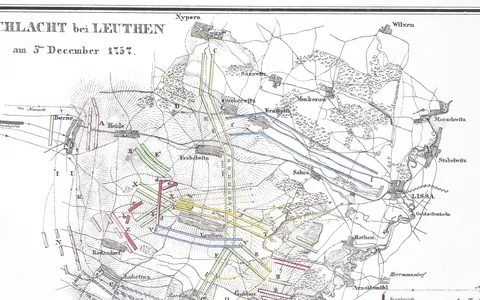
- 1758Battle of Domstadtl, 1758Habsburg Monarchy (Austria) vs Kingdom of Prussia
On 30 June 1758 Loudon's Austrians ambushed Frederick the Great's 4,000-wagon supply convoy at Domstadtl and forced him to lift the siege of Olomouc.
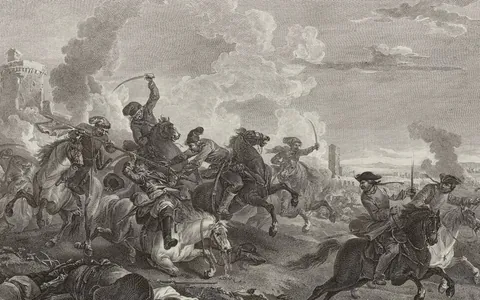
- 1758Battle of Hochkirch, 1758Habsburg Monarchy vs Kingdom of Prussia
On 14 October 1758 Daun's Austrians crept up on Frederick the Great's camp at Hochkirch in the dark and struck at 5 a.m. The night march, the churchyard fight, Keith's death and the numbers.
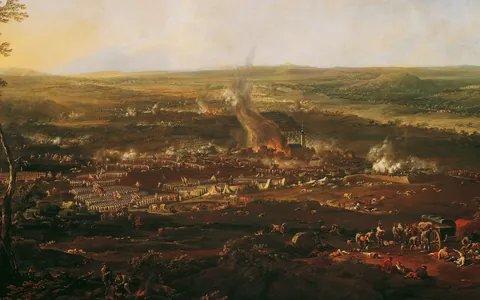
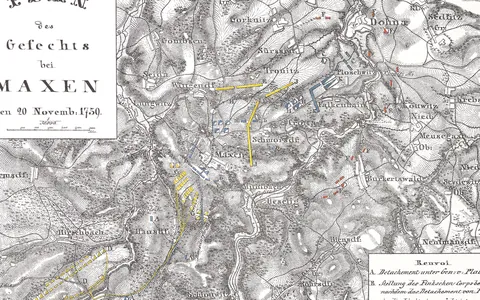
- 1759Battle of Maxen, 1759Habsburg Monarchy and the Reichsarmee vs Kingdom of Prussia
In November 1759 Frederick the Great sent General Finck's corps behind the Austrian army. At Maxen Daun surrounded it, and on 21 November the whole corps surrendered.
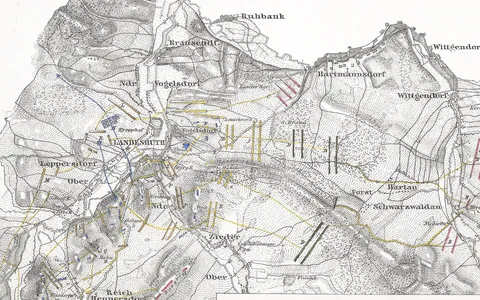
- 1760Battle of Landeshut, 1760Habsburg Monarchy (Austria) vs Kingdom of Prussia
On 23 June 1760 Loudon's Austrians stormed the Prussian hill forts at Landeshut, today Kamienna Góra, and captured General Fouqué with most of his corps.
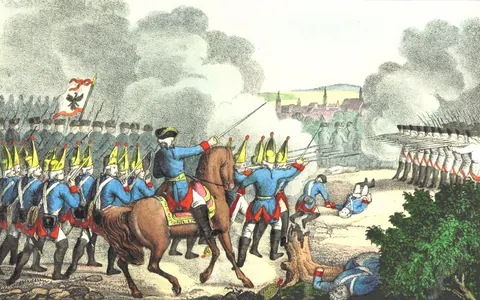
- 1762Battle of Freiberg, 1762Kingdom of Prussia vs Holy Roman Empire and Austria
On 29 October 1762 Prince Henry of Prussia beat the Austro-Imperial army near Freiberg in Saxony, in what is called the last battle of the Seven Years' War.
Timeline of the Third Silesian War
- 1740December: Frederick II invades the Habsburg province of Silesia.41
- 1748The Treaty of Aix-la-Chapelle leaves Silesia to Prussia.42
- 1756January: Anglo-Prussian agreement; 1 May: Franco-Austrian treaty of Versailles; 29 August: Frederick invades Saxony; 1 October: Battle of Lobositz; the Saxon army surrenders.43
- 17576 May: Battle of Prague; 18 June: Battle of Kolín; 30 August: Battle of Gross-Jägersdorf; September: Convention of Klosterzeven; 5 November: Battle of Rossbach; 5 December: Battle of Leuthen.44
- 1758January: the Russians take Königsberg; April: British subsidy treaty with Prussia; 30 June: Domstadtl; 25 August: Battle of Zorndorf; 14 October: Battle of Hochkirch.45
- 17591 August: Battle of Minden; 12 August: Battle of Kunersdorf; November: Battle of Maxen.46
- 1760June: Battle of Landeshut; 15 August: Battle of Liegnitz; October: Russian and Austrian troops in Berlin; 3 November: Battle of Torgau.47
- 1761Frederick entrenched at Bunzelwitz; 1 October: Laudon takes Schweidnitz.48
- 17625 January: Empress Elizabeth dies; 5 May: Russo-Prussian peace; July: Catherine II seizes power; 29 October: Battle of Freiberg.49
- 176315 February: Peace of Hubertusburg between Austria, Prussia and Saxony.50
Where to read next
The war is one theater of the Seven Years' War and the last of three wars over Silesia that began with the War of the Austrian Succession. For the battles themselves, start with Leuthen and Rossbach; for the wider era, see the greatest battles of the early modern era.
Notes
A number in the text points to a note; each note names the works that paragraph draws on, listed in full under Sources.
- Encyclopaedia Britannica, “Seven Years' War”; Encyclopaedia Britannica, “Frederick II, king of Prussia”; Encyclopaedia Britannica, “Seven Years' War”; Guy Rowlands, Europe, 1450 to 1789. ↩
- Encyclopaedia Britannica, “Seven Years' War”; Encyclopaedia Britannica, “Seven Years' War”; Johnpeter Horst Grill, “Seven Years' War”; Guy Rowlands, Europe, 1450 to 1789. ↩
- Encyclopaedia Britannica, “Seven Years' War”; Encyclopaedia Britannica, “Seven Years' War”; The Columbia Encyclopedia. ↩
- Encyclopaedia Britannica, “Frederick II, king of Prussia”; Clifton W. Potter Jr., “Maria Theresa”; James D. Hardy, Europe, 1450 to 1789; Encyclopaedia Britannica, “Seven Years' War”. ↩
- Encyclopaedia Britannica, “Seven Years' War”; Guy Rowlands, Europe, 1450 to 1789; Encyclopaedia Britannica, “Maria Theresa”; Encyclopaedia Britannica, “Wenzel Anton von Kaunitz”. ↩
- Encyclopaedia Britannica, “Elizabeth, empress of Russia”; Encyclopaedia Britannica, “Frederick II, king of Prussia”; Encyclopaedia Britannica, “Seven Years' War”; James D. Hardy, Europe, 1450 to 1789. ↩
- Encyclopaedia Britannica, “Seven Years' War”; Encyclopaedia Britannica, “Frederick II, king of Prussia”; Guy Rowlands, Europe, 1450 to 1789; Encyclopaedia Britannica, “Wenzel Anton von Kaunitz”; R. Baird Shuman, “Wenzel Anton von Kaunitz”. ↩
- Encyclopaedia Britannica, “Seven Years' War”; Encyclopaedia Britannica, “Frederick II, king of Prussia”; Johnpeter Horst Grill, “Seven Years' War”; Arnulf Scriba, “1763”. ↩
- Encyclopaedia Britannica, “Seven Years' War”; Encyclopaedia Britannica, “Seven Years' War”; Guy Rowlands, Europe, 1450 to 1789; Johnpeter Horst Grill, “Seven Years' War”. ↩
- Encyclopaedia Britannica, “Seven Years' War”; Guy Rowlands, Europe, 1450 to 1789; Johnpeter Horst Grill, “Seven Years' War”; Arnulf Scriba, “1763”. ↩
- Guy Rowlands, Europe, 1450 to 1789; Encyclopaedia Britannica, “Seven Years' War”; Encyclopaedia Britannica, “Seven Years' War”; Johnpeter Horst Grill, “Seven Years' War”; Chester Verne Easum, Neue Deutsche Biographie. ↩
- Encyclopaedia Britannica, “Seven Years' War”; Encyclopaedia Britannica, “Seven Years' War”; Encyclopaedia Britannica, “Seven Years' War”; Guy Rowlands, Europe, 1450 to 1789; Johnpeter Horst Grill, “Seven Years' War”; Michael Witkoski, “Battle of Minden”. ↩
- Encyclopaedia Britannica, “Seven Years' War”; Johnpeter Horst Grill, “Seven Years' War”; Nationalencyklopedin; Encyclopaedia Britannica, “Seven Years' War”. ↩
- Encyclopaedia Britannica, “Seven Years' War”; Encyclopaedia Britannica, “Seven Years' War”; Gale Encyclopedia of World History; Guy Rowlands, Europe, 1450 to 1789; The Columbia Encyclopedia; Encyclopaedia Britannica, “Frederick II, king of Prussia”; James D. Hardy, Europe, 1450 to 1789. ↩
- Encyclopaedia Britannica, “Seven Years' War”; Gale Encyclopedia of World History; Reinhold Lorenz, Neue Deutsche Biographie. ↩
- Encyclopaedia Britannica, “Seven Years' War”; Joseph P. Byrne, “Battle of Rossbach”; Heinrich Benedikt, Neue Deutsche Biographie; Theresian Military Academy, “Military Order of Maria Theresa”. ↩
- Encyclopaedia Britannica, “Seven Years' War”; Johnpeter Horst Grill, “Seven Years' War”; Joseph P. Byrne, “Battle of Rossbach”. ↩
- Encyclopaedia Britannica, “Seven Years' War”; Joseph P. Byrne, “Battle of Rossbach”; Guy Rowlands, Europe, 1450 to 1789; Gale Encyclopedia of World History. ↩
- Encyclopaedia Britannica, “Seven Years' War”; Hermann H. Beck, “Battle of Leuthen”; Gale Encyclopedia of World History; Guy Rowlands, Europe, 1450 to 1789. ↩
- Encyclopaedia Britannica, “Seven Years' War”; Arnulf Scriba, “1763”; Encyclopaedia Britannica, “Frederick II, king of Prussia”; Gale Encyclopedia of World History. ↩
- Guy Rowlands, Europe, 1450 to 1789; Encyclopaedia Britannica, “Seven Years' War”; Johannes Kunisch, Neue Deutsche Biographie; Heinrich Benedikt, Neue Deutsche Biographie; Johnpeter Horst Grill, “Seven Years' War”. ↩
- Encyclopaedia Britannica, “Seven Years' War”; Michael Witkoski, “Battle of Hochkirch”; Heinrich Benedikt, Neue Deutsche Biographie; Guy Rowlands, Europe, 1450 to 1789. ↩
- Encyclopaedia Britannica, “Seven Years' War”; Johannes Kunisch, Neue Deutsche Biographie; The Oxford Companion to German Literature; Guy Rowlands, Europe, 1450 to 1789; Johnpeter Horst Grill, “Seven Years' War”; Arnulf Scriba, “1763”; Chester Verne Easum, Neue Deutsche Biographie. ↩
- Encyclopaedia Britannica, “Seven Years' War”; Heinrich Benedikt, Neue Deutsche Biographie; Encyclopaedia Britannica, “Leopold Joseph, Graf von Daun”. ↩
- Encyclopaedia Britannica, “Seven Years' War”; Johannes Kunisch, Neue Deutsche Biographie; Johnpeter Horst Grill, “Seven Years' War”; Stephen M. Norris, Encyclopedia of Russian History; Guy Rowlands, Europe, 1450 to 1789; Louis P. Towles, “Battle of Torgau”. ↩
- Encyclopaedia Britannica, “Seven Years' War”; Johannes Kunisch, Neue Deutsche Biographie; Guy Rowlands, Europe, 1450 to 1789; Johnpeter Horst Grill, “Seven Years' War”; Encyclopaedia Britannica, “Frederick II, king of Prussia”. ↩
- James Edward McGoldrick, “Frederick the Great”; Chester Verne Easum, Neue Deutsche Biographie; Encyclopaedia Britannica, “Seven Years' War”. ↩
- Encyclopaedia Britannica, “Seven Years' War”; Hermann H. Beck, “Battle of Leuthen”; Gale Encyclopedia of World History; Encyclopaedia Britannica, “Leopold Joseph, Graf von Daun”; Heinrich Benedikt, Neue Deutsche Biographie; Johannes Kunisch, Neue Deutsche Biographie; The Oxford Companion to German Literature. ↩
- Encyclopaedia Britannica, “Seven Years' War”; Stephen M. Norris, Encyclopedia of Russian History; Johannes Kunisch, Neue Deutsche Biographie; Michael Witkoski, “Battle of Minden”; Guy Rowlands, Europe, 1450 to 1789. ↩
- Encyclopaedia Britannica, “Wenzel Anton von Kaunitz”; Taylor Stults, “Elizabeth Petrovna”; Guy Rowlands, Europe, 1450 to 1789; Encyclopaedia Britannica, “Seven Years' War”; Encyclopaedia Britannica, “Seven Years' War”; Johnpeter Horst Grill, “Seven Years' War”. ↩
- Encyclopaedia Britannica, “Elizabeth, empress of Russia”; Encyclopaedia Britannica, “Seven Years' War”; Bruce J. DeHart, “Peter III”; Stephen M. Norris, Encyclopedia of Russian History; Arnulf Scriba, “1763”; Nationalencyklopedin. ↩
- Encyclopaedia Britannica, “Seven Years' War”; Guy Rowlands, Europe, 1450 to 1789; Encyclopaedia Britannica, “Peter III, emperor of Russia”; Bruce J. DeHart, “Peter III”. ↩
- Encyclopaedia Britannica, “Seven Years' War”; Encyclopaedia Britannica, “Seven Years' War”; Arnulf Scriba, “1763”; The Columbia Encyclopedia; Chester Verne Easum, Neue Deutsche Biographie; Johnpeter Horst Grill, “Seven Years' War”; Guy Rowlands, Europe, 1450 to 1789. ↩
- Encyclopaedia Britannica, “Seven Years' War”; Guy Rowlands, Europe, 1450 to 1789; Johnpeter Horst Grill, “Seven Years' War”; Clifton W. Potter Jr., “Maria Theresa”. ↩
- Encyclopaedia Britannica, “Seven Years' War”; Encyclopaedia Britannica, “Seven Years' War”; Guy Rowlands, Europe, 1450 to 1789; Johnpeter Horst Grill, “Seven Years' War”. ↩
- Encyclopaedia Britannica, “Seven Years' War”; Guy Rowlands, Europe, 1450 to 1789; Johnpeter Horst Grill, “Seven Years' War”. ↩
- Encyclopaedia Britannica, “Frederick II, king of Prussia”; Arnulf Scriba, “1763”. ↩
- Encyclopaedia Britannica, “Frederick II, king of Prussia”; Johnpeter Horst Grill, “Seven Years' War”; Encyclopaedia Britannica, “Maria Theresa”; James Edward McGoldrick, “Frederick the Great”. ↩
- Encyclopaedia Britannica, “Maria Theresa”; Clifton W. Potter Jr., “Maria Theresa”. ↩
- Arnulf Scriba, “1763”; Encyclopaedia Britannica, “Seven Years' War”. ↩
- Clifton W. Potter Jr., “Maria Theresa”; James D. Hardy, Europe, 1450 to 1789. ↩
- Encyclopaedia Britannica, “Seven Years' War”; James D. Hardy, Europe, 1450 to 1789. ↩
- Encyclopaedia Britannica, “Seven Years' War”; Guy Rowlands, Europe, 1450 to 1789; Encyclopaedia Britannica, “Seven Years' War”; Reinhold Lorenz, Neue Deutsche Biographie. ↩
- Encyclopaedia Britannica, “Seven Years' War”; Joseph P. Byrne, “Battle of Rossbach”; Johnpeter Horst Grill, “Seven Years' War”. ↩
- Encyclopaedia Britannica, “Seven Years' War”; Guy Rowlands, Europe, 1450 to 1789; Johannes Kunisch, Neue Deutsche Biographie; Michael Witkoski, “Battle of Hochkirch”. ↩
- Encyclopaedia Britannica, “Seven Years' War”; Michael Witkoski, “Battle of Minden”; Johannes Kunisch, Neue Deutsche Biographie; Heinrich Benedikt, Neue Deutsche Biographie. ↩
- Encyclopaedia Britannica, “Seven Years' War”; Johannes Kunisch, Neue Deutsche Biographie; Johnpeter Horst Grill, “Seven Years' War”. ↩
- Encyclopaedia Britannica, “Seven Years' War”; Johannes Kunisch, Neue Deutsche Biographie. ↩
- Encyclopaedia Britannica, “Seven Years' War”; Bruce J. DeHart, “Peter III”; Chester Verne Easum, Neue Deutsche Biographie. ↩
- Encyclopaedia Britannica, “Seven Years' War”; The Columbia Encyclopedia. ↩
Sources
- Encyclopaedia Britannica, “Seven Years' War”.
- Encyclopaedia Britannica, “Frederick II, king of Prussia”.
- Encyclopaedia Britannica, “Seven Years' War: The treaties of peace”.
- Guy Rowlands, Europe, 1450 to 1789: Encyclopedia of the Early Modern World, via Encyclopedia.com, “Seven Years' War”.
- Encyclopaedia Britannica, “Seven Years' War: The course of the Seven Years' War (1756 and 1757)”.
- Johnpeter Horst Grill, EBSCO Research Starters, “Seven Years' War”.
- The Columbia Encyclopedia, 6th ed., via Encyclopedia.com, “Hubertusburg, Peace of”.
- Clifton W. Potter Jr., EBSCO Research Starters, “Maria Theresa”.
- James D. Hardy, Europe, 1450 to 1789: Encyclopedia of the Early Modern World, via Encyclopedia.com, “Frederick II (Prussia)”.
- Encyclopaedia Britannica, “Maria Theresa”.
- Encyclopaedia Britannica, “Wenzel Anton von Kaunitz”.
- Encyclopaedia Britannica, “Elizabeth, empress of Russia”.
- R. Baird Shuman, EBSCO Research Starters, “Wenzel Anton von Kaunitz”.
- Arnulf Scriba, LeMO, Deutsches Historisches Museum, “1763: Das Ende des Siebenjährigen Krieges”.
- Encyclopaedia Britannica, “Seven Years' War: 1758 and 1759”.
- Chester Verne Easum, Neue Deutsche Biographie 8 (1969), Deutsche Biographie, “Heinrich, Prinz von Preußen”.
- Michael Witkoski, EBSCO Research Starters, “Battle of Minden”.
- Nationalencyklopedin, “pommerska kriget”.
- Encyclopaedia Britannica, “Seven Years' War: 1760 to 1762”.
- Gale Encyclopedia of World History: War, via Encyclopedia.com, “Seven Years War”.
- The Columbia Encyclopedia, 6th ed., via Encyclopedia.com, “Augustus III”.
- Reinhold Lorenz, Neue Deutsche Biographie 2 (1955), Deutsche Biographie, “Browne, Maximilian Ulysses Graf”.
- Joseph P. Byrne, EBSCO Research Starters, “Battle of Rossbach”.
- Heinrich Benedikt, Neue Deutsche Biographie 3 (1957), Deutsche Biographie, “Daun, Leopold Graf von”.
- Theresian Military Academy (Theresianische Militärakademie), Wiener Neustadt, “Military Order of Maria Theresa”.
- Hermann H. Beck, EBSCO Research Starters, “Battle of Leuthen”.
- Johannes Kunisch, Neue Deutsche Biographie 13 (1982), Deutsche Biographie, “Laudon, Ernst Gideon Freiherr von”.
- Michael Witkoski, EBSCO Research Starters, “Battle of Hochkirch”.
- The Oxford Companion to German Literature, Oxford Reference, “battle of Kunersdorf”.
- Encyclopaedia Britannica, “Leopold Joseph, Graf von Daun”.
- Stephen M. Norris, Encyclopedia of Russian History, via Encyclopedia.com, “Seven Years' War”.
- Louis P. Towles, EBSCO Research Starters, “Battle of Torgau”.
- James Edward McGoldrick, EBSCO Research Starters, “Frederick the Great”.
- Taylor Stults, EBSCO Research Starters, “Elizabeth Petrovna”.
- Bruce J. DeHart, EBSCO Research Starters, “Peter III”.
- Encyclopaedia Britannica, “Peter III, emperor of Russia”.






