

What is the military history of Sweden?
It is the history of the wars of the Kingdom of Sweden: independence from the Kalmar Union in 1523, the rise under Gustavus Adolphus to the leading Baltic power, Charles XII’s defeat at Poltava in 1709, the loss of Finland in 1809 and a last war in 1814, followed by two centuries of peace.1
For a century Sweden, a largely agrarian kingdom on the northern edge of Europe, was the leading military power of the Baltic. Its armies fought deep in Germany, took Warsaw and Kraków and besieged Copenhagen, and then it lost almost all of its lands across the sea. This guide follows its wars era by era, names the state behind each one and gives defeats the same weight as victories. Start with our battle guides to the Battle of Kircholm (1605), the Battle of Breitenfeld (1631), the Battle of Lützen (1632), the Battle of Narva (1700) and the Battle of Poltava (1709).2
Sweden’s wars were fought against neighbors who tell the same story from the other side: Denmark-Norway, the Polish-Lithuanian Commonwealth, Muscovy and the Russian Empire, Saxony and the Holy Roman Emperor. A Polish reader knows these wars as Kircholm, the Deluge and Kliszów; a Russian reader as Narva and Poltava; a Norwegian reader as the war of 1814. This page names each of them as an actor with its own aims, not as a backdrop to Swedish glory.
Which states does the military history of Sweden cover?
From 1397 the crowns of Denmark, Norway and Sweden were joined in the Kalmar Union, founded by Queen Margaret I. Sweden broke away in the 1520s: Gustav Eriksson Vasa seized power in 1520, became regent in 1521 and was elected king by the estates in 1523, which dissolved the union as far as Sweden was concerned. From then on the story is that of one state, the Kingdom of Sweden, under changing borders.3
Historians often call the kingdom at its height the Swedish Empire, or in Swedish the Age of Greatness. It was not a separate state but the Kingdom of Sweden with Finland, provinces in northern Germany and lands in today’s Baltic states, and its power peaked in the second half of the 17th century. Finland was part of the realm until 1809, when it was ceded to Russia; Norway was joined to Sweden in a union from 1814 to 1905.4

Medieval Sweden and the end of the Kalmar Union
Inside the union, Swedish magnates and Danish kings fought for control of the kingdom. In 1471 the regent Sten Sture the Elder defeated the troops of the union king Christian I of Denmark at Brunkeberg, outside Stockholm. In 1520 Christian II of Denmark invaded; the regent Sten Sture the Younger was killed in battle, and after months of resistance Stockholm capitulated.5
Christian II was crowned king of Sweden and then, in November 1520, had about 80 nobles, clergy and townspeople executed in what became known as the Stockholm Bloodbath; the Swedish History Museum puts the number at nearly 100. The massacre provoked a rebellion. Gustav Vasa, a nephew of Sten Sture’s widow, raised the men of Dalarna, won Lübeck’s support, and by 1523 had become king.6
Gustav I Vasa is credited with establishing Sweden as a sovereign state. Through the Reformation he took the property of the Catholic Church into the hands of the crown, and in 1544 he made the elective monarchy hereditary. Control of the Baltic Sea became the aim of Swedish policy after him, and it led to repeated wars with Denmark from the 1560s.7
The Vasa kings and the wars with Poland-Lithuania
Sweden’s first step across the Baltic came in 1561, when the nobles of northern Estonia and the town of Reval (Tallinn) accepted Swedish rule after the collapse of the Livonian Order. Britannica describes this as the foundation of a Swedish Baltic empire; Swedish governors would rule from Reval’s castle of Toompea until the Russian conquest of 1710.8
Dynasty made the next wars. Sigismund III Vasa was elected king of Poland in 1587 and inherited Sweden in 1592, but in 1599 his uncle Charles deposed him in Sweden and later ruled as Charles IX. The Polish branch of the Vasa family kept its claim to the Swedish crown, and that claim fed a series of wars with the Polish-Lithuanian Commonwealth in the 17th century.9
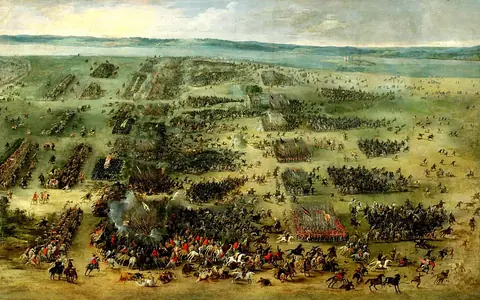
In 1600 Charles invaded Livonia. On 27 September 1605, at Kircholm on the Daugava near Riga, his army of about 11,000 men met fewer than 4,000 Polish-Lithuanian troops under Jan Karol Chodkiewicz. Charges of the winged hussars broke the Swedish army; some 8,000 Swedes died, against roughly a hundred dead on the other side. A Swedish historian at Lund University calls it Sweden’s greatest defeat.10
Sweden fought on several fronts at once. A Danish attack in 1611 began the Kalmar War, which ended at Knäred in 1613 with Swedish losses. The war with Russia went better: the Treaty of Stolbovo in 1617 gave Sweden Ingria and Kexholm and cut Russia off from the Baltic.11
Gustavus Adolphus: how did Sweden become a great power?
Gustav II Adolf, known in English as Gustavus Adolphus, became king in 1611 and inherited wars with Denmark, Russia and Poland. Britannica credits him with a standing army whose infantry was conscripted from the peasantry, with a field artillery that proved especially mobile; Encyclopedia.com notes that his armies were usually outnumbered and that he relied on maneuver rather than size. His intervention in Germany, in the words of the Swedish Institute, made Sweden a leading military power.12

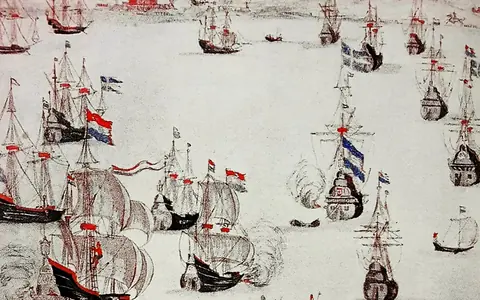
He renewed the war with Poland-Lithuania. He took Riga in 1621 and then the rest of Livonia, and in 1626 he landed in Polish Prussia, where only Danzig (Gdańsk) refused to surrender. The Commonwealth answered at sea and on land. Off Oliwa in November 1627 its small fleet captured the Swedish flagship Tigern, while the crew of Solen blew up their own ship, and the Swedes temporarily lifted their blockade of Gdańsk.13
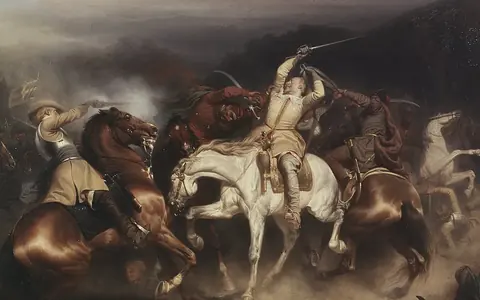
On 25 June 1629, at Trzciana, the cavalry of Field Hetman Stanisław Koniecpolski, joined by an imperial detachment, routed the Swedish horse, and Gustav Adolf himself nearly fell into captivity. The victory was not decisive. The six-year Truce of Altmark that autumn left Sweden Livonia north of the Daugava, most of the Prussian ports and the right to customs at Gdańsk, terms Polish historians count as unfavorable to the Commonwealth.14
Sweden in the Thirty Years’ War
In 1630 Gustav Adolf landed in northern Germany and entered the Thirty Years’ War against the Holy Roman Emperor and the Catholic League. He came as champion of the German Protestants, and, as Britannica stresses, to keep the emperor’s armies away from the south shore of the Baltic.15
At Breitenfeld in 1631, fighting beside the army of Electoral Saxony, the Swedes held firm after the Saxon wing was shattered and practically destroyed the imperial army of Count Tilly. The next year, at Lützen on 6 November 1632 by the Swedish calendar (16 November by the Gregorian), they met Albrecht von Wallenstein in fog and smoke. The Swedish army held the field, but Gustav Adolf was killed leading a charge. The historian Stephen Roberts calls it a defeat the Imperialists could absorb but a victory the Swedes could not afford.16
His daughter Christina was only five when he died, so a regency led by Oxenstierna ruled until 1644 and chose to fight on. The war lasted another 16 years. In the Peace of Westphalia, signed on 24 October 1648, Sweden gained Western Pomerania and the secularized bishoprics of Bremen and Verden, a foothold on the German coast that marked the height of its power in Europe.17
The Deluge: Charles X Gustav in Poland and Denmark
Christina abdicated in 1654 and her cousin Charles X Gustav, the first king of the house of Palatinate-Zweibrücken, took the throne. His six years were spent at war, first against Poland and then against Denmark.18
In July 1655 Swedish armies invaded the Commonwealth from two directions. They took Poznań and Warsaw, and in October the main Polish army surrendered at Kraków; Britannica says Charles conquered most of the country. Poles remember this invasion as the Deluge (Potop). It soon met resistance. The monastery of Jasna Góra in Częstochowa, defended by its prior Augustyn Kordecki, held out from 18 November to 27 December 1655, and in 1656 the country rose against the occupiers, with Stefan Czarniecki among the leaders.19
Brandenburg first allied with Sweden, but when Denmark declared war in 1657 Charles turned west. Early in 1658 he led his army across the frozen straits of the Belts and forced Denmark to accept the Treaty of Roskilde in February, which gave Sweden Skåne, Halland, Blekinge and Bohuslän and so set most of its modern southern border. A second Danish war failed before Copenhagen, and Charles died in February 1660.20
Peace followed quickly. At Oliva, near Gdańsk, in May 1660 King John Casimir renounced the Polish Vasa claim to the Swedish crown and confirmed Sweden in northern Livonia, and the Treaty of Copenhagen settled the Danish war in June. When Denmark-Norway tried to recover its lost provinces in the Scanian War of 1675 to 1679, the peace dictated by Sweden’s ally France restored the borders of 1660.21
Charles XII and the Great Northern War
In 1699 Denmark, Saxony-Poland (whose elector, Augustus II, was also king of the Commonwealth) and Russia under Peter I formed a secret coalition, and in 1700 they attacked Sweden’s Baltic lands, early in the reign of the young Charles XII. A landing near Copenhagen forced Denmark out of the war in August 1700, and in November the Swedes overwhelmed the Russian army besieging Narva.22
Charles then turned on Augustus in Poland, a campaign that lasted from 1702 to 1706. On 19 July 1702 at Kliszów about 12,000 Swedes defeated a Saxon and Polish army of some 18,000 to 20,000, in what is usually taken as the last battle of the Polish hussars. In 1704 a small group of nobles under Swedish protection elected Stanisław Leszczyński king, and in September 1706, after Charles invaded Saxony, Augustus gave up the Polish crown at Altranstädt.23
The years in Poland gave Peter time. He founded Saint Petersburg in 1703, built a Baltic fleet, rebuilt his army on a modern model and took Swedish posts in Ingria and Livonia. When Charles invaded Russia in 1707, scorched earth turned him away from Moscow into Ukraine, and a relief corps under Adam Ludwig Lewenhaupt lost its supply train on the way. The Cossack hetman Ivan Mazepa joined Charles with about 5,000 men in October 1708, but could not raise Ukraine against Russia.24
At Poltava, on 27 June 1709 by the Russian calendar (8 July by the Gregorian), Peter and Prince Aleksandr Menshikov defeated the Swedish army. Charles, wounded in the foot a few days before, could not lead it in person. Three days later most of the survivors surrendered at Perevolochna on the Dnieper, while Charles and Mazepa escaped into Ottoman territory.25

Charles stayed in the Ottoman Empire for about five years, mostly at Bender. He persuaded the sultan to attack Russia in 1711, and on 1 February 1713, with a few dozen men, he fought the Turks and Tatars sent to remove him, the kalabalik at Bender. Meanwhile Hanover and Prussia joined the coalition and Russia occupied Finland by 1714, the year of the battle of Napue. Charles returned in 1715, attacked Norway, and on 30 November 1718 was killed by a bullet during the siege of Fredriksten; whether it was fired by a Norwegian or a Swede is still debated.26
By the Peace of Nystad in 1721 Sweden ceded Livonia, Estonia, Ingria and part of Karelia with Vyborg to Russia, keeping Finland. It was left, in the words of the Swedish Institute, essentially within the frontiers of present-day Sweden and Finland. See our guide to the Great Northern War for the full story.27
Why did the Swedish Empire fall?
Historians place the end at different points. Britannica’s article on Poltava says the battle ended Sweden’s status as a major power and began Russian supremacy in eastern Europe, and EBSCO agrees; its history of Sweden instead dates the end of the Age of Greatness to the death of Charles XII in 1718, with Nystad only making the losses formal.28
The causes were deeper than one battle. The Swedish Institute’s view is that a largely agrarian Sweden lacked the resources to remain a great power in the long run, and it faced Denmark, Saxony-Poland and Russia at once, and after Poltava Hanover and Prussia as well. Britannica faults Charles for his long war in Poland and his disastrous invasion of Russia; the historian Dennis McCarthy calls him a brilliant commander who lost an empire, while the Oxford entry on Encyclopedia.com argues that his death, more than his actions, marked the decline. After 1718 the estates abolished royal absolutism, a change Britannica traces to the complete failure of the policy of greatness.29
Gustav III, the loss of Finland and Bernadotte
Gustav III restored royal power with a bloodless coup in 1772. In 1788, after the Ottoman Empire had gone to war with Russia, he attacked Russia to win back the Finnish provinces lost earlier in the century. The campaign went badly: officers of the Anjala League opened talks with Catherine II behind his back, and Denmark entered the war on Russia’s side. A great Swedish naval victory at Svensksund in July 1790 saved the king, and the Peace of Värälä the next month confirmed the old borders. Gustav was shot at a masked ball in the Stockholm opera in 1792 and died soon after.30
His son Gustav IV Adolf joined the coalition against Napoleon in 1805 and, after the Franco-Russian Treaty of Tilsit, found himself at war with Russia in 1808. The Swedish army defended Finland poorly; the fortress of Sveaborg near Helsinki surrendered with its fleet without a serious assault. Officers deposed the king in March 1809, and at Fredrikshamn in September Sweden ceded Finland and the Åland Islands to the Russian Empire.31
The new heir, chosen in 1810, was a French marshal, Jean-Baptiste Bernadotte, who took the name Charles John. Rather than fight for Finland he sought Norway, then ruled from Denmark. He allied with Russia and Britain, commanded the allied Army of the North at Leipzig in October 1813, and then marched against Denmark, which ceded Norway to Sweden at Kiel in January 1814.32

Norway refused the treaty and adopted its own constitution. Sweden attacked on 26 July 1814, and the war ended with the convention of Moss on 14 August: Norway entered a union with Sweden but kept its constitution, and the union lasted until 1905. It was the last war Sweden has fought. The Swedish historian Sten Carlsson wrote in 1969 that the loss of Finland was the price of the peace that began in 1814.33
Was Sweden neutral in World War I and World War II?
Sweden declared its neutrality at the start of World War I. Its government promised Germany a benevolent neutrality, and Sweden insisted on its right to trade with both sides; Britain answered by restricting Swedish imports, which caused food shortages from 1916. An agreement with Britain and the United States in May 1918 limited exports to Germany in return for supplies.34
In World War II Sweden again declared itself neutral in September 1939. After Germany occupied Denmark and Norway in 1940, Sweden allowed German troops and goods to cross its territory to and from Norway, a concession that still divides opinion. Under an agreement with the Allies in 1943, Sweden ended the transit.35
After the war Sweden kept a policy of nonalignment in peace aiming at neutrality in war. Russia’s invasion of Ukraine changed that: Sweden applied to join NATO in May 2022 and became its 32nd member on 7 March 2024.36
Famous Swedish military commanders
Gustav I Vasa led the rising that ended the Kalmar Union. Gustav II Adolf won at Breitenfeld and died at Lützen, and his chancellor Axel Oxenstierna led the regency that carried on the war until Westphalia. Charles X Gustav marched across the frozen Belts to force the Peace of Roskilde. Charles XII won at Narva and Kliszów and lost at Poltava, and Charles John, the former marshal Bernadotte, led the Army of the North at Leipzig. Among their opponents, Jan Karol Chodkiewicz won at Kircholm, Stanisław Koniecpolski at Trzciana, and Peter I and Menshikov at Poltava.37
Major battles in Swedish history, era by era
Every battle we have written up in which the Kingdom of Sweden took part, grouped by era and in date order:
The Middle Ages 476 to 1500 · 1
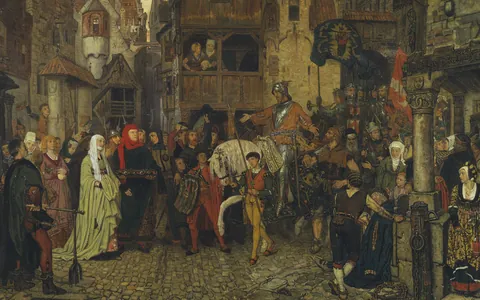
- 1471Battle of Brunkeberg, 1471Swedish regency vs Union king and his Swedish allies
On 10 October 1471 the regent Sten Sture defeated King Christian I on the Brunkeberg ridge outside Stockholm; many of the king's men drowned fleeing to their ships.
The early modern era 1492 to 1789 · 15
- 1605Battle of Kircholm, 1605Polish-Lithuanian Commonwealth vs Sweden
How ~3,600 Polish-Lithuanian troops and their winged hussars annihilated a Swedish army three times their size at Kircholm in 1605.
- 1627The Battle of Oliwa, 1627Polish-Lithuanian Commonwealth vs Sweden
The Commonwealth's small navy breaks the Swedish blockade of Gdańsk.
- 1629The Battle of Trzciana, 1629Polish-Lithuanian Commonwealth and the Holy Roman Empire vs Sweden
The day the hussars almost captured the Swedish king.
- 1631Battle of Breitenfeld, 1631Sweden and Electoral Saxony vs Holy Roman Emperor and Catholic League
On 17 September 1631 Gustavus Adolphus and the Saxons met Tilly north of Leipzig; the Saxons fled, but the Swedish brigades turned and destroyed the imperial army.
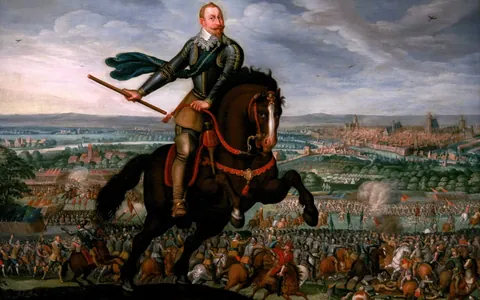
- 1632Battle of Lützen, 1632Sweden and its Protestant German allies vs Holy Roman Empire (Imperial army)
On 16 November 1632 Gustavus Adolphus attacked Wallenstein in the fog at Lützen. His army won the field; the king died in a cavalry melee.
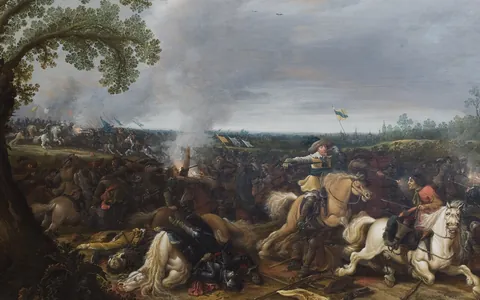
- 1636Battle of Wittstock, 1636Sweden and its allies vs Holy Roman Emperor and Saxony
On 4 October 1636 Banér's Swedes and Leslie's Scots and Germans beat the larger Imperial and Saxon army at Wittstock, sending their cavalry round through swamp and forest into its rear.
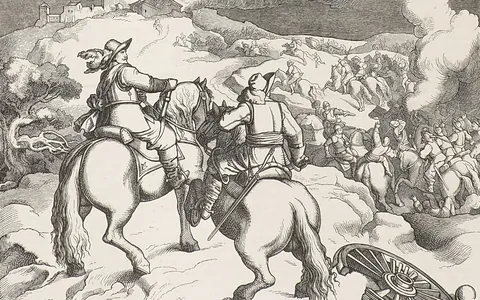
- 1655The Siege of Jasna Góra, 1655Polish-Lithuanian Commonwealth (garrison of Jasna Góra) vs Sweden
A small garrison of monks and soldiers turned back the Swedes.
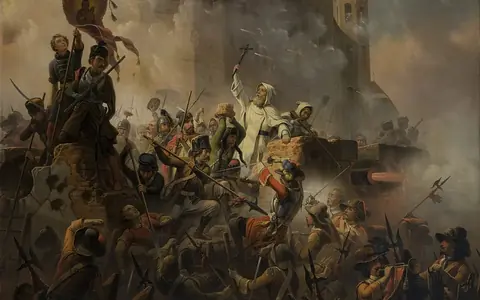
- 1656Battle of Filipów, 1656Grand Duchy of Lithuania vs Sweden and Brandenburg
On 22 October 1656 a Swedish and Brandenburg army caught Hetman Gosiewski's Lithuanian division at Filipów, two weeks after his victory at Prostki.
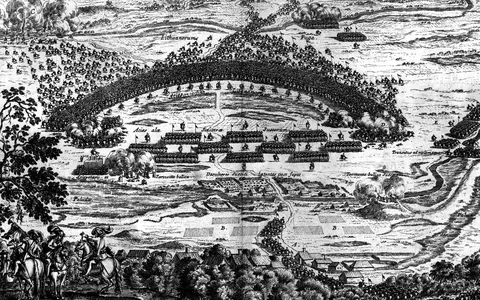
- 1658Siege of Kolding, 1658Polish-Lithuanian Commonwealth (allied with Denmark) vs Sweden
At Christmas 1658 Czarniecki's Polish cavalry, sent to help Denmark against Sweden, stormed the Swedish-held castle of Kolding at the third attempt.
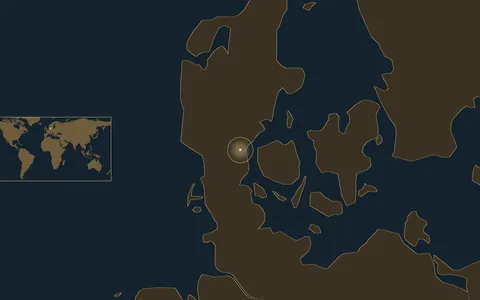
- 1659Battle of Nyborg, 1659Denmark and its allies vs Sweden
On 14 November 1659 Danish, Dutch, Polish and Brandenburg troops beat the Swedes outside Nyborg, and some 3,000 Swedes surrendered after a naval bombardment.
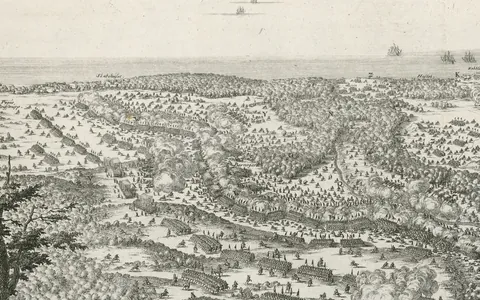
- 1700Battle of Narva, 1700Swedish Empire vs Tsardom of Russia
How Charles XII and a small Swedish army routed a much larger Russian force at Narva in 1700.
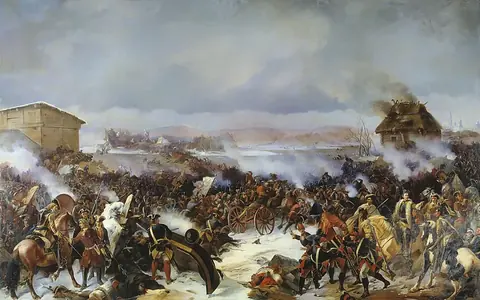
- 1708Battle of Lesnaya, 1708Tsardom of Russia vs Swedish Empire
On 9 October 1708 Peter the Great caught Lewenhaupt's Swedish corps and its supply train at Lesnaya. The march, the battle, the disputed numbers and why Peter called it the mother of Poltava.
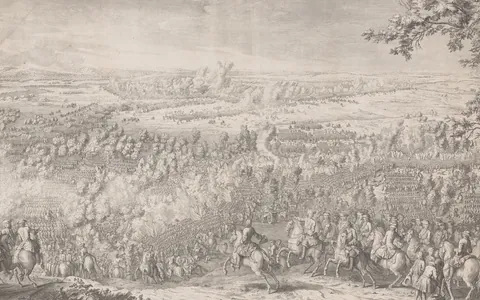
- 1709Battle of Poltava, 1709Tsardom of Russia (Peter I) vs Swedish Empire (Charles XII)
A summer dawn in Ukraine, a starving Swedish army, and the battle that broke Charles XII and made Peter the Great master of the north.
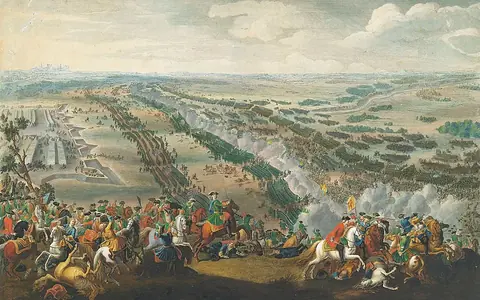
- 1713The Skirmish at Bender, 1713Ottoman Empire vs Charles XII of Sweden
On 1 February 1713, after years as the Sultan's guest, Charles XII of Sweden and a few dozen men fought off Ottoman troops in his house near Bender until it was set on fire.
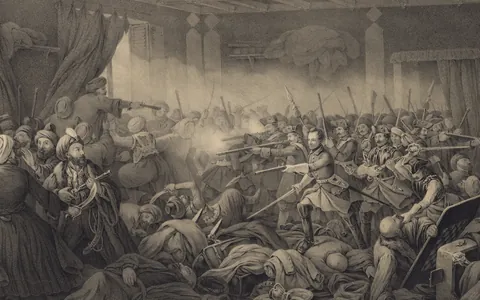
- 1714Battle of Napue, 1714Swedish Empire (mostly Finnish troops) vs Tsardom of Russia
In February 1714 Prince Golitsyn marched an army on skis and sledges across snowbound Finland and turned Armfelt's flank at Napue. In two hours the last Swedish army in Finland was gone, and the Great Wrath began.
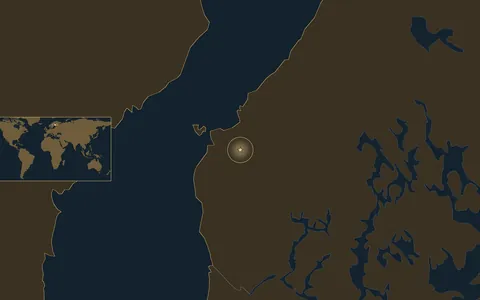
The Napoleonic era 1789 to 1815 · 1
- 1813The Battle of Leipzig, 1813Coalition (Russia, Prussia, Austria, Sweden) vs French Empire
Six hundred thousand men and the largest battle in Europe before 1914.
Timeline of Swedish military history
- 1397Denmark, Norway and Sweden are joined in the Kalmar Union.38
- 1471Sten Sture the Elder defeats Christian I at Brunkeberg.39
- 1520Stockholm Bloodbath.40
- 1523Gustav Vasa is elected king; Sweden leaves the union.41
- 1605
- 1617Treaty of Stolbovo: Russia cedes Ingria and Kexholm.43
- 1629
- 1631Swedish and Saxon victory at Breitenfeld.45
- 1632
- 1648Peace of Westphalia: Western Pomerania, Bremen and Verden.47
- 1655Swedish invasion of the Commonwealth; defense of Jasna Góra.48
- 1658March across the frozen Belts; Treaty of Roskilde.49
- 1660Peace of Oliva and Treaty of Copenhagen.50
- 1700
- 1702Swedish victory over Augustus II at Kliszów.52
- 1709
- 1718Charles XII is killed at Fredriksten.54
- 1721Peace of Nystad.55
- 1790Swedish naval victory at Svensksund.56
- 1809Sweden cedes Finland to Russia at Fredrikshamn.57
- 1813
- 1814Treaty of Kiel; short war with Norway, Sweden’s last.59
- 1940German troop transit through neutral Sweden begins.60
- 2024Sweden joins NATO on 7 March.61
Memory and further reading
The same battles are remembered very differently across the Baltic. Kircholm, which a Swedish historian calls Sweden’s greatest defeat, is celebrated in Poland as the great victory of the winged hussars. The defense of Jasna Góra became a Polish symbol: Cardinal Karol Wojtyła said it had taught generations an independence of spirit. In Sweden, Gustav II Adolf was presented after Lützen as a Protestant hero king who died for his faith and his people.62
For the other sides of these wars, see our hubs on Poland, Lithuania, Russia and Germany, our guides to the Polish-Swedish War of 1600 to 1629, the Thirty Years’ War, the Deluge and the Great Northern War, and the rankings of the winged hussars’ greatest battles and the greatest military commanders.
Notes
A number in the text points to a note; each note names the works that paragraph draws on, listed in full under Sources.
- Livrustkammaren, “Independence and power struggle”; Encyclopaedia Britannica, “The early Vasa kings (1523 to 1611) and the Age of Greatness”; Encyclopaedia Britannica, “Battle of Poltava”; Encyclopaedia Britannica, “The era of Gustav III”; Tore Dyrhaug, Store norske leksikon; Encyclopaedia Britannica, “Sweden”. ↩
- Swedish Institute, “History of Sweden”; Encyclopaedia Britannica, “The early Vasa kings (1523 to 1611) and the Age of Greatness”; EBSCO Research Starters, “Northern War”. ↩
- EBSCO Research Starters, “Stockholm Bloodbath Begins”; Swedish Institute, “History of Sweden”; Livrustkammaren, “Independence and power struggle”; Encyclopaedia Britannica, “Political conflict”. ↩
- Encyclopaedia Britannica, “The early Vasa kings (1523 to 1611) and the Age of Greatness”; Swedish Institute, “History of Sweden”; Livrustkammaren, “The era of the great wars”; Encyclopaedia Britannica, “The era of Gustav III”; Tore Dyrhaug, Store norske leksikon. ↩
- Encyclopaedia Britannica, “Political conflict”; The Columbia Encyclopedia. ↩
- Encyclopaedia Britannica, “Political conflict”; EBSCO Research Starters, “Stockholm Bloodbath Begins”; Historiska museet, “The Stockholm Bloodbath”; Swedish Institute, “History of Sweden”; Livrustkammaren, “Independence and power struggle”. ↩
- Encyclopaedia Britannica, “The early Vasa kings (1523 to 1611) and the Age of Greatness”; Livrustkammaren, “Independence and power struggle”; Swedish Institute, “History of Sweden”. ↩
- Encyclopaedia Britannica, “The early Vasa kings (1523 to 1611) and the Age of Greatness”; Riigikogu, “Toompea Castle”. ↩
- Encyclopaedia Britannica, “The early Vasa kings (1523 to 1611) and the Age of Greatness”; Livrustkammaren, “Independence and power struggle”; Kenneth P. Czech, “Polish-Swedish Wars for Livonia”. ↩
- Magnus Olofsson, The Past; Piotr Abryszeński, “The great victory of the winged hussars”; Kenneth P. Czech, “Polish-Swedish Wars for Livonia”. ↩
- Encyclopaedia Britannica, “The early Vasa kings (1523 to 1611) and the Age of Greatness”; Encyclopedia.com, “Gustavus II”. ↩
- Encyclopaedia Britannica, “The early Vasa kings (1523 to 1611) and the Age of Greatness”; Encyclopedia.com, “Gustavus II”; Livrustkammaren, “Sweden expands”; Swedish Institute, “History of Sweden”. ↩
- Encyclopedia.com, “Gustavus II”; Kenneth P. Czech, “Polish-Swedish Wars for Livonia”; Muzeum Historii Polski, “Bitwa morska pod Oliwą”; Vasa Museum, “Vasa, the machine of war”. ↩
- Dzieje.pl, “Bitwa pod Trzcianą”; Muzeum Historii Polski, “Bitwa pod Trzcianą”; Muzeum Historii Polski, “Rozejm w Altmarku”; Encyclopaedia Britannica, “The early Vasa kings (1523 to 1611) and the Age of Greatness”; Kenneth P. Czech, “Polish-Swedish Wars for Livonia”. ↩
- Encyclopaedia Britannica, “The early Vasa kings (1523 to 1611) and the Age of Greatness”; Livrustkammaren, “Sweden expands”; Encyclopedia.com, “Gustavus II”; Swedish Institute, “History of Sweden”. ↩
- Encyclopaedia Britannica, “The early Vasa kings (1523 to 1611) and the Age of Greatness”; Encyclopedia.com, “Gustavus II”; Livrustkammaren, “Sweden expands”; Stephen Roberts, The Past. ↩
- Livrustkammaren, “Sweden expands”; Livrustkammaren, “Swedish monarchs”; Encyclopaedia Britannica, “The early Vasa kings (1523 to 1611) and the Age of Greatness”; EBSCO Research Starters, “Peace of Westphalia”. ↩
- Livrustkammaren, “Swedish monarchs”; Livrustkammaren, “The era of the great wars”; Encyclopaedia Britannica, “The early Vasa kings (1523 to 1611) and the Age of Greatness”. ↩
- EBSCO Research Starters, “Northern War”; Encyclopaedia Britannica, “The early Vasa kings (1523 to 1611) and the Age of Greatness”; Zintegrowana Platforma Edukacyjna, “Potop szwedzki”; Dzieje.pl, “Ojciec Augustyn Kordecki, obrońca Jasnej Góry”. ↩
- Encyclopaedia Britannica, “The early Vasa kings (1523 to 1611) and the Age of Greatness”; EBSCO Research Starters, “Northern War”; Encyclopaedia Britannica, “Battle of Poltava”; Swedish Institute, “History of Sweden”; Livrustkammaren, “Swedish monarchs”. ↩
- The Columbia Encyclopedia; EBSCO Research Starters, “Northern War”; Zintegrowana Platforma Edukacyjna, “Potop szwedzki”; Livrustkammaren, “The era of the great wars”; Den Store Danske; Encyclopaedia Britannica, “The early Vasa kings (1523 to 1611) and the Age of Greatness”. ↩
- Encyclopaedia Britannica, “The reign of Charles XII”; EBSCO Research Starters, “Great Northern War”; Encyclopedia.com, “Charles XII”; Aleksanteri Institute and Narva College, “300 years since the Peace Treaty of Nystad after the Great Northern War”. ↩
- Encyclopaedia Britannica, “Charles XII”; Dzieje.pl, “315. rocznica bitwy pod Kliszowem, ostatniej z udziałem husarii”; Zintegrowana Platforma Edukacyjna, “III wojna północna”; EBSCO Research Starters, “Great Northern War”. ↩
- Encyclopaedia Britannica, “The reign of Charles XII”; Aleksanteri Institute and Narva College, “300 years since the Peace Treaty of Nystad after the Great Northern War”; EBSCO Research Starters, “Battle of Poltava”; EBSCO Research Starters, “Great Northern War”; Encyclopaedia Britannica, “Battle of Poltava”; Encyclopaedia Britannica, “Ivan Mazepa”. ↩
- Encyclopaedia Britannica, “Battle of Poltava”; Encyclopaedia Britannica, “Charles XII”; EBSCO Research Starters, “Battle of Poltava”; Encyclopedia.com, “Charles XII”; Encyclopaedia Britannica, “Ivan Mazepa”. ↩
- Encyclopaedia Britannica, “The reign of Charles XII”; Encyclopaedia Britannica, “Charles XII”; Dennis J. McCarthy, History Today; Encyclopedia.com, “Charles XII”; EBSCO Research Starters, “Great Northern War”; Aleksanteri Institute and Narva College, “300 years since the Peace Treaty of Nystad after the Great Northern War”; Livrustkammaren, “Swedish monarchs”. ↩
- Encyclopaedia Britannica, “The reign of Charles XII”; EBSCO Research Starters, “Great Northern War”; Aleksanteri Institute and Narva College, “300 years since the Peace Treaty of Nystad after the Great Northern War”; Swedish Institute, “History of Sweden”. ↩
- Encyclopaedia Britannica, “Battle of Poltava”; EBSCO Research Starters, “Battle of Poltava”; Encyclopaedia Britannica, “The reign of Charles XII”. ↩
- Swedish Institute, “History of Sweden”; Aleksanteri Institute and Narva College, “300 years since the Peace Treaty of Nystad after the Great Northern War”; Encyclopaedia Britannica, “Charles XII”; Dennis J. McCarthy, History Today; Encyclopedia.com, “Charles XII”; Encyclopaedia Britannica, “The reign of Charles XII”. ↩
- Encyclopaedia Britannica, “The era of Gustav III”; Encyclopaedia Britannica, “Gustav III”; Den Store Danske; Livrustkammaren, “Swedish monarchs”. ↩
- Encyclopaedia Britannica, “The era of Gustav III”; EBSCO Research Starters, “Russo-Swedish Wars”; Livrustkammaren, “Swedish monarchs”. ↩
- Encyclopaedia Britannica, “The era of Gustav III”; Encyclopaedia Britannica, “Bernadotte of Sweden”; EBSCO Research Starters, “Battle of Leipzig”; Tore Dyrhaug, Store norske leksikon. ↩
- Tore Dyrhaug, Store norske leksikon; Stortinget, “Sveriges angrep på Norge. Mossekonvensjonen”; Swedish Institute, “History of Sweden”; Encyclopaedia Britannica, “Sweden”; Encyclopaedia Britannica, “Bernadotte of Sweden”. ↩
- Gunnar Åselius, 1914-1918-online; Encyclopaedia Britannica, “Policy during World War I; Foreign policy (1918 to 1945)”. ↩
- Encyclopaedia Britannica, “Policy during World War I; Foreign policy (1918 to 1945)”; US National Archives, “Records of the Foreign Service Posts”. ↩
- Encyclopaedia Britannica, “Sweden”; Swedish Institute, “History of Sweden”; Encyclopaedia Britannica, “The 21st century”; NATO, “Sweden officially joins NATO”; Arms Control Association, Arms Control Today. ↩
- Encyclopaedia Britannica, “Political conflict”; Encyclopaedia Britannica, “The early Vasa kings (1523 to 1611) and the Age of Greatness”; Encyclopedia.com, “Gustavus II”; Livrustkammaren, “Sweden expands”; Encyclopaedia Britannica, “The reign of Charles XII”; Dzieje.pl, “315. rocznica bitwy pod Kliszowem, ostatniej z udziałem husarii”; Encyclopaedia Britannica, “Bernadotte of Sweden”; EBSCO Research Starters, “Battle of Leipzig”; Magnus Olofsson, The Past; Dzieje.pl, “Bitwa pod Trzcianą”; Encyclopaedia Britannica, “Battle of Poltava”. ↩
- EBSCO Research Starters, “Stockholm Bloodbath Begins”; Livrustkammaren, “Independence and power struggle”. ↩
- Encyclopaedia Britannica, “Political conflict”; The Columbia Encyclopedia. ↩
- EBSCO Research Starters, “Stockholm Bloodbath Begins”; Historiska museet, “The Stockholm Bloodbath”. ↩
- Livrustkammaren, “Independence and power struggle”; Encyclopaedia Britannica, “Political conflict”. ↩
- Magnus Olofsson, The Past; Piotr Abryszeński, “The great victory of the winged hussars”. ↩
- Encyclopaedia Britannica, “The early Vasa kings (1523 to 1611) and the Age of Greatness”; Encyclopedia.com, “Gustavus II”. ↩
- Dzieje.pl, “Bitwa pod Trzcianą”; Muzeum Historii Polski, “Rozejm w Altmarku”. ↩
- Encyclopaedia Britannica, “The early Vasa kings (1523 to 1611) and the Age of Greatness”; Encyclopedia.com, “Gustavus II”. ↩
- Livrustkammaren, “Sweden expands”; Stephen Roberts, The Past. ↩
- Encyclopaedia Britannica, “The early Vasa kings (1523 to 1611) and the Age of Greatness”; EBSCO Research Starters, “Peace of Westphalia”. ↩
- EBSCO Research Starters, “Northern War”; Dzieje.pl, “Ojciec Augustyn Kordecki, obrońca Jasnej Góry”. ↩
- Encyclopaedia Britannica, “The early Vasa kings (1523 to 1611) and the Age of Greatness”; EBSCO Research Starters, “Northern War”. ↩
- The Columbia Encyclopedia; EBSCO Research Starters, “Northern War”. ↩
- Encyclopaedia Britannica, “The reign of Charles XII”; EBSCO Research Starters, “Great Northern War”. ↩
- Dzieje.pl, “315. rocznica bitwy pod Kliszowem, ostatniej z udziałem husarii”; Zintegrowana Platforma Edukacyjna, “III wojna północna”. ↩
- Encyclopaedia Britannica, “Battle of Poltava”; Encyclopaedia Britannica, “Charles XII”. ↩
- Livrustkammaren, “Swedish monarchs”; Encyclopaedia Britannica, “The reign of Charles XII”. ↩
- Encyclopaedia Britannica, “The reign of Charles XII”; Aleksanteri Institute and Narva College, “300 years since the Peace Treaty of Nystad after the Great Northern War”. ↩
- Encyclopaedia Britannica, “Gustav III”; Den Store Danske. ↩
- Encyclopaedia Britannica, “The era of Gustav III”; EBSCO Research Starters, “Russo-Swedish Wars”. ↩
- Encyclopaedia Britannica, “Bernadotte of Sweden”; EBSCO Research Starters, “Battle of Leipzig”. ↩
- Tore Dyrhaug, Store norske leksikon; Stortinget, “Sveriges angrep på Norge. Mossekonvensjonen”. ↩
- Encyclopaedia Britannica, “Policy during World War I; Foreign policy (1918 to 1945)”; US National Archives, “Records of the Foreign Service Posts”. ↩
- NATO, “Sweden officially joins NATO”; Arms Control Association, Arms Control Today. ↩
- Magnus Olofsson, The Past; Piotr Abryszeński, “The great victory of the winged hussars”; Dzieje.pl, “Ojciec Augustyn Kordecki, obrońca Jasnej Góry”; Zintegrowana Platforma Edukacyjna, “Potop szwedzki”; Livrustkammaren, “Sweden expands”; Encyclopaedia Britannica, “The early Vasa kings (1523 to 1611) and the Age of Greatness”. ↩
Sources
- Livrustkammaren (The Royal Armoury, Stockholm), “Independence and power struggle”.
- Encyclopaedia Britannica, Sweden in History, “The early Vasa kings (1523 to 1611) and the Age of Greatness”.
- Encyclopaedia Britannica, “Battle of Poltava”.
- Encyclopaedia Britannica, Sweden in History, “The era of Gustav III”.
- Tore Dyrhaug, Store norske leksikon, “krigen i 1814” (in Norwegian Nynorsk).
- Encyclopaedia Britannica, “Sweden”.
- Swedish Institute (sweden.se, official site of Sweden), “History of Sweden: more than Vikings”.
- EBSCO Research Starters, “Northern War”.
- EBSCO Research Starters, “Stockholm Bloodbath Begins”.
- Encyclopaedia Britannica, Sweden in History, “Political conflict”.
- Livrustkammaren (The Royal Armoury, Stockholm), “The era of the great wars”.
- The Columbia Encyclopedia, 6th ed., via Encyclopedia.com, “Sture”.
- Historiska museet (Swedish History Museum), “The Stockholm Bloodbath”.
- Riigikogu (Parliament of Estonia), “Toompea Castle”.
- Kenneth P. Czech, EBSCO Research Starters, “Polish-Swedish Wars for Livonia”.
- Magnus Olofsson (Lund University), The Past (Military History Matters), “The Battle of Kircholm, 1605: Sweden’s greatest defeat”.
- Piotr Abryszeński, Polish History Museum, polishhistory.pl, “The great victory of the winged hussars: the Battle of Kirchholm 1605”.
- Encyclopedia.com (Encyclopedia of World Biography and other works), “Gustavus II”.
- Livrustkammaren (The Royal Armoury, Stockholm), “Sweden expands”.
- Muzeum Historii Polski (Polish History Museum), “Bitwa morska pod Oliwą” (in Polish).
- Vasa Museum, Stockholm, “Vasa, the machine of war”.
- Dzieje.pl (Polish History Museum and PAP), “Bitwa pod Trzcianą: 385. rocznica zwycięstwa polskiej husarii” (in Polish).
- Muzeum Historii Polski (Polish History Museum), “Bitwa pod Trzcianą” (in Polish).
- Muzeum Historii Polski (Polish History Museum), “Rozejm w Altmarku” (in Polish).
- Stephen Roberts, The Past (Military History Matters), “The Battle of Lützen: 16 November 1632”.
- Livrustkammaren (The Royal Armoury, Stockholm), “Swedish monarchs”.
- EBSCO Research Starters, “Peace of Westphalia”.
- Zintegrowana Platforma Edukacyjna (Polish Ministry of Education), “Potop szwedzki” (in Polish).
- Dzieje.pl (PAP), “Ojciec Augustyn Kordecki, obrońca Jasnej Góry” (in Polish).
- The Columbia Encyclopedia, 6th ed., via Encyclopedia.com, “Oliva, Peace of”.
- Den Store Danske (lex.dk), “Den Skånske Krig” (in Danish).
- Encyclopaedia Britannica, Sweden in History, “The reign of Charles XII”.
- EBSCO Research Starters, “Great Northern War”.
- Encyclopedia.com (Gale and Oxford reference entries), “Charles XII”.
- Aleksanteri Institute (University of Helsinki) and Narva College (University of Tartu), Narva History Forum, 2021, “300 years since the Peace Treaty of Nystad after the Great Northern War”.
- Encyclopaedia Britannica, “Charles XII”.
- Dzieje.pl (Polish History Museum and PAP), “315. rocznica bitwy pod Kliszowem, ostatniej z udziałem husarii” (in Polish).
- Zintegrowana Platforma Edukacyjna (Polish Ministry of Education), “III wojna północna” (in Polish).
- EBSCO Research Starters, “Battle of Poltava”.
- Encyclopaedia Britannica, “Ivan Mazepa”.
- Dennis J. McCarthy, History Today, “The Kalabalik”.
- Encyclopaedia Britannica, “Gustav III”.
- Den Store Danske (lex.dk), “Gustav 3.” (in Danish).
- EBSCO Research Starters, “Russo-Swedish Wars”.
- Encyclopaedia Britannica, Sweden in History, “Bernadotte of Sweden”.
- EBSCO Research Starters, “Battle of Leipzig”.
- Stortinget (Parliament of Norway), “Sveriges angrep på Norge. Mossekonvensjonen” (in Norwegian).
- Gunnar Åselius, 1914-1918-online: International Encyclopedia of the First World War, “Foreign Policy (Sweden)”.
- Encyclopaedia Britannica, Sweden in History, “Policy during World War I; Foreign policy (1918 to 1945)”.
- US National Archives, Holocaust-Era Assets finding aid, “Records of the Foreign Service Posts: Sweden”.
- Encyclopaedia Britannica, Sweden in History, “The 21st century”.
- NATO, “Sweden officially joins NATO”, 7 March 2024.
- Arms Control Association, Arms Control Today, April 2024, “Sweden Joins NATO”.





