

What is the military history of Lithuania?
It is the history of the wars of the Lithuanian state: the Grand Duchy against the Teutonic Order and Muscovy, the Grand Duchy as a partner in the Polish-Lithuanian Commonwealth from 1569 to 1795, the risings of 1794, 1831 and 1863, and the Republic of Lithuania, which fought for its independence in 1918 to 1920 and restored it in 1990.1
For four centuries the Grand Duchy of Lithuania ruled a vast realm in eastern Europe, and it fought on every side: against the crusading orders in the west, the Tatars in the south and Moscow in the east. This guide follows Lithuania’s wars era by era, names the state that fought each one and gives defeats the same weight as victories. Start with our battle guides to the Battle of Grunwald (1410), the Battle of Orsha (1514), the Battle of Kircholm (1605), the Battle of Klushino (1610) and the Battle of Paneriai (1831).
The page treats the Grand Duchy as a state in its own right: not a province of Poland, and not simply the modern Republic of Lithuania under an older name. The Teutonic Order, Muscovy, Poland, Sweden, the Russian Empire and Soviet Russia appear as actors with their own aims, and where Lithuanians and Poles remember the same events differently, as with Vilnius (Wilno) in 1920, both views are given.
Which states does the military history of Lithuania cover?
For most of its history the Lithuanian state was the Grand Duchy of Lithuania. At its height it reached from the Baltic to the Black Sea and took in present-day Lithuania, Belarus and parts of Ukraine, Russia and Poland. It was a multiethnic, multilingual and multireligious state: as it absorbed the lands of Rus, the East Slavs whom contemporaries called Ruthenians, ancestors of today’s Belarusians and Ukrainians, became a large part of its people. Lithuania is therefore not the only heir of the Grand Duchy; Belarus claims its history too.2
From 1385 the grand dukes also wore the crown of Poland, and in 1569 the Union of Lublin turned this personal union into the Polish-Lithuanian Commonwealth. Inside the Commonwealth the Grand Duchy kept its own name, territory, treasury, laws, courts and army until the third partition of 1795. The modern Republic of Lithuania proclaimed its independence in 1918, lost it to Soviet occupation in 1940 and restored it in 1990.3
How did the Grand Duchy of Lithuania rise?
Pressed by the crusading Teutonic and Livonian Knights, the Lithuanian lands were united in the middle of the 13th century under Mindaugas, who forced the other princes to become his vassals. He accepted Catholic baptism in 1251 and two years later was crowned king with the backing of Pope Innocent IV, but he was murdered in 1263, and his realm fell into years of turmoil.4
Gediminas, who ruled from about 1315 until 1341, made Vilnius his capital and carved out the empire of historic Lithuania, pushing far into the East Slav lands to the east and south. After him the state was shared by two of his sons. Algirdas, the grand duke, turned east toward the Rus principalities and the Golden Horde, while Kęstutis, from his castle at Trakai, defended the west against the Teutonic and Livonian Orders in decades of raids and counter-raids.5
After Algirdas died in 1377 the family split. Kęstutis seized Vilnius from his nephew Jogaila in 1381, but the next year Jogaila captured him and his son Vytautas; Kęstutis died in captivity at Krėva (Krewo), and Vytautas escaped to the Teutonic Order. Jogaila then chose Poland. By the Union of Krewo of 1385 he agreed to accept Catholic baptism, marry the young Polish queen Jadwiga and take the Polish throne, and in 1387 he brought Catholic Christianity to Lithuania. In 1392 the cousins made peace, and Vytautas returned to rule the Grand Duchy.6
Who won the Battle of Grunwald, and what did Lithuania do there?
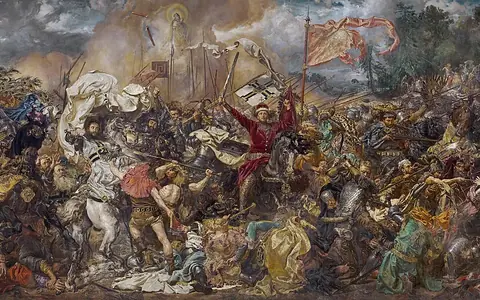
The Teutonic Order doubted the sincerity of Jogaila’s conversion, and in 1409 its grand master, Ulrich von Jungingen, declared war on Poland and Lithuania. In July 1410 King Władysław II Jagiełło, as Jogaila was now called, and Grand Duke Vytautas marched on the Order’s capital at Marienburg (Malbork). On 15 July the armies met between the villages of Grunwald and Tannenberg; Lithuanians call the battle Žalgiris. Beside the Polish and Lithuanian troops fought Tatars under a former khan of the Golden Horde and Bohemian soldiers.7
The Polish heavy cavalry stood on the left, Vytautas’s lighter Lithuanian cavalry on the right. The knights’ charge swept the Lithuanians from the field early in the day, but the survivors came back and struck the knights in the rear while they were pressing the Poles. Ulrich von Jungingen was killed, and by evening most of his army was dead or captured. Read the full story in our guide to the Battle of Grunwald.8

The victors could not take Marienburg, and Vytautas withdrew his troops from the siege, judging that the campaign had secured Lithuania’s claim to Samogitia. At the Peace of Toruń in 1411 the Order gave Samogitia to Lithuania for Vytautas’s lifetime, and the Peace of Melno in 1422 settled it for good. Under Vytautas, who died in 1430, the Grand Duchy reached the height of its power, from the Baltic to the Black Sea.9
Lithuania against Muscovy: Orsha and the loss of Smolensk
The next danger came from the east. In Britannica’s account, Ivan III of Moscow laid claim in 1480 to all the lands of old Kyiv, most of which belonged to Lithuania, and the struggle with Moscow ran on for two centuries. The war of 1512 to 1522 between the Grand Duchy and Moscow was one round of it.10
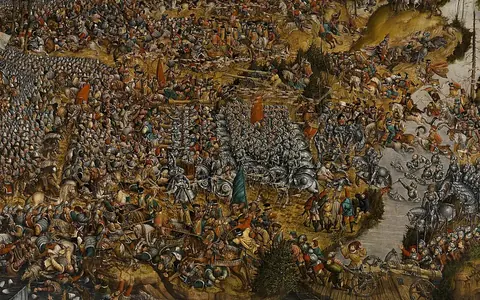
On 30 July 1514, after a long siege, Smolensk, the Grand Duchy’s great eastern fortress, surrendered to Moscow. Weeks later, on 8 September, the army of the Grand Duchy under its grand hetman, Prince Konstanty Ostrogski, with Polish troops beside it, met the Muscovite army near Orsha on the Dnieper and routed it. Its commander, Ivan Chelyadnin, was taken prisoner. Contemporaries put the Muscovite army at about 80,000 men, against roughly 30,000 on the Lithuanian side.11
Orsha stopped the Muscovite offensive, but it did not win back Smolensk, and the Grand Duchy never gained the upper hand in the war: a tactical triumph that changed little on the map.12
How did the Union of Lublin create the Commonwealth?
The Livonian War of 1558 to 1583 against Moscow strained the Grand Duchy, and the Poles would help only if the two states were formally united. When the Lithuanian delegates left the joint Sejm at Lublin early in 1569, King Sigismund II Augustus transferred Podlasie, Volhynia, Kyiv and Bracław from the Grand Duchy to the Polish Crown. Still at war with Moscow, the Lithuanians could not resist; they returned, and the union was concluded on 1 July 1569.13

The new Commonwealth had one elected ruler, king of Poland and grand duke of Lithuania, a common Sejm and a common foreign policy. The Grand Duchy kept its own name, arms, territory, treasury, law, courts and army, with its own commanders, the grand hetman of Lithuania and his deputy, the field hetman. Britannica judges that the Grand Duchy soon became the junior partner and that its nobility took up Polish language and culture.14
Kircholm, Klushino and the Deluge: Lithuania in the 17th century
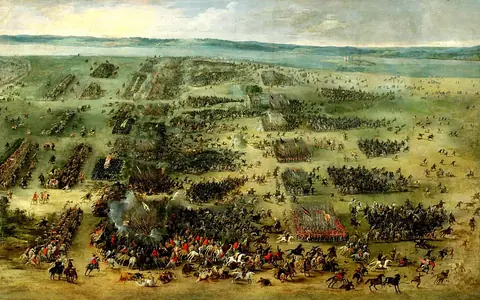
The war with Sweden for Livonia fell first on Lithuania. On 27 September 1605 at Kircholm (Salaspils), on the Daugava near Riga, Jan Karol Chodkiewicz, commander of the Lithuanian forces, destroyed a Swedish army under Charles IX at least three times the size of his own with a charge of hussars. About 8,000 Swedes were killed; Chodkiewicz lost between 100 and 200 men. The victory relieved Riga but did not end the war.15

In the Time of Troubles the Commonwealth turned on Muscovy. In 1610 at Klushino a Polish-Lithuanian army under the Crown field hetman Stanisław Żółkiewski defeated the tsar’s army and its foreign mercenaries, opening the road to Moscow, where the boyars accepted King Sigismund III’s son Władysław as tsar. Chodkiewicz died in 1621 at Khotyn (Chocim), defending the Commonwealth’s camp against a far larger Ottoman army.16
The worst crisis came in 1655. A Muscovite and Cossack army took Vilnius on 8 August, while Sweden invaded from the west. On 20 October at Kėdainiai (Kiejdany) the grand hetman Janusz Radziwiłł and his cousin Bogusław signed a treaty with Sweden that broke the union with Poland and accepted Charles X Gustav as ruler. Our guide to the Deluge follows this war across the whole Commonwealth.17
In the autumn of 1656 the Lithuanian field hetman Wincenty Gosiewski carried the war into Ducal Prussia. On 8 October at Prostki his Lithuanian and Tatar troops routed a Brandenburg and Swedish corps and captured Bogusław Radziwiłł. On 22 October at Filipów a Swedish corps under Gustaf Otto Stenbock beat him, a defeat that the historian Andrzej Rachuba judges more a blow to prestige than to the campaign.18
The partitions and the risings of 1794, 1831 and 1863
In the 18th century the Commonwealth declined, and its attempts at reform brought foreign intervention and three partitions. The third, in 1795, ended the Commonwealth: most Lithuanian lands went to the Russian Empire, the lands southwest of the Nemunas to Prussia.19
The Kościuszko Uprising of 1794, famous for Racławice in the Kingdom, was also a Lithuanian rising. On 22 April insurgents under Colonel Jakub Jasiński rose in Vilnius and drove out its Russian garrison, and a Lithuanian council governed the rising there until Russian troops took the city on 12 August. Jasiński fell defending Praga, outside Warsaw, on 4 November.20

In the spring of 1831 the November Uprising spread from the Kingdom of Poland to Lithuania. Among the insurgents was Emilia Plater, who raised an insurgent banner and commanded a company of the 1st Lithuanian Infantry Regiment. Polish corps under Antoni Giełgud and Dezydery Chłapowski marched in to join the local insurgents, but on 19 June their attack on Vilnius across the hills of Paneriai failed. The Lithuanian encyclopedia counts about 600 insurgents killed and as many captured; the Institute of National Remembrance puts the losses at up to 2,000.21
Russia answered with repression. It closed Vilnius University, founded in 1579, in 1832 and abolished the Lithuanian Statute, the Grand Duchy’s 16th-century law code, in 1840, and it ruled historic Lithuania as the Northwest Region of the empire.22
The January Uprising of 1863 spread to Lithuania and Belarus too. Zygmunt Sierakowski (Zigmantas Sierakauskas), one of the leaders of the insurgents in Lithuania, was captured and hanged in Vilnius. Governor-General Mikhail Muravyov, remembered as the “hangman of Vilnius”, crushed the rising, and in 1864 printing Lithuanian in the Latin alphabet was banned, a ban that lasted until 1904.23
How did Lithuania win its independence in 1918 to 1920?
German troops occupied Lithuania in 1915. On 16 February 1918 the Council of Lithuania (Taryba) in Vilnius proclaimed an independent Lithuanian state, but only when the Germans withdrew after the armistice could it build an army of its own.24
The Red Army moved in as the Germans left. It took Vilnius in January 1919 and the government withdrew to Kaunas, but from the spring the Bolsheviks were pushed out of northern Lithuania. During 1919 the young army had to hold fronts against the Bolsheviks, Polish forces and the Bermontians, the German and White Russian West Russian Volunteer Army of Pavel Bermondt-Avalov, at the same time. The Lithuanian historian Gintautas Surgailis therefore treats the fighting as one war of independence on three fronts.25
On 12 July 1920, while the Polish-Soviet War was at its height, Soviet Russia signed a peace treaty recognizing Lithuania, with Vilnius on the Lithuanian side. The Red Army took the city from the Poles on 14 July and handed it to Lithuania in August. Lithuania stayed formally neutral, but the treaty let the Red Army use Lithuanian territory, which Poland saw as taking the Soviet side.26
Why did Poland and Lithuania fight over Vilnius (Wilno) in 1920?
After its victory near Warsaw in August 1920 the Polish army advanced again. Polish and Lithuanian talks at Suwałki ended on 7 October with an agreement on a demarcation line that left Vilnius on the Lithuanian side.27
Two days later, on 9 October, troops under General Lucjan Żeligowski took Vilnius and set up a separate state, Central Lithuania. The operation was presented as a mutiny, but Polish historians describe it as inspired by Józef Piłsudski, who could not act openly after promising at Spa in July to leave Vilnius to Lithuania. Poland annexed the Vilnius region in 1922, and Lithuania never accepted the loss.28
The two nations still see these events differently. For Lithuanians Vilnius was the capital of the Grand Duchy and of their new state, and its seizure an occupation. Many Poles saw Wilno as a city of Polish culture and hoped to revive some form of the old union, and the Polish side argued that Lithuania had abandoned its neutrality in 1920 by siding with the Soviets. Britannica describes the city as multiethnic, with a heavily Polish cultural veneer.29
Lithuania in World War II and the road to 1991
In October 1939 the Soviet Union forced Lithuania to accept a mutual assistance treaty and Soviet garrisons; in return, Britannica notes, Lithuania received Vilnius, which the Red Army had taken from Poland. On 15 June 1940, after an ultimatum, the Soviet Union occupied the country, and on 3 August it annexed it. Mass deportations began on the night of 13 to 14 June 1941.30
Germany invaded on 22 June 1941 and held Lithuania until 1944. In the Holocaust about 90 percent of Lithuania’s Jews were murdered, with Lithuanian auxiliaries taking part alongside the German killing units. Paneriai (Ponary), outside Vilnius, became one of the main killing sites.31
The Red Army returned in 1944, and armed resistance to Soviet rule lasted into the early 1950s. On 11 March 1990 Lithuania’s newly elected parliament declared the restoration of independence, the first Soviet republic to do so. On 13 January 1991 an attempt by Soviet troops to topple the government ended in bloodshed at the television tower in Vilnius, where Lithuanian officials count 14 civilians killed, but it failed. After the failed coup in Moscow in August 1991, the Soviet Union recognized Lithuania’s independence in September.32
Famous Lithuanian military commanders
Kęstutis led the long defense against the Teutonic Order, and his son Vytautas commanded the Lithuanian army at Grunwald and brought the Grand Duchy to its greatest extent. Konstanty Ostrogski, grand hetman, won at Orsha in 1514. Jan Karol Chodkiewicz destroyed the Swedish army at Kircholm in 1605 and died defending Khotyn in 1621. Wincenty Gosiewski won at Prostki in 1656, Jakub Jasiński freed Vilnius in 1794, and Emilia Plater fought in the 1831 rising in Lithuania.33
Major battles in Lithuanian history, era by era
Every battle we have written up in which the Grand Duchy of Lithuania, the Polish-Lithuanian Commonwealth or Polish and Lithuanian insurgents took part, grouped by era and in date order:
The Middle Ages 476 to 1500 · 1
- 1410The Battle of Grunwald (Tannenberg), 1410Kingdom of Poland and Lithuania vs Teutonic Order
One of medieval Europe's largest battles. How a Polish-Lithuanian alliance shattered the Teutonic Knights, and why the Grand Master lay dead by evening.
The early modern era 1492 to 1789 · 16
- 1514The Battle of Orsha, 1514Poland and Lithuania vs Grand Duchy of Moscow
A false retreat and hidden guns: Ostrogski's great victory on the Dnieper.
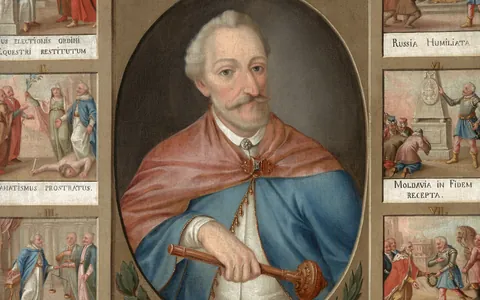
- 1595Battle of Cecora, 1595Polish-Lithuanian Commonwealth vs Crimean Khanate and Ottoman troops
In October 1595 Jan Zamoyski's army held a fortified camp on the Prut against the Crimean khan, and the khan agreed to recognize Poland's candidate as ruler of Moldavia.
- 1605Battle of Kircholm, 1605Polish-Lithuanian Commonwealth vs Sweden
How ~3,600 Polish-Lithuanian troops and their winged hussars annihilated a Swedish army three times their size at Kircholm in 1605.
- 1610Battle of Klushino, 1610Polish-Lithuanian Commonwealth vs Tsardom of Russia
How the outnumbered winged hussars won at Klushino in 1610 and opened the road to Moscow.
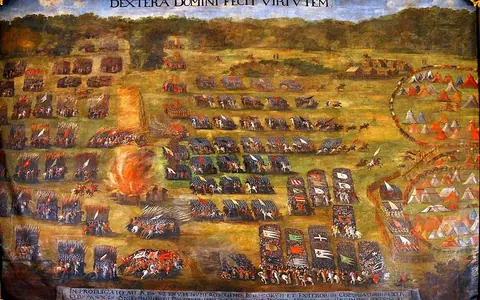
- 1621Battle of Khotyn, 1621Polish-Lithuanian Commonwealth and Cossacks vs Ottoman Empire
How a Polish-Lithuanian and Cossack army held Khotyn in 1621 against Sultan Osman II, and how the failure cost him his throne.
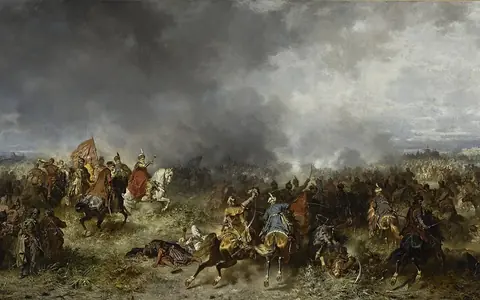
- 1627The Battle of Oliwa, 1627Polish-Lithuanian Commonwealth vs Sweden
The Commonwealth's small navy breaks the Swedish blockade of Gdańsk.
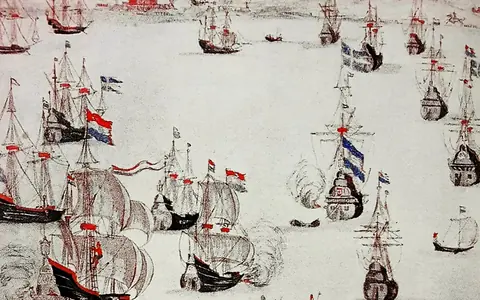
- 1629The Battle of Trzciana, 1629Polish-Lithuanian Commonwealth and the Holy Roman Empire vs Sweden
The day the hussars almost captured the Swedish king.
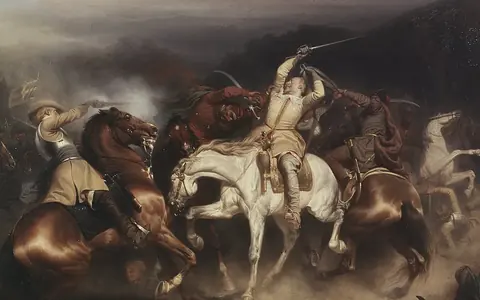
- 1644Battle of Okhmativ, 1644Polish-Lithuanian Commonwealth vs Crimean Khanate
On 30 January 1644 Hetman Koniecpolski and Prince Wiśniowiecki routed Tuhaj Bey's Tatar raid at Okhmativ, before it could plunder the Commonwealth.
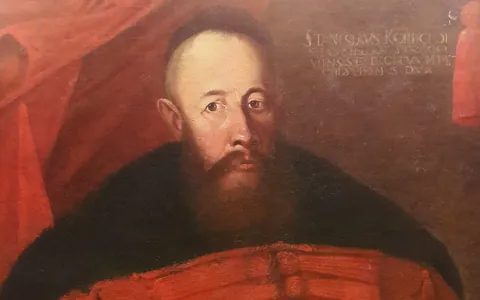
- 1651The Battle of Berestechko, 1651Polish-Lithuanian Commonwealth vs Zaporozhian Cossacks and Crimean Khanate
King John II Casimir against Khmelnytsky and the Crimean khan.
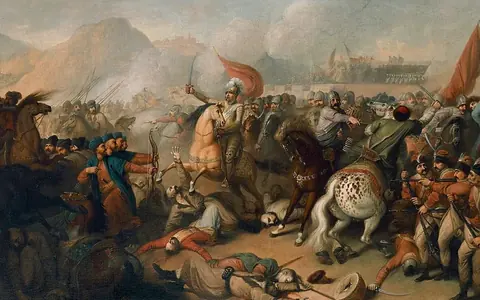
- 1655The Siege of Jasna Góra, 1655Polish-Lithuanian Commonwealth (garrison of Jasna Góra) vs Sweden
A small garrison of monks and soldiers turned back the Swedes.
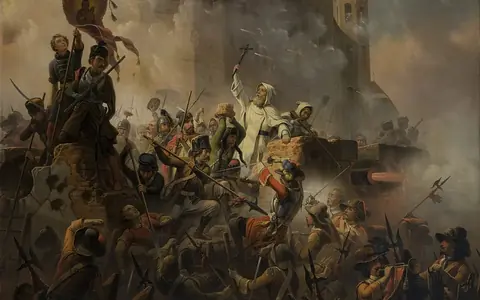
- 1656Battle of Filipów, 1656Grand Duchy of Lithuania vs Sweden and Brandenburg
On 22 October 1656 a Swedish and Brandenburg army caught Hetman Gosiewski's Lithuanian division at Filipów, two weeks after his victory at Prostki.
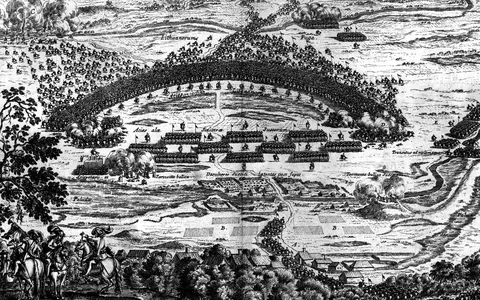
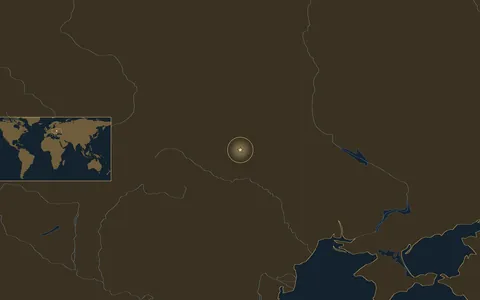
- 1657Battle of Czarny Ostrów, 1657Polish-Lithuanian Commonwealth vs Principality of Transylvania and allies
On 20 July 1657 Polish armies caught George II Rákóczi of Transylvania at Czarny Ostrów in Podolia and forced him to capitulate and leave Poland.
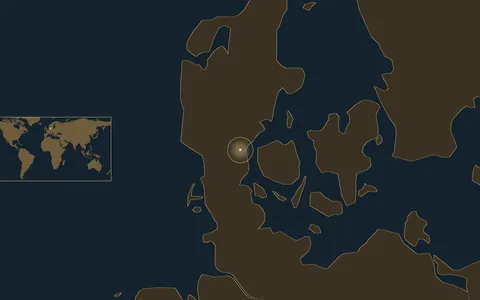
- 1658Siege of Kolding, 1658Polish-Lithuanian Commonwealth (allied with Denmark) vs Sweden
At Christmas 1658 Czarniecki's Polish cavalry, sent to help Denmark against Sweden, stormed the Swedish-held castle of Kolding at the third attempt.
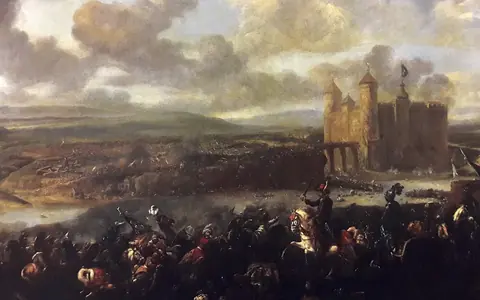
- 1673The Battle of Khotyn, 1673Polish-Lithuanian Commonwealth vs Ottoman Empire
After a freezing night, the hussars rode through the breach.
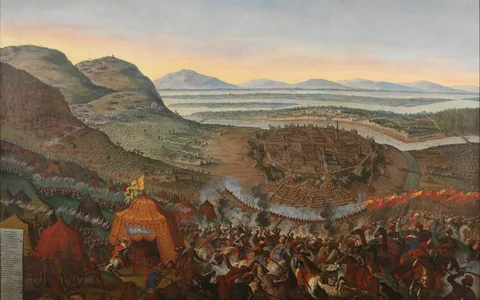
- 1683The Siege of Vienna, 1683Poland, Holy Roman Empire and German states vs Ottoman Empire
A starving city, then the winged hussars came down the mountain. The day the Ottoman advance into Europe turned.
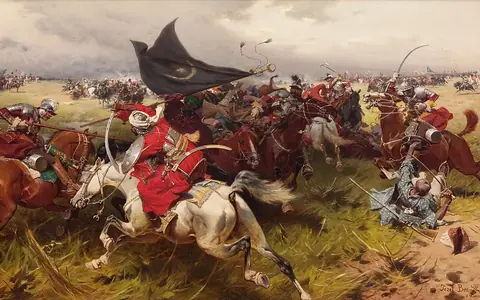
- 1694The Battle of Hodów, 1694Polish-Lithuanian Commonwealth vs Budjak Horde (Tatars)
About 400 Polish cavalrymen hold a village against a vast Tatar army.
The Napoleonic era 1789 to 1815 · 3
- 1792The Battle of Zieleńce, 1792Polish-Lithuanian Commonwealth vs Russian Empire
The battle that gave birth to Poland's highest military order.
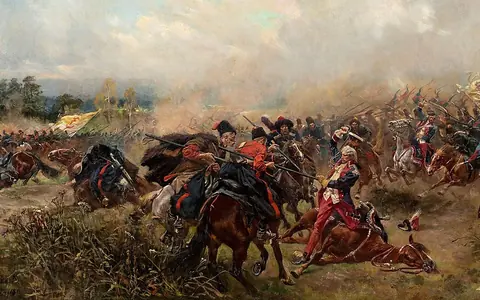
- 1794The Battle of Racławice, 1794Polish-Lithuanian Commonwealth (Kościuszko Uprising) vs Russian Empire
Peasants with scythes stormed the Russian guns.
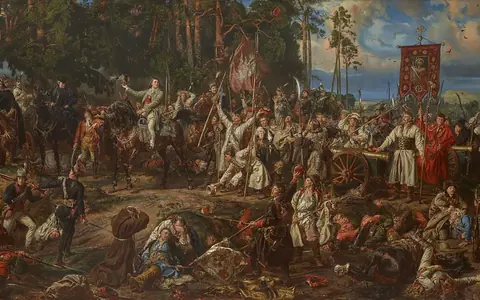
- 1794Battle of Kobyłka, 1794Polish-Lithuanian insurgents vs Russian Empire
On 26 October 1794 Suvorov's Russians caught the Lithuanian corps retreating to Warsaw at Kobyłka. The last battle of the Kościuszko Uprising before the storming of Praga.
The industrial age 1815 to 1914 · 1
- 1831Battle of Paneriai, 1831Polish and Lithuanian insurgents vs Russian Empire
On 19 June 1831 Giełgud's Polish and Lithuanian insurgents attacked the Russian lines on the Paneriai hills outside Vilnius and were thrown back after four hours.
Timeline of Lithuanian military history
- 1253Mindaugas is crowned king of Lithuania.34
- 1385Union of Krewo: Jogaila accepts baptism and the Polish crown.35
- 1410
- 1514
- 1569Union of Lublin creates the Polish-Lithuanian Commonwealth.38
- 1605
- 1655Moscow takes Vilnius; the Kėdainiai treaty with Sweden.40
- 1795The third partition ends the Commonwealth.41
- 1831
- 1863The January Uprising spreads to Lithuania and is crushed.43
- 1918The Taryba proclaims Lithuania’s independence on 16 February.44
- 1920Soviet-Lithuanian peace treaty; Żeligowski takes Vilnius.45
- 1940Soviet occupation and annexation.46
- 1990The restoration of independence is declared on 11 March.47
Memory and further reading
Grunwald became part of national legend in Poland and Lithuania, and Britannica notes that it is celebrated in Belarus as well. The memory of the Grand Duchy itself is shared and contested: Coda Story reports that the Lithuanian historian Kamuntavičius traces Minsk’s efforts to claim the Grand Duchy’s history as Belarus’s own to 2005.48
For the other sides of these wars, see our hubs on Poland, Russia and Sweden, our guides to the Polish-Swedish War of 1600 to 1629, the Deluge, the wars of the Polish-Lithuanian Commonwealth and the Polish-Soviet War, with the Battle of the Niemen, and the rankings of the winged hussars’ greatest battles and the greatest Polish battles.
Notes
A number in the text points to a note; each note names the works that paragraph draws on, listed in full under Sources.
- Romuald J. Misiunas, “History of Lithuania”; Encyclopaedia Britannica, “Grand Duchy of Lithuania”; Visuotinė lietuvių enciklopedija, “Liublino unija”; Encyclopaedia Britannica, “January Insurrection”; Klaus Richter, 1914-1918-online. International Encyclopedia of the First World War; European Parliament, “Briefing No 11”. ↩
- Encyclopaedia Britannica, “Grand Duchy of Lithuania”; Daiva Repečkaitė, Coda Story; Encyclopaedia Britannica, “Polish-Lithuanian Commonwealth”. ↩
- Romuald J. Misiunas, “History of Lithuania”; Richard Cavendish, History Today; Visuotinė lietuvių enciklopedija, “Liublino unija”; European Heritage Label Bureau, “Union of Lublin”; European Parliament, “Briefing No 11”. ↩
- Romuald J. Misiunas, “History of Lithuania”; Visuotinė lietuvių enciklopedija, “Mindaugas”; DELFI, “The top 10 Lithuanian historical figures of all time”. ↩
- Romuald J. Misiunas, “History of Lithuania”; DELFI, “The top 10 Lithuanian historical figures of all time”; Visuotinė lietuvių enciklopedija, “Kęstutis”; Encyclopaedia Britannica, “Grand Duchy of Lithuania”. ↩
- Romuald J. Misiunas, “History of Lithuania”; Visuotinė lietuvių enciklopedija, “Kęstutis”; Richard Cavendish, History Today; Visuotinė lietuvių enciklopedija, “Vytautas Didysis”. ↩
- Charles Phillips, “Battle of Grunwald”; Richard Cavendish, History Today. ↩
- Charles Phillips, “Battle of Grunwald”; Richard Cavendish, History Today; Zintegrowana Platforma Edukacyjna, “Największa bitwa średniowiecza”. ↩
- Zintegrowana Platforma Edukacyjna, “Największa bitwa średniowiecza”; Visuotinė lietuvių enciklopedija, “Vytautas Didysis”; Encyclopaedia Britannica, “Grand Duchy of Lithuania”; Romuald J. Misiunas, “History of Lithuania”. ↩
- Romuald J. Misiunas, “History of Lithuania”; Visuotinė lietuvių enciklopedija, “Oršos mūšis”. ↩
- Remigijus Černius, Orbis Lituaniae; Visuotinė lietuvių enciklopedija, “Oršos mūšis”; dzieje.pl, “Mija 500 lat od wiktorii polsko-litewskich wojsk pod Orszą”. ↩
- Visuotinė lietuvių enciklopedija, “Oršos mūšis”; dzieje.pl, “Mija 500 lat od wiktorii polsko-litewskich wojsk pod Orszą”; Encyclopaedia Britannica, “Grand Duchy of Lithuania”. ↩
- Encyclopaedia Britannica, “Grand Duchy of Lithuania”; Visuotinė lietuvių enciklopedija, “Liublino unija”; Encyclopaedia Britannica, “Polish-Lithuanian Commonwealth”. ↩
- Visuotinė lietuvių enciklopedija, “Liublino unija”; European Heritage Label Bureau, “Union of Lublin”; Romuald J. Misiunas, “History of Lithuania”; Visuotinė lietuvių enciklopedija, “etmonas”; dzieje.pl, “Kalendarz dat”; Encyclopaedia Britannica, “Grand Duchy of Lithuania”. ↩
- Encyclopaedia Britannica, “Jan Karol Chodkiewicz”; Piotr Abryszeński, “The great victory of the winged hussars. The Battle of Kirchholm (1605)”; Magnus Olofsson, The Past. ↩
- Przemysław Gawron, “Bitwa pod Kłuszynem 1610 r.”; Encyclopaedia Britannica, “Time of Troubles”; Encyclopaedia Britannica, “Jan Karol Chodkiewicz”; Visuotinė lietuvių enciklopedija, “Lietuvos Didžiosios Kunigaikštystės kariuomenė”. ↩
- dzieje.pl, “Kalendarz dat”; Visuotinė lietuvių enciklopedija, “Kėdainių sutartis”. ↩
- dzieje.pl, “Kalendarz dat”; Jerzy Ronikier, Bitwy polskie. Leksykon; Jerzy Ronikier, Bitwy polskie. Leksykon; Andrzej Rachuba, Kwartalnik Historyczny. ↩
- Romuald J. Misiunas, “History of Lithuania”; Juozas B. Laučka, Lituanus; Visuotinė lietuvių enciklopedija, “1794 sukilimas”. ↩
- Visuotinė lietuvių enciklopedija, “1794 sukilimas”; dzieje.pl, “Kalendarz dat”. ↩
- Kazimierz Krajewski, “Jęliśmy się oręża w duchu jedności z Królestwem Polskim. Powstanie Listopadowe na Litwie”; dzieje.pl, “Emilia Plater (1806-1831)”; Visuotinė lietuvių enciklopedija, “Panerių kautynės”. ↩
- Romuald J. Misiunas, “History of Lithuania”; Juozas B. Laučka, Lituanus. ↩
- Encyclopaedia Britannica, “January Insurrection”; Visuotinė lietuvių enciklopedija, “Zigmantas Sierakauskas”; Juozas B. Laučka, Lituanus; Romuald J. Misiunas, “History of Lithuania”. ↩
- Romuald J. Misiunas, “History of Lithuania”; European Parliament, “Briefing No 11”; Klaus Richter, 1914-1918-online. International Encyclopedia of the First World War. ↩
- Romuald J. Misiunas, “History of Lithuania”; Klaus Richter, 1914-1918-online. International Encyclopedia of the First World War; Gintautas Jakštys, Vēsture; Gintautas Surgailis, Wars of Lithuania. ↩
- Česlovas Laurinavičius, 1914-1918-online. International Encyclopedia of the First World War; Klaus Richter, 1914-1918-online. International Encyclopedia of the First World War; Romuald J. Misiunas, “History of Lithuania”; Michał Szukała, “100 lat temu Wileńszczyznę przyłączono do Polski”. ↩
- Česlovas Laurinavičius, 1914-1918-online. International Encyclopedia of the First World War; Klaus Richter, 1914-1918-online. International Encyclopedia of the First World War; Romuald J. Misiunas, “History of Lithuania”. ↩
- Česlovas Laurinavičius, 1914-1918-online. International Encyclopedia of the First World War; dzieje.pl, “95 lat temu gen. Lucjan Żeligowski zajął Wilno”; Dariusz Fabisz, Pamięć i Sprawiedliwość; Klaus Richter, 1914-1918-online. International Encyclopedia of the First World War; Romuald J. Misiunas, “History of Lithuania”. ↩
- Romuald J. Misiunas, “History of Lithuania”; Michał Szukała, “100 lat temu Wileńszczyznę przyłączono do Polski”; Česlovas Laurinavičius, 1914-1918-online. International Encyclopedia of the First World War. ↩
- Romuald J. Misiunas, “History of Lithuania”; Daniel J. Kaszeta, Lituanus. ↩
- United States Holocaust Memorial Museum, Holocaust Encyclopedia; Romuald J. Misiunas, “History of Lithuania”; Magdalena Semczyszyn, Przystanek Historia. ↩
- Romuald J. Misiunas, “History of Lithuania”; Daniel J. Kaszeta, Lituanus; European Parliament, “Briefing No 11”; Tony Wesolowsky, “Thirty Years After Soviet Crackdown In Lithuania, Kremlin Accused Of Rewriting History”. ↩
- Visuotinė lietuvių enciklopedija, “Kęstutis”; Visuotinė lietuvių enciklopedija, “Vytautas Didysis”; Charles Phillips, “Battle of Grunwald”; Visuotinė lietuvių enciklopedija, “Oršos mūšis”; dzieje.pl, “Mija 500 lat od wiktorii polsko-litewskich wojsk pod Orszą”; Encyclopaedia Britannica, “Jan Karol Chodkiewicz”; Piotr Abryszeński, “The great victory of the winged hussars. The Battle of Kirchholm (1605)”; dzieje.pl, “Kalendarz dat”; Jerzy Ronikier, Bitwy polskie. Leksykon; Visuotinė lietuvių enciklopedija, “1794 sukilimas”; dzieje.pl, “Kalendarz dat”; dzieje.pl, “Emilia Plater (1806-1831)”; Kazimierz Krajewski, “Jęliśmy się oręża w duchu jedności z Królestwem Polskim. Powstanie Listopadowe na Litwie”. ↩
- Romuald J. Misiunas, “History of Lithuania”; Visuotinė lietuvių enciklopedija, “Mindaugas”. ↩
- Romuald J. Misiunas, “History of Lithuania”; Richard Cavendish, History Today. ↩
- Charles Phillips, “Battle of Grunwald”; Richard Cavendish, History Today. ↩
- Visuotinė lietuvių enciklopedija, “Oršos mūšis”; Remigijus Černius, Orbis Lituaniae. ↩
- Visuotinė lietuvių enciklopedija, “Liublino unija”; Encyclopaedia Britannica, “Polish-Lithuanian Commonwealth”. ↩
- Encyclopaedia Britannica, “Jan Karol Chodkiewicz”; Magnus Olofsson, The Past. ↩
- dzieje.pl, “Kalendarz dat”; Visuotinė lietuvių enciklopedija, “Kėdainių sutartis”. ↩
- Romuald J. Misiunas, “History of Lithuania”; Juozas B. Laučka, Lituanus. ↩
- Visuotinė lietuvių enciklopedija, “Panerių kautynės”; Kazimierz Krajewski, “Jęliśmy się oręża w duchu jedności z Królestwem Polskim. Powstanie Listopadowe na Litwie”. ↩
- Encyclopaedia Britannica, “January Insurrection”; Juozas B. Laučka, Lituanus. ↩
- Romuald J. Misiunas, “History of Lithuania”; European Parliament, “Briefing No 11”. ↩
- Česlovas Laurinavičius, 1914-1918-online. International Encyclopedia of the First World War; Klaus Richter, 1914-1918-online. International Encyclopedia of the First World War. ↩
- Romuald J. Misiunas, “History of Lithuania”; Daniel J. Kaszeta, Lituanus. ↩
- Romuald J. Misiunas, “History of Lithuania”; European Parliament, “Briefing No 11”. ↩
- Charles Phillips, “Battle of Grunwald”; Richard Cavendish, History Today; Daiva Repečkaitė, Coda Story. ↩
Sources
- Romuald J. Misiunas, Encyclopaedia Britannica, “History of Lithuania”.
- Encyclopaedia Britannica, “Grand Duchy of Lithuania”.
- Visuotinė lietuvių enciklopedija (Universal Lithuanian Encyclopedia), “Liublino unija” (in Lithuanian).
- Encyclopaedia Britannica, “January Insurrection”.
- Klaus Richter (University of Birmingham), 1914-1918-online. International Encyclopedia of the First World War, “Independence Wars (Lithuania, Latvia and Estonia)”.
- European Parliament, “Briefing No 11: Lithuania and the Enlargement of the European Union”.
- Daiva Repečkaitė, Coda Story, 26 July 2022, “Medieval history powers a crisis of identity in Lithuania and Belarus”.
- Encyclopaedia Britannica, “Polish-Lithuanian Commonwealth”.
- Richard Cavendish, History Today 60, no. 7 (July 2010), “The Battle of Grunwald”.
- European Heritage Label Bureau, “Union of Lublin”.
- Visuotinė lietuvių enciklopedija (Universal Lithuanian Encyclopedia), “Mindaugas” (in Lithuanian).
- DELFI, on LRT (Lithuanian National Radio and Television), 9 May 2016, “The top 10 Lithuanian historical figures of all time”.
- Visuotinė lietuvių enciklopedija (Universal Lithuanian Encyclopedia), “Kęstutis” (in Lithuanian).
- Visuotinė lietuvių enciklopedija (Universal Lithuanian Encyclopedia), “Vytautas Didysis” (in Lithuanian).
- Charles Phillips, Encyclopaedia Britannica, “Battle of Grunwald”.
- Zintegrowana Platforma Edukacyjna (Polish Ministry of Education), “Największa bitwa średniowiecza” (in Polish).
- Visuotinė lietuvių enciklopedija (Universal Lithuanian Encyclopedia), “Oršos mūšis” (in Lithuanian).
- Remigijus Černius, Orbis Lituaniae (Vilnius University), “Monuments dedicated to the victory of the Battle of Orsha in Vilnius”.
- dzieje.pl (Museum of Polish History and PAP), “Mija 500 lat od wiktorii polsko-litewskich wojsk pod Orszą” (in Polish).
- Visuotinė lietuvių enciklopedija (Universal Lithuanian Encyclopedia), “etmonas” (in Lithuanian).
- dzieje.pl (Museum of Polish History and PAP), “Kalendarz dat: 1655” (in Polish).
- Encyclopaedia Britannica, “Jan Karol Chodkiewicz”.
- Piotr Abryszeński, Museum of Polish History (polishhistory.pl), “The great victory of the winged hussars. The Battle of Kirchholm (1605)”.
- Magnus Olofsson (Lund University), The Past, “The Battle of Kircholm, 1605: Sweden’s greatest defeat”.
- Przemysław Gawron, Museum of King Jan III’s Palace at Wilanów, “Bitwa pod Kłuszynem 1610 r.” (in Polish).
- Encyclopaedia Britannica, “Time of Troubles”.
- Visuotinė lietuvių enciklopedija (Universal Lithuanian Encyclopedia), “Lietuvos Didžiosios Kunigaikštystės kariuomenė” (in Lithuanian).
- Visuotinė lietuvių enciklopedija (Universal Lithuanian Encyclopedia), “Kėdainių sutartis” (in Lithuanian).
- dzieje.pl (Museum of Polish History and PAP), “Kalendarz dat: 1656” (in Polish).
- Jerzy Ronikier, Bitwy polskie. Leksykon (Znak, 1999), on TwojaHistoria.pl, “Bitwa pod Prostkami (8 października 1656)” (in Polish).
- Jerzy Ronikier, Bitwy polskie. Leksykon (Znak, 1999), on TwojaHistoria.pl, “Bitwa pod Filipowem (22 października 1656)” (in Polish).
- Andrzej Rachuba, Kwartalnik Historyczny 109, no. 3 (2002), “Uwagi do problemu kampanii Wincentego Gosiewskiego w Prusach Książęcych jesienią 1656 roku” (in Polish).
- Juozas B. Laučka, Lituanus 30, no. 4 (1984), “Lithuania’s Struggle for National Survival 1795-1917”.
- Visuotinė lietuvių enciklopedija (Universal Lithuanian Encyclopedia), “1794 sukilimas” (in Lithuanian).
- dzieje.pl (Museum of Polish History and PAP), “Kalendarz dat: 1794” (in Polish).
- Kazimierz Krajewski, Institute of National Remembrance (IPN), “Jęliśmy się oręża w duchu jedności z Królestwem Polskim. Powstanie Listopadowe na Litwie” (in Polish).
- dzieje.pl (Museum of Polish History), “Emilia Plater (1806-1831)” (in Polish).
- Visuotinė lietuvių enciklopedija (Universal Lithuanian Encyclopedia), “Panerių kautynės” (in Lithuanian).
- Visuotinė lietuvių enciklopedija (Universal Lithuanian Encyclopedia), “Zigmantas Sierakauskas” (in Lithuanian).
- Gintautas Jakštys, Vēsture: avoti un cilvēki 15 (2012), abstract on Lituanistika, “The Lithuanian war of independence in 1918-1920: actions against the Bolsheviks in the area of Zarasai and Daugavpils”.
- Gintautas Surgailis, in Wars of Lithuania (Eugrimas, 2014), abstract on Lituanistika, “The 1919-1920 Lithuanian War of Liberation”.
- Česlovas Laurinavičius (Lithuanian Institute of History), 1914-1918-online. International Encyclopedia of the First World War, “Polish-Lithuanian Border Conflict”.
- Michał Szukała, dzieje.pl (Museum of Polish History and PAP), 6 April 2022, “100 lat temu Wileńszczyznę przyłączono do Polski” (in Polish).
- dzieje.pl (Museum of Polish History and PAP), 9 October 2015, “95 lat temu gen. Lucjan Żeligowski zajął Wilno” (in Polish).
- Dariusz Fabisz, Pamięć i Sprawiedliwość 38 (2021), abstract on Lituanistika, “Początki sporu z Litwą o Wilno i Wileńszczyznę w październiku 1920 r.” (in Polish).
- Daniel J. Kaszeta, Lituanus 34, no. 3 (1988), “Lithuanian Resistance to Foreign Occupation 1940-1952”.
- United States Holocaust Memorial Museum, Holocaust Encyclopedia, “Lithuania”.
- Magdalena Semczyszyn, Przystanek Historia (Institute of National Remembrance), 30 January 2020, “Ponary: miejsce kaźni” (in Polish).
- Tony Wesolowsky, Radio Free Europe/Radio Liberty, 12 January 2021, “Thirty Years After Soviet Crackdown In Lithuania, Kremlin Accused Of Rewriting History”.






